My husband told me his 71-year-old mother was moving into our Scottsdale home in three days, and he expected me to care for her because I worked from home. I said “Okay,” but after everyone settled in, I opened our savings account and noticed something I had never seen before, something that made me question far more than his decision about the guest room…
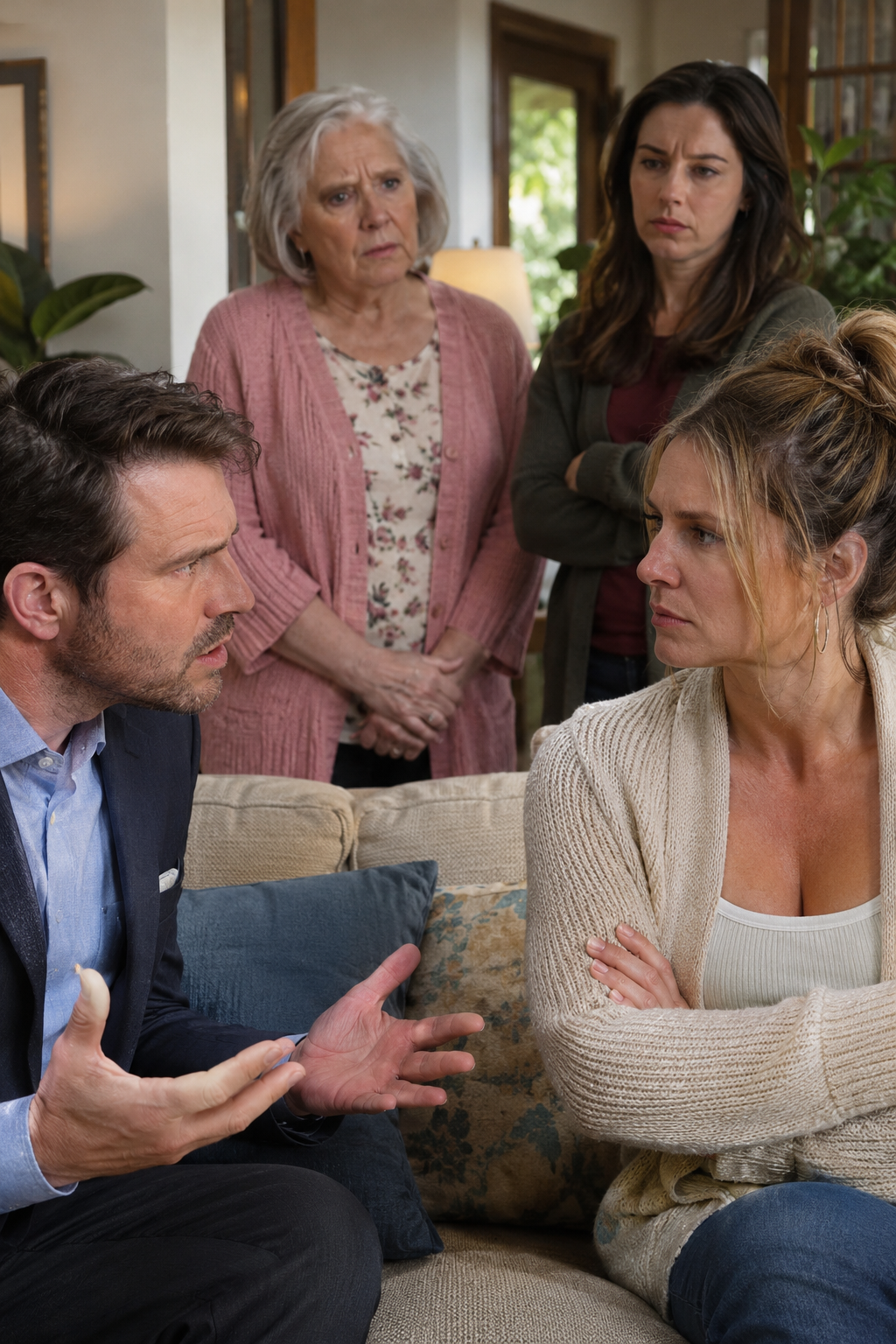
My husband told me his 71-year-old mother was moving into our Scottsdale home in three days, and he expected me to care for her because I worked from home. I said “Okay,” but after everyone settled in, I opened our savings account and noticed something I had never seen before, something that made me question far more than his decision about the guest room…
My husband, Thomas Caldwell, announced on a Wednesday evening that his mother was moving in with us. He spoke as casually as if he’d decided to replace the refrigerator. By Thursday morning, I was looking up divorce attorneys, though I had never imagined doing that when I woke up the day before.
My name is Serena Caldwell. Thomas and I had been married for seven years, and we’d built a comfortable life in Scottsdale, Arizona. He managed commercial properties around Phoenix, while I worked from home as a freelance designer. For four years I’d built my client list, met deadlines, and helped keep our household running.
I loved our house, especially the quiet home office where I could concentrate. I loved the routines we’d made together, too. What I hadn’t understood was how many of those routines depended on me adjusting my schedule whenever something needed doing, while Thomas got to treat his as fixed.
His mother, Margaret Caldwell, was 71 and lived alone in a ranch house in Tucson, roughly two hours away. She’d had a minor fall the previous spring and felt less secure by herself afterward. I cared about Margaret, and I had suggested we investigate home health aides or assisted living closer to us, but Thomas always put the conversation off.
That Wednesday, he came home later than usual and sat beside me on the couch while I was finishing a design project. He hadn’t even taken off his jacket. “I need to tell you something about my mom,” he said, and I closed my laptop so I could give him my attention.
“She’s going to move in,” he said. “I told her she could have the guest room.” I asked when he’d made that decision, and he said he’d promised her during his trip to Tucson the previous weekend. Six days had passed without him telling me.
“You agreed to move another person into our house without speaking to me?” I asked. He said Margaret wasn’t doing well alone, as though that settled everything. I reminded him that I’d been asking for months to consider ways to help her, and that bringing her into our home was only one possibility.
“She’s not going to a facility,” he said. “She’s my mother, and this is my home.” I corrected him gently: it was our home, and we should make decisions about it together. For a moment he seemed to be choosing his words, but what came next was worse than the announcement.
“Your home during the day,” he said. When I asked what he meant, he explained that my design schedule was flexible and I was already there. He would be at the office, so I could check on Margaret, make sure she ate, and take her to appointments as needed.
I stared at him, waiting for some sign that he understood what he was asking. I had clients who expected work on specific dates and who paid me for the hours I spent getting it right. Being at home didn’t mean I could stop every time someone needed company, a meal, or a ride.
“I have deadlines, Thomas,” I said. “I can’t take on someone’s care schedule without a plan.” He leaned back against the couch and assured me it wouldn’t be much. The smallness of his response told me he’d already counted on my cooperation before we’d even discussed it.
“We could hire someone to help her,” I said. Thomas shook his head. “That’s a waste of money when you’re already there.” Those last four words stayed with me. My time, apparently, had no price as long as I was spending it inside our house.
I wasn’t upset with Margaret for feeling frightened after her fall. I was upset that her son had promised something that would change both our lives, then assigned the work to me. He hadn’t asked how many projects I had booked or whether I was willing to become the person responsible for his mother’s days.
“I need you to hear me clearly,” I told him. “I’m not agreeing to this arrangement.” His answer was short: “She moves in on Saturday.” He said it without raising his voice, which somehow made it more final. He got up and walked into the kitchen for a glass of water.
By the time he returned, I’d stopped trying to make him understand. “Okay,” I said, and watched his shoulders loosen. To him, that meant he’d won the discussion. To me, it meant I wasn’t going to waste another hour arguing with someone who thought I didn’t get a vote.
I slept badly and began quietly researching attorneys the next morning. I didn’t make an announcement or pack a suitcase. I still had work to finish, a home to live in, and a mother-in-law who believed she was coming somewhere she’d be welcomed. I wasn’t going to punish her for her son’s behavior.
On Saturday morning, Margaret arrived with her daughter, Claudia, Thomas’s younger sister, driving the moving van. I carried boxes from the driveway and showed Margaret where her things could go. She squeezed my arm and asked, “I hope this isn’t too much trouble, sweetheart.” I told her we’d get her settled.
Margaret was kind and grateful, as she’d always been with me. Claudia was different that morning. She barely met my eyes while we unloaded the van, and whenever I turned toward her, she busied herself with another box. I noticed, but there were too many practical things happening to dwell on it.
By Sunday evening, Margaret had arranged her belongings in the guest room. She was quiet, polite, and pleased to be near Thomas. I could see how much reassurance that gave her, which made my anger at him more complicated, not less. I wanted her safe; I just didn’t want my marriage to make me invisible.
After dinner, I went into my office to finish a client project due Monday. Beside the design files, I opened a document and started listing the household finances I’d need to understand if I chose to separate. It felt strange to type those notes in the same room where I’d planned vacations and paid bills for seven years.
I’d always handled our joint checking, mortgage, utilities, and regular household payments because I was more organized about them. Thomas oversaw his business accounts and the properties he managed. The arrangement had seemed sensible, and he’d always thanked me for keeping things straight. That night, I began examining the savings statements more carefully than usual.
One transaction stopped me. Seven months earlier, $14,000 had left our joint savings account and gone to a business account I couldn’t access. I couldn’t remember approving it or even discussing it with Thomas. I went backward through the statements, checking the dates against what I knew about our expenses.
There were two more transfers to that same destination. Together, the three added up to just over $38,000 moved across roughly 14 months. Thomas had mentioned that his real estate work had slowed over the previous two years, but he’d never spoken about needing money from our savings to keep it going.
For a long time I sat with the statements open, listening to the house settle around me. I’d been trusting him not to hide something important, and because of that trust, I’d stopped looking closely. I saved screenshots in a private cloud folder he couldn’t access. Whatever those transfers meant, I knew I couldn’t ask Thomas about them until I understood what I was seeing. Part 2…..
I called my friend Vanessa the next morning. She worked as a paralegal at a family law firm in Tempe, and I asked her for names of attorneys, not legal advice. She gave me two; later that afternoon I sat in my parked car down the street from our house and called them both.
The attorney who could meet me first was Katherine Brow, whose small office was in downtown Scottsdale. Vanessa had told me she was thorough, and she was. Katherine, a direct woman in her early fifties, listened without interrupting while I explained Thomas’s decision about Margaret and showed her the account transfers.
“Do you know what this business account belongs to?” she asked. I said I didn’t, although Thomas had briefly mentioned a property deal with someone and then changed the subject. Katherine took notes and began asking about the property we owned, including our Scottsdale home.
I told her that I’d inherited a small rental property from my grandmother about three years earlier. It was in my name alone, separate from the house Thomas and I shared. Katherine asked whether he’d ever wanted me to sell, refinance, or sign anything involving it.
“About eight months ago, he asked whether I’d considered refinancing and pulling out some equity,” I said. “I told him no, and he let it drop.” She looked back at the bank statements. The timing concerned her enough that she wanted to examine available records before reaching a conclusion, so we scheduled another meeting for Thursday.
When I returned, Katherine explained what she’d pieced together about Thomas’s property deals. He and a partner named Brian, whom I’d met only a couple of times at company events, had pursued several house flips that performed badly. Short-term loans Brian had taken out with Thomas as a co-signer had added to the losses.
Thomas’s debts were close to $190,000. The money from our joint savings appeared to have gone toward short-term interest payments, buying him time while the bills kept coming. For more than a year, I’d been making ordinary plans for our future without knowing how precarious his business finances had become.
Katherine reminded me that my grandmother’s rental had been appraised at around $280,000 the year before. She couldn’t know what Thomas intended without more evidence, but a sale or equity loan on that property could have covered much of what he owed. The casual refinancing question I’d brushed aside eight months earlier sounded different now.
I began connecting the pieces, though I knew my interpretation wasn’t proof of a plan. If I was exhausted looking after Margaret all day, I might be easier to persuade that our family needed one more sacrifice. Thomas knew I felt responsible for the people around me. Perhaps he’d counted on that; perhaps he’d simply counted on my trust.
“It’s hard to say no when you’ve already been made to feel you’re not doing enough,” I told Katherine. She listened and brought us back to what we could document: the transfers, the loans, and the ownership records. We discussed the practical steps available to protect my interests while the finances were examined.
When I came home that Thursday, Thomas was watching the news and Margaret was resting in her room. I made dinner, put plates on the table, and listened to him describe a property he was showing Friday. He didn’t appear worried that I had learned anything. I watched him pass me a serving dish and wondered how he could sound so ordinary.
Three days later, I told him I planned to visit my college roommate Sophie in Albuquerque for a long weekend. “Good,” he said, kissing my cheek. “You could use a break.” That Friday, I put a carefully packed bag in my car and drove to Sophie’s apartment, knowing I wouldn’t be returning to the same arrangement.
That Friday afternoon, Katherine initiated the formal separation process and filed a motion seeking to freeze joint accounts pending financial disclosure. She also asked a forensic accountant to trace the transfers and review what else might have moved. I didn’t need to decide the entire future of my marriage that day; I needed to stop making decisions without the facts.
Thomas called nine times that evening, and I let each call go to voicemail. On the tenth, I answered. “What did you do?” he asked, sounding shaken rather than angry. I told him, “I protected myself.”
“You froze our accounts,” he said. “Serena, I can’t—” I interrupted him with the one figure I knew for certain. “You moved more than $38,000 out of our joint savings over fourteen months, and you never told me.” He fell silent.
He said he’d meant to tell me after he fixed the problem. I asked whether fixing it meant convincing me to refinance the rental I’d inherited from my grandmother. He didn’t deny it, and that pause hurt more than anything he could have said about the business.
“Did Claudia know?” I asked. I remembered how she’d avoided looking at me while helping Margaret move in. Thomas didn’t answer that question either, and I wasn’t going to pretend his silence was reassuring. I said goodbye and ended the call.
Final I stayed away from Scottsdale for two weeks. When I returned, I brought Katherine and a moving company I’d hired, and Thomas wasn’t there; his attorney had helped arrange that. I collected my belongings and left his, then stood for a moment in the doorway of the bedroom where I’d slept for seven years. I expected tears, but what I felt most clearly was that I knew why I was leaving.
Margaret called two days after I moved out. “I want you to know I didn’t know about the money,” she said before I could ask how she was. I believed her. She told me Thomas had said his business year was difficult, but that he’d also told her I was struggling and that we both thought having her there would help.
“He said you’d suggested it,” she told me. I closed my eyes, remembering the conversation on our couch. Margaret said she never would have agreed to come if she’d known I didn’t want the arrangement. She’d been given a different story, just as I had.
Then she said she was going back to Tucson the following week. Claudia had found someone who could help her a few days each week. “That should have been the plan from the beginning,” Margaret said, and apologized for becoming part of something she hadn’t understood.
I told her she didn’t need to apologize to me. We talked awhile longer about ordinary things, the way we always had. After I hung up, I realized she was the person in Thomas’s family I still felt the most uncomplicated affection for. She had needed help, not a fight over who would provide it.
The financial disclosure process took about three months and brought a fuller accounting of Thomas’s business losses, his inaccurate representations, and the money taken from our joint funds. My grandmother’s rental property remained mine. The work was tedious, and Katherine kept her attention on records rather than the explanations Thomas wished I’d accept.
Our divorce was finalized on a Tuesday in late spring. Sophie drove from Albuquerque to meet me for lunch, and we sat outside at a restaurant in Midtown, ordering more food than we needed. For four hours we talked about life and people and the little things we hadn’t found time to discuss. I hadn’t realized how badly I needed an afternoon with no decisions to defend.
I moved into a smaller two-bedroom place in a quiet Phoenix neighborhood near a park where I now run in the mornings. My freelance business grew; I took on two new long-term clients and became more selective about the projects I accepted. I stopped explaining why a full calendar meant I was busy, even if my desk happened to be at home.
The first morning in my new place, I woke at six, made coffee, and sat by the window with my laptop. I worked for three uninterrupted hours, without a list of someone else’s needs waiting on the counter. It was the most productive morning I’d had in years, and I could finally enjoy it without feeling I owed anyone an apology.
Sometimes I think about Thomas, mostly with astonishment that we spent seven years together and he mistook my willingness to help for an inability to notice. He thought moving his mother into our home would make his problems easier to manage. Instead, it made me look closely at a marriage, a set of accounts, and the life I wanted to keep. I had paid attention to everyone else for so long; now I was paying attention to myself.
THE END. I’ve shared the complete story, and I truly hope it touched your heart. If this story moved you, please , like, and share the post. Thank you for reading! ❤️
✓ Lynn R. Adams
My husband told me his 71-year-old mother was moving into our Scottsdale home in three days, and he expected me to care for her because I worked from home. I said “Okay,” but after everyone settled in…