My husband emptied the savings we had set aside for our baby to buy another woman a Cartier bracelet, then brought her home on our fifth wedding anniversary and told me to leave our Chicago townhouse while I was seven months pregnant; I stood outside in the freezing snow without my phone, until three dark vehicles pulled up and a familiar man stepped out…
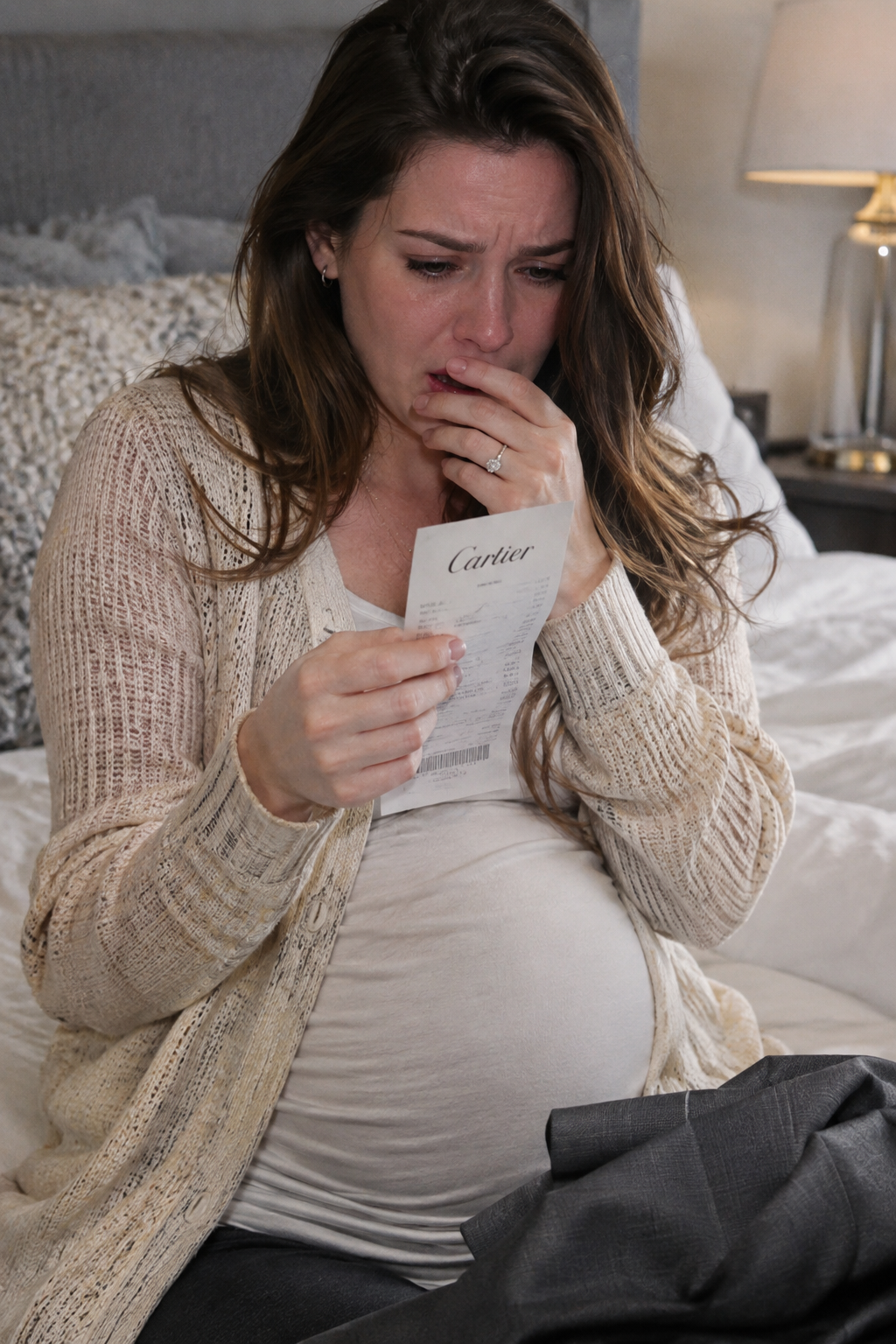
My husband emptied the savings we had set aside for our baby to buy another woman a Cartier bracelet, then brought her home on our fifth wedding anniversary and told me to leave our Chicago townhouse while I was seven months pregnant; I stood outside in the freezing snow without my phone, until three dark vehicles pulled up and a familiar man stepped out…
For five years, my husband, David Hughes, believed I was Clara, a woman from rural Pennsylvania who had worked her way through Northwestern University with student loans. He knew I liked coupons, shopped carefully at Trader Joe’s, and would rather paint a room myself than pay a contractor. He didn’t know my real story, and I had worked very hard to keep it that way.
My father was Richard Harrington, head of the Harrington Group, a family real estate business worth about five billion dollars. I was his only child and the heir to a fortune I had never earned for myself. When I met David during my sophomore year, I wanted one relationship that wasn’t shaped by what my last name could buy.
David came from a working-class family in Ohio. He was smart, funny, and so determined to succeed in commercial real estate that he studied property listings over cheap takeout dinners. I loved the way he talked about building something together, and I worried that knowing about my father would turn our marriage into a competition.
I told Dad I wanted to live on ordinary terms and asked him to stay out of sight. I left my trust money untouched and let David believe we were managing on his income as he moved up at CBRE. Looking back, I can see how much of myself I hid, but at the time I thought I was protecting something good.
For a while, we really were happy. We had a modest townhouse in Lincoln Park, weekends spent fixing it up, and plans we could discuss over breakfast. I kept a notebook of household expenses, and David sometimes kissed my forehead while I worked out whether we could afford a nicer dining table.
The changes came gradually after he became a senior director. There were expensive Tom Ford suits, a leased Porsche 911, and remarks about my clothes that he disguised as helpful advice. He started talking about clients as if they mattered more than the people waiting for him at home.
When I became pregnant, I hoped we might find our way back to each other. Instead, David stayed out later and left his phone facedown whenever he was home. I would ask about pediatricians or what color to paint the nursery, and he would answer without looking up.
On a Tuesday in early December, at thirty weeks pregnant, I was emptying the pockets of his dry cleaning when I found a glossy Cartier receipt. The boutique was on Michigan Avenue, and the purchase had been made three days earlier. A yellow-gold Love bracelet with diamonds was listed for $20,500.
Our fifth wedding anniversary was that Friday. For one ridiculous, hopeful moment, I pictured David giving it to me, perhaps because he finally understood how far apart we had drifted. The previous year he’d given me a vacuum cleaner, and I remembered laughing about it instead of telling him I was hurt.
Then I opened our Bank of America account. More than $30,000 had disappeared from the joint savings we had been building for our baby’s future and a larger down payment. The withdrawal had been made by cashier’s check the morning of the jewelry purchase.
I sat on the edge of the bed with the laptop open, one hand against my belly. We had discussed every stroller and hospital expense, yet David had moved that much money without a word. I returned the receipt to his trouser pocket because I needed to see what he would do on Friday before I accused him of anything.
I cooked beef bourguignon that afternoon, his favorite meal, and wore the emerald maternity dress I’d saved for special occasions. I set out the good glasses and lit two candles. David said he’d be home at six thirty, so I kept the food warm and listened for his key.
Seven o’clock passed, then eight, then nine. I blew out the candles and put the serving spoon beside a dish of beef that was drying around the edges. At nine forty-five, the front door finally opened, and David walked in with a young blonde woman wearing an ivory wool coat.
He introduced her as Chloe Evans. She was twenty-three and worked at his firm, and she looked around our foyer as if she already knew where everything belonged. When she pushed back her sleeve, I saw a gold-and-diamond Cartier bracelet resting on her wrist.
I asked why she was in our house. David walked past me into the living room and said the mortgage was in his name and he paid the bills, so I had no right to call it mine. I told him it was our anniversary, but he barely seemed to hear me.
Chloe sat on the sofa I’d saved for months to buy. She spoke about being David’s future, while he explained that I no longer fit the life he wanted among wealthy clients and corporate gatherings. Apparently the woman who’d helped him get there was now an embarrassment because she still compared grocery prices.
I asked him about our savings. He said our child would be provided for, then announced that he’d spoken with a lawyer and intended to file for divorce on Monday. Chloe would be moving into the townhouse, he added, as though he were telling me about a new piece of furniture.
There was something he didn’t know about that house. The mortgage arrangement ran through Aegis Holdings, which belonged to the Harrington Family Trust; Dad had quietly acquired the debt soon after David signed the papers. David had always mistaken making the payments for having complete control, and I had never corrected his assumptions about the family behind the financing.
I told him he could seek a divorce, but I wasn’t leaving our home that night. Chloe said a duffel bag was waiting for me and suggested a motel near the airport. David pointed to a hundred-dollar bill on the kitchen counter, saying it would cover a ride and something to eat.
When I refused, David seized my upper arm and pulled me toward the entryway. I reached around my stomach with my free hand and struggled to keep my feet beneath me. He shoved me through the open door, tossed out my thin coat and bag, and locked the heavy oak door before I could retrieve my purse or phone.
The cold took my breath away. Snow had settled over the sidewalk, and the wind chill was around twenty below zero. Through the frosted living room window I could see David pouring wine while Chloe slipped her arms around him, the two of them already behaving as though I were gone for good.
I knocked and asked for my phone, but nobody answered. A cramp tightened low in my abdomen, and I was afraid to walk far on the icy sidewalk. I wrapped the coat over my cardigan, held my stomach, and tried to decide which nearby door I could reach safely.
Then headlights swept across the snow. A black Rolls-Royce came slowly down our street with two black Cadillac Escalades, and all three vehicles stopped in front of the townhouse. Men in dark suits stepped out, and for a moment I couldn’t understand what they were doing there.
The rear door of the Rolls-Royce opened, and my father, now in his late sixties, emerged in a heavy cashmere overcoat, his silver hair bright beneath the streetlight. He hurried up the steps, saw my shaking hands and bare ankles, and wrapped his coat around me before I managed to say, “Dad?” He held me close and said, “I’ve got you, sweetheart.” Part 2…..
Inside the heated Rolls-Royce, I kept both hands around a thermos of Earl Grey tea, but I couldn’t make them stop trembling. Dad sat beside me while the driver headed for the family estate on Aster Street. I asked how he had found me so quickly.
He said he had kept a private security detail watching the townhouse for six months, ever since learning that David was moving money into a separate account. His people knew about Chloe and the Cartier bracelet, and they’d called him when they saw me forced outside. I was angry that he’d watched without telling me, but I was too relieved to argue that night.
“I wanted David to love me without the Harrington name,” I said. Dad brushed snow from my hair and told me love wasn’t a foolish thing to want. Then he reminded me that I could make my own decisions, and that our first job was making sure the baby and I were safe.
Dr. Aris, the family physician, was waiting at the estate. He examined me and arranged for the appropriate pregnancy checks after the cold exposure and cramping; I was grateful to hear that neither the baby nor I showed an immediate problem. I slept in my old room, still wearing the soft socks a housekeeper had brought me.
Dad called Harrison, his longtime lawyer at Kirkland & Ellis, and asked him to review the townhouse paperwork and the evidence about David’s conduct at work. He also contacted Thomas Keller, CBRE’s regional managing principal, about the contracts Harrington Group held with the firm. Dad’s company managed fourteen Chicago skyscrapers, so Keller took the meeting seriously.
Monday morning, David arrived at the CBRE office at 321 North Clark Street in his leased Porsche and a $3,000 suit he’d bought on credit. Chloe walked beside him, talking about turning our unfinished nursery into a home gym. David had not called to ask whether I was warm, safe, or still pregnant.
An email directed him to the thirty-fourth-floor boardroom at . He later told someone he expected a promotion. Instead he found Keller, a senior human-resources representative, Harrison, and my father waiting around the conference table.
When Dad introduced himself, David reached for a handshake. Dad didn’t take it. He simply asked whether David recognized the name Harrington, and then told him Clara Harrington was his daughter.
David had known me as the woman who checked supermarket receipts and patched old paint. In that room, he learned why my father had insisted I understand the value of a dollar. He also learned that protecting his pride had never required me to surrender my dignity.
Keller’s team had reviewed complaints and records involving David’s expense claims, including corporate charges connected to hotel visits with Chloe. HR explained that he was being terminated for documented misuse of company funds and policy violations, not because my father could personally fire someone else’s employee. Chloe’s employment was also ending after the firm’s review of her conduct.
I wasn’t in that boardroom. Dad told me later how David’s voice had changed when he understood who I was, and how quickly he began discussing his accomplishments instead of what he’d done to his wife. I listened, then asked only whether the company had preserved the records; I wanted facts, not a performance.
Dad warned David that Harrington Group would reconsider its business relationship with CBRE if its concerns weren’t addressed. He also made it clear that he would not recommend David to anyone in Chicago real estate. I didn’t ask him to blacklist my husband, but I couldn’t pretend I was surprised by how fiercely he reacted.
By midmorning, David was outside on Clark Street with a cardboard box holding a pen, a framed photograph, and a struggling succulent. Chloe stood nearby with her handbag and the Cartier bracelet. Both had lost the careers they’d been using to justify what they did to me.
When David told Chloe whose daughter I was, she stepped away from him. He insisted they still had the townhouse, its supposed equity, and enough contacts to start fresh in Miami. She agreed to go back with him, though she made him call for the ride.
His payment was declined. So was his second card, and the banking app told him to contact the fraud department. He had no explanation for Chloe, and after a long wait they took a taxi using the last $80 in his wallet.
At Lincoln Park, they found movers and a locksmith at the house. Harrison was there with documents explaining that Aegis Holdings and the Harrington trust controlled the property arrangement David had relied on. The Aegis documents included morality and fraud provisions, but Harrison said any disputed foreclosure or eviction still needed legal process. David was told his assumption that the deed belonged to him was wrong.
The family trust had been providing the home at favorable terms all along. David had signed financing documents without understanding who stood behind Aegis, and the trust was now enforcing its rights through the required process after the marriage collapsed. The movers were collecting property the trust claimed, including furnishings and the leased Porsche; Harrison said disputed belongings and rights would still be handled legally.
David kept saying he’d made every payment. Harrison told him those payments did not establish ownership of a house titled outside his name, and that his remaining claimed obligation exceeded $1.2 million. David stared at the heavy oak door, the one he’d locked against me three nights earlier.
Chloe began looking for her own escape. David asked her to give back the bracelet so he could sell it for a deposit on an apartment. She refused, saying he’d given her the bracelet he called a $27,000 gift, and she’d need money while she searched for work.
They argued beside the curb. When David lunged toward her arm, security stepped between them and stopped him from following her. Chloe got into a taxi and left, still wearing the bracelet bought from the savings we had meant for our child.
After the moving crew departed, David stood alone with three bags of clothes and nowhere comfortable to take them. The street was as cold as it had been the night he locked me outside. I didn’t see that moment myself, but when I learned about it, I remembered how badly I’d wanted him simply to open the door.
Part 3 For the next two months, I focused on my health and the baby. I stayed at the family estate while Harrison helped me separate the marriage finances and prepare for the divorce. My father’s business might have been worth billions, but I still had to answer ordinary, painful questions about the man who was about to become my son’s father.
David rented a worn room at a Motel 6 off the Eisenhower Expressway. Applications to commercial real estate firms went unanswered, and people he’d once called friends stopped returning his messages. By February, he had only about four hundred dollars left.
That month I delivered a healthy boy at Northwestern Memorial Hospital. I named him Leo Harrington. Dad came to see us, held his grandson with a care I’d rarely seen him show anyone, and asked whether I wanted to rest while he stayed beside the bassinet.
The news reached David through a Chicago business society article announcing Leo’s birth. Until that point, he hadn’t made a meaningful effort to ask how I was doing. Now he saw that, as Leo’s father, he might have a way to bargain with the Harrington family.
He decided five million dollars would be enough to disappear. He planned to ask for the money in exchange for a quiet divorce and a promise not to pursue custody or speak to reporters. He was thinking of the fortune my son might inherit, not the newborn himself.
David arrived at the hospital in a wrinkled Oxford shirt and his old cashmere coat. He tried to get to the private maternity rooms, telling security that he was my husband and Leo’s father. The staff didn’t let him through without my consent, and Harrison came down to speak with him, with Dad close behind.
“That’s my son upstairs,” David told them in the lobby. He demanded five million dollars, tax-free, and said he’d make a public fight of the divorce and custody case if the family refused. I wasn’t there to hear it, but the words were written down in Harrison’s account of the encounter.
Harrison had brought a manila envelope containing information from a deeper review of David’s business transactions. Forensic accountants had traced inflated contractor invoices and payments to ghost vendors through a Cayman Islands company connected to Chloe. The records indicated more than $400,000 in improper transfers involving client escrow money.
When David questioned the evidence, Harrison explained that Chloe had provided emails, bank statements, computer records, and a sworn account after Dad offered her $250,000 for her cooperation. I hated learning that another payment had been made to Chloe, but the records mattered independently of how she had chosen to help. What she provided could be checked against the transactions.
David had assumed the biggest secret in our marriage was my inheritance. Hearing about the financial investigation was the first time he seemed to understand that his own conduct could follow him far beyond a divorce. The threat of a criminal referral frightened him more than losing me had.
Harrison showed him proposed papers addressing an uncontested divorce and his willingness to give up pursuing a parental role. Dad wanted David out of our lives, but a signature in a hospital lobby could not itself end a parent’s legal rights, and neither man could promise what prosecutors or a family court would decide. The evidence would have to be handled lawfully, and custody questions would have to go through the proper proceedings.
David signed the proposed papers anyway. He wanted an immediate way out of the confrontation, and he no longer believed he could demand five million dollars without consequences. The divorce and parenting issues took longer to resolve formally; the final arrangements left Leo in my care, and David did not seek a place in his daily life.
For me, none of that felt like a celebration. I had wanted Leo to grow up with two parents who put him first. Instead, I sat beside his hospital crib and made a promise I could actually keep: he would never have to earn kindness by pretending to be less than he was.
Dad had been right that David’s ambition could turn cruel, but I didn’t want Leo to grow up believing every mistake deserved a punishment arranged by a powerful man. I told Dad I was grateful he had come for me in the snow and that I intended to make my own decisions from then on. He nodded, and for once he didn’t argue.
Final Six years later, I became CEO of Harrington Group after my father stepped back from day-to-day leadership. I was thirty-four, and Leo was a bright, curious six-year-old who liked asking how elevators worked. Our life was busy and comfortable, but the part I cherished most was coming home when I said I would.
That winter, we attended the Harrington Foundation charity gala at the Peninsula Chicago. I wore an emerald-green gown and helped Leo straighten the bow tie on his little tuxedo before we stepped out of the car. He held my hand while cameras flashed near the hotel’s entrance.
The valet holding the door looked familiar before I quite recognized him. It was David, thinner, with tired eyes and hair beginning to recede. The polished executive who once measured his worth by expensive suits was now working the entrance to a hotel full of people he’d once wanted to impress.
He looked from me to Leo and seemed to stop breathing for a second. “Clara,” he said softly. Our son did not recognize him, and I had no intention of making a six-year-old carry the history of that evening on a crowded sidewalk.
I reached into my clutch and took out a crisp hundred-dollar bill. I placed it in David’s hand and asked him to keep the door open for the next guest because it was freezing outside. Then I took Leo’s hand and walked with him into the hotel.
Only after we’d reached the lobby did I remember the hundred dollars David had left on our kitchen counter the night he put me into the snow. I hadn’t planned a grand moment, and I didn’t look back to see what David did with the money. Leo was asking whether we could visit the dessert table, and I told him we could, as soon as we’d said hello to Grandpa.
THE END. I’ve shared the complete story, and I truly hope it touched your heart. If this story moved you, please , like, and share the post. Thank you for reading! ❤️
✓ Lynn R. Adams
My husband emptied the savings we had set aside for our baby to buy another woman a Cartier bracelet, then brought her home on our fifth wedding anniversary and told me to leave our Chicago townhouse …