My husband brought his mistress to the hospital while our seven-year-old daughter
Part 2: The woman he underestimated had already begun gathering evidence
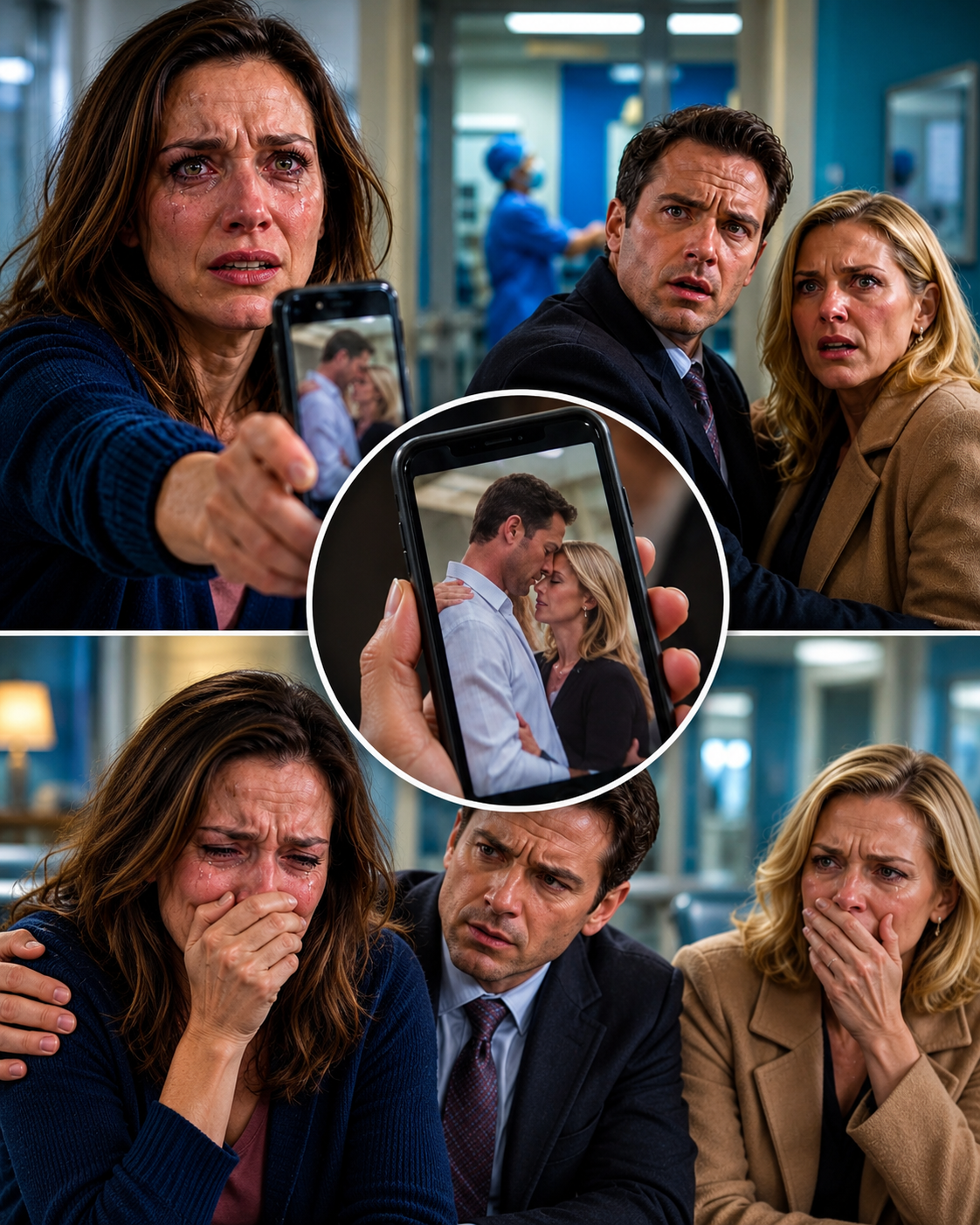
While Grant paced beside the windows and Vanessa played the devoted companion, I watched the performance from across the room. Years earlier, I might have cared how strangers interpreted the scene, but forty had taught me the difference between patience and disappearing inside someone else’s needs. Before Lily was born, I had practiced complex asset litigation, tracing money through shell companies and learning how wealthy families disguised self-interest as tradition. Grant believed I had left that work behind because motherhood had softened me, and I had allowed him to believe it. My phone buzzed with Nora’s instructions: preserve everything, upload financial records, and do not confront him until she understood what we had.
Grant’s father’s estate, the Beacon Hill house, the family office, and the foundation all looked like parts of one grand inheritance. Three years earlier, Grant had slid a postnuptial amendment beside my coffee and called it routine housekeeping before a restructuring. I read the first pages carefully enough to discover that the amendment would sharply limit my support and separate the growth of certain business assets from our marital property. Grant kissed my head and asked me not to “lawyer it to death,” so I smiled and hired a forensic accountant instead. Priya Shah began quietly examining transactions that Grant had assured me were ordinary business expenses.
Priya found consulting fees routed through a Delaware company, then through a Wyoming entity tied to a Florida vendor. The vendor’s registered manager turned out to be a college friend of Vanessa’s, a connection I discovered before I knew the two women had any relationship with Grant. Over the following year, Priya documented inflated contracts, luxury trips charged to donor budgets, and transfers labeled as advances for services no one could verify. Some entries were questionable; others looked as though they had been designed to hide private spending inside public-purpose accounts. I stored the records on an encrypted drive, in a safe-deposit box, and in an account Grant did not know existed.
A nurse finally came out to say Lily was stable on bypass and that the operation was progressing. Relief loosened something in my chest, but Grant immediately asked why he had not received the update first. The nurse explained that I had asked to be the primary contact, and he turned toward me with a warning in his eyes. “You’re embarrassing yourself,” he murmured, so I answered that he was simply unused to being denied access. When I returned later, Vanessa was alone and wearing a Cartier bracelet I had not seen in my jewelry box since the fall.
I recognized the small scratch near the clasp, made years earlier when Lily took her first steps and I lunged to catch her. Vanessa covered it when she saw me looking and claimed Grant had told her I never wore it. I told her I knew about the Naples retreat billed to the foundation, the apartment leased through a corporate vendor, and the jewelry purchased on Grant’s card. Her face lost color as I described hotel records showing two guests where the foundation calendar listed no donor meetings. Then Grant returned with his brother Andrew, who looked at Vanessa and asked his older brother whether he was serious.
Part 3: A successful surgery gives Claire time to expose the lies
Andrew had always been the quieter Whitmore son, the one his mother dismissed as too gentle and Grant mocked for choosing a teaching career over finance. But he crossed the waiting room to hug me and asked how Lily was doing before he said anything else. When he learned Vanessa had come with Grant, disbelief and anger appeared on his face at the same time. Grant told him not to make a scene, and Andrew replied that his seven-year-old niece was having heart surgery while her uncle’s brother entertained a mistress. For a moment, even Grant seemed unable to make a polished answer sound reasonable.
At p.m., Dr. Marquez came through the operating-room doors and told us the repair had gone well. Lily was being moved to cardiac intensive care, where the next day would remain critical, but she had made it through the operation. I cried without grace or restraint, and Andrew held my elbow while Grant covered his face. Vanessa stood behind them, a stranger on the edge of the only news that mattered. When I finally sat beside Lily’s bed, I saw her small hand beneath the blanket and felt my world narrow to the steady rhythm of the monitors.
Grant visited once, standing at the foot of her bed while his phone buzzed in his pocket. When I told him to go if he had somewhere else to be, he insisted that he was not leaving his daughter. I reminded him that he had already left her alone on the night she asked for him, and his expression hardened. He accused me of keeping him from Lily, so I told him to act like a father outside the ICU until she was awake. He left after I said his years of mistaking my silence for weakness were over.
Nora filed emergency motions the next morning, requesting temporary primary custody, medical decision-making authority, and preservation of financial records. The original prenup, drafted before our wedding, contained an infidelity clause and provisions tied to misuse of charitable or marital assets. Grant had signed it quickly, certain that no one would ever have a reason to enforce it against him. Priya’s documents suggested otherwise, and Nora began organizing the evidence for court while I stayed beside Lily. By evening, an investigator confirmed Vanessa was pregnant, though the identity of the father was still unknown.
The next day, Grant arrived with two dozen white roses, an arrangement I knew he usually bought for women he wanted to impress. I handed them to a nurse for the family lounge and told Grant that the last thing Lily needed was a performance. He accused me of turning a private matter into a legal attack, but I said the financial records were not private when charitable funds were involved. Then the hospital allowed me to bring Lily a sunflower instead, because she had always loved bright yellow flowers. Grant watched from the doorway as she smiled at it, and for once he had nothing to say.
Part 4: The prenup turns the Whitmore family’s confidence against them
The morning after Lily’s surgery, Nora brought me the sealed filing confirmation and a warning that the case could become more serious than a divorce. Grant’s family had taught generations of women to call humiliation “discretion,” but Nora did not share their definition of dignity. She explained that the court would care about Grant’s judgment during a medical crisis and about the foundation’s records if their funds had been used to support Vanessa. I felt no triumph, only exhaustion and a hard clarity that had taken years to arrive. Lily was asleep beneath a hospital blanket with Mr. Honey tucked beside her, and I tried to keep every other concern outside her room.
Vanessa appeared later wearing my bracelet again, but I did not confront her until the next morning. I explained that the jewelry was mine and that I had records showing how Grant had paid for her housing and travel. She looked frightened and insisted he had told her we were effectively separated, though I reminded her that she had attended my daughter’s surgery without asking whether she belonged there. I told her to return the bracelet and direct any further communication through counsel. By the following morning, a courier delivered a velvet box containing the bracelet and a short note that said, “I’m sorry.”
Grant called while I was reviewing the financial exhibits with Nora and Priya. He demanded to know what I was planning, then warned me that his family could make the divorce very expensive. I told him the court would decide what the records meant and ended the call before he could turn the threat into a conversation. Priya confirmed that the foundation had reimbursed travel and housing expenses connected to Vanessa, though the full scope needed an independent review. The most useful evidence was not the affair itself; it was the paper trail showing how business and charitable money had been moved.
At the courthouse, Grant’s attorney described him as a devoted father being unfairly excluded during a stressful marital conflict. Nora responded with the hospital timeline, the medical team’s statements, and records of Grant’s arrival with Vanessa while Lily was already in surgery. The attorney objected when she introduced documents about the foundation, but the judge asked to see them before deciding whether they were relevant. Invoices for Naples, Aspen, and the Marlborough apartment passed across the clerk’s desk, followed by internal emails approving Vanessa’s “donor travel.” Grant finally looked at me, but I gave him no anger he could use to change the subject.
Then Andrew arrived with an envelope his late father had given him, containing trust amendments and a memo about Grant’s control of family assets. Nora read the first page and asked the judge for a preservation order preventing transfers while the records were reviewed. Grant stood up and called the case a private family matter, claiming I was angry because he had moved on. The judge ordered temporary primary custody to me, medical decision-making authority, restricted visitation, and limits on major asset transfers. Outside court, Evelyn warned me that I was damaging the family, and I told her that the judge—not I—had signed the order.
Part 5: Evelyn’s threats fail as the family’s secrets reach court
Evelyn confronted me on the courthouse steps in winter white and diamonds. She said Grant had made a mistake, as if a mistress in a hospital, a missing bracelet, and foundation reimbursements could be dismissed with one small word. I answered that a mistake was an exit taken too late, while Grant had built a highway of choices. Her face hardened when I said I would stop protecting the family’s reputation if she threatened me again. For the first time, Evelyn looked unsure whether I would continue to follow the rules she had made for women who married into the Whitmore name.
That evening, news of the hearing traveled through Boston’s private networks before it appeared anywhere online. Donors asked questions, trustees exchanged messages, and people who had once praised Grant’s judgment began requesting copies of the foundation’s audited statements. He called me repeatedly, then texted that I did not want to “go nuclear.” I answered that he had brought the bomb to the hospital and blocked him everywhere except the court-approved parenting app. At home, Lily asked whether her parents were “getting unmarried,” and I told her we would live in separate homes because her father had made choices that hurt the family.
She asked whether she needed to be angry with him, and I told her she was allowed to feel whatever she felt. When she asked if I was angry, I admitted I was, but said I loved her more than I was angry at Grant. Lily considered that and replied that anger was loud, while mine seemed quiet. I told her quiet did not mean weak, then stayed beside her until she fell asleep holding Mr. Honey. After midnight, I photographed the bracelet’s serial number and placed it in the safe beside my wedding ring.
The foundation’s counsel hired an independent auditor, and Priya delivered a summary of the transactions she had traced. Grant’s representatives argued that the payments were ordinary compensation and donor relations expenses, but several dates did not match any donor activity. Vanessa contacted Nora through counsel and agreed to answer questions about the apartment, travel, and gifts. She said Grant had told her the foundation approved her housing and that his marriage was effectively over. I did not mistake her cooperation for innocence, but her statement helped confirm that Grant had used his position to shape the story both women believed.
Three months later, the foundation announced its winter gala, postponed during Lily’s surgery and renamed a “Celebration of Resilience.” Evelyn sent me a formal invitation addressed as “Mrs. Claire Whitmore,” an attempt to pull me back into the family image. Nora advised me to attend only if I had a clear purpose, and I had three: the board would review Grant’s interim leadership, Vanessa had agreed to provide a sworn statement, and Lily wanted me to wear the dress that made me look like a movie queen. I chose black velvet and pinned my hair up, then fastened the returned bracelet around my wrist. I was not going to the gala to perform a wife, or to stage revenge, but to make sure the truth did not get edited before the donors heard it.
Part 6: At the gala, Grant tries to rewrite the hospital story
The ballroom at the Four Seasons glittered with candlelight, white orchids, and enough crystal to make every conversation feel expensive. Grant stood beside Vanessa near the champagne tower, her emerald dress skimming a visibly pregnant body. Evelyn welcomed donors and trustees beneath a banner celebrating resilience, turning Lily’s medical crisis into the evening’s theme without asking me. Andrew met me at the entrance and quietly warned that Grant planned to present Vanessa as his future. I thanked him for telling me, then looked across the room at my husband smiling as if the past three months had been a misunderstanding.
Grant took the stage after Evelyn’s remarks and spoke about family, courage, and the fragility of life. He thanked the donors for supporting the Whitmores during a “season of profound transition,” then praised Lily’s strength and the hospital’s work. When he said that hardship had taught him to live honestly, people in the audience softened toward him. Vanessa lowered her eyes as if she were the brave woman who had helped him find a new beginning. I recognized the strategy: turn the affair into a love story before anyone could call the foundation spending misconduct.
Nora sent me one word from near the bar: “Now.” I walked to the stage and stood beside Grant while the room fell quiet. He covered the microphone and asked me not to do this, but I reminded him that he had just used our daughter’s name in a speech. Then I addressed the donors, explaining that Lily had undergone emergency heart surgery while Grant arrived with an employee who was also his romantic partner. “My daughter deserves privacy,” I said, “but the foundation’s spending belongs to the people who trust it.”
I did not display private messages or intimate photographs. The first slide showed an invoice for a donor retreat in Naples; the next showed a hotel folio for a suite, champagne, and spa services for two. Then came the apartment lease, the corresponding vendor payments, and emails approving Vanessa’s travel on dates when no donor meetings were scheduled. Grant’s face went gray as I explained that counsel and the board already had the underlying records. He called the matter private, but Andrew stood and said the expenses were foundation business, not merely marital business.
Andrew revealed that his late father had placed restrictions on Grant’s control of certain trusts if his conduct exposed the family office or foundation to liability. Foundation counsel then announced that the board had voted to suspend Grant as interim chair. Evelyn did not defend him; she watched the room and calculated what the scandal might cost the organization. Grant stared at her as the board’s decision appeared on the screen behind us. For the first time, his mother’s loyalty was less important to him than the power she had just allowed him to lose.
Part 7: The pregnancy reveals one final betrayal Grant never expected
Vanessa stepped away from Grant after the board suspended him. He reached for her, but she pulled back and asked why he had told her the apartment and travel expenses were approved compensation. Grant hissed at her to stop talking, yet she continued, saying he had claimed his marriage was already over and that I knew about their relationship. The room was silent enough to hear the faint clink of a glass being set down. Then Vanessa placed one hand over her stomach and said Grant had promised the baby was his.
Grant froze. Vanessa’s eyes filled, but she did not look away from him. She said she had received the paternity results the day before and that Grant was not the father. Gasps and whispers broke across the ballroom, while Evelyn lowered herself into a chair as if the floor had tilted beneath her. Grant accused Vanessa of lying, and she replied that she had no reason to protect him anymore. I had not known the results were coming that night, and I did not move from the stage.
A man entered with a foundation attorney and hotel security: Thomas Vale, Grant’s closest friend from Yale, his golf partner, and Lily’s godfather. He looked at Vanessa with grief and shame, then faced the room and said he was sorry. Later, Nora explained that Thomas had cooperated with the foundation’s investigation after being connected to one of the Delaware entities in Priya’s records. He had also been involved with Vanessa for months, making him the father of her child. Grant had built his affair on lies and discovered, in one crowded ballroom, that he had not been the only person deceived.
Grant accused me of planning the entire scene, but I told him I had planned to take my daughter to dinner and let the board handle its own vote. The foundation formally removed him before dessert and began an independent review of every disputed payment. The story spread through Boston that night, and by morning, reporters were describing the gala as the moment the Whitmore dynasty cracked in public. I did not celebrate the headlines; I had seen what a public story could do to a child who had not asked to become its center. I wanted Lily safe, the records preserved, and the money returned to the work donors had intended to support.
The divorce settlement came after weeks of negotiation. Grant stopped contesting once the financial inquiries broadened, and Nora secured primary custody, the Commonwealth Avenue home, a substantial settlement, and control of Lily’s medical trust. Grant resigned from the foundation and took what his firm called an extended advisory leave. Vanessa moved to Connecticut and later gave birth to a daughter; I wished the baby peace but sent no gift. Andrew stayed in Lily’s life, bringing sunflowers until she requested tulips, then showing up with tulips the following Sunday.
Part 8: Lily heals as Claire builds a life beyond the Whitmore name
Grant’s visits with Lily began under supervision and later followed a court-approved schedule. At first, she returned home quiet, asking few questions about him. Over time, she started telling me about the books they read and the sunflowers he had learned to bring. She did not need me to tell her what to think of her father, and I did not make his mistakes the measure of her childhood. Our home became calmer once every disagreement did not have to be managed around Grant’s moods.
The foundation completed its audit and repaid several expenses that could not be justified as charitable work. It revised its travel approvals and required independent review for payments involving senior executives or their families. Evelyn resigned from the board rather than answer more questions about what she had known. Grant’s name disappeared from the gala program and the donor wall, though his family’s wealth did not vanish overnight. The institution carried on, imperfectly, with more scrutiny than it had ever welcomed before.
Lily’s recovery was not a straight line. Some days she ran from the couch to the kitchen; others she tired after climbing the stairs. At a follow-up appointment, Dr. Marquez listened to her heart and told us the repair was holding beautifully. Lily grinned and announced that she was magnificent, which made the doctor laugh. On the drive home, she asked whether Grant and I would ever live together again, and I told her no, but that she would always have two parents who loved her.
She asked if she had to be angry at him, and I said her feelings belonged to her. “Are you angry?” she asked. I told her I had been, but the anger no longer chose what I did every day. She thought about that, then said that my anger had been quiet. I told her quiet could still be strong, and she leaned her head against the car seat, satisfied for the moment.
A year after the surgery, we returned to St. Catherine’s for another checkup. Lily wore a yellow coat and carried Mr. Honey in her backpack, insisting he was there for emotional support rather than because she still loved him. The hospital courtyard was green with spring, nothing like the snow-covered morning when I had signed the consent forms. After Dr. Marquez pronounced Lily’s heart steady, we walked beneath the new leaves and held hands. Lily asked if I had been frightened that day, and I told her I had been more scared than ever before.
“But you stayed,” she said. I told her that when someone you love is in the dark, you stay close enough for them to find you. That was the victory I kept, more than the settlement, the headlines, or Grant’s lost position. The bracelet became a piece of jewelry again, not a symbol I needed to examine for proof. The Whitmores kept their name, their money, and whatever parts of their legacy they could repair, but they no longer controlled the story of my life.
People sometimes tell the story as if I destroyed my husband at a gala. They remember the slides, the board vote, and the paternity revelation, because those moments made the best headlines. They forget the hospital waiting room, where I stopped asking betrayal to feel ashamed and remembered that I had a right to protect my daughter. Grant thought the worst thing he could do was humiliate me in public; he did not understand that his display had only shown me where the truth needed to go. When the nurse said parents only, I told him he could wait outside—and, for the first time in years, he did.
✓ Lynn R. Adams
Part 2: The woman he underestimated had already begun gathering evidence While Grant paced beside the windows and Vanessa played the devoted companion, I watched the performance from across the room….