My HOA Tried to Confiscate the Christmas Gift My Late Father Had Finally Brought Home,
The next morning, I went to see Naomi Sterling, a real-estate and land-use attorney who had been quietly reviewing my documents for nearly seven months. Her office occupied the top floor of a converted brick warehouse and smelled of old paper and strong coffee.
Naomi had already heard from a clerk at the county recorder’s office. The title history confirmed that the developer had acquired nearly all of my father’s acreage, but parcel 17B—the land beneath the clubhouse—had never been conveyed. The deed had been drafted, but the final signature page was never executed or recorded. Years later, the developer handed the common areas to the HOA, which built and operated the clubhouse on land it did not own.
For twenty years, the association had collected dues, charged banquet-hall rental fees, and operated the pool, fitness wing, and parking lot. The question was what rights it actually had. I had inherited the remaining assets of Vance Land Holdings after Dad died eighteen months earlier. I had assumed it was little more than an old tax shell until I found the box. I had hired Naomi because I wanted certainty before telling anyone. I didn’t want to turn my neighbors’ lives upside down over a filing error.
Naomi showed me why Vivian had been so aggressive. Three months earlier, the HOA board had signed a redevelopment agreement worth more than $2 million. It called for an expanded banquet hall, rooftop terrace, and luxury rental suites along the parking lot. If ownership of the land was disputed, no lender would finance it and no contractor would begin work. The car had been an excuse to portray me as a troublesome resident before I raised the land issue.
Then Naomi showed me something worse. Someone had tried to alter the land records for parcel 17B after I inherited it.
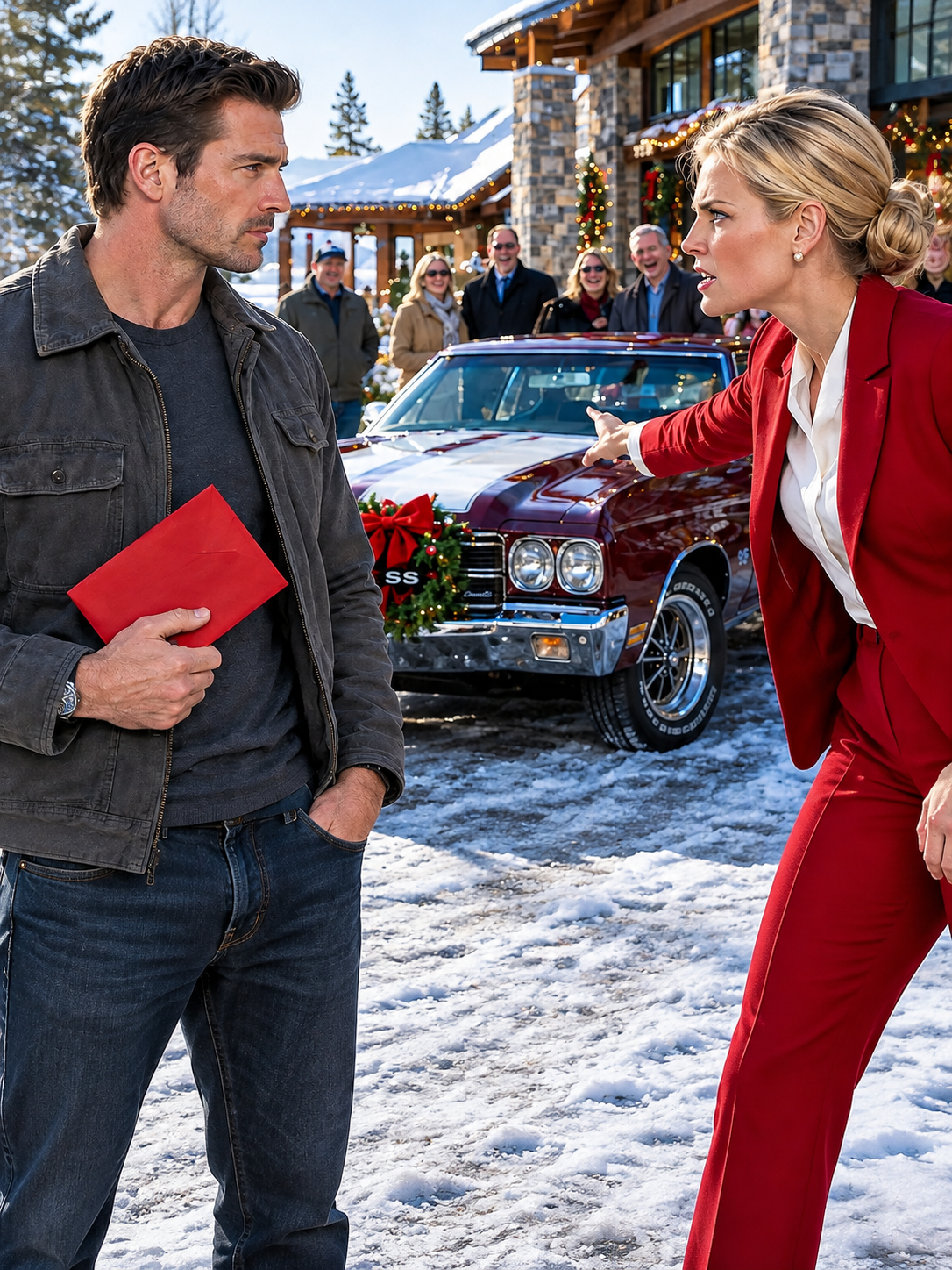
Pressure followed quickly. The HOA suspended my access to community amenities, disabled my gate code, threatened a lien over the unpaid fine, taped an orange notice to my front door demanding that Dad’s wooden Christmas sign come down, and threatened litigation over the Chevelle. At a residents’ meeting attended by nearly eighty homeowners, Vivian spoke about a resident who was damaging property values and dragging the association into costly legal battles. She never said my name, but everyone knew who she meant. I stayed away and kept documenting everything.
I mounted a small weatherproof camera inside the front gable vent of my house. It looked across the green toward the clubhouse’s side gate and private parking area. Meanwhile, Naomi traced the redevelopment agreement to Northstar Development Group. Northstar planned to acquire long-term development rights over the clubhouse property after construction. The attorney who drafted Northstar’s agreement shared a business address with a consulting firm registered to Vivian.
That overlap wasn’t proof of wrongdoing, Naomi cautioned, but it should have been disclosed to the homeowners. Then an anonymous email arrived: “If you want to know why Vivian is afraid of you, look at the HOA board minutes from 2019.”
I opened the public records portal and found minutes from a special session that October. The board had approved a paid advisory contract for the clubhouse master plan. The consultant was listed as Vivian Cross, development consultant. Five years before becoming president, she had been paid by the association to plan the clubhouse’s future. She had studied its land and surveys. She had almost certainly seen the reference to parcel 17B.
Two days before Christmas, Vivian called me personally. Her voice was suddenly warm. She asked to meet privately, without board members or attorneys. At four that afternoon, I crossed the snowy green and entered the clubhouse. The lobby smelled of pine and cinnamon. Vivian was waiting with coffee and Christmas cookies.
She said we had got off on the wrong foot and offered a quiet solution. The HOA would pay me $150,000 if I signed a permanent grant allowing it to use the land beneath the clubhouse and withdrew Naomi’s records requests. The association would cancel the penalties, restore my amenities, and remove the notices from my door. “Consider it a Christmas gift,” she said.
I asked what she thought the land was worth. She called $150,000 generous for an undeveloped strip with no independent access to a public road. I told her she wasn’t paying for land; she was paying me to stay quiet. Her smile vanished. She crossed out the amount and wrote $300,000.
“That is my final offer,” she said. “You do not want to turn this into a war. I have a board, an attorney, a development partner, and a community that already believes you are the problem. You have one lawyer and an old map.”
I slid the offer back. “I don’t want a war either,” I said. “But you’re the one who chose it.” As I left, Vivian took out her phone and called a number saved without a name. She said four words: “Activate plan B. Tonight.”
Christmas Eve arrived with light snow over Silver Pines. My house was simply decorated; I had shortened the roofline lights to the approved length, not because the HOA demanded it, but because I had never wanted anything flashy. Dad’s wooden sign still stood in the yard. The Chevelle was safe in the garage.
Naomi arrived at seven carrying a leather briefcase. She had spent two days at the county recorder’s office and the state archives. Inside were certified copies of every relevant record. Parcel 17B had never left Vance Land Holdings, and when I inherited the company, ownership passed directly to me. The county considered me the owner of record.
Naomi had also found a corrective affidavit of conveyance submitted in October, two months before the HOA notice appeared. It claimed the transfer had been completed decades earlier and that the missing signature page had simply been lost. The filing came from the law firm representing Northstar. The county rejected it because the notary stamp on the supporting page belonged to a notary whose commission had expired years before the document’s date.
“They knew,” Naomi said. “Months before they found you, they knew exactly who you were and what you owned. They tried to fix it on paper. When that failed, they came after you instead.”
There was an old easement Dad had granted when the neighborhood was first built. It allowed access, maintenance, and utilities, but did not authorize a clubhouse. Over the years, the HOA had expanded far beyond even a generous reading of it. The fitness wing, banquet hall addition, pool house, and paved parking lot had no recorded right to occupy the land.
Naomi explained that I could ask a court to remove those structures, seek twenty years of back rent, and stop the $2 million redevelopment before construction began. I looked at the fire and thought about the families who used the pool every summer. I didn’t want the clubhouse torn down or residents locked out. I didn’t want back rent from people who had never known the truth.
“I want to offer them a choice,” I said. “A proper legal lease for the land. Fair terms, recorded with the county. And a written end to every attempt to control my private property beyond what the covenants actually allow.”
Naomi asked if I was sure I wanted to give them a chance. I told her I wasn’t looking for revenge. I wanted them to understand where the line was.
Then her phone chimed. Grant Hollowell’s firm had emailed at eight on Christmas Eve. The HOA intended to sue me the morning after Christmas, seeking a declaration that it held permanent prescriptive rights to parcel 17B, plus damages for interference with community property. An emergency board meeting was set for nine the next morning. My attendance was “strongly advised.”
“Well,” Naomi said, setting down the phone, “that’s plan B.”
The morning after Christmas was bright and bitterly cold. Nearly a hundred residents filled the clubhouse banquet hall. Vivian sat on the raised platform with Marla and Grant, two thick binders stacked before him. Vivian looked rested and confident. She believed that by the end of the meeting I would be a defendant, a cautionary tale, and a man with no allies left.
I arrived at nine and sat alone in the second row. Grant spoke for twenty minutes. He argued that twenty years of uninterrupted use and improvements paid for by resident dues had created permanent rights under state law. He described me as a man holding an entire community hostage over a clerical technicality. Several residents applauded.
When he finished, Vivian asked whether I had anything to add before the board voted to authorize litigation. I stood.
“Just one question,” I said. “Are you sure you know who owns the ground under this neighborhood?”
Vivian laughed. Phil Carver laughed with her, and soon laughter rippled through the front rows. I didn’t laugh. I turned toward the back of the room.
The double doors opened. Naomi walked down the center aisle with her briefcase. The laughter faded as she climbed the steps and began placing certified documents on the board table: the chain of title, the unsigned and unrecorded conveyance, the original subdivision plat, twenty years of county tax records showing that Vance Land Holdings had paid every property-tax bill on parcel 17B, the permits for each clubhouse expansion, and the redevelopment agreement with Northstar.
Then she placed one final page on top. It stated: owner of record, parcel 17B, land beneath the Silver Pines clubhouse, Elliot Vance.
“My client does not own the homeowners association,” Naomi told the room. “But he does own the land this clubhouse is standing on. And for twenty years, he and his father paid the property taxes on it.”
The room went completely silent. Grant stared at the tax records. His prescriptive-rights argument had collapsed: the law he relied on required the association to have treated the land as its own, but it had never paid a dollar of tax on it.
Vivian shot to her feet. “That doesn’t mean he can throw us out,” she said, her voice cracking.
“No one said he wanted to,” Naomi replied.
I stood and faced the board. “I’ve never wanted to take this building from anyone. I only wanted you to stop treating me like a tenant living on your land.”
Naomi opened a small laptop and showed the room footage from the camera in my attic. On December 19, a little after eleven at night, a dark sedan had entered the private lot behind the clubhouse. A man in a long overcoat got out. Naomi identified him as Dale Prescott, a senior executive with Northstar Development Group. Vivian unlocked the side gate and let him inside. They stayed nearly an hour. The same thing happened two nights later.
Naomi was careful not to overstate what the footage proved. Board presidents could meet with business partners. But beside the rejected corrective affidavit, it showed that Vivian and her development partner knew about the ownership problem in October, two months before the fines began. They knew, and the board had kept punishing me anyway.
Murmurs spread through the hall. Loretta Dunn looked down at her hands. Phil Carver stared at Vivian. Her own attorney would not meet her eyes. I stepped toward the platform.
“I’m not going to sue you,” I said.
Vivian blinked. “Then what do you want?”
“A contract.”
Naomi handed copies down the board table. The terms were straightforward. The HOA would lease parcel 17B under a recorded agreement, with rent set by an independent appraiser and published in the annual budget. The association would cancel every penalty, notice, and lien threat against me and restore my amenities. It would not interfere with my private property beyond the plain language of the original covenants. Any future exterior rules would be written clearly, approved by homeowners, and applied equally, with a fair appeals process.
The full Northstar redevelopment agreement would be disclosed to the membership, and the board would rebuild its approval process with written standards and deadlines.
Vivian called it extortion, but the board members were reading the contract instead of nodding along with her. They understood the alternative. If the HOA refused, I could seek removal of the fitness wing, banquet hall, pool house, and parking lot. The redevelopment would collapse, and years of litigation would be paid for by residents.
Harold Beckett, the oldest board member and a retired postal carrier who had lived in Silver Pines since the first houses went up, finally spoke. He reminded Vivian that she had been the clubhouse master-plan consultant in 2019. She must have seen the survey. Why hadn’t she told the board about parcel 17B?
Vivian opened her mouth but said nothing. She looked at Grant, who stared at the table, then at Marla, who would not look back. Harold picked up his pen and signed. Phil signed next. One by one, the other board members added their names. Finally, with the whole room watching, Vivian signed too.
After the meeting, Naomi walked with me toward the parking lot. She said I could have demanded much more: a share of the $2 million redevelopment, twenty years of back rent, or enough money to become wealthy.
“I don’t need to beat them,” I said, watching children slide down the snowy hill behind the clubhouse. “I just need to make sure they can never trample on anyone else again.”
That evening, I opened my garage. The overhead light flickered on, and the Christmas lights reflected across the Chevelle’s burgundy paint. I took a faded photograph from my jacket pocket. It showed Dad at about thirty, standing beside that same car with one hand on the hood and a grin that filled the frame. I placed it gently on the driver’s seat.
“She’s home, Dad,” I whispered. “We both are.”
Silver Pines began to change. In mid-January, every homeowner received a letter announcing a new complaint and appeals process, written deadlines, and an independent review panel. The exterior rules would be rewritten in plain language and put to a vote. The full land lease for parcel 17B, including the rent, would be available to every resident. The Northstar redevelopment agreement would undergo an outside audit.
Vivian was no longer president. At a special meeting in late January, the board asked for her resignation. She submitted it the next morning in a two-sentence letter. The auditor’s review of her consulting relationship with Northstar continued. Grant’s firm quietly withdrew from representing the association. Northstar announced that it was withdrawing from the redevelopment until the land rights were resolved transparently. The luxury suites would not be built.
I kept parcel 17B, but signed the HOA a thirty-year lease, renewable, at a rent an independent appraiser considered fair. The pool would open in June, and the holiday gala would return the following December. The community lost nothing. The difference was that the association now had to respect the person who owned the ground beneath its clubhouse.
Some changes were quieter. One afternoon, I found homemade oatmeal cookies on my porch with a note in Loretta Dunn’s careful schoolteacher handwriting: “I should have known better. I’m sorry, Loretta.” The next morning she waved from her driveway, and I waved back.
A few days later, Marla knocked on my door without her blue binder. She admitted she had read the 2019 minutes years earlier and hadn’t dared to say anything. Then she told me she had sent the anonymous email that pointed me toward those minutes. I thanked her. She said she didn’t deserve thanks. I told her doing the right thing late was still doing the right thing. For the first time since I’d met her, Marla smiled.
Final Near the end of February, I drove the Chevelle out of the garage for the first time. The rebuilt engine rumbled to life, deep and steady, just as I remembered from the back seat when I was a boy. At the corner, I saw Vivian standing on the sidewalk in her camel-colored coat, carrying a cardboard box from the clubhouse office.
She asked what bothered me most about all of it. I rested my arm on the window. She said she had thought I was a man with no power, quiet, alone, and easy.
“For a long time,” I told her, “I thought the same thing about myself.” I looked toward the clubhouse, its windows warm against the dark, then down at the steering wheel Dad’s hands had once held. “Power isn’t something you use to make people afraid of you. It’s something you use to protect what’s yours.”
Vivian nodded once and walked away. I rolled up the window and drove on as soft snow began falling through the streetlights. The faded photograph of Dad rode beside me on the passenger seat.
Behind me, the clubhouse grew smaller in the rearview mirror. Beneath its foundation, beneath the pool, banquet hall, and parking lot, lay the narrow strip of land my father had outlined in red pencil. The land the association had believed it could control. The land that had always belonged to me.
They once tried to take my Christmas gift. In the end, they discovered that the ground they had been standing on had never belonged to them at all.
My father had left me more than an old car and a box of papers. He had left me the patience to look closely, the records to prove what was true, and a reminder that ownership carries responsibility.
I could have used the land to punish an entire neighborhood. Instead, I chose a fair agreement that protected the clubhouse for the families who depended on it and made the association answerable to the people it served.
The Chevelle came home for Christmas. So did a piece of my father’s history. And Silver Pines finally learned that rules mean nothing when the people enforcing them refuse to follow the truth.
THE END. I’ve shared the complete story, and I truly hope it touched your heart. If this story moved you, please , like, and share the post. Thank you for reading! ❤️
✓ Lynn R. Adams
The next morning, I went to see Naomi Sterling, a real-estate and land-use attorney who had been quietly reviewing my documents for nearly seven months. Her office occupied the top floor of a converte…