My Family Stole $8,500 for a Christmas Cruise—They Never Expected Grandma and Me to Find What They Left Behind
My Family Stole $8,500 for a Christmas Cruise—They Never Expected Grandma and Me to Find What They Left Behind
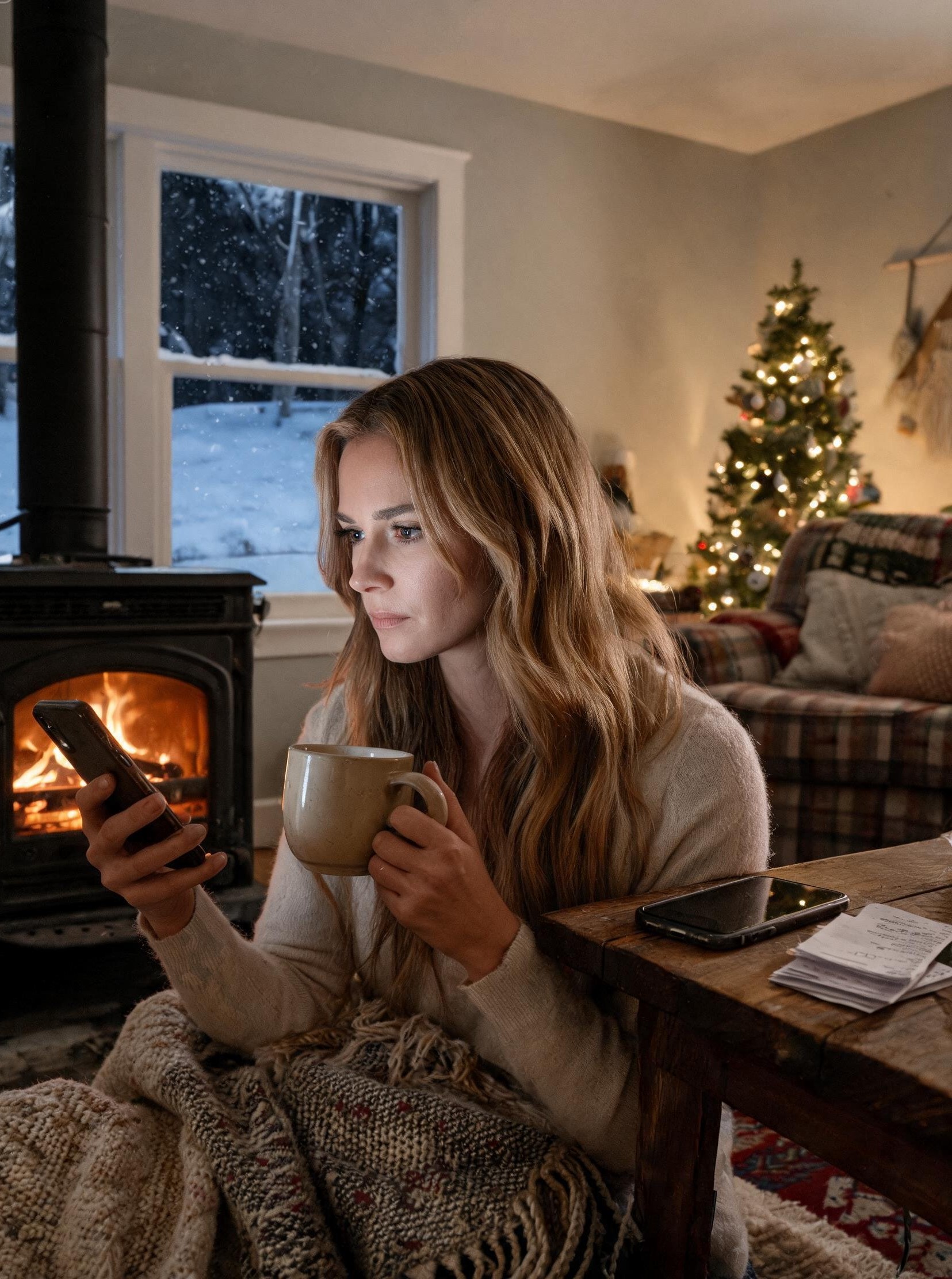
My mother stole $8,500 from my savings, took the rest of my family on a Christmas cruise, and left my eighty-one-year-old grandmother alone with three frozen dinners and an overdue heating bill. The note waiting on the kitchen table didn’t even say sorry. It said, “We used your money for the cruise. Take care of Grandma. Family helps family.” I read it twice while the Christmas tree blinked red and gold behind me. Then Grandma Evelyn looked up from a plate of cold meatloaf and whispered, “Tegan, please don’t do anything you’ll regret.”
I didn’t scream, because screaming would have given my mother exactly what she expected from me. I folded the note once, placed it beside my phone, and asked Grandma when everyone had left. “Yesterday before sunrise,” she said, rubbing one swollen knuckle with her thumb. Outside our Pittsburgh suburb, snow was piling against the windows, and the driveway still held the tire marks from my father’s SUV. They had been planning this long before Christmas morning.
I had paid when my younger brother, Liam, couldn’t cover his daughter’s school tuition. I had paid when my sister, Maya, wrecked her Jeep and called me from the dealership crying. I had paid when Dad claimed his gambling debt was “just one bad weekend.” I had paid when Mom said Grandma’s prescription coverage had changed and someone needed to help. I had paid, and paid, and paid, until everyone in my family mistook kindness for automatic withdrawal.
Grandma watched me straighten the stack of mail beside her elbow. Most envelopes were unopened, but one had a red FINAL NOTICE stamped across the front. The gas company wanted $742 within six days, although my mother had told me two weeks earlier that Grandma’s utilities were fully covered. When I asked about groceries, Grandma pointed toward a cabinet containing two cans of soup, oatmeal, saltines, and instant coffee. That was when my anger stopped feeling hot.
Cold anger is useful. Hot anger throws plates, sends reckless texts, and says things lawyers later wish you hadn’t said. Cold anger checks account numbers, photographs documents, creates folders, and remembers passwords people assume you forgot. I opened my laptop at the kitchen table while Grandma quietly finished dinner. By midnight, the Christmas lights were still glowing, but every other light in the house felt different.
The first cruise payment had been made twenty-six days earlier. The second payment matched the amount missing from my emergency account after Mom had asked me to transfer money for what she called Grandma’s “urgent dental procedure.” There was no dental procedure. Grandma had not seen a dentist in fourteen months, and when I showed her the transaction, her lips pressed into a thin line. “Rachel said that money came from her,” she murmured.
Rachel Walker was my mother, and she had spent thirty-four years teaching me that questioning her was disrespectful. She could make a request sound like an obligation and an obligation sound like love. Her favorite sentence was, “After everything this family has done for you,” although nobody could ever explain exactly what that everything was. I used to argue with her, then apologize, then send money anyway. That night, I didn’t argue with anyone.
At a.m., Grandma carried an old metal cashbox into the kitchen and placed it beside my laptop. Inside were pension statements, canceled checks, photocopies of her Social Security card, and a handwritten ledger dating back ten years. I expected to find a few suspicious withdrawals. Instead, I found monthly transfers to my mother, cash advances to Liam, and payments to credit cards Grandma said she had never owned. Then I reached the final page and saw something that made me sit perfectly still: a $38,000 home-equity withdrawal approved six months earlier.
“Grandma, did you borrow against the house?” I asked. Her eyes moved from the ledger to my face, and for three full seconds she said nothing. “No,” she finally whispered. I turned the laptop toward her and showed her the lender’s name, the date, and the last four digits of an account ending in 6119. Grandma’s hands began to tremble before mine did.
The Walker house had been hers since 1978. She and my grandfather had bought it when the neighborhood still had empty lots and maple saplings thinner than broom handles. Grandpa died sixteen years ago, but Grandma never refinanced, never took out a second mortgage, and never borrowed against the property. She had one rule about the house. “You never gamble with the roof over your head.”
Yet someone had gambled with hers. I spent the next hour tracing transfers from the loan account. Twelve thousand dollars had gone toward Maya’s credit cards, nine thousand had covered one of Dad’s gambling debts, and another seven thousand had landed in an account belonging to Liam. The remaining money disappeared through three transfers I couldn’t identify. One destination was an LLC called Winter Harbor Holdings.
At the next morning, I called attorney Natalie Shaw. I had met Natalie months earlier while driving Uber on weekends to rebuild savings after another “family emergency.” She specialized in elder exploitation, and she remembered me because I had returned the leather briefcase she left in my back seat without opening it. Her voice changed when I told her about the home-equity loan. “Do not confront them yet,” she said.
Natalie had me freeze Grandma’s credit, secure her bank accounts, save copies of every statement, and photograph every page in the cashbox. She also told Grandma to revoke any financial authorizations she did not recognize. We drove through heavy snow to the bank just before noon. The branch manager, a narrow-faced man named Paul Mercer, smiled until Grandma asked who had authorized the loan. Then his smile vanished.
He disappeared into his office and returned carrying a file. “Mrs. Walker, we have notarized authorization bearing your signature,” he said, placing a photocopy between us. Grandma stared at it for less than two seconds. “That isn’t my signature,” she said. Paul reached for the page, but I put my phone beside it and took three photographs first.
The document listed Rachel Walker as Grandma’s authorized financial agent. It had been witnessed by someone named Cynthia Vale, whose address was a mailbox store near the airport. The notary stamp belonged to a man named Dennis Crane. I searched his name from my phone while Paul kept repeating that the bank would investigate internally. Dennis Crane had died eleven months before the document was supposedly notarized.
That was our first real victory. Paul’s face turned pale when Natalie joined the conversation by speakerphone and calmly requested preservation of all security footage, account access logs, loan documents, IP records, and internal communications connected to Grandma’s accounts. He stopped saying “family misunderstanding.” He started saying “potential fraud.” And twenty minutes later, while we were still sitting inside the branch, Grandma’s phone buzzed with a text from my mother aboard the cruise ship: “Hope you two are enjoying your little Christmas together. Don’t touch anything in my office.”
Mom’s office was the spare bedroom across from Grandma’s room. She had started using it years earlier after telling everyone she needed space to “handle family finances,” which sounded responsible enough that nobody questioned it. The door was locked when we returned from the bank. Grandma stared at the brass knob and said, “It’s my house.” Then she handed me the spare key from her sewing drawer.
Inside, Rachel had arranged everything beautifully. Bills were stacked in labeled trays, tax returns sat in binders, and family photographs lined the desk as if organization could make theft respectable. I photographed the room before touching anything. Then Grandma opened the bottom file drawer. A folder labeled ESTATE PLAN sat directly in front.
Inside was a draft power of attorney, a new will, and an unsigned property transfer. The new will left the house to Rachel and divided Grandma’s remaining accounts among Rachel, Liam, and Maya. My name appeared once, in a paragraph explaining that I had “already received substantial financial assistance during Evelyn Walker’s lifetime.” I almost laughed. They had been stealing my money while preparing paperwork to claim Grandma had supported me.
Grandma lowered herself into Rachel’s desk chair. “I signed something last summer,” she said quietly. “Your mother told me it was permission to speak to Medicare.” I asked if she remembered where. “Here,” she said, pointing toward the desk. “Rachel covered most of the page with a yellow folder and said the signature line was all that mattered.”
I found three carbon copies in the trash bin behind the filing cabinet. Each showed Grandma’s signature cut from one document and positioned beside unrelated text. Someone had been practicing alignment. I photographed those too. Then, taped beneath the bottom drawer, I found a flash drive.
Natalie told me not to plug it into my computer. Her investigator collected it that afternoon and made a forensic copy. We waited until nearly midnight for her call. When it came, she skipped hello. “Tegan, the cruise is not the biggest problem.”
The flash drive contained scans of Grandma’s driver’s license, tax records, Social Security card, bank statements, and signatures. It also contained draft emails between Rachel and someone identified only as P.M. discussing “closing,” “vacancy,” and “removing the remaining occupant after transfer.” There was a spreadsheet with estimated proceeds from the sale of Grandma’s house. Rachel expected to clear $311,000.
Grandma sat across from me while Natalie spoke, her old hands folded around a mug she had forgotten to drink from. “Closing when?” I asked. Natalie paused. “According to this spreadsheet, January third.” That was five days away, and my family’s cruise returned the morning of December thirtieth. They hadn’t left Grandma alone because they were careless; they had left because they expected me to keep her occupied while they finished something much larger.
The next three days became a quiet operation. Natalie filed emergency notices challenging any transfer of the property. The lender froze the home-equity account, Grandma changed every password, and the county fraud unit opened an investigation after confirming the dead notary’s stamp had been used repeatedly. I said nothing in the family group chat. I even liked one of Maya’s cruise photographs.
That picture showed Mom in a white linen dress, Dad holding a tropical drink, Liam grinning behind sunglasses, and Maya leaning against the railing with the ocean behind her. The caption said, “Nothing matters more than family.” Grandma looked at the photograph and gave a dry little laugh. “Save that one,” she said.
I did. I saved the photos, the messages, the bank records, the forged paperwork, the screenshots, and the note they had left on Christmas. By the time their ship docked, Natalie had assembled three binders thick enough to stop a door. But one thing still bothered me. Nobody knew who P.M. was.
Their SUV hit the driveway at 10:42 on Tuesday morning. I watched through the living-room curtains while Dad wrestled four suitcases out of the back and Maya complained about the snow. Liam carried duty-free liquor under one arm. Mom walked toward the house wearing sunglasses despite the gray sky. She looked completely relaxed.
“Couldn’t you shovel this?” she called before reaching the porch. I opened the door. “Welcome home.” She stopped when she saw me, then glanced past my shoulder toward Grandma. Something small changed around her mouth.
Nobody hugged Grandma. Nobody asked whether she had eaten, whether the heat worked, or whether she had spent Christmas alone. Mom removed her gloves and asked why I was still there. “You told me to take care of her,” I said. Maya rolled her eyes. “Please don’t turn this into one of your martyr performances.”
I led them into the kitchen. Six chairs surrounded the old oak table, but only four had been pulled out for them. Grandma sat beside me wearing her navy cardigan and pearl earrings. Natalie Shaw sat on the other side of the table with three binders stacked in front of her.
Mom froze. Dad said, “Who the hell is this?” Natalie introduced herself as Grandma’s attorney. Liam laughed once, then stopped when nobody joined him. Maya looked toward the door as if calculating how quickly she could leave.
I slid the Christmas note across the table. “We can start with the $8,500.” Mom exhaled and actually smiled. “Tegan, don’t be ridiculous, we borrowed that money.” “Without asking?” I said.
“You would have said yes anyway.” That sentence landed harder than an apology would have. It explained everything. Not just what they had done, but what they believed about me.
I opened the first binder. Cruise charges, transfers, pension withdrawals, unauthorized credit accounts, loan proceeds. Dad’s face darkened as each page turned. Maya crossed her arms. Liam started bouncing one knee under the table.
Then I opened the second binder. The fake authorization lay on top. Grandma leaned forward. “Explain why a dead man notarized my signature.”
Mom’s composure cracked for the first time. She looked at the document, then at Dad. “I don’t know anything about that.” Dad turned toward her slowly. “Rachel.”
She ignored him. “Tegan has always had a talent for making things look worse than they are.” Natalie placed a copy of Dennis Crane’s death record beside the notarized document. Mom stopped talking.
The silence lasted long enough for the refrigerator motor to click off. Dad asked where the home-equity money had gone. Maya looked at him sharply. That was when I realized he did not know about the loan.
“I thought you knew,” I said. Dad stared at the transaction summary. “I knew she paid my debt,” he whispered. “She told me it came from an investment account.”
Mom’s head snapped toward him. “Don’t start.” But something had shifted, and everyone could feel it. The united family that had stepped through the door ten minutes earlier was beginning to fracture.
Liam blamed Mom. Maya blamed Liam. Dad demanded to see every transfer with his name attached. Mom told all three of them to shut up. Grandma never raised her voice once.
“You left me in this house with no groceries,” she said. Everyone stopped. “You took money from me, money from Tegan, and perhaps my home, and you still walked through that door complaining about snow.” Mom’s face hardened. “Mother, I was trying to keep this family together.”
Grandma nodded slowly. “No, Rachel.” Her voice was quiet enough that everyone leaned closer. “You were keeping everyone dependent on you so nobody would look too closely at what you were doing.”
Natalie slid one final envelope across the table. Inside were notices revoking Mom’s financial authority, freezing disputed transactions, and restricting any property transfer. There was also a demand for restitution. Mom skimmed it, then laughed.
“You really think you’ve won?” she asked me. “I think you have forty-eight hours to cooperate before the county investigator receives the full file.” Her laugh vanished. “You’d destroy your own family.”
I looked at the woman who had taught me that love meant never keeping score. “No.” I closed the binder. “I finally started keeping records.”
Grandma stood and pointed toward the front door. “Get out of my house.” Maya’s mouth fell open. Liam cursed under his breath.
Dad remained seated for another few seconds, staring at Mom like he had never seen her clearly before. Then he stood and walked out without helping her with a single bag. Maya followed, crying angrily, not sadly. Liam shoved his chair back so hard it hit the wall.
Mom was the last one standing. She picked up the Christmas note and looked at it, perhaps realizing for the first time how much damage a single careless sentence could do. Then she leaned close to me. “You still don’t know who you’re dealing with.”
I held her gaze. “Neither do you.” She walked out into the snow without her gloves. Natalie waited until the SUV disappeared before turning toward me.
“What did she mean?” Grandma asked. Natalie didn’t answer immediately. She opened her laptop instead. “That,” she said, “is exactly what I’m worried about.”
Within forty-eight hours, Dad returned $9,200 through his attorney. Maya sold jewelry and emptied an investment account to repay $18,400 she admitted receiving. Liam agreed to wage garnishment rather than risk a criminal referral for the money directly traceable to him. Mom paid nothing. She stopped answering everyone.
The county investigator, Detective Aaron Bell, visited the house on Friday. He was a patient man in a brown overcoat who listened more than he spoke. He photographed Rachel’s office, collected copies of the forged documents, and asked Grandma the same questions twice using different wording. Grandma never changed a detail.
When Bell asked whether Rachel had accomplices, Grandma looked toward me. I mentioned the initials P.M. He wrote them down without reaction. “Could be meaningless,” he said. “Could be the most important thing in the file.”
The bank’s internal investigation produced access logs two days later. Grandma’s accounts had been opened after business hours on four occasions. Each login originated from a workstation assigned to branch manager Paul Mercer. P.M.
Natalie called me from her car. “Do not contact Mercer.” My stomach tightened. “He sat across from us pretending he was shocked.”
“He may have been shocked,” she said. “Just not for the reason we thought.” The bank had placed Mercer on administrative leave that morning. His office computer was already being preserved for investigators.
That should have felt like victory. Instead, it made the whole thing feel larger. Rachel had not just manipulated relatives around a kitchen table. She had someone inside a bank.
Three weeks after Christmas, Grandma and I moved temporarily into a two-bedroom apartment downtown. Natalie wanted her away from the house while investigators worked. Grandma complained about the elevator, then secretly admitted she loved the view from the ninth floor. I bought her a motorized recliner with part of the money I recovered.
We ate dinner every night at the same oak table we brought from the house. The scratches were still there from my childhood homework. One corner still bore a dark ring from Grandpa’s coffee mug. Grandma refused to replace it.
“Some things survive ugly people,” she said. I laughed. “That sounds like something you planned to put on a pillow.” She smiled and reached for her tea.
By February, the home-equity loan had been voided pending the fraud case. The forged power of attorney was formally revoked. Prosecutors were reviewing charges involving elder exploitation, identity theft, forgery, and bank fraud. Rachel still insisted through her attorney that everything had been done “for Evelyn’s benefit.”
Grandma’s response was four words. “She can explain it downtown.” I had never loved her more.
Dad filed for divorce. Maya stopped sending dramatic messages after Natalie warned that every communication would be preserved. Liam’s wife took their daughter and moved to Ohio. Family group chat activity dropped from fifty messages a day to zero.
I didn’t celebrate. Justice wasn’t champagne or fireworks. It was sleeping seven hours without checking whether someone had stolen from us while we rested.
One rainy Thursday afternoon, Natalie called and asked me to come to her office. Grandma wanted to join us. I told her she could stay home. She put on her coat without responding.
Natalie’s office overlooked Grant Street, where headlights smeared across wet pavement below. Detective Bell was already there. So was a woman from the county recorder’s office. Nobody offered coffee.
Natalie placed a document on the conference table. “We found the filing connected to Winter Harbor Holdings.” I recognized the company immediately. It had received part of the missing home-equity money.
“The transfer was never completed,” I said. “Correct.” Natalie tapped the page. “Because this document wasn’t transferring Grandma’s current home.”
I looked at Grandma. She looked equally confused. Detective Bell opened a second folder.
The property listed belonged to a small commercial building on the north side of Pittsburgh. Grandma stared at the address. Then all the color left her face. “That belonged to Thomas.”
Thomas had been my grandfather. He had died, as far as I knew, with nothing except the family house, an old Buick, and a union pension. I had never heard about a commercial building.
Grandma gripped the edge of the table. “He sold that before he died.” Bell shook his head. “According to county records, he didn’t.”
The room went silent. Bell explained that Grandpa had transferred the building into a trust eighteen years earlier. Grandma was listed as beneficiary. The property had been generating rent ever since.
“How much?” I asked. Natalie didn’t answer immediately. That was the first sign the number was bad.
“Approximately $6,800 per month.” My mouth went dry. Eighteen years of rent was more than a million dollars before expenses.
Grandma stared at Natalie. “I have never received a penny.” Bell nodded. “We know.”
My first thought was Rachel. My second was Paul Mercer. But Bell’s expression told me I was still thinking too small.
“Who controlled the trust?” I asked. Bell pushed a photocopy across the table.
The signature at the bottom belonged to Grandpa. The trustee’s name did not belong to my mother, my father, Paul Mercer, Liam, or Maya. It belonged to someone I hadn’t seen since I was eleven years old.
My uncle Daniel.
Grandma made a sound beside me. Not a cry. More like air leaving a room.
“Daniel is dead,” she whispered. Natalie looked at Detective Bell.
Bell folded his hands. “Mrs. Walker, we don’t believe he is.” Grandma’s fingers went rigid against the tabletop. “He died in Arizona twenty-three years ago.”
“No,” Bell said. “Someone using his Social Security number died in Arizona.” He slid one final photograph toward us.
The picture had been taken less than two months earlier outside a bank in Scottsdale. A silver-haired man was stepping out of a black SUV. Beside him stood Paul Mercer.
And on the other side, smiling directly toward the camera, was my mother.
For the first time since Christmas, I felt fear instead of anger. Not panic. Not helplessness.
Calculation.
I looked at the date stamped beneath the photograph. November 4. Three weeks before Mom asked me for the money she later used for the cruise.
Grandma whispered, “Rachel knew he was alive.” Natalie closed the blinds.
Detective Bell reached into his coat and removed another sealed evidence bag. Inside was a key attached to a brass tag stamped with a number. “We recovered this from Mercer’s office,” he said.
I leaned closer. The tag read 317.
“What does it open?” I asked. Bell looked at Grandma instead of me.
“A safe-deposit box registered to Thomas Walker’s trust.” Grandma’s breathing changed. Natalie put one hand over hers.
Bell’s next words were careful. “The box hasn’t been accessed in seventeen years.” I waited.
“Until Christmas Eve.”
Nobody moved. Rain tapped against the office window.
Christmas Eve was the day before I found the note. The day before I learned my family had stolen $8,500. The day before Grandma and I began digging.
I thought the cruise had been the betrayal. I thought the forged loan had been the crime. I thought exposing Paul Mercer had revealed the conspiracy.
I was wrong.
The cruise had only gotten them out of town.
And whatever my mother took from safe-deposit box 317 on Christmas Eve was important enough that she had spent the next month destroying her own family to keep us from finding it.
✓ Lynn R. Adams
My Family Stole $8,500 for a Christmas Cruise—They Never Expected Grandma and Me to Find What They Left Behind My mother stole $8,500 from my savings, took the rest of my family on a Christmas cruise…