My Family Gave My Ex My $12 Million Birthday Estate—Then He Saw Who Walked Into Dinner Holding My Grandfather’s Sealed Will
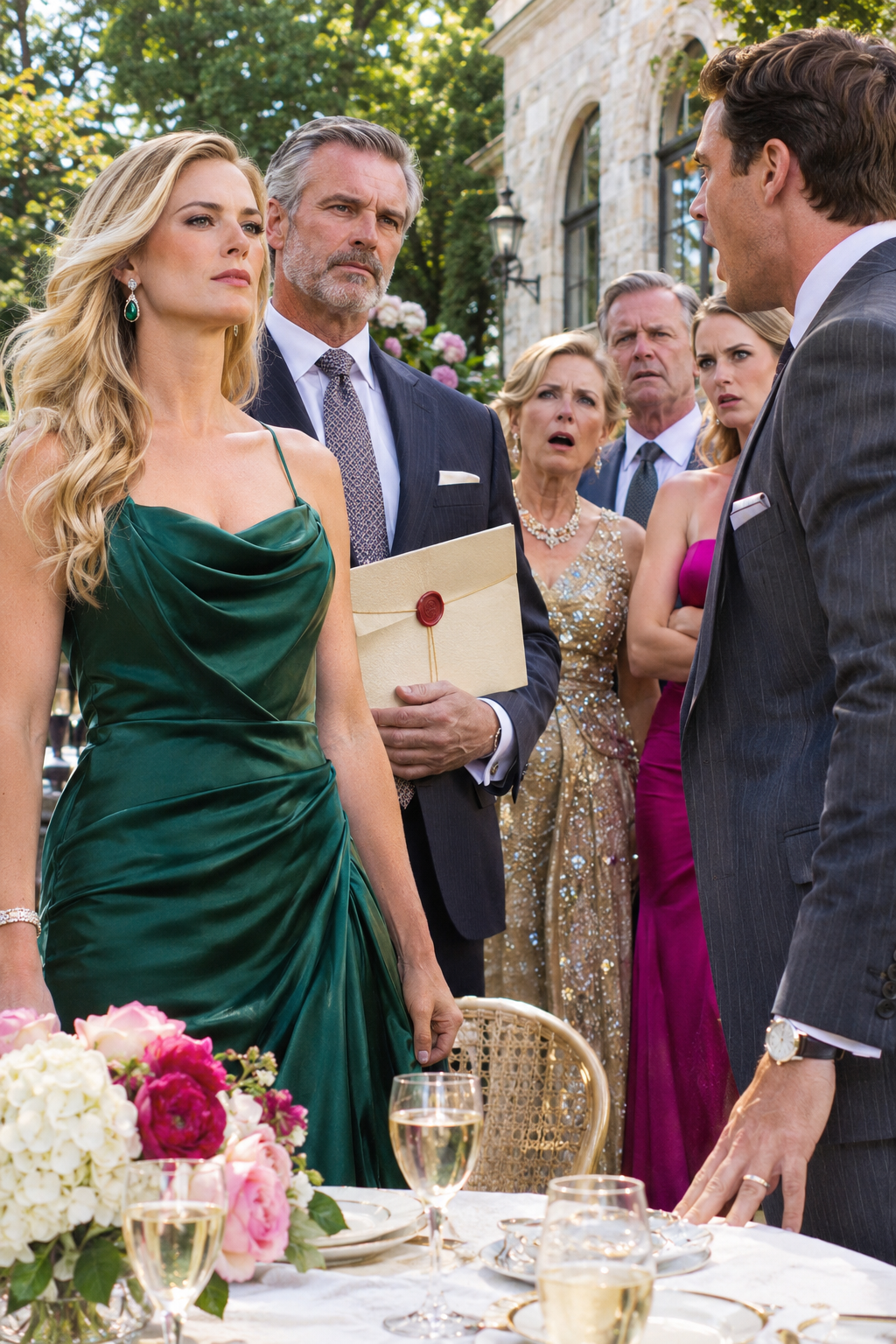
My Family Gave My Ex My $12 Million Birthday Estate—Then He Saw Who Walked Into Dinner Holding My Grandfather’s Sealed Will
On my thirty-fifth birthday, my mother handed my ex-husband the keys to the house my grandfather had promised me and told thirty-eight dinner guests that I had “lost my inheritance by embarrassing the family.”
Then my ex raised his champagne glass inside a twelve-million-dollar estate he believed he owned and smiled at me like he had finally buried me.
I didn’t argue.
I didn’t tell him the deed in his pocket wasn’t the deed that mattered.
And I definitely didn’t tell him that the quiet man walking beside me into the restaurant that night had spent the last eleven months protecting the only document my family had never managed to find.
My ex saw my date.
His champagne glass stopped halfway to his mouth.
Then his face went pale.
Three days earlier, my mother had thrown my clothes onto the front lawn.
Four days earlier, my younger sister had changed the locks.
Five days earlier, my ex-husband had moved back into the family estate with his new fiancée.
And six days earlier, I had found my grandfather’s old brass key exactly where he told me it would be if the day ever came when my own family decided I was worth more dispossessed than loved.
I had spent twelve years paying the property taxes they forgot.
I had spent twelve years covering payroll when my father’s construction company nearly folded.
I had spent twelve years driving my grandfather to chemotherapy while everyone else sent flowers.
I had spent twelve years being called “the dependable one” whenever somebody needed money and “the difficult one” whenever I asked where it went.
I had spent twelve years protecting a family that had apparently spent the same twelve years preparing to erase me.
The funny thing about betrayal is that sometimes it arrives screaming.
Sometimes it breaks a plate.
Sometimes it empties a bank account.
Mine arrived in a cream envelope with my mother’s handwriting on the front.
That was all.
No “happy birthday.”
Just my name in the same narrow blue ink she used on thank-you cards and funeral envelopes.
The envelope had been waiting on the kitchen island of my grandfather’s house when I came home from work that Thursday evening.
I had lived there for five years.
Not because I couldn’t afford my own place.
Because my grandfather, William Bennett, had asked me to move in after his second heart attack.
The house sat on seventy-six acres outside Lexington, Kentucky, behind a stone wall older than my father. White oak trees lined the drive. There were two barns, a spring-fed pond, a carriage house, three tenant cottages, and a limestone main house built in 1911 by my great-great-grandfather.
Everyone in my family called it Bennett Hall.
My grandfather called it home.
I called it the place where I learned how quietly people could calculate around a dying man.
My mother, Caroline, visited every Sunday once his doctors stopped using the word treatment and started using the word comfort.
My father, Richard, came when attorneys were scheduled.
My sister, Natalie, came when photographers were present.
My ex-husband, Grant Mercer, came only twice.
The first time, he brought whiskey.
The second time, he asked my grandfather whether he’d ever considered putting the acreage into a development trust.
Grandpa looked at him for five full seconds.
Then he said, “You’re either very brave or very stupid.”
Grant laughed.
Grandpa didn’t.
That was seven months before Grant and I divorced.
And sixteen months before Grandpa died.
By the time I opened my mother’s cream envelope, Grant had been my ex-husband for nearly two years.
Inside was a single sheet of heavyweight stationery.
There will be a family dinner Saturday at Bennett Hall regarding final estate matters. Your presence is expected.
You should prepare yourself for changes.
I read it twice.
Then I set it beside the sink and poured myself sparkling water.
There had been a time when three sentences like that would have made my stomach knot.
That version of me had died slowly.
First during my marriage.
Then during the divorce.
Then beside my grandfather’s hospital bed at in the morning when he squeezed my hand with what little strength he had left and whispered something nobody else knew.
“When they get greedy, Emily, let them.”
I thought he was confused.
He looked toward the old walnut desk in the corner of his bedroom.
“Blue drawer,” he whispered.
I leaned closer.
His fingers tightened around mine.
“When they think they’ve won.”
Those were the last complete words my grandfather ever spoke to me.
He died thirteen hours later.
For eleven months, I never opened the blue drawer.
I didn’t need to.
Not until that Thursday evening.
Not until the cream envelope.
I walked upstairs.
The walnut desk had remained exactly where Grandpa left it.
His fountain pen rested in its silver tray.
His reading glasses sat folded on a copy of the Lexington Herald-Leader.
There were still two lemon candies in the little glass bowl my sister had tried to throw away because she said they looked “sad.”
I opened the left cabinet.
Inside were four shallow drawers.
Three were brown.
One had been painted blue on the inside.
It looked empty.
I slid my fingers along the wood.
Then I remembered something Grandpa had once told me while teaching me to restore old furniture.
The best hiding place isn’t underneath.
It’s behind.
I removed the drawer completely.
On the back panel was a brass key taped beneath a faded index card.
The handwriting was shaky.
EMILY — ONLY AFTER THEY TAKE THE HOUSE.
Underneath that:
CALL THOMAS VALE.
I knew the name.
Everyone in Lexington knew the name.
Thomas Vale had been my grandfather’s attorney for nearly forty years.
His son, James, had taken over most of the firm after Thomas retired.
But Grandpa’s note didn’t say James.
It said Thomas.
I called the number written below the name.
A man answered on the second ring.
“Mr. Vale?”
“My name is Emily Bennett Mercer.”
Another pause.
Then the old man exhaled.
“So they finally did it.”
I stared at the blue drawer.
“Did what?”
“Tried to take Bennett Hall.”
I didn’t answer.
Thomas Vale chuckled without humor.
“Your grandfather said you wouldn’t call until they had.”
My hand tightened around the phone.
“There’s a family meeting Saturday.”
“Who’s running it?”
“My mother.”
“And Richard?”
“My father will be there.”
“Grant Mercer?”
The question chilled me.
“How do you know Grant is involved?”
“Because your grandfather knew exactly what kind of man he was.”
I walked to the window.
Rain had begun to speckle the glass.
“What did my grandfather leave you?”
Thomas was silent for a moment.
Then he said, “Not over the phone.”
“Can you come Saturday?”
That surprised me.
“Because they can’t know I’m involved yet.”
I stared out at the wet pastures.
“Then what am I supposed to do?”
“Whatever they tell you.”
I turned from the window.
“Excuse me?”
“Let them remove you.”
“They’re trying to take my home.”
“And you want me to let them?”
His voice changed.
The amusement disappeared.
What replaced it sounded like forty years of courtroom patience.
“Because, Emily, your grandfather spent the last year of his life building a trap around anyone who tried.”
Saturday arrived cold and bright.
By ten that morning, there were fourteen cars in the drive.
My parents.
Natalie and her husband, Blake.
Two cousins.
Three uncles.
My father’s accountant.
A real estate broker.
My mother’s attorney.
And a black Range Rover I recognized before the driver’s door opened.
Grant stepped out wearing a navy sport coat and the expression he used whenever he believed he was the smartest person in a room.
I stood at the front window.
He looked toward the house.
Then another door opened.
A woman climbed out.
Sabrina Cole.
Thirty-one.
Pilates instructor.
Grant’s fiancée.
She was wearing the same Cartier bracelet I once found charged to our marital account two weeks before Grant admitted he was sleeping with her.
My mother came into the foyer behind me.
“You knew they were coming,” I said.
She adjusted a pearl earring.
“Sabrina too?”
“Don’t make this vulgar.”
My mother was sixty-two and still capable of making disappointment sound aristocratic.
Her silver-blonde hair was cut perfectly at the jaw. Her cream pantsuit probably cost more than the truck our groundskeeper drove.
“You invited my ex-husband and the woman he cheated with into Grandpa’s house for an estate meeting.”
“Grant has a financial interest now.”
“What interest?”
Her eyes moved to mine.
There it was.
The little spark.
“You’ll find out.”
My father entered from the dining room.
“Let’s get this over with.”
Richard Bennett had spent his adult life being mistaken for a self-made man.
The truth was less cinematic.
Grandpa had funded his first company.
Then his second.
Then bailed out the third.
When Bennett Commercial nearly collapsed during the recession, I loaned the company $420,000 from the proceeds of selling the small software firm I’d built in my twenties.
My father called it a bridge loan.
He never repaid it.
I never sued.
That word had cost me more money than my divorce.
We gathered in the library.
Grant sat near the fireplace with Sabrina.
Natalie sat beside Mom.
Dad remained standing.
The attorney, a narrow-faced woman named Patricia Sloan, opened a leather folder.
“Emily,” she began, “there have been developments regarding your grandfather’s estate.”
“I assumed.”
My sister smirked.
Patricia continued.
“As you know, Mr. Bennett’s probated will distributed financial assets among family members while placing Bennett Hall and associated acreage into the Bennett Preservation Trust.”
That had been the public document.
The trust named my mother and father as co-trustees.
It granted me lifetime residency.
Which, apparently, we were about to discuss.
Patricia slid a page across the table.
“Your parents, acting as trustees, have determined that continued maintenance of the property is financially imprudent.”
I looked at my father.
“Interesting.”
His jaw tightened.
Patricia continued.
“They have authorized a restructuring.”
“The property will be transferred into a commercial holding entity in exchange for equity.”
I looked toward Grant.
There it was.
The answer.
Grant had spent the final two years of our marriage building Mercer Development, a real estate company specializing in luxury communities.
He had wanted Bennett Hall.
He had always wanted Bennett Hall.
He just hadn’t wanted me enough to wait for it.
“How much?” I asked.
My father folded his arms.
“Thirty-six million projected development value.”
I almost laughed.
Not because it was funny.
Because Grandpa had predicted it almost exactly.
Grant leaned forward.
“The property’s underutilized, Emily.”
I looked at him.
“You brought Sabrina to explain zoning?”
Her smile disappeared.
My mother snapped, “Enough.”
Grant spread his hands.
“We can preserve the main house. Maybe twenty acres around it. The rest becomes something productive.”
“Something productive.”
“Executive homes. Equestrian lots. Possibly a boutique resort component.”
I looked at the windows.
Beyond them, the south pasture rolled toward the tree line.
That field was where Grandpa taught me to drive.
Where my grandmother’s memorial oak stood.
Where my great-grandfather had buried three workhorses during the Depression because, according to family legend, he refused to sell them to a rendering plant.
Productive.
I turned back to Patricia.
“What happens to my lifetime residency?”
She hesitated.
That was when I knew.
My mother answered instead.
“It terminates upon restructuring.”
“According to what clause?”
My father slammed a hand on the mantel.
“Stop acting like this is court.”
“No,” I said calmly. “If you’re removing me from my home, I’d like to know which clause.”
Patricia looked uncomfortable.
“Section fourteen allows termination when trustees determine occupancy interferes with preservation or financial stability.”
“Do I interfere with financial stability?”
My sister laughed.
“You barely contribute.”
I looked at her.
Natalie had not paid a utility bill at Bennett Hall in her life.
I paid the annual insurance.
I paid the eastern barn restoration.
I paid for the septic replacement.
I had personally covered $82,000 in property taxes during the year Grandpa’s accounts were frozen by a bank dispute.
I reached into my bag.
My mother noticed.
Her posture stiffened.
I took out nothing except a small notebook.
Grant watched me carefully.
He knew me.
Or he thought he did.
He expected resistance.
I gave him none.
Patricia cleared her throat.
“The trustees have requested that you vacate within seventy-two hours.”
Even Natalie stopped smiling.
Three days.
My mother crossed one leg over the other.
“You can stay at the Lexington condo until you decide what you’re doing.”
“The condo Grandpa gave Natalie?”
My sister’s smile returned.
“Well, technically, Blake and I are listing it.”
Of course they were.
I looked at my parents.
“You’ve planned this for a while.”
Dad didn’t answer.
“It isn’t personal.”
That made me look directly at him.
Of all the lies Grant had ever told me, that one might have been the laziest.
“You’re moving into my grandfather’s property with the woman you cheated on me with, and it isn’t personal?”
Sabrina’s cheeks colored.
Grant’s expression hardened.
“I’m not moving in.”
My mother glanced away.
That tiny movement told me he was.
Not a big smile.
Just enough.
Grant noticed.
“What are you smiling at?”
“I’m wondering how much you paid for the family.”
My father stepped forward.
“That’s enough.”
“No,” Grant said.
His eyes stayed on me.
“How much do you think I paid?”
I closed my notebook.
“Probably less than they were worth to me.”
My mother’s face hardened.
“Your bitterness is exactly why this has become necessary.”
Everyone watched.
“Is there anything else?”
Patricia blinked.
“You understand you have seventy-two hours?”
“No legal challenge?”
“Not today.”
Grant’s eyes narrowed.
My father looked almost relieved.
Natalie looked delighted.
Mom looked suspicious.
They had expected screaming.
They had expected bargaining.
They had expected the old Emily who would spend six hours producing spreadsheets to prove everybody else wrong.
Instead, I walked to the doorway.
Then Patricia said, “There is one additional document.”
She removed a deed packet.
“This reflects the trustees’ transfer authorization.”
She slid it toward Grant.
He didn’t touch it immediately.
Smart enough for theater.
Not smart enough for restraint.
Finally he picked it up.
Thirty-six million dollars of imagined future development reflected in twelve pages of paper.
My mother smiled.
Sabrina touched his arm.
My sister whispered, “Congratulations.”
And Grant looked at me.
He wanted the reaction.
He needed it.
So I gave him one.
“Keep it somewhere safe.”
That evening, Thomas Vale met me at a diner off Versailles Road.
He was eighty-one.
White hair.
Brown tweed jacket.
A cane beside his chair.
He drank black coffee and ate half a slice of apple pie while I described the meeting.
When I finished, he nodded.
“They signed?”
“Apparently.”
“Transfer authorized?”
“Grant accepted?”
Thomas leaned back.
“Your grandfather was afraid they’d hesitate.”
I stared at him.
“You’re enjoying this.”
“A little.”
He pulled a sealed envelope from inside his coat.
The paper was yellowed at the edges.
My name was written on the front.
“This is from William.”
I reached for it.
Thomas covered it with his hand.
I almost laughed.
“Everybody in this family has become obsessed with telling me when I’m allowed to open things.”
“This one matters.”
“More than being evicted?”
He removed his hand.
“But first I need to ask you something.”
“Do you still have the brass key?”
I took it from my pocket.
Thomas’s eyes settled on it.
“That key doesn’t open a door.”
“What does it open?”
He gave me an address.
I recognized it.
Central Kentucky Trust Company.
Private banking.
“What’s in the box?”
Thomas took another bite of pie.
“Your grandfather called it the conscience of the Bennett family.”
Two days later, I packed.
Not everything.
Just what belonged to me.
Grandma’s recipe cards.
My grandfather’s wristwatch.
The framed photograph of us standing beside the pond when I was nine, both of us muddy from trying to rescue a calf that had broken through a fence.
I left the furniture.
The silver.
Everything my family might later accuse me of stealing.
By Sunday afternoon, Natalie had arrived with movers.
My mother came with her.
She stood in the upstairs hallway while I carried a box toward the stairs.
“You’re being dramatic.”
I looked at the movers.
“You brought a truck before my seventy-two hours expired.”
“This has to be efficient.”
“Of course.”
She lowered her voice.
“You’ve made things difficult for years, Emily.”
“You question everything.”
“That’s usually useful when people are lying.”
Her eyes hardened.
“There. That.”
“That tone.”
I almost smiled.
I had spent thirty-five years listening to my mother criticize my tone because criticizing my facts was harder.
She stepped closer.
“Grant is capable of turning this property into something meaningful.”
“Grandpa thought it was meaningful.”
“Your grandfather was sentimental.”
“No. Grandpa was rich. People call rich men visionary when they refuse to sell things.”
Her mouth tightened.
“Grant offered the family security.”
I understood then.
Not completely.
But enough.
“How much?”
She said nothing.
“How much equity did Grant offer you?”
Her face answered before her mouth did.
“Your father and I are trustees. We’re entitled to make financially responsible decisions.”
“How much, Mom?”
“Twenty percent.”
There it was.
Not preservation.
Not family.
Twenty percent.
“What about Natalie?”
My sister appeared behind her.
I looked at Natalie.
She smiled.
“Don’t look so shocked. You could have participated if you’d been easier to work with.”
That sentence stayed with me.
Not because it hurt.
Because it explained almost everything.
They didn’t hate me because I failed.
They hated me because I wouldn’t fail usefully.
I wouldn’t sign guarantees without reading them.
I wouldn’t let Dad move Grandpa’s medical trust into the construction company.
I wouldn’t let Natalie use Grandpa’s signature stamp on donor letters after he became too weak to review them.
I wouldn’t convince Grandpa to sell Bennett Hall to Grant.
I had been useful for labor.
Useful for money.
Useful for emergencies.
But never useful for dishonesty.
So now they were replacing me with people who were.
At six that evening, I carried my final suitcase outside.
Grant’s Range Rover pulled into the driveway.
Behind it was a Mercedes.
She climbed out holding garment bags.
I stopped on the porch.
Grant came up the steps.
“You’re leaving early.”
“I’ve always been efficient.”
He glanced at the suitcase.
Then at me.
“You have somewhere to go?”
There was something almost cruelly hopeful in the question.
“With who?”
I looked at him.
His mouth tightened.
It annoyed him that I didn’t answer.
During our marriage, Grant used to call silence manipulative.
That was because silence forced him to hear himself.
He stepped closer.
“You know this wasn’t how I wanted things to end.”
“Our marriage or my eviction?”
“Interesting coincidence.”
Sabrina came up behind him.
“Grant, the closet people need to measure upstairs.”
Closet people.
Before I was officially gone.
I handed my suitcase to the driver of the car I’d hired.
Grant looked past me toward the entrance hall.
“You took the grandfather clock?”
“The paintings?”
“Documents?”
There it was.
I looked back at him.
“What documents?”
His eyes sharpened.
“Estate files.”
“I assumed you already had everything.”
“Then why are you asking?”
For half a second, neither of us moved.
Then Sabrina touched his shoulder.
He glanced at her.
I walked past them.
At the car, I turned back.
Grant was still watching me.
I held up the brass key.
Not enough for him to understand.
Just enough for him to see something in my hand.
“What’s that?” he called.
I closed my fingers around it.
“Nothing important.”
His expression changed.
Just slightly.
Let him wonder.
The next morning, I visited Central Kentucky Trust Company.
A private banker led me downstairs.
No velvet ropes.
Just steel doors, cameras, fluorescent light, and the particular quiet of places built to hold things people fear losing.
The brass key opened Box 117.
Inside were three objects.
A red leather ledger.
A sealed legal envelope.
And a small digital recorder.
I sat in a private room.
For several minutes, I only looked at them.
Then I opened the envelope.
The first page was titled:
PRIVATE CODICIL AND CONTINGENT PROPERTY INSTRUMENT
My pulse slowed.
Not quickened.
That happens to me under pressure.
I become very still.
Grandpa knew that.
Grant hated it.
The document was signed fourteen months before Grandpa died.
Filed under seal with the county clerk pursuant to a private estate proceeding I had never known existed.
I read every page.
Then I read them again.
Bennett Hall had never been fully transferred into the family preservation trust.
Only the surface residence rights and operational control had.
The underlying land—seventy-six acres—had been transferred years earlier into a separate entity.
Bennett Heritage Conservancy LLC.
William Bennett, 1%.
Emily Bennett, contingent successor, 99% upon activation.
Activation occurred only if one of three events took place.
Commercial redevelopment.
Or involuntary removal of Emily Bennett from the residence by trustees.
My family had activated it Saturday.
By throwing me out.
I sat perfectly still.
There was more.
Any trustee attempting to commercially transfer property without unanimous consent of the beneficial landholder automatically forfeited all trustee compensation and control.
The development authorization Grant held?
It covered structures.
Management rights.
Not the land beneath them.
Worse for him, Grandpa had inserted a land-use covenant.
No subdivision.
No commercial resort.
No demolition.
No permanent construction beyond agricultural, conservation, educational, or residential preservation use without the successor owner’s written approval.
Grant had spent months buying control of a house sitting on land he could not legally develop.
But the document contained another paragraph.
One that made my hands cold.
If any family member had accepted compensation, equity, loans, gifts, or consideration in exchange for influencing the trust transaction, the successor was authorized to demand a full forensic accounting of all Bennett family entities dating back fifteen years.
Grandpa hadn’t just protected the land.
He had weaponized transparency.
I opened the red ledger.
The first page contained Grandpa’s handwriting.
If you’re reading this, they chose money.
But sorrow doesn’t mean surrender.
Below that were account numbers.
Bennett Commercial.
Mercer Development.
And several LLCs I didn’t recognize.
I reached for the recorder.
Grandpa’s voice filled the room.
But unmistakably clear.
“If Emily has opened this box, then Caroline and Richard have likely removed her from Bennett Hall.”
I closed my eyes.
Not from sadness.
To listen harder.
“I have spent most of my life correcting other people’s mistakes with money. That was my mistake.”
He coughed.
“I taught them that consequences were negotiable.”
Another pause.
“Emily was the only one who ever told me no.”
A small laugh.
“She’s been paying for that ever since.”
I stared at the table.
“If they try to sell the property, she owns it. If they try to remove her, she owns it. If they accept money for betraying their fiduciary duties, give her the ledger.”
Then his voice changed.
“And if Grant Mercer is involved, tell Emily to ask Thomas about Arbor Creek.”
The recording ended.
Arbor Creek.
I knew the name.
A luxury development Grant had completed three years before our divorce.
One hundred and twelve homes outside Louisville.
It made his reputation.
Thomas Vale was waiting when I called.
“Grandpa mentioned Arbor Creek.”
“I was afraid of that.”
“What is Arbor Creek?”
“A reason not to confront Grant yet.”
“I already know he doesn’t own my land.”
“No, Emily.”
Thomas’s voice hardened.
“Listen carefully.”
“Bennett Hall is your victory.”
“Arbor Creek may be your war.”
For the next five days, I did nothing publicly.
That was the part my family found hardest to understand.
They were waiting for retaliation.
I gave them quiet.
I checked into a small furnished townhouse in Lexington under my maiden name.
I went to work.
I answered emails.
I bought groceries.
I met with Thomas and a forensic accountant.
I opened no social media.
I returned no family calls.
Meanwhile, Bennett Hall became a celebration.
Natalie posted photos.
Champagne in Grandpa’s library.
Sabrina standing beside the staircase with interior designers.
Grant posing near the south pasture with architectural plans.
My mother at the dining table captioned, according to a coworker who insisted on showing me:
A NEW CHAPTER FOR THE BENNETT LEGACY.
The irony was almost elegant.
On Tuesday, my father texted:
Need your signature regarding some old utility easements. Patricia will send.
Please have counsel contact mine.
Three dots appeared.
Disappeared.
Appeared again.
You hired counsel?
I didn’t answer.
On Wednesday, Natalie called twelve times.
On Thursday, Grant called once.
That one interested me.
I answered.
“We need to talk.”
“Your attorney contacted Patricia.”
“What exactly are you doing?”
“Reviewing documents.”
“Which documents?”
“Estate documents.”
Then his voice softened.
He used to do that before lying.
“Look, I know Saturday was rough.”
“Which Saturday?”
He exhaled.
“Don’t do that.”
“Act like you don’t care.”
I leaned back in my chair.
“I care enormously.”
That quieted him.
“What did William leave you?”
“Because we should avoid unnecessary legal expenses.”
I smiled at the wall.
“The family.”
“You mean Mercer Development.”
“I mean everyone.”
“Is Sabrina included in everyone?”
His tone changed.
“Leave her out of this.”
“You brought her into my grandfather’s bedroom before my clothes were off the property.”
“She wasn’t in his bedroom.”
“Guest suite?”
“What do you have?”
I looked at the red ledger sitting on my desk.
“Wouldn’t you like to know.”
He hung up.
Friday was my birthday.
Thirty-five.
I had forgotten until my assistant, Megan, set a cupcake on my desk at noon.
One candle.
She knew me well.
“Big plans?”
I glanced up.
“You said dinner like it involves a man.”
“It involves food.”
“That was not a denial.”
The truth was that I did have a date.
His name was Daniel Vale.
Thomas’s grandson.
Former federal prosecutor.
Now a partner at the family firm.
I had met Daniel twice during the week while reviewing the estate documents.
He was tall, quiet, and irritatingly observant.
He wore charcoal suits without ties and listened with his head slightly tilted as if filing away everything you didn’t say.
Thursday night, after a six-hour meeting, he had closed the Arbor Creek file and said, “Tomorrow is your birthday.”
I stared at him.
“How do you know?”
“It’s in approximately forty legal documents.”
“Do you have plans?”
He raised an eyebrow.
“I’m going home and sleeping.”
“That’s terrible.”
“It’s efficient.”
“You use that word when you mean emotionally evasive.”
I looked at him.
It was the first time I’d seen him do it.
“Dinner,” he said. “Public place. No estate discussion for ninety minutes.”
“Is this legal advice?”
“Then what is it?”
“A birthday invitation.”
I should have said no.
Instead, I asked, “Where?”
He chose The Beaumont Room, a historic downtown restaurant with dark wood walls, white tablecloths, and enough discretion that half the room was usually celebrating something they didn’t want photographed.
At seven-thirty, Daniel met me outside.
Dark jacket.
Open collar.
He handed me nothing.
No flowers.
I appreciated that.
“You look disappointed,” he said.
“I’m relieved.”
“Good start.”
Dinner was unexpectedly easy.
We talked about books.
His years in Washington.
My software company.
My grandfather.
Not the estate.
I told Daniel how Grandpa used to hide twenty-dollar bills inside books he wanted me to read.
He told me Thomas once cross-examined his high school principal during a suspension meeting.
At eight-fifteen, I laughed loudly enough that two people at the next table looked over.
That was when Daniel’s gaze shifted past my shoulder.
His expression changed.
He leaned back slightly.
“Don’t turn around quickly.”
“Your ex-husband just walked in.”
Of course he had.
The Beaumont Room had a private dining salon upstairs.
My mother loved it.
I picked up my water.
“How many?”
Daniel counted.
“Enough to qualify as a hostile acquisition.”
I almost smiled.
My thirty-fifth birthday.
And apparently they were celebrating without me.
I didn’t turn around.
Not until I heard Natalie’s voice.
Thirty-eight people stood in various clusters near the staircase.
Business partners.
And on a side table near the private salon entrance, a large cake decorated with gold lettering.
I couldn’t read all of it from where I sat.
BENNETT LEGACY.
My birthday.
Their celebration.
Natalie stared at me.
Then at Daniel.
Her face transformed from surprise into something sharper.
My mother appeared behind her.
Grant stepped into view.
He looked annoyed first.
Then curious.
Then he saw Daniel clearly.
Every trace of color left his face.
The change was so dramatic even Sabrina noticed.
She touched his arm.
He didn’t respond.
Daniel stood.
Grant stared at him.
Daniel’s expression was calm.
“Good evening, Grant.”
My father came forward.
His mouth opened.
My mother looked between them.
“You know each other?”
Grant answered too quickly.
Daniel looked at him.
The room seemed to shrink.
I stayed seated.
That bothered Grant more than anything else.
“Emily,” he said, “what are you doing with him?”
Daniel glanced at me.
I took a sip of water.
“Having dinner.”
Grant stepped closer.
“How do you know Daniel Vale?”
My mother stiffened at the last name.
Thomas’s name still carried weight.
Daniel pulled out my chair.
“Would you like to leave?”
I looked at Grant.
“I’d like to hear why my ex-husband looks like he saw a corpse.”
Grant’s jaw tightened.
“This is inappropriate.”
Sabrina blinked.
No one answered her.
Natalie looked irritated.
“We have guests.”
“You have one guest.”
“And yet everyone is staring at him.”
My father stepped toward Daniel.
“Are you representing her?”
Daniel smiled faintly.
Dad relaxed half an inch.
Daniel continued.
“Tomorrow is different.”
The relaxation vanished.
My mother’s eyes sharpened.
“What happens tomorrow?”
Daniel looked at me.
I set down my glass.
“That depends.”
“On what?” Grant asked.
“Whether you want to finish your celebration first.”
He stared at me.
Then Natalie laughed.
Actually laughed.
“You know what? Fine.”
She turned to the room.
“Everybody, sorry. Tiny family drama.”
My mother approached the table.
“You shouldn’t be here.”
I looked around.
“It’s a restaurant.”
“You know what I mean.”
“I really don’t.”
“This dinner is for investors.”
I glanced toward the cake.
“Investors in my grandfather’s house?”
“It isn’t your grandfather’s anymore.”
That sentence carried.
Several guests heard it.
Daniel definitely did.
I looked at Mom.
She lifted her chin.
“It belongs to Mercer Development.”
Grant looked uncomfortable.
For the first time that evening, I understood why.
He knew something she didn’t.
Maybe not about my land.
But about Daniel.
“Mom,” I said softly, “who told you that?”
She gestured toward Grant.
“He has the executed transfer.”
I looked at him.
His eyes stayed on mine.
“Congratulations.”
My father snapped, “Stop playing games.”
“I’m eating sea bass.”
Grant stepped closer.
His voice was low now.
I had heard it during our marriage.
Usually when I got too close to something he didn’t want examined.
He glanced at Daniel.
Then back at me.
“What did he tell you?”
“Mostly that Thomas Vale cross-examined his high school principal.”
A few guests laughed nervously.
Grant didn’t.
Sabrina looked at him.
“You know Daniel from where?”
Daniel answered.
“Arbor Creek.”
The room went completely silent.
Grant’s face went gray.
His father, seated near the private dining doors, stood suddenly.
Daniel noticed.
So did Sabrina.
“What’s Arbor Creek?” she asked.
Grant grabbed her wrist lightly.
She pulled away.
“No. What is it?”
Daniel looked at me.
This was not our planned move.
There had been no planned move tonight.
But Grant’s panic had opened a door.
I decided to walk through it.
“Daniel,” I said, “what is Arbor Creek?”
Grant’s voice cracked like a whip.
Everyone looked at him.
Daniel remained still.
“I was part of the federal land-fraud task force that reviewed Arbor Creek five years ago.”
My father stared at Grant.
Grant recovered quickly.
Too quickly.
“It was a routine review. Nothing happened.”
Daniel nodded.
“That’s true.”
Grant exhaled.
Then Daniel added:
“Because the key witness disappeared.”
Nobody moved.
Sabrina whispered, “Jesus.”
Grant’s father took one step backward.
So did Daniel.
I filed it away.
Grant pointed toward the entrance.
“This conversation is over.”
“No,” my mother said.
Everyone looked at her.
She was staring at Grant now.
“What witness?”
Grant turned.
“Caroline, this is ancient business.”
“Did it involve Mercer Development?”
Daniel said, “Yes.”
Grant rounded on him.
“You have no right—”
“I haven’t disclosed privileged or sealed information.”
Daniel’s voice remained almost gentle.
“I answered a direct question regarding a public federal inquiry.”
Grant looked at me.
And suddenly I understood something.
His fear wasn’t only that Daniel knew Arbor Creek.
It was that Daniel might know why Grandpa knew Arbor Creek.
“Happy birthday to me.”
Natalie scoffed.
“Can you not make everything about yourself?”
That one was so perfect I almost admired it.
I looked at the cake.
Then at the gold balloons.
Then at the family celebrating the acquisition of my home on my birthday.
“You’re right, Natalie.”
I picked up my purse.
“This is clearly your moment.”
I nodded to Daniel.
We walked toward the exit.
Behind us, Grant called my name.
I kept going.
The restaurant doors opened.
Cold November air touched my face.
Grant followed us onto the sidewalk.
Daniel remained beside me.
Grant pointed at him.
“Give us a minute.”
Daniel looked at me.
He moved several feet away.
Grant came closer.
“What has Vale told you?”
“Which Vale?”
“You keep saying that.”
His breath clouded in the cold.
“Arbor Creek has nothing to do with you.”
“Then why are you terrified?”
“You followed me out of a restaurant.”
“Because you don’t understand what you’re involving yourself in.”
I studied him.
There was something real underneath the anger.
Not of embarrassment.
Something larger.
“Did Grandpa know?”
His eyes flickered.
That was answer enough.
“What did my grandfather know about Arbor Creek?”
Grant lowered his voice.
“Emily, listen to me.”
“You need to.”
“For once in your life, stop assuming every issue is about right and wrong.”
I laughed softly.
“That might be the most Grant Mercer sentence ever spoken.”
His jaw tightened.
“There are people involved who don’t care about your family drama.”
“What people?”
He looked toward Daniel.
“You think because Thomas Vale filed some clever paperwork, you’re protected?”
That was the first time either of us had mentioned paperwork.
I went very still.
Grant realized his mistake.
“What paperwork?” I asked.
He said nothing.
“You know.”
“You know Grandpa changed the land ownership.”
His face hardened.
The second confirmation.
Maybe not everything.
But enough.
“How long?”
He glanced toward the restaurant doors.
“Not here.”
“How long have you known?”
“Your grandfather told me before he died.”
That surprised me.
“Because he wanted me to back off.”
“From the estate?”
“From you.”
I stared at him.
Grant laughed bitterly.
“You think he liked me? William hated me.”
“No argument there.”
“He told me that if I ever used your family against you, I’d lose more than Bennett Hall.”
My grandfather.
Still protecting me.
I felt something deep and sharp move through my chest.
Not weakness.
“What else did he say?”
Grant’s eyes changed.
For a second, I saw the man I had once married.
Then he buried him.
“He said you had no idea what your name was attached to.”
“What does that mean?”
“I don’t know.”
His voice dropped.
“I didn’t know then.”
He looked at Daniel.
Then at me.
“Now I think William Bennett built something a long time ago that your family was never supposed to find.”
My phone vibrated.
DO NOT LET GRANT KNOW ABOUT THE LEDGER.
I looked up.
Grant was watching my face.
So I smiled.
“You’re right.”
His brow furrowed.
“About what?”
“I don’t understand.”
I stepped backward.
“Goodnight, Grant.”
He caught my arm.
Daniel crossed the distance immediately.
“Take your hand off her.”
Grant released me.
His eyes stayed on mine.
“This isn’t over.”
“No,” I said.
“It really isn’t.”
Monday morning, my attorneys filed.
By nine-thirteen, Mercer Development had been served.
By nine-forty, Bennett Hall’s commercial transfer was frozen.
By ten-oh-two, my parents received notice of automatic trustee suspension.
By eleven-fifteen, Natalie called me forty-seven times.
At noon, I drove to Bennett Hall.
Two attorneys.
A forensic accountant.
And a county clerk’s representative came with me.
My mother met us in the foyer.
She looked ten years older than she had Friday.
“What have you done?”
I removed my coat.
“Corrected the ownership records.”
My father appeared from the library.
“You froze the property.”
I handed him the codicil.
“Grandpa did.”
His face changed line by line.
Natalie grabbed the document from him.
“This is fake.”
Thomas spoke from behind me.
“I drafted it.”
Thomas Vale entered the foyer.
My mother looked as if a ghost had walked through the door.
“Caroline.”
“You knew?”
“For how long?”
“Long enough.”
My father flipped to the final page.
“She owns the land?”
“Ninety-nine percent controlling interest,” Thomas said.
Grant appeared at the top of the stairs.
Sabrina behind him.
Neither looked surprised.
That interested me.
Mom turned toward Grant.
“You knew?”
He descended slowly.
“I knew William had created a land entity.”
“You told us the trust controlled everything.”
“I believed it did.”
“Believed?”
My father’s voice shook.
“You took twenty-eight million dollars from investors based on this development.”
There it was.
Twenty-eight million.
Not thirty-six projected.
Actual money.
Grant looked at him.
“We own development rights.”
“No,” Daniel said.
Grant’s expression hardened.
Daniel opened a second folder.
“You own a contingent management assignment rendered void when the trustees accepted outside consideration.”
Mom looked at my father.
“What does that mean?”
I answered.
“It means the twenty percent Grant promised you cost you everything.”
Natalie stared at me.
“You can’t do this.”
“I didn’t.”
I looked at the signature page.
My father sat down heavily.
Sabrina descended the remaining stairs.
He ignored her.
She stepped in front of him.
“Did you know this could happen?”
“Did you know?”
He looked at her.
Her face emptied.
That was the first big payoff.
Not that he knew the whole trap.
That he had gambled everyone else’s money despite knowing the trap existed.
My mother slapped him.
The sound cracked through the foyer.
Grant barely moved.
“You knew,” she whispered.
“You knew.”
He looked at her coldly.
“I knew William had threatened restrictions. I did not know Emily held ninety-nine percent.”
“You used us.”
He laughed.
It was ugly.
“You used me.”
My father stood.
“What the hell does that mean?”
Grant turned toward him.
“You sold me on family cooperation. You told me Emily would cave once she was isolated.”
The room went silent.
I looked at Dad.
He couldn’t meet my eyes.
There it was.
The piece I hadn’t wanted confirmed.
My own father had designed my isolation.
Not just voted for it.
Designed it.
Grant continued.
“You said she’d panic. You said she’d sign rather than fight all of you.”
My mother stared at Dad.
He snapped, “We were trying to protect the family.”
I laughed once.
Everyone looked at me.
I walked toward him.
“Protect it from whom?”
He said nothing.
“From fragmentation.”
“Grandpa’s land wasn’t fragmented.”
“You wouldn’t cooperate.”
“With selling it.”
“With anything.”
I looked at him for several seconds.
Then I took the red ledger from my bag.
Grant’s eyes locked onto it.
That reaction was immediate.
He stepped forward.
“Where did you get that?”
So did everyone else.
Interesting.
Very interesting.
“You recognize it?”
Grant said nothing.
My father looked confused.
My mother looked terrified.
Grant looked hunted.
I held the ledger against my side.
“This belonged to Grandpa.”
“Emily,” Grant said.
His voice had changed completely.
It wasn’t a command.
It was almost a plea.
“Don’t open that here.”
Daniel shifted closer to me.
I studied Grant.
He swallowed.
“You have no idea what’s in it.”
“That seems to be a recurring concern.”
My father snapped, “Give me the book.”
I looked at him.
He moved toward me.
Thomas lifted his cane slightly.
My father stopped.
Thomas said, “I wouldn’t.”
Dad looked at the elderly man.
For once, he listened.
I placed the ledger on the foyer table.
“Nobody is taking Bennett Hall today.”
My mother closed her eyes.
“Nobody is developing the land.”
Grant’s investors would discover that shortly.
“Natalie, your equity is worthless unless I approve a lawful preservation project.”
My sister whispered something obscene.
“And Mom. Dad.”
I looked at them both.
“Grandpa’s fiduciary clause requires repayment of every dollar, gift, or equity interest accepted in connection with the attempted transfer.”
My mother’s face went white.
“How much?”
Thomas answered.
“With penalties and trustee clawbacks?”
He glanced at Daniel.
“Approximately six-point-four million.”
Natalie sat down.
My father gripped the back of a chair.
Grant said nothing.
The house seemed to breathe around us.
For the first time since my grandfather died, Bennett Hall felt quiet again.
Then Sabrina spoke.
“What happens to Grant?”
Everyone turned.
I looked at him.
“That depends on the ledger.”
His face hardened.
Daniel picked up the red book.
“We’ll review it with federal counsel.”
Grant laughed.
Too loudly.
“You think that scares me?”
“No,” Daniel said.
“I think Arbor Creek does.”
Grant’s smile died.
My mother looked between them.
“What happened at Arbor Creek?”
Nobody answered.
Then a man’s voice came from the doorway.
“I can answer that.”
We all turned.
The man standing outside was in his late sixties.
Gray beard.
I had never seen him before.
But Grant had.
His knees seemed to weaken.
Daniel whispered one word.
“Impossible.”
The stranger stepped into Bennett Hall.
Thomas gripped his cane with both hands.
My father looked confused.
My mother frightened.
Grant looked like his entire life had just entered through the front door.
The man looked at me.
“Emily Bennett?”
He removed a folded photograph from inside his coat.
“Your grandfather told me if they ever tried to take this house from you, I was supposed to come home.”
I took the photograph.
It showed four men standing beside an excavation site.
A younger Thomas Vale.
A man I recognized as Grant’s late uncle.
And the stranger.
Behind them stood a wooden sign.
ARBOR CREEK PHASE I.
Date stamped in the corner:
Ten years before Grant claimed Mercer Development had ever been involved.
My pulse slowed again.
“What is your name?”
The man looked at Grant.
Grant whispered, “Don’t.”
The stranger smiled sadly.
“My name is Samuel Reed.”
Daniel stared at him.
“The missing witness.”
Samuel nodded.
Sabrina backed away from Grant.
Thomas closed his eyes.
I looked at the photograph again.
“Why did Grandpa tell everyone you disappeared?”
Samuel’s expression darkened.
“He didn’t.”
“Then who did?”
His eyes moved toward my father.
Nobody breathed.
My father’s face collapsed.
Recognition.
Samuel reached into his coat again.
This time he removed an old cassette tape in a clear plastic case.
A white label had been taped across the front.
Richard Bennett — October 14, 1998.
My father sat down.
My mother whispered, “Richard?”
Samuel looked at me.
“Your grandfather spent twenty-eight years trying to keep this out of your hands.”
“Because once you heard it, he knew you’d never be able to look at your father the same way again.”
I stared at Dad.
He stared at the floor.
Grant moved toward the door.
Daniel stepped into his path.
“Going somewhere?”
Grant stopped.
Samuel handed me the cassette.
My fingers closed around it.
My grandfather had protected Bennett Hall.
He had protected me.
But apparently, for twenty-eight years, he had also protected my father.
And whatever was on that tape had frightened Grant more than losing a thirty-six-million-dollar project.
I looked at Dad.
“You knew Samuel was alive.”
It wasn’t a question.
He said nothing.
My mother moved away from him.
Still nothing.
Samuel nodded toward the ledger.
“That book doesn’t start with Grant.”
I looked down.
“It starts with your father.”
Grant suddenly laughed.
A broken, exhausted sound.
“You wanted justice, Emily?”
He looked around the house.
“Congratulations.”
Then he pointed at the cassette in my hand.
“Play that, and you don’t just destroy me.”
He looked at my mother.
Then finally at me.
“You destroy the Bennett name.”
For years, that sentence would have frightened me.
The family name.
The company.
The reputation.
The dinners.
The photographs.
The polished silver.
The old limestone house that taught us to look respectable even when something rotten was happening behind closed doors.
I thought about Grandpa beside his hospital window.
When they get greedy, Emily, let them.
Maybe he hadn’t been giving me permission to fight.
Maybe he had been giving me permission to stop protecting them.
I placed the cassette beside the ledger.
Then I looked at Daniel.
“Can this be authenticated?”
“Can it be admitted?”
“If chain of custody holds.”
Samuel lifted a manila envelope.
My father stood abruptly.
I looked at him.
For once, his voice held no authority.
The entire foyer went still.
My father had never said please to me when money was involved.
Not when he borrowed from my company.
Not when he asked me to postpone my honeymoon to save payroll.
Not when he asked me to spend nights at the hospital so he could attend a construction conference.
Not when he asked me to sign away my claim to a Kentucky property during my divorce because “Grant is making things messy.”
Now he said please.
I walked toward him.
Stopped three feet away.
“Did you know Grant was sleeping with Sabrina before I did?”
His eyes closed.
My mother gasped.
Natalie whispered, “Dad?”
Dad opened his eyes.
Twelve years of sacrifice compressed into one word.
My voice stayed steady.
“How long?”
“Three months.”
“Why didn’t you tell me?”
He looked toward Grant.
Grant looked away.
“Because Grant was negotiating the land deal.”
My mother sat down.
Sabrina covered her mouth.
Even Natalie looked sick.
I nodded slowly.
My marriage had not merely ended while my family watched.
They had protected the affair because the man betraying me was useful.
Always the land.
I looked at my father.
“So when you told me to try harder…”
He said nothing.
“When Mom told me every marriage has difficult seasons…”
“When Natalie told me I was paranoid…”
My sister looked down.
“You all knew.”
My mother’s eyes filled.
Mine did not.
I felt no need to compete with her tears.
I had paid enough for everyone else’s emotions.
Grant spoke quietly.
He stopped.
Interesting.
Apparently he could learn.
I picked up the ledger.
Then the cassette.
“I’m not playing this today.”
Dad exhaled.
That was his mistake.
I looked at Daniel.
“I want digital copies made.”
The relief vanished.
“Three copies.”
Daniel nodded.
“One to federal counsel.”
Grant’s jaw tightened.
“One to the state attorney general.”
My father whispered my name.
“And one stays with me.”
Thomas smiled faintly.
Then I looked around Bennett Hall.
At the staircase Sabrina had planned to redesign.
At the dining room where my mother had toasted Grant.
At the library where my sister congratulated him.
At the doorway they expected me to leave through permanently.
They thought they had taken everything.
My inheritance.
My marriage.
My place in the family.
Instead, they had triggered every protection Grandpa spent years building.
They had handed me control of seventy-six acres worth more than twelve million dollars as protected land and potentially several times that in surrounding development leverage.
They had exposed their own kickbacks.
They had frozen Grant’s project.
They had activated a forensic accounting power.
And by pushing me out, they had summoned a man who had been hiding for nearly three decades.
But none of that was the part that mattered most.
The real inheritance was uglier.
Grandpa had left me the truth.
Not because truth was pleasant.
Because nobody else in the family had been willing to pay its price.
Samuel walked toward the window.
Outside, late-autumn sunlight stretched across the pasture.
“The old man loved this place,” he said.
“He loved you more.”
I looked at him.
“He said you’d know what to do.”
“I’m not sure I do.”
Samuel smiled.
“People who are sure too early usually become dangerous.”
Thomas tapped his cane once.
“William used to say the same thing.”
My mother looked at me from across the foyer.
“What happens to us?”
I considered the question.
A year earlier, I might have wanted revenge.
Public humiliation.
Financial ruin.
But standing there, I realized consequences didn’t require creativity.
They only required me to stop preventing them.
“You repay what you took.”
Her lips trembled.
“And the house?”
“You don’t control it.”
My father looked up.
“Emily, this has been our family home for generations.”
I almost laughed.
Three days earlier, that argument had not mattered when they were throwing me out.
I looked at him.
“It still is.”
He blinked.
“You’re letting us stay?”
“Temporarily.”
Natalie stared.
“What does that mean?”
“It means nobody is homeless tonight.”
Grant snorted.
“How noble.”
I turned to him.
“You’re leaving.”
His expression changed.
“Excuse me?”
“This house is partially under Mercer management rights.”
Daniel opened the folder.
“Those rights are suspended.”
Grant looked toward my parents.
Neither defended him.
Sabrina stepped away from him.
“I’m leaving too.”
Her voice shook.
“You knew.”
“I knew about a legal risk.”
“You knew you could lose the project.”
“And you took my money anyway.”
The room went silent again.
I looked at her.
“Your money?”
She laughed bitterly.
“Two-point-one million from my father’s trust.”
Grant glared.
“This is not the time.”
“No, this is exactly the time.”
Another ledger entry suddenly made sense.
COLE FAMILY TRUST.
I had seen it.
Grandpa had seen everything.
Sabrina turned to me.
“I didn’t know.”
I believed her.
Not about the affair.
She knew Grant was married.
But about the estate scheme?
Life is rarely kind enough to divide people neatly into innocent and guilty.
I said nothing.
She walked upstairs to pack.
Grant stood alone in the foyer.
The great developer.
The strategic genius.
The man who thought he could buy my parents, use my sister, exploit my grandfather’s death, and move his mistress into my home.
He looked small.
Not because I had defeated him.
Because the people he manipulated had stopped standing around him.
He looked at me.
“You think Daniel’s your savior now?”
Daniel’s expression barely changed.
I almost smiled.
“Then what is he?”
I looked at Daniel.
He looked back.
“My birthday date.”
Thomas coughed suspiciously into his hand.
Grant’s mouth tightened.
I stepped closer.
“And unlike you, he paid for dinner.”
Samuel laughed first.
Then Daniel.
Even my mother covered her mouth.
Grant walked out without another word.
That evening, after everyone left, I sat alone in Grandpa’s study.
Almost alone.
Daniel stood by the bookshelf.
Thomas had gone home.
Samuel was staying at a hotel under security arranged by Daniel’s firm.
My parents had retreated upstairs separately.
Natalie and Blake had left without saying goodbye.
The house smelled like cedar smoke and old paper.
On the desk lay the red ledger.
The cassette.
And the photograph.
Daniel closed the curtains.
“You okay?”
He leaned against the desk.
“That was a very fast answer.”
“It was an accurate one.”
“You learned your grandfather’s hidden witness is alive, your father protected your husband’s affair for a land deal, and you may have uncovered a thirty-year fraud conspiracy.”
“When you summarize it like that, it sounds busy.”
He laughed softly.
I looked at the cassette.
“Do you know what’s on it?”
“Your grandfather?”
“He wouldn’t tell me.”
Daniel watched me.
“You don’t have to listen tonight.”
“We can secure it.”
“Why aren’t you angry?”
I looked toward the dark window.
“You don’t look angry.”
“I spent years performing pain so people would understand they hurt me.”
I touched the cassette case.
“They understood.”
Daniel said nothing.
“They just benefited from pretending they didn’t.”
He nodded slowly.
“Now I don’t perform.”
He looked at me for a long moment.
“Your grandfather would be proud.”
I smiled faintly.
“He’d complain that I overpaid for lawyers.”
“That too.”
My phone buzzed.
Unknown number.
I answered.
Just breathing.
Then the line disconnected.
Daniel straightened.
“I don’t know.”
Another message arrived.
This time text.
YOU SHOULD HAVE TAKEN THE HOUSE AND STOPPED.
I showed Daniel.
His expression changed.
“Don’t respond.”
I looked at the message.
Then at the cassette.
Then at Grandpa’s ledger.
A second text arrived.
ARBOR CREEK WAS NOT ABOUT MONEY.
Daniel took out his phone.
“I’m calling security.”
I kept reading.
A third message.
ASK SAMUEL WHAT THEY BURIED.
My skin went cold.
Recognition.
Something Grandpa once said.
Years earlier.
We were standing near the south boundary after heavy rain exposed old stones along the creek.
He had stared toward the tree line for a long time.
Then he said, “Some land remembers what people don’t want recorded.”
At the time, I thought he was being poetic.
Now I wasn’t so sure.
Daniel was speaking to someone on the phone.
I walked to the walnut desk.
Opened the blue drawer again.
Removed it.
Looked behind it.
The brass key had been taped there.
But now, under the weak glow of the desk lamp, I noticed something else.
Scratched into the back panel.
Not handwriting.
Coordinates.
I wrote them down.
Daniel ended his call.
“What is that?”
“I don’t know.”
I entered them into my phone.
A location appeared.
My stomach tightened.
It wasn’t Arbor Creek.
It was here.
Bennett Hall.
The south pasture.
Near the old memorial oak.
The place Grandpa had refused to sell.
The place Grant wanted bulldozed first.
The place my father once ordered our groundskeeper never to dig.
I looked at Daniel.
He saw something in my face.
I turned the phone toward him.
“Those coordinates are on this property.”
His expression sharpened.
I picked up Grandpa’s flashlight from the shelf.
“The south boundary.”
“Emily, absolutely not tonight.”
I grabbed my coat.
“You were a federal prosecutor.”
“That’s exactly why I’m saying no.”
I looked at the threatening texts again.
ASK SAMUEL WHAT THEY BURIED.
Then another message appeared.
A photograph.
Taken from a distance.
Me entering the restaurant Friday night.
Daniel beside me.
Someone had been watching.
Below the photograph were six words.
WILLIAM SHOULD HAVE LET IT STAY BURIED.
Daniel read them.
His jaw tightened.
I thought about my family upstairs.
My father’s silence.
Grant’s terror.
Samuel’s cassette.
Grandpa’s years of precautions.
And suddenly the twelve-million-dollar estate felt smaller than the secret underneath it.
I called Samuel.
He answered immediately.
“What happened?”
“I found coordinates in Grandpa’s desk.”
“What coordinates?”
I read them.
Not even breathing.
His voice returned.
“Don’t go there.”
Daniel heard.
He moved closer.
I looked toward the black windows facing the pasture.
Samuel whispered, “Because that’s where it started.”
“What started?”
“The reason Arbor Creek exists.”
I gripped the phone.
“That doesn’t make sense.”
“It wasn’t supposed to.”
“Samuel, what did they bury?”
He went silent again.
“Your grandfather didn’t protect Bennett Hall because it was valuable.”
I looked at Daniel.
Samuel continued.
“He protected it because if anybody developed that south pasture, they would find what Richard and the Mercers spent twenty-eight years hiding.”
Upstairs, a floorboard creaked.
I turned toward the ceiling.
My father was awake.
Maybe listening.
Maybe waiting.
Maybe already running.
I lowered my voice.
“One question.”
It sounded harmless when I asked it.
Almost childish.
Almost weak.
But after twenty-eight years of lies, after a stolen marriage, a stolen inheritance, a family bought with development shares, a missing federal witness, a sealed cassette, and a dying man who had hidden coordinates behind a blue drawer, I already knew it was the most dangerous question anyone in Bennett Hall had heard all night.
“Would you mind telling me where my father keeps the shovel?”
✓ Lynn R. Adams
My Family Gave My Ex My $12 Million Birthday Estate—Then He Saw Who Walked Into Dinner Holding My Grandfather’s Sealed Will On my thirty-fifth birthday, my mother handed my ex-husband the keys to the…