My Family Gave Me 60 Days to Leave—Then Grandma’s Sealed Envelope Revealed Who Really Owned Their House
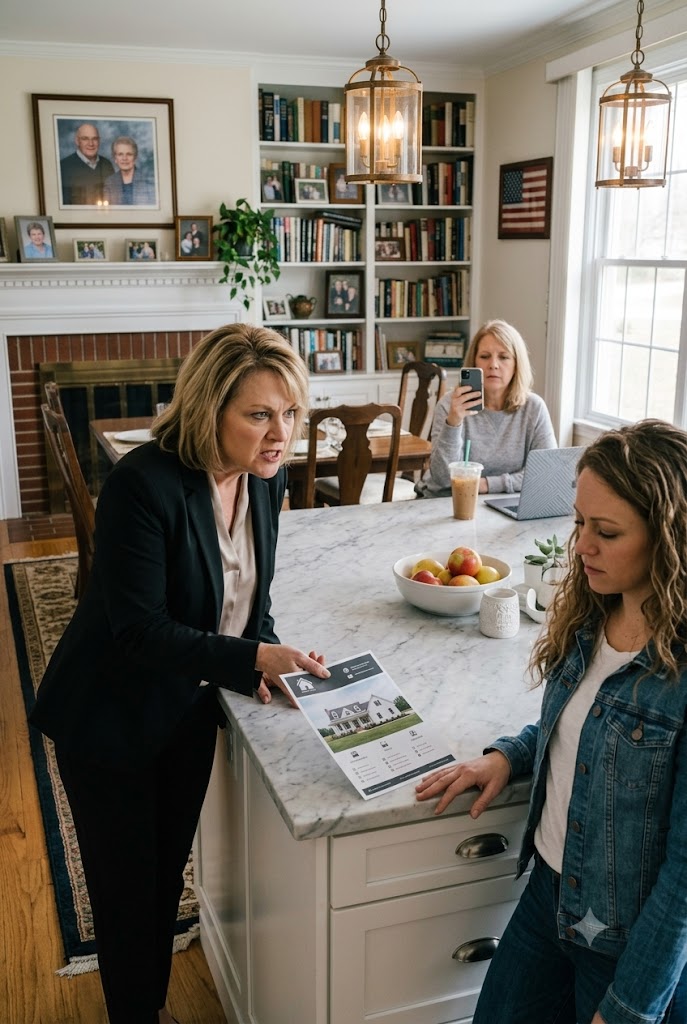
My Family Gave Me 60 Days to Leave—Then Grandma’s Sealed Envelope Revealed Who Really Owned Their House
My mother slid a real-estate listing across the kitchen table and said, “We’re selling. You have sixty days to get out.”
Before I could touch the paper, my younger sister raised her phone, hit record, and smiled into the screen.
“Finally,” Madison said. “Good luck, loser.”
What neither of them knew was that a sealed envelope from my dead grandmother had been sitting untouched in the bottom drawer of my desk for eleven months.
And before sunset that same day, an attorney would read one sentence inside it, lock his office door, lower the blinds, and tell me something that would turn our entire family upside down.
My name is Claire Somers.
I was thirty-four years old when my own family decided I was disposable.
Not because I had stolen from them.
Not because I had hurt anyone.
Not because I was unemployed, addicted, reckless, or irresponsible.
I was disposable because I had become useful for so long that everyone forgot usefulness was not the same thing as weakness.
The house stood on three wooded acres outside Charlottesville, Virginia, at the end of a curved gravel drive lined with old sugar maples.
To strangers, it looked expensive.
White brick.
Black shutters.
Slate roof.
A screened porch overlooking a pond my grandfather had dug before I was born.
Inside, though, the place still smelled like lemon furniture polish, wood smoke, and Grandma Evelyn’s cinnamon coffee cake whenever it rained.
I had lived there almost my entire life.
My mother, Diane, lived there too.
So did Madison whenever living with her latest boyfriend stopped being convenient.
For the previous six years, I had paid the property taxes.
I paid for the new heat pump.
I paid when the well pump failed during Thanksgiving weekend.
I paid $11,840 when a storm dropped an oak tree through the detached garage.
I paid the insurance increase.
I paid for Grandma’s home nurse during the final eight months of her life when Medicare didn’t cover everything.
And after Grandma died, I kept paying.
My mother called it “helping the family.”
Madison called it “what the responsible sister does.”
I called it what it was.
Not because I owned the house.
At least, I didn’t think I did.
But because Grandma had asked me to keep it standing.
Then that Tuesday morning, my mother decided keeping it standing was no longer enough.
She wanted to cash it out.
The listing sheet lay between us.
$1,185,000.
Professional photographs had already been taken.
There was a drone shot of the property.
A photograph of Grandma’s rose garden.
A photograph of my bedroom.
That one stopped me.
I picked up the paper.
“You photographed my room?”
My mother avoided my eyes.
“The agent needed the whole house.”
“You went into my room?”
“You’re making this unnecessarily dramatic.”
Madison laughed behind her phone.
She was thirty-one, blonde, polished, and permanently dressed like she expected someone to photograph her.
Maybe because she usually was photographing herself.
She turned the camera toward me.
“Claire’s discovering that the world doesn’t revolve around Claire.”
I looked at her phone.
“Are you livestreaming?”
She smiled.
“Recording.”
“Delete it.”
“Because I don’t consent to being filmed.”
Madison rolled her eyes.
“Oh my God.”
My mother exhaled sharply.
“Can we please act like adults?”
I looked at the listing again.
The photographs had clearly been taken days earlier.
Maybe weeks.
There was even a proposed open-house date.
Four days away.
“You already hired an agent.”
“You already signed paperwork.”
My mother hesitated.
Madison lowered the phone half an inch.
That hesitation told me more than any answer could have.
“How long has this been planned?”
“How long?”
My mother flattened both palms on the table.
“About three weeks.”
Three weeks.
For three weeks I had come home from work, cooked dinner twice, fixed the loose porch railing, driven Mom to an eye appointment, and transferred $1,600 into the house account for taxes.
For three weeks they had watched me do all of it while secretly preparing to sell the roof over my head.
I didn’t cry.
I didn’t shout.
I folded the listing once.
Then again.
Madison seemed disappointed.
She wanted a scene.
She wanted shaking hands, tears, maybe me screaming so she could replay it later at dinner parties and tell everyone how unstable her older sister had become.
Instead, I asked, “Why sixty days?”
My mother blinked.
“If the house is already listed, why are you giving me sixty days?”
“Because that’s reasonable.”
“No. If you expect a fast closing, sixty days could overlap with the sale. Is the buyer supposed to inherit me?”
Madison snorted.
Mom’s mouth tightened.
“There isn’t a buyer yet.”
“Then you’ve signed a listing agreement.”
“With whom?”
“Claire, stop interrogating me.”
“Which brokerage?”
Madison finally lowered her phone.
Something shifted in her expression.
My calmness was starting to bother them.
That interested me.
My mother pushed her chair back.
“Harris & Cole Realty.”
I knew the firm.
Everyone around Charlottesville did.
Luxury residential sales.
Horse farms.
Historic estates.
“Who’s the agent?”
“Patrick Cole.”
That interested me even more.
Patrick wasn’t just an agent.
He was one of the firm’s owners.
My mother wasn’t casually testing the market.
Someone expected this sale to happen.
I placed the listing back on the table.
Madison stared.
My mother’s shoulders dropped slightly.
She had prepared for resistance.
Maybe even legal threats.
She hadn’t prepared for acceptance.
“I’m glad you’re being reasonable,” she said.
Madison aimed the phone at me again.
“Where are you going?”
“You aren’t going to beg Mom?”
Her smile faltered.
My mother said, “Claire, I know this is difficult.”
I looked at her.
The kitchen went quiet.
Grandma’s old clock ticked above the pantry door.
Mom’s eyes flickered toward Madison, then back to me.
“This house is too much for me now.”
That was almost funny.
She hadn’t paid a utility bill in five years.
But I said nothing.
“This is my chance to simplify,” she continued. “Your sister has been encouraging me to think about myself for once.”
There it was.
Not the whole motive.
But enough of it.
Madison stepped beside her.
“Mom deserves a life.”
“Then go build one.”
I looked at Madison.
Her phone was still recording.
“You should keep that video.”
“Don’t delete it.”
She blinked.
Then she smiled.
“Trust me, I won’t.”
I picked up my keys.
Behind me, my mother called, “Claire?”
I stopped at the doorway.
“You really have sixty days. I need you to understand that.”
“I understand exactly what you said.”
Then I left.
I drove my twelve-year-old Honda Accord to the parking lot of the architecture firm where I worked as a project manager.
But I didn’t go inside.
I sat behind the wheel with the engine off.
For almost two minutes, I stared at the brick building.
Then I opened the glove compartment.
Inside was an envelope.
Cream-colored.
My name written across the front in Grandma Evelyn’s narrow blue handwriting.
I had moved it from my desk to the car three weeks earlier because I kept meaning to take it to a lawyer.
Then deadlines happened.
A hospital project fell behind schedule.
A subcontractor quit.
My life filled the space, the way life always does.
Grandma had given me the envelope three days before she died.
Not my mother.
Not Madison.
She had been in her bedroom, surrounded by the soft mechanical hum of an oxygen concentrator.
Rain tapped the windows.
Her hands had become thin enough that her wedding ring hung loose.
She pressed the envelope into my palm.
“Don’t open this alone.”
I had smiled.
“That’s dramatic.”
She didn’t smile back.
“Promise me.”
That erased mine.
“Take it to Samuel Price.”
“Who’s Samuel Price?”
“A lawyer.”
“Your lawyer?”
She looked toward the bedroom door.
My mother was downstairs talking loudly on the phone.
Grandma lowered her voice.
“He was your grandfather’s attorney first.”
“What is this?”
She squeezed my fingers around the envelope.
“When the house becomes a weapon, open it.”
At the time, I thought morphine was fogging her mind.
I wish I could say otherwise.
I kissed her forehead.
Told her to rest.
Put the envelope away.
Three days later, she died.
Then grief swallowed everything.
Hospice equipment.
Medical bills.
Probate paperwork my mother said she was handling.
Madison crying theatrically through the service, then asking about Grandma’s jewelry before the flowers had wilted.
And the envelope stayed sealed.
Until that morning.
When the house becomes a weapon.
I started the car.
Samuel Price’s office was eighteen minutes away.
If the people who raised you had already decided you were the easiest person to sacrifice, would you walk away quietly—or find out why they were suddenly so desperate to make you leave?
Price, Mercer & Lane occupied the second floor of a converted nineteenth-century brick building near the courthouse.
Dark wood staircase.
Brass directory.
No flashy glass walls.
No giant corporate logo.
Just old legal money.
I told the receptionist my name.
She looked at me.
Then at the envelope.
Something changed.
Not dramatically.
Just enough.
“Is that from Mrs. Evelyn Somers?”
My fingers tightened around it.
She stood immediately.
“One moment.”
She disappeared through a hallway.
Thirty seconds later, a man in his late sixties appeared.
Silver hair.
Wire-framed glasses.
“Samuel Price.”
His handshake was firm.
His eyes moved to the envelope.
“Come with me.”
We entered his office.
Bookshelves.
Two leather chairs.
No family photographs.
He closed the door.
I held out the envelope.
“My grandmother told me to bring this to you if…”
My voice caught unexpectedly.
I cleared my throat.
“If the house became a weapon.”
Samuel’s face went still.
“She used those words?”
“Exactly those words?”
He pointed toward a chair.
“Please sit.”
I remained standing.
“My mother listed the property this morning. She gave me sixty days to leave.”
Samuel removed his glasses.
“Listed which property?”
“The house on Winterbrook Road.”
Not confusion.
Not surprise.
Something colder.
He reached behind me.
Turned the deadbolt.
Then crossed to the windows and pulled the blinds closed.
My heart finally accelerated.
“Mr. Price?”
“Sit down, Ms. Somers.”
He took the envelope carefully.
Checked the handwriting.
Examined the seal.
Then opened a desk drawer and removed a small letter opener.
“Your grandmother gave you this directly?”
“No one else has opened it?”
“Your mother never had possession of it?”
“Your sister?”
Then slit the envelope.
Inside were four pieces of paper.
The first was a letter.
The second looked like a notarized document.
The third was a photocopy of an old deed.
The fourth was a folded bank statement.
Samuel read the letter first.
His eyes moved quickly.
Then stopped.
He read the same line again.
He looked at me.
Then back at the page.
He didn’t answer.
“Mr. Price?”
He slowly lowered the letter.
“Your mother cannot sell that house.”
My skin prickled.
“Because probate isn’t finished?”
“Because Grandma’s estate still owns it?”
He leaned back.
“Because your grandmother didn’t own it when she died.”
“That doesn’t make sense.”
“Then who owns it?”
Samuel placed the letter on his desk.
I actually laughed.
Not because it was funny.
Because my brain rejected the sentence.
“No, I don’t.”
“My mother—”
“Does not.”
“My mother inherited the property.”
“She inherited several things.”
He tapped the paper.
“But not Winterbrook.”
I stared at him.
Then I felt anger rising.
Hot but controlled.
“That is impossible.”
Samuel slid the deed photocopy toward me.
“Read the grantee.”
I looked down.
The deed was dated nine years earlier.
Grantor: Evelyn Margaret Somers.
Grantee: Winterbrook Heritage Trust.
I looked up.
“This says a trust owns it.”
“So I don’t.”
“You are the sole vested beneficiary of the trust.”
I said nothing.
He took out the notarized document.
“This is the trust amendment.”
I read my own name.
CLAIRE ELIZABETH SOMERS.
Not Madison.
My mouth went dry.
“That answer is partly in your grandmother’s letter.”
He turned the first page around.
If you are reading this with Sam, then either I was wrong about your mother, or I was right and prayed I wouldn’t be.
Do not confuse kindness with surrender.
Winterbrook is yours.
It has been protected for years because your grandfather and I knew there might come a day when someone tried to turn your loyalty against you.
You stayed when everyone else left.
You repaired what others neglected.
You gave without keeping score.
Unfortunately, other people were keeping score for you.
My breath caught.
The next lines were underlined.
Do not tell Diane immediately.
Do not tell Madison at all until Sam has checked the county records.
If either of them attempts to sell Winterbrook, there is something else you must know.
I looked at Samuel.
“Something else?”
He took the letter back.
“That line is why I locked the door.”
Then he reached for his phone.
“I need fifteen minutes.”
“For what?”
“To find out whether your grandmother’s worst fear happened.”
I watched his expression become harder as he spoke to someone at the county recorder’s office.
While he talked, I looked again at the trust documents.
The dates mattered.
Grandma had transferred the house nine years ago.
Nine years.
Long before her illness.
Long before any question about competency.
Long before anyone could easily challenge the transfer as something done under pressure.
That wasn’t an accident.
It was armor.
Grandma had built it quietly.
My phone buzzed.
I ignored it.
YOU LEFT YOUR COFFEE CUP LOL.
Then another.
DON’T WORRY MOM SAYS YOU CAN TAKE GRANDMA’S OLD BEDROOM SET WHEN YOU MOVE.
ACTUALLY MAYBE NOT. BUYER MIGHT WANT IT.
A photograph followed.
Madison smiling in Grandma’s bedroom.
Holding Grandma’s pearl necklace around her own neck.
I stared at the image.
Then locked my phone.
I wasn’t going to fight emotionally.
I was going to understand the board before moving a piece.
Samuel hung up.
His face had changed.
He didn’t answer immediately.
Instead, he opened his computer.
Clicked through several screens.
Then said, “Your mother signed a warranty deed twenty-six days ago.”
I felt every muscle in my shoulders tighten.
“Selling the house?”
“Then what?”
“Transferring it.”
“What LLC?”
He looked at me.
“Blue Ridge Residential Holdings.”
I had never heard the name.
“Who owns that?”
“We’re going to find out.”
He made another call.
This one to a paralegal.
He asked for corporate registration records.
Then lien searches.
Then title history.
The office suddenly felt smaller.
I thought of the listing.
The professional photographs.
Patrick Cole.
Three weeks of secrecy.
This wasn’t just Mom deciding to downsize.
Something had already happened before the sign went into the yard.
“What does a warranty deed mean here?” I asked.
“It means your mother represented that she had legal authority to convey title.”
“But she didn’t.”
“So the deed is worthless?”
“Potentially void.”
“Potentially?”
“Real estate litigation is rarely one-word simple. But if your trust documents and recording history are clean, she had no ownership interest to transfer.”
“Then why would anyone accept it?”
Samuel removed his glasses.
“That’s the question.”
The door opened after a knock.
A woman in her forties entered carrying a folder.
“Blue Ridge Residential Holdings,” she said. “Registered seven months ago. Manager listed as Andrew Mercer.”
Samuel frowned.
She nodded.
“Same Andrew Mercer?”
Samuel’s expression made my stomach tighten.
“Who’s Andrew Mercer?” I asked.
The woman looked at Samuel.
He answered.
“Patrick Cole’s brother-in-law.”
I sat very still.
There are moments when panic is useful.
A burning building.
A car drifting into your lane.
A child falling into deep water.
This wasn’t one of them.
This was a moment for details.
So I asked the simplest question.
“How much?”
Samuel studied me.
“How much what?”
“How much did Blue Ridge pay my mother?”
The paralegal glanced at the file.
“According to the deed?”
“Ten dollars and other valuable consideration.”
I almost smiled.
“Meaning the real amount isn’t stated there.”
“What about liens?”
She opened the folder.
“That’s where it gets interesting.”
Samuel leaned forward.
She placed another document on his desk.
“A deed of trust was recorded the next morning.”
“To secure what?”
“How much?”
“Eight hundred and fifty thousand dollars.”
The air seemed to leave the room.
My mother had transferred a house she didn’t own to an LLC connected to her listing agent.
Then someone had borrowed $850,000 against it.
Twenty-six days ago.
I thought about every conversation since.
Mom asking whether I planned to repaint the upstairs hall.
Madison encouraging me to finally replace my car.
Mom commenting that I worked too much.
Madison joking that I should take a vacation.
They hadn’t been casually talking.
They had needed me unsuspecting.
I looked at Samuel.
“Who received the money?”
“We don’t know yet.”
“Can we find out?”
“How fast?”
His expression softened for the first time.
“You’re asking the right questions.”
I ignored the compliment.
“What happens now?”
“First, nobody sells anything.”
“Can you stop the listing?”
“The listing is irrelevant if they can’t deliver clean title. But we’re going beyond that.”
He pointed to my phone.
“Do not confront your mother.”
“I wasn’t planning to.”
“Do not mention the trust.”
“Do not mention Blue Ridge.”
“And don’t move out.”
That surprised me.
“My mother gave me sixty days.”
“Your mother has no authority to evict the trust’s beneficiary from trust property.”
A strange sensation moved through me.
Not triumph.
Something quieter.
The floor beneath my feet becoming solid again.
“When do we act?”
Samuel leaned back.
“When they do.”
And they acted faster than either of us expected.
At that afternoon, while I was sitting in a conference room pretending to care about hospital ventilation specifications, my mother texted:
Dinner tonight. 7. Important.
At Madison texted:
Wear something decent.
At my mother added:
Patrick is coming.
That told me enough.
I finished work.
Drove home.
And before going inside, I photographed the entire exterior.
Every side.
Even the stone property marker.
Then I turned on audio recording on my phone and slipped it into my jacket pocket.
Dinner smelled expensive.
Filet mignon.
Rosemary potatoes.
My mother never cooked filet on a Tuesday.
Patrick Cole sat in Grandpa’s chair.
That bothered me more than it should have.
He was fifty-something, silver at the temples, expensive tan sport coat, teeth too white to be accidental.
Madison wore a cream sweater dress.
My mother had put on lipstick.
The whole scene looked staged.
Maybe because it was.
Patrick stood when I entered.
He offered his hand.
I shook it.
“You’ve met?”
Patrick smiled.
“At a chamber event, I think.”
I remembered.
Three years earlier.
He had spent ten minutes telling me why women preferred emotionally designed office spaces.
I had spent those same ten minutes trying to escape.
Now he gestured toward the chair opposite him.
“Your mother’s told me what a tremendous help you’ve been around here.”
Madison poured wine.
“For basically forever.”
Mom slid a folder toward me.
Not the listing this time.
A relocation packet.
Apartments.
Moving companies.
Storage units.
Even a brochure for a condominium development twenty-eight miles away.
“You’ve been busy,” I said.
Mom smiled too quickly.
“We want this transition to be easy.”
Patrick leaned forward.
“Selling a family home can be emotional.”
I looked at him.
“Is it sold?”
Just a fraction.
Then his smile returned.
“We’ve had significant interest.”
“Before listing?”
“Private networks.”
“Do you already have an offer?”
Mom said, “Claire, you’re getting into details that don’t concern you.”
That sentence almost made me laugh.
Instead, I cut my steak.
“Then why is Patrick here?”
Patrick folded his hands.
“Because there may be an opportunity for an accelerated closing.”
“How accelerated?”
“Three weeks.”
My mother watched my face.
Madison watched harder.
Drank water.
Then asked, “And my sixty days?”
Mom glanced at Patrick.
He answered.
“We can include a short occupancy arrangement.”
“So the sixty days wasn’t real.”
Mom’s fork hit her plate.
“That’s not what he said.”
I looked at her.
“I’m trying to understand.”
Patrick shifted smoothly.
“The buyer has flexibility.”
“Who is the buyer?”
“An investment entity.”
My mother said it sharply.
Patrick smiled.
“Blue Ridge Residential Holdings.”
There it was.
He said it easily.
Like it meant nothing.
I kept my expression neutral.
“What do they want with this place?”
“Likely renovation and resale.”
“Investment strategies change.”
Madison finally snapped.
“Why are you acting like you’re on CSI? You’re moving. That’s the only part you need to understand.”
I turned to her.
“Still recording?”
Her face changed.
Just slightly.
Patrick looked between us.
“This seems like a family issue.”
“It is,” I said.
My mother pushed the relocation folder closer.
“We’d like you to sign something tonight.”
There it was.
My eyes moved to the last page.
A document titled OCCUPANCY ACKNOWLEDGMENT AND RELEASE.
I didn’t touch it.
“What is this?”
Patrick answered.
“Routine confirmation that you don’t claim an ownership interest.”
My mother looked at him.
She hadn’t expected him to phrase it that clearly.
Interesting.
I leaned back.
“You want me to sign away ownership rights I don’t have?”
Patrick smiled.
“Title companies like clean paperwork.”
“Then why doesn’t Madison sign one?”
Beautiful silence.
Madison looked at Patrick.
My mother looked at her plate.
Patrick’s smile remained, but only technically.
“Madison doesn’t reside here.”
“She gets mail here.”
“That isn’t the same thing.”
“She stores furniture here.”
“Claire,” Mom said.
“She has a key.”
“She lived here four months last year.”
Madison slapped her palm against the table.
“Why do you have to make everything difficult?”
I looked at her.
“You’re right.”
She blinked.
I picked up the release.
Put it back in the folder.
“I won’t make this difficult.”
My mother’s shoulders relaxed.
“I’ll have a lawyer review it tomorrow.”
Patrick’s smile vanished.
Only for a second.
But I saw it.
So did my mother.
“You don’t need a lawyer,” she said.
That sentence told me more than the document did.
“Then why waste money?”
“Peace of mind.”
Patrick cleared his throat.
“There’s certainly nothing wrong with legal review.”
My mother looked at him.
He gave her a look I wasn’t supposed to notice.
Then Madison did what Madison always did when things weren’t moving fast enough.
She got cruel.
“You know what your problem is?”
I drank my water.
“You think being difficult makes you important.”
Mom murmured, “Madison.”
“No, seriously. She has always done this. Grandma asks for something? Claire runs in. Dad got sick? Claire takes over. Mom needs help? Claire handles everything. Then she acts like we’re supposed to worship her because she voluntarily made herself the family servant.”
That one hit.
Not because it was true.
Because it was close enough to something I had feared privately.
Had I volunteered for too much?
Had I made it easy for them to expect everything?
But Madison wasn’t done.
“No husband. No kids. No social life. Same boring job for eleven years. This house is basically her entire identity.”
My mother stared at her plate.
Patrick examined his wine.
Nobody defended me.
That hurt more than Madison intended.
I placed my napkin beside my plate.
“Are you finished?”
Madison smiled.
“Did I hurt your feelings?”
“You confirmed something.”
I looked at my mother.
Then Patrick.
Then Madison.
“That I should have gotten a lawyer years ago.”
I walked upstairs.
Behind me, Madison laughed.
She thought she had won.
She had no idea that Samuel Price was already preparing to freeze the title.
No idea that his investigator had found the $850,000 loan.
No idea that the release they’d just tried to make me sign might become evidence.
And no idea that her little recording habit was about to help me more than it had ever helped her.
I slept surprisingly well.
At the next morning, Samuel called.
“We found the lender.”
“Commonwealth Community Bank.”
“Legitimate?”
“So someone convinced a legitimate bank that Blue Ridge owned the property.”
“Title insurance.”
“A title company certified ownership.”
My stomach tightened.
“Which title company?”
There was a pause.
“Somerset Title & Escrow.”
I knew that name too.
Not because I had used them.
Because my mother had worked there.
Twenty-two years earlier.
Before she quit when Madison was born.
“Does my mother know someone there?”
Samuel exhaled.
“The current senior closing officer is Linda Carver.”
I closed my eyes.
Aunt Linda.
Not technically my aunt.
My mother’s college roommate.
A woman who had attended every Christmas Eve party until Grandma’s funeral.
“What does that mean?”
“It means I need you to stay very calm today.”
“I am calm.”
“The title commitment contains a deed.”
“Which deed?”
“One supposedly transferring Winterbrook from your grandmother to your mother.”
My eyes opened.
“Supposedly?”
“The signature is dated four years ago.”
Grandma had been alive four years ago.
That alone wasn’t impossible.
But Samuel’s tone told me more was coming.
“Was it notarized?”
“Linda Carver.”
“And recorded?”
“According to the file, it was presented as an unrecorded deed discovered among Evelyn’s effects.”
I said nothing.
Samuel continued.
“That document is how your mother claimed ownership.”
“Can we prove it’s fake?”
“I’ve already compared the signature against twelve verified samples.”
“It isn’t hers.”
My pulse thudded once.
“That sounds subjective.”
“Which is why we’re hiring a forensic document examiner.”
“There’s more.”
I almost laughed.
“Of course there is.”
“The deed claims it was executed on May 17 four years ago.”
“Your grandmother was in Richmond that day.”
“That doesn’t prove anything.”
“She could have signed before leaving.”
“Except the notarial block states Linda witnessed the signature at Somerset’s Charlottesville office at p.m.”
Samuel said, “At p.m. on May 17, your grandmother was undergoing emergency surgery at VCU Medical Center.”
That one landed.
I remembered the day.
An intestinal obstruction.
Five-hour surgery.
I had driven behind the ambulance.
My mother had stayed home because Madison was “having a crisis.”
I was the one in Richmond.
I had parking receipts.
Hospital records.
Text messages.
Photographs.
Grandma couldn’t have been signing a deed in Charlottesville.
She had been unconscious under anesthesia ninety minutes away.
For the first time since this began, something in me went cold.
This wasn’t a family disagreement.
Someone had forged Grandma’s signature.
Someone had created a false deed.
Someone had used it to take out an $850,000 loan.
And my mother was trying to sell the house before anyone looked closely.
“File everything.”
“I intended to.”
“No warnings.”
That afternoon, Mom texted asking if I’d signed the release.
Lawyer reviewing.
Three dots appeared.
Disappeared.
Appeared again.
Why would you involve a lawyer in a simple family matter?
Because Patrick suggested title companies prefer clean paperwork.
Twenty minutes later, Madison texted.
Mom says you’re trying to sabotage her sale.
I didn’t respond.
You realize she can throw you out TODAY, right?
I took a screenshot.
She owns the house.
Screenshot.
Grandma left it to her. Everyone knows that.
Screenshot.
Then the most important one:
Stop acting like Grandma secretly gave you something. She didn’t.
I stared at that sentence.
Interesting choice of words.
I sent it to Samuel.
His reply arrived almost immediately.
Do not answer.
By Friday morning, the circuit court had issued a temporary restraining order preventing transfer, sale, or further encumbrance of Winterbrook pending title review.
By Friday afternoon, Patrick Cole removed the listing.
By Friday evening, my mother was waiting for me in the driveway.
She wasn’t wearing lipstick anymore.
She stood with her arms crossed.
Madison leaned against her Range Rover.
The FOR SALE sign was gone.
Locked my car.
Mom held up a folded court document.
“What did you do?”
I slipped my bag over my shoulder.
“I hired a lawyer.”
“You froze my house.”
“You froze my sale.”
“You had no right.”
“We’ll find out.”
Madison pushed away from her car.
“You’re insane.”
I looked at her phone.
Not recording this time.
Interesting.
Mom stepped closer.
“Call your lawyer and undo this.”
Her face tightened.
“I am your mother.”
“That house was left to me.”
“Then the court will confirm that.”
For a moment, something flashed in her eyes.
Then it disappeared.
She lowered her voice.
“What did Evelyn give you?”
There it was.
Not Grandma.
People tell you a lot when fear strips away their habits.
I studied her.
“What makes you think she gave me anything?”
Madison answered too quickly.
“Because you’re doing all this.”
I looked at her.
“You said yesterday she didn’t.”
Madison’s face changed.
I continued toward the house.
Mom grabbed my wrist.
But she grabbed it.
Looked down at her hand.
Then back at her.
She released me.
“Please,” she whispered.
That stopped me more effectively than anger would have.
My mother almost never said please.
Not like that.
She looked toward Madison.
Then leaned closer.
“If you found something, we can handle this privately.”
“You and me.”
Behind her, Madison said, “Mom?”
Mom ignored her.
“Families make mistakes.”
I said nothing.
“Your grandmother was controlling.”
Still nothing.
“She liked pitting people against each other.”
“That wasn’t my experience.”
“You were her favorite.”
“You absolutely were.”
“She trusted me.”
Mom flinched.
But I saw it.
Then Madison stepped forward.
“What did she leave you?”
I looked at both of them.
“Good night.”
Inside, I locked my bedroom door.
At 11:43 p.m., someone tried the knob.
Then twice.
I stayed still.
The shadow beneath the door remained for several seconds.
Then vanished.
The next morning, the drawer where I used to keep Grandma’s envelope had been opened.
I knew because I’d put a thread across the corner before leaving for work.
Absolutely.
I photographed it.
Then packed my documents, computer, and Grandma’s remaining personal letters into two lockboxes and carried them to my car.
My mother watched from the upstairs window.
That Monday, the forensic report arrived.
The signature on the alleged deed was almost certainly simulated.
Not naturally written.
Pen pressure inconsistent.
Stroke order wrong.
Several letters traced from another known signature.
Samuel also obtained bank records through emergency discovery.
The $850,000 loan had been disbursed in three transfers.
$410,000 to Blue Ridge Residential Holdings.
$275,000 to a company called MJS Media Group.
$165,000 to Somerset Title & Escrow’s trust account.
MJS Media Group belonged to Madison.
I read that line three times.
My little sister, who mocked my Honda.
Who called me boring.
Who had lived rent-free in the house whenever she needed somewhere to land.
Who had told me I was pathetic for staying close to Grandma.
Had received $275,000 from a loan secured against property she didn’t own.
“What does her company do?” Samuel asked.
“Social media consulting.”
“Is it successful?”
“How unsuccessful?”
“She has fourteen thousand followers and I once heard her complain that a skincare brand paid her in moisturizer.”
Samuel almost smiled.
“We have subpoenaed the account records.”
“What about Mom?”
“We haven’t identified her portion yet.”
I looked through the documents.
“What’s Blue Ridge’s role?”
“That’s where it becomes complicated.”
“Andrew Mercer claims he believed your mother legitimately owned the property.”
“Do you believe him?”
“Because he paid nothing meaningful for title but immediately used the property as collateral.”
“Could he claim it was some development partnership?”
“He already is.”
I looked up.
“You spoke to him?”
“His attorney.”
“And Patrick?”
“Distancing himself.”
“Of course.”
Samuel slid a printed email across his desk.
The subject line read WINTERBROOK EXIT.
Sender: Patrick Cole.
Recipients: Andrew Mercer, Linda Carver.
Copied: Diane Somers.
Date: six weeks earlier.
Only one sentence was visible.
Need Claire out before the title carrier starts asking occupancy questions.
I read it twice.
Samuel said, “Your mother knew.”
I felt strangely calm.
Maybe because once betrayal becomes documented, it stops being an emotion and becomes evidence.
They knew I was paying the taxes.
They knew I had cared for Grandma.
They knew I had kept the house standing.
They knew they were borrowing against something that wasn’t theirs.
They knew the easiest way to complete it was to remove me before I started asking questions.
That was the moment the hurt changed shape.
Until then, part of me had still wanted a misunderstanding.
Some explanation where my mother had been misled.
Where Madison had accepted money without understanding.
Where Patrick was the real villain and my family was merely foolish.
That email ended the fantasy.
They needed me gone.
Not because I was useless.
Because I was dangerous.
I knew the house.
I knew Grandma.
I knew records existed.
And eventually, I might ask the right question.
So they tried to get ahead of me.
Samuel watched me carefully.
“What do you want to do?”
“Personally.”
I looked out his window at the courthouse.
“Can they lose the house?”
“They don’t own it.”
“You know what I mean.”
“Their access to it?”
“You’re the trust beneficiary.”
“Then I want them out.”
He studied me.
I didn’t answer immediately.
I remembered Mom teaching me to ride a bicycle.
Mom sitting beside me at seventeen after my first breakup.
Mom holding my hair when I had food poisoning in college.
People want villains to be villains every hour of every day.
Life is harder.
The person who betrays you can also be the person who once bandaged your knee.
The person who lies to you can also have loved you.
Both truths can exist.
That doesn’t mean one cancels the other.
“Yes,” I said.
The following evening, I found my mother sitting alone on the screened porch.
Madison was gone.
The pond was dark beyond the trees.
Mom held a glass of wine.
I stood in the doorway.
“Where’s Madison?”
“Richmond.”
“She had a meeting.”
Probably with a lawyer.
I sat across from Mom.
She looked older than she had a week earlier.
Not physically older.
“Did you know?” I asked.
She closed her eyes.
“About what?”
She looked at me again.
I kept my voice low.
“Don’t make me drag every fact out of you. I know about Blue Ridge. I know about the forged deed. I know about the loan. I know Madison received $275,000. I know Patrick emailed you about getting me out before the title insurer noticed I lived here.”
Mom’s wineglass trembled.
But enough.
I had my answer.
She whispered, “It wasn’t supposed to happen this way.”
“What way was it supposed to happen?”
She looked toward the pond.
“Your grandmother left me almost nothing liquid.”
“She left you investment accounts.”
“Those were depleted.”
Her jaw tightened.
I understood.
Maybe herself.
Probably both.
“How much debt are you in?”
“How much?”
“About three hundred thousand.”
I breathed out slowly.
Credit cards?
Bad investments?
It hardly mattered.
“And Madison?”
“She had business problems.”
“She received $275,000.”
“She was going to repay it.”
“With what?”
Mom looked at me sharply.
“You always judge her.”
“I just learned she participated in putting an $850,000 loan against my property.”
“Your property.”
She said the words bitterly.
The real wound.
Resentment.
“You knew.”
Mom laughed once.
A small, ugly sound.
“Of course I knew.”
“Your grandmother told me.”
That surprised me.
“Years ago.”
“Why didn’t you say anything?”
“Because she told me the trust didn’t fully vest until her death.”
“And you thought after she died you could challenge it.”
Mom’s silence answered.
“But you didn’t.”
“She made sure I couldn’t.”
“She had doctors. Lawyers. Financial advisers. Everyone documenting everything. Every decision. Every conversation. She built a fortress.”
A spark of admiration moved through me.
Of course she did.
Mom took another drink.
“You have no idea what it was like being her daughter.”
“Maybe not.”
“She controlled everything.”
“She couldn’t control you forging her name.”
Mom’s face whitened.
“I didn’t forge anything.”
“Then who did?”
“I don’t know.”
I held her gaze.
She looked away first.
“Linda handled the documents.”
“Did you ask where the deed came from?”
Mom said nothing.
“Did you know Grandma was in surgery on the date it was supposedly notarized?”
Her eyes filled.
Not with innocence.
With calculation collapsing.
“Yes or no?”
“I wasn’t thinking.”
“That isn’t an answer.”
“I was desperate.”
“That’s closer.”
Her face crumpled slightly.
“I thought we’d sell, pay everything back, and nobody would get hurt.”
I almost couldn’t believe it.
“You used my house as collateral.”
“We thought the trust had a weakness.”
“Patrick said—”
She stopped.
There it was.
I leaned forward.
“What did Patrick say?”
Mom’s eyes moved toward the kitchen.
“You just said his name.”
“He told me legal structures get challenged all the time.”
“He said if the property could be moved through a bona fide entity before anyone objected, the situation might become negotiable.”
There was the motive.
Not cartoon villainy.
Entitlement.
A real-estate professional whispering that paperwork could be massaged.
A sister wanting money.
A mother resentful that her own mother had skipped her and protected the granddaughter who stayed.
Each small justification stacking on the next until fraud felt like a temporary bridge.
“What was supposed to happen to me?”
Mom started crying.
I didn’t move.
“You were going to get an apartment.”
“With what?”
“We were going to give you money.”
“How much?”
She hesitated.
“Twenty-five thousand.”
I couldn’t help it.
I had spent more than that keeping the property functional in the previous eighteen months.
“You were going to steal a million-dollar house, borrow eight hundred fifty thousand against it, sell it again, and give me twenty-five grand?”
“Don’t say steal.”
“What word would make you comfortable?”
She covered her face.
She lowered her hands.
“Claire, please.”
I looked down at her.
“I paid Grandma’s nursing bills.”
“I replaced the roof over your bedroom.”
“I paid the taxes.”
“I bought Madison groceries when she moved back after Eric left her.”
“I never asked either of you to repay me.”
Her voice cracked.
“And you recorded me at breakfast and called me a loser while preparing to remove me from a house you knew Grandma left to me.”
“That was Madison.”
“You sat there.”
She looked away.
Sometimes silence is participation.
The next morning, formal notices to vacate were served.
Thirty days.
My mother called Samuel.
Madison called me.
Seventeen times.
I didn’t answer.
Then she sent a voice message.
“You are seriously evicting Mom? Are you out of your mind? She raised you. She sacrificed everything for you. Grandma manipulated you and now you’re turning into her.”
I saved it.
Two hours later:
“You can’t kick me out because I don’t legally live there, idiot.”
I smiled at that one.
So I changed the alarm code, removed her garage remote authorization, and arranged for supervised pickup of her stored property.
She arrived Saturday morning with two friends and her phone already recording.
“Look at this,” she announced to the camera as she walked up the driveway. “My sister has literally hired security to keep me out of my own childhood home.”
I stood beside a private security officer.
Behind me were twenty-three labeled boxes.
Madison stopped.
“You packed my stuff?”
“No. A licensed moving service did.”
“You touched my property?”
“They inventoried it on video.”
Her face tightened.
Smart preparation has a wonderful way of destroying theatrical outrage.
She walked toward the boxes.
Then stopped.
“Where’s Grandma’s jewelry?”
“Anything documented as belonging to the estate or trust remains inside pending legal review.”
“That pearl necklace is mine.”
“Grandma gave it to me.”
“You sent me a photograph of yourself wearing it after entering Grandma’s room without permission.”
“That doesn’t prove she didn’t give it to me.”
Her smile returned.
“So give it back.”
“Produce documentation.”
She stared.
Then lowered her phone.
“You think you’re better than us.”
“Yes, you do.”
“I think documentation matters.”
“You’ve always hated me.”
That surprised me enough that I didn’t answer immediately.
Madison laughed bitterly.
“There. That face. Poor perfect Claire. Always responsible. Always saving everybody.”
“You accepted $275,000 against property you knew wasn’t Mom’s.”
Her face changed.
Her friends went very still.
She had been recording.
I smiled slightly.
“Keep filming.”
She stopped the video.
“Who told you that?”
“Does it matter?”
“That money was an investment.”
“My company.”
“From an $850,000 mortgage?”
“You don’t know what you’re talking about.”
“Then explain it.”
She opened her mouth.
Nothing came.
I nodded toward the boxes.
“You have until noon.”
She stepped closer.
Her voice dropped.
“Do you understand what you’re doing?”
“No, Claire. You don’t.”
Something in her tone made me look at her more carefully.
The anger had changed.
It wasn’t just humiliation.
She was scared.
“Then tell me.”
She glanced at the security officer.
Then back at me.
“Patrick isn’t the one you should be worried about.”
My pulse slowed.
Not accelerated.
Madison swallowed.
Then immediately regretted speaking.
She turned away.
“Forget it.”
I didn’t chase her.
That wasn’t my style.
If someone is frightened enough, silence often makes them fill the space.
But Madison didn’t.
She loaded her boxes.
And by Monday, she had hired a criminal defense attorney.
That told me more than her warning did.
Two weeks later, the house felt different.
Mom had moved into a furnished apartment after Samuel negotiated an early departure.
I gave her six months of rent.
Not because she deserved it.
Because I wanted clean separation without claiming I had used homelessness as punishment.
She cried when she left.
After the door closed.
Being calm does not mean being made of stone.
It means choosing where you bleed.
The property was mine.
The fraudulent deed was under investigation.
The $850,000 loan had been frozen.
The title insurer filed claims against multiple parties.
Somerset suspended Linda Carver.
Patrick Cole took a “temporary leave” from his brokerage.
Blue Ridge’s attorney insisted Andrew Mercer had been deceived.
Madison’s accounts were subpoenaed.
Mini-payoffs kept coming.
The listing disappeared.
The release became evidence.
The forged deed failed.
The trust held.
The mortgage froze.
My mother left.
Madison stopped laughing.
For the first time in years, I walked through Winterbrook without hearing anyone telling me I was lucky to be allowed there.
I repainted the kitchen.
Not dramatically.
Soft white.
I repaired the porch swing myself.
I moved Grandma’s writing desk into the library.
I kept her rose garden.
I donated half of the furniture no one used.
And I bought a new coffee maker because after everything I’d survived, the machine still had the nerve to leak.
For three weeks, life almost became ordinary.
Then Samuel called me at on a Thursday evening.
His voice was different.
“Where are you?”
“Lock the doors.”
I stood in the kitchen.
“What happened?”
“Lock them first.”
I walked to the front door.
“Do you still have your grandmother’s original envelope?”
“And everything inside it?”
I went upstairs.
Opened the fire-resistant lockbox.
Removed the envelope.
“Look at the bank statement.”
The fourth document.
The one we’d barely discussed because the deed and trust had seemed far more important.
I unfolded it.
It was from a private bank in Richmond.
Dated eight years earlier.
Account title:
EVELYN M. SOMERS, TRUSTEE.
$3,742,880.
“I thought this account had been closed.”
“So did I.”
“What happened?”
“Turn the page.”
“There isn’t another page.”
“There should be.”
My hand stopped.
“The copy in your envelope appears incomplete.”
“Grandma sealed it herself.”
“Then what are you saying?”
“I’m saying we found the bank’s archival records.”
A floorboard creaked downstairs.
I turned toward the bedroom door.
Maybe the house settling.
Old houses talk.
I stayed still.
Samuel continued.
“The account wasn’t closed.”
My fingers tightened around the statement.
“Where’s the money?”
“That’s what we’ve been tracing.”
Another creak.
Closer this time.
Downstairs.
I moved toward the bedroom door but didn’t open it.
“Samuel, keep talking.”
“The account held proceeds from land your grandfather sold decades ago. Your grandmother moved the funds through several entities.”
“To hide them?”
“To protect them.”
“From Mom?”
He inhaled.
“Claire, Winterbrook was never the biggest asset.”
My heartbeat became audible.
“What was?”
“The land company.”
“What land company?”
“Somers Agricultural Holdings.”
“I’ve never heard of it.”
“Neither had I until this week.”
Another sound downstairs.
A soft metallic click.
I crossed to my nightstand and opened the drawer.
Not a weapon.
A flashlight.
My car keys.
A small personal alarm.
My phone already in my hand.
Samuel said, “Your grandfather acquired parcels throughout Albemarle and Nelson counties beginning in the 1970s.”
“How much land?”
“At peak, nearly four thousand acres.”
I almost laughed.
“That’s impossible.”
“Most was sold.”
“How much remains?”
“Approximately six hundred and twelve acres held through layered entities.”
I sat on the edge of the bed.
“What is it worth?”
“Based on the most conservative assessment we received today, between twenty-eight and thirty-four million dollars.”
I couldn’t speak.
The house around me seemed suddenly too quiet.
“Who owns it?”
“That is why I called.”
A shadow moved under my bedroom door.
Someone was in the hallway.
My entire body went still.
Samuel kept talking.
“The controlling interest transferred six years ago.”
I whispered, “To me?”
The shadow stopped outside my door.
I tightened my grip on the phone.
“Then who?”
“That’s the problem.”
The doorknob moved.
My bedroom was locked.
I stepped backward.
Samuel’s voice came through the phone.
“Someone’s in the house.”
His tone changed instantly.
“Call 911.”
I switched to emergency call on my other line.
The knob stopped moving.
Then footsteps retreated.
Not rushed.
Whoever was outside knew I was awake.
I told the dispatcher my address.
Possible intruder.
Unknown entry point.
I moved into the bathroom and locked that door too.
Samuel remained connected.
“Don’t confront anyone.”
“Police are coming?”
Downstairs, something shattered.
Not a window.
Glass object.
Then the back door alarm chirped.
Longest four minutes of my life.
Red and blue light finally washed across the bedroom ceiling.
Deputies cleared the property.
No one inside.
No one outside.
Back mudroom door forced with a thin tool.
Nothing obvious stolen.
Until I checked Grandma’s study.
The drawers had been pulled open.
Her files were scattered across the floor.
One locked cabinet had been pried apart.
Samuel arrived forty minutes later.
So did a detective.
We stood among papers while they photographed everything.
“What were they looking for?” I asked.
Samuel didn’t answer.
He bent down.
Picked up an old folder.
On the tab, in Grandma’s handwriting, were two words.
LAND TRUST.
My mouth went dry.
“Was that here before?”
“I don’t know.”
The detective asked, “Who knew about these land holdings?”
Samuel looked at me.
Then said, “Until today? Very few people.”
Samuel hesitated.
“Me. Two members of my firm. The bank’s archival counsel.”
He looked at the empty folder.
“Whoever Evelyn was afraid of.”
My phone buzzed.
Unknown number.
Just a photograph.
I opened it.
My breath stopped.
It was a picture of me sitting at Grandma’s desk.
Taken from outside the study window.
Maybe ten minutes before I went upstairs.
Someone had been watching me before they entered.
Then another text appeared.
YOU FOUND THE HOUSE.
LEAVE THE LAND ALONE.
The detective took my phone.
“Don’t touch anything else.”
Samuel went pale.
I looked at him.
“You still haven’t answered me.”
“Answered what?”
“You said controlling interest transferred six years ago. If it wasn’t transferred to me, who owns the land?”
His expression told me he didn’t want to say it in front of the detective.
That only made me insist.
He removed his glasses.
For the first time since I had met him, his hands were shaking.
“The records say the controlling beneficiary is someone named Rebecca Somers.”
“I don’t know a Rebecca Somers.”
“Then why are you scared?”
He looked toward the dark window.
“Because Rebecca Somers supposedly signed documents with your grandfather in 1989.”
Samuel swallowed.
“Your grandfather died in 1987.”
The room went completely silent.
Then my phone buzzed again in the detective’s hand.
Another photograph had arrived.
This one was old.
A woman standing beside Grandma Evelyn on the Winterbrook porch sometime in the 1980s.
They looked almost identical.
Same dark hair.
On the back of the photograph, written in blue ink, were six words.
EVELYN AND REBECCA — WINTERBROOK, 1986.
The detective turned it toward me.
My throat tightened.
“I’ve never seen that woman.”
Samuel stared at the photograph.
I looked at him.
His face had lost all color.
“The day your grandfather signed his original estate plan.”
He lowered his voice.
“Claire, Rebecca wasn’t your grandmother’s sister.”
The detective frowned.
“Then who was she?”
Samuel looked directly at me.
Before he could answer, headlights swept across the front windows.
A vehicle rolled slowly up the gravel drive.
The deputy outside shouted.
A car door opened.
Then another.
The detective reached for his radio.
Samuel stepped toward the window but stopped before exposing himself.
I heard a woman’s voice outside.
Perfectly calm.
She said my full name.
“Claire Elizabeth Somers.”
Every person in the room froze.
The woman continued.
“You opened Evelyn’s envelope.”
Samuel whispered one word.
Footsteps approached the porch.
A deputy demanded identification.
The woman answered him.
I couldn’t hear the first name.
But I heard the last.
Then three knocks sounded against the front door.
Not frantic.
Not threatening.
Three deliberate knocks.
Samuel stared at me.
“What did Grandma not tell me?” I whispered.
He looked like a man seeing a ghost.
The woman outside spoke again.
Loud enough for all of us to hear.
“Claire, do not let Samuel Price destroy that photograph.”
I turned toward him.
Samuel’s face collapsed.
The detective’s eyes narrowed.
And the woman delivered the sentence that made everything before it—the forged deed, the mortgage, my mother’s betrayal, even the thirty-million-dollar land trust—feel suddenly small.
“Your grandmother wasn’t protecting the property from Diane.”
“She was protecting you from Samuel.”
✓ Lynn R. Adams
My Family Gave Me 60 Days to Leave—Then Grandma’s Sealed Envelope Revealed Who Really Owned Their House My mother slid a real-estate listing across the kitchen table and said, “We’re selling. You hav…