My Daughter-in-Law Refused Me Lemonade in My Own House—So I Made One Quiet Decision That Changed Everything
My Daughter-in-Law Refused Me Lemonade in My Own House—So I Made One Quiet Decision That Changed Everything
The first time my daughter-in-law told me I wasn’t allowed to drink lemonade in my own kitchen, I thought she was joking.
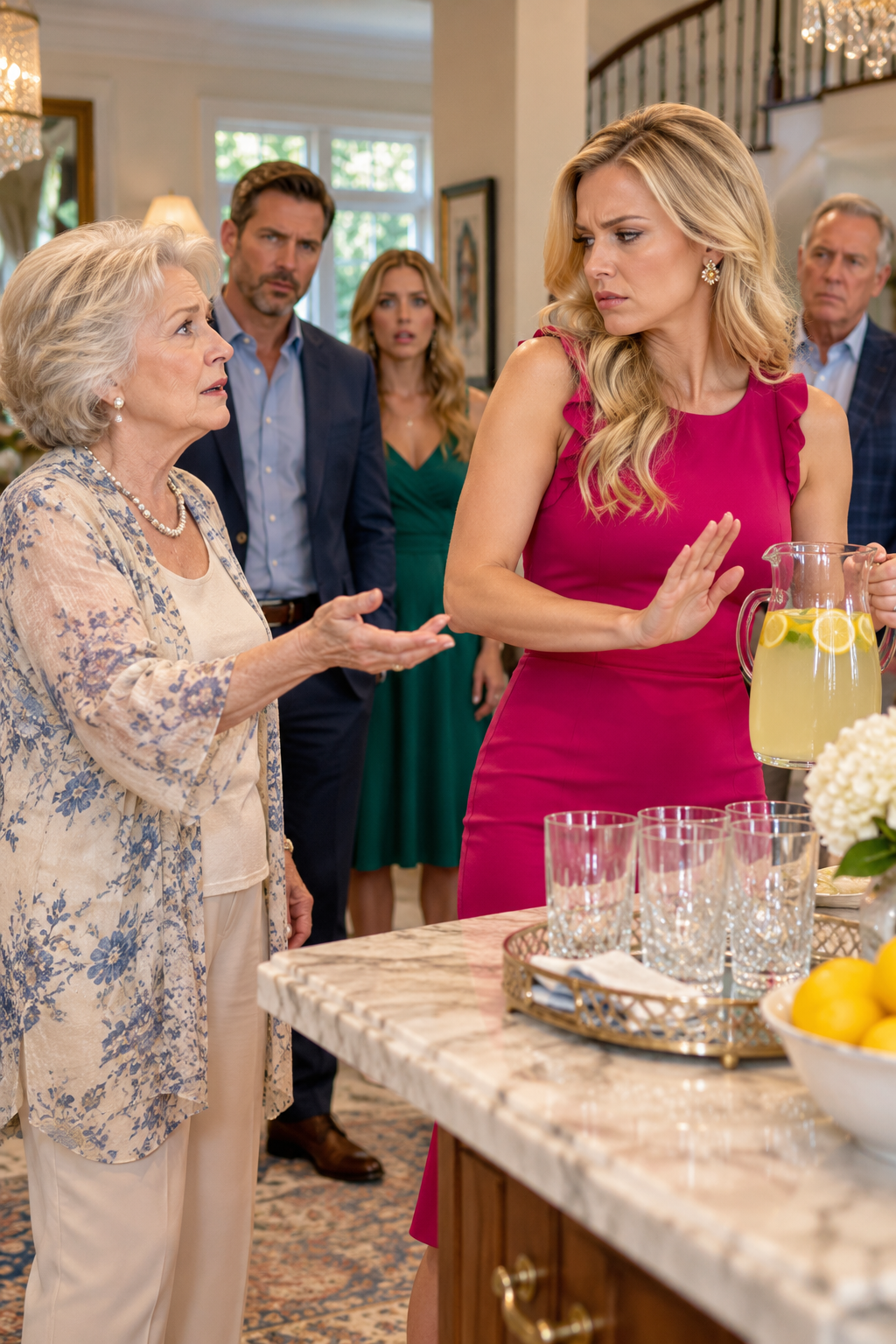
Then she slid the pitcher away from my hand and said, without smiling, “That’s for family.”
I stared at her.
I was seventy years old.
I had bought the house.
I had paid every mortgage payment.
And the woman standing barefoot on my hardwood floor had just decided I no longer qualified as family.
My name is Margaret Collins, and until that Thursday afternoon, I had spent most of my life believing patience was the same thing as love.
I was wrong.
Sometimes patience simply teaches people how much disrespect you are willing to tolerate.
And sometimes all it takes to finally understand that is one glass of lemonade.
My husband, Robert, died five years ago.
We had been married for forty-one years and lived for thirty-three of them in a four-bedroom Colonial outside Richmond, Virginia.
Robert used to joke that the house would outlive both of us.
It had a deep front porch, pale brick, oak floors, a large kitchen he renovated himself, and an enormous maple tree in the backyard where our son, Daniel, had once hung a tire swing.
After Robert died, the house became painfully quiet.
At first, I hated the silence.
Then I slowly learned to live with it.
I joined a book club. I planted roses. I traveled twice with my sister. I became friends with several women at the community center.
I had a life.
Maybe a smaller life than before Robert died, but it was mine.
Then, eighteen months ago, Daniel called me.
“Mom, we’re in trouble.”
Daniel was forty-two.
His wife, Brittany, was thirty-eight.
They had two children, Chloe, eleven, and Mason, eight.
Daniel explained that his consulting contract had ended unexpectedly. Their landlord was selling the townhouse they rented, and they needed somewhere to stay for “maybe three months.”
I didn’t hesitate.
“Come here.”
That was what mothers did, I told myself.
Family helped family.
The first few weeks were wonderful.
The children filled the house with noise again.
Daniel fixed things around the property.
Brittany cooked dinner twice a week and repeatedly told me how grateful she was.
Then three months became six.
Six became nine.
By the first anniversary of their moving in, nobody mentioned moving out anymore.
Little changes began appearing.
My armchair disappeared from the living room because Brittany thought it was “dated.”
My framed wedding photograph was moved from the fireplace mantel to the upstairs hallway.
My china was boxed because Brittany preferred white ceramic plates.
She rearranged my kitchen without asking.
Then she converted Robert’s study into a “home office.”
Every time I protested, she had the same explanation.
“We’re just trying to make the house work for everybody.”
Except “everybody” increasingly seemed to mean everybody except me.
Daniel noticed some of it.
He just didn’t want conflict.
“Brittany likes things a certain way,” he would tell me.
“So did your father.”
“I know, Mom.”
“And so do I.”
But nothing changed.
Then came the lemonade.
It was unusually warm that Thursday.
I had spent nearly two hours outside trimming roses and clearing weeds along the back fence.
When I came inside, Brittany was sitting at the kitchen island scrolling through her phone.
A glass pitcher of homemade lemonade sat beside her.
Ice floated among thin slices of lemon.
“That looks wonderful.”
I reached for a clean glass.
Brittany looked up.
“Oh, Margaret, actually, could you not?”
I thought I had misunderstood.
“Not what?”
“Drink that.”
She pulled the pitcher several inches toward herself.
I laughed softly.
“I made it for dinner.”
“There’s almost an entire pitcher.”
“I know, but Chloe and Mason like it.”
Her expression tightened.
“It’s just that I bought those organic lemons, and they were expensive.”
That irritated me.
I paid the grocery bill.
I paid the electric bill.
I paid the water bill.
Daniel gave me a few hundred dollars occasionally, but nowhere near what four additional people cost.
I kept my voice calm.
“I think one glass will probably survive the family budget.”
Brittany’s mouth hardened.
Then she said it.
“That’s for family, Margaret.”
The room became very still.
I slowly lowered the glass.
“What did you say?”
She realized instantly how it sounded.
But instead of apologizing, she doubled down.
“You know what I mean. For our family dinner.”
“I live here.”
“Yes, obviously.”
“I own this house.”
Her eyes flickered.
Then she leaned back.
“Technically.”
That single word changed something inside me.
Technically.
As though my ownership were a legal inconvenience.
As though I were merely occupying a bedroom in a house she had already claimed.
I put the empty glass back into the cabinet.
“All right.”
She seemed relieved.
“Thanks for understanding.”
“Oh, Brittany. I understand perfectly.”
Then I walked upstairs.
I did not yell.
I did not call Daniel.
I did not tell Brittany to pack her things.
Instead, I entered my bedroom, closed the door, and made one phone call.
“To whom?” my attorney, Rebecca Shaw, asked after I explained everything the following morning.
“To a real estate agent.”
Rebecca became quiet.
Then she laughed.
“Margaret, I think Robert would have enjoyed this.”
I had considered selling before.
The house was too large for one woman.
Property taxes had increased.
The yard required constant maintenance.
And after Robert died, I had occasionally imagined living somewhere smaller, preferably near the river.
But sentiment kept stopping me.
That ended with Brittany’s lemonade.
I called Laura Bennett, a real estate agent I had known through my book club.
She visited the next morning while Brittany was at Pilates and Daniel was at work.
Laura walked through the house quietly.
When she finished, she stood in the foyer and looked at me.
“You know this neighborhood has become extremely desirable, right?”
“I know prices have risen.”
“Margaret, Robert bought this house in 1992, correct?”
“Do you know what it’s worth now?”
“Six hundred thousand?”
Laura smiled.
“Closer to nine hundred and twenty.”
I almost dropped my coffee.
Robert and I had paid $186,000.
The mortgage had been gone for more than a decade.
Laura explained that several homes nearby had sold above asking price because developers and young families wanted larger lots.
“I already have a couple who lost another house nearby last month,” she said. “Cash buyers.”
“How quickly?”
“Potentially very quickly.”
I looked toward the staircase.
Family photographs still covered the wall.
Daniel at six.
Daniel graduating high school.
Daniel holding Chloe as a newborn.
For a moment, guilt arrived.
Then I remembered Brittany moving my wedding photograph.
Technically.
“Do it,” I said.
Laura tilted her head.
“You’re certain?”
There was one complication.
Daniel and Brittany lived there.
Fortunately, they had no lease.
No ownership interest.
No legal claim to the house.
Rebecca advised me precisely how to handle everything and made sure I followed Virginia law regarding their residency and notice.
I wasn’t interested in revenge that would create legal trouble.
I was interested in freedom.
We arranged a private showing while the family was attending Chloe’s soccer tournament that Saturday.
The buyers loved the house.
Especially the kitchen.
Brittany’s kitchen, as she had begun calling it.
They offered $940,000 in cash.
No financing contingency.
Flexible closing.
I accepted.
Three days later, Brittany held another glass of lemonade at the island while discussing renovations with Daniel.
“We really should replace these counters next year,” she said.
Daniel frowned.
“Those are granite.”
“Old granite.”
I entered carrying groceries.
Brittany glanced toward me.
“I was telling Daniel we should update the kitchen.”
I placed the bags down.
“You should probably wait.”
“Renovations can become expensive.”
She laughed.
“Well, eventually this house will need to feel like ours.”
Daniel looked uncomfortable.
“It’s Mom’s house.”
There it was again.
I looked directly at her.
She shrugged.
“I mean, realistically. Eventually Daniel inherits it.”
Daniel’s face turned red.
“Jesus, Brittany.”
“What? Everybody knows it.”
Not everybody.
My will already divided my estate between Daniel and an educational trust for my grandchildren.
But apparently Brittany had constructed a different future.
One in which I politely disappeared and left the house behind.
She poured herself more lemonade.
“You want some?” she asked Daniel.
She poured him a full glass.
Then she looked at me.
“Enjoy it.”
Six days later, the sale contract cleared every inspection.
The buyers wanted possession in sixty days.
That night, I invited Daniel and Brittany into the living room.
Daniel sat on the sofa.
Brittany remained standing.
“What’s this about?” she asked.
“I have some news.”
Daniel immediately looked concerned.
“Are you okay?”
“I’m excellent.”
I placed a folder on the coffee table.
Brittany glanced at it.
“What is that?”
“A sales contract.”
She frowned.
“For what?”
“The house.”
Daniel picked up the folder.
His face drained of color as he read the first page.
“You sold the house?”
Brittany laughed.
Not because something was funny.
Because she thought I was lying.
“No, you didn’t.”
I looked at her.
“Yes, Brittany. I did.”
“You can’t.”
“I already have.”
She grabbed the papers from Daniel.
Her eyes moved rapidly.
“$940,000?”
“The buyers were generous.”
“But… we live here.”
“For another sixty days.”
Her face changed.
“This is insane.”
“No. Insane would be owning a nearly million-dollar house and behaving as though I need permission to drink something from my own refrigerator.”
Daniel closed his eyes.
Brittany turned on him.
“You knew?”
Then she faced me again.
“You’re selling your house over lemonade?”
I spoke slowly.
“I’m selling because the lemonade finally showed me what had already happened.”
She stared at me.
“You moved into my home because you needed help. Somewhere along the way, you stopped being grateful. Then you stopped respecting me. Then you began making plans for my property while I was still alive.”
Her cheeks turned bright red.
“You said Daniel would inherit this house.”
“Eventually!”
“And when exactly were you expecting that to happen?”
She had no answer.
Daniel whispered, “Mom…”
I turned toward him.
“And you allowed it.”
That hurt him.
I could see it.
Some truths are supposed to hurt.
The next two weeks were miserable.
Brittany barely spoke to me.
Daniel alternated between apologizing and asking whether I might cancel the sale.
I would not.
Then one evening, I learned something that confirmed I had made the right decision.
My phone rang.
It was Rebecca.
“Margaret, did Daniel ever ask you to sign anything involving the house?”
“Did Brittany?”
Rebecca paused.
“A mortgage broker I know called me.”
My stomach tightened.
“What happened?”
“Apparently someone recently made preliminary inquiries about a home-equity loan using your property address.”
I sat down.
“Nothing was completed. Nothing legally binding happened. But your address came up.”
“Whose name?”
“I can’t give you everything yet, but Margaret, you should talk to Daniel.”
I found him in Robert’s old study.
He was alone.
“Did you try to borrow money against my house?”
His face told me the answer before his mouth did.
I nearly stopped breathing.
“It wasn’t like that.”
“What was it like?”
Daniel stood.
“Brittany and I were exploring options.”
“You do not own this house.”
“Then what options could you possibly explore?”
He rubbed his forehead.
“Our debt is worse than we told you.”
He sat again.
“About eighty-six thousand.”
I stared at him.
Credit cards.
A personal loan.
Two car payments.
Medical bills.
And, incredibly, nearly $17,000 Brittany had borrowed to start an online boutique that failed within seven months.
I felt sick.
“You told me you needed three months because your landlord sold your townhouse.”
“That was true.”
“But you never told me about this.”
“I was embarrassed.”
“And borrowing against my house was less embarrassing?”
“We didn’t actually do it.”
“Because you couldn’t.”
He looked away.
Then another thought occurred to me.
“Did Brittany believe the house would become yours soon?”
His silence answered.
“She thought maybe you would put me on the deed.”
I laughed once.
It sounded ugly.
“So we could qualify for better terms.”
“I told her you wouldn’t.”
“But you didn’t tell her to stop discussing it.”
That broke something different inside me.
Brittany’s behavior was cruel.
Daniel’s was worse in another way.
He knew me.
He was my son.
He knew what Robert and I had sacrificed for this house.
And instead of protecting me from his wife’s entitlement, he had hidden behind silence.
“You have sixty days.”
I held up my hand.
“For eighteen months, I have paid for the roof over your head. I have paid utilities. Groceries. Insurance. Repairs. I have babysat your children whenever you asked.”
“No, you don’t.”
I felt tears threatening and refused to let them fall.
“You thought because I was quiet, I didn’t notice.”
He looked down.
“You thought because I was your mother, there would never be consequences.”
That night, I changed the beneficiary arrangements on several accounts.
Not to punish my grandchildren.
Never them.
I created educational trusts that Daniel and Brittany could not access directly.
Rebecca handled everything.
My grandson and granddaughter would still benefit from what Robert and I built.
Their parents simply wouldn’t control it.
Three days later, Brittany discovered that part too.
She came into my bedroom without knocking.
“Is it true?”
I was reading.
“Is what true?”
“That you’re changing the inheritance.”
I closed the book.
“Who told you?”
“Then you should ask Daniel.”
She crossed her arms.
“You’re trying to destroy us.”
“I’m protecting myself.”
“We’re family.”
I almost smiled.
There was something extraordinary about hearing those words now.
I continued.
“Because recently I asked for lemonade and was informed that it was reserved for family.”
“That was one stupid comment.”
“One extremely useful comment.”
Her anger disappeared for a second.
“What are we supposed to do?”
“Find a home.”
“With what money?”
“You both work.”
“We have debt.”
“Then reduce your expenses.”
Her mouth opened.
I continued before she could speak.
“Sell the luxury SUV. Cancel the country club membership. Stop taking vacations you can’t afford. Stop buying things to convince strangers you are wealthier than you are.”
Her eyes widened.
“You have no right to judge us.”
“I have every right to decide I won’t finance it.”
Then I reopened my book.
The conversation was finished.
Brittany’s parents offered them temporary space in their basement.
Brittany was horrified.
Apparently my four-bedroom house had been acceptable when it was free, but her parents’ finished basement was humiliating.
Daniel sold his expensive pickup.
Brittany sold her SUV and bought a used Honda.
For the first time in years, they began living according to their income.
And something unexpected happened.
Daniel changed.
Not immediately.
Not dramatically.
But slowly.
He started packing without complaining.
He apologized for allowing Brittany to move Robert’s belongings.
He restored my wedding photograph to the mantel.
One evening, I found him standing beneath it.
“I miss Dad,” he said.
“He’d be disappointed in me.”
I didn’t answer.
After a moment, Daniel looked at me.
“Would he?”
“He would tell you that asking for help is nothing to be ashamed of.”
Daniel swallowed.
“But taking someone’s kindness and turning it into entitlement is.”
“I’m sorry.”
That time, I believed him.
Brittany was different.
Until the final week, she remained convinced I would change my mind.
Then the moving truck arrived.
She stood in the driveway watching strangers carry her furniture away.
The buyers were scheduled to take possession the following morning.
Brittany approached me.
“I hope you’re happy.”
I considered the question.
“I think I will be.”
“You’re breaking up this family.”
“No, Brittany.”
I looked toward Chloe and Mason, who were helping Daniel carry boxes.
“You nearly did that when you convinced yourself relationships were determined by what you could get from people.”
She folded her arms.
“So that’s it?”
I reached into my purse.
Her eyes narrowed.
I handed her a small envelope.
She opened it.
Inside was a check.
Her face changed.
“Five thousand dollars?”
“For the security deposit on an apartment.”
She stared at me.
“Because I don’t hate you.”
That surprised her more than anything else I had done.
“But it comes with one condition.”
“This is the last money you will receive from me to solve a problem created by living beyond your means.”
She looked at the check.
I continued.
“If you and Daniel want a better life, build one.”
She whispered, “You’d really let us struggle?”
Her head snapped up.
“Because struggle is not the worst thing that can happen to a person.”
I glanced back at my house.
“Believing someone else exists to rescue you forever is much worse.”
For once, Brittany had nothing to say.
The next morning, I walked through the empty house alone.
My footsteps echoed.
I entered the kitchen.
The counters were bare.
Sunlight spilled through the windows.
For a few minutes, memories came rushing back.
Robert making pancakes.
Daniel doing homework at the table.
Christmas mornings.
Birthday cakes.
Ordinary Tuesdays I had once assumed would continue forever.
I cried then.
Not because I regretted selling.
Because endings can hurt even when they are necessary.
I walked to the refrigerator.
The only thing inside was a small bottle of water and one lemon I had forgotten to pack.
I laughed through my tears.
“Of course.”
Then I locked the door.
My new home was forty minutes away.
Not a condo.
Not an apartment.
Smaller than the old one, but far more beautiful than I expected to find.
It sat on just under an acre near the James River with huge windows, a screened porch, a modern kitchen, and a garden that required half the work of my previous yard.
After selling costs and buying the new property outright, I still had more than $300,000 left from the old house.
For the first time in decades, I traveled without calculating every expense.
I replaced my fifteen-year-old car.
I invested part of the remaining money.
I funded the grandchildren’s trusts.
And I bought myself something Robert and I had always discussed but never purchased.
A little twenty-two-foot travel trailer.
My sister and I took it to the Blue Ridge Mountains that spring.
Meanwhile, Daniel and Brittany moved into a modest three-bedroom apartment.
The first months were difficult.
Then something strange happened.
Without me as their financial safety net, they finally addressed their problems.
Daniel took a stable corporate job instead of chasing inconsistent consulting contracts.
Brittany found work managing events for a hotel.
They began paying down the debt.
The country club disappeared.
The expensive vacations disappeared.
So did many arguments.
Almost a year after the lemonade incident, I invited them to my house for Chloe’s twelfth birthday.
It was the first time Brittany had visited.
She stepped through the front door and stopped.
The house wasn’t enormous.
It didn’t need to be.
But it was bright, warm and unmistakably mine.
My furniture.
My photographs.
Robert’s old reading chair restored and placed beside the fireplace.
Brittany walked onto the screened porch.
“You seem happy here.”
She looked toward the river.
Then she surprised me.
“I owe you an apology.”
She seemed nervous.
Not defensive.
“I was horrible to you.”
I said nothing.
“I think… after we moved in, I started pretending the house was ours because admitting how badly we were doing financially made me feel like a failure.”
“That doesn’t excuse it.”
That mattered.
She looked down at her hands.
“I was jealous of you too.”
“You had security. Savings. A paid-off house. You didn’t worry about every bill.”
I almost laughed.
“Brittany, Robert and I worried about bills for thirty years.”
She looked at me.
“The difference is we didn’t spend money trying to convince other people that we didn’t.”
She nodded slowly.
“I understand that now.”
From inside, Chloe yelled, “Grandma! We’re ready!”
I walked toward the kitchen.
Brittany followed.
A birthday cake stood in the center of the island.
Beside it was a large glass pitcher.
Fresh lemons floated among the ice.
I stared at it.
Brittany noticed.
Her face turned red.
“I made it.”
She nodded.
Then she took a glass from the cabinet.
She filled it to the top.
And handed it to me.
I accepted it.
“Thank you.”
She hesitated.
Then she smiled faintly.
“It’s your house.”
I took a sip.
Her smile widened.
“And you’re family.”
Daniel, standing across the kitchen, laughed.
I laughed too.
Not because the past was erased.
Forgiveness is not pretending something never happened.
Forgiveness is deciding that someone who has genuinely changed does not have to remain permanently trapped inside the worst thing they ever did.
Daniel and Brittany never moved in with me again.
They didn’t ask.
Two years later, they bought a modest house of their own.
They put twenty percent down.
No loans from me.
No inheritance advances.
No shortcuts.
On the day they received the keys, Daniel sent me a photograph.
Brittany was standing in their kitchen holding a pitcher.
Underneath the picture, he wrote:
Mom, Brittany says you’re entitled to unlimited lemonade here.
I laughed so hard I had to sit down.
Then I walked onto my porch with my own glass.
The river moved quietly beyond the trees.
For years, I had believed being a good mother meant giving.
Giving space.
Giving money.
Giving forgiveness.
Giving one more chance.
But Robert once told me something I hadn’t understood until much later.
“Love needs a front door, Margaret. It should welcome people in—but it should also be able to close.”
I finally understood.
I could love my son without funding his mistakes.
I could forgive Brittany without surrendering my dignity.
I could protect my grandchildren without giving their parents control of my future.
And I could sell a house filled with memories without selling the memories themselves.
The old house had never been the real inheritance.
The lesson was.
Respect the people who help you.
Never confuse generosity with weakness.
Never make plans for property that belongs to someone who is still very much alive.
And above all—
Never tell a seventy-year-old woman she can’t have lemonade from the refrigerator she paid for.
You might discover she’s been much more patient than powerless.
✓ Lynn R. Adams
My Daughter-in-Law Refused Me Lemonade in My Own House—So I Made One Quiet Decision That Changed Everything The first time my daughter-in-law told me I wasn’t allowed to drink lemonade in my own kitc…