My Cheating Husband Threw…
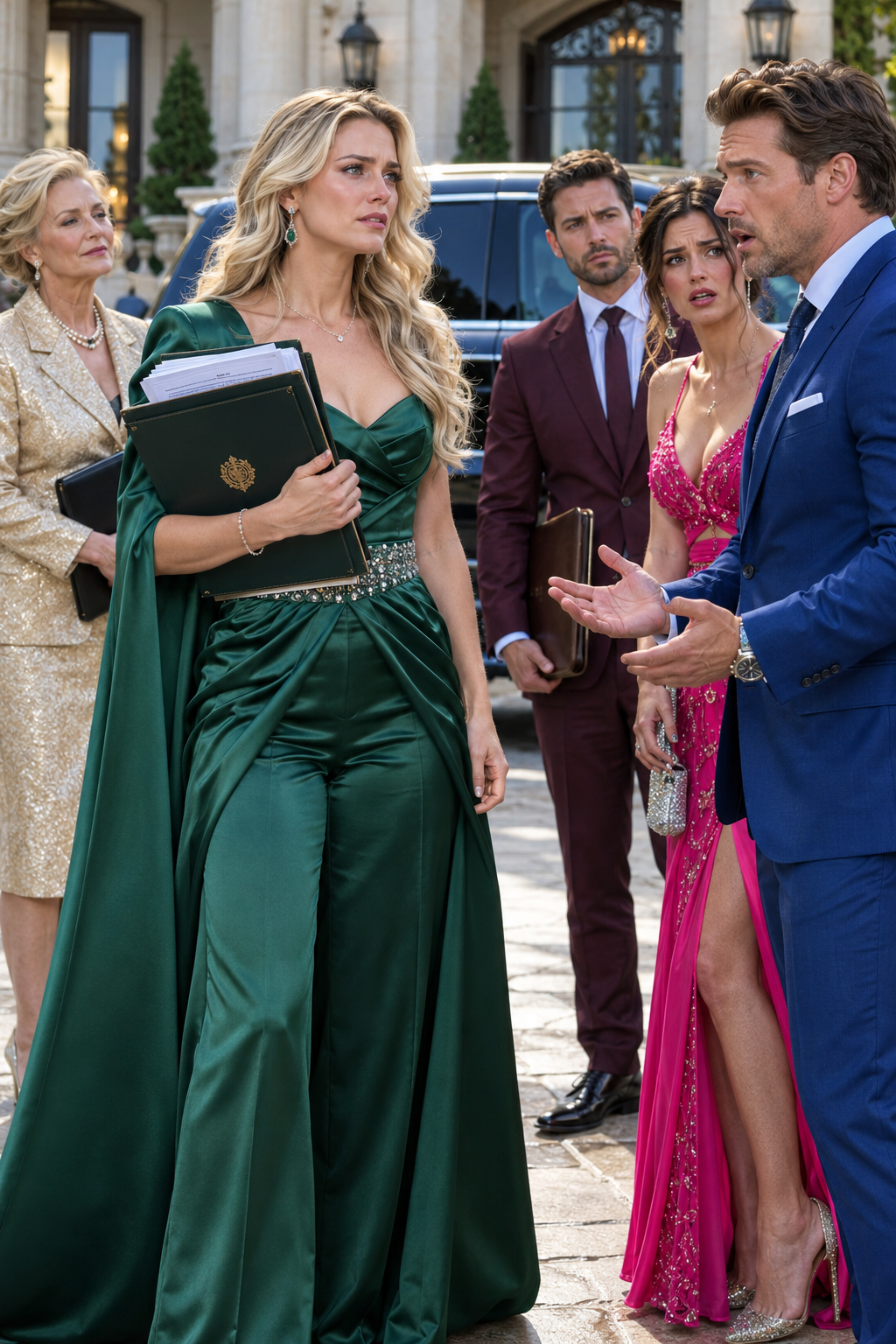
My Cheating Husband Threw Me Out for His Mistress—Then the Inheritance He Thought He Owned Became His Worst Nightmare
My husband handed me divorce papers at our twenty-second anniversary dinner, while his mistress sat in my chair wearing the diamond earrings I had bought for myself.
Then he told me I had four days to leave the house.
The cruelest part wasn’t that Daniel had cheated.
It wasn’t even that my younger sister Melissa was standing beside him with her arms folded, already discussing which of my mother’s antiques she wanted after I was gone.
It was that all three of them looked at me like I was a guest who had overstayed her welcome in a life I had spent thirty years building.
Daniel leaned back in the dining chair at the head of the table.
The one my father had carved from walnut when Daniel and I bought our first home.
“I’m trying to keep this civilized, Claire,” he said.
The woman beside him touched his sleeve.
Brooke Ellis.
Thirty-four.
Corporate events director at Daniel’s development company.
Twenty-one years younger than me.
Her perfume was sweet and expensive, heavy enough to cover the smell of the rosemary chicken still cooling on the counter.
She was wearing my earrings.
Small diamond drops.
Not family heirlooms.
Nothing dramatic.
But I had bought them with the first consulting check I earned after spending nearly two decades helping Daniel build his company while officially being called “just a homemaker.”
I looked at the earrings.
Then at Daniel.
“You went through my jewelry box?”
Brooke’s smile disappeared.
Daniel gave a small sigh.
“Claire, don’t do this.”
Melissa stood beside the fireplace.
My sister had driven three hours from Raleigh, supposedly because she was worried about me.
Now I understood why she had arrived before I did.
She had known.
Everybody in the room had known except me.
Daniel pushed the divorce papers another inch across the dining table.
“I’m offering you more than most women would get.”
I glanced down.
Thirty thousand dollars.
A used Lexus that was already in my name.
Six months of health insurance.
And the right to take “personal clothing and effects” from the house.
Nothing else.
No stake in Mercer Ridge Development.
No claim against the lake property.
No ownership in our downtown buildings.
No retirement interest.
No marital share in the house.
Apparently, according to the papers, Daniel had spent the last year reorganizing almost everything we owned into trusts, holding companies, and “business-protected entities.”
He had expected me to be devastated.
Maybe he had rehearsed it.
Maybe Brooke had helped.
Maybe Melissa had told him exactly how I would react.
They were all wrong.
I picked up the first page.
I read every line.
Then I placed it back on the table.
Daniel’s mouth tightened.
“That’s it?”
“What were you expecting?”
“I don’t know. Something.”
“I didn’t say that.”
“Screaming?”
Brooke shifted in her chair.
Melissa stared at me.
I folded my napkin.
Then I set it beside my plate.
I had spent twenty-two years learning that silence made dishonest people nervous.
Daniel hated silence.
He always filled it.
Business meetings.
Family dinners.
He believed the person talking controlled the room.
He never understood that sometimes the quietest person was simply waiting for everybody else to expose themselves.
“I’ll leave Friday,” I said.
Daniel blinked.
Melissa uncrossed her arms.
Brooke looked almost disappointed.
“You’re not going to fight the house?” Daniel asked.
I looked toward the tall windows beyond the dining room.
Our backyard sloped toward a line of old oaks glowing under the porch lights.
I had planted three of those trees myself.
I had supervised the kitchen renovation.
I had spent Christmas mornings on those floors.
I had sat beside Daniel’s mother in the downstairs bedroom while she died of ovarian cancer.
I had raised our son there.
I had hosted investors there when Daniel’s company had six employees and one leased pickup truck.
I had turned the home into collateral once without telling my frightened husband how close the bank had come to closing his first construction line.
And now he wanted to know why I wasn’t fighting for it.
“No,” I said.
Daniel stared at me for several seconds.
Then relief spread across his face.
It was subtle.
But I saw it.
So did Brooke.
Her hand moved from his sleeve to his shoulder.
Melissa actually laughed.
“Thank God,” she said. “Maybe this won’t become ugly.”
I looked at my sister.
The sister whose college tuition I had quietly covered after our father died.
The sister whose first divorce attorney I had paid for.
The sister who had lived with me for eleven months after her second marriage collapsed.
“What part were you afraid would become ugly?”
Melissa’s face stiffened.
“I’m just saying fighting over things destroys families.”
“Our family seems to have survived your two divorces.”
Daniel pushed back his chair.
“That’s enough.”
Everyone watched me.
I walked to the antique secretary desk near the staircase, opened the bottom drawer, and removed a small blue envelope.
Daniel glanced at it.
“What’s that?”
“What mail?”
I tucked it into my purse.
Brooke smiled again, but this time uncertainly.
She had no idea what was inside.
Neither did Daniel.
Neither did Melissa.
That little blue envelope had arrived by certified courier exactly six days earlier.
The sender was Hollis, Crane & Whitmore.
Charleston, South Carolina.
The law firm that had represented my mother’s older brother, Arthur Whitmore, for forty-seven years.
Uncle Arthur had been the black sheep of our family.
Or that was what my mother called him.
Too private.
Too stubborn.
Too difficult.
Too successful.
He had never married.
Never had children.
He lived in a weathered brick house outside Charleston and owned what everyone assumed was a collection of old warehouses and neglected land left over from our grandfather.
My mother and Arthur stopped speaking when I was twenty-eight.
The official reason involved property.
The real reason was that Arthur accused my mother of allowing my stepfather to drain money from a family trust.
My mother accused Arthur of being greedy.
I stayed out of it.
But every December, I sent him a Christmas card.
Every birthday, he called me.
When Daniel’s company nearly collapsed during the recession, Arthur offered help.
When our son needed emergency surgery at eleven, Arthur drove six hours and sat in the hospital overnight without telling anyone he was coming.
When my mother developed dementia, Arthur visited her every month even though she sometimes shouted at him to leave.
He was difficult.
He was stubborn.
But he remembered who showed up.
He died three weeks ago.
The funeral had been private.
Daniel refused to attend because of a major investor conference.
Melissa said she was “too emotionally drained.”
I went alone.
Three days after I came home, the blue envelope arrived.
Inside was a four-page letter written by Arthur six months before his death.
The first line said:
Claire, if you are reading this, somebody in your family is probably smiling too hard.
I almost laughed when I read it.
Then I reached the second page.
And stopped breathing.
I did not tell Daniel.
Not that night.
Not the next morning.
Not when he came home after midnight smelling like Brooke’s perfume.
Not when he told me he needed “space.”
Not when Melissa started calling twice a day asking strange questions about whether Uncle Arthur had left debts behind.
I told no one.
Because Arthur’s final paragraph contained one sentence underlined twice.
Do not announce anything until they show you who they are when they believe you have nothing.
So I did exactly that.
I let them believe I had nothing.
I let Daniel believe twenty-two years of marriage had reduced me to thirty thousand dollars and a suitcase.
I let Brooke measure curtains for rooms she did not own.
I let Melissa circle furniture with her eyes.
I let them talk.
I let them plan.
I let them celebrate.
And I remembered.
I remembered selling my grandmother’s sapphire brooch when Daniel needed payroll during his second year in business.
I remembered waking at four every morning to prepare bid packages because we couldn’t afford an office manager.
I remembered turning down a graduate program at Duke because Daniel said he needed me “just for two years.”
I remembered those two years becoming twenty.
I remembered raising our son while Daniel traveled.
I remembered caring for Daniel’s father after his stroke.
I remembered hosting clients who never learned I had written half the proposals Daniel took credit for.
I remembered signing documents I barely understood because my husband looked me in the eye and said, Trust me.
I remembered.
I remembered.
I remembered.
I remembered.
And by Friday morning, I was no longer angry.
I was accurate.
Daniel left for work at seven.
Brooke had spent the night in the guesthouse.
I knew because her white Mercedes was parked beside the pool.
The disrespect was almost impressive.
At eight, two moving vans arrived.
Not because I had much furniture to take.
I had hired them mostly because I wanted witnesses.
Daniel’s house manager, Teresa, hugged me in the kitchen.
She had worked for us for fourteen years.
“I’m sorry,” she whispered.
I squeezed her hand.
“Don’t be.”
She pulled back.
“Mrs. Mercer—”
Her eyes filled.
“He told the staff Miss Ellis will be managing the household starting Monday.”
I looked toward the breakfast room.
Brooke had left a leather notebook on the table.
Pool renovation.
Replace family photographs.
“Teresa, do you have another job?”
“Keep this one for now.”
Her eyebrows rose.
“Just for now.”
At ten fifteen, Melissa arrived.
She didn’t help pack.
She wandered.
She stopped beside the silver cabinet.
“Are you taking Mom’s serving set?”
She frowned.
“I thought we might split it.”
“It was left to me.”
“You already have enough.”
I closed a box.
“Enough what?”
“Interesting word.”
Melissa sighed.
“Claire, I came because I’m worried.”
“You came Wednesday because Daniel called you before he called his attorney.”
Her face changed.
Only slightly.
There it was.
One of the little truths people revealed when they didn’t expect you to be watching.
“I don’t know what you mean.”
“Yes, you do.”
She looked toward the movers.
Then lowered her voice.
“Daniel is trying to protect you.”
I almost admired that sentence.
“By divorcing me?”
“By giving you a clean break.”
“With thirty thousand dollars.”
“You’re not poor.”
“You have investments.”
“Which ones?”
She hesitated.
She didn’t know.
Daniel had told her I was financially comfortable.
He had not told her how.
Because he didn’t know either.
Melissa touched the edge of the silver cabinet.
“What happened with Uncle Arthur’s estate?”
The question came so casually that it might have fooled me three days earlier.
I taped the box.
“What do you mean?”
“Did the lawyer tell you anything?”
“He said probate may take time.”
“Arthur had that old Charleston property.”
Melissa shrugged.
“I just wondered whether he left it to charity.”
I looked directly at her.
“Why would you care?”
“Then don’t.”
Her jaw tightened.
That was the first moment I knew Daniel and Melissa had discussed Arthur before the divorce.
Not generally.
Specifically.
It also meant something else.
They knew enough to be curious.
But not enough to understand.
At noon, my son called.
Ethan was twenty-four and finishing his medical residency in Nashville.
His voice sounded wrecked.
“Mom, Dad told me.”
“I figured he would.”
“He said you knew the marriage had been bad for years.”
“Your father says many things.”
“He said you agreed to the divorce.”
“I agreed to leave the house.”
“That isn’t the same.”
Then Ethan said, “Is there somebody else?”
I looked out at the driveway.
Brooke was approaching from the guesthouse carrying coffee.
“For your father?”
“She’s walking toward me.”
“I’m fine.”
“You don’t sound fine.”
“I’m not required to sound injured just because somebody injured me.”
He exhaled.
“That is the most you sentence I’ve ever heard.”
That made me smile.
“Finish your shift.”
“I can fly home tonight.”
“Ethan, listen to me. Your father and I made you. We do not get to use you as a weapon against each other. You will hear things. Do not choose sides because you feel sorry for me. Choose the truth after you know it.”
He was quiet.
“Do you know the truth?”
“All of it?”
That was more accurate than I realized.
At three twenty, I carried the final suitcase downstairs.
Brooke stood in the foyer wearing cream slacks and a pink silk blouse.
She looked around thirty-four because she was thirty-four.
But I noticed the tiny tremor in her fingers when she held out my spare house key.
Daniel had given it to her.
“Daniel said you’d probably want this.”
I stared at the brass key.
Then at her.
“Why would I want it?”
Her smile slipped.
“I assumed—”
“You live here now.”
She flushed.
I didn’t say it cruelly.
That bothered her more.
“Claire, I know this situation isn’t ideal.”
“No. It’s remarkably clear.”
“I never intended to hurt you.”
That sentence almost deserved applause.
I moved closer.
“You were sleeping with my husband for eleven months.”
Her eyes widened.
Daniel had probably told her I suspected only recently.
“The Four Seasons charged the spa treatments to our joint American Express.”
Her face went pale.
“June eighteenth. September third. November twelve. January seventh. Same suite category. Same hotel florist. Different excuses.”
She stared at me.
“I knew in September.”
“But you never said anything.”
“Because knowing someone is lying is useful. Telling them you know only teaches them to lie better.”
She looked toward the staircase.
For the first time, Brooke seemed afraid of me.
I took the house key from her palm.
Then placed it on the marble console table.
“You keep it.”
I walked out.
My temporary apartment was above a bakery in downtown Durham.
Nine hundred square feet.
One bedroom.
Old pine floors.
A balcony overlooking an alley.
Daniel assumed I had rented it because it was cheap.
Actually, the lease belonged to Hollis, Crane & Whitmore.
The firm had secured it under Arthur’s instructions.
When I arrived, attorney Samuel Crane was waiting inside.
Sixty-eight.
Silver hair.
Quiet eyes.
He had been Arthur’s attorney since before I graduated high school.
He stood when I entered.
“Brooke is wearing my earrings.”
“That bad.”
I put my purse on the kitchen counter.
“Melissa knows something.”
“She asked about Charleston.”
Samuel’s expression sharpened.
“Did you tell her?”
I removed the blue envelope from my purse.
The paper had softened along the folds.
“I read Arthur’s letter twelve times.”
“You should read the other one.”
My hand stopped.
“What other one?”
Samuel opened his briefcase.
He placed a sealed white envelope on the table.
My name was written across the front in Arthur’s handwriting.
“This was to be delivered only after you left the marital residence.”
My chest tightened.
Samuel sat.
“He suspected.”
“Based on what?”
“A private investigator.”
The apartment suddenly felt smaller.
“Arthur hired one eighteen months ago.”
“For Daniel?”
“For several people.”
I didn’t touch the envelope.
“Because Arthur believed someone was trying to gain access to Whitmore Holdings before his death.”
Whitmore Holdings.
The name appeared in the first letter.
Until six days earlier, I had assumed it was a modest family property company.
It was not.
Arthur had spent five decades buying industrial land, logistics warehouses, medical office buildings, agricultural rights, and minority shares in privately held companies throughout the Southeast.
Some investments were hidden inside layered partnerships.
Some had been purchased when entire neighborhoods were considered worthless.
Some sat on land that later became essential to data centers, highway expansions, distribution hubs, and energy projects.
Samuel estimated the estate’s conservative net value at $186 million.
And Arthur had left eighty-two percent of it to me.
Voting shares.
Land rights.
Trust authority.
The remainder went to charitable foundations and longtime employees.
Melissa received nothing.
My mother’s estate received nothing.
Daniel received nothing.
Most importantly, Arthur had structured the inheritance under a protected family trust created years before my marriage.
Under North Carolina law, inherited property kept separate could generally remain separate property.
Arthur had gone further.
The control rights transferred only after his death.
The assets were shielded.
The trust contained restrictions.
And Daniel’s signature appeared nowhere.
He couldn’t claim ownership simply because he was my husband.
That alone would have been enough.
But Arthur had left another surprise.
Whitmore Holdings owned eighteen percent of Mercer Ridge Development.
Daniel’s company.
The company he had just spent twelve months stripping away from the marital estate.
The company he believed he controlled.
Years earlier, during the recession, Arthur had quietly purchased distressed notes from the bank that financed Daniel’s projects.
Those notes later converted into preferred equity.
Daniel thought a private investment group called W.H. Capital Partners owned the stake.
He never knew what W.H. meant.
Whitmore Holdings.
My uncle had been sitting inside Daniel’s company for fourteen years.
And apparently investigating.
I opened the second envelope.
If you are reading this from somewhere other than the Mercer house, then Daniel finally did what I hoped he would be smart enough not to do.
Samuel watched me.
I continued.
Do not mistake my gift for rescue.
You never needed rescuing.
This is restitution.
Your mother spent years convincing you that asking for what belonged to you was selfish. Your husband spent years turning your work into his reputation. Your sister learned to survive by agreeing with whoever stood closest to money.
None of those things made you weak.
They made you useful to people who preferred you quiet.
I swallowed.
Arthur’s handwriting blurred.
I blinked until it sharpened again.
Then came the warning.
There is a provision in the Whitmore trust that no one outside Samuel and I has seen. Do not activate it until Daniel files his sworn financial disclosure.
Let him lie first.
My fingers went cold.
I looked at Samuel.
“What provision?”
He opened another folder.
“Arthur called it the honesty clause.”
“That sounds like him.”
Samuel turned the document toward me.
“If any spouse, partner, trustee, officer, or affiliated beneficiary attempts through fraud, concealment, coercion, forged authorization, or false financial disclosure to gain control of protected Whitmore assets, the trust can trigger mandatory audit rights against any company financially connected to Whitmore Holdings.”
I read it twice.
“Mercer Ridge.”
“The company Arthur owns eighteen percent of.”
“What happens after the audit?”
“That depends on what Daniel has done.”
I looked at Samuel.
“And what do you think Daniel has done?”
Samuel’s face changed.
“Arthur believed Daniel had been moving money.”
My pulse slowed instead of racing.
That happened when I became truly frightened.
“We don’t know.”
“Possibly.”
Samuel paused.
“Possibly.”
I stood and walked to the balcony door.
Below us, someone rolled a rack of bread from the bakery into a van.
Normal life.
A dog barking.
Meanwhile, my dead uncle had apparently constructed a legal land mine beneath my marriage.
“What did the investigator find?”
Samuel slid a photograph across the table.
A man I recognized as Daniel’s chief financial officer, Richard Hale.
The three of them were leaving a private bank in Charlotte.
The timestamp was eleven months earlier.
Before Daniel told me our marriage was failing.
Before Brooke started leaving perfume on his shirts.
Before Melissa suddenly began calling more often.
“What bank?”
“Carolina Heritage Private.”
I knew the name.
Daniel had no disclosed account there.
Neither did I.
“What were they doing?”
“That,” Samuel said, “is what Arthur wanted us to discover.”
The next morning Daniel texted me.
Did you take the silver tea service?
I looked at the message while drinking coffee beside my apartment window.
Twenty-two years.
One affair.
One betrayal.
One divorce.
And Daniel wanted to know about a teapot.
Yes, I typed.
Three dots appeared.
Melissa says half belonged to your mother.
Melissa says many things.
He called immediately.
I let it ring twice.
Then answered.
“You sound relaxed,” he said.
“I slept well.”
“What do you need?”
“I just want us to keep things fair.”
I almost laughed.
“Of course.”
“The silver belonged to your family.”
“So Melissa may have a claim.”
“You sure?”
Then Daniel changed direction.
“Did your uncle leave you anything?”
There it was.
I leaned back.
“Just asking.”
“Then I’m just answering. Probate is ongoing.”
“So there was an estate.”
“There is always an estate when someone dies.”
“Don’t play games, Claire.”
“You called me.”
He lowered his voice.
“I’m trying to protect both of us. If Arthur left you something while we’re still legally married, it may need to be disclosed.”
He had done research.
Arthur wanted him confident.
“Then my attorney can handle it.”
“You hired an attorney?”
“You sent me divorce papers.”
Another pause.
“Samuel Crane.”
Daniel went silent.
Completely silent.
For the first time in twenty-two years, I heard my husband lose control of a conversation by saying nothing.
“I know the name.”
“I assumed you might.”
“He was Arthur’s lawyer.”
“That’s all?”
“What else would there be?”
He recovered quickly.
“I don’t like games.”
“Then stop playing them.”
I ended the call.
Four minutes later, Melissa called.
I didn’t answer.
Seven minutes after that, Daniel’s CFO Richard Hale sent me a LinkedIn connection request.
That made me laugh.
By lunchtime, Daniel’s attorney emailed my lawyer demanding disclosure of any inheritance “received, anticipated, assigned, or beneficially controlled” during the marriage.
Samuel responded with three sentences.
He did not mention the trust.
He did not mention Whitmore Holdings.
He did not mention Mercer Ridge.
Instead, he requested Daniel’s complete sworn financial disclosures, including all transfers above $10,000 made during the previous thirty-six months.
Daniel had ten business days to answer.
He answered in four.
That was the first mistake.
The second was signing his name.
The disclosure showed Daniel’s estimated net worth at $14.2 million.
He listed our former house at $2.8 million.
Two investment properties.
His ownership in Mercer Ridge.
Retirement accounts.
Business interests.
No Carolina Heritage Private.
No offshore entities.
No unexplained transfers.
No gifts to Melissa.
No hidden companies.
Everything looked beautifully clean.
Samuel read the document in his conference room while I watched rain slide down the windows.
“He swore this is complete?”
“Under penalty of perjury.”
“Can we activate Arthur’s clause?”
Samuel looked at me.
I thought I would feel triumphant.
Instead, I felt tired.
For years, I had believed my marriage failed in a thousand small ways.
The affair was simply the last injury.
But the photograph of Daniel and Melissa outside that bank had changed the shape of everything.
Maybe the marriage hadn’t simply collapsed.
Maybe parts of it had been dismantled on purpose.
“Do it,” I said.
The audit notice went out at that afternoon.
At , Daniel called.
At , he called again.
At , Brooke called.
I didn’t know she had my number saved.
At , Melissa texted:
WHAT DID YOU DO?
I poured tea.
At , Richard Hale called Samuel.
At , Daniel called again.
At , my son Ethan texted:
Dad is losing his mind. Are you okay?
At five eleven, someone pounded on my apartment door.
I opened it but kept the chain latched.
His hair was wet from the rain.
He had driven from Raleigh fast enough to forget his umbrella.
“What did you do?” he demanded.
“Good evening.”
“You came to my home.”
“This is not your home.”
I looked around the apartment.
“It has my bed and my coffee. That qualifies.”
His face reddened.
“You triggered a corporate audit.”
“No. Whitmore Holdings triggered a corporate audit.”
“You control Whitmore Holdings.”
Interesting.
He knew already.
“How did you learn that?”
He stepped closer.
The chain pulled tight.
“You think this is funny?”
“You inherited Arthur’s company.”
“How much?”
“You’ll see in discovery.”
His eyes narrowed.
“Claire, listen to me. You do not understand what you’re interfering with.”
“Explain it.”
“Mercer Ridge employs four hundred people.”
“Four hundred twenty-three.”
I continued.
“It has thirteen active developments, six pending municipal approvals, two hospital contracts, and outstanding debt of approximately ninety-one million dollars across affiliated entities.”
His mouth parted.
“Would you like me to continue?”
“Arthur told you?”
“Arthur left records.”
Daniel ran a hand through his wet hair.
Then his voice softened.
A technique.
He had used it on bankers.
Contractors.
“Claire, whatever happened between us, the company is different.”
“You spent years telling me the company was our family.”
“Then why wasn’t I told Arthur owned eighteen percent?”
I already knew the answer.
Daniel had learned about Whitmore’s ownership only after Arthur died.
Possibly within the last few days.
That explained the panic.
“I didn’t know until recently,” he admitted.
“Does it matter?”
“Two weeks ago.”
Before the divorce papers.
Before Melissa came.
Before Daniel demanded I leave.
That was the moment the affair stopped being the main story.
I gripped the edge of the door.
“You knew before you served me.”
He looked away.
“You knew my uncle had died. You knew Whitmore Holdings owned part of your company. You suspected I might inherit it.”
“We didn’t know.”
He realized the mistake.
“Who is we?”
“My attorneys.”
He said nothing.
It surprised him.
“Thank you.”
“For what?”
“For answering.”
“I didn’t answer anything.”
I started to close the door.
He shoved his palm against it.
Not enough to break the chain.
Enough to show me the old Daniel was gone.
“Do not destroy my company because you’re angry about Brooke.”
There it was.
The moral rewrite.
His betrayal was an affair.
My response was destruction.
I looked him in the eye.
“I didn’t move the money, Daniel.”
His face emptied.
For one second, neither of us moved.
Then I closed the door.
The audit team arrived at Mercer Ridge headquarters Monday morning.
By noon, they found the first irregularity.
Three consulting companies had received $6.7 million over thirty months.
North Peak Advisory.
Blue Heron Strategy.
Marlowe Residential Services.
All three claimed to provide market research, community engagement, and acquisition consulting.
None had meaningful employees.
North Peak’s registered address belonged to a mailbox store.
Blue Heron’s principal was Brooke Ellis’s older brother.
Marlowe Residential Services was controlled through a trust.
The trust beneficiary was redacted from ordinary state filings.
Arthur’s investigators had already traced it.
My sister had received $1.4 million in consulting fees from my husband’s company.
She had never consulted on anything.
Not professionally.
Not accidentally.
Not even convincingly.
When Samuel showed me the records, I felt something colder than anger.
I remembered Melissa crying at my kitchen island seven years earlier because she couldn’t afford her mortgage after her second divorce.
I had written her checks.
I had paid her health insurance for fourteen months.
I had sent her daughters birthday money when their father disappeared.
All while she was apparently building a financial relationship with my husband behind my back.
“When did payments begin?” I asked.
Samuel looked at the page.
“Three years ago.”
Three years.
Long before Brooke.
That hurt worse.
Brooke was an affair.
Melissa was architecture.
“What did she do for Daniel?”
“We’re still determining that.”
“Find out.”
Miniature victories came quickly after that.
The bank froze two disputed corporate transfers pending investigation.
The Mercer Ridge board appointed an independent compliance committee.
Richard Hale took “temporary personal leave.”
Brooke was removed from financial approval authority.
Daniel’s attorney requested mediation.
I declined.
Then something stranger happened.
Daniel became charming.
He sent flowers.
White roses.
My favorite.
He sent a handwritten note.
We built too much to let lawyers decide how it ends.
I threw away the flowers.
Kept the note.
Evidence and sentiment sometimes shared stationery.
Then he offered me $8 million.
The offer arrived through counsel.
Confidential.
In exchange, I would waive spousal claims, withdraw support for the audit, sell Whitmore’s Mercer Ridge stake back to Daniel at a “fair valuation,” and sign a nondisparagement agreement.
Samuel read the figure.
Then looked at me.
“He thinks you don’t know what you own.”
“How much is the Mercer Ridge stake worth?”
“Possibly thirty-two to forty million, depending on debt.”
“And my other inherited holdings?”
“Much more.”
“Decline it.”
“With a counter?”
The next offer was $15 million.
Then $22 million.
Each one proved the same thing.
Daniel wasn’t afraid of losing the divorce.
He was afraid of the audit.
My answer remained no.
A week later, Melissa appeared outside my apartment.
She looked thinner.
Expensive tan coat.
For once, no performance.
I let her inside.
She stood by the window.
“You’re really doing this.”
“What am I doing?”
“Destroying everyone.”
I almost laughed.
“Interesting. Daniel said the same thing.”
“He’s panicking.”
“He should stop calling me.”
“You froze accounts.”
“The bank froze accounts.”
“Because of you.”
“Because records triggered concerns.”
She turned.
“You sound like a lawyer.”
“I’ve spent a lot of time around one lately.”
Melissa’s mouth tightened.
“I needed the money.”
Something true.
“For what?”
“You wouldn’t understand.”
“I was drowning.”
“You asked me for help.”
“You helped like Mom helped.”
I stared at her.
“Enough to make sure I remembered who had more.”
The accusation landed strangely because I had never thought of it that way.
Maybe she had.
Maybe every check I wrote felt like evidence that her older sister had succeeded where she failed.
Pain could explain resentment.
It could not excuse conspiracy.
“So you took money from Daniel.”
“He offered consulting work.”
“You don’t work in real estate.”
“I introduced people.”
She looked away.
“Investors.”
“Which investors?”
“Carolina Heritage Private?”
Her face changed.
There it was.
“What did you do, Melissa?”
“Nothing illegal.”
“That wasn’t my question.”
“I connected Daniel with people who could restructure things.”
“Things like marital assets?”
Her eyes snapped toward me.
“He thought you were going to divorce him.”
I laughed once.
It sounded ugly even to me.
“Years ago.”
“So he started hiding assets because he was afraid I might leave?”
“You were unhappy.”
“He was sleeping with Brooke.”
“Not then.”
That hurt too.
Meaning the hiding began before the affair.
Daniel’s financial betrayal had not been a reaction to a failing marriage.
It had been insurance against me ever demanding the value of what I helped build.
Melissa sat on the edge of a chair.
“Claire, I’m asking you as your sister. End the audit.”
“If this goes public, people will lose jobs.”
“If Daniel stole from his company, Daniel endangered those jobs.”
“You always do that.”
“Make yourself sound righteous.”
I walked to the counter and picked up Arthur’s blue envelope.
I didn’t open it.
I simply held it.
Melissa looked at it.
“Is that from him?”
Her face softened.
For the first time, she looked almost like my little sister again.
“Did he hate me?”
She blinked.
“He left me nothing.”
“That isn’t the same thing.”
“What did he say about me?”
I remembered Arthur’s line.
Your sister learned to survive by agreeing with whoever stood closest to money.
I could have used it as a knife.
“He said you spent too much of your life being afraid.”
Melissa looked down.
For a moment, I saw the girl who used to crawl into my bed during thunderstorms.
Then she whispered, “You don’t know what Daniel has.”
I became still.
“What does he have?”
Her eyes lifted.
Of something else.
“He kept records.”
Melissa stood.
“I shouldn’t have come.”
I moved between her and the door.
Not threatening.
Just deliberate.
“What records?”
“He said if anybody ever turned on him, everybody would go down together.”
“Everybody who?”
She shook her head.
“You think this is about money.”
“It isn’t?”
“What is it about?”
She reached for the door.
I stepped aside.
Before leaving, she turned.
“Ask Samuel why Uncle Arthur changed the trust six months before he died.”
My stomach tightened.
“What changed?”
“He knows.”
Then she was gone.
I called Samuel before the elevator reached the lobby.
He answered on the second ring.
“Did Arthur change the trust six months before he died?”
That was becoming the sound I hated most.
“What changed?”
“We should discuss it in person.”
Another pause.
“He added a successor-control provision.”
“What does that mean?”
“It means if you became legally incapable, died, or were disqualified before the transfer was complete, control would pass temporarily to another designated family beneficiary.”
My hand tightened around the phone.
“Originally, your mother.”
“She’s dead.”
“Which is why Arthur amended it.”
“Who did he replace her with?”
Samuel exhaled.
I closed my eyes.
Arthur had left Melissa nothing directly.
But he had placed her behind me.
A fail-safe.
Or a temptation.
“I argued against it.”
“That wasn’t my question.”
“Arthur said he wanted to know what Melissa would do if she discovered she could gain control only by removing you from the chain.”
The room seemed to tilt.
“He used me as bait?”
“It sounds exactly like bait.”
“He believed someone had already approached her.”
“We didn’t know.”
“And you let this happen?”
“Arthur was competent. It was his estate.”
I walked to the balcony.
Below, pedestrians crossed the wet street.
“How would I be disqualified?”
“Fraud against the trust. Criminal conviction involving financial dishonesty. Certain incapacity findings. Or death before final transfer.”
The last word sat between us.
I thought of Melissa’s warning.
You don’t know what Daniel has.
“What did Arthur’s investigator find?”
“I’ve shown you most of it.”
“Do not protect me with partial truths.”
He was silent.
Then: “Come to Charleston tomorrow.”
“There is a safe deposit box Arthur instructed us not to open unless the audit uncovered related-party transfers.”
“What’s inside?”
“I don’t know.”
“You’re his lawyer.”
“Arthur was entitled to secrets too.”
I almost smiled despite myself.
“Tomorrow morning.”
I drove to Charleston alone.
Daniel texted twice during the trip.
We need to talk before this gets worse.
The second:
Ethan doesn’t deserve to watch us destroy each other.
I showed Samuel the messages when I arrived.
He shook his head.
“He keeps using responsibility as a weapon.”
“He learned that from me.”
I looked at him.
Samuel adjusted his glasses.
“He learned you respond to responsibility. That’s different.”
The safe deposit box was at a private bank near Broad Street.
Inside was a flash drive, a brass key, a photograph, and another letter.
The photograph showed Arthur standing beside my father.
I had never seen it.
They were young.
Maybe thirty.
Behind them was a red brick warehouse near the Charleston waterfront.
My father had died when I was twenty-nine.
Heart attack.
He left little except insurance, tools, and debts.
At least that was what we were told.
I turned the photograph over.
Two words were written on the back.
For Claire.
The letter explained more.
Your father owned thirty-five percent of the original Whitmore Industrial Partnership.
You were told he sold it to me before his death.
He did not.
Your mother’s second husband forged the transfer during the year your father was ill.
I discovered it too late to prosecute him before he died, and your mother refused to cooperate.
I spent twenty years restoring what should have belonged to you.
That is why I called this restitution.
Not inheritance.
My hands began to shake.
For the first time since Daniel handed me divorce papers, I had to sit down.
This wasn’t Arthur making me rich.
This was Arthur returning something stolen from my father.
Something stolen from me before I even knew it existed.
All the years I had helped everyone else survive while believing my own family had left nothing.
All the years Melissa and I had fought over scraps from Mom’s estate.
All the years my stepfather had told me Dad was financially irresponsible.
Arthur had rebuilt the missing share quietly through acquisitions, trust structures, and reinvested proceeds.
The $186 million estate wasn’t simply his fortune.
Part of it represented decades of value that should have flowed through my father’s ownership.
The betrayal reached backward across generations.
I turned to Samuel.
“Did Melissa know?”
“I don’t know.”
“Did my mother?”
I stared at him.
“My mother knew Dad’s signature was forged?”
“Arthur believed she did.”
That hurt in a different place.
Not sharply.
My mother had spent years telling me Arthur was greedy.
Maybe because he knew what she helped hide.
“What’s on the drive?”
Samuel inserted it into an air-gapped laptop.
A folder opened.
Financial statements.
Scanned documents.
Recorded calls.
Investigative summaries.
Then a video file.
Arthur appeared on screen.
Probably near the end.
He looked into the camera.
“Claire, if Samuel is showing you this, Daniel has probably lied under oath.”
I laughed despite the tears burning behind my eyes.
Arthur continued.
“I hope I’m wrong.”
He was not.
“The trust is not merely a shield. It is a test. Your father lost what belonged to him because people around him relied on his illness, his trust, and his silence. I will not allow the same method to be used against you.”
He lifted a document.
“This is an option agreement signed fourteen years ago when Mercer Ridge was insolvent. Whitmore Holdings did not merely purchase equity. It acquired conditional purchase rights triggered by fraud against the company, intentional concealment from shareholders, or felony-level financial misconduct by controlling officers.”
Samuel paused the video.
I stared at him.
“What does that mean in English?”
He looked almost grimly satisfied.
“If the audit proves intentional fraud by Daniel as controlling officer, Whitmore may have the right to purchase additional voting shares from his holding entity under the old agreement.”
“How many?”
“Enough for majority control.”
I sat very still.
Daniel had spent years protecting his company from me.
My dead uncle had quietly acquired the contractual ability to take it away from him.
Not because he cheated.
Not because he wanted a divorce.
Because if he had stolen from his own company, hidden money from shareholders, and lied under oath, he had triggered the very mechanism designed to protect the business from men like him.
Not revenge.
The distinction mattered to me.
It would matter later too.
Within three weeks, the audit uncovered $11.8 million in questionable transfers.
Some were recoverable.
Some were disguised compensation.
Some were routed through entities tied to Brooke’s brother.
Several transactions ran through Carolina Heritage Private.
Richard Hale resigned.
Then he hired criminal defense counsel.
Brooke hired her own attorney.
Daniel stopped sending roses.
He started threatening litigation.
Melissa disappeared from social media.
Mercer Ridge’s board placed Daniel on administrative leave pending investigation.
He called me the night the vote happened.
“You planned this.”
“Arthur planned it.”
“You knew before you left.”
“I knew enough.”
“You sat there at dinner pretending.”
“I sat there at dinner reading papers you prepared while sleeping with another woman.”
“That is not the same thing.”
“No. It isn’t.”
His breathing sounded ragged.
“You want my company?”
“I want the truth.”
“Bullshit.”
“No, Daniel. You want this to be revenge because revenge would make you the victim.”
He went silent.
I continued.
“You didn’t lose control because you cheated on me. You may lose control because you moved money, concealed transactions, and signed a sworn disclosure that wasn’t true.”
“You don’t understand business.”
There it was.
Twenty-two years later.
The same old sentence wearing a new suit.
I smiled into the phone.
“That line used to work better.”
“You think Arthur made you powerful?”
“What then?”
“He gave me paperwork.”
“The power was apparently mine long before anyone told me.”
The divorce mediation took place six weeks later.
Daniel entered with three attorneys.
I brought Samuel and a family-law specialist named Rebecca Stone.
Brooke was no longer living in my former house.
That relationship had cracked under subpoenas.
Funny how romance changed when forensic accountants arrived.
Daniel looked older.
Still handsome.
Still polished.
But the confidence had thinned around the edges.
His attorneys offered a global settlement.
I would keep all Whitmore assets.
He would keep the house.
We would divide personal marital accounts.
But he wanted Whitmore to waive the purchase option over Mercer Ridge.
He wanted the corporate investigation settled privately.
He wanted confidentiality.
He wanted mutual release of claims.
Possibly, after complete disclosures.
The lead mediator asked if Daniel and I could speak privately.
We sat in a smaller conference room.
For the first time since our marriage ended, there were no lawyers, no sister, no mistress, no employees.
Daniel looked at me for a long time.
“I did love you.”
He seemed surprised.
“You know?”
“Then why are you doing this?”
I almost felt sorry for him.
Not enough to stop.
“Because loving me once does not give you ownership of what you did later.”
He rubbed his forehead.
“I got scared.”
“Losing everything.”
“You had everything.”
“That’s easy for you to say now.”
“No. It was easy for me to say when we had sixty-three dollars in checking.”
He looked down.
I remembered that apartment.
Cracked tile.
One mattress.
Baby Ethan in a borrowed crib.
Daniel eating peanut butter from the jar while promising he would build something huge one day.
I had believed him.
More importantly, I had helped.
“I knew Arthur’s company had a stake,” he said. “When he died, I panicked.”
“So you rushed the divorce.”
“And Melissa?”
He hesitated.
“She helped me find advisers.”
“She needed money.”
“That is not an answer.”
“She knew your family history.”
My stomach tightened.
“What history?”
“The Whitmore assets.”
“Your mother told her.”
There it was.
The system.
Not one villain.
My stepfather.
People passing secrets between generations because secrets had value.
“Did Melissa know Dad’s ownership was forged away?”
Daniel looked confused.
He didn’t know.
One betrayal remained separate.
“We’re done.”
He caught my wrist.
But enough.
I looked at his hand.
He released me.
Then he said something I had not expected.
“Arthur wasn’t the only person investigating Whitmore.”
“Who else?”
Daniel leaned back.
For a moment, the old confidence returned.
“You think you inherited a clean empire?”
My skin went cold.
“What does that mean?”
“Ask Samuel about Harbor Ledger.”
“Harbor what?”
Daniel smiled.
It was the first genuine smile I had seen from him in weeks.
“There. That face.”
“What face?”
“The one where you realize Arthur may not have told you everything.”
I walked out without answering.
Samuel was waiting outside.
I studied him.
“What is Harbor Ledger?”
His face changed.
Not enough for anyone else.
Enough for me.
“Where did you hear that?”
Rebecca looked between us.
“What is it?”
Samuel gathered his papers.
“We should leave.”
I did not move.
“What is Harbor Ledger?”
He lowered his voice.
“Not here.”
That was the moment I realized the divorce might be the smallest fight ahead.
Two months later, the court entered temporary orders.
Daniel remained out of Mercer Ridge management.
The company filed amended disclosures with lenders.
Several disputed transfers were recovered.
Richard Hale entered negotiations with federal investigators.
Brooke returned the earrings through her attorney.
I donated them to a domestic violence fundraising auction.
It felt appropriate.
Melissa sent me one letter.
Not an apology.
She admitted taking money.
She admitted helping Daniel restructure several entities.
She insisted she never knew about the forged Whitmore history.
I believed that part.
She ended with one sentence:
Arthur made all of us compete for things he could have simply explained.
Maybe she was right.
Dead people did not become saints just because they left good lawyers behind.
Arthur loved me.
Arthur protected me.
Arthur also tested people.
Sometimes cruelly.
That truth could coexist with gratitude.
Justice was not the same thing as worship.
By spring, I moved out of the bakery apartment.
Not into a mansion.
Not into the Mercer house.
I bought a modest century-old home outside Chapel Hill with a deep porch and enormous magnolia tree.
Ethan visited on weekends.
Teresa came to work for me after Brooke dismissed her.
I offered her twice the salary.
She negotiated for three weeks of vacation.
Mercer Ridge survived.
That mattered.
More than Daniel understood.
Four hundred twenty-three employees kept their jobs.
The board accepted Whitmore’s conditional purchase option after outside counsel confirmed the fraud trigger had likely been met.
Whitmore Holdings acquired enough voting shares to control fifty-two percent of Mercer Ridge.
I became chairwoman.
Daniel retained substantial minority ownership.
I did not take his entire fortune.
I did not need to.
He had to sit in a boardroom once every quarter beneath the same company logo he had once told me I could never understand.
That was sufficient.
At our first meeting, he entered late.
He looked at me across the table.
I looked back.
Nothing dramatic happened.
No shouting.
No applause.
No humiliation speech.
I simply moved to the next agenda item.
That hurt him more.
The divorce settlement was signed eleven months after he placed the papers on our anniversary dinner table.
I kept my inheritance.
I kept my father’s restored interest.
I kept my dignity.
Daniel kept the house, several properties, and a reduced stake in the company.
Melissa faced civil claims for improperly received consulting payments but avoided criminal charges after repaying funds and cooperating.
We did not reconcile.
Some betrayals can be understood without being welcomed back into your life.
Brooke moved to Atlanta.
Richard Hale eventually pleaded guilty to two financial offenses.
Daniel was never criminally charged.
The evidence showed he authorized concealed related-party payments and misleading records, but prosecutors did not prove he personally designed every fraudulent transaction.
That bothered some people.
It did not bother me.
I had stopped needing punishment to look theatrical.
Daniel lost control.
He lost credibility.
He lost the marriage he assumed would always absorb whatever damage he caused.
And I finally stopped measuring justice by whether someone else suffered enough.
For a while, I thought that was the ending.
Then, on a cold Thursday in November, Samuel called.
His voice was different.
“Claire, where are you?”
“Is Ethan there?”
“Anyone else?”
“Teresa left an hour ago. Why?”
“Lock your doors.”
I stood from the sofa.
“Lock them.”
I walked through the house.
Front lock.
Side porch.
“What happened?”
There was a pause.
“We opened the Harbor Ledger archive.”
For eleven months, Samuel had resisted telling me everything.
Harbor Ledger, I eventually learned, was not a company.
It was Arthur’s name for a set of historical financial records tied to the original Whitmore Industrial Partnership.
He believed some records could expose people who were still alive.
Possibly institutions too.
But the archive had been encrypted.
The key from Arthur’s safe deposit box opened only the physical storage location.
Not the digital files.
Until that morning.
“What did you find?” I asked.
Samuel breathed slowly.
“Your father’s forged ownership transfer was not the first forged document.”
“What do you mean?”
“There were others.”
“How many?”
My mouth went dry.
“Against whom?”
“Multiple family members. Former partners. Investors.”
“Arthur did that?”
“Then who?”
“We’re still tracing it.”
I walked to the window.
Outside, headlights passed along the road.
“Why tell me to lock my doors?”
“Because one folder concerns you.”
“It was created twenty-seven years ago.”
I was twenty-eight then.
Newly married.
Pregnant with Ethan.
“What’s in it?”
“Insurance.”
I stopped breathing.
“What insurance?”
“A policy.”
Samuel’s voice became almost a whisper.
“On your father.”
My father had died twenty-seven years earlier.
A heart attack.
At least that was what everyone told me.
“How much?”
“Four million dollars.”
My stomach dropped.
“Who was the beneficiary?”
Samuel did not answer immediately.
“Not your mother.”
I gripped the phone.
“Then who?”
Before he could answer, my doorbell rang.
I turned toward the hallway.
Samuel heard it.
The bell rang again.
“Don’t open it.”
I moved toward the security screen mounted beside the kitchen.
A man stood on my porch.
Dark overcoat.
Late sixties, maybe seventy.
I had never seen him before.
He held a large brown envelope.
“Do you recognize him?” Samuel asked.
The man looked directly into the doorbell camera.
Then he raised a photograph.
The same photograph from Arthur’s safe deposit box.
Except this copy showed someone else standing at the edge of the frame.
And beside her, half hidden behind my father, was a man I recognized immediately.
My stepfather.
Except according to every story I had ever been told, my mother did not meet him until two years after Dad died.
The stranger pressed the doorbell a third time.
Then he spoke into the camera.
“Mrs. Mercer, my name is Thomas Whitmore.”
I nearly dropped the phone.
Samuel whispered, “Claire, do not open that door.”
The man continued.
“Arthur was my brother.”
My heart slammed against my ribs.
Arthur had never mentioned another brother.
My mother had never mentioned another brother.
No family photograph included another brother.
The stranger held up the brown envelope.
“I believe Arthur left you an inheritance.”
He smiled sadly.
“But he never told you who the money really belonged to.”
Samuel was shouting something through the phone.
I barely heard him.
Thomas Whitmore leaned toward the camera.
“And before you ask why I waited until now, Claire, you should ask your lawyer a simpler question.”
I stared at the screen.
The stranger’s next words were almost gentle.
“Why did Samuel Crane know your father’s death certificate was false twenty-seven years ago?”
Behind me, Samuel stopped speaking.
For the first time all night, the phone line became completely silent.
I lifted it slowly to my ear.
I looked at the locked front door.
Then at the photograph in the stranger’s hand.
Then I asked the weakest-sounding question I could think of.
The question Arthur had spent half my life teaching me never to ask until I already knew someone was lying.
“Samuel… is there something you forgot to tell me?”
✓ Lynn R. Adams
My Cheating Husband Threw Me Out for His Mistress—Then the Inheritance He Thought He Owned Became His Worst Nightmare My husband handed me divorce papers at our twenty-second anniversary dinner, whil…