My boyfriend announced that his ex was moving into our apartment and said there was nothing to discuss, so I packed my bags without arguing, and the email our landlord sent the next day left him stunned…
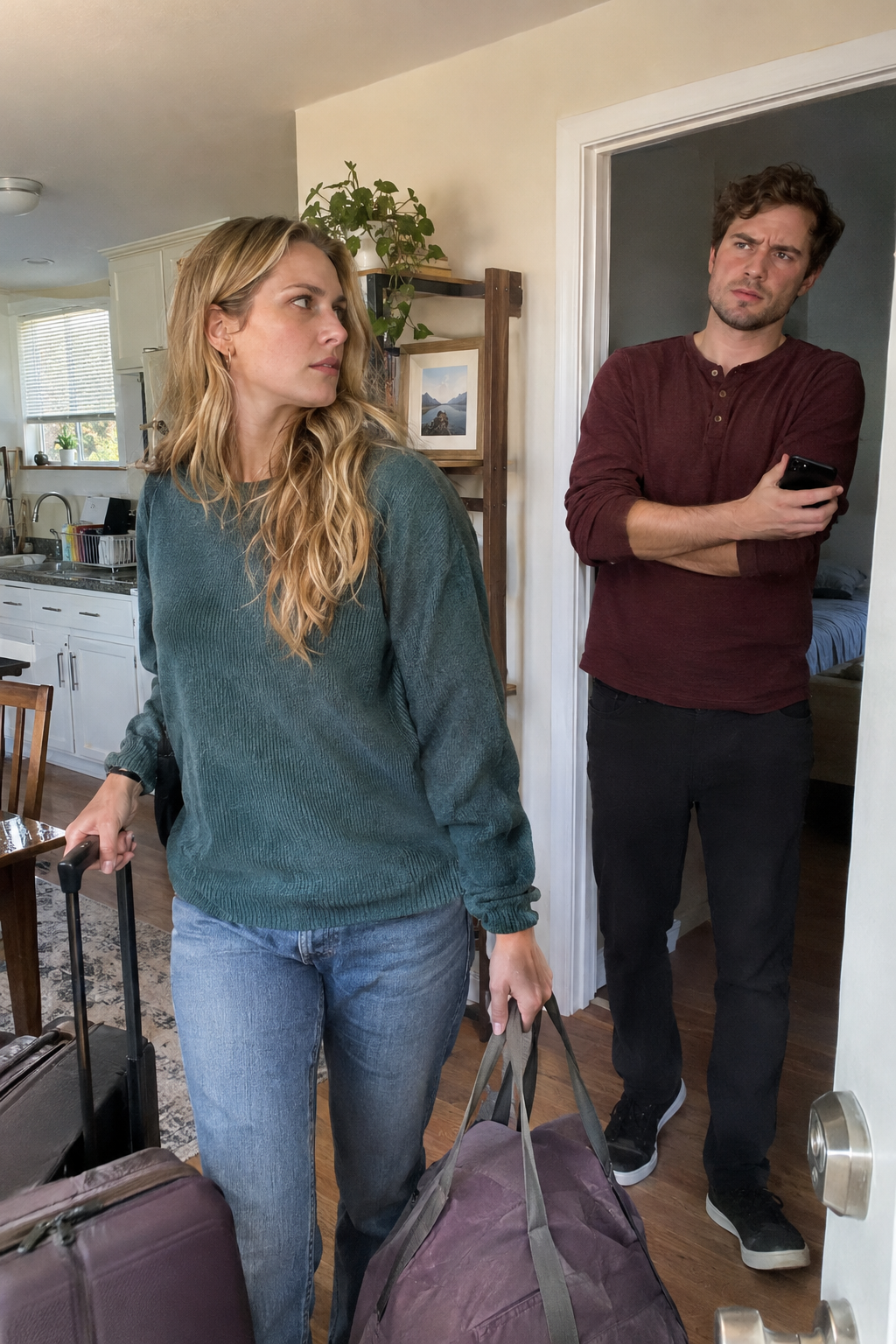
My boyfriend announced that his ex was moving into our apartment and said there was nothing to discuss, so I packed my bags without arguing, and the email our landlord sent the next day left him stunned…
I’m Hadley Pierce, 32, and until that Tuesday evening, I thought my boyfriend and I were still trying to build a life together. Weston Bellamy was 29, we’d been together a little over three years, and we’d shared an apartment for just under one. I knew we had problems, but I hadn’t realized how little he thought my opinion mattered.
I was loading the dishwasher after dinner when Weston leaned against the kitchen counter, looking at his phone and sighing. Lately, everything I did seemed to irritate him. Asking whether he wanted dinner was hovering; not asking meant I didn’t care. I’d begun rehearsing ordinary questions before speaking.
Without looking up, he said, “Just so you know, Delaney’s staying with us for a while.” Delaney Brooks was his ex-girlfriend. I stood holding a wet plate, waiting for the part where he asked what I thought about someone else moving into our home. That part never came.
“She’s between places,” he said. “It’s temporary, and it’s not up for discussion.” He sounded as though he were explaining a return policy to someone who had no choice but to accept it. I set the plate down carefully because my hands had started to feel strangely unsteady.
I asked how long “a while” meant. “However long she needs,” he answered, then told me not to make it weird because they were friends. This was the same woman he’d described as toxic and said had cheated on him twice. Her name still showed up on his phone often enough that questions about it made him defensive.
What I felt wasn’t simply jealousy. It was the sickening realization that he’d made a decision affecting my daily life and assumed my job was to adjust. I could understand helping someone who had nowhere to stay. I couldn’t understand offering up our shared apartment without even having a conversation.
“No problem,” I said. Weston finally looked up, visibly relieved, and told me he’d known I’d be reasonable. I dried my hands, walked into our bedroom, and pulled my overnight bag from the closet. For a few seconds, he didn’t seem to connect what I’d said with what I was doing.
He asked where I was going, then laughed when I started packing. I put in clothes, my laptop, chargers, medication, and the folder of documents from my nightstand. I took a second bag and separated my things from his in the drawer we shared. I wasn’t packing to frighten him; I was packing because I meant to leave.
Weston stood in the doorway with his arms folded. “You’re actually leaving over Delaney sleeping here?” he asked, calling me insecure and reminding me she had nowhere else to go. I kept folding shirts. “Then she’s lucky you offered her a place,” I said.
“It’s our apartment,” he snapped, and in one sense he was right. Both our names were on the lease, which meant my departure wouldn’t automatically end my responsibilities. But being on that lease also meant I should have had a voice in who lived there. Apparently, Weston liked the first part of that arrangement better than the second.
We’d agreed to split our expenses when we moved in. At first I covered a little extra rent because Weston was short that month, and I thought nothing of it. Then another bill came due, and then another. Before long, I was paying most of the rent, the utilities, and the internet whenever his money ran out.
Weston called it being “between financial phases.” I wanted to believe the rough patch would pass, so I covered the difference and asked him only to warn me before bills were due. He always promised he would. Somehow, the notice still came when a payment was already waiting, and I would quietly open my banking app again.
I hadn’t expected gratitude every time I helped someone I loved. What wore me down was becoming responsible for expenses we’d agreed to share while he treated that help as automatic. I had been so focused on keeping our home running that I hadn’t admitted how alone I felt doing it. Now he was inviting another adult into that same home without asking me.
As I carried my bags into the living room, Weston accused me of making a scene after saying “no problem.” I told him I meant there would be no problem for me. He insisted I’d be back once I’d calmed down, and said he wasn’t choosing Delaney over me. I stopped by the door because that last part deserved an answer.
“You already chose to make a decision about our home without me,” I told him. “You just didn’t think that counted.” He shook his head and told me to text when my tantrum was over. I shut and locked the door behind me, walked downstairs, and kept going. There was no grand speech left to give.
My friend Chris let me sleep on his couch. He offered me a beer, accepted my request for water instead, and found clean sheets without demanding the whole story. I lay awake thinking about the coffee mug beside our kitchen sink and the framed picture from our first trip. There were things I’d have to return for, but not that night.
The surprising part was how well I slept once I finally closed my eyes. For months, I’d watched Weston’s moods before asking anything as simple as what he wanted for dinner. At Chris’s place, nobody was standing in a doorway telling me what feelings were permitted. I woke up sad, but I didn’t wake up second-guessing my decision.
My phone was full of Weston’s calls and messages the next morning. He said I’d acted childish, complained that I hadn’t stayed to talk, and asked when I was coming home. I read through everything twice, looking for one sentence acknowledging that he’d hurt me. There wasn’t one.
For a moment, I considered explaining myself again. Then I remembered how clearly I’d spoken before leaving. Weston hadn’t failed to understand my words; he’d failed to believe I would act on them. Another long conversation wasn’t going to change that, so I turned my attention to what I could actually handle.
At lunch, I called our landlord and explained that Weston and I had separated. I asked what it would take to transfer the lease to one tenant or terminate it early. The landlord was clear: both of us had signed, and moving out didn’t erase my obligations. Any change needed the proper paperwork and approval.
I understood that, and I wasn’t trying to walk away from a contract. I wanted to separate what I legally owed from the extra money I’d been contributing because Weston repeatedly couldn’t cover his share. I also asked how to transfer or close services in my name without leaving anyone with a surprise interruption. Some services needed notice, and others would run through the period already paid.
That evening, I wrote down account numbers, payment dates, and the steps each provider required. I kept copies of the notices and the landlord’s instructions. It wasn’t a dramatic way to end a relationship, but I wasn’t interested in creating unpaid bills or a utility dispute that would keep us tangled together. I wanted a clean separation, not revenge.
The landlord emailed both of us the necessary next steps. About five minutes later, my phone lit up with a message from Weston: “Why is the landlord emailing me?” I looked at his question for a moment, then typed back, “Just a heads-up. It’s not up for discussion.” For the first time since he’d made his announcement, he seemed to realize I wasn’t coming home to keep everything running as before. Part 2…..
IF FACEBOOK BROUGHT YOU HERE, HERE’S THE CONTINUATION YOU’VE BEEN WAITING FOR. ENJOY! 👇 That evening, Weston texted again: “Delaney’s already here.” Until then, some part of me had imagined he’d at least pause long enough to think about what had happened. Instead, she’d moved into the apartment while both our names remained on the lease. Rent was due in four days.
The following afternoon he asked for the Wi-Fi password. I pointed him toward the account email he’d never bothered opening, and then he asked why the internet bill was in my name. He’d been using that service every day for almost a year. Apparently, he’d never thought much about who paid for it.
Around six, he called to demand an explanation for the landlord’s emails. I said I’d asked about changing the lease because I no longer lived there, and I would not keep filling in his share of every bill. “You can’t just do that,” he replied, as though leaving an apartment required his approval. I reminded him he hadn’t asked for mine before inviting Delaney in.
He accused me of trying to control him. I told him I couldn’t control whom he helped, but I could decide where I lived and whether to continue covering his shortfalls. He called me petty, then started listing the inconveniences my decision had caused: emails, paperwork, billing dates. Eventually, his voice changed and he brought up the rent.
“I didn’t budget for all of this,” he admitted. I reminded him we’d agreed to split expenses and that I’d been making up the difference whenever he couldn’t pay. “So you’re just leaving me with it?” he asked. “I’m handling what I’m legally responsible for,” I said. “I’m not volunteering to cover your part anymore.”
He went quiet before saying, “You said no problem.” I answered, “I meant it. I’m not subsidizing this arrangement.” He hung up, but later messaged that Delaney thought he was overreacting and had promised to help a little. Minutes afterward, he conceded she was still looking for work.
I pulled up the budget we’d made when we first rented the apartment. It had two columns, one for each of us, and I remembered how carefully we’d filled it out together. Somewhere along the way I’d become the only one updating either column. Seeing the figures made me sadder than I expected, because I still remembered believing we were a team.
The day before rent was due, Weston turned up at my office without warning. The receptionist called upstairs, and I went down because I wanted to settle the conversation, not because I thought it was acceptable for him to corner me at work. He looked tired and held his phone so tightly I could see his knuckles. I asked him to speak outside.
On the sidewalk he admitted that he’d known I paid for some things, but hadn’t realized how much of our monthly expenses came out of my account. He said Delaney wanted to help but couldn’t yet because she didn’t have a job. For a second, I thought he might apologize. Instead, he told me I’d abandoned him.
“You made a decision about our home and told me I didn’t get a say,” I said. “That’s emotional. This is financial. Both affect the people living there.” He paced a few steps, looking at the traffic, before asking whether I could cover the shortfall just this once. He said it would give him time.
There had already been too many months I’d agreed to help “just this once.” I told him I would fulfill any obligation the lease still legally required while the paperwork was sorted out, but I wouldn’t pay his share as a personal favor. His expression hardened. “Wow,” he said. “So you’re done.”
“I was done when you made room for her and assumed I’d keep paying for it,” I replied. He stared at me for a long moment and finally said, “I never thought you’d actually leave.” That was the most honest thing he’d said since Tuesday. I watched him walk toward his car, remembering how proudly he’d carried my heaviest boxes upstairs when we first moved in.
I didn’t feel triumphant on my way back to work. I felt the loss of three years with a man I’d loved, and the ache of realizing what had become of us. He’d come to my office asking for money before he’d once asked whether he’d hurt me. That told me more than another argument would have.
Final When rent day came, the landlord emailed the amount due under the lease we had both signed. Our requested change hadn’t been approved yet, so I stayed in contact and reviewed exactly what I remained responsible for. I wasn’t going to ignore a contract because my relationship was over. But I wasn’t going to quietly restore the old arrangement, either.
Weston texted that we could discuss Delaney leaving and that things didn’t have to blow up. I answered that he’d told me the subject wasn’t up for discussion. An hour later he said she couldn’t contribute and had assumed he had the costs covered. Then came the familiar request: could I pay the difference as usual, and he’d pay me back?
I told him no. That didn’t mean refusing any amount I legally owed; it meant refusing to keep paying his share simply because he expected me to. By eight that evening, he said the landlord had warned that a notice could follow if the outstanding balance wasn’t resolved by Friday. Ten minutes later, he blamed me for making things difficult.
“You made the decision,” I wrote. “I respected it.” He called immediately, accused me of enjoying his struggle, and said I could have talked to him first. I reminded him that he’d been the one to shut down the conversation. For a few moments, neither of us spoke.
Finally, he said Delaney could leave and we could go back to normal. I pictured the nights I’d sat with bills open in front of me, calculating what would remain after paying another expense he hadn’t planned for. I pictured measuring my words so he wouldn’t call me nagging. That was the normal he was offering, and I didn’t want it.
He asked whether I was abandoning him. “I moved out,” I said. “You moved someone in.” Then he ended the call. I set my phone down on Chris’s spare-room bed and sat there for a while, listening to the ordinary sounds of dinner being made in the kitchen.
When I told Chris what Weston had proposed, he looked up from the pot he was stirring. “He didn’t want a partner,” Chris said. “He wanted infrastructure.” It was a harsh thing to hear, especially about someone I’d loved for years. But I couldn’t deny that Weston seemed most upset by the disappearance of the money and work I’d quietly supplied.
The following Thursday, Chris texted to say Weston had come to his apartment and wasn’t calm. When I arrived twenty minutes later, Weston sat on the arm of the couch, his knee bouncing. Delaney hadn’t come with him. Chris stepped into his bedroom, leaving us space to talk.
Weston announced he’d had to borrow money from his sister. When I didn’t rush to comfort him, he added that she’d asked why he needed it. I said that sounded uncomfortable. He looked at me as if my refusal to solve the problem were proof that I’d become cruel.
“She’s leaving,” he said. He seemed to expect those two words to put everything right, but I told him it didn’t change my decision. When he asked why, I explained that what I’d needed was a boyfriend who would discuss changes to our shared home before making them. Delaney’s presence wasn’t the only problem; his dismissal of me was.
He asked whether I thought I was perfect. “No,” I said. “I’m done.” He warned that I’d regret leaving, and I told him I might miss parts of us but wouldn’t regret walking out after being told I had no say. He picked up his bag and said I’d really screwed him over.
“I stopped holding everything together,” I said. “That’s not the same thing.” Once he left, I stood listening to his footsteps fade down the hallway. My hands shook even though I’d kept my voice steady. Ending a relationship didn’t turn off the part of me that still cared about him.
On Friday, the landlord contacted us both about the remaining documents and the payment arrangement. I dealt with what I was actually responsible for as the lease-change process continued. I didn’t ask how much Weston had borrowed or how he intended to cover his portion. For once, I let those decisions belong to him.
Around noon he sent a message: “Delaney moved out.” I read it and locked the phone. An hour later he wrote, “I didn’t think it would get this bad.” I nearly answered gently because I’d loved him for three years and feelings don’t disappear on a schedule. Instead, I replied, “I did.”
That evening I ran into one of Weston’s friends at a bar. She told me he was struggling and had never expected me to simply leave. “He told me to adjust,” I said. “I did.” After a moment, she admitted he’d thought I’d stay no matter what.
There it was, in a sentence from someone who hadn’t been in our kitchen. Weston believed he could make a decision and I’d accommodate him; I believed two people sharing a home should make those decisions together. We hadn’t understood how different those assumptions were until the night he announced Delaney was moving in. Neither of us could pretend otherwise now.
The following week, a mutual friend told me Delaney had left after discovering Weston needed her to contribute financially rather than simply stay there. I didn’t ask for details, and I didn’t contact her. I also heard Weston continued telling people I’d blindsided him. For a while, I was tempted to send a long message spelling out every bill and every time he’d dismissed me.
I even drafted part of that message before deleting it. The landlord had the necessary paperwork, and Weston knew exactly what he’d said to me. A perfect explanation wouldn’t turn that kitchen conversation into a discussion we’d actually had. I didn’t need to convince every mutual friend of my side to move forward.
Eventually, the housing paperwork was completed and my obligations under the old lease were resolved. I moved into a small apartment of my own. Its internet account was in my name because that was how I wanted it, and every bill on the counter was one I understood and had chosen to take on. Some evenings, the quiet still felt unfamiliar.
I missed having someone else in the kitchen sometimes. I missed the early Weston, the one who carried my boxes upstairs and made me believe we were building something together. But I didn’t miss watching his mood every time I needed to ask a question. Missing a person wasn’t the same thing as wanting that life back.
What stayed with me wasn’t really the rent or even Delaney. It was the ease with which Weston had said that something changing both our lives was “not up for discussion.” He was free to offer his ex help, but he wasn’t free to decide for both of us who would live in our shared home. I couldn’t choose for him; I could choose not to live with or finance the arrangement.
He made his choice that Tuesday night. When I said “No problem,” I wasn’t giving him permission. No problem was mine.
THE END. I’ve shared the complete story, and I truly hope it touched your heart. If this story moved you, please , like, and share the post. Thank you for reading! ❤️
✓ Lynn R. Adams
My boyfriend announced that his ex was moving into our apartment and said there was nothing to discuss, so I packed my bags without arguing, and the email our landlord sent the next day left him stunn…