My best friend asked me to pretend to be her boyfriend at her sister’s wedding because I was the one man who wouldn’t make it weird, but I had loved her for nine years
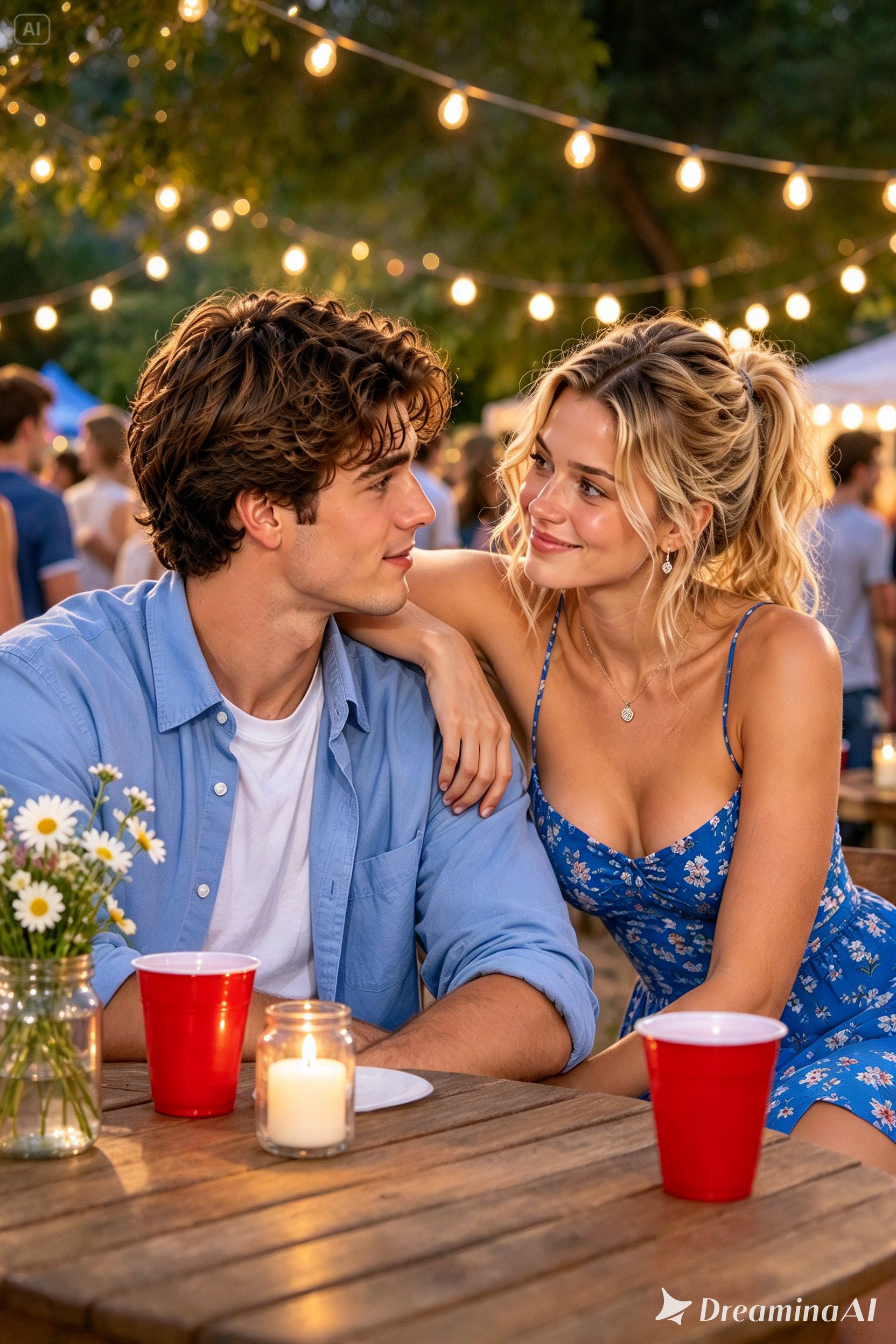
My best friend asked me to pretend to be her boyfriend at her sister’s wedding because I was the one man who wouldn’t make it weird, but I had loved her for nine years—and when her aunt asked when I knew she was the one, the answer I gave made Emma stop smiling and avoid my eyes for the rest of dinner…
“You’re the only man I know who won’t make it weird.” Emma Collins said that over the phone on a Tuesday evening, after asking me to pretend to be her boyfriend for her sister’s wedding weekend. I sat up on my couch, suddenly paying much closer attention to a conversation I had started by teasing her.
My name is Logan Parker, and I’m thirty-three. Emma was thirty-one, my best friend of nine years, and the woman I had quietly loved for almost all of them. Hearing that I was uniquely qualified to pretend felt about as good as you might expect.
I knew how she stirred her coffee and which animated movies would make her cry, even though she always denied crying afterward. I knew the laugh she used when something was funny and the softer one she used when she was nervous. That evening, I had heard the nervous laugh before she even explained what she wanted.
“My parents think I’m bringing someone,” she admitted. When I asked why they thought that, she said she had panicked, then tried claiming it had simply slipped out. After I said her name a second time, she sighed and admitted she had lied.
Without a boyfriend, she expected to spend the weekend answering questions about why she wasn’t married yet. I understood what she meant; apparently, turning thirty-one gave every relative permission to investigate your personal life between courses. Still, I asked what, exactly, I would be agreeing to do.
“Just show up and pretend we’re together,” she said. I should have asked more questions about that word “just,” but the relief already creeping into her voice made it difficult. I agreed, and her delighted squeal made me hold the phone away from my ear.
“You’re the best,” she told me. I said I knew, because making a joke was easier than admitting how much her happiness mattered to me. Once we hung up, I stayed on the couch, wondering how I was supposed to spend an entire weekend acting like her boyfriend and then go back to being only her friend.
We left Friday morning for the four-hour drive to the lakeside resort. Emma arrived with a suitcase large enough to suggest she was relocating, and when I mentioned that, she explained that some people liked having options. She laughed and punched my shoulder, and for a moment we were simply ourselves again.
Then her mother called, and Emma’s expression changed before she even answered. I encouraged her to pick up, which she clearly considered an act of disloyalty. A few moments later, she was telling her mother that yes, I was there, and no, we were not holding hands.
I was still laughing when she covered the microphone. “They booked us a couple’s suite,” she whispered. That was useful information to receive after I had agreed to the whole arrangement, and judging by her face, she wasn’t enjoying the update much more than I was.
The resort stood beside a broad lake, with pine trees around the property and white lights strung along wooden buildings. At the front desk, I gave the receptionist my identification while Emma stood beside her suitcase. The woman found the reservation under Parker and cheerfully mentioned the bridal family package.
It included a boat ride, wine tasting, and a couple’s photo shoot. Emma interrupted with a quick thank-you before the receptionist could elaborate, then grabbed her luggage. When I asked whether she had known about the package, she looked at the floor and said it hadn’t seemed important.
Upstairs, we discovered that the suite contained one bed and no sofa. Emma stopped in the doorway, and I stopped behind her, both of us looking at the same large piece of furniture. She said she had expected a sofa, then covered her face with her hands.
“Relax,” I told her. “We’ll survive one weekend.” She lowered her hands and thanked me with the smile that had been causing problems for me for nine years, and I realized that sleeping arrangements were only part of what I was worried about.
At the rehearsal dinner that evening, I finally understood the full extent of her concern about her relatives. They were welcoming, affectionate, and capable of asking remarkably personal questions before you had finished swallowing. Within ten minutes, an aunt I had never met wanted to know how long Emma and I had been together.
“Almost a year,” Emma answered before I could speak. I nearly choked on my drink, because that detail had somehow been left out of our preparations. Her aunt looked delighted, while Emma maintained an expression of perfect innocence beside me.
Then the woman turned to me. “When did you know she was the one?” Emma went still, and I found myself trying to answer a question I had avoided asking myself out loud for years.
“The first time she made me laugh.” The words came before I could dress them up as a joke. Emma’s smile faded just a little, and for a second she looked directly at me, as if I had said something neither of us had agreed to say.
Her aunt continued the conversation, unaware that anything had happened. Emma answered questions and stayed beside me, but she kept looking away whenever our eyes might meet. I couldn’t take back my answer, and I couldn’t quite convince myself that she had heard it as part of the performance.
Later that night, I stepped outside to the lake. The water was still, with moonlight across it, and the quiet gave me a chance to stop carefully choosing every word. When I heard footsteps and turned, Emma was coming toward me.
“You were good tonight,” she said. I told her I had survived, mostly because I was afraid of her family, and she smiled without quite joining the joke. Then she thanked me for coming, in a voice that made me look at her more closely.
I remembered her at twenty-two, spilling coffee on my shoes. I remembered the bookstore and the fallen travel guides, and the friend who stayed with me after my father died. The woman standing beside me had answered my late-night calls and shared years of bad jobs, breakups, birthdays, and ordinary afternoons.
“Can I tell you something?” she asked. I said she could, and she looked toward the resort lights before explaining that there was another reason she had asked me to come. I waited while she tried to find the words, afraid to interrupt and even more afraid to misunderstand her.
She said she had been scared of the way she felt around me. Then she looked down at her hands and told me she didn’t even know when it had happened. “I kept telling myself you were my best friend,” she said, finally meeting my eyes. “But somewhere along the way, you became more than that.” Part 2…..
IF FACEBOOK BROUGHT YOU HERE, HERE’S THE CONTINUATION YOU’VE BEEN WAITING FOR. ENJOY! 👇 I had imagined hearing something like that so often that I should have been prepared. Instead, I stood there staring while Emma waited, her courage beginning to give way to embarrassment. In every version I had rehearsed in my head, I had managed to say something.
“See?” she said, with a small, unhappy laugh. “You never run out of things to say, and now you’re just staring.” I could hear her taking my silence as an answer, and that finally made me speak.
“Emma, I’ve been in love with you for nine years.” She went quiet, then whispered, “What?” I laughed because I was frightened, and because after all that waiting, saying it had taken only a few seconds.
I told her it went back to the bookstore, when she had knocked down the travel guides. She disputed the size of the disaster immediately, which helped both of us breathe again. When she blamed the wind, I reminded her we had been indoors.
“You loved me that long?” she asked, moving a step closer. I nodded, and she looked at me with wet eyes and an expression somewhere between tenderness and exasperation. “Logan, you are unbelievably stupid.”
I explained that I hadn’t wanted to ruin our friendship. She shook her head, smiling now, but then grew serious again. The reason she had chosen me, she admitted, was that she hadn’t been pretending as much as she claimed.
When her mother had asked whether she was bringing someone, I had been the first person Emma thought of. She hadn’t known what to do with that, or whether the feelings were something she could trust. We had been best friends for nearly a third of her life, and she was afraid of confusing familiarity with something else.
“Then you helped me move apartments for the third time,” she said. I asked whether carrying a couch had finally won her over, and she laughed. It had made her start worrying, especially because I had carried it up three flights of stairs without complaining enough.
She remembered the time her car broke down and I drove forty minutes to get her. I said that was what friends did, and she looked at me steadily. Those were the things that had made it so difficult for her to know where friendship ended and love began.
I understood because I had hidden behind that same explanation. Giving her rides, answering the phone, helping her move—there was always a practical reason to show up. I could keep doing the things love asked of me without ever risking the words.
“I started comparing everyone to you,” she admitted, looking embarrassed. “No one else talks to me like this.” I told her most people were smarter than I was, but she only smiled and said that most people weren’t me.
Her phone buzzed before I could answer. It was her sister, asking where we were because their mother thought we had gone off to make out. A second message advised us not to deny it, since her mother had already placed a bet with Aunt Lisa.
We laughed hard enough that Emma had to wipe her eyes. Her family had managed to intrude from inside the resort, and somehow that interruption helped. When the laughter eased, she looked at me without turning away.
“I don’t want this weekend to be fake anymore.” I stepped closer and told her we didn’t have to let it be. She admitted she was scared, and when I said I was too, her shoulders relaxed a little.
“Good,” she said. “At least I’m not doing this alone.” I reached for her hand, and she took it without hesitating. It was a small movement after everything we had said, but I felt the difference immediately.
Then she asked when I had been planning to tell her. I tried saying I had been working through some things, and she reminded me that I’d had nine years. “I like being thorough,” I said, which earned me a laugh and brought her another step closer.
“I think you’ve made me wait long enough,” she whispered. I could see the small freckle near her jaw as I lifted my hand toward her cheek, slowly enough for her to move away if she wanted. Instead, she leaned into my touch.
“We’re being weird,” she said softly. I agreed, and she smiled. “Normal wasn’t getting us anywhere.”
Then she kissed me. It was careful at first, and when I felt her smile against my mouth, I kissed her back, one hand at her waist and the other still holding hers. When we finally drew apart, she was laughing with a happiness I had never quite heard directed at me before.
“That’s been overdue,” she said. I suggested about nine years, and when she tried rounding it up to ten, I told her not to get greedy. She rested her forehead against my chest, and we stood there until our breathing settled.
We agreed that we should go back before somebody came looking. Neither of us moved, and Emma accused me of being too comfortable. Eventually, though, we headed inside with our hands still joined.
Part 3 Her cousin Tessa spotted us the moment we entered the lobby and let out a shriek that turned every head nearby. Emma covered her face, but that didn’t stop Tessa from drawing everyone’s attention to our hands. Within moments, relatives were gathering around us, asking questions over one another.
Emma’s mother arrived last. She looked at her daughter, then at me, then down at our hands, and said, “Oh.” It was astonishing how much she managed to fit into that one word.
“You knew?” Emma asked. Her mother said she had suspected since the Thanksgiving when Emma invited me and spent three hours pretending she wasn’t staring at me. I watched Emma turn red and realized I wasn’t doing much better myself.
Her mother squeezed my shoulder. “About time,” she said. Apparently, our effort to protect a secret had been considerably less successful than either of us believed.
The next morning, I woke before Emma, which almost never happened. She was asleep on her side with one arm beneath her pillow, and sunlight was coming through the curtains. I lay there smiling, still getting used to the fact that I finally knew how she felt.
When she opened her eyes, she caught me looking. “You’re staring,” she said. I admitted I had been accused of it before, and she asked how serious the offense was.
“Potentially criminal.” She laughed and stretched under the blanket. The awkwardness hadn’t vanished entirely, but we could still make each other laugh, and that helped more than either of us needed to explain.
At brunch, Aunt Paula announced the arrival of the lovebirds before we had much chance to prepare ourselves. For the next hour, relatives wanted to know when it had started, who had made the first move, and why it had taken so long. A cousin even started a betting pool; apparently, some of them had expected us to end up together years earlier.
“I may never recover from this,” Emma whispered. I squeezed her hand under the table and told her she would survive. Then I looked up and caught Aunt Paula watching us closely enough to make me reconsider how reassuring I could afford to be.
The ceremony that afternoon was simple and warm. Listening to the vows, I found myself thinking about choices I had spent years putting off. When I glanced toward Emma, she was already looking at me, and the small smile she gave me had nothing to do with keeping up appearances.
I could imagine a future with her so easily that it frightened me. I had wanted that future for years, but wanting it privately had never required me to believe it might happen. Now she was sitting beside me, letting me see that she was thinking about it too.
After the reception ended and the dance floor emptied, we went to the wooden dock behind the resort. Emma rested her head on my shoulder, and I put my arm around her. For a while, we sat without talking, looking out at the water.
“What happens when we go home?” she asked eventually. I knew what she meant; away from the wedding and the family and this place, we would have to work out how to be together. I admitted that I didn’t know exactly what came next.
“That’s unusual,” she said. She was used to me having a plan, and usually I did—for my career, my finances, the practical things I could prepare for. I had never let myself plan a life with Emma because doing that had seemed like a particularly efficient way to get hurt.
I took her hand. “I don’t know exactly what happens next,” I told her. “But I know what I want.” She lifted her head and waited.
“I want tomorrow,” I said. “And next week, and next month, and every ordinary Tuesday after that.” A tear slipped down her cheek before she could stop it.
She told me it was the most romantic thing I had ever said. I laughed and said that was concerning, but she shook her head. “No, it’s perfect.”
She kissed me gently, then rested her forehead against mine. “Good,” she whispered, squeezing my hand. “The waiting is over.”
Final Three months later, Emma’s blue toothbrush had been sitting beside mine for three weeks. Officially, she had forgotten it, which would have been more convincing if it hadn’t happened seven times. When I held it up and questioned her, she glanced over from the couch, said, “Oh,” and returned to grading papers.
She still taught fourth grade, and my apartment was gradually filling with stickers, markers, and construction paper. Glitter turned up on my coffee mug, then in my truck, and eventually in the garage. When I suggested that it reproduced, Emma called that ridiculous until I mentioned the garage.
“Okay,” she said after a moment. “Maybe not completely ridiculous.” We still annoyed each other, still argued, and still had ordinary days when one of us was tired or impatient. The difference was that I could tell her I loved her without first finding a reason to leave the room.
One rainy evening, we made dinner together, if you counted stealing ingredients as helping. When I accused her of taking a third piece of chicken, she looked innocent and denied knowing what I meant. I pointed out that she was holding the evidence, so she ate it.
Later, she fell asleep beside me on the couch, with a blanket over us and a terrible reality show playing. I remembered the engagement party, the garlic knot, and a joke about loving her that had carried more truth than I had let myself acknowledge. Looking down at her, I asked whether I could ask a question.
She opened one eye. “Should I be worried?” I said probably, and she gave a theatrical sigh before granting permission. When I mentioned the party, she knew immediately which moment I meant, and her cheeks turned pink.
“You mean when you accidentally changed my life?” she asked. I brushed a strand of hair away from her face and asked whether she had thought I was joking when I said I loved her. Her smile softened.
“I hoped you weren’t.” Even after everything that had happened, that answer made me hold her a little closer. We had both spent so much time trying to work out what the other person meant that a plain answer still felt like a gift.
She reminded me that I hadn’t actually asked my question. I kissed her forehead, her cheek, then her lips, and admitted that I knew. What I wanted to give her was a reminder.
“A reminder of what?” she asked. I wrapped my arm around her and said, “I love you, Emma.” She smiled against my chest, warm and certain in a way I no longer had to guess about.
“Good,” she said. “You finally learned.” When I asked what I had learned, she looked up with amusement in her eyes and told me the joke had never been the joke.
I groaned and said that was terrible. She insisted it was romantic, and eventually we agreed it could be both. I kept my arm around her while the television played, grateful that we had finally learned to say what we meant—and that the ordinary evenings I had asked for were now ours.
THE END. I’ve shared the complete story, and I truly hope it touched your heart. If this story moved you, please , like, and share the post. Thank you for reading! ❤️
✓ Lynn R. Adams
My best friend asked me to pretend to be her boyfriend at her sister’s wedding because I was the one man who wouldn’t make it weird, but I had loved her for nine years—and when her aunt asked when I k…