Left With Nothing, She Inherited a Deserted Mansion—Then Found the Secret Her Husband Had Hidden Upstairs
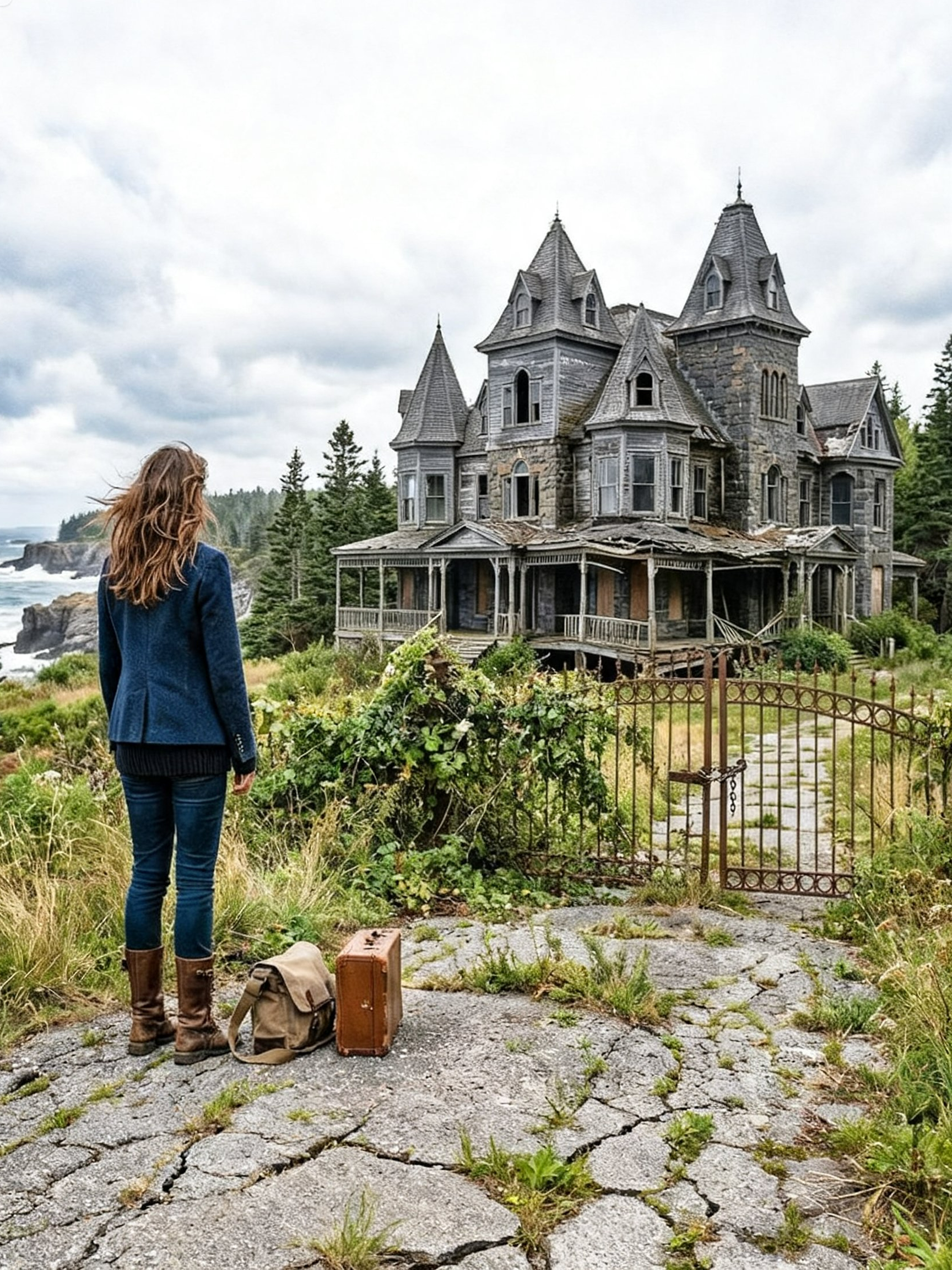
Left With Nothing, She Inherited a Deserted Mansion—Then Found the Secret Her Husband Had Hidden Upstairs
“You’ll survive,” Grant Whitmore told his wife as he carried the last suitcase out of their bedroom.
Then he looked around the house Claire had spent fourteen years turning into a home and added, almost casually, “You’ve always been good at making something out of nothing.”
Three days later, Claire discovered that nothing was exactly what he intended to leave her.
Grant had emptied their joint savings.
He had canceled two credit cards.
He had transferred the Mercedes lease into his company.
And before Claire even understood what was happening, her husband of fourteen years had moved into a downtown Richmond apartment with a thirty-two-year-old real-estate broker named Vanessa Cole.
Claire Whitmore was forty-three years old when her marriage disappeared over a single weekend.
She did not scream.
She did not throw his clothes onto the lawn.
She did not call Vanessa.
She did not beg Grant to reconsider.
She did not give him the satisfaction of watching her collapse.
Instead, she stood barefoot in the kitchen of their Virginia home while rain streaked the windows and watched Grant’s black SUV disappear down the driveway.
Only after his taillights vanished did Claire whisper,
It was the only word she allowed herself.
The divorce papers arrived the following Monday.
Grant’s attorney presented everything with surgical precision.
Their house had been purchased through Grant’s corporation.
The vehicles were leased through the company.
Most of their investments were held in accounts Claire had barely understood because Grant had always told her he was “handling the complicated stuff.”
Claire had spent thirteen years managing their home, helping Grant entertain clients, supporting his property-development business, and caring for his mother through cancer.
She had trusted him.
Grant had apparently spent those same years preparing for the possibility that trust might someday become useful.
According to his attorney, Claire was entitled to considerably less than she expected.
Grant offered her $38,000.
After fourteen years.
Claire stared at the settlement agreement across the conference table.
Grant sat opposite her in a navy suit.
He wouldn’t quite meet her eyes.
“You should take it,” he said.
Claire folded her hands.
“Is that advice?”
“It’s reality.”
“Your reality.”
Grant sighed.
“Claire, please don’t make this ugly.”
That almost made her laugh.
He had taken their marriage apart like a demolition contractor stripping copper from an abandoned building, and now he wanted her to maintain good manners while watching him drive away with the wiring.
But Claire simply pushed the settlement agreement toward her attorney.
“I’m not signing today.”
Grant’s mouth tightened.
“You’re making a mistake.”
Maybe she was.
At that moment, Claire had $6,412 in an account Grant had somehow overlooked.
She had no permanent home.
No marriage.
And no idea where she would be living once the temporary court order expired.
Then, four days later, a certified letter arrived.
It came from a law firm in Charlottesville.
Harris, Bell & Mercer
Claire nearly threw it away.
Instead, she opened it while sitting in the parking lot of a grocery store.
The first sentence made her read it twice.
The second made her stop breathing.
Her great-aunt Evelyn Mercer had died.
Claire hadn’t seen Evelyn in seventeen years.
They had never been particularly close. Evelyn had been her grandmother’s younger sister—a stubborn, eccentric woman who had lived alone somewhere west of Charlottesville after most of the family stopped visiting her.
According to the letter, Evelyn had left Claire something.
Not jewelry.
Not stocks.
Claire called the attorney immediately.
“What kind of house?”
There was a pause.
“Technically,” the attorney said, “it’s an estate.”
Claire closed her eyes.
“Approximately nineteen thousand square feet.”
Her eyes opened again.
“Blackwood Manor.”
Claire had heard the name once.
Her grandmother used to call it the Mercer place.
The attorney continued.
“The property includes one hundred eighty-seven acres.”
Claire gripped her phone.
“How much is it worth?”
Another pause.
“That depends.”
“Whether you’re asking about the land…”
He hesitated.
“…or the house.”
That should have been Claire’s warning.
Two days later she followed a narrow road into the Blue Ridge foothills and saw Blackwood Manor for the first time.
It looked like a mansion waiting for someone to pronounce it dead.
Four massive brick chimneys rose above a slate roof stained with decades of rain.
Ivy climbed almost to the third-floor windows.
Six white columns leaned over a cracked stone terrace.
The fountain in the circular driveway was dry.
The gardens had become wilderness.
One upstairs window had been boarded shut.
Another stood partially open, moving slightly in the October wind.
Claire parked her borrowed Toyota near the front steps.
Thomas Mercer, the estate attorney, was waiting beside the door.
He was seventy, silver-haired, and carried a leather folder beneath one arm.
“Welcome to Blackwood.”
Claire stared upward.
“It looks haunted.”
Thomas smiled.
“Your aunt would’ve considered that a compliment.”
He handed Claire an old brass key.
“There are some conditions.”
Of course there were.
Evelyn had required that the property not be sold for twelve months after inheritance.
Claire could live there.
Restore it.
Lease portions of the land.
But she could not transfer ownership during that first year.
“There’s another thing,” Thomas said.
Claire looked at him.
“Your aunt specifically instructed me to tell you something only after you arrived.”
He opened his folder.
Inside was a handwritten note.
Thomas passed it to Claire.
The handwriting was shaky but unmistakably deliberate.
Claire read:
If you’re standing inside Blackwood, it means the man beside you failed to destroy you.
Her heart stopped.
Claire looked at Thomas.
“Did my aunt know about my marriage?”
Thomas didn’t answer.
Claire returned to the letter.
Do not trust what people tell you this house is worth.
Do not let anyone pressure you to sell it.
And before you decide what comes next, go upstairs.
Beneath that sentence, Evelyn had written three final words.
Third floor. East wing.
Claire glanced toward the mansion.
Thomas’s expression had changed.
“There’s something else.”
“Your husband came here once.”
Claire froze.
“Seven months ago.”
The wind moved through the dead leaves around their feet.
Claire stared at him.
“Grant told me he’d never heard of Blackwood Manor.”
Thomas nodded slowly.
Claire spent her first night at Blackwood with every downstairs light turned on.
Electricity worked in only half the house.
The plumbing complained like an injured animal.
The kitchen smelled of dust and cedar.
Furniture sat beneath white sheets.
Portraits of dead Mercers watched Claire from the hallway.
But underneath the decay, the mansion was breathtaking.
Hand-carved walnut staircases.
Italian marble fireplaces.
Stained-glass windows.
A ballroom large enough for a hundred guests.
Grant would have loved it.
That thought bothered her.
At 10:17 p.m., Claire took Evelyn’s letter and climbed toward the third floor.
The main staircase ended on the second.
A narrower staircase continued upward behind a paneled door.
Claire switched on her phone flashlight.
Dust covered the steps.
Or almost covered them.
Halfway up, she stopped.
Someone had walked here recently.
A faint trail disturbed the dust.
Claire continued.
The third floor contained a long hallway lined with closed doors.
The east wing was colder than the rest.
One bedroom.
Another bedroom.
A linen closet.
A bathroom.
Then Claire reached the final door.
She tried Evelyn’s brass key.
Claire examined the frame.
Fresh scratches surrounded the lock.
Someone had forced it before.
Her pulse quickened.
She went downstairs, found a screwdriver in the kitchen and returned.
Ten minutes later, the ancient lock gave way.
Claire pushed.
The door opened.
At first, she saw only darkness.
Then her flashlight crossed a desk.
Filing cabinets.
Modern filing cabinets.
Not antiques.
Claire stepped inside.
The room smelled faintly of cologne.
And she knew that smell.
She had bought it every Christmas for fourteen years.
Claire’s flashlight moved across the desk.
A laptop charger.
An empty bourbon bottle.
A yellow legal pad.
And beside it—
a silver cuff link.
Claire picked it up.
Her hands began trembling.
Grant had been here.
Repeatedly.
She opened the first filing cabinet.
The second contained property surveys.
The third contained dozens of photographs.
Claire pulled them out.
The first photograph showed Blackwood Manor from the road.
The second showed the eastern fields.
The third showed the mansion’s rear terrace.
Then came photographs of Claire.
Claire leaving a supermarket.
Claire outside her dentist’s office.
Claire driving.
Claire meeting her divorce attorney.
Claire sitting alone inside a coffee shop.
Every picture had a date.
Some had been taken months before Grant left her.
Claire’s mouth went dry.
At the bottom of the cabinet was a red folder.
On the tab, someone had written:
C.W. — SUCCESSION
Inside were forty-three pages.
Trust documents.
Property maps.
Financial projections.
And one document containing Grant Whitmore’s signature.
Claire read the heading.
Then read it again.
BLACKWOOD DEVELOPMENT ACQUISITION STRATEGY
Her stomach tightened.
The document had been created eleven months earlier.
Long before Grant announced he was leaving.
Long before Evelyn died.
Long before Claire knew she would inherit anything.
Grant had known.
And suddenly Claire understood something terrifying.
Her husband hadn’t abandoned her and then discovered she owned Blackwood Manor.
He had abandoned her because she was about to own it.
Claire did not call the police.
She did not call Grant.
She photographed everything.
Then she telephoned Thomas Mercer at 11:41 that night.
The attorney arrived the following morning.
For nearly two hours, they examined the documents inside the hidden office.
Thomas became increasingly pale.
Grant’s plan was remarkably detailed.
His development company had spent nearly a year studying land surrounding Blackwood.
A proposed interstate connector was being considered twenty miles south.
A major logistics corporation had quietly purchased options on nearby acreage.
And according to Grant’s projections, Blackwood’s one hundred eighty-seven acres could become enormously valuable if rezoned for a luxury residential development.
But that wasn’t the real surprise.
Thomas spread a geological survey across Evelyn’s dining table.
“This was commissioned by your husband.”
Claire looked down.
“I don’t understand any of this.”
Thomas pointed toward a shaded section of the map.
“There are substantial deposits of high-grade quartz under the northern portion of Blackwood.”
“Industrial quartz.”
Claire frowned.
Thomas explained.
The deposit itself might be worth millions.
Combined with the development value, water rights, timber rights and the mansion, Blackwood wasn’t the decaying burden relatives believed it was.
Conservative estimate?
Twelve to fifteen million dollars.
Potential future value?
Considerably higher.
Claire sat back.
“And Grant knew.”
Thomas hesitated.
“Your aunt suspected someone was requesting old property records. She asked me to investigate.”
“And you found Grant?”
“Eventually.”
Claire remembered Grant telling her six months earlier that he had spent three weekends in Atlanta negotiating commercial properties.
He had not been in Atlanta.
He had been investigating her family land.
“But why divorce me?” Claire asked. “If we’d stayed married, wouldn’t he have benefited?”
Thomas shook his head.
“Property inherited individually in Virginia can remain separate property.”
Claire stared at him.
“Meaning Blackwood would’ve been mine.”
Grant couldn’t simply take half.
So he had developed another strategy.
First, isolate Claire financially.
Then make her desperate.
Then present an offer.
According to his documents, one of Grant’s shell companies intended to approach Claire after Evelyn’s death and offer her $850,000 for Blackwood.
Enough money to sound miraculous to a newly divorced woman with almost nothing.
Grant estimated that Claire would accept within sixty days.
Claire read those words herself.
SUBJECT FINANCIAL PRESSURE LIKELY TO PRODUCE RAPID DISPOSITION.
Not Claire.
Fourteen years of marriage reduced to a line inside an acquisition strategy.
Thomas watched her expression.
“You okay?”
Claire closed the folder.
“But I’m getting there.”
The discovery explained almost everything.
Grant had spent years managing their finances because control made manipulation easier.
He had made Claire believe she was financially helpless.
Then, when he discovered she would eventually inherit Blackwood, he had accelerated his plans.
There remained one question.
“How did he know Aunt Evelyn was leaving it to me?”
Thomas looked uncomfortable.
“I don’t know.”
That question would matter later.
For now, Claire had another problem.
Grant arrived at Blackwood forty-eight hours later.
She heard tires on gravel shortly after noon.
When Claire walked onto the front steps, she saw Grant emerging from a black Range Rover.
Vanessa Cole climbed out from the passenger side.
Claire almost smiled.
Vanessa wore white trousers, a camel coat and heels completely unsuitable for an abandoned estate.
She looked at Blackwood with the expression of someone evaluating a purchase.
Grant looked at Claire.
“What are you doing here?”
Claire leaned against a column.
“I inherited it.”
Grant’s face barely changed.
“People talk.”
Claire looked toward Vanessa.
“Real-estate people?”
Vanessa folded her arms.
“We came because Grant thought you might need professional advice.”
Claire nearly laughed.
Forty-eight hours earlier, she had found a file describing exactly how Grant planned to manipulate her into selling this property.
Now he had brought the broker helping him do it.
“That was thoughtful.”
Grant climbed the steps.
“The place is dangerous, Claire.”
“You’ve been inside?”
Only for a fraction of a second.
But Claire saw it.
Grant recovered.
“Obviously not.”
Claire smiled.
“Obviously.”
He began explaining repair costs.
Roof replacement.
Electrical upgrades.
Foundation repairs.
Heating systems.
Property taxes.
He estimated Blackwood would consume more than $400,000 during the first year alone.
Perhaps even $600,000.
Vanessa shook her head sympathetically.
“A property like this can ruin someone.”
Claire nodded.
“Good thing you’re here.”
Grant relaxed slightly.
Then Vanessa offered the solution.
She represented a private investment group interested in historic land.
They might purchase Blackwood despite its condition.
“Cash?” Claire asked.
“How much?”
Vanessa glanced at Grant.
“Possibly seven hundred fifty thousand.”
Claire almost admired the audacity.
Grant’s own document had budgeted $850,000.
Apparently he had decided to save another hundred thousand.
“I’ll think about it.”
Grant’s shoulders loosened.
“That’s smart.”
Claire stepped closer.
“You really think I should sell?”
“This place isn’t you.”
Fourteen years earlier, Grant had told Claire she could make any house beautiful.
Now, standing before a mansion worth potentially fifteen million dollars, he told her she wasn’t capable of owning it.
Claire smiled.
“Maybe you’re right.”
Then she hugged him.
Grant stiffened.
Behind his shoulder, Vanessa looked surprised.
Claire whispered beside her husband’s ear.
“You should’ve taken your cuff link.”
Grant’s entire body went still.
Claire stepped away.
His face had lost its color.
For the first time since he’d left her, Grant Whitmore had nothing to say.
Claire walked inside and locked the door.
Grant called seventeen times that evening.
Claire answered none.
At p.m., a message appeared.
We need to talk.
You don’t understand what you found.
Evelyn was manipulating you.
Claire, this is bigger than our divorce.
That final message interested her.
She forwarded everything to Thomas.
The following morning, Claire returned to the third-floor office.
Now that she knew what Grant had been doing there, she examined it differently.
The photographs.
The surveys.
The financial documents.
Something felt incomplete.
Why would Evelyn knowingly allow Grant to use a room inside Blackwood?
Claire opened drawers.
Looked behind furniture.
Checked beneath the desk.
Inside the closet, she discovered scratches on the hardwood floor beneath an old bookcase.
Claire pushed.
She pulled.
The shelf moved several inches.
Behind it was another door.
Just a recessed latch.
Claire pressed it.
The panel opened.
Cold air touched her face.
Behind the office was a narrow hidden passage.
Blackwood had apparently been built with servants’ corridors running between rooms.
Claire followed the passage.
Twenty feet later, it ended at another hidden door.
She opened it.
This room was unlike everything else in the mansion.
Recently used.
A small bed stood against one wall.
There was a refrigerator.
And three computer monitors.
Claire stared.
Someone had lived here.
On the desk was a photograph.
Evelyn Mercer.
Not the elderly Evelyn Claire remembered.
A younger Evelyn stood beside Claire’s grandmother and a third woman Claire didn’t recognize.
Claire heard a sound behind her.
She turned.
An elderly woman stood in the passage holding a shotgun.
Claire screamed.
The woman raised one hand.
Claire stared at her.
She was perhaps seventy-five, gray-haired and thin.
“Who are you?”
The woman lowered the shotgun.
“My name is Ruth Bennett.”
Claire recognized the surname.
“I worked for Evelyn.”
“The caretaker?”
“For thirty-eight years.”
According to Thomas, Blackwood’s caretaker had disappeared shortly after Evelyn’s death.
Everyone assumed Ruth had moved away.
She hadn’t.
Ruth had remained hidden inside the mansion.
“Because Evelyn told me to.”
Claire stared at her.
Ruth poured two cups of coffee.
Then, sitting beside the hidden computer system, she told Claire what Evelyn had known.
Grant first appeared at Blackwood eight months earlier pretending to represent a historical preservation investor.
Evelyn recognized his name immediately.
She knew he was Claire’s husband.
Instead of confronting him, Evelyn allowed him to believe she was confused and easily manipulated.
Grant returned.
He searched the property.
Photographed records.
Eventually picked the lock on the upstairs office and started using it as a private workspace because he believed the east wing had been abandoned for decades.
Grant never realized Evelyn and Ruth were watching him through small security cameras.
Claire stared at the monitors.
“You recorded him?”
Ruth smiled.
“Your aunt wasn’t nearly as helpless as he thought.”
Ruth opened a folder.
Dozens of video files appeared.
Grant entering the office.
Grant making phone calls.
Grant meeting Vanessa.
Grant photographing documents.
And Grant speaking with another man.
Claire recognized him immediately.
Martin Sloan.
Grant’s attorney.
The same lawyer now negotiating their divorce.
Ruth opened one recording.
Grant’s voice filled the room.
“The settlement needs to keep her liquid enough that she doesn’t fight, but desperate enough to sell Blackwood.”
Martin replied, “And if she realizes what it’s worth?”
“She won’t.”
“You sound confident.”
“I’ve been married to her fourteen years.”
Grant laughed.
“She doesn’t understand money.”
Claire stared at the screen.
Ruth said nothing.
The video continued.
Grant paced beside the desk.
“Once the property transfers to Hollow Creek Holdings, we split the north parcel from the house. Vanessa already has preliminary buyers.”
“And Claire?”
“She gets her little payout.”
“What happens when she discovers Hollow Creek is yours?”
“By then it won’t matter.”
Claire paused the recording.
She felt something unexpected.
Not even anger.
For months she had replayed every moment of her failing marriage.
What had she done wrong?
When had Grant stopped loving her?
Why hadn’t she been enough?
Now she understood.
She wasn’t looking at a marriage that had suddenly failed.
She was looking at a man who had decided his wife’s trust was an asset he could liquidate.
Ruth reached into a drawer.
“There’s more.”
She handed Claire an envelope.
Evelyn had written her name on it.
Inside was another letter.
If Ruth has given you this, you’ve discovered enough to understand why I left Blackwood to you.
Your grandmother worried about you until the day she died. She said you were too willing to believe love meant surrendering control.
Claire stopped reading.
Her grandmother had died six years earlier.
Tears blurred the next line.
Love that requires helplessness isn’t love.
Claire continued.
Grant came looking for Blackwood before you ever knew it would become yours. I could have warned you immediately. Instead, I needed evidence because men like him survive accusations. They have a harder time surviving documentation.
Everything Ruth recorded belongs to you.
Then came the sentence that changed the entire divorce.
And check the blue ledger. Your husband did not begin stealing when he discovered Blackwood.
Claire looked up.
“What blue ledger?”
Ruth stood.
“That’s what Evelyn died trying to protect.”
From beneath the floorboards, she removed a steel lockbox.
Inside was a blue accounting ledger.
Claire opened it.
At first she understood nothing.
Corporations.
Wire transfers.
Property names.
Then she recognized one name.
Her father.
Daniel Mercer Carter.
Claire’s father had died eleven years earlier.
He had owned a small commercial construction company.
After his death, Claire inherited $640,000.
Grant had convinced her to invest most of it into his growing development business.
He claimed the investments had failed during a market downturn.
Claire lost almost everything.
Or so she had believed.
Ruth placed another document beside the ledger.
Bank records.
Claire compared the numbers.
Her inheritance hadn’t been lost.
It had been moved.
From Grant’s company into two shell corporations.
Then into properties he controlled.
Claire sat completely still.
“How much?”
Ruth answered quietly.
“With appreciation?”
Claire nodded.
“Almost three million dollars.”
The marriage Claire thought she had lost suddenly looked different.
Grant had not simply left Claire with nothing.
He had spent eleven years ensuring she believed she owned nothing.
That was when Claire decided she was finished being the person Grant believed he understood.
For the next three weeks, Claire behaved exactly as Grant expected.
She complained about Blackwood’s roof.
She mentioned repair estimates.
She allowed Vanessa to arrange an appraisal from a company connected to Grant.
She asked hesitant questions about the $750,000 offer.
Grant became helpful again.
He called every few days.
His tone softened.
Once, he even said,
“I don’t want you struggling.”
Claire almost admired his performance.
She told him she was considering the sale.
Meanwhile, her attorney quietly hired a forensic accountant.
The accountant followed Grant’s shell companies.
The trail was ugly.
Claire’s inherited money had funded portions of four apartment complexes and two commercial buildings.
Grant had concealed her contribution through intercompany loans.
Worse, he had apparently forged Claire’s signature on at least three financial documents.
Thomas brought in a litigation attorney named Rebecca Shaw.
Rebecca was fifty-one, brutally efficient and unimpressed by expensive suits.
After reviewing the evidence, she told Claire,
“Your divorce just became the least of his problems.”
Claire looked toward Blackwood’s windows.
“What happens now?”
“We let him believe he’s winning.”
So Claire did.
She invited Grant and Vanessa to Blackwood on November 18.
The dining room had been cleaned.
The chandelier worked again.
A fire burned in the enormous stone fireplace.
Grant arrived carrying champagne.
Vanessa carried contracts.
“How appropriate,” Claire said.
Grant smiled.
“You made the right decision.”
Claire led them into the library.
Six chairs surrounded the table.
Grant noticed immediately.
“Who’s coming?”
“My attorney.”
His smile faded.
“Just paperwork.”
Rebecca arrived first.
Thomas came next.
The forensic accountant followed.
Grant stopped pretending to smile.
Vanessa whispered something to him.
Claire sat at the head of the table.
Vanessa opened her portfolio.
“Maybe we should reschedule.”
“No,” Claire said. “I’ve waited fourteen years for this meeting.”
Grant stared at her.
Rebecca placed a thick folder on the table.
“Mr. Whitmore, before we discuss a property sale, we need clarification regarding Hollow Creek Holdings.”
Grant’s face changed.
Vanessa looked at him.
Rebecca continued.
“Specifically its beneficial ownership.”
Grant glanced at Claire.
“You went through my files.”
“Your files?”
Claire tilted her head.
“In my mansion?”
Grant’s jaw tightened.
Thomas placed photographs on the table.
Grant inside the upstairs office.
Grant with Vanessa.
Grant with Martin Sloan.
Then Rebecca produced transcripts.
Grant read the first line.
His expression collapsed.
Vanessa turned toward him.
“You told me nobody knew about those meetings.”
Claire watched her.
“You knew?”
Vanessa pushed away from the table.
“I knew about the acquisition. I did not know he was stealing from you.”
Grant’s voice carried a warning.
She ignored him.
Rebecca produced the blue ledger.
Grant stopped breathing.
For the first time that evening, real fear entered his face.
“Where did you get that?”
Claire almost smiled.
“So you recognize it.”
Grant stood.
“This meeting is over.”
Rebecca remained seated.
“Sit down, Mr. Whitmore.”
“You don’t tell me what to do.”
“No. But the financial-crimes investigator waiting downstairs might.”
Grant stared at her.
Claire’s heart hammered.
They had not called police simply because Grant tried to manipulate her into selling Blackwood.
They had called because forensic accountants discovered forged signatures, fraudulent transfers and evidence that Grant’s shell companies had concealed marital and inherited assets.
Grant looked at Claire.
“You called the police?”
She paused.
“My attorney did.”
He leaned toward her.
“You have no idea what you’ve done.”
For fourteen years, that tone had worked.
Claire had heard versions of it whenever she questioned an investment.
Whenever she asked about accounts.
Whenever she disagreed with him publicly.
He would lower his voice.
She would doubt herself.
Not anymore.
Claire stood.
“I know exactly what I did.”
“You’ll destroy everything.”
“You already did.”
“We can fix this.”
Claire stared at him.
There it was.
Not an apology.
A negotiation.
“You stole money my father left me.”
“I invested it.”
“Without permission.”
“There is no us.”
His face hardened.
“What do you want?”
Claire looked around Blackwood’s library.
The neglected mansion.
The cracked plaster.
The faded curtains.
The firelight moving across wood carved by craftsmen more than a century earlier.
Three weeks ago, Claire would have answered that question differently.
She might have wanted Grant to regret leaving her.
She might have wanted Vanessa to envy her.
She might have wanted revenge.
Now she wanted something simpler.
“My name back.”
Grant frowned.
“My money back.”
Claire stepped closer.
“My house.”
Another step.
“You don’t get to negotiate over things that were never yours.”
Two investigators entered the library several minutes later.
Grant wasn’t handcuffed that night.
Real life didn’t move as quickly as television.
Documents were collected.
Statements were made.
Subpoenas followed.
Bank accounts were frozen.
Martin Sloan withdrew from Grant’s divorce representation within forty-eight hours.
Vanessa hired her own attorney and began cooperating.
Within two months, Grant’s business partners filed separate lawsuits after discovering irregularities Claire’s investigation had exposed.
And the divorce Claire had once feared she couldn’t afford became something entirely different.
Grant had hidden assets.
Grant had concealed Claire’s inherited funds.
Grant had forged documents.
Grant had attempted to manipulate the sale of her separately inherited property for his personal profit.
His $38,000 settlement offer disappeared.
So did his confidence.
Nine months later, Claire walked into Richmond Circuit Court wearing a simple navy dress and carrying nothing except a leather folder.
Grant sat across the room.
He looked older.
His company had lost two major projects.
One lender had filed suit.
Another partner had forced the sale of a development.
Criminal charges relating to financial fraud remained pending.
The divorce itself ended quietly.
Claire recovered $2.4 million through asset division, restitution agreements and settlement of her civil claims.
Additional proceedings involving Grant continued separately.
But Blackwood Manor never entered the divorce.
It belonged entirely to Claire.
When the judge finalized the decree, Grant approached her outside the courtroom.
For several seconds, neither spoke.
Then he said,
“I did love you.”
Claire studied the man she had once planned to grow old beside.
Grant seemed surprised.
Claire continued.
“But you loved being able to control me more.”
He looked toward the courthouse steps.
“Do you hate me?”
Claire considered the question.
A year earlier, she might have.
Now hatred felt expensive.
And Grant had already cost her enough.
She walked past him.
Behind her, he called,
She turned once.
“What are you going to do with Blackwood?”
For the first time in fourteen years, Grant genuinely had no idea what his wife was thinking.
Claire smiled.
“You’ll have to read about it.”
Then she left.
One year after inheriting Blackwood Manor, Claire held a party.
Not the sort Grant used to love.
No investors.
No developers.
No champagne towers.
Instead, folding tables filled the restored ballroom.
Local preservation volunteers stood beside architects and carpenters.
Children from nearby schools toured the gardens.
Neighbors who had driven past Blackwood for decades finally walked through its doors.
Claire had repaired the roof.
Restored the plumbing.
Stabilized the foundation.
And renovated only what needed renovation.
The northern acreage remained untouched.
After consulting environmental experts and attorneys, Claire placed much of the land into a conservation easement, preventing the massive development Grant had envisioned.
She leased another section to a local regenerative farm.
The mansion itself became the Evelyn Mercer House, a retreat and training center for women rebuilding their lives after financial abuse, divorce, widowhood or family crisis.
Blackwood earned money through weddings, historical events and corporate retreats.
That income funded the center.
Claire did not become a billionaire.
She did not need to.
By the second year, Blackwood was profitable.
More importantly, it was alive.
One October afternoon, almost exactly two years after Grant drove away from their marriage, Claire climbed to the third floor.
The east wing no longer smelled abandoned.
Sunlight entered through restored windows.
The door to Grant’s secret office stood open.
Claire had considered removing the room completely.
Instead, she transformed it.
The filing cabinets were gone.
The photographs were gone.
The bourbon bottles were gone.
A long wooden table now occupied the center.
Above it hung a framed handwritten letter from Evelyn.
Not the whole letter.
Just one sentence.
Love that requires helplessness isn’t love.
Ruth Bennett sat beside the window drinking coffee.
“You’re late,” Ruth said.
Claire smiled.
“I own the place.”
“That didn’t answer me.”
Ruth had moved out of the hidden room and into a renovated cottage on the western edge of Blackwood.
She still complained about nearly everything Claire changed.
Claire suspected that was how Ruth expressed affection.
On the table sat a package.
“No return address,” Ruth said.
Claire opened it.
Inside was the silver cuff link she had found two years earlier.
Beneath it was a handwritten note.
I was wrong.
Nothing else.
No signature necessary.
Grant’s criminal case had ended months earlier with a plea agreement involving fraud and falsified financial records.
His development company no longer existed.
Vanessa had left Virginia.
Claire had not spoken to Grant since the courthouse.
She held the cuff link for several seconds.
Ruth watched her carefully.
“What are you going to do with it?”
Claire walked toward the window.
Below her, Blackwood’s lawn stretched toward autumn woods glowing orange and gold.
Cars filled the circular driveway.
Twenty-four women were attending a financial independence workshop downstairs.
Laughter rose faintly from the terrace.
Two carpenters were repairing the old carriage house.
In the distance, children from a school field trip walked toward the restored gardens.
The mansion Grant once valued only for what could be extracted from it had become something he never would’ve understood.
Claire opened the window.
Ruth raised an eyebrow.
Claire tossed the cuff link.
It disappeared into the ivy below.
Ruth laughed.
“You know somebody’s eventually going to find that.”
“Probably.”
“Then they’ll wonder who GW was.”
Claire closed the window.
She looked around the bright room.
“Eventually, nobody will care.”
That evening, after everyone left, Claire walked alone through Blackwood.
She passed the ballroom.
The library.
The staircase.
The entrance hall where she’d once stood frightened by the idea of owning such an enormous place.
At the front door, Claire stopped beside a photograph taken on opening day.
She was standing between Ruth and Thomas beneath the restored columns.
Behind them, sunlight covered the front of Blackwood.
Claire barely recognized herself.
Not because she looked younger.
She didn’t.
There were new lines around her eyes.
A streak of gray had appeared near her left temple.
Her life had not returned to what it had been before Grant.
That was the point.
She had spent months believing she’d lost everything when her husband walked away.
The savings.
The marriage.
The future she thought she’d earned.
But Blackwood taught her something Evelyn had apparently understood long before Claire did.
Sometimes being left with nothing reveals what was never truly yours.
Sometimes an abandoned house contains more life than a perfect marriage.
Sometimes the locked room you are terrified to open is the room that finally explains everything.
And sometimes losing the person who controlled your world is the first moment the world actually belongs to you.
Claire turned off the final light.
Outside, Blackwood Manor stood beneath a clear Virginia sky, its restored windows glowing across the dark hillside.
For nearly fifty years, people had called the mansion deserted.
Grant had called it an investment.
Developers had called it acreage.
Evelyn had called it protection.
Claire finally knew what to call it.
✓ Lynn R. Adams
Left With Nothing, She Inherited a Deserted Mansion—Then Found the Secret Her Husband Had Hidden Upstairs “You’ll survive,” Grant Whitmore told his wife as he carried the last suitcase out of their b…