Kicked Out at Twenty-One, She Bought a $10 Stone Cottage—Then the Hearth Revealed Who Really Owned the $42 Million Estate
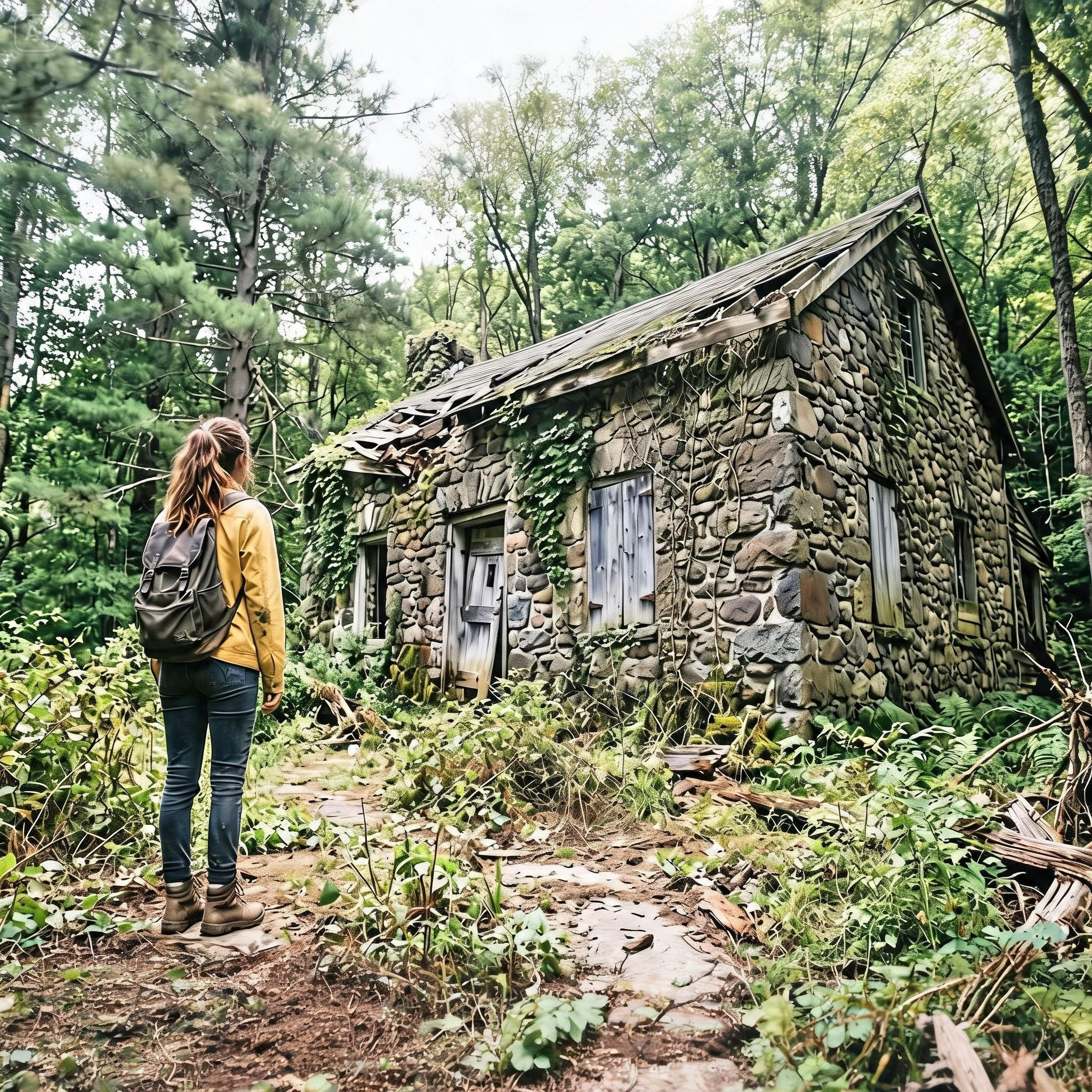
Kicked Out at Twenty-One, She Bought a $10 Stone Cottage—Then the Hearth Revealed Who Really Owned the $42 Million Estate
Three days after my grandmother’s funeral, my mother slid a quitclaim deed across the dining-room table and told me I had forty-eight hours to leave the house I had spent six years helping save.
My uncle already had a locksmith scheduled.
My older brother was drinking champagne because everyone believed Grandma Ruth’s forty-two-million-dollar estate had finally passed into their hands.
I looked at the deed.
Then I looked at the brass key hanging from the thin chain around my neck.
And I said nothing.
That silence made them reckless.
My mother, Diane Mercer, leaned back in the chair at the head of the table as if she had inherited not only the house but the right to breathe for everyone inside it.
She was fifty-two, elegant in the aggressive way expensive things can be elegant. Cream cashmere. Diamond studs. Nails the color of dried wine. Her grief had lasted exactly long enough for the funeral photographs.
Beside her sat my uncle, Raymond Mercer, wearing the charcoal suit he used for church, funerals, lawsuits, and any occasion where he expected someone else to lose money.
My brother Evan occupied Grandma’s old chair near the window.
That bothered me more than anything else.
He had never sat there while she was alive.
Grandma Ruth hated people taking her chair.
She would tap the carved oak armrest with one finger and say, “A person ought to know which places they earned and which places they only entered because nobody stopped them.”
Evan had laughed at that once.
Now he had his ankle crossed over his knee and a champagne flute in his hand.
“You understand this isn’t personal, right?” he asked.
I turned my eyes from the key to him.
Evan was twenty-eight and had spent most of adulthood discovering new ways to fail without becoming responsible for failure.
He had started a digital marketing company with money from Grandma.
It collapsed in fourteen months.
He tried flipping houses.
He lost nearly two hundred thousand dollars.
Then came a crypto “consulting venture,” two luxury cars, and a six-month period in Scottsdale that nobody could explain without lowering their voice.
Grandma had bailed him out every time.
Not because she trusted him.
Because Diane begged.
“You’re twenty-one, Claire,” Evan continued. “You should want your own life.”
“I had one.”
My mother’s mouth tightened.
“Living in your grandmother’s guest room and wasting your youth changing dressings and sorting medications is not a life.”
I looked at her hands.
She was wearing Grandma’s emerald ring.
The funeral had been seventy-two hours earlier.
The ring had not been left to her.
I knew that because Grandma had shown me the inventory herself.
But I still said nothing.
Raymond tapped the deed.
“This formalizes your release of any occupancy claim.”
“I don’t have an occupancy claim.”
He blinked once.
That was the first tiny crack.
Raymond liked explaining legal words to younger people because he believed vocabulary was authority.
I had spent the previous year taking evening classes at the community college while caring for Grandma.
Business law had been Tuesdays.
Property law had been Thursdays.
Grandma had paid my tuition quietly.
When I asked her why she cared so much about those classes, she had smiled.
“Because people behave differently when they think you don’t understand the paper.”
I pushed the deed back toward Raymond.
“If I have no ownership interest, no lease, and no tenancy dispute, why do you need my signature on a quitclaim?”
The room went still.
Evan lowered his glass.
Raymond smiled, but the smile arrived one second late.
“Just housekeeping.”
“Then you don’t need it.”
My mother’s palm struck the table.
Controlled.
She had always been better at controlled cruelty than open rage.
“Your grandmother spoiled you.”
That nearly made me laugh.
I had slept in a chair beside Grandma’s hospital bed for eleven nights after her first stroke.
I had learned how to flush a feeding tube because the night nurse was understaffed.
I had driven her through sleet to a cardiology appointment while Evan posted photographs from Cabo.
I had washed blood from the bathroom tile after she collapsed one January morning.
I had sold my car when the preservation taxes came due on her old properties because Diane said she was “temporarily illiquid.”
I had deferred college.
I had missed birthdays.
I had missed dates.
I had missed being young enough to believe family loyalty was automatically returned.
I stayed when everyone else said they were too busy.
I stayed when my mother stopped answering Grandma’s midnight calls.
I stayed when Raymond called the estate “a future problem” and refused to help with the failing furnace.
I stayed when Evan borrowed money from Grandma and never visited unless another payment was coming.
I stayed when Grandma began hiding handwritten notes in drawers because she no longer trusted what people told her.
I stayed when staying became so ordinary that everyone forgot it was a sacrifice.
My mother folded her hands.
“You are not walking away with a piece of this estate simply because you played nurse.”
There it was.
Not family.
Accounting.
Grandma Ruth Mercer had been born above a feed store in western Pennsylvania.
She married my grandfather, Thomas Mercer, at nineteen.
Together they bought neglected acreage outside Pittsburgh in the 1970s, then warehouses, then commercial parcels, then timberland, then old residential buildings nobody wanted.
Grandpa died when I was nine.
Grandma kept going.
She was eighty-two when she died.
Her estate included the Mercer house on seventeen acres, three apartment buildings, two commercial warehouses, timber rights in West Virginia, several investment accounts, and controlling ownership in Mercer Land & Development.
The family estimate was forty-two million dollars.
Maybe more.
Everyone had spent years pretending they did not care.
Then Grandma died.
And suddenly everyone knew the numbers.
My mother reached toward the quitclaim deed.
“We are giving you until Friday.”
“It’s Wednesday.”
“I’m aware.”
“Where do you expect me to go?”
She shrugged.
That tiny movement changed something permanent inside me.
Not because I had nowhere to go.
Grandma had made sure of that.
But Diane didn’t know.
She wanted to believe I had nothing.
Raymond cleared his throat.
“There’s a small cash distribution coming to you under the family trust.”
“How small?”
“Twenty-five thousand.”
Evan smirked into his champagne.
Grandma’s estate was worth forty-two million dollars.
They were offering me twenty-five thousand dollars and forty-eight hours.
My mother expected gratitude.
“Take it,” she said. “Get an apartment. Finish school. This is cleaner.”
I touched the brass key through my shirt.
Grandma had given it to me eleven months before she died.
Not ceremonially.
Not dramatically.
We had been in her kitchen.
Rain against the windows.
A pot of chicken soup simmering.
She had dropped the key into my palm and closed my fingers around it.
“If they rush you,” she had said, “slow down.”
I asked what it opened.
She stirred the soup.
“If they demand signatures, don’t sign.”
“If they tell you everything has been settled, assume something hasn’t.”
I stared at the key.
“What does it open?”
She finally looked at me.
“The part they forgot existed.”
Then she had gone back to cooking.
I thought it might open a safe-deposit box.
An old storage unit.
I asked twice more over the following months.
She never answered directly.
A week before her final hospitalization, she gave me one more instruction.
“There’s a cottage near Blackwater Creek.”
Everyone in the family did.
A ruined stone cottage sat on a narrow parcel behind one of Grandma’s oldest tracts, thirteen miles from the main house.
No central heat.
No reliable electricity.
Moss on the roof.
Windows clouded with age.
The family called it the Ten-Dollar House.
Grandma had purchased it at a county tax auction in 1978 for ten dollars plus delinquent taxes.
She refused every offer to sell it.
Even when the neighboring developer offered six figures.
Even when Raymond called it “an embarrassing pile of rocks.”
Grandma kept it.
“Why?” I had asked once as a child.
“Because not everything cheap is worthless.”
Now I understood she had been planting sentences around me for years.
My mother rose.
“I need your answer.”
“You already have it.”
She frowned.
“I’m not signing.”
Evan laughed.
“Then leave without the twenty-five grand.”
Raymond turned toward him.
“What? She thinks she has leverage.”
Grandma’s dining room smelled faintly of beeswax, old oak, and the lemon polish she used every Sunday.
The clock above the sideboard ticked.
Four people watched me.
Three expected panic.
I gave them none.
“Friday,” my mother said.
For the first time that afternoon, she looked unsure.
I packed slowly.
That frightened them more than anger would have.
I packed clothes.
Grandma’s blue ceramic coffee mug.
A box of class notes.
Two framed photographs.
And the old leather sewing case Grandma had asked me to keep “because nobody notices sewing things anymore.”
My mother entered the guest room while I was folding sweaters.
“You don’t need to make this theatrical.”
I kept folding.
She looked around.
“You’re not taking furniture.”
“I wasn’t planning to.”
“Nothing from the study.”
“No jewelry.”
I glanced at the emerald ring on her finger.
“Of course.”
Her hand moved instinctively toward her pocket.
That almost made me smile.
She walked to the closet.
Checked the upper shelf.
Opened one drawer.
“What are you looking for?”
“Making sure you understand boundaries.”
“Search whatever you want.”
That bothered her.
She wanted resistance because resistance would justify what she was doing.
Instead, she opened drawers while I packed.
When she left, I sat on the edge of the bed.
Then I opened Grandma’s sewing case.
Inside were wooden spools, needles, a silver thimble, a pincushion shaped like a tomato, and folded scraps of fabric.
Beneath the removable tray lay a yellowed envelope.
I had found it the night Grandma died.
My name was written on the front.
CLAIRE ONLY.
I had not opened it.
Grandma had always believed timing mattered more than curiosity.
I waited until Friday morning.
At a.m., two movers hired by my mother carried my boxes to the porch.
At , Raymond arrived.
At , the locksmith parked near the garage.
My mother had scheduled him before I was even gone.
I stood in the empty guest room.
The envelope rested in my coat pocket.
Evan leaned against the doorframe.
“Where are you staying?”
“Somewhere.”
“You have money?”
He nodded toward my boxes.
“You should probably take Mom’s offer.”
His expression sharpened.
“You think Grandma hid something for you?”
The question landed too precisely.
I looked at him.
He pushed off the doorframe.
“I’m serious. She was confused at the end.”
“No, she wasn’t.”
“Doctors said cognitive decline.”
“No. Raymond said that.”
He looked away.
Second crack.
The movers closed the truck.
My mother called from downstairs.
I picked up Grandma’s sewing case.
Evan stared at it.
“That hers?”
“What’s in it?”
He laughed.
“Jesus, Claire.”
I walked past him.
At the front door my mother stood with Raymond.
She held out her hand.
I placed the house key in her palm.
She looked at my neck.
I had tucked the brass key beneath my shirt.
“What’s that?”
“A necklace.”
“From Ruth?”
“Was it listed?”
“The estate inventory.”
“I don’t know.”
Raymond stepped closer.
“Personal property belonging to the estate needs to remain.”
I pulled the brass key from beneath my collar.
Grandma had tied a faded blue ribbon through the top.
“She gave it to me last year.”
Raymond studied it.
For one second, recognition flashed across his face.
Then disappeared.
He saw me see it.
Neither of us said anything.
My mother waved toward the door.
I drove away from the forty-two-million-dollar estate in a twelve-year-old Subaru with a cracked passenger mirror and ninety-three dollars in cash in the glove compartment.
Nobody followed me.
Nobody needed to.
They thought I had lost.
At a.m., I pulled into the county recorder’s office.
At 10:18, I walked out with copies of three deeds.
At 11:32, I met a seventy-year-old real estate attorney named Samuel Pike in a diner outside Washington, Pennsylvania.
Grandma had written his name inside the envelope.
The letter was four pages.
I had finally read it in the parking lot.
If you are reading this, either I am dead or Diane has finally become impatient.
Probably both.
Do not be angry yet.
Anger makes people loud, and loud people miss details.
The cottage at Blackwater Creek must be purchased from the estate at the recorded historical option price of ten dollars.
The option is yours.
Samuel Pike has the instrument.
Do not discuss the cottage with your mother, Raymond, Evan, or the family attorney.
Do not remove the hearthstone until Samuel confirms title.
And whatever happens, protect the brass key.
There was more.
Enough to make my hands cold.
Samuel Pike was waiting in a booth with black coffee and a red folder.
He looked exactly like a man Grandma Ruth would trust.
Suspenders.
No expensive watch.
Eyes that stayed on your face while you spoke.
“You look like Thomas,” he said when I sat down.
“My grandfather?”
“Especially when you’re suspicious.”
I placed Grandma’s letter on the table.
“You knew.”
“For twenty-six years.”
“About the cottage?”
“About some things.”
He opened the folder.
Inside was a recorded option agreement dated August 12, 2001.
I was not even born then.
The document gave Grandma the right to designate one descendant who could purchase the Blackwater Creek cottage parcel for ten dollars upon her death.
The option did not expire for ninety days.
The designation had been signed four years earlier.
Claire Elise Mercer.
Samuel slid a second document toward me.
“Your grandmother recorded this one eighteen months ago.”
It was an affidavit of designation.
Not hidden.
Not secret.
Public record.
But buried among thousands of county documents nobody in my family had bothered to search because they had dismissed the cottage as worthless.
“Does Raymond know?”
Samuel took a sip of coffee.
“He should.”
“He requested a title summary on the cottage last year.”
I felt something settle into place.
“Then why didn’t he stop this?”
“Maybe he thought the option was defective.”
Samuel smiled.
“Then maybe he thought I’d never know.”
“That,” Samuel said, “sounds more likely.”
I reached for my wallet.
He held up a hand.
“Before you do that, I need to ask whether anyone pressured you to sign documents.”
“What documents?”
“Quitclaim.”
His face changed.
“Did you sign?”
He looked toward the diner window.
Outside, trucks moved along the highway.
“Because the cottage parcel has an access easement connecting it to the Mercer development tract.”
“And someone filed a preliminary subdivision plan six weeks ago that appears to depend on extinguishing that easement.”
My mother had not waited until Grandma died.
Neither had Raymond.
Six weeks ago, Grandma was alive.
“What subdivision?”
“Mercer Ridge.”
Samuel turned the folder around.
Two hundred and nineteen luxury homes.
Projected sellout value: approximately sixty-eight million dollars.
The development required access through the western corridor.
The corridor crossed the cottage parcel.
My cottage parcel.
The one they assumed would remain under estate control.
I looked down at Grandma’s letter again.
Do not be angry yet.
Samuel said, “Still want to buy a ten-dollar ruin?”
I placed a ten-dollar bill on the table.
The transfer took four business days.
I slept in a budget motel for three nights.
On the fourth afternoon, I became the legal owner of a crumbling stone cottage, 8.7 acres of creek bed, an old access lane, and a property everyone in my family believed had no serious value.
My mother called that night.
I stood in the cottage kitchen looking at a sink that had not worked since the Clinton administration.
“Heard what?”
“Stop it, Claire.”
Wind moved through a crack near the window frame.
“You bought the cottage.”
“For ten dollars.”
Her silence lasted three seconds.
Then she laughed.
Not kindly.
“Oh, honey.”
I said nothing.
She laughed harder.
“You could have taken twenty-five thousand dollars.”
“And instead you bought a ruin.”
“Do you even have utilities?”
“Not really.”
“There’s a fireplace.”
She laughed again.
This time I heard Evan in the background.
Someone poured a drink.
My humiliation had become family entertainment.
Exactly what Grandma expected.
My mother said, “I hope you learn something from this.”
“I already have.”
I ended the call.
Then I walked into the living room.
The fireplace covered most of the north wall.
Massive stones.
Blackened iron grate.
A thick hearth slab across the front.
I crouched.
The brass key felt warm in my hand.
Grandma’s letter had one sentence underlined twice.
Do not remove the hearthstone until Samuel confirms title.
Title had been confirmed at that afternoon.
I inserted the brass key into a tiny iron slot near the right edge of the hearth.
A metal click sounded beneath the stone.
I sat back.
For a few seconds, nothing happened.
Then one end of the hearthstone lifted half an inch.
The slab was not fixed.
It was a lid.
I called Samuel.
He arrived forty minutes later with a flashlight, work gloves, and absolutely no surprise.
“You knew.”
“I suspected.”
“You knew.”
“Your grandmother made me promise not to inspect it.”
Together we lifted the stone.
Beneath it was a steel compartment.
Inside sat a waterproof metal case.
No jewelry.
Hundreds of them.
Survey maps.
Mineral leases.
Stock certificates.
Partnership agreements.
Handwritten ledgers.
A small tape recorder.
Three flash drives sealed in plastic.
And a black leather binder labeled MERCER FAMILY HOLDINGS—ORIGINAL INSTRUMENTS.
Samuel stopped breathing for a second.
He lifted one document.
Read the first page.
Then the second.
“Call nobody.”
“I wasn’t going to.”
“No. I mean nobody.”
He sat on the dusty floor.
I had never seen a seventy-year-old attorney sit on a dirty floor in a thousand-dollar coat without caring.
I crouched beside him.
“What is it?”
Samuel handed me a deed.
The paper had been executed in 1987.
Grandma and Grandpa were grantees.
The legal description covered more than nine hundred acres.
Including land beneath two warehouses.
The main Mercer development tract.
And a section of timber property Raymond claimed was owned by Mercer Land & Development.
I looked at Samuel.
“So this deed was never superseded.”
“I don’t understand.”
“The corporation may operate the land.”
“It may not own it.”
I looked back into the case.
Samuel pulled another document.
Then another.
His expression grew quieter.
“That’s not all.”
He found the original family partnership agreement.
Thomas Mercer: fifty-one percent.
Ruth Mercer: forty-nine percent.
Upon Thomas’s death, his interest did not automatically transfer to Ruth.
Instead, it entered a restricted family trust.
The beneficiary schedule had been amended twelve years later.
Samuel read silently.
Then looked at me.
“Your grandfather left instructions.”
“For Grandma?”
“For one future descendant.”
My mouth went dry.
Samuel turned the page.
The beneficiary was not named.
It was defined by conditions.
The descendant who, without compensation, provided continuous personal care to Ruth Mercer for at least twenty-four months during incapacity.
The descendant who had never borrowed against family assets.
The descendant who had not received a lifetime gift exceeding fifty thousand dollars.
The descendant who completed at least twelve credit hours in law, accounting, land management, or business administration.
My grandmother had not spoiled me.
She had trained me.
I sat on the floor.
The cottage was silent except for rain beginning against the roof.
“How much?”
Samuel rubbed his jaw.
“If these instruments remain valid?”
“Potentially controlling ownership.”
“Most of it.”
That was the first twist.
Not money under a hearth.
Not a secret account.
Not Grandma secretly giving me a mansion because I had been kind.
Something much more dangerous.
Grandpa had created a mechanism to prevent entitled heirs from destroying what he and Grandma built.
Grandma had spent years watching her children.
Testing them.
Helping them.
Recording everything.
Evan had borrowed too much.
Diane had received multiple large gifts.
Raymond had used family property as collateral.
I was the only descendant who met every condition.
I stared at the steel box.
“They think they inherited forty-two million dollars.”
Samuel nodded.
“They may have inherited less than they think.”
“How much less?”
He gave me a tired smile.
“Possibly almost all of it.”
I did not call my mother.
That mattered.
Samuel wanted verification before confrontation.
For ten days, we worked quietly.
The cottage became our command center.
Samuel brought in a title specialist from Ohio named Linda Carver.
Linda brought two portable scanners, four legal pads, and the personality of a federal audit.
She did not care about family drama.
She cared about chain of title.
We scanned every document.
Cross-referenced every parcel.
Checked probate filings.
Reviewed trust amendments.
Compared corporate books.
The deeper we went, the clearer the pattern became.
Grandma Ruth had not hidden wealth from the family.
She had hidden ownership structure.
For decades, Mercer Land & Development had paid taxes, maintained properties, collected rents, and represented itself publicly as owner of several major parcels.
But the underlying legal title had remained inside the Thomas Mercer Legacy Trust.
The corporation held management rights.
Not full ownership.
When Grandpa died, the trust became irrevocable.
And the beneficiary conditions began.
Why had nobody noticed?
Because the family had relied on copies.
Internal accounting.
Convenient assumptions.
Grandma had kept the originals.
Under a hearth everyone mocked.
She had also kept records of everything else.
Evan’s loans.
Diane’s gifts.
Raymond’s collateral agreements.
My caregiving logs.
My tuition receipts.
Even my unpaid property-tax contribution from when I sold my car.
One ledger page contained a note in Grandma’s handwriting.
CLAIRE PAID $6,842.17 WHEN DIANE CLAIMED SHE COULD NOT.
Claire refused repayment.
Remember this.
I read that line three times.
Not because it made me emotional.
Because I finally understood that Grandma had seen what I believed nobody noticed.
Samuel found another envelope in the box.
This one was addressed:
TO THE PERSON WHO QUALIFIES.
Inside was a letter from Grandpa.
He had died twelve years before I met any of the conditions.
He could not have known it would be me.
That made the letter more powerful.
The family will tell you this arrangement is unfair.
Remember that inheritance is not payment for being born.
It is stewardship.
I have watched men inherit land they never worked, companies they never built, and trust they never earned.
I will not do that.
Whoever receives control must have demonstrated restraint before receiving power.
If nobody qualifies, sell everything and give half away.
Samuel looked over.
“Grandpa was brutal.”
“He was practical.”
On the fifteenth day, my mother sent me a photograph.
Evan standing beside a bulldozer.
Raymond beside him.
Behind them, a large sign read:
MERCER RIDGE
LUXURY LIVING COMING SOON
Her message said:
Some of us are building a future instead of living in a ruin.
I zoomed in.
The bulldozer stood near the western access corridor.
My corridor.
I sent the photograph to Samuel.
He called immediately.
“They can’t start there.”
“Do you want me to send notice?”
There was a pause.
“They haven’t crossed onto my parcel.”
“I want them confident.”
Another pause.
Then Samuel chuckled softly.
“You really are Ruth’s granddaughter.”
Two days later, orange construction flags appeared along my lane.
The next morning a surveyor knocked on the cottage door.
He looked embarrassed.
“Ms. Mercer?”
“I’m with Barker Civil Engineering.”
“I saw your truck.”
“We’re staking the access.”
“Whose access?”
He unfolded a map.
“Mercer Ridge Development.”
I studied it.
The route cut directly across my parcel.
“You have the wrong boundary.”
He frowned.
“Our plans came from the developer.”
“Then your developer has the wrong boundary.”
I handed him a certified survey Linda had commissioned.
His face changed while he read it.
“That’s a problem.”
“For them.”
He packed his equipment and left.
By noon Raymond called.
“You interfered with the survey crew.”
“No. I showed them my deed.”
“You’re blocking a sixty-eight-million-dollar development over a ten-dollar shack?”
“I’m protecting my property.”
“You have no idea what you’re doing.”
“I’ve heard that a lot.”
He lowered his voice.
“Claire, be smart.”
“The family owns the surrounding tract.”
Half a second.
“What’s that supposed to mean?”
“Have you been talking to Pike?”
“I talk to lots of people.”
“Samuel Pike is retired.”
“Apparently not completely.”
Raymond exhaled.
“You’re playing adult games.”
“I’m twenty-one, Uncle Raymond. You told me I was adult enough to sign a quitclaim.”
He hung up.
That afternoon, a courier delivered an offer.
Two hundred fifty thousand dollars for my cottage parcel.
I declined.
Next offer: four hundred thousand.
Third offer: seven hundred fifty thousand.
My mother called five minutes after it arrived.
“Do you understand what they’re offering you?”
“You paid ten dollars.”
“I remember.”
“Then take the money.”
Her voice sharpened.
“You’re being vindictive.”
“About what?”
“Don’t do that.”
“Act calm.”
I leaned against the cottage kitchen counter.
That sentence told me more than she realized.
My calmness frightened her because she could not measure it.
Anger would have given her a number.
Calmness gave her a blank page.
“Claire,” she said, softer now, “whatever happened between us, seven hundred fifty thousand dollars is life-changing.”
“So is sixty-eight million.”
“That development belongs to the family.”
“Which family?”
She hung up.
The following Monday, Mercer Land & Development held a board meeting.
I was not invited.
Samuel was.
Not as my attorney.
As holder of a dormant observer right Grandma had granted him eleven years earlier.
At p.m., he texted one sentence.
They approved construction financing.
“How much?” I asked.
Thirty-one million.
They were borrowing against assets whose ownership was now under serious question.
Raymond knew enough to be afraid.
But not enough to stop.
Because if he stopped, everyone would ask why.
If he admitted the title problem, the bank could freeze financing.
Partners could walk.
Diane could turn on him.
Evan could panic.
The entire system depended on momentum.
So Raymond chose the classic mistake.
He pushed faster.
Three days later, a black SUV arrived at the cottage.
My mother stepped out.
No coat despite the cold.
She walked toward me while I repaired a loose porch board.
Her heels sank into the mud.
“You look ridiculous.”
I kept tightening the screw.
“You drove here to say that?”
She glanced at the cottage.
“Seven hundred fifty thousand dollars.”
“One million.”
Mud streaked my jeans.
She wore a camel-colored wool coat worth more than my Subaru.
We looked like photographs from two different lives.
“Because Grandma wanted me to keep it.”
“That woman manipulated everyone.”
“She helped you buy your house.”
“She controlled me with money.”
“She paid Evan’s debts.”
“She made him dependent.”
“She gave Raymond a job.”
“She never respected him.”
Every gift became an injury once gratitude was inconvenient.
My mother stepped closer.
“You think caring for her made you special.”
“You think she loved you more.”
“You think she left you something.”
That was the first time her eyes flickered.
She had come for confirmation.
Not the land.
Not really.
She needed to know what I knew.
I gave her nothing.
She said, “Your grandmother told me near the end that she regretted how much time you wasted on her.”
“That sounds like Grandma.”
Diane relaxed slightly.
Then I added, “If you leave out the next sentence.”
Her face went still.
“What next sentence?”
“She said, ‘Claire wasted years on me, and I intend to make sure nobody can ever call them wasted again.’”
My mother stared at me.
I had invented nothing.
Grandma said it two months before she died.
Diane took one step back.
“What did she leave you?”
I picked up the drill.
“You already told me. Twenty-five thousand dollars.”
The drill whined.
She flinched.
I shut it off.
“Mom, you should go.”
Her expression hardened again.
“Don’t mistake a legal technicality over an access lane for power.”
“You own eight acres.”
“Eight point seven.”
She laughed without humor.
“You always were pedantic.”
“And you always round down when it belongs to someone else.”
The next morning, Samuel filed the first action.
Not against my family.
Against the county recorder, requesting judicial confirmation of the trust’s chain of title.
Almost boring.
Exactly what we wanted.
Raymond’s attorney appeared within forty-eight hours.
Then the bank appeared.
Then Mercer Land & Development.
Suddenly everyone cared about boring documents.
Construction stopped.
The financing bank froze twenty-three million dollars in undisbursed funds.
The development partner suspended work.
Contractors demanded assurances.
Evan posted a photograph from a steakhouse the same evening with the caption:
Temporary paperwork. Big things coming.
He deleted it the following morning.
My mother called eleven times.
I answered none.
On call twelve, I picked up.
“You filed against the estate.”
“Don’t lie to me.”
“I filed for title confirmation.”
“You are freezing family assets.”
“The bank froze them.”
“Because of you.”
“Because your collateral may not belong to you.”
Her breathing changed.
“What have you found?”
There it was.
Not what are you doing?
What have you found?
I looked at the black leather binder on the table.
“All kinds of things.”
“Does it matter?”
“Was it Ruth?”
“What did she give you?”
Longer this time.
When Diane spoke again, her voice had changed completely.
“Where did you find the box?”
So she knew.
Not everything.
But the box.
My grip tightened around the phone.
“I didn’t say there was a box.”
She hung up.
I called Samuel immediately.
He listened.
Then said, “Change the locks.”
I had already changed them.
“Installed yesterday.”
That night someone drove slowly past the cottage at a.m.
The cameras caught the vehicle.
Raymond’s Cadillac.
He did not stop.
He did not need to.
I watched the footage twice.
Then copied it to three locations.
The hearing took place six weeks later in a county courtroom with beige walls, bad fluorescent lighting, and no cinematic grandeur at all.
That made what happened feel more real.
My mother sat behind Raymond.
Evan beside her.
Two cousins had flown in from Florida.
An aunt I had not heard from in seven years suddenly appeared.
Three corporate attorneys occupied the front bench.
The family had become a system exactly as Grandma predicted.
Money connected people faster than affection ever had.
Samuel sat beside me.
Across the aisle, Raymond’s attorney argued that the Thomas Mercer Legacy Trust documents were outdated, inconsistent with decades of corporate conduct, and possibly superseded by later agreements.
Linda Carver testified for two hours.
She walked the court through every deed.
Every parcel.
Every transfer.
Every missing transfer.
Then Samuel introduced the originals recovered from the cottage.
Raymond’s attorney objected.
Chain of custody.
Authenticity.
The judge overruled most of it.
Then came the 2003 amendment.
The beneficiary conditions.
My mother finally looked at me.
She looked stunned.
The lawyer read the conditions aloud.
No lifetime gifts exceeding fifty thousand dollars.
No family loans outstanding.
Caregiving requirement.
Educational requirement.
No misuse of family property.
Evan whispered something.
Diane grabbed his wrist.
Raymond stared straight ahead.
The judge asked the question everyone had been avoiding.
“Who is the qualifying beneficiary?”
Samuel stood.
“Claire Elise Mercer.”
Every head turned.
I kept my eyes on the judge.
My mother made a sound behind me.
Like air escaping a punctured tire.
The opposing attorney rose immediately.
“Your Honor, this is an absurd interpretation designed to disinherit an entire family in favor of a twenty-one-year-old caregiver.”
The judge looked over her glasses.
“Counsel, the court does not determine whether a deceased person’s estate plan was emotionally satisfying.”
A few people shifted.
The judge continued.
“We determine whether it was lawful.”
That sentence changed the room.
Not traditional.
Samuel introduced Grandma’s caregiving records.
Hospital logs.
Medication schedules.
Signed affidavits from nurses.
Tuition records.
Tax contributions.
My mother’s attorney tried to characterize my work as informal family help.
Samuel asked a simple question.
“Did Mrs. Mercer’s daughter Diane provide equivalent care?”
“Did Raymond?”
“Any other descendant?”
Then came the financial records.
Evan had received more than eight hundred thousand dollars in loans and gifts.
Diane, over two million.
Raymond, nearly four million through compensation, collateral benefits, and forgiven debt.
They had not been cheated.
They had already been paid.
Again and again.
The family story changed in a single afternoon.
They had spent years describing me as the favored granddaughter.
The documents showed something uglier.
They were the favored ones financially.
Grandma gave them cash because they kept asking.
She gave me responsibility because I kept showing up.
The judge did not issue a final ruling that day.
But she granted a preliminary order recognizing the trust’s probable title interest and preventing Mercer Land & Development from selling, mortgaging, or altering disputed assets.
Outside the courthouse, cameras waited.
I had no idea who called the local press.
Probably a contractor.
Maybe a lender.
Maybe Evan, before he understood how badly the day would go.
My mother caught my arm near the courthouse steps.
“You planned this.”
I removed her hand.
“You sat in my house knowing.”
“Then when?”
“When you threw me out.”
She stared at me.
I let the silence sit there.
Then corrected myself.
“Actually, Grandma planned it.”
That hurt her more.
“You think you won?”
“I think the judge asked for supplemental briefing.”
“Don’t be cute.”
Her face trembled with anger.
“Your grandmother poisoned this family.”
“No. She documented it.”
Diane’s eyes hardened.
“You’re going to lose everyone.”
I looked past her.
Evan stood near the curb arguing with a reporter.
Raymond was on his phone.
My aunt was already walking toward her rental car, distancing herself from the disaster.
“Mom,” I said, “I lost everyone on a Wednesday afternoon at a dining-room table. This is just paperwork.”
I walked away.
Three months later, the ruling came.
The Thomas Mercer Legacy Trust was valid.
The original deeds were valid.
The beneficiary mechanism was valid.
I was the qualifying beneficiary.
Not absolute owner of every dollar.
Grandpa had been smarter than that.
I received controlling beneficial interest in the trust.
Fifty-six percent.
Enough to determine management of the core land portfolio.
Grandma’s direct estate still distributed assets separately.
Diane received a house and investment account.
Evan received a restricted trust.
Raymond received several properties and retirement assets.
Nobody was left homeless.
Nobody was left poor.
They simply did not receive control.
That was the part they could not forgive.
My trust interest was estimated at thirty-one million dollars.
But the real value was not the number.
It was the land.
The old apartments Grandma refused to sell to developers because working families lived there.
The creek corridor Grandpa protected from quarrying.
The warehouses where dozens of small businesses operated.
The timber acreage.
The stone cottage.
Things that had been reduced to numbers by people waiting to cash out.
I became trustee six months after being thrown out.
My first board meeting lasted twenty-seven minutes.
Raymond attended because he still owned a minority interest in Mercer Land & Development.
Evan came as my mother’s proxy.
Samuel sat near the wall.
I entered with one folder.
Raymond looked exhausted.
Evan looked furious.
“Are you going to gloat?” he asked.
“Sell the development rights?”
“Then what?”
I opened the folder.
“Mercer Ridge is canceled.”
Raymond swore.
I continued.
“The western acreage will become a mixed-use agricultural lease program and conservation corridor.”
“That makes less money.”
“You’re destroying value.”
“No. I’m changing which value matters.”
I slid copies across the table.
The plan provided long-term leases to three local farming families who had been renting month-to-month.
Protected creek access.
Preserved forty acres of woodland.
Allowed limited development on the eastern parcel without disturbing the cottage corridor.
The projected return was lower than Mercer Ridge.
Still profitable.
Just not predatory.
Evan laughed.
“Grandma would hate this.”
Samuel spoke from the wall.
“No, she wouldn’t.”
Everyone looked at him.
He opened his briefcase.
“I was instructed to deliver this after Claire’s first major trust decision.”
Another envelope.
Grandma’s handwriting.
My mother was not in the room, but somehow I could feel her anger from miles away.
I opened it.
If your first instinct is to sell everything and become rich quickly, Samuel is instructed not to give you this letter.
If you chose stewardship, keep reading.
I looked at Samuel.
“You had an alternate?”
“What if I sold?”
“You would still own the trust.”
“You would never know the rest.”
Raymond went pale.
I noticed immediately.
“The rest of what?”
Samuel did not answer.
The letter did.
There is another ledger.
Not beneath the hearth.
The hearth was only to establish whether the family could be trusted with the first truth.
The second truth concerns Mercer Land & Development, Raymond, and a series of transactions that began after your grandfather died.
Do not confront him until you have the federal tax files.
The room changed.
Raymond stood so quickly his chair rolled backward.
“This meeting is over.”
I looked at him.
He grabbed his briefcase.
I said, “Sit down.”
“You do not order me.”
“I control fifty-six percent.”
His jaw tightened.
“Sit down.”
He stayed standing.
Samuel placed a thin file on the table.
Raymond’s face drained.
Evan looked between us.
“What is that?”
Samuel said, “A copy of a 2017 land-sale agreement.”
Raymond reached for it.
I pulled it toward me first.
The buyer was an LLC I did not recognize.
The seller was Mercer Land & Development.
The sale price was 1.2 million dollars.
A handwritten appraisal clipped behind it valued the property at 6.8 million.
I looked up.
“Why would we sell six-million-dollar land for one-point-two?”
Raymond said nothing.
I turned the page.
The purchasing LLC had been created fourteen days before closing.
Registered agent: a Delaware services company.
Beneficial ownership: undisclosed.
Samuel said, “There were eleven transactions.”
“How much?”
“Based on preliminary estimates, assets worth approximately nineteen million were sold for just under six.”
Evan stared at his uncle.
“Where did they go?”
Raymond picked up his briefcase.
“I’m calling counsel.”
“Do that,” I said.
That was the second twist.
The first had given me control.
The second explained why Raymond had been desperate to seize it.
Grandma had not merely protected an inheritance.
She had preserved evidence.
Over the next four months, forensic accountants followed the transactions.
The trail led through LLCs in Delaware, Nevada, and Wyoming.
Properties had been transferred.
Refinanced.
Fees paid to consulting companies.
One company belonged to Raymond’s college roommate.
Another traced to my mother.
That one hurt more than I expected.
Not enough to break me.
Enough to clarify things.
Diane had received more than five hundred thousand dollars in “advisory fees” over eight years.
Maybe not everything.
But enough.
When investigators interviewed her, she claimed Raymond told her the payments were legal distributions.
That might even have been true at first.
Then we found her emails.
Does Mom know the warehouse appraisal came back at 4.9?
Raymond responded:
She doesn’t need details.
My mother wrote:
Fine. Just make sure Claire never sees the old books. She’s around Ruth too much.
I read that email alone at the cottage.
No dramatic breakdown.
Just the refrigerator humming behind me.
Outside, Blackwater Creek moved over stones.
I printed the email.
Placed it beside Grandma’s ledger.
Then I made coffee.
That was all.
Some betrayals are too complete for tears.
They become architecture.
You simply learn which doors are no longer doors.
Raymond eventually accepted a civil settlement involving repayment, forfeiture of several interests, and permanent removal from company management while separate tax issues continued through the appropriate authorities.
My mother returned the advisory funds after negotiations.
Evan was never charged with anything.
He truly had not known.
For once, being uninformed helped him.
He called me one night almost a year after the funeral.
I was sitting on the cottage porch.
The roof had been repaired.
The windows replaced.
Heat installed.
But I left the stone hearth exactly as Grandma built it.
“Can I ask you something?” Evan said.
“You just did.”
“Still annoying.”
“Still calling.”
He exhaled.
“Did Grandma hate us?”
“You sure?”
“Then why me? Why put my trust under restrictions?”
“Because you would have burned through it.”
He was quiet.
“That’s harsh.”
“It’s true.”
A creek frog sounded somewhere below the porch.
He said, “I kept thinking she gave you everything because you were better.”
“She didn’t.”
“Feels like it.”
“She gave me responsibility.”
“Same thing.”
I looked through the open door at the black binder on my desk.
“Money spends.”
“Responsibility stays.”
Another long silence.
Then he asked, “Are you ever going to forgive Mom?”
I watched fireflies rise over the creek.
“I don’t know.”
That was the truth.
Diane had written three letters.
I answered none.
Not to punish her.
Because I refused to give forgiveness on a deadline just because she wanted relief.
The following spring, I reopened one of Grandma’s old apartment buildings after a renovation that did not force out existing tenants.
We converted an unused warehouse into small-business spaces.
The farming families signed twenty-year leases.
The Blackwater corridor entered permanent conservation status.
And the cottage became my home.
People kept asking why.
With thirty-one million dollars under management, I could have bought anything.
A penthouse.
A lake house.
I bought better insulation.
A reliable furnace.
Bookshelves.
I planted rosemary near the kitchen.
The cottage had been purchased for ten dollars in 1978.
I had purchased it for ten dollars decades later.
Its market value became almost irrelevant.
Grandma was right.
Not everything cheap is worthless.
On the first anniversary of her death, Samuel came for dinner.
He brought a bottle of bourbon Grandpa used to drink.
We sat near the fireplace.
The hearthstone had been resealed but not permanently.
Samuel looked at it.
“You know, Ruth nearly sold this place once.”
“Why didn’t she?”
“Thomas stopped her.”
“He said the cottage should stay outside the company forever.”
I looked at the stone.
“Because of the documents?”
“You don’t know?”
Samuel stared into his glass.
“There are still things I don’t know.”
“That’s comforting.”
He did not smile back.
Instead he reached into his coat.
My shoulders tightened.
He placed a small envelope on the table.
Not Grandma’s handwriting.
My name was not on it.
Neither was anyone else’s.
Across the front were four words.
FOR THE LAST TRUSTEE.
I stared at Samuel.
“Where did you get this?”
“Bank vault.”
“This morning.”
“Why today?”
“Release instruction.”
He handed me a photocopy of a typed directive.
DELIVER ONE YEAR AFTER RUTH MERCER’S DEATH, PROVIDED CONTROL OF THE LEGACY TRUST HAS PASSED TO A QUALIFYING DESCENDANT.
I opened the envelope.
Inside was one piece of paper.
Hand-drawn.
Blackwater Creek.
The cottage.
The old access lane.
And a marked square two hundred yards north of the house.
Below it, Grandpa had written:
The hearth holds the history.
This holds the reason.
I looked at Samuel.
“What reason?”
He shook his head.
We took flashlights.
The map led through trees to a collapsed stone wall near the creek.
I had walked past it dozens of times.
Grandpa’s marked square aligned with a rusted survey spike.
We cleared leaves.
Found a flat stone.
Beneath it was a sealed metal cylinder.
Samuel crouched beside me.
“You want to open it here?”
We carried it back to the cottage.
The cylinder required the brass key.
Of course it did.
Grandma’s key.
Grandpa’s lock.
I turned it.
Inside were photographs.
Another man I did not recognize.
A woman holding a baby.
A farmhouse.
Then a deed.
Not to Mercer property.
To a charitable trust.
Samuel read the name aloud.
“The Eleanor Hayes Restitution Trust.”
“Who’s Eleanor Hayes?”
“I don’t know.”
There was a letter.
This one from Grandpa.
If this reaches you, then Ruth succeeded in keeping the family assets intact long enough for someone responsible to inherit control.
But our wealth began with a debt.
Not a loan.
In 1974, when Ruth and I had almost nothing, Eleanor Hayes prevented the foreclosure of our first commercial property.
She gave us money.
We promised her an ownership stake.
Then her husband died, she moved away, and our lawyer discovered her agreement had never been properly recorded.
Legally, we could have kept everything.
For several years, we did.
I stopped reading.
Samuel sat very still.
Grandpa continued.
That decision built the foundation of everything that came after.
By the time Ruth and I tried to correct it, Eleanor was gone.
We found her daughter years later.
She wanted no money from us.
She asked that we create something that helped families who were one disaster away from losing everything.
I stared at the photographs.
The woman holding the baby.
Maybe Eleanor.
Grandpa had created the restitution trust.
Funded privately over decades.
But one final transfer had never been completed.
Twenty percent of the Thomas Mercer Legacy Trust was designated to move into the restitution trust once a qualifying descendant took control.
Twenty percent.
More than six million dollars.
Potentially much more over time.
I laughed softly.
Samuel looked at me.
“My family is going to lose their minds again.”
“Probably.”
I read the final page.
The transfer is not a punishment.
It is repayment.
If you resent it, you are not ready to be trustee.
If you understand it, finish what we started.
That was Grandma and Grandpa’s real legacy.
Not thirty-one million dollars.
Not control.
Accountability that survived the people who tried to avoid it.
Three months later, I signed the transfer.
The Eleanor Hayes Restitution Trust launched a housing preservation program across western Pennsylvania.
Emergency mortgage grants.
Small-business recovery loans.
Property-tax assistance for elderly homeowners.
Nothing glamorous.
Nothing with my name on a building.
Exactly right.
My mother heard about the transfer through the news.
She came to the cottage two weeks later.
No expensive coat.
No Raymond.
She stood on the porch holding Grandma’s emerald ring.
I opened the door.
Her eyes moved past me toward the fireplace.
“So this is where she hid everything.”
“Some things.”
She held out the ring.
“This wasn’t mine.”
I did not take it.
She placed it on the porch rail.
For a while neither of us spoke.
Then she said, “You could destroy me publicly.”
“You have the emails.”
“You haven’t.”
“Because accountability and humiliation aren’t the same thing.”
She looked at me for a long time.
That sentence seemed to cost her something.
“I was angry at her,” she said.
“For years.”
“She loved the business more than us.”
Diane’s chin lifted.
“You don’t know what it was like growing up with Ruth.”
“You’re right.”
“She measured everything. Work. Promises. Money. Who showed up. Who didn’t.”
“That sounds like her.”
“She remembered every mistake.”
“She remembered every sacrifice too.”
My mother looked toward the creek.
“I wanted something that was mine.”
“So you helped Raymond take it.”
Her jaw tightened.
No technicality.
That mattered.
Not enough for forgiveness.
Enough for honesty.
She looked at the ring.
“What happens now?”
“I keep running the trust.”
“I don’t know.”
Her eyes finally met mine.
“I suppose that’s fair.”
She turned to leave.
Then stopped.
“There’s something you should know about Raymond.”
“He wasn’t the first person looking for the box.”
My skin went cold.
She faced me again.
“When your grandmother had her stroke, someone broke into the main house.”
“I never heard about that.”
“Ruth didn’t report it.”
“She said nothing was taken.”
My eyes moved toward the hearth.
Diane continued.
“But after that, she changed the locks on this cottage.”
“About eighteen months ago.”
The same month Grandma recorded my designation affidavit.
“Who broke in?”
“She never told me.”
“Did Raymond know?”
“Afterward.”
“Why are you telling me now?”
My mother hesitated.
“Because the person who broke in left something behind.”
“A button.”
I almost laughed.
“A button?”
“Not clothing.”
She stepped closer.
“A brass elevator button.”
I stared at her.
“From where?”
“Mercer Tower.”
My grandfather had owned a downtown office building decades earlier.
The family sold it when I was fourteen.
At least, I thought they had.
“Mercer Tower was sold.”
Diane looked at me strangely.
“You really don’t know.”
“Know what?”
“The buyer was Eleanor Hayes Properties.”
The porch seemed to tilt.
“That trust existed before Grandpa created it?”
“I don’t know.”
“You said Eleanor disappeared.”
“That’s what I was told.”
I walked inside.
Opened the black binder.
Found the sale records.
Mercer Tower had been transferred in 2009.
Buyer: EHP Holdings LLC.
I had assumed the initials meant nothing.
Eleanor Hayes Properties.
The company still existed.
I checked my laptop.
Samuel called while I searched.
I put him on speaker.
“EHP owns real estate in four states,” I said.
“Mercer Tower buyer.”
Typing sounded on his end.
Then silence.
“This company has been active since 1981.”
Grandpa’s letter said they found Eleanor’s daughter years later.
It did not say she was poor.
It did not say she disappeared permanently.
It did not say the Mercer family’s debt was only moral.
Samuel said, “There’s another problem.”
“Of course there is.”
“EHP filed a notice against Mercer Land & Development nine days ago.”
“What kind of notice?”
“Potential beneficial ownership claim.”
My mother stood in the kitchen doorway.
“What does that mean?” she asked.
I looked at her.
“It means somebody believes the Mercers never owned everything we thought we owned.”
Samuel kept typing.
“I’m pulling the filing.”
A document arrived in my inbox.
I opened it.
Eleanor Hayes Properties, acting on behalf of the Hayes Family Trust.
Unresolved beneficial interest arising from 1974 capital agreement.
Attached evidence:
Original partnership memorandum.
Grandpa had written that the agreement had never been properly recorded.
Apparently someone kept the original anyway.
At the bottom was the attorney contact.
And beneath that, a handwritten note scanned into the filing.
One sentence.
Ruth knew this day might come.
I sat down.
My mother whispered, “What does that mean?”
I read the note again.
Then another attachment appeared.
A photograph.
Grandma Ruth.
Maybe five years before her death.
Standing beside a woman I had never seen.
The woman was around my mother’s age.
They were smiling.
Behind them stood Mercer Tower.
On the back of the photograph, Grandma had written:
Margaret Hayes and Ruth Mercer.
The debt is almost settled.
My mother gripped the counter.
“She knew her?”
“Apparently.”
Samuel said, “Claire, the Hayes trust is requesting a private meeting before litigation.”
“They proposed Friday.”
My mother looked at me.
The same day of the week she had thrown me out.
Almost exactly one year later.
I closed the laptop.
The cottage suddenly felt different.
The hearth had given me enough to defeat my family.
Grandpa’s cylinder had given me enough to understand our debt.
But neither had contained the whole truth.
Someone else had been protecting documents for more than fifty years.
Someone else knew what Grandma had been doing.
Someone else might have a legal claim large enough to reshape everything I had just spent a year saving.
And for the first time since my mother pushed that quitclaim deed across the dining-room table, I realized something unsettling.
Maybe I had never been the only person quietly waiting.
Friday morning arrived gray and cold.
Samuel drove.
I wore Grandma’s emerald ring.
Not because it belonged to me.
Because my mother had finally returned it to the estate, and the inventory showed Grandma had designated it to the qualifying trustee.
Mercer Tower rose above downtown Pittsburgh.
Twenty-two stories of limestone, steel, and dark glass.
I had been inside twice as a child.
Grandpa once took me to the roof.
I remembered holding his hand while the city spread below us.
I remembered him saying, “Every building has two foundations.”
I had assumed he meant concrete.
Now I understood.
One foundation held weight.
The other held truth.
Samuel and I entered the lobby.
The brass elevator panel had old-fashioned round buttons.
One was newer than the others.
The twelfth floor.
The missing button.
I touched it.
The elevator rose.
Samuel looked at me.
“That’s not normal.”
“I learned from Grandma.”
The doors opened.
A receptionist led us into a conference room overlooking the river.
One woman waited inside.
Late fifties.
Silver-streaked hair.
No jewelry except a simple watch.
“Claire Mercer.”
“I’m Margaret Hayes.”
The woman in Grandma’s photograph.
We shook hands.
Her grip was warm.
She looked at the emerald ring.
Then at me.
“You have Ruth’s eyes when you’re trying not to reveal what you’re thinking.”
“You knew her well?”
“For thirty-seven years.”
Samuel and I exchanged a glance.
Margaret saw it.
“She didn’t tell you.”
“She said she wouldn’t.”
“Because she wanted you to make your own decisions before you knew our family existed.”
Margaret sat.
She placed a single folder on the table.
“I’m going to make this simple.”
“My grandmother Eleanor did provide the capital that saved Ruth and Thomas Mercer in 1974.”
“She was promised twenty-five percent.”
“She never received it.”
Margaret studied me.
“Do you know why?”
“Bad legal paperwork.”
That one word erased the room.
Samuel leaned forward.
Margaret opened the folder.
“My grandmother’s agreement was valid.”
She slid a photocopy toward us.
Signatures.
Notarization.
“Then Grandpa lied.”
“Because the agreement included a condition he was ashamed of.”
I read the paragraph.
If the Mercer venture failed, Eleanor received nothing.
If it succeeded beyond a specified threshold, Eleanor received twenty-five percent ownership.
“What condition?”
Margaret tapped the next page.
An amendment.
Signed six months later.
Eleanor voluntarily suspended her ownership rights for twenty-five years.
In exchange, Thomas and Ruth agreed that no direct heir could claim Eleanor’s share.
At the end of twenty-five years, the families were to meet and decide whether the interest should be restored, purchased, or converted into charitable ownership.
The date for that meeting had been 1999.
“What happened?”
Margaret’s expression hardened.
“My mother died three weeks before it.”
“And your grandmother?”
“Dementia.”
“So nobody came.”
“And Grandpa?”
“He interpreted silence as release.”
Samuel muttered something under his breath.
Margaret nodded.
“Ruth disagreed.”
That explained the restitution trust.
The preservation.
The secret relationship.
“Grandma contacted you.”
“Before 1999?”
“She found my family herself.”
“Why hide it?”
“Because Thomas refused to reopen the agreement.”
My grandfather.
The man whose letter had sounded so righteous.
Not innocent.
Trying to repair damage he helped create.
Margaret continued.
“After Thomas died, Ruth began moving money into restitution programs. Quietly. She also promised me that if a descendant ever proved capable of protecting the company from your uncle, we would settle the original interest together.”
I looked at the city through the windows.
“So this meeting is about twenty-five percent.”
“Of the trust?”
“Potentially.”
Samuel said, “That could be eight figures.”
Margaret nodded.
I looked back at her.
“What do you want?”
She smiled slightly.
“That’s the question Ruth hoped you’d ask.”
“What did you expect me to ask?”
“How much will you take?”
Margaret opened the folder again.
She removed one final document.
A proposed settlement.
The Hayes family would waive all private ownership claims.
In exchange, fifteen percent of certain Mercer trust revenues would permanently fund the Eleanor Hayes Restitution Trust.
Another five percent would support preservation of affordable housing.
The remaining disputed interest would be released.
No mansion transferred.
No fortune paid to Margaret personally.
No revenge.
Just restoration.
I read the document twice.
Then asked, “Why not take the money?”
Margaret looked at the river.
“Because my grandmother didn’t save the Mercers to make her grandchildren rich.”
That sounded familiar.
“She wanted the business to survive?”
“She wanted what successful people always claim they’ll do someday.”
“Remember who helped them before they were successful.”
I thought about my mother.
All of us orbiting the same mistake in different ways.
Confusing inheritance with entitlement.
Confusing control with worth.
Confusing generosity with weakness.
I picked up the pen.
Samuel touched my wrist.
“You don’t have to sign today.”
“Due diligence—”
“I’ll do it.”
“Then why sign now?”
I looked at Margaret.
Because Grandma had trained me to slow down when people rushed me.
But nobody was rushing.
That mattered.
“Is this binding immediately?”
Margaret shook her head.
“Subject to sixty-day review.”
I signed acknowledgment of intent.
Not final acceptance.
Margaret smiled.
“Ruth would approve.”
“Grandma usually waited until I finished before approving anything.”
Margaret laughed.
The sound surprised me.
Then she reached into her bag.
“There’s one more thing.”
Of course there was.
She placed a small photograph on the table.
Maybe six months old.
Grandma holding her.
Behind them stood the stone cottage.
On the back, written in Grandma’s handwriting:
Claire, summer 2005.
“I was at the cottage as a baby?”
Margaret nodded.
“Frequently.”
“I don’t remember.”
“You weren’t supposed to.”
“Why were you there?”
Margaret’s smile disappeared.
“Because that cottage wasn’t purchased for ten dollars.”
I felt Samuel turn beside me.
“The deed says ten.”
“The recorded deed does.”
“What did Grandma actually pay?”
“She didn’t pay money.”
Margaret folded her hands.
“Eleanor Hayes gave Ruth the cottage.”
I looked at the photograph again.
“Because Eleanor’s family owned Blackwater Creek before the Mercers owned anything.”
The brass key suddenly felt heavy in my pocket.
Margaret continued.
“The cottage was never merely a hiding place.”
“What was it?”
“A marker.”
“For what?”
She looked at Samuel.
Then at me.
“For the original Hayes boundary.”
My mind moved quickly.
The 8.7 acres.
The surrounding Mercer tract.
The old deed.
The survey spike.
The stone walls.
“How large?”
Margaret did not answer immediately.
That was answer enough.
I leaned forward.
“How much land was originally Hayes land?”
She slid another map across the table.
I opened it.
My breath stopped.
Not eight acres.
Not eighty.
Nearly eleven hundred acres.
Land that now included much of the Mercer portfolio.
The warehouses.
Part of the development acreage.
Sections of valuable commercial property.
Samuel whispered, “Jesus.”
Margaret looked at me.
“The original boundary dispute was never fully resolved.”
I studied the map.
“Does your family own it?”
“We believe we may own an equitable interest.”
“How much?”
“That depends on documents nobody has seen in decades.”
“Where are they?”
Margaret’s eyes dropped to the brass key now visible against my shirt.
Then she asked the weakest, calmest, most harmless question I had heard in my entire life.
“Claire… did Ruth ever tell you your brass key had a second lock?”
✓ Lynn R. Adams
Kicked Out at Twenty-One, She Bought a $10 Stone Cottage—Then the Hearth Revealed Who Really Owned the $42 Million Estate Three days after my grandmother’s funeral, my mother slid a quitclaim deed ac…