I was the quietest pilot in my squadron, and the men who joked that I looked more like a librarian than a fighter pilot never asked where I had learned to fly. Then our commander called everyone into the ready room
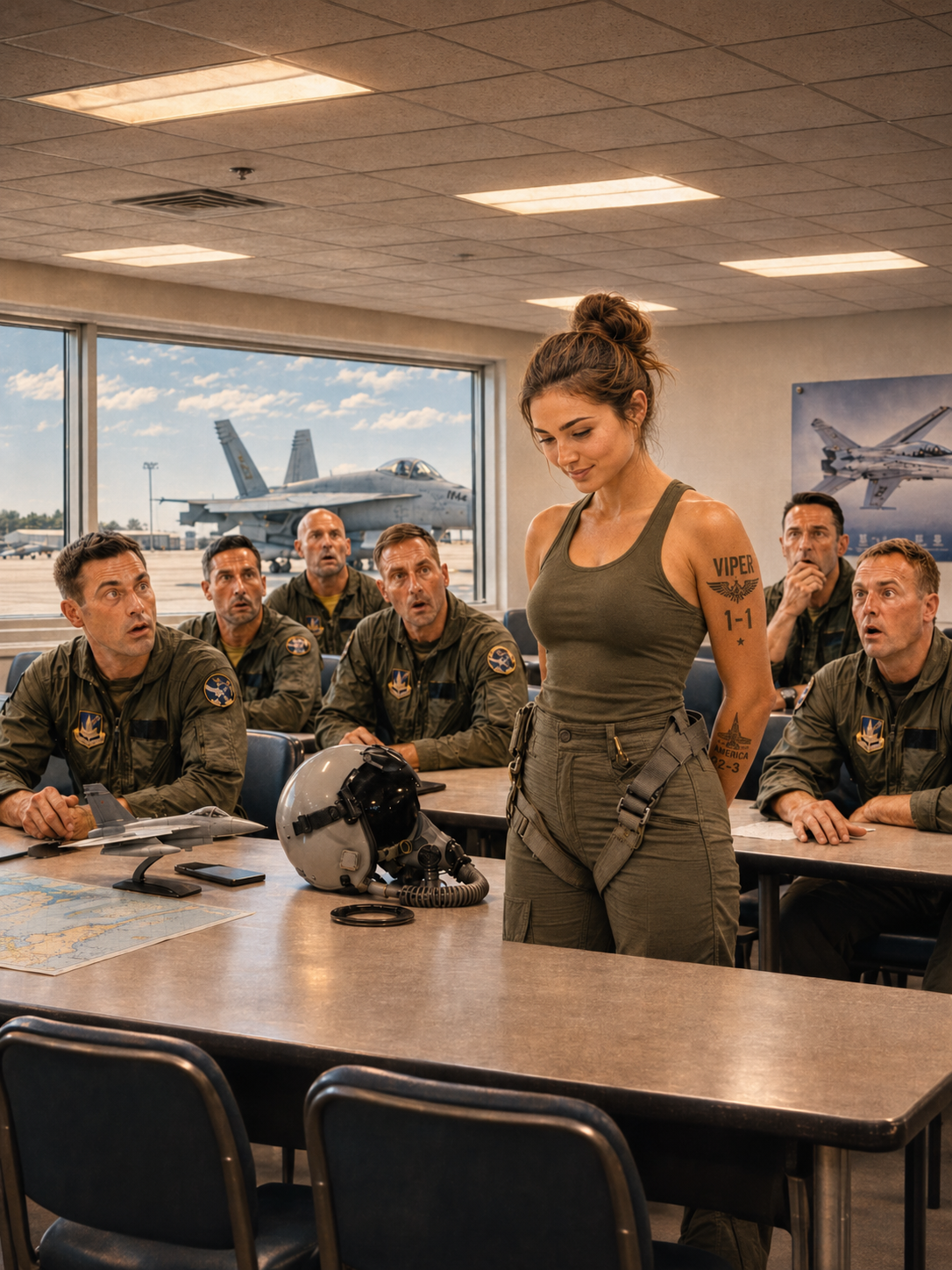
I was the quietest pilot in my squadron, and the men who joked that I looked more like a librarian than a fighter pilot never asked where I had learned to fly. Then our commander called everyone into the ready room, read one name from the selection results, and watched the room go completely silent…
The first time Danny Reyes called me a librarian, nine pilots were in the ready room, and I was sitting at the back with my folder closed. “Whitfield, are you sure they didn’t mix up your paperwork? You’ve got a librarian look,” he said, smiling as if it were harmless. A few people laughed. Priya Nayer didn’t, but she didn’t say anything either. I looked down at my folder and let the moment pass.
I had arrived at Naval Air Station Lemoore that Monday with one seabag over my shoulder and my orders tucked under my arm. I was twenty-four, barely five-foot-four, and quiet enough that nobody seemed to notice when I took the empty chair at the back. Strike Fighter Squadron 141 had a reputation as one of the sharpest F/A-18 squadrons on the West Coast. The ready room smelled of burnt coffee and jet fuel that never quite washed out of a flight suit.
Commander Rick Halloran ran the squadron’s training with the easy authority of a man who had flown off four different carriers and never doubted himself in a cockpit. He checked my name against his list and told me I was there for the work-up, so I should try to keep up. It wasn’t openly rude, but it wasn’t a welcome, either. Danny Reyes, callsign Reckless, had six years in Hornets, two deployments, and the kind of loud confidence that filled every room before he did.
Priya, callsign Cipher, was sharp and quick-witted, known for thinking through training scenarios before the instructors finished briefing them. Ben O’Shea, callsign Anchor, was older and steadier, with combat experience the rest of us still spoke about carefully. I had no callsign at all. New pilots didn’t get one until the squadron decided they had earned it, and until then a surname was just a surname.
I ate lunch alone during my first week. I answered when people spoke to me, but rarely added anything. Some assumed I was intimidated; Reckless assumed I was overwhelmed. His librarian joke wasn’t meant to be cruel, which somehow made it easier for everyone else to let it stand. Halloran heard it from beside the coffee machine and said nothing.
What none of them knew was that I had grown up outside Twin Falls, Idaho, the second of four children on a cattle farm that never quite made enough. My father flew crop-dusting planes on the side to keep the bills paid. They were old yellow biplanes that smoked black and seemed held together by luck and duct tape. He first took me up when I was seven, strapped into the second seat with a headset too big for my head, and something inside me went quiet in a way that never changed.
By fourteen, I was flying the crop duster myself, low over alfalfa fields at dawn. I learned to read the wind by watching a ripple move through the wheat before I felt it, to see heat rising off a sun-baked road, and to recognize the small warning a stall gave before it became a problem. I paid for a state university flight program with late shifts at a diner, the same kind of shifts my mother had worked most of her life. I soloed in a Cessna before I had my driver’s license properly sorted out, then earned a Navy flight-program scholarship that nobody back home had heard of.
When I left for Pensacola, my mother hugged me at the bus station and told me to come home if it didn’t work out. I nodded, though I never considered that a real option. I wasn’t quiet because I was shy. I was careful with words, the way I was careful with altitude, fuel, and attention. I graduated at the top of my flight class without a failing grade in my logbook, but none of that came up in casual conversation because nobody asked.
At Lemoore, the weeks settled into the hard routine of simulator sessions before dawn, radar and weapons-system lectures through the afternoon, and low-level training routes through the Sierra foothills. I flew clean, controlled sorties, briefed in short sentences, and went back to my quarters while the others headed to the base club. After everyone else left, I often stayed in the squadron tactics room, working weapons-employment scenarios on a desktop trainer until well after midnight.
I studied radar-intercept geometry until the angles felt like instinct. I asked for extra simulator blocks at four in the morning, when nobody else wanted them, and read every mishap report in the squadron safety library to understand how a good pilot could still lose an aircraft. I didn’t announce any of it. I just worked. My roommate Erin, a supply officer who lived two doors down, noticed my light under the door after midnight and the recorded radio calls murmuring from my laptop. Once she asked if I ever slept. “Some,” I told her.
In February, a low-level training flight over the foothills went wrong when a sensor failure scrambled my instrument picture during a simulated attack run. The altitude data turned false just when I needed it most. The numbers didn’t match the pressure in the stick, the engine sound, or the horizon. I trusted the aircraft more than the panel, recovered by feel, and brought it back to the field without incident. I wrote three lines about it in my logbook that night and told nobody. To me, it was simply the lesson my father had taught me in that old crop duster: fly the airplane, not just the instruments.
In March, the squadron learned that two places had opened in an advanced air-combat training detachment at Naval Air Station Fallon. It was an invitation-only program that could lead toward the Navy’s most demanding tactical instructor track, and everyone knew the results could shape the next five years of a pilot’s career. Reckless put his name forward before the briefing ended. Cipher did the same with less noise. Anchor only nodded once. That afternoon, I quietly submitted my own application through the squadron administrative office.
Selection was far from guaranteed. Historically, fewer than one in five nominated pilots made it through Fallon’s review board, which examined flight records, simulator performance, and a battery of tactical theory tests. Three weeks later, the results arrived in one message addressed to Commander Halloran. He read it once at his desk, then read it again. That afternoon, he called the entire squadron into the ready room, unusual enough that people arrived already whispering theories.
The room filled with coffee cups and confident guesses. Most expected Reckless to get a place, perhaps Cipher, while some wondered whether Anchor might be asked to teach instead. Halloran held the printed message at his side for a moment before speaking. One name had been selected, he said, and that pilot had finished at the top of the entire review-board ranking, with the highest tactical-theory score submitted by any squadron on the base that cycle.
He paused, looked across the rows, and read the name slowly. “Lieutenant Casey Whitfield.” Reckless set down his coffee without seeming to notice. Cipher’s eyebrows rose and stayed there. Anchor looked toward the back row and found me in the same chair I had always chosen, my hands folded and my expression unchanged. Halloran lifted the message slightly and asked why nobody in the room had known I had applied at all. “Nobody asked, sir,” I said. Part 2…..
IF FACEBOOK BROUGHT YOU HERE, HERE’S THE CONTINUATION YOU’VE BEEN WAITING FOR. ENJOY! 👇 A few uneasy laughs moved through the room and died quickly. Halloran read the board’s written comments aloud: I had shown an unusually mature understanding of three-dimensional tactical geometry, the kind instructors usually expected from pilots several years further along. In the merge-plan section, which eliminated about half the candidates each cycle, I had not merely passed. I had proposed a solution the review board had not anticipated, and two of the evaluators later adopted it in their own teaching materials.
The next few days brought a quiet adjustment in the squadron. Reckless stayed unusually quiet for two days, then found me between sorties in the maintenance hangar and asked, without his usual performance, if I would explain my merge-plan logic. I said yes. We spent forty minutes over a tactical diagram while I walked him through angle-off approaches, closure rates, and the decision tree I had built several moves ahead. He listened like someone realizing he had underestimated the person across the table.
Cipher admitted at the squadron bar that evening that she had read me completely wrong. Anchor said nothing directly, but the next flight schedule paired him with me for a two-ship tactical flight. Experienced pilots don’t choose to fly beside people they don’t trust in the air. Halloran wrote an evaluation line that would follow me for the rest of my career.
I went to Fallon in May. The detachment was every bit as difficult as its reputation, and then some. We flew against different aircraft types and instructors who knew exactly how to exploit weaknesses a young pilot didn’t know she had. Sorties came one after another, followed by debriefs that could last three hours for every hour in the air. Every mistake was examined in front of instructors who had more combat hours between them than most air forces.
On my fourth sortie, in a defensive scenario against two adversary aircraft, I made a decision half a second too late. I was shot down in a position I should never have allowed, and an instructor with twenty years in fighters took my tape apart frame by frame in front of five other pilots. It was the kind of failure that could become a story about limits, especially for someone who had already been treated as if she were out of her depth.
That night in the visiting-officer quarters, I let myself feel the weight of it through dinner. Then I put the plate aside, opened my laptop, and watched the debrief tape eleven times. I wrote down every decision point and rebuilt my mental picture of the scenario from the beginning. Two other pilots in my class had been shot down in similar scenarios that week. One spent days telling anyone who would listen that the opposing instructor had cheated the geometry; the other grew quieter as his confidence drained away. I did neither. The failure was information I hadn’t had before, and now I had it.
I politely asked the instructor cadre for another look at the tape outside the formal debrief window. A senior instructor, a quiet, hard commander who rarely gave anyone extra time, agreed out of curiosity. We spent forty minutes going frame by frame through the merge. By the end, he wasn’t just answering my questions; he was asking me some of his own. Four days later, I flew the same type of scenario again and won it cleanly. I didn’t fly timidly or overcorrect. I flew aggressively when it made sense and patiently when it didn’t. The change was that I could see half a second more of the picture.
Final By the end of the six-week detachment, the instructors had stopped treating me as the quiet new arrival from Lemoore. They had begun treating me like a pilot they might expect to teach the course in a few years. In my final tactical evaluation, a high-pressure sortie against two adversary aircraft flown by instructors who were not known for going easy on anyone, I shifted from defense to offense so cleanly that the debrief tape was pulled for use as a training example with the next class.
The senior instructor looked across the debrief table at me. He was a hard commander with a reputation for never giving praise he didn’t mean. “Where the hell have you been?” he asked. I didn’t have a good answer. I said I had been working on it.
At Fallon, the best pilot in a detachment was named by the instructor cadre in front of the whole class on the final evening. Nobody expected the quiet lieutenant from Lemoore to be standing at the front when the time came, except perhaps the instructors who had watched me for six weeks. The senior instructor stood with a marker in his hand. He said he had been doing this for eleven years and had given out plenty of callsigns, most of them jokes. “This one won’t be,” he said.
He told the room about the merge-plan solution from my selection exam, the one two instructors had added to their own lesson plans. He told them about my fourth sortie, the loss, the eleven replays, and the clean win four days later. He mentioned that the final-evaluation tape was already being used to teach the next class. “She hasn’t said a word about any of it while she’s been here,” he said. “Not because she couldn’t. Because she didn’t have to.”
Then he wrote one word on the whiteboard: Ghost. Nobody laughed. Nobody made a joke. The room held a different kind of silence, the kind that comes when people realize they have been sharing space with someone exceptional and only now understand what they were seeing. I sat with my hands folded, the same way I had sat in ready rooms since Lemoore, and said, “Thank you, sir.”
Two days later, I flew back to Lemoore with the same seabag over my shoulder and walked through the same ready-room door. Nobody had officially told the squadron what happened at the ceremony, and I certainly hadn’t. But news travels quickly in naval aviation. By the time I landed, half the squadron already knew. This time, people looked up when I came in.
Reckless stood first, which surprised nobody who had watched him over the previous two months. He said only, “Ghost,” with something in his voice that wasn’t quite an apology but was clearly meant as one. Cipher pulled out the chair beside her without a word. Anchor gave me one nod from across the room, which in that particular language meant more than most people’s speeches. I set down my bag and sat where they had made room for me instead of at the far end of the table.
Years later, after two deployments and a tour as a tactical instructor—a job I had never campaigned for and was simply offered—I agreed to one interview with a Navy public-affairs writer working on a piece about women in fighter jets. I answered his questions directly and gently refused to make any of it sound more dramatic than it had felt from the inside.
He asked about that first Thursday in the ready room, about the librarian comment and the laughter that followed. I was quiet for a moment. I told him I hadn’t thought much about it then, and I didn’t think much about it now. Other people’s opinions of me had never been the most useful information available in any room, so I had never spent much time weighing them.
He asked what carried me through the hardest part of Fallon: the shootdown, the eleven replays after midnight, and the weeks when nobody knew what I could do. I thought about it before answering. “I wasn’t trying to prove anything to anybody,” I said. “Not to the squadron, not to the guy who made the librarian joke, not even to the review board that nearly didn’t pick me. I wasn’t running away from anything, either. I wanted to find out whether what I had believed about myself for a long time was actually true. I had never really tested it before.”
I tested it. I had been right. Pilots like me—the quiet ones at the back of the room, the ones who ask for extra simulator time at four in the morning and read accident reports nobody assigned them—often know what they can do long before anyone else notices. Sometimes the world catches up. Sometimes it takes years, and sometimes it never happens in a way anyone records. The work was never really for the room. It was for something steadier than applause, something that didn’t need an audience to be true.
Preparation had simply become the shape of my days. When the message reached a commander’s desk, when a marker moved toward a whiteboard, when a room finally grew quiet enough to hear what had been true all along, I was ready. I had been ready. The rest of the room was only catching up.
Outside Twin Falls, the old yellow crop duster still sits in a hangar that leans a little to one side. Fine dust settles on its wings just as it always did. I don’t need to fly it anymore, but whenever I’m home, I go out to see it. My father says I don’t say much while I’m there. I just stand beside the wing with one hand flat against the metal, greeting an old friend who taught me something I never needed to be told twice.
Nobody in that hangar wears a nametape. Nobody there ever laughed at me for being quiet. In its own way, it was the first ready room I ever sat in, and the first place that taught me the only lesson that mattered: the sky doesn’t care how loudly you enter a room. It only cares whether you were paying attention while everyone else wasn’t.
THE END. I’ve shared the complete story, and I truly hope it touched your heart. If this story moved you, please , like, and share the post. Thank you for reading! ❤️
✓ Lynn R. Adams
I was the quietest pilot in my squadron, and the men who joked that I looked more like a librarian than a fighter pilot never asked where I had learned to fly. Then our commander called everyone into …