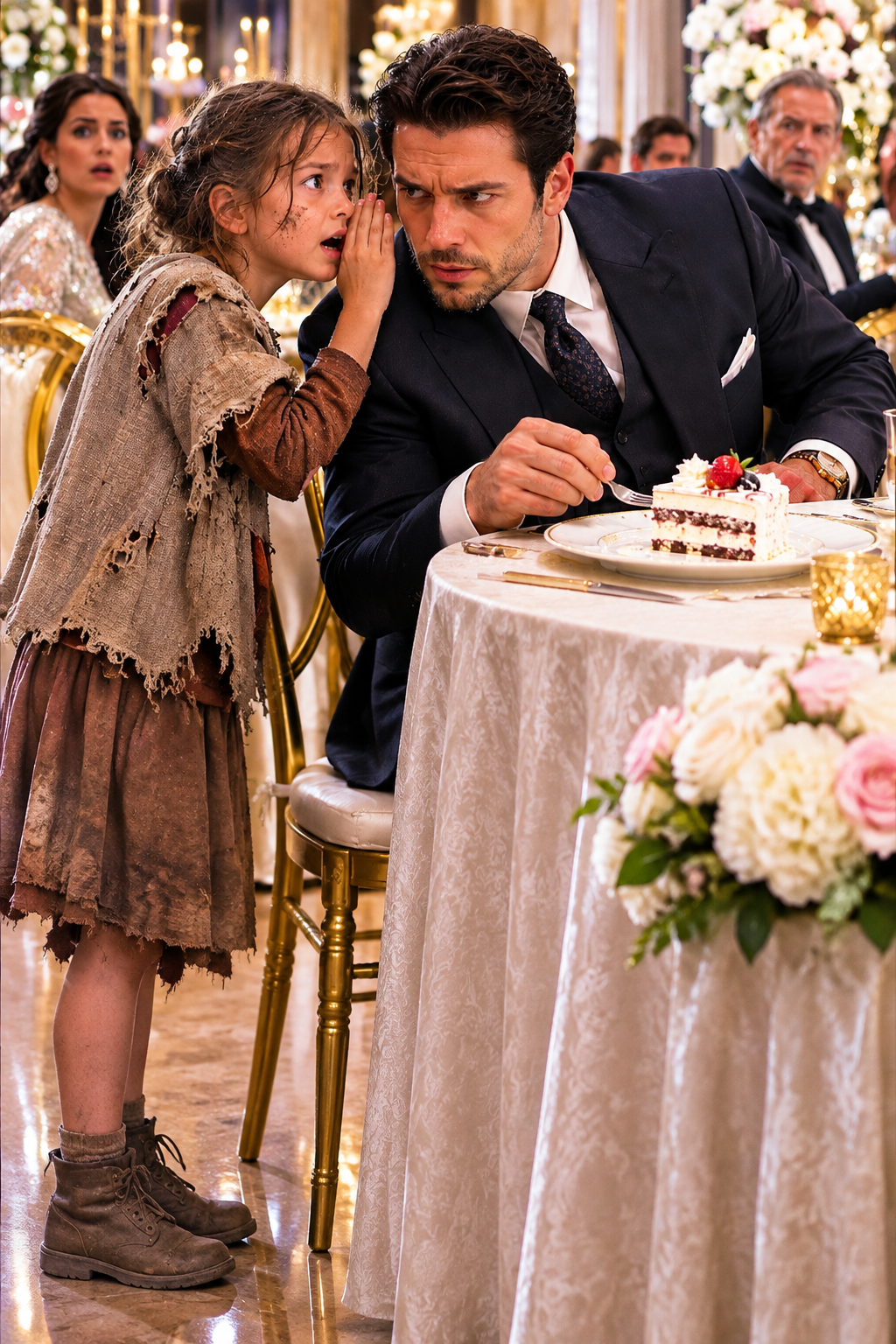
I was celebrating my fiftieth birthday with a woman I thought I could trust when an eight-year-old girl
IF FACEBOOK BROUGHT YOU HERE, HERE’S THE CONTINUATION YOU’VE BEEN WAITING FOR. ENJOY! 👇 Daniela edged toward the door while the manager spoke with the staff. I called her back gently and asked whether someone was waiting for her. She said her neighbor, the woman from the flower stall, was outside and that she needed to get home because her mother was sick.
I asked the manager to make sure she reached her neighbor safely. Then I asked Daniela whether I could thank her in some way. She shook her head and said she hadn’t done anything special.
“You were brave,” I told her. She hesitated, then asked if she could request one thing. When I said yes, she looked straight at me.
“Please don’t get angry with everybody because of that lady. My mom says there are still good people.”
I couldn’t answer right away. I had been looking across the table at someone I thought I knew, trying to understand a betrayal. Daniela, who had every reason to worry about her own problems, was asking me not to let it harden me toward everyone else.
The police took the report and arranged for the dessert to be examined. I answered their questions and gave them the information I had about the documents Verónica had been urging me to sign. I was careful to distinguish what I’d actually witnessed from what I feared might have happened.
About two hours later, I received a call with preliminary information. The cake contained a sedating substance that had no business being there, and investigators had found documents in Verónica’s handbag concerning a transfer of money. The authorities were still examining what had happened and what she had intended.
I sat alone for a while after the call. I hadn’t eaten the cake, and I was physically safe, but I kept thinking about how casually I’d lifted that fork. I also thought about the financial paperwork I’d put aside and how much worse the afternoon might have become if I hadn’t listened to Daniela.
The next thing I remembered was her worried face. I called the restaurant manager and asked if he could help me find the neighbor who’d been waiting outside. I wanted to make sure Daniela had gotten home, and I wanted her mother to know what her daughter had done.
The neighbor’s name was Amalia. She was an older woman who ran a small flower stall, and when I introduced myself she recognized the story immediately. She said Daniela had gone home but that things were difficult for the family.
“Her mother’s been ill,” Amalia explained. “And they’ve just been told to pay the overdue rent by Monday.”
I asked if she would accompany me to see them. She agreed, and we walked to an older building near the station. The stairs led to a rented room on the third floor.
Daniela opened the door. Her eyes widened when she recognized me. “Sir, are you okay?”
“Thanks to you, I am.”
Her face crumpled, and she began to cry. “I thought maybe that lady had hurt you.” I crouched so I could speak to her at eye level and assured her that she’d warned me in time.
Her mother, Teresa, was resting on a bed nearby. She tried to sit up and apologize for the small room, but I asked her not to trouble herself. There was a little cooking area, a few pieces of furniture, and medicine on a table.
Teresa held Daniela’s hand as she told me how the girl had described the restaurant. “I always tell her to help people when she can,” she said. “I just didn’t know she’d find herself in a situation like that.”
I asked how she was managing while she couldn’t work. Teresa said Amalia helped when possible, but she had lost too many cleaning shifts. The rent notice was real, and she didn’t know how she’d make up the amount in time.
I told her I wanted to offer help if she’d accept it. She immediately said they couldn’t ask me for money. I explained that they hadn’t asked me for anything, and that I wanted Daniela to keep attending school while Teresa received the care she needed.
Teresa looked at her daughter, then at Amalia. She didn’t agree instantly, and I respected that. We talked about practical things instead of promises: the overdue rent, medical care, and what would help until she could return to work.
Part 3 Over the following days, a social worker helped Teresa look into treatment and available assistance. I paid the rent arrears and provided temporary support while she recovered. I wanted the help to give them room to breathe, not make them feel they owed me something.
A week later, I invited Teresa and Daniela to a small café. I brought a box and set it on the table in front of Daniela. She looked at her mother before opening it, and Teresa nodded.
Inside were a school backpack, notebooks, colored pencils, and books. Daniela took out the pencils one by one, smiling in a way I hadn’t seen at the restaurant. She asked if she could use them for her schoolwork that very afternoon.
“I heard you like studying,” I said.
“I do. I want to be a doctor.”
I asked her why. She glanced at Teresa and said she wanted to help people when they were sick. Her answer was so simple that I found myself struggling to speak.
“I hope you keep that dream,” I told her. “And I hope you never feel you have to give it up because things are difficult right now.”
Daniela studied my face. “Are you still sad, Mr. Mauricio?”
“A little,” I admitted.
She took my hand across the table. “Mom says when somebody hurts us, we shouldn’t let them take away our wish to care about other people.”
I looked at Teresa, who was listening quietly. I realized that the advice Daniela had given me at the restaurant wasn’t something she’d invented to make me feel better. It was what she’d been taught at home, in a room where there wasn’t much money but there was a great deal of care.
Final Over the next several months, Teresa’s health improved, and she found work with more dependable hours. Daniela was able to concentrate on school instead of selling candies after class. I was relieved to see them building a steadier routine, one that didn’t depend on a single dramatic act of generosity.
I visited occasionally, sometimes bringing a book and sometimes simply sitting down for a snack. Teresa and Amalia never treated me like a guest who needed special attention. They asked about my day, told me about theirs, and laughed when Daniela corrected us about something she’d learned at school.
I kept cooperating with the investigation into what had happened at the restaurant. I didn’t know every conclusion the authorities would eventually reach, and I refused to invent answers just to make the betrayal easier to understand. I knew enough: Daniela had warned me, the footage supported her account, and the cake had contained a sedating substance.
For a while, I caught myself wondering whether every kind word from a new acquaintance hid a request. Then I’d remember Daniela at the table, frightened but determined to speak. Her mother had taught her to notice when somebody needed help, not to calculate what that person might give her in return.
One afternoon, Daniela handed me a drawing she’d made. It showed a man seated in front of a cake and a little girl raising her hand. Beneath it, she’d written, “Being brave means helping even when you’re afraid.”
“Is this for me?” I asked.
She nodded. “So you remember there are still good people.”
I hugged her gently and thanked her. The drawing was made with ordinary colored pencils, but I knew I would keep it. It told the truth about that afternoon more clearly than any expensive photograph could have.
Years later, I still had it in my office among the awards and business recognitions I’d collected. Visitors sometimes asked why a child’s drawing was displayed in such a prominent place. I told them about an eight-year-old girl who saw something dangerous and spoke up even though a room full of adults might have ignored her.
I told them she wasn’t looking for a reward. She was worried about a stranger, and she had enough courage to interrupt him before he made a mistake he couldn’t undo. I also told them how much her mother’s words mattered to me afterward.
I had spent years believing that being successful meant knowing how to protect what I’d earned. Daniela reminded me that protecting yourself isn’t the same as closing your heart. You can check the facts, take precautions, and still recognize the goodness in someone standing right in front of you.
When I look at that drawing now, I don’t think first about Verónica or the cake. I think about a little girl in shoes too big for her feet, telling a stranger the truth because she was afraid he might be hurt. And I think about the mother who taught her to do it.
THE END. I’ve shared the complete story, and I truly hope it touched your heart. If this story moved you, please , like, and share the post. Thank you for reading! ❤️
✓ Lynn R. Adams
IF FACEBOOK BROUGHT YOU HERE, HERE’S THE CONTINUATION YOU’VE BEEN WAITING FOR. ENJOY! 👇 Daniela edged toward the door while the manager spoke with the staff. I called her back gently and asked whethe…