I was 23, homeless, and carrying….
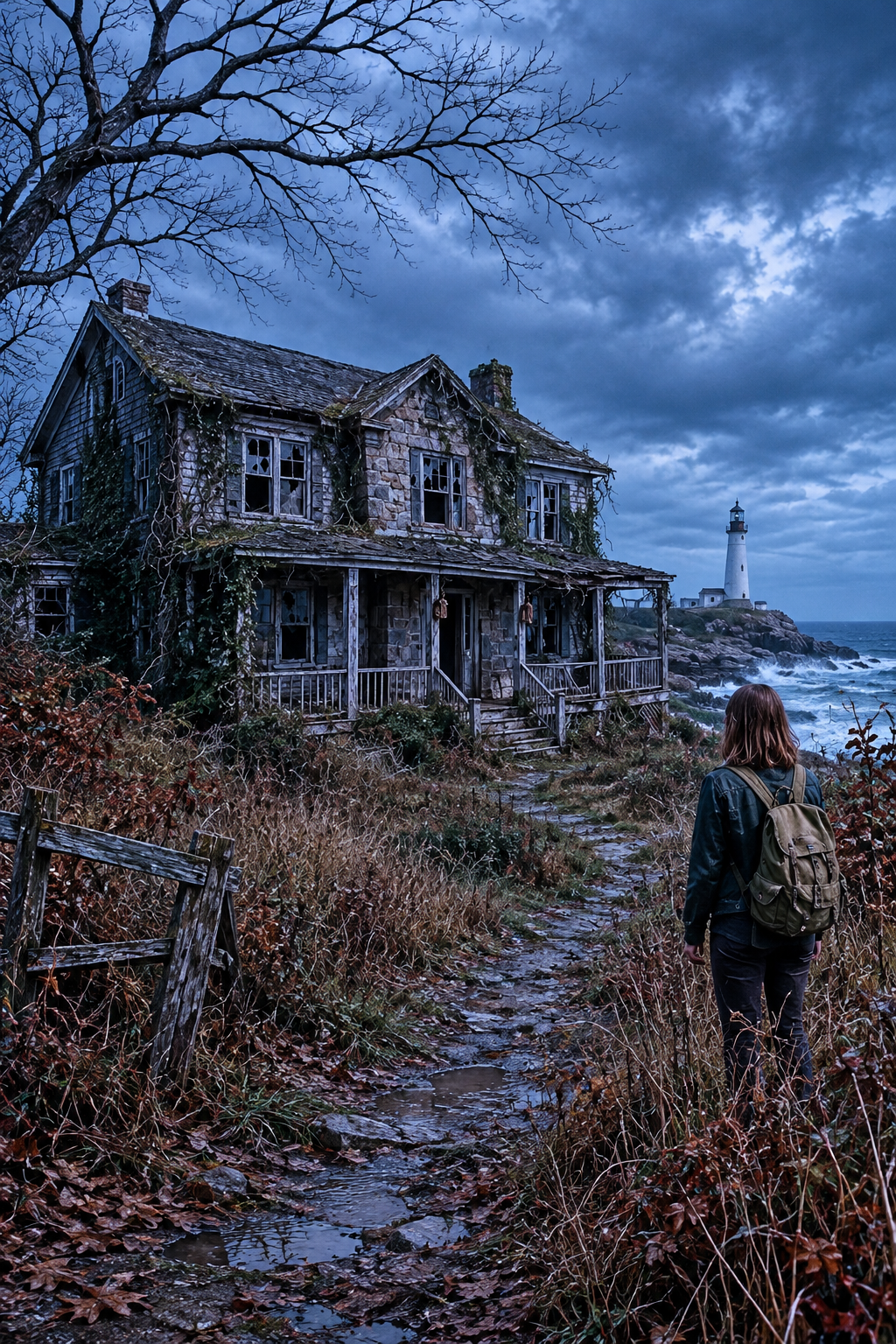
I was 23, homeless, and carrying just $18 when an attorney told me I had inherited a coastal lodge; but as we entered a quiet town, strangers turned to look at me as if they had been waiting…
At 23, I had become very good at leaving quietly. I had no family to call, no apartment to return to, and no belongings I couldn’t carry in one worn backpack. The December morning an officer woke me on a park bench, snow was beginning to settle on my blanket. He apologized, then told me I couldn’t stay there that night. I folded the blanket without arguing.
He glanced at the brass key on the leather cord around my neck and asked whether it was important. I looked down at it. “It is,” I told him, “I just don’t know what it opens.” He gave a small nod, as if he understood more than he said, and let me gather my things.
Everything I owned fit inside my bag: a change of clothes, eighteen dollars, and that small brass key. I had carried it for twenty years. When I was three, someone left me outside St. Agnes Children’s Home during a rainstorm with the key and a note that said, “Please keep my little girl safe.” No one came back, and no one ever explained who had left me there.
That key was the one thing I never misplaced. I kept it tucked beneath my shirt when I moved from one foster home to another, even when I had no idea why it mattered. It was too small to explain anything, but it was the only object that had come with me from the beginning.
I grew up in eleven foster homes. Some people were kind, but every goodbye eventually sounded the same: it wasn’t working out. I learned not to unpack, not to hang pictures, and not to believe that any place would be mine for long. I stopped asking when I would be able to stay. It was easier to keep my suitcase ready than to hope someone might change their mind.
By the time I was old enough to understand what a lease meant, I had already learned not to ask how long I could stay. I learned which drawers were safe to use and how to pack without making a fuss. I could leave a room in minutes, without making anyone feel they had to ask me twice.
A few days before Christmas, I lost my diner job and then the tiny apartment I had been renting. I had tried to stretch what little money I had, but there was only so long I could manage without a paycheck. That was how I ended up back in the park, measuring each day by how warm I could stay and where I might sleep that night.
At the diner, the work had at least given me a schedule. I knew when to show up, which tables needed clearing, and how to make a small paycheck last. Losing that job felt like losing the last routine I had managed to build.
I went to the bus station to get out of the cold and spent a few of my dollars on coffee. While I held the paper cup between my hands, an older man approached and said my full name. He introduced himself as Richard Lawson, an attorney. I told him he must have the wrong person, but his eyes had already settled on the brass key.
“You still have it,” he said.
I asked how he knew about it. Richard opened his leather briefcase and handed me a sealed envelope. Three months earlier, a man named Jonathan Mercer had died, he explained. Jonathan had left his estate to one person: me. Inside the envelope were the deeds to Harbor Light Lodge, an old coastal property overlooking the Atlantic, and one instruction: the property was not to be sold until Eliza Bennett unlocked the front door herself.
Richard spoke quietly as I read the papers, giving me time to take in each line. I had never heard of Jonathan Mercer, and I had no idea why a stranger would leave me a lodge. Richard didn’t pretend to have every answer. He only told me that Jonathan had made his wishes clear and that he had been asked to find me.
I wondered how a man I had never met could know my name, let alone the key I had carried since I was three. I told Richard I had no family. He gave me a gentle smile and said perhaps I had no family I knew, but that didn’t mean no one had ever cared what happened to me. I looked at the key in my palm and wondered whether it had been waiting for something all along.
The drive to Whisper Cove took nearly four hours. The highways gave way to fishing villages, quiet streets, and steep coastal roads. We passed open meadows and weathered houses before the Atlantic finally appeared beyond the cliffs. The water stretched beneath a pale winter sky, and I felt an odd familiarity I couldn’t explain.
Richard kept both hands on the steering wheel. Every so often he glanced toward me as if he wanted to say something, then seemed to change his mind. I tried to imagine the lodge Jonathan had left me, but I couldn’t picture myself owning any place. I had spent so many years preparing to leave that the thought of inheriting a home felt almost impossible.
“I’ve never been here before,” I said when the sea came into view. Richard told me that sometimes a place remembers us even when we don’t remember it. When I admitted I thought I had seen the lighthouse there in dreams, he said Jonathan had written about it. I wanted to ask what else Jonathan had written, but Richard seemed to be choosing his words carefully.
Whisper Cove looked like a town that had never needed to hurry. There were old brick storefronts, a bakery with the smell of fresh bread drifting through the cold air, and an antique shop filled with faded clocks and picture frames. The streets were quiet, and the people seemed to know one another.
Outside the post office, an elderly woman looked up as our car rolled past. She saw me in the passenger seat and touched the arm of the older man beside her. Both watched the car pass with an expression I couldn’t read. Then I noticed other people turning to look. They didn’t wave or call out. They simply seemed to recognize me, as if they had been waiting for someone they had never actually met.
I felt uneasy and asked Richard whether these people knew who I was. He kept his eyes on the road. “They know your name,” he said. “But they don’t know your story, and neither do you.”
However, the town’s recognition was only the beginning. The road climbed until Whisper Cove disappeared behind us, and Harbor Light Lodge came into view on the cliffs. Its stone walls were weathered, the porch boards were worn, and several windows needed repair. Beyond it, an old lighthouse swept its beam across the ocean mist. The lodge looked tired, but not abandoned. It felt as if it had been kept ready for someone.
Richard took one small suitcase from the trunk and handed me a heavy ring of iron keys. I told him I didn’t think I would need them. I had the brass key I had carried all my life, and somehow I believed that was the one that had brought me there. Richard looked at it for a long moment, then quietly agreed.
At the front steps, he stopped and told me Jonathan’s instructions required me to enter alone. I asked whether he was coming inside, but he shook his head. The waves crashed against the cliffs below us. I stood facing the large, weathered door, trying to understand how a man I had never met could have arranged every part of this moment.
My hand trembled as I fitted the little key into the dark brass lock. It turned as smoothly as if it had been used yesterday. The heavy door opened inward, and warm air drifted out into the cold. I stepped across the threshold alone. Inside, the lodge was quiet and dusty, but the fireplace, towering bookshelves, and old grandfather clock seemed carefully preserved.
I walked through the dining room, the library, and the sitting room overlooking the sea. Each place felt strangely familiar, though I knew I had never been there before. Then I noticed a small table beside the fireplace. A single envelope rested on it, perfectly clean while everything around it wore a thin layer of dust.
My name was written across the front in elegant handwriting. Inside was one short message: “If you are reading this, then the house has chosen well. Before you discover who I was, you must first discover who you are. Follow the light.” There was no signature, no explanation, only those final words.
I read it twice, then looked toward the window. The lighthouse beam moved across the room and paused on a painting above the fireplace. For a brief moment, a tiny flash of gold appeared beneath its wooden frame. I stepped closer, wondering what someone had hidden there—and why they had been waiting for me to find it.
I lifted the painting from the wall and found a narrow wooden compartment hidden inside the stone chimney. A dark-brown leather journal lay inside beside a brass compass. The compass carried the same lighthouse symbol engraved on my key, and when I opened it, the needle spun before pointing straight down.
I turned the compass in my hands, but the needle wouldn’t move. It wasn’t pointing north. It seemed to be pointing beneath the lodge. I opened the journal, and the first page held one sentence: “Some doors are opened by keys. The most important ones are opened by trust.”
The next page began, “If you are reading this, then Richard kept his promise. That means I have already left this world. If so, welcome home, Eliza.” I sat down hard in the old chair. Jonathan Mercer had written my name before I had ever stood inside his house. I had more questions than I knew how to ask.
A folded note slipped from between the pages. It looked newer than the journal and said only, “Open after sunset.” Before I could examine it, three slow knocks sounded at the front door. When I opened it, the porch was empty, but a wicker basket sat beside the steps. It held fresh bread, blackberry jam, and hot soup wrapped in a towel. A card read, “Welcome to Whisper Cove. We were beginning to wonder if you’d ever come home.”
I carried the food inside and ate my first proper meal in days. Whoever had left it was already walking away down the road, and I couldn’t catch up. After sunset, I unfolded the note from the journal. It warned that someone would come the next morning to buy the lodge and would offer more money than I could imagine. It told me not to answer immediately, but to spend one full day inside the house and listen before deciding what it meant to me.
A soft knock sounded upstairs. I stood at the foot of the staircase, looking into the dark hallway, but no one appeared. I barely slept that night. The wind moved through the old timbers, the lighthouse horn sounded over the water, and I kept thinking about the man who knew my name and had somehow prepared this place for me.
In the morning, I found another basket on the kitchen table, this one filled with eggs and biscuits. A note said, “No one should begin their first morning hungry.” Around ten, a black luxury SUV pulled into the driveway. Two men stepped out, and the older one introduced himself as Charles Whitmore of Atlantic Horizon Development.
Charles looked over the lodge as if he were already measuring it for demolition. He said the location was valuable but the building had reached the end of its life. Then he slid a purchase contract across the table. The amount was more money than I had ever imagined having. It could have bought me a home and ended the fear of wondering where I would sleep.
He spoke kindly about my difficult circumstances and called the offer a fresh start. I remembered the note and folded the contract without signing it. “I’m not ready,” I told him. Charles remained polite, but warned me that buildings like this didn’t last forever. When the men drove away, I was still holding the offer that could have changed my life in a very different way.
Part 3 After the men left, I decided to spend the rest of the day in town. At the bakery, the owner gave me a loaf of bread and refused payment. “You’ve already paid,” he said with a smile, though I had no idea what he meant. At the hardware store, an elderly woman handed me a photograph she had found while cleaning. It showed Harbor Light Lodge years earlier, with children laughing on the porch and Jonathan Mercer standing by the entrance.
On the back someone had written, “Some people came here for one night. Others stayed forever in our hearts.” I studied Jonathan’s face. He wasn’t smiling like a wealthy man pleased with his property. He looked like someone who was glad to see people arrive.
On my way back, I noticed an elderly man struggling with grocery bags on a steep path. I carried them to his small white cottage overlooking the harbor. He studied my face and said, “You have Jonathan’s eyes.” I told him I had never met Jonathan. The man said Jonathan would have liked me because he always stopped when someone needed help—and I had just done the same.
That stayed with me. I began to understand that Jonathan had measured his life by the people he helped, not by the value of the lodge. That evening, I looked again at Charles’s offer and imagined someone cold, hungry, and alone standing at the same front door where I had stood. If the lodge disappeared, where would that person go?
The next morning, Richard returned and found me on the porch with a paintbrush and a bucket of white paint. I told him I was keeping Harbor Light Lodge. He warned me it would be hard work, and I pointed out that I had only eighteen dollars. For the first time, we both laughed. I had no money for a grand renovation, but I had a reason to begin.
The first week tested me. I spent my mornings scraping old paint and repairing broken windows, and my afternoons cleaning floorboards and clearing dust. Each evening I was so tired I could barely think. But every sunrise found me back on my feet. I wasn’t restoring the lodge because anyone expected me to. I was doing it because, for the first time, I believed a place was worth saving.
Then the neighbors began showing up. The baker brought bread. The hardware store owner arrived with supplies, and a retired carpenter offered to teach me how to repair what he was too old to climb and fix himself. People patched the roof, repaired the fence, replaced shingles, and repainted the porch. They asked for no payment. They simply came because Jonathan had once done the same for them.
One rainy afternoon, while organizing Jonathan’s study, I found another envelope tucked inside his journal. It began, “When the house feels alive.” The letter said a house didn’t become a home when every wall was repaired. It became a home when someone inside decided another person’s life mattered. Jonathan’s instruction was simple: don’t try to make the lodge perfect. Just make sure no one who entered ever felt forgotten.
A few evenings later, an older man arrived in the rain with a worn duffel bag. One sleeve of his coat hung empty. He asked if there was somewhere nearby he could stay for the night. The lodge was still unfinished, but I stepped aside and told him the beds were warm. He accepted the offer with a quiet “Thank you,” as if he had almost forgotten how to ask for help.
I warmed the soup a neighbor had brought and found him an extra blanket. We ate quietly in the kitchen while rain tapped the windows. The next morning, I found him repairing a loose porch railing. Before he left, he handed me a note: “Last week, I believed the world had forgotten me. Because you opened your door, I remembered that I still mattered.” I placed it in Jonathan’s box of letters and understood that the lodge’s work had begun again.
Part 4 Winter slowly gave way to spring. The porch wore fresh paint, broken windows reflected the morning sun, and flowers bloomed beneath the front steps. But the biggest change was happening inside me. For years, I had lived by one rule: keep the backpack packed and be ready to leave. One quiet evening, I folded my clothes into an old dresser and hung my coat in the closet. For the first time in more than twenty years, I wasn’t preparing to leave. I was preparing to stay.
Harbor Light Lodge settled into a gentle rhythm. Some guests stayed one night, others remained for weeks. Each arrived carrying burdens no one else could see, and each left behind a story. One afternoon, a young mother named Rebecca arrived with her six-year-old son, Noah. A fire had destroyed their apartment only days earlier, and everything they still owned fit inside two grocery bags.
Noah barely spoke and stayed close to his mother. Three days later, I found him at the kitchen table with colored pencils. He was drawing a small house with a bright light in one window and three people standing safely inside. I asked if it was their old home. He shook his head and pointed toward the front window. “It’s this one,” he said. For Noah, the lodge was the first place in a long time where he felt safe.
A week later, the one-armed veteran who had stayed during the rain returned. This time he brought his teenage granddaughter. He wanted her to see the lodge, he said. Then he told me that on the night he first arrived, he hadn’t been looking only for a bed. He had been looking for a reason to keep living. If I hadn’t opened the door, he said, his granddaughter might have grown up without a grandfather.
I didn’t know what to say. For much of my life, I had believed I had nothing valuable to offer anyone. Now I was beginning to understand that one small act of kindness could reach further than I would ever see. Real strength, I was learning, wasn’t refusing help. It was accepting kindness and choosing to pass it on.
But the developers had not forgotten Harbor Light Lodge. Richard came back one rainy afternoon with a thick folder and a serious expression. Atlantic Horizon had increased its offer, but he said the problem was no longer just the offer. While reviewing Jonathan’s estate, they had found old property taxes that had never been fully resolved. If the amount wasn’t paid within sixty days, the county could seize the lodge.
I stared at him. The debt was far beyond anything I could afford. Richard reminded me that no one would blame me for selling. I could finally have the security I had wanted for so long. I looked around the kitchen at the bread cooling on the counter, the children’s laughter outside, and the letters in Jonathan’s wooden box. I knew the decision was no longer only about my future. Other people needed that door to remain open.
That night, I returned to Jonathan’s journal. An old photograph slipped from its pages. Jonathan stood outside the lodge beside a young woman holding a little girl wrapped in a blanket. The child’s face was hidden beneath a hood, and the woman was turned partly away from the camera. On the back, someone had written, “Some promises take a lifetime to keep.” I wondered if the child could have been me, but I didn’t know enough to be certain.
The sixty days passed faster than I expected. By early summer, the flowers beneath the windows were in bloom and children were laughing on the porch. But Richard had no good news. The county would not extend the deadline. Unless the taxes were paid by Friday afternoon, Harbor Light Lodge would become county property. Atlantic Horizon would almost certainly buy the land and demolish the lodge, though the lighthouse would remain.
Richard placed the papers in front of me. If I signed the sale that day, he said, there was still time. I reached for the pen, then thought of Noah’s drawing, the veteran’s granddaughter, the baskets of food, and the letters from people who had found shelter here. I pushed the pen away. “I’m not selling,” I told him.
By sunset, people were arriving at the lodge. One car came, then another, until nearly fifty people stood outside. An elderly woman told me she and her husband had stayed there after the hurricane of 1989. A doctor said he had been sixteen when Jonathan took in him and his mother, and that the shelter had helped him finish school. A firefighter, a retired teacher, and a couple celebrating their fortieth wedding anniversary came forward too. Others brought envelopes, checks, photographs, food, and building supplies. One by one, they told me what Jonathan had done for them.
I finally understood why Jonathan had kept so many letters. Harbor Light Lodge had changed hundreds of lives, and the people who had passed through its doors had not forgotten. The old veteran arrived carrying something wrapped in brown paper. Inside was a weathered wooden sign Jonathan had carved: “No one leaves here without hope.” Several neighbors found a ladder and hung it above the entrance again.
The next morning, Richard went to the county courthouse with dozens of envelopes and donations from people whose lives had crossed paths with the lodge. By noon, every dollar of the outstanding debt had been paid. When Richard returned, he handed me the final receipt. Harbor Light Lodge was mine, free and clear. He smiled and said it wasn’t the end. It was only the beginning.
Final That evening, I went back to Jonathan’s study and opened the wooden box of letters. Beneath the false bottom, I found a small velvet pouch. Inside was another brass key, almost identical to the one I had carried since childhood, and a final letter addressed to “the keeper of the light.”
The letter said that by the time I read it, I would understand something that had taken Jonathan a lifetime to learn: a lighthouse did not choose who deserved its light. It shone for everyone. Harbor Light Lodge, he wrote, had never been meant to rescue people. It was meant to remind them that they were never beyond saving.
Then I read the words that changed the way I understood my own childhood. “Your mother understood that. That’s why she brought you here. She knew she would not live long enough to raise you, but she believed someone here would teach you something even greater than survival. She asked me for only one promise: that if life ever brought you back, I would leave the light burning. I kept my promise. Now it’s your turn.”
I read the letter again. For twenty years, I had believed I was abandoned because no one wanted me. Now I understood that my mother had known she could not raise me, but she had trusted someone to protect a future she would not live to see. The letter did not answer every question about those first years, but it gave me the truth I had needed most: I had not been left because I was unloved.
Twenty years passed. Whisper Cove changed, and new families settled there. Old storefronts were restored, and the children who once rode their bicycles along the harbor grew up and brought their own children to town. But every evening, the lights inside Harbor Light Lodge still came on before sunset. People stopped asking who owned the place. When someone needed help, the answer was simply, “The house by the lighthouse. They’ll welcome you there.” The better question, the town understood, was who needed it today.
My hair began to turn silver, and the lines around my eyes deepened. I had become someone the town depended on, not because I owned the lodge, but because I kept opening its door. One rainy autumn evening, three quiet knocks sounded against it. When I opened the door, a little girl stood on the porch. She looked no older than eight and carried a worn backpack almost as big as she was. Her jacket was wet, her shoes were soaked, and she looked more afraid of being turned away than of the storm.
“I’m sorry,” she whispered. “I don’t know where else to go.” For a moment, I saw the child I had once been, standing with everything she owned in a bag. I stepped aside and told her she didn’t have to stand in the rain. She said she could only stay one night. I knelt until we were eye to eye and told her she could stay as long as she needed. “Come in,” I said. “You’re home now.”
Later, after she had fallen asleep upstairs, I went into Jonathan’s study. The wooden box was much heavier now. His letters rested at the bottom, beneath hundreds more from people whose lives had changed because one door had remained open. I placed a new envelope inside. It held one sentence: “Tonight, another child found a home.”
I opened the top drawer of Jonathan’s desk. The two brass keys were still there. I held them for a moment, then carried one upstairs and placed it on the bedside table beside the little girl’s backpack. She didn’t need to know what it meant yet. One day, if she ever wondered whether she belonged, I wanted her to have a reminder that someone had been thinking of her future.
The next morning, Noah arrived. The quiet six-year-old who had once drawn a little house with a light in its window was now Dr. Noah Carter, the town’s family physician. Every Tuesday, before opening his clinic, he stopped by the lodge to check on the residents. When he noticed the sleeping child upstairs, he smiled and asked if there was another one. I nodded.
Noah looked around the kitchen and told me the lodge had saved his life. I said I knew, but he shook his head. He didn’t think I understood. If his mother hadn’t found Harbor Light Lodge after their apartment fire, he said, he wouldn’t be standing there as a doctor. Before he left, he hugged me—not as a guest repaying a debt, but as family.
That evening, I stood on the porch and watched the lighthouse beam travel across the Atlantic. I thought of the young woman who had arrived there with eighteen dollars, a worn backpack, and a key she didn’t know how to use. I finally understood what Jonathan had been trying to teach me. The lodge had never truly belonged to him, and it had never truly belonged to me. It belonged to everyone who arrived believing there was nowhere left to go, and to everyone who left believing in tomorrow again.
Some people spend their lives searching for treasure. Others spend their lives becoming it. Jonathan left behind a house, but the real inheritance lived in every life changed by compassion. Kindness grows larger each time it is given away. We may never own a place beside an ocean or stand beneath a lighthouse, but every one of us can become a safe harbor for someone who is lost. Sometimes the greatest miracle is not finding a place to call home. It is becoming the reason someone else finally does.
Far above the cliffs, the lighthouse continued to shine into the darkness. It never asked who deserved its light. It simply shone. And somewhere beyond the night, another weary traveler was already following it home.
THE END. I’ve shared the complete story, and I truly hope it touched your heart. If this story moved you, please , like, and share the post. Thank you for reading! ❤️
✓ Lynn R. Adams
I was 23, homeless, and carrying just $18 when an attorney told me I had inherited a coastal lodge; but as we entered a quiet town, strangers turned to look at me as if they had been waiting… At 23, …