I was 19, homeless, and down to $11…
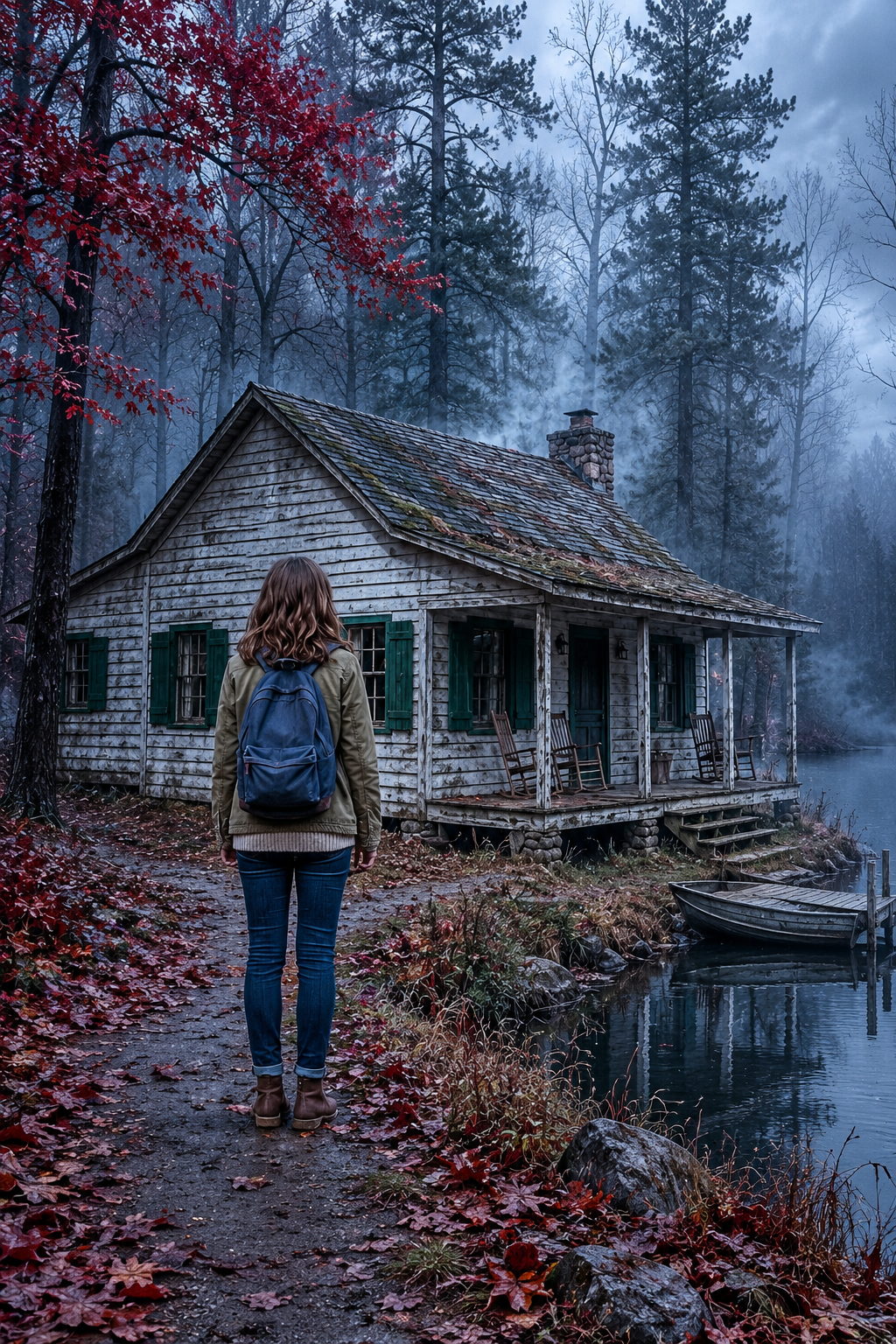
I was 19, homeless, and down to $11 when a lawyer called with news about an uncle I had never met—and the letter waiting inside his quiet lakeside cottage changed everything I thought I knew…
I had spent most of my childhood learning how not to get attached. By the time I turned 19, I had lived in seven foster homes since I was 4. Some families were kind, others simply gave me a bed until it was time to move again. Every new home meant learning a different set of rules, figuring out where I was allowed to put my things, and trying not to take up too much space. I learned to fit my life into one backpack, say goodbye without making a scene, and stop expecting anyone to come back.
My parents had died when I was little, and as far as I knew, there was no family left. Nobody had ever told me about an uncle or suggested there was someone out there who might want me. The morning I aged out of foster care, my social worker handed me a folder, wished me luck, and closed the office door. Nobody was waiting outside. I walked away with a faded blue backpack and $87 tucked into my jacket, trying to look as if I knew where I was going.
For the next two weeks, I drifted through the city. I filled out job applications that went nowhere and spent afternoons in the public library because it was warm. At night, I rode the last city bus to its final stop and tried to sleep on a station bench until security told me to move. I learned which places stayed open late and how to make a little money last longer than it should. I wasn’t looking for much anymore—just somewhere safe to sit and a way to get through the next day.
One rainy evening, I passed a pizza shop and saw a little girl run straight into her father’s arms. I smiled before I could stop myself. It wasn’t the food I envied. It was the simple certainty that someone was waiting for her, someone who would notice if she didn’t come home. By the second Thursday, I had only $11 left and was sitting outside a coffee shop trying to decide whether to buy dinner or save the money for tomorrow when my phone rang. I was used to making plans one day at a time.
The caller introduced himself as Daniel Mercer, an attorney. He asked if he was speaking with Abigail Foster, then told me my uncle, Robert Foster, had died three weeks earlier. I said he must have the wrong person. I didn’t have an uncle. I didn’t have family. Daniel paused and said Robert had named me his only heir, and that his office had been searching for me for months. I remember gripping my phone so tightly that my fingers began to ache.
I could barely take in the words. My parents had died when I was four. Nobody had ever told me there was an uncle, let alone one who knew my name. Daniel explained that Robert had left me a small lakeside cottage in northern Wisconsin, along with everything inside it and a sealed letter that I was to open only after I arrived. He didn’t make it sound like a fortune. He made it sound like a place I could go, a door that might actually open when I reached it.
That night, I hardly slept. I wasn’t thinking about money or property. I kept asking myself why, if someone had cared enough to leave me a home, he had never come looking for me. I wondered what he looked like, whether he had known about the foster homes, and whether he had ever thought of calling. The next morning, I spent almost every dollar I had on a one-way bus ticket. As the city disappeared behind pine trees and country roads, I pressed my forehead against the window and tried to imagine the stranger whose name I had just learned.
The town was quiet when I arrived. A taxi driver took me the last few miles and pointed down a gravel driveway toward a white cottage near the water. The paint had faded, the porch leaned a little, and autumn leaves covered the steps. When I asked if it belonged to Robert Foster, the driver nodded. He said Robert had been a good, quiet man who was usually the first to help when someone in town needed it. I wanted to ask what kind of man he had been when nobody needed help, but the driver was already turning the car around.
Inside, the cottage was simple but carefully kept. A folded blanket lay over the sofa, reading glasses rested beside an armchair, and a mug sat on a table with a bookmark inside an unfinished novel. A fishing hat hung near the door, and the fireplace had neatly stacked wood beside it. It didn’t feel abandoned. It felt as if someone had stepped outside and would be back soon. The refrigerator was nearly empty, but a note held by a lighthouse magnet read, “Fresh groceries every Friday. Don’t forget the milk. Margaret.”
Then I noticed a wooden growth chart leaning beside the pantry. Pencil marks climbed up the board through the years—five, seven, nine, twelve—and near the top was a name written in careful handwriting: Abigail. I touched it with one finger. I had never been there, at least not that I could remember. Yet someone had measured my height in that house, and the thought made the room feel suddenly less unfamiliar and much more mysterious.
I searched the cottage for the letter Daniel had mentioned. At last I found a cream-colored envelope on the mantel, with my name written across it. Inside, Robert had left only a few lines. He apologized for not telling me these things himself and said there were answers inside the house, but I shouldn’t rush to find them. Then he wrote that someone would knock on my door the next morning and asked me to trust her. She had kept a promise when he no longer could.
I read the letter twice, then a third time. I had come to a cottage left by a man I had never met, and now he was telling me to trust a woman whose name I didn’t even know. Outside, the lake darkened beneath the October sky, and the first fire I built in the fireplace warmed the little room. For the first time in weeks, I knew where I would sleep that night—but I still had no idea why Robert had known so much about me, or what he had been waiting all those years to tell me. Part 2…..
However, the next morning, three gentle knocks came at the door. I opened it to find an elderly woman in a wool coat and knitted scarf, with wisps of silver hair escaping from beneath her hat. Her blue eyes filled as she looked at me. “So,” she whispered, “you finally made it.”
She introduced herself as Margaret Wilson, Robert’s neighbor and oldest friend. She had known about me for almost my entire life, though I had never known her. She carried a casserole wrapped in a kitchen towel and said she figured I probably hadn’t eaten much. When I admitted she was right, she smiled and told me Robert had worried about whether I was eating enough almost every day.
We sat beside the fireplace, and Margaret began with the accident that had taken my parents. The day after they were buried, Robert went to the county office and asked to bring me home. They refused. He was 33, single, and working two jobs, and the officials told him a little girl needed stability.
Robert didn’t give up. Margaret said he sold his truck, took night shifts, and stopped spending money on himself because he believed that if he could prove he was financially secure, the county might reconsider. He kept trying to find a way to reach me. Lawyers warned him that appearing without permission could ruin his chances of ever reaching me legally, so he waited for the day I would be an adult.
Margaret brought out a worn cardboard box filled with bundles of envelopes. Each bundle was labeled with a year or an age, from my fifth birthday through my nineteenth. Robert had written to me every birthday, every Christmas, and whenever something important happened, even though he had nowhere to send the letters. In one card, he said he had bought me a stuffed bear and hoped someone would hug me as tightly as he wished he could.
Another letter said he had driven past my foster home and watched me build a snowman. Margaret told me he had attended my elementary school music recital, watched my middle school graduation from the last row, and sat in the parking lot after my high school ceremony. He never approached because he feared making my life harder or losing the chance to contact me properly. I had spent years thinking no one remembered me, while he had been quietly watching from a distance.
Then Margaret told me Robert had suffered a heart attack just three weeks before my nineteenth birthday. He had come so close to finally telling me everything. From the box, she took a small brass pocket watch. Inside was a photograph of me at four years old, laughing, and on the back were six words: “Until she knows she’s loved.”
I held the watch in my palm and finally understood that Robert had spent nearly two decades trying to give me a future he could not share with me. Margaret said he had left me more than the cottage, then looked toward the fireplace. One of the hearthstones sat slightly higher than the others. Robert had built the fireplace himself, she explained, and he never measured anything carelessly.
Part 3 I knelt on the wooden floor and pressed the edge of the uneven stone. It shifted. Margaret helped me lift it away, revealing a narrow compartment in the foundation and a weathered metal box placed inside with unusual care. My hands trembled as I opened it. Neatly tied documents, bank statements, investment records, and property deeds lay beneath another envelope in Robert’s handwriting: “Read this before anything else.”
The letter told me that money could change where I lived, but it could not change who I became. If all Robert left me was money, he wrote, then he had failed. What he hoped to leave was the confidence to believe my life had always mattered. I had to stop reading for a moment because I had never heard anyone say something like that to me.
Beneath the letter were financial statements showing millions of dollars. Margaret explained that Robert had started with almost nothing. He worked as a carpenter, repaired boats, sometimes held three jobs, lived simply, and invested what he could—not because he wanted to be rich, but because he wanted me to have choices.
There was also a leather journal. At first it contained notes about repairs, investments, weather, and fishing. Then I found entries about me: Robert driving hours to watch my school concert, seeing me smile while I sang, and wondering whether I would hate him for not being there. He wrote that he was glad someone had hugged me after graduation, even though he wished he could have been the one. He had spent so much time preparing a future for me that he had forgotten to build much of a life for himself.
I put the box back beneath the hearthstone. Margaret looked surprised, but I told her I didn’t think Robert wanted me to discover the money first. I thought he wanted me to discover him. As I replaced the stone, I noticed a folded county survey map tucked beneath the compartment. A note in Robert’s handwriting crossed its top: “When they come asking for the land, read this first.”
Before I could ask Margaret who “they” were, tires crunched along the gravel driveway. A black SUV rolled toward the cottage. Margaret’s face changed. “They’re here sooner than I expected,” she said. I looked at the map, then at the vehicle, and realized Robert had been protecting something beyond his savings.
A tall man in a tailored charcoal overcoat stepped from the SUV and introduced himself as Nathan Caldwell, a representative of Evergreen Development Group. He offered condolences, then placed a folder in my hands. His company wanted to buy the property, and the amount on the first page was more money than I had ever imagined seeing.
Nathan said the cottage needed repairs and that selling would let me start a new life. But he spoke less about the house than about the shoreline. Margaret reminded him that he had tried to buy the place for years. When she asked why the land mattered so much, his polished smile tightened. He said the shoreline had tremendous economic potential and that the community needed jobs, investment, and progress.
I asked why my uncle had refused to sell. Nathan called Robert attached to the property, but that wasn’t an answer. He left his card and said the investors wouldn’t wait forever. After he drove away, Margaret told me Robert believed some people saw land, while others saw what the land kept alive. I unfolded the survey map and found the phrase “protected freshwater aquifer.”
Part 4 That night, I sat in Robert’s armchair with the map across my lap. The cottage was quiet except for the water brushing the shore and the wind moving through the pine branches. Only days earlier, I would have thought the millions in that metal box were the greatest miracle I could receive. Now I understood that Robert had left me a responsibility, and I needed to learn what it meant before I made any decision.
Near the back of his journal, I found pages titled “Things I hope Abigail learns before she needs them.” One line said that if I was afraid to ask questions, I might spend my life accepting answers that belonged to someone else. Another said never to be embarrassed by what I didn’t know, only by stopping my learning. I began to understand that Robert had been preparing me not just to inherit money, but to trust myself.
The next morning, Margaret arrived with fresh bread and coffee. We drove into town, not to a lawyer’s office but to the county library, where she introduced me to Helen Brooks, a gray-haired woman who knew the county’s records and history. Helen said Robert had come almost every Thursday to study old land records, environmental reports, and historical surveys. He had told her that someday his niece would need to understand this place.
Helen spread maps across a long table and explained that the underground aquifer stretched beneath the surrounding forest. Generations of families depended on wells connected to that water, and careless development could damage a resource that had taken thousands of years to form. I asked what would happen if it became contaminated, who protected it, and why more people didn’t know about it. I had spent years trying not to ask too much. That day, I kept asking.
Another offer arrived from Evergreen, larger than the first. A note attached to it said, “Everyone has a price.” I folded the letter, wrote “Not everything is for sale” across the envelope, and sent it back without accepting. The offer no longer looked like a way out. It looked like someone had mistaken my need for money for a willingness to give up what Robert had protected.
Winter came, and the dispute stretched on. Evergreen filed new proposals, challenged environmental reports, questioned property boundaries, and raised its offer again and again. A local newspaper eventually ran a photograph of me beside the cottage under a headline about a young woman refusing a multimillion-dollar offer to protect the water source. I hadn’t done it to become a story, but Margaret told me I had done it because Robert had raised me, even from a distance.
Near the back of the journal, I found one final letter, left unsealed until I had made my decision. Robert wrote that if I sold the cottage, he hoped it would bring me peace; if I stayed, he hoped it would give me purpose. Neither choice would disappoint him. He asked only that I not spend my life trying to become the person I thought he wanted, but become the person I was always meant to be.
At the county conservation board’s final public hearing, the room was full. Some residents supported the proposal, while others worried about losing jobs and future investment. When it was my turn, I stood with Robert’s pocket watch in my hand and said he had protected the land not because he wanted to own it, but because some things belonged to everyone who came after us. I told them the greatest inheritance was knowing someone believed your life was worth preparing for.
The conservation easement passed. The shoreline would remain protected, and the aquifer beneath it would not be disturbed. Outside, reporters asked what I planned to do with the money Robert had left me. I told them I wanted to invest in people, the way he had spent his life investing in me.
Final Within a year, the cottage had been repaired. The peeling paint was restored and the porch rebuilt, but I kept the rooms that mattered to Robert much as they had been. The room where he once sat writing letters became a small reading room, and the spare bedroom welcomed young adults who had recently aged out of foster care and needed a safe place to begin again. A wooden sign beside the driveway read “The Robert Foster House: A place where new beginnings find a home.”
I greeted every young person who arrived. I never began by asking where they had come from or what had happened to them. I asked something simpler: “Have you eaten today?” I remembered what it felt like when no one asked, and I wanted the first thing they felt in that house to be that somebody had noticed them.
One spring afternoon, nearly a year after I first arrived, I stood on the porch and watched children laughing near the shoreline. Neighbors waved as they passed, and inside the cottage people were talking, cooking, and helping one another. Margaret brought me coffee and said Robert would be proud. I told her I hoped so, but she said he wasn’t proud just because I had protected his cottage. He was proud because I had become the family someone else would remember for the rest of their life.
I looked through the doorway at a young man who had recently left foster care helping another resident repair a broken fence. Someone was laughing in the kitchen. Someone else was baking bread. The house was alive again, not because Robert had left behind money, but because he had left behind love. I slipped his pocket watch into my coat, no longer to remind myself only of what I had lost, but of what I had found.
A year passed. While cleaning Robert’s old desk, I found a final envelope tucked beneath a loose drawer. Four words were written across the front: “For whoever comes next.” Inside, Robert had written that if I was reading it, I had kept my promise and the house had become what he hoped it would be—a place where no young person had to begin adulthood alone. He ended with two words: “Welcome home.”
A few weeks later, an old county bus stopped outside the cottage. An eighteen-year-old girl stepped down carrying a worn backpack and stood uncertainly at the edge of the driveway. For a moment, I saw myself there a year earlier: alone, afraid, and sure no one was waiting. I walked down the porch steps and gently took the backpack from her shoulder.
“I’m sorry,” she whispered. “I was told this place helps people who don’t have a home.” I smiled and told her, “We’ve been expecting you.” Her eyes filled. “I don’t have any family.” I opened the door and said, “You do now.”
Margaret watched from her garden as the girl stepped inside. She looked toward the lake and smiled, knowing Robert had wanted to save one little girl, but his love had become a home for many. I placed his final letter beside the pocket watch. The greatest thing we can leave behind isn’t the money we collect or the house we own. It’s making sure someone else feels loved after we’re gone.
THE END. I’ve shared the complete story, and I truly hope it touched your heart. If this story moved you, please , like, and share the post. Thank you for reading! ❤️
✓ Lynn R. Adams
I was 19, homeless, and down to $11 when a lawyer called with news about an uncle I had never met—and the letter waiting inside his quiet lakeside cottage changed everything I thought I knew… I had s…