I turned eighteen with a duffel bag and two hundred dollars, but the lawyer waiting for me had my missing grandmother’s handwriting, a dying flower farm, and a choice I couldn’t make until I opened one locked box…
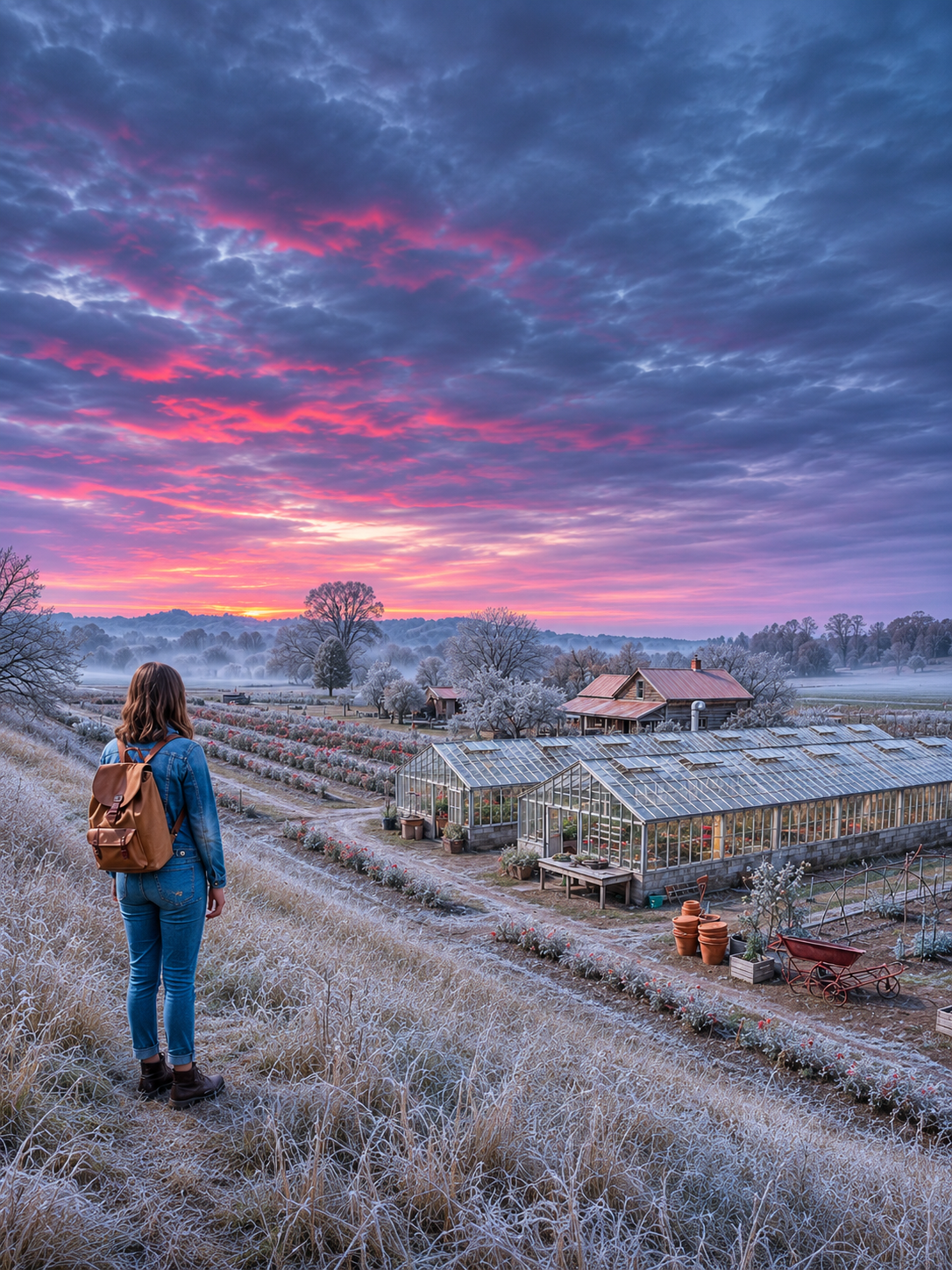
I turned eighteen with a duffel bag and two hundred dollars, but the lawyer waiting for me had my missing grandmother’s handwriting, a dying flower farm, and a choice I couldn’t make until I opened one locked box…
On my eighteenth birthday, I sat in a county services building with a duffel bag between my feet and a bus token in my pocket. There was no cake, no family dinner, and nowhere I was expected that evening. I was aging out of foster care, which sounded a lot kinder on paper than it felt in that chair.
Two years earlier, my grandmother Lena Vance had gone to work and never come home. I was sixteen, and we were already three weeks behind on rent in our little city apartment. With no parents I knew and no other relatives anyone could find, I was placed in group homes, three of them before I turned eighteen.
My case manager, Ms. Albright, had kind eyes and a desk buried beneath folders. She went over shelter addresses and handed me a check for $200 in transitional assistance. I folded it carefully, as though being neat with the paper could make the money last longer.
Then she said a lawyer had called that morning, asking to see me on my birthday. His name was Mr. Davies, and he represented my grandmother’s estate. I stared at her because the word estate belonged to people who left behind property, not to a woman who had worked two jobs just to keep our lights on.
“Are you sure he means Lena Vance?” I asked. Ms. Albright checked her note and nodded. She wrote his downtown address on a yellow square of paper, and I slipped it into my pocket beside the bus token.
As I walked there, I kept thinking about Grandma’s hands. She washed dishes and cleaned offices in the city, but when I was little, those hands had smelled of soil instead of bleach. Sometimes I remembered greenhouses, rain on glass, and a porch swing, though I had convinced myself those were pieces of a dream.
Davies and Finch occupied an old building with a marble lobby and an elevator that shuddered between floors. I wore faded jeans and a hoodie that had been washed too many times. The receptionist glanced at my clothes, then changed her expression when I gave my name.
Mr. Davies was an older man with a white beard and glasses low on his nose. He stood to shake my hand and placed a thick cream-colored envelope on his desk. Across its front, in my grandmother’s thin, slanting handwriting, was my name: Aara Vance.
He told me he had known Lena since before I was born. Under instructions she had left with him, he was to contact me when I turned eighteen and give me my inheritance. I almost laughed, because Grandma and I had counted coins at the grocery store to see whether we could afford milk.
“She owned Blackwood Flower Farm,” he said. The name brought back a weathered white house, rows of flowers, and Grandma pressing a seed into my palm. We had lived there when I was six or seven, before she moved us to the city, and I had not seen it since.
The farm had belonged to her family for generations, and she still owned it outright. But it had not operated for more than a decade, and the buildings had fallen into disrepair. Worse, the unpaid property taxes had reached $52,481, and the county had placed a lien on the land. If I did not resolve the debt in ninety days, the county could seize the property and auction it.
I stared at him until the numbers stopped making sense. My entire savings consisted of a $200 check and whatever change was in my bag. Now someone was telling me I owned a farm I could not afford to keep.
Mr. Davies opened a glossy folder from Oakidge Holdings, a developer that wanted to put luxury condominiums on the land. The company had offered $200,000 for the property as it stood. After approximately $53,000 in taxes and $2,000 in legal fees, he estimated that I could walk away with about $145,000.
I pictured a small apartment with a door I could lock, a refrigerator with groceries, perhaps even college someday. No more shelter lists or begging to stay an extra night. All I had to do was sign away a place I barely remembered.
Then Mr. Davies said Grandma had refused every approach from Oakidge while she was still there to refuse them. “She was determined that this land would be waiting for you,” he said. He admitted he had never understood why she guarded it so fiercely when she needed money herself.
That stung more than I expected. We had eaten day-old bread and lived with overdue bills while she owned land worth six figures. And after she disappeared, I had spent two years believing she had simply decided I was too much trouble to come back for.
“What happens if I don’t sign?” I asked. Mr. Davies told me I could visit the farm and think, but the tax deadline would not stop for my feelings. If nothing changed, I could lose the property and receive nothing.
He handed me a tarnished silver house key and a one-way bus ticket to a crossroads outside Havenwood, near Blackwood Lane. The bus left the next morning. I told him I would not sign until I had seen what Grandma had left me.
Eight hours on a bus gave me plenty of time to wonder whether I was being foolish. City blocks became suburbs, then open fields, and the view through the window changed from concrete to green hills. I kept remembering the holes in my shoes and the way Grandma came home exhausted from cleaning and waitressing.
If she loved that farm so much, why had she taken us away? If she meant to protect me, why had she vanished when I was sixteen? Those questions followed me all the way to the lonely stop at Route 4 and Blackwood Lane.
The driver looked doubtful when I got off with my bag. A narrow dirt road disappeared between tall trees, and a weathered sign leaned beside the intersection. I walked until I reached a rusty gate with almost-faded letters spelling Blackwood Flower Farm.
The farmhouse had once been white, but its siding was gray and the porch roof sagged. Broken greenhouse glass clung to rusty frames, and weeds crowded the old flower beds. Standing there, I understood exactly why a developer would call the place worthless except for the land beneath it.
The silver key still turned in the front door. Inside, a cracked mug sat near the sink, furniture wore thick coats of dust, and Grandma’s gardening books rested beside an old armchair. It felt as if someone had set down her life years ago and never come back to pick it up.
On the fireplace mantel, I spotted a gray metal cash box bolted in place. It was locked, and I searched drawers and coat pockets for a key, half hoping it held enough money to rescue the farm. When I found nothing, I sat on the dusty floor and wondered why I had not taken the developer’s offer.
My eyes wandered to Grandma’s worn copy of Leaves of Grass. A small key was taped inside near a line she had marked in pencil, words about keeping your face toward the sunshine. I peeled the tape away, carried the key to the mantel, and fitted it into the box.
The lid lifted with a quiet click. There was no money, only bundles of letters tied with faded garden twine and an envelope addressed to me. The oldest letter was dated two weeks after Grandma disappeared, and my hands shook so badly that the page rattled.
“My dearest Aara, my little sparrow,” it began. She wrote that I had every right to be angry and that not one day had passed without her thinking of me. Then I reached the words that made me sit perfectly still: “It was not abandonment, my love. It was the only way I could protect you.” Part 2…..
IF FACEBOOK BROUGHT YOU HERE, HERE’S THE CONTINUATION YOU’VE BEEN WAITING FOR. ENJOY! 👇 I read that sentence again, holding the paper closer to the fading light. Protect me from what? For two years, I had wanted an explanation, but now that one was in my hands, I was afraid of what the next lines would say.
Grandma wrote about my grandfather, a man who had died before I could know him. Before I was born, he had made terrible choices and become indebted to a dangerous man named Silas. It was not an ordinary loan that ended when the borrower died; Silas demanded payment from Grandma and eventually threatened to make me answer for it.
For years she worked, paid him what she could, and sold nearly everything except Blackwood. She refused to let go of the land her mother and grandmother had kept before her. She thought we were beyond Silas’s reach at the farm until strangers began watching me play near the greenhouse.
I remembered a car parked at the end of the lane and Grandma suddenly hurrying me inside. I had thought the men were lost. Reading her words as an adult, I understood why her face had gone white that afternoon.
She moved us to the city to make us harder to find, taking work wherever she could and keeping our lives small. We struggled, but I never knew what she was trying to hide us from. I had called that life poverty; she had called it another chance to keep me safe.
Then Silas found a way back into her life. Grandma wrote that she had agreed to surrender what little she had and work under his control in exchange for his promise to leave me alone. His condition was that she never contact me, because any contact would end the arrangement.
“I let the state take you because I believed you would be out of his reach,” she wrote. Her words were full of love, but they could not undo what happened to sixteen-year-old me in that apartment. I had still been terrified, homeless, and passed from one group home to the next.
I wanted to be furious with her for thinking the system would keep me safe. I was furious, for a while, and then I found myself tracing her handwriting with one finger. She had made a choice no child should have to live with, and she had lived with the cost of it every day.
The other bundles were arranged by month. In them, Grandma described long shifts in an industrial laundry, hot steam, aching hands, and the little things she noticed on her way to work. She never named the town, and the letters did not tell me how to find her.
She wrote about a dandelion growing behind the laundry and about the moon outside her window. Mostly, she wrote to the girl she could not reach: hoping I was reading books, making friends, and still looking at the stars. Every page made the silence of those two years feel different, though no less painful.
I stayed on the floor until my legs went numb. The woman I thought had forgotten me had been writing to me all along, with no way to send a single word. I could love her and still grieve the years she had left me alone.
When I finally looked at the clock, it was well past midnight. The sale papers were waiting in Mr. Davies’s office, and the ninety-day deadline was still real. Knowing why Grandma protected Blackwood did not give me the money to protect it now.
I thought about the $145,000 I could have after a sale. It could pay for a safe place to live and a chance to study, things I had never taken for granted. But if I sold the farm without even trying to understand what she had saved, I knew the question would follow me for years.
At dawn, I put the letters back in their box and went outside. The fields were overgrown, the greenhouse panes broken, and the old paths almost gone, but the soil smelled rich after the night air cooled it. I found myself remembering how Grandma had told me that everything needed a little light, a little water, and a reason to grow.
I walked to the edge of the property, where the fields met the woods. An old red barn stood there with peeling paint and a door hanging crookedly from its hinges. I went inside to see what, if anything, could be salvaged before I made a decision.
Part 3 Near the far wall of the barn, one floorboard looked different from the others. It moved when I pressed it with my shoe, and I lifted it carefully, expecting dirt and mice. Instead, beneath the boards was a wooden chest bound with iron straps.
The chest was heavy, but its lid was not locked. Inside were clothbound account books filled with Grandma’s handwriting. They recorded seed purchases, flower sales, and repairs from the years when Blackwood had been a working farm.
Then the entries changed. The business income stopped, and page after page listed small payments toward a debt under Silas’s name. I saw amounts such as $200 and $150, each one another piece of the life she had spent trying to keep me safe.
Under the ledgers was a folder of clippings and letters about Oakidge Holdings. There were records of the company’s aggressive efforts to buy surrounding land, along with printouts that appeared to be internal emails. One said the Vance property was the key to the valley and should be acquired by any means necessary.
I knew a printout alone did not prove everything it claimed, and I did not know how Grandma had obtained it. But the folder showed that her refusal to sell had been deliberate. She had been paying attention, saving what she could, and trying to understand the people who wanted our land.
At the bottom sat a canvas pouch tied with a leather cord. I opened it and found rolls of old bills, which I counted twice on the dusty barn floor. There was $10,000, not enough to pay the back taxes but far more than I had ever held in my hands.
A small note was tucked beside the money. In Grandma’s writing were the words, “For the soil. Grow.” I sat with the pouch in my lap, wondering how long she had set that money aside and what she had sacrificed to save it.
She had not left me a finished life. She had left me a ruined farm, a difficult choice, and enough money to make a beginning if I was careful. I walked out of the barn, stood in the morning light, and called Mr. Davies.
“I’m not selling,” I told him. There was a pause before he answered that he had hoped I would say that. Then his voice became practical, and he asked me to tell him exactly what I had found and where the documents had been kept.
Mr. Davies did not pretend $10,000 would erase a $52,481 debt. He said he would contact the county about postponing enforcement and negotiating payments while we examined the documents and the property’s finances. Any extra time would depend on what the county agreed to, and I understood that asking was not the same as winning.
He also wanted to review the Oakidge material carefully. Some of the letters described pressure on other farmers, and the printouts raised questions he could not responsibly answer without checking their origin. Grandma had collected information, but a legal case would require evidence that could be verified.
I spent the first several days cleaning the house. I bought work gloves, trash bags, cleaning supplies, and the simplest tools I could find. Scrubbing the kitchen floor did nothing to change the tax bill, but at least I could see clean wood when I finished.
As I aired out the rooms, I found a recipe for rosehip jam inside a cookbook and an old pair of gardening gloves on a pantry shelf. On a bedside table stood a photograph of Grandma holding me as a baby. I left it where it was, dusted the frame, and opened the curtains.
Next I worked on the greenhouse closest to the house. I removed broken glass slowly and cleared the vines from its rusted tables, making sure not to step beneath anything unstable. In a sheltered corner I found a rosebush climbing the frame, covered with small, deep red flowers.
Grandma’s ledgers called them Blackwood roses. The bush had survived years without tending, and I stood there smelling one bloom while my sore hands hung at my sides. It did not repair the greenhouse, but it showed me that something on this land was still growing.
When I needed seeds and a few supplies, I went into Havenwood. The older man at the general store recognized the Vance name and told me Oakidge had been trying to buy farms throughout the valley. He was not especially friendly, but when he saw the vegetable seeds in my basket, he said Blackwood’s soil had always been good.
I returned with carrots, lettuce, and beans, knowing none of them would earn me $52,481 before the deadline. I also knew I had to learn how to work land I barely remembered. I read Grandma’s old gardening books in the evenings and made a list of what I could repair without putting myself in danger.
Final One afternoon, a sleek black car rolled up the driveway. A young man in an expensive suit stepped out and introduced himself as Markham from Oakidge Holdings. He looked past me at the damaged greenhouses as though they were already gone.
He congratulated me on the inheritance, then said the company had increased its offer to $250,000. Oakidge would handle the tax issues and paperwork, he explained, if I agreed to sell. For someone with my bank account, it was a serious offer, and he knew it.
I looked toward the greenhouse where the red rosebush was blooming. My fingers were scratched, my back hurt, and there was still more work than I could afford. But I had spent enough of my life being told which door to walk through.
“This is my home,” I said. “It’s not for sale.” Markham reminded me that the county could still take it, and I told him any further conversation could go through Mr. Davies.
His easy smile disappeared for a moment, then returned as he walked back to his car. After he drove away, I stood in the dust he had kicked up and realized my knees were shaking. Turning down an offer did not make me fearless; it only meant I knew which choice I could live with.
Mr. Davies continued dealing with the county and reviewing Grandma’s records. We eventually arranged a tax payment plan, but the monthly burden remained heavy, and the wider dispute involving Oakidge was still unresolved. I kept copies of the material we found and left the legal questions to him rather than pretending the documents could win a case by themselves.
Most days were much less dramatic than that visit. I pulled weeds, repaired what I safely could, cleared planting space, and learned how often a person could get blisters in places she did not know had skin. Some nights I was so tired that bread and cheese on the porch counted as dinner.
There were evenings when I looked across the ruined greenhouses and wondered whether I had made a terrible financial mistake. I could not ignore what $145,000, or now the larger offer, might have done for an eighteen-year-old with nowhere else to go. Choosing the farm meant accepting uncertainty, not pretending the money had never mattered.
I still did not know where Grandma was or whether I would ever hear her voice again. The letters did not make that absence easy, and they did not excuse every decision she had made for me. But they gave me the truth she had tried to leave behind: she had never stopped thinking about me.
One evening I sat on the porch swing, the one whose squeak I remembered from childhood, and looked at my hands. They were scraped and calloused, with dirt beneath my nails, just as hers had been when she taught me to plant a seed. For the first time in two years, I was not thinking of myself only as the girl who had been left behind.
I was Aara Vance, Lena’s granddaughter, and the person trying to bring Blackwood Flower Farm back to life. The debt was real, the work was unfinished, and the developer had not gone away. But the farmhouse had clean windows now, a stubborn rose was blooming in the greenhouse, and I had a place where I could begin again.
THE END. I’ve shared the complete story, and I truly hope it touched your heart. If this story moved you, please , like, and share the post. Thank you for reading! ❤️
✓ Lynn R. Adams
I turned eighteen with a duffel bag and two hundred dollars, but the lawyer waiting for me had my missing grandmother’s handwriting, a dying flower farm, and a choice I couldn’t make until I opened on…