I spent my last $725 on a drive-in…
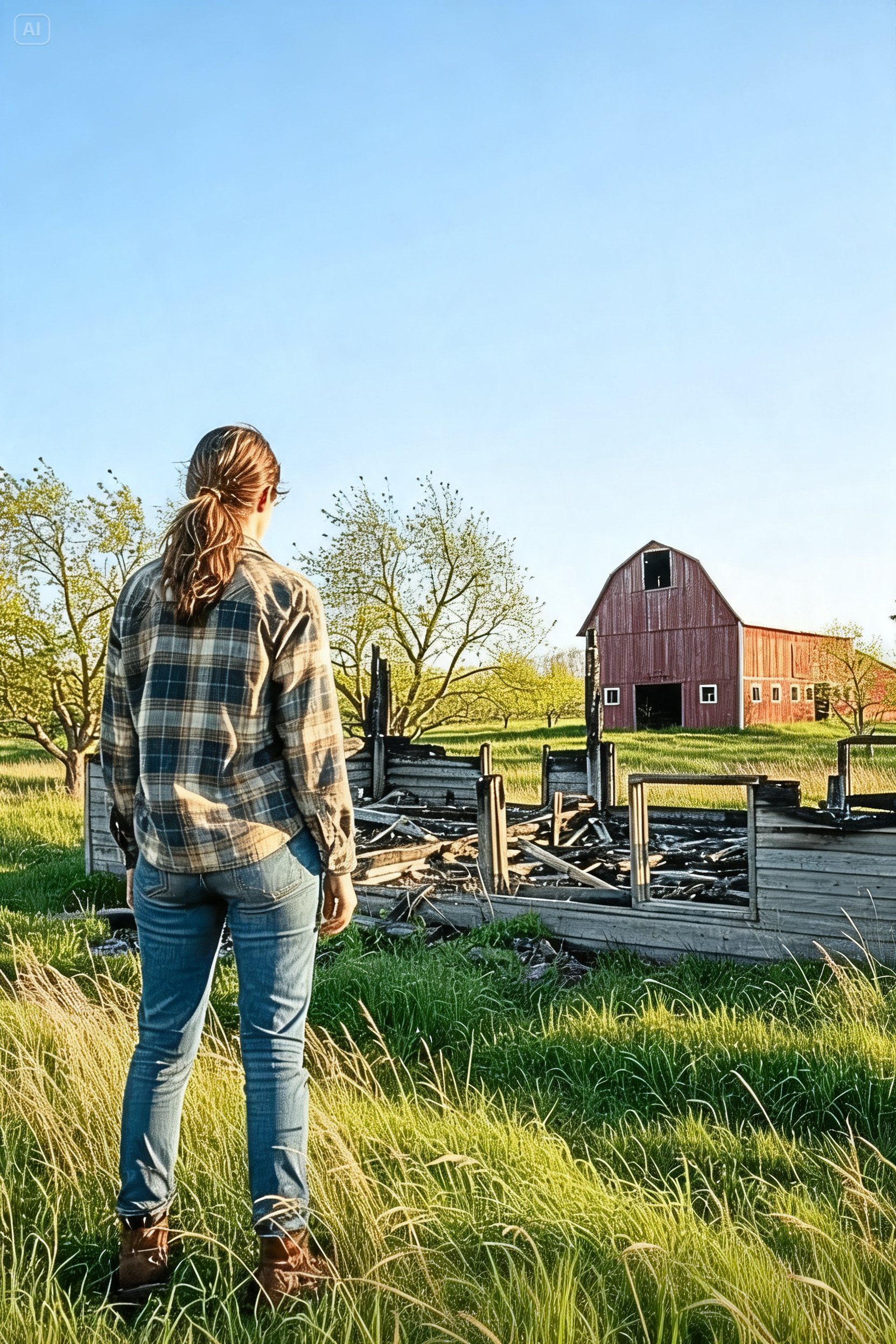
I spent my last $725 on a drive-in theater everyone called worthless. Then an old dog led me to a hidden collection of films, and the man who arrived to stop me knew exactly what we had found….
The auctioneer looked straight at me when I raised my hand. “Ma’am, that drive-in has been closed for nineteen years. You’re buying yourself a whole lot of trouble.” He probably thought I would lower my arm. Instead, I held it steady until the auction ended and Starlight Haven belonged to me for $725.
My name is Tamsin Calder. I was thirty-two, unemployed, and living in a rented room over a hardware store outside Asheville, North Carolina. A textile mill had closed that spring, taking my paycheck with it, and my landlord wanted the room back. When I counted my money after the auction, I had seventy-three dollars left.
I know how that sounds. Seventeen acres of weeds and broken pavement were no substitute for a job or a place to sleep. But there was one summer night I had never stopped remembering: my mother holding me beneath a huge outdoor movie screen, wrapping a blue scarf around my shoulders while a film played above us.
Mama died when I was four. My father vanished not long afterward, and by eighteen I had lived in seven foster homes. Some people treated me gently; others made it clear I was passing through. At eleven, I spent three weeks in a new bedroom without opening my suitcase. When the woman there asked why, I told her, “Last time I unpacked, they sent me away.”
At thirty-two, I still kept most of my life inside two battered suitcases. There were clothes, a chipped coffee mug, and the blue scarf I had protected for twenty-eight years. I had forgotten the sound of Mama’s voice and was frightened I might someday forget her face. The memory of that movie screen was one thing I still trusted.
The day after the auction, I drove out to Starlight Haven. The screen towered over rusted speaker poles and waist-high weeds, and the ticket booth looked ready to fall over. Broken glass glittered near the concession building. I stood beneath the screen with Mama’s scarf pressed to my cheek and whispered, “I found it.”
Something moved behind the ticket booth. An elderly golden retriever came toward me with a gray muzzle and the careful steps of a dog whose joints had seen better days. I gave him the last piece of bread from my lunch. He ate it gently, then rested his heavy head against my knee as if we had known each other for years.
“You lost your people, too?” I asked. I was only half joking. When I got up to explore, he caught the hem of my jacket between his teeth and pulled me toward a boarded-up building beneath the screen. He stopped at a wooden door, scratched it, and whined. From inside came a faint scraping sound.
The padlock was orange with rust. I found an iron bar under a fallen speaker pole and worked at the lock for nearly twenty minutes, scraping both knuckles before it broke. When the door swung open, dust rolled into the daylight. The room held collapsed folding chairs, damp cardboard boxes, and an old projector beneath a canvas cover.
“Well, we found somebody’s forgotten junk,” I told the dog. “What should I call you?” Before I could invent a name, a voice behind me said, “Chester.” I turned so fast I nearly tripped over a chair. An elderly man stood in the doorway, leaning on a wooden cane.
He introduced himself as Morris Keen, eighty-one years old and once the projectionist at Starlight Haven. Chester, he explained, had visited the grounds every day since his owner died. Morris had worked there long enough to remember when the projector was bought in 1974. He touched its dusty housing the way someone might touch an old friend’s shoulder.
“Judson Whitlock built this place in 1968,” he told me. “Named it for his wife, Maribel. She loved the stars.” He remembered her sitting in the last row on Saturday nights, more interested in being near Judson than in whatever movie was showing. When I asked what happened to them, Morris looked down at his cane and said, “Life happened.”
Chester interrupted us by squeezing behind a stack of crates. He scratched so hard at the wall that Morris and I finally shifted the crates aside. A tall wooden cabinet stood behind them, its doors swollen with age. Inside were metal film canisters, dozens of them, carefully stacked where the roof had kept them dry.
I read the labels aloud: “Summer Nights, 1978.” “Maribel’s Birthday.” Morris picked up a smaller canister from a lower shelf and went quiet. In faded blue ink, its lid said, “For the ones who come back.” His hand began to tremble, and he sat down on a crate.
“Judson said he’d made something special,” Morris told me. “Said I’d understand when the right person found it.” I asked whether the reels might be valuable. He shrugged and said old memories sometimes mattered more than money. Then he noticed the faded blue scarf in my hand and asked to see it.
He rubbed the fabric between his fingers, studying the weave. “Miss Calder, did your mother ever bring you here?” I told him I remembered one visit, though I could not be certain there had not been others. He said he might remember her. For a moment I could not speak; I had spent nearly three decades wishing someone could tell me more about Mama.
Morris glanced toward the projector. “If those films are what I think they are, maybe we can find out.” I reached toward the canister, but he stopped me with a light touch. “You ought to know Judson didn’t walk away from this place because he stopped loving it,” he said. “Someone he loved needed saving.”
Before I could ask what he meant, a car door slammed outside. A tall man in polished shoes came through the weeds, looking furious at the open storage door. Morris’s face drained of color. “Duncan Whitlock,” he whispered. “Judson’s nephew.”
Duncan was fifty-eight, with close-cut gray hair and a voice that carried across the empty lot. He wanted to know who had given us permission to enter. I told him I had bought the property at the county auction the day before and had the deed. He gave a hard laugh and said I had wasted my money.
Then he saw the metal canister in Morris’s hands. His expression changed so suddenly that I noticed it before he spoke. “Where did you get that?” he demanded. Morris said we had found it in the storage room. Duncan took a step forward and said, “Put it back.”
I had been told where I did and did not belong my entire life. I was not about to surrender the first place I had chosen for myself. “Why?” I asked, standing between him and the open doorway. Duncan stared at the canister, then at me, and said, “Because some things in this family were never meant for strangers.” Part 2…..
Morris stepped out of the doorway and greeted Duncan by name. Duncan barely acknowledged him. He said Starlight Haven had belonged to the Whitlocks long before I arrived, and he looked as though he expected me to apologize for buying it. I told him I had the deed and access to an attorney if I needed one, though in truth I could barely afford groceries.
“My uncle spent his life chasing this place,” Duncan said. “When his own family needed him, he chose a movie screen instead.” Morris tried to answer, but Duncan cut him off. “I was there.” Then he told me I would be hearing from his lawyer, turned on his heel, and walked back through the weeds to his car.
Only after he drove away did Morris sit down. He told me Duncan had carried that anger for almost forty years, but he would not explain everything yet. Instead, he asked if I wanted to see whether the projector still worked. I swept the floor while he cleaned its wheels and checked the film path with hands that remembered their work even when they shook.
Two hours later, the machine gave a low hum. A narrow beam struck a bare wall, and the first flickering pictures showed Starlight Haven in its better days. Children ran between cars; couples waved toward the camera. Morris pointed out Judson beside a woman in a yellow sundress. That was Maribel, smiling as though she did not know the camera was there.
Then the film jumped to another summer evening. A young woman sat on a blanket with a little girl, pulled a blue scarf from a basket, and wrapped it around the child’s shoulders. I recognized the scarf before I recognized either face. The girl turned toward the camera, showing dark curls, a missing front tooth, and a tiny scar above her left eyebrow.
My fingers went to the same scar on my own face. “Morris, that’s me,” I managed. The woman scooped the child into her arms and kissed her forehead. “That’s my mama.” I stepped closer until the light crossed my hands. I had spent twenty-eight years trying to remember her smile, and suddenly it was right in front of me.
Chester settled against my leg while the film ran out. Morris quietly lifted the empty canister and heard something rattling inside the lid. Beneath the lining was a folded strip of paper, written in Judson’s hand. It said the memories had survived, and that what he had saved for the future was hidden where he and Maribel watched their last sunset. Below was a drawing of the drive-in screen and the number 635,000.
I asked Morris whether he understood the number. He did not, but he remembered Judson taking Maribel behind the screen to watch the mountains at dusk. When she became too sick to walk far, Judson built a bench there so they could still sit together. We followed a narrow path through the tall weeds, with Chester leading us around the back of the screen.
The bench had rotted into a little platform covered with vines. Chester settled near a patch of wildflowers while I brushed leaves from the old boards. Underneath was a hatch with an iron handle almost hidden in the dirt. Morris helped me lift it, and we found a weatherproof metal box. I carried it into the fading light, hoping and fearing I might find another piece of my mother’s life.
There was no cash inside. We found letters, an old photograph of Judson and Maribel on their bench, financial documents, and a thick envelope addressed to whoever kept the lights burning. Morris read Judson’s letter aloud. Judson wrote about the families who had gathered at Starlight Haven, and how he had set money aside so someone might someday give the place a new beginning.
A statement in the envelope showed a trust with a last recorded balance of approximately $635,000. Morris reminded me that old paperwork did not mean we could simply spend the money; a lawyer and trustee would have to verify everything. I was holding the paper as carefully as the film itself. All I had wanted was a memory of Mama, and now I was looking at a possible way to save the whole theater.
But Judson’s letter held another story. He wrote that Duncan believed he had abandoned the family when an apple orchard was lost. Morris explained that Duncan’s father had owned the orchard and had been overwhelmed by debt. Judson had secretly sold some land, taken loans, and used his own savings trying to help, but the orchard was lost anyway. Duncan’s father had never told his son where the help came from.
Several yellowed receipts and letters from an attorney appeared to support Morris’s account. We could not know what they proved until someone checked them, but they made me think about the bitterness I had seen on Duncan’s face. I knew what it was like to believe you had been abandoned. “We need to tell him,” I said. Morris warned me Duncan might refuse to listen. “Then we’ll try again,” I answered.
My phone rang before we left the screen. A man speaking for Duncan offered me $92,000 for the property and said Duncan intended to challenge the auction if I refused. I looked at the weed-filled parking lot, the bench where a husband had sat with his dying wife, and Chester asleep by Morris’s shoes. With seventy-three dollars to my name, I knew exactly what that offer could buy.
“No, thank you,” I said. The caller urged me to reconsider, but I ended the conversation. Morris reminded me that ninety-two thousand dollars could change my life. “Maybe it could,” I answered, folding Judson’s letter. “But I’m beginning to think a home isn’t always something somebody gives you. Sometimes it’s something people build together.” The following morning, a legal notice arrived at the theater.
Part 3 Duncan’s attorney challenged the county auction, claiming unresolved questions about the property’s ownership and Judson’s documents. The notice warned me not to make major changes while the dispute was pending. I sat outside the ticket booth reading it over and over, with Chester’s chin resting on my shoe. I had almost no money left, and a broken theater was now the subject of a legal fight.
“Trouble looks worse before breakfast,” a woman called from beside a faded red pickup. She was Wanda Hargrove, owner of the diner down the road, and she carried two paper bags and a thermos. When I tried to tell her I could not afford breakfast, she handed me a warm biscuit and said, “Did I ask you for money?” I ate on the concrete steps while she sat beside me.
Wanda had once come to the drive-in with her husband. He had proposed between two Chevrolets, dropped the ring into a bucket of popcorn, and spent several frantic minutes fishing it out. He had been gone eleven years, but she still wished she could sit beside him through one more terrible movie. “It isn’t just the screen,” she told me. “It’s who you remember sitting next to.”
I admitted I did not know how to save Starlight Haven. Wanda said I had never been required to do it alone. By lunchtime she had spoken to half the town; by afternoon three pickup trucks had pulled in with ladders and cleaning supplies. Earl, a retired electrician, insisted on inspecting the wiring before anyone touched a switch. Morris arrived with projector parts he had kept in his garage for nearly twenty years.
One volunteer remembered visiting with his father at six. A woman carrying paintbrushes said her parents had gone on their first date there. An older man brought a photograph of himself and his wife in the summer of 1982; she had died the previous Christmas. He hoped to see the screen light up once more. Nobody asked what I could pay them, and I had no answer when I asked why they came.
Wanda made sure we respected the legal notice. We could collect photographs, remove some loose debris where it was permitted, and plan, but not begin structural repairs or hold public screenings until the lawyers and safety professionals cleared the way. The volunteers found work they could do without risking anyone’s safety. For the first time I could remember, help did not come with a demand that I repay it immediately.
Morris brought over a folder of old pictures. I saw birthday parties, church gatherings, and young couples in folding chairs beneath the stars. The final photograph showed a teenage Duncan smiling beside Uncle Judson. I studied it for a long time. That boy had once been happy at Starlight Haven, and whatever had happened later had changed the way he remembered it.
A local reporter came to the diner the next morning. She asked what I wanted to say to Duncan. My hands shook around the microphone, but I looked at the camera and told him I understood he believed the theater had cost his family something. I said I had discovered something there that I thought was lost forever, and I believed Judson had left something for him, too. I asked him to come see it.
The interview aired that evening. Later I learned Duncan had watched it alone, holding an old photograph of himself with Judson. At the time, all I knew was that I had spoken my piece and did not know whether it would make things better or worse. The next morning, someone left an envelope under my windshield wiper with a twenty-dollar bill inside.
The note said the writer and his wife had shared their first kiss at Starlight Haven in 1976. She had died, and he wanted the old lights to shine again. I sat behind the steering wheel with that small gift in my lap. Twenty dollars would not fix a projector or support a screen, but a stranger had trusted me to keep trying.
A few days later, a young woman appeared at the concession stand while I was sweeping. Her name was Sadie Bloom; she was twenty and had recently aged out of foster care. Wanda had mentioned we might need help. Sadie could sweep, and she was willing to learn to paint, so I handed her a broom. Then she admitted she had been sleeping on a friend’s couch and would have to leave the following week.
I remembered being twenty with two bags of clothes and nowhere certain to sleep. I told Sadie I could not promise much pay yet, only work and the lunch Wanda always brought in generous portions. I also promised to ask around about a safe place to stay. When Sadie asked why I would do that for someone I barely knew, I told her, “Because I know what it feels like to need somebody.”
Wanda had an upstairs guest room that had been empty since her granddaughter moved away. Three days later, Sadie moved in. I was there when Wanda placed a brass house key in her palm. Sadie stared at it, then said no one had ever given her a key she was allowed to keep. Wanda hugged her and told her it was hers. That moment stayed with me longer than any speech could have.
On Friday, Duncan walked into the diner carrying a newspaper with my photograph on its front page. He said I had turned his family’s pain into a town-wide spectacle. I told him I was sorry he felt embarrassed, then placed the photograph of him and Judson on the table. Beside it, I laid copies of the letters and financial records Morris and I had found.
Duncan looked from the picture to the receipts. He said his father had always told him Judson refused to help with the orchard. I said the papers suggested something different and invited him to have his own attorney examine them. As he turned the pages, his hands shook. I did not ask him to forgive anybody. I only asked him to consider that he might not have been told the whole story.
At the door he turned back and asked why I would help him after he had threatened to take the theater. “Because I know what it feels like to believe someone you love walked away,” I said. He left without answering. That night Sadie hung a handmade sign in the concession stand: “Welcome home.” I stood looking at it while Morris and Wanda arrived with supper, unaware that Duncan was already taking those papers to his attorney.
Part 4 Three days after that visit, my phone rang while I was sitting on the ticket booth steps. It was Duncan. His voice sounded so different that I barely recognized it. “Miss Calder, I owe you an apology,” he said. His attorney had examined the old records, and they supported what Morris had told us: Judson really had tried to save the orchard.
Duncan explained that his uncle had sold his best piece of land, borrowed against Starlight Haven, and emptied his savings to help his brother. The orchard had been lost despite those efforts. Duncan’s father knew exactly where the money came from, but he was ashamed to admit his brother had sacrificed so much and still could not save the family business. He let his son believe Judson had done nothing.
Duncan had also found a letter Judson wrote to his father. In it, Judson asked that Duncan not be burdened with guilt about the orchard. He wanted his nephew to remember the good summers, because Duncan had only been a boy. When Duncan told me this, I thought of the photograph of sixteen-year-old Duncan smiling beneath the screen. I told him those good summers had been real.
“I spent forty years hating a man who was trying to help us,” Duncan said. Then he told me he was withdrawing his legal challenge. The property would remain mine. His attorney believed Judson’s trust could be used for the theater’s restoration, subject to finishing the legal paperwork and contacting the trustee. Duncan offered to help us through those steps rather than fighting them.
I thanked him. He said the thanks should go the other way, because I had brought him facts he had been too angry to seek. Just before hanging up, he asked whether there might be room for an old fool at our first movie night. I told him there was room for everybody. When I ended the call, Chester was asleep against the booth and I sat there for a while, listening to the wind in the grass.
Once the remaining approvals and trust arrangements were confirmed, work could finally begin in earnest. Licensed crews inspected and repaired the electrical system, reinforced the screen supports, and made the grounds safe for visitors. We did not pretend that volunteers could substitute for qualified workers on dangerous jobs. The funds Judson had left were not enough to make everything new, but they were enough to reopen Starlight Haven responsibly.
The town filled in the spaces money could not. Earl brought tools and practical advice. Local businesses donated paint and supplies, while Wanda organized meals and made sure the volunteers took breaks. Morris sorted through film reels, cleaned old equipment, and taught Sadie how to handle it carefully. Chester found a shady place near every work crew and watched us as though he were the foreman.
I painted railings, answered calls, carried supplies, and learned the names of people who had lived just down the road all these years. Sometimes someone offered to do a job I thought I should do myself, and I felt my old instinct to refuse. Then I looked at the work still ahead and accepted. We were building something no single person could have managed, and I was beginning to understand that was the point.
Sadie changed in small ways that were easy to miss unless you watched. She laughed more readily, asked questions about the projector, and started talking about things she might learn next year. Wanda’s guest-room key stayed tucked safely in her pocket. I never forgot the frightened young woman who had arrived with a worn backpack, but I was glad to see she was beginning to make plans beyond the next place she could sleep.
We set a Saturday opening for the first public movie night in nineteen years. Morris worked with Judson’s surviving home-movie collection to prepare a short program he called “Summer Memories” to show before the feature. He knew I wanted to see Mama again. I asked if she would appear on the big screen, and he told me she would, just for a moment.
On opening day, I arrived early and stood where I had stood after the auction. The screen was secure, the grounds had been cleared, and the ticket booth no longer looked forgotten. Yet the mountains beyond it were exactly as I remembered. I pulled Mama’s scarf around my shoulders and waited for the first car, wondering whether the town would turn up the way everyone promised.
It came before sunset, followed by another and another. Old pickup trucks rolled in beside family sedans and minivans full of children. Some people carried lawn chairs; others brought old photographs of relatives who had once watched movies here. When the sky began to darken, more than 230 vehicles had gathered beneath the screen. Wanda came to stand beside me and smiled without saying a word.
A boy leaned out of a car window and asked whether a movie could really play at a place this old. “Especially at a place this old,” I told him. Near the concession stand, Sadie handed out popcorn in her Starlight Haven name tag, smiling at every customer. Morris arrived in a freshly pressed shirt with a metal film canister under his arm and quietly asked if I was ready.
I looked at the label, “Summer Memories,” then at the full parking lot. The old building had been dark so long that I had almost forgotten it could hold the sound of other people’s laughter. I nodded to Morris, walked to the little platform beside the screen, and took the microphone. My hands were shaking again, but this time I had friends standing close enough to see.
Final I thanked everyone for coming, though the words seemed too small. I told them that when I bought Starlight Haven, I believed I was buying the last place I could remember being happy with my mother. I had never imagined that strangers would show up with biscuits, ladders, photographs, and their own memories, or that they would stay when there was hard work to do.
“For most of my life,” I said into the microphone, “I’ve wondered where I belong. Tonight, I think I finally know.” I looked toward Wanda, Morris, and Sadie and saw them watching me from beside the booth. The crowd applauded, and I held the microphone against my chest until I could speak again.
Then Duncan stepped out from among the cars with a small framed photograph of Judson and Maribel. He asked whether we could put it somewhere people would see it. I told him I would be honored. He looked at the screen and said his uncle had loved this place, and that he was grateful somebody had remembered. Morris placed a hand on Duncan’s shoulder and said, “Welcome back.”
When the projector started, faces from long-ago summers filled the great screen: parents in their folding chairs, children waving from car windows, people who had once made an ordinary Saturday night into a memory worth keeping. Some viewers pointed out relatives. Others simply watched. I stood between Wanda and Sadie with Chester resting at our feet, waiting for the moment Morris had promised.
And then Mama appeared. She knelt beside a little girl with dark curls and wrapped a faded blue scarf around her shoulders. I lifted that same scarf and held it against my heart. I could not hear Mama’s voice or ask her the questions I had carried since childhood, but I could see the way she looked at me. I whispered, “I think you’d like them, Mama.”
When the home movies ended, people rose to their feet. The screen was not new, and the old projector had its quirks, but the pictures had given us back faces and moments we thought were gone. The feature film followed, and for one evening Starlight Haven was once again filled with families watching a movie together beneath the mountains.
After the last car left, Sadie helped me shut the concession stand. Wanda washed coffee cups inside, and Morris put away his equipment. The lights were still glowing when Sadie asked what would happen after everything was fixed. “What if you don’t need me anymore?” she said. I knew that question; I had spent years afraid to ask it myself.
I took her hands. “Sadie, you don’t have to earn your place here.” She looked at the floor and asked what would happen if she had nowhere else to go. I pulled her close and told her, “Then you stay. That’s what home is for.” She held on, and I did not hurry to let go.
The next time I looked outside, the Starlight Haven sign was shining against the mountain sky. Duncan had made peace with the truth about Judson. Morris had returned to the work he loved, Wanda had made room for someone who needed it, and Sadie had a key she could keep. I still missed my mother, and I always would, but I no longer stood beneath that screen alone.
For twenty-eight years, I had believed home was a door someone else might close on me. Now I knew it could also be the door we opened for each other. We could not bring back everyone we had lost, but we could remember their love by giving someone else a safe place to land. Starlight Haven had its lights back, and so, in a way I never expected, did I.
THE END. I’ve shared the complete story, and I truly hope it touched your heart. If this story moved you, please , like, and share the post. Thank you for reading! ❤️
✓ Lynn R. Adams
I spent my last $725 on a drive-in theater everyone called worthless. Then an old dog led me to a hidden collection of films, and the man who arrived to stop me knew exactly what we had found…. The a…