I spent four years working brutal shifts in a freezing Canadian factory, sending
Part 2: Fake messages and stolen money expose my family’s calculated cruelty
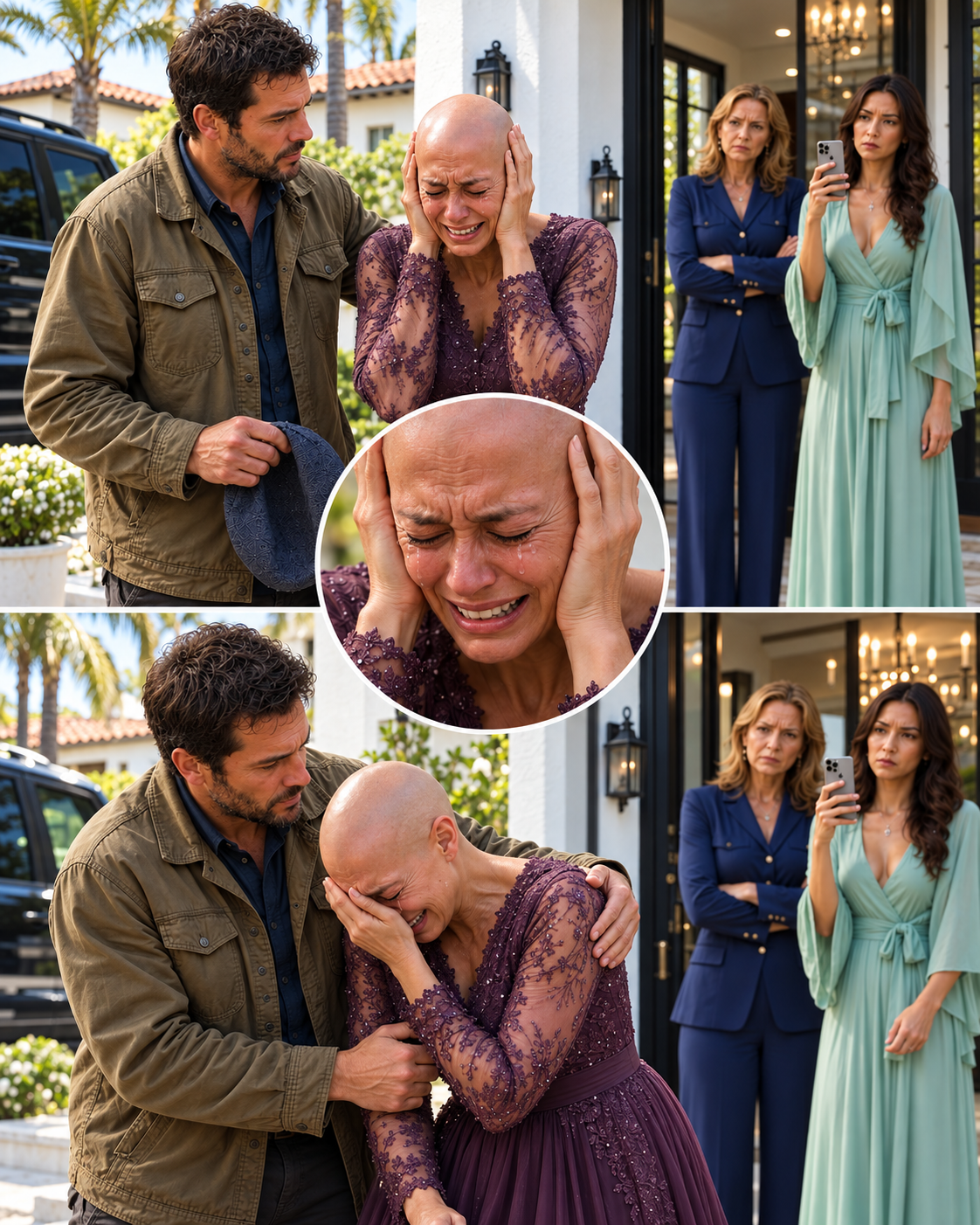
Gwen sat on the narrow mattress with a blanket wrapped around her shoulders, staring at the floor as she explained that she had hidden her diagnosis because Margaret warned her that I would abandon her if I learned how much medical care she needed. Five months earlier she had discovered a lump, and after struggling to schedule an appointment she had asked my mother for three hundred dollars to cover transportation and an urgent specialist visit. Margaret accused her of trying to steal money intended for the family home, while Paige suggested that Gwen should sell her long hair if she was so desperate for cash. She actually did it, walking into a salon and leaving without the dark brown hair I had loved brushing away from her face, receiving one hundred and fifty dollars that covered only a fraction of her medical expenses. I held her trembling hands and realized I had spent four years imagining myself protecting my wife through financial sacrifice while the very people receiving that money were teaching her that her survival was an inconvenience.
Before dawn, Gwen reached beneath her mattress and handed me an old phone with a cracked screen, explaining that Paige had taken control of her usual phone and monitored much of her communication. The device contained messages supposedly sent from my number, telling Gwen to stop asking for financial assistance, accusing her of wasting my earnings, and threatening divorce if she continued behaving like a burden. I knew those messages were fabricated because they used expressions I had never used, referred to my mother by her full name, and appeared at times when I was working shifts without telephone access. There were also recordings of Margaret insulting Gwen, Paige threatening to throw her out, and one particularly horrifying conversation in which my mother suggested that Gwen’s problems might eventually disappear without anyone having to intervene. The next recording contained Gwen begging for help after a medical appointment, followed by Margaret dismissing her symptoms and warning her that nobody would believe an unstable woman over the people providing her shelter.
I contacted Daniel Mercer, an attorney I had quietly consulted several weeks earlier after noticing discrepancies in documents connected to the house, and told him we needed to move much faster than originally planned. He had already identified suspicious signatures on a vehicle loan and property-related forms, and his preliminary inquiries suggested that credit had been opened in my name without authorization. Daniel arranged for an independent review of the available records and prepared lawful disclosure and authorization documents that Margaret and Paige could choose to sign, while I continued pretending that my imaginary compensation package was on the verge of being released. At breakfast I explained that the settlement company required a complete accounting of property, household contributions, outstanding loans, and assets associated with my identity before determining the final payment. Margaret offered to manage the entire process, Paige suggested that a new trust could make everyone wealthy, and I watched them become increasingly enthusiastic about financial transparency because they believed transparency was merely the road leading to another fortune.
Daniel arrived that afternoon and carefully explained every document, making it clear that signing authorized review of specified records but did not guarantee any payment or protect anyone who had misrepresented financial information. Margaret asked repeatedly whether completing the process would speed up my supposed settlement, and I answered that unresolved financial disputes could certainly complicate any future claim. Both women signed the disclosures, apparently confident that the facts would never become more important than the story they had spent years telling me. Less than three hours later, Gwen collapsed while trying to stand, and I carried her to my car before either woman could insist that she was pretending to be sick. Doctors confirmed that she was seriously dehydrated and malnourished, required urgent cancer care, and had gone far too long without adequate medical support.
While Gwen was admitted, Daniel called to say the available financial records indicated unauthorized loans approaching eighty-five thousand dollars and extensive transfers into accounts I had never approved. The beautiful house was heavily mortgaged, the vehicles were financed, and much of the apparent wealth surrounding my mother and sister was built on debt and money I had entrusted to them. When Margaret called demanding to know why financial institutions were questioning transactions, I told her the review had uncovered discrepancies that would have to be resolved independently of the nonexistent settlement. She responded by claiming that Gwen had manipulated me, then hissed that I knew nothing about my wife’s real past. Minutes later, Gwen’s physician, Dr. Elena Ruiz, informed me that someone appeared to have improperly altered portions of Gwen’s medical record using credentials associated with a former hospital administrator named Evelyn Cross.
Part 3: An altered cancer diagnosis uncovers the secret beneath our identities
When I repeated Evelyn Cross’s name to my mother over the telephone, the line went silent long enough for me to hear her breathing, and then she demanded to know who had given me that information. I told her it had come from the hospital, asked whether she knew Evelyn, and listened as Margaret claimed the name meant nothing before hanging up without another word. Paige provided the answer several hours later when she called from the house sounding frightened and confessed that Evelyn was our mother’s younger sister, a former medical administrator whom the family had always claimed had moved out of state. According to Paige, Evelyn had actually been living in an apartment above an abandoned pharmacy, occasionally visiting Margaret after dark and discussing matters Paige had been warned never to repeat. Before she could explain further, I heard something crash in the background, followed by her terrified whisper that somebody had entered the house.
I called the police immediately, and officers discovered Paige tied to a chair in the basement, frightened but alive, while several drawers had been overturned and a family photograph album lay open on the floor. Inside the album was an old photograph showing Margaret, Evelyn, and a young woman standing beside a weathered farmhouse, and the third woman bore an astonishing resemblance to Gwen despite the photograph being more than twenty years old. Hidden behind it was a damaged birth certificate identifying a girl named Anna Rose Bell, and when I showed Gwen a photograph of the document, her expression changed so completely that I understood another part of our marriage had been built around a secret. She admitted that Anna Rose Bell had once been her name, and that she had changed it after fleeing a dangerous family situation when she was seventeen. She had never told me the full story because she believed the people involved were either dead, imprisoned, or permanently beyond her reach.
Evelyn eventually agreed to meet with investigators and described Gwen’s father, Victor Bell, as a sophisticated fraudster who had used illegal lending arrangements, forged ownership documents, and intimidation to seize property from vulnerable families. Gwen had discovered evidence of his crimes as a teenager and attempted to deliver it to a federal investigator named Samuel Hart, only for the documents to disappear and threats against her to become so serious that she fled under a different identity. Margaret had known about Gwen’s past before our marriage, but instead of warning me or protecting her, she used the information to isolate Gwen and convince her that exposure would place us both in danger. Then Evelyn revealed that Margaret herself had been living beneath the weight of an even older secret involving my birth, a farmhouse fire, and a woman named Rose Bell. Rose was my biological mother, Thomas Holloway was my biological father, and Margaret had taken me into her care when Victor threatened Rose’s family, initially promising that the separation would last only until the danger passed.
Temporary protection had become permanent possession, and Margaret eventually raised me as her own while allowing Thomas to believe that I had died during a farmhouse fire that also claimed Rose’s life. Gwen, known as Anna during childhood, had been raised within the extended Bell family and remembered Rose and a missing baby, but the records had been so distorted that she never connected the infant to the adult man she later married. Evelyn insisted that Gwen and I were not biological siblings, explaining that Anna’s connection to Victor’s family arose through an earlier marriage and guardianship arrangement, although investigators would still need to verify the relationships independently. The discovery left me sick with confusion, but the immediate danger became undeniable when Gwen received a message on her old phone addressed to Anna and warning her that she should have remained hidden. Security cameras captured an older man beneath a black umbrella outside the hospital, and Gwen identified him as Victor Bell.
That evening, authorities located the abandoned farmhouse mentioned in the photograph album after receiving information connected to Paige’s abduction, and investigators discovered evidence that Victor and Samuel Hart had recently used the property. Gwen disappeared during a confusing sequence of events involving a falsified medical transport request, and police began searching immediately while Daniel secured copies of everything already uncovered. By the time officers tracked the vehicle to the farmhouse, Victor had forced Gwen to reveal the location of a ledger Rose had hidden decades earlier, believing it contained the financial records that could destroy his network. The ledger was recovered during a dangerous confrontation in which fire damaged part of the building and Margaret was injured after appearing unexpectedly at the scene. Evelyn managed to secure the book before Victor could reclaim it, and the first pages contained enough names, account numbers, and property transfers to explain why multiple people had spent more than twenty years making certain my family never found the truth.
Part 4: A forgotten ledger destroys the empire built on our suffering
The ledger looked ordinary at first, a black notebook with a cracked spine and faded initials on the cover, but investigators quickly discovered that its handwritten entries connected Victor Bell to decades of fraudulent property transfers, hidden accounts, false identities, and payments made to people who were supposed to enforce the law. Several pages contained references to Samuel Hart, the federal investigator Gwen had trusted as a teenager, along with dates corresponding to investigations that had mysteriously collapsed before charges could be filed. Other entries documented vulnerable homeowners losing their property after signatures were forged, debts inflated, or payments deliberately misapplied, and I began to understand that what happened to my family was not an isolated tragedy but one small part of a much larger system. Margaret’s name appeared repeatedly, sometimes beside money paid to Victor and sometimes beside transfers from accounts funded by my Canadian wages. Her records did not erase what she had done to Gwen, but they suggested that fear of exposure and the desire to maintain control had become tangled together until Margaret could no longer distinguish protecting herself from protecting anyone else.
Investigators confirmed that Gwen’s medical records had been manipulated through unauthorized access, and Dr. Ruiz explained that some alarming information in the altered report overstated the severity of her cancer. The real diagnosis remained serious and required treatment, but the frightening prognosis Gwen had been shown was not a trustworthy representation of her condition. For months, she had believed her remaining time might be dangerously limited, and that fear had made Margaret’s threats even more effective because Gwen assumed she was running out of opportunities to escape. The truth did not instantly make her healthy, and her physicians refused to promise an easy recovery, but for the first time she could begin treatment with accurate information rather than deliberate deception. When I told her that the original records had been restored and reviewed, she cried harder than she had cried after learning about the unauthorized loans, because financial losses could be counted while stolen hope had no clear value.
Margaret was questioned by investigators after receiving medical attention for injuries sustained at the farmhouse, and gradually she admitted forging documents, misusing my money, interfering with Gwen’s access to financial support, and participating in efforts to hide her real background. She insisted that she had feared Victor would discover where I lived and harm me if she stopped cooperating, but she could not explain why that danger required luxury purchases, a new truck, and the deliberate humiliation of a seriously ill woman. Gwen listened to portions of the confession later and said that Margaret could describe her motives however she wanted, but nobody gained the right to steal another person’s choices merely by calling the theft protection. Paige cooperated with investigators after learning how deeply the financial deception extended, surrendered records of the purchases she had made, and admitted that she had helped isolate Gwen because she believed Margaret’s version of events. I could not forgive Paige immediately, and I refused to comfort her simply because the consequences of her own behavior had finally frightened her.
As the investigation widened, Evelyn revealed that Margaret had hidden a letter Rose wrote before the farmhouse fire, addressed to Thomas Holloway and containing instructions to visit an orchard where a white fence met the river. The letter confirmed that Rose believed her infant son had survived and that she desperately wanted Thomas to know the truth, but Margaret had never delivered it. Daniel located Thomas through property records and confirmed that he still owned an orchard several hours from Springfield, although I refused to approach him until Gwen was strong enough to make the journey with me. Months later, after treatment had improved her condition, we drove along a narrow country road lined with apple trees and stopped outside a modest farmhouse where an older man stood watering flowers beside the porch. When I introduced myself, Thomas dropped the cup in his hand and stared at me with an expression I had never seen before, a mixture of grief, disbelief, and a hope he had apparently spent decades trying to extinguish.
He embraced me before either of us found the right words, then carried boxes from a storage room filled with photographs, unanswered letters, investigator reports, and records from a search that had continued long after everyone else told him to accept my death. Thomas had never stopped looking for the child he lost, and he showed me a trust he had established years earlier containing nearly two million dollars, explaining that the money was never intended to purchase my affection but to remain available if I survived and someday found him. I thought about Margaret treating money as a leash and realized Thomas was offering it as a choice, without demanding obedience, forgiveness, or even another visit. Near the white fence, we followed Rose’s directions to a stone marker and uncovered a sealed metal container holding an old recording. On the screen appeared a young woman holding a baby while a little girl sat beside her, and as Rose looked into the camera, I saw the face of the mother I had never been allowed to remember.
Part 5: My mother’s final recording reveals what our family truly lost
Rose’s voice shook as she spoke into the camera, but her words were steady enough to reach across more than two decades and break the silence that had protected Victor’s crimes. She explained that she had discovered documents connecting him to stolen homes, manipulated debts, and government officials willing to exchange their authority for money, and that Samuel Hart had betrayed her after pretending to help. She said Thomas had tried repeatedly to protect the children and had never willingly abandoned his family, but the people surrounding Victor were powerful enough to make ordinary escape seem impossible. Then she looked down at the baby in her arms, glanced at the girl sitting beside her, and said that if her children ever watched the recording, she hoped they would understand that survival was only the beginning of life rather than its entire purpose. Gwen reached for my hand, and I realized Rose had left behind more than evidence; she had left a message for people she feared might grow up believing fear, silence, and control were the natural price of belonging.
The recording helped investigators establish a clearer timeline of the old conspiracy, while the ledger and supporting documents became central to prosecutions involving Victor’s property fraud network. Samuel eventually agreed to cooperate, providing information about officials who had helped derail investigations and confirming that evidence Gwen attempted to submit as a teenager had been deliberately suppressed. Victor’s attorneys challenged the records, attacked witness credibility, and argued that decades-old documents could no longer be trusted, but investigators had recovered enough independent financial and property evidence to support significant charges. Gwen testified about childhood intimidation, her attempt to report Victor, the years spent hiding, and the later medical and financial abuse she endured after marrying me. When Victor suggested that her testimony represented another betrayal of family, she looked directly at him and said, “The only thing I betrayed was the silence you needed me to keep.”
Margaret pleaded guilty to multiple offenses connected to financial fraud, forged documents, and her interference with Gwen’s care, receiving a custodial sentence and restitution obligations that would take years to resolve. Paige received a less severe outcome after extensive cooperation, surrendering assets and accepting supervised community service and repayment requirements. The house behind the gold gate was eventually sold, and the proceeds became part of the complicated process of satisfying legitimate debts and compensating victims rather than financing another display of family wealth. I recovered only part of what I had earned in Canada, but the first time Daniel explained the probable total I discovered that losing the money hurt less than remembering Gwen kneeling beside the dirty basin. I could work again, earn again, and build another house, but no amount of recovered cash could give her back the months she spent believing that medical care was something she had to deserve.
During Gwen’s treatment, we began planning an organization designed to help people who had become trapped through financial dependency, medical manipulation, identity fraud, and coercive family arrangements. We called it the Rose Project, and its earliest services focused on connecting vulnerable people with legitimate legal assistance, medical advocates, emergency financial support, and practical help securing personal documents. Gwen insisted that the organization should never become a monument to our suffering, because she had spent enough years being defined by what other people did to her. She wanted people to enter the building and hear questions about what they needed next, not demands to recount their worst experiences before being considered worthy of help. I agreed, and together we began building the kind of support system that might have changed everything if Gwen had found it when she first discovered the lump.
Months later, Gwen’s condition had improved enough that she began laughing again, usually at my expense when I tried to cook dinner without setting off the smoke detector. Her hair returned slowly, growing in uneven patches that she alternately celebrated and complained about, while Thomas visited whenever we invited him and carefully respected the fact that twenty-three lost years could not be replaced by sudden closeness. One evening beneath the orchard trees, Gwen told me she had received unexpected news from her doctors and wanted me to sit down before hearing it. After appropriate medical discussions and careful monitoring, we had learned she was pregnant, something neither of us had dared imagine during the worst months of her illness. I placed my hand over hers and cried, not because the past had disappeared but because the future had suddenly become larger than the people who had tried to steal it.
Part 6: Victor’s final threat forces our family to confront the past
For several months, life became almost peaceful, and I learned that peace could feel suspicious when a person had spent too long waiting for disaster. Gwen attended appointments, we arranged a small nursery in the farmhouse near Thomas’s orchard, and the Rose Project hired its first permanent case manager after receiving support from local donors. Paige worked through her court-ordered obligations and occasionally asked whether she could help with administrative tasks, although Gwen made it clear that rebuilding trust required consistency rather than one dramatic apology. Margaret remained incarcerated, sending letters that alternated between remorse and attempts to justify her choices, and I read only those I felt prepared to receive. Then Daniel called one afternoon with news that Victor had escaped during a prisoner transport incident, and the fragile sense of safety I had begun cultivating shattered before he finished speaking.
Law enforcement warned us to remain vigilant, and officers reviewed security around the orchard while investigators attempted to establish whether anyone had assisted Victor. Three days later a package arrived containing one of Margaret’s gold necklaces, followed by confirmation that she had disappeared during a medical transport under circumstances suggesting Victor had orchestrated her abduction. I did not know whether he wanted money, retaliation, or access to evidence that might strengthen his chances of escaping the remaining charges, but his message arrived that evening with a familiar cruelty. He instructed me to come to the orchard barn at midnight and bring the final copy of Rose’s recording, warning that Thomas would pay for Rose’s decisions if I refused. I showed everything to investigators, rejected the idea of responding alone, and agreed to cooperate with a carefully planned operation intended to secure Margaret’s release without giving Victor another opportunity to hurt anyone.
Detective Foster placed officers around the property while Thomas remained under protection and Gwen stayed inside the farmhouse, furious that everyone instinctively spoke about her as though she were still the frightened girl Victor remembered. She reminded me that surviving abuse did not make her incapable of making decisions, and I apologized for allowing fear to turn into the same controlling language I had spent months condemning. We agreed that she would remain informed and follow the safety plan rather than being shut out of every decision involving her own past. At midnight, with officers positioned nearby, I entered the barn carrying an item prepared for the operation and found Victor standing beside Margaret, who was bound to a chair with bruises across her face. He smiled as though we were attending a family reunion and told me that I had made the foolish mistake of confusing evidence with power.
Victor demanded the recording, then tried to destabilize me by revealing that Gwen had recognized the Holloway surname before our marriage and suspected it might connect me to the baby Rose had hidden. I knew she had remembered parts of her childhood only gradually, yet the suggestion that she might have withheld something important struck at wounds still healing from Margaret’s deception. Gwen later acknowledged that she had recognized the surname and wondered about its significance but had never possessed enough reliable information to identify me, and she admitted that fear of losing our relationship had influenced her silence. The truth hurt, but it was different from Victor’s manipulation because she accepted responsibility instead of claiming that affection gave her the right to decide what I should know. I told her that forgiveness would require more than one conversation, and she answered that she was prepared to have as many honest conversations as necessary.
Inside the barn, Victor’s effort to provoke me ended when he threatened Margaret and reached for a weapon, forcing the officers to intervene before anyone else could be seriously injured. In the confusion Margaret threw herself sideways, disrupting his movement long enough for investigators to enter, secure the firearm, and arrest him without allowing another hostage to be taken. Paige, who had remained with police during the operation, rushed forward only after the scene was declared safe, and I watched her embrace our mother while realizing that family affection could survive terrible knowledge without automatically restoring trust. Victor was returned to custody, eventually facing additional charges stemming from his escape and threats, and the surviving evidence remained secured in multiple locations beyond his reach. As dawn spread across the orchard, Gwen sat beside me on the porch steps and said she would understand if I needed time to rebuild trust after learning about the surname, and I answered that truth, even when painful, was the only foundation I was willing to build upon again.
Part 7: Our daughter arrives as the next generation inherits freedom instead
Our daughter was born the following year after a pregnancy monitored closely by Gwen’s medical team, and the first time I held her I discovered that every speech I had imagined delivering about fatherhood disappeared beneath the astonishing weight of a tiny sleeping person. We named her Rose Anna, honoring the woman who had tried to save her children and the girl Gwen had once been before fear forced her to abandon her name. Thomas cried when he entered the hospital room and saw his granddaughter, then apologized for crying until Gwen informed him that nobody in our family would ever again be required to apologize for having feelings. Rose Anna had dark eyes, a stubborn expression, and the peculiar ability to command an entire room simply by deciding she wanted someone to hold her. Our farmhouse soon filled with blankets, rattles, bottles, half-folded laundry, and the kind of cheerful disorder that would have horrified Margaret during the years she believed perfect appearances could conceal everything happening beneath them.
Gwen continued her medical follow-ups and eventually received reassuring results showing no evidence of active disease, although she understood that recovery required ongoing care rather than declaring the entire experience permanently behind her. She became more involved in the Rose Project, helping develop resources for people whose partners or relatives controlled their access to medical information, transportation, and money. During one presentation, a woman asked how Gwen had found the strength to survive everything, and Gwen answered that survival had never depended on becoming unusually strong. She said she survived partly because someone finally believed what she was saying, helped her reach qualified professionals, and stopped treating her needs as a moral failure. Several people approached her afterward, not because they wanted to hear about Victor Bell or our family’s unusual history, but because they recognized the quiet terror of depending on people who could punish them for asking for help.
Paige began volunteering at the Rose Project after completing the conditions that allowed her to participate, initially sorting files in a supervised administrative role and eventually helping organize donation records. She stopped wearing flashy jewelry, moved into a modest apartment, and took paid work that required showing up even when nobody praised her for ordinary responsibility. One Sunday she arrived at the orchard carrying groceries and spent the afternoon preparing meals for families receiving assistance through the project. Gwen watched her for a while before asking whether she understood why restitution and community service were not the same as forgiveness. Paige nodded and answered that she no longer expected people to reward her simply because she had stopped behaving cruelly, and I realized genuine change often sounded less dramatic than remorse.
Margaret wrote from prison as the years passed, sometimes apologizing with painful clarity and sometimes slipping back into language that blamed Victor, fear, or circumstances for choices she had made herself. I learned to recognize the difference without becoming responsible for teaching it to her, and my responses remained occasional, brief, and guided by the boundaries Gwen and I agreed upon. Thomas built a wooden swing beneath an apple tree for Rose Anna and spent afternoons showing her how to recognize different varieties of fruit, speaking gently about Rose without demanding that his granddaughter carry the emotional weight of a grandmother she would never meet. The orchard became the first place where I truly understood how ordinary family rituals could repair something without pretending the damage had never existed. We made pancakes on Sundays, argued about whose turn it was to wash bottles, and learned that love did not require dramatic proof every morning because it was already visible in the small things people consistently did.
One evening Thomas brought out another recording he had kept sealed for years, admitting that he had been afraid to watch because the first had already changed so much about his understanding of the past. We gathered around an old television after Rose Anna fell asleep, and Rose appeared on the screen holding baby Gavin while young Anna sat beside her. She spoke directly to the children, saying that family should never mean ownership and that the deepest form of protection was helping someone remain free even when their choices led them away from you. Thomas covered his face with both hands, Gwen leaned against my shoulder, and I understood that Rose had somehow recorded the lesson our family had taken decades of suffering to learn. When the screen went black, none of us spoke immediately, because for once silence did not conceal danger or manipulation; it simply gave us room to grieve someone whose love had survived the people determined to bury it.
Part 8: The final family photograph proves truth outlasts every stolen fortune
Years later, the story of my return from Canada remained popular around Springfield, although strangers usually remembered the parts involving extraordinary money, forged loans, criminal investigators, secret recordings, and a family mansion financed by deception. People occasionally introduced me as the man who tricked his greedy relatives with a six-hundred-thousand-dollar settlement, and I would smile politely while thinking about how little that imaginary fortune mattered compared with the sight of Gwen crouching beside dirty dishes. The settlement had never existed, and while I had used the possibility of a large payout to prompt my relatives to disclose financial information, the actual investigations depended on independently obtained records and evidence rather than any magical document that forced criminals to confess. I had once believed the most devastating revenge would involve recovering every dollar and watching Margaret lose the lifestyle she valued above everything else. What eventually mattered was that Gwen could see a doctor without begging, sign documents without fear, and live in a home where no one threatened to abandon her for needing support.
The mansion behind the gold-colored gate was sold, its debts settled as far as the available assets allowed, and the truck, jewelry, and expensive furnishings disappeared from our lives without leaving any meaningful emptiness behind. Thomas encouraged me to manage the trust he had created responsibly, and I used part of its resources to strengthen the Rose Project while keeping our household finances clear and independent. Over time the organization expanded into a permanent assistance center near the orchard, offering confidential referrals, document support, emergency grants, and partnerships with qualified professionals who understood financial exploitation and medical coercion. We called the building Rose House, and above its entrance Gwen chose a simple sentence that reflected everything she wished someone had told her during the months she spent sleeping in the storage room. No one should have to surrender their freedom to receive care.
Margaret eventually completed her sentence and moved into a small apartment, finding work at a community food pantry and beginning a life without the money and authority she had once used to control everyone around her. I visited her once after her release, sitting across from her at a plain kitchen table while she explained that she had spent years convincing herself that the threat Victor posed justified every decision she made. She said she understood now that her attempts to protect me had become possession, and her fear of losing control had transformed her into someone who stole from her son and denied care to a woman who desperately needed it. I told her I could acknowledge her remorse without pretending our relationship could return to what it had been, because forgiveness, reconciliation, and trust were separate choices that nobody could demand from another person. She accepted that answer, and when I left, I felt neither the satisfaction of victory nor the sharp pain of old anger, only the quiet relief of knowing I was no longer responsible for maintaining the version of family she preferred.
On Rose House’s opening anniversary, we gathered beneath the oldest apple tree for a family photograph, and for the first time I insisted that somebody else arrange the camera because I had spent far too many years being the person who worked, paid, documented, and stood outside the picture while everyone else occupied its center. Thomas stood beside me with one hand resting on my shoulder, Gwen held Rose Anna, Paige stood near the edge of the group, and Margaret joined us only after everyone agreed that a photograph did not erase the boundaries that still existed. Nobody wore expensive jewelry or posed before an elaborate gate, and the orchard behind us looked ordinary, with branches heavy from summer rain and a farmhouse badly needing fresh paint. The camera timer began flashing, Rose Anna laughed because Thomas made a ridiculous face, and I slipped my arm around Gwen just before the shutter clicked.
That evening, as the last guests departed and the orchard lights glowed between the branches, Rose Anna asked why we had named the assistance center after a woman she knew only from photographs and recordings. Gwen told her that Rose had wanted the people she loved to be safe, while I explained that bravery was not always winning a fight or earning enough money to make danger disappear. Sometimes it meant telling the truth when silence seemed easier, leaving a place that harmed you, or helping another person make choices you could not control. My daughter considered this seriously before asking whether Rose had eventually won, and I looked toward the house where Gwen was laughing with Thomas and thought about all the years Victor had stolen from us. “She won when the truth reached us,” I said, “and when we made sure it would never be buried again.”
Later, Gwen and I sat on the porch while Rose Anna slept upstairs, listening to the wind move through the apple trees and remembering the terrible afternoon I had returned home carrying a suitcase and believing expensive gates meant my sacrifices had finally paid off. I told Gwen that I used to think my duty as a husband was to earn enough money that nobody I loved would ever struggle, and she answered that money mattered, but safety also meant being believed, respected, and allowed to make decisions about your own life. She asked whether I was happy after everything we had endured, and I looked at the woman who once flinched when I approached her, now healthy enough to laugh, confident enough to disagree with me, and free enough to leave any room without asking permission. “Yes,” I told her, not because what happened had been necessary or somehow made us stronger, but because the people who tried to control our future no longer possessed it. Gwen leaned her head against my shoulder, and when I asked whether she was ready to go home, she smiled at the cottage, the orchard, and the quiet lights glowing in our daughter’s bedroom before whispering, “Gavin, we’re already home.”
✓ Lynn R. Adams
Part 2: Fake messages and stolen money expose my family’s calculated cruelty Gwen sat on the narrow mattress with a blanket wrapped around her shoulders, staring at the floor as she explained that sh…