I Paid $55,000 for a Dead Quarry—Then HOA Karen Learned Her $18 Million Villas Were Built on My 99-Year Lease
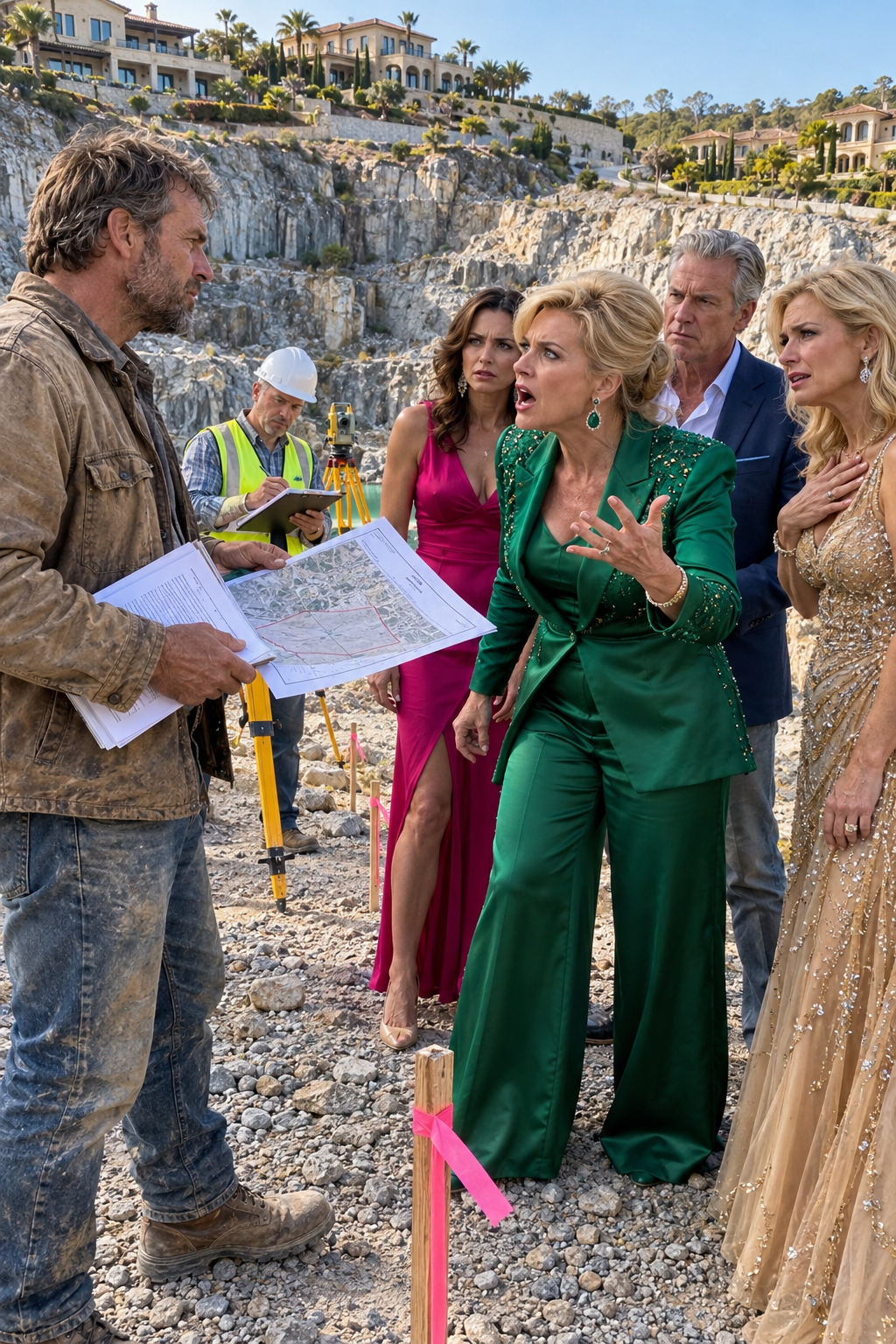
I Paid $55,000 for a Dead Quarry—Then HOA Karen Learned Her $18 Million Villas Were Built on My 99-Year Lease
Four days after we buried my father, my brother put my suitcase on the front porch and told me I had until sunset to disappear.
The woman standing beside him smiled before he finished.
“Don’t make this embarrassing, Rebecca,” she said. “You’ve already lived here longer than you were entitled to.”
Her name was Karen Whitfield.
President of the Stonehaven Reserve Homeowners Association.
Emerald-green blazer. Cream trousers. Gold watch. Perfect silver-blonde bob that didn’t move in the September wind.
Behind her sat a black Range Rover, still running, with a Stonehaven access sticker on the windshield.
Behind me was the farmhouse where I had spent fourteen years caring for my parents.
My mother had died in the downstairs bedroom.
My father had died eight months later in the same room.
I had cooked their meals.
Changed dressings.
Driven to oncology appointments.
Paid utility bills when Dad’s pension didn’t stretch far enough.
Taken unpaid leave.
Sold my little condo in Knoxville.
Missed promotions.
Missed vacations.
Missed the comfortable middle age everyone kept telling me I deserved.
My brother Ethan had visited six times in those fourteen years.
He had somehow found time to arrive for the reading of the will.
And now he had found time to throw me out.
“Dad left the house to both of us,” I said.
Ethan scratched the back of his neck.
He had our father’s height, our mother’s dark eyes, and none of their shame.
“Technically.”
Karen’s smile widened.
That word told me everything.
Technically.
Ethan looked toward the Range Rover instead of at me.
“I bought out your portion.”
I stared at him.
“You what?”
“You signed the family settlement.”
“I signed a medical reimbursement waiver.”
“It was part of the settlement packet.”
His face tightened.
Karen stepped forward.
She smelled like expensive perfume and someone else’s confidence.
“Your brother has a signed document. It has been reviewed. The property is under contract, and Stonehaven needs possession immediately.”
Stonehaven.
That was when I stopped listening to her tone and started listening to her nouns.
Not a buyer.
Stonehaven.
I looked past them toward the eastern ridge.
The ridge had once been nothing but pine, limestone, and scrub oak.
Ten years earlier, bulldozers had begun climbing it.
Now twelve enormous stone-and-glass villas sat along the bluff above the abandoned Whitaker Quarry, each one with decks hanging out over the valley like the balconies of a mountain resort.
Stonehaven called them the Founders Villas.
They weren’t individually owned homes.
They were HOA-owned luxury rentals used for corporate retreats, wedding weekends, visiting executives, board guests, and wealthy buyers waiting for custom homes to be completed elsewhere in the community.
The cheapest one rented for $1,900 a night during football weekends.
Karen had once been photographed in a regional lifestyle magazine drinking champagne on Villa Eight’s terrace.
I remembered because Dad had thrown the magazine into the woodstove.
At the time, I thought he was angry at the article.
Now I wondered if he had been angry at the photograph.
Ethan nudged one of my bags with his shoe.
“You have enough savings to get an apartment.”
Fourteen years.
That was what my brother reduced my life to.
Enough savings to get an apartment.
I didn’t scream.
I didn’t call him a thief.
I didn’t tell Karen she was standing on the porch my mother had scrubbed every spring with hot water and pine soap.
I walked back inside.
That unsettled Ethan more than any argument could have.
I kept walking.
The house was already half empty.
Karen’s people had come the day before with measuring equipment and orange flags.
Someone had marked the barn.
Someone had measured the back drive.
Someone had photographed Dad’s workshop.
They had moved fast because they believed I was slow.
There is a difference.
I went to the pantry.
Behind three jars of canned peaches was a dented gray steel box no bigger than a shoebox.
Dad had given it to me seventeen days before he died.
He was barely strong enough to sit upright.
His hands shook when he passed me the key.
“Don’t open it yet,” he had whispered.
“Because if I’m wrong, you’ll think your old man was paranoid.”
“And if you’re right?”
His eyes had moved toward the eastern window.
Toward the quarry.
“Then don’t argue with anybody.”
I laughed softly.
“Dad, that’s your advice?”
“Don’t argue.”
He squeezed my wrist.
“Let them be certain.”
I had promised him.
Then the hospice nurse came in.
We never finished the conversation.
I carried the steel box upstairs now.
Karen followed me as far as the hallway.
“Rebecca, we really do need you gone.”
She expected anger.
What she got was a question.
“Stonehaven bought this house?”
Karen glanced at Ethan.
“The association has entered into an agreement connected to the property.”
“Connected how?”
“That isn’t your concern.”
Then I smiled.
Not because anything was funny.
Because Dad’s words had finally made sense.
Let them be certain.
I carried the steel box into my old bedroom and closed the door.
I had given my parents fourteen years.
I had given Ethan the benefit of the doubt for fifty-six years.
I had given doctors my weekends.
I had given creditors my paychecks.
I had given grief every quiet room in that house.
I had given almost everything without asking what would be left for me.
But I had not given anyone the gray steel box.
That mattered.
Inside were six things.
An old brass key.
A folded survey map.
Three yellowed leases held together with a rusted binder clip.
A photograph of Dad standing beside a limestone crusher in 1978.
A small black ledger.
And an envelope with my name written across the front.
Underneath it, in smaller letters:
IF STONEHAVEN EVER WANTS THE QUARRY, READ EVERYTHING TWICE.
My pulse slowed.
Not accelerated.
That happens to me when I get scared enough.
Everything becomes very clear.
I sat on the edge of the bed and opened the envelope.
Dad’s letter was three pages long.
The first page was personal.
He apologized for not explaining things sooner.
He wrote about my mother.
About the quarry.
About how he had spent twenty-six years as operations superintendent for Whitaker Stone & Lime before it shut down.
About how, after the company dissolved, almost everyone forgot who actually controlled which parcel.
Almost everyone.
Then the letter changed.
His handwriting grew darker.
The old quarry is not just the pit.
The lease includes the upper bench, haul road, crusher field, spring easement, and what the old maps call Parcel C.
Nobody building up there should have forgotten that.
Some people didn’t forget.
They just hoped nobody else remembered.
Do not sign a release.
Do not sign an amendment.
Do not accept a boundary correction.
If anyone tells you the lease expired when operations stopped, ask them to show you Paragraph 22 and the recorded termination.
They will not have one.
If Ethan brings you anything to sign, read the exhibits.
My brother’s name sat on the paper like a knife laid carefully beside a dinner plate.
I read the sentence three times.
Then I unfolded the survey map.
The quarry itself was outlined in red.
The haul road curved along the eastern ridge.
A shaded rectangular area extended beyond the quarry rim.
Someone had penciled twelve small X marks across it.
I looked through the window.
Twelve Founders Villas.
For the first time that afternoon, my hands trembled.
Not from fear.
From recognition.
Dad had known.
Karen knocked.
“Ten minutes.”
I folded everything back into the box.
Then I carried it downstairs.
Ethan was waiting near the front door.
He looked relieved when he saw my purse.
I picked up one suitcase.
Then the other.
He frowned at the steel box under my arm.
“What’s that?”
“Dad’s recipes.”
Karen laughed.
Ethan didn’t.
I stepped onto the porch.
My brother had already changed the garage code.
The brass key in my pocket felt heavier than it should have.
Karen watched me walk to my twelve-year-old Toyota.
Before I opened the door, she called after me.
“One more thing.”
“The quarry property is going up for county sale Friday. Stonehaven has plans for that tract, so I’d strongly advise you not to interfere.”
There it was.
Not a threat.
Something better.
“How much is it worth?” I asked.
Karen smiled.
I nodded slowly.
“Then I’m sure you won’t mind if I take a look.”
For the first time, her smile disappeared.
I spent that night at a roadside motel outside Cedar Ridge.
Ice machine humming through the wall.
A trucker arguing on his phone in the parking lot.
The kind of room where no one expects a woman nearing sixty to alter the financial structure of an entire private community.
I spread Dad’s papers across the bed.
The quarry was officially called the Whitaker Limestone Works.
Operations had begun in 1967.
The original landowner, a timber company, had granted Whitaker Stone & Lime a ninety-nine-year lease over 43.8 acres.
The lease was recorded in the county land records.
Not just mineral rights.
Surface rights.
Road rights.
Drainage rights.
Spring-water rights.
Exclusive commercial possession of the upper bench.
And, according to Paragraph 22, the lease continued unless terminated by a specific recorded release signed by both parties.
I searched every page Dad had kept.
No release.
At 11:40 p.m., I found something stranger.
The three leases weren’t duplicates.
The first was the original.
The second was a 1983 amendment.
The third was a 1997 assignment transferring the lease to a smaller quarry company called RidgeLine Aggregates.
RidgeLine had gone bankrupt in 2008.
The county was now selling its remaining assets.
Including the quarry lease.
Starting bid?
I slept for forty-three minutes.
At eight the next morning, I called the county clerk.
Then the bankruptcy trustee.
Then a real estate attorney named Celia Brooks.
Celia and I had attended community college together before our lives went in opposite directions.
She had become the attorney in town developers hated seeing across a conference table.
I had become a payroll manager, daughter, caregiver, widow of a marriage that hadn’t survived twelve years, and eventually the woman everyone called when a hospital bill didn’t make sense.
Celia answered on the third ring.
“Rebecca Hayes?”
“Unfortunately.”
She laughed.
“You sound exactly the same.”
“I need you to tell me if I’m about to do something very stupid.”
“How stupid?”
“Fifty-five-thousand-dollars stupid.”
There was a pause.
“That is admirably specific.”
I emailed her photographs of the lease.
She stopped joking.
“Where did you get this?”
“My father.”
“Does anyone at Stonehaven know you have it?”
“I don’t know.”
“Did you tell them?”
That was the first time anyone had said the word good to me since the funeral.
Celia called back three hours later.
“Do not talk to Karen Whitfield.”
“Too late.”
“Do not talk to her again.”
“I can manage that.”
“And Rebecca?”
“If these records are what I think they are, that quarry is not worth fifty-five thousand dollars.”
I looked through the motel window at my dusty Toyota.
“How much?”
“I didn’t say it was worth more.”
Celia continued.
“I said the number may be irrelevant.”
Friday morning, eleven people attended the county sale.
Eight wanted tax-delinquent houses.
One wanted an abandoned gas station.
Karen sent Stonehaven’s property manager, Gavin Reed, for the quarry.
He wore a navy suit and loafers too clean for the county courthouse steps.
He saw me sitting in the back row.
His eyebrows lifted.
He walked over.
“Ms. Hayes.”
“Mr. Reed.”
“You understand this is an industrial liability site?”
“So I’ve heard.”
“Environmental exposure. Drainage issues. Unsafe slopes.”
“Sounds terrible.”
“Then you shouldn’t bid.”
His smile thinned.
“I’m here on behalf of Stonehaven.”
I opened my notebook.
“Of course you are.”
Bidding started at $51,000.
I raised to $52,000.
Gavin went to $53,000.
I went to $54,000.
He looked at me.
Then his phone buzzed.
He stepped away, answered it, and spoke quietly.
I heard Karen’s voice through the speaker.
Not the words.
Just the tone.
Controlled.
Gavin returned.
“Fifty-four five.”
The trustee looked at me.
I thought about Dad in his hospital bed.
Do not argue.
I raised my paddle.
“Fifty-five.”
Gavin stared.
His phone buzzed again.
He looked at the screen.
Then lowered his hand.
That was it.
No thunder.
No applause.
For $55,000 plus fees, I became the owner of RidgeLine Aggregates’ remaining quarry assets and assignee of its recorded leasehold interests.
Gavin waited for me outside.
“You just burned your retirement.”
“Probably.”
“You don’t know what you bought.”
I slid the sale papers into my bag.
“That makes two of us.”
Three days later, Stonehaven sent me a cease-and-desist letter.
It said I had no right to use the quarry road because the HOA had maintained it for more than seven years.
It said I could not bring commercial vehicles through the east gate.
It said I could not perform surveying without architectural approval.
It said I could not install signs.
It said I could not disturb vegetation.
It said I was subject to Stonehaven community standards.
I did not live in Stonehaven.
My property was not part of Stonehaven.
My lease predated Stonehaven by almost forty years.
Still, they gave me forty-eight hours to “come into voluntary compliance.”
Celia read the letter and laughed so hard she had to take off her glasses.
“They’re treating a quarry lease like a patio violation.”
“What should we do?”
That was becoming my favorite strategy.
The following morning, Karen arrived at the quarry gate with Gavin Reed, two security guards, and a county code officer.
I was sitting on the hood of my Toyota drinking coffee.
Karen stepped out of the Range Rover.
Today’s armor was burgundy.
“You received our notice?”
“You’ve ignored it.”
“I read it.”
“That isn’t the same thing.”
She looked beyond me.
A survey truck was parked inside the quarry.
Celia had hired a licensed surveyor named Arthur Bell.
He was seventy-one years old and had spent forty-eight of those years telling rich people their fences were in the wrong place.
Karen pointed toward his truck.
“He needs to leave.”
“You do not have approval.”
“To survey my lease?”
Her eyes hardened.
“You keep using that word.”
“The quarry site.”
“Is there a better word?”
“Yes. Remediation parcel.”
I nearly smiled.
“Remediation parcel.”
“Stonehaven has invested substantial money stabilizing that land.”
“How much?”
“That information is confidential.”
“So you improved land you don’t own?”
“We have possession.”
That made Gavin shift his weight.
Karen heard it too.
She changed direction.
“You are creating a problem where none exists.”
I took a sip of coffee.
“That sounds expensive.”
The code officer stepped forward.
“Ma’am, there’s a question about unsafe entry.”
I handed him the county sale certificate, insurance documents, and site access plan Celia had prepared.
He read them.
Then he looked at Karen.
“Her paperwork’s in order.”
Karen’s jaw moved once.
The survey took six days.
Stonehaven tried to stop it four times.
First with security.
Then with a noise complaint.
Then with a claim that Arthur’s orange stakes violated landscaping rules.
Then with an emergency board resolution declaring the upper bench a “protected scenic amenity.”
Arthur kept working.
On the seventh morning, he called me.
“You should come see this.”
I drove up.
He stood near a limestone marker half buried under ivy.
A brass disk was set into the top.
WHITAKER LEASE CORNER 7.
Arthur had strung fluorescent line from that marker north toward the ridge.
The line ran across a service lane.
Across a landscaped berm.
Across a stone retaining wall.
And directly beneath the rear terraces of Villas Nine, Ten, Eleven, and Twelve.
I followed him uphill.
More markers.
More lines.
The eastern boundary of the lease enclosed all twelve Founders Villas.
Their pool.
Their private road.
Half the event lawn.
And a maintenance building Stonehaven used to store golf carts.
I didn’t say anything for a long time.
Arthur finally looked at me.
“You okay?”
“What happens now?”
“That’s a lawyer question.”
“What’s the surveyor answer?”
He folded his arms.
“The surveyor answer is somebody spent a hell of a lot of money without reading old paper.”
By noon, Karen knew.
At 12:17, she called me.
I let it ring.
At 12:26, Gavin called.
At 12:41, Ethan called.
That was the one I answered.
Nobody had called me Becky since Dad.
“What are you doing?”
“Having lunch.”
“You know what I mean.”
I looked down at my grilled cheese.
“I really don’t.”
“Karen says you’re claiming the villas.”
“I haven’t claimed anything.”
“You hired a surveyor.”
“You’re trying to sabotage the sale.”
“What sale?”
“What sale, Ethan?”
He exhaled.
“Forget I said that.”
“Rebecca, you are way out of your depth.”
I put my sandwich down.
“There’s a phrase Dad used in his letter.”
Another silence.
This one different.
I heard fear enter my brother’s breathing.
“What letter?”
He couldn’t see it.
He hung up.
Celia filed our first lawsuit the next morning.
Not to take the villas.
We asked for declaratory judgment confirming the lease boundaries and an injunction preventing Stonehaven from blocking access, altering boundary markers, transferring structures, or recording any new amendments against the leasehold.
Karen responded with thirty-two pages of outrage.
Stonehaven claimed the lease had been abandoned.
They claimed the quarry’s closure terminated industrial rights.
They claimed the upper bench had reverted to the property owner.
They claimed the HOA had maintained the area openly and continuously.
They claimed adverse possession.
They claimed estoppel.
They claimed safety.
They claimed environmental necessity.
They claimed, somehow, that I was threatening elderly residents.
Celia read their filing across her desk.
“They forgot one.”
“They didn’t claim they have a termination release.”
“Because they don’t?”
“Because they can’t find one.”
Karen’s first real mistake came at the emergency HOA meeting.
Stonehaven had 312 homes.
The board called residents to the clubhouse on a Tuesday evening and told them an “outside speculator” was attempting to seize community assets.
I wasn’t invited.
So I watched the livestream.
Karen stood behind a polished walnut podium.
“We will not allow an opportunistic individual to exploit an obsolete industrial document to harm the families of Stonehaven.”
She was good.
I’ll give her that.
She framed wealth as victimhood.
She framed twelve corporate rental villas as family homes.
She framed my father’s lease as trash.
Then she made the mistake.
“One hundred percent of the upper ridge belongs to this community.”
Celia, sitting beside me, froze the livestream.
“Say that again.”
Karen again:
“One hundred percent of the upper ridge belongs to this community.”
Celia leaned back.
“She just gave us reliance.”
“For what?”
“If we can show the board knew about the lease before construction, that statement becomes very interesting.”
Three days later, someone slid an envelope under my motel room door.
No return address.
Inside was a photocopy of a 2011 Stonehaven development memo.
The header read:
UPPER BENCH TITLE EXCEPTION — WHITAKER LEASE.
The memo warned that construction should not proceed until legal counsel confirmed the lease had been terminated.
At the bottom was a handwritten note.
K.W. says Ethan has family records. Proceed. Fix paper later.
I read it twice.
Then a third time.
Dad’s warning came back.
If Ethan brings you anything to sign, read the exhibits.
I called Celia.
She told me not to touch the original more than necessary.
By five o’clock, we had scanned it, bagged it, and sent a copy to a forensic document examiner.
At seven, Ethan appeared outside my motel.
He looked ten years older than he had on the farmhouse porch.
I opened the door but kept the chain latched.
“What do you want?”
“Five minutes.”
“You have two.”
He looked over his shoulder.
“Can I come in?”
His mouth tightened.
“Dad didn’t understand what Stonehaven was trying to do.”
“Dad understood leases for forty years.”
“He was sick.”
“That didn’t make him stupid.”
“You always do that.”
“Turn everything into some moral trial where you’re the only good person in the room.”
I stared at him.
He rubbed his face.
“I had debt.”
There it was.
Not an apology.
A biography of his excuse.
“How much?”
“Does it matter?”
“It mattered enough to throw me out.”
“I didn’t throw you out.”
I looked down the motel corridor.
Then back at him.
“Your shoe touched my suitcase when you told me to leave Dad’s house.”
He flinched.
“I didn’t know Karen would move that fast.”
“You sold something.”
He said nothing.
“What did you sell?”
“Information.”
“What information?”
“Dad’s records.”
I didn’t move.
“Years ago.”
“How many?”
“How many years?”
Twelve years.
About the same time Stonehaven had begun building the villas.
Something cold settled behind my ribs.
“Did you give them the lease?”
“I gave them copies of some quarry documents.”
“For money?”
He looked at the carpet.
“How much?”
“Forty thousand.”
I laughed once.
It sounded ugly.
“You sold Dad’s land records for forty thousand dollars?”
“They weren’t worth anything.”
“Then why did Karen pay you?”
He had no answer.
Finally he said, “There was supposed to be a release.”
“Supposed to be?”
“Dad had signed paperwork.”
“I thought he did.”
“Or did you?”
His head snapped up.
That was all I needed.
He whispered, “Be careful.”
“With what?”
“Karen isn’t the whole thing.”
I almost laughed again.
“Of course she isn’t.”
“The developer. The management company. People at the county. They’ve been trying to clean this up for years.”
“Clean up what?”
He stepped closer to the door.
“The chain.”
“What chain?”
“The title chain.”
He looked frightened now.
Not guilty.
Frightened.
“Because Stonehaven is refinancing.”
That was what he had let slip on the phone.
“How much?”
He swallowed.
“Eighteen million on the villa package. Maybe more with the event center.”
“And a lender found the lease.”
“They’ll kill the deal if it isn’t released.”
I understood.
Karen hadn’t needed my farmhouse because she wanted my house.
She needed it because Dad’s records had been stored there.
She needed the quarry because the lease was attached to it.
Stonehaven wanted every loose piece under one roof before the lender finished due diligence.
And then I bought the one piece they couldn’t erase.
Ethan leaned closer.
“You can still walk away.”
“For how much?”
He blinked.
I watched relief arrive too quickly.
“Karen would make you whole.”
“How whole?”
“Maybe two hundred.”
“Thousand?”
“For something worth nothing?”
He closed his eyes.
I lowered my voice.
“Dad warned me about you.”
That broke him more than shouting would have.
He stepped back.
I closed the door.
The next morning Stonehaven offered me $250,000.
I declined.
By lunch it became $400,000.
I declined.
On Thursday they offered $725,000 plus reimbursement of legal fees.
Celia looked at the email.
“Still feel poor?”
“I am poor.”
She turned the laptop toward me.
“You’re illiquid.”
I laughed for the first time in weeks.
Then her expression changed.
“Rebecca, there’s something you need to understand.”
“I’m listening.”
“If this lease holds—and I think it does—you don’t automatically become queen of twelve villas.”
“Disappointing.”
“You acquire leasehold rights. What those rights let you do depends on the language.”
She tapped Paragraph 14.
I had already read it.
Permanent improvements constructed without written consent of the lessee could, after notice and uncured breach, either be removed at the builder’s expense or remain for the lessee’s use subject to rent determined under the lease.
Celia tapped again.
“They built twelve villas.”
“I noticed.”
“No written consent.”
“No termination.”
“For eleven years.”
Celia smiled.
“They have a problem.”
Stonehaven’s lawyers stopped calling the lease obsolete after that.
Now they called it ambiguous.
That was progress.
Karen came to see me personally the following Monday.
Not at the motel.
At the quarry.
I had moved into the old scale-house office after an electrician made it safe.
It wasn’t glamorous.
Concrete floor.
A rusty sink.
A metal desk.
A cot in the corner.
But it belonged to the leasehold.
No one could put my suitcase outside.
Karen entered without knocking.
Gavin followed.
So did a lawyer I recognized from Stonehaven’s filings.
Karen looked around.
“You’re actually living here.”
“For the moment.”
“This is absurd.”
She placed a folder on the desk.
“One million dollars.”
I didn’t touch it.
“Clean purchase. Confidential settlement. You assign all quarry and upper-bench rights to Stonehaven. We resolve the farmhouse matter. Ethan signs a separate release.”
“The farmhouse matter?”
“You claim your brother misled you.”
“You have no proof.”
I thought about the memo in Celia’s evidence safe.
“I’m sure you’re right.”
Her eyes narrowed.
“One million dollars is a generous offer for a woman who bought a contaminated hole in the ground for fifty-five thousand.”
“Then take it.”
Gavin exhaled through his nose.
Karen lowered her voice.
“You think this is about punishing me.”
“Then what do you want?”
That question deserved an answer.
“My mother slept in a recliner for six months because she couldn’t breathe lying flat. My father was seventy-nine and still trying to calculate property taxes from a hospital bed. I spent fourteen years telling both of them we were fine because I didn’t want them to feel like a burden.”
Karen said nothing.
I continued.
“When the furnace failed, I paid for it. When the roof leaked, I paid for it. When Dad’s insurance denied home nursing, I changed his dressings myself. Ethan didn’t come. He sent flowers once. The wrong color, because he had forgotten Mom hated lilies.”
Karen’s face remained still.
“You think that makes you entitled to Stonehaven property?”
I reached into the drawer.
I set Dad’s brass key on the desk.
“It makes me careful about what people call theirs.”
Karen stared at the key.
Just for a second.
But long enough.
She recognized it.
That interested me.
“You’ve seen this before?” I asked.
I picked it up.
“What does it open?”
“I have no idea.”
“You sure?”
Almost apologetically.
“Then you won’t mind if I find out?”
Gavin looked at Karen.
Karen looked at him.
Nobody answered.
The brass key opened the old explosives ledger room.
The room had been hidden behind a warped metal panel in the quarry maintenance shed.
Dad’s map showed it.
Arthur found the door.
The hinges screamed when we opened it.
Inside were rotted shelves, mouse droppings, rusted safety helmets, blasting logs, invoices, survey stakes, and three metal file cabinets.
Most of the paper had been destroyed by damp.
One cabinet had stayed sealed.
Inside was a 2010 correspondence file.
Stonehaven Development Group.
Celia wore gloves.
I sat on an overturned bucket while she sorted.
Then she stopped.
“You need to see this.”
It was a letter addressed to my father.
Dear Mr. Hayes,
Thank you for meeting with us regarding the proposed Stonehaven upper ridge development. As discussed, our title consultant has identified the active Whitaker lease as an impediment to construction on the upper bench.
We propose a release payment of $275,000 in exchange for execution of the enclosed termination agreement.
Dad had handwritten one sentence across the bottom.
NO. THEY WANT PARCEL C TOO.
Behind it was another letter.
A month later.
Then $425,000.
Then a final one from Stonehaven’s outside counsel.
That one contained a warning.
If you decline reasonable compensation, the development group may pursue available remedies regarding abandonment and nonuse.
Dad had written beneath it:
Celia didn’t.
She pulled out another paper.
A document titled TERMINATION AND RELEASE OF LEASE.
At first glance, it looked executed.
At the bottom appeared my father’s signature.
Except I knew his signature.
I had watched him sign insurance forms with that same hand for years.
This one was wrong.
Too smooth.
And beside it was Ethan’s signature as witness.
My brother hadn’t merely sold records.
He had witnessed a document Dad may never have signed.
That was our second twist.
And it changed everything.
Because the release had never been recorded.
Someone had created it.
Someone had relied on it internally.
But someone had been afraid to put it into the county records.
Celia stared at me.
“This is no longer just property litigation.”
“What is it?”
“Potential fraud.”
The forensic examiner confirmed the obvious two weeks later.
The signature on the termination release was probably not Dad’s.
More importantly, the ink and paper dated several years after the date printed on the document.
The witness signature was genuine.
When confronted through counsel, he stopped answering calls.
Karen denied ever seeing the release.
Gavin denied knowing it existed.
Stonehaven’s developer blamed a dead lawyer.
The dead lawyer’s files, unfortunately for them, had been archived.
Celia subpoenaed them.
That was when the system started cracking.
The HOA management company had billed owners $186,000 for “upper ridge title stabilization.”
Stonehaven Development had paid a private consultant to locate old Whitaker employees.
A county planning official had received free use of Villa Three for eight weekends across four years.
The original construction lender had asked about the quarry lease.
The developer had replied that termination documentation was “pending recordation.”
It was never recorded.
Yet the villas were built anyway.
Karen had joined the board later.
She wasn’t the architect of the original problem.
That surprised me.
She had inherited it.
Then chosen to protect it.
That made her more interesting and less forgivable.
Her motive wasn’t greed alone.
She believed Stonehaven could not survive the truth.
The HOA’s biggest revenue stream was the Founders Villas.
Wedding rentals.
Corporate retreats.
Guest packages.
Event fees.
Without them, annual dues would have to rise sharply.
And if a lender discovered a forged release tied to the villa tract, refinancing could collapse.
Karen had spent six years keeping Stonehaven’s finances balanced.
She had renovated the clubhouse.
Lowered insurance costs.
Fought off two lawsuits.
Built enough loyalty that homeowners applauded when she entered a room.
In her mind, one old lease held by one inconvenient woman was not justice.
It was a threat to three hundred families.
I understood her reasoning.
I simply did not accept becoming the sacrifice.
The first court hearing filled the county courtroom.
Stonehaven residents occupied nearly every bench.
Some stared at me like I had poisoned their wells.
One woman hissed “thief” when I walked past.
Celia heard her.
I touched Celia’s arm.
We kept walking.
Karen sat behind her attorneys.
Ethan wasn’t there.
The judge was Miriam Caldwell.
Sixty-four.
Silver glasses.
No patience for speeches.
Stonehaven argued first.
Their attorney called the lease ancient, dormant, inequitable, and commercially unreasonable.
Judge Caldwell interrupted.
“Was it terminated?”
“We contend abandonment operated as—”
“That wasn’t my question.”
The lawyer adjusted his papers.
“No recorded termination has been located.”
“Was the plaintiff’s predecessor offered compensation for termination?”
“So someone believed termination was necessary.”
Another pause.
“At one time.”
Judge Caldwell looked down at the file.
“And someone later produced a document purporting to terminate the lease?”
“We dispute the relevance of that document.”
“It was never recorded.”
Celia stood.
“Your Honor, that is precisely the relevance.”
The room changed.
Celia walked the court through the chain.
1967 lease.
1983 amendment.
1997 assignment.
Bankruptcy estate.
County sale.
My purchase.
No release.
No expiration.
No lawful reassignment.
Then Arthur’s survey.
Twelve villas inside the leasehold.
The service lane.
The event lawn.
The maintenance building.
Stonehaven’s lawyer tried to argue that enforcing Paragraph 14 would produce an unjust windfall.
Judge Caldwell read the clause silently.
Then she looked at me.
“Ms. Hayes, what are you asking this court to do today?”
“Stop them from changing the property while the case is decided.”
“You are not asking to remove the villas?”
“You are not asking to evict guests?”
“You are not asking to close Stonehaven’s roads?”
Karen turned slightly.
I saw surprise.
Judge Caldwell did too.
“What are you asking for?”
I kept my hands at my sides.
“Time for everyone to read the same documents my father read.”
The judge nodded once.
Temporary injunction granted.
Stonehaven could not sell, mortgage, transfer, demolish, materially alter, or further encumber the Founders Villas pending resolution.
The HOA could continue existing bookings.
Revenue had to be placed into a monitored account.
They could not block my access to the leasehold.
They could not remove survey monuments.
They could not represent publicly that the lease had been extinguished.
It wasn’t victory.
But when I walked outside, Karen was waiting on the courthouse steps.
Reporters had begun showing up.
Not national.
Local television.
Regional business press.
Karen came close.
“You could have destroyed us today.”
“But I didn’t.”
I looked at the homeowners behind her.
People in polos and golf skirts.
Young couples.
A man holding a baby.
They had bought houses.
Trusted board packets.
Most had nothing to do with a decision made in 2011.
“I don’t need innocent people bleeding to prove I was cut.”
Karen’s face shifted.
For the first time, not contempt.
Maybe shame.
Maybe calculation.
With her, it was hard to tell.
“You think that makes you noble?”
“What does it make you?”
I walked away.
Three weeks later, Stonehaven’s refinancing collapsed.
The lender’s title counsel refused to insure the villas until the lease litigation was resolved.
Karen called another emergency meeting.
This one did not go well.
Owners had received discovery documents.
They knew about the 2010 warning memo.
They knew the developer had proceeded despite title concerns.
They knew about the forged release.
They knew HOA funds had been used for legal cleanup without specific disclosure.
Karen survived a recall vote by eleven ballots.
After the meeting, someone spray-painted LIAR on the maintenance shed.
I had it cleaned the next morning.
Arthur looked at me as if I had lost my mind.
“You paid for that?”
“It’s on my lease.”
He laughed for nearly a minute.
Ethan finally contacted me in November.
Not by phone.
He waited at the quarry gate.
His Range Rover was gone.
He had sold it.
He looked thinner.
“Can we talk?”
I opened the gate.
We sat on two folding chairs outside the scale house.
The quarry walls rose behind us.
Gray limestone.
Autumn light.
For a while neither of us spoke.
Then Ethan said, “I signed as witness.”
“I didn’t forge Dad’s name.”
“I believe you.”
He looked surprised.
“Because you’d be confessing to something else if you had.”
“I thought Dad signed it.”
“You told me that.”
“I didn’t actually see him.”
There it was.
The part guilt had edited from his memory.
“Karen’s predecessor gave me the document. I signed the witness line. They said Dad had agreed but was too angry to meet their lawyer.”
“And forty thousand dollars?”
“That came later.”
“For the records.”
“You never wondered why they needed both?”
“I wondered.”
“Not enough.”
Wind moved through dry grass.
Ethan stared at the quarry.
“Dad called me after they built the first villa.”
“What did he say?”
“He said, ‘You helped men pour concrete on somebody else’s promise.’”
That sounded like Dad.
I looked away.
Ethan’s voice broke.
“I hated him for that.”
“Because I knew what he meant.”
I didn’t comfort him.
Some pain is supposed to stay where it lands.
He pulled a USB drive from his pocket.
“What’s that?”
“Mine. Karen’s. Gavin’s. Some from the developer.”
“Why give them to me?”
“Because they’re going to blame everything on me.”
“Can they?”
He laughed bitterly.
“Some of it.”
I took the drive but didn’t put it in my computer.
Celia sent it to a forensic firm.
The emails did not prove Karen created the old forged release.
They proved she discovered the problem in 2020.
They also proved she had spent six years trying to eliminate it quietly.
Boundary corrections.
Proposed releases.
A plan to acquire Dad’s farmhouse.
A plan to acquire the quarry lease at county sale.
And one line from Karen to Gavin, written three months before Dad died:
Once Hayes is gone, the daughter will fold. Ethan says she has no appetite for a fight.
Celia printed it for me.
I taped it above the scale-house sink.
Not because it hurt.
Because it amused me.
The daughter will fold.
In December, mediation began.
Stonehaven offered $2.2 million.
I declined.
They offered $3 million.
I declined.
Their attorney finally lost patience.
“Ms. Hayes, what number are you looking for?”
I looked at Celia.
She nodded.
I turned back.
“I don’t want to sell the lease.”
Karen stared at me.
“Then what do you want?”
“For what?”
“The villas.”
Her lawyer whispered something.
Karen ignored him.
“You expect Stonehaven to pay you rent on buildings Stonehaven paid to construct?”
“Your buildings.”
“On my lease.”
“It is not your land.”
“I didn’t say land.”
She slapped one palm flat on the table.
“This is extortion.”
Celia spoke calmly.
“No. Extortion involves obtaining something through wrongful threat. We are discussing contractual occupancy.”
“I will never sign this.”
I slid our proposal across the table.
It was not what Karen expected.
I did not demand control of the villas.
I did not demand past profits in full.
I did not demand eviction.
I proposed a forty-year sublease.
Stonehaven could keep operating all twelve villas.
It would pay fair ground rent.
Part of the arrears would be forgiven.
Part would be paid over ten years.
A percentage of future villa revenue would go into an independently administered fund for long-term Stonehaven infrastructure, reducing pressure on homeowners.
And one fixed annual payment would go somewhere else.
Karen read that line twice.
“What is the Hayes Care Fund?”
“My parents needed home care.”
She looked up.
“So half the annual ground-rent payment assigned to me will fund home-care grants for elderly residents in this county who can’t afford to stay in their houses.”
The room went quiet.
Karen stared at me as if I had cheated.
Perhaps I had.
She had spent months telling everyone I was a greedy outsider.
Greed was the story she needed.
I had just taken it from her.
Her lawyer asked, “Why would you do that?”
I thought of Mom sleeping upright.
Dad pretending not to notice how much his medications cost.
Me standing in a pharmacy aisle deciding which bill could be late.
“Because my father didn’t save these papers so I could become Karen.”
Karen flinched.
Mediation lasted eleven hours.
No agreement.
But three board members resigned the next week.
The recall petition returned.
This time Karen lost.
One hundred eighty-eight votes to one hundred six.
She was removed as HOA president on a rainy Thursday night.
She walked out of the clubhouse through a crowd that had once applauded her.
I watched from across the parking lot.
She saw me.
For a moment, I thought she would come over.
She didn’t.
Two months later, Stonehaven settled.
The court recognized the continuing validity of the quarry lease.
The HOA acknowledged that the Founders Villas occupied the leasehold without documented consent.
The structures would remain.
Stonehaven would receive a forty-year sublease.
The HOA would pay negotiated arrears.
The care fund would be established.
My legal costs would be reimbursed.
The farmhouse agreement with Ethan was rescinded after an investigation found material misrepresentation in the documents I had signed.
I could have taken the house back.
That surprised Ethan.
It surprised Celia too.
The house no longer felt like home.
It felt like a room where people I loved had finished suffering.
I sold my restored share.
Not to Stonehaven.
To a young couple with two children and a ridiculous yellow dog.
The little girl asked if the apple tree in the backyard really grew apples.
I told her yes.
She looked amazed.
That was enough for me.
Ethan received less than he expected.
Legal fees have a way of teaching arithmetic.
He pleaded guilty to a reduced fraud-related charge connected to the witness document and improper payment disclosures.
Restitution.
Community service.
Some people told me he got off easy.
But prison had never been my goal.
I wanted the record corrected.
Sometimes justice is not watching someone fall.
Sometimes it is making sure they can no longer stand on your silence.
I bought a small house three miles from the quarry.
Two bedrooms.
Deep porch.
Blue shutters.
Nothing grand.
The first night, I slept eight hours without hearing a hospice machine in my dreams.
The quarry changed too.
We cleaned the scale house.
Removed scrap.
Secured the cliffs.
An environmental group surveyed the lower pond.
A local technical college asked to use part of the site for geology classes.
Arthur said we should restore one of the old limestone conveyors as an industrial-history display.
Celia said Arthur needed a hobby.
He said suing HOAs appeared to be hers.
Even Karen disappeared quietly.
She sold her Stonehaven home in May.
Rumor said she moved to North Carolina.
I didn’t ask.
People expected me to hate her forever.
Hatred is expensive.
I had spent enough.
On the first anniversary of Dad’s death, I carried his gray steel box to the quarry overlook.
I sat where the old haul road met the upper bench.
Below me, twelve villas glowed in the evening light.
People were staying in them.
A wedding party occupied Villas Four through Seven.
I could hear music.
Glasses touching.
The same buildings that nearly destroyed Stonehaven were now helping fund home care for eighty-three people across three counties.
Dad would have appreciated the irony.
I opened the steel box.
Most of the papers had been moved to archival storage.
The brass key remained.
So did the photograph.
Dad in 1978.
Hard hat crooked.
Twenty-eight years old.
One boot on a limestone block.
Grinning like the future had never frightened anybody.
Behind him stood a wooden sign.
WHITAKER LIMESTONE WORKS — PARCEL B.
I had looked at that photograph a hundred times.
That evening, something bothered me.
Dad’s letter had said the lease included Parcel C.
I had assumed Parcel C meant the upper bench.
The survey called the villa tract “Upper Bench Extension.”
Not Parcel C.
I drove home.
Pulled out the scanned lease exhibits.
I called Arthur.
He answered with his mouth full.
“If this is about a boundary, I’m retired after six.”
“What is Parcel C?”
“Dad wrote Parcel C.”
“In his letter.”
Arthur stopped chewing.
“Your survey doesn’t label anything Parcel C.”
“Original quarry map?”
“County plat?”
I heard papers moving.
Then his chair.
Then a drawer.
“Your dad’s 1978 photograph. Bring it tomorrow.”
“Because Whitaker used internal parcel numbers before the county renumbered the ridge.”
My pulse slowed.
That old feeling.
Clarity arriving with fear.
“What was Parcel C?”
“I don’t remember.”
“You’re lying.”
“I’m old. There’s a difference.”
A long pause.
“I think Parcel C was underground.”
I stood in my kitchen.
“What does that mean?”
“Old quarry companies didn’t always describe workings by surface parcel. Sometimes a parcel referred to mineral blocks.”
“Under what?”
“That’s what I don’t remember.”
He told me to look at the back of Dad’s photograph.
I almost laughed.
“I’ve seen the back.”
“Look again.”
I took the steel box from the dining table.
Removed the photograph.
Turned it over.
Blank cardboard.
Except for a tiny slit along one edge.
The photograph had been mounted onto a second piece of backing paper.
I used a butter knife to separate them.
Something fell onto the table.
A folded sheet.
So thin it could hide behind a photograph for forty-eight years.
My father had put it there.
I opened it.
It was not a deed.
Not a will.
Not another lease.
It was a mine map.
Hand-drawn.
Faded blue lines.
Old shaft numbers.
Blast chambers.
Drainage tunnels.
And a large shaded area marked:
PARCEL C — RESERVE BLOCK. DO NOT BLAST ABOVE WITHOUT CORE STUDY.
I turned the map sideways.
The modern roads weren’t shown.
The villas weren’t shown.
Stonehaven wasn’t shown.
But one landmark remained unchanged.
Miller Spring.
I knew exactly where Miller Spring was.
It sat beside Stonehaven’s main entrance.
I traced the old tunnel line north from the quarry.
Past the upper bench.
Past the villa tract.
Under what was now the event center.
Then farther.
Much farther.
A note had been written in Dad’s hand near the bottom.
If they ever build beyond the bench, make them inspect the roof.
Not house roof.
My phone rang.
I answered immediately.
“I found it.”
He didn’t respond.
His voice was different.
“Rebecca, don’t go onto Stonehaven property tonight.”
“I pulled an old state mining index.”
My fingers tightened around the map.
“Whitaker reported exploratory rooms in 1974.”
“Under Parcel C?”
“We don’t know.”
“You said you found an index.”
“I found the entry. The detailed map is missing.”
I looked at the faded lines in front of me.
“I have the detailed map.”
Arthur went silent.
Then he said, very carefully, “Where does it end?”
I followed the blue pencil line.
Past a square labeled PUMP ROOM.
Past a crosscut.
Past two collapsed headings marked in red.
Then I saw the final shape.
A broad chamber.
Above it, Dad had written a later note in black ink.
1989 — ROOF FRACTURES. NO SURFACE LOAD.
My stomach went cold.
I opened my laptop.
Pulled up Stonehaven’s site plan.
Matched Miller Spring.
Matched the old haul road.
Matched the ridge.
Then I overlaid the rough distances.
The fractured chamber wasn’t under the villas.
It was deeper inside Stonehaven.
Directly beneath the place where the HOA had spent $6.4 million three years earlier.
The clubhouse.
The ballroom.
The indoor pool.
And the new three-story parking structure.
My phone buzzed with a text from a number I didn’t recognize.
One photograph.
Karen Whitfield standing beside Gavin Reed in a county records office.
Timestamped two days earlier.
SHE NEVER MOVED TO NORTH CAROLINA.
A second message arrived.
ASK WHY STONEHAVEN’S ENGINEER RESIGNED IN 2022.
Then a third.
DON’T TRUST THE SETTLEMENT MAP.
I called Celia.
Straight to voicemail.
I called Arthur.
Then headlights swept across my front porch.
A vehicle stopped outside.
No plates visible from the window.
A man stepped out carrying a long cardboard document tube.
He came to my door.
Didn’t knock.
Just set the tube against the porch rail and walked away.
I waited until the SUV disappeared.
Then I opened the door.
Inside the tube was a rolled engineering drawing.
STONEHAVEN RESERVE SUBSURFACE STABILITY REVIEW.
Dated 2022.
Stamped DRAFT — NOT FOR DISTRIBUTION.
Page seven contained a cross-section of the clubhouse foundation.
Beneath it was an empty space.
An old quarry chamber.
And beside that chamber, in red engineering text:
PROGRESSIVE ROOF FAILURE CANNOT BE EXCLUDED.
Below it, someone had written by hand:
K.W. DIRECTED PROJECT TEAM TO REMOVE THIS CONDITION FROM FINAL REPORT.
Attached to the drawing was one email.
From Karen.
And to a name I had never seen before.
The message was only one sentence.
If Rebecca ever finds Parcel C, the villas will be the least of our problems.
I read it twice.
Outside, somewhere in the dark, a truck accelerated away.
I looked at Dad’s map.
At the settlement map.
At the engineering report.
At the clubhouse sitting above a fractured limestone chamber where hundreds of people gathered every weekend.
Then I noticed one more notation.
A small blue line leaving the chamber and continuing north.
Beyond the clubhouse.
Beyond the pool.
Beyond the parking structure.
Toward forty-one houses Stonehaven had built during its final expansion.
I picked up my phone.
Karen’s old number was still saved.
I hadn’t called it in almost a year.
She answered on the second ring.
Neither of us spoke.
Finally she whispered, “Rebecca?”
I looked again at the words my father had written thirty-seven years earlier.
NO SURFACE LOAD.
I kept my voice soft.
Almost uncertain.
Almost weak.
“Karen,” I asked, “when you told everyone the villas were the only buildings sitting over my quarry… did you know there were forty-one houses above Parcel C?”
✓ Lynn R. Adams
I Paid $55,000 for a Dead Quarry—Then HOA Karen Learned Her $18 Million Villas Were Built on My 99-Year Lease Four days after we buried my father, my brother put my suitcase on the front porch and to…