I Never Expected to See the Woman Who Destroyed My Engineering Career Dying in the Wreckage
IF FACEBOOK BROUGHT YOU HERE, HERE’S THE CONTINUATION YOU’VE BEEN WAITING FOR. ENJOY! 👇
The next morning, I went to First National Bank. Alexandra had arranged authorization, and the clerk let me into the vault. Box 447 held three folders. The first contained my original report and additional test results. The second traced millions of dollars through shell companies and offshore accounts, with Richard Bennett’s digital signatures attached. The third held emails between Bennett and Apex executives discussing falsified tests, bribes to FAA inspectors, and getting rid of people who asked questions.
One email, written three weeks before James Westbrook died, was addressed to his personal attorney: “Richard is killing people. I have proof. If anything happens to me, open the enclosed file and go to the FBI immediately.” I photographed every page and called Alexandra. She wanted more than the fraud evidence. She wanted proof that Bennett had murdered her father.
I contacted Dr. Marcus Webb, a pathologist I knew from earlier EMT cases. He remembered James’s death as a supposedly straightforward heart attack, but agreed to review retained tissue samples. His additional tests found a massive dose of digitalis, a substance that could mimic a natural cardiac event and disappear quickly. Marcus documented the finding and agreed to contact homicide investigators. I asked him to give us until noon to protect the people Bennett had threatened.
Alexandra and I decided to confront Bennett before an emergency board meeting. She had already contacted the FBI, and agents were listening as we entered his office. We laid out the emails, financial records, and autopsy findings. Bennett laughed, insisting that a disgraced engineer and an unstable CEO could never hurt him. He said the board had already voted to remove Alexandra.
Then he noticed the phone on his desk was still connected. Two FBI agents entered with Marcus and a team of investigators. Bennett was arrested for conspiracy, securities fraud, and suspicion of murder. As agents cuffed him, he warned that we had no idea how deep the conspiracy went.
For a few hours, I thought it was over. Then Bennett made bail. The FBI moved Lily and me to a safe house in Arlington and assigned protection. Alexandra held a televised press conference, admitted that Westbrook Industries had falsified safety inspections, publicly apologized for destroying my career, and resigned as CEO. She released records to the FBI, the FAA, and the public.
That evening, armed men tried to breach the safe house. I pulled Lily into the basement while federal agents exchanged gunfire upstairs. The agents arrested the intruders; one officer was wounded but survived. The FBI moved us again, and Bennett’s bail was revoked after new charges involving the attempted attack on federal agents. Lily was frightened and exhausted. I was done pretending that hiding was a life.
Then a message arrived from Margaret Chen, Bennett’s executive assistant. She said she had recordings and documents identifying seven more executives, board members, lawyers, and FAA officials involved. She had been in the room when they planned James’s death and had stayed silent out of fear. The FBI warned me not to meet her alone, but I insisted on a controlled meeting.
Margaret asked to meet in a Georgetown coffee shop. I slipped away from my protection detail and went there before the agents could stop me. She handed me a flash drive and said she was ready to testify. When Bennett’s head of security entered and moved toward us, I pulled her through the back exit. A car screeched around the corner. Alexandra was behind the wheel; she had figured out where I would go and got us out.
We took Margaret straight to FBI headquarters. Her recordings and statement connected seven additional people to the conspiracy. The FBI launched coordinated raids, arrested board members and other officials, and seized records. Bennett was held without bond pending trial. Lily and I were finally cleared to return home.
Alexandra offered me the severance she had negotiated—twelve million dollars—not as a personal gift, but as the seed money for a whistleblower foundation. She wanted a Westbrook Safety Trust that could fund legal help, investigations, protection, and media support for people punished for telling the truth. She asked me to direct it. I told her I needed to talk to Lily first.
At home, Lily and I made triple-chocolate-chip cookies. She asked if the bad people were gone. I told her the people who had threatened us were in custody, and that we were safe for now. The next day, Alexandra asked me to stand beside her at a final company press conference. Westbrook Industries announced that my engineering license would be restored and my name cleared. Alexandra apologized publicly. I called my ambulance supervisor afterward and resigned. I accepted the director’s job. Three weeks later, the Westbrook Safety Trust opened with a small staff, a whistleblower hotline, and the legal support I had needed three years earlier.
Six weeks into running the Trust, the prosecutor called. Bennett’s lawyers were trying to suppress the evidence, arguing that Alexandra had manipulated me and that our investigation was revenge disguised as justice. Alexandra came to my office. She admitted that when she first called me from the hospital, she had used my anger and pain because she was desperate. I told her that was true, but the documents were real, and the faulty parts had already cost lives.
The preliminary hearing was brutal. Bennett’s attorney questioned my resentment toward Alexandra, my lost marriage, and the fact that I had regained my career and received a paid position at the Trust. He suggested I had wanted revenge. I told the court I wanted the truth out because people were dying. A regional plane had crashed four months before Alexandra contacted me; thirty-seven people were killed, and the investigation traced faulty wing components to Apex Manufacturing, the same supplier I had warned about.
Alexandra testified too. Under cross-examination, she admitted that she had briefly had an inappropriate relationship with Bennett five years earlier. She had kept that from me, and the defense used it to suggest her accusations were personal. She told the court the relationship had ended long before the fraud was uncovered and had nothing to do with her father’s death or the safety violations. The judge ruled that personal motives did not invalidate authenticated financial records, emails, medical findings, and corroborating testimony. The motion to suppress was denied. The case would go to trial.
Around the same time, Alexandra told me she had enrolled in EMT training. She wanted to do more than write checks or issue statements; she wanted to learn how to save people with her own hands. Her classroom work was excellent, but she froze during practical simulations. I visited the training academy and told the students that fear was normal, that skills came with practice, and that the work mattered because someone went home alive. I told Alexandra to find the reason that mattered more than her fear. She said it was the people who had died because she hadn’t listened.
My own past was shifting, too. Sarah called and admitted she should have stood by me three years earlier. She asked to speak to Lily and tell her that I had been right to report the fraud. I let her call, but told her not to enter Lily’s life again unless she was prepared to stay. Sarah tried to reconnect, visited twice, then admitted she couldn’t manage it. She gave me full custody. It hurt Lily, but at least the uncertainty ended.
Bennett’s trial began the following October, a year after the bridge crash. The prosecution presented the financial records, emails, Margaret’s testimony, the plane-crash investigation, and the toxicology findings proving James Westbrook had been poisoned with digitalis. Bennett claimed he had followed orders and tried to blame James and Alexandra. Over twelve days, the evidence dismantled his defense.
The jury deliberated for six hours. It found Bennett guilty of conspiracy to commit fraud, securities fraud, and first-degree murder. The judge remanded him to federal custody and denied bail. Outside the courthouse, Alexandra hugged me. I told her that winning the case did not mean the hurt disappeared; healing took longer. She had her EMT certification exam the next day. She passed with a score of 98 percent.
The Trust grew. In its first year, it helped forty-three whistleblowers with legal support, financial assistance, media training, and protection. We began cases involving medical devices, automotive safety, pharmaceutical testing, and construction. Alexandra worked night shifts as an EMT, and six months later she was doing the work full-time. I stayed focused on the Trust and accepted a part-time position on the FAA safety oversight board to help reform the system that had failed us.
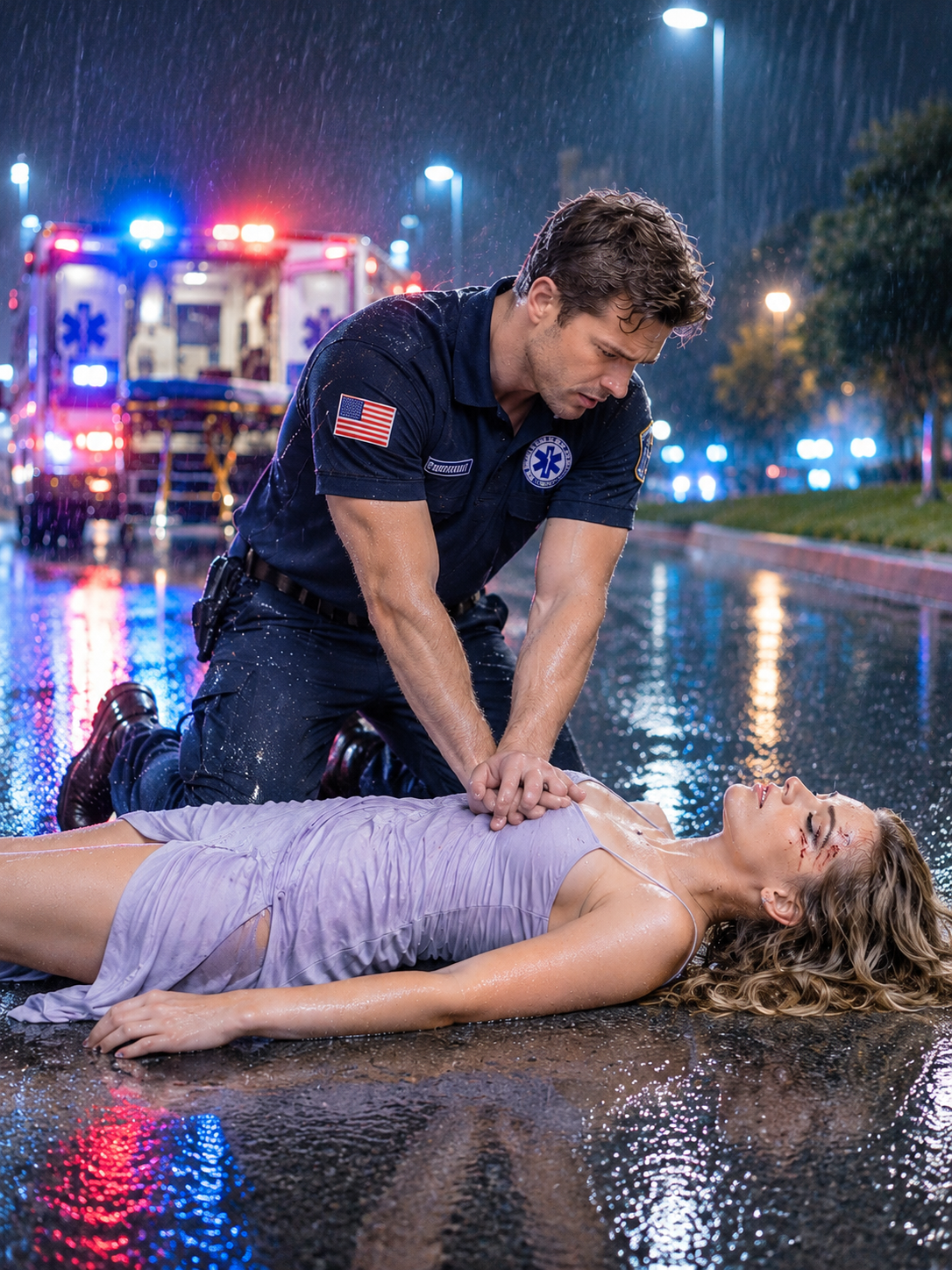
At the first annual Westbrook Safety Trust conference, two thousand people filled the Washington Convention Center. I told them about the engineer who had tried to report dangerous parts, the career and marriage he lost, and the rainy night he found Alexandra dying in a wrecked Mercedes. I had saved her because saving lives was my job—not because I had forgiven her. That decision had led to the evidence, the arrests, and a foundation that was helping people speak up without standing alone. I announced that the Trust was expanding internationally, partnering with organizations in twelve countries.
Alexandra arrived late because she had been on an emergency call. She was still wearing her EMT uniform. She told me that the work was exhausting, frightening, and real. She had saved a man having a diabetic emergency that day, and she finally understood what I meant about helping someone with your own hands. We were no longer enemies, though forgiveness was still a process. We had become partners in work that mattered.
Lily had grown close to Alexandra without being asked to replace her mother. Alexandra came to school events, movie nights, and ordinary dinners. Lily asked whether Alexandra could come over for another movie night, and Alexandra said yes. Mrs. Chen, who had helped us through the worst of it, watched the two of us with the knowing look of someone who had figured out our feelings before we had.
The Trust kept growing. Alexandra was accepted into paramedic training, and I helped her study while Lily did homework at the kitchen table. Nearly two years after the bridge crash, the three of us stood beside the Potomac while Lily tried to teach Alexandra how to skip stones. Alexandra’s first attempt sank. Lily laughed, and I stepped behind Alexandra to show her the angle and flick of the wrist. Her next stone skipped twice.
Walking back to the car, Alexandra told me she had never expected to feel that she belonged to a family. I told her she did, if she wanted to. She said she did. I kissed her—not as a grand declaration, but as an honest beginning. Lily saw us and shouted that she had won a five-dollar bet with Mrs. Chen. She took both our hands and asked if Alexandra was staying. Alexandra said she wanted to.
We built a life that wasn’t perfect or free of scars, but it was real. The Trust continued protecting people who risked their livelihoods to tell the truth. Alexandra kept training and working in emergency medicine. Lily had a steady home and people who showed up for her. I still remembered the boardroom and the years I lost, and I never pretended that forgiveness erased what had happened.
But I also remembered the bridge. I had saved Alexandra because a life was a life, even when it belonged to someone who had hurt me. She helped me reclaim my name and purpose, and together we built something that could protect countless others. Saving a life doesn’t end with a heartbeat. It begins with what we choose to do afterward.
Final The Westbrook Safety Trust kept its hotline open for the next engineer, nurse, technician, or employee who found something dangerous and feared speaking up. It offered the protection I hadn’t had when I first told the truth. Alexandra and I kept doing the work, and Lily grew up knowing that courage meant acting even when you were afraid.
I still think about the woman I pulled from the wreckage that rainy night. I didn’t save her because I had forgotten what she did to me. I saved her because I knew what it meant to stand between danger and another human being. The life she lived afterward—and the lives the Trust helped protect—became part of the answer to whether I had made the right choice.
THE END. I’ve shared the complete story, and I truly hope it touched your heart. If this story moved you, please , like, and share the post. Thank you for reading! ❤️
✓ Lynn R. Adams
IF FACEBOOK BROUGHT YOU HERE, HERE’S THE CONTINUATION YOU’VE BEEN WAITING FOR. ENJOY! 👇 The next morning, I went to First National Bank. Alexandra had arranged authorization, and the clerk let me in…