I Inherited an 8,800-Acre Ranch on Christmas—Then the HOA Ordered Me to Sell My Horses and Made One Costly Mistake
🔥HERE’S THE NEXT PART OF THE STORY, ENJOY !! The explosive twist and the final ending of this story ! ⬇️💬 Thank you ❤
Silver Creek Estates.
Large luxury houses.
Stone entrances.
Perfect landscaping.
The development looked less than fifteen years old.
I turned back to Patricia.
“You’re saying a neighborhood built more than a century after this ranch can regulate the ranch?”
“Your property falls within our community boundaries.”
Tom coughed.
Patricia’s eyes narrowed.
I looked at him.
“You have something to say?”
“Oh, plenty.”
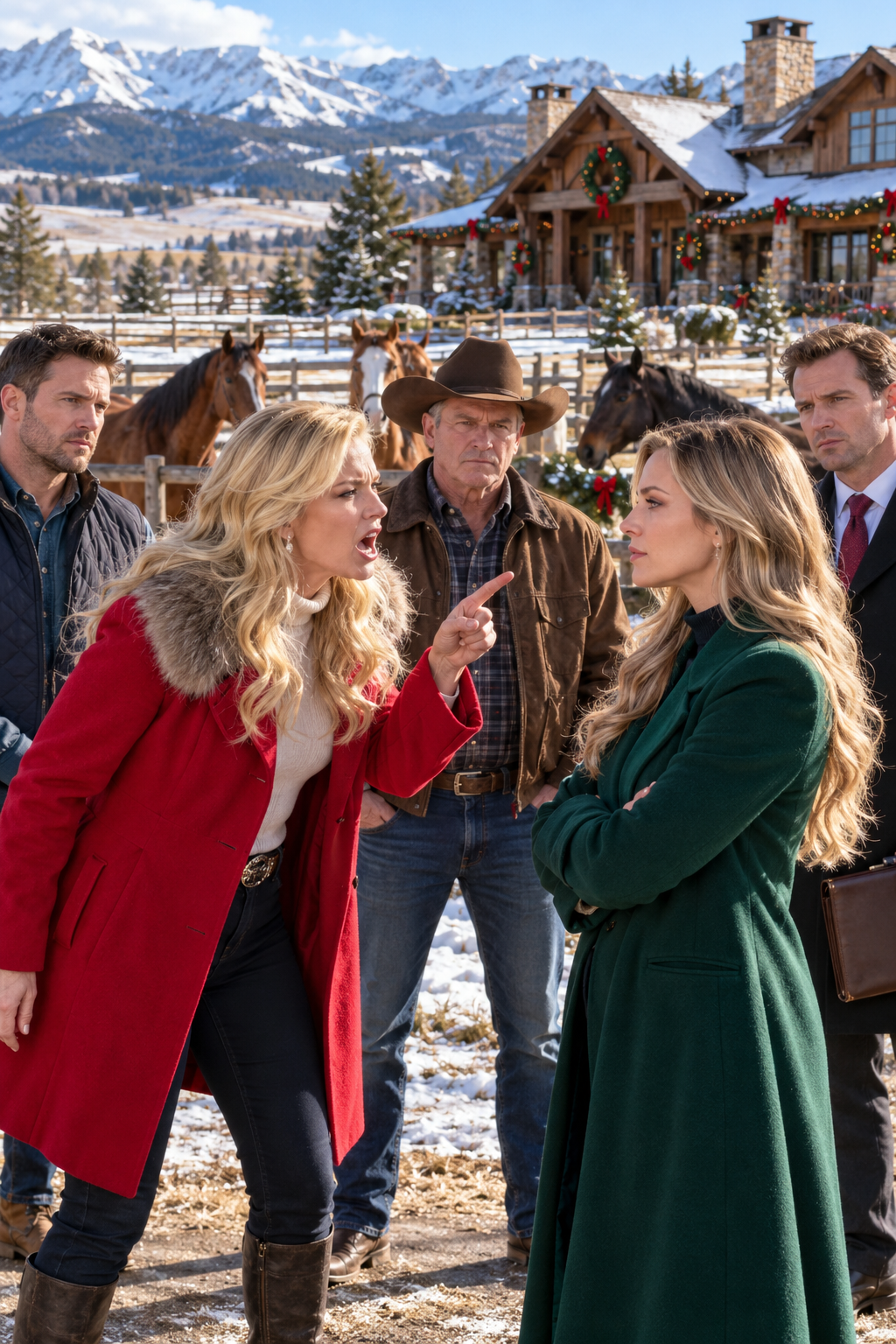
Patricia raised her voice.
“The most immediate concern is the horses.”
Something inside me changed.
“What about them?”
“One hundred twelve horses is excessive. It creates odor, dust, noise, flies, and negatively impacts property values.”
I looked toward the pasture where several mares stood beneath a cottonwood.
Patricia continued.
“The board has determined that the property may retain no more than six recreational horses.”
For a second, I thought I’d misunderstood.
“And the other 106?”
“You’ll need to sell or relocate them.”
The winter air felt suddenly colder.
“You’re telling me to sell my grandfather’s horses.”
“I’m informing you of the regulations.”
“And if I don’t?”
She smiled.
“Daily fines.”
“How much?”
“Up to $1,000 per violation.”
One of the men beside her raised his camera.
I pointed at him.
“Don’t photograph my house.”
Patricia looked pleased.
“Compliance inspections are permitted under HOA rules.”
“Excuse me?”
“No inspections. No photographs. No one enters this ranch without my permission.”
Her smile hardened.
“Ms. Bennett, I understand you’re new here.”
“I understand perfectly.”
She leaned closer.
“Your grandfather made this difficult for years. You don’t have to repeat his mistakes.”
That sentence stayed with me.
Your grandfather made this difficult.
Not misunderstood.
Not failed to comply.
Made this difficult.
As if there had been a fight before I arrived.
I remembered Walter’s note.
Don’t sell until you understand everything.
So I folded Patricia’s violation letter.
“Give me thirty days.”
She looked surprised.
“For what?”
“To understand your rules.”
“You have ten.”
“Fourteen.”
“Goodbye, Patricia.”
Her face tightened.
“We will begin accruing fines immediately.”
I looked at the paper in my hand.
“Then you’d better hope you’re right.”
That night, I began reading.
Not HOA rules.
My grandfather’s notebook.
Most pages contained ordinary ranch notes.
Fence repairs.
Veterinary schedules.
Breeding records.
Water rights.
Then halfway through, the entries changed.
June 14 — Caldwell approached again about eastern access. Refused.
July 2 — HOA lawyer claims Bennett Crossing subject to covenants. False.
August 19 — Survey stakes removed near Miller Creek. Photograph everything.
September 3 — Patricia pushing expansion. Wants equestrian tract.
October 11 — County archive confirms original easement language.
Then one entry had been underlined twice.
They think I own land inside their HOA. Truth is their HOA sits on land whose access depends on me.
I read it again.
Then a third time.
The next morning, I showed Tom.
He nodded slowly.
“I wondered when you’d find that.”
“What does it mean?”
Tom pulled out a chair.
Silver Creek Estates, he explained, had been developed about fourteen years earlier.
Before that, the land had belonged to a private timber company.
The developer purchased roughly 900 acres and built 186 high-end houses.
But there had always been one major problem.
The subdivision sat between Bennett Crossing Ranch and federal forestland.
The only practical paved road connecting it to the county highway crossed a narrow piece of land through Bennett Crossing.
“When they built Silver Creek Parkway,” Tom said, “your grandfather granted an easement.”
“Temporary access during development. Then a permanent easement later.”
“So they own the road?”
Tom shook his head.
“They maintain part of it.”
“Who owns the land under it?”
That got my attention.
“But surely an easement means they can use it.”
“They can.”
“So what’s the problem?”
Tom reached for Walter’s notebook.
“Your grandfather never gave them general commercial rights. Never gave them expansion rights. Never gave them the right to widen the road. And most importantly…”
He pointed east.
“…the easement only serves the original residential parcels.”
I still didn’t understand.
Then Tom told me what Patricia had been planning.
Silver Creek Estates wanted to expand.
A developer had proposed 240 additional luxury homes, a private golf course, a commercial lodge, and an equestrian center.
The projected development value was over $140 million.
The HOA had been lobbying for it for nearly three years.
There was only one problem.
All construction traffic, utility expansion, and future resident access would require using the Bennett Crossing easement.
My grandfather had refused.
Repeatedly.
“So the horse fines aren’t about horses,” I said.
Tom gave me a grim smile.
“Now you’re catching up.”
They wanted pressure.
If Walter sold the ranch, or if his heir became financially overwhelmed, Patricia believed the HOA or developer could acquire the eastern portion.
And once they controlled that land, the expansion became possible.
Two days later, another letter arrived.
New fines: $12,000.
Then another.
Unauthorized barn siding.
Unapproved fencing.
Improper mailbox.
Commercial horse operation.
I hired an attorney.
Her name was Rebecca Sloan, a property lawyer from Cheyenne who seemed almost disappointed when cases weren’t complicated.
I handed her Patricia’s letters.
She read for fifteen minutes.
Then she laughed.
Not a polite laugh.
A genuine one.
“What’s funny?”
“Either this HOA has discovered a revolutionary new theory of property law, or somebody is hoping you don’t hire an attorney.”
“So I’m not in the HOA?”
Rebecca closed the folder.
“We don’t know yet.”
That answer irritated me.
“What do you mean?”
“It depends on the chain of title.”
For the next week, Rebecca dug through county records, subdivision maps, covenants, easements, annexation filings, and historical deeds.
Meanwhile, Patricia escalated.
She posted violation notices on my gate.
She sent an “inspection committee” that Tom refused to admit.
She threatened liens.
Then she made a mistake.
She came after the horses personally.
It was just after seven one snowy morning when I heard engines outside the barn.
Two livestock trailers were parked near the eastern gate.
Patricia stood beside them with three men.
I drove down in my truck with Tom behind me.
I jumped out.
“What are you doing?”
Patricia held up a document.
“HOA enforcement.”
One of the men began opening the gate.
Tom stepped in front of him.
The man stopped.
Patricia waved the paper.
“Your fines now exceed $47,000. The board authorized removal of excess livestock until compliance is achieved.”
My heart started pounding.
“You came here to take my horses?”
“Temporarily impound.”
“You are not touching them.”
“Claire, don’t make this theatrical.”
“Theatrical?”
I pulled out my phone.
“I’m calling the sheriff.”
Patricia smiled.
“Please do.”
Twenty minutes later, two county sheriff’s vehicles arrived.
Deputy Ethan Walsh stepped out first.
He knew Tom.
He also knew Patricia.
After hearing both sides, he asked to see Patricia’s authorization.
He read it.
Then he looked at me.
“Ms. Bennett, has any court issued an order authorizing seizure?”
He looked at Patricia.
“Do you have one?”
“The HOA rules—”
“That’s not what I asked.”
Her confidence slipped.
“We have lien authority.”
“Do you have a court order?”
“Then nobody takes livestock today.”
Patricia went red.
“We have rights.”
Deputy Walsh handed the paper back.
“You may have a civil dispute. You don’t have authority to remove 106 horses from private property because your board voted on it.”
I looked directly at Patricia.
“Get off my ranch.”
She stepped closer.
“This will cost you more than those animals are worth.”
That sentence ended any chance of compromise.
I stared at her.
“Patricia, these horses aren’t the most valuable thing on this ranch.”
She hesitated.
I continued.
“The most valuable thing might be the road you used to get here.”
For the first time, she looked nervous.
Three days later, Rebecca called.
“I found it.”
I drove to her office immediately.
She had arranged seventeen documents across a conference table.
Plat records.
“First,” she said, “Bennett Crossing Ranch is absolutely not part of Silver Creek Estates HOA.”
“Not any part?”
“Not one acre.”
“So every fine is invalid.”
“Completely.”
Rebecca didn’t.
“That’s not the interesting part.”
She pulled out a document dated fourteen years earlier.
“Silver Creek Estates’ developer recorded an annexation map shortly before selling the first homes.”
She pointed to a shaded boundary.
“This map includes approximately 147 acres of land labeled as common recreational property.”
“Except they didn’t own it.”
I stared at her.
“Your grandfather did.”
I leaned over the map.
The 147 acres included part of a meadow, a creek corridor, and a narrow strip extending toward the subdivision entrance.
“How is that possible?”
“Looks like somebody used an outdated preliminary survey instead of the final boundary survey.”
“So they accidentally claimed my grandfather’s land?”
“More than claimed it. The HOA has been treating portions of it as HOA common property.”
Rebecca showed me photographs.
A walking trail.
Decorative landscaping.
A small stone pavilion.
An entrance monument.
“Those are on my land?”
“Most of them.”
I thought about Walter refusing to cooperate.
“Why didn’t Grandpa stop them?”
“Maybe he was waiting.”
“For what?”
Rebecca slid another document across the table.
The road easement.
“Read paragraph seventeen.”
Then I understood.
The easement allowed residents and emergency services access across Bennett Crossing.
But it contained a termination clause regarding unauthorized expansion, commercial development, or material alteration without written approval from the ranch owner.
“If they expand without permission…”
“They could breach the easement.”
“Could I close the road?”
“Not to existing homeowners casually. Courts don’t like landlocking innocent residents.”
That made sense.
“But you would have enormous leverage against commercial expansion.”
She tapped the map again.
“And now there’s more.”
Patricia’s HOA had already signed a preliminary development agreement.
They had promised the developer access over the Bennett Crossing road.
Access they didn’t own.
On January 18, I attended my first Silver Creek HOA meeting.
The clubhouse looked like a ski lodge.
Floor-to-ceiling windows.
Stone fireplaces.
Massive timber beams.
Around 120 residents filled the meeting room.
Patricia sat at the front beside six board members.
When I entered with Rebecca, conversations stopped.
Patricia smiled tightly.
“Ms. Bennett. This meeting is restricted to members.”
“Perfect,” Rebecca said. “Because we’re not staying.”
She handed Patricia a thick envelope.
“What is this?”
“Notice of disputed jurisdiction, demand to cease enforcement, notice of trespass, demand for removal of encroachments, and preservation notice concerning all records related to the proposed Silver Creek expansion.”
The room went silent.
Patricia stared at her.
“What proposed expansion?”
Rebecca smiled.
“The one your board signed preliminary agreements for last November.”
Several homeowners turned toward Patricia.
A man in the second row said, “What expansion?”
Patricia ignored him.
“This is intimidation.”
Rebecca continued.
“We’re also notifying you that Bennett Crossing Ranch owns the land beneath multiple HOA improvements, including part of the eastern trail system and entrance landscaping.”
Voices erupted.
Patricia slammed her hand on the table.
I finally spoke.
“You fined me for a fence on my land.”
Patricia glared.
“Your property impacts our community.”
“You threatened to take my horses.”
“You were in violation.”
“No, Patricia. You were.”
A board member beside her whispered something.
She waved him away.
I placed the original $18,400 violation notice on the table.
“You said my grandfather made things difficult.”
Her jaw tightened.
“Your grandfather refused reasonable cooperation.”
“You mean he wouldn’t sell you access.”
Some residents began murmuring.
Another man stood.
“Patricia, is she talking about the development behind Ridge Seven?”
Patricia’s face changed.
That was all I needed.
Residents knew rumors.
They just hadn’t known the board was this far along.
Rebecca placed one final document on the table.
“And for clarity, any expansion traffic using Bennett Crossing easement without authorization may constitute breach of the recorded access agreement.”
A woman near the fireplace raised her hand.
“What does that mean for us?”
I turned toward her.
Patricia looked surprised.
I continued.
“I have no intention of blocking existing homeowners. You’re not my enemy.”
Several people relaxed.
“My problem is with anyone who believes threatening me will force me to sell land.”
Now everyone looked at Patricia.
She leaned toward the microphone.
“This meeting is adjourned.”
But it wasn’t over.
It was just getting started.
Within a week, three HOA board members resigned.
Homeowners demanded financial records.
Someone leaked emails.
Those emails changed everything.
Patricia had spent nearly two years communicating with the expansion developer, Northgate Development Partners.
One email was particularly damaging.
Rebecca read it aloud to me.
Once Walter is gone, the granddaughter should be easier. She lives in Denver and has no ranch experience. Fines and enforcement pressure may encourage a quick sale.
I felt strangely calm when I heard it.
Maybe because anger had already burned through me.
“They were waiting for him to die.”
Rebecca nodded.
“Looks that way.”
Another email discussed the horses.
Livestock pressure is probably our strongest angle. If she faces boarding or relocation expenses, she may reconsider the eastern parcel offer.
I hadn’t received one.
Then it arrived.
Northgate offered me $9.6 million for 620 acres.
The letter called it a “premium acquisition opportunity.”
Rebecca estimated that controlling those 620 acres could unlock well over $100 million in development.
I rejected it the same afternoon.
Patricia retaliated by filing a lien against the ranch.
That was her fatal mistake.
Because filing a property lien required her HOA to formally assert that Bennett Crossing was subject to Silver Creek covenants.
Rebecca challenged it immediately.
The hearing took place at the county courthouse six weeks later.
Patricia arrived with two attorneys.
I arrived with Rebecca, Tom, a surveyor, and thirty-four boxes of historical records.
The judge was Margaret Holloway, a woman in her sixties who had handled property disputes for almost three decades.
Patricia’s lawyer argued first.
He claimed Bennett Crossing had benefited from Silver Creek infrastructure and had therefore become subject to community standards through annexation and implied acceptance.
Judge Holloway interrupted him.
“Counsel, are you suggesting an 8,800-acre ranch founded in 1889 became subject to a homeowners association created in 2012 without the owner’s signature?”
There was a pause.
“We believe certain recorded instruments—”
“Show me the instrument signed by the ranch owner.”
He couldn’t.
Rebecca stood.
She produced Walter’s original deed.
Then the subdivision declaration.
Then the annexation filings.
Then the surveys.
One by one.
The evidence was brutal.
Bennett Crossing had never joined the HOA.
No owner had consented.
No covenant had been recorded against the ranch.
Every HOA fine against me had been issued without jurisdiction.
Then Rebecca introduced the livestock seizure notice.
Judge Holloway looked at Patricia.
“Your association attempted to remove horses from property outside your association?”
Patricia whispered to her attorney.
“The board believed—”
Judge Holloway cut him off.
“I didn’t ask what the board believed.”
Then came the lien.
Because Patricia had authorized its filing despite receiving Rebecca’s written notice disputing HOA authority, the judge called the action “deeply concerning.”
But Rebecca saved the best evidence for last.
The 147 acres.
Our surveyor testified.
He displayed modern GPS measurements compared with original property lines.
A large screen showed the unmistakable overlap.
Part of Silver Creek’s eastern trail.
Two landscaped areas.
A decorative pond.
A picnic pavilion.
And about 380 feet of the grand stone entrance feature.
All built partly on Bennett Crossing property.
Patricia looked like she had stopped breathing.
The judge stared at the map.
“Ms. Sloan, are you telling this court the HOA has been fining Ms. Bennett for structures on her property while simultaneously maintaining HOA structures on Ms. Bennett’s property without a recorded ownership interest?”
Rebecca smiled slightly.
“Yes, Your Honor.”
For a few seconds, nobody spoke.
Then Tom whispered behind me.
“Your grandpa would’ve loved this.”
I almost laughed.
Judge Holloway invalidated every HOA fine.
She ordered the lien released immediately.
She prohibited the HOA from entering Bennett Crossing without permission.
She also allowed us to pursue damages and costs associated with the wrongful lien and attempted livestock removal.
But the court didn’t resolve the 147-acre ownership dispute that day.
That required separate proceedings.
Patricia still wasn’t finished.
Two nights after the ruling, someone cut a section of fence near the east pasture.
Twenty-three horses escaped.
Tom discovered the break before dawn.
We spent five hours gathering the herd.
One mare suffered a deep leg wound.
A nearby security camera caught headlights at a.m., but the vehicle couldn’t be identified.
I didn’t accuse Patricia.
I didn’t need to.
Because the next morning, I made a decision Walter never had.
I went public.
Not with television.
Not with social media.
With the homeowners.
I mailed every household in Silver Creek a packet.
It contained the court ruling.
The relevant property maps.
Copies of the developer emails.
And a simple letter.
I will never interfere with lawful access to your existing homes. I will not punish residents for decisions made by HOA leadership. However, I will not sell Bennett Crossing Ranch under coercion, and I will not authorize expansion traffic across ranch property.
Then I added one final paragraph.
The 112 horses targeted by the HOA will remain exactly where they are.
The homeowners revolted.
An emergency meeting was called.
Patricia was removed as president by a vote of 163 to 11.
Two other board members were removed with her.
Northgate Development suspended its expansion project.
Then withdrew completely.
Without guaranteed access, the numbers no longer worked.
Three months later, Silver Creek reached a settlement with me.
The HOA paid my legal fees.
The wrongful fines disappeared permanently.
They agreed to relocate structures that materially encroached on my property.
For the entrance monument and part of the trail system, I granted limited licenses instead of forcing demolition.
Rebecca asked why.
“Because the homeowners didn’t build this mess,” I said.
“What about Patricia?”
Patricia sold her house that summer.
I heard she moved to Arizona.
We never spoke again.
But there was still one question.
Why had Walter waited?
Why hadn’t he sued years earlier?
The answer came in his notebook.
One evening in June, I found several pages stuck together near the back.
Between them was a letter.
It was addressed to me.
If you’re reading this, then you stayed long enough to become curious. That’s good. Curiosity will save you more often than anger.
I sat alone at the kitchen table while sunset turned the Wyoming sky orange.
The people east of the ranch aren’t bad people. Most simply bought houses and wanted good lives. Never punish a neighborhood for the greed of a few people running it.
I stopped reading.
That sounded exactly like the decision I’d made.
I continued.
Patricia Caldwell will probably come after you. She believes pressure is ownership. She believes rules are power. She doesn’t understand that rules without authority are only paper.
Walter had known.
I could have fought them myself. Maybe I should have. But this ranch was going to be yours, and someday you would need to decide whether it was a burden or a home. I didn’t want to make that decision for you.
Then came the line that made my eyes burn.
Your mother loved this place. She left because she needed to discover who she was beyond it. Don’t confuse leaving with not loving.
I looked through the window toward the barns.
For years, I’d believed my mother wanted nothing to do with the ranch.
Maybe I’d been wrong.
The horses will tell you whether you belong.
That was almost the end.
One final sentence had been written below his signature.
And Claire—never sell land to someone who first tries to frighten you into believing you don’t deserve it.
I kept Bennett Crossing.
Not because it was worth $31 million.
Not because of the mountains.
Not even because my grandfather had wanted me to.
I kept it because somewhere between fighting illegal fines and feeding horses at five in the morning, the place stopped feeling like an inheritance.
It became my life.
Tom stayed as ranch manager.
I learned to ride again.
I learned irrigation schedules, hay contracts, fencing, veterinary emergencies, snow management, and exactly how expensive a broken tractor can become at the worst possible moment.
We also expanded Walter’s horse rescue program.
By the next Christmas, Bennett Crossing had 127 horses.
Fifteen more.
On Christmas morning, I rode a palomino mare named Daisy across the east pasture.
Snow covered the valley.
Beyond the fence, lights glowed from Silver Creek homes.
The new HOA president, a retired school principal named David Morgan, had invited me to their Christmas dinner.
Relations between the neighborhood and ranch were better than they’d ever been.
No threats.
No secret development plans.
Just neighbors.
Near the old stone entrance, David had installed a small bronze plaque acknowledging that part of the entrance stood on Bennett Crossing land by permission of the ranch owner.
I didn’t need the plaque.
But I liked what it represented.
Permission.
Such a simple word.
Patricia had believed owning a title meant owning everyone beneath it.
Walter understood something she never did.
Authority has boundaries.
Property has boundaries.
Power has boundaries.
And sometimes the quietest person in the room isn’t powerless.
Sometimes she’s simply waiting for you to finish making your mistake.
I reached the top of a ridge and stopped Daisy.
Behind me stretched thousands of acres of white pasture, forests, barns, creeks, and mountains.
My grandfather’s ranch.
My mother’s childhood home.
My responsibility now.
Daisy shifted beneath me.
I leaned forward and rubbed her neck.
“You know,” I whispered, “somebody once told me I had to sell you.”
Her ears flicked back toward me.
Far below, more than a hundred horses moved together across the snow.
And for the first time since that certified letter arrived on Christmas morning, I understood exactly what my grandfather had left me.
Not even 112 horses.
He had left me a choice.
And when Patricia Caldwell tried to frighten me into giving that choice away, she accidentally taught me why it was worth protecting.
So the horses stayed.
The ranch stayed.
And the woman who thought she could fine me into surrender?
She lost her position, her expansion deal, and every claim she ever made against Bennett Crossing.
The next Christmas morning, there was no certified letter waiting at my door.
There didn’t need to be.
I was already home.
✓ Lynn R. Adams
🔥HERE’S THE NEXT PART OF THE STORY, ENJOY !! The explosive twist and the final ending of this story ! ⬇️💬 Thank you ❤ Silver Creek Estates. Large luxury houses. Stone entrances. Perfect landscap…