I Inherited 3,600 Acres at Christmas—The HOA Ordered Me Out Before Learning Their Entire Neighborhood Was Sitting on My Land
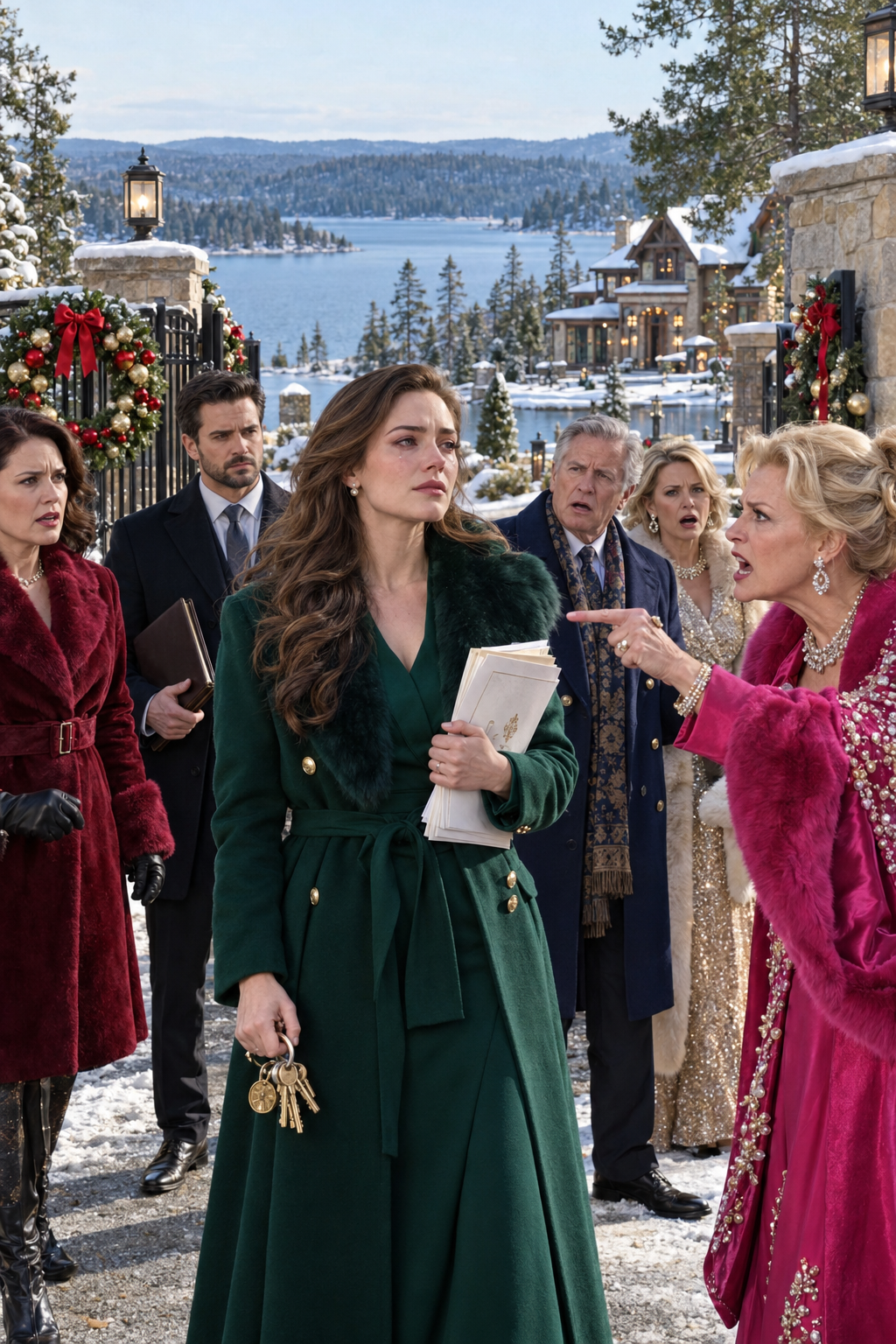
I Inherited 3,600 Acres at Christmas—The HOA Ordered Me Out Before Learning Their Entire Neighborhood Was Sitting on My Land
The eviction notice was taped to my grandfather’s front door on Christmas morning.
It gave me seventy-two hours to leave the house I had inherited three days earlier.
And underneath the words FINAL NOTICE, someone had written in red ink:
TRESPASSERS WILL BE REMOVED.
I stood on the snow-covered porch with a mug of coffee cooling between my hands and read it twice.
Then I smiled.
Not because it was funny.
Because whoever had written that notice had just made the worst possible mistake.
They assumed I had inherited a house.
I had inherited the road beneath their tires.
The marina beneath their boats.
The wooded hills behind their million-dollar homes.
And, according to a forty-two-year-old document sitting inside my grandfather’s safe, I had inherited something else.
Their leases.
All of them.
I didn’t know that yet when I arrived at Lake Briar.
I didn’t know why my grandfather had refused every developer who approached him.
I didn’t know why an HOA president I had never met already hated me.
I didn’t know why three different surveys showed three different property lines.
I didn’t know why Grandpa had left one sentence handwritten across the cover of his deed:
Never let them make you believe the lake belongs to them.
My name is Grace Holloway.
I was thirty-seven that Christmas, recently divorced, professionally exhausted, and convinced my biggest problem was figuring out what to do with a drafty cedar lodge in the Missouri Ozarks.
I had spent fourteen years working as a civil engineer in St. Louis.
I understood drainage maps, easements, grading plans, road rights-of-way, utility corridors, retaining walls, and the particular kind of expensive disaster that happens when confident people build something without reading the paperwork underneath it.
That experience would become useful.
Very useful.
My grandfather, Walter Holloway, died on December 18.
He was eighty-eight.
He had lived his entire adult life on land his father purchased after World War II, when Lake Briar was little more than a newly formed reservoir surrounded by cedar, limestone, and dirt tracks.
As a kid, I spent every summer there.
Grandpa taught me to fish off the old north dock.
He taught me how to drive his battered Ford pickup when I was twelve.
He taught me that barbed wire wasn’t a property line unless the survey said it was.
He also taught me never to sign anything just because the person across the table wore a suit.
Then my parents moved west.
I went to college.
Life became meetings, deadlines, marriage, mortgage, divorce.
Grandpa and I still talked every Sunday, but I hadn’t spent more than four consecutive days at Lake Briar in nearly fifteen years.
That was my mistake.
Because while I was building a career, the empty shoreline I remembered had changed.
I arrived on December 22 in freezing rain.
The narrow county highway curved through the Ozark hills for twenty miles before a stone entrance appeared ahead of me.
BRIAR RIDGE ESTATES.
The letters were carved into a twelve-foot monument between two iron gates.
Beyond them stretched immaculate landscaping, decorative lanterns, stone retaining walls, and a boulevard lined with expensive homes glowing with Christmas lights.
I slowed down.
My GPS said Grandpa’s house was straight ahead.
The gate didn’t open.
A camera above the keypad rotated toward my truck.
I pressed the call button.
A woman’s voice answered.
“Grace Holloway.”
There was a pause.
Then, “Purpose?”
I almost laughed.
“I’m going to Walter Holloway’s house.”
Another pause.
Longer this time.
“Mr. Holloway passed away.”
“I know. He was my grandfather.”
Then the gate opened.
I drove through.
That should have been my first warning.
The neighborhood was enormous.
Homes climbed both sides of the ridge, most between four and seven thousand square feet.
Stone facades.
Three-car garages.
Lake views.
Outdoor kitchens covered for winter.
At least half the houses had private docks visible through the trees.
I remembered walking through those woods as a child.
Back then there hadn’t been streets.
There hadn’t been houses.
There certainly hadn’t been a clubhouse the size of a boutique hotel overlooking the water.
I followed my GPS past streets named Cedar View, Heron Bluff, and Briar Crest.
Then the pavement abruptly narrowed.
The landscaped shoulders disappeared.
The road became cracked asphalt beneath tall trees.
Two miles later, I saw Grandpa’s lodge.
Nothing about it had changed.
Same cedar siding.
Same stone chimney.
Same sagging porch rail he promised to replace every summer for twenty years.
His old red tractor sat beneath the equipment shed.
His aluminum fishing boat rested upside down beside the barn.
For the first time since the funeral, grief hit me hard enough to make breathing difficult.
Then I noticed the white SUV.
It was sitting beside the porch.
A woman in a cream-colored wool coat stood next to it.
She looked about sixty.
Silver-blonde hair cut perfectly to her shoulders.
Leather gloves.
Pearl earrings.
The kind of posture that suggested she considered every place she stood to be hers.
A man in a navy jacket stood beside her holding a clipboard.
The woman watched me climb from my truck.
“You’re Grace?”
It wasn’t really a question.
“Karen Whitfield. President of Briar Ridge Homeowners Association.”
She offered no hand.
“This is Martin Dale, our property manager.”
Martin nodded.
Karen looked at my truck, my jeans, my boots, then the lodge.
“I understand you’re here regarding Walter’s estate.”
“I’m here because this is Walter’s estate.”
Something changed in her face.
Very small.
But I saw it.
“Of course,” she said. “Temporarily.”
That word landed strangely.
“Temporarily?”
Karen folded her gloves together.
“The association has been trying to resolve the status of this structure for years. Walter was given considerable accommodation due to his age.”
I looked at the house.
Then at her.
“Accommodation for what?”
“Occupancy.”
I said nothing.
People become surprisingly informative when silence makes them uncomfortable.
Karen continued.
“This parcel falls within Briar Ridge’s controlled community boundary. The dwelling predates the development, obviously, but it doesn’t conform to current architectural standards.”
I looked at Grandpa’s weathered porch.
Then at the enormous neighborhood behind us.
“You’re saying my grandfather needed HOA permission to live in the house he built?”
Karen’s mouth tightened.
“That’s an oversimplification.”
“Usually means yes.”
Martin suddenly became very interested in his clipboard.
Karen smiled without warmth.
“You’ve been through a difficult week. There’s no need for confrontation.”
“There isn’t.”
She reached into a leather folder.
“We simply need you to understand that continued occupancy here won’t be permitted while the estate is being settled.”
She handed me a document.
It was titled NOTICE OF NONCOMPLIANT OCCUPANCY.
There were references to exterior maintenance.
Roof color.
Unapproved outbuildings.
Improperly stored agricultural equipment.
One section claimed the property violated minimum landscaping requirements.
Grandpa’s ninety-year-old oak trees apparently didn’t count.
At the bottom was a demand that the residence be vacated pending HOA review.
I finished reading it.
“Interesting.”
Karen seemed encouraged.
“We’re prepared to make the transition painless.”
“What transition?”
She glanced toward the lake.
“The association has long wanted to incorporate this area into our northshore recreational plan. Walking trails. Pickleball courts. Possibly additional boat storage.”
There it was.
Not a confession.
Not exactly.
But motivation rarely needs a signed affidavit.
Grandpa’s old lodge sat on one of the most beautiful stretches of untouched shoreline around Lake Briar.
Almost a mile of forested waterfront.
No docks except his.
No retaining walls.
No artificial beaches.
From a developer’s perspective, it was gold.
Karen’s voice softened.
“If you’ve inherited the house itself, I’m sure we can discuss fair compensation after probate.”
“The house itself?”
She blinked.
“What’s the parcel number?”
That caught her off guard.
“The parcel?”
“The parcel this house sits on.”
Martin finally looked up.
Karen said, “Our attorney can provide the relevant records.”
“What’s the acreage?”
“I don’t have that figure in front of me.”
“Boundary description?”
“I said our attorney—”
“Recorded deed reference?”
Her expression hardened.
“Ms. Holloway, I’m not here to debate technicalities.”
I handed the violation notice back.
“I’m an engineer. Technicalities are most of my personality.”
Martin coughed into his fist.
Karen ignored him.
“We’ll revisit this after Christmas.”
She stepped toward her SUV.
Then turned.
“One thing.”
“The private community roads are for members and authorized guests only. Until ownership is clarified, your access will be limited.”
I stared at her.
“You’re threatening to block me from my grandfather’s house?”
“I’m explaining association policy.”
“No. You’re explaining what you hope association policy says.”
For the first time, the polished smile disappeared.
“Walter caused enough trouble for this community.”
I felt something cold settle in my chest.
“What kind of trouble?”
Karen opened the SUV door.
“He refused to move forward.”
Then she got in.
That sentence stayed with me.
Not cooperate.
Not comply.
Move forward.
People use phrases like that when they want something and someone keeps standing where they intend to put it.
I spent that night alone in Grandpa’s lodge.
The heat came from a cast-iron wood stove and an ancient propane furnace that groaned every time it started.
His Christmas decorations were still boxed in the hall closet.
I found the ceramic Santa my grandmother used to put on the mantel.
She had died six years earlier.
I set it beside Grandpa’s clock.
Then I started opening files.
I wasn’t suspicious yet.
I was doing what engineers do when confronted with conflicting information.
I wanted documents.
Grandpa kept everything.
Tax receipts.
Survey plats.
Water district bills.
Handwritten notes from 1983.
Warranty manuals for appliances that hadn’t existed since the Clinton administration.
Around midnight, I found the first deed.
It wasn’t for five acres.
It wasn’t for twenty.
It wasn’t even for the eighty acres I vaguely remembered hearing about as a child.
The legal description continued for seventeen pages.
Township coordinates.
Section numbers.
Shoreline references.
Old logging-road boundaries.
I grabbed a calculator.
Then I checked again.
3,602.7 acres.
I actually whispered, “Grandpa, what did you do?”
The property wrapped around more than half the northern side of Lake Briar.
Including, according to the map, almost everything now occupied by Briar Ridge Estates.
That made no sense.
I assumed I was reading an outdated deed.
Land gets subdivided.
Transferred.
Grandpa could have owned 3,600 acres in 1978 and only five acres by 2026.
So I kept looking.
At a.m., I found a document labeled MASTER GROUND LEASE—1984.
My stomach tightened.
The agreement was between Walter Holloway and Briar Ridge Development Corporation.
Forty-five pages.
Initial term: forty years.
Renewal options subject to written agreement.
The developer had leased—not purchased—1,146 acres from my grandfather for residential development.
The lease permitted subdivision improvements and the sale of houses.
But the underlying land remained Holloway property.
Homeowners could own their structures.
The association could maintain roads, docks, and recreational facilities.
But the ground beneath them was subject to the master lease.
Expiration date:
December 31, 2024.
I stared at it.
That date had passed almost two years earlier.
There were amendments.
I read every one.
A 1994 amendment adjusted road maintenance obligations.
A 2007 amendment expanded utility easements.
A 2012 amendment added twenty-two acres near the marina.
Nothing extended the ground lease.
Then I found correspondence from 2023.
Briar Ridge HOA.
Attention: Karen Whitfield, President.
Grandpa had received certified letters requesting negotiation.
His handwritten response was attached.
I am willing to discuss renewal once the HOA provides a complete accounting of unauthorized improvements constructed outside leased boundaries.
That sentence changed everything.
Unauthorized improvements.
I didn’t sleep.
At sunrise, snow covered the lake.
I made coffee and spread maps across Grandpa’s dining table.
Modern aerial prints.
Old surveys.
County plats.
Lease exhibits.
A red pencil.
By nine o’clock, I had three conclusions.
First, my grandfather still owned thousands of acres.
Second, part of Briar Ridge existed on expired leased land.
Third, somebody had been quietly pushing beyond even those leased boundaries.
A section of the clubhouse parking area.
Possibly several homes.
I didn’t know how bad it was.
But I knew enough not to sign anything.
Christmas Eve passed quietly.
I called my mother in Arizona.
She cried when I told her I was sleeping in Grandpa’s house.
I did not mention the HOA.
On Christmas morning, I woke to the sound of a staple gun.
Three sharp metallic cracks.
I came downstairs in socks.
By the time I opened the front door, an HOA security vehicle was disappearing around the bend.
The eviction notice was attached to the porch post.
Seventy-two hours.
Unauthorized occupancy.
Failure to obtain residency approval.
Immediate removal subject to enforcement action.
And in red ink:
TRESPASSERS WILL BE REMOVED.
I folded the paper once.
Then I walked inside.
I didn’t call Karen.
I called an attorney.
His name was Daniel Mercer.
Grandpa had left his card inside the deed folder with a note:
Trust him with paper. Trust nobody with land.
Daniel answered on Christmas morning.
That told me something about their relationship.
When I gave him my name, he went silent.
“I’ve been wondering when you’d call.”
“You knew?”
“I knew Walter named you as successor trustee and primary beneficiary.”
“You know about Briar Ridge?”
Another pause.
“How much?”
“Enough to tell you not to sign anything.”
“That’s becoming a theme.”
He asked what had happened.
I read him the eviction notice.
Daniel laughed.
Not politely.
Actually laughed.
“Grace, do you know where their HOA office is located?”
“The clubhouse?”
“Because according to Walter’s title report, approximately forty percent of that building is sitting outside the old lease boundary.”
I looked through the window toward the distant ridge.
“So they’re evicting me from my own property while their office may be trespassing on my land?”
“That’s one interpretation.”
“What’s the other?”
“That they’re catastrophically bad at timing.”
Daniel met me the next morning.
He was sixty-four, broad-shouldered, gray-haired, and wore cowboy boots with a charcoal suit.
He carried two banker boxes into Grandpa’s dining room.
“I’ve represented your grandfather since 1999,” he said.
“Did he hate everybody?”
“No. Only people who brought him contracts.”
That sounded right.
Daniel opened the first box.
Inside were certified surveys from four different years.
The newest had been completed nine months before Grandpa died.
“Walter suspected Briar Ridge had expanded beyond its rights for years,” Daniel said. “He didn’t want confrontation without evidence.”
“So he surveyed everything.”
“Everything accessible.”
He unfolded a map large enough to cover most of the table.
Colored areas covered the neighborhood.
“What am I looking at?”
“Yellow is the original lease area.”
“Improvements built beyond the original boundary but arguably covered by later easements or amendments.”
Daniel looked at me.
“Nothing authorizes red.”
There was a lot of red.
A section of Lakeshore Drive.
The east marina.
Half a maintenance facility.
Three stormwater ponds.
Several walking trails.
A gatehouse.
And portions of residential lots.
“How many homes?”
“Potentially forty-one with some degree of encroachment.”
I stared at him.
“Forty-one?”
“Most are minor. Landscaping. Driveways. Retaining walls. A few are not minor.”
He pointed to seven parcels.
“These structures cross the boundary.”
“Actual houses?”
I sat back.
“This can’t happen accidentally.”
“One house can. Seven becomes difficult to explain.”
“Did Karen know?”
“Walter believed someone did.”
Before I could ask more, headlights swept across the windows.
Three vehicles entered Grandpa’s driveway.
Karen’s white SUV.
The HOA security truck.
And a tow truck.
Daniel glanced outside.
“Are you behind on payments?”
“I don’t have payments.”
“Then I suspect we’re about to have an entertaining morning.”
Karen stepped onto the porch with Martin and a security officer.
The tow truck driver remained near his rig.
I opened the door before she could knock.
Her expression shifted when she saw Daniel behind me.
“Ms. Holloway.”
“Mrs. Whitfield.”
“You were required to vacate.”
“The association.”
Daniel stepped beside me.
Karen’s eyes narrowed.
“Mr. Mercer.”
They clearly knew each other.
That interested me.
Karen held up a clipboard.
“This property is within association jurisdiction. Ms. Holloway’s vehicle has no resident permit. We’re removing it.”
I looked toward my truck.
“You brought a tow truck for my pickup?”
“You’ve been informed of community rules.”
Daniel spoke calmly.
“Karen, I suggest you reconsider.”
“This doesn’t concern you.”
“It concerns my client.”
“The association has authority over vehicles on association roads.”
Daniel smiled.
Karen’s jaw tightened.
Then she gestured toward the tow driver.
The driver walked toward my truck.
I didn’t move.
Daniel didn’t move.
We just watched.
The driver crouched near my rear axle.
Then I asked, “Do you know who owns this driveway?”
He stopped.
Karen said sharply, “Don’t engage with her.”
The driver stood.
“I just need authorization from the property controller.”
Karen lifted her folder.
“You have it.”
I looked at him.
“What’s your company?”
“Pierce Recovery.”
“Mr. Pierce, you’re welcome to tow vehicles on property controlled by whoever hired you. But this driveway is recorded to the Holloway Family Trust.”
Karen said, “That’s disputed.”
“Do you have a court order?”
“No court order is required.”
The driver looked between us.
I continued.
“If you attach your equipment to my vehicle while it is parked on my land, I’ll consider that an unauthorized seizure.”
He immediately stepped away from the truck.
Karen’s cheeks reddened.
“This is HOA-controlled territory.”
Daniel reached into his box and removed a paper.
“Would you like the current county ownership map?”
Martin whispered something to Karen.
She ignored him.
Daniel held out the map.
Karen didn’t take it.
Instead she looked directly at me.
“You’re creating unnecessary hostility.”
“You brought a tow truck to my house the day after Christmas.”
“We brought enforcement.”
“No,” I said. “You brought witnesses.”
The tow driver returned to his vehicle.
Karen followed him.
“Where are you going?”
He opened his door.
“Ma’am, this looks like a land dispute.”
“You were contracted.”
“To tow an unauthorized vehicle. I’m not getting arrested over a title fight.”
That was my first mini-victory.
Almost ridiculous.
But important.
Bullies work best when everyone around them assumes their authority is real.
The second someone asks for the document underneath it, things become less magical.
Karen watched the tow truck disappear.
Then she turned back toward me.
“This community has operated successfully for decades.”
“I hope it continues.”
“Then cooperate.”
“With what?”
“Sell the remaining Holloway parcel to Briar Ridge.”
There it was.
Remaining parcel.
She wanted me thinking small.
One awkward piece of shoreline.
Not 3,600 acres.
I leaned against the porch column.
“What exactly would you be purchasing?”
“The lodge and surrounding acreage.”
“How many acres?”
Her expression hardened again.
“You keep asking that question.”
“Because you keep avoiding it.”
Martin interrupted.
She turned toward him.
He looked uncomfortable.
Then she faced me again.
“Our counsel will contact Mr. Mercer.”
When the vehicles disappeared through the trees, Daniel exhaled.
“That woman is frightened.”
“She didn’t look frightened.”
“People like Karen never look frightened. They look offended.”
We spent the next two days researching.
No shouting.
That was where the real damage was.
County records confirmed Grandpa had never conveyed ownership of the original lease acreage.
The old developer, Briar Ridge Development Corporation, had dissolved after bankruptcy in 1991.
Its interest under the ground lease had been assigned to the newly created HOA.
That meant Briar Ridge HOA had stepped into the tenant position.
A later restructuring created individual subleases tied to residential lots.
Most homeowners had no idea.
Their closing documents referred to “community land rights” and “perpetual access,” language vague enough that a normal buyer might assume the land came with the house.
But buried deeper were references to the master ground lease.
“That seems insane,” I told Daniel.
“It is unusual.”
“Who buys a million-dollar house without owning the land?”
“People do it in several parts of the country. Coastal developments. Resort communities. Tribal lands. Universities. It can work fine if the lease is transparent.”
“But this wasn’t transparent.”
Daniel tapped one page.
“That may become the problem.”
The HOA collected annual assessments.
Part of those assessments were supposed to fund ground rent.
But after Grandpa refused the proposed renewal terms, something interesting happened.
The HOA stopped paying him.
Not because the lease had ended.
Because Karen’s board claimed the HOA had acquired ownership through “prescriptive possession and historical community control.”
I stared at the phrase.
“That’s their legal theory?”
“They stopped paying rent and decided they’d owned the land long enough to take it?”
“In oversimplified terms.”
“They’ve been living under a written lease.”
“Prescriptive possession usually isn’t friendly to people who entered with permission.”
Daniel smiled back.
“That’s why I like engineers.”
The next payoff came December 28.
A courier delivered a settlement proposal.
Briar Ridge offered me $410,000 for “the Holloway residential parcel and associated shoreline.”
I read the entire document twice.
Page seventeen contained a legal description.
Not five acres.
3,602.7 acres.
They were trying to buy everything.
For $410,000.
Lakefront acreage in that county was selling for anywhere from twenty thousand to more than one hundred thousand dollars per acre depending on location and development rights.
Some sections of my property couldn’t be developed.
Much of it was forest.
But the number was still absurd.
More importantly, the contract included a clause releasing the HOA from all prior claims related to land use, rent, easements, encroachments, improvements, assessments, and title disputes.
I placed the contract on the table.
“They know.”
Daniel nodded.
“They know enough.”
“Maybe not everyone.”
“What are you thinking?”
“Karen’s board knows. The homeowners probably don’t.”
Daniel leaned back.
“You want leverage.”
“I want information.”
So I attended the HOA board meeting.
It was held December 29 in the Briar Ridge clubhouse.
The same clubhouse partly sitting on my land.
Christmas garlands wrapped the stone columns.
A twenty-foot tree stood in the lobby.
Residents in expensive winter coats carried coffee and chatted as though nothing was wrong.
I counted roughly ninety people.
When I entered with Daniel, conversations gradually stopped.
Karen sat at a long table with six board members.
Her face changed when she saw us.
“Closed board session,” she said immediately.
A man in the audience frowned.
“The notice said homeowners could attend.”
“They can.”
Karen pointed toward me.
“She isn’t a homeowner.”
I almost admired the confidence.
Daniel whispered, “Your call.”
I stepped forward.
“My name is Grace Holloway. I’m the successor trustee for the Holloway Family Trust.”
Several people turned.
An older man near the front said, “Walter’s granddaughter?”
“I knew Walter.”
Karen struck the table lightly with a wooden gavel.
“This is not the time.”
I looked at the residents.
“I’m only here because your board sent me a contract yesterday.”
Karen’s voice sharpened.
“That’s privileged negotiation.”
“Not for me.”
Daniel said quietly, “Careful.”
I didn’t reveal the contents.
I didn’t need to.
I simply said, “Before I respond, I’d like clarification on why the HOA is attempting to purchase land it simultaneously claims to already control.”
The room changed.
Tiny sounds.
Chairs shifting.
A woman wearing a red sweater looked at Karen.
“Purchase what land?”
Karen’s gaze could have cut glass.
“This is a private property matter.”
The older man near the front stood.
“Karen, does this involve the north shore?”
I said nothing.
Again, silence did the work.
The man looked at me.
I answered carefully.
“The legal description sent to me includes substantially more than the north shore.”
Whispers spread.
Karen slammed the gavel.
A board member beside her, a thin man with glasses, leaned over.
They whispered.
Then Karen announced that the meeting was adjourned.
People protested.
One homeowner called out, “We drove through snow for this!”
Another asked, “What land are we talking about?”
Karen walked toward me.
Her face remained composed until she was close enough that only Daniel and I could hear.
“You have no idea what you’re disrupting.”
“Then explain it.”
“You inherited a mess Walter created.”
“My grandfather created the neighborhood?”
“He obstructed every attempt to stabilize it.”
“By refusing to give you his land?”
Her eyes flashed.
“By refusing reasonable modernization.”
“That’s a beautiful phrase.”
“You think this is a game.”
“No. Games have rules everybody knows.”
She leaned closer.
“If you damage property values, you’ll have hundreds of families blaming you.”
There was the real weapon.
Social pressure.
Make me the villain.
Make every homeowner believe I was threatening their home.
Then force a cheap sale.
I nodded toward the residents still gathering behind us.
“Maybe you should tell them why property values are at risk.”
Karen’s expression went flat.
“Be careful, Grace.”
Then she walked away.
The next morning, my access code stopped working.
I reached the front gate at a.m.
The keypad rejected me three times.
The security guard stepped from the gatehouse.
A different man this time.
He looked embarrassed.
“Ms. Holloway?”
“I’ve been instructed not to allow your vehicle through.”
“Who instructed you?”
“Management.”
“My property is beyond this gate.”
“I understand.”
He lowered his voice.
“I’m just doing what I’m told.”
I looked at the stone pillars.
Then at the road.
Then I called Daniel.
He answered immediately.
“They blocked access.”
“Stay there.”
“I’m staying.”
“Don’t argue.”
“I wasn’t planning to.”
Twenty-two minutes later, a county sheriff’s cruiser arrived.
Deputy Maria Santos stepped out.
Karen arrived five minutes after that.
She must have been nearby.
“What seems to be the issue?” Deputy Santos asked.
Karen spoke first.
“This is a private gated community. Ms. Holloway doesn’t have authorized access.”
I handed the deputy a copy of the deed.
“My residence is accessed exclusively through this road.”
Karen said, “Her access rights are disputed.”
I handed over the easement.
It dated to 1984.
Permanent access reserved to Walter Holloway, his heirs, successors, agents, guests, contractors, employees, and assigns.
Deputy Santos read it.
Then she looked at Karen.
“This seems pretty clear.”
Karen folded her arms.
“Our attorney believes association security authority supersedes—”
“Do you have a court order restricting her access?”
“Then open the gate.”
Karen looked furious.
The security guard pressed the button.
The iron gates swung apart.
I thanked Deputy Santos and drove through.
Another small victory.
But instead of going home, I drove half a mile, pulled over, and photographed the gatehouse.
Then I checked Grandpa’s newest survey.
Daniel had been right.
The gatehouse wasn’t located inside the old lease boundary.
It was on retained Holloway land.
So were twelve feet of the entrance road.
I called him.
“I think they just blocked me from entering through my own gate.”
He laughed so hard he had to put the phone down.
By New Year’s Eve, things escalated.
The HOA sent residents an email.
I know because three homeowners forwarded it to me.
The message said an “outside claimant” was attempting to challenge long-established community property rights.
Outside claimant.
I had been visiting that lake before Karen Whitfield ever bought a home there.
The email warned that I might demand “unreasonable fees” or restrict road and lake access.
It encouraged residents to support the board and avoid direct communication with me.
That last sentence interested me most.
Avoid direct communication.
When someone tells a hundred adults not to speak to one person, those adults immediately want to know what that person knows.
My phone started ringing.
The first caller was the older man from the meeting.
His name was Robert Ellis.
He had lived at Briar Ridge for twenty-three years.
“I don’t want trouble,” he said.
“Neither do I.”
“My wife and I own our house.”
“I’ve never said you don’t.”
“The HOA email made it sound like you’re challenging our deed.”
“I’m reviewing documents concerning the underlying land.”
Then he said, “Underlying land?”
I chose my words carefully.
“Mr. Ellis, did anyone explain a master ground lease when you bought your house?”
Another silence.
That conversation repeated eleven times over the next two days.
Different homeowners.
Same confusion.
One woman had purchased six months earlier.
Her closing paperwork referred to a “community ground structure,” but her realtor had told her it was standard HOA language.
A retired dentist paid $1.4 million cash for his home and believed he owned everything down to the ordinary high-water mark.
A young couple had a thirty-year mortgage.
They sounded terrified.
I reassured everyone of the same thing.
“I am not trying to remove families from their homes.”
That was true.
Whatever the HOA had done, most residents were innocent.
I didn’t want houses.
I didn’t want hundreds of enemies.
I wanted the board to stop pretending paper didn’t exist.
Then Robert Ellis brought me something important.
On January 2, he drove to Grandpa’s lodge with a binder.
“I was HOA treasurer from 2015 to 2019.”
I invited him inside.
He placed the binder on the table.
“These are old budget packets.”
We went through them.
Ground rent appeared as a line item every year.
Payments to Holloway Family Trust.
Then Robert showed me a 2020 budget.
The line item changed.
LAND RESERVE FUND.
Same approximate amount.
“What happened?”
“Karen became president in late 2019.”
“Did payments stop then?”
“I don’t know. I left the board.”
“Why rename it?”
Robert shook his head.
“Karen said attorneys were restructuring old agreements.”
He looked sick.
“I thought that meant refinancing or something.”
“Did residents know their assessments included ground rent?”
“Older residents did. Maybe. Newer ones?”
He shook his head again.
That was the first real crack.
Daniel subpoenaed nothing.
We weren’t in litigation yet.
But public tax filings and HOA records available to members filled in the rest.
Money had continued being collected.
Money had stopped reaching Grandpa.
Where had it gone?
Karen’s board claimed some of it funded legal reserves.
Some went toward capital improvements.
Including the east marina.
The east marina sitting outside authorized boundaries.
They had stopped paying my grandfather rent.
Then used part of the money to build on more of his land.
That was almost impressive.
January 4 brought the first major confrontation.
Karen called an emergency residents’ meeting.
This time, enough homeowners demanded my attendance that she couldn’t quietly exclude me.
The clubhouse ballroom was packed.
More than two hundred people.
Karen stood at the front beside the HOA attorney, Leonard Pike.
I recognized him immediately from the settlement letter.
He was smooth, careful, and far less reckless than Karen.
He began by discussing “historic title complexity.”
Good phrase.
Historic title complexity sounds much better than our neighborhood may be built on leased property.
Then he explained the HOA believed it possessed substantial rights through decades of continuous control.
When residents were allowed to ask questions, Robert Ellis raised his hand.
“Was Briar Ridge originally built under a ground lease?”
Pike paused.
The room erupted.
Karen struck the gavel.
Robert continued.
“Did that lease expire?”
Pike adjusted his glasses.
“The association disputes the characterization of the lease status.”
That meant yes.
Another homeowner shouted, “When?”
Someone else yelled, “Do we own our lots or not?”
Karen took the microphone.
“Please remain calm.”
That did not help.
I watched from the third row.
Karen finally pointed toward me.
“Ms. Holloway’s sudden claim has created confusion—”
The room quieted.
Karen stared at me.
I continued.
“My grandfather’s deed isn’t sudden. Your lease isn’t sudden. Your board’s decision to stop paying rent isn’t sudden.”
Pike quickly said, “Ms. Holloway, I strongly recommend that you not characterize disputed legal matters—”
“Then let’s stick to undisputed ones.”
I held up one document.
“This is the recorded 1984 master ground lease.”
“This is the 2007 amendment.”
“This is the HOA’s 2019 budget showing ground-rent payments.”
“This is the 2020 budget where those payments disappear.”
I looked around the room.
“I didn’t create those documents.”
Karen’s face had gone pale.
I continued.
“I also haven’t threatened to evict a single homeowner.”
Someone near the back said, “But the email said—”
“I know what the email said.”
I looked directly at Karen.
“The only person who has tried to evict anyone since I arrived is your HOA president.”
Murmurs became laughter.
Not huge laughter.
But enough.
Karen hated it.
I pulled the Christmas eviction notice from my folder.
“She taped this to my grandfather’s house three days after I inherited it.”
Robert called out, “On whose land?”
I let the question hang.
Then I answered.
The room exploded.
Karen grabbed the microphone.
“This is theatrical nonsense!”
That was her mistake.
The first visible crack in her control.
She pointed at me.
“Your grandfather refused every reasonable proposal. He left this community in legal limbo because he enjoyed control.”
I stayed calm.
“Then why did your board offer to buy the land last week?”
Pike closed his eyes.
Karen froze.
The room became silent.
I didn’t reveal the amount.
I didn’t reveal terms.
Just the existence of the offer.
A woman in the second row stood.
“You said the association already owned it.”
Karen said nothing.
The woman repeated, “Why would we buy land we own?”
Another homeowner stood.
Then another.
Questions came from everywhere.
Pike tried restoring order.
It didn’t work.
Finally he pulled Karen aside.
They whispered.
Then he returned to the microphone.
“The board will enter executive session.”
People booed.
Actually booed.
I walked out before Karen could.
The mini-payoff wasn’t legal.
Nothing had been settled.
But the information monopoly was gone.
That mattered.
Three days later, the HOA removed Karen’s authority to negotiate alone.
Four board members voted for a special title committee.
Robert Ellis was appointed resident representative.
The board also restored my gate access permanently pending court review.
Karen remained president.
Then came the survey stakes.
I woke to orange flags across the north meadow.
A private survey crew hired by the HOA was marking a proposed new boundary.
Their line cut nearly six hundred feet into Grandpa’s land.
I walked out with coffee.
The crew chief introduced himself.
“Evan Ross.”
“Grace Holloway.”
His face changed.
“You know who I am?”
“Everybody knows who you are.”
“Wonderful.”
He showed me his work order.
The HOA had given him a legal description based on a 1996 “community boundary map.”
Not a deed.
Not a recorded survey.
A planning exhibit.
“Are you establishing title boundaries from this?”
“No, ma’am. We were told to stake a proposed claim line.”
“That wording matters.”
“It absolutely matters.”
“Mind if I photograph the stakes?”
“Go ahead.”
Karen arrived forty minutes later.
She stepped from her SUV wearing a burgundy coat and boots that had never encountered mud voluntarily.
“What are you doing?” she asked.
“Taking pictures.”
“You cannot interfere with contracted survey work.”
“I haven’t touched anything.”
“You’re intimidating them.”
Evan looked genuinely offended.
“She offered us coffee.”
I liked Evan.
Karen ignored him.
“This line represents the association’s historic occupation.”
I looked at the orange flags.
“They cross my grandfather’s hayfield.”
“Walter hasn’t cut hay here in years.”
“Unused land creates ambiguity.”
“No. Bad paperwork creates ambiguity.”
She stepped closer.
“You want money.”
“Everyone wants money.”
“How much?”
“For what?”
“To stop this.”
I studied her face.
There was desperation under the anger now.
She wasn’t protecting landscaping.
She wasn’t protecting architectural standards.
Something was pushing her.
I asked, “Why do you need this particular boundary?”
Her eyes flicked toward the lake.
But I saw it.
The line didn’t only claim meadow.
It ran toward the water.
Toward the east side of the north cove.
I remembered the survey.
Something important was over there.
“What did you build?” I asked.
Karen’s face went still.
“I don’t know what you’re talking about.”
That answered more than words could.
That afternoon Daniel and I walked the boundary.
Half a mile through cedar and oak.
Snow crusted the ground.
The orange stakes descended toward the lake.
Then we found it.
A gravel road.
Newer than everything around it.
It ran behind a hill and disappeared into trees.
I had never seen it.
“Where does this go?” I asked.
Daniel shook his head.
We followed it.
Two hundred yards later, the forest opened.
Below us sat a pumping station.
Concrete pad.
Steel fencing.
Large underground pipes.
Electrical cabinets.
A generator.
Fresh construction.
A sign identified it as:
BRIAR RIDGE WATER INTAKE FACILITY.
“Was this authorized?”
Daniel pulled out his phone.
“Not that I’ve seen.”
The facility was sitting entirely on Holloway property.
Worse, Grandpa’s land included shoreline and water-access rights in that cove.
The HOA had built a private intake station serving the entire development without recorded permission from him.
That explained Karen’s boundary obsession.
Roads could be rerouted.
Parking lots could be repaved.
A clubhouse could theoretically be adjusted.
But a water intake?
That was infrastructure.
The neighborhood depended on it.
We later confirmed construction began in 2021.
Grandpa objected.
The HOA claimed an old utility easement covered the location.
The easement was almost four hundred yards away.
The engineering drawings had been approved using a site plan showing the HOA as “controlling landholder.”
Controlling landholder.
Careful wording.
Someone knew.
That became our leverage.
Not to destroy them.
To force honesty.
Daniel sent the HOA a formal notice.
It was six pages.
No threats about families.
No dramatic demands.
It identified the expired ground lease, unpaid amounts, encroachments, roadway issues, the gatehouse, the east marina, and unauthorized water infrastructure.
Then it proposed mediation.
Karen rejected it within two hours.
The board overruled her the next morning.
That was when everything changed.
We met January 14 in a conference room at the county courthouse.
Not a courtroom.
Just lawyers, board representatives, an independent mediator, Robert Ellis, Karen, Daniel, and me.
For six hours we negotiated.
Karen barely looked at me.
The HOA’s position softened slowly.
First they admitted the master lease existed.
Then they admitted no executed renewal could be located.
Then they admitted rent had stopped.
Then they acknowledged several improvements might fall outside recorded boundaries.
Every admission felt small.
Together they changed the entire story.
The residents weren’t squatters.
The homeowners weren’t criminals.
The HOA itself wasn’t some cartoon villain.
It was an organization that had inherited an old legal structure, then allowed a small group of leaders to gamble that Walter Holloway would die before anyone forced them to confront it.
That gamble worked.
Walter died.
What they hadn’t expected was me.
Around p.m., the mediator asked what resolution I wanted.
Karen crossed her arms.
Everyone looked at me.
I had thought about that question for weeks.
I could sue.
Maybe win enormous damages.
Maybe tie the development up for years.
Maybe scare lenders.
Maybe destroy home values.
I didn’t want that.
“My grandfather leased land here for forty years,” I said. “That arrangement allowed this community to exist.”
Karen stared at the table.
“I don’t intend to erase forty years because I’m angry about an eviction notice.”
Robert exhaled visibly.
“But I’m not signing away 3,600 acres for four hundred and ten thousand dollars.”
Karen looked up.
Several board members looked at her.
Apparently not everyone knew the amount.
I continued.
“I’ll negotiate a new master ground lease.”
The mediator leaned forward.
“Under what structure?”
“Fair market ground rent. Transparent accounting. No new development outside authorized zones. Every homeowner receives plain-language disclosure of the land arrangement. Existing residential structures are protected.”
Robert nodded slowly.
“And the encroachments?”
“We survey them. Small residential encroachments can be incorporated through easements or lease adjustments. I don’t want someone losing a kitchen because six feet crosses an old line.”
One board member actually laughed with relief.
“The marina?”
“Negotiate.”
“The water station?”
“Negotiate.”
“The clubhouse?”
“Negotiate.”
Karen finally spoke.
“And your lodge?”
I turned toward her.
“My lodge isn’t part of the negotiation.”
Her jaw tightened.
“The association cannot have an unregulated structure in the center of—”
The mediator interrupted.
She stopped.
I almost smiled.
Three weeks earlier, she had tried to evict me.
Now her own board attorney was studying numbers for rent payments to my trust.
The irony didn’t need decoration.
By sunset, we had the framework.
A one-year interim ground agreement while long-term terms were appraised.
Briar Ridge HOA would pay monthly ground rent to the Holloway Family Trust.
Existing homeowners would retain uninterrupted access.
The HOA would recognize my access rights.
Unauthorized expansion would stop.
The gatehouse and water station would operate under temporary licenses.
The association would fund an independent boundary survey.
And Karen’s board would withdraw every violation and eviction notice issued against Grandpa’s property.
Daniel slid the agreement toward me.
Then Robert signed for the HOA after the board voted five to two.
Karen voted no.
Of course she did.
The mediator gathered the papers.
Robert looked at me.
“So technically…”
“Are we your tenants?”
I looked at the agreement.
“Technically, the HOA is.”
Someone at the table laughed.
Then Robert laughed.
Even the mediator smiled.
Karen didn’t.
Outside, snow was beginning again.
Daniel and I walked toward the parking lot.
“You realize what just happened?” he asked.
“You arrived three weeks ago and got an eviction notice.”
“I remember.”
“Now the association that issued it is paying your trust rent.”
“Life moves fast in the Ozarks.”
He laughed.
For the first time since Grandpa died, I felt something close to peace.
Not victory.
I thought the worst part was over.
That was before we opened the second safe.
Grandpa had two.
I knew about the large gun safe in his bedroom closet.
The deed documents came from there.
The second one was hidden beneath the floorboards of his workshop.
I found it January 18.
Pure accident.
I was moving an old tool cabinet when one leg punched through a rotten plank.
Underneath was a steel plate.
Then a recessed handle.
The safe was no bigger than a briefcase.
Combination dial.
I called Daniel.
He came over with Grandpa’s estate notebook.
Inside the notebook, next to a page listing tractor serial numbers, was a six-digit number.
It opened the safe.
Inside were four things.
A brass key.
An old photograph.
A sealed envelope with my name on it.
And a ledger.
The photograph was taken in 1982.
Grandpa stood beside three men near the north cove.
Behind them was an excavator.
But they weren’t building houses.
They were standing beside a large concrete structure disappearing underground.
One man wore a jacket with the logo of Briar County Water Authority.
Another held rolled engineering plans.
On the back Grandpa had written:
Parcel 7 — before they covered it.
I opened the ledger.
Most entries were boring.
Survey references.
Lease payments.
Then Daniel pointed to a page near the middle.
A list of companies appeared.
Briar Ridge Development Corporation.
Lake Briar Holdings.
Ozark Water Resources LLC.
North Basin Energy Partners.
The last name meant nothing to me.
Beside it, Grandpa had written:
They think the lease hides this.
I looked at Daniel.
“Do you know that company?”
The sealed envelope suddenly felt heavier in my hand.
My name was written across it in Grandpa’s shaky block letters.
GRACE — OPEN ONLY IF THEY TRY TO TAKE THE HOUSE.
My skin went cold.
Karen’s eviction notice flashed through my mind.
Daniel stared at the envelope.
“Well,” he said quietly. “I think we qualify.”
I broke the seal.
Inside was a single sheet of yellow paper.
Grandpa’s handwriting covered both sides.
If you’re reading this, then they came for the lodge.
That means somebody finally became desperate enough to risk exposing the north cove.
Do not sell.
Do not grant permanent rights to the pumping station.
Do not trust any survey commissioned by Briar Ridge until you find the original 1981 federal map.
The neighborhood is not the reason they’ve wanted my land all these years.
The lease was camouflage.
The lake is camouflage.
Even the water rights are camouflage.
What matters is beneath Parcel 7.
Your grandmother wanted me to tell you years ago. I thought silence would keep you safe.
I was wrong.
There should be a brass key with this letter.
It opens a deposit box in Jefferson City.
Inside is the original map, correspondence from the state, and a copy of the agreement they told me had been destroyed.
If Karen Whitfield is still involved, don’t assume she started this.
Ask who paid for her campaign to take the HOA presidency in 2019.
If they discover you found the ledger, they will stop trying to buy the land.
They will try something else.
I read the last line twice.
Then headlights swept across the workshop windows.
Daniel looked toward the door.
“Expecting someone?”
A vehicle stopped outside.
Then another.
Then a third.
We turned off the workshop light.
Through the window, I saw three black SUVs positioned across Grandpa’s driveway.
Not HOA security.
No Christmas decorations.
No county plates I recognized.
Four men stepped out.
One walked directly toward the workshop.
Another remained beside the road.
A third opened the rear hatch of the middle SUV.
Daniel whispered, “Call the sheriff.”
I reached for my phone.
Then the man at the rear hatch lifted out a metal case.
Not tow equipment.
A document case.
The man approaching the workshop stopped under the porch light.
I knew his face.
I had seen it less than an hour earlier.
In Grandpa’s 1982 photograph.
He had aged more than forty years.
White hair now.
Deep lines around his mouth.
But it was him.
The man wearing the Briar County Water Authority jacket.
He looked directly through the window.
Then he raised one hand.
In it was an old photograph.
The same photograph lying on the workbench beside me.
Except his copy had five people in it.
And the fifth person was Karen Whitfield.
Maybe eighteen.
Standing beside my grandfather at Parcel 7.
The man knocked once on the workshop door.
Then he called my name.
“Grace Holloway.”
Daniel stared at me.
I didn’t answer.
The man knocked again.
“Your grandfather told you the wrong part of the story.”
Behind me, the ledger lay open.
Under North Basin Energy Partners, one line I hadn’t noticed before was written in faded red ink.
NOT OIL. NOT GAS. FEDERAL.
Outside, the old man spoke again.
And this time, his voice was low enough that I nearly missed the words.
“If you’ve signed a new lease with Briar Ridge, you may have just given them exactly what Walter spent forty years trying to keep buried.”
✓ Lynn R. Adams
I Inherited 3,600 Acres at Christmas—The HOA Ordered Me Out Before Learning Their Entire Neighborhood Was Sitting on My Land The eviction notice was taped to my grandfather’s front door on Christmas …