I could negotiate billion-dollar real estate deals in five languages, but I couldn’t understand what my eight-year-old
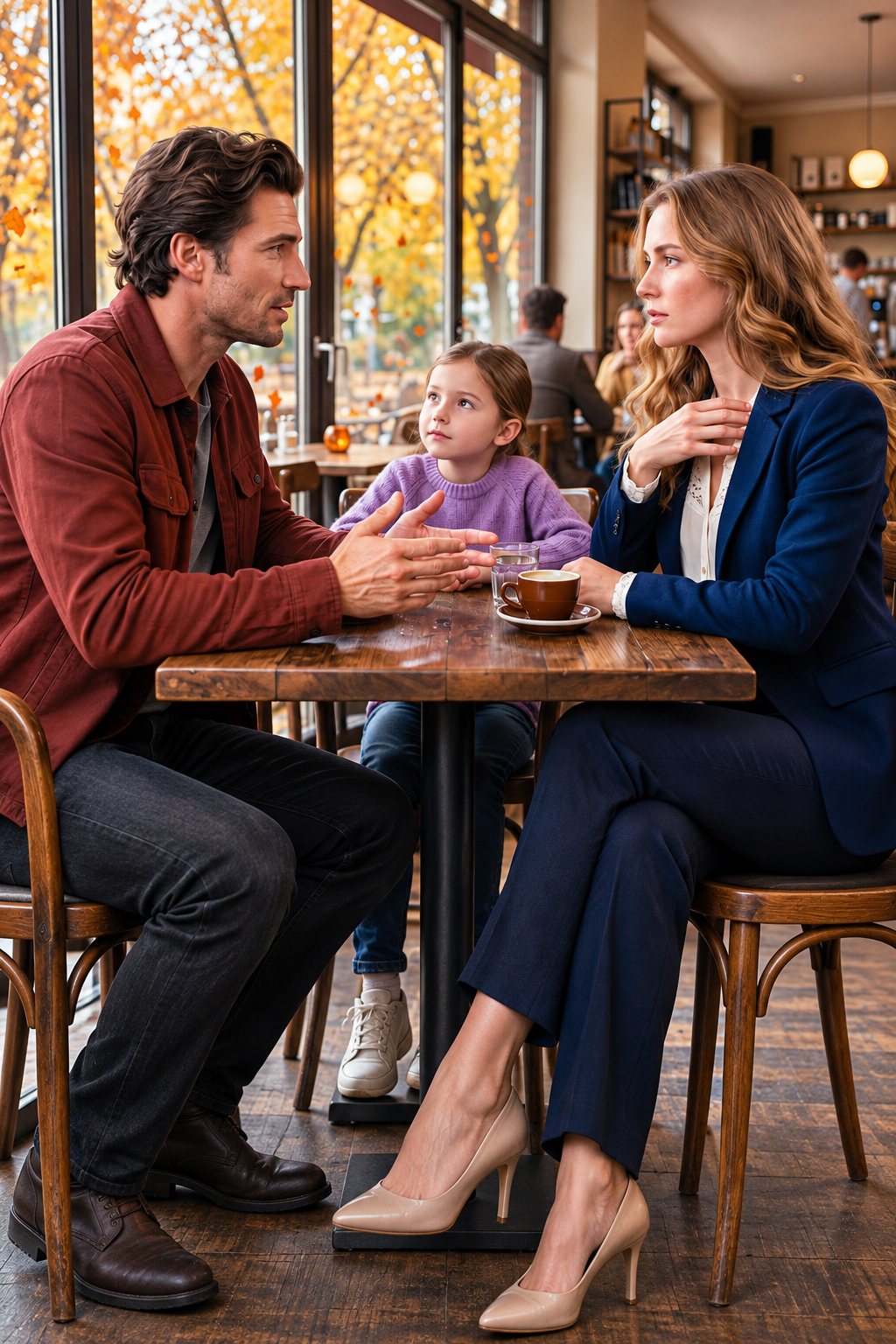
IF FACEBOOK BROUGHT YOU HERE, HERE’S THE CONTINUATION YOU’VE BEEN WAITING FOR. ENJOY! 👇 Elias stayed at our table for another hour, teaching me a few basic conversational signs while Ara drew and corrected my mistakes. When we left, he handed me his card and reminded me that the goal wasn’t fluency by next weekend. “Just show up,” he said.
On the way to the car, Ara held my hand without pulling me anywhere. Later, she showed me a new drawing of the three of us at the café, all leaning toward one another with our hands raised in conversation. I left my buzzing phone in my bag until we got home.
Over the next six days, I practiced in the bathroom mirror and tried short exchanges with Ara after dinner. I canceled three meetings, postponed a Portland site visit, and told Margaret to clear Saturday morning. She sounded surprised but didn’t argue.
At five-thirty that Saturday, I woke before my alarm and worried I’d disappoint Ara again. She was already sitting on her bed with a sketchbook when I knocked. I signed good morning, and she smiled before showing me a drawing of two people learning to dance, their feet tangled but their faces happy.
We drove to the community center near Golden Gate Park and found a dozen people sitting in a circle of folding chairs. Some were deaf, some hearing, and some, like me, were learning how to communicate with someone they loved. Elias welcomed us without making our arrival into an occasion.
Maria was learning because her infant son was deaf. James was learning alongside his wife Carmen, whose hearing had declined over the years, and Ruth was raising a deaf granddaughter. Their reasons were different, but everyone had made room in their lives to be there.
When my turn came to introduce myself, I admitted that I’d spent eight years providing for Ara while leaving too little time to understand her. My voice shook, and my signing was clumsy. Ara watched me with an expression that made it easier to finish.
Elias asked us to practice facing our partners and paying attention to their expressions, not just their hands. Maria helped me through the first exercise, gently correcting my timing. During a break, Ruth told me her granddaughter had needed time and consistency more than grand gestures.
Later, Elias paired Ara and me to describe our café visit. I signed slowly, and Ara filled in the parts I couldn’t express. For the first time, I understood that she’d been excited not only because Elias could sign, but because I had watched someone communicate with her freely.
I apologized for taking so long. She signed that we were learning together now, then squeezed my hand. At the end of class, Elias invited us to a family camping trip at Mount Tamalpais the following weekend.
I’d never camped, and my first instinct was to say no. But Ara was already signing questions about tents and other children, so I asked what we would need to bring. Elias smiled and said there were real bathrooms, which helped more than he knew.
We spent Thursday evening at an outdoor store, where I bought far more equipment than we needed. On Friday, we practiced setting up the tent in our living room, and Ara laughed at my attempts to untangle the poles. I laughed with her instead of getting irritated.
The drive north on Saturday took us past hills, oak trees, and patches of fog. Ara kept pointing out details I would have missed, then sketching them at rest stops. I began to see the journey through her eyes rather than treating it as a route to a destination.
At the campsite, families from class helped us put up our tent. Maria showed me how to secure the stakes, while Ara joined a group of children who signed together as they played. Elias teased me gently about the amount of equipment in my trunk.
That evening, we shared food around a campfire. Carmen and James told me how they’d adapted as her hearing changed, and Ruth explained that sign language had its own grammar and visual structure, not simply English translated into hand movements. I listened more carefully than I usually did in meetings.
Elias spoke about his wife Sarah and their daughter Lily, who had both died in a car accident three years earlier. Lily had been deaf and ten years old, and signing had been part of their family’s daily life. He said teaching other families helped him carry their love forward without pretending his loss had disappeared.
I thanked him for telling me. For the first time, I understood that his kindness came from experience I could not fully imagine. He didn’t ask for pity, only for the chance to keep building the community that had helped him survive.
That night, Ara and I told the group our story about meeting Elias. I made mistakes, and she corrected them, but we finished it together. Back in our tent, she curled close and signed that she loved me where I could see her hands.
I signed it back. I was still a beginner, but this time she didn’t have to guess what I meant.
Part 3 Early Monday morning, my phone rang repeatedly with calls from Margaret and our chief financial officer, David Chen. The Yamamoto representatives had arrived ahead of schedule, and a board meeting had been moved to eight. Richard Morrison, a director who’d long questioned my leadership, was using my canceled meetings and weekend away to argue that I’d lost focus.
I stepped outside the tent to call David. He said Richard had persuaded several directors to question whether my personal life was interfering with the Portland development. The old instinct to defend myself angrily rose immediately.
Elias found me staring at the phone. When I told him what had happened, he asked whether I believed I could still lead the company well. “Better than I did three weeks ago,” I answered, surprising myself with how certain I felt.
I needed to return to San Francisco, but I dreaded telling Ara. Elias suggested that she could stay with the other families if I was comfortable with it; Maria, Carlos, and Ruth were remaining at the site. I spoke with them directly and made sure Ara understood the plan before agreeing.
I explained the situation to her face-to-face, signing slowly and asking her to tell me what she thought. She was disappointed that I had to leave, but excited about spending more time with her friends. I promised to come back as soon as I could, and I meant it.
At the office, Margaret had prepared the figures, the Portland reports, and my charcoal suit. She told me she’d noticed a change in how I worked lately: I was calmer, more focused, and less determined to treat every disagreement as a personal attack. I held on to that observation as I entered the boardroom.
Richard greeted me with a remark about my “camping expedition.” I took my seat and said I’d learned a great deal about communicating across differences, a skill that mattered in international business. One of the Yamamoto representatives leaned forward, interested rather than offended.
I still answered the questions about our schedule and financial projections. But when the discussion turned to Portland, I proposed expanding the development’s accessibility plans with input from people who would actually use the spaces. I described better lighting, clearer sight lines, and common areas that supported visual conversation.
I wasn’t claiming that one weekend had made me an accessibility expert. I proposed bringing deaf and disabled community advisers into the design process, along with qualified consultants. The Yamamoto team asked thoughtful questions, and several directors wanted to know how we would measure costs and demand.
Richard challenged whether my new interests would distract me further. I told him that listening to residents and planning responsibly were part of my job, not a departure from it. By the end of the meeting, we had agreed to explore the revised Portland plan and identify other projects that might benefit from similar work.
The Yamamoto representatives left willing to continue negotiations. David began arranging research and community consultations, and Margaret helped me protect regular time with Ara on my calendar. I returned to the campsite that afternoon, relieved that I could keep the promise I’d made.
Ara ran to me before I’d finished parking. I told her what had happened, with Elias helping only when I got stuck on unfamiliar signs. She listened closely, then asked whether the people at my office had understood me better because I was learning to understand her.
“I think so,” I signed. “And I’m still learning.” She hugged me, then led me toward the campfire where our friends were waiting.
In the months that followed, our Saturday classes became a routine rather than a special event. Ara and I talked about school, friends, drawings, and things that upset her. Sometimes she corrected my grammar, and sometimes she simply waited for me to find the words.
The Portland project developed into a model for more inclusive residential design, shaped by community consultation rather than assumptions made in a boardroom. Other Drake Enterprises projects began considering similar changes. I still worked hard, but I stopped treating every hour away from the office as a failure.
Elias became a close friend through the classes and camping trips. We talked about our children, his memories of Sarah and Lily, and how different our lives had become. Over time, affection grew between us, quietly enough that neither of us tried to give it a name too soon.
Three years after that first café visit, I stood at the San Francisco Convention Center for the inaugural Universal Design Leadership Summit. More than two thousand people had come to discuss accessible buildings and inclusive communities. Ara was eleven, and Elias sat beside her in the front row as I prepared to speak.
Final I told the audience how Drake Enterprises had changed its approach to development. Our inclusive properties were attracting strong interest, and I shared the results we had measured, including longer waiting lists and higher tenant satisfaction. But I was careful to credit the residents, advisers, architects, and families who had helped shape the work.
Then I invited Ara to the stage. She signed while I interpreted, explaining that I used to think providing for her future was enough. She told the audience that being seen and understood in the present mattered just as much.
I was proud of the confidence in her face and the way she looked directly at the people she was addressing. When she finished, the audience applauded, and I felt grateful that she had agreed to share something so personal. Later, Elias presented me with a leadership award, which I accepted on behalf of the people who’d made the changes possible.
That evening, the three of us sat together in my hotel suite. Elias proposed creating a permanent center for families who used sign language and other forms of communication, with classes, children’s art programs, support groups, and a welcoming café. Ara immediately began sketching ideas for the art room.
We worked with families and local partners to plan the Bay Area Center for Inclusive Communication. Drake Enterprises provided funding and project-management help, but community members shaped the design and programming. Six months after the summit, we stood in the warehouse space chosen for the project while children painted a mural for its main gathering room.
A year later, the center opened on a spring Saturday. Ara, now twelve, addressed the crowd in sign language and thanked the families who had helped build a place where everyone could communicate in their own way. I watched from beside Elias, remembering the day she had shown a stranger her drawing in a little café.
The center served more than three hundred families in its first year, and other cities began adapting its approach. Five years after our first meeting, Elias was still part of our lives, and the affection between us had become a steady partnership. Ara had grown into a confident young artist who helped younger children feel welcome.
I still loved running my company, but I no longer mistook a full calendar for a full life. When Ara wanted to tell me something, I put down my phone, turned toward her, and listened with my eyes as well as my hands. The conversation that began at Grounded was one we kept choosing, every day.
THE END. I’ve shared the complete story, and I truly hope it touched your heart. If this story moved you, please , like, and share the post. Thank you for reading! ❤️
✓ Lynn R. Adams
IF FACEBOOK BROUGHT YOU HERE, HERE’S THE CONTINUATION YOU’VE BEEN WAITING FOR. ENJOY! 👇 Elias stayed at our table for another hour, teaching me a few basic conversational signs while Ara drew and cor…