I Caught the HOA Stealing Gravel From My Pit Every Friday—So I Trapped Their Loader Before Their Biggest Road Project
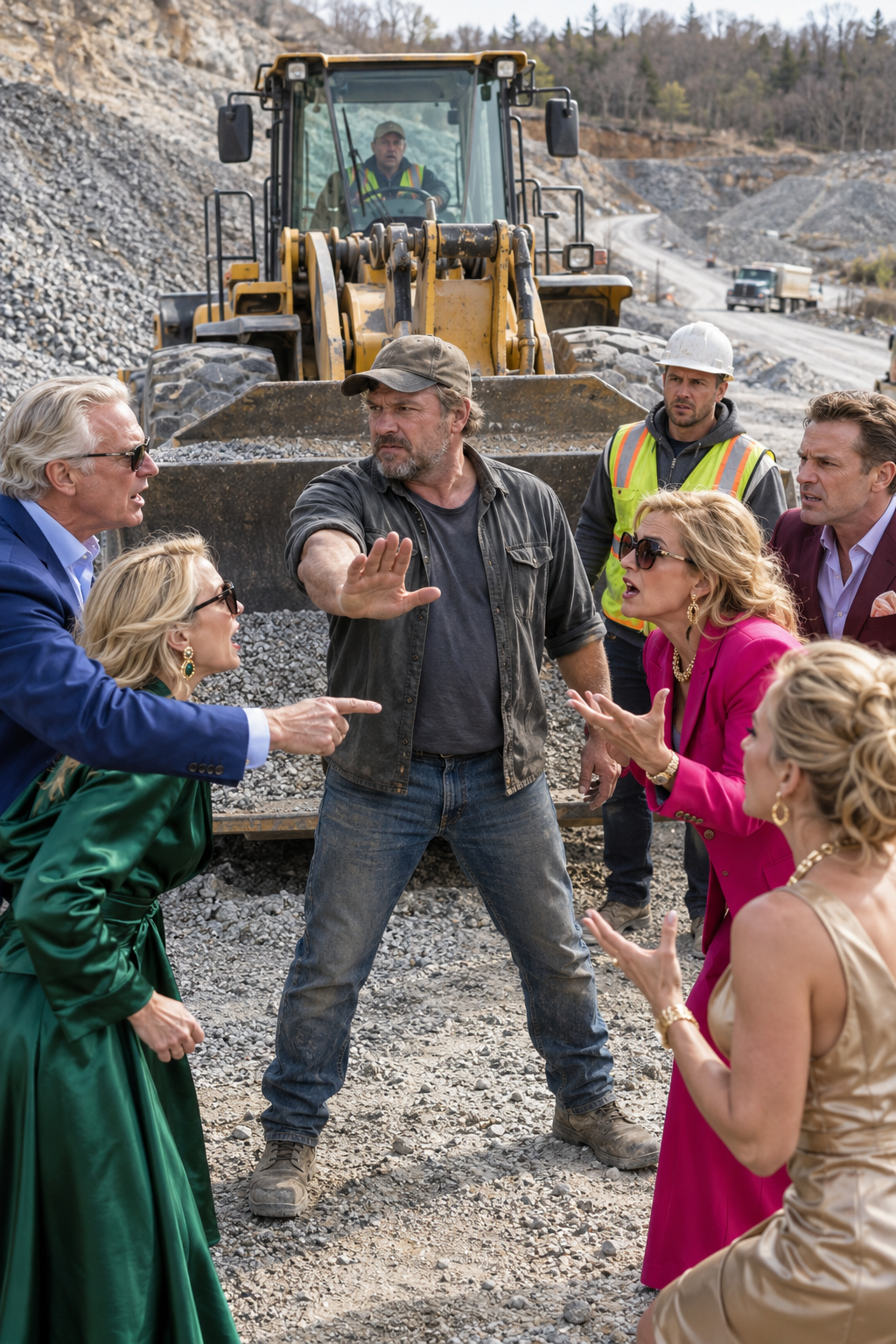
I Caught the HOA Stealing Gravel From My Pit Every Friday—So I Trapped Their Loader Before Their Biggest Road Project
The first thing I saw was my father’s gravel moving down the road in somebody else’s truck.
The second thing I saw was the Willow Creek HOA logo on the door.
The third thing I saw was the loader operator glance straight at my security camera, smile, and raise one finger like I was the one trespassing.
That was the moment I stopped wondering where my gravel had been going.
My name is Mason Cole.
I’m forty-three, divorced, and I own eighty-seven acres outside Cedar Falls, Missouri, including an old limestone-and-gravel pit my father worked for almost thirty years.
It wasn’t glamorous land.
No mountain view.
No white fences for real estate brochures.
Just scrub oak, limestone shelves, a machine shed, two muddy access roads, and a pit deep enough that the bottom stayed cool even in August.
My father, Earl Cole, used to say the place looked ugly only to people who didn’t know what things were worth.
“Roads aren’t made out of pretty,” he told me once.
“They’re made out of what’s under your boots.”
He died three years ago.
He left me the land, the pit, a 2004 Caterpillar excavator, a battered Ford F-250, six steel filing cabinets full of paperwork, and enough old tools to make an auctioneer cry.
I kept the place running part-time.
Mostly small orders.
Farm lanes.
Drainage beds.
A church parking lot.
A couple of county maintenance jobs.
I had a crushing contractor come in twice a year when I needed more material processed.
Nothing huge.
But the pit paid its taxes.
It paid for itself.
And most importantly, it was mine.
Which is why I noticed when twelve hundred tons of gravel disappeared.
Not all at once.
That would’ve been obvious.
It disappeared slowly.
A little every week.
I first noticed it in September.
There was a stockpile on the north bench that should’ve lasted through winter.
Three-quarter-inch crushed limestone.
Good stuff.
I’d measured it myself.
One Friday morning, I drove out and thought the pile looked lower.
Just wrong.
You know how your refrigerator looks when someone has been stealing slices off a cake?
Same feeling.
I checked my load tickets.
I checked my handwritten log.
I called Derek Sloan, the crushing contractor.
“You move anything out of the north pile?”
“You send somebody after hours?”
“Anybody ask you about buying material from me?”
Then he said, “HOA guy called me a month ago.”
That got my attention.
“Which HOA?”
“Willow Creek.”
Willow Creek Estates sat less than two miles east of my property.
One hundred and nineteen houses built around a golf-course-shaped pond that wasn’t actually a golf course.
Stone entrances.
Fake gas lanterns.
Little decorative bridges.
Quarter-acre lots with names like Hawthorne Court and Serenity Lane.
The kind of neighborhood where people paid six hundred dollars a year so three retirees and a real estate agent could send warning letters about trash cans.
Their president was a woman named Pamela Vance.
Silver-blonde hair.
Bright scarves.
White Mercedes SUV.
She had been HOA president for nine years, which was apparently longer than some European monarchies lasted.
I’d met her exactly twice.
Both times she acted like she was allowing me to stand on my own land.
“What did they want?” I asked Derek.
“Asked what you charge per ton.”
“I told them to call you.”
“They didn’t.”
I thanked him.
Then I forgot about it for three days.
That was my mistake.
The following Friday, the pile was lower again.
This time I measured.
Forty-two feet from the old cedar post.
My last measurement had been thirty-seven.
That meant material was leaving.
A lot of material.
I bought two cellular trail cameras that afternoon.
Not cheap hunting cameras.
Commercial ones.
Motion alerts.
Time stamps.
Night vision.
Cloud upload.
I mounted one high in a sycamore overlooking the north stockpile.
I mounted the second behind an abandoned conveyor frame near the service road.
Then I waited.
Nothing Monday.
Nothing Tuesday.
Nothing Wednesday.
Thursday, a raccoon stared directly into the lens at a.m. like he was reviewing my security system.
Friday morning, at , my phone buzzed.
I was standing in my kitchen making coffee.
The first image showed a yellow wheel loader.
Second image showed a dump truck.
Third showed the truck door.
WILLOW CREEK ESTATES.
PROPERTY MAINTENANCE.
I zoomed in.
The loader wasn’t mine.
The truck wasn’t mine.
And neither man had permission to be there.
I watched from my phone as they loaded approximately eighteen tons of my gravel.
Then they drove out.
At , another truck arrived.
They loaded it.
At , another truck.
At , another.
By nine-thirty, four loads were gone.
Seventy tons, give or take.
I didn’t call Pamela.
I didn’t race out there screaming.
I didn’t block the road.
I didn’t post anything online.
I made coffee.
I opened a notebook.
And I started writing times.
Because my father taught me something else.
If someone steals from you once, stop them.
If they’ve been stealing from you for months, find out why they think they can keep doing it.
So I watched.
The next Friday, they came again.
Five trucks.
The Friday after that, six.
Same loader.
Same access road.
Same casual routine.
Nobody rushed.
Nobody hid their faces.
Nobody acted nervous.
They moved like men who believed the gravel belonged to them.
And that disturbed me more than the theft itself.
Because thieves hurry.
Employees don’t.
I checked every contract my father had ever signed with Willow Creek.
I searched the old cabinets.
I looked through easements.
Utility agreements.
County permits.
Material sales.
I called our family attorney, Hannah Price.
She’d handled Dad’s estate.
Forty-eight years old.
Sharp enough to make silence feel expensive.
I sent her three weeks of video.
She called me ten minutes later.
“You have any agreement with them?”
“Ever invoice them?”
“Did your father?”
“Not that I can find.”
“Have you confronted them?”
That one word surprised me.
“Let them keep behaving naturally.”
“Hannah, they’re hauling out thousands of dollars every Friday.”
“And every Friday they’re creating evidence.”
She asked me to estimate losses.
Based on volume, truck capacity, and current aggregate prices, I figured somewhere between $31,000 and $44,000 worth of processed material had disappeared since late summer.
Possibly more.
Hannah was quiet.
Then she asked, “Do you know what they’re using it for?”
“Find out.”
That turned out to be easy.
Willow Creek had been talking about a road rehabilitation project for months.
Everyone knew.
Their internal streets were twenty years old.
Drainage issues.
The HOA had collected a special assessment of $4,800 per house.
More than half a million dollars.
Signs went up near the entrance.
ROAD IMPROVEMENT PROJECT.
PHASE ONE BEGINS NOVEMBER 14.
The contractor listed underneath was RidgeLine Infrastructure LLC.
I knew the name.
Everybody in our county did.
RidgeLine handled commercial grading, subdivisions, stormwater projects, and municipal work.
Its owner, Curtis Bell, had a reputation for bidding low and discovering expensive “unexpected conditions” later.
Nothing illegal that I knew of.
Just expensive.
I searched county records.
RidgeLine had pulled permits for drainage corrections inside Willow Creek.
I drove through the neighborhood one afternoon.
Not trespassing.
Public access until the private streets began.
I saw fresh limestone under several repaired shoulders.
Faint reddish specks from the iron seam running through the north side of my pit.
It looked familiar.
But looking familiar wasn’t proof.
So I did something my father would’ve laughed at.
I collected samples.
One from my north pile.
One from the shoulder at Willow Creek’s entrance.
One from a drainage trench visible beside their clubhouse parking lot.
Then I paid a materials lab in Columbia to compare them.
Mineral composition.
Trace content.
Three days later, the lab manager called.
“Where did these come from?”
“Different places.”
“Well, sample B and sample C look like sample A’s twins.”
“How close?”
“Close enough that if you told me all three came from the same crushed source, I wouldn’t argue.”
I asked him to put that in writing.
Then came the fourth Friday.
That morning I drove to the pit before dawn.
Not to stop them.
To watch them in person.
I parked my truck behind the machine shed, where it couldn’t be seen from the north road.
At , headlights appeared through the trees.
The loader rolled in first.
Yellow Volvo.
Mud on the tires.
RidgeLine logo on the rear quarter.
Behind it came two HOA dump trucks.
Then a white Ford pickup.
The pickup stopped near the stockpile.
Pamela Vance climbed out.
That changed everything.
She wore a long camel coat, black boots, and sunglasses even though sunrise had barely touched the ridge.
She stood beside the loader operator holding a travel mug.
Then Curtis Bell got out of the passenger side.
I knew him from pictures.
Late fifties.
Gray beard trimmed close.
Orange RidgeLine jacket.
They talked for maybe thirty seconds.
Curtis pointed toward my gravel.
Pamela looked around.
Then the loader started scooping.
I recorded all of it from behind the shed.
The conversation was too far away to hear.
But I didn’t need sound.
Pamela’s presence mattered.
Curtis’s presence mattered.
This wasn’t two maintenance guys freelancing.
This was organized.
I watched them take ninety-three tons that morning.
Then they left.
At , Pamela’s Mercedes followed.
That afternoon, I called Hannah.
“We’re past accidental.”
“What now?”
“Now we find out what they think authorizes this.”
“Why not send a demand letter?”
“Because if they have a document, I want to see what they do with it before we tell them what we know.”
I leaned back in my chair.
“What kind of document?”
“The kind people produce when reality becomes inconvenient.”
I understood.
A contract.
An easement.
Something with my father’s name on it.
Maybe real.
That night I went through Dad’s filing cabinets again.
Every folder.
Every envelope.
Every yellow legal pad.
At in the morning, I found something strange.
Three lines on the back of an old invoice from 2019.
Willow Creek wants north pit access.
No shared source.
DO NOT SIGN.
The last line was underlined twice.
I sat there staring at my father’s handwriting.
No shared source.
That phrase bothered me.
Not “don’t sell.”
Not “price too low.”
Not “call attorney.”
No shared source.
It sounded like somebody had already proposed exactly what I was watching happen.
I took a picture.
Then I slept for three hours.
The next week, I made a decision.
I wasn’t going to confront Pamela.
I was going to make her confront me.
Willow Creek’s major road project was scheduled to start Monday.
According to the public contractor notice, crews planned to mill two streets, excavate failed base material, correct drainage, and lay fresh asphalt.
The base work required hundreds of tons of aggregate.
Which meant if their pattern held, the biggest gravel run would happen Friday.
The Friday before construction.
So Thursday evening, I moved my excavator.
Not across the public road.
Not where anyone could claim I trapped them.
I parked it sideways across the narrow internal haul path between the north pit and the exit road.
There was another way out.
Barely used.
Nobody was trapped.
But anything carrying a full load would have to back almost half a mile to use it.
Then I placed three limestone boulders beside the primary exit, leaving enough room for a pickup but not a dump truck.
I mounted two additional cameras.
I put fresh batteries in everything.
Then I called the county sheriff’s non-emergency line.
I told them I had documented repeated commercial theft from my property.
I told them I expected another attempt in the morning.
I told them I would not confront anyone physically.
And I asked for a deputy to meet me at a.m.
The dispatcher took my name.
My address.
Then she said, “Sir, if you believe a theft is actively occurring, call 911.”
“I intend to.”
Friday came cold.
Thirty-four degrees.
Wind pushing dead leaves across the pit.
I arrived at .
At , the loader appeared.
At , the first truck followed.
Then another.
Then another.
Seven trucks total.
I stood beside my Ford with my coffee and watched them drive in.
Nobody saw me at first.
They went straight to the north pile.
The operator filled the first truck.
It turned toward the exit.
Then stopped.
The boulders were waiting.
The driver got out.
The second truck pulled behind him.
Then the third.
The loader operator rolled forward.
He looked at the excavator blocking the haul path.
Then he finally saw me.
He shut down the machine.
For ten seconds, the pit was quiet.
Then he climbed out.
His name, I later learned, was Kyle Mercer.
Thirty-six.
RidgeLine employee.
Brown beard.
Red hooded sweatshirt under his safety vest.
He walked toward me with both hands open.
“Hey, man.”
I said nothing.
“You Mason?”
“Cool. We got a problem with your excavator.”
He looked past me.
“It’s blocking the lane.”
“We need to get trucks through.”
He smiled like I was making a joke badly.
“Buddy, we got scheduled work.”
“On your land?”
He pointed back at the stockpile.
“We’re hauling material for Willow Creek.”
That wiped the smile away.
He looked at the trucks.
Then back at me.
“You know?”
“I’ve known for five weeks.”
His face changed.
Calculation.
“You should call Curtis.”
Kyle put his hands in his vest pockets.
“Look, I don’t get into the business side. I just run equipment.”
“Then don’t get into it.”
He nodded once.
Fair enough.
I liked him a little for that.
Then a white pickup came down the road fast.
Curtis Bell.
He stopped fifteen feet from me and got out before the engine died.
“Mason Cole?”
He glanced at the blocked road.
Then at the trucks.
“What the hell are you doing?”
“Standing on my property.”
“You’ve got seven trucks locked in here.”
“They have an exit.”
“That goat trail?”
“It’s a road.”
“With loaded tandems?”
“Then unload them.”
Curtis stepped closer.
“You’re interfering with a contracted infrastructure project.”
I took a sip of coffee.
“Who contracted you to remove my gravel?”
He stared at me for half a second too long.
Then he said, “You need to talk to Pamela.”
“No. I asked you.”
“We’ve got authorization.”
His jaw tightened.
“It’s not my job to carry every contract in my truck.”
“Then it’s not your job to take another bucket.”
I looked at Kyle.
“Shut the loader down.”
Curtis snapped, “Don’t take orders from him.”
Kyle stayed still.
I looked at Curtis.
“Your loader is on my deeded property. Your trucks are loaded with my material. I have five weeks of footage. And a deputy is already on the way.”
Curtis said nothing.
Then I heard gravel crunching behind me.
Sheriff’s cruiser.
Deputy Laura Jensen stepped out.
Blonde ponytail.
Dark green uniform.
Body camera active.
She looked at me.
Then Curtis.
Then the line of loaded trucks.
Curtis immediately started talking.
“Deputy, this gentleman has intentionally obstructed a permitted construction operation and trapped our equipment—”
I raised one finger.
“Deputy, I told dispatch last night these vehicles might enter my property to remove material without permission. They entered at . Cameras recorded everything. They loaded approximately twenty-two tons before being stopped.”
Jensen looked at Curtis.
“Do you have permission to take this material?”
“From him?”
“From Willow Creek Estates.”
She glanced at me.
“Does Willow Creek own this property?”
Curtis said, “There’s an agreement.”
I felt something cold move through my stomach.
There it was.
Hannah had predicted it.
Deputy Jensen asked, “Agreement with who?”
Curtis hesitated.
Then he said, “Previous owner.”
I kept my face still.
“What’s the name?” Jensen asked.
“Earl Cole.”
“When was it signed?”
“I don’t have that information memorized.”
I almost smiled.
Not because it was funny.
Because Curtis had just stepped exactly where Hannah thought he would.
I said, “Earl Cole died three years ago.”
Curtis nodded.
“And your company started taking material two months ago.”
“Willow Creek told us the agreement survived ownership transfer.”
“Then show it.”
Curtis exhaled hard.
“Mason, this can be handled between attorneys.”
I pointed toward the trucks.
“Unload my gravel.”
Deputy Jensen looked at him.
“If ownership is disputed, I recommend you return the material until documentation is verified.”
Curtis shook his head.
“This is absurd.”
Jensen’s voice stayed flat.
“Sir, the property owner is alleging active theft. You’re telling me your authority comes from a contract you don’t have with you and that the contract was signed by a deceased former owner.”
“It exists.”
“Then this gets easier when you produce it.”
Curtis turned away and called someone.
I knew who before he said her name.
“Pamela, get down here.”
Twenty-one minutes later, the white Mercedes arrived.
Pamela got out carrying a leather folder.
She didn’t look surprised.
That told me almost as much as the folder did.
She walked straight past the deputy and stopped in front of me.
“Mason, I’m disappointed you chose to turn a neighborly arrangement into theater.”
“Neighborly?”
“You know exactly what I mean.”
“No. I don’t.”
She gave me the kind of smile people use before saying something cruel in a pleasant voice.
“Your father understood that Willow Creek needed periodic access to excess material. He was practical about community development.”
My father hated Willow Creek.
Not the residents.
He once called them “a city council without a city.”
I said, “Show me his agreement.”
Pamela opened the folder.
She pulled out four pages.
Hannah had told me not to grab anything.
So I didn’t.
Pamela held the first page where I could see it.
GRAVEL RESOURCE ACCESS AGREEMENT.
Dated April 18, 2020.
Property owner: Earl Cole.
Beneficiary: Willow Creek Estates Homeowners Association.
The document supposedly gave Willow Creek “ongoing rights to extract, transport, and utilize excess aggregate material from the northern resource area for neighborhood infrastructure purposes.”
No tonnage limit.
No expiration.
No payment.
Then she showed me the signature page.
My father’s name.
Signed in blue ink.
For one second, the pit disappeared.
The trucks disappeared.
The deputy disappeared.
All I saw was that signature.
Because it looked real.
Not vaguely real.
My father had a weird capital E.
There it was.
His C in Cole leaned backward.
There it was.
Even the pressure marks looked right.
Pamela saw something change in my face.
Her smile deepened.
“I assumed you had this in your estate records.”
“Well, that’s unfortunate.”
Deputy Jensen looked at me.
“Do you recognize the signature?”
I answered carefully.
“It resembles his.”
Pamela closed the folder.
“Then perhaps we can stop wasting everyone’s morning.”
I looked at the date again.
April 18, 2020.
Something was wrong.
I couldn’t name it.
But something was wrong.
Curtis folded his arms.
“So move the excavator.”
Pamela’s smile disappeared.
“You just acknowledged the agreement.”
“I said the signature resembles my father’s.”
“It is his.”
“Then send the full document to my attorney.”
She tilted her head.
“We don’t need your attorney’s permission to exercise an existing property right.”
“You need mine if the agreement is fake.”
Her eyes hardened.
That was the first honest expression I’d seen from her.
“Accusing people of fraud has consequences.”
“So does stealing gravel.”
Deputy Jensen stepped between us slightly.
“Okay. Nobody is escalating this.”
I looked at Pamela.
Then Curtis.
Then at Kyle sitting inside the loader cab.
Then I said the five words that changed the morning.
“My father was in hospice then.”
Pamela blinked.
April 18, 2020.
I remembered now.
Dad had been diagnosed in February.
By late March, he couldn’t drive.
By April, he barely left the house.
But that alone didn’t prove anything.
He could’ve signed at home.
I needed more.
I called Hannah.
Speakerphone.
“Tell her the date,” I said.
“April eighteenth, 2020.”
Then Hannah said, “Send me the signature page.”
Pamela immediately objected.
“This is proprietary association documentation.”
Hannah heard her.
“Pamela Vance?”
“This is Hannah Price. I represented Earl Cole.”
“I know who you are.”
“Wonderful. Then you know I prepared Earl’s durable power of attorney.”
Pamela’s posture changed.
Hannah continued.
“Earl lost legal signing capacity on April 9 after his physician documented medication-related cognitive impairment. His son held power of attorney for property matters thereafter.”
My grip tightened around the phone.
I hadn’t remembered the exact date.
Hannah had.
She continued.
“If you have a property agreement executed by Earl on April 18, I strongly suggest nobody moves, alters, scans over, staples through, destroys, replaces, or mysteriously loses that original document.”
The pit went silent again.
Curtis looked at Pamela.
Pamela stared at my phone.
Then she said, “You’re making assumptions.”
Hannah answered, “No. I’m preserving evidence.”
That was our first payoff.
But beautiful.
Curtis ordered every truck unloaded.
Right there.
He wasn’t willing to leave with one stone.
Pamela objected.
He ignored her.
Forty minutes later, the gravel was back on my pile.
The trucks backed down the secondary road one at a time.
The loader remained.
Deputy Jensen documented its VIN, company markings, operator, and location.
Then Curtis drove away.
Pamela stayed.
She watched the final truck disappear.
Then she turned to me.
“You think you won something.”
“I got my gravel back.”
“This morning.”
“You have no idea how many people are depending on that road project.”
“That doesn’t make my property free.”
“You’re going to delay work for one hundred and nineteen families.”
“No. Whoever created that contract might.”
Her jaw tightened.
“This community has tolerated your operation for years.”
That sentence almost made me laugh.
My pit had been there since 1978.
Willow Creek’s first house went up in 2002.
“You moved next to us.”
“I’m talking about dust. Noise. Truck traffic. Equipment.”
She stepped closer.
“People want stability, Mason. They want safe roads. Maintained property values. Predictability. Your father understood compromise.”
I stared at her.
Then I said, “My father wrote himself a note about you.”
That landed.
Small movement.
“What note?”
“You have a nice morning, Pamela.”
She left without another word.
That afternoon, I locked every gate.
Saturday morning, I installed temporary concrete barriers on the north access road.
Sunday, I received the first certified letter.
Willow Creek Estates accused me of interfering with “established aggregate access rights.”
Monday, RidgeLine did not begin road construction.
By noon, residents were furious.
By three, someone posted my name in the Willow Creek community Facebook group.
I wasn’t a member.
But Derek’s sister lived there.
She sent me screenshots.
WHO IS MASON COLE AND WHY IS HE BLOCKING OUR ROAD REPAIRS?
APPARENTLY HE INHERITED THE ROCK PIT AND NOW WANTS TO RENEGOTIATE AN OLD AGREEMENT.
HE’S HOLDING THE COMMUNITY HOSTAGE FOR MONEY.
That one came from Pamela.
Not under her own name.
But from the HOA official page.
Interesting choice.
Hannah told me not to respond.
So I didn’t.
Tuesday, someone dumped two dead tires at my gate.
Wednesday, a county code officer arrived.
Anonymous complaint.
Dust violation.
Improper commercial storage.
Abandoned equipment.
He inspected everything.
Found nothing serious.
Thursday, another complaint.
Stormwater runoff.
Friday, another.
The pattern was obvious.
But Pamela wasn’t stupid enough to leave fingerprints.
So I kept records.
Every visit.
Every complaint.
Every email.
Every certified letter.
My father taught me how to run a loader.
Hannah taught me how to run a paper trail.
The HOA thought I was angry.
Angry people rush.
I was interested.
I was interested in why they came every Friday.
I was interested in why Pamela appeared personally.
I was interested in why Curtis seemed more nervous about the contract than the theft.
I was interested in why an agreement supposedly signed by my dying father had never appeared in his files.
I was interested in why Willow Creek needed free gravel when its residents had just paid more than half a million dollars for road work.
And I was especially interested in why the HOA’s own budget listed $164,000 for “aggregate base materials.”
Free gravel.
One hundred sixty-four thousand dollars.
Those numbers did not belong in the same sentence.
So I started digging.
Not in the pit.
In public records.
Willow Creek filed annual financial summaries with its management company.
Nothing detailed.
But enough to show large transfers into a road reserve.
The special assessment brought in approximately $571,000.
RidgeLine’s contract had been approved at $812,000.
That was already higher than residents thought.
The HOA had apparently pulled another $241,000 from reserves.
I found the board meeting minutes.
The contract vote was 4-1.
Pamela Vance: yes.
Treasurer Gerald Pike: yes.
Secretary Renee Lawson: yes.
Member Thomas Reed: yes.
Member Susan Mills: no.
Susan’s objection was summarized in one sentence.
“Requested independent material-cost verification.”
Motion denied.
That sentence glowed on my screen.
I called her.
Susan answered on the fourth ring.
“Mason Cole?”
“I wondered when you’d call.”
That wasn’t what I expected.
“You know who I am?”
“Everyone in Willow Creek knows who you are this week.”
She lowered her voice.
“I didn’t vote for that contract.”
“Board minutes.”
“They edited those.”
“What do you mean?”
“My objection was longer.”
“What did you say?”
Then, “Not over the phone.”
We met at a diner twenty miles away.
Not because we thought Pamela had spies.
Because Susan didn’t want neighbors photographing her car beside mine.
She was sixty-seven.
Retired bank compliance officer.
Small woman.
Short gray hair.
Navy coat buttoned to the neck.
She arrived with no folder.
Just her purse.
Then she placed a flash drive beside my coffee.
“I was treasurer before Gerald.”
“How long?”
“Six years.”
“What happened?”
“Pamela decided I asked too many questions.”
I didn’t touch the drive.
“What’s on it?”
“Documents I saved before they removed my access.”
“What kind?”
“Invoices.”
My pulse changed.
“RidgeLine?”
“Among others.”
She took a sip of coffee.
“Do you know what crushed limestone costs?”
“Then you’ll enjoy invoice 417.”
I took the drive home.
Hannah came over.
We opened the files on an old laptop disconnected from my business network.
Invoice 417.
RidgeLine Infrastructure LLC.
Material procurement.
840 tons aggregate base.
Sixty-three dollars per ton.
My retail price for comparable material was nineteen.
Bulk price lower.
Invoice 432.
1,260 tons.
Sixty-five dollars per ton.
Invoice 446.
Drainage aggregate.
The quantities lined up disturbingly well with what had disappeared from my pit.
But here was the problem.
The HOA was paying RidgeLine for aggregate.
RidgeLine was taking aggregate from me for free.
Where was the money going?
Hannah leaned toward the screen.
“Maybe RidgeLine bills for material whether they purchase it or not.”
“Still ugly.”
“But not necessarily Pamela.”
“Keep looking.”
Then we found invoice approval forms.
Every large payment required two HOA signatures.
Gerald Pike.
Pamela Vance.
That still wasn’t enough.
Board officers sign invoices.
Then I found a file named VENDOR_REBATES.
Almost empty.
One scanned check.
From Bell Site Consulting.
Payable to PV Community Strategies LLC.
I searched Missouri business records.
PV Community Strategies had been formed eighteen months earlier.
Registered agent?
Pamela Vance.
My skin went cold.
Hannah didn’t celebrate.
She never celebrated early.
“Bell Site Consulting could be unrelated.”
“Curtis Bell.”
“Could still be unrelated.”
“You believe that?”
“Then why say it?”
“Because a courtroom will.”
I laughed once.
She pointed at the screen.
“Suspicion isn’t evidence. Connection isn’t proof. Proof is proof.”
So we needed proof.
Susan gave us more.
Board emails.
Not everything.
Just what she had backed up.
Most were boring.
Landscaping.
Pool repairs.
Holiday lighting.
Then a thread from eight months earlier.
Subject: NORTH SOURCE.
Pamela to Curtis Bell.
Need updated haul estimate assuming existing access arrangement remains in place.
Curtis replied:
No issue if source remains no-cost. Labor/equipment only.
Proceed under historical understanding. Do not complicate resident-facing documents.
There it was.
Very close.
Then another email.
Need confirmation Cole property won’t interfere after transfer.
Estate situation resolved. We have documentation.
That email was dated six weeks after my father died.
I read it three times.
Estate situation resolved.
We have documentation.
I called Hannah.
“What documentation?”
“That,” she said, “is the right question.”
The next morning, we sent a formal preservation demand.
To Willow Creek HOA.
To Pamela Vance personally.
To RidgeLine Infrastructure.
To Curtis Bell.
Preserve contracts.
Original documents.
Accounting.
Haul records.
GPS records.
Material tickets.
Equipment logs.
We also demanded that the alleged 2020 agreement be produced for forensic inspection.
They had seven days.
On day two, RidgeLine hired a lawyer.
On day three, the HOA hired a different lawyer.
On day four, Pamela sent residents a letter.
She called the dispute “a title and access misunderstanding.”
She blamed “incomplete estate documentation.”
She said the road project was being delayed by “one adjacent property owner’s unexpected challenge.”
That property owner was me.
By Friday, residents were calling me.
Some angry.
Some curious.
Some apologetic.
One man named Robert Hale called at p.m.
“My wife and I are retired,” he said. “We paid forty-eight hundred dollars. Are we losing it?”
“I don’t know.”
“Did you really stop the road work?”
“I stopped trucks from taking my gravel.”
“HOA says your father gave permission.”
“That’s being investigated.”
He was quiet.
Then he asked, “Were they charging us for your gravel?”
That was the first resident who asked the correct question.
I said, “You should ask your board.”
By Sunday, everyone was asking.
Pamela scheduled an emergency HOA meeting for Tuesday night.
Hannah told me not to attend.
I went anyway.
Willow Creek’s clubhouse held maybe ninety people comfortably.
One hundred and thirty showed up.
Some stood along the walls.
Others crowded near the doors.
Pamela sat behind a folding table at the front.
Gerald Pike beside her.
Renee Lawson.
Thomas Reed.
Susan Mills sat in the audience.
Not with the board.
That told everyone something.
Pamela opened with a prepared statement.
She said the HOA possessed a valid historical gravel agreement.
She said RidgeLine had acted in good faith.
She said an “estate-related misunderstanding” had temporarily disrupted the project.
Then a resident shouted, “Why did you charge us sixty-five dollars a ton if it was free?”
The room changed.
Pamela froze.
Just for a beat.
Gerald looked down.
Another resident stood.
“How much gravel did you buy?”
Pamela said, “Please allow the board to complete—”
“Did we buy it from RidgeLine?”
Someone else:
“Did RidgeLine buy it from Cole?”
“Where are the tickets?”
“Why is the road contract eight hundred thousand?”
“Where did the reserve money go?”
Pamela lifted both hands.
“This meeting will remain orderly.”
Susan stood.
She didn’t raise her voice.
She didn’t need to.
“I requested material verification before the vote.”
The room went silent.
Pamela stared at her.
Susan continued.
“My objection was shortened in the official minutes.”
Renee Lawson turned toward Pamela.
That was interesting.
Pamela said, “Susan, that is inappropriate.”
“No. The invoices are inappropriate.”
Gerald Pike leaned toward his microphone.
“What invoices?”
Susan looked at him.
“You signed them.”
Gerald went pale.
Then everybody started talking.
Pamela called for order.
No one listened.
I stayed in the back.
Arms folded.
A man near the front noticed me.
“There he is.”
Heads turned.
Pamela’s eyes found mine.
“Mason,” she said sharply, “this is a private association meeting.”
I said, “Then I’ll leave.”
That surprised her.
I turned toward the door.
Then Robert Hale shouted, “Wait.”
“Mason, did the HOA have permission to take your gravel?”
Every face watched me.
I looked at Pamela.
Then I answered.
The room exploded.
Pamela struck the table with a wooden gavel.
“Allegedly!”
I looked at her.
She pointed at me.
“We have a signed agreement.”
“Then let the forensic examiner inspect the original.”
The room quieted again.
Pamela’s hand lowered.
I continued.
“You’ve had our request for six days.”
Her attorney, seated near the wall, stood.
“We are not litigating this matter in a clubhouse.”
Then I walked out.
That was the second payoff.
I didn’t accuse Pamela of fraud.
I didn’t mention the invoices.
I didn’t mention PV Community Strategies.
I didn’t mention Susan’s flash drive.
I didn’t have to.
The right question had already entered the room.
Once people ask where their money went, you can’t make them unask it.
The next morning, RidgeLine delivered the original agreement to Hannah’s office.
Not willingly.
Their lawyer wanted a protective chain-of-custody procedure.
The paper went to a forensic document examiner in St. Louis.
Printer characteristics.
Signature comparison.
Staple holes.
Impressions.
Metadata from the scanned versions.
Everything.
Results would take time.
Meanwhile, I focused on something simpler.
Truck records.
RidgeLine’s own GPS logs showed its loader entering my property on fourteen separate Fridays.
Dump trucks entered sixty-seven times.
Estimated material removed?
1,184 tons.
Value at my normal commercial bulk rate?
Around $21,000.
Amount Willow Creek had been invoiced for equivalent aggregate procurement?
More than $75,000.
That didn’t include hauling.
When Hannah showed me the spreadsheet, I whistled.
“People get stupid around easy money.”
She looked at me.
“People get comfortable around repeated money.”
That was better.
Because none of this felt new.
It felt practiced.
Two days later, Curtis Bell called me directly.
Not his lawyer.
“I want to work something out.”
“Call Hannah.”
“I’m calling you.”
“That’s your first mistake.”
He exhaled.
“You want your material paid for? Fine.”
“That’s not the issue anymore.”
“It can be.”
“You’re making this bigger than it needs to be.”
I almost laughed.
“That sentence usually means something is already very big.”
Then he said, “Pamela told us the agreement was valid.”
“That’s between you and Pamela.”
“She produced a document.”
“So did you.”
“We relied on it.”
“Then tell the truth about where it came from.”
Another pause.
“I never met your father.”
That mattered.
I stood from my desk.
“Say that again.”
“I never met Earl Cole.”
“Did you ever speak to him?”
“Did anyone at RidgeLine?”
“Not that I know of.”
“Did your company exist in 2020?”
My chest tightened.
He hung up.
I immediately searched Missouri corporate records.
RidgeLine Infrastructure LLC had been formed in February 2021.
Ten months after the alleged agreement.
That alone didn’t destroy the contract.
The agreement was between Dad and Willow Creek, not RidgeLine.
But it made Curtis’s involvement later.
And it made Pamela the bridge.
Then the forensic report came back.
Hannah called me to her office.
She didn’t read results over the phone.
That told me they were important.
I arrived twenty minutes later.
She slid three pages across the table.
“Paper stock is consistent with manufacture after mid-2021.”
“The contract is dated 2020.”
“Printer toner?”
“Consistent with a model released in 2022.”
My mouth went dry.
“Signature?”
She tapped the final paragraph.
The examiner believed the signature was not naturally executed on the page.
Instead, it appeared to be a high-resolution reproduction transferred from another document.
My father had never signed that agreement.
Someone copied his signature.
Printed it.
Backdated it.
Then used it to remove almost twelve hundred tons of my property.
I should’ve felt victorious.
I felt sick.
Because I suddenly remembered something.
Dad’s power of attorney.
His estate documents.
His equipment titles.
Dozens of pages with clean signatures.
Somebody didn’t need sophisticated forgery skills.
They only needed access.
“Who had copies of Dad’s records?” I asked.
Hannah frowned.
“Me. You. The hospital had some. Banks. Title company. County recorder.”
“Willow Creek?”
“Did Dad ever send Pamela anything?”
“Possibly correspondence.”
I drove home.
Went straight to the filing cabinets.
Found the 2019 folder.
Willow Creek.
There were three letters.
The first was from Pamela.
Proposal for cooperative aggregate access.
The second was Dad’s response.
The third was a follow-up requesting a meeting.
Attached to Dad’s response was a notarized boundary statement.
And there, at the bottom, was his signature.
Almost identical to the forged one.
I scanned both.
Overlaid them.
Perfect match.
Not similar.
Someone had lifted the signature from the boundary letter.
The same letter sent to Pamela Vance in 2019.
For the first time since this started, I felt real anger.
Not hot anger.
Cold anger.
The kind that makes every sound in the room sharper.
She had asked him.
He had said no.
Then after he died, someone made his no into a yes.
I called Hannah.
“We have the source signature.”
Five seconds of silence.
“Don’t touch anything else.”
The sheriff’s office transferred the matter to a detective.
Then the county prosecutor became involved.
Then, because funds from more than a hundred homeowners were potentially involved, state investigators started asking questions.
Pamela stopped posting online.
The HOA attorney resigned from representing her personally.
RidgeLine suspended Curtis pending an internal review.
Then something unexpected happened.
Curtis showed up at my gate.
No company truck.
Just an old blue Ram.
I didn’t open the gate.
We talked through it.
“You recording?” he asked.
He looked exhausted.
“I screwed up.”
“That’s not specific enough.”
“I should’ve verified the source agreement.”
“I trusted Pamela.”
“That sounds like your problem.”
He looked toward the pit.
“She told me your father had allowed material use for years.”
“He didn’t.”
“I know that now.”
“Why did you invoice the HOA for material?”
His face tightened.
“Because our contract was fixed-price by unit.”
“That doesn’t answer it.”
“We priced aggregate into the job.”
“Then got it free.”
“So your margin increased.”
“And Pamela knew?”
Curtis looked away.
He finally said, “She negotiated it that way.”
“What does that mean?”
“She wanted the invoice to show normal procurement costs.”
“She said residents didn’t need to know every sourcing arrangement.”
I held his eyes.
“And PV Community Strategies?”
That hit him.
He stared at me.
“You know about that?”
Curtis rubbed his beard.
Then said something I didn’t expect.
“That wasn’t my company.”
“Bell Site Consulting.”
“My brother’s.”
“Did he pay Pamela?”
“Consulting.”
“For what?”
“I don’t know everything.”
“That answer sounds expensive.”
He looked toward the road.
Then back at me.
“I’m cooperating with investigators.”
“You should know this road project wasn’t the first one.”
I stopped breathing for half a second.
“Willow Creek used material from your pit before RidgeLine.”
“I don’t know.”
“How long?”
“Pamela said the arrangement had been active since your father was alive.”
“She lied.”
“No. She lied.”
Curtis nodded.
Then reached into his coat.
He pulled out a folded photocopy.
“I found this in the project archive.”
He slid it through the bars of the gate.
It was an email.
Dated 2018.
Five years before Dad died.
Pamela to a contractor I didn’t recognize.
North source available Friday mornings only. Earl not usually onsite before ten. Use west approach.
My hands went numb.
Friday mornings.
Not usually onsite before ten.
That wasn’t an agreement.
That was a schedule.
They had been stealing while my father was alive.
Long before RidgeLine.
Long before the forged contract.
Maybe for years.
I looked up.
Curtis was already walking toward his truck.
He stopped.
“How much?”
“How much gravel did Willow Creek take before I inherited this place?”
He shook his head slowly.
“I don’t know.”
He looked at the pit.
Then at me.
“More than you think.”
He drove away.
That night, I didn’t sleep.
I opened my father’s old production logs.
Page after page.
Tonnage processed.
Tonnage sold.
Stockpile estimates.
For years, Dad had written small notes in the margins.
N pile low?
Loss unexplained.
Check scale.
Missing 70-90t.
Gate chain cut?
At the time, I would’ve assumed sloppy accounting.
Now it looked different.
I built a spreadsheet.
The losses weren’t random.
They clustered on Fridays.
Especially before Willow Creek maintenance projects.
Drainage repairs.
Pool parking expansion.
Shoulder grading.
Clubhouse renovation.
My estimate climbed.
Two thousand tons.
Three thousand.
Four thousand.
By the time I stopped, I had a conservative historical loss estimate of more than 7,800 tons.
Retail value wasn’t the worst part.
The worst part was what residents might have paid for it.
If the same invoicing pattern went back years, someone could have billed Willow Creek hundreds of thousands of dollars for material taken free from my family.
The next morning, I called Susan.
“Do you have old budgets?”
“Ten years.”
“Find anything called aggregate, drainage stone, road base, site material.”
She was silent.
Then said, “Mason.”
“You need to see something.”
We met again at the diner.
This time she brought a banker’s box.
Actual paper.
She pushed it across the table.
“I kept these because the numbers never made sense.”
Inside were old contractor invoices.
Different vendors.
Same pattern.
Material procurement.
Drainage fill.
Tens of thousands.
Sometimes more.
I flipped through them.
Then I saw a familiar approval signature.
Pamela Vance.
Year after year.
Not every invoice.
Susan watched me.
“I thought they were overpaying.”
“They weren’t.”
“They weren’t overpaying for gravel.”
I looked at her.
“They may not have been buying it at all.”
Her face drained of color.
Two weeks later, investigators executed search warrants.
Not at the HOA clubhouse.
At Pamela’s house.
At Gerald Pike’s house.
And at the office of Bell Site Consulting.
The neighborhood went insane.
People stood on sidewalks filming state vehicles.
News vans arrived.
Pamela didn’t speak publicly.
Her attorney released one statement denying wrongdoing.
Gerald resigned as treasurer.
Renee Lawson resigned as secretary.
Thomas Reed claimed he had relied on financial summaries prepared by others.
Susan was appointed interim board chair by a unanimous emergency vote.
Road work remained suspended.
Residents demanded a forensic audit.
I filed a civil claim for conversion, trespass, unjust enrichment, and damages.
Everything moved fast after that.
Almost too fast.
Which should have warned me.
Three Fridays passed with no trucks.
The north pile stayed exactly where I left it.
On the fourth Friday, I drove out before sunrise out of habit.
For the first time in months, the pit felt like mine again.
I stood beside the stockpile watching sunlight climb the limestone wall.
Then my phone rang.
Unknown number.
I almost ignored it.
I answered.
“Mason Cole?”
“My name is Andrew Keene. I’m a surveyor.”
“I worked for your father.”
That got my attention.
“What did you survey?”
Then he said, “The north boundary.”
I looked toward the trees.
“Why are you calling me now?”
“Because I saw the news.”
“What does that have to do with my boundary?”
Another pause.
“Did they tell you about the second map?”
My grip tightened.
“What second map?”
Keene breathed into the phone.
“In 2019, Earl hired me because someone had moved three survey stakes along the east side of your pit.”
“We never proved it.”
“What did you find?”
“A boundary discrepancy.”
“Depends which record you use.”
I turned toward the eastern ridge.
Beyond those trees sat Willow Creek.
“About thirty-one acres.”
I didn’t speak.
Keene continued.
“Your father believed Willow Creek was using an old preliminary subdivision map that showed its property line farther west than the recorded deed.”
“That makes no sense. The county has the deeds.”
“Then why would they use a bad map?”
“Because the bad map included your north pit access.”
Cold moved down my back.
“Where is this map?”
“I gave Earl a copy.”
“I haven’t seen it.”
“I kept one.”
“Because someone broke into my office last night.”
“They didn’t take computers. Didn’t take cash. Didn’t take survey equipment.”
“What did they take?”
“The Cole file.”
Every hair on my arms lifted.
“Call the sheriff.”
“I already did.”
“Then send me whatever digital copy you have.”
“I don’t have one.”
“You’re a surveyor.”
“It was 2019. Field archive was paper. I’m telling you because there’s something else you need to know.”
Behind me, my dog started barking inside the machine shed.
Not normal barking.
Focused on the access road.
“Andrew, what else?”
“The disputed thirty-one acres weren’t the real reason Earl hired me.”
My eyes stayed on the road.
“What was?”
“He wanted me to locate an old recorded haul easement.”
“Not Willow Creek.”
A dark SUV appeared between the trees.
No front plate that I could see.
Coming toward the pit.
Andrew continued speaking.
“The easement predates the subdivision. It runs from your quarry all the way to County Road 18.”
“So Willow Creek’s main entrance boulevard was built across it.”
The SUV stopped outside my gate.
Engine running.
Windows dark.
I said, “Andrew, I need you to get to the point.”
“Your father discovered that Willow Creek’s developer never extinguished the easement.”
My pulse hammered once.
“What does that mean?”
“It means your family may still legally control a strip of land underneath their entrance road.”
I stared at the SUV.
Then the driver’s door opened.
A man stepped out.
Leather portfolio.
I didn’t recognize him.
Andrew lowered his voice.
“And Mason?”
“That still isn’t the bad part.”
The man at my gate raised one hand.
Not waving.
Holding something.
An envelope.
Andrew said, “When we researched the easement, Earl asked me to pull the original subdivision acquisition records.”
“What did you find?”
“He didn’t tell you?”
“Mason… Willow Creek may not have purchased all of the land it built on.”
The world seemed to narrow.
“What do you mean?”
“Forty-one lots on the west side trace back to a deed that doesn’t match the recorded transfer.”
My mouth went dry.
“Whose deed?”
The man outside the gate slid the envelope through the bars.
Then he returned to the SUV.
I walked toward it slowly.
Andrew spoke one final sentence before the call dropped.
I picked up the envelope.
No return address.
My name typed on the front.
Inside were six photocopied pages.
The first was a map of Willow Creek Estates.
The second was a property deed.
The third was a 1998 purchase contract.
The fourth was a signature page.
The fifth was a list of forty-one street addresses.
And the sixth page was a handwritten note.
Three lines.
I recognized the handwriting immediately.
My father’s.
If they ever start taking gravel again, it means they found the old file.
Do not fight them over the pit.
Find out who really owns Willow Creek before they destroy the original deed.
At the bottom was one final sentence.
Underlined twice.
The original is not in my house.
I read it again.
Then I noticed the date beside Dad’s note.
April 6, 2020.
Three days before he lost signing capacity.
Twelve days before Pamela’s fake gravel agreement.
I looked up.
The dark SUV was gone.
My phone buzzed.
A text from Hannah.
Three words.
CALL ME NOW.
She answered immediately.
“Mason, are you at the pit?”
“What happened?”
“State investigators just opened the safe they seized from Pamela’s home.”
I stared at the forty-one addresses.
“What was inside?”
“They don’t know.”
“Then why are you calling me?”
Hannah’s voice changed.
For the first time since I’d known her, she sounded frightened.
“Because the key had a metal tag attached to it.”
The wind moved across the gravel pile.
“What did it say?”
She swallowed.
Then read the stamped words aloud.
NORTH WALL.
I turned slowly toward the limestone face at the far end of the pit.
Toward the section my father had told me never to excavate.
And from somewhere behind that wall, beneath thirty years of stone and dirt, I heard a dull metallic crash.
✓ Lynn R. Adams
I Caught the HOA Stealing Gravel From My Pit Every Friday—So I Trapped Their Loader Before Their Biggest Road Project The first thing I saw was my father’s gravel moving down the road in somebody els…