I came home three hours early and found my seven-months-pregnant wife trembling on our
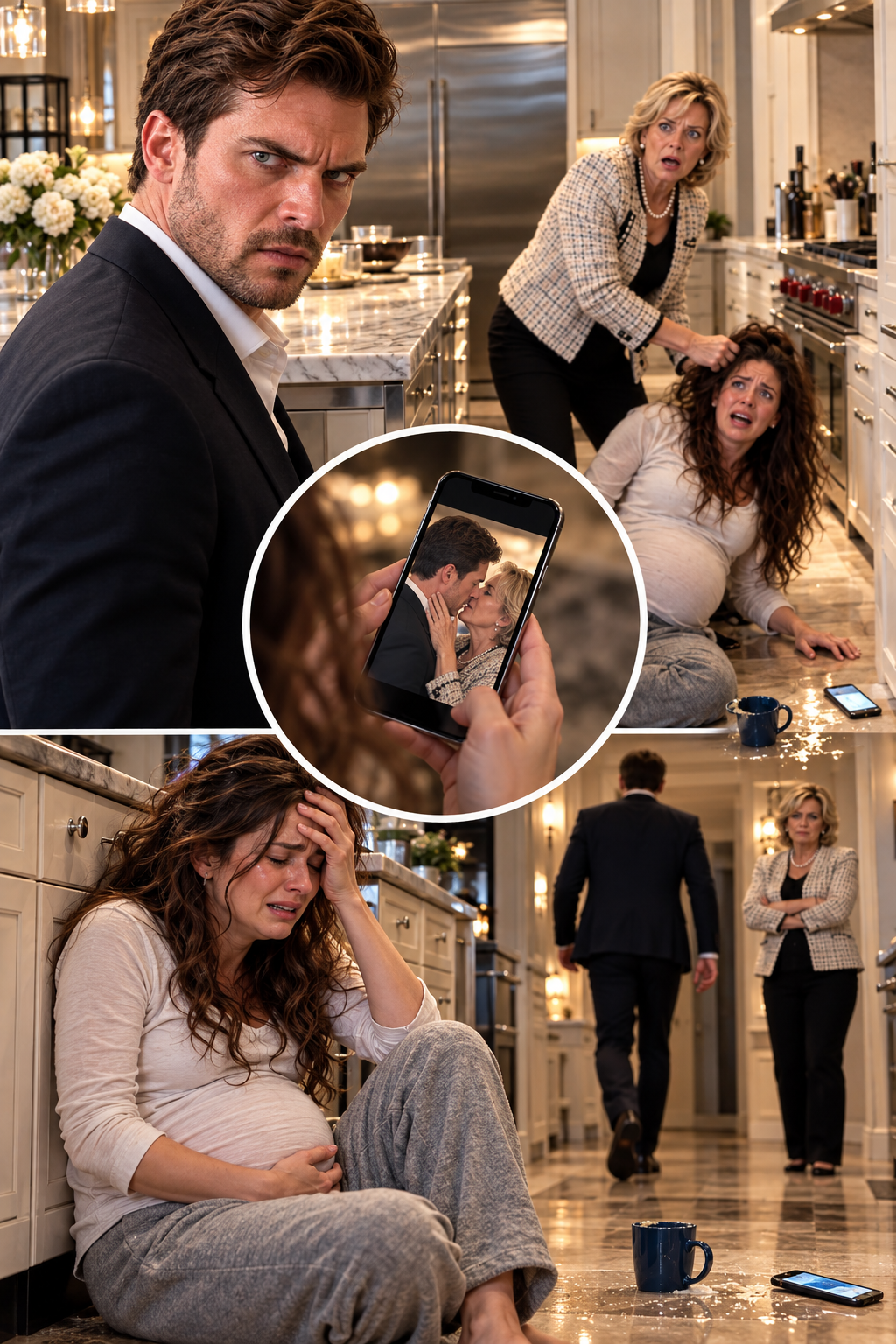
Part 2: Four Hundred Twelve Hidden Notes Revealed Months Of Calculated Cruelty
I had spent twelve years examining financial fraud, official misconduct, and complicated criminal investigations. My job was to recognize patterns, verify evidence, and explain how separate events connected to one another. I had built my career on noticing details that other people dismissed. Yet the most important pattern of my life had unfolded beneath my own roof while I was too distracted to see it.
Elena had met my mother four years earlier, shortly after we started dating. Diane initially seemed delighted, inviting her to Sunday dinners and boasting that her youngest son had finally found someone sensible. Elena was a pediatric occupational therapist, compassionate and thoughtful, with a quiet confidence I admired. She had grown up in a close family outside Asheville, North Carolina, and had always tried to treat my mother with the respect she believed an older parent deserved. I mistook Diane’s early politeness for genuine affection.
The trouble began after our wedding. My mother criticized Elena’s cooking, questioned her career choices, and complained that our holidays involved too much time with Elena’s relatives. Whenever I confronted her, Diane insisted that I had misunderstood her intentions. She would apologize just enough to make an argument seem unnecessary. Then everything would become peaceful until her next complaint.
When Elena became pregnant, the situation changed dramatically. Diane began talking about our baby as though she were the third parent, choosing nursery decorations without asking and criticizing Elena’s prenatal appointments. She suggested that Elena quit working and stay home because “real mothers make sacrifices.” When Elena declined, Diane called her selfish. I intervened in individual arguments but never recognized the larger pattern.
Six weeks before the confrontation, my mother called claiming her apartment needed extensive plumbing repairs. She said the property manager had ordered her to leave temporarily and that hotels were too expensive. Elena hesitated when I suggested inviting her to stay with us. I promised it would be a short arrangement. My mother arrived the next afternoon with enough luggage for an extended vacation.
At first, she seemed almost helpful. She prepared meals, organized cabinets, and insisted that Elena rest whenever possible. She made warm herbal drinks in a large blue mug Elena had purchased during our honeymoon in Charleston. Diane claimed the mixture was a traditional remedy her own mother had used. Elena initially accepted the drinks because refusing them always caused another argument.
I scrolled through her notes while we sat at the kitchen table.
June 3: Diane told me Daniel would eventually resent the baby.
June 7: She says I sleep too much and contribute nothing.
June 11: Felt dizzy after afternoon tea. Had to lie down.
June 15: Diane told Daniel I refused to help with dinner. I wasn’t feeling well.
June 19: Another terrible headache. Diane said I shouldn’t bother Daniel.
June 24: Forgot an appointment time. Diane laughed and said pregnancy had made me useless.
July 2: She grabbed my arm during an argument. I covered the mark with a cardigan.
Each entry was brief, sometimes only one or two sentences. Others described conversations in painful detail. Elena had recorded the date, approximate time, physical symptoms, and the words Diane used to undermine her confidence. She had also documented occasions when my mother entered our bedroom without permission or moved personal belongings. Reading the notes felt like discovering a second marriage unfolding alongside the one I thought I understood.
“Why didn’t you show me this?” I asked.
Elena stared at her hands. “I tried, Daniel.”
I remembered several conversations when she had complained about my mother’s behavior. I had listened, promised to speak with Diane, and then accepted whatever explanation my mother offered. Sometimes I told Elena that stress and pregnancy probably made ordinary disagreements feel worse. I had intended to reassure her. Instead, I had taught her that telling me the truth rarely changed anything.
“She kept saying you thought I was dramatic,” Elena continued. “Whenever you were at work, she reminded me that I was living in your house.”
“Our house,” I corrected softly.
Elena gave a sad smile. “That’s what I told her.”
I reached for her hand. “I’m sorry I made you feel alone.”
She looked up, and for the first time that evening, her tears seemed less frightened than exhausted. “I didn’t need you to fight every battle,” she said. “I just needed you to believe me.”
I wanted to promise that nothing bad would ever happen again. Instead, I asked practical questions about her symptoms, her medication, and the drinks my mother had prepared. Elena described unusual sleepiness, occasional confusion, and episodes of dizziness that seemed worse after drinking tea. She had mentioned some symptoms at prenatal appointments but attributed them to pregnancy and stress. Her physician had advised further evaluation if they continued.
My phone vibrated with a message from Diane.
“You embarrassed me in my own son’s home. When you calm down, I’ll accept your apology.”
I stared at the message.
Then I looked toward the blue mug.
For the first time, I realized that my mother’s desire for control might have crossed a line far more serious than emotional cruelty.
I told Elena we were going to the hospital.
Before leaving, I called emergency services, explained the suspected exposure and physical assault, and followed the dispatcher’s instructions about leaving the mug undisturbed for responding officers.
The cup remained beside the sink.
Waiting for someone to discover what it contained.
Part 3: Hospital Tests And A Forgotten Camera Exposed The Unthinkable
The emergency department smelled of disinfectant and fresh coffee when we arrived shortly after sunset. A nurse guided Elena into an examination room while I repeated the circumstances to another staff member. I had investigated terrible cases involving strangers, but nothing prepared me for describing my own mother as a possible suspect. Every sentence felt unreal. Even saying her name made my throat tighten.
Elena’s first concern was our baby. She kept asking whether the dizziness could have affected Maya, the daughter we had already named. The medical team prioritized Elena’s immediate safety and fetal monitoring. We listened to Maya’s heartbeat together, each steady beat easing a fraction of the fear surrounding us. The physician explained that they would evaluate Elena’s symptoms carefully, including possible medication exposure, without jumping to conclusions.
A detective named Rachel Morgan arrived later that evening. She was in her early forties, with calm eyes and the careful manner of someone accustomed to frightened witnesses. She introduced herself to Elena first and asked whether she preferred to speak privately. I offered to step outside. Elena squeezed my hand but agreed that separate interviews would be best.
Detective Morgan questioned me about the scene I had witnessed, my mother’s recent behavior, and the circumstances surrounding her move into our house. I described the blue mug and the written record Elena had maintained. Morgan explained that photographs, medical findings, witness statements, and properly collected evidence would be important. She arranged for the responding officers to document the kitchen and collect relevant items. I gave her permission to access the house and supplied the security system information.
By midnight, the hospital had documented tenderness near Elena’s scalp and bruising on her arm. Routine testing had not explained all her symptoms, so physicians ordered more specialized screening based on the reported concerns. They warned us that additional results might take time and that they would interpret them alongside clinical findings. Elena remained under observation while the obstetric team checked on Maya. I spent most of the night beside her bed, holding her hand whenever she woke.
My mother texted me repeatedly.
“Your wife is manipulating you.”
“She started everything.”
“Pregnant women can become emotionally unstable.”
“You’ll regret humiliating the woman who gave you life.”
I saved the messages without answering.
The following morning, my older brother, Michael, called from Raleigh. He was forty-one, married, and usually avoided arguments involving our mother. His voice sounded irritated before I said hello.
“Daniel, what happened? Mom says Elena attacked her and you threw her out.”
“Did she tell you Elena is in the hospital?”
Michael went silent. “Hospital? Why?”
“Because I’m concerned she may have been given something without her knowledge.”
He exhaled sharply. “Come on. You’re talking about Mom.”
“Yes,” I said. “That’s exactly what makes this difficult.”
Michael insisted there had to be an explanation. I asked whether he had witnessed anything or spoken with Elena. He admitted he had done neither. For once, I refused to spend an hour defending my wife against an accusation based entirely on our mother’s version of events. I told him to stop repeating things he could not verify.
Two days later, Detective Morgan asked me to come to the station. Preliminary laboratory analysis of the mug had identified material consistent with a prescription sedative. The hospital’s expanded testing also produced findings compatible with recent exposure, though physicians were still evaluating the timing and medical significance. Investigators had obtained information indicating that Diane previously possessed a prescription for the same medication. That combination justified additional inquiries and a formal evidence review.
I felt sick hearing the results.
Morgan leaned forward. “Mr. Whitmore, we need to establish what happened, how often it happened, and whether anyone administered medication without consent.”
“There’s something I forgot,” I said.
A year earlier, after a dispute involving a contractor who denied damaging our kitchen cabinets, I had installed a small security camera overlooking the back entrance and kitchen island. The camera was clearly visible near the ceiling, but after the contractor issue ended, I rarely checked it. The service retained recordings for thirty days. I couldn’t remember whether the device was still active.
We contacted the provider and confirmed that footage existed.
Rather than downloading and editing it myself, I arranged through Detective Morgan for investigators to obtain preserved recordings and account information. By late afternoon, they had located a clip from the previous week. Morgan invited me to identify the people and objects visible on the screen. I sat across from her as the video began.
My mother entered the empty kitchen wearing her floral robe. She looked over her shoulder, reached into a pocket, and removed a small amber bottle. Then she placed something on the counter beneath a spoon. She appeared to crush it before tipping the material into Elena’s blue mug.
She stirred the drink.
Wiped the counter.
And walked away.
The entire sequence lasted only seconds.
Morgan replayed the clip, examining the movements and recording the relevant timestamps. I watched once and turned my eyes away. I recognized that robe, that bottle, and the blue mug Elena used almost every afternoon. The footage did not tell us everything about Diane’s intentions, but it showed something no amount of family storytelling could explain away.
My mother had been putting something into my wife’s drink without telling her.
I thought about Elena lying awake at night, quietly documenting symptoms because she feared no one would believe her.
Then I remembered the final entry.
Check the blue mug.
She had left herself a warning.
And that warning had led us to the truth.
Part 4: My Mother’s Perfect Lies Collapsed As Investigators Followed Every Clue
Detective Morgan informed me that the case had moved beyond a simple dispute between relatives. Investigators were considering suspected criminal assault and the unauthorized administration of medication, subject to the evidence and applicable law. She carefully avoided promising an arrest or predicting charges before the prosecutor reviewed the findings. I appreciated her professionalism, even though part of me wanted immediate consequences. My wife had spent weeks afraid inside her own home, and waiting felt unbearable.
The next several days exposed how carefully Diane had managed her public image. She told family members that Elena had become jealous of their close mother-son relationship. She claimed I had suffered a nervous breakdown under the pressure of impending fatherhood. She described herself as a devoted grandmother being punished for offering help. Relatives who hadn’t contacted me in months suddenly began sending lectures about forgiveness.
One aunt wrote that mothers deserved respect no matter what mistakes they made. A cousin suggested Elena had exaggerated everything to avoid sharing the baby’s attention. Another relative said the situation should remain private because public accusations could damage the family name. I read those messages while Elena slept beside me, her arm resting across her stomach. Their eagerness to defend Diane without asking about Elena’s condition astonished me.
I stopped answering most of them. Instead, I focused on helping my wife recover and cooperating with investigators. Elena spoke with a hospital social worker who helped her discuss the frightening events without minimizing them. We also consulted her obstetrician about follow-up care and the remaining weeks of pregnancy. Every appointment became another reminder that our greatest responsibility was protecting her and Maya.
Meanwhile, Detective Morgan examined Elena’s notes alongside other available evidence. The entries contained repeated references to an amber bottle, unusual drinks, and remarks that suggested Diane resented Elena’s place in my life. Several dates corresponded with footage showing my mother preparing beverages when Elena wasn’t present. Other recordings documented ordinary household activity and did not establish wrongdoing. Investigators treated those distinctions seriously, which made the relevant footage more meaningful.
The most revealing additional evidence came from Michael.
He called me one evening sounding unlike himself. “Daniel, I’ve been looking through some old messages from Mom,” he said. “There’s something you need to know.”
Months before moving in, Diane had complained to him that Elena was controlling my money and deliberately excluding her from family decisions. Michael initially responded with reassurance, reminding her that I was married and needed to build a household of my own. Diane became increasingly hostile. In one exchange, she wrote that Elena needed to learn who actually mattered to me.
Another message said, “Once Daniel sees how incapable she is, he’ll stop putting her first.”
Michael’s voice broke as he read it aloud.
“I thought she was just angry,” he admitted. “I never imagined anything like this.”
“Neither did I,” I answered.
Michael agreed to provide the original messages to investigators. He also told me something I hadn’t known: our mother’s apartment was never undergoing emergency repairs. She had complained about a minor plumbing problem months earlier, but the building hadn’t required her to move out. In fact, her lease was nearly finished when she asked to stay with us. She had chosen not to renew it without telling either of us.
I contacted the property manager, who confirmed that there had been no mandatory evacuation. I passed the information to Detective Morgan. It didn’t prove the alleged medication offenses by itself, but it weakened Diane’s explanation for entering our home. She had created a false emergency to make us believe we had no choice but to accommodate her.
I remembered the day she arrived. She had hugged Elena, thanked her for being so generous, and promised to help with the baby. She had even brought a framed photograph of our wedding, saying she wanted to make the guest bedroom feel welcoming. At the time, I considered it a touching gesture. Now I wondered how long she had been planning to make herself indispensable.
The following afternoon, Detective Morgan called.
Investigators had obtained further evidence and secured authorization to arrest Diane. Her attorney had been notified of the developing case, and arrangements were being made according to normal procedure. Morgan warned me that the process could take months and that a strong investigation required patience. She also explained that Elena would receive information about protective measures and victim services.
I thanked her and hung up.
Elena was sitting on the couch reading a baby-name book, although we had chosen Maya weeks earlier. I sat beside her and told her about the arrest decision. She closed the book slowly. For several seconds, she said nothing.
Then she asked a question I would never forget.
“Will she finally stop coming after me?”
I wrapped my arm around her shoulders.
“We’re going to make sure she can’t walk into our lives whenever she wants,” I said. “And we’ll keep working with the people who can help us stay safe.”
Elena leaned against me and cried quietly.
Those tears told me how much damage my mother had done long before the kitchen confrontation.
Part 5: An Arrest And A Stolen Credit Card Uncovered Another Betrayal
My mother was arrested at a hotel outside Charlotte three days after Elena’s hospital visit. Detective Morgan later told me that Diane initially insisted there had been a misunderstanding. She demanded that someone call me immediately because her son would explain everything. When officers informed her that the investigation involved suspected unauthorized medication administration, her behavior changed. She asked for an attorney and declined to answer further questions.
I learned the details through official updates rather than watching the arrest. I had no desire to see photographs of my mother in handcuffs or treat her humiliation as entertainment. What I wanted was for the investigation to proceed without interference and for my wife to sleep peacefully. The image of Elena on the kitchen floor already gave me enough nightmares.
Diane’s arrest became family news almost immediately. Michael called to say our aunt had received a frantic message from one of Mom’s friends. Within hours, relatives who had accused Elena of exaggerating began asking whether the allegations were true. Some apologized. Others claimed they had always suspected something was wrong, although they had dismissed every warning while it mattered.
My phone continued filling with messages. An uncle urged me to persuade Elena to withdraw her complaint. A distant cousin warned that prison could destroy a woman of Diane’s age. Another suggested that forcing a grandmother away from her unborn grandchild was excessively cruel. Their arguments revealed how little they understood about what had happened.
Elena hadn’t created the investigation.
Evidence had.
And my mother’s choices were now being examined by people whose responsibility was to enforce the law, not preserve family appearances.
Then our bank contacted me.
A representative flagged several unusual transactions associated with a credit card I rarely used. The purchases included hotel charges, expensive clothing, restaurant meals, and cash advances. At first, I assumed someone had stolen the card number through an ordinary data breach. Then I noticed the hotel name matched the place where Diane had been staying.
The charges began the day after I removed her from our house.
I asked the representative to freeze the account, disputed the unauthorized transactions, and requested documentation of the activity. When I reviewed older statements, I discovered smaller questionable charges dating back several months. Some were from stores near Diane’s former apartment. Others appeared to involve online purchases I couldn’t identify.
I remembered that my mother had once helped me sort household paperwork while Elena and I were moving. She had access to a drawer containing old billing statements, insurance documents, and expired cards. I couldn’t prove how she obtained the account information, but the possibility disturbed me. The woman who repeatedly lectured me about family loyalty seemed to believe my financial resources belonged to her.
I filed a fraud report and told Detective Morgan about the suspicious charges. A separate inquiry began into whether the card had been used without authorization. The bank reviewed transaction records while investigators sought additional information through appropriate channels. I kept copies of statements, correspondence, and transaction dates. For once, my professional habits were useful in a way I never would have wanted.
When Michael learned about the charges, he sounded exhausted.
“She asked me for money too,” he admitted.
“How much?”
“Almost eight thousand dollars over the past year.”
I sat down. “Why didn’t you say anything?”
“Because she always had an emergency. A medical bill, a car repair, some problem with the apartment. She said she’d pay me back.”
Michael explained that their relationship had become increasingly demanding. Diane called whenever he received a bonus, learned about a family vacation, or purchased something for his children. She reminded him that she had raised him alone and suggested he owed her compensation. When he refused, she accused his wife of turning him against her.
It was the same accusation she used against Elena.
For the first time, Michael recognized that our mother’s behavior wasn’t limited to my household. He had experienced a different form of the same controlling pattern for years. He began reviewing his own records and speaking with his wife about boundaries they should have established long ago. Although he remained horrified by the criminal allegations, he stopped trying to explain them away.
At a hearing concerning Diane’s pretrial conditions, I saw her for the first time since the afternoon in our kitchen. She wore a plain jacket and sat beside her attorney, looking older than I remembered. When she noticed me, her face brightened with an almost hopeful expression. For one painful second, I saw the mother who had taught me to ride a bicycle and stayed awake when I had childhood fevers.
Then she looked toward Elena.
Her expression hardened.
And I understood that whatever affection my mother felt for me had never given her permission to treat my wife as an enemy.
Part 6: The Courtroom Video Destroyed My Mother’s Last Remaining Defense
The criminal proceedings were slower and more complicated than the dramatic trials I had seen on television. There were motions, interviews, evidence reviews, and lengthy discussions between attorneys. Investigators had to establish not only what appeared on the security footage but also what the substances were, how the evidence had been preserved, and whether the available facts supported each proposed charge. Medical experts examined the test results and explained their limitations. Elena’s notes helped establish a timeline, but the prosecution still needed independent corroboration.
I deliberately avoided involving myself in investigative decisions. My experience as a forensic investigator made me aware of how damaging it could be for a relative to interfere with witnesses or evidence. I disclosed my professional background, followed instructions, and allowed other investigators to do their jobs. At home, my role was simply to be Elena’s husband. She needed compassion more than technical explanations.
Her recovery wasn’t straightforward. Although some physical symptoms improved after Diane left, Elena remained anxious whenever the doorbell rang. She startled when someone moved unexpectedly behind her and sometimes woke from dreams in which she couldn’t make me hear her calling. Her healthcare team helped her obtain appropriate support, and I attended appointments when she wanted me there. I learned not to treat recovery as a problem that could be solved by installing another lock.
One evening, while folding tiny baby clothes, Elena admitted she was afraid Maya might someday ask about her grandmother. I told her we didn’t need to invent a comforting version of the truth. We could explain age-appropriate facts when the time came, without burdening our daughter with details she wasn’t ready to understand. Elena nodded, then placed a yellow newborn sweater against her stomach. Maya kicked, and for a brief moment we both laughed.
The prosecutor eventually informed us that Diane’s attorney was considering a negotiated resolution. Evidence included the mug analysis, laboratory findings, witness statements, relevant surveillance footage, written notes, prescription records, and communications reflecting Diane’s hostility. Although the parties disputed aspects of the allegations, the strongest evidence presented substantial problems for the defense. The attorney wanted to avoid the risks of trial. Diane, apparently, still believed she could talk her way out of responsibility.
During a court appearance, she looked directly at me while waiting for proceedings to begin.
“Daniel,” she whispered, “you know I love you.”
I didn’t respond.
“You wouldn’t really let them do this to me.”
Her voice carried the familiar tone she used whenever she wanted obedience. For thirty-eight years, that tone had been enough to make me question myself. But then I glanced at Elena, seated a short distance away with her hands folded over her stomach. I remembered the afternoon she had been unable to stand without shaking.
“I didn’t make these choices,” I answered quietly.
Diane’s face tightened.
The judge entered before she could say more.
During the proceedings, the prosecutor outlined the evidence supporting the case, including what the kitchen footage appeared to show. The recording was formally addressed as part of the case record, and the judge reviewed the relevant representations and materials. Diane’s attorney emphasized mitigating circumstances, her age, her lack of a comparable prior conviction, and arguments about the extent of harm. None of those matters erased the underlying conduct.
The negotiated agreement ultimately required Diane to plead guilty to charges reflecting the unauthorized administration of medication and related criminal conduct. The precise sentencing terms followed the applicable law and the judge’s review. The court imposed a period of incarceration, supervised conditions following release, and restrictions designed to prevent further contact. Financial matters arising from the unauthorized card use were addressed through a separate process involving repayment obligations and additional consequences.
Before sentencing, Elena was given an opportunity to speak.
She had spent days writing her statement, crossing out passages whenever she felt they sounded too angry. On the morning of the hearing, she told me she was afraid she would cry. I said crying wouldn’t make her words less important. She took a deep breath, stood, and faced the courtroom.
“For weeks, I believed I was becoming someone I didn’t recognize,” she began. “I forgot things. I felt frightened. I questioned whether I was capable of being a good mother. Someone I trusted encouraged those fears while telling me she was helping.”
Her voice trembled, but she continued.
“I don’t want revenge. I want my daughter to grow up in a home where love doesn’t require fear. I want her to know she can speak when something feels wrong, and someone will listen. I want the person who did this to understand that being family doesn’t make another person’s body or life yours to control.”
The courtroom remained quiet when she finished.
Diane stared at the table.
I didn’t know whether she felt regret, shame, or merely anger that her control had ended. I realized I might never know. For the first time, that uncertainty no longer felt like something I needed to solve. My responsibility was to the people waiting for me at home.
After the judge imposed sentence, I walked out beside Elena without looking back.
The woman who had raised me was going to prison.
And I was going to become a father.
I had never imagined those two truths would belong to the same chapter of my life.
Part 7: Our Daughter’s Birth Brought Peace After Months Of Fear
Maya arrived on a rainy Thursday morning, four months after the day I found Elena on the kitchen floor. Labor began just after midnight, when Elena woke me and calmly announced that she thought the baby was coming. I jumped from bed so quickly that I knocked over a lamp. Elena laughed despite the discomfort and reminded me that panicking wouldn’t make the contractions stop. For the first time in months, the sounds filling our house were ordinary and hopeful.
At the hospital, I held Elena’s hand through every difficult hour. She was stronger than anyone I had ever known, not because she had endured mistreatment without breaking, but because she had found the courage to challenge it. When Maya finally arrived, tiny and furious at the bright lights, Elena began crying before the nurse placed her in her arms. I couldn’t speak. I simply stood beside them, overwhelmed by a kind of love that made every other ambition in my life seem smaller.
Our daughter had Elena’s dark hair and a serious expression that disappeared whenever she yawned. Her fingers curled around mine with astonishing strength. I watched her breathing, marveling at how someone so small could completely change the meaning of home. Elena looked at me and whispered, “She’s here.” I kissed her forehead and answered, “And we’re going to keep her safe.”
The doctors had continued monitoring the pregnancy carefully, and Maya’s arrival brought enormous relief. We were grateful that she was doing well, while remaining attentive to Elena’s physical and emotional recovery. Friends delivered meals, neighbors offered help, and Michael visited with his wife and children. Slowly, we built a support system based on people who respected our boundaries instead of testing them. It felt unfamiliar at first, but wonderfully peaceful.
Michael had changed considerably since the investigation. He apologized to Elena without offering excuses for his earlier disbelief. He acknowledged that he should have asked questions before repeating our mother’s accusations. Elena accepted his apology cautiously, explaining that trust would take time. He respected that answer, which told me more about his sincerity than any elaborate speech could have.
We maintained the protective boundaries established through the legal process. Diane had no direct access to our household, and we did not send photographs or personal information through relatives who might forward them. Some family members considered our precautions excessive. We allowed them their opinions without debating our decisions. For the first time, I understood that protecting peace sometimes requires accepting that other people will misunderstand you.
Several weeks after Maya’s birth, I received an envelope forwarded through an attorney. It contained a letter from my mother. Because communication restrictions applied, I consulted counsel before deciding whether to review it. The letter expressed disappointment that I had allowed the family to be torn apart and insisted she had only wanted what was best for me. There was no meaningful acknowledgment of Elena’s suffering.
I put the letter away without answering.
That evening, Elena found me sitting alone at the kitchen table. She placed Maya’s bassinet beside my chair and asked whether I was upset. I admitted that part of me still grieved the mother I thought I had known. Elena sat across from me, understanding without offering easy reassurance. She had never asked me to pretend that losing my relationship with Diane was painless.
“You can miss the good memories,” she said. “That doesn’t mean you have to invite the bad ones back.”
I looked at our sleeping daughter.
“I used to think being a good son meant keeping Mom happy,” I admitted. “Even when everyone else was unhappy.”
“Now I think being a good father means making sure Maya never has to earn love by being afraid.”
Elena reached across the table and took my hand.
A few days later, I began looking at houses.
Our current home was beautiful, but every corner carried memories we hadn’t chosen. Elena sometimes hesitated before entering the kitchen after dark. I still remembered where the broken plate had fallen. We didn’t need to leave to prove we were moving forward, yet the idea of choosing a new place together felt hopeful.
I found a two-story house on a quiet street lined with maple trees. It had a bright kitchen, a small garden, and a bedroom overlooking the backyard. There was space for Maya to grow, for friends to visit, and for Elena to pursue the hobbies she had neglected during pregnancy. The neighborhood had a park within walking distance and an elementary school nearby. Most importantly, the house belonged to no painful chapter of our past.
I showed Elena the listing one Saturday afternoon.
She examined the photographs, then looked at me cautiously.
“Do you think we’re ready?”
“I think we deserve to decide what ready means.”
She reached for Maya and smiled back.
For the first time in a long while, we began planning a future without imagining how my mother would react.
Part 8: A New Home, A Final Note, And The Freedom We Chose
We moved into the new house when Maya was almost five months old. The movers carried boxes through the front door while Elena stood in the living room deciding where to place our furniture. Sunlight poured through wide windows, illuminating the hardwood floors and the little wooden rocking chair we had purchased for Maya’s nursery. There were no familiar voices criticizing our decisions. No one reminded Elena that she should be grateful for being allowed to live there.
Both our names appeared on the deed.
That detail mattered more to me than the square footage or the garden. In the old house, Diane repeatedly called the property her son’s home, as though Elena were only a guest who could be dismissed whenever she became inconvenient. I had never intended for my wife to feel that way, but intentions alone hadn’t protected her. This time, everything about our home reflected a partnership we had deliberately chosen.
On moving day, Elena opened a kitchen box and found the blue mug wrapped in newspaper. We had kept it only because a replacement of the same design had accidentally been packed with our dishes; the original evidentiary mug remained subject to the case’s handling procedures. Still, the sight of that distinctive blue glaze made her stop. She held the clean replacement carefully, staring at it as though it carried every memory of the previous year. I moved closer but waited for her to speak.
“I used to love these mugs,” she said.
“We can get rid of it.”
She considered that for a moment. “Maybe we should. Not because I’m afraid of it anymore, but because I don’t want it deciding what belongs in our kitchen.”
We donated the unused matching dishes and bought a simple set of cream-colored mugs the following weekend. Elena chose them herself. It was a small decision, almost laughably ordinary compared with everything we had endured. Yet watching her arrange them in the cabinet felt like witnessing another piece of our life return to its rightful owner.
Our new routines developed gradually. I made breakfast while Elena fed Maya, and we took evening walks when the weather was pleasant. Michael visited regularly, sometimes bringing his children for backyard picnics. Elena resumed professional work on a schedule that suited our family, and I adjusted my own hours so we could share childcare. We learned that a peaceful marriage isn’t one without disagreements, but one in which disagreements never become threats.
The first anniversary of Diane’s arrest arrived without celebration. I took the day off work, and Elena and I spent the morning at a botanical garden with Maya. Our daughter had recently learned to clap and seemed delighted by every flower she saw. We ate sandwiches beneath a large oak tree while she tried unsuccessfully to catch falling leaves. Nobody mentioned my mother until late afternoon.
On the drive home, Elena said she wanted to show me something.
She had kept her original document containing the 412 entries. For months, I assumed she would eventually delete it because of the memories it carried. Instead, she had worked with her counselor to understand why writing those observations had mattered. The notes helped her trust her own perception when someone repeatedly told her she was unreliable. They were painful, but they also reminded her that even during the worst weeks, she had continued searching for a way to protect herself.
That evening, she opened the file on her laptop.
I sat beside her while she scrolled through the entries. Some were detailed descriptions of arguments. Others contained only a few exhausted words, written after long days when she could barely keep her eyes open. I felt the familiar ache of regret, but this time I resisted the urge to make the conversation about my guilt. Elena needed room to tell her own story.
“I used to think these notes proved how frightened I was,” she said.
“They prove you were paying attention.”
She nodded. “They also prove I didn’t stop believing myself, even when everyone else made me question what was happening.”
At the bottom of the document, beneath the final warning about the blue mug, Elena added a new entry.
One year later: Maya is safe. Daniel listened. Our home is ours. I am no longer afraid to speak.
She read the words twice before saving the file.
Then she closed the laptop.
We didn’t frame the entire document or display its painful details around the house. Elena printed only the new final entry and placed it inside a small wooden frame on her desk. The original notes were securely preserved, available if ever needed for legal purposes or her own reflection. They were no longer a secret record written by someone desperately trying to survive each day. They had become part of a history she could acknowledge without allowing it to define her future.
Months later, I received confirmation that restitution payments had begun according to the applicable arrangements. Diane remained subject to her sentence and the protective restrictions. Michael told me she occasionally asked about Maya, but he understood that information about our daughter was not his to share. I appreciated that he no longer tried to mediate a reconciliation no one had requested. Whatever future our relationship with Diane might have remained uncertain, our boundaries were not.
One Sunday morning, Maya took her first independent steps across the living room. Elena knelt near the couch, holding out her arms while I watched from the doorway. Our daughter stood uncertainly, wobbled forward, and collapsed into Elena’s embrace. We cheered so loudly that Maya began laughing. I reached for my phone to record the moment, then changed my mind and simply joined them on the floor.
I thought about how close we had come to losing the joy of ordinary days.
My mother believed family loyalty meant choosing her comfort over everyone else’s safety. She expected me to defend her because she had given birth to me, regardless of the harm she caused. For much of my life, I had confused obedience with love and keeping the peace with doing what was right. It took the sight of my pregnant wife on a kitchen floor to finally recognize the difference.
I cannot change the day I walked into that kitchen. I cannot erase the weeks Elena spent frightened, the symptoms she struggled to explain, or the moments when I should have listened more carefully. I can only take responsibility for what I failed to notice and continue showing, through my actions, that she will never have to face such mistreatment alone again. Love, I learned, isn’t proven by defending someone from every consequence. Sometimes it is proven by refusing to let them harm another person simply because they share your blood.
That night, after Maya fell asleep, Elena and I sat together on our back porch. The garden lights glowed softly beneath the trees, and the house behind us was quiet. Elena rested her head on my shoulder as we listened to the distant sound of children playing in a neighboring yard. Nothing extraordinary happened. No accusations, no phone calls, no unexpected visitors.
After a while, she asked, “Do you ever wonder what would’ve happened if you hadn’t come home early?”
I considered the question.
“Yes,” I said. “But I try not to live there anymore.”
She slipped her hand into mine.
“I don’t either.”
We stayed outside until the air turned cool.
Inside, our daughter slept peacefully in a room decorated with yellow stars. A photograph from our wedding hung in the hallway, beside a newer picture of the three of us smiling in our garden. The kitchen was filled with ordinary things: clean dishes, unfinished grocery lists, and a little high chair waiting for breakfast. Nothing in that room belonged to fear anymore.
For years, my mother had told me that blood was the strongest bond in the world.
I once believed her.
Now I knew that trust, respect, and safety were what made a family worth protecting.
Four hundred twelve notes had helped uncover the truth. One blue mug had pointed investigators toward the evidence. A few seconds of security footage had exposed a betrayal I never imagined possible.
But the most important discovery had nothing to do with criminal investigations.
It was that my wife had never been powerless.
Even when she was frightened, she had paid attention, written down what happened, and refused to surrender her understanding of reality. When the opportunity came, she spoke. And when she spoke, I finally listened.
I held her hand a little tighter as we went inside.
Behind us, the porch light illuminated the empty chairs.
Ahead of us was a home where our daughter would never have to wonder whether love and fear were supposed to feel the same.
My mother had tried to convince Elena she was nobody.
Instead, Elena became the person who showed me what courage looked like.
And the family we built afterward became the freedom neither of us would ever take for granted.
✓ Lynn R. Adams
Part 2: Four Hundred Twelve Hidden Notes Revealed Months Of Calculated Cruelty I had spent twelve years examining financial fraud, official misconduct, and complicated criminal investigations. My job…