I Came Home Early and Found My Boyfriend Marrying My Best Friend—Then the Officiant Asked Who Actually Owned the House
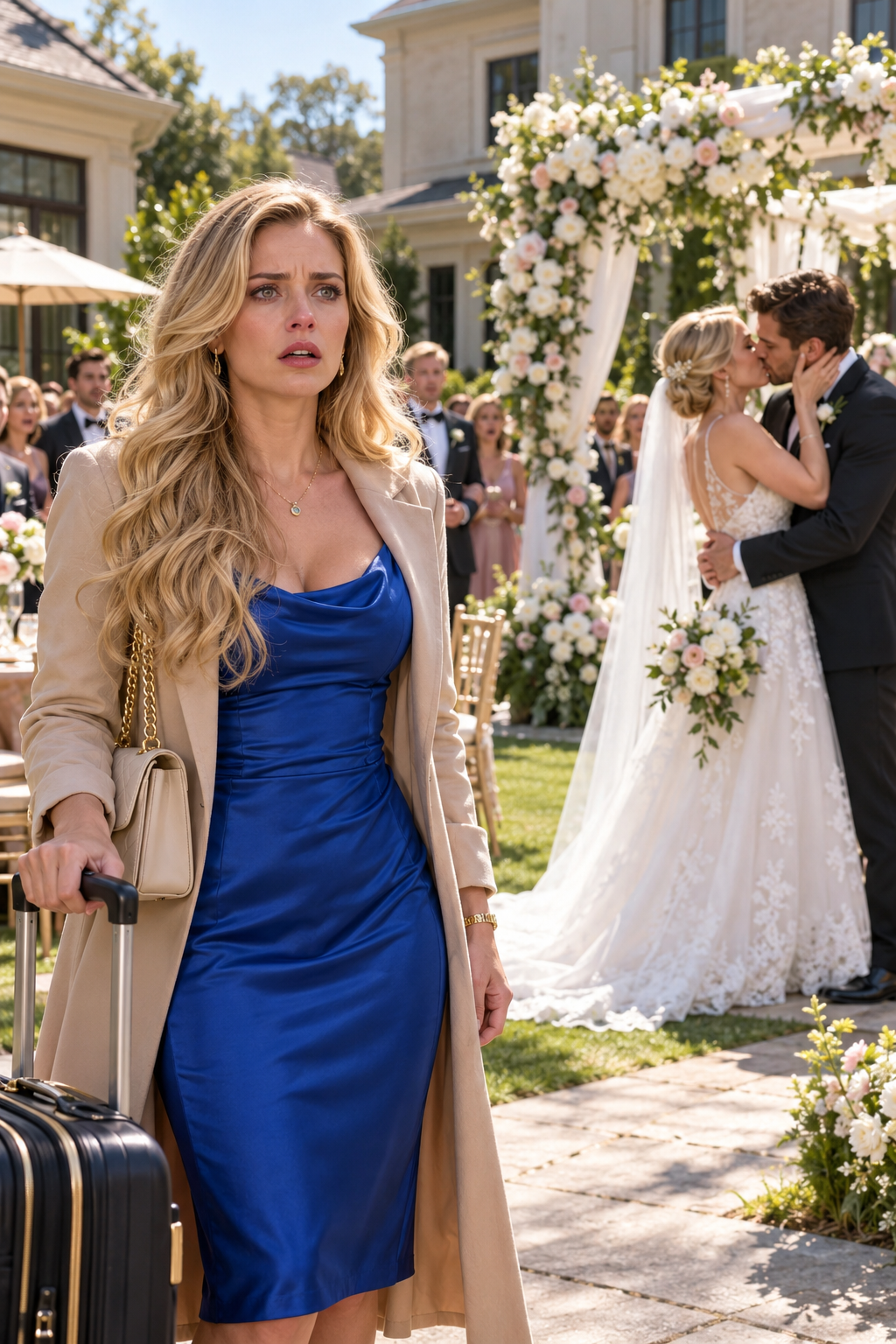
I Came Home Early and Found My Boyfriend Marrying My Best Friend—Then the Officiant Asked Who Actually Owned the House
The first thing I saw when I pulled into my driveway was a white limousine parked beside my garage.
The second was a wooden sign covered in roses that read:
WELCOME TO EVAN & MADISON’S FOREVER.
Evan was my boyfriend.
Madison was my best friend.
And the “wedding venue” was my backyard.
For ten seconds, I sat behind the steering wheel without breathing.
I had been supposed to be in Denver until Monday.
It was Saturday afternoon.
My flight home had changed because the final day of my conference was unexpectedly canceled. I had almost booked myself another night at the hotel just to enjoy the quiet.
Instead, I decided to surprise the man I had loved for nearly six years.
Apparently, he had prepared a surprise of his own.
I stepped out of my car.
Music floated over the fence.
Then laughter.
Then applause.
I could smell roses, champagne, grilled salmon, and the jasmine vines my grandmother had planted twenty years earlier.
My grandmother.
Now my house.
The house Evan had lived in with me for three years.
The house Madison had spent hundreds of weekends in.
The house where I had held Madison while she cried after her divorce.
The house where Evan had once told me he wanted to grow old beside me.
I walked toward the backyard gate.
A young man in a black suit stepped in front of me.
“Ma’am, private event.”
I almost laughed.
“I live here.”
He frowned.
“I’m sorry?”
“This is my house.”
His face changed.
Behind him, someone shouted, “They’re about to exchange vows!”
I looked through the open gate.
There were perhaps sixty people sitting beneath a white canopy.
My patio had been covered in flowers.
My outdoor furniture had been moved.
My grandmother’s antique garden arch had been wrapped in white roses.
And standing beneath it in a navy suit was Evan Mercer.
Beside him, wearing a champagne-colored wedding gown, was Madison Reed.
My best friend since college.
She was smiling.
Evan was holding both of her hands.
I saw Evan’s mother sitting in the first row.
I saw Madison’s sister filming everything on her phone.
I saw two of Evan’s coworkers raising champagne glasses.
I saw the photographer standing on the stone path I had paid to restore.
I saw a framed photograph of Evan and Madison on the table where my grandmother used to serve lemonade.
I saw my entire life being used as scenery for my humiliation.
But I didn’t scream.
I didn’t run.
I didn’t cry.
I didn’t throw anything.
I simply took out my phone, pressed record, and walked through the gate.
The officiant was speaking when I reached the last row.
“Marriage is built on trust…”
I nearly choked.
Nobody noticed me at first.
Madison was gazing up at Evan as if they were starring in some expensive romantic movie.
The officiant continued.
“…on honesty…”
That was when Evan’s mother saw me.
Her wineglass froze halfway to her mouth.
The color disappeared from her face.
Then the woman beside her turned.
Then another.
Whispers spread through the guests.
Evan noticed.
His smile vanished.
Madison followed his stare.
For the first time in seventeen years of friendship, I saw absolute fear in her eyes when she looked at me.
“Claire,” Evan whispered.
The officiant looked confused.
I stopped halfway down the aisle.
“Please,” I said calmly. “Don’t let me interrupt.”
Nobody moved.
Evan stepped forward.
“You’re supposed to be in Denver.”
That sentence hurt more than if he had said he didn’t love me.
Not What are you doing here?
Not I can explain.
“You’re supposed to be in Denver.”
Because my absence had been part of the plan.
“I was,” I said. “The conference ended early.”
Madison gripped her bouquet.
“Claire, please.”
I looked at her.
“Please what?”
She swallowed.
“Not here.”
I slowly looked around my backyard.
“My backyard seems like an interesting place for you to ask me not to do something ‘here.’”
A few guests looked down.
Others were already holding up phones.
Evan walked toward me.
“Can we talk inside?”
His jaw tightened.
He lowered his voice.
“This doesn’t have to become ugly.”
“You’re marrying my best friend in my backyard while I’m supposed to be twelve hundred miles away, Evan. I think ugly arrived before I did.”
Madison began crying.
I had seen Madison cry a thousand times.
When her father got sick.
When she lost her first job.
When her ex-husband left.
When her dog died.
I had driven through a snowstorm at midnight once because she said she couldn’t be alone.
But those tears did absolutely nothing to me now.
The officiant cleared his throat nervously.
“Perhaps we should pause the ceremony.”
Evan turned sharply.
“No. We’re continuing.”
That surprised even me.
His expression hardened.
I studied the man I had planned to marry someday and suddenly realized something terrifying.
He wasn’t ashamed.
He was angry that I had disrupted his plan.
Madison whispered, “Evan…”
He ignored her.
“We were going to tell you after the wedding.”
A woman in the second row actually gasped.
I tilted my head.
“It’s complicated.”
“No, it isn’t.”
“You and I have been over for months.”
That was news to me.
Three nights earlier, he had called my Denver hotel room and told me he missed sleeping beside me.
The week before that, he had asked whether we should spend Christmas in Vermont.
Two weeks earlier, we had discussed remodeling the upstairs bathroom.
So I pulled out my phone.
“Would you like to hear the voicemail you left me Thursday night?”
Evan stopped talking.
Madison turned toward him.
I pressed play.
His voice came through clearly.
“Hey, beautiful. I’m heading to bed. House feels empty without you. Call me tomorrow. Love you.”
Not wedding silence.
Funeral silence.
Madison stared at Evan.
“You told me you stopped saying that to her.”
I almost laughed.
There it was.
Not innocence.
Not misunderstanding.
Madison knew.
She simply believed she had been promoted from mistress to wife before I discovered the job opening.
Evan reached for my phone.
I stepped back.
“Don’t touch me.”
The officiant looked between us.
Then he asked the question that changed the entire afternoon.
“I’m sorry, but before we proceed… who actually owns this property?”
Evan immediately said, “I do.”
At the exact same moment, I said, “I do.”
The officiant blinked.
Madison looked at Evan.
And for the first time since walking into that backyard, I realized this day might become much worse for them than it was for me.
My grandmother, Eleanor Hayes, bought the property outside Charlotte, North Carolina, in 1989.
When she died five years earlier, she left it to me.
Not to my parents.
Not to a trust.
Not jointly with anyone.
The deed carried one name:
Claire Hayes.
Evan had moved in two years later.
He paid part of the utilities.
He bought groceries.
Once, he paid $4,800 toward landscaping because he wanted an outdoor kitchen.
Apparently, somewhere between buying a grill and replacing a retaining wall, he had convinced himself he owned the entire property.
I opened the county property records on my phone.
“You want to see?”
Evan’s face tightened.
“This isn’t necessary.”
“It became necessary when you told an officiant you own my house.”
Madison stepped closer.
“You told me Claire transferred the property to you last year.”
Now several guests were openly whispering.
I stared at Evan.
“He told you what?”
Madison’s voice shook.
“He said you wanted to move to Boston. He said you’d already worked out the separation privately. He said this house was his.”
I watched her carefully.
Part of me wanted to believe she had been completely deceived.
Then I remembered something.
Six weeks earlier, Madison had asked me, very casually, whether I had ever considered putting Evan on the deed.
I had said no.
“You asked me about the deed in August,” I said.
“You knew his name wasn’t on it.”
Her face crumpled.
“That was before he told me you changed it.”
“Did you ask me?”
“Did you text me?”
“Did you call me?”
She looked down.
Because she hadn’t wanted the truth.
The truth would have made what she was doing harder.
Evan walked toward the officiant.
“Forget the property issue. We have permission to use the yard.”
I raised my eyebrows.
“From whom?”
He said nothing.
“Because I didn’t give it.”
“We live here together.”
“Not anymore.”
His face twitched.
I had never seen Evan frightened until that moment.
“You can’t just throw me out.”
“I can revoke your permission to hold a sixty-person wedding on my property.”
I turned toward the event coordinator.
A petite woman with a headset was standing beside the bar looking as though she desperately wanted to disappear.
“Who hired you?”
She hesitated.
“Mr. Mercer.”
“How were you paid?”
Evan spun around.
“Claire, enough.”
The coordinator looked at him, then at me.
“Partially by credit card.”
She checked the tablet in her hands.
Then her eyes widened.
“Claire Hayes.”
Something cold moved through me.
I walked over.
“Claire—” Evan began.
“Do not touch that woman’s tablet.”
The coordinator angled the screen toward me.
There it was.
A $7,800 deposit charged to the business card for my consulting company.
A card Evan was never authorized to use.
My chest tightened.
“What else?”
She looked through the invoice.
“The catering balance was paid from the same card.”
“How much?”
The photographer?
Tent and rentals?
The wedding cake?
By the time she finished, nearly $27,000 of my company’s money had financed the wedding between my boyfriend and my best friend.
In my backyard.
While I was out of town earning the money.
A strange laugh escaped me.
Madison stared at Evan.
“You said your bonus paid for this.”
“I’m fixing it.”
He snapped at her.
“I said I’m fixing it!”
For one second, the romantic groom disappeared.
What stood beneath my grandmother’s rose-covered arch was a desperate man whose carefully constructed fantasy was collapsing.
I looked at the coordinator.
“Please stop all service immediately.”
Evan turned on me.
“You can’t do that.”
“I’m the property owner and the cardholder.”
“People are here!”
“Yes. I noticed.”
The bartender quietly set down the champagne bottle in his hand.
The catering staff stopped carrying plates.
The string quartet stopped playing.
Then my phone vibrated.
It was my neighbor, Mr. Collins.
His text read:
Claire, are you home? Saw your car. Everything okay?
Mr. Collins was sixty-eight, retired, and knew more about our street than the postal service.
Not exactly. Please call the sheriff’s non-emergency line and tell them the property owner needs assistance removing uninvited guests.
Then I looked back at Evan.
His face told me he knew exactly what I had done.
While we waited, the guests began leaving voluntarily.
Nobody wanted cake badly enough to stay in the middle of that disaster.
Evan’s mother approached me.
“Claire, I am so sorry.”
I looked at her.
“Did you know?”
Her eyes filled with tears.
“He told us you separated in July.”
“Did that sound strange to you?”
“Did you call me?”
She looked away.
That answer taught me something I would never forget.
People often claim they were deceived because admitting they chose not to ask questions is more uncomfortable.
Within twenty minutes, half the chairs were empty.
Madison disappeared into the house.
That finally broke my calm.
I followed her.
I found her upstairs in my bedroom.
Not the guest room.
My bedroom.
She was standing beside my dresser pulling clothes from a garment bag.
On my bed were two suitcases.
Her suitcases.
I stopped in the doorway.
“How long have those been here?”
She turned.
“How long?”
“Since Thursday.”
I looked around.
Then I noticed a jewelry box on my vanity.
My grandmother’s jewelry box.
Inside it was the pearl necklace she had worn on her wedding day.
Madison was wearing matching pearl earrings.
My stomach turned.
“Take those off.”
Her hands flew to her ears.
“I didn’t know they were—”
“You absolutely knew.”
“Evan said I could borrow them.”
“They aren’t his.”
She removed them with shaking fingers.
I placed them back in the box.
Then something white on my nightstand caught my attention.
An envelope.
My name was written across the front.
I opened it.
Inside was a typed letter.
I know this will hurt, but sometimes people grow apart. Madison and I never meant for this to happen. I hope someday you can accept that what we have is real. I’ve arranged for your things to be moved into storage temporarily. We can discuss the house later.
I read it twice.
Then I handed it to Madison.
“You planned to move my belongings out of my own house?”
Her lips parted.
“I thought Evan owned it.”
“You knew he didn’t.”
“I thought he would.”
She said nothing.
And that silence mattered.
“How, Madison?”
Her eyes filled again.
“He said you were going to sign something.”
“I don’t know.”
“What was I going to sign?”
She shook her head.
Then I remembered something from two weeks earlier.
Evan had placed a stack of documents on the kitchen counter.
He said they were refinancing papers related to some improvements.
I had been rushing to a client call.
He had marked two signature lines with yellow tabs.
I hadn’t signed.
I told him I would read everything later.
The documents disappeared the next day.
I walked straight downstairs and into the home office.
Evan followed me.
“What are you doing?”
I opened the filing cabinet.
Then the desk drawer.
Then my scanner’s recent-history folder.
A scanned document appeared on the computer screen.
A quitclaim deed.
My property address.
Evan’s name.
A transfer of ownership from me to him.
I stared at it.
Behind me, Evan stopped breathing.
Madison whispered, “Oh my God.”
I turned slowly.
“You were trying to get me to sign this.”
“It wasn’t like that.”
“What exactly was it like?”
“It was protection.”
“For whom?”
“There is no us.”
“There was!”
He slammed his hand against the desk.
“You know how much money I put into this place? You know how much work I did here?”
“You bought a grill and paid part of a landscaping bill.”
“I built a life here!”
“No. You were invited into mine.”
That sentence landed harder than anything else I had said.
He stared at me.
For years, I had mistaken Evan’s confidence for strength.
Now I could see it for what it had often been.
Entitlement.
The assumption that because he enjoyed something, he deserved to own it.
My loyalty.
Apparently even my best friend.
Then the doorbell rang.
Two sheriff’s deputies were standing outside.
Deputy Harris listened while I explained.
I showed him my identification.
The property record.
The unauthorized wedding charges.
The unsigned deed.
The officer was careful.
He told me the financial issues might require separate reports and investigation.
But the immediate property issue was simpler.
I was the owner.
I had revoked permission for the event.
The guests needed to leave.
Evan could not continue hosting a wedding there against my wishes.
When the deputies walked into the backyard, the few remaining guests became suddenly fascinated by their shoes.
One officer spoke with Evan privately.
I watched from the patio.
Evan pointed toward the house several times.
Then toward me.
Then back toward the house.
The officer shook his head.
Eventually Evan walked over.
His face was red.
“I’m taking my things.”
“I have rights too.”
“Then exercise them through an attorney.”
“You’re really going to destroy six years over one mistake?”
I stared at him.
“One mistake?”
He looked away.
“You slept with my best friend.”
“You arranged a wedding behind my back.”
“You charged nearly twenty-seven thousand dollars to my business.”
“You tried to get me to sign away my house without explaining what I was signing.”
“You planned to put my belongings in storage.”
“And you’re calling that one mistake because counting them individually makes you sound worse.”
His face hardened.
“You think you’re perfect?”
“Madison understands me.”
“Then congratulations. Take her with you.”
Madison, still wearing her wedding dress, stood several feet away.
Her mascara had streaked beneath her eyes.
“Claire, can I talk to you alone?”
I almost said no.
Then I realized there was one question I needed answered.
We walked toward the garden.
The same garden where Madison and I had drunk wine together after her divorce three years earlier.
“How long?” I asked.
She wiped her face.
“Eight months.”
That answer hurt.
Eight months meant her birthday.
My birthday.
Thanksgiving.
New Year’s Eve.
All those dinners.
All those jokes.
All those hugs.
All those times she had looked me directly in the face while sleeping with the man beside me.
She closed her eyes.
“Hotels mostly.”
She hesitated.
“Here. Twice.”
My throat tightened.
“In my house?”
She nodded.
I looked away toward my grandmother’s roses.
That was the closest I came to crying in front of her.
Madison stepped closer.
“I hated myself every time.”
I turned back.
“No, you didn’t.”
Her face crumpled.
“You don’t know what I felt.”
“I know what you did.”
“That’s not fair.”
I almost smiled.
“He told me you didn’t love him anymore.”
“You were my best friend. You could have asked me.”
“I was scared.”
“No. You were hoping.”
She stared at me.
“Hoping he was telling the truth because the truth gave you permission to take what you wanted.”
She began crying harder.
“I never wanted to hurt you.”
“Then hurting me would have stopped you.”
That silenced her.
I had known Madison since we were nineteen.
We had survived terrible apartments, bad jobs, funerals, weddings, divorces, illnesses, and family disasters together.
But friendship cannot survive indefinitely on history alone.
Trust is what keeps it alive.
And Madison had spent eight months cutting through ours while smiling at me.
I walked back toward the patio.
She called after me.
She asked the question I think she believed mattered most.
“Can you ever forgive me?”
I looked at her.
“Probably.”
Hope flashed across her face.
Then I finished.
“But forgiveness isn’t the same as access.”
Her expression changed.
“You don’t get to return to my life just because someday I stop being angry about what you did to it.”
I walked away.
By sunset, the wedding was gone.
The chairs were loaded into trucks.
The caterers packed their equipment.
The flowers were removed.
The limousine drove away empty.
Madison left in her sister’s car.
Evan left with two suitcases and one deputy standing nearby to keep the situation calm.
The rose-covered arch remained.
I stood beneath it alone.
My neighbor Mr. Collins came through the gate holding two beers.
He looked around.
“Well,” he said, “I’ve seen quieter Saturdays.”
For the first time all day, the laugh was real.
He handed me a bottle.
“You okay?”
“Fair enough.”
We sat on the patio until the sun disappeared.
And when everyone was finally gone, I cried.
Not because I wanted Evan back.
Not because I wanted Madison back.
I cried because betrayal doesn’t only take people away from you.
It reaches backward.
It makes you question birthdays.
Christmas mornings.
Inside jokes.
Photographs.
Memories you thought belonged to one story suddenly belong to another.
So I cried for the version of the past I had lost.
Then I went inside.
Changed the alarm code.
Changed every password.
Called my bank.
Froze the business card.
And called an attorney.
The next three months were ugly.
But not in the way Evan predicted.
I didn’t post revenge videos.
I didn’t publicly humiliate them.
I didn’t destroy their belongings.
I didn’t contact their employers.
I didn’t spend my life monitoring their social media.
I documented everything.
That turned out to be much more effective.
My attorney handled the property issues.
My accountant documented the unauthorized charges.
I disputed the expenses and provided records to the appropriate financial institutions.
The unsigned deed became especially important because it proved Evan had at least contemplated transferring my property into his name.
Whether he could have successfully done anything with it was another question.
But it ended any lingering fantasy he had that I would negotiate ownership with him.
He hired an attorney.
His attorney contacted mine.
Suddenly, Evan’s aggressive messages became very polite.
Then there was Madison.
She emailed me seventeen times during the first month.
I answered none.
Her final email was three sentences.
You were right.
I believed him because believing him gave me what I wanted.
I didn’t reply.
But I saved it.
Not as evidence.
Not as ammunition.
As closure.
Evan and Madison did not marry later.
That surprised almost everyone except me.
Their relationship had been built inside secrecy.
Once secrecy disappeared, so did much of the excitement.
Five months after the backyard wedding disaster, Madison moved to Raleigh.
Eight months later, I heard through mutual friends that she and Evan had separated.
Someone asked whether that made me happy.
Revenge would have meant I was still emotionally living inside their relationship.
I wanted something much better.
My own life back.
So I rebuilt it.
I turned the upstairs room Evan had used as an office into a library.
I removed the outdoor kitchen he always bragged about and replaced it with a long cedar table.
I repainted the bedroom.
I traveled alone.
I started saying yes to invitations I would once have declined because Evan didn’t want to go.
My consulting company had its strongest year ever.
And slowly, quietly, the house stopped feeling like the place where I had been betrayed.
It became mine again.
One year after the failed wedding, I invited fifteen people over for dinner.
No elaborate decorations.
No rented tent.
No champagne tower.
Just people I trusted.
Mr. Collins came.
My sister came with her children.
Two women from my Denver conference came.
My accountant came.
Even the event coordinator from that disastrous wedding came, because somewhere along the way we had become friends.
Near sunset, we gathered around the cedar table.
Someone raised a glass.
“To Claire,” my sister said.
“Please don’t.”
She ignored me.
“To coming home early.”
Everyone laughed.
Later that evening, after everyone left, I walked through the garden.
My grandmother’s roses had bloomed again.
For a long time after Evan left, I had considered removing the old garden arch.
Every time I looked at it, I saw Madison standing underneath it in her wedding dress.
Eventually I realized something.
The arch existed before them.
It belonged to my grandmother before it belonged to that terrible afternoon.
Why should one betrayal be allowed to claim something that had held decades of better memories?
So I kept it.
That night, I sat beneath it with a cup of coffee and watched fireflies appear over the lawn.
My phone buzzed.
It was a message from an unknown number.
Claire. It’s Evan. I know I have no right to ask, but I’d like to apologize in person someday. No excuses.
I stared at the screen.
A year earlier, that message might have destroyed my evening.
Now it barely disturbed my coffee.
I typed three words.
No thank you.
Then I blocked the number.
There was no dramatic speech.
No final confrontation.
No demand that he suffer.
That was the strangest thing about healing.
Eventually, the people who once occupied every corner of your mind become small enough to fit inside a three-word reply.
I went back inside and closed the door.
People sometimes ask what I would have done if my conference hadn’t ended early.
What if I had arrived home Monday?
What if Evan and Madison had already married?
What if my belongings had been packed into storage?
What if I had never walked through that gate at exactly the right moment?
For a long time, those questions frightened me.
Now they don’t.
Because sooner or later, lies built that carelessly collapse.
Maybe I would have discovered them Saturday.
Maybe Monday.
Maybe three months later.
But I would have discovered them.
And when I did, the ending would still have belonged to me.
Evan thought coming home early ruined his wedding.
Madison thought coming home early destroyed our friendship.
For a while, I thought coming home early destroyed my life.
We were all wrong.
Coming home early saved me from spending another day inside a future that had already betrayed me.
The wedding never happened.
The boyfriend disappeared.
The best friend became a stranger.
But the house remained.
My company remained.
My dignity remained.
And, most importantly, I remained.
Sometimes the worst thing you can walk in on becomes the best thing you ever walked away from.
✓ Lynn R. Adams
I Came Home Early and Found My Boyfriend Marrying My Best Friend—Then the Officiant Asked Who Actually Owned the House The first thing I saw when I pulled into my driveway was a white limousine parke…