I built a small 3 foot earthen flood retention dam on the edge of my property 12 years ago,
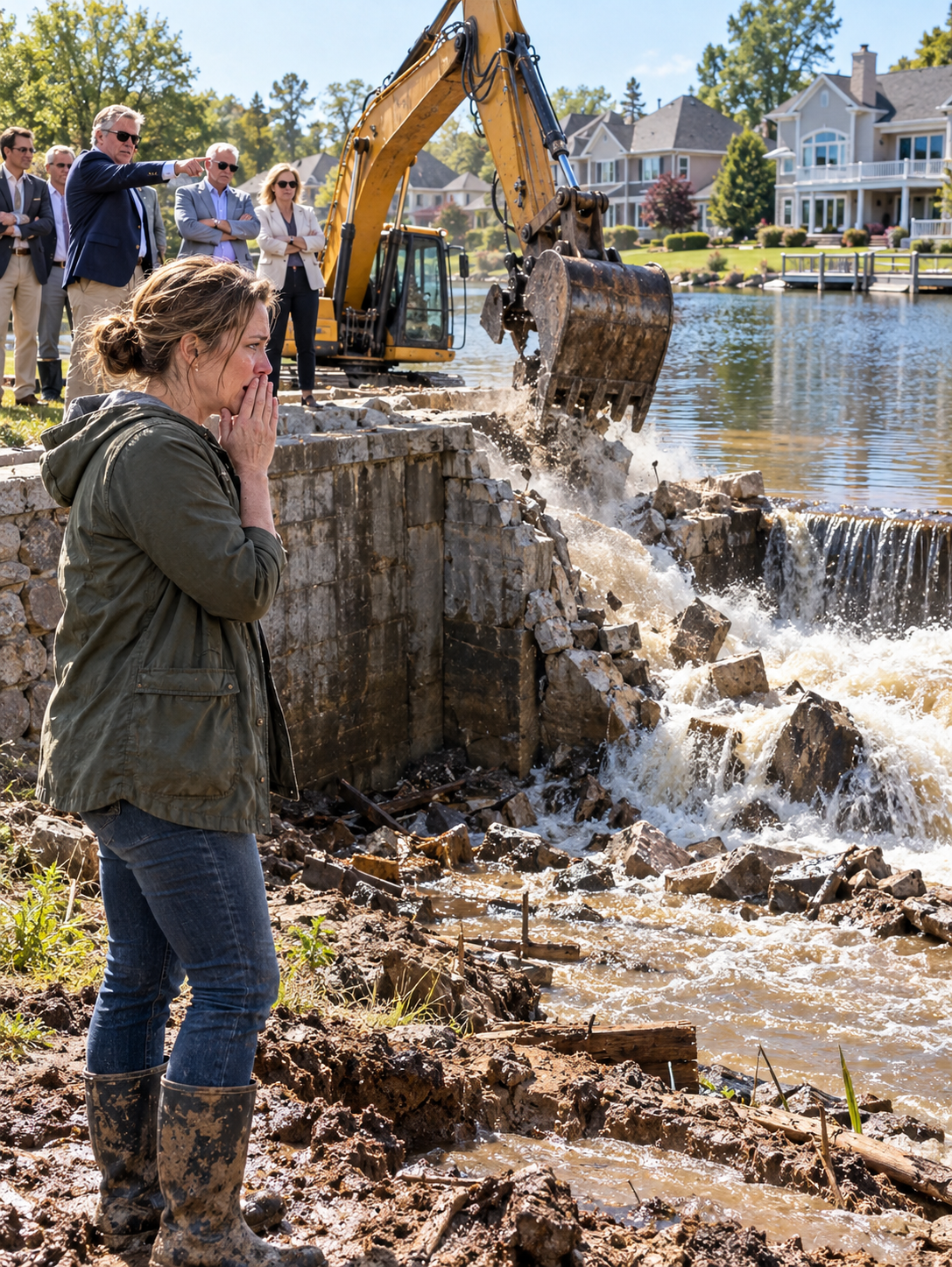
I built a small 3 foot earthen flood retention dam on the edge of my property 12 years ago, paid for 100% out of my own pocket to keep the whole neighborhood from flooding during heavy seasonal rain, then the HOA sued me over a $180 disputed annual fee, sent a bulldozer crew to raze the dam completely without proper county approval, and three days later the worst recorded storm in local county history slammed straight into the development.
Part 1: The flood dam I built for the neighborhood I bought my house on the lowest edge of the small suburban development 14 years ago, and every single spring heavy rain would flood the lower street, seep into basement foundations, ruin landscaping, and wash out mailboxes every time we got more than two inches of precipitation in a day. I got a permit from the county flood control office, paid $14,000 out of my own pocket to build a small curved earthen retention dam along the creek that ran along the edge of my property, creating a small holding pool that would fill up slowly during storms and drain gradually over the next 48 hours. It worked perfectly for 10 full years, no more flooded basements, no more washed out roads, no more landscaping damage, and the old HOA board even sent me a thank you card and a small gift card for all the money I saved the neighborhood every single year. Then a new group of people got elected to the HOA board 18 months ago, they started raising annual fees 30% every year, and sent me a $180 charge for a community pool pass I never used, never requested, and never visited. I disputed the charge, refused to pay it, and suddenly the HOA started sending me violation notices saying the dam was an unsightly eyesore, that it lowered property values, that I had to remove it within 10 days or they would fine me $500 a day. I showed them my official county permit, I showed them 10 years of flood data proving the dam was the only thing protecting the neighborhood from disaster, and they just told me I was making up excuses and refused to listen.
Part 2: The day they bulldozed the dam I woke up at 7 a.m. on a Tuesday to the sound of a bulldozer idling on the edge of my property, three HOA board members standing there with a handwritten note they claimed was a court order, telling me they were going to remove the dam immediately because I refused to pay the disputed fees. They didn’t give me any warning, they didn’t show me any official county documentation, they just told me to move out of the way or I would be arrested for trespassing on common property. The crew spent two hours pushing all the earthen dam material straight into the creek, flattening the entire structure completely, filling in the holding pool until it was level with the surrounding grass. I called the county flood control office immediately, told them what had happened, and the flood control official sounded absolutely shocked on the phone, told me that structure was classified as a critical regional flood control asset, no private group had the authority to modify or remove it under any circumstances. The HOA board posted on the neighborhood Facebook group that same afternoon saying I was overreacting, the dam was nothing but an ugly pile of dirt, property values would go up now that the eyesore was gone, and there was zero flood risk to anyone in the neighborhood. What do you do when the HOA just destroyed the only thing protecting 42 neighborhood homes from catastrophic flooding, and they are laughing at you for warning everyone about the upcoming storm forecast?
Part 3: The storm that hit three days later The local weather service issued a severe flash flood warning 48 hours later, forecasting eight inches of rain in six hours, the heaviest single rain event recorded in the county in more than 70 years. I moved all my furniture up to the second floor of my house, parked my truck on the high ground at the top of the neighborhood, laid sandbags along my foundation just in case, and texted every single neighbor I could to warn them to prepare for flooding. The rain started falling at 2 a.m. and it didn’t stop for seven hours straight. Within 90 minutes the creek started rising faster than anyone had ever seen it, there was no retention dam to hold the excess water, it flooded over the banks, washed out the main neighborhood entrance road, and started pouring into every front yard on the lower end of the development. Neighbors started posting panicked messages on the group chat, their basements were filling up with water, their cars were floating in their driveways, backyard retaining walls were collapsing, and the HOA board had no emergency plan, no stockpile of sandbags, no contact information for a flood response crew, they were completely unprepared. The whole lower street was underwater by 9 a.m., and the HOA board members were trapped in their houses at the top of the neighborhood, completely unreachable, not responding to any calls or messages.
Part 4: The damage report no one could ignore When the water receded 24 hours later, the damage was staggering. Nineteen homes had major structural flood damage, some had three feet of standing water in their main floor, drywall was crumbling, furniture was ruined, appliances were destroyed, and the total estimated neighborhood repair cost added up to more than $2.7 million. The county flood control office released an official report a week later saying if the dam had still been standing, more than 90% of that damage would have been completely avoided, the holding pool would have absorbed almost all of the excess flood water. The HOA tried to claim the storm was an unprecedented act of god, that the dam would not have made any difference, but the security camera footage of them bulldozing the dam was shared all over local news, every local media outlet picked up the story, and no one believed their excuses anymore. A group of 17 homeowners filed a class action lawsuit against the HOA board individually, alleging gross negligence, destruction of critical public infrastructure, and intentional disregard for public safety.
Part 5: The aftermath that changed everything permanently Every single member of the HOA board resigned within two weeks, they were forced to pay out every cent of the HOA’s insurance reserve, and most of them had to pay tens of thousands of dollars out of their own pockets to settle the neighbor claims. The new HOA board that was voted in unanimously a month later voted to reimburse me the full $14,000 I spent building the original dam, plus an extra $80,000 to rebuild it bigger, stronger, with a reinforced concrete spillway and official state flood control certification. The new dam is now classified as permanent public infrastructure, it is illegal for anyone to modify or remove it without written approval from the state department of natural resources. The neighborhood installed a small bronze plaque next to the dam entrance thanking me for building the original structure in the first place, and I haven’t had a single flooded basement or washed out road in the three years since the storm. The old HOA board members all moved out of the neighborhood within six months, and the current board sends me a full written update every month about dam maintenance and flood preparedness plans.
✓ Lynn R. Adams
I built a small 3 foot earthen flood retention dam on the edge of my property 12 years ago, paid for 100% out of my own pocket to keep the whole neighborhood from flooding during heavy seasonal rain, …