I bought my grandmother’s abandoned music box shop for $50 when I had almost nothing left, and I expected dust, unpaid taxes, and memories I didn’t want. Instead, every music box played the same seven unfinished notes, and on my third night there, I found four words hidden behind a tiny blue door that made me question everything my father had kept silent…
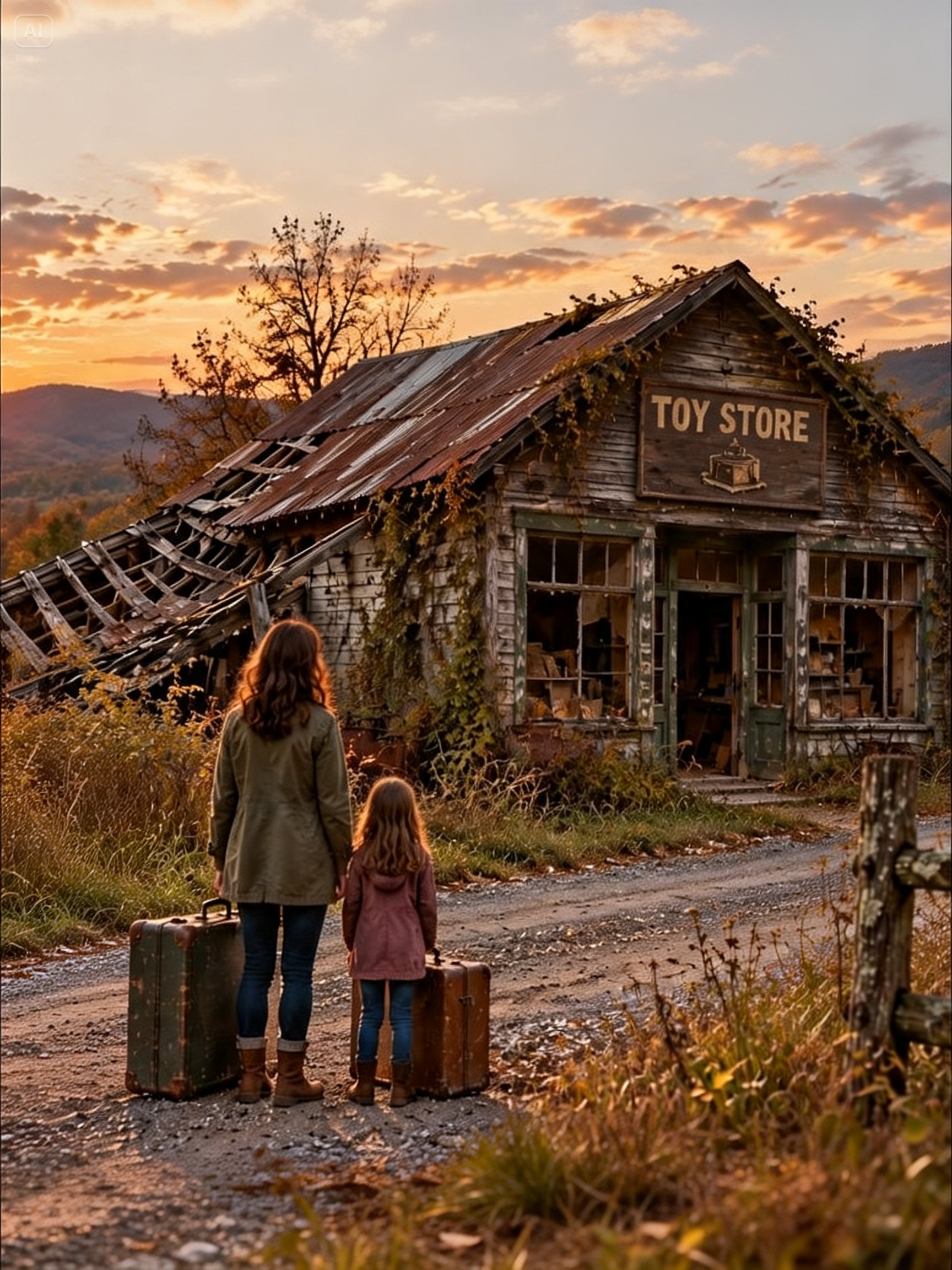
I bought my grandmother’s abandoned music box shop for $50 when I had almost nothing left, and I expected dust, unpaid taxes, and memories I didn’t want. Instead, every music box played the same seven unfinished notes, and on my third night there, I found four words hidden behind a tiny blue door that made me question everything my father had kept silent…
I had $391 left when I signed the papers for the shop. I was 37, divorced, out of work, and living in a motel room I could afford for only 11 more days. The place needed more than I could possibly give it, but it was the first door that had opened for me in months.
The listing said $50, plus $4,780 in delinquent fees. The borough of Bellweather had taken over the building after years of unpaid taxes, and a demolition review was already on the calendar. I had 26 days to bring the balance below the required threshold, or owning the deed wouldn’t save it.
Until that fall, I had made my living repairing things other people couldn’t bear to throw away. For 12 years, I’d worked at a small restoration studio outside Harrisburg, cleaning clock movements, replacing tiny watch springs, and coaxing old music boxes back into tune. Most customers started by saying, ‘It belonged to my mother.’ I understood why they wanted it saved.
I used to believe that if I was careful enough, I could keep my own life from breaking. I paid bills early, saved receipts, and married Nolan, a cheerful man who ran a small construction company. For six good years we had a two-bedroom house, a maple tree in the yard, and lavender I’d planted beneath the kitchen window.
Then Nolan’s business began failing. He borrowed money against work clients hadn’t paid for, and eventually borrowed against our house without telling me. I discovered the paperwork spread across our kitchen table, under the same light where we’d once argued pleasantly over paint colors.
‘You should have told me,’ I said. He kept his eyes on the pages and answered, ‘I was trying to fix it before you had to know.’ I told him that hiding a problem wasn’t the same as fixing it, but by then we were both looking at figures neither of us knew how to cover.
The bank began foreclosure proceedings, and Nolan filed for divorce two weeks later. I didn’t fight the timing. For months he’d been avoiding my eyes, and I think I knew the marriage had ended before either of us said it aloud.
After the utilities were shut off, I still drove past the house to water the lavender with a jug from my car. I stopped only when the locks were changed. I knew plants couldn’t save a marriage, but leaving them to dry out felt like giving up one more thing.
Three weeks after that, the restoration studio closed. My boss was 74, his hands had begun to shake, and his daughter wanted him closer to her in Arizona. ‘I thought I had another year,’ he told me, handing over two weeks’ pay and several special tools he’d wrapped in cloth. ‘So did I,’ I thought, though I couldn’t make myself say it.
I applied to repair shops, jewelry stores, even a clock manufacturer two counties away. No one wanted a full-time restoration specialist right before the holidays. I sold my car to cover legal expenses, then lost the storage unit holding most of my furniture. The employee let me take my personal papers, and I chose one photo album before the door came down.
That was how I found the listing in Bellweather, the river town where I’d spent the first eight years of my life. The boarded-up brick storefront had peeling green trim, but I recognized it immediately. It was the music box shop that once belonged to my grandmother, Celeste Bell.
I hadn’t spoken to Grandma Celeste in 29 years. My mother, Evelyn, left when I was eight after a difficult year nobody ever fully explained to me. My father, Daniel, raised me afterward, and he stopped taking me to see my grandmother. I asked why when I was little, but he always went quiet.
Dad worked maintenance at a printing plant and repaired neighbors’ radios, toasters, and clocks at our kitchen table. When I leaned too close to the little gears, he’d move my hair out of the way and tell me, ‘Listen before you fix.’ He said it so often I began to hear those four words in my head whenever a mechanism sounded wrong.
He died of a heart attack at work when I was 22. Among his things I found an old brass shop key hanging from faded blue thread and a small wooden tuning-fork case with nothing inside. He’d never told me why he kept them, and I couldn’t bring myself to throw either one away.
I called the borough office the morning after seeing the listing. Four days later I’d bought the shop, with $341 left after the purchase, two suitcases, and my father’s roll of tools. The clerk was polite about the hazardous conditions and the 26-day deadline. I could hear her trying not to sound discouraging.
I took a bus to Bellweather beneath a gray November sky and carried everything from the station because a taxi felt extravagant. When I got to the narrow storefront, I tried Dad’s brass key on a whim. It turned the front lock immediately, and I stood there with my hand on it, wondering why he’d kept a key to a place he refused to discuss.
The front room had shelves along both walls and a long glass counter. White sheets covered more than 80 music boxes: painted birds, little cottages, carved carousels, and walnut cases worn smooth at the corners. One box sat uncovered on the counter, as if somebody had just set it there.
I told myself an inspector must have moved the sheet. Then I turned the brass winding key. Seven slow, gentle notes came out, and the mechanism stopped just before the tune seemed ready to settle into its ending.
There was something familiar about it, though I couldn’t have told you where I’d heard it. I reached for a second box and wound it. The same seven notes played, with the same awkward silence at the end. A third did it too.
By the sixth box, I was no longer willing to call it coincidence. These were different mechanisms, made in different years, with pin cylinders that should have carried different songs. I knew enough about the work to recognize that someone had altered them deliberately. I just couldn’t imagine why.
I spent the next days clearing water-damaged furniture, ruined papers, and years of unopened mail addressed to Celeste. I kept the music boxes where they were because selling her work before I understood it felt wrong. Behind the counter, I noticed three short scratches and one long one cut into the workbench, but I had no idea what they meant.
At night I slept upstairs on a camping mattress in the old storage room. I had a space to shelter in, but no reliable plan for keeping it. I counted the days until the borough deadline and tried not to count how many people I’d lost along the way.
On my third night, a faint click woke me. I went downstairs and found the shop empty, but the uncovered music box on the counter was standing open. Its painted little blue door, no bigger than a coin, hung loose on one hinge, with a brass screw lying beside it.
I slid the screw back into place and saw a folded strip of paper tucked behind the tiny door. The pencil writing was pale, but I could read every word: ‘Listen before you fix.’ I sank onto my grandmother’s workbench stool, holding the paper between both hands. Those were my father’s words, and he’d never explained why he stopped coming here. Part 2…..
I stayed at the counter a long time, trying to decide whether Grandma had known that phrase all along. Dad had been dead for 15 years; Celeste had been gone for years too. Yet their silence suddenly felt less like an empty space and more like something they’d both left behind.
During my first week, a woman named Karen came in after noticing the lights. She told me she’d once brought her husband’s pocket watch to Celeste, then placed a music box on the counter that she’d bought as a christening gift 12 years earlier. ‘It only ever played half a song,’ she said. ‘I thought that was how it was made.’
I wound it, and those same seven notes filled the room. Karen studied my face and said quietly, ‘You’ve noticed it too, then.’ She left the box with me, saying she’d come back when I’d worked out what the old place was trying to say.
One afternoon, looking for business paperwork, I found a floorboard in the rear office that sat higher at one corner, close to the safe. It moved a little beneath my palm but wouldn’t lift. I didn’t want to damage the floor without proper tools, so I made a note to come back to it.
Across Mercer Street, an elderly man was sweeping outside a hardware store. When I asked whether he’d known Celeste Bell, he looked hard at me and said, ‘You’re Daniel’s girl.’ His name was Otis Keen, and he’d run his store nearby for more than 30 years.
Otis began stopping by in the mornings with coffee. When the shop turned bitterly cold, he carried over a space heater from his garage. Once he stayed to help me clean a stubborn spring mechanism, pushing his glasses into his thinning gray hair as he worked. I asked why he kept giving up his mornings, and he said, ‘Man my age needs somewhere to be.’
It had been months since someone had shown up just because they wanted to. Soon Otis and I were eating sandwiches at the repair counter on Fridays, and he was telling me things about my grandmother I’d never heard. She made a walnut cake every October, he said, even after my father stopped bringing me by.
‘Why keep making it if no one came?’ I asked. Otis took his time before answering. ‘Some people keep a tradition because stopping would mean admitting something’s over.’ He gave me a small look over his coffee. ‘Your grandmother was stubborn about that.’
He told me Celeste repaired people’s clocks for free during hard winters and once forgave a family’s entire bill by pretending she’d made an accounting error. But he didn’t try to turn her into a saint. ‘People can be generous to strangers and still struggle with their own families,’ he said. ‘Those are the people who can hurt you most.’
Sometimes, Otis said, she’d stand at the shop window long after closing, looking down the street. He never asked whom she was waiting for. Thinking of Dad’s silences at our kitchen table, I had a feeling I understood more than I wanted to.
While cataloging the inventory, I found several boxes arranged in a half circle on a low shelf. Each one faced an empty space where another box should have stood. The dust around the gap was old and undisturbed; someone had removed the missing box long before I’d arrived. I could add that to the questions I didn’t know how to ask.
Otis also showed me how Celeste had organized her pin cylinders by year instead of style, a peculiar system that made sense once he demonstrated it. Over another Friday supper, he grew quiet and finally said, ‘Your grandmother began changing those cylinders about the time your mother left.’ He’d seen her work on one after another and had assumed keeping busy was how she handled grief.
‘You knew, all this time?’ I asked. He shook his head. ‘I suspected something. That isn’t the same as knowing.’ I wanted to be angry that he hadn’t mentioned it sooner, but I could see he was trying not to pretend he understood a secret Celeste had never told him.
The old demolition warning still hung beside the front door. One morning I read it again with cold coffee in my hands, then smoothed the curling edge against the glass. I didn’t have the money to make the deadline, but the thought of those boxes being hauled away as scrap had become unbearable.
Two nights later, a drawer behind the workbench caught when I tried to close it. I worked it loose and found an old ledger beneath a stack of repair tickets. The first pages were ordinary: customer names, dates, charges, and Celeste’s neat handwriting. Then the entries changed.
One read, ‘Daniel brought the first cylinder today. Seven notes, no more. Won’t say why he can’t finish it.’ She had recorded his visits again and again, sometimes almost daily, always noting that the song stopped after the seventh note.
I turned pages until I reached an entry where Celeste had written that she’d asked him to stop going in circles and he’d said he knew. The last entry was underlined twice: ‘The song must stay unfinished until he’s ready to hear the ending. But I won’t let it disappear.’ Beneath it she had added that someday someone who knew how to listen might come home and finish what he couldn’t.
I put the ledger down and looked over the rows of music boxes. My father hadn’t abandoned this shop as completely as I’d believed. At least for a time after my mother left, he’d come here trying to write something, and my grandmother had made sure his seven notes survived.
Behind a loose patch of wall plaster near the workbench, I found a bundle of envelopes tied with string. All 19 were addressed to me in Celeste’s handwriting, none stamped, none mailed. I sat on the floor with them in my lap and opened the oldest first.
Part 3 ‘You turned 10 yesterday,’ it began. ‘I made the walnut cake anyway.’ In another, she wrote that she didn’t know why my father had stopped bringing me and that she thought of me every day. One for my thirteenth birthday asked whether somebody was teaching me to fix things, because that skill ran in our family.
The letters covered almost 19 years. Earlier ones asked questions, while later ones mostly hoped I was safe and happy. In one she wrote, ‘Some habits are just love with nowhere left to go.’ I read every letter twice, ashamed of how thoroughly I’d mistaken silence for indifference.
I couldn’t know everything that had happened between my father and grandmother, and the letters didn’t explain why my mother had gone. But they showed me Celeste had remembered my birthdays, that Dad had kept trying to compose those seven notes, and that neither of them knew how to reach across whatever had separated us.
The next morning I went to Bellweather Public Library and spent two hours with the microfilm reader. I found my parents’ wedding announcement, including a photograph outside this very shop with Celeste at the edge. I also found a short death notice showing that Grandma had died six years after Dad, and I’d never even been told.
There was nothing in the newspaper about a song. Of course there wasn’t; no reporter would have known to ask. But at that library table, with the machine humming beside me, I understood I wasn’t just trying to save a building from the borough. I was trying to learn what these people had been unable to tell one another.
The last letter in the bundle gave me the closest thing to an answer. Celeste wrote that Dad had begun the song for my eighth birthday, but every ending he’d tried had sounded false to him. ‘I told him he was trying to write it alone,’ she wrote. ‘Some things, Mara, were never meant to be finished by only one person.’
I carried the letter to Otis the following evening, along with the ledger. He listened to every part of it without once reaching for his coffee. When I asked whether he thought I could finish Dad’s song, he said, ‘You know how to repair a broken mechanism. Maybe this is another kind of repair.’
I wasn’t sure that was true. Replacing a bent pin was one thing; deciding what a dead man’s melody ought to say was another. Still, that night I remembered the raised floorboard near the safe and took my father’s flat bar back to the rear office.
The board lifted carefully. Under it sat a small tin box, rusted at the corners, holding a brass cylinder wrapped in cloth. It was a spare of the kind I’d need if I wanted to alter the unfinished tune without destroying the original. Celeste had kept even that possibility safe.
The next morning, behind Grandma’s old recipe box, I found the music manuscript in Dad’s cramped handwriting. The melody was written out except for the final measure, which was empty. Notes in the margins included dates, a few half-erased words, and one reference to my favorite key, though I had no memory of telling him that.
I set the page above the bench and laid my smallest tools beside it. For hours, I listened to the way the seventh note hung in the air, then moved the pins on the spare cylinder one at a time. My first attempt sounded too sharp. The second fell flat, and I understood why Dad might have kept starting over.
On the third try, I wound the walnut box and heard the seven familiar notes. Then came an eighth, gentle and certain, and for the first time the melody came to rest. I hadn’t realized my eyes had filled until I tried to set the key down and saw the bench blur.
I played it again, thinking of Dad at the kitchen table moving my hair away from a tiny gear. I thought about Celeste in this shop, winding those altered boxes year after year so his unfinished song wouldn’t disappear. Neither of them had lived to hear the ending, but I had. That had to mean something.
The borough deadline was still there, though, and now there were only six days left. I taped a handwritten REPAIRS sign in the front window. Otis came in first with a kitchen clock that, by his own admission, hadn’t stopped working since 1974. I took it as his way of telling me not to give up.
Soon people from along Mercer Street brought in broken clocks, windup toys, and music boxes. I repaired what I could and recorded every payment carefully. The work brought in money, but not nearly enough to meet the delinquent balance by itself.
Otis gathered a few shopkeepers who could help with urgent structural repairs at cost. He also helped me find a county historic-preservation grant, and the approved assistance covered the remainder that my earnings couldn’t. I assembled the paperwork with the same hands that had once been afraid to open the front door.
On the morning of the deadline, I carried my repair earnings and the grant documentation to the borough office. The clerk checked the file, stamped it, and said, ‘You’re compliant.’ I stood there longer than necessary before thanking her, because I was so used to bad news that I hardly knew what to do with an ordinary sentence.
I walked back toward Mercer Street and saw Otis sweeping outside his store. The shop windows caught the cold afternoon light, and the faded gold lettering above them was visible now that I’d cleaned the glass. For the first time in four months, I found myself looking at what I still had instead of what I’d lost.
Final I kept the shop. Over the next months, I had the wiring brought up to date, got reliable heat installed, and worked through decades of repairs. Otis still appeared most mornings, and other neighbors helped when they could. The building began to feel like a place people expected to be open tomorrow.
Karen came back in the spring with the christening music box. I fitted its mechanism with the completed tune and wound it for her. She listened to the last note with both hands around the little box, then told me she’d grown so used to its broken ending that she hadn’t realized how much she’d wanted to hear the rest.
Other customers returned with boxes Celeste had sold years earlier. Some had belonged to parents they missed; one had been bought nearly 30 years before. I repaired each one carefully, and I noticed how often people stayed at the counter after the last note faded. It wasn’t just a tune to them anymore.
I framed Dad’s manuscript above the register, where his cramped writing and Grandma’s marginal notes could be seen together. Beside it I pinned one of the letters—not the most painful, but the one with the line about love having nowhere left to go. I kept the empty tin box on a shelf behind the counter.
That spring, I wrote to my mother, Evelyn. I told her where I was and what I’d discovered, then asked whether she might want to visit. I didn’t demand an explanation for leaving when I was eight. I wanted one someday, but after reading 19 unsent letters I knew I’d rather begin with a question she could answer.
I posted the envelope before I could change my mind. Weeks passed. Sometimes I’d catch myself glancing at the shop’s mailbox more often than the day’s deliveries required, and I’d go back to a repair before I could make too much of it.
In early May, a letter arrived in handwriting I hardly recognized. Evelyn said she might like to visit that summer and wondered whether I’d show her how the shop worked. She didn’t explain everything. She did say she remembered the seven notes and had been humming them to herself for 30 years without understanding why.
I read her letter at the counter, then again upstairs after closing. My reply was one line: ‘Come hear how it ends.’ I couldn’t promise the visit would answer every question, but for the first time I was willing to let the conversation begin without knowing where it would lead.
By June, the plywood was off the storefront windows and the trim was painted the old deep green. I left the faded sign in place. Its worn lettering suited the building, and I liked that the shop didn’t have to pretend it had never been neglected.
One warm evening after a long day of repairs, I wound the walnut box before closing. Eight notes sounded, complete and quiet, while Otis swept the front step. I asked him whether Dad and Grandma would have liked what the shop had become.
He rested his broom against the doorframe and thought for a while. ‘I think,’ he said, ‘they were counting on it.’ I stood at the counter looking at their handwriting above the register, with Mom’s letter tucked safely in the drawer beneath it.
I once thought losing my house, my marriage, and my work meant there was nothing left for me to put back together. But a $50 shop had brought me back to a family I thought had stopped caring, and an unfinished song had given me a way to reach for the one person who was still alive to answer. I couldn’t repair the years we’d missed. I could leave the door open for whatever came next.
THE END. I’ve shared the complete story, and I truly hope it touched your heart. If this story moved you, please , like, and share the post. Thank you for reading! ❤️
✓ Lynn R. Adams
I bought my grandmother’s abandoned music box shop for $50 when I had almost nothing left, and I expected dust, unpaid taxes, and memories I didn’t want. Instead, every music box played the same seven…