Homeless Mom Inherited Grandfather’s Mountain Cabin Sealed Since 1948 — Her Family Never Expected Her to Open the Iron Box
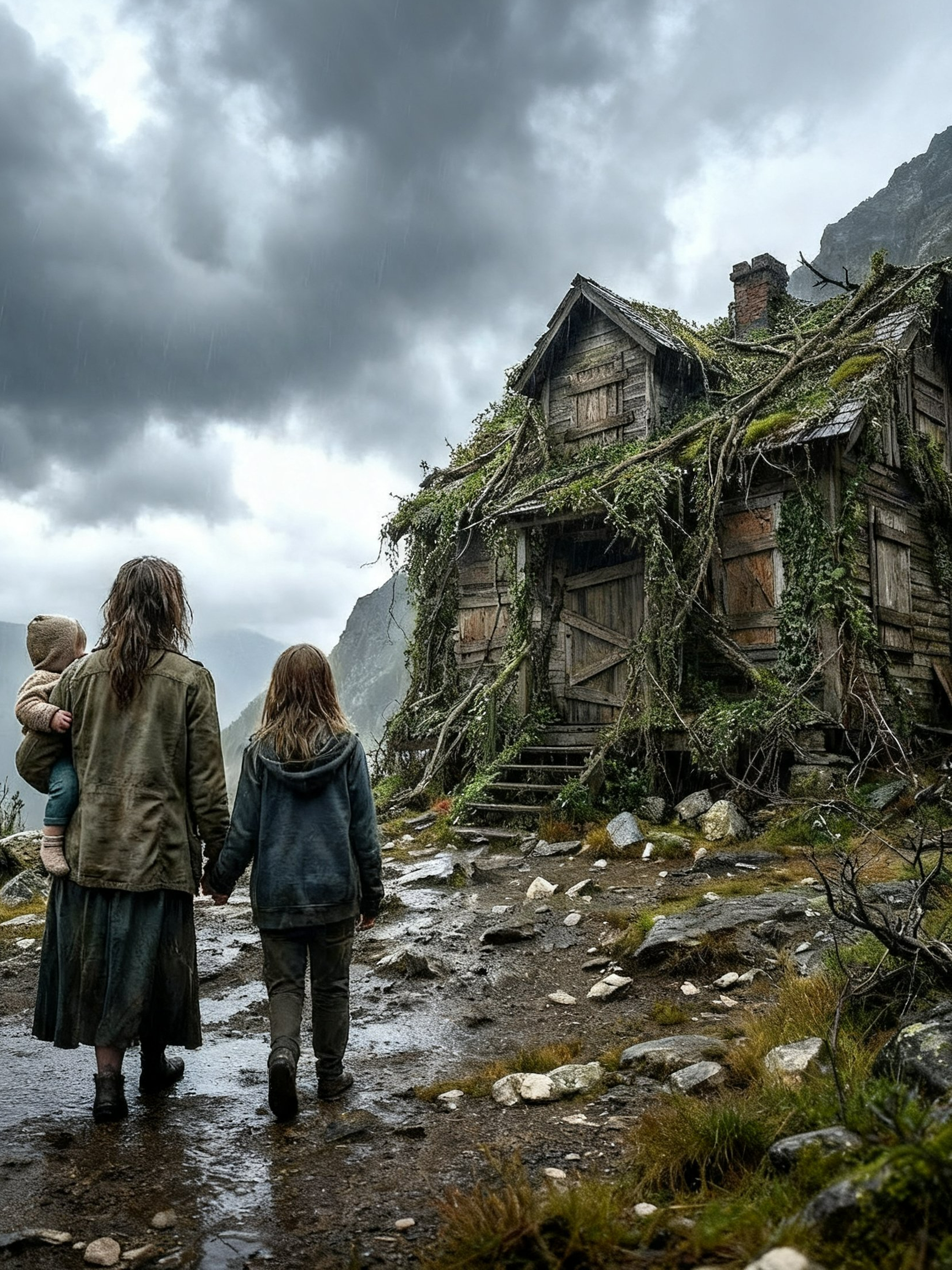
Homeless Mom Inherited Grandfather’s Mountain Cabin Sealed Since 1948 — Her Family Never Expected Her to Open the Iron Box
“Your daughter needs to stop thinking this is normal.”
Claire Bennett’s older sister said it while standing beside two packed garbage bags filled with Claire’s clothes.
Their mother stood behind her and said nothing.
Claire looked at the bags.
Then at her nine-year-old daughter, Ellie, sitting on the bottom stair with her winter coat already zipped.
Then at the kitchen clock.
They had been in Melissa’s house for five days.
That was how long it took Claire’s own family to turn temporary homelessness into a character flaw.
Melissa folded her arms.
“You said two nights.”
“I said a few days.”
“You’ve had a few days.”
Claire nodded once.
No pleading.
No raised voice.
No reminders that she had once paid Melissa’s mortgage for three months when Todd lost his sales job.
No reminders that she had spent six years driving their mother to cardiology appointments because Melissa was always too busy.
No reminders that when their grandfather Amos had stopped recognizing people near the end, Claire had been the one changing his sheets, cutting his food, and sitting beside his bed at three in the morning while he called her by the name of a woman who had died before Claire was born.
She could have said all of it.
She didn’t.
Todd appeared in the hallway wearing loafers and a quarter-zip sweater, holding forty dollars between two fingers.
“There’s a motel off Route 16,” he said. “This should get you through tonight.”
Claire looked at the bills.
Then at Todd.
His eyebrows rose.
Melissa gave a short laugh.
“Claire, don’t do that pride thing now. Pride is a luxury when you don’t have a house.”
That one landed.
Claire felt it.
She just didn’t give Melissa the satisfaction of watching it land.
Ellie stood up.
“I can carry my backpack, Mom.”
“I know you can.”
Their mother finally spoke.
Claire turned.
Joan Bennett was sixty-three, perfectly dressed even for a family eviction, with pearl studs and a navy cardigan buttoned to the throat.
Her voice had the softness she used when saying something cruel enough to require wrapping.
“This might be good for you.”
Claire waited.
“You’ve always needed consequences before you changed.”
Claire studied her mother’s face.
It was remarkable how calmly betrayal could dress itself.
No shouting.
No slammed doors.
Just a sentence delivered beneath recessed lighting in a suburban kitchen Claire herself had helped paint seven years earlier.
Claire picked up the first garbage bag.
Melissa’s expression shifted.
“You’re seriously not going to say anything?”
Claire lifted the second.
That bothered Melissa more than anger would have.
“What does that mean?”
“It means no.”
Claire walked toward the front door.
She had almost reached it when Todd called after her.
“You should probably deal with this, too.”
He tossed a large cream-colored envelope onto the entry table.
Certified mail.
Claire’s name was typed across the front.
Under it were three words.
ESTATE OF AMOS BENNETT.
Claire stopped.
Melissa stopped smiling.
Only for a second.
But Claire saw it.
That tiny pause was the first thing that frightened her.
Not the eviction.
Not the forty dollars.
Claire picked up the envelope.
“Where did this come from?”
Todd shrugged too quickly.
Melissa cut in.
“Does it matter?”
Claire looked at her sister.
Melissa’s jaw had tightened.
Interesting.
Claire slid the envelope inside her coat.
Then she opened the front door.
Cold November air rushed inside.
Behind her, Joan said, “Claire, don’t make things harder than they need to be.”
Claire turned back.
Her mother’s eyes flicked toward the cream envelope.
But once was enough.
Claire smiled faintly.
“I don’t think I’m the one making things harder.”
Then she walked outside with her daughter.
She had no house.
She had $312 in checking.
Her ten-year-old Honda needed front brakes.
Her ex-husband had disappeared six months earlier after emptying the joint savings account and leaving behind three missed rent payments, a disconnected phone number, and a text that said only, I can’t do this anymore.
Claire had spent the next months working mornings at a dental office and nights entering insurance claims from home.
Then the dental office closed.
Then the landlord sold the duplex.
Then the new owner wanted the unit empty.
She had never missed a payment before Daniel left.
She had never asked her mother for money.
She had never asked Melissa for money.
She had asked for a couch.
Five days later, her clothes were in garbage bags.
She had done everything right.
She had stayed quiet.
She had worked late.
She had paid people back.
She had made excuses for relatives who never made excuses for her.
She had made herself useful.
She had made herself small.
She had made herself easy to overlook.
That last one, Claire would later realize, had been their biggest mistake.
She put Ellie into the passenger seat, loaded the garbage bags into the trunk, and drove three blocks before pulling into the empty parking lot of a closed pharmacy.
Ellie waited until the engine was off.
“Are we sleeping in the car?”
Claire looked at her daughter.
She said it before she knew whether it was true.
Ellie nodded anyway.
That trust hurt more than Melissa’s words.
Claire opened the envelope.
The first page came from a law office in Black Pine County, Colorado.
Hart & Calder, Attorneys at Law.
Dear Ms. Bennett,
After the recent discovery of unrecorded probate materials belonging to your late grandfather, Amos Henry Bennett, we are contacting you regarding property located at 744 Widow’s Ridge Road, Black Pine County, Colorado.
Claire read the sentence twice.
Her grandfather had died fifteen years earlier in Indiana.
He had never mentioned Colorado.
She kept reading.
The property consisted of an isolated mountain cabin and associated acreage held under a chain of title originating in 1948.
The cabin had remained sealed by private order of Amos Bennett since October 3, 1948.
Claire’s fingers stopped.
Sealed since 1948.
The letter continued.
Recent proceedings involving adjacent parcels had triggered a title review, during which a handwritten testamentary addendum was located in archived county storage.
Under the terms of that document, the cabin transferred to Claire.
Not Melissa.
Not Uncle Raymond.
There was also a smaller envelope inside.
Her name had been written on it in the shaky handwriting she remembered from her grandfather’s final years.
CLAIRE ONLY.
She opened it.
A brass key slid into her palm.
It was nearly four inches long.
Old enough that the edges had gone dark.
There was a note.
Claire recognized the handwriting immediately.
Little Bird,
If this reaches you, somebody finally got greedy enough to dig where they should not have.
The house is yours.
Do not sell it.
Do not sign anything.
Do not believe anyone who tells you Widow’s Ridge is worthless.
Open the cabin yourself.
Behind the stove wall you will find an iron box.
If the box is still there, take it to someone who does not work for Black Pine County.
One more thing.
If anyone shows you a deed dated June 14, 1956, ask who notarized it.
Then ask when he died.
Trust the dates.
Not the people.
Grandpa Amos.
Claire sat motionless.
Ellie leaned toward her.
“What is it?”
Claire folded the note carefully.
“Your great-grandpa left us something.”
“Is it nice?”
Claire looked down at the brass key.
“I have absolutely no idea.”
Her phone rang.
Claire let it ring.
Then again.
Then a text arrived.
You forgot Ellie’s purple blanket.
Claire stared at the screen.
Another message followed.
Also, don’t get weird about that estate letter. Grandpa had lots of useless old papers.
Claire’s eyes narrowed.
How did Melissa know what kind of letter it was?
Claire had never opened it inside the house.
She had never said who sent it.
The envelope showed ESTATE OF AMOS BENNETT.
But not what the estate contained.
Claire typed nothing.
Thirty seconds later, another message came.
If it’s about the Colorado shack, Uncle Raymond already checked years ago. There’s nothing there. Unsafe land, unpaid taxes, probably condemned.
Claire read that one twice.
Then she locked the phone.
Ellie watched her.
Claire started the engine.
“We’re going to Colorado.”
Ellie blinked.
They drove west with two garbage bags, one backpack, a brass key, and a dead man’s warning.
By midnight they had crossed Illinois.
By dawn they were in Iowa.
Claire slept for ninety minutes at a truck stop while Ellie curled beneath an old fleece blanket from the trunk.
She spent almost half of her checking balance on gas, coffee, grilled cheese, and a cheap motel outside Lincoln, Nebraska, where the heater clicked all night and the carpet smelled like wet shoes.
The next morning she called the number on the attorney’s letter.
An older man answered.
“Hart & Calder.”
“Mr. Hart?”
“Speaking.”
“My name is Claire Bennett.”
Not confusion.
Recognition.
Then he said, “Where are you?”
“Nebraska.”
“Are you alone?”
Claire glanced at Ellie, who was drawing mountains on hotel stationery.
“With my daughter.”
“Has anyone asked you to sign anything?”
Claire stood.
Another pause.
“Ms. Bennett, I’m going to ask you something unusual. Do not tell me where you’re staying. Do not email me photographs of the letter. Do not contact the Black Pine County recorder yet.”
“Because my father wrote that letter.”
Claire’s hand tightened around the phone.
“Your father?”
“He knew my grandfather?”
“For most of his life.”
“Then why am I hearing about this fifteen years after Grandpa died?”
The attorney exhaled.
“Because the file was not supposed to be found until someone tried to transfer Parcel 7C.”
“What is Parcel 7C?”
“That,” he said, “is the part I think certain people would prefer you never understand.”
Claire looked at the brass key lying on the nightstand.
“Is my family involved?”
Hart took too long to answer.
Claire closed her eyes.
“That’s a yes.”
“I did not say that.”
“You didn’t have to.”
He lowered his voice.
“Come to Black Pine. Do not stop at the courthouse first. Go directly to the cabin. There is a private road on the north side. You’ll need four-wheel drive after the first snow gate.”
“I drive a Honda Accord.”
For the first time, Hart almost laughed.
“Then stop at Warren’s Garage in Black Pine. Tell Frank that Lyle Hart sent you.”
“What am I walking into?”
“I wish I knew all of it.”
That answer was worse than anything else.
Claire ended the call.
Ellie had stopped drawing.
“Is the house haunted?”
Claire looked at her.
“Probably by paperwork.”
Ellie smiled.
It was the first time either of them had smiled in two days.
Black Pine, Colorado, sat beneath a wall of dark mountains and expensive lies.
That was Claire’s first impression.
The downtown had stone sidewalks, copper gutters, cafés selling twelve-dollar sandwiches, and boutiques where sweaters cost more than her car payment used to.
Above it all, the Black Pine Summit Resort climbed across the lower mountain in terraces of glass, timber, and heated stone.
Signs pointed toward private ski lifts.
A real estate billboard showed smiling couples beside the words:
LIVE ABOVE EVERYTHING.
Claire was still looking at it when her phone buzzed.
Unknown number.
She ignored it.
A second call came.
Then a voicemail.
She listened.
“Claire Bennett, this is Evan Bennett. Raymond’s son. I heard you’re headed into Black Pine. Call me before you do anything with Grandpa’s property. There are liabilities you don’t understand.”
Claire hadn’t spoken to Cousin Evan in eight years.
He worked in commercial real estate.
Of course he did.
Warren’s Garage was a low cinder-block shop near the edge of town.
Frank Warren was seventy if he was a day, with a white beard and one missing finger on his left hand.
The moment Claire said Lyle Hart’s name, he looked toward Ellie, then toward the street.
“Pull your car behind the shop.”
“Because if you’re asking for Widow’s Ridge, people notice.”
He loaned her an old red Jeep Cherokee with snow chains and refused payment.
“You can bring it back when you’re done.”
“I don’t know when that will be.”
Frank’s eyes settled on the brass key hanging from Claire’s fingers.
“Yes, you do.”
Claire waited.
Frank said, “When the mountain decides.”
That sounded ridiculous.
Then he added, “Or when somebody with a lawyer tells you the mountain was never yours.”
That sounded less ridiculous.
Widow’s Ridge Road climbed for eleven miles.
The last six were unpaved.
Snow thickened beneath the trees.
Ellie kept pressing her forehead to the passenger window.
“There’s nobody here.”
Claire looked around.
No utility poles.
No resort signs.
Then the road turned sharply.
The cabin appeared.
It stood in a clearing overlooking an enormous valley.
Not a shack.
Not exactly.
It was small, two rooms at most, built from squared pine logs gone almost black with age.
Every window had a metal shutter bolted across it.
The front door was covered by a steel plate with a rusted lock.
A stone chimney leaned slightly toward the east.
Snow lay untouched around it.
Claire parked.
Ellie whispered, “It looks asleep.”
Claire took the brass key from her coat.
The lock resisted for three seconds.
Then turned.
The sound was deep.
Mechanical.
Claire removed the chain.
Pulled the steel plate aside.
Opened a door that, according to the letter, no one had opened legally in seventy-eight years.
Cold air moved out of the darkness.
Not animals.
Something faintly metallic.
Claire turned on her flashlight.
The beam crossed a wooden table set with two enamel cups.
A calendar hung on the wall.
October 1948.
A wool coat remained on a peg.
There were canned peaches lined beside the sink.
A newspaper lay folded on the table.
TRUMAN CAMPAIGNS WEST.
Ellie stepped closer.
“Did everybody just leave?”
Claire did not answer.
Because the cabin did not look abandoned.
It looked interrupted.
A chair had fallen sideways near the hearth.
One cupboard stood open.
A coffee tin had spilled across the floor, the beans petrified into dark little stones.
There were scratches in the wood beside the front door.
Not animal scratches.
Long, narrow marks around shoulder height.
As if someone had dragged something heavy across the boards.
Claire’s grandfather had been twenty-three in 1948.
She pictured him here.
Terrified enough to shut the place and never return.
Claire moved toward the iron stove.
Behind the stove wall.
She crouched.
The wall was built from rough boards.
One board had three nail heads.
Two were rusted.
The middle one was brass.
Claire touched it.
It turned under her fingers.
A latch clicked.
A narrow panel opened.
Behind it sat an iron box.
Ellie inhaled sharply.
The box was black, fourteen inches long, with a carrying handle and a lock.
Claire tried the brass key.
She searched the hiding space.
Then she remembered her grandfather’s note.
Trust the dates.
Not the people.
The calendar.
October 1948.
Claire crossed the room and lifted it.
Behind it, taped directly to the log wall, was a flat key.
Almost new-looking beneath the yellowed tape.
The iron box opened.
Inside were no stacks of money.
No jewelry.
Just paper.
Dozens of documents tied with faded cotton ribbon.
Survey maps.
Photographs.
Ledger pages.
A black notebook.
Three envelopes marked with names Claire did not recognize.
And a typed document bearing the title:
BENNETT RELIEF LAND TRUST
ESTABLISHED SEPTEMBER 2, 1948
Claire sat on the floor.
Then read more.
And by page six, she understood enough to feel her heartbeat change.
The trust listed 1,842 acres.
Not twenty.
One thousand eight hundred forty-two acres.
Widow’s Ridge.
Cedar Basin.
The eastern half of Summit Creek.
Two access roads.
Three spring-fed water sources.
And a lower parcel now identified on Claire’s tourist map as the Black Pine Summit Resort.
Claire stopped breathing for a second.
She pulled out the county brochure she had taken from the gas station.
The resort covered hundreds of acres.
Luxury condos.
Private trails.
A golf course.
A conference center.
The papers in Claire’s lap said the land had once belonged to a trust administered by Amos Bennett.
Her grandfather.
But then Claire read the beneficiary page.
And everything changed again.
The land was not really his.
The beneficiaries were seventeen families.
Women, mostly.
The families of miners killed in the Cedar Basin Tunnel Collapse of August 1948.
Claire picked up the black notebook.
Her grandfather’s handwriting filled the first page.
They offered each woman $300 and told them their husbands died because of unstable rock.
That is a lie.
The east tunnel was knowingly cut beyond the approved support line.
The company knew.
The county engineer knew.
Raymond knows.
Claire froze.
Her uncle was Raymond Bennett.
But he hadn’t been alive in 1948.
This had to be another Raymond.
She kept reading.
The mine owners had apparently created a compensation fund after the collapse.
Then diverted most of it through shell purchases.
Amos, working as an assistant survey clerk at twenty-three, had discovered the fraud.
With the help of attorney Samuel Hart—Lyle Hart’s father—he used the remaining legitimate funds to acquire tax-delinquent land around the mine on behalf of the dead miners’ families.
The trust was designed to preserve the land until the children reached adulthood.
Then something happened.
Signatures were forged.
Records disappeared.
County indexes were altered.
Amos sealed the original trust documents in the cabin.
A note near the back said:
If they erase the trust from the books, the originals remain controlling until properly challenged.
Do not destroy these.
Do not place them in the Black Pine courthouse.
There is one deed they will rely upon.
June 14, 1956.
It is false.
Notary: Edwin C. Moss.
Died July 21, 1955.
Claire leaned back against the wall.
Her grandfather had warned her about the same deed seventy years later.
Outside, an engine approached.
Claire shut the notebook.
Her daughter looked up.
“Put your coat on.”
Claire returned every document to the iron box except three: the trust instrument, the 1956 deed warning, and the page showing beneficiaries.
She slid those beneath her sweater.
Then she closed the box.
A black SUV stopped beside the Jeep.
Two doors opened.
Claire moved to the front window but did not unbolt the shutter.
Voices outside.
Then a knock.
Three firm strikes.
Cousin Evan.
She opened the door halfway.
Evan Bennett had their family’s narrow nose and their grandfather’s gray eyes, but everything else was polished.
Camel coat.
Dark jeans.
Leather gloves.
Beside him stood a square-faced man in a county jacket.
Evan smiled.
“Wow. You actually opened it.”
Claire said nothing.
The county man stepped forward.
“Ma’am, I’m Dale Mercer. Building safety.”
Same name as Mercer Ridge Development.
Claire noticed.
“You followed me here?”
Evan shook his head.
“Don’t start like that. Frank saw you in town.”
“Frank called you?”
“Then how did you know I was here?”
Evan’s smile thinned.
“Small town.”
Claire glanced at the county truck behind the SUV.
There wasn’t one.
Just Evan’s vehicle.
“You said building safety.”
Dale nodded.
“Where’s your county vehicle?”
A brief silence.
Evan sighed.
“Claire, nobody’s trying to hurt you.”
She almost smiled.
People rarely said that unless hurting you had already been discussed.
Dale took a folded paper from his coat.
“This structure was flagged as unsafe during a land review. You and your child can’t occupy it.”
Claire did not touch the paper.
“What land review?”
“The Mercer Ridge expansion.”
There it was.
Evan stepped in smoothly.
“That’s what I wanted to explain. The cabin sits inside an older parcel designation. There are overlapping claims, environmental issues, liens, back taxes. Honestly, it’s a mess.”
“How much are the back taxes?”
Evan hesitated.
Dale looked at him.
Claire waited.
Finally Evan said, “I don’t have the exact number.”
“You drove eleven miles up a mountain to warn me about taxes, but you don’t know the taxes?”
“And somehow you knew about this place before I told anyone.”
Evan’s face hardened.
“Grandpa’s old Colorado holdings were family knowledge.”
“No, they weren’t.”
“Maybe not to you.”
Claire felt that knife.
She let it stay where he put it.
“Why not to me?”
Evan opened his mouth.
Then switched tactics.
“We can solve this quickly.”
He reached into the SUV and returned with a blue folder.
“Mercer Ridge Development is consolidating several parcels. They’re prepared to pay you twenty-five thousand dollars for a complete quitclaim.”
Claire almost laughed.
The resort below probably earned that much selling hot chocolate in December.
Evan kept talking.
“You’d be walking away from liability. Cash. No inspections. No probate complications. No attorneys.”
Dale nodded helpfully.
“Best move, honestly.”
Claire looked toward the cabin behind her.
Then back at them.
“Twenty-five thousand?”
Evan relaxed slightly.
He thought the number had landed.
“It’s generous.”
Claire lowered her eyes.
Let her shoulders drop.
Let two seconds pass.
She wanted them to believe desperation was making the decision.
Evan opened the folder.
A signature tab was already marked in yellow.
Claire looked at it.
Then asked quietly, “Is this the deed dated June 14, 1956?”
Evan went still.
Dale looked at him.
Only for a fraction of a second.
But Claire saw that too.
Evan slowly closed the folder.
“Where did you hear that date?”
Claire met his eyes.
“Should I have?”
The wind moved through the pines.
Evan’s jaw tightened.
“Claire, don’t get manipulated by old paperwork you don’t understand.”
She nodded.
A weak little nod.
The kind people gave when overwhelmed.
Evan relaxed again.
Claire added, “Who notarized it?”
Dale’s face changed.
Claire watched Evan understand exactly what had happened.
Not everything.
But enough.
His voice dropped.
“You opened the box.”
Claire did not move.
“What box?”
For the first time, Evan looked afraid.
Only slightly.
It was enough.
He stepped closer.
“You need to be careful.”
Claire smiled.
“So do you.”
She closed the cabin door.
And called Lyle Hart.
By sunset, the iron box was no longer in the cabin.
Claire had moved it to Frank Warren’s garage.
By morning, it was inside a bank vault in another county.
Lyle Hart arrived at eight-thirty carrying two briefcases and looking older than his voice.
He was seventy-two, thin, silver-haired, with the posture of a man who had spent fifty years leaning over documents other people hoped he would not read carefully.
He examined the trust instrument for almost an hour.
Then he took off his glasses.
“My father thought Amos destroyed these.”
“He told Grandpa to?”
“Then why?”
Lyle looked at the box.
“Because people burned his office in 1957.”
Claire said nothing.
Ellie was eating pancakes at Frank’s workbench fifty feet away.
Lyle continued.
“My father survived. Most of his files didn’t. Afterward, Amos disappeared from Black Pine.”
“He moved to Indiana.”
“He never came back?”
“Not legally.”
“What does that mean?”
Lyle opened the black notebook.
“There were rumors.”
Claire gave him a look.
“Fair. No rumors. Facts.”
He turned pages.
“Your grandfather spent decades paying property taxes through intermediaries. Small parcels. Separate accounts. Enough to prevent certain claims from becoming absolute.”
“Because he was waiting.”
“For what?”
“For somebody greedy enough to disturb the chain of title.”
Claire sat back.
“Parcel 7C.”
Lyle looked at her.
“Mercer Ridge expansion.”
“How much is the expansion worth?”
Lyle was silent for a moment.
“Publicly?”
“About four hundred eighty million dollars.”
Claire stared at him.
“Four hundred…”
“And my family offered me twenty-five thousand.”
Lyle’s mouth tightened.
“They offered you enough money to exploit your current circumstances, not enough money to reflect the land.”
That sentence stayed with Claire.
Exploit your current circumstances.
Someone knew she was homeless.
Someone knew she had been kicked out.
Someone knew she had almost no cash.
The offer had not come despite her weakness.
It had come because of it.
“What happens if the trust is valid?”
Lyle looked toward the window.
“The answer depends on what has happened to the land since 1948.”
“People built a resort on it.”
“That’s the obvious part.”
“What’s the less obvious part?”
Claire remembered the trust schedule.
Three spring-fed sources.
Lyle nodded.
“Colorado water rights can be more valuable than the ground under them. Summit Creek supplies municipal storage, snowmaking infrastructure, and several private developments.”
“How much money are we talking about?”
“I don’t know yet.”
“I don’t like guessing.”
“Neither do I.”
He almost smiled.
“Potentially tens of millions in historic lease value. More in future control.”
Claire looked down.
The number should have made her excited.
Instead she saw seventeen names.
Seventeen widows.
Seventeen families who had been told their husbands died in an accident.
Seventeen groups of children who had grown up believing there was nothing left.
“What happens to the beneficiaries?”
Lyle stopped.
That was apparently not the question he expected.
“What do you mean?”
“The land wasn’t Grandpa’s. Not really.”
“So it isn’t mine.”
“The cabin parcel appears to be yours individually. The trust is different.”
“Then why did Grandpa leave the papers to me?”
Lyle closed the notebook.
“Maybe he thought you’d ask that question.”
Claire looked at him.
“What question?”
“Why the money wasn’t yours.”
Something hot moved behind her eyes.
She did not cry.
She thought of Amos at eighty-one, unable to button his own shirt.
Melissa had visited him twice that year.
Uncle Raymond came once and spent most of the afternoon asking about an antique rifle.
Claire had driven seventy miles each way every Saturday.
She brought groceries.
Washed his clothes.
Sorted medication.
Listened to stories that made no sense because dementia had torn the timelines apart.
Once, during a thunderstorm, Amos had gripped her wrist and said, “I kept the mountain from them.”
Claire had thought he was remembering a war.
Maybe he wasn’t.
Lyle opened another document.
“There’s more.”
It was an option agreement.
Dated three months earlier.
Mercer Ridge Development had negotiated with members of the Bennett family concerning “potential residual hereditary interests” in parcels around Widow’s Ridge.
Names appeared.
Raymond Bennett.
Joan Bennett.
Melissa Bennett Hayes.
Evan Bennett.
Claire felt no surprise.
That surprised her.
“What did they get?”
“Initial consideration appears to be seventy-five thousand dollars.”
“Collectively.”
“And if the development closes?”
Lyle pointed.
“Six hundred thousand to the family pool.”
Claire scanned farther down.
Then found another number.
CONTINGENT TITLE-CLEARANCE BONUS: $1,400,000.
Her family had been promised two million dollars if they cleared the title.
Claire was the remaining heir they needed.
The homeless one.
The desperate one.
The sister who had just lost her job.
The mother carrying her belongings in trash bags.
The timing was not unfortunate.
It was engineered.
Claire took out her phone.
She scrolled through Melissa’s messages.
Don’t get weird about that estate letter.
Uncle Raymond already checked.
Nothing there.
Unsafe land.
Probably condemned.
Lyle watched her.
“Are you all right?”
Claire looked up.
It was true.
She had been hurt five days ago.
Now she was clear.
There was a difference.
“Can they legally do this?”
“Offer to purchase your interest? Yes.”
“Hide what they know?”
“That depends.”
“Arrange to have me pushed out of my mother’s house so I’d be easier to pressure?”
Lyle’s expression changed.
“You can prove that?”
Her phone rang.
Claire answered.
Joan sounded warm.
“Claire, honey. Where are you?”
“Colorado.”
“You knew that.”
“No, I didn’t.”
Claire let the silence breathe.
Her mother rushed to fill it.
“Melissa said maybe you’d gone out there. I just… I worry about you driving so far with Ellie.”
“We’re okay.”
“Did you see the cabin?”
Another pause.
“Terrible, isn’t it?”
Claire looked through the garage window at the white mountains.
“Beautiful, actually.”
Joan changed direction.
“Your uncle Raymond says there are legal complications. You shouldn’t let strangers fill your head with things.”
“What things?”
“I don’t know. Old claims. Old family nonsense.”
“Why would Raymond know?”
“He’s researched it.”
“Well… over the years.”
Claire pressed lightly.
Joan exhaled.
“Because Amos was difficult.”
“Grandpa was sick.”
“He was difficult before that.”
“What did he do?”
“Claire, this isn’t helping.”
“Did he ever tell you about a trust?”
Then Joan said, “You always did believe every sad story he told you.”
Claire’s spine straightened.
She had not mentioned sad stories.
She had not mentioned miners.
She had not mentioned widows.
She looked at Lyle.
He had heard it too.
Claire said softly, “What sad story?”
Joan realized the mistake.
“Oh, for heaven’s sake.”
“What sad story, Mom?”
“Your grandfather spent his life acting like some martyr over things that happened before I was born. A mine accident. Families. Land. Whatever.”
Claire closed her eyes.
Her mother knew.
All of them knew.
Not necessarily everything.
But enough.
Joan continued, sharper now.
“You need to understand that this family has spent decades cleaning up Amos’s mess.”
“By selling the land?”
“It’s not his land anymore.”
“So why do you need my signature?”
Claire had her.
Joan lowered her voice.
“Who told you that?”
“You called me.”
“I’m trying to protect you.”
“From two million dollars?”
The line went dead silent.
Lyle slowly sat down.
Claire continued.
“You should call Melissa and tell her the option agreement was in the box.”
Lyle had obtained the copy separately.
But Joan didn’t know that.
Claire listened.
Her mother’s breathing changed.
The trap closed.
“What box?”
Claire almost smiled.
She hung up.
Ten minutes later, Melissa called six times.
Claire did not answer.
Uncle Raymond called twice.
Evan sent one message.
We need to talk before you make a mistake that hurts everyone.
Claire showed Lyle.
He said, “That’s almost poetic.”
Claire typed a reply.
What mistake?
Evan answered immediately.
Dragging dead people through court over land nobody intended them to own.
Claire stared at the screen.
Then showed Lyle.
He read it twice.
“That was unwise.”
Claire saved screenshots to three separate accounts.
The next four days became a quiet war.
Mercer Ridge sent a formal notice asserting title.
Claire’s relatives sent messages about unity.
Dale Mercer filed an emergency structural hazard declaration on the cabin.
Lyle obtained the building inspection history and discovered nobody from Black Pine County had inspected Widow’s Ridge in thirty-two years.
The “emergency” form was signed at a.m.
Claire had opened the cabin at p.m.
The county had condemned a structure before knowing she had entered it.
Claire smiled when she saw the timestamp.
Mini-payoff number one.
Lyle traced Edwin C. Moss, the notary on the 1956 deed.
Death certificate: July 21, 1955.
Exactly as Amos had written.
The deed supposedly notarized by Moss eleven months after he died was the document Mercer Ridge relied upon to claim a clean historical transfer.
Mini-payoff number two.
Frank found archived aerial surveys showing fences around the trust property years after the alleged 1956 sale.
Mini-payoff number three.
A retired water commissioner named Ruth Delgado agreed to meet Claire at a diner thirty miles away.
She was eighty-four, wore a red wool coat, and did not waste words.
“Your grandfather came to my father in 1963.”
“What did he want?”
“To know whether Summit Creek diversion permits had been filed.”
“Had they?”
“Were they later?”
“With his permission?”
Ruth laughed once.
She slid a photocopy across the table.
It was a 1967 water application.
Owner authorization signature:
A. H. Bennett.
Claire stared.
“That’s Grandpa’s name.”
“Look closer.”
Claire did.
Amos always wrote his capital B with an open lower loop.
This B was closed.
Ruth tapped the witness line.
“See that name?”
Harold Mercer.
Claire looked up.
“Mercer Ridge?”
“Grandfather of the current CEO.”
The system went back generations.
Not one villain.
Not one stolen deed.
A county engineer.
A mining company.
A land family.
A notary fraud.
A local government that had benefited from property taxes and tourism for decades.
And Claire’s own relatives, eager to sign whatever remained if the number had enough zeros.
She drove back to the cabin that evening.
Ellie sat wrapped in a blanket beside the stove while Claire cleaned seventy-eight years of soot from the hearth.
They could not legally sleep there yet, but Claire wanted one evening inside.
Snow moved beyond the windows.
A battery lantern glowed on the table.
Ellie studied an old photograph from the box.
Seventeen women stood outside a church.
Some held children.
Nobody smiled.
“Were these the moms?”
“Did their husbands die?”
“Did Great-Grandpa help them?”
“He tried.”
“Did he get rich?”
Claire looked around the cold cabin.
The table had been repaired with baling wire.
The dishes were chipped.
Amos had spent most of his later life in a two-bedroom bungalow outside Fort Wayne.
Ellie frowned.
“Then why did he do it?”
Claire stared at the names written beneath the photograph.
Because somebody should have.
That answer came to her immediately.
She did not say it aloud at first.
Then she did.
“Because somebody should have.”
Ellie nodded.
Children understood justice before adults taught them how to price it.
On the fifth day, Mercer Ridge CEO Harrison Mercer requested a meeting.
Claire agreed under one condition.
Neutral location.
Lyle chose a law office in Denver.
Harrison arrived with three attorneys.
He was fifty-eight, silver-haired, expensive, composed.
He shook Claire’s hand as if they were discussing a zoning setback.
“I’m sorry you’ve been pulled into something this complicated.”
Claire sat down.
“I drove here voluntarily.”
He gave her a small smile.
“Of course.”
His attorney opened a folder.
Harrison continued.
“Old land records are messy. People misunderstand them.”
“My grandfather didn’t.”
“Your grandfather had strong beliefs.”
“So did the seventeen women.”
The smile vanished for half a second.
Claire had learned to watch half seconds.
Harrison leaned back.
“Ms. Bennett, I don’t dispute that something unfortunate happened in 1948.”
“Seventeen men died.”
“Because an unsupported tunnel was cut forty-one feet past the approved line.”
One attorney glanced at another.
Harrison remained still.
Claire continued.
“The company reported natural rock failure.”
“You are reading historical accusations as facts.”
“I’m reading the engineer’s unsigned inspection copy.”
That landed.
Harrison’s fingers stopped moving.
Claire had found it that morning inside a separate envelope labeled JONAH PIERCE.
The inspection showed repeated warnings.
Harrison recovered quickly.
“The present resort has nothing to do with a mining operation that closed three generations ago.”
“Except that your title comes through the same family.”
“Not unusual in a small county.”
“And the false 1956 deed.”
One attorney spoke.
“We reject the characterization ‘false.’”
Claire turned to him.
“Edwin Moss notarized it.”
“He had been dead eleven months.”
The attorney stopped.
Claire looked at Harrison.
“The dead are very productive in Black Pine County.”
Lyle coughed into his fist.
Harrison’s expression changed.
Calculation.
He slid a paper across the table.
“Thirty million.”
Claire did not touch it.
Ellie was at a museum with Frank’s granddaughter.
For the first time in weeks, Claire was sitting in a heated conference room while someone offered her enough money to never worry about rent again.
Thirty million dollars.
She imagined a home.
A bank account Daniel could never empty.
Her daughter never sleeping in a car.
Never carrying clothes in garbage bags.
Never watching adults decide whether they had earned the right to stay inside.
Harrison saw something in Claire’s face.
He softened his voice.
“You’ve had a hard year.”
Claire looked at him.
That was his mistake.
Not the offer.
The assumption beneath it.
“You’ve researched me.”
“Any serious negotiation requires understanding the parties.”
“You mean you know I’m broke.”
“I mean I understand stability matters.”
“Do you know my sister threw me out?”
Harrison did not answer.
Claire leaned back.
“There it is.”
“Ms. Bennett—”
“You knew.”
Harrison looked toward his attorneys.
Nobody moved.
Claire understood.
Her family had not merely stumbled into an opportunity.
Information had moved both directions.
Her weakness had been part of the negotiation.
Harrison said carefully, “I know your family has concerns about your financial situation.”
Claire nodded.
Then she picked up the thirty-million-dollar offer.
Harrison relaxed.
She tore it in half.
Not dramatically.
Then again.
She placed the four pieces on the table.
“I don’t own what you’re trying to buy.”
Harrison’s eyes narrowed.
“You inherited Amos Bennett’s interest.”
“The cabin. Yes.”
“And associated claims.”
Claire slid the beneficiary schedule toward him.
“The trust belongs to seventeen families.”
His attorney looked down.
Harrison did not.
Claire continued.
“Their grandchildren. Great-grandchildren. Whoever the lawful successors are.”
“Most of those people don’t know this land exists.”
“I didn’t know it existed last week.”
“That doesn’t make it yours.”
Harrison’s voice finally hardened.
“You think you’re helping people. What you’re actually doing is destabilizing a town. Seven hundred employees depend on that resort. Tax revenue funds the schools. Businesses depend on winter tourism. If you attack title now, you don’t punish dead men. You punish living families.”
It was a better argument than Claire expected.
A real argument.
Not because he was right.
Because part of it was.
She looked at him for a long moment.
“I don’t want to close the resort.”
Harrison blinked.
“I don’t want seven hundred people unemployed.”
The attorneys exchanged glances.
“I don’t want families evicted from condos they bought in good faith.”
Now Harrison leaned forward.
Claire said, “I want the truth recorded. I want the trust restored. I want the beneficiaries identified. I want fair compensation negotiated. I want the water rights audited. And I want every public official who helped bury these records investigated.”
Harrison stared at her.
“There is no version of that which stays small.”
“You’ll destroy your own family.”
Claire thought of the garbage bags.
The forty dollars.
Her mother asking what box.
“No,” she said. “They made their decisions before I arrived.”
Harrison stood.
The meeting was over.
At the door, he turned.
“You think Amos Bennett chose you because you were morally superior to everyone else?”
Claire looked at him.
“I think he chose me because I opened the envelope.”
Harrison’s mouth tightened.
Then he left.
But his question stayed with her.
Why Claire?
Not Melissa.
Not Raymond.
The answer came two nights later.
Lyle called at 11:06 p.m.
“Come to my office.”
Claire looked at the clock.
“Is something wrong?”
“I found the testamentary condition.”
“What condition?”
“Come alone.”
Claire left Ellie with Frank and drove down the mountain.
Lyle’s office lights were the only ones still on in the building.
He had spread copies across a conference table.
At the center sat a page Claire had never seen.
The paper was thin and brown at the edges.
Amos’s signature appeared at the bottom.
Date: February 12, 1998.
Three years before his first stroke.
Lyle pointed to the middle paragraph.
Claire read.
Upon my death, my individual interest in the Widow’s Ridge cabin shall pass not to my eldest descendant, nor to any heir selected by degree of kinship, but to Claire Anne Bennett, provided she survives me.
Claire swallowed.
He had named her directly.
Not by later amendment.
Not after dementia.
Claire had been eight years old.
“Keep reading.”
Claire has no knowledge of these matters and must not be burdened with them while I live.
If the hidden papers are ever needed, it will mean members of my own family have chosen money over truth.
I choose Claire because she returned Mrs. Howard’s grocery money when no one saw her find it.
Claire stopped.
The room blurred slightly.
She remembered.
She had been eight.
A neighbor named Mrs. Howard dropped an envelope in Amos’s yard.
Four hundred dollars in cash.
Young Claire found it near the fence.
Her family had been struggling then too.
Her father had been out of work.
She brought the envelope inside.
Amos asked where she found it.
Claire said Mrs. Howard’s name was written on the front.
He drove her over to return it.
That was all.
A child’s decision.
Forgotten by Claire.
Remembered by Amos for thirty years.
The document continued.
A person’s relationship with money is easiest to judge when they believe no one important is watching.
If Claire changes, then God help the beneficiaries.
Lyle said softly, “Your grandfather knew exactly why he picked you.”
Claire turned away.
She pressed two fingers beneath her eyes.
Not to stop tears.
To steady herself.
Then she read the final paragraph.
And saw another warning.
If Claire is pressured by relatives to surrender the property immediately after discovery, Hart is instructed to examine whether such relatives received prior consideration from any interested purchaser.
Prior consideration.
The seventy-five thousand dollars.
Amos had predicted them.
Not personally.
Not by name.
But by behavior.
Claire laughed once.
“Grandpa really didn’t trust his children.”
Lyle sat across from her.
“I think he understood them.”
“What happens next?”
“Not Black Pine County.”
“And state.”
Claire nodded.
“How ugly?”
Lyle smiled despite himself.
The lawsuit was filed at the next morning.
By noon, local news had it.
By two, Denver stations were calling.
By five, Mercer Ridge stock in a related public hospitality company had dropped nine percent.
By seven, Melissa sent Claire a forty-seven-line text.
You have no idea what you are doing.
Mom is sick over this.
Uncle Raymond could lose his retirement.
Evan could lose his career.
Grandpa was vindictive and obsessed.
Those people are dead.
Their families moved on.
Why are you destroying the living over something from 1948?
Claire read every line.
Then one sentence twice.
Uncle Raymond could lose his retirement.
There it was.
The center of Melissa’s moral universe.
Not seventeen dead miners.
Retirement.
Claire answered with six words.
Then he should hire a lawyer.
Melissa blocked her.
A temporary restraining order froze all new transfers involving Parcel 7C.
Mercer Ridge could operate the existing resort but could not close its expansion financing.
The county was ordered to preserve records.
Three hours after the order, a basement pipe at the Black Pine courthouse burst.
Water flooded the archive room.
The timing was almost funny.
But the paper files Claire needed had already been photographed under court supervision.
Mini-payoff number four.
Then State investigators requested the building safety records.
Dale Mercer resigned.
Mini-payoff number five.
The county assessor claimed the 1956 deed was merely an old indexing mistake.
Lyle produced six later transfers derived from it.
Mini-payoff number six.
Then a handwriting expert concluded the signatures on three supposed Bennett family releases had likely been produced by the same hand despite being dated seventeen years apart.
The story stopped being a local property dispute.
It became fraud.
That was when Uncle Raymond came to the cabin.
Claire saw his truck from the porch.
He climbed out slowly.
Seventy years old.
Heavy shoulders.
Their grandfather’s nose.
He looked smaller than Claire remembered.
She did not invite him inside.
Raymond looked toward the valley.
“You always were Amos’s favorite.”
Claire leaned against the porch post.
“No. I was just the one who visited.”
Raymond flinched.
He deserved at least one honest sentence.
“You think we’re monsters?”
“I think you took seventy-five thousand dollars.”
“That wasn’t stealing.”
“Then why didn’t you tell me?”
“It was an option payment.”
“Why didn’t you tell me?”
Raymond stared at the snow.
“Because you would complicate it.”
“By reading?”
“By making everything emotional.”
Claire laughed.
“You accepted money to help clear title to a trust created for dead miners’ families, and I’m making it emotional?”
“You don’t understand what that land did to this family.”
“Then explain.”
For a moment, Claire thought he might.
But Raymond had spent too long protecting himself with half-truths.
He walked to the porch rail.
“My father hated Black Pine. Hated that cabin. Hated Mercer. Hated all of it. He dragged bitterness through his whole life.”
“Because people threatened him?”
“Because he couldn’t let go.”
“Of fraud?”
“Of being right.”
That line was more revealing than Raymond intended.
Claire watched him.
He continued.
“Do you know what it was like growing up with Amos? Every successful person was corrupt. Every official was bought. Every piece of paper was evidence. He’d disappear for days. Hide things. Test people.”
“You mean the things that turned out to be true?”
Raymond turned sharply.
“You found one box.”
Claire caught it.
Not the box.
Her face stayed neutral.
Raymond continued without noticing.
“You think paper makes you powerful. It doesn’t. Systems are powerful. Institutions are powerful. People with time and money are powerful. You have a child to raise, Claire.”
Threat or advice.
Maybe both.
She said, “That’s why I’m doing this.”
“You could have thirty million dollars.”
“Harrison told you?”
Raymond looked away.
Claire stepped closer.
“Did Mom know I was going to be thrown out?”
Raymond’s face shut down.
“This has nothing to do with—”
“Did Melissa know the estate letter was coming?”
“Did you tell them I would sign faster if I thought I had nowhere else to go?”
His jaw flexed.
Claire did not raise her voice.
That made it worse.
Raymond finally said, “Nobody forced Melissa to ask you to leave.”
Claire felt something inside her go very still.
That was different.
“You knew.”
Raymond sighed.
“We knew you were under pressure.”
“So you added pressure.”
“You needed to make a practical choice.”
Claire nodded.
“Thank you.”
He frowned.
“For what?”
“I wanted to know whether there was any version of this where I was being unfair to my own family.”
Raymond stared at her.
“Now I know.”
She turned toward the door.
He called after her.
She stopped.
Raymond’s voice had changed.
“Your grandfather ruined lives protecting those papers.”
Claire looked back.
Raymond hesitated.
Then shook his head.
“That’s exactly the problem. You don’t know where this ends.”
He drove away.
Claire stood on the porch until his taillights disappeared through the trees.
She went inside.
Ellie was at school in town.
For the first time, Claire had the cabin alone.
She opened the stove panel.
She examined the walls.
Floorboards.
Then she remembered the scratches near the front door.
She had assumed something heavy had been dragged.
What if the direction mattered?
Claire crouched.
The scratches did not move toward the door.
They moved away from it.
Toward the east wall.
She followed them.
They ended beneath a built-in bench.
Claire removed the seat.
Solid wood.
She tapped along the back panel.
Her pulse quickened.
Two screws were newer than the surrounding hardware.
Just newer than 1948.
She removed them with Frank’s screwdriver.
The panel came loose.
Behind it was a narrow cavity.
Just one envelope.
Sealed in wax.
On the front:
IF RAYMOND EVER SAYS THERE WAS ONLY ONE BOX, OPEN THIS.
Claire sat down hard.
Even dead, the man was three moves ahead.
Inside were four pages.
The first was a map.
A mining map.
Two tunnels were marked beneath Cedar Basin.
The official mine plans showed one.
This showed two.
The second tunnel extended beneath land later transferred to Mercer interests.
At the bottom was written:
Tunnel B sealed after removal of company records, September 1948.
Do not enter without federal mine rescue equipment.
Claire’s skin went cold.
The second page was a list of names.
County commissioners.
Sheriff’s deputies.
Bank officers.
Payments beside each.
Dates running from 1949 to 1967.
The third page was a photograph.
Amos stood outside the cabin with Samuel Hart.
Between them was another man.
Claire recognized the face.
She had seen a statue of him outside the Black Pine courthouse.
Walter Hale.
Former county commissioner.
Founder of Hale State Bank.
Grandfather of current county commissioner Thomas Hale.
On the back, Amos had written:
Walter offered to return the trust records if Samuel and I surrendered Tunnel B.
Samuel refused.
Walter said people had already died and more could.
The fourth page held only one sentence.
What they stole from the widows was not the most valuable thing in the mountain.
Claire read it three times.
Then she called Lyle.
He arrived two hours later.
One look at the map and his face lost color.
“My father never told me about this.”
“Do you know what Tunnel B is?”
“Raymond does.”
Lyle studied the payment list.
“This changes the case.”
“These names include federal officials.”
Claire looked at him.
“Potentially very.”
“Meaning your grandfather may not have been protecting only a land trust.”
“What else?”
Lyle pointed to a notation beside Tunnel B.
U.S.G.S. CORE SAMPLES — 47B THROUGH 52F.
Claire shook her head.
“I don’t know what that means.”
“Neither do I.”
He looked genuinely disturbed.
“But I know enough to say we do not go looking for that tunnel.”
Claire thought of Raymond.
Systems are powerful.
Institutions are powerful.
You don’t know where this ends.
“What do we do?”
Lyle folded the map.
“We win the case in front of us.”
“And this?”
“We make copies.”
“How many?”
“As many as necessary to ensure nobody can make them disappear.”
Claire did exactly that.
Three copies went to three attorneys in three states.
One went into a bank box.
One was mailed to a journalist under instructions not to open unless Claire contacted him.
One digital scan went into an encrypted archive.
Then Claire returned to court.
The hearing began six weeks after her family put her belongings into garbage bags.
Black Pine County’s historic courthouse was packed.
Miners’ descendants had been located.
Forty-three verified heirs had already joined the trust action.
Some came from Colorado.
Others from Utah, Kansas, Texas, Missouri, Oregon.
One woman flew from Maine carrying a photograph of a grandfather she had never met.
One eighty-year-old man brought a letter his grandmother had saved since 1948.
The letter said the mine company promised money.
The money never arrived.
Reporters filled the back rows.
Harrison Mercer sat behind four attorneys.
Commissioner Thomas Hale sat with county counsel.
Claire’s mother sat three rows behind Raymond.
Melissa sat beside her.
Evan did not come.
The judge was not from Black Pine.
That mattered.
Judge Elena Ward had been assigned from another district after the original local judge disclosed that his wife’s retirement fund held Mercer Ridge bonds.
At 10:17 a.m., Lyle introduced the original Bennett Relief Land Trust.
At 10:43, the court admitted the death certificate of Edwin C. Moss.
At 11:06, the judge held up the 1956 deed.
“Counsel,” she said, looking at Mercer Ridge’s attorneys, “am I correctly understanding that the instrument supporting your predecessor’s acquisition was notarized by a man who had been deceased for approximately eleven months?”
The attorney stood.
“There are possible explanations regarding clerical transcription.”
Judge Ward raised an eyebrow.
“Did the clerk also resurrect Mr. Moss?”
Someone in the gallery laughed.
The judge looked up.
Silence returned.
Claire did not smile.
She wanted the order, not the moment.
At p.m., the court admitted the 1948 mine inspection.
At , the state presented preliminary evidence of altered county index entries.
At , Mercer Ridge’s attorneys requested a recess.
At , Harrison Mercer offered seventy-five million dollars to settle all private claims confidentially.
Claire said no.
At , the judge returned.
Her interim ruling did not award the entire mountain to anyone.
It did something worse for the people who had counted on silence.
It recognized the Bennett Relief Land Trust as presenting a credible surviving ownership claim.
It ordered a full accounting of revenues tied to disputed land and water rights.
It froze additional development transfers.
It appointed an independent trust administrator.
It ordered notice to all potential beneficiaries.
And it referred the evidence concerning deed fraud and altered public records to state and federal authorities.
No one cheered.
Not immediately.
The room seemed too stunned.
Claire looked behind her.
Her mother was crying.
Melissa stared at the floor.
Raymond looked suddenly ancient.
For years they had told themselves the dead did not matter because the living had moved on.
Now forty-three descendants of those dead men were sitting in the same room.
Not ghosts.
Not history.
The woman from Maine reached across the aisle and squeezed Claire’s hand.
“My grandmother died thinking nobody believed her.”
Claire swallowed.
“Someone did.”
The woman looked toward the photograph of Amos entered into evidence.
Claire looked too.
Her grandfather at twenty-three.
Standing beside a mountain he would spend the rest of his life trying to protect from people more powerful than he was.
He had not won.
He had preserved the chance for someone else to win later.
Sometimes that was what courage looked like.
Not victory.
Custody of the truth.
Outside the courthouse, reporters surrounded Claire.
She made one statement.
“The resort employees did not steal this land. The homeowners did not steal this land. We are not asking innocent people to pay for crimes they did not commit. We are asking the institutions that profited from hidden records to stop pretending those records never existed.”
A reporter shouted, “How much money could the trust recover?”
Claire answered, “That’s not the first question.”
“Who was supposed to receive it.”
Another asked, “Ms. Bennett, Mercer Ridge offered you seventy-five million dollars today. Why refuse?”
Claire looked toward the courthouse doors.
Her mother stood inside, watching.
“So the people with no money don’t become invisible again.”
Then she walked away.
Two months later, Claire and Ellie legally moved into the restored cabin.
Not permanently.
The plumbing was primitive.
The internet barely worked.
The nearest grocery store was twenty-five minutes down the mountain.
But it was theirs.
Claire found remote accounting work.
The trust hired professional administrators.
The first beneficiary payments were not enormous.
But elderly descendants received emergency distributions.
College funds were established.
Burial expenses were reimbursed to two families that had spent generations caring for disabled relatives tied to mine injuries documented in the old records.
A memorial was approved for the seventeen miners.
Their names would be carved into stone at Cedar Basin.
Not the mining company’s name.
Not Mercer’s.
The miners.
Claire’s individual inheritance was far smaller than gossip had suggested.
Twenty-six acres around Widow’s Ridge.
A modest trustee stipend she initially refused, then accepted after Lyle reminded her that unpaid work was one reason honest people burned out and dishonest people took over.
She did not become a billionaire.
She did not buy a mansion.
She replaced the Honda’s brakes.
Then eventually replaced the Honda.
Ellie got a bedroom painted pale green.
Claire bought a couch that nobody could tell her to get off.
That was enough.
Then, on the first warm day of May, Melissa came to Widow’s Ridge.
She looked tired.
No expensive coat.
Just jeans and a sweater.
Claire met her outside.
Melissa stared at the cabin.
“So this is what all of it was about.”
Melissa frowned.
Claire looked over the valley.
“This is just where the papers were.”
Melissa’s eyes filled.
“I’m sorry.”
Claire waited.
“I mean it.”
“For which part?”
Melissa flinched.
“The house. The way I treated you.”
“Why did you?”
Melissa wrapped her arms around herself.
“Mom said if you got comfortable, you wouldn’t sign.”
There it was.
The last piece Claire had not fully known.
“She told you to kick me out?”
Melissa nodded.
“And Raymond?”
“He said Harrison’s people wanted everything resolved fast.”
Claire felt no shock.
Only confirmation.
Melissa continued.
“They made it sound like Grandpa’s papers were nonsense. Like Mercer Ridge already owned everything and you were just holding up money the family should have had years ago.”
“You believed them?”
“I wanted to.”
That answer, at least, was honest.
Claire looked at her sister.
Melissa’s face crumpled slightly.
“Because Todd’s business was failing. We were behind on the house. The settlement money would’ve fixed it.”
Claire thought of the forty dollars.
Todd holding it between two fingers.
This should get you through tonight.
“You could’ve asked me to sign.”
“You would’ve asked questions.”
“That was the problem.”
They stood in silence.
Finally Melissa said, “Can you forgive me?”
Claire looked at her.
The old Claire would have rushed to make the moment easier.
She would have said of course.
She would have hugged first.
She would have carried Melissa’s guilt so Melissa would not have to.
That woman had slept in parking lots to avoid inconveniencing people.
Claire was done being easy.
“I don’t know.”
Melissa nodded through tears.
Claire continued.
“But I’m not going to punish you forever.”
“Is that different?”
Melissa gave a broken little laugh.
Then she looked toward the cabin.
“Can I see inside?”
“Not today.”
Melissa nodded.
And strangely, that was the beginning of something better than instant forgiveness.
A boundary.
A truthful one.
Melissa walked back to her car.
Claire watched her leave.
Then her phone rang.
His voice was tight.
“Where are you?”
“At the cabin.”
“Is Ellie with you?”
“She’s at school.”
“Good. Lock the door.”
Claire’s pulse changed instantly.
“What happened?”
“Federal investigators opened an archived evidence locker in Denver this morning.”
“What evidence locker?”
“One associated with a deceased Bureau of Mines inspector.”
Claire stepped inside and locked the door.
“What did they find?”
“A core sample ledger.”
Claire looked toward the loose panel beneath the bench.
“What does it say?”
“That is the problem.”
“The samples Amos referenced were not ordinary mining samples.”
Claire waited.
“They were uranium-bearing ore.”
The room seemed to shrink.
Claire looked toward the window.
Across the valley, snowmelt shone on Summit Creek.
Lyle continued.
“The dates matter. 1947. 1948. Early Cold War. Federal procurement. Restricted contracts.”
Claire whispered, “The government knew?”
“Someone did.”
“And Grandpa?”
“I think Amos discovered that the illegal tunnel wasn’t dug only for silver.”
A dark vehicle appeared far below on Widow’s Ridge Road.
Claire moved closer to the window.
“Someone’s coming up the road.”
“Do not open the door.”
Claire watched the SUV pass the first switchback.
Then the second.
“Call the sheriff?”
Lyle did not answer.
Claire understood.
Too many names had appeared on the old payment list.
Sheriffs included.
“I’m sending state police.”
The SUV stopped fifty yards from the cabin.
One man got out.
Not Harrison Mercer.
Not Raymond.
Not anyone Claire recognized.
No coat despite the mountain cold.
He held a leather document case.
He walked toward the porch.
Claire’s phone buzzed with an incoming email.
PAGE FOUR WAS MISSING.
Claire opened the attachment.
It was a scan from the federal core ledger.
One line had been circled.
TRANSFERRED 11/03/1948 — SPECIAL FEDERAL CUSTODY.
Below it was a handwritten destination code.
Widow’s Ridge Zero.
The man outside knocked.
Three quiet taps.
Claire did not move.
He knocked again.
Then spoke through the door.
“Ms. Bennett, I’m here regarding property your grandfather removed from Tunnel B.”
Claire’s hand tightened around the phone.
“I don’t have anything from Tunnel B.”
The man paused.
Then said, “That’s not what Amos Bennett wrote.”
Claire looked toward the iron stove.
Toward the hidden wall.
Toward the bench where she had found the second envelope.
Raymond’s words returned.
You found one box.
Not the box.
Claire crossed the cabin slowly.
She crouched beside the stone hearth.
For months she had looked behind the stove.
Behind the bench.
Under the floor.
But not beneath the stove itself.
A faint metal ring protruded from the stone foundation.
Almost hidden beneath soot.
She touched it.
Outside, the man said, “Ms. Bennett, please don’t open anything.”
Claire pulled.
A square section of stone lifted half an inch.
Cold air rose from below.
There was a cavity under the cabin.
And inside it, visible through the narrow opening, sat a second iron box.
Larger than the first.
Stamped with faded white letters.
U.S. GOVERNMENT PROPERTY.
The man outside knocked harder.
Claire stared at the box.
Then at one final line scratched into the stone beside it in her grandfather’s handwriting.
IF THEY COME FOR THIS, ASK THEM WHO ORDERED THE SEVENTEEN MEN INTO THE TUNNEL.
Claire stood.
Walked to the door.
But did not unlock it.
Her voice was calm when she spoke through the wood.
Claire looked at the federal markings beneath the floor.
Then at the black SUV waiting beyond the snow.
She asked the weakest-sounding question she could think of.
“Before I give you anything… are you sure you want me to open the box while the state police are watching?”
✓ Lynn R. Adams
Homeless Mom Inherited Grandfather’s Mountain Cabin Sealed Since 1948 — Her Family Never Expected Her to Open the Iron Box “Your daughter needs to stop thinking this is normal.” Claire Bennett’s old…