Homeless at Nineteen, She Bought a Rusted Forest Hut for $10—Then Built Something the Town’s Richest Man Tried to Destroy
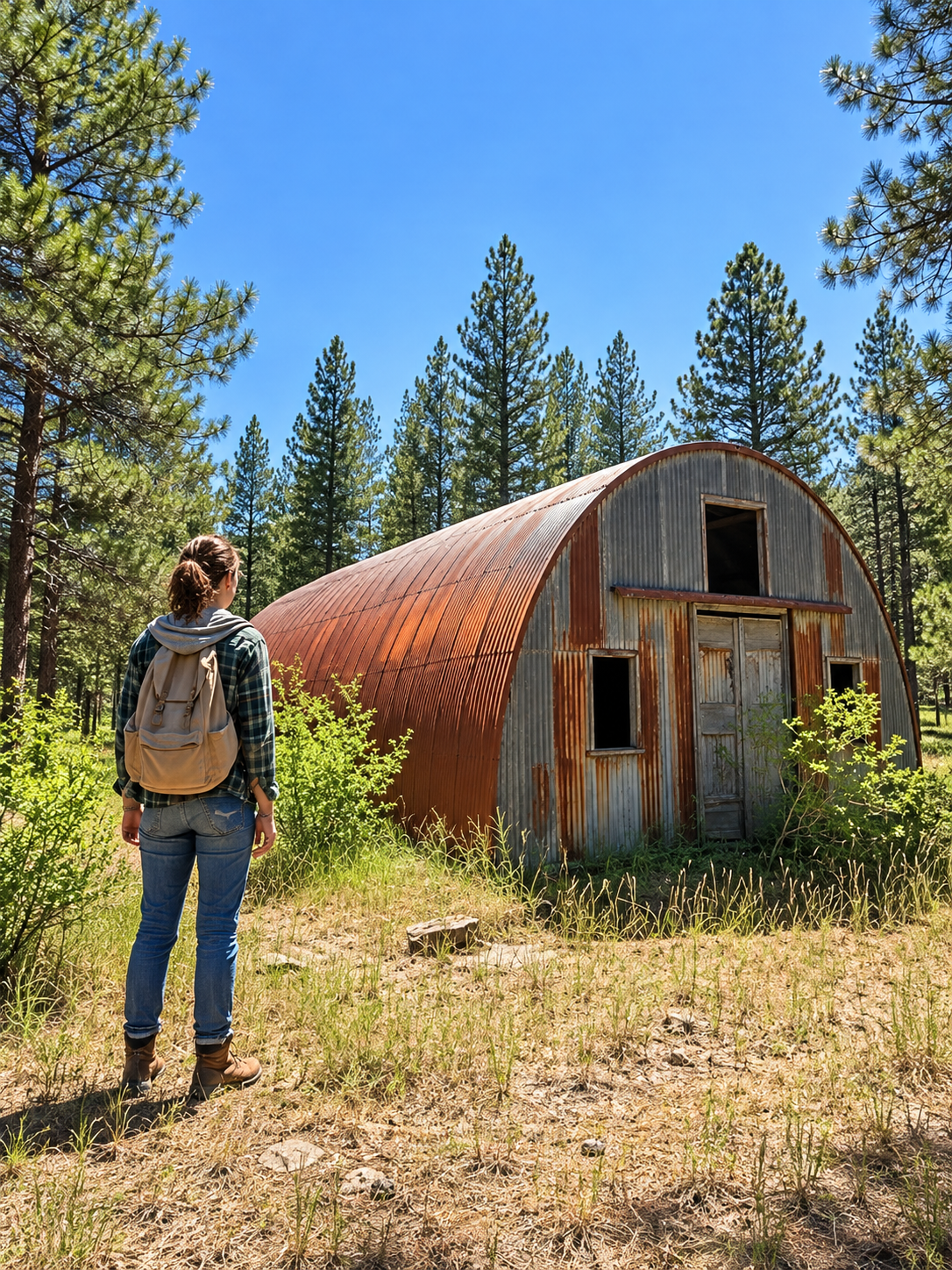
Homeless at Nineteen, She Bought a Rusted Forest Hut for $10—Then Built Something the Town’s Richest Man Tried to Destroy The night my mother threw me out, she tossed my dead father’s toolbox into the rain and told me I wasn’t worth the cost of keeping the lights on. My stepfather stood behind her, smiling, while my little brother watched from the stairs with tears running down his face. Forty-three days later, I bought a rusted metal hut in the Oregon wilderness for ten dollars, and the entire town laughed at me. They called it a garbage can. They called me a foolish homeless girl. The richest developer in the county offered me five hundred dollars to abandon it, then threatened to have the structure demolished when I refused. What none of them knew was that the rusted hut had once belonged to the engineer who designed half the region’s mountain water system. They also didn’t know that my father had worked with him. Or that beneath the hut’s cracked concrete floor lay the original engineering records for a forgotten reservoir. I didn’t know any of that either. Not when I bought it. Not when I slept beneath its leaking roof with a pocketknife under my pillow. Not when I spent my last eighty-seven dollars repairing a door that barely closed. I discovered the truth only after I built a tiny home inside that abandoned shell, brought clean water to a forgotten mountain community, and forced a millionaire developer to explain why he’d spent years trying to keep the old reservoir hidden. By then, the little hut everyone mocked had become the most important building in Pine Hollow County. And the man who once offered me five hundred dollars was standing outside my gate with three attorneys, begging me to sell. I had been homeless at nineteen. He was offering me four million dollars. But the most expensive thing he wanted wasn’t my property. It was my silence. Should I take enough money to change my life forever, or refuse the man who might know why my father died trying to protect a mountain nobody believed was valuable? My name is Hannah Miller. I grew up in a little town called Elk River, about forty miles east of Bend, Oregon. My father, David Miller, repaired pumps, irrigation systems, and heavy equipment. He could make a broken engine run with three borrowed tools and enough patience to outlast most men. He smelled like diesel fuel, sawdust, and peppermint gum. He taught me to measure twice, cut once, and never put my hands where I couldn’t see them. When other girls were learning makeup, I was learning how to weld. When other teenagers were spending weekends at the mall, I was helping Dad rebuild lawnmower engines. And when my classmates laughed because I wore steel-toed boots to school, Dad told me something I never forgot. “People who laugh at honest work usually haven’t done enough of it.” He died when I was seventeen. A single-vehicle accident on a mountain road. At least, that was what the official report said. His truck went through a guardrail on a wet November evening. The wreckage was found near the bottom of a ravine. The sheriff called it a tragic accident. Mom called it the end of our lives. I called it the day everything stopped making sense. Dad had driven mountain roads for twenty years. He knew which curves iced over first. He knew where the gravel washed out. He knew every logging turnout within fifty miles. He was careful. Almost irritatingly careful. Yet somehow, according to the report, he took a familiar turn too fast and drove straight into a ravine. I was too young and too overwhelmed to question it. My mother, Linda, remarried fourteen months later. Her new husband was a man named Curtis Vance. He owned a small construction supply business and liked telling people he was a self-made businessman. He wore expensive boots that had never seen mud. He drove a black pickup with polished rims. He spoke loudly about hard work while paying other men to do most of his. At first, Curtis pretended to like me. He called me sweetheart. Asked about school. Said Dad had taught me useful skills. Then he moved into our house. Everything changed. He complained about my tools in the garage. He called my welding equipment junk. He said girls my age should be thinking about marriage, not engines. Whenever I disagreed, he called me disrespectful. Mom always sided with him. “You need to give Curtis a chance.” I gave him chances. Dozens. Then he started charging me rent. I was eighteen, working part-time at an auto parts store while taking community college classes. He wanted $600 a month. I paid it. Then he demanded I cover my own groceries. I did. Then he wanted half the electricity bill because I sometimes used power tools in the garage. I paid that too. Nothing satisfied him. Because the money wasn’t really the issue. He wanted me gone. I understood that the night he sold my father’s welding machine without asking. It was an old Miller welder. Blue paint. Scratched casing. One repaired handle. Dad had owned it since before I was born. I came home from work and found the corner of the garage empty. “Where’s Dad’s welder?” Curtis looked up from his phone. “Sold it.” I stood still. “You what?” “It was taking up space.” “That belonged to my father.” “Your father isn’t using it.” The sentence hit me like a slap. I stared at him. “Who bought it?” “Some guy.” “What’s his name?” “Doesn’t matter.” “It matters to me.” He stood. Curtis was six feet two and liked using his size when words didn’t work. “This is my house now, Hannah.” I looked him directly in the eyes. “No. This house belonged to my parents.” He smiled. “Not anymore.” Mom appeared in the doorway. “What’s going on?” “He sold Dad’s welder.” She sighed. “Hannah, don’t start.” “Mom, it was Dad’s.” “Curtis pays the mortgage.” I stopped talking. Not because I agreed. Because I finally understood. My mother had chosen the person she wanted to keep. And it wasn’t me. Three weeks later, Curtis announced I had thirty days to leave. I asked for sixty. He refused. I asked if I could sleep in the garage while saving for an apartment. He laughed. I asked Mom to intervene. She said I needed to learn independence. Then, on a rainy Thursday evening, I came home from work and found my clothes packed into two garbage bags. My father’s toolbox sat on the porch. Curtis had changed the locks. “You’re leaving tonight,” Mom said. I stared at her. “You said I had another week.” “Curtis thinks it’s time.” My little brother, Noah, stood at the bottom of the stairs. He was eleven. He wore dinosaur pajamas. He looked terrified. “Where’s Hannah going?” Mom ignored him. Curtis handed me a folded sheet of paper. A list of local shelters. “Be grateful,” he said. “Some parents don’t even help that much.” I took the paper. Then picked up Dad’s toolbox. It was heavier than I remembered. Maybe because I had never carried it alone. Noah ran toward me. Mom caught his shoulder. “Go upstairs.” He started crying. “Hannah!” I knelt. Held his face. “Hey, buddy.” He was shaking. “Are you coming back?” I looked at Mom. Then Curtis. Then my little brother. “I’ll see you again,” I said. I didn’t promise when. I didn’t know. I hugged him. Stood. And walked into the rain. I had $286 in my checking account. A nearly empty gas tank. Two garbage bags of clothes. Dad’s tools. And a twenty-year-old Ford Ranger with a heater that worked only when it felt like it. That night, I slept in a Walmart parking lot. I pushed the seat back. Wrapped myself in a blanket. And listened to rain hit the windshield. I didn’t cry. Not because I wasn’t hurt. Because I was too busy thinking. Where could I park? Where could I shower? How much gas could I afford? Would my manager let me pick up extra shifts? Could I finish school? I made a list on the back of Curtis’s shelter information. Food. Work. Safety. Housing. Everything else could wait. For the next three weeks, I lived in my truck. I showered at a community recreation center. I did laundry at a coin-operated laundromat. I worked every shift the auto parts store would give me. My manager, a woman named Denise Harper, noticed almost immediately. One morning, she watched me pull a clean shirt from a plastic bag in my truck. She said nothing. Later, during lunch, she placed a sandwich beside me. “Made too much.” I looked at her. There were two sandwiches. She had clearly made one for me. “Thank you.” She nodded. Then said, “If you need more hours, Saturday inventory is available.” “I’ll take it.” She looked at my tired face. “And Hannah?” “Yes?” “You can use the staff bathroom before opening.” I swallowed. “Okay.” She didn’t ask questions. She didn’t demand gratitude. She simply made room for me to survive. Those small acts mattered more than she ever knew. By the fourth week, I had saved $417. Then my truck needed a new alternator. I replaced it myself using a remanufactured part and tools from Dad’s box. That saved money. But not enough. I was exhausted. Winter was approaching. Sleeping in the truck would become dangerous when temperatures dropped below freezing. I searched rental listings every night. Rooms were expensive. Apartments required deposits. Most landlords wanted proof of income far higher than mine. Then I saw an unusual announcement on the county surplus website. ABANDONED STRUCTURE DISPOSAL. FORMER FORESTRY MAINTENANCE HUT. MINIMUM BID: $10. The photographs showed a rusted Quonset-style building in a clearing surrounded by pine trees. Corrugated metal roof. Weathered front doors. Broken windows. Weeds. A narrow dirt access road. The description made it sound terrible. No electricity. No plumbing. No guaranteed road maintenance. Structural condition unknown. Sale subject to verification of removal or transfer rights, applicable permits, and land access agreements. The county was disposing of the structure, not selling an entire parcel of land for ten dollars. I understood that distinction. But I also noticed something. The structure stood on a small forestry parcel where the county had offered a long-term site lease to qualified rehabilitation applicants. The minimum initial lease payment was modest. The program was meant for storage, agricultural support, or approved adaptive reuse. Residential use would require permits and inspections. Most applicants saw too many problems. I saw a possibility. A roof. Walls. A place to put my tools. Something I might be able to improve. I called the county property office. A man named Edward Collins answered. He sounded surprised. “You’re interested in the old forestry hut?” “Yes.” “Have you seen it?” “Only photographs.” “You should visit before bidding.” “I intend to.” He paused. “You understand the ten-dollar price is just for the structure?” “Yes.” “And it’s not legally a residence.” “I understand.” “And the land lease would be separate.” “Yes, sir.” He seemed relieved. “Good. Some people think we’re selling a house for ten dollars.” I smiled. “I don’t think it’s a house.” “Then what do you think it is?” I looked at the photograph. “A starting point.” Two days later, I drove into the mountains. The road narrowed after the last gas station. Pine trees rose on both sides. The pavement ended. Gravel crunched beneath my tires. After six miles, I reached an old forestry gate. The county had provided access instructions for the inspection. Beyond the gate, the road wound through a meadow and into the trees. Then I saw it. The hut. Long. Arched. Rust-red. Abandoned. It looked like an enormous metal barrel laid on its side. The curved roof was streaked with orange rust. The double front doors hung crooked. One upper window was empty. Small bushes had grown against the walls. Grass reached my knees. I parked. Got out. And stood looking at it. The building was ugly. No question. But it was also bigger than I expected. Almost forty feet long. About twenty feet wide. The main ribs appeared intact. The concrete slab had cracks but no obvious catastrophic displacement. The worst rust seemed concentrated around fasteners and lower panels. I walked around it. Photographed everything. Tested the ground carefully. Looked for signs of standing water. There was a spring-fed drainage channel about fifty yards away. The site had decent sunlight. The slope was gentle. And the surrounding forest was beautiful. Wind moved through the pines. The air smelled like resin and dry grass. For the first time in weeks, I felt my shoulders relax. Then I opened the door. It groaned. Inside, sunlight entered through holes in the roof. Dust floated in the air. Old wooden shelves leaned against one wall. A workbench sat beneath a broken window. There were rusted barrels. Empty crates. A cracked concrete floor. And a faded metal sign hanging from a nail. PINE HOLLOW WATER DISTRICT — MAINTENANCE STORAGE. I stared at the sign. The county listing had called it a forestry hut. Apparently, at some point, it had been used by the old water district. That interested me. My father had worked on irrigation systems throughout the area. Maybe he knew the place. I took photographs. Measured the inside. Made notes. There were serious problems. The roof required professional evaluation. The old electrical wiring had to be removed. The concrete needed inspection. The building could not safely be occupied in its current condition. But I saw potential. A workshop. A compact interior living space after proper approvals. Rainwater collection for nonpotable uses. Solar power. Insulation. A small wood stove installed by a qualified professional. It would take time. Money. Permits. Help. But for the first time since leaving home, I had found something that might be mine to shape. I submitted a ten-dollar bid. Nobody else bid. I won. The county approved the structure transfer and conditional site-lease application, subject to inspection and rehabilitation milestones. I paid the fees from my savings. Signed the papers. And received a key to a structure nobody wanted. I was nineteen years old. Homeless. Exhausted. And suddenly responsible for eight hundred square feet of rusted metal. I drove back to town smiling. That lasted until Curtis found out. He heard through someone at the county office. Within two days, half the town seemed to know. At the gas station, a man asked whether I had bought “the giant trash can.” At work, a customer laughed about a girl moving into an old metal shed. My former classmate Brittany posted a photograph of a rusted barrel with the caption: Some girls dream of mansions. Others settle for recycling bins. I ignored it. Then Curtis called. I hadn’t heard from him in nearly a month. “Hannah.” “Curtis.” “Your mother says you bought a barn.” “A building.” “For ten dollars?” “Yes.” He laughed. Long and loud. “That’s pathetic.” I waited. “You can’t even afford an apartment, so you’re going to live in a rusty can?” “It’s not approved for living yet.” “Oh, good. So you paid money for a building you can’t live in.” I looked at the roof repair estimate on my desk. “That’s one way to describe it.” He laughed again. “Do you need me to send you a cardboard box for furniture?” “No.” “Maybe a bucket for a toilet?” “Goodbye, Curtis.” I ended the call. Then I made another list. Roof. Structure. Permits. Insulation. Power. Water. Money. One problem at a time. The first person who helped me was Denise. She listened while I explained the plan. Then said, “You need a place to stay during construction.” “I know.” “My sister has an old travel trailer.” I stared at her. “What?” “It’s parked behind her barn. Needs cleaning. Tires are flat. But the furnace works.” I swallowed. “I can’t afford to rent it.” “She doesn’t need rent.” “Denise—” “She needs someone to organize her storage shed and repair the trailer steps.” I stared at her. “You’re serious?” “Very.” Three days later, I cleaned out the trailer, replaced two damaged stair treads, checked the furnace with a qualified technician, and arranged to stay there temporarily. It was not glamorous. The cushions smelled old. The bathroom was tiny. The refrigerator rattled. But it had heat. A bed. A door that locked. And a place to make coffee. The first night I slept there, I cried. Not because I was sad. Because I was warm. The next morning, I drove to the hut before sunrise. The forest was quiet. Mist lay between the trees. I stood outside the rusted building holding Dad’s toolbox. Then whispered, “Okay, Dad. Let’s see what we’ve got.” I began cleaning. Old lumber. Broken shelving. Scrap metal. Rotten insulation. I sorted everything. Reusable materials in one pile. Hazardous materials set aside for proper disposal. Trash in another. I photographed the work for the county rehabilitation file. At night, I watched construction videos and read building code guides. On weekends, I worked. I bought used tools. Borrowed equipment. Accepted help when it was offered. Refused shortcuts when safety mattered. The first major expense was the roof. A local metal contractor named Frank Dawson inspected it. He was sixty-one, broad-shouldered, and had hands like worn leather. He climbed carefully around the structure. Then returned with a serious expression. “Kid, this thing is rough.” “I know.” “Some of the panels need replacement. Several purlins need reinforcing.” “How much?” He gave me the estimate. I stared. It was more than I had saved. Frank watched my face. “You planning to live here?” “Eventually, if permits allow.” He looked at the building. Then at me. “Why?” I considered the question. “Because I don’t have another home.” He went quiet. For a long moment, he studied the hut. Then asked, “You any good with tools?” “Yes.” “Can you measure accurately?” “Yes.” “Can you follow instructions?” I almost smiled. “Yes.” He nodded. “I can let you help with nonhazardous prep work. It’ll save some labor. The structural and roof work stays with us.” I swallowed. “Thank you.” He shrugged. “Don’t thank me until you’ve scraped rust for six hours.” I did. Then eight. Then ten. My hands blistered. My shoulders ached. Metal dust coated my clothes. But each day, the hut changed. The rusted panels were treated or replaced. The roof became watertight. The doors were rebuilt. The windows were replaced. The building stopped looking abandoned. It started looking unfinished. That distinction mattered. Then something unexpected happened. A photograph of my renovation appeared online. A local hiking group shared it. Someone wrote: Nineteen-year-old girl restoring old mountain hut by herself. It wasn’t entirely accurate. I had professional help. But the story spread. People began leaving comments. Some laughed. Some encouraged me. One retired electrician offered advice on designing the solar system. A lumberyard donated discounted reclaimed boards. A woman brought two boxes of kitchen supplies. A retired schoolteacher offered a small desk and bookshelves. A local journalist asked for an interview. I declined. I wasn’t building the hut for attention. I was building it because winter was coming. Then a man in a gray SUV arrived one afternoon. He wore a navy jacket. Expensive sunglasses. Polished boots. He stepped out and looked around as if he was inspecting something that already belonged to him. “Are you Hannah Miller?” “Yes.” “My name is Richard Caldwell.” I recognized the name. Everyone did. Caldwell Development owned shopping centers, vacation properties, and several large tracts of mountain land. Richard Caldwell was the wealthiest businessman in the county. He was in his early fifties, silver-haired, and had the calm smile of someone accustomed to people saying yes. He looked at the hut. Then at me. “Interesting project.” “Thank you.” He smiled. “I understand you acquired this structure for ten dollars.” “Yes.” “Quite a bargain.” “Potentially.” His smile widened. “I like optimism.” He walked slowly toward the building. I stayed where I was. “Can I help you with something?” He turned. “Yes, actually.” He removed a folded document from his jacket. “I’d like to buy your interest in this property.” I stared at him. “Which interest?” “The structure. Any related lease rights.” “Why?” “Future land planning.” I looked at the surrounding forest. “The county owns the land.” “Yes, but your rehabilitation rights create complications.” I studied him. “What kind of planning?” He waved a hand. “Nothing finalized.” “How much are you offering?” “Five hundred dollars.” I almost laughed. Not because five hundred dollars meant nothing. At that point, it meant a great deal. But I had already invested more than that in fees and materials. “No, thank you.” He blinked. “Excuse me?” “I’m not interested.” His smile remained. But it changed. “That’s fifty times what you paid.” “Not fifty times what I’ve spent.” He glanced at the hut. “You’re going to put thousands into a structure that will never be worth much.” “Maybe.” “I’m offering you an easy exit.” I folded my arms. “I don’t need an exit.” He looked toward the forest. Then back at me. “You understand this area may undergo major development?” “I’ve reviewed the county plans.” “Plans change.” “So do business proposals.” His smile disappeared. “Think about it.” He handed me his card. Then drove away. I put the card in Dad’s toolbox. Not because I intended to call. Because I wanted to remember his name. Two weeks later, the county sent me a notice. An anonymous complaint alleged unsafe construction and unauthorized residential use. I read the letter carefully. The complaint contained several inaccuracies. I hadn’t moved into the building. The permitted work was documented. Licensed professionals handled regulated tasks. I requested an inspection. The county inspector arrived on Tuesday. His name was Paul Mercer. He reviewed the paperwork. Examined the work. Checked the site. Then looked at me. “Looks like you’re following the approved rehabilitation plan.” “That’s my intention.” “Continue documenting everything.” “I will.” He signed the inspection record. Before leaving, he said, “You might want cameras.” I looked at him. “Why?” He shrugged. “Remote property. Expensive materials. People notice.” I understood. That night, I installed two battery-powered cameras with cellular alerts. Three days later, one recorded a pickup driving slowly past the gate. No one entered. But the truck stopped long enough for the driver to photograph the hut. I saved the footage. Then returned to work. By December, the exterior was sound. The electrical plan had been approved. A licensed installer began the solar system. A compact insulated room was framed inside the metal shell. A sleeping loft would occupy one end. The kitchen would be small. The bathroom smaller. But there would be shelves for my books. A workbench for my tools. And a window facing east. I chose that window deliberately. Dad always said morning light made hard days easier. I wanted to test that theory. The real surprise came while repairing the floor. Frank had noticed an old concrete section near the rear wall that sounded hollow. He tapped it with a hammer. “There’s something under here.” I knelt beside him. “A drain?” “Maybe.” We examined the old building plans. The county’s records were incomplete. The hut had been constructed in the 1950s. It originally served a regional water maintenance operation. Later, it was used by forestry crews. No detailed foundation drawings were available. Frank suggested bringing in a concrete specialist before disturbing anything. I agreed. A week later, a contractor used ground-penetrating radar to survey the slab. The results showed a rectangular void beneath the rear section. Approximately eight feet long. Six feet wide. Four feet deep. I stared at the screen. “An underground room?” “Possibly an equipment pit.” The technician pointed to the outline. “There’s a metal object near one end.” My heartbeat changed. “What kind?” “Can’t tell from this scan.” We documented the results. Checked for utility conflicts. And arranged for a safe, controlled inspection. The following Saturday, Frank carefully lifted a removable concrete access panel that had been covered beneath old flooring. The opening revealed a narrow staircase. Concrete. Dark. Dry. A smell of old metal rose from below. Frank shone a flashlight down. “Well, I’ll be.” I leaned closer. At the bottom sat a steel cabinet. Painted dark green. A brass plate was mounted on the front. PINE HOLLOW MUNICIPAL WATER AUTHORITY. I stared. Then noticed something else. A name scratched into the paint. D. MILLER. My father. My breath caught. I reached toward the cabinet. Then stopped. Frank looked at me. “You okay?” I nodded slowly. “My dad’s name.” He examined the letters. “Could be another Miller.” “Maybe.” But I knew Dad’s handwriting. He always made the M with one long descending stroke. He wrote the letter D with a slight hook at the top. The scratched name matched. I felt my hands begin to tremble. For the first time since buying the hut, I wondered if I had been led there. Not by fate. By something my father had left behind. The cabinet was locked. We photographed it. The area was inspected for hazards. Then the lock was opened by a locksmith. Inside were old engineering drawings. Maintenance logs. Photographs. A metal box. And a faded yellow envelope. Across the envelope was written: DAVID MILLER — ORIGINAL SURVEY. I stared at it. Dad had not merely visited the hut. He had worked there. I carefully opened the envelope. Inside was a topographic map. It showed the surrounding mountains. Creeks. Forestry roads. Old water mains. And a reservoir. A reservoir I had never heard of. HIDDEN PINE RESERVOIR. I traced the blue outline. It sat approximately three miles north of the hut. The map was dated 1987. There were later annotations in Dad’s handwriting. One read: ORIGINAL INTAKE STILL ACTIVE. Another: FLOW DIVERTED WITHOUT COUNTY RECORD. I frowned. What did that mean? I studied the remaining documents. The reservoir had been part of a municipal water project decades earlier. The original system supplied several rural communities. Later, the water district consolidated operations. Some infrastructure was retired. Other sections were transferred to private operators. The records were complicated. But the maps showed something strange. A pipeline ran directly beneath the land Caldwell Development had recently acquired. A pipeline connected to Hidden Pine Reservoir. I sat back. Richard Caldwell had wanted the hut. He had offered five hundred dollars. He had warned me about development. And now I was holding a map showing infrastructure beneath his property. Coincidence? Possibly. But Dad had written another note. CHECK WATER RIGHTS BEFORE TRANSFER. I photographed everything. Then called the county water resources office. The person who answered sounded surprised when I mentioned Hidden Pine Reservoir. “I haven’t heard that name in years.” “Was it decommissioned?” “Parts of the system were.” “Do you have current records?” “We can search.” I requested the available maps, easements, and water-rights information. Then contacted a licensed water resources engineer. Her name was Dr. Sarah Bennett. She was thirty-nine, practical, and had spent fifteen years working on municipal systems. When I showed her the drawings, she leaned forward. “Where did you get these?” “Under an old maintenance hut.” She studied the map. “This is interesting.” “Why?” “Because the county’s current infrastructure maps don’t show this intake.” “Could it still be active?” “Possibly.” “What would that mean?” She pointed to the reservoir. “If water is still being diverted through an undocumented route, somebody needs to identify who operates the system, where the water goes, and whether the rights and permits are valid.” I looked at the map. “Can we find out?” “Yes.” She paused. “But we do it carefully.” I nodded. That was exactly what I wanted. Careful. Legal. Documented. No shortcuts. Two weeks later, Sarah returned with preliminary findings. The old pipeline still existed. Recent utility imagery suggested parts of the route had been maintained. A private water management company held permits in the area. That company was owned by a subsidiary of Caldwell Development. My stomach tightened. Richard Caldwell. Again. I stared at the documents. “Why would he care about a rusted hut?” Sarah pointed to the original survey. “Because this building appears to sit near an old monitoring junction.” “Meaning?” “It may contain records or access to infrastructure that affects his plans.” I remembered Caldwell’s warning. Plans change. Now I understood why he had been so interested. At least partly. He wanted control over the records. And perhaps the physical access. I looked at Sarah. “Could the reservoir be valuable?” She hesitated. “Water infrastructure can be extremely valuable, but we need to separate legal rights, physical capacity, and development potential.” I nodded. “I’m not asking for a number.” “Good.” She studied the map. “Because I wouldn’t give you one yet.” We arranged for a formal investigation through the appropriate agencies. Meanwhile, the hut renovation continued. By February, the solar panels were installed. The interior walls were insulated. The bathroom plumbing had been approved. The water supply design incorporated a permitted well rather than relying on the old industrial system. The kitchen had reclaimed oak shelves. A small propane heater provided backup heat. The sleeping loft fit a mattress and two storage drawers. I built the table myself. Dad would have criticized one of the joints. I knew exactly which one. But he would have smiled afterward. I painted the interior warm white. Left some of the curved metal ribs exposed. Installed two skylights. And built a bench beneath the east-facing window. The old hut looked nothing like the rusted shell I bought. It was still small. Still unusual. Still surrounded by pine trees. But it was beautiful. Not because it was expensive. Because every improvement had a story. The countertop came from a discarded restaurant table. The cabinet handles came from a salvage yard. The floorboards came from an old school gym. The front door was built from reclaimed cedar. I had repaired the roof with Frank. Painted the walls myself. Helped install cabinets. Sanded wood until my hands ached. And spent hours learning things nobody had bothered to teach me. When the final residential occupancy approval came through, I stared at the document for a full minute. Then sat on the floor. I had a home. A legal home. Safe. Warm. Dry. Mine through the rights and obligations of the lease arrangement. I was still nineteen. I had started with two garbage bags and a toolbox. Now I had a place where nobody could change the locks because they were angry with me. I called Denise. “We passed.” She screamed. Actually screamed. Then started crying. I laughed. Frank brought pizza. Ben from the lumberyard brought a small housewarming plant. Sarah came with a bottle of sparkling cider. We ate on the unfinished porch. The sun disappeared behind the trees. The hut glowed warmly through its new windows. And for the first time in months, I felt completely safe. I wished Dad could see it. Then I remembered his name scratched into the cabinet. Maybe, in some strange way, he already had. The local newspaper published an article the following week. NINETEEN-YEAR-OLD TRANSFORMS ABANDONED $10 HUT INTO MOUNTAIN HOME. The photographs showed the rusty building before renovation. Then the warm interior. The solar panels. The cedar door. The small kitchen. The article mentioned my father’s tools. My homelessness. The donated materials. The professionals who helped. The county rehabilitation program. Within days, the story spread. People shared it. Commented. Argued. Some called me inspirational. Others accused me of having hidden money. A few said the county must have given me the property illegally. I ignored most of it. But one message mattered. It came from a man named Walter Price. He said he had worked with my father. He wanted to meet. I called him. He was seventy-six, retired, and lived in a small cabin near Sisters. When I mentioned Hidden Pine Reservoir, he went silent. Then asked, “Where did you hear that name?” I told him. He breathed slowly. “Your dad was right.” I froze. “About what?” Walter hesitated. “The diversion.” I sat upright. “What diversion?” He lowered his voice. “Hannah, can you come see me?” I agreed. The next afternoon, I drove to his house. Walter had white hair, a weathered face, and a prosthetic left hand. He poured coffee into chipped mugs. Then brought out an old metal filing case. My father’s name was written on it. I stared. “Where did you get that?” “David gave it to me before he died.” My throat tightened. Walter opened the case. Inside were photographs. Survey notes. Maintenance reports. And correspondence. He handed me a photograph. Dad stood beside Hidden Pine Reservoir. Behind him was a concrete spillway. The water looked enormous. Not a forgotten pond. A substantial mountain reservoir. Walter pointed. “Your dad discovered that water was being diverted from the original municipal system to support private development.” I frowned. “Was that illegal?” “Not necessarily. It depended on the water rights and agreements.” “Then what was wrong?” Walter’s expression hardened. “The public records didn’t match what was happening.” I looked at the photograph. “Who controlled the diversion?” Walter hesitated. Then said, “A private operator connected to Caldwell’s predecessors.” My stomach tightened. “Richard Caldwell?” “His father started acquiring land in the area.” Walter tapped the table. “Richard expanded it.” I stared at the documents. “Did Dad report it?” “He tried.” “What happened?” “His supervisor told him to stop asking questions.” “Did he?” Walter shook his head. “No.” I smiled sadly. “That sounds like Dad.” Walter looked at me. “He believed the old reservoir was being drained in ways that could eventually hurt downstream communities.” My smile faded. “How?” “Less reserve during drought. Reduced streamflow. Potential impacts to farms and rural water users.” I thought about the old water district. The forgotten maintenance hut. The secret maps. “Why wasn’t the system documented properly?” Walter stared at his coffee. “Because somebody benefited from keeping it confusing.” I leaned forward. “Who?” He looked at me. Then said, “Your father believed the answer was in the original records.” I swallowed. “The records I found?” Walter nodded. “Probably.” I sat very still. Then asked the question I had been avoiding. “Was Dad’s accident connected?” Walter looked away. For a long moment, he said nothing. Then whispered, “David thought someone was following him.” My blood went cold. “When?” “The week before the crash.” I gripped the mug. “Did he tell the police?” “He said he would.” “Did he?” Walter shook his head. “I don’t know.” I sat back. Dad’s truck. The ravine. The rain. The official accident report. Everything I had accepted as tragic bad luck suddenly felt unfinished. Walter reached across the table. “Hannah, your father was a careful man.” I nodded. “He didn’t scare easily.” I nodded again. “He was worried that week.” I looked at him. “About the reservoir?” Walter’s eyes filled. “About you.” I froze. “What?” He opened another envelope. Inside was a photograph of me. At sixteen. Standing beside Dad’s truck. I remembered the picture. Mom had taken it outside our house. On the back, Dad had written: IF SOMETHING HAPPENS, KEEP HANNAH AWAY FROM THE NORTH ACCESS ROAD. My throat tightened. “Why?” Walter shook his head. “He never told me.” I stared at the photograph. Then at the old man. “What was on the north access road?” Walter hesitated. “An abandoned pump station.” I looked at the map. Hidden Pine Reservoir. North access road. Old pump station. My father’s warning. Everything pointed to the same place. I left Walter’s house with copies of the documents and more questions than answers. I did not drive to the pump station. That would have been reckless. Instead, I contacted Sarah and the relevant agencies. The water-resource review was already underway. Now we had historical evidence. And a potential concern about the safety of undocumented infrastructure. Sarah examined Walter’s files. Her expression changed. “These are original flow measurements.” “Yes.” “And these show the diversion operating at rates different from the public records.” “Is that important?” “Very.” She studied the numbers. “If authenticated, these could establish discrepancies over many years.” I looked at her. “What happens next?” “We ask the agencies to verify.” “Can Caldwell stop them?” She looked up. “Not simply by being wealthy.” That was good enough for me. The review expanded. Engineers surveyed accessible infrastructure. Water-rights specialists examined permits. County officials requested records from Caldwell’s operating company. The state became involved. I kept working my shifts. Paid my bills. And spent evenings improving the hut. But the atmosphere around the property changed. A black SUV appeared near the gate twice. Caldwell’s attorney sent a letter claiming certain documents recovered from the hut might be proprietary business records. Margaret Ellis, a local attorney recommended by Denise, advised me not to surrender anything without proper review. We responded formally. Then Caldwell himself returned. This time, he didn’t smile. He stood outside the hut wearing a dark overcoat. His SUV idled beside the gate. “Miss Miller.” “Mr. Caldwell.” “I understand you’ve been contacting state agencies.” “Yes.” “About old water infrastructure.” “Yes.” He looked at the renovated hut. “Quite a transformation.” “Thank you.” He paused. “Some people don’t understand how complicated regional water systems are.” “That’s why I hired an engineer.” His jaw tightened. “I’ve operated in this county for twenty-five years.” “I know.” “I’ve created jobs.” “I know.” “I’ve invested millions.” “I know.” He studied me. “Then perhaps you should consider whether your accusations could damage innocent people.” I folded my arms. “I haven’t publicly accused anyone of a crime.” He stopped. I continued. “I’ve provided historical records to qualified investigators and asked them to determine what they mean.” He stared. “That sounds like something your father would say.” My heartbeat changed. “You knew him?” Caldwell’s expression remained neutral. “Our paths crossed.” “When?” “Years ago.” “Did you know him before his accident?” A pause. “Yes.” I kept my voice steady. “Were you working with him?” “No.” “Did he contact you about Hidden Pine Reservoir?” His eyes narrowed. “I don’t recall.” I nodded. “Then perhaps the records will clarify.” He stepped closer. “Miss Miller, I’m prepared to offer you fifty thousand dollars for your structure and any associated transferable rights.” I stared. “Fifty thousand?” “Yes.” “That’s a large increase from five hundred.” He did not smile. “The property has become more interesting.” I looked toward the trees. “I’m not selling.” “Think carefully.” “I have.” His expression hardened. “You’re nineteen.” “Yes.” “You don’t understand the consequences of what you’re doing.” I met his eyes. “Then explain them.” He said nothing. I waited. He looked toward the hut. Then back at me. “Your father made similar mistakes.” My pulse hammered. “What mistakes?” Caldwell’s mouth tightened. “He didn’t know when to stop.” I stared at him. Neither of us moved. Then I said quietly, “Is that what you told him before he died?” The color drained from his face. Only for a second. But I saw it. He turned. Walked to his SUV. And drove away. I stood there until the engine noise disappeared. Then I went inside. Saved the camera footage. Wrote down the conversation. And called Margaret. Two days later, the county notified me that an additional infrastructure inspection would take place near the old reservoir. The review team included state engineers and water-rights specialists. I was invited to provide historical documents and answer questions about their discovery. I wasn’t given authority over the reservoir. I didn’t own it. But my records mattered. That was enough. The inspection produced a major finding. The old diversion system was still partially active. Several valves had been replaced within the previous decade. Water flowed through a buried line serving private holdings connected to Caldwell Development. The legality of that flow required further investigation. But the physical facts were clear. The infrastructure existed. It functioned. And some public records had not been updated to reflect its operation. The state issued compliance inquiries and temporary operational restrictions pending review. Caldwell’s development plans slowed. Investors began asking questions. A planned luxury resort expansion faced delays because water availability was now uncertain. Local newspapers reported the situation. Then the biggest surprise arrived. The small community of Juniper Flats, fifteen miles downstream, had experienced recurring water shortages for years. Families rationed water during dry summers. Farmers paid for deliveries. Some wells had declined. The county had discussed infrastructure improvements but never secured enough funding. Sarah explained that the reservoir’s verified capacity and lawful operating arrangements could potentially support a broader public water solution. It would require studies. Permits. Funding. Treatment systems. Distribution upgrades. And agreement among multiple parties. But for the first time, there was a possible path. I asked, “Could the old maintenance hut be useful?” Sarah smiled. “Actually, yes.” “How?” “The site is near a monitoring junction. With approvals, it could house telemetry equipment.” I looked around my little home. The curved walls. The reclaimed wood. The small kitchen. The sleeping loft. “Not inside my bedroom, I hope.” She laughed. “No.” A separate secured cabinet outside could potentially serve the purpose. I smiled. “Then let’s see what the engineers recommend.” Over the next several months, the story grew. Not because of my ten-dollar hut alone. Because the records it contained helped reveal a neglected system that could affect thousands of acres and several communities. The county held public meetings. State officials reviewed rights. Engineers developed proposals. Local farmers attended. So did Caldwell’s attorneys. I sat near the back with a notebook. Listened. Took notes. Asked questions when appropriate. I wasn’t the most educated person in the room. I wasn’t the richest. But I knew something many people had forgotten. The water belonged to a system with a history. And the history mattered. One evening, after a public meeting, an elderly farmer approached me. His name was George Wilkins. He wore a faded cap and walked with a cane. “Miss Miller?” “Yes?” He held out his hand. “My family has farmed near Juniper Flats for sixty years.” I shook it. “Nice to meet you.” He looked at me with watery eyes. “Your dad helped fix our irrigation pump when I couldn’t afford a contractor.” I swallowed. “He did?” George nodded. “Wouldn’t take money. Said I’d pay him when the harvest came.” I smiled. “That sounds like Dad.” George looked toward the meeting hall. “They say your records might help us get a fair review of the water situation.” “That’s what we’re hoping.” He squeezed my hand. “Thank you.” I didn’t know what to say. He nodded once. Then walked away. I sat in my truck afterward. And cried. Not because I was helpless. Because for the first time, my father’s work was helping people again. The hut had become more than shelter. It was a bridge between something forgotten and something possible. And I was beginning to understand why Dad had cared so much. By summer, the county approved funding for preliminary design work on a regional water improvement plan. A separate grant supported additional monitoring. Caldwell’s company faced administrative enforcement proceedings over documentation and compliance issues. Nothing was magically solved. The reservoir did not suddenly become mine. The town did not receive free water overnight. But progress was real. Measured. Documented. Funded. And the rusted hut had helped start it. Then came the day Curtis visited. I was outside sanding a cedar bench when his black pickup rolled through the gate. Mom sat beside him. I hadn’t seen either of them in nearly a year. Curtis climbed out first. He looked around. The solar panels. The clean gravel driveway. The garden. The renovated hut. His mouth opened slightly. “Well.” I kept sanding. “Curtis.” Mom stepped out. She looked thinner. Tired. Her eyes moved across the building. “Hannah, this is beautiful.” “Thank you.” Curtis cleared his throat. “Didn’t think you’d actually finish it.” “I did.” He walked toward the porch. “Can we see inside?” I stopped sanding. “Why?” Mom looked hurt. “Hannah.” I set the sandpaper down. “You told me I wasn’t welcome in your house. I’m asking why you want to enter mine.” Curtis’s jaw tightened. “Don’t be dramatic.” I met his eyes. “I’m not.” He looked away. Mom stepped forward. “Your brother misses you.” My chest tightened. “Noah?” She nodded. “He asks about you.” I looked at the driveway. “Then he can call me.” “He doesn’t have a phone.” “You have one.” She swallowed. Curtis interrupted. “Look, we’re not here to fight.” “Then why are you here?” He looked toward the renovated hut. Then said, “I heard some developer offered you money.” I stared at him. There it was. Not an apology. Not concern. Money. “That’s private.” He shrugged. “Small town.” Mom looked uncomfortable. Curtis continued. “If you’re going to sell, you should get professional advice.” “I have an attorney.” He laughed. “Hannah, those people will take advantage of you.” I stared at the man who sold my father’s welding machine. The man who charged me rent while I was still in school. The man who put my clothes in garbage bags. Then I said quietly, “Curtis, you taught me something useful.” He smiled. “What’s that?” “Never confuse someone wanting control with someone offering help.” His smile vanished. I turned toward Mom. “If Noah wants to see me, I’ll arrange it somewhere appropriate.” Her eyes filled. “Hannah, please.” I kept my voice steady. “I love him. That hasn’t changed.” Then I looked at Curtis. “But you don’t get to walk into my home because you heard it might be valuable.” He stared at me. For a moment, I thought he would argue. Then he turned. Got into the truck. Mom hesitated. “I am proud of you,” she whispered. I looked at her. “I wish you’d been proud of me when I had nothing.” She lowered her head. Then followed him. I watched them leave. My hands were shaking. Not from fear. From the effort of remaining calm while saying something I had needed to say for years. That evening, Denise came by with groceries. I told her what happened. She listened. Then said, “You handled it.” “I feel terrible.” “Boundaries can feel terrible the first time.” I smiled faintly. She helped me unload the groceries. Then looked at the new cedar bench. “That’s nice.” “Thank you.” “You selling those?” I laughed. “No.” “Should.” I looked at it. Maybe I could. A few weeks later, I began taking small woodworking commissions. Shelves. Benches. Cabin storage systems. Custom tables. Nothing huge. But enough to supplement my job. I worked out of a separate approved workshop area in the hut. Dad’s toolbox sat beneath the workbench. I cleaned the tools. Organized them. Replaced worn handles. Every time I opened the box, I felt a little closer to him. Then, one afternoon, Frank arrived carrying something wrapped in an old blanket. He looked unusually serious. “Hannah.” “Hey.” He set the bundle on the workbench. “I found something.” I frowned. “What?” He unfolded the blanket. A blue welding machine. Scratched paint. Repaired handle. My father’s old Miller welder. I stared. My breath caught. “Where?” Frank smiled. “A farmer bought it from Curtis. Used it twice. Then put it in a shed.” I touched the scratched casing. My throat tightened. “How did you find him?” “Asked around.” I looked at Frank. “How much?” He shrugged. “Don’t worry about it.” “No.” “Hannah.” “Frank, how much?” He sighed. “Couple hundred.” I pulled out my phone. “I’ll pay you.” He shook his head. “Consider it payment for helping me with that roof job.” “That’s not fair.” He smiled. “Life isn’t always fair. Sometimes that’s good.” I stared at the welder. Then wrapped my arms around him. He laughed awkwardly. “Careful, kid. These old bones are expensive.” I cried into his jacket. Just for a moment. Then stepped back. Wiped my face. And looked at the machine. It was scratched. Worn. Imperfect. Exactly as Dad left it. I plugged it into the appropriate workshop circuit after having it inspected and serviced. The machine hummed. The familiar sound filled the hut. I closed my eyes. For one second, I could almost hear Dad behind me. “Keep your angle steady, Hannah.” I smiled. Then got back to work. By autumn, the regional water project had advanced far enough for officials to announce a pilot monitoring and restoration effort. Engineers confirmed that some long-abandoned distribution sections could be rehabilitated. New meters and controls would be required. The public and private water-rights issues remained complicated. But the initial engineering results were encouraging. At a county meeting, Sarah presented the findings. The room was full. Farmers. Residents. Business owners. Reporters. County commissioners. Caldwell’s representatives. Sarah displayed maps. Flow diagrams. Infrastructure conditions. Then she showed a photograph of my hut before renovation. People laughed softly. Not cruelly. In surprise. The rusted building looked almost absurd. Then she showed the renovated structure. Solar panels. Cedar porch. Clean windows. A garden. The room grew quiet. Sarah explained how historical records recovered from the building helped investigators identify discrepancies in the old infrastructure documentation. She credited the engineers, surveyors, agencies, and community members who contributed. Then she mentioned my name. I looked down. Embarrassed. The audience applauded. I had never experienced anything like it. Not at school. Not at home. Not anywhere. Then George Wilkins stood. The elderly farmer. He raised one hand. “Can I say something?” The chair recognized him. George looked toward me. “This girl didn’t have a reason to help us.” My eyes burned. “She had every reason to worry about herself.” He paused. “Instead, she brought forward records that might help our whole valley.” He turned toward the audience. “That’s what community looks like.” People stood. Applause filled the room. I wanted to disappear. I wanted Dad to be there. I wanted Noah to see it. And strangely, I wanted Mom to understand that the daughter she threw away had not become valuable because a room full of people applauded. I had always been valuable. The applause simply made that harder to deny. The next morning, my phone rang. Unknown number. A man introduced himself as an attorney representing Caldwell Development. He wanted to discuss my property interests. I referred him to Margaret. That afternoon, Margaret called. “Hannah, are you sitting down?” I looked at the workbench. “Yes.” “Caldwell is offering four million dollars.” I stared at the wall. “What?” “Four million.” “For what?” “Your structure, transferable site rights, and a broader settlement of claims and cooperation issues, subject to negotiated terms.” I felt cold. “That doesn’t make sense.” “I agree the number needs explanation.” I looked toward the old water-district cabinet. The maps. Dad’s records. “What does he want me to stop doing?” Margaret paused. “That’s the question.” I stared at the phone. “I’m not signing anything.” “Good.” “Not without knowing.” “Exactly.” We arranged a meeting. Not at the hut. At Margaret’s office. Caldwell arrived with two attorneys. He wore a charcoal suit. No sunglasses. No smile. I sat beside Margaret. The conference room smelled of coffee and polished wood. Caldwell looked at me. “Miss Miller.” “Mr. Caldwell.” He placed a folder on the table. “My company is prepared to make a generous offer.” “I heard.” “We’d like to resolve the matter privately.” I folded my hands. “What matter?” He glanced at his attorneys. One began explaining proposed terms. Property acquisition. Confidentiality. Non-disparagement. Cooperation with certain administrative processes. A release of potential civil claims. Restrictions on discussing historical records beyond legally required disclosures. I listened. Then asked, “Would this prevent me from cooperating with investigators?” The attorney began qualifying the language. Margaret intervened. We would not agree to any provision interfering with lawful testimony or regulatory cooperation. Caldwell watched silently. Then said, “Hannah, you’ve already accomplished something remarkable.” I waited. “You took a worthless structure and made it valuable.” I looked at him. “It wasn’t worthless.” He smiled faintly. “You know what I mean.” “No.” His smile disappeared. I continued. “You offered five hundred dollars when the hut was leaking.” He stared. “Then fifty thousand when I found the records.” A pause. “Now four million.” I leaned forward. “What changed?” The room went quiet. Caldwell looked toward Margaret. Then back at me. “Business considerations.” I shook my head. “That’s not an answer.” He exhaled. “The water project affects our development schedule.” “Then address that with the agencies.” “It’s more complicated.” “I know.” He looked at me sharply. I continued. “I’ve spent months learning how complicated it is.” Silence. Then I asked the question that mattered. “Did you know my father?” Caldwell’s expression hardened. “We’ve discussed that.” “No.” I placed a photograph on the table. Dad beside Hidden Pine Reservoir. Walter had given me a copy. Caldwell stared at it. “Did you know he was investigating the diversion before he died?” The attorney beside him began speaking. Caldwell raised a hand. The attorney stopped. Then Caldwell said quietly, “Your father was a good engineer.” I waited. “He was also stubborn.” I stared. “Did you threaten him?” Caldwell looked at me. “No.” “Did you know someone was following him?” His eyes changed. For one moment, I saw something I hadn’t seen before. Not anger. Fear. He looked away. Then said, “Hannah, there are things you don’t understand.” I nodded. “Then help me understand.” He said nothing. Margaret closed the folder. “We’re not prepared to discuss settlement further today.” Caldwell stood. His attorneys followed. At the door, he stopped. Looked back at me. Then said, “Your father should have taken the offer.” My chest tightened. “What offer?” He hesitated. Then walked out. I sat motionless. Margaret looked at me. “We’re documenting that statement.” I nodded. Because it was not simply a business negotiation anymore. Caldwell knew something about Dad. And the four million dollars was not enough to make that question disappear. Three days later, Walter Price was hospitalized. He had been found unconscious in his home by a neighbor. The doctors initially suspected a medical emergency. I drove to see him after receiving permission from his family. He was awake. Weak. But alert. I sat beside his bed. “Walter.” He smiled faintly. “Hannah.” “How are you feeling?” “Like somebody ran me over with a tractor.” I managed a small smile. Then he gripped my wrist. His hand trembled. “Listen.” I leaned closer. “The files.” “What files?” “Your dad’s.” I nodded. “I have the copies.” Walter shook his head. “Not those.” My pulse changed. He looked toward the door. Then whispered, “The originals.” I stared. “Where?” He closed his eyes. “The north pump station.” My heart accelerated. “Dad warned me about that road.” Walter nodded weakly. “He hid something there.” “What?” Walter looked frightened. “I never saw it.” He swallowed. “But the night before the crash, he told me if anything happened, somebody needed to check the maintenance vault.” I leaned closer. “Where is it?” Walter whispered directions. Not to the visible pump building. To an old service access behind it. Then his eyes filled. “Hannah, your dad didn’t trust Caldwell.” I nodded. “I know.” Walter tightened his grip. “But Caldwell wasn’t the man he feared most.” My blood went cold. “Who was?” Walter opened his mouth. Then stopped. A nurse entered to check his medication. Walter released my hand. He looked exhausted. “Later,” he whispered. I stayed until he slept. Then left the hospital and sat in my truck. The mountains were dark beyond the parking lot. I thought about the old pump station. The hidden records. Dad’s warning. And the fact that Caldwell had offered me four million dollars to stop asking questions. I did not go to the pump station alone. I called Margaret. Sarah. And the state investigator already reviewing the water-system records. The site was on land with disputed access rights. We needed authorization. We needed safety equipment. We needed professionals. If Dad had hidden evidence, I wanted it preserved correctly. If the old station was dangerous, I wanted nobody hurt. It took eleven days. Then the team entered the site. I waited outside the security perimeter. The station sat in a narrow valley between two ridges. Concrete walls. Rusting pipes. Broken windows. A locked equipment room. The old access road was overgrown but passable. Sarah pointed toward the hillside. “That service corridor connects to the original pressure-control system.” I looked at the building. “Could Dad have worked here?” “Definitely.” The investigators entered. Hours passed. Then one emerged carrying a sealed evidence container. Inside was a small waterproof case. My heartbeat quickened. “Did you find it?” He nodded. “We found a cache behind an old service panel.” I looked at the case. “What’s inside?” “Documents and recording media.” I swallowed. “Can you tell whether they’re my father’s?” “Some are marked with his name.” I closed my eyes. Dad. Finally. A trail leading somewhere. The records were examined over the next several weeks. The first findings concerned water operations. Flow measurements. Historical diversion agreements. Private correspondence. Evidence of discrepancies that investigators would have to assess against legal permits and operating records. But one audio file was different. It contained a recording of a meeting. Dated four days before Dad died. Three voices. My father’s. Richard Caldwell’s. And a third man. Unknown at first. I listened to an authorized copy in Margaret’s office. Dad’s voice filled the room. Older than my childhood memories. Tired. But unmistakable. “I’ve given you the numbers.” Caldwell replied, “David, we can resolve this.” Dad said, “Then correct the records.” A third voice spoke. Low. Cold. “You’re missing the bigger picture.” Dad answered, “The bigger picture is that people downstream are losing water.” The man sighed. “You don’t understand what this development means for the county.” Dad’s voice sharpened. “I understand exactly what it means.” A pause. Then Caldwell said, “David, don’t make this personal.” Dad answered: “It became personal when someone started watching my daughter.” My hands went cold. There was silence on the recording. Then the unknown man said, “Nobody wants the girl involved.” Dad replied, “Then stay away from her.” A chair scraped. Caldwell spoke quickly. “We’re finished here.” Then the unknown man said the sentence that changed everything. “David, remember who approved your wife’s mortgage.” My heart stopped. Mom. Our house. The mortgage Curtis later claimed to be paying. The unknown man continued. “Remember who kept your family from losing everything.” Dad’s voice became deadly quiet. “You don’t own my family.” The recording ended. I sat frozen. Margaret looked at me. “Do you recognize the third voice?” I swallowed. “No.” But something about it bothered me. The cadence. The way he said family. The low, controlled threat. I had heard it before. Not recently. Years ago. At the kitchen table. During Christmas. At school events. I closed my eyes. Then opened them. “Play it again.” Margaret did. The unknown man spoke. “You’re missing the bigger picture.” I felt my stomach drop. I knew that voice. Not perfectly. But enough to make me afraid. “Curtis.” Margaret looked at me. “What?” “My stepfather.” She frowned. “Curtis Vance?” I nodded slowly. The man my mother married after Dad died. The man who sold Dad’s tools. The man who forced me out. The man who laughed when I bought the hut. His voice was on a recording made before Dad’s death. Which meant Curtis had known my father. Before the funeral. Before the marriage. Before Mom introduced him as someone she had met through a friend. I stared at Margaret. “Curtis was there.” She looked at the recording transcript. “Then we need to establish that carefully.” I nodded. We would. Because if the voice was his, the timeline of my family’s life was not what Mom had told me. And the question was no longer simply whether Caldwell had hidden water records. It was whether Curtis had helped silence my father. The investigators began examining the connection. Public records showed Curtis Vance had worked as a contractor for one of Caldwell’s subsidiaries years before opening his own supply business. His company had received contracts tied to infrastructure maintenance. Several payments occurred around the time of Dad’s death. Nothing alone proved wrongdoing. But the pattern warranted review. Then something even stranger appeared. A bank document. An insurance payout. A large deposit into Mom’s account three weeks after Dad died. Far larger than the life insurance amount I knew about. The source was a private settlement fund connected to a company Caldwell’s father had once controlled. I stared at the transaction. My mother had told me we were nearly bankrupt after Dad died. She said there was barely enough money to keep the house. She charged me rent at eighteen. She let Curtis sell my father’s equipment. Then she threw me out with two garbage bags. But the records suggested she had received substantial money after the accident. I sat alone in the hut that night. Rain tapped against the metal roof. The little stove hummed. Dad’s toolbox sat beside the workbench. I stared at it. Then I remembered something. A folded paper I found in the toolbox years earlier. I had barely looked at it. An old receipt. A handwritten number. A sketch. I opened the drawer. Searched through the contents. Found the paper tucked beneath a tray of sockets. It was yellowed. The ink faded. At the top, Dad had written: H.P. — NORTH VAULT. Below it were three numbers. Coordinates. And a sentence. IF I DON’T COME BACK, HANNAH WILL KNOW WHAT TO DO. I sat perfectly still. My father had prepared for the possibility that something might happen. He had left clues. Not dramatic treasure maps. Practical notes. Technical records. Directions. He had trusted me to understand them. I looked around the hut. The curved metal walls. The small kitchen. The workbench. The windows. Every inch of it had been built because I refused to give up. And now it was holding the answer to a question I had carried since seventeen. Why did Dad die? My phone rang. Mom. I stared at the screen. Then answered. “Hannah.” Her voice was trembling. “Sweetheart, we need to talk.” I felt cold. “About what?” “Curtis says people are asking questions.” I said nothing. She continued. “About your father.” I closed my eyes. “Did Curtis know Dad?” Silence. “Hannah—” “Before the accident?” She began crying. Quietly. I waited. Then she whispered, “I didn’t know what they were going to do.” My stomach dropped. “What?” She sobbed. “I swear, Hannah, I didn’t know.” I gripped the phone. “Mom, what didn’t you know?” She tried to speak. Couldn’t. Then whispered, “They said David was going to ruin everything.” My heart hammered. “Who said that?” Another pause. “Curtis?” She cried harder. “Mom.” “Yes.” I closed my eyes. The room seemed to tilt. “Did Curtis have something to do with Dad’s death?” She whispered, “I don’t know.” I stared at the wall. Then asked quietly, “Why did you marry him?” Silence. For several seconds, only her breathing. Then she said: “Because he told me he could keep you and Noah safe.” I froze. “Noah wasn’t born when Dad died.” She stopped crying. The silence became enormous. I looked toward the window. “What?” Mom whispered, “Hannah, please.” I stood. “Noah was born two years after Dad died.” “Yes.” “So why would Curtis say he could keep Noah safe before Dad died?” She said nothing. My heartbeat thundered. “Mom?” Her voice broke. “Because Noah isn’t Curtis’s son.” I gripped the table. “What?” She began sobbing again. I felt the floor shift beneath me. “Whose son is he?” Mom whispered something. I barely heard it. “Say it again.” She swallowed. “David’s.” My father. Noah was my father’s son. Born almost two years after Dad died. That was impossible. Unless the date was wrong. Unless the story was wrong. Unless my father had been alive after the accident. I stood completely still. “Mom, what are you saying?” She began crying harder. “Hannah, your father didn’t die in that crash.” My heart stopped. The room became silent. Then she whispered: “He survived.” I stared at Dad’s toolbox. The old welder. The notes. The photographs. All the evidence. Everything I thought I understood. “Where is he?” Mom didn’t answer. “Mom.” She whispered, “Curtis knows.” My blood went cold. “Where?” A loud noise sounded behind her. A door slamming. Then Curtis’s voice. “Linda. Who are you talking to?” Mom gasped. “Hannah, don’t—” The call disconnected. I stared at the phone. For several seconds, I couldn’t move. Then I called Margaret. Told her everything. She contacted the investigators. Within an hour, officers were dispatched to check on Mom and Noah. I stayed at the hut. Not because I wasn’t afraid. Because driving blindly into a dangerous situation would help nobody. I packed an overnight bag. Checked the cameras. Locked the doors. And waited. At 11:17 p.m., my security system sent an alert. Motion at the gate. I opened the camera feed. A dark pickup had stopped outside. One man stepped out. He wore a gray coat. Baseball cap. Carried a small bag. He stood beneath the security light. Then looked directly at the camera. My breath stopped. I knew that face. Older. Thinner. Gray at the temples. A deep scar beside the right eyebrow. But unmistakable. My father. David Miller. Alive. Standing outside the hut I built. I stared at the screen. He raised one hand. Then spoke toward the camera. “Hannah.” My knees almost gave way. He looked straight into the lens. “Sweetheart, please don’t open the gate.” I froze. His eyes moved toward the road. “Someone followed me.” My heart hammered. He looked back. “I know you’ve found the records.” I couldn’t breathe. “I know what they told you.” His voice broke. “And I know you have questions.” He glanced behind him again. Then reached into his coat. Removed a small metal box. Held it up. “This is what they wanted.” I stared. The box was dark green. The same color as the cabinet beneath my floor. Dad looked toward the road one more time. Then said: “The reservoir isn’t the secret.” My mouth went dry. “The water records were only part of it.” He held the box closer to the camera. “The real secret is what Caldwell built beneath the north ridge.” I stared at him. “What?” He couldn’t hear me through the screen. Dad continued. “They used the old water tunnels to reach it.” A vehicle appeared behind him. Headlights swept across the gate. Dad turned. His face changed. Fear. He looked back at the camera. “Hannah, listen carefully.” The truck stopped. Two doors opened. Dad spoke quickly. “Whatever happens, don’t let them take this box.” He placed it beneath a large rock near the gate. Then stepped away. A man emerged from the vehicle. Tall. Broad-shouldered. Expensive boots. Curtis Vance. My stepfather. I watched on the screen as he approached my father. The two men stood facing each other in the dark. Then Curtis said something I could barely hear. “You should have stayed dead, David.” My entire body went cold. Dad replied: “You should have stayed away from my daughter.” Curtis laughed. Then stepped closer. “You think she knows what she’s sitting on?” Dad said nothing. Curtis pointed toward my hut. “She built her little home right over the entrance.” My blood froze. The entrance. What entrance? I looked down. At the floor. The old concrete slab. The steel cabinet. The room beneath it. Dad had left records. But what else was under there? On the screen, Curtis reached into his coat. Dad stepped backward. I called emergency services. Gave my location. Explained what I was seeing. Then I heard a loud metallic impact outside. The camera shook. The screen went black. My phone buzzed. A message from an unknown number. One sentence. YOUR FATHER IS ALIVE BECAUSE HE AGREED TO KEEP THE REAL PROJECT SECRET. Then another. THE $10 HUT WAS NEVER ABANDONED. I stared at the words. A third message appeared. IT WAS BUILT AS AN EMERGENCY EXIT. My heart hammered. I looked toward the rear of the hut. The concrete floor. The old cabinet. The section I had covered with new flooring. Then I heard something. A deep metallic sound. Below me. Not outside. Not in the walls. Under the floor. A heavy mechanism turning. Slowly. I backed away. The floor vibrated. A narrow seam appeared along the concrete near my workbench. I stared. The seam widened. Dust rose. A concealed steel hatch began lifting. Someone was opening it from below. I stood frozen. Then a voice came through the opening. A man’s voice. Calm. Familiar. Not Dad’s. Not Curtis’s. Richard Caldwell. “Hannah Miller.” My blood turned cold. “Do not call the police again.” I held my phone tighter. He continued. “You’ve already built exactly what we needed.” I stared at the opening. “What?” The hatch rose higher. A bright white light appeared beneath it. I could see metal stairs. A concrete corridor. New electrical wiring. Modern ventilation. Nothing abandoned. Nothing forgotten. Someone had been maintaining the space beneath my home. Caldwell’s voice continued. “Your father was supposed to restore the surface building twenty years ago.” My heart hammered. “He refused.” A pause. “Then you did it for him.” I stared at the beautiful little home I had built. The insulated walls. The solar panels. The repaired roof. The new electrical system. The carefully planned interior. Everything I had worked for. Everything that had saved me from homelessness. And suddenly I understood why Caldwell had wanted the hut so badly. It was never about a rusty building. It was about the land beneath it. The forgotten water system. The hidden access. The old records. The secret Dad had tried to protect. I heard sirens in the distance. Caldwell spoke again. “Hannah, your father is waiting downstairs.” I didn’t move. Then he added: “And so is the truth about why your mother threw you out.” My blood froze. The hatch stopped moving. From the darkness beneath it, someone began climbing the stairs. A small figure appeared. Not Dad. Not Curtis. A boy. Eleven years old. Brown hair. Blue eyes. Dinosaur pajamas. My little brother. Noah. He looked terrified. He reached the top step. Then whispered: “Hannah, please don’t let them close the door again.” I rushed toward him. He grabbed my hand. His fingers were ice cold. “Where’s Dad?” I asked. Noah’s eyes filled. He looked toward the illuminated stairs. Then back at me. “Hannah…” His voice shook. “Dad’s not the only one they kept down there.” Behind him, somewhere deep beneath the mountain, a heavy metal door slammed. Then another voice called my name. A woman’s voice. Familiar. Desperate. My mother. “Hannah! Don’t believe Curtis!” I stared at the opening. Noah tightened his grip. Then he whispered the sentence that made every secret of the past two years collapse into one terrifying possibility. “Mom didn’t throw you out because Curtis hated you.” I looked at him. “Then why?” Noah began crying. “Because they needed you to come here.” The sirens grew louder. The lights inside the underground corridor flickered. Then Noah looked directly into my eyes. “And Hannah?” “Yes?” He swallowed. “Dad says the ten dollars you paid wasn’t the price of the hut.” My heart stopped. “What was it?” Noah pointed toward the workbench where Dad’s toolbox sat. “It was the code.” I turned slowly. The old toolbox. The rusted handle. The brass lock. The scratched initials. The ten-dollar purchase. The strange approval. The county records. All of it. Then my phone vibrated one final time. A message from a number I didn’t recognize. It contained a photograph of my father standing beside a massive underground steel door. The photograph was dated the morning of his supposed death. Above the door were three letters. P.H.R. Pine Hollow Reservoir. But beneath them was a second label. PROJECT HOLLOW RIDGE. And written across the bottom of the photograph, in my father’s handwriting, were the words: HANNAH, THE MOUNTAIN ISN’T HIDING WATER. IT’S HIDING THE REASON I WASN’T ALLOWED TO COME HOME. Then the underground lights went out. Noah screamed. And from somewhere beneath the concrete floor, a mechanical voice announced: “Surface access compromised. Emergency containment sequence initiated.” The steel hatch began closing. With my little brother still standing beside it. And my father somewhere below. THE END
✓ Lynn R. Adams
Homeless at Nineteen, She Bought a Rusted Forest Hut for $10—Then Built Something the Town’s Richest Man Tried to Destroy The night my mother threw me out, she tossed my dead father’s toolbox into the…