Homeless at Eighteen, She Inherited Her Grandfather’s Rusted Bus—Then the Secret Beneath Its Floor Changed Everything
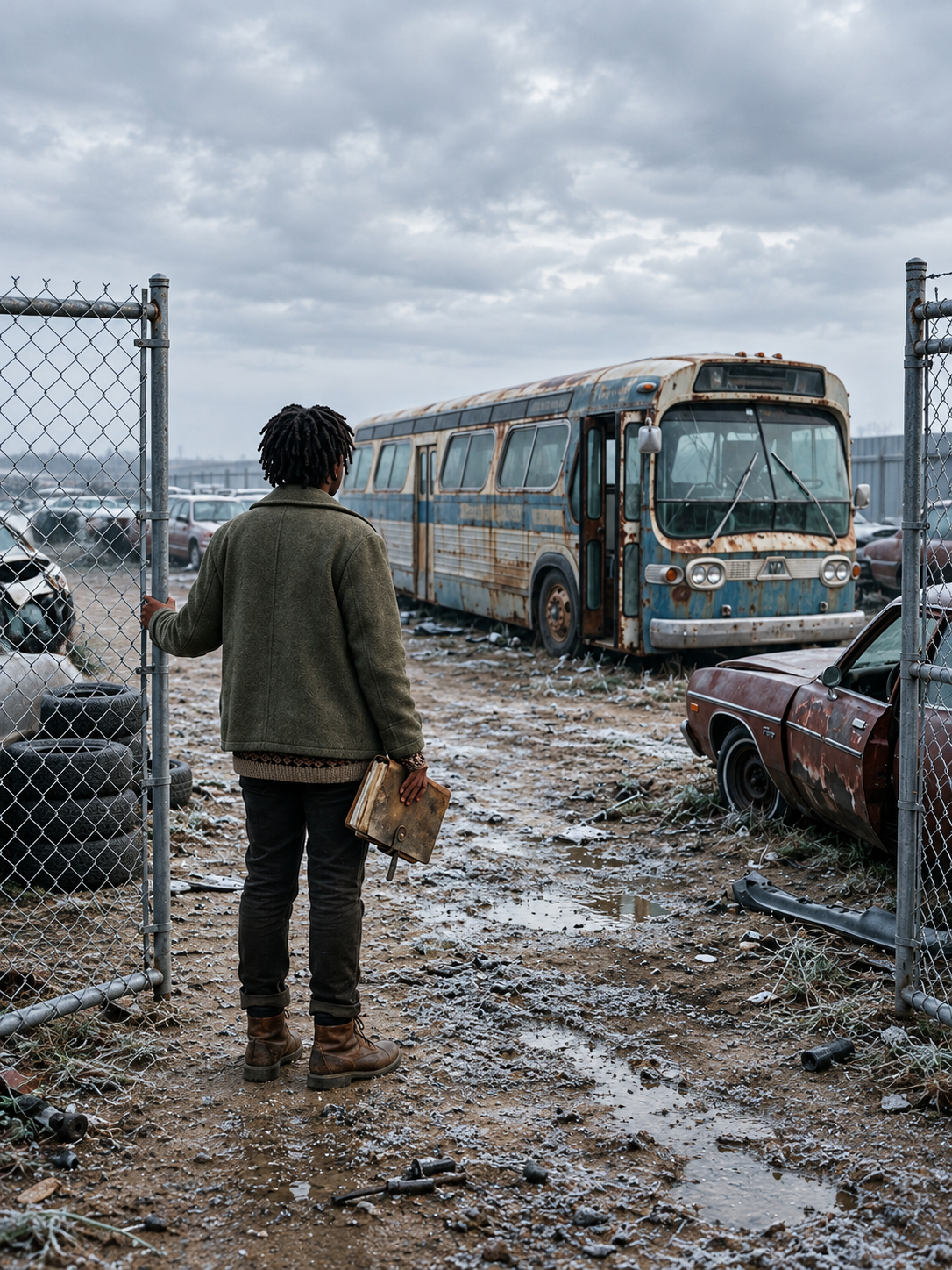
Homeless at Eighteen, She Inherited Her Grandfather’s Rusted Bus—Then the Secret Beneath Its Floor Changed Everything
The morning Madison Carter turned eighteen, her aunt put two black trash bags on the front porch and told her she had until sunset to disappear.
By midnight, Madison owned exactly forty-three dollars, three changes of clothes, and a rusted 1974 Blue Bird school bus that had belonged to a grandfather everyone in her family called a broke old fool.
Then, while trying to keep warm on her first night inside the bus, she dropped a flashlight between two floorboards and saw a steel handle hidden beneath forty years of dust.
Someone had covered it deliberately.
And taped beside it was a yellowed note in her grandfather’s handwriting.
MADDIE—IF YOU FOUND THIS, DO NOT LET CALDWELL BUY THE BUS.
Madison stared at those words for a long time.
Outside, freezing rain tapped against the windows of the abandoned storage yard outside Cedar Falls, Iowa.
Inside, the old bus smelled like cracked vinyl, engine oil, mouse nests, and her grandfather’s peppermint tobacco.
She had nowhere else to sleep.
No parent to call.
No apartment waiting.
No college dorm.
No emergency fund.
No backup plan.
And apparently the one thing she owned was valuable enough that a dead man had hidden a warning beneath its floor.
Should Madison sell the strange old bus and use the money to survive—or open the concealed compartment and risk discovering why someone had spent years trying to buy what everyone else called worthless junk?
Madison Carter had learned early that some people could make you feel homeless long before you stopped having an address.
Her mother, Jennifer, died when Madison was twelve.
Eight months from diagnosis to funeral.
Her father had disappeared from their lives years before that, sending birthday cards for a while and then nothing at all.
After Jennifer died, Madison moved in with her mother’s younger sister, Denise Harper, Denise’s husband, Rick, and their daughter Brittany.
At first Denise called Madison “one of ours.”
That sentence lasted roughly six months.
Then school expenses started.
Groceries increased.
Brittany complained about sharing a bathroom.
Rick lost overtime hours.
Madison became the extra mouth.
The extra electricity.
The extra school fee.
The extra problem.
Nobody said it directly.
Not at first.
Instead it arrived in smaller sentences.
You’re old enough to make your own breakfast.
Brittany needs the car tonight.
Can’t your school cover that?
You’re lucky we took you in.
That last sentence came often.
Madison worked after school at a farm supply store.
She saved almost every dollar.
Then Denise charged her $250 a month “to learn responsibility.”
Madison paid.
At seventeen she increased her hours.
Her grades remained good.
She applied to community college.
She planned to study diesel technology because engines made more sense than families.
Broken engines usually told you why they had stopped working.
People preferred mystery.
Her grandfather Walter Bennett had been the only relative who treated her as though she was neither charity nor burden.
Walter lived forty miles away on a small acreage outside Cedar Falls.
He drove an old Ford pickup.
Fixed lawn tractors for cash.
Collected broken machinery.
And owned the ugliest retired school bus Madison had ever seen.
He bought it at county auction in 1992.
According to Walter:
“Because they wanted four hundred dollars and I had four hundred dollars.”
He removed half the seats.
Built cabinets.
Installed a small wood stove.
Used it for fishing trips, farm auctions, and later as a mobile workshop.
Denise called it “Dad’s rolling junkyard.”
Madison loved it.
When she was fourteen, Walter taught her to rebuild the bus’s carburetor.
At fifteen, she learned electrical diagnostics.
At sixteen, she replaced brake lines with him over a three-day weekend.
He never called her gifted.
Never called her special.
He simply handed her tools as if competence were expected.
Then Walter died from a heart attack eleven months before Madison’s eighteenth birthday.
His estate seemed almost nonexistent.
Small house sold to cover medical expenses.
Pickup sold.
Tools divided.
Denise complained that Walter had “left everybody garbage.”
The bus remained in a rented storage yard because nobody wanted to tow it.
Madison asked about it once.
Denise said:
“You can have it when you’re eighteen if the junkyard hasn’t taken it first.”
Madison thought she was joking.
She was not.
On Madison’s eighteenth birthday, Denise waited until breakfast.
Brittany was already recording video on her phone.
Madison noticed.
“Why are you filming?”
Brittany smiled.
“Memories.”
Denise slid an envelope across the table.
A copy of Madison’s birth certificate.
Social Security card.
Walter’s bus title.
And a handwritten thirty-day notice that made no legal sense because Madison had never signed a lease.
“You’re eighteen now,” Denise said.
Madison stared.
“And Rick and I have done enough.”
Rick looked uncomfortable.
He concentrated on his coffee.
Brittany whispered toward her phone:
“She’s finally getting kicked out.”
Madison heard.
Of course she did.
Denise continued.
“You work.”
“Part-time.”
“You have money saved.”
“About nine hundred dollars.”
Denise’s eyes flicked.
Too quickly.
Madison immediately understood.
She thought Madison had more.
Maybe much more.
“I paid you rent every month.”
“We gave you a home.”
“And I’m grateful.”
That seemed to irritate Denise.
She wanted conflict.
Gratitude denied her the role of victim.
“You need to become independent.”
Madison looked at Rick.
He finally spoke.
“Maybe we could give her a week.”
Denise turned on him.
“We discussed this.”
Apparently.
Not with Madison.
Brittany smiled.
“Guess Grandpa’s bus is your new house.”
Madison looked at her cousin.
Then at the phone.
“You can stop recording.”
“Because eventually you’ll be embarrassed by this.”
Brittany laughed.
“That’s cute.”
Madison packed.
No screaming.
No begging.
No throwing childhood photos into boxes dramatically.
She owned too little for drama.
Two trash bags.
One backpack.
Winter coat.
Her mother’s wedding ring on a chain around her neck.
Forty-three dollars in checking after paying Denise that month.
Her $900 savings?
Denise claimed Walter’s storage fees had been deducted because the bus was “Madison’s responsibility.”
Eight hundred fifty-seven dollars.
Convenient.
Madison asked for invoices.
Denise did not have them.
That told Madison enough.
She did not fight yet.
Being right without somewhere to sleep is less useful than people imagine.
She drove her fifteen-year-old Chevy Cavalier to Walter’s storage yard.
The Cavalier barely had heat.
The bus had none.
But the storage yard manager, Earl Simmons, recognized her.
“Walter’s granddaughter.”
“He called you Maddie.”
Earl looked toward the bus.
“You taking it?”
That surprised her.
“He wanted you to.”
“You knew?”
“He told Denise?”
Earl shrugged.
“Didn’t trust her.”
Madison stared.
Walter had been blunt.
But rarely suspicious without reason.
“Did he tell you anything else?”
“Only that if anybody from Caldwell Transportation came asking, the bus wasn’t for sale.”
There it was.
Same name on the hidden note she would find later.
But Madison had not found the note yet.
“Who’s Caldwell?”
Earl studied her.
“You really don’t know?”
“Big regional transportation company.”
“Trucking?”
“Trucking. Warehouses. Logistics. Bus contracts years ago.”
“Why would they want this?”
“That’s what I asked Walter.”
“What did he say?”
Earl smiled faintly.
“He said, ‘Because they’re idiots.’”
That sounded like Walter.
The bus did not run.
Battery dead.
One rear tire flat.
Roof leaked near the emergency exit.
Madison spent birthday afternoon bringing it back to life.
Earl found a used battery.
Madison siphoned old gasoline.
Cleaned the carburetor.
Checked oil.
Replaced one cracked fuel hose using parts from her toolbox.
At p.m., she turned the key.
The old 366 cubic-inch gasoline engine cranked.
Cranked again.
Then fired.
Magnificent.
Earl shouted.
Madison laughed.
It was the first time she smiled all day.
She did not own a bedroom anymore.
But she owned an engine that ran because she made it run.
That mattered.
She parked the bus in the far corner of the yard.
Earl quietly told her she could stay a few nights.
“Insurance says nobody lives here.”
“I won’t tell insurance.”
He ran an extension cord.
Gave her a small electric heater.
Pointed toward the office bathroom.
Not charity.
Practical help.
That night Madison ate peanut butter crackers inside the bus.
Rain became sleet.
Her phone showed four unanswered calls from Denise.
Three texts.
WHERE ARE YOU?
You need to return the Cavalier title.
That was interesting.
Walter had given Madison the car the previous Christmas.
Title already hers.
Don’t be childish.
Madison turned the phone over.
She pulled one of Walter’s old blankets across her knees.
The bus interior still contained his modifications.
Wood cabinets.
Tool drawers.
Fold-down cot.
Fishing rods.
One locked cabinet she had no key for.
She searched anyway.
That was when her flashlight rolled from the cot.
Hit the floor.
Slid into a gap where one plywood panel had warped.
Madison reached down.
Could not grab it.
She lifted the edge with a screwdriver.
Something metallic appeared beneath.
Not frame steel.
A rectangular plate.
She removed four screws.
Found a recessed steel handle.
Then the note.
MADDIE—IF YOU FOUND THIS, DO NOT LET CALDWELL BUY THE BUS.
Her breath slowed.
She stared toward the dark windshield.
Caldwell again.
She pulled the handle.
There was a keyhole.
Madison searched Walter’s key ring.
One brass key looked unfamiliar.
The steel hatch lifted.
Beneath it was not a treasure chest.
That would have been easier.
It was a narrow compartment running between frame rails.
Three waterproof document tubes.
A small metal cash box.
A cassette recorder.
And one red canvas tool bag.
Madison opened the cash box first.
Inside was $2,400 in twenties and fifties.
Her heart pounded.
A note sat on top.
If you need this money, use it.
Do not feel guilty.
Being broke makes people agree to bad things.
Madison sat back.
For ten years, adults had used money to control what choices she was allowed to make.
Walter had left enough to buy time.
A motel if necessary.
Maybe a campground.
She did not cry loudly.
She just pressed the note against her knee and let tears fall until she could see again.
Then she opened the first document tube.
Bus maintenance records.
Photographs.
Old warehouse.
Men standing beside trucks.
Walter younger.
Another man Madison recognized vaguely from newspaper s.
Thomas Caldwell.
Founder of Caldwell Transportation.
Third tube:
Legal papers.
Vehicle titles.
Employee records.
A partnership agreement dated 1987.
Walter Bennett.
Thomas Caldwell.
Fifty percent each.
Madison read it three times.
Her grandfather had not merely known Caldwell Transportation.
He had helped start it.
The company was now worth hundreds of millions according to business articles.
Yet Walter lived repairing tractors and driving an old pickup.
She opened the red tool bag.
One old corporate ledger.
A stack of microcassette tapes.
A sealed envelope.
FOR MADDIE.
She opened it.
If Denise gave you the bus, then either she honored my instructions or she wanted it gone.
I suspect the second.
Do not assume this vehicle is valuable because it is old.
It is valuable because of what happened inside it.
In 1989, Tom Caldwell and I signed the first expansion agreement at the folding table behind the driver’s seat.
Three years later, he convinced me to leave the company.
I believed I sold my share.
I later learned I signed something different.
The originals are in this bus.
I never had enough money to fight him when it mattered.
Later I had money, but by then your mother begged me not to reopen it.
There were reasons.
If you are reading this, those reasons no longer protect anyone.
Take the papers to Caroline Hayes.
Not Denise.
Not Caldwell.
Hayes & Mercer Law, Des Moines.
Madison did not sleep.
She researched.
Caldwell Transportation had become Caldwell Logistics Group.
Privately held.
Estimated annual revenue:
$480 million.
Thomas Caldwell, retired.
Current CEO:
Richard Caldwell, Thomas’s son.
Walter Bennett appeared nowhere in the corporate history.
Not co-founder.
Not early partner.
Not even employee.
By a.m., Madison understood enough to be afraid of the right things.
Not that she suddenly owned half a company.
Old documents are not magic.
Settlements.
Signatures.
Corporate reorganizations.
All could matter.
Maybe Walter misunderstood.
Maybe the documents had no value.
But someone had spent decades making sure the official story erased him.
And Caldwell wanted the bus.
At the next morning, a black Lincoln Navigator entered the storage yard.
Madison watched through the windshield.
Earl walked toward it.
A man in his forties stepped out.
Tailored coat.
Leather gloves.
He looked across the yard directly at the bus.
Too directly.
Earl spoke with him.
The man handed him a card.
Then drove toward Madison.
She stepped outside before he could knock.
“Madison Carter?”
“Daniel Pierce. Caldwell Logistics.”
“Congratulations.”
“Finding the correct bus.”
His smile weakened.
“I understand Mr. Bennett left it to you.”
“Apparently.”
“We’d like to purchase it.”
“Historical restoration.”
Madison almost laughed.
“Your company restores school buses?”
“It has significance to our founder.”
“How much significance?”
“Five thousand dollars.”
Madison stared at the rusty bus.
Then at Daniel.
Five thousand dollars for something with a market value barely above scrap.
“That’s generous.”
“We prefer simple transactions.”
“I prefer understanding them.”
He held out a business card.
“Ten thousand if you sign today.”
Walter had warned her.
Being broke makes people agree to bad things.
“I’m not selling today.”
Daniel studied her clothes.
Storage yard.
Old Cavalier.
He knew exactly how vulnerable she looked.
“Ms. Carter, ten thousand dollars could be useful at your age.”
“At any age.”
“I hear you’re between residences.”
Madison’s face went still.
“How did you hear that?”
Small-town gossip did not travel from Denise’s house to corporate lawyers overnight.
Daniel corrected quickly.
“I may have misunderstood.”
“No. You understood something.”
He looked toward Earl.
“Offer expires at noon.”
“Then it expires.”
He smiled without warmth.
“Your grandfather was stubborn too.”
“Did you know him?”
“Then how do you know?”
Daniel paused.
“I’ve reviewed company files.”
Interesting.
“What files?”
“Historical records.”
“Does Walter appear in them?”
Another pause.
“Goodbye, Ms. Carter.”
Madison photographed his plate.
Then called Hayes & Mercer.
Caroline Hayes answered personally after hearing Walter’s name.
“Where are you?”
“Cedar Falls.”
“Do you have the documents?”
“Do not email them.”
“Do not photograph anything else onto cloud storage.”
“Too late for some.”
“Turn off automatic backup.”
Madison did.
“Can you drive here?”
“Bring originals?”
“I don’t know if that’s smart.”
Then Caroline said:
“Walter taught you better than I expected.”
“Copies first.”
Madison photographed every page using a disconnected old digital camera Earl lent her.
Made two physical copies at a local print shop.
Put one set in Earl’s locked office.
Another in a safe-deposit box opened with $75 of Walter’s cash.
Then drove originals to Des Moines.
Caroline Hayes was sixty-six.
Short silver hair.
Black suit.
No wasted motion.
She read for nearly an hour.
Madison sat quietly.
Eventually Caroline removed her glasses.
“Did Walter ever tell you he was wealthy?”
Madison almost laughed.
“He reused coffee filters.”
“Accurate.”
Caroline looked at the partnership agreement again.
“This may be serious.”
“Meaning your grandfather may have retained an ownership interest that was never properly extinguished.”
“How much?”
“Do not jump there.”
Caroline respected that.
She explained.
In 1987 Walter and Thomas Caldwell created Caldwell-Bennett Transport.
Equal ownership.
In 1992 Walter signed a transaction he believed sold his interest for $180,000.
The document in the bus showed something different.
Walter transferred operating control and certain voting rights.
But underlying equity?
Possibly retained until payment conditions were satisfied.
One condition required twelve annual installments.
Only three appeared paid.
Then the company reorganized.
Walter’s interest may have been improperly diluted or omitted.
“Does that mean I own half?”
“Why good?”
“Because if you’d said yes immediately, I would leave.”
Caroline smiled.
She continued.
The possible claim could range from nothing to substantial.
Very substantial.
Authentication.
Corporate records.
Statute questions.
Whether Walter waived rights later.
Whether settlement existed.
Then Madison handed her Walter’s audio tapes.
Caroline stared.
“You haven’t listened?”
“No cassette player.”
“We have one.”
Of course lawyers did.
The first tape:
Walter and Thomas Caldwell.
“Sign the voting transfer and I’ll handle the bank.”
“This isn’t a sale.”
“No. Sale paperwork comes after financing.”
“And my fifty stays until then?”
“Absolutely.”
Madison looked at Caroline.
Caroline stopped the tape.
“That matters.”
Second tape.
“You issued new shares without notice.”
“We needed capital.”
“You reduced me below ten percent.”
“You weren’t involved anymore.”
“I still owned it.”
“Then sue me.”
Tape ended.
Not a cartoon confession.
A business partnership collapsing when one man lacked money to fight.
Third tape was stranger.
Madison’s mother.
Year unclear.
“Dad, stop.”
“He took what was mine.”
“And if you reopen this, he’ll come after Mark.”
Madison froze.
Her absent father?
“Mark made his choices.”
“He was twenty-four.”
“He falsified records.”
Madison sat forward.
Her father had been connected to Caldwell too.
Jennifer continued:
“If the company finds out he copied those ledgers, he could lose everything.”
“He already ran.”
“He ran because you told him to.”
Madison stared.
Her entire childhood story said her father abandoned them because he did not want responsibility.
Maybe still true.
But incomplete.
Caroline stopped the tape.
“Who’s Mark?”
“My father.”
“Full name?”
“Mark Carter.”
Caroline typed.
Her expression changed.
“He worked for Caldwell Logistics.”
Madison’s stomach tightened.
Accounting department.
1998 to 2002.
Then no records.
Exactly when Madison was a toddler.
“What did he copy?”
“We don’t know.”
Madison opened another envelope from the bus.
Photocopies of internal share ledgers.
Capitalization tables.
Stock certificates.
One certificate:
Walter Bennett — 5,000 founding shares.
No cancellation stamp.
Caroline whispered:
“This is potentially the most important document here.”
“If original and never validly canceled, it creates a much cleaner question.”
“How much cleaner?”
“Enough that Caldwell’s lawyers will take us seriously.”
That was mini-payoff number two.
Not fortune.
Caroline called a corporate records specialist.
Not Caldwell.
Independent.
Then a forensic document examiner.
They verified paper age.
Signatures.
Ink consistency.
Records appeared authentic.
Next came official corporate filings.
Old archives.
Secretary of State records.
Bank UCC filings.
Tax records where accessible.
It took weeks.
Madison could not wait inside a lawyer’s office for life to transform.
She returned to Cedar Falls.
Used Walter’s cash carefully.
Paid three months at an inexpensive RV park willing to take the bus.
Fixed roof leaks.
Installed a safer propane heater with professional help.
Converted the rear bench into a bed.
Found a small refrigerator.
Earl gave her old cabinets.
Madison paid him anyway.
She kept working at the farm supply store.
She enrolled part-time at Hawkeye Community College in diesel technology.
The bus became home.
Not glamorous.
At night, rain on the roof no longer meant panic.
Lucy? No, Madison alone. She is 18. Could have maybe no child. Fine.
Denise called repeatedly.
At first angry.
Then sweet.
“Where are you staying?”
“Brittany feels terrible.”
“She should.”
“Don’t be childish.”
That phrase again.
“Someone from Caldwell came here.”
Madison sat upright.
“They asked about Grandpa’s bus.”
“What did you tell them?”
“That you took it.”
“Anything else?”
“They offered me money for information.”
“How much?”
“Five thousand.”
Madison closed her eyes.
“Did you take it?”
“Send me a screenshot of your bank account.”
“That is none of your business.”
Madison said quietly:
“You took it.”
Denise snapped.
“I housed you for six years.”
“There it is.”
“You owe us.”
“I paid you rent.”
“You were family.”
Denise hung up.
Twenty minutes later, Brittany texted:
Mom took $2,500 from them.
Madison stared.
Then another:
She told them Grandpa kept papers in the bus.
I’m sorry about birthday video.
Interesting.
Madison replied only:
Thank you for telling me.
No emotional reunion.
No instant forgiveness.
Then Caroline called.
“We found something.”
The 1992 restructuring had created a holding company.
Thomas Caldwell transferred most operating assets into it.
Walter’s shares were supposed to convert.
No signed conversion agreement existed.
Instead, internal minutes listed Walter as “departed shareholder.”
No resignation.
No sale closing.
No cancellation.
“Could be paperwork failure?”
“Could be deliberate?”
“Can we prove?”
“But current Caldwell counsel contacted me.”
“What do they want?”
“To settle before litigation.”
Madison laughed once.
“That fast?”
“They know what we have.”
“Probably Daniel Pierce saw enough to realize the bus contained originals.”
“What are they offering?”
“Two hundred fifty thousand.”
Madison nearly dropped the phone.
Two hundred fifty thousand dollars.
At eighteen.
Living in a bus.
Enough for tuition.
A house down payment.
A reliable car.
Caroline did not sound excited.
“That means?”
“It means they are worried.”
“Should I take it?”
“I cannot answer until we understand claim value.”
“Best estimate?”
“Could be less if defenses are strong.”
“And more?”
“How much more?”
“Potentially millions.”
Madison sat inside the bus.
Hands flat on Walter’s old table.
Outside, college students at the RV park laughed around a fire.
But Walter’s note returned.
Being broke makes people agree to bad things.
“I’m not taking it yet.”
Caldwell increased offer within forty-eight hours.
Then $1.2 million.
Each came with confidentiality.
Release of all ownership claims.
Transfer of bus to Caldwell corporate museum.
Why the bus?
They had copies of documents now.
Unless something else remained inside.
Madison searched again.
No tearing.
No destroying history.
She checked cabinets.
Seat frames.
Roof panels.
Engine compartment.
Then remembered Walter’s line:
It is valuable because of what happened inside it.
Maybe location mattered.
The folding table behind driver seat.
Where first expansion agreement signed.
She removed the table.
Underneath:
Carved initials.
Then she saw bolts newer than surrounding hardware.
Removed panel.
Found another narrow cavity.
One VHS tape.
Two photographs.
A bank deposit receipt.
And an old key.
Photographs showed Walter, Thomas Caldwell, and a third man inside the bus.
Mark Carter.
Madison’s father.
Date stamped 2001.
She had been three.
Mark stood beside a portable copier.
Stacks of company ledgers covered seats.
Her father had used the bus to copy records.
That explained everything.
Caldwell did not want the bus because of sentiment.
They feared evidence remained hidden.
The VHS tape answered more.
Caroline arranged digitization.
Footage shaky.
Mark speaking to Walter.
“If anything happens to me, the originals are in locker 214.”
“Union Station storage.”
“No. Old freight terminal in Davenport.”
Madison leaned forward.
Mark continued.
“Caldwell has two books.”
“One for taxes. One for internal ownership.”
Walter’s face hardened.
“Your shares never disappeared.”
There it was.
Not yet proof.
But direct witness.
“Thomas moved them into a nominee account.”
“Whose name?”
Mark looked toward camera.
Then said something that shocked Madison.
“Jennifer’s.”
Her mother.
Madison stared.
Caroline paused video.
“Your mother held shares?”
“I don’t know.”
Why would Caldwell move Walter’s shares into Jennifer’s name?
Perhaps settlement.
Perhaps concealment.
Perhaps compensation.
The tape resumed.
“She doesn’t know.”
“Keep it that way.”
“Because if Thomas thinks she knows, he’ll pressure her.”
That cast Jennifer’s later fear differently.
Maybe she learned eventually.
Maybe that was why she begged Walter to stop.
The key from the cavity had stamped number:
Davenport freight terminal still existed?
Caroline researched.
Part had become self-storage.
Original locker numbers changed.
But old records survived.
Locker 214 had been transferred into a long-term prepaid unit under initials M.C.
Still active.
Madison and Caroline drove there together.
Manager verified estate documentation before access.
No dramatic break-in.
The key worked on an inner lockbox.
Three banker boxes.
Corporate ledgers.
Original correspondence.
Canceled checks.
Stock transfer forms.
And one sealed package addressed:
MADISON CARTER — IF MARK NEVER COMES BACK.
Her father wrote her name before disappearing.
Madison sat on concrete floor holding it.
She opened carefully.
You are three years old while I write this.
If you ever read it, I probably failed at being your father in ways no letter can repair.
I discovered Caldwell used your grandfather’s shares to hide debt and attract financing without paying him fairly.
I copied records.
When they learned someone inside accounting was investigating, Walter told me to leave until he could protect Jennifer and you.
Then I was ashamed to come back.
That last sentence hurt most.
No heroic excuse.
Fear became abandonment.
He continued.
Your mother believed I chose work over family.
I let her believe it because telling her everything would involve her.
That was cowardice disguised as protection.
Madison closed her eyes.
Every man in this family used silence as protection.
And women paid for it.
She kept reading.
The shares placed in Jennifer’s nominee account were supposed to be restored to Walter after audit review.
Thomas never did it.
But if Jennifer died before restoration, beneficiary designation passed to her child.
Madison stopped breathing.
She read again.
If documentation remained valid, the hidden shares might have passed through Jennifer to Madison.
Not Walter’s estate.
Caroline took the document.
Then whispered:
“This changes the case.”
“How much?”
“We need the ledger.”
They found it in box two.
Nominee account:
J. Carter Trust.
5,000 original equivalent shares, adjusted through several corporate restructurings.
Percent ownership changed over decades.
Complicated.
A forensic accountant spent three weeks reconstructing it.
Final estimate:
If the nominee interest remained legally intact through restructuring, Madison could potentially claim approximately 6.8% of Caldwell Logistics Group.
Madison asked the obvious.
“What is 6.8% worth?”
Caroline hesitated.
Private company.
Valuation uncertain.
Recent financing implied enterprise value near $310 million.
Subtract debt.
Apply discounts.
Potential value between $11 million and $18 million.
Madison laughed.
She was living in a bus worth maybe $3,000.
And might legally own eight figures of a transportation company.
Caroline immediately warned:
“Potential.”
“Litigation risk.”
“Settlement could be much less.”
Madison had learned the discipline of not spending theoretical money.
Caldwell knew the locker had been opened.
Offer jumped.
$5 million.
Then $7.5 million.
Madison said no.
Not from greed.
Because they demanded complete confidentiality and ownership release without audit access.
She countered:
Independent audit first.
Company refused.
That told her more.
Then Richard Caldwell himself requested a meeting.
Fifty-seven.
Controlled.
He met Madison and Caroline at a neutral law office.
Richard looked at Madison for a long moment.
“You look like Jennifer.”
“You knew her?”
“How briefly?”
“She attended two company events.”
“Did she know she held shares?”
“I don’t know.”
“Your father did.”
Richard’s jaw tightened.
“My father has been dead eight years.”
“Convenient.”
Caroline touched Madison’s arm lightly.
Richard continued.
“I’m willing to resolve this generously.”
“By buying silence.”
“By avoiding expensive litigation.”
“Then show us the capitalization records.”
“Private corporate information.”
“I may be an owner.”
“That is disputed.”
“Then audit settles it.”
He leaned back.
“You’re eighteen.”
“You don’t understand what a lawsuit like this does.”
“Probably true.”
“Years of depositions. Legal costs. Public attention.”
“All true.”
“You could walk out with eight million dollars.”
“Also true.”
“Then why not?”
Madison thought of Walter.
All of them making decisions based on fear.
“I want to know what happened first.”
Richard stared.
“That is sentimental.”
She leaned forward.
“If you stole ten dollars from me, knowing whether you stole it matters before deciding what I’ll accept to stop talking.”
Richard’s eyes hardened.
“My father built this company.”
“So did my grandfather.”
The erased sentence finally spoken inside Caldwell’s own legal meeting.
Richard looked away first.
Mini-payoff.
The case entered mediation.
Independent audit limited to founding-share history.
Caldwell finally agreed because court discovery might be worse.
The audit confirmed something unexpected.
Walter’s original economic interest had indeed survived.
But not full 6.8%.
Several legitimate dilutions applied.
One recapitalization had proper notice.
Another had not.
Jennifer’s nominee trust held valid conversion rights.
Final defensible ownership equivalent:
Still enormous.
Valuation dispute remained.
Caldwell said $6.9 million after discounts.
Madison’s experts said $13.4 million.
They settled at $10.8 million cash plus a small continuing non-voting equity interest worth roughly another $1.5 million at current estimates.
Caldwell also issued a corrected corporate history acknowledging:
Walter Bennett — Co-Founder, 1987.
That line mattered more to Madison than she expected.
She insisted.
Richard resisted.
Then agreed.
No public scandal.
No destroyed company.
No revenge.
Just restoration.
Settlement finalized eleven months after Madison’s eighteenth birthday.
She was nineteen when $10.8 million entered a trust managed with independent fiduciary oversight because she did not trust herself to understand sudden wealth yet.
She paid community college tuition.
Bought a modest three-bedroom house near Cedar Falls.
Not a mansion.
Bought Earl’s storage yard? No. Better help him upgrade.
She repaid Earl for everything he had done, though he refused most of it.
She created emergency savings.
Hired a financial adviser paid by fee, not commission.
And kept working part-time through the semester.
People thought that was strange.
Madison liked normal work.
It reminded her money was not personality.
She did one expensive thing.
Restored Walter’s bus.
Not into a luxury RV.
Into a historically accurate mechanical restoration with a modest sleeping area kept in back.
Original paint style.
Engine rebuilt.
Seats preserved where possible.
Hidden compartments left intact.
The old folding table remained.
On the dashboard she mounted a small brass plate:
WALTER BENNETT CO-FOUNDER CALDWELL-BENNETT TRANSPORT 1987
Just truth.
Denise learned about settlement through local news.
She arrived at Madison’s new house without calling.
Madison did not invite her inside.
Denise stood on porch.
“I’m your aunt.”
“You disappeared.”
“You put my belongings outside.”
“You were eighteen.”
“We raised you.”
“You charged me rent.”
“We fed you.”
Madison stared.
There it was.
Ledger love.
Denise shifted.
“I heard about Grandpa’s company.”
“I’m sure.”
“He always said everything was family property.”
“No, he didn’t.”
“You don’t know what he told me.”
“Then show me paperwork.”
Denise’s face changed.
Madison had become difficult in the best way.
“What do you want?” Madison asked.
Denise looked offended.
“I came because I miss you.”
“Then why mention money?”
“I didn’t.”
“You mentioned Grandpa’s company before asking how school is.”
Madison did not humiliate her.
Did not mention birthday eviction publicly.
Did not demand the missing storage money.
She simply set boundary.
“We can talk another time.”
“When you can talk to me without inventorying what I have.”
Denise left angry.
Brittany was different.
She texted an apology.
Not because Madison became rich.
At least not only.
She sent Madison the original birthday video.
“I deleted my copy after watching it once,” she wrote. “I look horrible.”
Madison watched.
Denise sliding documents.
Brittany laughing.
Good luck, loser.
Madison saw herself standing there.
Yet oddly calm.
She saved the video.
Not revenge.
One year later Brittany visited the restored bus.
She touched the brass plate.
“So this whole thing was inside?”
“How much money was under the floor?”
“Twenty-four hundred dollars.”
Brittany laughed.
“That’s it?”
“That was the most important money.”
“Because it let me say no to ten thousand.”
Brittany understood.
Small money at the right time can protect big choices later.
Madison eventually reconciled partly with Denise.
Partly mattered.
Forgiveness was not amnesia.
Denise admitted she had taken the Caldwell payment.
She returned it.
Also admitted she lied about storage charges to keep Madison’s savings because she believed “eighteen-year-olds waste money.”
Madison never recovered every dollar.
She stopped trying.
Peace sometimes costs less than litigation.
But Mark remained unresolved.
Her father.
Caroline hired an investigator with Madison’s permission.
He found a likely record.
Marcus Carter.
Age forty-seven.
Living outside Spokane, Washington.
Diesel mechanic.
Same birth date.
Same Social Security history until name variation.
Madison stared at the report.
“He’s alive.”
“Does he know about settlement?”
“Does he know about me?”
“Almost certainly.”
Madison waited six months before contacting him.
Not because she was scared.
Because she wanted to decide why.
Finally she wrote:
I found the Davenport locker.
I found your letter.
I do not need money.
I do not need explanations designed to make you look better.
If you want to speak, tell the truth.
He answered eleven days later.
You deserved a father, not a man hiding behind reasons.
I left because Walter told me Caldwell’s investigators were looking at me.
I stayed gone because I was afraid of facing your mother.
After she died, I had even less excuse.
I watched from a distance.
That was not parenting.
If you never answer again, I understand.
No dramatic secret.
No claim he was forced away forever.
He admitted the central failure.
Madison agreed to one phone call.
Then another.
A year later, she met him at a diner in Nebraska halfway between.
He looked ordinary.
That hurt somehow.
People who shape childhood pain should look larger than life.
Often they do not.
Mark cried when he saw her.
Madison did not immediately.
He apologized.
She listened.
They did not hug until the end.
Even then, briefly.
Relationship became possible.
Not repaired overnight.
Life moved.
Madison completed her diesel technology degree.
Instead of becoming a corporate heiress floating above work, she opened a small heavy-vehicle restoration shop.
Farm trucks.
Old municipal vehicles.
She named it Bennett Motor Works.
Earl joined part-time.
Mostly to complain.
Business grew.
Caldwell Logistics eventually contracted with her shop to restore two historic company trucks.
Richard Caldwell himself called.
“That feels ironic.”
Madison said:
“Chargeable irony.”
He laughed.
Their relationship never became warm.
Professional was enough.
Walter’s bus became a local attraction at vintage vehicle shows.
People loved the story.
Homeless teenager inherits bus.
Finds millions.
Too simple.
The real story was different.
The bus did not contain millions.
It contained evidence.
The difference mattered.
Money arrived because Madison refused to trade evidence for quick relief.
She had help.
Walter’s cash.
Then, almost four years after she first lifted that hidden floor hatch, another secret appeared.
Not because Madison searched for it.
Because the restored bus developed an electrical problem.
She was twenty-two now.
Working inside Bennett Motor Works.
One dashboard circuit kept shorting.
Madison removed an old metal panel behind the driver’s instrument cluster.
Original wiring.
A dead mouse nest.
Then she found a small envelope taped inside.
Ancient adhesive.
Walter’s handwriting.
MADDIE — ONLY IF YOU KEPT THE BUS.
Madison sat on the driver’s seat.
Even dead, Walter refused to finish one sentence at a time.
She opened it.
One photograph.
And a note.
If you kept the bus after Caldwell paid you, then you understand what I hoped you would understand.
The company was never the most important thing hidden here.
Madison’s smile disappeared.
She looked at the photograph.
And another man.
They stood in front of an abandoned brick building.
BENNETT TRANSIT DEPOT.
On the back:
Warehouse 3.
Locker 214 was the copy.
Warehouse 3 held the originals.
Madison froze.
She thought the banker boxes were original corporate records.
Apparently not all.
Walter’s note continued:
Do not go alone.
If Warehouse 3 still stands, look beneath Bay Seven.
Mark believed Thomas Caldwell used the depot to store a second accounting archive.
Not ownership records.
Freight records.
Madison frowned.
Why freight records matter?
In 1998, several Caldwell trucks were hauling loads the company books never showed.
Mark thought someone inside Caldwell was using legitimate routes for private contracts.
He never proved what was moved.
I told him to leave it alone after Jennifer became pregnant.
He did not.
Madison’s stomach tightened.
This had nothing to do with her settlement.
Different issue.
Possibly harmless now.
Possibly not.
She called Mark.
“Warehouse 3.”
“Where did you hear that?”
“Madison, don’t go there.”
“Because it burned down.”
She searched on her phone.
Old article.
Bennett Transit Depot fire.
Warehouse partially destroyed.
No injuries.
Property later condemned.
Then redeveloped?
Satellite map showed modern storage facility.
“Bay Seven?”
Mark went silent again.
“The fire started near Bay Seven.”
Madison felt cold.
“Accident?”
“Officially electrical.”
“Unofficially?”
“I don’t know.”
“Did you hide records there?”
“What records?”
“Freight manifests.”
“For what?”
Mark hesitated.
“Caldwell had trucks moving defense electronics under subcontract.”
That sounded legal enough.
“Some serial numbers didn’t match government receiving records.”
Madison frowned.
“Missing cargo?”
“Maybe diverted cargo.”
“That’s federal.”
“Did you report it?”
“To an inspector.”
“What happened?”
“So why care now?”
Mark’s answer came slowly.
“Because the inspector disappeared from the case.”
Not physically disappeared.
Good clarification.
“Transferred?”
“Supposedly.”
“What was his name?”
“David Mercer.”
Madison wrote it.
Then heard something behind Mark’s voice.
He whispered:
“Maddie, I need to call you back.”
“Someone’s at my shop.”
Line disconnected.
Madison stood.
Called back.
She immediately contacted local police in Spokane for welfare check.
Then Caroline.
Then looked at Walter’s hidden note again.
If Mark ever tells you about David Mercer, ask him who signed the 2002 release.
Madison stared.
She flipped photograph.
Tiny writing beneath Bay Seven note:
Richard Caldwell?
Current CEO?
But in 2002 Richard was already company executive.
Her phone rang.
Unknown Washington number.
Madison answered.
A police officer.
They found Mark.
Someone had come to his shop.
Not violent.
An older man.
Left before police arrived.
Mark gave description.
Silver hair.
He left an envelope.
Officer allowed Mark to call.
“You okay?”
“Who came?”
“I don’t know.”
“What did he leave?”
Mark breathed slowly.
“A photograph.”
Madison stopped.
“You at Walter’s bus show last month.”
Someone had been watching.
Then Mark said:
“There’s writing on back.”
Three words.
BAY SEVEN REMEMBERS.
Madison looked around Bennett Motor Works.
Walter’s restored bus sat under fluorescent lights.
Beautiful now.
The thing that had carried her through homelessness.
The thing that exposed a stolen company interest.
The thing she thought had already given up every secret.
Apparently not.
She climbed inside.
Returned to the hidden dashboard cavity.
Ran her fingers along the back.
Something else.
A thin metal tab.
She pulled.
A second compartment opened.
One microfilm canister.
BAY 7 — 2002.
And a business card.
DAVID MERCER FEDERAL CONTRACT COMPLIANCE INVESTIGATOR.
Handwritten beneath:
NOT TRANSFERRED.
CONTACTED ME IN 2016.
Madison’s breath stopped.
Walter had spoken to David Mercer fourteen years after the supposed transfer.
She turned the card over.
Another line:
If I am dead and Mercer contacts you, trust him before Caldwell.
Then Madison’s shop phone rang.
Earl answered across the room.
“Bennett Motor Works.”
He looked at Madison.
His face changed.
“It’s for you.”
Earl covered receiver.
“Says his name is David Mercer.”
Madison stared.
The inspector from 2002.
The man Mark thought disappeared from the case.
Apparently alive.
Calling now.
She picked up.
“Madison Carter.”
An older man answered.
“Your grandfather told me you might eventually find Bay Seven.”
Madison said nothing.
He continued.
“If you found the microfilm, do not give it to Caldwell.”
“I have no intention of giving anyone anything yet.”
Walter would have approved.
Mercer almost laughed.
“What’s on it?”
“Records your father copied.”
“Freight manifests?”
“What more?”
“The 2002 shipments weren’t missing.”
“What does that mean?”
“They arrived.”
“Then where’s the fraud?”
“At the destination.”
Madison frowned.
“Where did they go?”
Mercer lowered his voice.
“To a company that officially did not exist.”
Her grip tightened.
Another pause.
“Vantage Systems.”
Madison had never heard it.
“Why should I care?”
“Because Caldwell Logistics still owns the land where Vantage stored those shipments.”
“So the site is being sold next month.”
Mercer said a name that made Madison sit down.
“Bennett Development Holdings.”
“My family doesn’t have a development company.”
“Then whose is it?”
“That is what your grandfather was trying to learn before he died.”
Madison looked at Walter’s photograph again.
Then asked:
“Who owns Bennett Development Holdings?”
Mercer breathed once.
“According to the records I found?”
“Jennifer Carter.”
Madison went completely still.
“My mother is dead.”
“She died ten years ago.”
“Then how does a dead woman own a company buying Caldwell property?”
“That,” Mercer said, “is why you need to see the original incorporation file.”
Madison stared through the bus windshield.
Her mother’s name.
First the nominee shares.
Now a company no one had mentioned.
“What are you saying?”
“I’m saying somebody has been using your mother’s identity in corporate filings for years after her death.”
Madison’s heart began pounding.
“And next month they plan to use that company to buy the one property containing evidence from Bay Seven.”
The shop suddenly felt too quiet.
“What do you want me to do?”
“Nothing tonight.”
No reckless action.
“Send the microfilm to Caroline Hayes under chain of custody.”
“And Madison?”
“Do not tell Richard Caldwell what you found.”
Mercer hesitated.
“Because Richard signed the first Vantage contract.”
There it was.
The man who paid Madison $10.8 million.
The man who rewrote Walter into company history.
The man she had almost started believing was simply cleaning up his father’s mistakes.
Maybe he had his own.
Madison looked at the bus that once represented the lowest point of her life.
A bed because nobody wanted her.
An inheritance everyone mocked.
A machine worth less than a used sedan.
And underneath its rust, Walter had hidden enough truth to change everything.
First her home.
Then her family.
Then her future.
Maybe now, something much bigger.
Madison placed the microfilm canister inside a padded evidence envelope.
Called Caroline.
Locked the shop.
Then looked at the photograph of her mother.
Jennifer was smiling beside Walter and Mark.
On the back, beneath the words WAREHOUSE 3, Madison noticed something she had missed.
Tiny handwriting along the lower edge.
JENNIFER KNOWS VANTAGE.
SHE THINKS RICHARD IS HELPING US.
Madison stared at those words.
Not Thomas.
Richard Caldwell.
Current CEO.
The same man who claimed to know Jennifer only “briefly.”
He had lied.
Not necessarily about everything.
But about that.
Her phone buzzed.
A text from a number she recognized.
Richard Caldwell.
HAVEN’T SPOKEN IN A WHILE. WE NEED TO TALK ABOUT YOUR GRANDFATHER’S BUS.
Madison did not answer.
Another message.
PLEASE DO NOT CONTACT DAVID MERCER.
She stared.
Richard knew Mercer had called.
Third message.
THERE ARE THINGS WALTER NEVER UNDERSTOOD ABOUT YOUR MOTHER.
Madison’s pulse slowed.
Controlled.
She typed nothing.
Then Richard sent one final line.
JENNIFER WASN’T JUST HOLDING WALTER’S SHARES.
SHE WAS WORKING WITH ME.
Madison read it twice.
Then three times.
Her mother.
The woman she remembered baking birthday cakes, working at a pharmacy, worrying about grocery coupons.
Working with Richard Caldwell.
Freight records?
The missing corporate archive?
Maybe Walter had not hidden the bus secrets only to recover stolen money.
Maybe he had hidden them because exposing Caldwell would expose Jennifer too.
Madison locked the phone screen.
Outside Bennett Motor Works, headlights moved slowly past the building.
It did not stop.
Just passed.
Then again five minutes later.
Earl looked through the blinds.
“You expecting someone?”
“Want me to stay?”
No questions.
Madison called local police and reported suspicious repeated drive-by activity.
Then Caroline returned her call.
“I’m coming over.”
“Do not open anything else.”
“I wasn’t planning to.”
“There’s something I never told you.”
She closed her eyes.
“When Caldwell settled your ownership claim, they included one unusual warranty.”
“I remember hundreds of pages.”
“This one said Caldwell had disclosed all known historical transactions involving Jennifer Carter.”
Madison opened her eyes.
“If Richard is telling the truth now, they may have breached the settlement.”
Meaning the $10.8 million case was not fully closed.
Not necessarily.
But possibly.
“What does that give us?”
“Discovery rights.”
“Into Vantage?”
“Potentially.”
Madison looked toward Walter’s bus.
The floor compartment.
Dashboard cavity.
Decades of secrets.
She asked quietly:
“Caroline, why would Grandpa hide all of this inside a bus?”
Caroline answered:
“Because everybody thought the bus was worthless.”
Nobody steals what they do not respect.
Nobody searches what they laugh at.
Walter had hidden the most important records in plain sight inside the ugliest thing he owned.
Just like Madison herself had once been dismissed as the extra girl sleeping in an aunt’s spare room.
Worth is easy to miss when people decide what something is before they examine it.
The headlights outside returned.
This time the SUV stopped.
Across the road.
Engine running.
Police cruiser was already five minutes away.
Madison did not go outside.
She watched through the blinds.
The SUV door opened.
A man stepped out.
Not Richard Caldwell.
Silver hair.
Holding a leather case.
He walked toward the shop.
Earl whispered:
“That him?”
“I’ve never seen him.”
The man stopped beneath the security light.
Raised both hands visibly.
Then called:
“Madison Carter?”
She did not answer.
He placed the leather case on pavement.
Stepped backward.
Then shouted:
“My name is David Mercer.”
Madison froze.
The voice from the phone.
He pointed at the case.
“Your mother left that with me in 2006.”
Three years after Warehouse 3 burned.
Four years before Jennifer died.
Madison’s chest tightened.
Mercer backed toward his vehicle.
“Do not open it until police arrive.”
Then he drove away.
Police arrived.
Checked case.
Caroline arrived twenty minutes later.
They opened it together.
A VHS tape.
Corporate files.
And one sealed letter in Jennifer’s handwriting.
MADISON — IF WALTER EVER TELLS YOU I WORKED FOR CALDWELL, PLEASE READ THIS BEFORE YOU JUDGE ME.
Madison stared at her mother’s handwriting.
For the first time since she was twelve, she could almost hear Jennifer’s voice.
Caroline whispered:
“You don’t have to read it tonight.”
Madison looked at the restored bus.
At police cruiser outside.
At the life she had built from what everyone else called junk.
Then she broke the seal.
First line:
Maddie, Richard Caldwell is not the person your grandfather thinks he is.
He helped your father copy the records.
And if Vantage still exists when you read this, someone else took control after Richard got out.
Madison stopped.
Richard may have been telling partial truth.
She kept reading.
I helped create Bennett Development Holdings as a legal shell to hold the Vantage property temporarily until federal investigators could secure records.
It was never supposed to survive my death.
Someone kept it alive.
Madison looked at Caroline.
“Then someone hijacked Mom’s company.”
“Possibly.”
She continued.
Only three people had authority codes.
And David Mercer.
Madison slowly looked toward road where Mercer had disappeared.
Her phone buzzed.
Unknown number.
Photograph.
David Mercer placing the leather case outside her shop ten minutes earlier.
Someone had been watching him too.
MERCER IS LYING.
ASK WHAT HAPPENED TO THE FOURTH AUTHORIZATION CODE.
Madison looked down at her mother’s letter.
No fourth person mentioned.
Then final text:
YOUR GRANDFATHER HAD IT.
But Walter was dead.
Unless he had hidden one more thing.
Madison turned toward the bus.
She almost laughed.
“Get me every flashlight in the shop.”
“Another compartment?”
“I really hope not.”
Caroline said:
“I’m not opening anything reckless.”
She walked into the bus.
Sat in Walter’s driver seat.
Looked at dashboard.
Folding table.
Then at the old route sign box above windshield.
A narrow metal panel nobody had touched during restoration because it still displayed faded district numbers.
Madison stood on a seat.
Unscrewed two bolts.
Behind the route sign was a small brass key taped beneath one sentence:
FOURTH CODE IS NOT A NUMBER.
She removed the key.
ASK MADDIE WHAT I CALLED THE BUS.
Madison stared.
Walter never called it Blue Bird.
Never called it school bus.
He called it one thing.
“Second Chance.”
Her voice echoed through the quiet shop.
Caroline looked up.
Madison remembered every fishing trip.
Every repair.
Walter patting steering wheel.
Come on, Second Chance.
One more mile.
One more start.
One more day.
She looked at the code field on a small metal security device hidden behind the sign.
Letters, not numbers.
SECONDCHANCE.
Green light.
A final compartment opened.
Inside was one flash drive.
And Walter’s last note.
If you got this far, then Caldwell money did not buy your curiosity.
This drive contains the authorization trail for Bennett Development Holdings.
I believed Richard left Vantage.
Jennifer believed Mercer was protecting records.
One of us was wrong.
Maybe both.
Do not trust names.
Trust dates.
Trust signatures.
Trust who benefited after Jennifer died.
Madison inserted the drive into an isolated laptop Caroline kept for evidence.
Folders appeared.
Corporate authorization logs.
The year Jennifer died.
A new administrator had been added three days after her funeral.
Name encrypted.
But transfer payments showed destination.
A private holding company.
Madison clicked.
DENISE HARPER.
The woman who raised Madison.
The woman who charged her rent at fifteen.
The woman who threw her out on her eighteenth birthday.
The woman who took Caldwell money to tell them what was inside Walter’s bus.
Madison did not move.
Caroline whispered:
She stared at the screen.
Denise had not simply known about the bus.
She had been connected to Vantage records for years.
Maybe financially.
Maybe as custodian.
Maybe something worse.
Then one final document opened automatically.
Jennifer’s digital memorandum.
If anything happens to me, do not let Denise become Madison’s permanent guardian until Mercer verifies the Vantage transfer.
Madison stopped breathing.
But Denise had become her guardian anyway.
Somebody ignored Jennifer’s instruction.
Or never received it.
Denise does not know what Vantage really holds.
She thinks it is inheritance money.
Do not tell her.
And the last line:
If Walter is dead when Madison finds this, then there is only one person left who knows why Mark truly disappeared.
Madison scrolled.
DAVID MERCER.
She looked toward the road.
Mercer was gone.
Her phone buzzed one final time.
Same unknown sender.
YOU HAVE THE DRIVE NOW.
DO NOT LET DAVID MERCER LEAVE IOWA.
YOUR FATHER NEVER ABANDONED YOU.
HE WAS ORDERED TO DISAPPEAR.
Madison stared.
Mark’s confession letter said he stayed away from shame.
Maybe true later.
But perhaps leaving itself was more complicated.
She called Mark.
Then text arrived from his number.
Not his normal style.
MADDIE, DO NOT COME TO SPOKANE.
She immediately called police there.
Then another message.
FIND MERCER BEFORE CALDWELL DOES.
Madison looked at Walter’s old bus.
Four years earlier, she had climbed inside because she had nowhere else to sleep.
Everyone thought the bus was trash.
Denise mocked it.
Caldwell tried to buy it.
Brittany filmed it.
Madison simply needed a roof.
Instead, the bus had carried Walter’s erased ownership, her mother’s hidden company, her father’s missing records, and now proof that the story of her childhood might have been built on one enormous lie.
She closed the laptop.
Did not chase anyone.
Did not panic.
Did not drive through the night.
She preserved the evidence.
Called police.
Called federal counsel through Caroline.
Locked the bus inside the shop.
Then stood beside the brass plate bearing Walter Bennett’s name.
Earl asked quietly:
“What now?”
Madison looked at the vehicle her family once laughed at.
“The same thing Grandpa taught me.”
“What’s that?”
She picked up Walter’s final note.
“We don’t guess.”
She looked toward the road.
“We prove it.”
Outside, another vehicle turned into the parking lot.
Federal plates.
Caroline moved toward the door.
Madison stopped her.
The vehicle parked.
A man stepped out.
Not David Mercer.
Not Richard Caldwell.
He held up credentials.
Then said through the closed glass:
“I’m Special Agent Thomas Ward.”
Madison did not open the door yet.
“What do you want?”
Ward looked past her toward the bus.
“To talk about Vantage Systems.”
“How do you know I found it?”
His answer made the entire room go silent.
“Because your mother asked my office to protect you sixteen years ago.”
Madison felt the ground shift.
Agent Ward continued:
“And because David Mercer disappeared this morning.”
Madison stared.
“His car was found outside Davenport.”
“Where is he?”
“We don’t know.”
Then Ward looked directly at Walter’s bus.
“But before he vanished, he sent us one message.”
“What did it say?”
Ward’s expression tightened.
“Second Chance is open.”
Madison felt cold.
He continued.
“And one more sentence.”
“Madison finally knows about Denise.”
✓ Lynn R. Adams
Homeless at Eighteen, She Inherited Her Grandfather’s Rusted Bus—Then the Secret Beneath Its Floor Changed Everything The morning Madison Carter turned eighteen, her aunt put two black trash bags on …