Homeless at 22, She Bought a Coast Guard Station for $10—Then the Signal Room Exposed a Town’s Buried Crime
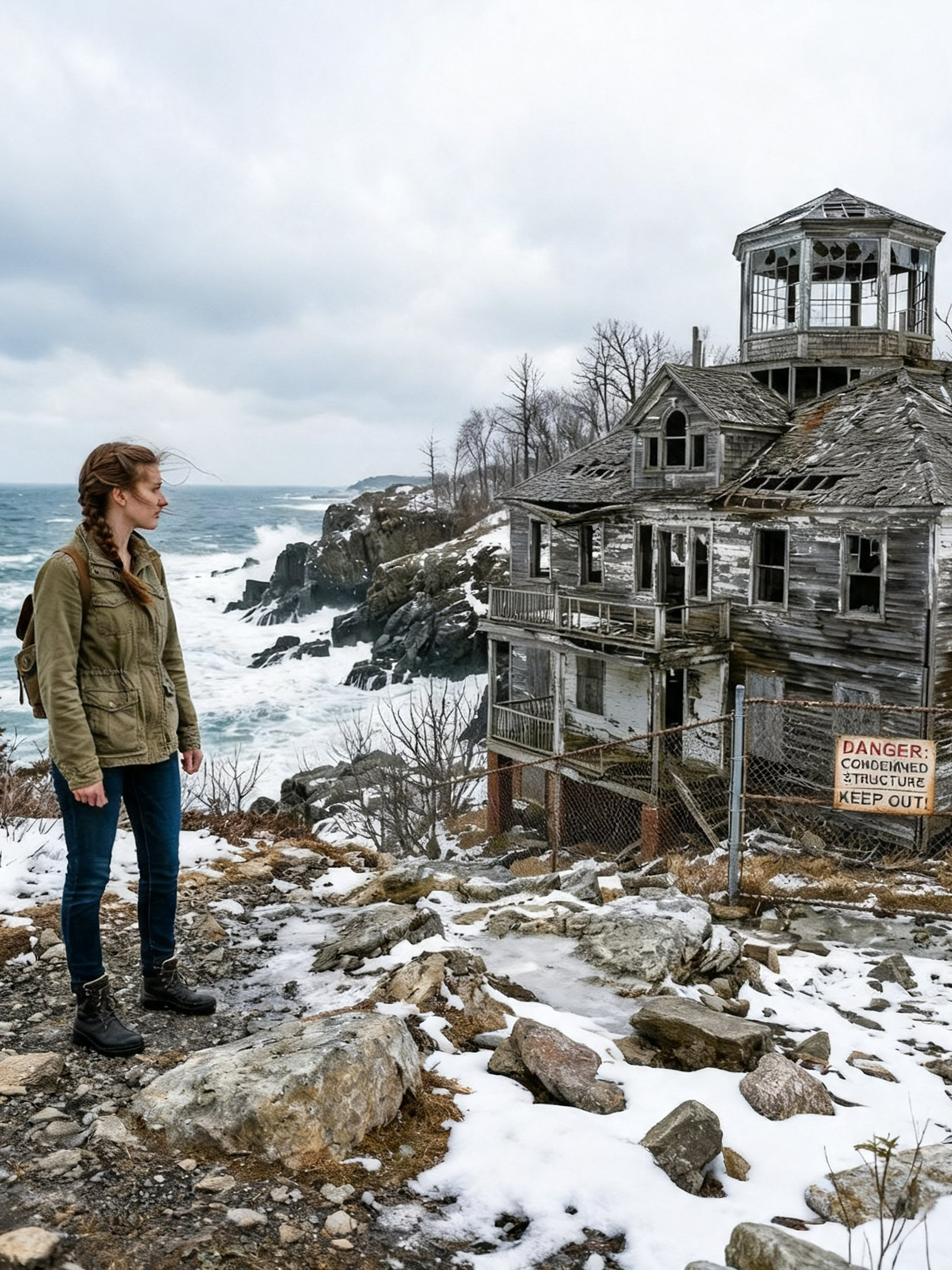
Homeless at 22, She Bought a Coast Guard Station for $10—Then the Signal Room Exposed a Town’s Buried Crime
“You have until Friday to get your junk off my porch.”
Avery Quinn looked at her aunt across the kitchen table and said nothing.
Her grandfather had been buried four days earlier.
Aunt Denise was already wearing his wedding ring on a gold chain around her neck.
Beside her, Uncle Raymond slid a black trash bag across the table like he was passing Avery a restaurant check.
“Your clothes are in there,” he said. “Whatever else you left upstairs is ours now.”
Avery glanced at the bag.
Then at the brass key in her palm.
Her grandfather had pressed it into her hand six hours before he died.
A tiny metal tag was wired through the key’s bow.
Denise noticed Avery looking at it.
“What’s that?”
Avery closed her fingers.
That was the first mistake her family made.
They believed her.
At twenty-two, Avery had no apartment, no savings worth mentioning, no father she could call, and no mother left to defend her.
What she did have was a ten-year-old Jeep with a failing alternator, two duffel bags, forty-three dollars in cash, and a grandfather who had spent the last year forgetting everyone’s name except hers.
She had bathed him when his hands shook too badly.
She had driven him two hours to the VA hospital in Togus.
She had slept on a folding chair beside him during pneumonia.
She had learned how to cut pills in half.
She had learned how to read confusion in his eyes before panic reached his mouth.
She had learned that love could become work and still remain love.
Denise had visited three times.
Once at Christmas.
Once when she wanted Walter Quinn to sign a power of attorney.
And once two weeks before he died.
That final visit had lasted eleven minutes.
Now she owned his house.
At least, that was what she said.
“You understand,” Denise continued, folding her manicured hands, “Ray and I have expenses. Property taxes. Repairs. Insurance. Your grandfather let things go.”
Avery looked past her toward the hallway.
A scuff mark still showed on the wall where Grandpa Walter had leaned his old aluminum walker.
His red wool cap hung on a peg near the mudroom.
Nobody had touched it.
Raymond leaned back.
“You’re young. You’ll figure it out.”
Avery finally spoke.
“Can I see the deed?”
Denise’s smile tightened.
“The deed.”
“This is a family matter.”
“So the deed should be easy to show me.”
Raymond’s chair scraped the floor.
“Watch your tone.”
Avery looked at him.
That was all.
No shouting.
No shaking hands.
Raymond had expected anger.
Denise had expected begging.
What they got was a twenty-two-year-old woman sitting perfectly still while rain ticked against the kitchen window.
That stillness bothered them more.
Denise stood.
“Your grandfather transferred the property. Legally. Months ago.”
“He had advanced dementia months ago.”
“I’m being careful.”
Avery placed both hands on the table.
“Very careful.”
Nobody spoke for several seconds.
Outside, gulls cried over Grayhaven Harbor.
Beyond the back yards and church steeples, the Atlantic rolled gray beneath a low Maine sky.
Avery had grown up with that sound.
Rigging knocking against masts.
Winter wind under doorframes.
Channel 16 chatter coming from Grandpa’s old marine radio while he made coffee at five in the morning.
Walter Quinn had served twenty-eight years in the United States Coast Guard.
He had worked storms off Maine that people still talked about in bars.
He had pulled men out of black water.
He had brought home bodies.
He had once told Avery that the ocean did not care who you were, how rich you were, or who your father knew.
“Water’s honest,” he had said.
“People are what you have to watch.”
At the time, she thought he was joking.
On Friday morning, Avery carried her two duffel bags outside.
Denise watched from the upstairs bedroom window.
Raymond did not come out.
The temperature was thirty-nine degrees.
Avery put the bags in her Jeep.
Then she returned to the porch.
Grandpa Walter’s red cap was gone from the peg.
She looked through the kitchen window.
Denise stood there holding it.
Avery tapped the glass.
Denise raised one eyebrow.
Then dropped the cap into the trash.
Something cold moved through Avery’s chest.
Grief was softer.
This was cleaner.
Avery opened the back door without knocking.
Denise spun.
“I told you—”
Avery walked to the trash can, took out the red cap, brushed a coffee filter from it, and tucked it beneath her arm.
Then she looked at Denise.
“He saved your husband when Raymond’s boat flipped off Long Point.”
Denise’s mouth opened.
Avery continued.
“He paid your mortgage in 2017.”
“He covered Mason’s rehab.”
Denise went pale at her son’s name.
“He gave you twelve thousand dollars and told me never to mention it because he didn’t want Mason ashamed.”
Avery stepped toward the door.
She stopped with one hand on the frame.
She looked back.
“But you should keep every paper connected to this house.”
Denise stared.
Avery put on the red cap.
“Because I think you’re going to need them.”
She slept in her Jeep that night behind a twenty-four-hour supermarket in Ellsworth.
The following morning she found a pink notice beneath her windshield wiper warning that overnight parking was prohibited.
By Sunday, her phone had dropped to nine percent.
Her Jeep coughed twice before starting.
She washed her face in a gas station bathroom and brushed her teeth while a woman in a puffy coat helped two toddlers choose donuts outside.
Avery stared at herself in the mirror.
She looked tired.
Not defeated.
There was a difference.
She checked her bank balance.
Her part-time job at a marine supply store had ended when she took too many unpaid days to care for Walter.
Her nursing assistant certification had expired.
Her closest friend had moved to Vermont.
And every motel within thirty miles wanted more money for one night than Avery currently possessed in the world.
She drove toward Grayhaven anyway.
The county surplus auction was being held in the municipal gym.
She had seen the notice taped inside the gas station.
Old snowplows.
Office furniture.
A seized fishing trailer.
Two vacant lots.
And one property nobody wanted.
FORMER CAPE MERCY COAST GUARD SIGNAL STATION.
MINIMUM BID: $10.
Avery read the listing three times.
Then she touched the brass key in her coat pocket.
Cape Mercy stood three miles north of Grayhaven on a narrow finger of granite overlooking the harbor entrance.
The Coast Guard had abandoned the station decades earlier after consolidating operations.
The town eventually acquired it through a federal historical transfer.
Then it sat.
Storm damage rotted the shingles.
Teenagers broke windows.
Salt air ate the wiring.
The tower stairs were condemned.
Preservation restrictions made redevelopment expensive.
Two companies had investigated the property.
Both walked away.
Avery knew one more thing.
Her grandfather had served there.
Twenty-two years earlier, he had taken her there once.
She remembered almost nothing except a green door, an enormous wall map, and Walter kneeling beside her in a dark room.
He had whispered, “This is where the coast used to talk.”
She had been five.
The memory had never mattered.
The auctioneer laughed when Avery raised her card.
“Ten dollars?”
A few people turned.
Someone behind her said, “Kid’s buying herself a lawsuit.”
Another man snorted.
“Cheaper to buy a tent.”
Avery kept her hand raised.
No one bid against her.
The auctioneer looked around.
“Ten dollars once.”
Avery felt the brass key through her coat.
The room broke into scattered laughter.
Near the rear exit, a tall man in a camel-colored overcoat did not laugh.
He stared at Avery for several seconds.
Then stepped into the hallway and made a phone call.
Avery noticed him.
She noticed most things now.
Three hours later, she owned a Coast Guard station.
Or, more accurately, she owned a collapsing building, a rusted flagpole, two acres of wind-beaten grass, an unusable observation tower, seventy-three unpaid dollars in municipal utility fees, a preservation agreement, and enough liability to make any reasonable person run.
The county clerk pushed a deed packet toward her.
“You understand there’s no occupancy certificate.”
“I understand.”
“I understand.”
“Possible lead paint.”
“Roof intrusion in the western wing.”
The clerk paused.
“You really staying there?”
Avery looked at him.
“I didn’t say I was.”
He lowered his voice.
Then he stamped the document.
As Avery gathered the paperwork, another clerk walked behind him carrying a stack of files.
One slipped.
A manila folder hit the floor.
Avery bent to help.
The label caught her eye.
CAPE MERCY — TITLE REVIEW — 1998.
The clerk snatched it up.
Too quickly.
Avery looked at his nameplate.
HAROLD PIKE.
“You okay?” she asked.
He shoved the folder under the pile.
Then looked toward the hall.
The man in the camel coat stood there.
Avery drove to Cape Mercy just before sunset.
The station appeared through spruce trees like the remains of a shipwreck.
White clapboard, gray with age.
Black roofline sagging toward the sea.
Windows boarded.
Tower rising behind it like a broken mast.
A weathered sign still clung to a post.
U.S. COAST GUARD
CAPE MERCY STATION
Someone had spray-painted a red X across the shield.
Avery parked.
Wind came off the Atlantic hard enough to move her coat.
For a moment, she simply stood there.
Owner of a ruin.
She laughed once.
Not because it was funny.
Because sometimes reality became so strange that the body needed somewhere to put the pressure.
She unlocked the front door with the county key.
It opened six inches.
Something blocked it.
Avery pushed harder.
A dead gull slid across the floor.
The lobby smelled of wet wood, rust, and mouse droppings.
Paint peeled from the walls.
A bulletin board still held a faded hurricane evacuation route.
The old galley contained two stainless-steel sinks and a mouse nest inside a cabinet.
Upstairs, several rooms had been stripped.
The eastern windows faced the harbor.
Through dirty glass, Avery could see the new Harbor Crest development across the water.
Forty-eight luxury homes.
A private marina.
A boutique hotel.
A restaurant with a glass dining room shaped like the bow of a ship.
Harbor Crest was the pride of Grayhaven.
Magazine articles called it proof that the town had “reinvented itself.”
Its developer, Calder Voss, had been on television twice.
His father had served as mayor.
His family name was on the library wing, the hospital imaging center, and the football field.
Avery had never been inside any of them.
She went downstairs.
The basement was flooded ankle-deep.
A breaker panel hung open.
The maintenance room had been ransacked.
Then she found the corridor.
At its end was a steel door with three coats of institutional green paint.
Only a keyhole.
Avery stopped.
Her breathing changed.
Above the door, beneath grime, were stenciled words.
SIGNAL ROOM 3.
She reached into her coat.
The brass key slipped into the lock.
Not smoothly.
But it turned.
The door opened inward.
The room beyond was small and windowless.
A radio console filled one wall.
Most equipment had been removed, but black wires still hung from metal brackets.
A map of the Gulf of Maine curled beneath cracked plastic.
A red phone sat on a desk.
A Morse code key remained bolted beside it.
And under the desk, painted the same green as the walls, was a steel footlocker.
Avery crouched.
No padlock.
She lifted the lid.
She sat back.
For the first time that day, disappointment nearly reached her face.
Then she noticed the dust.
The footlocker was dusty everywhere except one corner.
A clean semicircle marked the metal.
Something had recently been removed.
Avery stood.
She ran her hand beneath the desk.
Behind the map.
Inside the radio cabinet.
She almost stopped.
Then she saw four screw heads on the console.
Three were rusty.
One was bright.
Avery found a screwdriver in an upstairs utility drawer.
The panel came loose.
Behind it was a narrow cavity.
Inside sat a waxed canvas pouch.
Her grandfather’s initials were written across it.
Avery did not open it immediately.
She listened.
A loose shutter knocking outside.
She carried the pouch to the desk.
Inside were three items.
A photograph.
A cassette tape.
And a sealed envelope.
The photograph showed seven men standing outside Cape Mercy Station in winter.
Her grandfather was one of them.
He looked about thirty.
Beside him stood a younger man Avery recognized from a hundred newspaper photos.
Former mayor Silas Voss.
Calder Voss’s father.
Someone had drawn a red circle around Silas.
On the back Walter had written:
HE WASN’T SUPPOSED TO BE HERE THAT NIGHT.
Avery placed it down.
The cassette tape had one label.
FEB. 17, 1998 — 0214 HRS — CH. 16.
The envelope had Avery’s name on it.
Not “To Avery.”
Not “For my granddaughter.”
AVERY QUINN.
Her grandfather’s handwriting.
Avery broke the seal.
The letter inside was short.
If you are reading this, I ran out of time.
Do not give the tape to the town.
Do not give the photograph to the police until you know who is wearing the badge.
Do not trust any document dated after February 18, 1998, until you compare it with the original registry book.
Most important:
THE STATION IS NOT THE ASSET.
THE STATION IS THE WITNESS.
Find Signal Ledger 4.
Ask who benefited when the widows disappeared from the deed.
Then ask why your mother was afraid of the water.
Avery read the final sentence twice.
Her mother had drowned when Avery was nine.
That was what everyone said.
Claire Quinn’s car had gone through a guardrail on Shore Road during heavy rain.
The vehicle rolled down an embankment and landed upside down in eight feet of tidal water.
That word had followed Avery for thirteen years.
She folded the letter.
She did not cry.
She put every item back into the pouch except the letter.
Then she took photographs with her phone.
She backed them up to a new email account.
After that, she removed the cassette and hid it beneath the spare tire in her Jeep.
Only then did she hear tires outside.
Headlights swept across the boarded windows.
Avery killed her phone screen.
A vehicle door slammed.
Then another.
She moved silently through the corridor and looked through a crack in the lobby boards.
A black SUV sat beside her Jeep.
The man from the auction stepped out.
Camel coat.
A second man followed.
Avery recognized him too.
Harold Pike.
The county clerk.
They approached the door.
Avery locked Signal Room 3 and slipped the brass key into her boot.
Then she walked to the lobby.
Someone knocked.
She waited three seconds before opening.
Camel Coat smiled.
“Ms. Quinn?”
“Calder Voss.”
He extended his hand.
Avery shook it.
His grip was warm.
His eyes were not.
“I heard you made a purchase today.”
“Congratulations.”
“Thank you.”
He glanced over her shoulder.
“Mind if we come in?”
His smile changed by half an inch.
“Excuse me?”
Harold Pike looked at the ground.
Calder chuckled.
“Fair enough.”
He stepped back.
“Cold place to spend the night.”
Avery said nothing.
“I’m told you’ve had some family trouble.”
There it was.
Not even six hours.
“I’m told a lot of things too,” Avery said.
Calder’s expression held.
“We may be able to help each other.”
“With what?”
“This property.”
“I just bought it.”
“For ten dollars.”
“I know that too.”
Avery leaned against the doorframe.
“So it sounds like I’m doing okay.”
Harold Pike coughed into his fist.
Calder smiled again.
“My company has long-term plans for this stretch of coast. Trails. Preservation. Public access. We’d be willing to offer you twenty thousand dollars for your ten-dollar investment.”
That was enough money to change Avery’s immediate life.
A reliable car.
A clean bed.
Twenty thousand dollars when she had sixty-one dollars in the bank.
Calder knew exactly what he was doing.
Avery looked across the harbor at Harbor Crest.
Lights glowed in the hotel windows.
“You drove out here at night to offer me twenty thousand dollars for a condemned station you could have bought this morning for eleven?”
Calder stopped smiling.
Harold Pike looked at him.
Avery continued.
“That’s interesting.”
“Sentimental value,” Calder said.
“The town.”
“The town didn’t bid.”
“People make mistakes.”
Avery nodded.
Calder studied her.
Then he handed her a business card.
“Offer’s good until Monday.”
“Why Monday?”
“After that, some compliance issues may complicate things.”
“What kind?”
“Insurance. Environmental. Structural. Historical preservation.”
“You mean things already listed in the auction packet?”
For the first time, something irritated flickered across his face.
“You read the packet.”
“All forty-seven pages.”
Harold Pike looked at her again.
Calder shoved his hands into his coat.
“Your grandfather was a stubborn man.”
Avery’s gaze sharpened.
“You knew him?”
“Everybody knew Walter.”
“Not what I asked.”
Wind moved Calder’s coat.
Behind him, waves struck the rocks below.
Finally he said, “Take the offer, Avery.”
Then he turned away.
She watched the SUV disappear into the dark.
Only after the sound of the engine faded did she close the door.
Avery slept in the station that night wrapped in two blankets inside an upstairs room.
At a.m., she woke to footsteps.
Human weight.
Floorboard.
Another floorboard.
Avery slid one hand beneath her pillow and took out the heavy flashlight she had found in Grandpa’s garage years ago.
The footsteps stopped outside her door.
The knob moved.
Avery said nothing.
The shadow beneath the door shifted.
Then retreated.
She waited.
Thirty seconds.
Avery stood and moved to the window.
A flashlight flickered near the tower stairs.
Then vanished.
She did not chase whoever it was.
She did something better.
She filmed the footprints the next morning.
One set entered through a broken pantry window.
The boots had a distinctive triangular tread.
She photographed those too.
By eight, Avery was inside the Grayhaven Public Library.
She used a computer in the genealogy room.
Signal Ledger 4 brought up nothing.
Cape Mercy Trust brought up nothing.
Widows deed brought up nothing.
She searched newspaper archives.
February 1998.
The first article appeared on February 18.
STORM BATTERS DOWNEAST COAST.
Three fishing vessels damaged.
One missing fisherman rescued.
Dock damage at Grayhaven.
Emergency crews praised.
Nothing unusual.
She searched February 19.
On February 21 she found a tiny article on page nine.
TOWN ACCEPTS COASTAL LAND TRANSFER.
According to the article, “approximately sixty-three acres of distressed shoreline property formerly held through a private maritime relief association” had been transferred to Grayhaven “to simplify stewardship and encourage future economic development.”
The vote had been unanimous.
Mayor Silas Voss presided.
Avery printed the article.
Then she searched the maritime relief association.
One result appeared in a scanned obituary from 1987.
MARGARET BELL, 81, ADVOCATE FOR FISHERMEN’S FAMILIES.
Margaret had founded the Cape Mercy Mariners Relief Association after the 1967 Patriot Gale killed eleven local fishermen.
The association raised money for widows and children.
Later, a shipbuilding heiress named Evelyn Hartwell donated shoreline property to the organization.
Avery kept reading.
The land was intended to produce rental and dock income “in perpetuity” for families of mariners lost at sea.
In perpetuity.
Avery sat very still.
Across the harbor stood Harbor Crest.
Sixty-three acres.
Luxury homes.
Marina slips selling for six figures.
Restaurant.
Private event pavilion.
She searched the development parcel map.
Sixty-one-point-eight acres.
Her skin prickled.
She printed everything.
At the librarian’s desk, an elderly woman glanced at the pages.
Her name tag read MRS. ELAINE FARROW.
She went pale.
“Where did you find this?”
“Archives.”
Elaine looked around the room.
Then lowered her voice.
“Are you Walter’s granddaughter?”
Avery nodded.
Elaine closed her eyes briefly.
“He told you?”
“Not enough.”
Elaine pushed the pages back.
“I can’t help you.”
“You already did.”
“You recognized it.”
Elaine’s jaw tightened.
“I said I can’t.”
Avery gathered her papers.
She did not press.
She reached the door before Elaine spoke again.
“Your mother came here.”
Avery stopped.
Elaine stared down at the desk.
“Two weeks before she died.”
Avery turned slowly.
“What was she looking for?”
Elaine’s eyes filled with fear.
“The same thing.”
Avery walked back.
Elaine whispered, “Old property records.”
“Did she find them?”
“I don’t know.”
Elaine shook her head.
“She asked me where Grayhaven kept registry books before the county digitized them.”
Elaine looked toward the security camera near the ceiling.
Then she pulled a scrap of paper from beneath the desk and wrote three words.
ST. BRIGID’S BASEMENT.
She folded it into Avery’s palm.
“Your grandfather made me promise not to help unless you asked the right question.”
Avery looked at her.
“What question?”
Elaine swallowed.
“Who benefited when the widows disappeared from the deed?”
The exact words from Walter’s letter.
Avery’s heart kicked once.
Elaine grabbed her wrist.
“If you find Ledger Four, don’t bring it here.”
“Because somebody already came looking for it this morning.”
Avery left through the rear door.
Her Jeep had a flat tire.
One clean cut through the sidewall.
Avery stared at it.
Then looked across the street.
A black pickup was parked outside a hardware store.
Raymond sat behind the wheel.
He did not wave.
Avery walked over.
Raymond rolled down the window.
“Tough luck.”
“With the tire?”
“With everything.”
Avery glanced at his boots.
Triangular tread.
She looked back at his face.
“Did Denise send you into the station last night?”
Something moved in his eyes.
Not surprise.
He recovered quickly.
“I don’t know what you’re talking about.”
Avery nodded.
She turned.
Raymond opened his door.
Avery looked back.
“Calder’s offering you good money.”
“How do you know?”
“He told me.”
“So you work for him.”
“I do jobs.”
“What kind?”
“Construction.”
“At Harbor Crest?”
Raymond did not answer.
Avery studied him.
“You knew Grandpa served at Cape Mercy.”
“Everyone knew.”
“You knew about Signal Room 3?”
His face changed.
That was answer enough.
Avery stepped closer.
“Who told you to search it?”
“I didn’t search anything.”
“Then why are you scared?”
Avery leaned down slightly.
“You should be better at lying.”
Raymond grabbed her arm.
But hard enough.
“Listen to me.”
Avery looked at his hand.
He released her.
“Sell the building,” he said. “Take the money. Leave town.”
“Because Walter ruined his whole life over this.”
“My grandfather had a good life.”
“You don’t know what he did.”
“What did he do?”
Raymond’s mouth tightened.
Then he said the wrong thing.
“He kept copies.”
Avery did not move.
Raymond realized it too late.
“Copies of what?”
He started the truck.
“What copies?”
He drove away.
She watched until the pickup disappeared.
Then she smiled without humor.
A man who thought he had warned her had just confirmed the evidence existed.
That afternoon, Avery changed one tire.
Then she changed the game.
She photographed every document.
She created three digital backups.
She mailed one sealed package to an attorney in Portland whose name appeared on Walter’s old Christmas card list.
She rented a safe-deposit box using forty dollars from her emergency cash.
She placed the photograph there.
She did not tell anyone where the cassette was.
Then she bought a secondhand cassette player from a thrift store.
She drove thirty miles out of Grayhaven.
Parked beside an abandoned blueberry field.
Inserted the tape.
For seven seconds there was only static.
Then a man’s voice.
“Cape Mercy, this is Grayhaven Harbor Unit Two.”
Another voice answered.
“Go ahead, Unit Two.”
Avery knew that voice.
Grandpa Walter.
Younger, stronger, but unmistakable.
“Chief, we got a light offshore near Hartwell Point.”
Walter answered.
“That area’s closed in this weather.”
“Yeah, well, somebody’s out there.”
Static swallowed the next words.
“…Voss truck at the old relief dock.”
Avery leaned closer.
Another voice cut in.
“Cape Mercy, disregard that transmission.”
Walter said, “Identify.”
Then a third voice.
“Walter, pick up line three.”
The tape clicked.
Several seconds of hum.
Then muffled voices.
Not radio traffic.
A room recording.
Walter must have left the tape running.
A man said, “We only need the originals tonight.”
Walter: “Those records don’t belong to you.”
Man: “They belong to nobody. Half those women are dead.”
Walter: “Their children aren’t.”
Another voice, younger:
“The transfer is already signed.”
Walter: “Not by Hartwell’s trustees.”
Then the first man:
“Tomorrow morning it won’t matter.”
Walter said something Avery could barely hear.
She rewound.
Played it again.
Turned up the volume.
His words came through.
“My daughter knows.”
Avery stopped breathing.
A chair scraped on the recording.
Then another man spoke.
Controlled.
“She has a little girl, Walter.”
The tape ended.
Avery sat in the Jeep for a long time.
Snow began to fall.
Tiny grains ticking against the windshield.
My daughter knows.
Avery’s mother.
She ejected the cassette.
Her hands were steady.
That frightened her more than shaking would have.
At twenty-two, she had learned something nobody teaches you.
There is a kind of anger that burns hot.
It makes you scream.
Break things.
Make mistakes.
Then there is the colder kind.
The kind that straightens your spine.
The kind that makes you save receipts.
The kind that makes you read footnotes.
The kind that waits for people to lie twice.
Avery had the colder kind.
She drove back to Grayhaven.
St. Brigid’s Catholic Church sat on a hill overlooking the old fishing district.
The priest, Father Daniel Shea, remembered Walter.
He also remembered Claire.
When Avery asked about the basement records, he closed his office door.
“There was a flood down there in 2004.”
“Did it destroy everything?”
Father Shea rubbed his jaw.
“Your grandfather moved several boxes before the water reached them.”
“He wouldn’t tell me.”
“Then why did my mother come here?”
His eyes lifted.
“How do you know she did?”
“Mrs. Farrow.”
Father Shea sighed.
“Claire believed someone had altered a registry record.”
“What record?”
“A trust deed.”
“Cape Mercy Mariners Relief Association?”
He looked at Avery for several seconds.
Then nodded.
“She said the original deed had seven beneficiary families attached by schedule. Later copies didn’t.”
“Who were the families?”
“I only remember three names.”
He wrote them down.
Avery stared at the final name.
“Your grandmother’s family.”
“Grandpa never said that.”
“He wouldn’t have.”
“Because Walter never believed the land belonged to him.”
Father Shea leaned forward.
“He believed it belonged to the purpose.”
“What purpose?”
“To keep families from being ruined when the sea took the person paying the bills.”
Avery thought of Walter’s tiny house.
His fifteen-year-old truck.
His patched winter coat.
His habit of turning off lights in rooms nobody used.
“He could have claimed part of it?”
“Possibly.”
“But he didn’t.”
Father Shea looked toward the window.
“Walter said once that if he touched a dollar of that money personally, everyone would say he was fighting for himself.”
That hurt Avery in a place she had not expected.
Because it sounded exactly like him.
He had spent his life being called stubborn.
He had died in a narrow bedroom while the families connected to the transfer got rich across the harbor.
And he had refused to take anything that might make his motive easier to attack.
Avery whispered, “Where is Ledger Four?”
Father Shea shook his head.
“I don’t know.”
“You’re sure?”
Then he hesitated.
“But Claire did.”
The next morning, Denise texted Avery.
COME SIGN YOUR RELEASE FROM GRANDPA’S ESTATE.
Avery replied:
I’LL BE THERE AT 2.
Denise’s lawyer worked from a renovated brick office overlooking Harbor Square.
Avery arrived five minutes early.
Denise and Raymond were already seated.
So was their son Mason.
And beside the attorney sat Calder Voss.
The system had finally stopped pretending its pieces were separate.
Denise smiled.
“What am I releasing?”
Attorney Grant Pell slid a document toward her.
“Potential claims against your aunt regarding Walter Quinn’s estate.”
“In exchange for?”
“Five thousand dollars.”
Avery looked at Denise.
“Yesterday Calder offered me twenty.”
“This is unrelated,” Pell said quickly.
“Of course.”
Calder folded his arms.
Avery read the document.
Page three.
Then page four.
There it was.
A clause releasing claims “arising from historic interests, easements, beneficiary rights, maritime association interests, or coastal trust instruments held directly or indirectly by Walter Quinn or descendants thereof.”
Avery looked up.
Denise was watching her too closely.
“You thought I wouldn’t read this.”
Pell frowned.
“Ms. Quinn—”
“You’re paying five thousand dollars for me to waive rights you say don’t exist.”
Denise’s face tightened.
“That’s standard language.”
Avery tapped the clause.
“This is specific.”
Raymond said, “Just sign it.”
Avery looked at him.
Calder spoke gently.
“You’re sleeping in a condemned building, Avery.”
“So I’ve heard.”
“You don’t have a job.”
“Also true.”
“Your vehicle is barely running.”
“Still starts.”
“You have no practical way to fight a complicated estate matter.”
Avery leaned back.
“You’ve spent a surprising amount of time learning about me.”
Calder’s jaw moved.
Pell interrupted.
“Let’s keep this productive.”
Avery lifted the release.
“Who drafted this clause?”
“Based on what?”
“Routine caution.”
“Then give me a list of other clients where you used the phrase ‘coastal trust instruments.’”
Pell said nothing.
Avery nodded.
“That’s what I thought.”
Denise slapped the table.
“You always were ungrateful.”
Avery turned to her.
There it was.
The emotional knife.
Not enough to steal from her.
Denise needed Avery to feel guilty about noticing.
“Grandpa took you in when Claire died,” Denise said. “You got everything.”
Avery’s voice stayed calm.
“I got a bedroom.”
“You got his attention.”
“He raised me.”
“He ignored his own daughter for you.”
Avery looked at her carefully.
“You mean you.”
Denise’s eyes shone.
“For years he talked about Claire. Claire this, Claire that. Then Claire died and it became Avery. Always Avery.”
There was the motive.
Not money alone.
Not Calder alone.
Resentment had opened the door.
Money had walked through it.
“You wanted the house,” Avery said.
“I deserved something.”
“So you had a man with dementia sign it over.”
Pell stood.
“That accusation is—”
Avery placed a copy of Walter’s neurology report on the table.
DIAGNOSIS: MAJOR NEUROCOGNITIVE DISORDER.
Below it, the date.
Three weeks before the deed Denise claimed Walter signed.
Denise stared.
Avery continued.
“I ordered a copy from the hospital because I was his medical proxy.”
Raymond looked at his wife.
Calder’s eyes narrowed.
Avery added, “And I recorded this meeting from the moment I walked in.”
Pell’s face drained.
“Maine requires—”
“Maine is a one-party consent state.”
Avery stood.
Denise whispered, “What do you want?”
Avery put on her coat.
“Nothing from you.”
That frightened Denise more than any demand.
Avery looked at Calder.
“Monday’s coming.”
His expression did not move.
“Keep the twenty thousand.”
Then she left.
By Monday morning, Cape Mercy had three notices nailed to the door.
UNSAFE OCCUPANCY.
ENVIRONMENTAL REVIEW REQUIRED.
EMERGENCY STRUCTURAL INSPECTION.
The town moved fast.
Avery photographed every notice before touching them.
She called each department.
Two inspectors admitted privately they had received “priority direction from administration.”
One refused to identify who had requested it.
The third told Avery the order originated from the town manager’s office.
Town Manager Paul Kersey had once served as Calder Voss’s chief financial officer.
Avery added his name to a notebook.
At noon, a crew arrived to fence the station.
Avery stood on the porch while workers unloaded steel barriers.
The foreman approached.
“Need you off the property.”
“Show me the order.”
Avery read it.
“This authorizes fencing around the tower.”
“We were told entire site.”
“That isn’t what this says.”
The foreman scratched his beard.
Avery pointed.
“Page two. Paragraph three.”
He read it.
Then swore softly.
Twenty minutes later, the crew fenced only the tower.
That afternoon, the town cut electrical service to a building that barely had functioning electricity.
On Tuesday, someone reported a hazardous fuel leak.
Firefighters found no fuel.
On Wednesday, code enforcement cited a handrail missing from stairs Avery had already blocked off.
On Thursday, Harbor Crest’s attorney filed a petition claiming Avery’s property created a “public visual nuisance affecting adjacent economic assets.”
The wording was almost funny.
Avery did not fight everything.
That was another thing Calder misunderstood.
She let him believe pressure was working.
She moved her blankets out of the station.
She parked her Jeep two towns away.
She stopped appearing in public for forty-eight hours.
Raymond texted:
SMART CHOICE.
Denise texted:
WE CAN STILL FIX THIS.
Calder left one voicemail.
“Offer is now fifteen.”
Avery saved all three.
Then she went to Portland.
Attorney Rebecca Sloan was sixty-one, sharp-eyed, and unimpressed by wealthy men who expected people to confuse confidence with law.
Walter had sent her Christmas cards for seventeen years.
“He contacted me in 2003,” Rebecca said.
“About the trust?”
“About protecting you.”
Avery looked up.
Rebecca opened a storage envelope.
Inside was a sealed letter marked:
ONLY IF AVERY FINDS THE STATION RECORDS.
“He prepaid me to keep this,” Rebecca said.
“For twenty-three years?”
“He paid twenty years in advance. I kept the extra three for free.”
Avery opened the letter.
If you reached Rebecca, then you found enough to make dangerous people nervous.
Here is what they will do.
First they will offer money.
Then they will call you unstable.
Then they will use the town.
Then they will claim the evidence is stolen, forged, or meaningless.
Do not argue with them in public.
Do not threaten them.
Do not tell them everything you have.
Make them file first.
A lie spoken over dinner disappears.
A lie filed under oath becomes evidence.
You are not fighting for my money.
There is no “my money.”
You are fighting for people who were told the land meant nothing after their fathers drowned, after their husbands disappeared, after their mothers signed papers they could not afford to challenge.
Find the original.
The original controls.
Avery looked at Rebecca.
“You knew?”
“Where is the original deed?”
“I don’t know.”
“Ledger Four?”
Rebecca shook her head.
“But I know why the number matters.”
She pulled an old survey from another folder.
Cape Mercy Station had been built in phases.
Signal Room 1.
Signal Room 2.
Signal Room 3.
Then, in 1969, the Coast Guard installed a fourth emergency communications room inside the observation tower.
Official plans called it Communications Annex 4.
Locals called it Signal Four.
Avery stared at the page.
“The tower.”
Rebecca nodded.
“The condemned tower.”
The one the town had fenced first.
The one Calder’s people had tried to isolate immediately.
Avery drove back to Grayhaven before sunset.
She did not go to the station.
Instead, she went to Harbor Crest.
For the first time in her life, she walked through the glass doors of the hotel.
A hostess approached.
“Can I help you?”
“Yes. Is Calder Voss here?”
“Do you have an appointment?”
The hostess began to answer.
Then Calder appeared from the restaurant.
He wore a navy suit.
Behind him, twenty people sat around a private dining table beneath pendant lights.
Planning board members.
Town officials.
Avery recognized Harold Pike.
Paul Kersey.
Grant Pell.
Calder smiled.
Avery looked at the room.
“So this is the town.”
Several people shifted.
Calder stepped closer.
“You came to accept?”
Avery held up the county deed to Cape Mercy.
“I came to ask one question.”
Calder glanced at the document.
“Why was the tower fenced before the inspection?”
His smile faded.
“Because it’s dangerous.”
“The report wasn’t completed until six hours later.”
Avery nodded slowly.
She turned to leave.
Calder caught her arm.
Very lightly.
Enough to stop her.
She looked at his hand.
He removed it.
“Take the money.”
“You’re out of your depth.”
“You have no idea what you’re walking into.”
“That’s possible.”
“You think your grandfather was some kind of hero?”
Avery studied him.
Calder lowered his voice.
“He destroyed people.”
“My father, for one.”
Calder’s eyes flashed.
“He spent twenty years being accused of things Walter could never prove.”
“Then you should be happy I’m looking.”
“If there’s nothing there, I clear your father’s name.”
That cornered him.
He could not demand she stop without revealing he feared the result.
Avery gave him a small nod.
“Good night, Mr. Voss.”
She walked out.
By midnight, rain had started.
Avery parked half a mile from Cape Mercy and approached on foot through the trees.
The station was dark.
The tower fence had been chained.
She used bolt cutters Rebecca had purchased with a straight face and a business receipt.
The tower door stood twenty feet above the main roofline.
Avery climbed the interior stairs.
Wind pushed through broken louvers.
On the second landing, she saw fresh sawdust.
Not twenty-year-old dust.
Someone had worked there recently.
At the top, Signal Four was hidden behind plywood.
Avery pried it loose.
The room measured six feet by eight.
An old emergency radio rack stood against one wall.
Nothing else.
She searched.
Then she remembered the clean semicircle inside the footlocker.
Something removed.
Grandpa had not hidden the records.
Somebody else had gotten there first.
Avery examined the walls.
One section sounded different when she knocked.
She removed a vent cover.
Her fingers touched plastic.
She pulled out a freezer bag.
Inside was not a ledger.
It was a child’s yellow raincoat.
Avery froze.
The coat was tiny.
On the inside collar, written in black marker:
Memory came back so hard she had to sit down.
Her mother driving.
Headlights behind them.
Avery wearing yellow.
Claire gripping the steering wheel.
“Baby, I need you to listen to me.”
Avery remembered crying.
Claire telling her not to.
Avery remembered being dropped at Grandpa’s house.
Then Claire driving away again.
The accident happened forty minutes later.
Avery had always been told she was asleep when her mother left.
She had not been asleep.
She had been in the car.
Under the raincoat was an envelope.
Claire Quinn’s handwriting.
If I don’t come back, the original is not in Grayhaven.
Silas knows about the station copies.
He does not know Evelyn made a federal filing.
The deed has two lives.
One in Maine.
One in Washington.
If they destroy one, the other survives.
I found proof the transfer was staged before the trustees signed anything.
But there is more.
The relief land is only part of it.
Hartwell did not donate sixty-three acres.
She donated the entire Cape Mercy shoreline, including submerged rights, access easements, and the north harbor channel.
Dad, this means Harbor Crest was built on trust land.
And the marina may be blocking federal rescue access.
Do not let Avery inherit the fight.
Let her inherit the truth.
Avery read the letter twice.
Then a floorboard creaked below.
She shut off her flashlight.
One said, “Chain’s cut.”
Another answered, “She’s here.”
Avery folded the letter into her jacket.
The tower had one staircase.
No second exit.
Below, a flashlight beam swept upward.
Avery looked around.
Roof ledge.
Forty feet above rocks.
She climbed onto the radio cabinet instead.
Above it was a maintenance hatch.
Painted shut.
She shoved.
Footsteps climbed.
Avery took the small pry bar from her backpack and drove it into the seam.
The hatch opened two inches.
Cold rain hit her face.
She pulled herself through.
The tower roof was slick.
She crawled along the edge.
Below, waves exploded white against black granite.
A man entered Signal Four.
Another voice.
“She was here.”
Avery stopped.
Her uncle had searched before.
Her uncle knew the rooms.
Her uncle knew Calder.
Raymond stepped onto the roof through the hatch.
Avery stood slowly.
Rain flattened his hair.
He looked older than he had two weeks earlier.
She held the pry bar.
“Stay there.”
“I’m not going to hurt you.”
“You broke into the station.”
“I was trying to keep you from finding this.”
“That sentence isn’t helping.”
Raymond wiped rain from his face.
“You don’t understand.”
“Then explain.”
His eyes moved toward the hatch.
Someone else remained below.
Raymond spoke quietly.
“Your mother wouldn’t stop.”
Avery’s grip tightened.
“Stop what?”
“Asking questions.”
“You knew.”
“I knew enough.”
“About the accident?”
Raymond looked away.
The ocean roared below them.
“Was it an accident?”
“I don’t know.”
Avery stepped closer.
“Look at me.”
“Was it an accident?”
Raymond’s voice broke.
“I don’t know.”
That was not a confession.
It was worse.
Because Avery believed him.
He was afraid of what he did know.
“Who sent you?”
Raymond shook his head once.
“Calder thinks he’s in charge.”
Avery went still.
That was new.
“Then who?”
Raymond looked toward the harbor.
At Harbor Crest.
At the town lights.
At the church steeple.
At everything.
“You keep thinking this is one family.”
Avery said nothing.
“It isn’t.”
“Who owns Harbor Crest?”
“On paper?”
“Voss Development.”
“And off paper?”
Raymond laughed once.
“You want the list alphabetically?”
A voice came from below.
Raymond flinched.
Not Calder.
Harold Pike.
The county clerk.
Raymond whispered, “You need to leave.”
Avery stared at him.
“You came up here to warn me?”
“Then why?”
He looked almost ashamed.
“Because they told me to get Claire’s letter.”
Avery’s jaw tightened.
“And if I refused?”
Raymond swallowed.
“I don’t know.”
Below them Pike called again.
Avery slowly reached into her pocket.
Took out the envelope.
Raymond’s eyes fixed on it.
“You found it.”
“Give it to me.”
He stepped closer.
She raised the pry bar.
He stopped.
“You don’t know what that paper can do.”
“I’m starting to.”
“It can destroy this town.”
Avery looked across the harbor.
At the hotel built on land meant for fishermen’s widows.
At marina lights reflected in water once promised to children whose fathers never came home.
“Maybe the town shouldn’t have built itself on stolen ground.”
Raymond’s face twisted.
“You sound like Walter.”
Pike reached the roof.
He was holding a pistol.
Avery’s body went cold.
Raymond spun.
“What the hell are you doing?”
Pike pointed the gun downward.
“Calm down.”
“You said no weapons.”
“I said calm down.”
Avery looked at him.
“You’re the clerk.”
Pike almost smiled.
“Deputy registrar.”
“You altered the deed.”
His expression changed.
Only slightly.
“You were there in 1998.”
Pike said nothing.
Avery continued.
“You were young. Maybe twenty-five?”
Raymond whispered, “Stop talking.”
But Avery understood now.
A frightened person talks to fill silence.
A guilty person often corrects details.
“You forged the trustee acknowledgment,” Avery said.
Pike’s eyes sharpened.
“I notarized signatures.”
Avery did not smile.
He had corrected her.
He had placed himself inside the transaction.
Pike realized it.
Avery’s phone was recording inside her jacket.
A lie spoken over dinner disappears.
A lie filed under oath becomes evidence.
A confession on a tower roof in the rain had its uses too.
Raymond moved suddenly.
He knocked Pike’s gun arm sideways.
The shot exploded into the night.
Avery ducked.
Pike slammed Raymond against the railing.
The gun skidded across the roof.
Avery kicked it.
It spun through the gap and disappeared into darkness.
Pike cursed.
Raymond hit him.
Pike went down.
Avery did not wait.
She climbed through the hatch, ran down the stairs, crossed the station, and burst outside.
Her Jeep was not where she had left it.
She had walked.
She ran into the trees.
Behind her, a man shouted.
Avery did not go toward the road.
She went toward the water.
Grandpa had taught her the shoreline paths when she was a child.
She slid down wet granite, crossed a narrow beach, climbed through scrub pine, and emerged near an old lobster shed.
Her phone had one bar.
She called Rebecca.
“Federal,” Avery said when Rebecca answered.
“The filing is federal. Hartwell filed a duplicate trust instrument in Washington.”
Then Rebecca said, “Are you safe?”
“Where are you?”
“Cape Mercy.”
“Get somewhere public.”
“I have Pike on tape.”
“What tape?”
“He admitted notarizing the 1998 transfer.”
Rebecca swore.
“Do not go to Grayhaven police.”
“Grandpa already told me that.”
“State police. And I’m calling someone at the U.S. Attorney’s Office.”
Avery looked back.
Flashlights moved near the station.
Then she saw another pair of headlights.
A vehicle coming fast down Cape Mercy Road.
She hid behind the lobster shed.
The vehicle stopped.
Blue lights flashed.
Grayhaven Police.
Two officers exited.
Pike walked toward them.
Not handcuffed.
Not questioned.
He pointed toward the shoreline.
Toward Avery.
She whispered into the phone, “Grandpa was right.”
Avery disappeared into the woods.
The next forty-eight hours changed everything.
Rebecca filed an emergency preservation action in federal court before dawn.
The filing alleged potential destruction of evidence connected to a charitable maritime trust and federal shoreline rights.
She attached Claire’s letter.
Walter’s letter.
The newspaper archives.
Avery’s recording.
And a sworn statement from Avery describing the armed confrontation.
By noon, Maine State Police had interviewed her.
By evening, Harold Pike had hired counsel.
By the following morning, Calder Voss issued a public statement calling Avery’s allegations “the confused interpretation of a grieving young woman in financial distress.”
That sentence made national reporters interested.
Financial distress.
Calder had made Avery sound small.
Then Rebecca released the copy of his twenty-thousand-dollar purchase offer.
The amount he offered six hours after Avery bought a property he publicly described as worthless.
Local television arrived by lunch.
Then came the first mini-payoff.
A retired title examiner called.
She had reviewed Harbor Crest’s parcel history in 2010 and quit the assignment after finding “unresolved charitable restrictions.”
Then a former planning board member came forward.
He had been told the trust dissolved in 1998.
No dissolution record existed.
Then Elaine Farrow gave Rebecca a sealed library accession log proving Claire Quinn researched the trust two weeks before her death.
Then Father Shea produced parish notes showing Walter had asked him to witness a statement in 2001.
The statement contained six words.
THE BENEFICIARIES NEVER SIGNED A RELEASE.
Denise stopped texting Avery.
Raymond disappeared.
Nobody knew where he went.
Calder stopped smiling for cameras.
Three days later, federal agents arrived at the Grayhaven registry office with a warrant.
Harold Pike resigned before lunch.
The town manager took medical leave.
Attorney Grant Pell announced he represented “no parties connected to the 1998 transaction.”
Nobody believed him.
But the biggest moment came quietly.
Rebecca called Avery to Portland.
She placed a certified federal archive packet on the desk.
“Washington found Hartwell’s filing.”
Avery sat down.
Rebecca opened it.
The original charitable trust dated 1971 was seventy-eight pages long.
Evelyn Hartwell had not merely donated shoreline property.
She had created a perpetual maritime relief trust.
Income from commercial use was to fund housing, medical bills, scholarships, and emergency support for families of mariners killed or permanently injured at sea.
Cape Mercy Station was named as custodial records site.
The trustee board required five independent signatures for sale or transfer.
The 1998 town transfer had two.
One belonged to a man who had died eleven months earlier.
Avery stared at the signature.
Rebecca tapped the page.
“How much is the land worth?”
“Current market?”
Rebecca took off her glasses.
“Conservatively?”
“One hundred eighty to two hundred twenty million.”
Avery did not speak.
“And that’s land value,” Rebecca continued. “Not potential restitution. Not diverted marina revenue. Not trust income. Not damages.”
Avery looked out the window.
People walking below.
Ordinary life.
She thought of sleeping in her Jeep.
Sixty-one dollars.
Her aunt’s trash bag.
Ten dollars on an auction card.
Two hundred million sounded absurd.
Like a number from another person’s world.
Rebecca seemed to understand.
“This isn’t your money.”
Avery looked back.
Rebecca smiled faintly.
“Walter raised you well.”
That mattered more than the number.
They reviewed the beneficiary schedules.
Names filled page after page.
More than seventy descendants might have claims to unpaid trust benefits.
Some were still in Grayhaven.
Some had left Maine.
Some had spent decades poor while Harbor Crest sold ocean-view homes above land created to protect their families.
One beneficiary was a seventy-three-year-old woman named Patricia Bell who had worked until age sixty-nine because her father died at sea when she was six.
The trust had promised her education support.
She never received a dollar.
Another was Samuel Carter, whose wife had died after they delayed cancer treatment because they could not afford travel to Boston.
The trust was supposed to cover medical hardship for mariner families.
Nothing came.
Avery sat with those names until wealth stopped looking like money.
It looked like unpaid tuition.
Unfilled prescriptions.
Foreclosed houses.
Second jobs.
Children learning early not to ask for things.
That was why Walter had fought.
Not because the land was valuable.
Because the theft had traveled through generations.
The people who stole it had inherited hotels.
The people it was stolen from had inherited silence.
Avery finally understood what her grandfather had meant.
The station was not the asset.
The station was the witness.
The federal court issued a temporary preservation order freezing any sale, refinancing, or material alteration of Harbor Crest parcels.
For the first time since construction began, Calder Voss did not control his own development.
That afternoon he came to Rebecca’s office.
No camel coat.
No entourage.
Just Calder.
Rebecca allowed him into the conference room.
Avery sat across from him.
Calder looked tired.
“Congratulations.”
Avery said nothing.
He placed a folder on the table.
“Settlement framework.”
Rebecca did not touch it.
Calder looked at Avery.
“You wanted justice.”
“I never said what I wanted.”
“Your lawyer wants discovery.”
“My lawyer wants records.”
“You know what happens if this continues?”
“Documents get produced.”
“Grayhaven collapses.”
Avery tilted her head.
“Grayhaven?”
“Banks financed Harbor Crest. Pension funds invested. Contractors took loans. Employees have retirement accounts tied to the project. The town issued bonds based on projected tax revenue.”
“So if title fails, ordinary people get hurt.”
There it was.
The oldest shield powerful people had.
If you expose what we did, innocent people will suffer.
Avery folded her hands.
“Did ordinary people get a vote when you took the trust?”
“I didn’t take it.”
“Your father did.”
“You don’t know that.”
“The forged deed benefited him.”
“That isn’t proof he forged it.”
Avery watched him.
Calder’s expression had changed.
This was not arrogance now.
This was something closer to terror.
She realized he was telling the truth about one narrow thing.
He did not know everything.
Calder thought he inherited control.
He might have inherited a crime he never fully understood.
“You said you weren’t in charge,” Avery said.
His eyes sharpened.
“I never said that.”
“Raymond did.”
Calder went still.
“Where is he?”
“I was hoping you knew.”
“You’ve been paying him.”
“For construction.”
“To search Cape Mercy?”
Calder looked at Rebecca.
Then back at Avery.
“I told Raymond to recover any Voss family papers Walter might have hidden.”
“My father left instructions.”
“What instructions?”
Calder’s jaw tightened.
Avery waited.
Silence worked.
It always had.
Finally Calder said, “If Cape Mercy ever changed hands, clear the signal rooms before anyone else enters.”
Rebecca leaned forward.
“Written instructions?”
“Where are they?”
Calder laughed once.
“You think I brought them?”
“No,” Avery said. “I think you just told us they exist.”
Calder closed his eyes.
Another mistake.
Another small payoff.
Avery looked at him.
“Who was your father afraid of?”
Calder opened his eyes.
She shook her head.
“If Silas thought Grandpa had the originals, he would have searched years ago. He specifically ordered the rooms cleared only if ownership changed.”
Calder said nothing.
“That means he believed something in the station would become legally important after transfer.”
Rebecca’s gaze sharpened.
Avery continued.
“And if your father built Harbor Crest on land he knew was stolen, he would have destroyed everything.”
Calder’s face lost color.
“But he didn’t.”
Avery leaned forward.
“He left instructions to retrieve it.”
Calder stared at her.
For the first time, Avery saw genuine confusion.
Rebecca said slowly, “Because whatever Walter had might not only incriminate Silas.”
Avery finished the thought.
“It might protect him.”
Nobody spoke.
That was twist number two.
The story Avery had built in her mind shifted.
Silas Voss had benefited.
His administration approved the transfer.
But perhaps the man circled in Walter’s photograph had not been marked because he was the mastermind.
Perhaps he had been marked because he was present when someone else was.
Calder stood abruptly.
“I’m done.”
Avery did not stop him.
At the door, she asked, “Who owned the bank in 1998?”
Calder paused.
Then looked back.
“The trust transfer needed financing.”
Rebecca stared at Avery.
Calder’s expression changed again.
Very slightly.
Avery repeated the question.
“Who owned the bank?”
Calder answered.
“Hartwell Coastal.”
Avery felt the room go quiet.
The same family name as Evelyn Hartwell, the woman who created the trust.
Rebecca immediately opened the federal filing.
They searched the trustee names.
Thomas Hartwell.
Evelyn’s nephew.
Bank chairman.
His signature appeared on the 1998 transfer.
One of the two supposedly valid signatures.
Calder left without another word.
Rebecca whispered, “The theft may have come from inside the trust.”
Avery looked at the papers.
Not one villain.
Not one family.
Relatives used at the edges.
Everybody taking one small piece and telling themselves somebody else had designed the crime.
That evening, Avery returned to Cape Mercy with two state troopers and a federal marshal.
For the first time, she walked inside without wondering who might be waiting.
The station looked the same.
Peeling paint.
Broken glass.
But it no longer felt worthless.
Investigators photographed Signal Room 3.
Then Signal Four.
They removed the old radio cabinet.
Behind it was a steel plate Avery had not noticed.
Four bolts held it in place.
The marshal removed them.
Inside the wall was a narrow archival tube.
Avery held her breath.
Ledger Four.
Except when they opened the tube, it did not contain a ledger.
It contained twenty-three photographs.
Each showed men meeting at Cape Mercy after dark in February 1998.
Silas Voss.
Harold Pike.
Thomas Hartwell.
Two attorneys.
A police chief.
And one man Avery knew instantly.
Twenty-one years old.
Standing beside Claire Quinn.
Avery’s mother.
Rebecca looked at Avery.
“You said Raymond married Denise later?”
“Three years later.”
“Did your mother know him?”
Avery stared at the photograph.
“I didn’t think so.”
On the back Walter had written:
RAY TRIED TO HELP CLAIRE.
DO NOT BLAME HIM UNTIL YOU KNOW WHY HE FAILED.
Avery closed her eyes.
The man who searched her station.
The man who slashed her tire.
The man who told her to leave.
He had been there with Claire.
Not with Calder’s father.
With Claire.
Maybe his fear was not about being caught.
Maybe it was about repeating the night he had failed her mother.
One photograph showed Claire carrying a thick blue ledger.
Signal Ledger 4.
Another showed her placing it inside a Coast Guard rescue case.
The final photograph showed Claire loading that case into a small boat.
The timestamp was February 18, 1998.
Twenty minutes after the tape recording.
Avery turned the photo over.
Her grandfather had written only one line.
CLAIRE MOVED THE ORIGINAL BEFORE DAWN.
The marshal asked, “Moved it where?”
Nobody knew.
Then Avery remembered Claire’s letter.
The original is not in Grayhaven.
The deed has two lives.
One in Maine.
One in Washington.
But Ledger Four was not the deed.
It was something else.
Something important enough that people had searched for it across twenty-eight years.
A federal investigator, Daniel Price, entered Signal Four carrying a plastic evidence bag.
“We found this inside the lower radio mount.”
He handed it to Avery.
Inside was a brass Coast Guard locker tag.
And a water-damaged note.
Most ink had dissolved.
Only fragments remained.
Avery read them.
…LIGHTHOUSE…
…IF CLAIRE DOESN’T RETURN…
Price looked at her.
“What lighthouse?”
Avery already knew.
Mercy Light.
An abandoned lighthouse eleven miles offshore on a granite island.
Closed since 1986.
Accessible only by boat.
Her grandfather had taken her there once.
She remembered climbing spiral stairs.
She remembered a row of old storage lockers beneath the keeper’s quarters.
She remembered numbers painted on the doors.
Rebecca said, “We need a warrant and Coast Guard transport.”
Price nodded.
Avery looked out through the tower glass.
Far beyond the harbor, darkness covered the sea.
Somewhere beyond that darkness stood Mercy Light.
For thirteen years, Avery had believed her mother died because rain made a road slick.
For thirteen years, Denise had told her Claire was reckless.
Raymond had gone silent whenever Claire’s name came up.
Walter had carried guilt into dementia.
And an entire town had grown rich above a theft nobody wanted reopened.
By sunrise, Avery stood aboard a Coast Guard cutter heading offshore.
Wind pulled her hair loose.
Federal agents stood behind her.
Mercy Light appeared through fog shortly after seven.
Stone tower.
Keeper’s house.
Black rocks.
The island looked abandoned.
But as the cutter approached, one of the crewmen raised binoculars.
The captain turned.
“There’s a boat on the east landing.”
Avery’s stomach tightened.
“Registered?”
The crewman checked.
Then looked back.
“No numbers visible.”
Price moved beside Avery.
“Could be a lobsterman.”
“No,” Avery said.
“How do you know?”
She pointed.
The boat was tied with a double turn and two half hitches.
Grandpa’s knot.
Raymond’s knot.
The same one he had taught every Quinn kid.
The cutter landed.
Agents entered first.
The keeper’s house was empty.
Wet footprints crossed the floor.
They led downstairs.
Locker 27 stood open.
Avery stared at it.
Someone had beaten them there.
Price swore.
Then a radio crackled upstairs.
A Coast Guard officer shouted.
“We have movement on the west side!”
Everyone ran.
A man climbed from the rocks carrying a blue waterproof case.
He stopped when he saw the agents.
His face was gray from cold.
Blood ran from a cut above his eye.
Avery stepped forward.
He looked at her.
Then at the armed officers.
“I was trying to get there first.”
Price said, “Put the case down.”
Raymond did.
Avery approached.
“Is that Ledger Four?”
Raymond laughed weakly.
She stopped.
“Then what is it?”
He looked toward the sea.
“Your mother’s insurance.”
Price opened the case.
Inside were cassette tapes.
Bank records.
Trustee correspondence.
Original meeting minutes.
And a VHS tape sealed in plastic.
On top lay a handwritten statement signed by Claire Quinn.
Avery reached for it.
Raymond said, “Read the last page first.”
The final paragraph was dated nine days before Claire died.
If anything happens to me, do not assume Silas Voss ordered it.
Silas agreed to testify.
He believes Thomas Hartwell and three others are using Harbor Crest to launder trust assets through related companies.
Silas is afraid.
Raymond Mercer has helped me copy records.
Walter believes Ray can be trusted.
The most dangerous person is the one nobody suspects because everyone thinks she is protecting the family.
Avery stopped reading.
Raymond looked away.
Rebecca, standing behind her, whispered, “Who?”
Avery turned the page.
The next line had been torn away.
Not damaged by water.
Price immediately looked at Raymond.
“You remove it?”
“When I got here, the locker was already open.”
Avery’s skin went cold.
“Someone else was here?”
Raymond nodded.
“I never saw their face.”
“You fought them?”
He touched the cut above his eye.
“They knew exactly which page they wanted.”
Avery looked at the open locker.
Then at the wet footprints.
Price radioed the cutter.
“Lock down the island.”
A response crackled.
Then another voice cut over the channel.
“Agent Price, you need to hear this.”
“We just received notice from Portland.”
Price frowned.
“What notice?”
The crewman’s voice broke through static.
“Someone filed a petition thirty minutes ago claiming ownership of every item recovered from Mercy Light.”
Rebecca said, “On what basis?”
“Executor rights.”
Avery stared at the radio.
Price asked, “Executor of whose estate?”
The answer came.
“Claire Quinn.”
Avery’s breath stopped.
“My mother didn’t have an executor.”
Nobody spoke.
The radio crackled again.
“Yes, she did.”
Avery looked at Raymond.
He had gone white.
The voice continued.
“The filing includes a will dated three days before Claire Quinn died.”
Rebecca grabbed the radio.
“Who filed it?”
Static swallowed the first word.
Then the surname came through clearly.
Avery slowly turned toward Raymond.
His hands rose.
“It wasn’t me.”
Denise Mercer.
The woman wearing Walter’s wedding ring.
The woman who threw Avery’s clothes into a trash bag.
The woman who took his house.
The woman married to the man who had secretly helped Claire.
Avery suddenly remembered something so small she had ignored it.
The morning Denise threw her out, she had asked about the brass key.
Not casually.
Immediately.
“What’s that?”
Before Avery had mentioned the station.
Before the auction.
Before anyone should have known SIGNAL 3 mattered.
Avery looked at Raymond.
“Did Denise know about Claire’s investigation?”
Raymond’s face collapsed.
Not with guilt.
With realization.
“I never told her.”
Rebecca whispered, “Then how does she have Claire’s will?”
Raymond shook his head.
“She doesn’t.”
Price said, “A court filing says otherwise.”
Avery looked down at the torn statement.
The most dangerous person is the one nobody suspects because everyone thinks she is protecting the family.
Her phone vibrated.
One message.
From Denise.
A photograph loaded.
Avery’s grandfather’s red cap sat on a wooden table.
Beside it was a thick blue book.
SIGNAL LEDGER 4.
Under the photo, Denise had written:
YOU KEEP ASKING WHO STOLE THE LAND.
YOU’RE STILL ASKING THE WRONG QUESTION.
Avery stared at the screen.
Then another message arrived.
ASK WHO YOUR MOTHER WAS TRYING TO SAVE.
Avery felt everyone watching her.
She typed one reply.
Three words.
WHERE ARE YOU?
The answer came almost immediately.
Not an address.
Not a threat.
Just a photograph of a yellow raincoat Avery had not seen since she was nine.
And beneath it, one sentence.
BEFORE YOU COME HOME, AVERY, ASK RAYMOND WHY CLAIRE PUT YOU IN HIS CAR THE NIGHT SHE DIED.
Avery slowly lifted her eyes to her uncle.
Raymond looked like a man standing at the edge of a grave he had spent thirteen years trying not to reopen.
“Avery,” he whispered.
She held up the phone.
Her voice was almost gentle.
Almost weak.
But everyone in the room heard the trap close.
“Uncle Ray… if my mother left me with you that night, why did you spend thirteen years telling me you weren’t there?”
✓ Lynn R. Adams
Homeless at 22, She Bought a Coast Guard Station for $10—Then the Signal Room Exposed a Town’s Buried Crime “You have until Friday to get your junk off my porch.” Avery Quinn looked at her aunt acro…