Homeless at 21, She Bought a $1 Adobe Trading Post—Then the Sealed Cellar Exposed Her Family’s Fortune
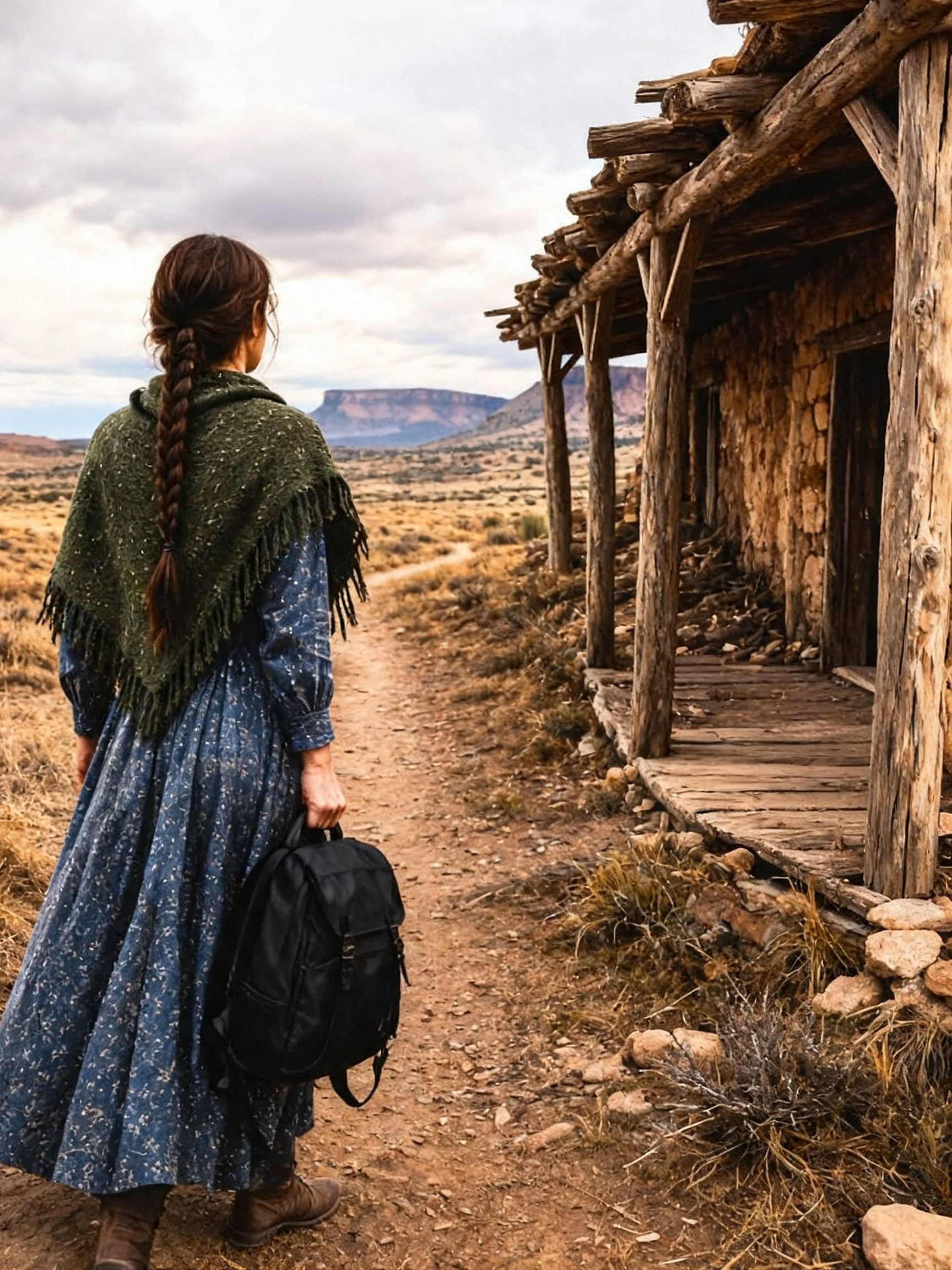
Homeless at 21, She Bought a $1 Adobe Trading Post—Then the Sealed Cellar Exposed Her Family’s Fortune
Three days after her grandmother’s funeral, Mara Ellison’s aunt put two black trash bags on the porch and told her to get out before dinner.
“You’ve eaten off this family long enough,” Denise said.
Then she locked the door of the house Mara had spent four years helping pay for.
Mara was twenty-one.
She had forty-seven dollars in her checking account.
Her car had a cracked windshield, one working speaker, and enough gasoline to reach Santa Fe if she didn’t turn on the air conditioner.
Behind Denise stood Mara’s uncle Clay, holding the folder that contained her grandmother Evelyn’s estate papers.
Beside him, Mara’s cousin Brandon leaned against the hallway wall with the lazy smile of a man watching someone else drown.
“You’re not in the will,” Clay said.
Mara looked at the folder.
Not at him.
At the folder.
It was blue.
Evelyn had always kept important documents in red expanding files.
Blue was for tax receipts.
Mara noticed that.
She said nothing.
Denise folded her arms.
Mara picked up the trash bags.
That was all.
No screaming.
No accusations.
No begging to see the will.
Her silence irritated Denise more than tears would have.
“Don’t start acting noble now,” Denise snapped. “Your grandmother spent years cleaning up your mother’s mistakes. Then she spent years cleaning up yours.”
Mara finally looked at her.
“My mother died.”
“I know exactly what she did.”
Mara’s hand tightened around the plastic bag.
Rachel Ellison had died when Mara was sixteen after a delivery truck crossed the center line outside Española.
There had been no inheritance.
No insurance fortune.
No hidden account.
Just a sixteen-year-old girl and Evelyn, a sixty-nine-year-old widow with arthritis in both hands and a mortgage that had somehow survived her husband.
Mara had started working evenings at a grocery store two weeks after the funeral.
Later she added weekend shifts at a diner.
At nineteen she quit community college when Evelyn’s hips worsened.
At twenty she learned how to change wound dressings.
How to argue with insurance companies.
How to cook low-sodium dinners Evelyn pretended to hate.
How to sleep lightly enough to hear an old woman fall in the next room.
She had paid the electric bill when Clay said business was slow.
She had paid the property tax shortage when Denise said they were “between investments.”
She had paid for Evelyn’s prescriptions when Brandon posted photographs from Cabo.
She had paid for the wheelchair ramp Clay promised to build and never did.
She had paid with four years nobody in that hallway intended to remember.
Mara lifted the trash bags.
“Where’s Grandma’s cedar box?”
For the first time, Denise’s expression changed.
Only slightly.
But Mara saw it.
“What cedar box?”
“The one beside her bed.”
“I threw away half the junk in that room.”
Mara nodded once.
Then she walked outside.
Clay followed her to the porch.
“You should be grateful we gave you three days.”
Mara opened the rear door of her Honda.
“Three days was generous.”
Clay narrowed his eyes.
She put the bags inside.
He had expected rage.
People like Clay understood rage.
Rage made you careless.
Rage made you threaten things you couldn’t prove.
Rage made you say exactly where your weak spots were.
What Clay did not understand was a twenty-one-year-old woman who closed the car door, looked back at the house, and quietly memorized the license plate of the silver sedan parked beside his truck.
The sedan belonged to Mercer Land Holdings.
Mara knew that because the company logo had been peeled off badly.
A pale rectangle remained on the door.
And beneath it she could still read the last four letters.
She got into the Honda.
As she pulled away, Brandon stepped onto the porch and called after her.
“Try a shelter!”
Mara kept driving.
Her grandmother had once told her something when Mara was twelve.
Never argue with a person who thinks humiliation means victory.
Let them celebrate.
Celebrating people stop watching the door.
Mara slept in her car that night behind a twenty-four-hour laundromat.
The next morning, she showered at a recreation center for four dollars.
Then she went to the diner where she still worked mornings and asked her manager, Ruth, whether she could take extra shifts.
Ruth took one look at the trash bags in Mara’s back seat.
“What happened?”
“Family meeting.”
“They voted unanimously.”
Ruth stared at her.
Mara tied on her apron.
“Table six needs coffee.”
That afternoon, while cleaning the corner booth, Mara overheard two contractors talking about a county stabilization auction.
Old buildings.
Unsafe structures.
Properties nobody wanted because demolition costs exceeded the land value.
One of the men laughed about an adobe trading post west of town.
“County can’t give the thing away.”
The other man said, “Opening bid’s a dollar.”
Mara stopped wiping the table.
“A dollar?”
Both men looked at her.
The older one grinned.
“You want it?”
“What’s wrong with it?”
“Everything.”
They laughed.
Mara did not.
The property was called Bell’s Crossing Trading Post.
It sat thirty-seven miles southwest of Santa Fe along an old highway that tourists stopped using after the interstate opened.
The original adobe structure dated to 1911.
Roof damage.
Electrical system condemned.
Water disconnected.
Back wall partially collapsed.
County records listed unpaid municipal assessments, but those had been absorbed into a rehabilitation program.
The buyer would assume repair obligations.
Minimum bid: one dollar.
Mara drove there after work.
The place looked like something the desert had started eating and then forgotten.
Brown adobe walls leaned beneath a washed-out turquoise sky.
Half the wooden porch had fallen.
The sign hung crooked on rusted hooks.
BELL’S CROSSING
TRADING POST
Someone had painted a black X across the front door.
Behind the building stretched six acres of dry grass, rabbitbrush, and red dirt.
No electricity.
No neighbors within sight.
No reason for anyone sane to want it.
Mara walked around the building.
A boarded window rattled in the wind.
She could almost hear Denise laughing.
Try a shelter.
Mara stepped onto the porch.
Under the dust, carved into one wooden post, were three letters.
She touched them.
Evelyn Eleanor Reed.
Her grandmother’s maiden name.
Mara stopped breathing for a second.
She had never heard Evelyn mention Bell’s Crossing.
Yet the carving was old.
Mara crouched.
Beneath the initials was a date.
Evelyn would have been sixteen.
Mara looked through a crack in the boarded window.
Dark shelves.
Broken glass.
An old iron stove.
And on the back wall, almost invisible beneath dust, a painted red lantern.
Mara’s pulse changed.
When Mara was little, Evelyn used to draw red lanterns in the margins of grocery lists.
On birthday cards.
On the backs of envelopes.
When Mara once asked what they meant, Evelyn had smiled.
“Means somebody remembered the way home.”
Mara stood very still on that abandoned porch.
Then she drove directly to the county administration building.
The auction was the next morning.
Fourteen properties were offered.
Most received bids from contractors.
Bell’s Crossing was number eleven.
The clerk cleared his throat.
“Opening bid, one dollar.”
Someone coughed.
A man near the back whispered, “You’d have to pay me.”
A few people laughed.
Mara raised her hand.
“One dollar.”
The clerk looked surprised.
“Any competing bid?”
Nobody moved.
“Going once.”
Mara could hear her heartbeat.
“Going twice.”
A man in a gray suit entered through the back doors.
Mara recognized him.
He had been driving the silver Mercer Land Holdings sedan at Denise’s house.
Their eyes met.
His face hardened.
“Sold for one dollar.”
The gavel struck.
The man in gray immediately took out his phone.
Mara watched him.
He watched her.
That was the moment she knew the trading post was not worthless.
She signed seventeen pages.
The county clerk looked at her driver’s license.
“Mara Ellison?”
“You related to Evelyn Ellison?”
Mara looked up.
“You knew her?”
The clerk hesitated.
Then he glanced at the line forming behind her.
“Everybody knew Evelyn.”
Mara waited.
He lowered his voice.
“She used to come in here every few years asking whether anyone had tried to change the parcel records on Bell’s Crossing.”
Mara’s fingers went cold.
“When was the last time?”
“Maybe eight months ago.”
“Did anyone?”
The clerk glanced toward the back doors.
The man in gray was gone.
“I shouldn’t be discussing another party’s filings.”
Mara held his eyes.
“I own the property now.”
He leaned closer.
“Then get title insurance.”
“Because people get interested in old dirt when somebody discovers it isn’t dirt they want.”
That evening Mara returned to Bell’s Crossing with a flashlight, work gloves, bottled water, and a tire iron.
She did not have electricity.
She did not have a bed.
She did not have enough money for a hotel.
But she owned a building.
For one dollar.
Technically.
She set an old camping pad on the trading post floor.
The desert turned cold after sunset.
Wind moved through cracks in the adobe.
Mara ate crackers for dinner and studied county documents under a battery lantern.
At 11:46 p.m., headlights appeared.
Mara switched off the lantern.
A truck stopped near the road.
Two men got out.
They did not knock.
One walked behind the building.
The other tried the side door.
Mara sat in darkness holding the tire iron.
The knob moved.
Then a flashlight beam passed through the window.
A man whispered, “It’s locked.”
The other answered from outside.
“She bought it today.”
“Mercer know?”
“He knows.”
Mara quietly activated the voice recorder on her phone.
“What does he want us checking?”
“The cellar.”
Mara’s grip tightened.
The first man said, “There’s no cellar.”
“That’s what he wants confirmed.”
Their lights moved away.
Ten minutes later, the truck disappeared.
Mara remained seated in darkness for another twenty minutes.
Then she turned on her flashlight.
She searched until almost three in the morning.
No trapdoor.
No obvious basement entrance.
At dawn she finally slept.
At seven, someone pounded on the front door.
Mara woke instantly.
A white county SUV sat outside.
A woman in her fifties stood on the porch wearing work boots and a faded denim jacket.
“Mara Ellison?”
“Louisa Grant. Historical structures office.”
Mara opened the door but remained in the doorway.
Louisa smiled faintly.
“You don’t trust me.”
“Should I?”
Louisa held up a folder.
“But your grandmother did.”
That got her inside.
Louisa walked through Bell’s Crossing slowly.
She touched the old counter.
The iron stove.
The cracked display cases.
When she saw the red lantern painted on the back wall, her expression softened.
“Still here.”
“You knew about that?”
“I know a lot about this place.”
“Did my grandmother own it?”
“Did my grandfather?”
“Did my mother?”
“Then why was Grandma checking the property records?”
Louisa studied Mara.
“Did Evelyn leave you anything?”
“My relatives say she didn’t.”
“I didn’t ask what your relatives said.”
Mara said nothing.
Louisa nodded.
“Good habit.”
Then she walked to the back storage room.
The floor was covered in broken shelving and plaster.
Louisa pointed to a section of wall.
“What do you see?”
“Look lower.”
Mara crouched.
Near the base was a narrow strip of pine.
She scraped away dirt.
Metal appeared beneath it.
Her heart started beating faster.
Together they pulled aside a rotted shelving unit.
Behind it was a wooden panel plastered with adobe mud.
Mara wedged the tire iron into the edge.
The seal cracked.
Dust spilled into the beam of her flashlight.
Behind the panel was a narrow staircase.
Descending.
Mara looked at Louisa.
“The cellar.”
Louisa did not smile.
“Part of it.”
The stairs ended at an iron door.
Not rusted.
Not ancient.
Someone had maintained it.
There were three locks.
Two padlocks.
One old brass cylinder.
Mara touched them.
“Do you have the keys?”
“Did Grandma?”
Louisa looked at her.
“She was supposed to.”
Mara thought of the missing cedar box.
By noon, Denise had posted a photograph online.
She, Clay, and Brandon were standing on Evelyn’s front porch with champagne glasses.
Behind them, tied to the porch rail, was a large white banner.
ELLISON RANCH DEVELOPMENT
COMING SOON
Mara stared at the photograph.
Ellison Ranch?
Evelyn’s property was eight acres.
Not a ranch.
Then she noticed the comments.
Congratulations on the big project!
So happy the land finally stayed in the family.
Twenty-two million? Drinks on you!
Mara stopped scrolling.
Twenty-two million.
She called Ruth at the diner.
“I may be late.”
“You need bail money?”
Mara drove to the county records office.
This time she requested every parcel filed under Evelyn Ellison, Evelyn Reed Ellison, Amos Ellison, Rachel Ellison, Clay Ellison, Denise Ellison, and Ellison Ranch Development LLC.
The clerk printed for nearly twenty minutes.
The first surprise was the acreage.
Evelyn had not owned eight acres.
She had controlled eight acres personally.
Another 1,742 acres sat in a separate holding structure known as the Red Lantern Land Trust.
Trustee listed:
Evelyn E. Ellison.
Successor trustee:
Mara kept reading.
The trust land curved around a proposed solar development and a planned luxury subdivision.
Mercer Land Holdings had filed preliminary purchase agreements on adjoining parcels.
One document estimated combined development rights at twenty-two to twenty-eight million dollars.
A later page contained a petition filed six weeks before Evelyn’s death.
Petitioner:
Clay Ellison.
He claimed Evelyn was mentally incompetent.
Mara stared at the date.
Six weeks before Evelyn died, Evelyn had still been beating Mara at gin rummy and correcting Jeopardy contestants.
Clay had attached a physician’s affidavit.
Dr. Paul Kessler.
Mara knew that name.
He was Denise’s brother-in-law.
The petition requested emergency authority over Evelyn’s trust interests.
Approved temporarily by Judge Warren Pike.
Mara sat back.
Louisa had been right.
This was not one villain.
This was a machine.
A developer.
A title company.
All moving in the same direction.
Mara kept reading.
Three days after Evelyn died, Clay executed a transfer agreement giving Mercer Land Holdings an option to purchase trust acreage for $4.6 million.
Far below the estimated development value.
The option carried a confidential “consulting payment” of $900,000 to Ellison Ranch Development LLC.
Mara photographed everything.
Then she found the page that made her smile.
The trust certificate included a paragraph nobody had completed.
Successor trustee shall be identified according to Instrument 14-B, maintained separately with the custodian property known as Bell’s Crossing Trading Post.
Mara read it twice.
Then a third time.
Bell’s Crossing.
That was why the man in gray had attended the auction.
They had believed the trading post was worthless.
But they still wanted the cellar checked.
Mara returned to the property before sunset.
Louisa was waiting.
So was another vehicle.
An old Ford pickup.
The driver was a seventy-four-year-old locksmith named Harold Finch.
He looked at the iron door.
Mara blinked.
“I opened bank vaults easier than that.”
He pointed at the brass lock.
“Custom cylinder. Mid-century. Maybe older components. Whoever built it wanted the door to look simpler than it was.”
“Can you open it?”
Harold looked offended.
“I said it was hard. I didn’t say I was dead.”
It took three hours.
At p.m., the last lock released.
Harold stepped back.
Mara put her hand on the iron handle.
Louisa stopped her.
“One thing.”
Mara looked over.
“Evelyn made me promise something.”
“If you ever opened this door, I was supposed to tell you not to trust the first thing you found.”
Harold muttered, “Comforting.”
Mara pulled.
The iron door opened with a long metallic groan.
Cold air moved from the darkness.
Mara raised her flashlight.
The cellar was larger than the building above.
Stone walls.
Heavy timber supports.
Wooden crates.
Metal filing cabinets.
A long table.
And at the far end, beneath an old red lantern hanging from a beam, sat a cedar box.
Mara did not move.
The same size as the box beside Evelyn’s bed.
Louisa whispered, “She knew.”
“Knew what?”
“That they would search the house.”
Mara crossed the room.
Her hands remained steady until she touched the cedar lid.
Then one finger trembled.
Inside was an envelope.
Her grandmother’s handwriting.
She opened it.
The first line read:
If Denise says I left you nothing, let her keep believing it.
Mara closed her eyes.
Then she kept reading.
Evelyn had written the letter eleven months earlier.
She described the trust.
She described Clay’s pressure.
She described Mercer Land Holdings.
She described Judge Pike.
Not emotionally.
Not dramatically.
Like a woman preparing a grocery list for war.
Account numbers.
Meeting locations.
At the bottom, Evelyn had written:
Mara, this land is not your fortune.
If anyone tells you that, they have misunderstood everything.
Your grandfather Amos and I were never meant to own most of it.
We were meant to hold it until the truth could survive the people trying to bury it.
Under the letter lay an old ledger.
Mara opened it.
Names filled the pages.
Dozens of them.
Some entries dated to the 1940s.
Water shares.
Then red marks beside certain names.
TRANSFERRED WITHOUT CONSENT.
Mara looked at Louisa.
“What is this?”
Louisa pulled out a chair.
“In the 1960s and ’70s, this valley changed fast. Developers bought land. Banks foreclosed. Records disappeared. People signed documents they didn’t understand. Sometimes signatures appeared from people who were already dead.”
Mara looked at the shelves.
“This happened here?”
“A lot happened here.”
She pointed to the ledger.
“Bell’s Crossing was a trading post, but it was also an unofficial record office. Families paid bills here. Witnessed contracts here. Left copies of deeds here because the county courthouse was forty miles away.”
“Why didn’t anyone use them?”
“Some tried.”
Louisa’s face hardened.
“Records burned.”
Mara remembered Evelyn’s red lantern drawings.
Somebody remembered the way home.
Louisa continued.
“Your grandfather Amos discovered that several parcels accumulated by a company called Mesa Aurelia Development had questionable chains of title. He started buying pieces whenever he could.”
“To give them back?”
“To keep them from disappearing until somebody could prove who they belonged to.”
Mara looked around.
The cellar suddenly felt enormous.
“How much land?”
“At least seventeen hundred acres.”
Mara stared at her.
“Twenty-two million dollars’ worth?”
Louisa shook her head.
“That’s what Mercer thinks it’s worth.”
“What is it actually worth?”
“To the descendants of the people listed in that ledger?”
She paused.
Harold, who had been examining a cabinet, called from across the room.
“You two need to see this.”
Inside were rolled maps.
Original survey sheets.
Water-right certificates.
And dozens of sealed envelopes.
Each had a family name.
Mara found another envelope addressed to her.
Inside was a smaller note.
The warning was only two sentences.
Clay will believe the trust passes through blood.
Mercer will believe it passes through signatures.
Both are wrong.
Mara turned the page over.
“That’s it?”
Louisa nodded toward the cedar box.
“Evelyn told you not to trust the first thing.”
Mara searched again.
Under the lining was a brass key.
A small one.
The next morning, Clay called.
Mara let it ring twice.
Then answered.
His voice was softer than it had been on the porch.
That made it more dangerous.
“Hey, kiddo.”
She almost smiled.
“What do you need?”
“We heard you picked up that old trading post.”
“News travels.”
“It’s condemned.”
“Parts of it.”
“I’m worried about you.”
“That place could collapse.”
“Then I’ll stand near a doorway.”
Clay tried again.
“Listen. Denise feels terrible about how things went.”
Mara looked at the open cellar.
“No, she doesn’t.”
Another pause.
“We’re family.”
“There it is.”
“The sentence people use right before asking for something.”
Clay exhaled.
“Mara, I’m trying to help. Mercer Land Holdings might be interested in buying that property from you.”
“For how much?”
“I could probably get you ten thousand.”
Mara looked at Louisa.
Louisa covered her mouth to hide a laugh.
“Ten thousand?”
“Maybe fifteen.”
“I paid one.”
“Exactly. Hell of a return.”
“What do they want with it?”
“Nothing important. Access, probably.”
Clay went quiet.
Mara waited.
That was her advantage.
Most people felt compelled to fill silence.
Clay was no different.
“They’re assembling parcels.”
“Bell’s Crossing isn’t adjacent to their project.”
“Close enough.”
“How close?”
“Mara, why are you making this difficult?”
She looked at the cedar box.
Then she said, “Send me an offer.”
His relief was immediate.
“I knew you were smart.”
“Grandma always said you were.”
Mara looked at the old letter.
She ended the call.
Mercer’s written offer arrived four hours later.
Then $40,000.
Then, after Mara ignored both, $125,000.
The third offer included a confidentiality agreement.
That evening Denise called.
“You’re embarrassing yourself.”
Mara was inside the cellar cataloging documents.
“You don’t understand business.”
“You’re probably right.”
“Take the money.”
“Which money?”
“The offer.”
“Because this little performance is over.”
Mara looked at the original Red Lantern trust map spread across the table.
“What performance?”
“Poor Mara. Poor homeless Mara. Everybody betrayed Mara.”
Mara said nothing.
Denise sharpened her voice.
“You think being quiet makes you mysterious?”
“You think Evelyn loved you more than us?”
“You think sleeping in that filthy ruin somehow makes you entitled to interfere with property that belongs to this family?”
Mara stopped writing.
“Which property?”
Denise realized her mistake.
“You said the trading post was a filthy ruin.”
“I mean the estate.”
“What part?”
“The house?”
“The trust acreage?”
More silence.
Mara leaned back.
“You know about the trust.”
“You need to listen to Clay.”
“Does Brandon know?”
“Leave him out of this.”
“Does he know you filed to have Grandma declared incompetent?”
Denise inhaled sharply.
Mara continued.
“Does he know Dr. Kessler signed the affidavit?”
“You have no idea what you’re talking about.”
“Probably not.”
“You are twenty-one years old.”
“Clay has spent thirty years doing deals in this county.”
“He knows judges. Bankers. Attorneys. People who matter.”
Mara looked around the cellar.
“So did Grandma.”
Denise hung up.
The next afternoon, a county code officer arrived with an emergency closure order.
Mara read it.
He refused eye contact.
“Structural hazard.”
“The county sold it to me four days ago.”
“Conditions changed.”
“In four days?”
“I just enforce.”
Mara looked at the signature.
Deputy Director Warren Mercer.
Same surname.
The officer stiffened.
“Never mind.”
Mara photographed the order.
Then she called Louisa.
Louisa called a preservation attorney named Sarah Kincaid.
Sarah arrived from Albuquerque at nine the next morning carrying coffee, a laptop, and the expression of a woman who enjoyed finding bad paperwork.
She read the closure order.
Then the auction documents.
Then the trust certificate.
Then Evelyn’s letter.
At noon she looked at Mara.
“You have two problems.”
“Only two?”
“Big ones.”
“What’s the first?”
“Your family is trying to steal seventeen hundred acres.”
“And the second?”
“They may already have stolen it.”
Mara felt her stomach tighten.
Sarah pulled up state records.
“Clay executed an option. Mercer recorded memoranda against six parcels. Their lender has a preliminary security interest.”
“Can they do that?”
“Not legally if he lacked authority.”
“But paperwork can move before truth catches it.”
“Can we stop them?”
Sarah pointed at the brass key.
“First we need to know what that opens.”
They searched the cellar for five hours.
Nothing fit.
Not cabinets.
Not desk drawers.
Not an iron chest.
At sunset, Harold arrived carrying tacos.
He listened to the problem.
Then looked at the key.
“Everybody assumes keys open locks.”
Mara stared at him.
“What else would they open?”
“Machines.”
Behind the main counter upstairs sat an antique brass cash register.
Mara had ignored it because the drawer was already open.
Harold turned it around.
There was a small keyhole on the rear panel.
The brass key fit.
Inside the register’s back compartment was a microcassette recorder.
And one tape.
EVELYN — IF NEEDED.
Mara’s throat tightened.
Sarah found batteries.
They pressed play.
Then Evelyn’s voice filled the ruined trading post.
“If you’re hearing this, Clay did exactly what I expected.”
Mara sat down.
Nobody spoke.
Evelyn continued.
“First, Mara, don’t waste your anger on your aunt. Denise has always confused possession with importance. She will learn.”
Louisa smiled despite herself.
“Second, the Red Lantern Trust does not pass by inheritance.”
Mara looked at Sarah.
“It passes by custodianship.”
Sarah sat straighter.
“The lawful owner of Bell’s Crossing is custodian.”
Evelyn coughed on the recording.
“Whoever purchased that building through a public sale, free of coercion, becomes temporary custodian until Instrument 14-B is produced.”
Mara whispered, “That’s me.”
Sarah nodded slowly.
On the tape, Evelyn continued.
“Clay knows about the trust.
He does not know this.”
“Mara, if you are the one hearing my voice, then I’m sorry you had to learn how little blood can mean to people who smell money.”
Mara closed her eyes.
“But do not mistake this for revenge.”
The tape clicked softly.
“Those acres were assembled because families lost them through fraud, intimidation, forged deeds, predatory contracts, and records that disappeared at useful times.
Amos spent thirty-eight years rebuilding the chain.
I spent twenty-six finishing it.
If the trust succeeds, some land will be returned.
Some cannot be returned because homes, roads, and businesses now stand on it.
For those parcels, compensation must be paid.
The trust exists to force that accounting.”
Sarah whispered, “My God.”
Evelyn’s voice hardened.
“Mercer Land Holdings believes the trust is a development asset.
Clay believes it is family wealth.
They are both wrong.
It is evidence.”
The tape stopped.
Nobody moved.
Then it resumed.
“One more thing.
Do not file the ledger first.
File the children.”
Mara stared at the recorder.
“What children?”
Louisa’s face had gone pale.
Mara saw it instantly.
“What children?”
Louisa sat down.
“In 1974 there was a group of families living along Arroyo Seco.”
Mara waited.
“A land company wanted the water corridor.”
“Several adults supposedly signed relocation agreements.”
“Supposedly?”
“The original notarized documents disappeared after a courthouse flood.”
Mara’s skin prickled.
“How many families?”
“Nineteen.”
“What did Grandma mean by children?”
Louisa looked toward the cellar door.
“The replacement deeds included waivers signed on behalf of minors.”
Sarah said, “That isn’t automatically unusual.”
Louisa shook her head.
“These were.”
“Because three of those children were listed as witnesses.”
Mara frowned.
Louisa answered quietly.
“Four. Six. And seven.”
Two days later, Mara was served with a lawsuit.
Clay Ellison, as purported successor trustee of the Red Lantern Land Trust, accused Mara of stealing private records, trespassing into a restricted archive, interfering with contractual relations, and exploiting an elderly woman’s diminished capacity.
Denise posted online that the family was “heartbroken.”
Brandon told friends Mara had manipulated Evelyn during her final months.
Mercer Land Holdings issued a statement saying a “disgruntled relative” was attempting to disrupt a major project that would create hundreds of jobs.
Then the bank froze disputed trust accounts.
The town chose sides.
At the diner, strangers whispered.
One customer left Mara a five-dollar tip and a note.
DON’T LET THEM BULLY YOU.
Another wrote LIAR on the receipt.
Mara kept working.
She still needed rent money.
Except she had no rent.
She slept upstairs in a reinforced room at Bell’s Crossing after Sarah persuaded the court to suspend the closure order.
She washed dishes in a portable basin.
Used a campground shower ten miles away.
Charged her phone at the diner.
And every night she cataloged evidence.
She did not post videos.
She did not attack Denise online.
She did not confront Clay in public.
That frightened them.
A week later, Brandon came to Bell’s Crossing.
He arrived in a new black pickup.
Mara was repairing a window frame.
He stood outside.
“You look terrible.”
“You really sleeping here?”
He laughed.
“You know Mom says you’ve lost it.”
Mara kept scraping old paint.
“What do you say?”
“I say you’re making a bad bet.”
“Dad’s going to win.”
“You keep saying that.”
“Because maybe he will.”
Brandon watched her.
For years he had been the golden child.
Private school.
Business degree.
A job at Clay’s company.
A down payment on his house.
Evelyn had loved him too.
But Evelyn had once asked him to spend a weekend replacing fence posts.
Brandon had hired two teenagers and charged Evelyn triple what he paid them.
After that, Evelyn never asked him for help again.
He stepped closer.
“You can still fix this.”
“Sell the building.”
“For how much?”
“Mercer will give you half a million.”
Mara finally stopped working.
“Half a million?”
“Cash equivalent. Clean exit.”
“That’s a lot for a ruin.”
His smile disappeared.
“You found something.”
Mara looked at him.
“Then why won’t you sell?”
“Maybe I like the view.”
Brandon’s jaw tightened.
“You always thought you were better than us.”
Mara went back to scraping paint.
“No. That’s what bothers you.”
“I never needed to.”
He walked away furious.
Mara waited until his truck vanished.
Then she checked the motion-activated camera she had installed behind the porch beam.
Brandon had not come alone.
While he kept Mara talking, another man had walked behind the trading post.
Straight to the cellar ventilation opening.
Mara recognized him.
The code officer.
She sent the video to Sarah.
Mini-payoff number one came the next morning.
Sarah filed for sanctions.
The judge assigned to the estate dispute was Warren Pike.
The same judge who had approved Clay’s emergency incompetency petition.
Sarah immediately moved for recusal.
Pike refused.
Then a local newspaper published the connection.
By afternoon the state judicial ethics office announced a review.
Pike recused himself at p.m.
A visiting judge from Las Cruces took the case.
Clay’s first piece of protection disappeared.
He still acted confident.
At the preliminary hearing, he entered the courthouse wearing a navy suit and laughing with two Mercer attorneys.
Denise wore cream.
Brandon wore sunglasses inside until a bailiff told him to remove them.
Mara arrived in a thrift-store blazer.
Sarah carried three boxes.
Clay’s attorney argued first.
“Mara Ellison is a young woman under financial stress who purchased an unsafe property for one dollar and then manufactured a theory that a century-old private archive somehow supersedes a properly administered estate.”
Mara did not react.
The attorney continued.
“She was homeless.
Emotionally vulnerable.
Recently bereaved.”
Sarah wrote something on her legal pad.
Mara glanced down.
He thinks homeless means stupid.
Mara almost smiled.
The attorney produced Evelyn’s medical records.
Medication.
Memory complaints.
Confusion after anesthesia.
Then Dr. Kessler testified that Evelyn had “progressive cognitive decline.”
Sarah stood for cross-examination.
“Doctor, how many times did you personally examine Evelyn Ellison in the year before her death?”
Kessler shifted.
“Number, please.”
“I’d need the chart.”
Sarah held it up.
“I have the chart.”
“Total time?”
“I don’t track—”
“Your billing records do.”
She handed him a page.
“Twenty-one minutes.”
Kessler looked irritated.
Sarah walked closer.
“Did you diagnose dementia?”
“I expressed concern.”
“Did you diagnose dementia?”
“Did a neurologist?”
“Not to my knowledge.”
“Did you disclose when signing the incompetency affidavit that Denise Ellison is your sister-in-law?”
Clay’s attorney objected.
The courtroom changed.
Kessler swallowed.
Mini-payoff number two.
Then Sarah played Evelyn’s recording.
Not all of it.
Only the portion establishing that Evelyn knew Clay was seeking control.
Clay stopped smiling.
Denise stared straight ahead.
When they left court, reporters crowded the steps.
One shouted at Mara, “Do you believe your family tried to steal your inheritance?”
Mara stopped.
Cameras lifted.
She said, “It isn’t my inheritance.”
Then she walked away.
That sentence became the headline.
It also changed public opinion.
Because greed had been Clay’s strongest argument.
If Mara was fighting for money, she was another relative in an estate war.
If Mara was fighting for something else, people wanted to know what.
Three nights later someone set fire to Bell’s Crossing.
Mara woke to glass breaking.
Then smoke.
She rolled off the cot.
Flames crawled along the rear storage wall.
She grabbed the fire extinguisher near the door and sprayed.
The fire had been started outside.
Accelerant pushed it fast.
Mara pulled the alarm cord connected to the battery siren.
Then she ran to the cellar.
Not to save money.
Not to save jewelry.
To save boxes.
The original family records.
She carried one crate up.
Then another.
Smoke thickened.
On the third trip, she heard a truck engine.
Headlights flashed through the front window.
Someone was watching.
Mara memorized the shape.
Lifted suspension.
Missing left taillight.
She took a photograph through the smoke.
Then firefighters arrived.
The building survived.
The rear room was blackened.
The painted red lantern remained.
The next morning Sarah looked at the photograph.
“Do you know that truck?”
Louisa did.
“It belongs to Warren Mercer’s nephew.”
The sheriff questioned him.
He denied everything.
The case remained open.
But the attempted fire created one new advantage.
State investigators became interested.
Not only in the arson.
In the archive.
A forensic document team spent four days in the cellar.
They examined ink.
Notary seals.
Watermarks.
Signatures.
The first results came back two weeks later.
At least thirty-one records in Evelyn’s archive were authentic originals.
Nine directly contradicted current county title records.
Four suggested forged signatures.
And one contained a fingerprint impression preserved in sealing wax.
The name beside it was Mateo Lucero.
Mateo had been thirty-two when he allegedly sold 146 acres to Mesa Aurelia Development for $900.
According to the county deed, he signed on March 11, 1972.
According to federal military records, Mateo Lucero died in Vietnam on October 19, 1971.
Seven months earlier.
Mara read the report twice.
Then she sat alone on Bell’s Crossing’s repaired porch.
The desert stretched copper beneath the sunset.
For the first time since Denise threw her out, Mara let herself feel something close to grief.
Not for the house.
Not for the money.
For the sheer amount of effort required to make a lie survive fifty years.
Someone had forged Mateo’s name.
Someone had notarized it.
Someone had filed it.
Someone had accepted it.
Someone had borrowed against the land.
Someone had sold it again.
A lie did not survive that long because one bad person told it.
It survived because a system found it useful.
Mara understood then why Evelyn had never called the archive treasure.
Treasure belonged to whoever found it.
Evidence belonged to whoever had been harmed.
The descendants began appearing.
First came Rosa Lucero, Mateo’s daughter.
She was sixty-three.
She brought a photograph of her father holding her as a baby.
“My mother said he would never have sold.”
Mara showed her the deed.
Rosa touched the forged signature.
“He didn’t write his L like that.”
“How do you know?”
Rosa took an envelope from her purse.
A letter Mateo had mailed from Vietnam.
Different L.
The next family came from Albuquerque.
Then Tucson.
Then Denver.
A retired teacher brought tax receipts her grandfather had saved in a Bible.
A mechanic brought a 1959 survey map.
A ninety-year-old woman named Teresa Baca walked into Bell’s Crossing with a cane and pointed at the old counter.
“My father signed papers right there.”
She described the man who witnessed them.
She described the lamp.
She described where the ink bottle sat.
Then she looked at Mara.
“Your grandmother was a stubborn woman.”
Mara smiled.
“She said somebody young would finish it.”
Mara’s smile faded.
“Twenty years ago.”
Clay’s side started cracking after that.
The bank suspended financing.
Mercer delayed construction.
Two title insurers refused coverage.
Then Brandon made a mistake.
He sent Mara a message at a.m.
YOU HAVE NO IDEA WHAT GRANDMA DID EITHER.
Mara stared at it.
She replied:
What did she do?
Ten minutes.
ASK WHY SHE BOUGHT THE SOUTH PARCEL.
Mara showed Sarah.
The south parcel was 312 acres of scrubland everyone had assumed belonged inside the trust for the same reason as the rest.
But its purchase date was different.
Seller: Raymond Vale.
Purchase price: $12,000.
Louisa did not recognize the name.
The archive had almost nothing about it.
No family envelope.
No dispute file.
No obvious forged deed.
Mara drove out there.
The parcel sat beyond a ridge of volcanic rock.
No structures.
Just desert.
Then Mara noticed concrete fragments.
Foundations.
Sarah hired an archaeological consultant.
Two days later they found buried utility pipe.
Then burned glass.
Then a metal sign under six inches of dirt.
SUNCREST HOME FOR CHILDREN
Mara felt the air leave her lungs.
The children.
Evelyn’s recording.
File the children.
The Suncrest Home had operated from 1952 to 1976.
Official records said it closed after a kitchen fire.
County archives contained almost nothing else.
No surviving resident list.
No property-transfer file.
No photographs after 1968.
Then Louisa found a newspaper clipping from 1975.
SUNCREST RELOCATION APPROVED
It mentioned thirty-two children.
Many were listed as wards of the county.
Several carried surnames from the same families in the Bell’s Crossing ledger.
Mara stared at the names.
Sarah understood first.
“They used the children.”
“What do you mean?”
“If adults died, disappeared, or lost custody, minors could have inherited fractional interests.”
Louisa covered her mouth.
Sarah continued.
“Someone trying to clean title would need those interests signed away.”
“But children can’t sign them away.”
The forged relocation waivers suddenly made sense.
The children were not witnesses.
They were owners.
Tiny fractional owners.
Enough to complicate title.
Enough to stop a clean sale.
Unless somebody manufactured consent.
The story exploded.
State investigators subpoenaed historic county records.
A federal land-fraud unit requested access to Bell’s Crossing.
Mercer’s stockholders demanded explanations.
The project stopped.
Clay went on television.
He called the claims “a fantasy constructed from incomplete history.”
Denise stood beside him.
Brandon did not.
Three days later Brandon appeared at Mara’s door again.
This time without the black truck.
Without sunglasses.
Without arrogance.
He looked exhausted.
Mara did not invite him inside.
He stared past her toward the restored counter.
“You need to stop.”
“They’re going to destroy Dad.”
“Then he should hire a good lawyer.”
“You think this is funny?”
“Mom hasn’t slept.”
Mara waited.
Brandon ran a hand through his hair.
“They didn’t start this.”
“I don’t know.”
“You texted me about the south parcel.”
“I was drunk.”
“You knew.”
“I heard things.”
“From who?”
Mara’s expression changed.
“A year ago.”
“What did she say?”
Brandon looked away.
“She offered me a choice.”
Mara waited.
“She said Dad was going to try to take the trust.”
“What choice?”
“She said I could help her protect it.”
“I told Dad.”
The words hung between them.
Mara felt something in her chest go very still.
“He’s my father.”
“She was your grandmother.”
“I thought she was paranoid.”
Mara’s voice remained calm.
“What did Clay do after you told him?”
Brandon stared at the floor.
“He met Mercer.”
“What else?”
“I don’t know.”
“What else?”
“He asked me to take something from her room.”
The cedar box.
Mara said nothing.
Brandon swallowed.
“I didn’t know what was in it.”
“You stole it.”
“I brought it to Dad.”
“It was empty.”
Mara almost laughed.
She had planted the empty box where Clay could steal it.
Let them believe they had taken the secret.
Let them stop searching.
“Dad lost his mind,” Brandon said. “He thought Grandma had moved whatever was inside.”
“I know that now.”
“Why are you here?”
Brandon looked up.
For the first time in Mara’s life, her cousin looked afraid.
“Because Dad called somebody after the box was empty.”
“I never heard a name.”
“What did he say?”
Brandon took a breath.
“He said, ‘She moved the originals. Burn the old place if you have to.’”
Mara’s face changed.
“The old place?”
“I thought he meant Grandma’s storage unit.”
“Ten months ago.”
Before Evelyn died.
Brandon looked toward the road.
“Mara, the fire last week?”
“That wasn’t the first one.”
Cold moved through her.
“What first one?”
He answered quietly.
“The Suncrest fire.”
Mara stared at him.
“That happened in 1976.”
“How would Clay know anything about it?”
“He didn’t say he did.”
“Then what are you telling me?”
Brandon stepped closer.
“The person he called said, ‘We should have finished this in ’76.’”
Mara did not breathe.
Brandon left.
Sarah immediately turned his statement over to investigators.
Clay denied it.
Mercer denied knowing anything about Suncrest.
Judge Pike hired a criminal defense lawyer.
Dr. Kessler stopped answering reporters.
Then investigators found the first impossible detail.
The 1976 Suncrest fire report listed the cause as accidental.
Signed by Deputy Fire Marshal Thomas Mercer.
Warren Mercer’s father.
The same report stated all records inside the administration wing had been destroyed.
But photographs taken the next morning showed the administration wing still standing.
The records had not burned.
They had disappeared.
Three weeks after Mara bought Bell’s Crossing for one dollar, the visiting judge convened an emergency hearing.
The courtroom was full.
Families sat behind Mara.
Rosa Lucero held her father’s letter.
Teresa Baca sat in the front row.
Reporters lined the back wall.
Clay entered through a side door.
He looked older.
Denise did not come.
Mercer’s attorneys occupied an entire table.
Sarah stood.
“Your Honor, this case began as an estate dispute. It is no longer one.”
She introduced the forensic report.
The forged Mateo Lucero deed.
The minors’ waivers.
The Suncrest records.
The trust recording.
Evelyn’s tape.
Then she called Mara.
Clay finally looked at her.
Mara took the oath.
Sarah approached.
“Ms. Ellison, do you claim personal ownership of the Red Lantern Trust acreage?”
“Do you claim the twenty-two-million-dollar development value?”
“Do you intend to sell the trust to Mercer Land Holdings?”
“Then what do you want?”
Mara looked at the families behind her.
“The records corrected.”
Sarah waited.
“And the land?”
“Where lawful restoration is possible, returned.”
“And where it is not?”
“Compensation determined by the court.”
“And for yourself?”
Mara looked at Clay.
“My dollar.”
A ripple moved through the courtroom.
Clay’s attorney objected.
The judge overruled him.
Sarah placed the original custodianship document on the screen.
“Do you recognize Bell’s Crossing?”
“How did you acquire it?”
“Public auction.”
“One dollar.”
“Were you coerced?”
“Did any family member finance the purchase?”
“Did Mercer?”
“Then under Instrument 14-B, who is temporary custodian of the Red Lantern Trust?”
Mara answered.
Clay’s attorney stood.
“Your Honor, we object to the entire theory. Instrument 14-B has not been authenticated.”
Sarah smiled.
“We anticipated that.”
She turned toward the courtroom doors.
A state archivist entered carrying a sealed storage case.
Inside was a duplicate copy filed in 1991 with a private trust repository in Denver.
Evelyn had not trusted one archive.
She had created two.
Mini-payoff number three.
The judge froze every remaining trust transfer.
Suspended Clay’s authority.
Ordered Mercer to cease title activity.
Appointed an independent fiduciary auditor.
Then came the line Clay had not expected.
The court referred evidence of possible forgery, fraud, destruction of records, attempted coercion, and conspiracy to state and federal prosecutors.
Clay stopped looking at Mara.
Outside, microphones surrounded her.
One reporter shouted, “Mara, you just stopped a twenty-two-million-dollar development. How does that feel?”
Mara thought about the black trash bags.
The laundromat parking lot.
The one-dollar bid.
Mateo Lucero’s forged signature.
The children at Suncrest.
“It feels unfinished.”
That night she returned to Bell’s Crossing alone.
The building smelled like plaster and fresh pine.
Volunteers had helped repair the rear wall.
Someone had left a casserole.
Someone else had left a new sleeping bag.
On the counter sat a bouquet from Rosa Lucero.
Mara carried the flowers downstairs.
For the first time, the cellar no longer felt like a tomb.
It felt like a room waiting to testify.
She turned on the red lantern.
Then her phone rang.
Unknown number.
“Mara Ellison?”
“This is Special Agent Daniel Cross.”
She sat down.
“We’ve been examining the Suncrest documents.”
“I need to ask you something.”
“Did your grandmother ever mention a second archive?”
Mara looked around the cellar.
“Are you sure?”
He was silent.
Then he said, “We found an inventory sheet from 1976.”
Mara straightened.
“What inventory?”
“Property removed from Suncrest before the fire.”
Her fingers tightened around the phone.
“What was removed?”
“County files. Adoption records. Guardianship transfers. Deeds.”
Mara stood.
“Where did they go?”
“That’s the problem.”
“What problem?”
“The inventory says they were delivered to Bell’s Crossing.”
Mara slowly looked around the cellar.
“We have everything here.”
“No,” Agent Cross said.
“You don’t.”
He sent her a photograph.
Mara opened it.
A faded typewritten page filled the screen.
SUNCREST TRANSFER INVENTORY.
Twenty-eight boxes.
Mara counted the archive shelves.
Her pulse began to hammer.
At the bottom of the inventory was a handwritten line.
SECOND STORAGE ROOM — BELOW EAST FOUNDATION.
Mara turned toward the eastern wall.
Solid stone.
Then she remembered Louisa’s first words.
The cellar.
Part of it.
Mara grabbed the flashlight.
She ran her hand along the wall.
Then, behind a shelving unit holding old tax ledgers, her fingers found something cold.
She pulled.
Nothing happened.
She pulled harder.
A section of shelving shifted half an inch.
Behind it was another iron door.
Smaller than the first.
Mara raised the phone.
“Agent Cross.”
“There’s another door.”
His voice changed instantly.
“Do not open it.”
Mara stared at the lock.
“We found one more document.”
“What document?”
“A maintenance invoice.”
“From when?”
“Eight months ago.”
Mara stopped breathing.
Eight months ago.
While Evelyn was still alive.
“Who paid it?”
Agent Cross hesitated.
“Mara, step outside.”
“Who paid it?”
He answered.
“Ellison Ranch Development.”
Mara backed away from the door.
Then she noticed something beneath it.
A thin line of disturbed dust.
Someone had opened the second room recently.
Very recently.
Her phone vibrated.
A new message.
Only a photograph.
It showed Mara sleeping upstairs in Bell’s Crossing the night before.
Taken through the window.
Beneath the photograph were nine words.
YOUR GRANDMOTHER DIDN’T HIDE THE RECORDS FROM YOUR FAMILY.
SHE HID YOU FROM THEM.
Mara stared at the message.
Another arrived.
A scanned birth certificate.
Except the father’s name was not blank the way it had been on every copy Mara had ever seen.
A name had been typed there.
THOMAS VALE.
Mara’s eyes moved to the south-parcel deed.
Raymond Vale.
The south parcel.
Her grandmother’s warning.
File the children.
Then her phone rang again.
Mara let it ring.
Three times.
She answered.
Neither of them spoke.
Finally Clay whispered, “Don’t open that door.”
Mara looked at the iron ring.
At the fresh dust.
At the message on her screen.
At the name Thomas Vale.
Then she asked the quietest question she had asked since the day her family threw her onto the porch.
“Uncle Clay… if there’s nothing behind it that belongs to me, why are you so afraid I’ll see who my father was?”
✓ Lynn R. Adams
Homeless at 21, She Bought a $1 Adobe Trading Post—Then the Sealed Cellar Exposed Her Family’s Fortune Three days after her grandmother’s funeral, Mara Ellison’s aunt put two black trash bags on the …