Homeless at 18, She Bought a $10 Telegraph Station—Then Found the Deed Her Family Had Spent Decades Hiding**
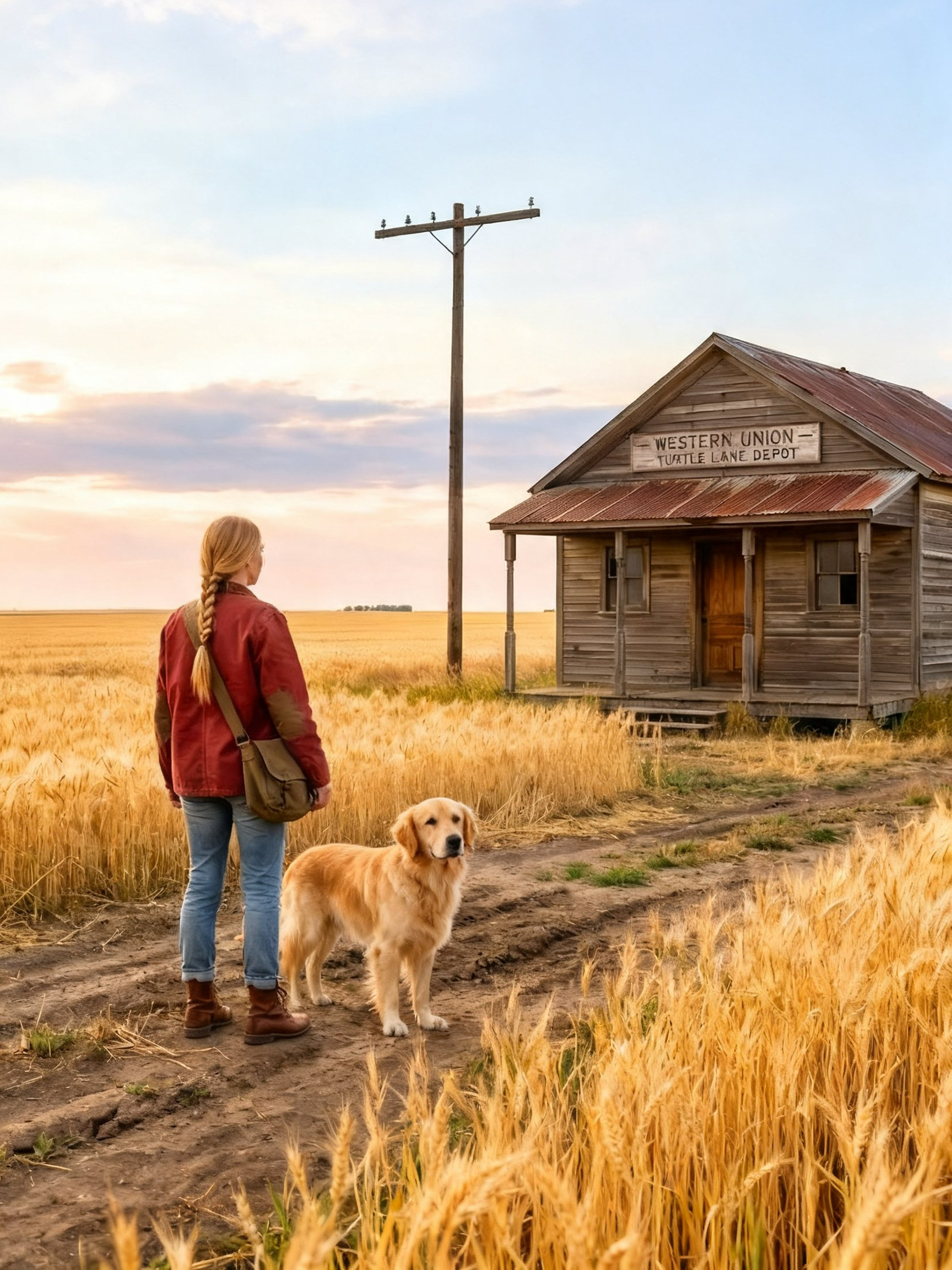
Homeless at 18, She Bought a $10 Telegraph Station—Then Found the Deed Her Family Had Spent Decades Hiding**
Three days after my grandmother was buried, my aunt put my clothes in black trash bags and set them on the porch.
Then she locked the door.
“You’re eighteen now,” Aunt Denise said through the screen. “Nobody owes you a free life.”
Behind her, my uncle laughed.
My cousin Tyler stood in the hallway wearing my grandfather’s old watch.
That was the part I remembered most.
Not the rain.
Not the trash bags sagging against my shoes.
Not even the fact that I had twenty-three dollars in my wallet and nowhere to sleep.
Grandma Ruth had promised that watch to me when I was fourteen.
She had said, “Leah, this belonged to the only man who ever stood beside me when standing beside me cost something.”
Now Tyler was wearing it while eating a bowl of cereal.
He lifted his wrist when he saw me looking.
“Looks better on somebody with a future.”
I didn’t answer.
That bothered them more than crying would have.
Aunt Denise opened the screen door two inches.
“Did you hear me?”
“You can’t stay here.”
“I heard you.”
“You need to leave the property.”
I picked up the two trash bags.
Uncle Raymond came into view behind her, broad and soft around the middle, with the pink face of a man who had spent most of his life confusing volume with authority.
“You should be grateful we let you stay through the funeral.”
That almost made me smile.
I had lived in that house for nine years.
I had cooked when Aunt Denise had her gallbladder surgery.
I had cleaned out Uncle Raymond’s pickup after his DUI because he was too ashamed to let his coworkers see it.
I had tutored Tyler through algebra.
I had given Grandma Ruth her insulin shots when her fingers became too stiff to press the pen.
I had slept in a chair beside her bed during the last winter because the oxygen machine alarmed every few hours.
I had quit my grocery-store night shift when Grandma started falling.
I had deferred community college for a year because somebody had to stay.
And now I was being told I should be grateful for three funeral days in a house where I had changed the sheets.
So I said the one thing they weren’t expecting.
Aunt Denise blinked.
Uncle Raymond’s mouth stayed half open.
Tyler stopped chewing.
I carried my bags down the porch steps.
Rain ran cold through my sneakers.
At the curb, I turned back.
Not because I wanted to beg.
Because Grandma Ruth had told me something the night before she died.
She had been weak then.
Her voice barely reached across the room.
But her eyes were clear.
“I’m here.”
“When they start dividing things, don’t fight them.”
I thought she meant jewelry.
The dishes.
Her sewing machine.
Maybe the watch.
“Because people show you the truth when they think you’ve surrendered.”
Then she had gripped my wrist with surprising strength.
“There’s a place nobody wanted.”
I had leaned closer.
“What place?”
“The station.”
I knew exactly which one she meant.
Everyone in Mason Creek did.
The abandoned telegraph station sat three miles outside town beside a dead strip of railroad track.
It was a crooked one-room building with gray boards, a collapsed awning, two broken windows, and a chimney that hadn’t smoked since before I was born.
Kids spray-painted it every few summers.
Teenagers dared each other to spend Halloween night there.
The county had tried to auction it twice for unpaid maintenance liens.
Nobody bid.
Grandma Ruth had whispered one last sentence.
“Never trust the wall that looks empty.”
At the time, I assumed the morphine was talking.
Standing in the rain while my family watched from the porch, I wasn’t so sure.
I walked to the gas station on Route 8.
I sat under the awning beside an ice freezer until the clerk asked if I was waiting for someone.
“You got somewhere to go?”
That was a lie.
He knew it.
I knew he knew it.
But he was kind enough not to say so.
I spent four dollars on a coffee and a microwaved burrito so I could use the bathroom without feeling like I was stealing warmth.
Then I used the free Wi-Fi to search county auction records.
The telegraph station was there.
Parcel 14-7C.
One structure.
0.61 acres.
Condemned for occupancy until repairs.
Outstanding county lien: $9.74.
Minimum redemption bid: $10.
Auction close: p.m. that day.
I stared at the screen.
Ten dollars.
The most ridiculous real estate listing in Missouri.
The photos were worse than I remembered.
Roof sagging.
Foundation cracked.
Vines through one wall.
A dead raccoon beside the back step in the assessor’s picture.
I had nineteen dollars left after breakfast.
My bus money to Springfield would have been eighteen.
I opened the bidding portal.
I typed ten dollars.
Then I stopped.
Because buying a condemned telegraph station with half my remaining money was the kind of decision adults would describe as proof that a homeless eighteen-year-old had no judgment.
I closed the browser.
Five minutes later, I opened it again.
Grandma’s voice moved through my memory.
Never trust the wall that looks empty.
At p.m., I placed the bid.
At , I got the email.
Congratulations.
No competing bids were received.
I owned the Mason Creek Telegraph Station for ten dollars.
I laughed once.
Not because it was funny.
Because if I didn’t laugh, the absurdity might have split me open.
I had no bed.
No electricity.
No legal occupancy permit.
No family willing to take my call.
But I owned six hundred square feet of rotting history beside an abandoned railroad line.
I carried my trash bags there before dark.
The front door hung crooked but locked.
Grandma had once shown me where an old spare key was hidden under a loose foundation stone when I was twelve.
I had forgotten until my fingers touched the rock.
The key was still there.
That should have frightened me.
Instead, it made the hair on my arms rise.
Inside, the air smelled like dust, mouse droppings, and old wood baked by a hundred Missouri summers.
My phone flashlight caught a rusted stove, a potbellied iron heater, shelves, broken glass, and a massive oak desk against the far wall.
The desk looked absurdly solid compared to everything around it.
Brass handles.
A leather writing surface cracked like dry river mud.
I dragged a blanket from one trash bag and spread it near the stove.
Then I went back to the desk.
There were six drawers.
Five opened.
The sixth did not.
I pulled harder.
I found a screwdriver in a drawer full of telegraph insulators and old ceramic wire caps.
The lock plate came loose after ten minutes.
Inside was one object.
A brass telegraph key wrapped in blue cloth.
Not valuable.
Not obviously.
But beneath it was a white envelope.
My name was written on the front.
LEAH MARIE CARTER.
I sat down hard.
The chair groaned.
The handwriting belonged to Grandma Ruth.
I knew every loop.
Every crooked R.
Every way she crossed a T too far to the right.
My fingers shook once.
Then stopped.
I opened it.
If you are reading this, they did exactly what I expected.
Do not be angry yet.
Anger is expensive when you are poor.
Facts are cheaper.
First, remove the desk from the wall.
Second, do not call Raymond.
Third, call the number inside only after you find the red ledger.
And whatever you discover, remember this:
A deed is only paper until somebody tries to steal what it protects.
I read it twice.
Then a third time.
The desk weighed at least three hundred pounds.
I braced both feet against the floor and pulled.
I emptied the drawers.
Tried again.
The desk shifted half an inch.
Behind it, the wall looked ordinary.
Gray plaster.
Water stains.
One vertical crack.
I shoved from the side until the desk moved another foot.
Then I saw it.
A narrow rectangle outlined in the plaster.
Not a door.
Not exactly.
I pressed my fingers around the edges.
One side gave.
The panel opened inward.
Inside the wall was a metal box about the size of a loaf of bread.
And inside the box was the reason my family had thrown me out so quickly.
The red ledger lay on top.
Beneath it were deeds.
Bank records.
A bundle of black-and-white photographs.
And a sealed legal envelope marked:
IF RUTH CARTER IS DECEASED, DELIVER TO LEAH CARTER ONLY.
I did not scream.
I did not call anyone.
I did not run to Aunt Denise’s house waving papers like a movie character.
I put everything back in the box.
I closed the panel.
I moved the desk in front of it.
Then I sat on the floor.
Because Grandma had taught me something my family never understood.
When people expect panic, silence is camouflage.
When people expect tears, patience looks like weakness.
When people expect weakness, patience becomes a weapon.
I had nowhere safe to keep the box.
So I slept in front of the desk with the screwdriver in my hand.
At the next morning, someone tried the front door.
I woke before the second rattle.
A man’s voice muttered outside.
“Still locked.”
Another voice.
“Ray said she wouldn’t come here.”
I didn’t move.
A truck door slammed.
Tires crunched over gravel.
Then silence.
I waited ten minutes before looking through the cracked window.
A black Ford F-150 was disappearing toward town.
I knew the truck.
It belonged to Uncle Raymond.
That was when I understood Grandma’s first real warning.
They knew about the station.
Maybe not what was hidden in it.
But they knew enough to check.
I opened the envelope.
Inside was a business card for an attorney named Samuel Pike in Jefferson City.
There was also a note.
Do not explain the documents by phone.
Say: “Ruth sent me to verify the right of reversion.”
If Samuel is unavailable, ask for Eleanor Briggs.
No one else.
I borrowed the gas station clerk’s charger and waited until my phone reached twelve percent.
Then I called.
A woman answered.
“Pike and Briggs.”
“My name is Leah Carter.”
Not receptionist silence.
Recognition.
I continued.
“Ruth sent me to verify the right of reversion.”
The woman inhaled.
“Where are you?”
“Mason Creek.”
“Are you alone?”
“Do you have the original ledger?”
“Do not take it to the courthouse.”
I looked through the dirty station window.
“Because your uncle sits on the county redevelopment board.”
I knew that.
Everybody knew that.
Raymond Carter had been shaking hands in Mason Creek for fifteen years.
He coached Little League.
Donated a grill to the fire department.
Hosted a Veterans Day breakfast.
He had a framed newspaper article in his office about “revitalizing rural Missouri.”
“What does that have to do with the ledger?”
The woman’s voice lowered.
“Everything.”
Her name was Eleanor Briggs.
Samuel Pike had died eight months earlier.
Grandma had known he was sick.
Eleanor told me she would drive to Mason Creek herself.
She would arrive by noon.
Before hanging up, she said one more thing.
“Leah, if anyone offers to buy that station today, do not sign anything.”
“Why would anyone buy it?”
Another silence.
“Because the station may be the only parcel in the county that your uncle does not control.”
At a.m., Aunt Denise called.
I almost didn’t answer.
Then I remembered Grandma.
People show you the truth when they think you’ve surrendered.
So I answered.
Her voice was sugary.
Too sugary.
“Sweetheart, where did you sleep?”
I looked around the condemned station.
“Found somewhere.”
“Oh, good. I was worried.”
No, she wasn’t.
“I heard you bought that old telegraph dump.”
The news traveled fast when your uncle sat on boards.
She laughed softly.
“Oh, Leah.”
I said nothing.
“You always were sentimental.”
“Your grandmother filled your head with stories about that place.”
“We don’t want you getting hurt. The building is dangerous.”
“I’ll be careful.”
She exhaled.
“Raymond could probably take it off your hands.”
There it was.
“How much?”
She paused.
Maybe she expected indignation.
Maybe she expected me to say it wasn’t for sale.
Instead I asked the market question.
“How much?”
“Five hundred dollars.”
I looked at the desk.
Five hundred for a ten-dollar building.
A fifty-times return in less than eighteen hours.
If I were desperate enough, it would sound generous.
Aunt Denise continued.
“You could get a motel room. Maybe a bus ticket. Start fresh.”
“Let me think.”
“Don’t wait too long. The county could condemn it completely.”
“I thought it already was condemned.”
“Well. There are different levels.”
She didn’t know what those levels were.
Neither did I.
But I knew a bluff when I heard one.
“Also, honey?”
“Did you find anything inside?”
I watched sunlight crawl across the cracked floorboards.
“What kind of thing?”
“Oh, I don’t know. Old papers. Junk. Your grandmother used to store things everywhere.”
“Mostly mouse nests.”
A small laugh.
“That sounds right.”
She hung up.
At , a white SUV arrived.
Tyler got out.
He wore my grandfather’s watch.
He knocked.
I opened the door three inches.
He looked past me.
“You actually slept here?”
“You need something?”
“Dad sent me.”
“To do what?”
“Take pictures for insurance.”
“What insurance?”
He blinked.
I watched him adjust.
“Liability.”
“It’s my property.”
That old family smile.
The one that meant they were about to explain my own life to me.
“Leah, you paid ten dollars at a county lien auction. That doesn’t mean you understand ownership.”
I kept my face blank.
“What does it mean?”
“It means Dad can help you.”
“With what?”
“Everything.”
His smile slipped.
“Why does he care?”
“Because we’re family.”
I looked at the watch.
Tyler followed my eyes.
For the first time, he looked embarrassed.
Only for a second.
Then he squared his shoulders.
“Dad said he’ll give you a thousand.”
“Denise said five hundred.”
His face changed.
He hadn’t known she called.
Miniature crack.
Different stories.
“Dad authorized a thousand.”
“Tell him I’ll think.”
“Leah, this place is worthless.”
“Then why offer a thousand?”
He stared at me.
I closed the door.
At 11:47, Eleanor Briggs arrived in a dark blue sedan with a dented rear bumper.
She was sixty, maybe older.
Silver hair.
A charcoal suit that looked expensive only because it fit perfectly.
She carried no briefcase.
Just a canvas grocery tote.
When I opened the door, she said, “Show me your driver’s license.”
Then she showed me hers and her Missouri bar card.
“Now show me the letter from Ruth.”
Only then did she step inside.
She studied the desk.
Her expression changed.
Not surprise.
“You know this place?”
“I knew your grandmother.”
“How well?”
“Well enough to know she would hate what they did at her funeral.”
“What did they do?”
Eleanor looked at me.
“They filed paperwork six hours after her death.”
That was the first time my anger moved.
Not outward.
Just enough to make my fingers cold.
“What paperwork?”
She held out her hand.
“The ledger first.”
I moved the desk.
Opened the wall.
Removed the box.
Eleanor took the red ledger like it was fragile glass.
She opened to the first page.
Handwritten entries dated 1949.
Different ink.
Different handwriting.
Same family names.
Mason Creek Rail Cooperative.
She turned pages slowly.
At the back were modern photocopies.
Wire transfers.
Tax records.
Minutes from county redevelopment meetings.
A land acquisition agreement for something called Prairie Meridian Industrial Corridor.
Projected value: $38.6 million.
My throat tightened.
“What is that?”
Eleanor didn’t answer.
She pulled the old deed from the box.
Flattened it on the desk.
Then she pointed to a paragraph halfway down.
“Read this.”
The language was dense.
Nineteen-twenties legal wording.
I read it twice.
Grantor conveys station house, track frontage, transmission easement, and all associated right-of-way control to Mason Creek Telegraph Trust for perpetual public utility use, with reversion to the direct female descendant of Evelyn May Carter upon commercial conversion, abandonment, or private transfer.
I looked up.
“Direct female descendant.”
“What does reversion mean?”
“It means ownership returns.”
“Of the station?”
Eleanor’s eyes held mine.
“Not just the station.”
She unfolded the map.
The old telegraph property looked small.
But a red line ran from it west along the former rail corridor.
Then north.
Then east around nearly six hundred acres.
The modern industrial corridor map in the ledger matched it almost exactly.
I understood before she said the words.
“My uncle’s project.”
“Your uncle’s project depends on legal access across land that the county believes it acquired from the dissolved rail cooperative.”
“But it didn’t?”
“Not cleanly.”
She tapped the original deed.
“The telegraph trust retained a controlling right-of-way interest. The county’s title company flagged it fourteen years ago.”
“What happened?”
“Your grandmother refused to sign a release.”
I saw her in my mind.
Hands twisted with arthritis.
Cooking soup while Aunt Denise complained she was stubborn.
Listening while Uncle Raymond called her “old-fashioned.”
They had spent years treating her like a confused woman who saved grocery bags.
She had been holding the throat of a thirty-eight-million-dollar deal.
“Why didn’t she tell me?”
“Because you were a child.”
“I was seventeen last year.”
“And living in Raymond’s house.”
That landed hard.
Eleanor turned another document toward me.
A letter from Samuel Pike.
Do not execute any release presented by Raymond Carter, Denise Carter, Mason Creek Redevelopment Authority, Prairie Meridian Holdings, Bell County Bank, or their agents without independent review.
The 1924 reversion remains enforceable unless terminated by a court of competent jurisdiction.
If the station is conveyed through tax process to the named descendant while the corridor remains commercially repurposed, her standing may strengthen rather than weaken.
Keep the original deed separate from county records.
Assume copies filed locally may disappear.
I read the last line twice.
“Copies may disappear?”
Eleanor nodded.
“Samuel found irregularities.”
“What kind?”
“Pages missing from recording books. Scans replaced with incomplete versions. A survey filed under the wrong parcel number.”
“That’s illegal.”
“Did Grandma report it?”
“She tried.”
“County recorder. County counsel. Redevelopment board.”
I almost laughed.
“Raymond’s board.”
“So they buried it.”
“We couldn’t prove intent.”
“Can we now?”
Eleanor rested her hand on the red ledger.
That word bothered me.
Maybe meant court.
People with suits.
People with addresses.
People who did not sleep on condemned floors.
“I have nine dollars.”
Eleanor looked at me.
“No. I mean I literally have nine dollars.”
“I understand.”
“I can’t hire you.”
“You already have.”
“I didn’t.”
“Ruth did.”
She reached into her tote and removed a thick envelope.
Inside was a copy of Grandma’s will.
Not the version read at the funeral.
A supplemental legal-services trust funded with twelve thousand dollars.
Sole purpose: title defense concerning Mason Creek Telegraph Trust and related reversion interests.
Beneficiary: Leah Marie Carter.
I sat back.
“They said Grandma had almost nothing.”
“She had almost nothing.”
“Then where did twelve thousand come from?”
“She saved it over eleven years.”
I pictured coupons.
Generic cereal.
Her winter coat with the frayed cuff she refused to replace.
The ten-dollar birthday checks she apologized for.
Eleanor’s expression softened.
“Because she knew eventually someone would have to stand where she stood.”
I looked at the wall.
The hidden box.
The ruined roof.
The cracked windows.
And I understood why my family’s cruelty hurt differently now.
Grandma had not been poor because she was careless.
She had been poor in part because she had been defending something no one respected.
Something they had tried to take.
Something she had protected without applause.
Eleanor must have seen it on my face.
“She did not want you to worship the land,” she said. “She wanted you to have a choice.”
“A choice about what?”
“Whether people who lied for years get rewarded for it.”
At p.m., Uncle Raymond arrived.
He brought Aunt Denise.
And a man I recognized from the bank.
Gordon Bell.
President of Bell County Bank.
Chairman of the redevelopment finance committee.
Four people.
One black SUV.
A system, arriving in polished shoes.
Eleanor looked through the window.
“That was fast.”
“Should we call the police?”
“Because Raymond plays golf with the sheriff.”
I stared at her.
She added, “The sheriff is not necessarily corrupt. But we don’t introduce complexity until we control the documents.”
Raymond knocked.
I opened the door.
His smile vanished when he saw Eleanor.
“Ms. Briggs.”
“Mr. Carter.”
So they knew each other.
That told me plenty.
Aunt Denise stepped forward.
“What is she doing here?”
“I invited her.”
Raymond’s eyes sharpened.
“You don’t know what you’re getting into.”
I folded my arms.
“Then explain.”
He glanced at the desk.
“Privately.”
“This is private property.”
His jaw flexed.
Gordon Bell gave me the smile bankers save for frightened people.
“Miss Carter, perhaps we’ve started off badly.”
“This situation.”
“What situation?”
“The station.”
I nodded slowly.
“The worthless station.”
He smiled again.
“Then why is the bank president here?”
Tiny payoff.
Tyler looked at his father.
Aunt Denise looked at Gordon.
Raymond took over.
“The redevelopment authority has long-term plans for this area. Environmental cleanup. Infrastructure.”
“I thought you were buying it personally.”
“We can do that.”
“Because you need help.”
“I need a roof.”
“We can arrange that.”
“I have one.”
Everyone looked up at the sagging ceiling.
No one laughed.
Raymond’s voice hardened.
“You are not equipped to own this property.”
Eleanor spoke.
“Ownership does not require equipment.”
He ignored her.
“Leah, I am offering you ten thousand dollars.”
Yesterday: ten dollars.
This morning: five hundred.
Then one thousand.
Now ten thousand.
I kept my voice calm.
“You said it was worthless.”
“It is. But I’m trying to help you.”
“Ten thousand dollars’ worth of help?”
Aunt Denise snapped.
“For God’s sake, stop acting clever.”
There she was.
The real Denise.
She stepped past Raymond.
“You’re homeless. You don’t have a job. You don’t have health insurance. You don’t even have a working car. Sign the paper, take the money, and stop pretending you understand adult business.”
I looked at her.
Then at Tyler.
Then the watch.
Then back to Raymond.
“Which paper?”
Gordon opened a leather folder.
Eleanor’s expression went flat.
Gordon stopped.
Raymond’s face flushed.
“We are making a fair offer.”
“For what exactly?”
“The station parcel.”
“Only the station parcel?”
He hesitated.
That was all I needed.
Eleanor stepped forward.
“Mr. Carter, does your proposed conveyance include abandonment of appurtenant easements?”
Raymond’s eyes changed.
He knew she knew.
Aunt Denise did not.
Tyler definitely did not.
Gordon Bell looked at the floor.
Eleanor continued.
“Does it include right-of-way interests?”
“No one is discussing that.”
Raymond’s voice sharpened.
“You have no standing here, Eleanor.”
“I represent the titleholder.”
“She bought a tax lien shed yesterday.”
“She bought Parcel 14-7C.”
“That’s what I said.”
Eleanor smiled for the first time.
“No. It isn’t.”
The room went still.
I didn’t fully understand her strategy yet.
But Raymond did.
His neck turned red.
He looked at me.
“Leah, your grandmother confused you.”
I said nothing.
“She spent the last years of her life obsessed with outdated documents.”
“She nearly cost this town hundreds of jobs.”
“She was willing to let Mason Creek die because she couldn’t let go of a piece of paper.”
That was the moral knife.
He was making Grandma the villain.
The old woman blocking jobs.
Blocking investment.
Blocking progress.
I finally spoke.
“How many jobs?”
He blinked.
“How many jobs did Grandma nearly cost?”
“Hundreds.”
“Exact number?”
He looked at Gordon.
Gordon said, “Projected direct employment is around four hundred.”
“How many guaranteed?”
“That’s not how development projections work.”
“How much public money is in the project?”
“How much did the county pay for the corridor?”
Raymond stepped closer.
“You see? This is what I mean. You don’t understand the context.”
“Then explain it.”
“We don’t owe you an accounting.”
Eleanor said quietly, “You may soon.”
Aunt Denise turned on her.
“You’ve been poisoning her.”
“No,” I said.
Everyone looked at me.
I kept my voice low.
“She just got here.”
I let the silence stretch.
“I learned to distrust you before noon.”
Tyler flinched.
Raymond’s face hardened.
Then he did something almost impressive.
He buttoned his jacket.
“You want lawyers? We’ll use lawyers.”
Aunt Denise looked confused.
He raised one hand.
“She owns a condemned shack. Let her enjoy it.”
He headed for the door.
Then turned.
“You have forty-eight hours before the county safety hearing.”
Eleanor frowned.
“What hearing?”
“The emergency nuisance petition.”
He smiled at me.
“If the structure is declared an immediate hazard, the county can order demolition.”
My stomach dropped.
That was what he wanted.
There it was.
His mini-payoff.
He thought he had found the pressure point.
A homeless girl could own a legal interest.
But if the building that anchored that interest disappeared?
Maybe the title fight got weaker.
But he wanted me afraid enough to sign.
Raymond opened the door.
“Oh, and Leah?”
I looked at him.
“Ten thousand is off the table after today.”
He wanted me to call him back.
Eleanor stood very still.
“Was he bluffing?”
“Can they demolish it?”
“Possibly.”
“Emergency nuisance hearings can move fast.”
“How fast?”
“Forty-eight hours fast.”
I looked at the cracked ceiling.
At the broken windows.
At the warped front door.
“What makes a building an immediate hazard?”
“Structural instability. Fire risk. Public access risk.”
“So we fix those.”
She stared at me.
“With what?”
I had nine dollars.
Then I remembered something.
“Grandma’s church.”
“She repaired their fellowship hall after the flood.”
“With money?”
“With people.”
By p.m., I was standing in the parking lot of New Hope Methodist Church asking Pastor Jim Wallace for help.
I expected questions.
He asked one.
“Did Ruth send you?”
I swallowed.
“In a way.”
“Then tell me what needs fixing.”
At , six pickup trucks arrived at the station.
At , there were fourteen.
Retired carpenters.
An electrician.
Two farmers.
A high school shop teacher.
A woman named Marcy who owned the hardware store.
A man named Vince who had once gotten a hot meal from Grandma every Thursday for eight months after his divorce.
Nobody asked what the property was worth.
They asked where the leak was.
They asked which boards were rotten.
They asked who had condemned the wiring.
By sunset, plywood covered the broken windows.
By midnight, the roof had temporary bracing.
By dawn, the dangerous porch had been removed.
The collapsed awning was gone.
The chimney was capped.
Loose siding was secured.
The interior trip hazards were marked.
A licensed structural engineer from Columbia—Pastor Jim’s brother-in-law—drove two hours and wrote a preliminary letter stating that the building required repair but did not present an immediate collapse hazard if public access remained restricted.
I slept forty minutes.
Then I showered in the church basement.
Marcy gave me clean jeans.
Pastor Jim’s wife gave me a navy blouse.
At a.m., I walked into the Bell County administrative building beside Eleanor.
Raymond was already there.
He looked rested.
Two county attorneys sat behind him.
Gordon Bell sat in the second row.
Aunt Denise sat beside Tyler.
Three board members whispered near the front.
The hearing began at nine.
The county inspector presented photographs.
Old photographs.
Broken windows.
Collapsed awning.
Sagging porch.
Exposed wiring.
Then Eleanor raised her hand.
“These photographs are outdated.”
The inspector frowned.
“They’re from yesterday.”
She placed new photographs on the projector.
The room murmured.
Board Member Holloway leaned toward the screen.
“The awning is gone?”
“The porch?”
“The structure is braced?”
Eleanor handed up the engineer’s letter.
“Preliminary stabilization assessment.”
Raymond stared at me.
I looked back.
Nothing on my face.
That was the first time I saw concern.
But concern.
The county attorney pivoted.
“Temporary measures do not create habitability.”
“We are not requesting a habitation certificate,” Eleanor said. “We are opposing emergency demolition.”
That mattered.
I understood then why good lawyers sounded boring when they were winning.
They narrowed the question until the other side could no longer hide inside drama.
The board recessed for twenty minutes.
When they returned, emergency demolition was denied.
A ninety-day repair schedule was issued instead.
Mini-payoff.
We walked out.
Aunt Denise followed me into the hall.
“You think this is a victory?”
She came closer.
“People helped because they feel sorry for you.”
“You embarrassed Raymond.”
“I answered a hearing.”
“He has spent ten years building that development.”
“So you are playing with things you don’t understand.”
I studied her face.
She was angry.
But beneath it was something else.
Not about me.
About Raymond.
About what he had promised.
“What happens if his project fails?”
Her lips parted.
Then closed.
I had hit something.
She lowered her voice.
“You don’t want to find out.”
Eleanor appeared beside me.
“We’re leaving.”
Denise looked at her.
“You always hated this family.”
“No,” Eleanor said. “I hated what your husband did to Ruth.”
That was new.
Aunt Denise went pale.
“What are you talking about?”
Eleanor did not answer.
We walked away.
Outside, I asked, “What did he do?”
“Not here.”
We drove back to the station.
Inside, Eleanor locked the door.
Then she opened the red ledger to 2008.
A note in Grandma’s handwriting filled half a page.
Raymond came again.
He said bank will foreclose house if I don’t sign corridor release.
Said Denise knows.
Asked why I’d ruin family over “dead wires and dirt.”
I told him land remembers who signed first.
He laughed.
Later bank called.
Payment suddenly “missing.”
Samuel intervened.
I looked up.
“Did he try to take her house?”
“Through pressure, yes.”
“Was the payment missing?”
“Gordon Bell?”
“His father ran the bank then.”
I turned more pages.
County tax assessment tripled.
Code violations on Grandma’s shed.
Insurance canceled.
Raymond offered $15,000 for release.
$120,000 plus assisted living.
Final entry.
R. said after I’m gone Leah won’t know what she has.
He is counting on her poverty.
My hands went still.
I read that sentence again.
He is counting on her poverty.
That was the whole strategy.
If I had nowhere to sleep, I would sell.
If I had no lawyer, I would sign.
If I felt ashamed, I would accept “help.”
If I believed I was a burden, I would be grateful for whatever price they named.
Grandma understood.
She knew the inheritance was not just land.
It was the moment when somebody poor was finally given enough information to say no.
I closed the ledger.
“What’s the next move?”
Eleanor looked at me carefully.
“You could settle.”
“For how much?”
“Possibly seven figures.”
I stared at her.
She continued.
“Your right-of-way interest potentially clouds the industrial corridor. Developers hate uncertainty.”
“How much public money?”
“Preliminary commitments? Around eleven million in tax incentives, infrastructure bonds, and county-backed improvements.”
“And private?”
“Who owns Prairie Meridian Holdings?”
She hesitated.
“That’s complicated.”
“Gordon Bell has an indirect interest through a family investment partnership.”
“We suspect one.”
“No evidence.”
“What happens to the town if I block it?”
“That depends.”
“Whether the project is actually good for the town or simply good for the people structuring it.”
That sentence stayed with me.
Because Raymond’s best defense was moral.
If I wanted people on my side, I could not become the rich heir who stopped a factory because of revenge.
Grandma would have hated that.
I asked, “Can the project continue if they pay fair value and fix the title?”
“Possibly.”
“Can we require transparency?”
Eleanor studied me.
“Can we require the county to stop using eminent-domain threats on the three farm families along the north corridor?”
Her eyebrows rose.
“How do you know about that?”
“I worked checkout at Mason Creek Market. People talk.”
Three families had complained for months.
The Dobsons.
The Meyers.
Mrs. Franklin, seventy-four, whose husband had died in a grain-bin accident.
All were being pressured to sell strips of land near the proposed access road.
Raymond called them obstructionists at a public meeting.
“Could my right-of-way help them?”
I smiled without humor.
“That word again.”
“It’s law. We live on maybe.”
“Then let’s make maybe expensive.”
For the first time, Eleanor looked pleased.
We spent the afternoon scanning every document.
Not at the county library.
Not at the local bank.
At a copy shop thirty miles away.
Three digital copies.
One cloud archive.
One encrypted drive Eleanor kept.
One packet sent overnight to a title-litigation firm in St. Louis.
At p.m., Tyler called.
I answered.
“Dad’s furious.”
“I assumed.”
“What are you doing?”
“Cleaning.”
He breathed into the phone.
“You think this is about some old family drama. It’s not.”
“What is it about?”
He went quiet.
“Dad borrowed against the project.”
There it was.
Not the whole truth.
But a crack.
“How much?”
“I don’t know.”
“Then why tell me?”
“Because Mom is freaking out.”
“That’s not an answer.”
He lowered his voice.
“Dad thought Grandma would sign eventually.”
“She didn’t.”
“So after she got sick, he made commitments.”
“What kind?”
“Investors.”
“I don’t know.”
“Whose land did he promise?”
Then Tyler said, “You always do that.”
“Talk like a cop.”
“I asked a question.”
“You make people feel stupid.”
“I didn’t.”
“Yes, you did. You always sit there quiet until someone says too much.”
I almost laughed.
He was right.
“I need the watch back.”
“Grandpa’s watch.”
“That has nothing to do with this.”
“It belongs to me.”
“Dad gave it to me.”
“Grandma promised it to me.”
“She’s dead.”
My hand tightened around the phone.
There are sentences that reveal a person completely.
That was Tyler’s.
Not because he was evil.
Because he had been raised inside a system where dead people stopped having claims.
Where promises mattered only if powerful people still wanted them to.
Where possession became morality.
Where taking something first was treated as proof you deserved it.
I said, “Keep it tonight.”
“You heard me.”
Then I hung up.
At p.m., the station window broke.
A rock came through.
It landed beside the desk.
Wrapped around it was a piece of paper.
SELL BEFORE FRIDAY.
No signature.
I called Eleanor.
Then the sheriff.
Deputy Cole arrived instead.
He photographed the rock and note.
“You got cameras?”
“Get some.”
“Can you patrol?”
“I’ll ask.”
“Will you?”
He looked at me.
Then he surprised me.
Before leaving, he said, “For what it’s worth, my grandfather used to send telegrams from here.”
“Maybe it’s worth something.”
He nodded at the building.
“Seems like everyone suddenly thinks so.”
The next morning, Pastor Jim installed two donated security cameras.
Marcy brought a motion light.
Vince welded a steel plate over the weakest back door.
Nobody asked about the note.
They had heard.
In Mason Creek, secrecy lasted about four minutes.
By noon, people began stopping by.
Not to help.
Someone posted a photo online of the repaired station.
Then someone posted county records showing the ten-dollar sale.
Then someone wrote:
HOMELESS TEEN BUYS HISTORIC STATION FOR $10, COUNTY TRIES TO DEMOLISH NEXT DAY.
That changed the temperature.
The county released a statement saying the hearing was routine.
Raymond posted that “misinformation threatened responsible development.”
Comments filled fast.
Some supported him.
Jobs matter.
Old buildings are dangerous.
Teenagers shouldn’t run land policy.
Others asked why the redevelopment chairman had personally offered to buy the parcel before the hearing.
That question spread.
Gordon Bell stopped returning local reporters’ calls.
Mini-payoff.
The pressure moved.
But systems do not collapse because of embarrassment.
They adapt.
Friday morning, Eleanor called me at .
“They filed suit.”
“For what?”
“Declaratory judgment. They want a court to rule that the reversion clause expired.”
“Who filed?”
“Prairie Meridian Holdings.”
“Not the county?”
That mattered.
Private company first.
Keep government hands cleaner.
“What’s their argument?”
“Ambiguity. Abandonment. Statute limitations. Changed conditions. Several theories.”
“Are they good?”
“Some are not ridiculous.”
I appreciated that she didn’t lie to me.
“What do we do?”
“Counterclaim.”
“For what?”
“Title. Fraudulent conveyance. Interference. Possibly civil conspiracy if evidence supports it.”
My heart beat faster.
“When do we get discovery?”
“Not immediately.”
“What is discovery?”
“The stage where they have to answer questions and produce records.”
I looked at the red ledger.
“What if they don’t want that?”
Eleanor smiled through the phone.
“Now you understand leverage.”
That afternoon, Raymond came alone.
Just jeans and a work jacket.
He stood outside the station with his hands in his pockets.
I opened the door but did not invite him in.
He looked older.
“You really want to do this?”
“You filed first.”
“Prairie Meridian filed.”
“You’re on the board.”
“Different entity.”
I almost respected the reflex.
“Why did you come?”
“To tell you something Eleanor won’t.”
“If this goes to court, your grandmother’s reputation will get dragged through it.”
I felt the old instinct.
Protect Grandma.
Do not let anyone insult her.
Kept going.
“She signed things she later claimed she didn’t understand.”
“Which things?”
“She was confused sometimes.”
“Which things?”
“She accused good people of stealing.”
“Which people?”
His mouth tightened.
“You think you’re so smart because you ask questions instead of answering them.”
“Tyler said that too.”
He looked away.
“Your grandmother hated me.”
“Because I tried to move this family forward.”
“By not worshiping the past.”
“She wrote that you threatened her house.”
“That ledger isn’t evidence of truth. It’s her version.”
“Then show me yours.”
“No. You’re threatening her reputation.”
His eyes flashed.
“You want the truth? Fine. Your grandmother could have made all of us rich years ago. She refused.”
“Or because the deed wasn’t hers alone to sell.”
His face stilled.
That was important.
I kept going.
“She was trustee, wasn’t she?”
He didn’t answer.
Eleanor and I had found it the night before.
A separate 1953 trust instrument.
Grandma held the corridor interest as trustee for future qualifying descendants until reversion activated.
She could approve utility use.
She could not extinguish the descendant’s future interest for personal gain.
Which meant Raymond’s repeated offers to her had been designed to buy something she may not have had the legal power to sell alone.
His jaw tightened.
I said, “That’s why you waited.”
“For what?”
He laughed once.
But the sound had no humor.
“You were a child.”
He looked at the station.
Then the road.
“What do you want?”
Not “what will you take.”
“What do you want.”
I had rehearsed the answer with Eleanor.
“Independent title review paid by Prairie Meridian but chosen jointly.”
He frowned.
“Public disclosure of all county incentives.”
His face hardened.
“Fair-market offers to the Dobson, Meyer, and Franklin families with no condemnation filing for ninety days.”
“That’s none of your business.”
“It is if access crosses my interest.”
“Anything else?”
“Grandma’s name corrected in the redevelopment minutes where you called her an irrational holdout.”
He stared at me.
“That’s petty.”
“No. Petty was taking the watch.”
He flinched.
I continued.
“And I want every document related to the bank’s 2008 missing-payment claim.”
His face changed.
Buried in the ledger for eighteen years.
He recovered fast.
“That has nothing to do with the corridor.”
“Then it should be easy.”
He stepped closer.
His voice dropped.
“You are making enemies you cannot afford.”
I looked at the broken window behind me.
“Already had those.”
“You think church people and Facebook posts will protect you?”
“What will?”
I held his gaze.
For the first time, Raymond looked afraid.
He left without answering.
That night, someone returned Grandpa’s watch.
It sat in a small padded envelope outside the station door.
Tyler’s handwriting was on the front.
I picked it up with a grocery bag before touching it.
Deputy Cole came and checked the security footage.
Tyler had arrived at a.m.
He had stood outside for almost five minutes.
Then placed the envelope down.
Before leaving, he looked straight into the camera.
I called him the next morning.
He was quiet.
“Because it was yours.”
Another silence.
“Dad lied to me.”
“How Grandma died.”
“What do you mean?”
“He said she was out of it the last week. Said she didn’t know people.”
“She knew me.”
“Because I found a voicemail.”
My stomach tightened.
“What voicemail?”
“Grandma called Dad two days before she died.”
“What did she say?”
“I can’t do this over the phone.”
“Where are you?”
“Don’t tell Eleanor yet.”
“If it matters, she needs to know.”
He breathed hard.
We met at a diner in Jefferson City.
Neutral ground.
Eleanor sat at a booth behind us, close enough to see but not hear every word.
Tyler looked terrible.
He slid his phone across the table.
Grandma’s voice came through weak but clear.
Raymond, I know what you filed.
You do not have authority to pledge Leah’s reversion.
Samuel warned you.
If you signed guarantees against the corridor, unwind them now.
Do not make that child pay for your pride.
Then Grandma again.
And if anything happens to the original deed, there are copies you don’t know about.
The voicemail ended.
I looked at Tyler.
“What did he file?”
“I don’t know.”
“Why did he keep this?”
“It was on an old phone synced to his office computer.”
“Why were you on his office computer?”
His face twisted.
“Because Mom told me to delete stuff.”
Eleanor moved closer.
“What stuff?”
Tyler looked at her.
“Because I finally figured out they weren’t scared of Leah losing.”
He looked at me.
“They’re scared of what losing proves.”
That was the second twist.
Not the land.
The guarantees.
Raymond had apparently promised investors that the corridor was clear before Grandma died.
He had borrowed against a legal certainty that did not exist.
Worse, some emails Tyler copied suggested Gordon Bell knew the title problem remained unresolved.
One message said:
Ruth will not survive the year. Descendant has no resources. Exposure manageable.
I read it three times.
Descendant has no resources.
Not person.
I looked at the date.
Eight months before Grandma died.
They had modeled my poverty like a business variable.
That ended any temptation I had to take a quiet settlement.
Eleanor did not celebrate.
She became colder.
“Tyler, where are the emails?”
“Flash drive.”
“Original files?”
“Did you alter anything?”
“Did you access them with permission?”
He swallowed.
Eleanor sighed.
“Then we handle carefully.”
“Can we use them?”
That word again.
But by now I had learned something.
Maybe was not weakness.
Maybe was a door.
Two weeks later, Prairie Meridian’s attorneys requested mediation.
Raymond did not attend.
Gordon did.
Three lawyers did.
A county representative did.
Eleanor and I sat across from them in a conference room where the water bottles probably cost more than my first night’s dinner.
They opened at $250,000.
I declined.
They moved to $500,000.
I declined.
One lawyer leaned back.
“Miss Carter, with respect, you are eighteen years old. Half a million dollars is life-changing.”
“Then why are we still here?”
“Because you keep pricing my need instead of your risk.”
Eleanor looked down to hide a smile.
The lawyer’s expression tightened.
He went to $900,000.
I asked for the public-incentive disclosures.
He said those were outside the settlement.
They offered $1.2 million if I signed confidentiality and a comprehensive release.
I asked whether the release included claims relating to the 2008 bank incident.
The room changed.
Gordon Bell looked at his lawyer.
His lawyer looked at Eleanor.
Nobody asked why I mentioned 2008.
That told me everything.
“Thank you.”
The mediator blinked.
“Where are you going?”
Technically, the station still lacked an occupancy permit.
But the word felt right.
Three days later, Gordon Bell resigned from the redevelopment finance committee for “personal reasons.”
Mini-payoff.
The next week, the county announced an independent title review.
Then the Franklin family received a new purchase offer forty-two percent higher than the first.
Then a reporter from Kansas City published a story about the right-of-way dispute.
Raymond stopped posting online.
Aunt Denise stopped calling.
Tyler moved out of his parents’ house.
People assumed I was winning.
That was dangerous.
Because visible pressure can make hidden people act.
At a.m. on a Tuesday, my phone alarm screamed.
Motion detected.
I was sleeping in a camper behind the station that Pastor Jim had arranged while repairs continued.
I opened the camera app.
A hooded figure was at the back wall.
Not trying the door.
At the foundation.
I called 911.
Then Deputy Cole directly.
The figure moved fast.
A flashlight.
He was not looking for entry.
He was looking for something outside.
By the time deputies arrived, he was gone.
But the hole remained.
Three feet wide.
Two feet deep.
Beside the foundation stone where Grandma had hidden the old key.
Deputy Cole shined his light inside.
“Anything missing?”
“I don’t know.”
He crouched.
Then brushed dirt away with one gloved hand.
We widened the hole.
Buried beside the foundation was a long steel document tube.
Sealed with tar.
My pulse pounded.
Grandma’s note echoed again.
There are copies you don’t know about.
Eleanor arrived before dawn.
We opened the tube at the sheriff’s office under camera.
Inside were duplicate deeds.
Survey notes.
A cassette tape.
And a letter dated nineteen years earlier.
It was not written by Grandma.
It was written by Raymond’s father.
My grandfather, Henry Carter.
The man whose watch now sat on my wrist.
The letter began:
If Raymond ever tells you I agreed to sell the corridor, he is lying.
I have refused Bell twice.
They believe Evelyn’s trust can be buried when the station falls apart.
Do not let them tear it down.
The station is the anchor.
The desk holds the proof.
The foundation holds the witness.
I stopped reading.
“The witness?”
Eleanor took the letter.
Her face drained of color.
She turned to Deputy Cole.
“Do you still have a cassette player in evidence?”
He stared at her.
Ten minutes later, old tape hiss filled a small interview room.
Then my grandfather’s voice.
Older than I remembered.
But unmistakable.
He named Gordon Bell’s father.
He named a former county recorder.
He named two lawyers.
He described a meeting where they proposed creating replacement deed copies without the reversion language.
Then another voice entered the recording.
He said, “Dad, nobody cares about a telegraph clause from 1924.”
Grandpa answered, “A court might.”
Raymond laughed.
“By the time there’s a court, Ruth will be dead, and Leah will be broke.”
Nobody in the room moved.
The tape continued.
Grandpa said, “She is eleven years old.”
Raymond answered, “Exactly.”
I stared at the table.
They had been counting on me being poor since I was eleven.
The room felt too small.
Deputy Cole stopped the tape.
“Is that enough?”
Eleanor’s voice was quiet.
“For what?”
“For fraud.”
I almost laughed.
Always maybe.
But this time, maybe had a recording.
Within forty-eight hours, the state attorney general’s public integrity unit requested copies.
The county paused Prairie Meridian permits.
Bell County Bank announced an internal review.
Raymond resigned from the redevelopment board “to avoid distraction.”
He did not admit wrongdoing.
Gordon Bell hired criminal counsel.
Aunt Denise posted that our family was being “destroyed by greed.”
She did not specify whose.
People in town chose sides.
Some called Grandma a hero.
Some called her selfish.
Some called me brave.
Some called me opportunistic.
The truth was less dramatic.
I was tired.
I repaired windows.
I learned about title law.
I ate too many church casseroles.
I applied for a part-time job at a print shop.
I enrolled in two community college classes.
I slept with my phone on loud.
I learned that justice did not feel like fireworks.
It felt like paperwork.
Quiet rooms where liars had to answer boring questions under oath.
Six months after I bought the station for ten dollars, a judge entered an interim ruling recognizing that my claim to the reversionary right was legally substantial enough to prevent transfer of the corridor until trial or settlement.
Prairie Meridian froze construction.
The county entered formal negotiations.
The Dobsons kept their farm.
The Meyers sold on terms they chose.
Mrs. Franklin refused to sell and received a recorded access protection agreement.
The station received a historic preservation grant.
Not because I asked for a museum.
Because enough people decided the building mattered.
The final civil settlement took another four months.
I did not get thirty-eight million dollars.
That headline would have been cleaner.
Real life was better.
Prairie Meridian paid $4.8 million into a structured settlement for the disputed right-of-way.
The county canceled the original incentive package and replaced it with one requiring public reporting, local hiring targets, and independent land acquisition review.
A separate fund restored legal fees and damages to two families who had been pressured unfairly.
The station and surrounding acreage remained mine.
The historic trust was rewritten under court supervision so no future descendant could secretly extinguish the public-interest protections.
Grandma’s name was added to the preservation plaque.
Not as “holdout.”
As trustee.
The bank settled the 2008 claim and issued a written correction.
Raymond lost his board seat.
He was later charged with two counts related to false financial representations.
Gordon Bell faced separate proceedings.
Neither went to prison immediately.
Justice was not a movie.
But they had to sit in rooms where other people asked the questions.
That was enough for a beginning.
Aunt Denise never apologized.
Not perfectly.
Not dramatically.
He came to the station one afternoon with a cardboard box.
Inside were Grandma’s sewing scissors.
Her recipe cards.
Three photo albums.
A ceramic bird I made in sixth grade.
And a blue sweater I thought Denise had thrown away.
“I should’ve stopped them,” he said.
He looked at me.
I could have made it easier.
He nodded slowly.
Then he pointed to the watch on my wrist.
“Looks better on you.”
That was the closest we ever came to fixing childhood.
A year after the night I slept on the floor with a screwdriver, the telegraph station reopened.
Not as a museum exactly.
Not as a house either.
Half of it became a community legal archive and meeting room.
The other half held restored telegraph equipment, county maps, copies of the trust documents, and a long oak desk repaired by Vince.
The hidden wall panel remained.
I left it open behind glass.
People asked why.
I told them because hiding truth had caused enough trouble.
On opening day, more than three hundred people came.
Pastor Jim gave a speech.
Marcy cried.
Deputy Cole pretended not to.
Eleanor stood in the back drinking bad coffee.
I found her near the desk.
“You knew Grandma well,” I said.
“She planned all of this?”
“What did she plan?”
“That you would have evidence.”
“Not the outcome?”
Eleanor shook her head.
“Ruth trusted you more than outcomes.”
That hurt in a good way.
I looked around the room.
Kids touching replica telegraph keys.
Farmers reading the old survey maps.
Mrs. Franklin arguing with a reporter.
Tyler helping an elderly man find a chair.
Grandma had spent most of her life being described as difficult.
Suspicious.
A woman who kept papers.
A woman who would not move on.
Now the papers were framed.
Now the stubbornness had a plaque.
Now the thing everyone called worthless had forced a county to tell the truth.
That evening, after everyone left, I turned off the lights one by one.
The station creaked around me.
Not like a haunted place.
Like an old body settling after a long day.
I walked to the desk.
Ran my hand over the repaired wood.
Then I noticed something.
A scratch on the back panel.
During restoration, Vince had refinished everything except the hidden side.
This mark had not been there before.
A narrow line.
Then another.
I moved the desk.
The wall panel stood open behind glass.
Nothing disturbed.
But below it, near the baseboard, one strip of wood sat slightly higher than the rest.
Inside was a shallow channel.
And inside the channel was an envelope.
My name typed on the front.
No handwriting.
LEAH CARTER — PRIVATE
I stood very still.
The building had been locked all afternoon except during the public opening.
Hundreds of people had walked through.
Anyone could have placed it there.
I opened the envelope.
One photograph slid out.
It showed Grandma Ruth.
Maybe forty.
Standing beside the station.
Next to her was Grandpa Henry.
And beside him stood a woman I had never seen.
On the back, someone had written one sentence.
RUTH WAS NOT EVELYN CARTER’S LAST FEMALE DESCENDANT.
My mouth went dry.
There was one more item in the envelope.
A photocopy of a birth certificate.
Female child.
Mother’s name partially blacked out.
Father unknown.
County: Jackson.
And at the bottom, in pen:
ASK ELEANOR WHY SHE NEVER TOLD YOU ABOUT CLAIRE.
I read the name twice.
Then I looked toward the dark window.
A car was parked across the road.
Engine running.
Headlights off.
My phone rang.
Unknown number.
I answered without speaking.
A woman breathed on the other end.
Then she said, very softly:
“You inherited the station, Leah.”
“But who told you that you inherited all of it?”
✓ Lynn R. Adams
Homeless at 18, She Bought a $10 Telegraph Station—Then Found the Deed Her Family Had Spent Decades Hiding** Three days after my grandmother was buried, my aunt put my clothes in black trash bags and…