HOA Sold 50 Pieces of My Land unsuspecting Buyers Then My Lawyer Sent Them a Shocking Legal Notice!
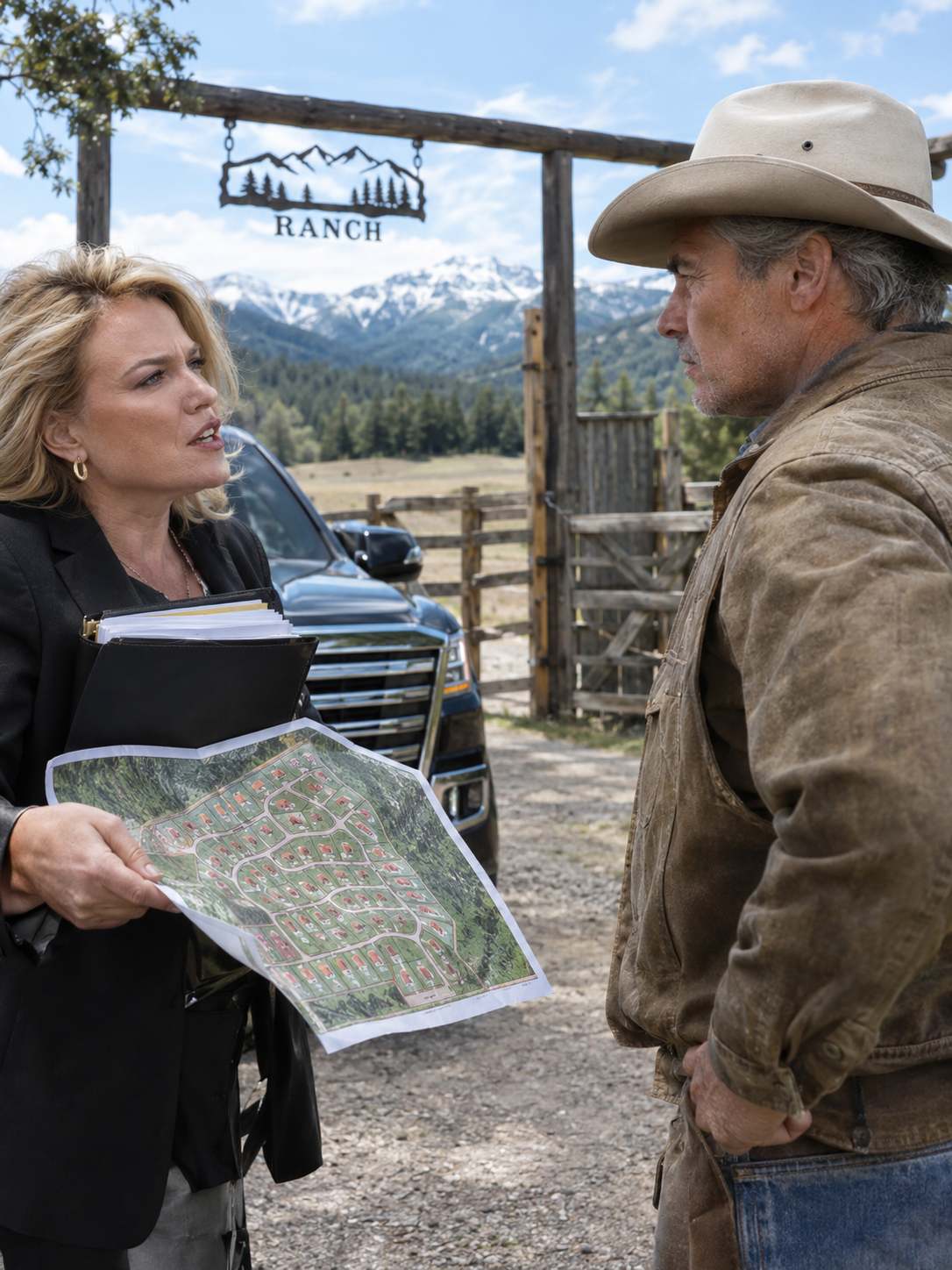
After twenty years of building my dream ranch in the Colorado mountains, the HOA president drove through my gate with a map showing fifty expensive homesites carved out of my property, then told me strangers had already paid for them; I refused to sign her agreement and took my original deed to an attorney, but the look on his face told me this was bigger than a boundary dispute…
“This is our future, Jack. We can build something real here.” Karen Whitmore stood beside her black luxury SUV, holding out a folder as though she had brought me good news. I looked past her at the mountains and then back at the paper in her hand. “I can’t believe what I’m hearing,” I said. “You cannot be serious about this.”
I had spent twenty years building my dream ranch in the mountains of Colorado. It was where I had put my work, my savings, and much of my life. I knew the rise and fall of the ground better than I knew some roads in town. The quiet was something I had earned, and the land was legally mine.
That morning had started like any other, until the SUV came through my ranch entrance. Karen was the president of the homeowners association, a woman accustomed to presenting her plans as settled decisions. She stepped out wearing a confident smile and carried herself like someone arriving to approve a project. I couldn’t imagine why she was bringing HOA business to my gate.
“Here is the agreement, Jack,” she said, sliding a document from her folder. I didn’t take it. “I’m not signing anything, Karen.” Her smile tightened, but she kept the pages extended between us. “Don’t be unreasonable about this.”
I asked her what, exactly, she thought I was agreeing to. Instead of answering plainly, she opened a large map across the folder, taking care to hold down its corners against the breeze. The outlines on it looked like the kind of planned subdivision people advertise with scenic views. Then I recognized the shape of the property underneath those neat little lines.
It was my ranch. Somebody had drawn roads across it, marked off private driveways, and divided its open ground into fifty residential lots. Each rectangle sat where I had never offered a single acre for sale. I traced one proposed road with my eyes, following it through an area that had been undisturbed for years.
“Where did you get this?” I asked. Karen answered as if I had asked about the weather: the lots were being sold for expensive mountain homes, and the buyers were excited. Fifty strangers had already paid for plots they hadn’t even come to see. In her version of events, the development was moving forward and my consent was one last detail to tidy up.
Fifty wasn’t a misunderstanding over a fence corner or a mistaken survey marker. It meant fifty separate promises, fifty sets of expectations, and a whole network of roads and homes drawn on land I still owned. I wondered how many people had made plans around Karen’s word.
“These people think they’re going to build homes here?” I asked. “They bought the opportunity,” Karen replied, tapping the map. “This is going to be good for everyone.” She spoke about the project as though my years on the property were a temporary inconvenience, not a fact she had to account for.
I told her the ranch was not for sale. She pointed again to her agreement, and I found myself staring at her hand instead of her face. A signature would have made it look as if I accepted something I had never agreed to. I put my own hands at my sides and told her, once more, that I would not sign.
The air between us went quiet for a moment. Karen looked out across the land, perhaps expecting the view to persuade me where her words hadn’t. I saw the same hills I had lived with for two decades; she seemed to see lots, driveways, and buyers. Neither of us was misunderstanding the other now.
“You can’t just stand in the way of fifty families,” she said. That was the first time her confidence sounded like a warning. I thought of the people who had handed over money because they believed someone in authority had checked the details. They were not the ones standing at my gate, but whatever happened next would reach them.
“I’m not stopping people from having homes,” I told her. “I’m telling you those homes cannot be built on my property without my permission.” Karen folded the map with quick, sharp movements. She repeated that the development had been arranged, as if repeating it could change what my deed said.
She finally returned the papers to her folder. The SUV turned around and drove back out, leaving my entrance as quiet as it had been before she came. But I couldn’t look over the ranch without seeing the lines she’d drawn over it. A road on somebody else’s map was suddenly being treated like a road that belonged here.
For a while I stood where she’d left me, trying to decide what to do first. Arguing at the gate hadn’t changed Karen’s mind, and I didn’t want to make the buyers’ problems worse by trading threats with her. What I needed was someone who could separate a sales pitch from an ownership record. I called my attorney, Daniel Brooks.
Daniel let me explain without interrupting. I told him about Karen, the folder, the fifty expensive lots, and the agreement I had refused. When I described the roads crossing the ranch, he stopped me long enough to ask where the lines had come from. I said they were on a map Karen had brought, not on anything I had authorized.
Then he asked one question that seemed almost too simple for the size of the problem. “Jack, do you still have the original deed?” I told him yes. “Bring it in,” he said, “and we’ll start with what you actually own.”
I knew exactly where the deed was. Over the years I’d kept the documents for the ranch carefully, even when other paperwork became a stack I meant to sort out later. That afternoon, holding the original in my hands, I felt the weight of all the work that had gone into the place. A map made for selling houses couldn’t erase that history, but I wanted to know what the law would make of it.
At Daniel’s office, I put the deed on his desk and sat across from him. He read the property description slowly, then looked at the boundaries and ownership records. He wasn’t rushing to tell me what I wanted to hear. That made the silence harder to sit through, but it also made me trust his attention.
I described Karen’s map again, pointing out where she’d placed the roads and the fifty lots. Daniel compared what I told him with the legal description in front of him. I watched him grow more serious as he checked the details. He went back to the same section of the deed twice.
“Have you ever sold any of this ground?” he asked. “No,” I said. “Not one of those lots, not a road through it, none of it.” I explained that no one had ever asked me to put the ranch on the market. Karen had presented a finished plan, not a request to buy my land.
Daniel leaned back, then placed one finger beside the ownership description. “What she showed you is not proof that the HOA owns anything,” he said. He told me that selling a lot and having the legal right to convey it were two very different things. I had known the ranch was mine, but hearing him put it that way made me think of every buyer who believed they’d purchased a piece of it.
“So what did they actually buy?” I asked. Daniel didn’t pretend to know the terms of every contract from a map and a conversation. He said we would need to examine the sales records, establish the boundaries independently, and notify the people involved. But from the deed and the ownership information he had reviewed, one fact was already clear.
He looked up at me and said, “Jack, the HOA has been selling land it doesn’t own.” For the first time that day, the problem had a name that wasn’t Karen’s plan or my stubbornness. Fifty buyers had been promised pieces of my ranch, and Daniel was already reaching for the next step: an official survey that would show exactly where every proposed lot fell. Part 2…..
IF FACEBOOK BROUGHT YOU HERE, HERE’S THE CONTINUATION YOU’VE BEEN WAITING FOR. ENJOY! 👇 Daniel arranged for a licensed land surveyor to inspect the property boundaries and compare them with the proposed lots. I met the surveyor at the ranch and walked the ground while he worked, resisting the urge to explain every slope and familiar corner. He needed measurements and records, not my memories. I wanted proof that anyone could examine without having to take my word for it.
Even before the work was complete, the picture coming into focus was troubling. The proposed subdivision wasn’t sitting beside my ranch or merely overlapping a narrow strip. The lines Karen had shown me ran right through the property. The surveyor would finish his professional review, but I already understood why Daniel had insisted on it.
Then, before the survey was finished, I heard engines coming up my entrance. Karen had sent a crew with bulldozers, excavators, and trucks, ready to start work on the development. Watching those machines approach made Karen’s paper map feel very real. If they began cutting into the ground, no later apology could put the ranch back exactly as it had been.
I went out to meet them and stood in front of the equipment while it was stopped, making it clear there would be no work on my property. The foreman stepped down to speak with me. I showed him my ownership documents and told him there was a serious dispute about the HOA’s right to authorize anything here. He looked from the papers to the land behind me and called his supervisor.
I wasn’t angry with the crew. They had arrived to do a job they believed someone had properly arranged, just as the buyers believed they’d purchased real homesites. I asked the foreman to keep the machines where they were until the ownership question was addressed. He didn’t argue with me about my deed, and the work did not begin.
Word of the stoppage traveled quickly. Buyers who had been talking about mountain homes came to the ranch entrance, wanting to know why construction had been halted. Some sounded furious; others seemed more frightened than angry. I could see how a person who had spent real money might hear “no construction” and think first of everything they stood to lose.
I told them I had not sold the ranch and had never authorized the HOA to divide it. I didn’t have answers about where their payments had gone, so I refused to guess. A few people stared past me at the land, searching for the neat lots they had expected to see. Out there, the mountains looked nothing like the drawing Karen had sold them.
Karen was not prepared to concede anything. She accused me of obstructing the development and threatened to sue. I told her I wasn’t going to surrender land because someone else had promised it away, and that if she wanted to put the matter before a judge, I welcomed the chance to show the documents. My voice stayed even, though my hands were still shaking from the sight of the equipment.
Daniel told me not to turn the entrance into a permanent argument. The most useful thing we could do was make sure the evidence reached the people whose money and plans were tied up in this. He had the survey work completed and reviewed the official findings. Every one of the fifty proposed plots lay entirely within the boundaries of my privately owned ranch.
That result settled the question the map had tried to blur. There wasn’t an HOA-owned corner from which the development might reasonably begin. The survey and the original deed described the same reality, and neither gave Karen the right she had claimed. Daniel began preparing a notice for each buyer so there would be no confusion about why the work had stopped.
The letters were careful, direct, and hard to read even though I wasn’t the person receiving them. They explained that the HOA did not own the property it had purported to sell, and that the buyers’ contracts could not transfer ownership of my ranch. Each notice included the official survey, proof of my ownership, and instructions to contact the HOA about the money they had paid.
Daniel sent fifty separate letters, one to every buyer. I thought about the people opening them at kitchen tables, perhaps with house plans and moving dreams still fresh in their minds. I didn’t know any of those households personally. That made it no easier to think about what they were about to learn.
Within days, the letters had reached them. Excitement turned into disbelief and then demands for answers. I was no longer the only person saying Karen’s map didn’t match the legal property records. The buyers now had the deed information and the independent survey in their own hands.
They organized an emergency meeting with Karen and the HOA board. The questions were no longer about when a driveway might be finished; they were about refunds, authority, and how an association could accept money for land that belonged to someone else. Karen had spoken for the future of fifty households. Now those same households wanted her to explain the present.
I wasn’t in that room to hear every exchange, and I won’t pretend I was. What became clear was that the board could no longer treat the dispute as one ranch owner’s refusal to cooperate. Their own lawyers had the ownership evidence in front of them, and the board had to face what the sales records meant. The buyers’ demands weren’t going away.
Daniel filed a lawsuit to protect my property and stop further unauthorized sales. I signed the papers he needed from me, understanding that going to court would take more patience than a confrontation at the gate. I didn’t want a fight that lasted forever. I wanted the law to draw the same boundary the surveyor had drawn, and I wanted the machines to stay off my land.
Final When the matter came before the court, Daniel brought the original deed, the official survey, and the HOA’s sales records into the same discussion. The documents were not dramatic to look at. They were pages with descriptions and lines, and yet everything people had been promised depended on them. I sat listening while the judge worked through what those records actually established.
Daniel showed how the property description and the surveyed boundaries matched. He explained that the proposed fifty lots were within my ranch, not on land the HOA could convey to anyone. The judge then asked the HOA’s attorney how the board believed it had authority to sell property it didn’t own. It was the question I’d wanted someone to ask since Karen unfolded her map.
Karen tried to explain that the HOA had relied on an old development plan. I could understand how a plan might have been persuasive when shown with confidence, especially to people looking for a mountain home. But a plan is not a deed, and the judge wanted evidence of legal ownership. Karen could not provide it.
I thought back to the day she had held out her agreement and told me not to be unreasonable. At the time, refusing to sign felt like the only thing I could do. In that courtroom, I saw the other side of the decision: giving in would not have fixed the false promises already made to fifty buyers. It might only have made it harder to untangle them.
The judge ruled that the HOA had no legal right to sell my ranch. The unauthorized development was stopped, and the court ordered the HOA to answer for the damage. I didn’t celebrate while people around me were still trying to recover money. I sat for a moment with both hands resting on my knees, relieved that someone with authority had finally recognized what the documents had shown all along.
The buyers turned their demands back toward the association that had taken their payments. They sought refunds and began pursuing legal action against the HOA. I couldn’t tell them how those separate claims would end, and I wasn’t going to promise a result no court had given them. But they at least knew whom they needed to question and why their promised lots couldn’t be delivered.
The board faced legal and financial consequences it could no longer wave away. Karen’s position of power was gone, along with her ability to present the subdivision as an accomplished fact. I didn’t need to watch her lose an argument in public. The record spoke more clearly than either of us had managed at the ranch gate.
Eventually the bulldozers and trucks were gone. There were no new roads crossing my ground, no driveways cutting toward houses, and no fifty-lot subdivision rising out of the landscape. The quiet came back in an ordinary way, without an announcement. I walked the property and found myself listening to the wind instead of waiting for an engine.
I still thought about the buyers. They hadn’t come to steal my ranch; they had trusted a seller who presented a beautiful picture and promised them a place in it. Their mistake was costly, and my relief didn’t cancel out their loss. I hoped they would get fair answers and the money they were owed through the process available to them.
At the gate where Karen had first stepped out of her SUV, I looked across the land I’d spent twenty years building a life on. She had tried to sell a future that wasn’t hers to promise. In the end, fifty letters carried the truth farther than any argument I could have shouted across the driveway. I kept my ranch, and I kept the original deed where I could find it.
If there’s one thing I learned, it’s this: a polished map and a confident promise don’t make someone the owner. Before you pay for a piece of land, make sure the legal documents prove that the person selling it has the right to do so. That’s a lesson I wish those fifty buyers had been able to learn without losing so much.
THE END. I’ve shared the complete story, and I truly hope it touched your heart. If this story moved you, please , like, and share the post. Thank you for reading! ❤️
✓ Lynn R. Adams
After twenty years of building my dream ranch in the Colorado mountains, the HOA president drove through my gate with a map showing fifty expensive homesites carved out of my property, then told me st…