HOA Buried a $6 Million Pipeline Beneath My Ranch—Then My Grandfather’s Deed Revealed Who Really Owned the Valley
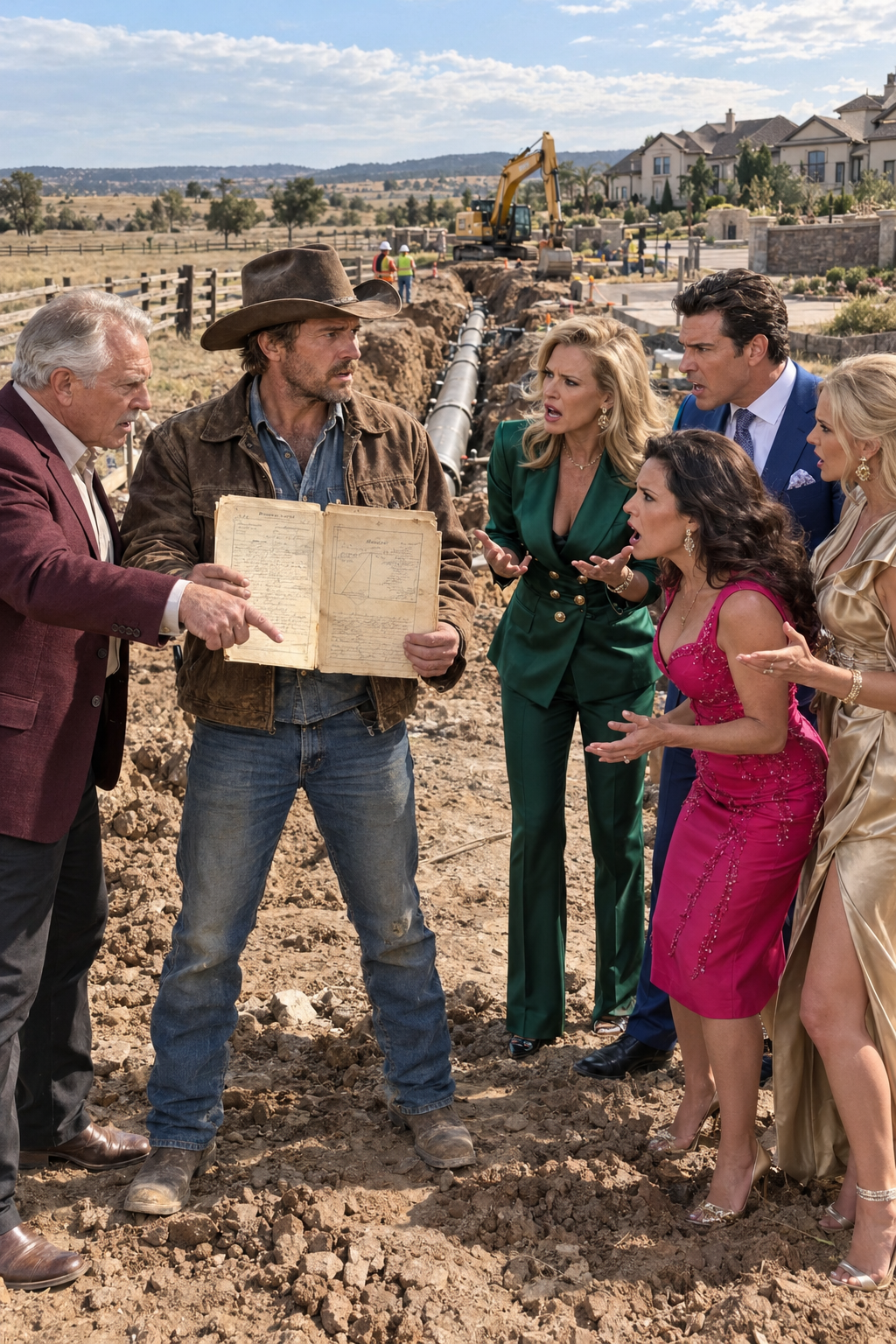
HOA Buried a $6 Million Pipeline Beneath My Ranch—Then My Grandfather’s Deed Revealed Who Really Owned the Valley
The first time I learned there was a six-million-dollar pipeline under my ranch, the HOA president was standing in my kitchen telling me I could be arrested for touching it.
The second thing I learned was worse.
According to her paperwork, my dead grandfather had supposedly given them permission twenty-three years after he was buried.
I didn’t yell.
I didn’t threaten her.
I just looked at the date beneath his forged signature, folded the document once, and asked Patricia Caldwell if she wanted coffee.
That was when she stopped smiling.
My name is Ethan Mercer.
I’m forty-two, divorced, no kids, and I own 1,340 acres outside a little northern Colorado town called Redstone Creek.
“Own” is a funny word.
For most people, owning land means you have a house, a fence, maybe a mortgage.
On a ranch, ownership is measured in things nobody notices until somebody wants them.
Water rights.
Mineral rights.
Access rights.
Old easements.
Survey pins buried beneath weeds.
A sentence typed on a deed in 1947.
My grandfather, Walter Mercer, understood that better than anyone.
He bought the original 760 acres after coming home from Korea.
Over the next forty years, he added parcels whenever struggling neighbors sold.
My father expanded it again.
When Dad died, the land came to me.
I didn’t turn it into a resort.
I didn’t subdivide.
I didn’t install decorative gates and name the roads after birds.
I ran cattle.
I leased twenty-eight acres to a local hay farmer.
I kept about four hundred acres in native grass.
I repaired fences myself when I could.
And I watched the suburban world creep closer every year.
The first houses of Brighton Ridge appeared six miles east of us when I was in college.
Then came another phase.
Then another.
By the time I was forty, Brighton Ridge wasn’t twenty houses behind a white fence anymore.
It was 312 homes, a clubhouse, two pools, tennis courts, landscaped medians, a private security patrol, and an HOA with an annual budget bigger than some nearby towns.
Their president was Patricia Caldwell.
Patricia was sixty-one and always looked like she had just stepped out of a campaign brochure.
Silver-blonde hair.
Pearl earrings.
Expensive cream-colored jackets.
A soft voice.
Perfect posture.
The kind of smile that made people believe they had agreed to things they hadn’t.
I had dealt with her before.
Mostly complaints.
My cattle were “visually inconsistent with neighboring property values.”
My old barn roof was “visible from HOA common space.”
A section of my western fence was “not aesthetically compatible.”
Once she mailed me a demand that I paint a forty-year-old equipment shed a color from their approved exterior palette.
I mailed it back with a handwritten note.
NOT A MEMBER.
She never mentioned the shed again.
So when her black Mercedes came rolling down my ranch road at on a Tuesday morning in May, I assumed she had another envelope.
I was wrong.
She arrived with two men.
One wore a gray suit and carried a leather binder.
The other had work boots, a safety vest folded over one arm, and sunglasses resting on his head.
I recognized him.
Kyle Brenner.
Project manager for Summit Utility Infrastructure.
They had been doing road work around Brighton Ridge for months.
Patricia walked onto my porch without waiting to be invited.
“Ethan, we need to discuss an obstruction.”
I glanced behind her.
“No obstruction out there.”
Her smile tightened.
“It’s underground.”
That got my attention.
We went inside.
I poured coffee for myself.
Nobody else accepted.
Patricia placed a color map on my kitchen table.
A blue line ran across the eastern third of my ranch.
North to south.
Nearly two miles.
“What am I looking at?”
“A regional water transmission line,” Kyle said.
Patricia answered.
“Brighton Ridge Community Association.”
I stared at her.
Then back at the map.
The blue line entered my property near Miller Creek, passed beneath one of my grazing fields, curved around an old cottonwood stand, and exited near County Road 18.
I knew every depression and fence post on that land.
No visible pipeline markers existed.
No pumping station.
No access boxes.
“When was this installed?”
Kyle looked at Patricia.
That hesitation told me more than his answer.
“Primary construction was completed eight months ago.”
I leaned back.
“You buried a pipeline under my ranch eight months ago?”
Patricia’s expression remained calm.
“Under an existing utility easement.”
“There is no HOA utility easement across my property.”
The man in the suit opened his binder.
“Mr. Mercer, my name is Alan Pike. Counsel for Brighton Ridge.”
“I didn’t ask.”
His lips pressed together.
He slid a photocopy toward me.
“This easement was executed by your predecessor in title.”
I looked down.
The document appeared old.
County seal.
Legal description.
Parcel numbers.
Notary stamp.
And near the bottom:
WALTER HENRY MERCER.
My grandfather’s signature.
For about three seconds, something cold moved through my chest.
Then I saw the date.
September 14, 2003.
Granddad died February 2, 1980.
I read it again.
Patricia mistook my silence for shock.
“I understand you may not have been aware of this arrangement.”
I looked up.
“My grandfather signed this?”
“That is what the recorded instrument establishes.”
I picked up my coffee.
Took one sip.
Then I asked, “Do dead men usually sign easements for you, Patricia?”
Nobody moved.
Kyle’s eyes dropped to the paper.
Alan Pike reached for it.
I put my hand over the document.
“Leave it.”
His face changed.
Just slightly.
“That is HOA property.”
“You brought me a copy.”
“It contains privileged—”
“No, it doesn’t.”
Patricia stepped in.
“There may be a clerical issue with the date.”
“Twenty-three years is one hell of a clerical issue.”
She folded her hands.
“Let’s not turn a correctable administrative mistake into an unnecessary conflict.”
“Who dug the trench?”
Kyle cleared his throat.
“Our subcontractors.”
“How deep?”
“Average seven feet.”
“Diameter?”
“Thirty inches.”
“What’s flowing through it?”
Silence again.
“Water,” Patricia said.
I looked at Kyle.
He didn’t meet my eyes.
“What kind of water?”
Patricia’s expression hardened.
“What kind?”
Alan Pike pushed the document binder closed.
“That information is outside the scope of today’s discussion.”
Which meant it mattered.
Their meeting was over.
Patricia didn’t move.
“We’re here because yesterday your excavator damaged a surface locator stake near the pipeline corridor.”
“I pulled an orange plastic stake out of my pasture because someone trespassed and put it there.”
“That marker identifies critical infrastructure.”
“On my property.”
“Within the easement.”
“The easement signed by my dead grandfather?”
Nobody answered.
I walked to the back door and opened it.
Patricia stood slowly.
“You need to understand something, Ethan. Interfering with that line could create enormous liability. Potentially criminal liability.”
I smiled for the first time.
She blinked.
“If somebody buried six million dollars of critical infrastructure under my property using a dead man’s signature, I’d really like law enforcement involved.”
Kyle looked like he wanted to disappear.
Patricia held my gaze.
Then she picked up her purse.
As she passed me, she lowered her voice.
“You have lived alone out here long enough to believe every fight is yours to win.”
I didn’t answer.
The Mercedes rolled away.
I waited until the dust settled behind them.
Then I locked the door.
Not because I was afraid.
Because my grandfather had taught me something Patricia clearly never had.
When somebody lies about one piece of land, assume they lied about more.
That afternoon, I did five things.
I called my attorney.
I shut down all excavation work on the eastern pasture.
I photographed every utility marker I could find.
I placed two cellular trail cameras near the suspected route.
And I went into the basement.
Granddad kept records like a man who believed civilization might collapse because somebody misplaced a receipt.
Steel filing cabinets.
Survey maps.
Tax statements.
Water certificates.
Handwritten cattle ledgers.
Original deeds.
My father had moved everything into archival boxes after Granddad died.
I had never thrown any of it away.
Around midnight I found the Mercer Ranch master deed.
Original paper.
Cream colored.
Folded into quarters.
Recorder’s stamp dated June 17, 1952.
The document covered the original property Granddad bought.
But what caught my eye wasn’t the acreage.
It was an attached handwritten clause.
A reservation.
Granddad had purchased not only the surface rights but permanent control over all future utility corridors crossing the property.
Nothing unusual there.
What was unusual was the next paragraph.
No conveyance, easement, access agreement, pipeline authorization, water transmission license, or utility right-of-way affecting the parcel would be valid unless executed by the owner and two named trustees.
Both trustees were Granddad’s brothers.
Both died before 1991.
Which meant even if Granddad had somehow signed a document in 2003 from beyond the grave, the easement still wouldn’t be valid.
I sat on the basement floor reading that clause until after one in the morning.
Then I found the second document.
A plat map from 1958.
A red pencil line crossed almost exactly where the HOA pipeline now ran.
At the top Granddad had written:
MERCER SPRING CORRIDOR — NEVER CONVEY.
I stared at those words.
Never convey.
Granddad wasn’t sentimental about land.
He sold timber.
Leased pasture.
Traded parcels.
If he wrote NEVER CONVEY in capital letters, there was a reason.
I didn’t know the reason yet.
But I knew Patricia Caldwell had just buried six million dollars on top of it.
The next morning, my lawyer arrived before eight.
Her name was Rebecca Shaw.
Former county land-use attorney.
No patience for theater.
She wore boots with her navy suit because she knew better than to visit a ranch in heels.
I handed her the forged easement.
Then the original deed.
She read both without speaking.
When she reached the trustee clause, she looked up.
“Where did you get this?”
“Basement.”
“Original?”
She turned it toward the window and inspected the recorder’s stamp.
Then she exhaled slowly.
“Ethan, if this is what I think it is, Patricia has a serious problem.”
“Potentially.”
“Potentially.”
“Trespass?”
“Almost certainly if their easement collapses.”
“How serious?”
Rebecca tapped the blue pipeline route on Patricia’s map.
“Six million dollars serious.”
I poured her coffee.
She didn’t touch it.
“There’s something else.”
I showed her Granddad’s plat map.
She studied the red line.
“Mercer Spring Corridor.”
“You know what that is?”
“Neither do I.”
She pointed toward the eastern pasture.
“Can we walk it?”
The morning was cool and bright.
Meadowlarks chirped from the fence wire.
We followed the route Patricia had shown me.
Once I knew what to look for, the evidence was obvious.
The grass had been reseeded.
A strip about twenty feet wide crossed the pasture in a gentle arc.
There were tiny differences in soil color.
Compacted tire marks near the creek.
And then Rebecca stopped.
She crouched beside a low concrete cylinder nearly hidden beneath prairie grass.
“What is that?”
I knelt beside her.
It looked like an old survey monument.
The top carried four stamped letters.
Rebecca brushed dirt from its edge.
“Mercer Spring Corridor Reserve?”
She looked east toward Brighton Ridge.
“You ever seen this before?”
“Don’t touch it.”
We photographed everything.
Back at the house, she called the county recorder.
Then the state water office.
Then a surveyor she trusted.
At 11:43, she got quiet.
She covered the phone.
“The forged easement was recorded eleven years ago.”
That surprised me.
“The pipeline was built last year.”
“So they planted the easement long before they needed it.”
Her eyes narrowed.
“Which means this probably wasn’t improvised.”
That was the moment the whole situation changed.
This wasn’t Patricia cutting corners on an HOA project.
Somebody had prepared the land record more than a decade earlier.
Somebody had known which route would matter.
Somebody had known my grandfather’s name.
Somebody had known enough to fabricate a believable legal description.
Somebody had expected no one to check the graveyard.
That afternoon, the first trail camera alert hit my phone.
A white pickup had entered my pasture.
Two men got out.
One wore a Summit Utility vest.
The other wore no logo.
They walked directly to the concrete monument we had photographed that morning.
One man knelt.
Then he took something from his truck.
A sledgehammer.
I called the sheriff before they swung it.
Deputy Marcus Hill reached my property nine minutes later.
I reached the field in six.
By the time I arrived, both men were standing beside the truck.
The hammer was in the grass.
Marcus stepped between us.
“Everybody keeps their hands visible.”
The older man in the Summit vest raised both palms.
“This is utility maintenance.”
“On whose authorization?” I asked.
He pointed at me.
Marcus looked at him.
“He owns the ranch.”
The man hesitated.
“We have an easement.”
He couldn’t.
He called a supervisor.
The supervisor called someone else.
Fifteen minutes later, Patricia Caldwell called my phone.
I put her on speaker.
“Ethan, you need to instruct your deputy to stop interfering with authorized maintenance.”
Marcus raised an eyebrow.
“Your deputy?” I said.
“You know what I mean.”
“No. Explain.”
Her voice tightened.
“We have statutory access rights.”
“Then your workers can show the paperwork.”
“You already have the paperwork.”
“The one my dead grandfather signed?”
I glanced at the sledgehammer.
“What were they repairing?”
“They were inspecting a marker.”
“With a hammer?”
The Summit worker stared at the ground.
Patricia changed tactics.
“You’re making this more dramatic than necessary.”
That sentence stayed with me.
Because people say that when they need you to ignore something.
I looked at the old concrete monument.
I looked at the sledgehammer.
And suddenly I understood what they were trying to do.
They weren’t inspecting the marker.
They were removing it.
I told Patricia the men were trespassed from the ranch pending legal review.
Then I hung up.
The workers left.
Marcus wrote the incident report.
Rebecca arrived an hour later with surveyor Paul Garner.
Paul was seventy, bowlegged, sunburned, and carried more historical survey knowledge in his head than most counties kept in computers.
He examined the monument.
Then he looked at Granddad’s 1958 map.
“Interesting.”
That was Paul’s favorite word.
He used it when everybody else would have said alarming.
He set up a total station near the fence.
For three hours we followed bearings.
By sunset, he had located four additional concrete monuments.
All aligned with Granddad’s red corridor.
The HOA pipeline ran inside it almost perfectly.
Not beside it.
Not across it.
“What does that mean?” I asked.
Paul leaned on his tripod.
“Means whoever engineered their pipeline knew where this old corridor was.”
Rebecca crossed her arms.
“Could satellite mapping show it?”
“County GIS?”
“Modern title report?”
Paul shook his head.
“Not unless somebody had access to older recorded plats that aren’t digitized.”
I looked at the pipeline route disappearing over the hill toward Brighton Ridge.
“Then they knew.”
Paul nodded.
“They knew.”
That evening, sitting alone on my porch, I remembered something Granddad used to say.
I was maybe nine.
He had taken me to repair a spring box near Miller Creek.
I complained because the work was slow.
He laughed and told me land had three histories.
The one people remembered.
The one government recorded.
And the one somebody hoped you never found.
At nine years old, I thought he was talking about buried treasure.
Thirty-three years later, I realized he might have been.
I didn’t sleep much.
I kept thinking about those three histories.
I kept thinking about Patricia’s forged paper.
I kept thinking about the men with the sledgehammer.
I kept thinking about the pipeline hidden seven feet under my grass.
I kept thinking about Granddad’s red words.
Never convey.
Never convey.
Never convey.
Never convey.
Never convey.
By sunrise, fear had disappeared.
Not because the problem had gotten smaller.
Because it finally had a shape.
And once a problem has a shape, you can measure it.
Rebecca filed an emergency demand the next morning.
No maintenance.
No excavation.
No modifications.
No use expansion.
Preservation of all engineering records.
Preservation of emails.
Preservation of title documents.
Preservation of contractor communications.
Patricia responded with what I expected.
Brighton Ridge’s attorney sent a six-page letter accusing me of interfering with essential utility infrastructure and warning that any shutdown could affect 312 households.
Rebecca read it once.
Then laughed.
“They just admitted the line serves the development.”
“We knew that.”
“No. They said ‘essential utility infrastructure.’ That matters.”
“Because privately controlled HOA infrastructure crossing private ranch land requires documented legal access. If their easement is fraudulent, every gallon moving through that pipe strengthens your trespass claim.”
That gave me my first small victory.
Then came another.
The county recorder confirmed something strange.
The 2015 easement had been filed electronically by a title company called Front Range Land Services.
Front Range Land Services dissolved in 2017.
Its listed managing partner had died.
The notary on the document was named Sheila Morton.
Rebecca found her in Wyoming.
And furious.
She agreed to speak with us by video.
Sheila was seventy-four, with short gray hair and a pair of reading glasses hanging around her neck.
Rebecca held the forged document toward the camera.
“Is that your seal?”
Sheila squinted.
“It looks like my old seal.”
“Did you notarize this?”
“How can you be certain?”
She pointed.
“My commission expired in 2012.”
The document was dated 2003 but recorded in 2015 using a seal that had not been valid for either year.
Rebecca leaned closer.
“Could someone have copied your stamp?”
“Someone did.”
“Do you recognize Walter Mercer?”
Sheila shook her head.
Then paused.
My stomach tightened.
“Not Walter.”
She leaned toward the screen.
“Mercer Ranch.”
Rebecca and I looked at each other.
“What about it?” I asked.
Sheila removed her glasses.
“Years ago, a man came into our office asking about historical rights across that property.”
“Maybe 2011. Maybe 2012.”
“I don’t remember the name.”
“Would you recognize him?”
“Possibly.”
She thought for a moment.
“He was with a development company.”
“Brighton Ridge?”
“No. That neighborhood existed already.”
“What company?”
She shook her head.
Then her eyes widened.
“He had maps.”
“What maps?”
“Old ones. Hand-drawn notes. Survey material.”
My grandfather’s records.
Rebecca’s expression changed.
“Where would he have gotten those?”
“I assumed the county.”
Paul Garner later told us that was impossible.
Granddad’s annotated 1958 map had never been filed with the county.
The red corridor markings were private.
The only known copy had been in my basement.
Except when we checked the archival box, we noticed something I should have seen sooner.
The folder contained photocopies.
Dad had made them in the 1990s.
And in his handwriting, on one envelope, were three words:
COPY FOR HAROLD.
Harold Mercer.
My father’s younger brother.
The man I hadn’t spoken to in seven years.
Harold moved to Arizona after my father died.
We weren’t enemies.
We simply stopped trying.
He hated ranching.
Hated Colorado winters.
Hated what he called “Mercer dirt worship.”
When Granddad’s estate was divided, Harold received money and a small commercial property.
Dad got the ranch.
Harold complained for years that the arrangement wasn’t fair.
Now I wondered whether that resentment had found a buyer.
He answered on the fifth ring.
“Well, hell. You alive?”
He chuckled.
“What’s going on?”
“I found one of Dad’s old envelopes.”
But enough.
“Which envelope?”
“COPY FOR HAROLD.”
Another pause.
“What about it?”
“It had maps.”
His breathing changed.
I walked to the porch rail.
“Did Dad give you a copy of Granddad’s spring corridor map?”
“Jesus, Ethan. That was forever ago.”
“I don’t remember.”
“You just remembered enough to swear.”
“Don’t start.”
“I’m not starting anything. I’m asking.”
“Your dad gave me a box when Granddad’s house got cleaned out. Copies. Maps. Old land stuff.”
“What happened to it?”
“Did you sell it?”
“Give it away?”
“I said I don’t know.”
“Did anybody ever ask you about Mercer Ranch utility corridors?”
Harold went quiet.
Then he said something unexpected.
“Is this about Brighton?”
My hand tightened around the phone.
“How do you know?”
“Because a guy contacted me years ago.”
“What guy?”
“I can’t remember his name.”
Another long silence.
“Daniel Voss.”
I wrote it down.
“Who was he?”
“Developer. Consultant. Something like that.”
“What did he want?”
“Old maps.”
“Did you give them to him?”
Harold cursed under his breath.
“He paid me for copies.”
“How much?”
“That’s not important.”
“How much?”
“Fifteen grand.”
The cattle shifted behind the barn.
Wind moved across the porch.
I stared toward the eastern field.
“Fifteen thousand dollars for copies of family maps?”
“I needed money.”
“What did he say they were for?”
“He said historical research.”
“Water access. Future development. I don’t remember.”
“Did he ask about Granddad’s signature?”
“Did he ask for original documents?”
“Did you tell Dad?”
“Of course not.”
I closed my eyes.
Exactly the window Sheila Morton remembered.
“Harold, there is a forged easement recorded against the ranch.”
“My grandfather’s signature is on it.”
“It was filed four years after you sold those maps.”
“I didn’t forge anything.”
“I didn’t say you did.”
His voice rose.
“Well, I didn’t.”
“Who was Daniel Voss working for?”
“I told you. Some development group.”
“What group?”
“I don’t know.”
“I don’t know!”
Then I heard something behind his anger.
He said nothing.
“What aren’t you telling me?”
“I gotta go.”
The call ended.
I immediately tried again.
That night my trail camera caught another vehicle.
Not Summit Utility.
Not Patricia’s Mercedes.
A dark pickup with no front plate visible.
It stopped beside the eastern pasture at a.m.
One person got out.
Dark jacket.
Baseball cap.
He walked toward the pipeline route.
Then directly toward one of Granddad’s old concrete markers.
He was carrying a shovel.
I was out of bed before the second photo loaded.
I didn’t chase him.
That matters.
People imagine ranch disputes ending with somebody grabbing a rifle.
That is how you turn evidence into charges against yourself.
Instead, I locked my doors, called the sheriff, turned on every exterior camera, and watched the live trail feed.
The man dug for six minutes.
Then headlights appeared on County Road 18.
Deputy Hill missed him by less than a minute.
But the man left behind something.
Not the shovel.
He took that.
He left a torn plastic evidence bag.
Inside the shallow hole, Marcus found pieces of rusted metal.
Paul arrived at sunrise.
He looked into the hole and swore.
He pointed.
At first I saw only dirt.
Then I saw a narrow iron bar.
A survey pin.
Not concrete.
Much older.
Paul carefully exposed enough to read a stamped cap.
Mercer Corridor Reserve, marker four.
“They knew this was here too,” I said.
Paul nodded.
Rebecca crouched beside the hole.
“Why dig it up?”
“To remove the physical evidence,” Paul said.
I looked at the road where the truck had disappeared.
“Then we stop treating this like a property dispute.”
Rebecca’s phone was already out.
By Thursday, the county judge issued a preservation order.
Nobody associated with Brighton Ridge could alter the pipeline corridor.
Nobody could disturb the monuments.
Nobody could enter my ranch without written consent except in a genuine emergency.
Patricia reacted publicly.
That afternoon Brighton Ridge homeowners received an email.
One resident forwarded it to me.
The subject line said:
URGENT COMMUNITY INFRASTRUCTURE THREAT.
According to Patricia, a “neighboring landowner” was attempting to disrupt the community’s primary water supply over a “technical title disagreement.”
Technical title disagreement.
That was how she described a dead man signing a legal document twenty-three years after his funeral.
She told residents legal expenses might require a special assessment.
She told them water rates could rise.
She told them their homes were at risk.
She never mentioned the forged date.
And it worked.
For about twelve hours.
Then one Brighton Ridge homeowner named Melissa Grant knocked on my door.
Melissa was thirty-eight, a CPA, lived in Phase Four, and looked like someone who had not slept much.
She held a thick envelope.
“I think you need to see this.”
I let her in.
She put three years of HOA financial statements on my kitchen table.
“I’m on the finance committee.”
“Patricia know you’re here?”
“What am I looking at?”
She turned to a page marked CAPITAL INFRASTRUCTURE.
There it was.
Pipeline project.
Original projected cost: $3.8 million.
Final expenditure: $6.04 million.
“Cost overrun?”
“That’s what they called it.”
She turned another page.
Engineering.
Excavation.
Environmental review.
Consulting.
Land access acquisition.
“Land access acquisition.”
My ranch had received zero dollars.
“Where did that go?”
Melissa looked at me.
“That’s why I’m here.”
She showed me the vendor.
Voss Strategic Holdings LLC.
The surname hit immediately.
“Daniel Voss?”
“You know him?”
Voss Strategic Holdings had received three payments.
All authorized by Patricia Caldwell.
“What was the stated purpose?”
“Right-of-way acquisition and historical easement clearance.”
Rebecca arrived thirty minutes later.
She read everything.
Then asked the question that changed our theory.
“When was Voss Strategic Holdings created?”
Melissa had already checked.
Three years after Daniel Voss bought copies of my grandfather’s private maps from Uncle Harold.
One year before the forged easement appeared in county records.
And nine years before pipeline construction started.
This wasn’t a six-million-dollar mistake.
It was a plan that had been aging quietly for more than a decade.
Rebecca issued subpoenas.
Patricia’s attorney fought them.
The judge granted most anyway.
Then the mini-payoffs started arriving.
Engineering emails showed Summit Utility originally proposed routing the pipeline along County Road 18.
That route was legal.
No private ranch crossing required.
But it cost approximately $2.4 million more because of rock excavation and road reconstruction.
Someone changed the route.
An internal email from 2022 said:
Per client directive, revert to Mercer Corridor alignment. Existing rights confirmed.
The “client” was Brighton Ridge HOA.
Another email attached the 2015 forged easement.
A Summit engineer had questioned the date.
His message read:
Can we confirm signatory status? DOB information appears inconsistent.
Patricia’s response came four minutes later.
Title counsel has cleared. Proceed.
Rebecca printed that email and placed it beside Patricia’s first threat letter.
“She knew somebody questioned it.”
“Does that prove she knew it was forged?”
“It proves she chose not to slow down.”
Another document surfaced.
A confidential feasibility report.
The pipeline wasn’t built simply to improve Brighton Ridge’s water pressure.
It had capacity nearly four times greater than current community demand.
Future expansion.
Six hundred additional homes.
Two hundred acres of commercial space.
A private golf resort.
All proposed south of Brighton Ridge.
The pipeline under my ranch was the backbone.
Without it, the expansion was financially questionable.
With it, the development could be worth hundreds of millions.
Now Patricia had a motive.
Not just saving $2.4 million on construction.
Increasing land values.
Increasing HOA influence.
Making Brighton Ridge the utility hub for a massive second development.
I thought that was the big secret.
I was wrong.
A week later, Paul Garner called me from the county archives.
His voice was strange.
“Ethan, get down here.”
“What happened?”
“I found the spring corridor.”
“We already found it.”
“You found the boundary.”
I drove into town.
Rebecca met me there.
Paul had spread eight oversized maps across an archive table.
The oldest dated 1949.
“This was filed before your grandfather purchased the ranch.”
He pointed to a narrow shaded strip running through what later became Mercer property.
“Federal reclamation survey.”
“What’s underneath?”
“An artesian formation.”
Rebecca leaned in.
“A lot of water.”
He slid over a geologic report.
Estimates from the 1950s suggested a deep aquifer beneath the eastern ranch.
Pressurized.
Granddad had apparently discovered natural spring seepage near Miller Creek and purchased surrounding rights.
The Mercer Spring Corridor wasn’t merely a utility corridor.
It protected access to the aquifer.
I read the numbers twice.
“Could Brighton Ridge be drawing from it?”
Paul didn’t answer.
Rebecca did.
“Not legally.”
We ordered an independent hydrological test.
Patricia tried to block it.
The judge denied her request.
Three days later, contractors drilled a monitoring well on my side of the pipeline corridor.
At 420 feet, they hit the formation.
At 468 feet, pressure climbed sharply.
The hydrologist collected samples.
Then he asked me a question.
“Do you have an older well nearby?”
“One livestock well about half a mile west.”
“How has output been?”
I thought about it.
“How much lower?”
“Maybe twenty percent over the last couple years.”
His expression tightened.
“You should have it tested.”
The following week, we received flow data.
My well had dropped thirty-one percent.
Not natural seasonal fluctuation.
Not drought alone.
The aquifer was being drawn down.
Rebecca demanded Brighton Ridge pumping records.
They resisted.
The court ordered production.
Their own records showed something they had never disclosed.
The pipeline wasn’t merely crossing my ranch.
A hidden branch line extended downward near the cottonwood stand.
Into a deep well.
On my property.
They hadn’t just built under me.
They were extracting groundwater from beneath my land.
For eighteen months.
I sat in Rebecca’s office reading the flow totals.
Hundreds of millions of gallons.
Some supplied Brighton Ridge.
Some filled ornamental ponds.
Some irrigated common landscaping.
And some had apparently been sold through a regional utility agreement.
“They sold my water?”
Rebecca’s jaw was tight.
“Potentially millions of dollars’ worth.”
“How did nobody see a well being drilled?”
“They drilled it during pipeline installation. Enclosed rig. Temporary sound barriers. Probably told anyone who saw it that it was pipeline work.”
I remembered being out of state the previous year.
My father’s sister had died in Oregon.
I was gone nearly three weeks settling her estate.
When I returned, one eastern pasture had been muddy.
I assumed spring construction near the county road.
I had never imagined a drilling crew was 468 feet beneath my grass.
Patricia appeared at the emergency hearing wearing ivory.
She still looked composed.
But not untouched.
Cameras waited outside the courthouse.
Brighton Ridge residents packed the hallway.
Rebecca laid out the documents.
Forged easement.
Questioned signatory.
Hidden production well.
Payment to Voss Strategic Holdings.
Unauthorized groundwater extraction.
The judge listened for nearly two hours.
Then he ordered immediate suspension of groundwater pumping from my property.
The pipeline could remain pressurized temporarily to protect Brighton Ridge homes, but no new extraction.
Patricia stood.
“Your Honor, that could destabilize our entire system.”
Judge Robert Kell looked over his glasses.
“Then your board should have considered system stability before building it on disputed private property.”
Nobody in the courtroom moved.
Patricia sat down.
That was our largest victory so far.
And yet I felt almost nothing.
Because halfway through the hearing, Uncle Harold had texted me.
CALL ME NOW.
I called from the courthouse parking lot.
He answered immediately.
“They know I talked to you.”
“Daniel Voss is dead.”
I leaned against my truck.
“Three years ago.”
“Then who knows?”
“Why does Caleb care?”
“Because Daniel wasn’t working alone.”
A gust of wind moved dust across the parking lot.
“Who was he working with?”
Harold’s voice dropped.
“I never knew exactly.”
“I’m serious.”
“You took fifteen thousand dollars.”
“I sold maps. That’s all.”
“You sold private land records.”
“No, I don’t think you do.”
He shouted it.
Then went quiet.
When he spoke again, his voice sounded old.
“Daniel came back later.”
“What did he want?”
“The originals.”
“Did you have them?”
“What did you tell him?”
“That your dad probably did.”
My stomach dropped.
Dad died in 2014.
Officially, heart attack.
Age sixty-seven.
In his truck.
Parked near the eastern pasture.
I had never connected his death to anything.
There had been no reason.
Until that moment.
“Did Daniel meet Dad?”
“I don’t know.”
“You never told me this.”
“I didn’t think it mattered.”
“When did Daniel contact you?”
Harold hesitated.
“Two weeks before your father died.”
Everything around me seemed to become unnaturally clear.
Courthouse steps.
Flag snapping above the entrance.
A woman crossing the street.
A diesel engine idling.
My own breathing.
“What exactly did Daniel ask?”
“If there were documents proving Walter Mercer retained exclusive water rights.”
I gripped the phone.
“What did you say?”
“I said your dad had everything.”
“He asked whether Tom Mercer would sell.”
“I laughed.”
“Because your father would’ve sold his own teeth before he sold Granddad’s spring rights.”
That sounded exactly like Dad.
I looked toward the courthouse.
Through the glass doors, I could see Patricia speaking to Alan Pike.
Her attorney.
Her body angled away from the crowd.
Controlled.
As if today’s ruling was just another administrative inconvenience.
“Harold, why are you telling me now?”
“Because someone came to my house last night.”
“I don’t know.”
“What did they want?”
“The copy of the map.”
“Do you still have it?”
“Did they believe you?”
“Call the police.”
“I already did.”
“Send me everything you have.”
“There’s one more thing.”
His voice was barely audible.
“After your dad died, Daniel called me again.”
“What did he say?”
Harold took a breath.
“He said, ‘The obstacle is gone.’”
I stopped hearing the parking lot.
For eleven years, I had believed my father’s heart simply stopped.
Now a dead developer’s sentence had opened a door I didn’t know existed.
I went back inside.
Rebecca saw my face.
“What happened?”
I told her.
She didn’t dismiss it.
She also didn’t jump to murder.
“Could be coincidence.”
“Could be intimidation.”
“Could be your uncle remembering something inaccurately after twelve years.”
She studied me.
“But you don’t think it is.”
Neither did she.
We requested Dad’s old medical records.
Meanwhile, Brighton Ridge began cracking internally.
Residents demanded Patricia resign.
She refused.
A recall petition collected 197 signatures in two days.
Melissa Grant found another problem in the finances.
Voss Strategic Holdings wasn’t the only questionable vendor.
There was Mountain Crest Consulting.
Alpine Records Management.
Caldwell Civic Strategies.
That last company shared an address with a Denver accounting office.
Its registered manager was Patricia Caldwell’s sister.
The HOA board called an emergency meeting.
I did not attend.
I didn’t need to.
By then half the neighborhood was sending me screenshots.
People who had cursed me a week earlier were asking whether I planned to shut off their water.
I sent the same response to everyone.
I was not trying to harm homeowners.
I was protecting my land.
That mattered.
Because Patricia had spent days trying to turn 312 families into a shield.
I refused to use them as one.
Rebecca negotiated a temporary agreement with the county.
Residential water service continued through the pipeline from alternate legal sources.
The illegal well remained shut.
Within forty-eight hours, Patricia lost her favorite weapon.
Once residents realized I wasn’t coming for their faucets, they started looking at her.
That Friday, the board voted 5–2 to suspend Patricia’s authority pending forensic audit.
She walked out before the vote finished.
Melissa called me afterward.
“You should know something.”
“Patricia didn’t seem surprised.”
“About losing?”
“About anything.”
That bothered me.
People who feel cornered usually react.
Negotiation.
Patricia still acted like she was waiting for something.
Saturday morning, I found out what.
A black SUV stopped at my gate.
A man stepped out.
Mid-fifties.
Gray sport coat.
He held up identification through the bars.
Colorado Bureau of Investigation.
Special Agent Thomas Vance.
We sat at my kitchen table.
Same table where Patricia had shown me Granddad’s forged signature.
Vance placed a thin folder in front of him.
“We’ve been contacted by the county prosecutor regarding potential land-record fraud.”
“So you’re investigating Patricia?”
“We’re investigating documents.”
Careful answer.
“What do you need from me?”
“Original deed. Original survey materials. Any communications from Brighton Ridge. Anything related to Daniel Voss.”
I watched him.
“You know that name already.”
He didn’t answer immediately.
Then he opened his folder.
Inside was a photograph.
Daniel Voss.
About fifty.
Square jaw.
I had never seen him.
Next to Daniel stood a younger Patricia Caldwell.
And next to Patricia stood my father.
I stared at the picture.
It had been taken at what looked like a county development luncheon.
Date printed on the back.
October 3, 2013.
“Dad knew them.”
Vance nodded.
“Apparently.”
“That’s what we’re trying to determine.”
He showed me another document.
Signed by Thomas Mercer.
Addressed to the Colorado Division of Water Resources.
The letter alleged that unnamed developers had attempted to acquire Mercer groundwater rights using “misleading and possibly fraudulent title representations.”
January 2014.
Seven months before Dad died.
I read it twice.
“Why have I never seen this?”
“It was in an archived regulatory file.”
“Was it investigated?”
“Preliminary inquiry.”
“Closed after your father’s death.”
I looked up.
“The reporting party was deceased. No transfer had occurred. No active permit existed.”
Vance’s voice remained neutral.
But I felt anger rising anyway.
Not wild anger.
The useful kind.
“Who closed it?”
“We’re checking.”
“You already know.”
Vance held my gaze.
“Mr. Mercer, I’m not going to speculate.”
I pushed the letter back.
“Then tell me what you can.”
He studied me for a moment.
“Daniel Voss worked for several development partnerships. One of them had financial relationships with contractors involved in Brighton Ridge.”
“Patricia?”
“Possible.”
“My father?”
“Your father opposed a proposed regional water district.”
“We believe he thought it was designed to transfer control of private groundwater resources to developers.”
I looked toward the basement door.
Granddad’s records.
Dad’s records.
All those boxes.
Generations of paper I had treated like family clutter.
They weren’t clutter.
They were a barricade.
My grandfather built the first layer.
My father added another.
Somebody had waited until both men were dead.
Then they came for the water.
Agent Vance asked to examine the basement archive.
I allowed it.
For three hours he photographed folders.
Then he found a gap.
“Where is Box 14?”
The shelving labels ran sequentially.
I had never noticed.
“There was a fourteen?”
“Presumably.”
I checked Dad’s inventory notebook.
There it was.
BOX 14 — WATER / SPRING / CORRESPONDENCE / ORIGINALS.
My skin prickled.
“When did it disappear?” Vance asked.
“I don’t know.”
“Who had access to this house?”
“Me. Dad before he died. Harold occasionally. Ranch hands years ago.”
“Any burglary?”
He looked around the basement.
“Locks changed after your father’s death?”
That night I changed them.
Every door.
Every gate code.
Every camera password.
I also moved Granddad’s original deed to Rebecca’s office safe.
Monday brought another revelation.
The hydrologist’s isotope analysis showed Brighton Ridge’s hidden well was drawing from the same deep aquifer Granddad had protected.
Not merely groundwater under my property.
A specific protected source.
Estimated commercial value over thirty years?
Potentially tens of millions.
That explained the money.
But not the missing box.
Not Dad’s letter.
Not why Patricia seemed so calm.
Then Melissa called.
“Ethan, the audit team found a file.”
“What file?”
“Board executive session. 2023.”
“What’s in it?”
“You’re not going to like this.”
She emailed me a scan.
The document was a legal risk memorandum prepared before pipeline construction.
Page seven contained a paragraph highlighted in yellow.
Mercer ownership challenge remains primary exposure. Historical deed restrictions may create substantial risk if original instrument survives.
If original instrument survives.
Not just that an old deed existed.
That the original mattered.
The memo continued.
Recommended strategy: secure waiver, acquire parcel, or obtain title resolution prior to excavation.
None of those happened.
Instead, someone wrote a handwritten note in the margin.
Proceed. Original believed unavailable.
No initials.
Rebecca stared at the handwriting.
“Who believed it was unavailable?”
“The person who knew Box 14 was gone.”
She nodded slowly.
We sent the memo to Agent Vance.
He replied with two words.
He was already driving to the ranch.
When he arrived, he had another agent with him.
They asked me to walk outside.
That was never good.
Vance stood beside his SUV.
“We pulled records related to your father’s death.”
My throat tightened.
“The original ruling remains natural cardiac event.”
“There’s more.”
He handed me a photocopy of the incident report.
Dad had been found in his truck at a.m.
A ranch employee discovered him.
No visible trauma.
No sign of struggle.
But the report listed one item found on the passenger seat.
A manila folder.
MERCER SPRING.
“Where is it?”
“That’s the problem.”
“It wasn’t returned to me.”
“To Harold?”
“Then where?”
Vance’s jaw tightened.
“Evidence records say it was transferred to county property storage.”
“There’s no intake record.”
The folder disappeared between the scene and storage.
Just like Box 14.
I asked the question I didn’t want to ask.
“Who collected Dad’s belongings?”
Vance showed me the signature.
Deputy Leonard Caldwell.
I looked up.
“Patricia?”
“Her husband.”
I knew Leonard Caldwell had worked law enforcement years ago.
I thought he had been a patrol officer.
I didn’t know he had responded to my father’s death.
“Where is he now?”
Vance hesitated.
“Brighton Ridge.”
Leonard Caldwell lived less than four miles from me.
For twelve years, I had passed his truck in town.
Seen him at the hardware store.
Once he held a door open for me at the feed supply.
Never once did he mention being the deputy who found—or at least processed—the folder beside my dead father.
That evening Patricia called me directly.
First time since the injunction.
I almost didn’t answer.
Then I did.
Her voice sounded tired.
Not frightened.
Just tired.
“You need to stop digging.”
I leaned against the kitchen counter.
“That phrase seems badly chosen under the circumstances.”
“This has gone beyond the pipeline.”
“You noticed.”
“You think you understand what your grandfather protected.”
“I’m learning.”
“You’re learning what your father thought he protected.”
That stopped me.
“What does that mean?”
“You should ask why Walter Mercer bought that corridor before anyone knew the aquifer had commercial value.”
“You tell me.”
“I’m not your enemy.”
I almost laughed.
“You forged an easement.”
“I did not.”
“You authorized construction using one.”
“That is not the same statement.”
“You paid Voss.”
“The board paid consultants.”
“You knew the deed might survive.”
“Patricia?”
Her voice dropped.
“You’re looking at the wrong crime.”
Then the call ended.
I immediately called Agent Vance.
He told me not to contact her again.
Rebecca told me the same thing.
But one sentence kept circling.
The wrong crime.
The pipeline was fraud.
The water theft was enormous.
The forged records could send people to prison.
What could be bigger?
The next morning, Paul Garner arrived carrying an old aerial photograph.
“Found something.”
The image showed the ranch in 1962.
Granddad’s original house.
Paul placed a modern satellite image beside it.
Then lined up the spring corridor.
“See that?”
Near the northern end of the red corridor was a rectangular disturbance in the old photograph.
Maybe fifty feet long.
Twenty feet wide.
“What is it?”
“Building?”
“Doesn’t look like one.”
He produced another aerial from 1968.
The rectangle was gone.
Another from 1974.
Cottonwoods had begun growing there.
Today, that exact spot was where the HOA pipeline made its unexplained curve.
“Why does the pipeline bend there?” I asked.
Paul nodded.
“That’s what bothered me.”
Pipelines prefer straight lines.
Every curve costs money.
Requires engineering.
Creates pressure considerations.
The HOA route curved nearly seventy feet west for no obvious surface reason.
Unless they were avoiding something underground.
Or reaching something.
We checked the construction drawings.
The public set showed only the curve.
But subpoenaed contractor plans contained a notation.
SPECIAL CROSSING AREA — NO MECHANICAL EXCAVATION BELOW EL. 6038.
Hand excavation only.
Rebecca read it over my shoulder.
“Could be environmental.”
“Could be archaeological.”
Paul shook his head.
“Could be an old structure.”
We contacted Agent Vance.
He contacted the judge.
By noon, we had authorization for noninvasive ground-penetrating radar.
No digging.
Just scanning.
The technician arrived the next day.
We walked into the cottonwoods.
The air was cooler there.
Thick leaves.
Birds in the upper branches.
For forty years I had ridden horses past that grove.
I’d repaired fence nearby.
Camped there as a teenager.
Never suspected anything beneath it.
The first radar pass showed disturbed soil.
Second pass showed a rectangular anomaly.
Third showed metal.
A lot of metal.
The technician stared at his screen.
“There’s definitely something down there.”
“How deep?”
“About nine feet to the top.”
“Dimensions?”
He ran another grid.
“Roughly forty-eight by eighteen feet.”
Rebecca looked at me.
Almost exactly the rectangle visible in the 1962 aerial photograph.
Then the technician found another anomaly.
A narrow line leaving the rectangle.
Running southeast.
Toward the aquifer well.
Paul whispered, “That line predates their pipeline.”
We stopped the survey.
Agent Vance ordered the area secured.
By sunset, yellow law-enforcement tape circled part of my own ranch.
I stood outside it watching two state vehicles arrive.
This had stopped feeling like a lawsuit.
The next morning, investigators obtained a controlled excavation order.
They removed soil slowly.
Layer by layer.
At seven feet, the excavator stopped.
Workers continued by hand.
At nine feet, a shovel struck steel.
Corrugated metal.
Buried structure.
The entrance had been collapsed decades earlier.
A secondary hatch existed on the west side.
It took hours to open safely.
Nobody let me go inside.
Agent Vance entered with two investigators.
They remained underground for twenty-three minutes.
When Vance emerged, dirt covered his knees.
His expression had changed.
“What is it?” I asked.
He looked at Rebecca.
Then at me.
“Your grandfather built a pumping station.”
“For the aquifer?”
“What does that mean?”
“We found mechanical equipment.”
“From the fifties?”
He removed his gloves.
“There are newer modifications.”
“1990s. Maybe early 2000s.”
“What was he doing down there?”
Vance glanced toward the excavation crew.
“We don’t know yet.”
Then another investigator climbed out carrying an evidence box.
Inside were binders sealed in plastic.
The first one had a faded label.
Walter Mercer.
The second:
Thomas Mercer.
The missing records had been underground the entire time.
Not Box 14 from my basement.
A second archive.
Rebecca looked at me.
“Your family built a backup.”
Of course they did.
Granddad, who distrusted missing receipts.
Dad, who copied everything.
I almost smiled.
Then Vance opened the third binder.
There was no Mercer name.
Three words were typed across the cover.
REDSTONE WATER DISTRICT.
Inside were transaction logs.
Parcel numbers.
Some entries went back fifty years.
Others were recent.
One company appeared repeatedly.
Voss Development.
Another name appeared beside it.
Not Patricia.
Agent Vance took the binder immediately.
“You can’t read that yet.”
“It’s on my property.”
“It may now be evidence in a criminal investigation.”
“Into what?”
He didn’t answer.
But another agent approached carrying a small metal lockbox.
They opened it aboveground.
Inside were cassette tapes.
Each labeled by date.
The newest was August 2014.
Three days before my father died.
Vance looked at me.
“Do you have anything that plays these?”
Dad’s old workshop radio had a cassette deck.
Vance allowed only one tape to be tested.
August 11, 2014.
He photographed it.
Then inserted it into the dusty machine.
Static crackled.
For ten seconds, nothing happened.
Then my father’s voice filled the workshop.
I hadn’t heard him in twelve years.
My knees nearly gave out.
Not because he sounded frightened.
Because he sounded completely calm.
Exactly as I remembered him.
“If you’re listening to this, Walter was right.”
Then Dad continued.
“The water is not the asset.”
Rebecca looked at me.
Agent Vance leaned closer to the radio.
“The land isn’t the asset either.”
A chair scraped in the recording.
Dad lowered his voice.
“They found what’s under the spring corridor.”
The tape clicked.
Then another voice spoke.
“You need to give us the deed, Tom.”
My father answered.
“You don’t understand what happens if the federal filing resurfaces.”
“I understand perfectly.”
Federal filing?
Vance raised one hand, signaling everyone to remain quiet.
The unknown man continued.
“Then you understand Brighton Ridge isn’t the real project.”
Dad laughed once.
A hard little laugh.
“You people still think you can build over it.”
“We already are.”
“No. You’re building around it because you’re afraid to dig.”
My skin went cold.
The pipeline curve.
The hand-excavation restriction.
They weren’t avoiding the bunker.
They were avoiding something else.
On the tape, Dad spoke again.
“If you touch that lower chamber, everybody in this county will know what happened in 1957.”
Static exploded.
Then the tape cut off.
Nobody spoke for several seconds.
Finally Rebecca whispered, “Lower chamber?”
Agent Vance removed the cassette.
“We stop here.”
I looked toward the cottonwood grove.
The buried pumping station was only nine feet down.
Radar had scanned to twenty.
But nobody had searched beneath the floor.
I turned to Paul.
“How deep is the aquifer?”
“Hundreds of feet.”
I pointed toward the grove.
“How deep did radar show the structure?”
He frowned.
“Top at nine. Floor around seventeen.”
“And below the floor?”
“We didn’t run the high-depth configuration.”
Agent Vance was already calling someone.
That afternoon, the state excavation site expanded.
Nobody went home.
Floodlights arrived.
Another radar unit came from Denver.
This one could penetrate deeper.
The technician ran the first scan through the opened bunker.
Then the second.
On the third pass he stopped.
He stared at the monitor.
Agent Vance asked, “What?”
The technician didn’t answer immediately.
He adjusted the image.
Ran another pass.
Then turned toward us.
“There’s another void.”
Rebecca folded her arms.
“How large?”
“How far down?”
“Approximately thirty-one feet beneath the bunker floor.”
“Natural cavity?”
He rotated the screen.
Straight edges appeared.
A large one.
A narrow vertical shaft connected it to the pumping station.
Except the shaft had been sealed.
Someone had deliberately buried one structure beneath another.
Paul stared at the image.
I remembered Dad’s tape.
Everybody in this county will know what happened in 1957.
Agent Vance requested another warrant before breaching the sealed floor.
That meant we waited.
For six hours.
At that night, I sat on my porch watching floodlights glow through the cottonwoods.
My ranch looked like a crime scene.
Maybe it was.
At 10:03, Rebecca’s phone rang.
She listened.
Then looked at me.
“The judge approved entry.”
We walked back toward the excavation.
Investigators drilled through the concrete shaft plug.
Air samples first.
Gas detection.
Structural inspection.
Then a small camera.
The monitor showed dust.
Concrete walls.
Not a natural cavern.
A constructed underground facility.
The camera moved farther.
An old steel door appeared.
Faded paint covered it.
The technician cleaned the lens remotely.
Letters became visible.
U.S. DEPARTMENT OF THE INTERIOR.
Paul whispered, “What the hell?”
Another line appeared below it.
RECLAMATION TEST SITE 4.
And below that:
AUTHORIZED PERSONNEL ONLY.
I looked at Rebecca.
“This was federal?”
She didn’t answer.
Agent Vance looked as stunned as anyone.
The camera moved through a gap near the door.
On the other side were shelves.
Metal cabinets.
Old equipment.
Hundreds of boxes.
Some had government seals.
Some had dates.
Then the camera panned right.
A newer folding table sat among the old equipment.
A battery lantern.
Plastic storage bins.
Bottled water.
Someone had been inside recently.
Very recently.
The camera moved closer.
One plastic bin was open.
Another contained document sleeves.
On the table lay a modern photograph.
The image was blurry on the monitor.
The technician maneuvered the camera closer.
My stomach dropped before anyone said a word.
It was a photograph of my father.
Taken from a distance.
Dad standing beside his truck.
Same truck where he died.
A timestamp ran across the bottom.
August 14, 2014.
The day he died.
Rebecca grabbed my arm.
Agent Vance said quietly, “Nobody touches anything.”
Then movement flashed in the rear of the chamber.
The technician froze.
“What was that?”
He reversed the camera.
Then again.
Not a person.
A loose sheet of paper fluttering.
Air movement.
“There’s ventilation,” the technician said.
Agent Vance looked toward the sealed shaft.
“That chamber has another entrance.”
Every officer at the scene moved at once.
Perimeter teams spread across the ranch.
Deputies blocked county roads.
Drones went up.
Thermal cameras scanned the hills.
I stood beneath the cottonwoods while strangers searched my own land for an entrance my family had apparently kept secret for seventy years.
At 11:18 p.m., a deputy shouted from the creek.
They found a steel hatch hidden beneath brush almost four hundred yards north.
Fresh tire tracks nearby.
Fresh footprints.
Someone had accessed the chamber after investigators began excavating the bunker.
Someone might have been down there while we stood above it.
The hatch was open.
Agent Vance ordered everybody back.
A tactical team arrived.
They entered.
Ten minutes later, Vance’s radio crackled.
“Lower site clear.”
“Evidence removal confirmed.”
“We’ve got blood.”
My chest tightened.
Vance didn’t answer.
He listened to his radio.
His face changed.
“Say again.”
Then the voice repeated.
“We found a phone.”
“What phone?”
“Active device. Screen damaged.”
“It belongs to Leonard Caldwell.”
Patricia’s husband.
The retired deputy who had handled my father’s belongings.
Vance turned toward me.
“Stay here.”
Of course I didn’t move.
I watched officers disappear into the brush.
At midnight, Patricia Caldwell’s Mercedes was found abandoned fourteen miles away near Interstate 25.
Driver door unlocked.
No Patricia.
No Leonard.
At 12:26, Melissa Grant called me.
Her voice was shaking.
“Ethan, somebody broke into the HOA office.”
“What did they take?”
“We don’t know yet.”
“Call the police.”
“They’re here.”
I heard voices behind her.
Then she said, “There’s something else.”
“Patricia left an envelope in the board safe.”
My pulse slowed.
“What does it say?”
“They won’t let me open it.”
Twenty minutes later, Agent Vance received a photograph from Brighton Ridge police.
He showed me the front of the envelope.
ETHAN MERCER.
Patricia’s handwriting.
The warrant team opened it.
Inside was a single key.
And a note.
Vance read it silently first.
Then handed it to me.
Three sentences.
Your grandfather never owned the entire ranch.
Your father discovered the boundary lie in 2014.
If you want to know why he died, use the key where Walter carved the eagle.
I read it again.
Then a third time.
Rebecca asked, “Does that mean anything to you?”
He looked pale.
“Your grandfather carved eagles.”
I stared at him.
“Survey monuments.”
Paul grabbed Granddad’s 1958 plat.
His finger moved along the red spring corridor.
Past marker one.
Then beyond my northern fence.
Into land that had never been considered part of Mercer Ranch.
A 4,800-acre parcel owned today by Redstone Valley Development Corporation.
The same land proposed for the six-hundred-home expansion and golf resort.
At its western edge, Granddad had drawn a tiny symbol I had always assumed was a compass mark.
Paul enlarged a photograph of the map on his tablet.
It wasn’t a compass.
It was an eagle.
Below it, almost too faint to see, Granddad had written:
ORIGINAL NORTH STONE.
Rebecca whispered, “How far outside your recorded boundary?”
Paul measured.
“About 1.7 miles.”
My mouth went dry.
“That can’t be ours.”
He looked at Patricia’s note.
Then at the original 1952 deed copy.
“Maybe that’s the lie.”
Before sunrise, Agent Vance obtained permission from the current landowner to inspect the old monument location.
Redstone Valley Development resisted at first.
Then the CBI mentioned an active criminal investigation.
They changed their minds quickly.
We drove north in a convoy.
The terrain climbed into dry rolling grassland.
No golf course.
Just fence, cattle trails, sage, and limestone outcrops.
Paul navigated using Granddad’s old bearings.
At a.m., he stopped beside a rocky slope.
I saw nothing.
Then he brushed weeds away.
A granite marker protruded six inches from the soil.
Nearly swallowed by earth.
On its face, faint but unmistakable, was an eagle.
My grandfather’s eagle.
Beneath it was a narrow keyhole.
Nobody spoke.
Agent Vance photographed everything.
Rebecca filmed.
Then Vance nodded to me.
I took Patricia’s brass key.
Inserted it.
For a moment, nothing happened.
Then I turned.
A metallic click sounded inside the stone.
Paul stared.
“What kind of survey marker has a lock?”
Not a survey marker.
The granite face shifted outward.
A concealed metal compartment sat behind it.
Inside was a cylindrical document case.
Agent Vance removed it with gloves.
He opened it carefully.
Inside were three rolled documents.
The first was an original federal land patent dated 1948.
The second was a survey correction filed in 1951.
The third was a deed.
Walter Mercer.
My grandfather.
But the acreage wasn’t 760.
It wasn’t 1,340.
It was 6,118.
I stopped breathing.
Rebecca took the paper.
“That’s impossible.”
Paul was already comparing descriptions.
His voice sounded stunned.
“It’s possible.”
The modern ranch boundary was based on a later county survey.
A survey that apparently removed thousands of acres from the Mercer tract.
Decades ago.
Before Brighton Ridge.
Before Patricia.
Before Daniel Voss.
Before my father died.
The 4,800 acres owned by Redstone Valley Development sat inside the original Mercer patent.
Every planned expansion parcel.
Every golf-resort parcel.
Every future commercial site.
If the documents were valid, the company planning to use my stolen pipeline and stolen water had a much larger problem.
They might be planning to build hundreds of millions of dollars of development on land my family had never legally sold.
I looked at Rebecca.
She looked back at me.
Neither of us smiled.
Because inside the tube was one more item.
A photograph.
Black and white.
Five men standing beside the original north stone.
My grandfather was one.
A younger county commissioner was another.
Two federal surveyors stood behind them.
And the fifth man—
Paul recognized him.
“That’s Charles Caldwell.”
I looked closer.
“Leonard Caldwell’s father.”
Patricia’s father-in-law.
Written on the back in Granddad’s handwriting were nine words.
THEY CHANGED THE LINE. CHARLES KNOWS WHERE THE ORIGINAL WENT.
Agent Vance took the photograph.
Then something fell from behind it.
A tiny folded sheet.
Newer paper.
My father’s handwriting.
August 2014.
Just days before his death.
I unfolded it.
There were no explanations.
Only a list of six names.
Daniel Voss.
Leonard Caldwell.
Patricia Caldwell.
Two county officials.
And one name at the bottom that made Agent Vance snatch the paper from my hand so fast I almost dropped the document tube.
“What?” I demanded.
He said nothing.
His eyes remained on the final name.
Rebecca stepped closer.
“Who is it?”
Vance looked toward the officers.
Then toward the road.
His face had gone completely still.
“Everybody back to the vehicles.”
“What the hell is going on?”
His hand moved toward his sidearm.
Every instinct in my body sharpened.
“Who is the sixth name?”
Vance folded the page and put it inside an evidence sleeve.
Then he looked directly at me.
“The judge who signed your pipeline preservation order.”
Judge Robert Kell.
My mouth went dry.
The same judge who had ruled against Patricia.
The same judge who had allowed access to the buried chamber.
The same judge who had just authorized the search that led us here.
Rebecca whispered, “Why would your father list Kell?”
Vance grabbed his radio.
Before he could speak, every phone in our group buzzed at once.
Emergency alert.
Not weather.
Not Amber Alert.
County public safety.
Miller Creek Dam Failure — Evacuate Redstone Valley Immediately.
Paul stared toward the hills.
“Miller Creek doesn’t have a dam.”
I knew that.
Everybody local knew that.
There was only an old federal diversion structure abandoned decades ago.
Underground.
Near the spring corridor.
Then I remembered Dad’s tape.
The water is not the asset.
They found what’s under the spring corridor.
The lower chamber.
The old federal site.
Agent Vance’s radio erupted.
“Explosion reported near Mercer Ranch!”
I turned toward home.
A dark column of smoke was rising on the horizon.
Exactly where the cottonwood grove stood.
Vance shouted for everyone to move.
Engines started.
Doors slammed.
We tore down the dirt road toward my ranch.
My phone rang.
Unknown number.
I answered.
For three seconds, there was only breathing.
Then Patricia Caldwell spoke.
Her voice was barely above a whisper.
“Ethan, listen carefully.”
“Where are you?”
“You don’t have time.”
“Patricia—”
“The pipeline was never meant to carry water.”
The line crackled.
My stomach dropped.
“What was it meant to carry?”
Another explosion rolled across the valley.
Even from miles away, I felt it through the truck door.
Patricia started crying.
Not loudly.
Just one broken breath.
Then she said seven words that made everything before them feel small.
“Your grandfather buried something the government wanted back.”
The line went dead.
Ahead of us, black smoke climbed higher.
And beneath my boots, beneath six thousand disputed acres, beneath the aquifer, beneath the pipeline Patricia claimed was only water—
the ground began to shake.
✓ Lynn R. Adams
HOA Buried a $6 Million Pipeline Beneath My Ranch—Then My Grandfather’s Deed Revealed Who Really Owned the Valley The first time I learned there was a six-million-dollar pipeline under my ranch, the …