His Mistress Took My Marriage and Thought She’d Won—Then His Billionaire Enemy Married Me and Raised the Son He Abandoned
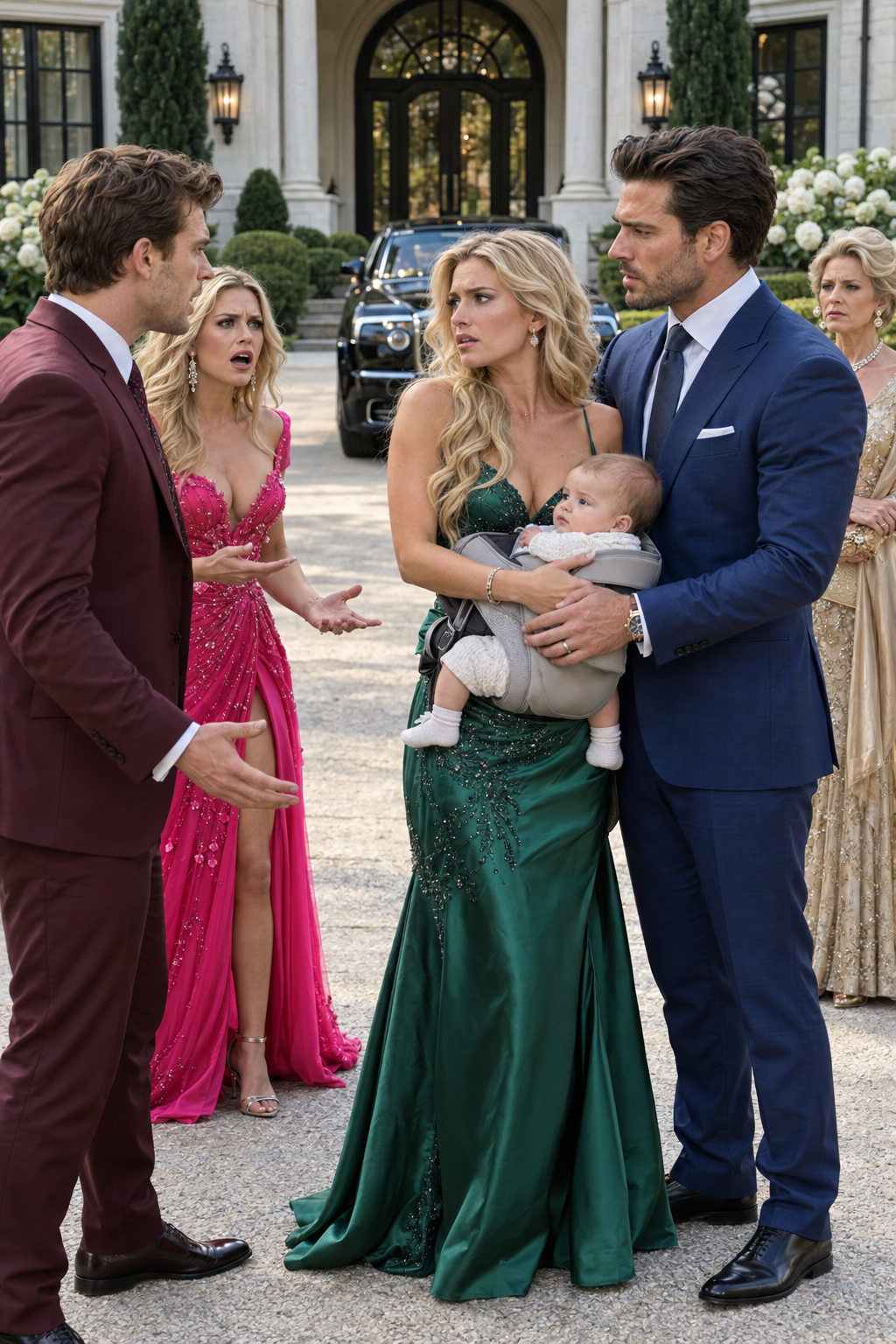
His Mistress Took My Marriage and Thought She’d Won—Then His Billionaire Enemy Married Me and Raised the Son He Abandoned
The woman sleeping with my husband was wearing my silk robe when she told me my marriage was over.
My husband stood behind her in our kitchen, one hand resting on the marble island I had paid to renovate, and said, “Olivia, don’t make this uglier than it needs to be.”
Then his mistress touched the barely visible curve of my stomach and smiled.
“You’re only eight weeks,” she whispered. “You still have options.”
That was the moment I stopped feeling sorry for myself.
Not when I found her earrings beside our bed.
Not when Derek admitted he had been sleeping with Sloane Mercer for eleven months.
Not when he told me she “understood the pressure of his world” better than I ever could.
Not when he said our seven-year marriage had become an obstacle.
Not even when he asked me to move out of the house before the weekend because Sloane’s interior designer was coming Monday.
It was that little touch.
That little smile.
I looked down at Sloane’s perfectly manicured hand on my abdomen.
Then I looked at Derek.
My husband was forty-one, handsome in the polished way expensive men often are, with dark hair touched by gray at the temples and the kind of tailored navy shirt that looked casual only because it cost more than most people’s rent.
Three years earlier, Forbes had called him “Atlanta’s next technology king.”
He had framed the article.
He had not framed the photograph of us from our wedding.
That should have told me something.
“Take your hand off me,” I said.
Sloane’s smile weakened.
I didn’t raise my voice.
I didn’t cry.
I didn’t throw the crystal bowl beside me.
I didn’t ask Derek how he could betray me while I was carrying his child.
I didn’t give either of them the performance they had clearly expected.
I simply stepped backward.
Sloane folded her arms.
She was thirty-three, beautiful, ambitious, and remarkably confident for a woman standing barefoot in another woman’s kitchen.
Derek cleared his throat.
“I know the timing is bad.”
I almost laughed.
“The timing?”
He frowned.
“I’m trying to handle this like adults.”
“No,” I said. “You’re trying to handle it like a hostile acquisition.”
His jaw tightened.
That landed.
Business language was the only language Derek respected.
Sloane glanced at him.
He glanced back.
There it was.
A tiny exchange.
A look that said they had rehearsed this conversation together.
They thought they knew how I would react.
Threatening.
Maybe calling my mother.
Maybe throwing his clothes onto the lawn.
Maybe collapsing dramatically so Derek could tell everyone I had become unstable.
Instead, I walked to the oak desk beside the breakfast room, opened the middle drawer, and removed a yellow legal pad.
“What are you doing?” Derek asked.
“Taking notes.”
Sloane actually laughed.
I wrote the date.
Then the time.
Then I wrote:
Derek admitted ongoing affair with Sloane Mercer.
Derek requested I leave marital residence.
Sloane made unsolicited comment concerning termination of pregnancy.
The kitchen went quiet.
Derek’s face changed first.
Just enough.
“Don’t turn this into something.”
“I’m writing down what happened.”
“That’s exactly what I mean.”
“What did you think I was going to do?”
He rubbed his forehead.
Sloane walked toward the coffee machine like she already lived there.
That irritated me more than the robe.
She knew where we kept the espresso pods.
“Derek just wants this resolved quickly,” she said.
I looked at her.
“I don’t remember asking what Derek wants.”
Her shoulders stiffened.
Derek stepped between us.
“You can stay in the house for now.”
“I’m not trying to throw you onto the street.”
“How generous.”
“We need to discuss the property division.”
“The company complicates things.”
“No,” I said. “It complicates things for you.”
His eyes narrowed.
That was the first moment he looked uncertain.
Derek believed Calloway Systems belonged to him in the same way he believed every room belonged to him when he entered it.
He had founded it ten years earlier with two engineers, a rented office, and a line of credit he still loved talking about at conferences.
What he rarely mentioned was that three years later, when the company was twelve days from missing payroll, my grandfather’s family investment trust had provided the emergency capital.
Derek called it “bridge financing.”
My grandfather called it “insurance.”
I had never cared much about the distinction.
Until that morning.
Derek folded his arms.
“You know the business is protected.”
“The shares are structured.”
“They are.”
Sloane looked from him to me.
I saw the first question appear behind her eyes.
Derek saw it too.
He changed the subject.
“I’ve already arranged for you to have access to the Buckhead condo.”
“My condo?”
He blinked.
“The condo.”
“The condo my grandmother left me before we married?”
Sloane slowly set down her coffee.
I smiled for the first time.
“Derek, did you promise her my condo too?”
His mouth hardened.
Sloane turned toward him.
“You said the condo was part of the settlement.”
“No,” Derek said quickly. “I said Olivia had access to it.”
“That isn’t what you said.”
Interesting.
They were unraveling faster than I expected.
I put the legal pad down.
“I’m going upstairs.”
Derek followed me with his eyes.
“What are you going to do?”
Sloane smiled again.
I paused at the doorway.
“My things,” I said. “Not my life.”
Her smile disappeared.
Twenty minutes later, I left with one suitcase, my grandmother’s jewelry box, three folders from the fireproof safe, my laptop, and the ultrasound photograph I had received forty-eight hours earlier.
Derek watched from the staircase.
Sloane stood beside him.
She had changed out of my robe.
Probably because I had made a note of it.
At the front door, Derek finally came down.
“You don’t need to make this a war.”
I looked at the man I had loved since I was twenty-seven.
For years, I thought ambition was the strongest thing inside him.
I was wrong.
Derek was terrified of being ordinary.
Terrified of being overlooked.
Terrified that somewhere, in some room, another man had more money, more respect, more influence.
And there was one man who terrified him more than anyone.
Adrian Vale.
Derek’s biggest competitor.
His oldest professional enemy.
A billionaire.
A man Derek once described at our dining table as “a shark in a three-piece suit.”
I lifted my suitcase.
“I don’t want a war either.”
Derek relaxed slightly.
Then I added, “Wars destroy assets.”
His expression froze.
“I prefer audits.”
I closed the door behind me.
By lunchtime, Sloane posted a photograph from my backyard.
Just two champagne glasses beside the pool.
Her caption said:
Finally choosing happiness.
I was sitting in my grandmother’s condo when my attorney texted me the screenshot.
Evelyn Hart had represented my family for nineteen years.
She was sixty-two, five feet three, wore reading glasses on a gold chain, and could turn the phrase “I’ll review it” into something that sounded like a death sentence.
She called me immediately.
“Do not respond publicly.”
“I wasn’t planning to.”
“Can she stay in the house?”
“Probably.”
“Emotionally?”
“I’m billing you by the hour, Olivia. Don’t ask me emotional questions.”
I laughed for the first time that day.
It felt strange.
She continued.
“I’ve pulled the trust documents.”
My fingers tightened around the phone.
“You need to come to my office.”
Forty minutes later, I was seated across from Evelyn in her Midtown office with a bottle of water I couldn’t drink and a stack of documents I had seen many times but never truly read.
Evelyn tapped the first page.
“When your grandfather’s trust invested in Calloway Systems, the money wasn’t simply exchanged for preferred shares.”
Something in her tone made me sit straighter.
She turned to the next page.
“Your grandfather insisted on an anti-dilution clause, voting conversion rights, and a change-of-control provision.”
“I remember the voting conversion.”
“No, you remember Derek’s version of it.”
I stared at her.
Evelyn slid a spreadsheet toward me.
Percentages.
Corporate entities.
Trust structures.
I followed the columns.
Then I stopped.
“That can’t be right.”
“This says the Bennett Family Trust controls thirty-eight percent on conversion.”
“I thought it was twelve.”
“That’s the current preferred interest before conversion.”
I looked up.
“And after?”
“Thirty-eight percent voting power.”
My throat went dry.
Evelyn leaned back.
“Your grandfather designed the investment so Derek could run the company without feeling like an employee, but he could never dispose of the core assets, sell the company, merge it, transfer certain patents, or replace the board without triggering conversion rights.”
I stared at the page.
“Who controls the trust?”
She looked at me over her glasses.
The room seemed suddenly too still.
I heard traffic below.
An ambulance somewhere on Peachtree.
“What exactly are you telling me?”
“I’m telling you your husband has spent eight years bragging that he built a company no one could take from him.”
Evelyn pushed the documents closer.
“Your grandfather made sure that was true.”
She smiled without warmth.
“He simply neglected to tell Derek that the person who could stop him was his wife.”
I didn’t feel triumphant.
Mostly I felt stupid.
For years, Derek handled the corporate attorneys.
Derek handled shareholder presentations.
Derek explained complicated business details to me in five-minute summaries after dinner.
I had trusted him.
More dangerously, I had believed him when he said understanding the company wasn’t necessary because he would “always take care of us.”
Evelyn must have seen something on my face.
“Don’t do that.”
“Punish yourself because someone you trusted benefited from your trust.”
“I signed things without reading enough.”
“I let him tell me what mattered.”
“I stopped asking questions.”
“You’re terrible at comfort.”
“I’m excellent at litigation.”
That made me smile.
Then she leaned forward.
“Now I need you to hear me carefully. You are pregnant. Your husband is having an affair. If he believes this divorce could affect Calloway Systems, he will become unpredictable.”
“I have no reason to think that.”
“Then what?”
“Financially aggressive. Strategically aggressive. He may move assets. He may alter documents. He may try to trigger transactions before you fully understand your rights.”
“What should I do?”
“Nothing emotional.”
“That’s easy.”
“It won’t stay easy.”
She was right.
By evening, Derek had frozen our joint investment account.
By the next morning, he had replaced the locks on the house.
By noon, his attorney sent a proposal offering me the Buckhead condo I already owned, two hundred thousand dollars, my personal vehicle, and “reasonable transitional support” for eighteen months.
In exchange, I would waive future claims related to Calloway Systems.
Evelyn read the document twice.
Then she laughed so hard she had to remove her glasses.
“He knows.”
I looked at her.
“He knows what?”
“He knows the trust could become a problem.”
“He wouldn’t be offering this waiver otherwise.”
I stared at Derek’s signature.
The same signature had been on our mortgage.
Our marriage license.
Birthday cards.
Anniversary notes.
Now it sat beneath an offer that valued seven years of marriage and one unborn child at less than he had spent renovating his executive lounge.
My phone rang.
Evelyn lifted one finger.
I answered.
His voice was smooth.
“Did you get the proposal?”
“I think it’s fair.”
“I’m sure you do.”
“Olivia, I’m trying to avoid lawyers destroying everything.”
“Your lawyer sent it.”
“You know what I mean.”
“Sloane didn’t mean what she said yesterday.”
“Which part?”
“About the pregnancy.”
“She seemed clear.”
“She was nervous.”
“She was wearing my robe.”
Another pause.
“That isn’t relevant.”
“It was to me.”
He exhaled sharply.
“I don’t want this to become vindictive.”
“It won’t.”
“I’m not interested in revenge.”
His tone softened.
“That’s all I needed to hear.”
I glanced at Evelyn.
She nodded.
So I continued.
“I’m interested in accuracy.”
His breathing changed.
“Meaning I want an independent valuation of Calloway Systems.”
Then, quietly, “Why?”
It was the wrong question.
If he believed I knew nothing, he would have said the company wasn’t marital property.
Instead he asked why.
I looked at Evelyn.
She was writing something.
“You’re divorcing me,” I said. “I’m pregnant. Accuracy seems useful.”
“The company valuation is unnecessary.”
“Then it should be easy to confirm.”
“This is Adrian Vale’s kind of move.”
I almost laughed.
Adrian’s name had not crossed my mind once.
But Derek had just placed it there.
“What does Adrian have to do with our divorce?”
“You brought him up.”
“I’m saying these games—pressure, leverage, technicalities—that’s how he operates.”
“Interesting.”
“Promise me you haven’t spoken to him.”
“Why would I speak to Adrian Vale?”
Derek said nothing.
Evelyn stopped writing.
I sat very still.
“Just stay away from him.”
He hung up.
I looked at Evelyn.
“What was that?”
She folded her hands.
“That was fear.”
Adrian Vale lived three miles from my grandmother’s condo and might as well have lived on another planet.
Everyone in Atlanta business circles knew him.
Vale Infrastructure.
Vale Capital.
Airports, logistics software, cloud security, commercial real estate.
His family name appeared on university buildings and hospital wings, though Adrian himself avoided galas whenever possible.
He was forty-four.
No children.
Estimated net worth, depending on the market, somewhere north of six billion dollars.
He and Derek had hated each other for almost a decade.
The public story was simple.
They competed for a Department of Defense logistics contract seven years earlier.
Adrian challenged the bidding process.
The challenge failed.
Derek never let anyone forget it.
At parties, he mocked Adrian’s “old money arrogance.”
Adrian rarely mentioned Derek at all.
That irritated Derek even more.
I had met Adrian exactly four times.
The first time, he shook my hand and asked about my work with the Atlanta Literacy Foundation instead of asking what my husband did.
The second time, he rescued an elderly donor’s purse after a waiter knocked it under a banquet table.
The third time, he told Derek he was wrong about a procurement regulation in front of twelve executives.
Derek talked about it for six months.
The fourth time had been at a New Year’s fundraiser.
Derek drank too much.
Adrian didn’t.
Just before midnight, I stepped onto a balcony because I had a headache.
Adrian was already there.
He moved aside so I could stand near the heater.
We said almost nothing.
Before he went inside, he looked at me and said, “You spend a lot of time making sure everyone around you is comfortable.”
I had laughed politely.
Then he added, “I hope someone does the same for you.”
I remembered that sentence now.
I hated that I remembered it.
I did not call Adrian.
Three days later, he called me.
I almost didn’t answer.
Unknown number.
I was at Evelyn’s office reviewing financial statements.
“Olivia Bennett?”
The voice was low, calm, unmistakable.
I looked at Evelyn.
She couldn’t hear the caller, but something in my face made her set down her pen.
“This is Adrian Vale.”
“I’m sorry about what you’re dealing with.”
I felt my spine stiffen.
“How do you know?”
“Derek has been calling people.”
Of course he had.
“What is he saying?”
“That you’re emotional. That your pregnancy is making negotiations difficult. That your family trust is trying to seize control of his company.”
I closed my eyes.
Evelyn mouthed, Who?
I wrote ADRIAN on the legal pad.
Her eyebrows rose.
“What do you want?” I asked.
“To warn you.”
“Derek contacted one of my subsidiaries yesterday.”
That got my attention.
“He wants to sell us something.”
“A patent portfolio.”
Evelyn stood up.
I put the call on speaker.
Adrian continued.
“Specifically, eleven patents connected to Calloway Systems’ predictive routing architecture.”
Evelyn grabbed a corporate binder.
“Can he sell them?” I asked.
“I don’t know your internal agreements.”
“He can’t,” Evelyn said loudly.
Silence on the line.
Then Adrian said, “Evelyn Hart?”
Evelyn blinked.
“I’m glad Olivia hired you.”
“She didn’t hire me. I’ve been cleaning up after her family for nineteen years.”
“I stand corrected.”
Despite everything, I smiled.
Adrian continued.
“Derek requested an accelerated closing. Forty-eight hours.”
Evelyn flipped through pages.
“Absolutely not.”
“What happens if you buy them?” I asked.
“Why tell me?”
“Because someone else might.”
That answer was too simple.
“What aren’t you saying?”
Another pause.
Then Adrian said, “Derek doesn’t need cash.”
“How do you know?”
“Because I’ve competed against him long enough to know his balance sheet better than some of my own executives do.”
“So why sell?”
“To move assets beyond your reach before conversion rights can be exercised.”
Evelyn pointed at me and mouthed, Exactly.
My stomach turned.
“Do you have proof?”
“I have his proposal.”
“Will you send it?”
“Because I dislike thieves.”
“Derek hasn’t stolen anything from you.”
Adrian was quiet for two seconds too long.
Then he said, “That’s a conversation for another day.”
Evelyn noticed.
But I didn’t chase it.
“Thank you for warning me.”
“Be careful.”
“I mean physically.”
My hand tightened around the phone.
“Because desperate men who confuse ownership with identity rarely behave rationally when control starts disappearing.”
He disconnected.
Evelyn stared at the phone.
“I’ve spent ten years hearing Derek Calloway describe Adrian Vale as Satan in Italian wool.”
“I expected more fire.”
Less than an hour later, Adrian’s attorney sent Derek’s signed patent-sale proposal.
Evelyn filed for an emergency injunction that afternoon.
The judge granted temporary restrictions the next morning.
By lunch, the sale was frozen.
By dinner, Derek called me seventeen times.
I answered the eighteenth.
“What did you do?” he demanded.
“I hired a lawyer.”
“You embarrassed me.”
“You tried to sell restricted company assets during divorce proceedings.”
“Those patents belong to Calloway Systems.”
“And the trust has protective rights.”
“You didn’t even know those clauses existed a week ago.”
There it was.
Not denial.
Anger that I had learned.
“You’re right,” I said. “I didn’t.”
“Someone is feeding you information.”
“My attorney.”
“He called you.”
I didn’t answer.
Derek laughed bitterly.
“I knew it.”
“Because he turned down the deal.”
“You offered it to him.”
“That was business.”
“And him turning it down wasn’t?”
“You don’t understand that man.”
“Maybe not.”
“He wants to destroy me.”
“Then why hand him ammunition?”
Derek had always hated silence.
He filled it.
“He’s been waiting years for an opening.”
“And you think my divorce is his opening?”
“I think you’re vulnerable and he knows it.”
My hand went cold.
Not because I believed him.
Because I recognized the strategy.
Derek wasn’t protecting me.
He was planting suspicion.
A smart move.
If Adrian helped me, Derek wanted me wondering why.
If Adrian didn’t help me, Derek still wanted me afraid.
I leaned against the condo window.
Atlanta glowed below me.
“Good night, Derek.”
“Olivia, listen—”
I ended the call.
Then I blocked his number.
For the next six weeks, I communicated only through attorneys.
It was one of the smartest decisions I ever made.
Sloane became louder online.
Photos at restaurants Derek once took me to.
Photos from his private box at Mercedes-Benz Stadium.
Photos in the passenger seat of his Aston Martin.
Never his face.
Just enough of his watch.
His cuff links.
The edge of his jaw.
She wanted everyone to know.
Derek wanted everyone to pretend they didn’t.
The contradiction fascinated me.
Sloane wanted victory to be visible.
Derek wanted it to remain deniable until the divorce was finished.
That difference between them would matter later.
Meanwhile, I worked.
Not on revenge.
I read every trust document.
Every shareholder agreement.
Every board amendment.
Every tax schedule Evelyn put in front of me.
Pregnancy made me tired in ways I couldn’t explain.
Some mornings, I vomited before breakfast and spent the next three hours reading merger provisions.
Some afternoons, I fell asleep at my desk with a highlighter in my hand.
But slowly, the company I thought belonged entirely to Derek became visible to me.
Not just the products.
The structure.
The obligations.
The weaknesses.
And one weakness kept appearing.
A subsidiary called Northstar Analytics.
Northstar had been created seven years earlier.
The same year Derek won the government contract that made Calloway Systems famous.
Its revenues were tiny.
Its expenses were not.
Consulting fees.
Research fees.
Licensing payments.
Millions flowed through it.
When I asked Evelyn about it, she frowned.
“I assumed it was an R&D entity.”
“So did I.”
“But Derek tried to exclude it from the valuation.”
She stared at me.
“He classified it as inactive.”
Evelyn called the forensic accountant.
Three hours later, we learned Northstar owned a piece of source code used in Calloway’s most valuable routing platform.
That same evening, someone broke into the storage unit where I kept old marital financial records.
Nothing valuable was taken.
No jewelry.
No furniture.
No electronics.
Only two boxes of business documents.
The police called it targeted theft.
Evelyn called it a message.
Adrian called me before I heard from anyone else.
“How did you know?” I asked.
“The storage facility belongs to a real estate company I invested in years ago.”
“Of course it does.”
“I’m sorry.”
“You didn’t break in.”
“Then stop apologizing.”
Another pause.
“Do you have somewhere secure to stay?”
“My condo is secure.”
“It has a private elevator and one concierge.”
“You’ve researched my building?”
“I own the parking structure next door.”
I almost laughed.
“Is there anything in Atlanta you don’t own?”
“The Falcons.”
That earned a quiet sound that might have been a laugh.
Then his voice changed.
“Olivia, whoever broke into that unit knew exactly what they wanted.”
“You should move temporarily.”
“I’m not running.”
“I didn’t say run.”
“What are you saying?”
“I have a guesthouse on my property.”
I stared at the phone.
“You’d have security.”
“It’s separate from the main house.”
“Still no.”
“You could bring Evelyn.”
Evelyn was sitting across from me.
She shook her head violently.
“She says no.”
“I appreciate the offer.”
“Then let me arrange security for your building.”
“I can hire security.”
“Then why do you keep trying to solve things for me?”
This time, Adrian didn’t rush to fill it.
Finally he said, “Because years ago, someone should have warned another person before Derek destroyed him.”
My pulse slowed.
“My brother.”
There it was.
The thing behind the hatred.
The thing Derek never explained.
“What happened?”
“Not tonight.”
“It’s your divorce. Not my history.”
“Apparently they’re connected.”
That single word changed everything.
“My younger brother, Lucas, developed an adaptive routing engine while working at a research lab associated with Georgia Tech. He was twenty-six.”
I sat down.
“Seven years ago?”
“The government contract.”
My mouth went dry.
Adrian continued.
“Lucas believed Derek wanted to invest. They met three times. Four months later, Calloway Systems demonstrated technology built around an architecture remarkably similar to Lucas’s research.”
“Did Lucas sue?”
“He tried.”
“What happened?”
“He had no money left by the time Calloway finished burying him in procedural motions.”
“You had money.”
“I didn’t know.”
That surprised me.
“Lucas didn’t tell you?”
“We weren’t speaking.”
“Family stupidity.”
His voice held something painful and old.
“By the time I found out, Lucas had signed a settlement and a confidentiality agreement.”
“What happened to him?”
“He left technology.”
“That’s all?”
Adrian’s voice became flatter.
“He died eighteen months later.”
I closed my eyes.
“I’m sorry.”
“Do you think Derek stole his code?”
“I think Derek obtained something he knew he had no moral right to use.”
“That isn’t the same as proof.”
“But Northstar?”
“That’s why I called you after the storage break-in.”
“You’ve been investigating.”
“For years.”
“And you never found enough.”
I thought about Derek saying Adrian had been waiting for an opening.
Maybe he had.
But not the opening Derek meant.
“Why help me?”
Adrian answered immediately.
“Because you are not Derek.”
That mattered more than it should have.
Over the next three months, my life became two parallel stories.
In one, I was the discarded wife.
People whispered at charity events.
Friends I had known for years chose sides.
Some stopped calling because they didn’t want to “get involved.”
Others invited me to lunch purely to gather information.
One woman squeezed my hand over Cobb salad and said, “Men like Derek always trade up eventually.”
Then I paid my portion of the bill and never spoke to her again.
In the other story, I was becoming dangerous.
Not emotionally.
Financially.
Informationally.
Calloway Systems could not sell major assets.
It could not restructure its board without trust approval.
It could not complete a planned acquisition.
Three board members began calling me directly.
I took every call.
I listened more than I spoke.
That unnerved people.
Especially Derek.
By my fifth month of pregnancy, his attorneys had changed strategy.
They stopped treating me like an inconvenienced spouse.
They started treating me like a shareholder.
That was progress.
Sloane, however, still treated me like a defeated woman.
She cornered me at a charity luncheon at the Four Seasons.
I was twenty-one weeks pregnant.
My son had begun kicking.
I was standing beside a floral arrangement when Sloane approached in a white dress.
At a children’s hospital fundraiser.
Some women can turn any room into an audition.
Her gaze dropped deliberately to my stomach.
“You look healthy.”
“So do you.”
“I heard negotiations are becoming unpleasant.”
“I don’t discuss legal matters socially.”
She smiled.
“Derek says you’ve always had trouble separating emotion from business.”
I nearly admired the sentence.
It sounded exactly like Derek.
“You should believe him, then.”
Her smile flickered.
“I’m trying to be kind.”
That stopped her.
“I know this is difficult.”
“Which part?”
“Losing the life you thought you had.”
I looked around the ballroom.
Crystal glasses.
White linen.
Women wearing diamonds before noon.
Then I looked back at her.
“Sloane, do you know what’s interesting?”
“You think you took my life.”
She shifted slightly.
“You took my husband.”
I placed one hand over my son when he kicked.
“You should wait before deciding those are the same thing.”
She stared at me.
Then she leaned closer.
“He loves me.”
“I hope so.”
She blinked.
I meant it.
Because if Derek had destroyed our marriage for something as flimsy as vanity and sex, that would almost be sadder.
Sloane searched my face for pain.
I gave her none.
“By the way,” I said, “tell Derek the board packet is due Friday.”
Her color changed.
That was my mini-payoff.
I walked away.
Adrian was standing across the ballroom.
I had not known he was attending.
He wore a charcoal suit with no tie.
For one second, our eyes met.
He didn’t smile.
He simply lifted his glass slightly.
Acknowledgment.
Nothing more.
I should have looked away.
That evening, he texted me for the first time.
You handled that well.
Were you spying?
His answer came immediately.
She was standing beneath a six-foot orchid arrangement in a white dress. Spying was unnecessary.
I laughed so loudly my son kicked again.
That was how it began.
Not romance.
Not seduction.
Conversation.
Sometimes about the case.
Adrian sent me articles about urban planning because I had studied architecture before shifting into nonprofit work.
I sent him terrible photographs of his company’s new downtown building and told him the lobby looked like a luxury airport.
He replied:
That was the brief.
Then fire the architect.
You were the architect’s first choice for a consultant.
I stared at the message.
He sent a screenshot from a three-year-old email.
My name was there.
Derek had declined on my behalf.
I read the email twice.
Then three times.
Adrian had asked whether I would consult on community-facing design features for a major redevelopment.
Derek replied:
Olivia isn’t working professionally right now and prefers to focus on home commitments.
I had never seen it.
I had never been asked.
I sat in silence for several minutes.
Then I called Adrian.
“Did you know he never told me?”
“Why didn’t you ask me directly?”
“You were married.”
“So I assumed your husband wasn’t lying about your professional choices.”
I laughed without humor.
“Apparently everyone did.”
Adrian didn’t defend himself.
He said, “I’m sorry.”
I looked around the condo.
Suddenly I saw all the years differently.
Not dramatically.
Not as imprisonment.
Derek had never forbidden me from working.
He had done something subtler.
He had made my life so full of his needs that mine slowly disappeared.
Corporate dinners.
Foundation events.
Networking.
Making his mother feel included.
Remembering birthdays.
Smoothing conflicts.
Proofreading speeches.
Choosing gifts for his executives’ spouses.
A thousand small tasks that never appeared on calendars but consumed entire years.
“You’re quiet,” Adrian said.
“I’m calculating.”
“How many times I let someone else define what I wanted.”
He didn’t answer immediately.
Then he said, “Start again.”
“Start what?”
“Anything.”
The next morning, I called the architect.
Six weeks later, I was consulting on a redevelopment project in Midtown.
Derek found out through a trade publication.
He sent a message through attorneys demanding clarification concerning “potential conflicts of interest involving Adrian Vale.”
Evelyn’s written response was four sentences.
The final one said:
Mrs. Calloway requires no spousal permission to accept lawful professional employment.
I printed it.
I framed it.
Not because I hated Derek.
Because I was beginning to like myself again.
My son was born at on a rainy Tuesday morning in September.
I named him Henry Bennett Calloway.
Henry for my grandfather.
Bennett for the family that protected me before I understood I needed protecting.
Calloway because, despite everything, Derek was his father.
I wanted no confusion.
No petty erasure.
No future accusation that I had tried to take a child’s history from him.
Derek arrived at the hospital eight hours after the birth.
Sloane came with him.
The nurse stopped them outside.
Only Derek entered.
He looked at Henry sleeping in the bassinet.
For one moment, I saw something real on his face.
Then tenderness.
He stepped closer.
“He’s tiny.”
“He’s six pounds eleven ounces.”
“Does he have all his fingers?”
I almost smiled.
He touched Henry’s hand.
Our son’s fingers closed around one of his.
Derek’s face changed.
I looked away.
Whatever Derek had done to me, that moment belonged to him and his son.
Then he ruined it.
“When can I get a paternity test?”
I turned my head slowly.
His eyes stayed on Henry.
“My attorney says it’s smart.”
“Your attorney?”
“It’s standard.”
“No, Derek. It isn’t.”
He finally looked at me.
“You’ve been spending time with Adrian.”
I felt something inside me go cold.
“Leave now.”
“I’m not accusing you.”
“You walked into the hospital room where your eight-hour-old son is sleeping and asked for proof he is yours.”
“I’m protecting myself.”
“From what?”
He had no answer.
I pressed the nurse call button.
Derek lowered his voice.
“This is exactly what Adrian wants.”
“This has nothing to do with Adrian.”
“It has everything to do with him.”
“No. This is you.”
The nurse entered.
I pointed at the door.
“My visitor is leaving.”
Derek stared at me.
Then at Henry.
The paternity test happened two weeks later through the court process.
Derek was the father.
99.99 percent probability.
I sent no triumphant message.
I made no public statement.
I simply filed the result and continued with my life.
Derek visited Henry twice during the next four months.
Both visits lasted less than an hour.
The first time, he took photographs.
The second time, he brought his mother.
He missed Henry’s first Christmas because he and Sloane were skiing in Switzerland.
He mailed a wooden rocking horse that cost more than my first car.
Henry preferred the cardboard box.
Adrian gave him nothing.
Not at first.
He came by the condo once, stood six feet away from the bassinet, and looked terrified.
“You look like you’re approaching an explosive device,” I said.
“He’s very small.”
“He’s a baby.”
“Have you never held one?”
I lifted Henry.
Adrian looked at me.
I placed Henry in his arms.
The billionaire who routinely negotiated nine-figure acquisitions stopped breathing.
“Support his head.”
“You’re supporting his ear.”
“Those are close.”
Henry opened his eyes.
Adrian stared down at him.
Something softened in his face.
Not possession.
Not performance.
Then Henry vomited milk onto Adrian’s shirt.
Adrian looked down.
A wet stain spread across Italian cotton.
“I’m so sorry.”
He looked at Henry.
Then at me.
“Is this a review?”
I laughed until I cried.
The divorce became final when Henry was six months old.
I kept my condo.
I received a fair share of marital assets.
The Bennett Family Trust retained its corporate rights.
Derek retained operational control of Calloway Systems subject to existing protections.
I did not destroy him.
I could have pushed harder.
Evelyn certainly wanted to.
But I had learned something important.
Power is not the same as destruction.
Sometimes power is having the ability to ruin someone and choosing instead to build boundaries they cannot cross.
Sloane married Derek eleven weeks later.
There were four hundred guests.
Architectural Digest covered the reception.
Sloane wore custom French lace.
Derek gave her a diamond necklace that once belonged to his grandmother.
I knew because his mother called me accidentally while complaining that Sloane had redesigned the family lake house.
I wished them well.
Then I muted both their names online.
Life became quieter.
Adrian remained.
He never rushed me.
That may have been why I eventually trusted him.
Our first real date happened by accident.
He asked me to attend a zoning hearing because the Midtown project I consulted on was facing neighborhood opposition.
Afterward, it was almost ten.
I was hungry.
Henry was with my mother.
Adrian asked if I wanted dinner.
We ended up at a twenty-four-hour diner near Ponce de Leon Avenue.
No private chef.
No champagne.
No reservation.
Adrian Vale, worth more than six billion dollars, ate pancakes at 10:45 p.m. beneath a flickering fluorescent light.
He added too much syrup.
“You’re judging me,” he said.
“I’m reconsidering everything I know about wealthy people.”
“Derek didn’t eat pancakes?”
“Derek considered breakfast carbohydrates a moral failure.”
Adrian smiled.
Then his expression changed.
“I shouldn’t have asked.”
“It’s fine.”
“It really is.”
I looked at him.
“Adrian, Derek existed. Pretending he didn’t would be exhausting.”
“So would pretending Henry doesn’t.”
That mattered.
I set down my fork.
“I’m not looking for a father for my son.”
“Henry has a father.”
“Even if Derek isn’t very involved.”
“And if you and I ever became something—”
He interrupted gently.
“I am not competing with Derek for your child.”
“I’m interested in you.”
The simplicity of it frightened me.
Not because I doubted him.
Because I believed him.
“I’m not easy right now.”
He almost smiled.
“You were never easy.”
“That was rude.”
“It was admiration.”
I looked down at my coffee.
Then I said, “Take me home.”
He did not try to kiss me.
That came three dates later.
In my kitchen.
Henry was asleep.
Adrian was helping me assemble a bookshelf because the billionaire apparently did not trust my ability to interpret Swedish instructions.
“You’ve installed the panel backward,” I said.
“I have not.”
“The unfinished edge is facing out.”
He stared at it.
“It’s minimalist.”
“It’s backward.”
“Those are not mutually exclusive.”
I took the screwdriver from him.
Our hands touched.
We both stopped.
It was embarrassingly quiet.
My heart beat faster.
Not wildly.
Not like a movie.
More like a locked door opening one careful inch.
Adrian looked at me.
“May I kiss you?”
No man had ever asked me that.
Derek certainly hadn’t.
I said yes.
It was gentle.
Then Adrian stepped back.
“That was very restrained,” I whispered.
“I’m trying not to frighten you.”
“You’re six foot two and own half the block. Restraint is probably wise.”
He laughed.
Then I kissed him.
That one was not restrained.
Our relationship remained private for five months.
Not secret.
There was a difference.
My mother knew.
Evelyn knew.
Adrian’s sister knew.
Derek did not.
Then a photograph appeared online.
Adrian carrying Henry out of a pediatric urgent care center while I walked beside him.
Henry had developed a fever during dinner.
I panicked internally.
Adrian did not.
He drove us to the clinic, handled the paperwork while I held Henry, and spent three hours sitting on the floor because the waiting-room chairs hurt my back.
A freelance photographer happened to be outside.
The headline appeared the next morning:
BILLIONAIRE ADRIAN VALE SPOTTED WITH RIVAL’S EX-WIFE AND BABY.
Derek called before breakfast.
I had unblocked him for co-parenting.
“What the hell is he doing holding my son?”
“Good morning.”
“I’m serious.”
“Why was Adrian Vale carrying Henry?”
“Because Henry had a fever and I was carrying the medical bag.”
“You should have called me.”
“You were in Miami.”
“You don’t know where I was.”
“You posted a photograph from a yacht.”
“That doesn’t matter.”
“It mattered when Henry was sick.”
“You’re using my son to humiliate me.”
I looked at Henry eating mashed banana in his high chair.
“Keep Adrian away from him.”
Derek’s voice dropped.
“I’m his father.”
“Then respect that.”
“Being his father gives you rights and responsibilities, Derek. It does not give you veto power over my personal life.”
“You know what Adrian is doing.”
“He’s using you to get to me.”
I closed my eyes.
After all this time.
Everything was about Derek.
“Do you hear yourself?”
“I know him.”
“No,” I said. “You know how much you hate him.”
“That’s different.”
“You missed Henry’s pediatric appointment last month.”
“I was working.”
“You missed his birthday planning meeting.”
“He’s one. He doesn’t know what a birthday is.”
“You missed Christmas.”
“That was complicated.”
“But seeing Adrian carry him once suddenly makes you a father?”
My voice stayed quiet.
“If you want more time with Henry, ask for it.”
“I shouldn’t have to compete.”
“No one asked you to.”
I ended the call.
Three weeks later, Derek petitioned for expanded custody.
The timing was not subtle.
His filing claimed I had exposed Henry to “unstable romantic relationships.”
There had been one.
It claimed my association with a direct business rival created “security concerns.”
It claimed I was alienating Henry from his father.
I read the filing twice.
Then I handed it to Evelyn.
She smiled.
“Excellent.”
I stared at her.
“You are a strange woman.”
“He wants expanded custody?”
“Give it to him.”
“Not fifty-fifty. Offer a structured increase. Weekday dinner. Alternate weekends. Shared holidays appropriate for Henry’s age.”
I understood immediately.
“You think he won’t take it.”
“I think we should give him every opportunity.”
Derek rejected the weekday dinner because of his work schedule.
He rejected alternate weekends because he traveled frequently.
He rejected additional holiday time because Sloane’s family plans were “complex.”
Then his attorney proposed something revealing.
Derek wanted contractual restrictions preventing Adrian from attending certain events involving Henry.
Evelyn leaned back.
“This was never about custody.”
“It’s about Adrian.”
We documented everything.
Two months later, the judge denied Derek’s request for special restrictions.
He did receive additional parenting opportunities.
He rarely used them.
Sloane, meanwhile, made her first serious mistake.
She gave an interview to a lifestyle podcast.
Most of it was harmless.
Interior design.
Philanthropy.
Then the host asked whether becoming a stepmother had been difficult.
Sloane laughed.
“I wouldn’t say I’m really a stepmother. The baby lives with his mother, and Derek’s schedule is insane. That chapter is mostly separate from our life.”
Mostly separate.
Those two words were played in court three months later.
Not because I arranged it.
Because Derek filed another motion.
His own wife’s interview became evidence.
The judge was unimpressed.
Afterward, outside the courthouse, Derek caught up to me.
“You enjoyed that.”
“You think this is funny?”
“Then why are you smiling?”
I hadn’t realized I was.
“Because for once I didn’t have to prove anything.”
He looked tired.
“Do you love him?”
I could have lied.
Instead I said, “Yes.”
Something in his face broke.
Not dramatically.
Just a small collapse around the eyes.
He looked toward the courthouse steps.
“Did you ever love me?”
“Then how can you stand beside him?”
“Because loving you once doesn’t require me to stop living forever.”
He swallowed.
“You know he hates me.”
“He rarely mentions you.”
That hurt him more than anything else I could have said.
He walked away.
Adrian proposed on a Tuesday evening fourteen months later.
No photographers.
No restaurant.
No private jet.
He proposed in my living room after Henry had fallen asleep on his chest during a thunderstorm.
I had been reviewing architectural drawings.
Adrian sat on the couch with one hand supporting Henry’s back.
Rain struck the windows.
He said, “I want this.”
I looked up.
He nodded toward Henry.
The drawings.
The toys scattered across the rug.
My shoes by the door.
The half-finished cup of tea.
“This is unusually vague for a man who employs fourteen thousand people.”
“I want to marry you.”
I stopped breathing.
Adrian shifted carefully so he wouldn’t wake Henry.
“I bought a ring.”
“Of course you did.”
“It’s in my coat.”
“You’re proposing without it?”
“I wasn’t planning to propose tonight.”
“Then why are you?”
“Because he fell asleep on me.”
I stared at him.
Adrian looked down at Henry.
“I spent most of my life thinking family was something you inherited. Something fixed. Something you could lose and never replace.”
His thumb moved gently over Henry’s pajama sleeve.
“I was wrong.”
My eyes burned.
He looked at me.
“I don’t want to replace Derek.”
“I don’t want to own your life.”
“I don’t want gratitude.”
That mattered most.
“I want Tuesday nights. Pediatric appointments. Arguments about furniture. Your mother calling me when you don’t answer. Henry vomiting on expensive shirts. You stealing my side of the bed.”
“I do not steal your side.”
“You absolutely do.”
I laughed through tears.
He continued.
“I want ordinary things with you.”
The billionaire wanted ordinary things.
That was how I knew.
“Yes,” I whispered.
He blinked.
He stood too quickly.
Henry woke up and screamed.
I laughed harder.
Adrian looked horrified.
Henry screamed louder.
My mother called two minutes later because apparently she had been waiting downstairs with champagne.
So much for spontaneity.
We married six months later at a small estate outside Savannah.
Eighty-two guests.
No magazine coverage.
No celebrity singer.
No fireworks.
Henry walked three steps down the aisle, sat down, and refused to move.
Adrian went to get him.
That photograph became my favorite from the entire wedding.
Not the dress.
Not the first kiss.
Adrian crouched in the aisle in a tuxedo, arms open, while Henry stared at him suspiciously.
Eventually Henry stood.
Then he ran into Adrian’s arms.
The room applauded.
I looked toward the back row.
Derek had been invited.
He didn’t come.
His mother did.
She cried through the ceremony.
Afterward, she hugged me.
“I wish he had been different.”
I knew who she meant.
Then she kissed Henry’s forehead and left early.
Derek sent one message that night.
Take care of my son.
I stared at it for a long time.
Then I wrote:
I did not send anything else.
For a while, that seemed like the end of the story.
The mistress had gotten the husband.
I had gotten something better.
Not a richer husband.
That would have been too simple.
I had gotten myself back.
I returned to architecture full time.
Within two years, I became a partner at a design firm specializing in adaptive redevelopment.
Henry grew into a loud, curious little boy obsessed with construction vehicles.
Adrian learned how to braid exactly one type of hairstyle because Henry went through a phase of insisting his stuffed lion needed “school hair.”
Derek remained inconsistent.
Sometimes months passed without a visit.
Then guilt or jealousy would pull him back.
He would arrive with extravagant gifts.
A miniature electric sports car.
A custom playhouse.
A child-sized drum kit I considered grounds for litigation.
Henry liked him.
That complicated things.
Children are allowed to love imperfect parents.
Adults should stop asking them to choose.
So I never spoke badly about Derek in front of him.
Adrian never did either.
When Henry was four, he asked Adrian a question at breakfast.
“Are you my daddy?”
The room froze.
Adrian put down his coffee.
“You have a dad.”
“Daddy Derek?”
Henry thought.
“Then what are you?”
Adrian looked at me.
I stayed quiet.
This was his answer.
He crouched beside Henry’s chair.
“I’m Adrian.”
Henry frowned.
“That’s boring.”
I covered my mouth.
Adrian continued solemnly.
“I’m also the guy who makes pancakes on Saturdays.”
Henry nodded.
“And reads truck books.”
“And sleeps with Mommy.”
I choked on coffee.
Adrian closed his eyes.
Henry continued.
“And comes when I have bad dreams.”
Adrian opened his eyes again.
Henry thought for several seconds.
“Okay. You can be my extra dad.”
Adrian looked at me.
I had never seen him cry before.
He didn’t then either.
But he came close.
Henry called him Dad six months later.
No one instructed him to.
No one celebrated it publicly.
No one corrected him.
Derek found out at a birthday party.
Henry fell from a climbing structure.
Nothing serious.
Scraped knee.
Adrian reached him first.
Henry threw his arms around his neck and cried, “Dad!”
Derek was ten feet away.
The expression on his face was terrible.
Recognition.
The awful recognition of a consequence arriving years after the choice that created it.
Later, Derek found me near the kitchen.
“He calls Adrian Dad?”
“Sometimes.”
“You allowed that?”
“He decided it.”
“I’m his father.”
“Then correct him.”
His face reddened.
“You’re erasing me.”
“I have spent four years doing the opposite.”
“That’s a lie.”
“I invited you to his first birthday. You didn’t come.”
“I was overseas.”
“His second?”
“Sloane was sick.”
“His preschool performance?”
“I had a board meeting.”
“His first soccer game?”
“My flight was canceled.”
“Christmas?”
“You know what happened.”
I stepped closer.
“You keep asking me to protect the title you refuse to perform.”
He stared at me.
I lowered my voice.
“Adrian did not steal your place, Derek.”
The words came slowly.
“You left it empty.”
His eyes filled with something I almost wished I hadn’t seen.
He walked out of the party.
Sloane followed twenty minutes later.
Their marriage was already failing.
By then, the photographs had slowed.
The public appearances were less polished.
People close to them said Sloane was frustrated that Derek had become obsessed with Adrian.
Not just professionally.
Personally.
Every deal became a competition.
Every ranking.
Every charity donation.
Every real-estate acquisition.
When Adrian’s company won a municipal infrastructure contract, Derek spent two weeks trying to identify political connections.
When our firm won a design award, Derek allegedly asked three people whether Adrian had purchased the judges.
Sloane had wanted a powerful husband.
Instead she got a man measuring himself against another man every morning.
The marriage she believed she had won turned out to contain the same poison mine had.
Derek’s need to be admired.
Sloane’s need to be envied.
Two hungers feeding each other until there was nothing left.
They separated before their fifth anniversary.
I heard through Derek’s mother.
I felt nothing.
No satisfaction.
Just distance.
Then, six weeks after Sloane moved out, Calloway Systems’ stock fell twenty-two percent in a single day.
Northstar Analytics had triggered a federal inquiry.
That name again.
The subsidiary we had discovered during my divorce.
The one Derek had tried to hide from valuation.
The one connected to source code Adrian believed had originated with his brother Lucas.
Seven years of questions suddenly became public.
A whistleblower alleged Northstar had falsified development records for software later integrated into government logistics systems.
Federal investigators requested internal communications.
Three executives resigned.
Derek appeared on television and called the accusations “a coordinated attack by competitors and disgruntled former employees.”
Adrian turned off the television halfway through.
We were in our kitchen.
Henry, now five, was upstairs asleep.
I looked at Adrian.
“You think this is it.”
“I think it could be.”
“Do you have anything investigators don’t?”
I studied him.
He looked tired.
Older than usual.
“This isn’t revenge for me anymore.”
“Was it ever?”
I appreciated the honesty.
He leaned against the counter.
“For years, I wanted Derek to lose everything.”
“I want the truth documented.”
That was different.
“Because losing money wouldn’t prove Lucas was right.”
I crossed the kitchen and took his hand.
Two days later, Derek called me.
I hadn’t spoken to him in months.
His voice sounded wrong.
“Is Henry okay?”
“He’s fine.”
“Then why are you calling?”
“I need to see you.”
That word stopped me.
Derek rarely said please.
“What happened?”
“Not on the phone.”
“I’m not meeting you privately.”
“Fine. Bring Evelyn.”
“What is this about?”
“Northstar.”
I looked across my office at the Midtown skyline.
“What about it?”
“You still have the trust archive.”
“I need documents.”
“Olivia, listen to me.”
“There are records in the original Bennett investment files. Early diligence. Technical reviews. I need them.”
Then he said something I never expected.
“To prove I didn’t steal Lucas Vale’s code.”
My heart began pounding.
“Why would Bennett files prove that?”
“Because your grandfather investigated the technology before investing.”
“Then investigators can request the records legally.”
“I can’t wait.”
“That sounds like your problem.”
His voice cracked.
Actually cracked.
“I’m going to prison if I can’t prove where that architecture came from.”
I sat down.
“You told me for years Adrian invented the accusation because he was bitter about losing a contract.”
“He was bitter.”
“That isn’t what I asked.”
“Please meet me.”
I called Evelyn.
We met Derek the next morning in a conference room at her office.
No attorney.
That surprised me.
Derek looked terrible.
Gray around the eyes.
His expensive suit hung differently from his shoulders.
Evelyn pointed toward a chair.
“You have forty-five minutes.”
I remained across the table.
“What do you want?”
“The 2017 diligence archive.”
He looked at Evelyn.
Then at me.
“Because Bennett Capital commissioned a technical review before investing.”
“The review identified the origin of the predictive engine.”
My stomach tightened.
“Whose origin?”
“Not Lucas Vale’s.”
Evelyn’s eyes narrowed.
Derek rubbed both hands over his face.
“A company called Meridian Computational.”
I had never heard the name.
Evelyn had.
She leaned back slowly.
“Meridian dissolved in 2016.”
Derek nodded.
“Who owned it?”
“That’s what I need the archive to prove.”
I stared at him.
“You know who owned it.”
He looked at me.
“I know who I was told owned it.”
He hesitated.
Evelyn slapped one palm against the table.
“Derek, if you came here to play games, leave.”
He flinched.
Then he said, “Lucas Vale.”
My blood went cold.
“That makes no sense.”
“You said Lucas developed the technology personally.”
“So why create a company?”
“I don’t know.”
“Why wouldn’t Adrian know?”
“I don’t know.”
Evelyn asked, “How did you acquire Meridian’s technology?”
Derek stared at the table.
“A broker.”
“Marcus Wren.”
I recognized it.
Not from Derek.
From my grandfather’s old files.
Marcus Wren had been a corporate attorney.
I had seen his signature.
Evelyn’s face changed too.
“You know him,” I said.
“Do not move.”
She left the room.
Derek looked at me.
I ignored him.
Evelyn returned carrying an archival box.
She placed it on the table.
Bennett Family Trust.
Inside were diligence summaries, correspondence, technical reports, incorporation records.
She pulled one folder.
Meridian Computational LLC.
My hands began shaking.
Anticipation.
Evelyn opened the file.
Articles of organization.
Tax records.
Transfer agreements.
Then she stopped.
“What?” Derek asked.
Evelyn turned the page toward us.
Meridian Computational had not been owned by Lucas Vale.
The registered member was a Delaware holding company.
That company was controlled by—
I read the name twice.
Derek whispered, “That’s impossible.”
The owner was Thomas Bennett.
My grandfather.
For several seconds, none of us spoke.
My grandfather had died four years earlier.
A quiet man who built warehouses, invested conservatively, hated publicity, and taught me to drive in an old Ford pickup because he said learning in a luxury car made people careless.
His trust had saved Calloway Systems.
His trust had protected me during my divorce.
And seven years before that investment, he had controlled a company holding disputed technology tied to Adrian’s dead brother.
Evelyn looked as shocked as I felt.
“This was never disclosed to me.”
Derek leaned forward.
“Keep reading.”
A transfer agreement showed Meridian sold software assets to Northstar Analytics for $1.2 million.
Derek’s company.
Signed four months before Bennett Capital invested millions in Calloway Systems.
My grandfather had sold Derek the technology.
Then invested in the company built around it.
My mouth went dry.
“Adrian thinks Derek stole it from Lucas.”
Derek looked at me.
“I thought I bought it from Lucas.”
“But you didn’t.”
“You bought it from my grandfather.”
“Did you know?”
“Not then.”
“When did you find out?”
His silence answered me.
My chest tightened.
“During our divorce.”
The room seemed to tilt.
“Northstar records.”
“And you said nothing.”
“What was I supposed to say?”
“You let Adrian believe you destroyed his brother.”
“He wanted to believe it.”
“You let me marry a man while holding information about his dead brother?”
Derek stood.
Evelyn snapped, “Sit down.”
“I didn’t know what your grandfather’s connection meant.”
“You knew enough to hide Northstar from valuation.”
His face twisted.
“Because if Adrian discovered the transfer chain, he would tear Calloway apart looking for answers.”
“And now federal investigators are doing it anyway.”
I looked again at my grandfather’s signature.
A signature I loved.
A signature I knew from birthday checks and college letters.
Now it sat beneath a technology transfer connected to a dead man.
My hands were cold.
Evelyn kept reading.
“There’s more.”
She removed a sealed envelope.
My name was written across it.
I stopped breathing.
The handwriting belonged to my grandfather.
The envelope had never been opened.
Evelyn stared at it.
“This should have been in your estate package.”
“It wasn’t.”
Derek looked between us.
“What is it?”
I reached for the envelope.
Evelyn placed her hand over mine.
“Before you open that, understand something.”
“If your grandfather anticipated litigation, this could be privileged. If it contains evidence of criminal conduct—”
“It has my name on it.”
“Then I’m opening it.”
I broke the seal.
Inside were four handwritten pages.
The first line changed everything.
Olivia, if you are reading this, then Derek or Adrian has finally discovered Northstar, and I am no longer alive to explain what I did.
My vision blurred.
Not from tears.
From shock.
I kept reading.
I had been wrong about the biggest assumption of my life.
The story was not Derek versus Adrian.
It never had been.
My grandfather knew Lucas Vale.
Not casually.
Not through business.
He had funded Lucas’s research.
Lucas created Meridian with my grandfather’s help to protect the technology while he negotiated with investors.
But then something happened.
Something my grandfather described only as “the breach.”
After the breach, Lucas disappeared for three weeks.
When he returned, he wanted the technology destroyed.
My grandfather refused.
Lucas threatened to expose everyone involved.
Then a settlement was arranged.
Derek bought the assets.
Lucas left the industry.
Eighteen months later, he died.
I reached the third page.
My hands began shaking harder.
Adrian believes Derek caused Lucas’s collapse.
Derek believes Lucas sold willingly.
Both men are wrong.
I looked up.
Evelyn whispered, “Keep going.”
The final paragraph was shorter.
If Adrian ever learns what happened the night of March 14, he will not forgive me.
He may not forgive you for being my granddaughter.
But you deserve the truth.
Do not trust Marcus Wren.
Do not trust the official report about Lucas’s death.
And whatever you do, do not allow anyone to access the Bennett vault at First Atlantic Bank until you know who has the second key.
The room was silent.
Derek’s face had gone white.
Evelyn whispered, “Second key?”
My phone rang.
I stared at his name glowing on the screen.
No one moved.
It rang again.
I answered.
His breathing was heavy.
“Olivia, where are you?”
“With Evelyn.”
“Is Derek there?”
I looked at him.
My heart slammed.
“What happened?”
“Olivia, listen carefully. Federal agents just arrived at my office.”
“They found something in Lucas’s old case file.”
“A photograph.”
I gripped my grandfather’s letter.
Adrian continued.
“It was taken the night Lucas died.”
My throat closed.
“Who’s in it?”
Then Adrian said, “Your grandfather.”
I couldn’t speak.
“There’s someone else beside him,” Adrian said.
Another pause.
Longer this time.
When he answered, his voice was barely recognizable.
I looked down at the date written in my grandfather’s letter.
Seven years ago.
My mind raced backward.
Seven years ago, I had been in Atlanta.
Seven years ago, I had believed I spent that night at a hospital fundraiser.
Seven years ago, there were three hours I could not immediately account for.
I looked at Evelyn.
Then Derek.
Then the sealed archive box on the table.
Adrian spoke again.
“Olivia, the photo shows you standing outside Lucas’s apartment less than forty minutes before he died.”
My mouth went dry.
“That’s impossible.”
“I’m looking at it.”
“I was never there.”
“Then someone wanted it to look like you were.”
A sound came from the hallway.
Evelyn turned toward the door.
Derek stood.
I lowered the phone.
The conference-room handle moved once.
Then stopped.
Adrian said my name.
The handle moved again.
And just before the door opened, I looked down at the final sentence my grandfather had written beneath his signature.
A sentence I had missed.
One sentence, underlined twice.
Olivia, if they show you the photograph, do not believe the woman in it is you.
✓ Lynn R. Adams
His Mistress Took My Marriage and Thought She’d Won—Then His Billionaire Enemy Married Me and Raised the Son He Abandoned The woman sleeping with my husband was wearing my silk robe when she told me …