His Family Threw Her Out for His Mistress—Unaware She Had Just Inherited a Billion-Dollar Empire That Owned Their Future
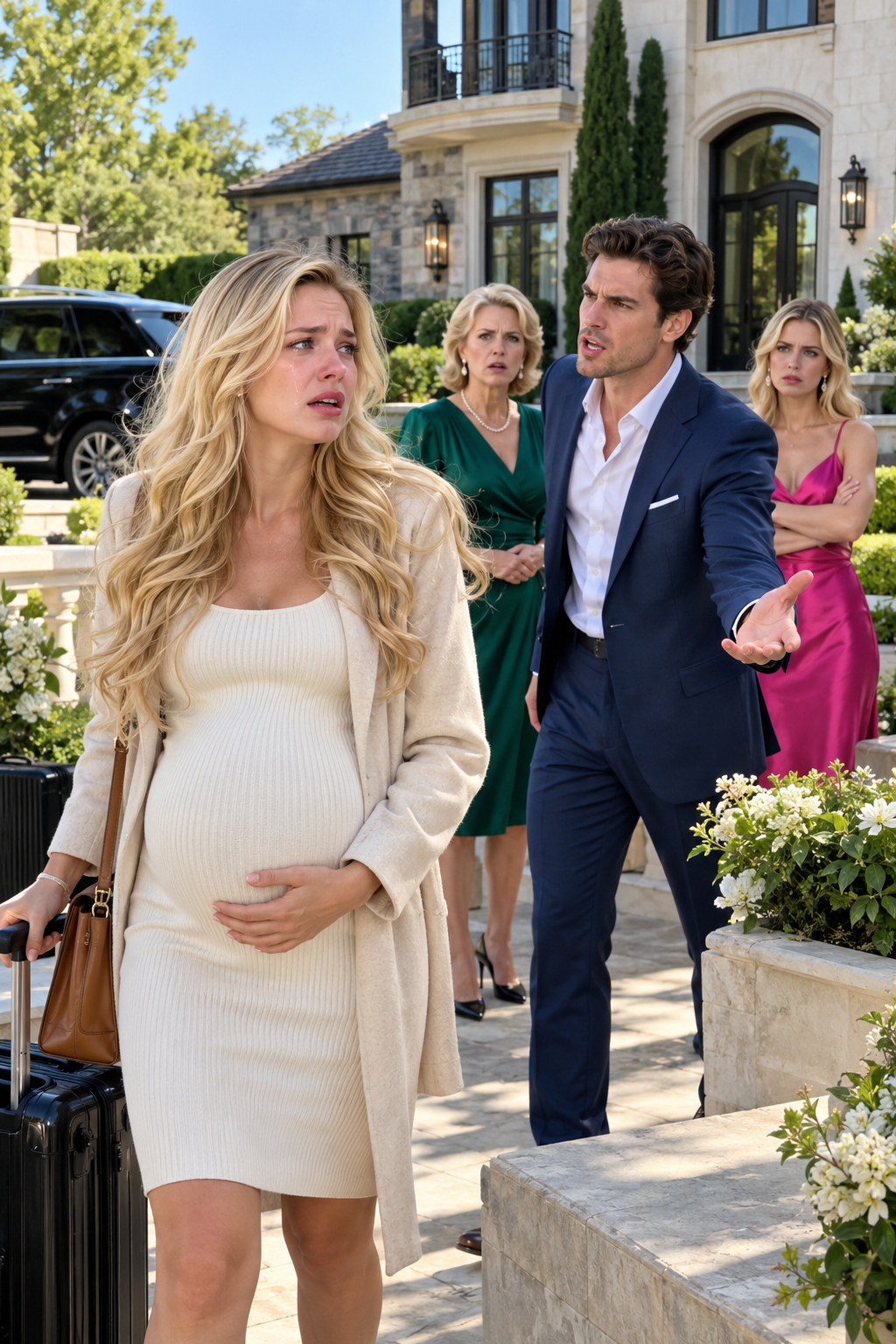
His Family Threw Her Out for His Mistress—Unaware She Had Just Inherited a Billion-Dollar Empire That Owned Their Future
The night my husband introduced his mistress to his parents, my mother-in-law was wearing the diamond necklace I had given her for Christmas.
Then she looked directly at me and said, “Hannah, have some dignity. Grant has chosen someone better suited to this family.”
I didn’t scream.
I didn’t throw the wine.
I didn’t tell them that less than three hours earlier, an attorney in Manhattan had informed me I had inherited an estate valued at more than $1.2 billion.
Instead, I folded my napkin.
And listened.
My name is Hannah Mercer Caldwell.
I was thirty-four years old, married for eight years, and until that Thursday evening, I believed I understood exactly what kind of life I had built.
My husband, Grant Caldwell, came from what people in Atlanta liked to call “old money.”
The truth was more complicated.
The Caldwells owned Caldwell Development Group, a luxury real-estate company founded by Grant’s grandfather. Twenty years earlier, the family had been genuinely wealthy.
By the time I married Grant, they were still living like billionaires.
But they weren’t billionaires.
Not anymore.
There were mansions.
There were country-club memberships.
There were photographs with politicians.
There were charity galas.
There were private-school fundraisers where Margaret Caldwell, my mother-in-law, entered every ballroom as if she had personally purchased the building.
What there wasn’t was cash.
I discovered that slowly.
Grant never discussed money honestly.
His father, Richard, called financial questions “unpleasant.”
Margaret called them “vulgar.”
And whenever I suggested Grant reduce his spending, he would smile and tell me, “You worry too much.”
I had spent most of our marriage believing I was the financially cautious one in a wealthy family.
I was wrong about both parts.
I wasn’t merely cautious.
And the Caldwells weren’t wealthy.
Not anymore.
That afternoon, at p.m., I received a phone call while sitting inside my small consulting office in Buckhead.
“Mrs. Caldwell?”
“My name is Samuel Levine. I represent the estate of Evelyn Mercer Hart.”
Evelyn had been my grandmother’s older sister.
She had no children.
When I was young, everyone called her Aunt Evelyn, although technically she was my great-aunt.
She was brilliant, intimidating, private, and famous within our family for disappearing into work for months at a time.
I knew she had been successful.
I did not know how successful.
I hadn’t seen her in almost six years.
Samuel asked me to come to his office.
At first, I thought Evelyn had left me something sentimental.
Her lake house.
Maybe a trust worth a few hundred thousand dollars.
Instead, Samuel placed a thick folder on the conference table.
“Mrs. Caldwell, Ms. Hart died twelve days ago.”
My chest tightened.
I had known she was ill, but she had forbidden relatives from turning her final months into a spectacle.
“I’m sorry,” Samuel said.
Then he opened the folder.
Evelyn had spent forty-three years quietly building Hart Meridian Holdings, a private investment company with interests in commercial property, infrastructure, logistics, medical technology, and private credit.
She owned controlling interests through layers of corporations few people associated with her personally.
The consolidated estate valuation was approximately $1.27 billion.
I stared at Samuel.
“I think you have the wrong Hannah.”
He almost smiled.
Then he showed me Evelyn’s signature.
She had left eighty-one percent of her personal estate to me.
Not because I was her closest relative.
Because, according to her letter, I was the only relative who never asked her for money.
I cried when I read that.
Not because of the billion dollars.
Because of the final paragraph.
Money doesn’t reveal character, Hannah. It removes the excuses people use to hide it. Watch carefully what people do before they know what you have.
I didn’t realize how quickly I would need that advice.
At p.m., Grant texted me.
Dinner. My parents’ house. . Important.
When I arrived, Margaret’s housekeeper took my coat but wouldn’t meet my eyes.
That was the first sign.
The second was the woman sitting beside my husband.
Serena Blake.
Thirty-one.
The daughter of one of Richard Caldwell’s oldest business associates.
I had met Serena at charity events.
I knew she and Grant had become “close” through a development project.
I just hadn’t realized how close.
Grant stood.
“Hannah, sit down.”
“Why is Serena here?”
Margaret sighed as though I were embarrassing everyone.
Grant walked toward me.
“There’s no easy way to say this.”
“There usually isn’t when another woman is sitting in your wife’s chair.”
Serena lowered her eyes.
Not from shame.
To hide a smile.
Grant exhaled.
“I want a divorce.”
The room became completely silent.
Richard stared into his whiskey.
Margaret sat perfectly upright.
Serena touched her stomach.
That movement told me everything.
Or at least, I thought it did.
Grant saw me notice.
“Serena’s pregnant.”
The betrayal should have knocked the air out of me.
Instead, something strange happened.
I became calm.
Almost unnaturally calm.
Maybe because only a few hours earlier, my entire understanding of my future had changed.
Maybe because once something breaks completely, you stop worrying about cracks.
“How long?” I asked.
Grant hesitated.
“Six months.”
I nodded slowly.
“So while I was sitting beside your mother during her surgery…”
Nobody spoke.
“You were sleeping with Serena.”
“While I handled the contractors renovating this house…”
Margaret’s expression tightened.
“While I organized your father’s seventieth birthday…”
Richard looked away.
“While I was helping refinance Grant’s office…”
Grant’s face changed.
That was when Margaret delivered the line I would remember for the rest of my life.
“Grant needs a wife who can move this family forward.”
I looked at her.
“And that’s Serena?”
“She understands our world.”
I almost laughed.
Their world.
A world held together by borrowed money and carefully cropped photographs.
Grant slid an envelope across the table.
Inside were preliminary divorce papers.
“You’ll receive a fair settlement,” he said.
“How generous.”
“I’m serious, Hannah.”
Serena finally spoke.
“None of us wanted you to be humiliated.”
I looked directly at her.
“You came to my husband’s family dinner carrying his baby.”
She swallowed.
“If humiliation bothered you, Serena, you chose a strange way to avoid it.”
Margaret stood.
“That’s enough bitterness.”
Then came the final insult.
She had packed several of my belongings.
Two suitcases were waiting near the front door.
Grant said our house was technically owned through a Caldwell family entity.
Until the divorce was resolved, he wanted me gone.
Eight years of marriage.
Reduced to two suitcases.
I picked up my purse.
I didn’t touch the luggage.
Grant frowned.
“You’re not taking your clothes?”
“I’ll send someone.”
Margaret gave a tiny, satisfied smile.
She mistook calmness for defeat.
That was her first mistake.
Grant followed me outside.
For half a second, he looked uncertain.
“You’ll be okay.”
I studied the man I had slept beside for nearly a decade.
The man who still thought my greatest financial security was whatever settlement he decided to offer me.
Then my phone rang.
Samuel Levine.
I answered.
“Mrs. Caldwell,” he said, “there’s one additional matter regarding Hart Meridian’s private-credit portfolio.”
“What matter?”
I looked through the dining-room window.
All watching me.
Samuel continued.
“Hart Meridian is currently the largest secured creditor of Caldwell Development Group.”
I stopped breathing.
“How large?”
“Approximately eighty-seven million dollars.”
I slowly turned toward the house.
Inside, Richard was pouring champagne.
Samuel continued.
“The Caldwell loans are in technical default.”
And suddenly, Aunt Evelyn’s final words made perfect sense.
Watch carefully what people do before they know what you have.
I looked through the window one final time.
Then I smiled.
“Samuel,” I said quietly.
“Tomorrow morning, I want to see everything.”
By the next morning, I was sitting inside Hart Meridian’s headquarters in downtown Atlanta.
There was no giant sign outside.
No marble monument to Evelyn.
Just three understated floors inside a glass tower overlooking the city.
That was exactly her style.
Real wealth, she once told me, rarely needed applause.
Samuel introduced me to Evelyn’s executive team.
Chief financial officer.
General counsel.
Head of private credit.
Chief investment officer.
More than one hundred professionals worked directly for Hart Meridian, with thousands more working for companies it controlled.
For four hours, I learned what I had inherited.
Then we reached Caldwell Development Group.
The file was ugly.
Grant’s grandfather had built a respected company.
Richard had expanded too aggressively.
Grant had made it worse.
Luxury condos.
Golf communities.
A disastrous resort project in South Carolina.
An unfinished mixed-use development outside Nashville.
Debt was piled upon debt.
Hart Meridian had purchased much of that debt eighteen months earlier through a distressed-credit fund.
The Caldwells never knew the ultimate beneficial owner.
They only knew the lender as HM Capital Partners.
“My husband knows about this loan?” I asked.
Samuel nodded.
“He signed several guarantees personally.”
That surprised me.
Grant had always claimed the family company was practically debt-free.
“How close are they to collapse?”
The chief financial officer answered.
“Without restructuring? Months.”
I sat back.
Something inside me wanted revenge.
Immediate revenge.
Call the loans.
Seize the assets.
Destroy them.
But Evelyn’s letter was still sitting in my purse.
Money reveals character.
It also reveals yours.
“I’m not using this company to settle my divorce,” I said.
Samuel nodded approvingly.
“But,” I continued, “if Caldwell Development violated its agreements, we enforce them exactly as we would against anyone else.”
“That,” Samuel said, “is precisely what Evelyn would have wanted.”
The deeper investigation uncovered something worse.
Grant had been hiding assets.
Not only from creditors.
For nearly two years, he had moved marital money into entities controlled by Richard.
There were transfers to Serena’s consulting company.
Payments for an apartment.
A Mercedes.
More than $640,000 in expenses connected to the affair.
Then our forensic accountant found my signature on a document.
Except I had never signed it.
It authorized the transfer of my interest in a small investment account into a Caldwell-controlled trust.
I stared at the page.
“That isn’t my signature.”
Samuel’s expression hardened.
“I assumed not.”
The divorce had just become something very different.
I hired attorney Laura Pierce, one of Atlanta’s toughest family-law litigators.
Laura read through the documents.
Then she looked at me.
“Your husband believes you’re financially dependent on him.”
She smiled.
“Let him continue believing that.”
For the next eleven days, I did almost nothing publicly.
That terrified Grant more than anger would have.
Then called.
Then texted again.
We should keep this civil.
Absolutely.
Three minutes later:
My attorney will contact yours.
Then I blocked him.
Margaret was less restrained.
She sent me a message explaining that the Caldwell name had “opened doors” for me and hoped I would remember their generosity.
I stared at that sentence for several seconds.
Then deleted it.
The Caldwells had no idea the doors were about to swing in the opposite direction.
At the first divorce mediation, Grant entered wearing a navy suit and the expression of a man arriving to finalize an acquisition.
Serena waited outside.
Apparently she had already begun publicly behaving like the next Mrs. Caldwell.
Grant’s attorney offered me $250,000.
Eight years of marriage.
Two hundred fifty thousand dollars.
No interest in our home.
No claim against Grant’s company interests.
Confidentiality agreement.
And I had to release all potential claims concerning “financial transactions occurring during the marriage.”
Laura slid the document back.
Grant leaned forward.
“Hannah, be reasonable.”
I looked at him.
“You run a consulting business that barely clears six figures. I’m trying to make sure you land on your feet.”
Laura glanced at me.
I could tell she was fighting a smile.
Grant continued.
“You don’t understand how expensive litigation gets.”
“I’ll manage.”
His attorney whispered something to him.
Grant shook his head.
Then his voice softened.
“Don’t turn this ugly because you’re hurt.”
There it was.
He needed me emotional.
Because emotional women could be dismissed.
Bitter wife.
Jealous wife.
Abandoned wife.
He didn’t know I had spent the previous week reviewing eighty-seven million dollars of his family’s debt.
Laura opened a folder.
“We have several questions about asset transfers made by Mr. Caldwell during the marriage.”
Grant’s expression changed.
“Transfers?”
She placed the forged authorization on the table.
Grant looked at it.
For one second—only one—I saw fear.
Then he recovered.
“I don’t know anything about that.”
Laura nodded.
“Excellent. Then you won’t object to forensic discovery.”
His attorney immediately requested a private conference.
Mediation ended thirty minutes later.
No settlement.
Outside the building, Serena was waiting beside a white Mercedes.
My Mercedes.
Technically, Grant had purchased it using marital funds.
She leaned against the hood.
I kept walking.
She stepped forward.
“You need to stop dragging this out.”
She was wearing an emerald-green dress and oversized sunglasses.
She looked expensive.
Victorious.
“You seem comfortable,” I said.
“Grant and I want to start our life.”
“Then start it.”
“You’re still holding on.”
“No, Serena.”
I looked at the car.
“At this point, I’m auditing.”
Her smile disappeared.
Two weeks later, Caldwell Development missed an interest payment.
Richard called HM Capital Partners demanding an extension.
He had no idea he was ultimately asking me.
Our credit committee reviewed the request.
Under normal conditions, Hart Meridian might have granted another thirty days.
Then auditors discovered Caldwell Development had transferred collateral without lender consent.
That was a major covenant violation.
Hart Meridian issued formal notice.
Forty-eight hours later, Grant called me from an unknown number.
I almost didn’t answer.
“Hannah, did you talk to anyone?”
“About what?”
“My family’s company.”
“Why would I?”
“Something is happening with our lender.”
I nearly admired the absurdity.
He had thrown me out of our marriage.
Now he wanted financial advice.
“I’m sure your father can handle it.”
“You know corporate restructuring.”
“So does Serena, apparently. I thought she understood your world.”
He hung up.
Three days later, Margaret discovered the divorce was becoming public within Atlanta society.
Suddenly she wanted lunch.
I declined.
She arrived at my office anyway.
Except I had stopped working from my old consulting office.
She didn’t know that.
So she called.
“Where are you?”
“Your office is empty.”
“To where?”
I looked around Evelyn’s former executive office on the thirty-second floor.
“Somewhere with a better view.”
Margaret’s voice sharpened.
“Hannah, this childish behavior needs to end.”
“What behavior?”
“Grant made mistakes. Men do. But you are trying to punish the entire family.”
I almost laughed.
“You mean by asking where our marital money went?”
“You were taken care of.”
“That’s an interesting description.”
“You had a beautiful home.”
“Owned by your family company.”
“Vacations.”
“Paid partly through business debt, apparently.”
That one landed.
Margaret lowered her voice.
“You’ve been snooping.”
“No. My attorney has been doing discovery.”
“Richard is under enormous pressure.”
“I’m sorry to hear that.”
And I meant it.
I didn’t hate Richard.
But sympathy was not the same as surrender.
Then Margaret said something extraordinary.
“If you accept Grant’s offer, perhaps Richard could find a consulting position for you.”
I closed my eyes.
A billion-dollar inheritance.
And my mother-in-law was offering me a job.
“Margaret?”
“Do you remember the night you told me Grant needed a wife who could move the family forward?”
“I remember.”
“You were right about one thing.”
“This family definitely needs someone to move it forward.”
I ended the call.
The next surprise came from Serena.
Or more accurately, from her medical records.
During divorce discovery, Grant’s attorney aggressively challenged several transfers connected to Serena.
That forced Serena’s consulting business into the case.
Her financial records showed payments to a private fertility clinic.
Laura initially assumed Grant and Serena had undergone treatment.
Then she found the dates.
The clinic visits began seven months before Serena claimed her relationship with Grant became serious.
And the invoices named another patient.
Serena Blake / Nathan Cole.
Nathan Cole was married.
And he was Richard Caldwell’s business partner.
The same Nathan Cole whose daughter had been one of Serena’s college roommates.
Laura looked at me across the table.
“This doesn’t prove paternity.”
“But it raises an interesting question.”
Grant had insisted Serena was five months pregnant.
The timeline didn’t fit neatly.
A court-ordered paternity test was not automatic.
But Grant voluntarily requested one after his lawyer privately confronted him with what we had discovered.
The results arrived ten days later.
Grant Caldwell was not the father.
According to Laura, he sat completely silent for almost three minutes.
Then he called Serena.
Whatever happened during that conversation ended their relationship.
Serena disappeared from the Caldwell mansion the following morning.
But the greatest betrayal was still coming.
Because Serena’s deception exposed something else.
She hadn’t entered Grant’s life by accident.
Richard knew about her relationship with Nathan.
Months earlier, Richard had learned Nathan was preparing to withdraw from a major Caldwell project.
Richard encouraged Serena to stay close to Grant because she was feeding the family information about Nathan’s business plans.
Somewhere along the way, Grant and Serena began sleeping together.
Margaret learned about the affair.
Instead of stopping it, she supported it.
Because she believed Serena’s family money could help rescue Caldwell Development.
I had not simply been betrayed by my husband.
I had been removed like an inconvenient employee from a family merger.
When Grant finally learned the full truth, the picture he had created for himself collapsed.
Serena didn’t love him.
His parents had encouraged the relationship partly for money.
The baby wasn’t his.
His company was approaching foreclosure.
And his wife—the woman he dismissed as financially irrelevant—had discovered everything.
Yet he still didn’t know the biggest secret.
That changed on November 18.
Caldwell Development requested a final restructuring meeting with HM Capital Partners.
Richard arrived first.
Grant came beside him.
Margaret insisted on attending, although she had no official role in the company.
Their attorneys were there.
Their restructuring advisers were there.
Six representatives from Hart Meridian were already seated inside the conference room.
There was one empty chair at the head of the table.
Richard looked around.
“Where is Mr. Hart?”
Samuel Levine glanced toward the door.
“There is no Mr. Hart.”
Then I walked in.
Grant stood so quickly his chair rolled backward.
Margaret went completely still.
Richard’s face drained of color.
I was wearing a simple cream suit.
No dramatic diamonds.
No entourage.
Just Evelyn’s fountain pen in my hand.
“Hannah?” Grant whispered.
I took the empty chair.
“Good morning.”
Nobody sat.
Samuel gestured politely.
“Perhaps we should begin.”
Richard looked from me to Samuel.
“I don’t understand.”
Samuel answered.
“Mrs. Caldwell recently inherited the controlling interest in Hart Meridian Holdings following the death of Evelyn Mercer Hart.”
Margaret’s mouth opened.
Grant said nothing.
Samuel continued.
“Hart Meridian controls HM Capital Partners.”
Richard slowly sat down.
I opened the restructuring file.
“You owe Hart Meridian approximately eighty-seven million dollars.”
Grant finally spoke.
“You own our debt?”
“Hart Meridian does.”
“You knew?”
“Not when you began the affair.”
His face tightened.
“Not when Serena got pregnant.”
Margaret looked down.
“And not when your mother packed my bags.”
Margaret flinched.
“I found out that evening.”
Richard looked physically sick.
“How much did you inherit?”
I could have avoided answering.
Instead, I said quietly:
“The current estate valuation is approximately $1.27 billion.”
Margaret stared at me as though I had suddenly become a different species.
That reaction taught me something I never forgot.
I had not changed.
Her perception of my usefulness had.
Within seconds, her entire posture softened.
I raised one hand.
“Please don’t.”
Her mouth closed.
Richard leaned forward.
“We can work something out.”
“That’s why we’re here.”
Grant stared at me.
“You planned this.”
“I don’t believe you.”
“You think I arranged Aunt Evelyn’s death, your affair, Serena’s lie, your father’s debt, and the forged document?”
He looked away.
“I didn’t create your problems, Grant.”
I placed the credit report in front of him.
“I simply became powerful enough that you could no longer hide them from me.”
Samuel outlined Hart Meridian’s proposal.
We would not immediately liquidate Caldwell Development.
Hundreds of innocent employees depended on the company.
Dozens of vendors would be hurt.
Projects would collapse.
Families would lose jobs.
I refused to burn down a company just because the family controlling it had burned down my marriage.
Instead, Hart Meridian offered restructuring.
But there were conditions.
Richard had to step down as CEO.
Grant had to resign from the board.
Independent management would be appointed.
Certain non-core family assets would be sold.
Private jets.
Unused vacation property.
Luxury vehicles owned through company subsidiaries.
Accounting controls would be implemented.
And Hart Meridian would convert part of its debt into equity.
The Caldwell family would lose control.
Richard stared at the papers.
“You’re taking my father’s company.”
I met his eyes.
“Debt took your father’s company. I’m offering it a chance to survive.”
Margaret looked at me with tears in her eyes.
“You can’t do this to family.”
I almost couldn’t believe she said it.
She swallowed.
I leaned back.
“When I sat at your dinner table as your daughter-in-law, you packed two suitcases and told me your son needed someone better.”
Her face reddened.
“When you believed I had nothing, I wasn’t family.”
Nobody spoke.
“So please don’t make me family now because you discovered my net worth.”
Margaret lowered her eyes.
Grant’s voice cracked.
“Hannah, can we talk privately?”
I considered it.
Then nodded.
We stepped into an adjacent conference room.
The door closed.
For the first time since our marriage ended, Grant looked exhausted.
Not polished.
Not confident.
Not like a Caldwell.
Just a man.
“Serena lied to me.”
“My parents used me.”
“They encouraged you. You still made your choices.”
Then he looked at me.
“Did you ever think about telling me about the inheritance?”
“The night you introduced me to your mistress.”
He closed his eyes.
For a moment, I saw the full weight of his choices reaching him.
“If that dinner had been different…”
I interrupted gently.
“But it wasn’t.”
He looked at the floor.
“I loved you.”
His head came up.
“You loved how safe I made your life.”
“That’s not fair.”
“No, Grant. Fair would have been telling me you were unhappy before beginning an affair.”
He had no answer.
Then came the question I knew he wanted to ask.
“Is there any chance for us?”
I looked at the man I had once planned to grow old with.
There was a time when hearing him ask that would have destroyed me.
Now, it simply made me sad.
His eyes filled.
I continued.
“If Serena’s baby had been yours, you would never have asked.”
He didn’t deny it.
“If your company were healthy, you would never have asked.”
Still nothing.
“If I had inherited ten thousand dollars instead of a billion, you would never have asked.”
His silence was the answer.
I opened the door.
“We should go back.”
The divorce was finalized four months later.
Grant withdrew his attempt to enforce the original settlement proposal.
The forensic evidence made negotiation simpler.
I kept my separate inheritance entirely intact.
The forged transfer involving my investment account was reversed.
Grant reimbursed a significant portion of the marital funds spent on Serena.
I received my share of the legitimate marital estate.
No revenge settlement.
No public humiliation clause.
No demand that he leave Atlanta.
I wanted something better than punishment.
I wanted closure.
Serena eventually admitted she had known there was a possibility Grant wasn’t the baby’s father.
Nathan Cole was confirmed as the father.
His marriage ended shortly afterward.
I never spoke to Serena again.
Richard accepted Hart Meridian’s restructuring.
Caldwell Development was renamed Caldwell Urban Partners, partly to preserve the reputation of the founder and partly to signal the end of family control.
Professional management stabilized the company.
Two failing projects were sold.
One resort was converted into a senior-living community.
The Nashville development was redesigned.
Within eighteen months, the company was profitable again.
Almost nine hundred employees kept their jobs.
That mattered to me more than destroying the Caldwell name ever could have.
Richard sent me one letter.
You saved a company my pride nearly destroyed. I understand why you will never forgive what happened, but I want you to know that I finally understand the difference between protecting a legacy and protecting an ego.
I never answered.
But I kept the letter.
Margaret took the collapse of her social position harder.
Without company-funded galas, cars, travel, and unlimited expense accounts, the version of her life she had carefully displayed began disappearing.
Friends stopped calling.
Invitations slowed.
People she had spent decades impressing moved on to someone richer.
Six months after the divorce, she called me.
I almost ignored it.
Then I answered.
“Hello, Margaret.”
Her voice sounded smaller than I remembered.
“I wanted to apologize.”
I remained silent.
“I was cruel to you.”
“I judged you based on what I thought you could contribute to this family.”
“And when I learned about your inheritance, I realized how ugly that was.”
I stood by the window of Evelyn’s office.
Atlanta stretched beneath me.
“Margaret, the inheritance didn’t make what you did ugly.”
She became quiet.
“It only made it obvious to you.”
She began crying.
I wasn’t happy about it.
That surprised me.
For months, I imagined there would be satisfaction in watching the people who humiliated me suffer.
There wasn’t.
There was only distance.
“I hope you build a good life,” I told her.
Then I ended the call.
Grant changed too.
I heard pieces of his life through attorneys and mutual acquaintances.
For the first time, he took an ordinary executive job at a real-estate investment company where nobody cared that his grandfather once had a building named after him.
He rented an apartment.
He sold his sports car.
He started therapy.
Two years later, I received a handwritten birthday card.
There were only three sentences.
I spent most of my life believing value came from what people could give me.
Losing you taught me what that belief cost.
I hope you’re happy, Hannah.
But not because I had $1.27 billion.
I was happy because I finally understood something Aunt Evelyn had spent her entire life learning.
Money can buy privacy.
Money can buy opportunity.
Money can buy the time to recover.
But money cannot turn betrayal into loyalty.
It cannot make someone love you correctly.
And it cannot repair a relationship whose foundation disappeared long before the bank balance changed.
Three years after that terrible dinner, I stood on the terrace of a renovated building in downtown Atlanta.
The building had once been one of Caldwell Development’s most troubled properties.
Now it housed affordable apartments, small-business offices, and a nonprofit entrepreneurship center funded by the Evelyn Hart Foundation.
A bronze plaque near the entrance carried Aunt Evelyn’s name.
Samuel stood beside me during the opening ceremony.
“She would have liked this,” he said.
“I hope so.”
“You know,” he added, “your aunt once told me she suspected the Caldwells were financially unstable.”
I looked at him.
“She was considering buying their debt long before you married Grant.”
For the first time, the irony felt funny rather than painful.
“She really did plan everything.”
“Almost everything.”
Across the terrace, children from a neighborhood youth program were taking photographs with the Atlanta skyline behind them.
Employees were laughing.
Music was playing.
Life was moving.
Samuel handed me an envelope.
“What’s this?”
“We found it in one of Evelyn’s personal files. It was marked for you after the Hart Foundation opened its first major project under your leadership.”
I opened it.
Inside was a single handwritten page.
The final sentence stopped me.
If you are reading this, Hannah, I hope you learned that inheritance is not about receiving what someone owned. It is about deciding what deserves to continue.
I read it twice.
Then folded the letter carefully.
That evening, I drove home alone.
Not to the Caldwell mansion.
Not to some enormous estate designed to prove I had won.
I had bought a comfortable house outside the city with trees behind it, sunlight through the kitchen windows, and a porch where nobody cared about last names.
I made dinner.
Poured a glass of wine.
And stepped outside.
My phone buzzed.
A financial magazine had published its annual list of influential private investors.
My photograph was on the homepage.
Three years earlier, Margaret Caldwell would have framed it.
Grant would have bragged about it.
Serena would have envied it.
I turned the phone facedown.
The sunset was more interesting.
Because that was the final thing I learned.
The night the Caldwells threw me out, they believed I had lost everything.
My husband.
My place in their family.
But losing their version of my life gave me something their money never had.
I didn’t inherit my revenge.
I inherited a choice.
I didn’t use a billion dollars to destroy the people who betrayed me.
I used it to make sure they could never control me again.
And in the end, that was worth far more than watching them lose.
Because the greatest victory wasn’t that Grant discovered his abandoned wife was suddenly a billionaire.
It was that by the time he discovered it—
I no longer needed him to regret leaving me.
✓ Lynn R. Adams
His Family Threw Her Out for His Mistress—Unaware She Had Just Inherited a Billion-Dollar Empire That Owned Their Future The night my husband introduced his mistress to his parents, my mother-in-law …