Her Family Took the Inheritance and Threw Her Out—But the $6 Train Depot Hid Twelve Sealed Mail Cars and Grandpa’s Final Claim
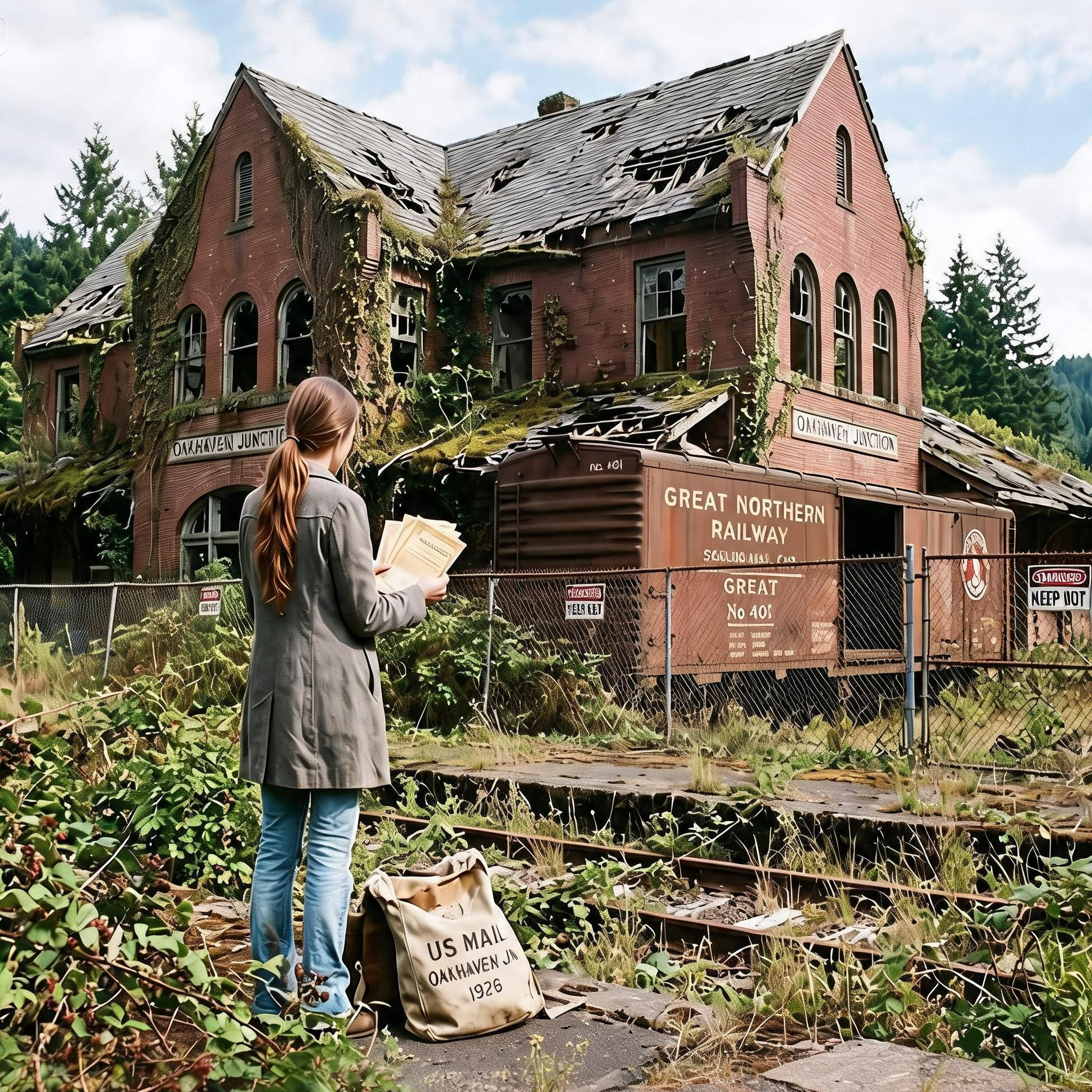
Her Family Took the Inheritance and Threw Her Out—But the $6 Train Depot Hid Twelve Sealed Mail Cars and Grandpa’s Final Claim
Three days after her grandfather’s funeral, Claire Bennett’s uncle changed the locks on the house she had spent twelve years helping pay for and told her she had ten minutes to get off the porch.
By sunset, her relatives were celebrating what they believed was a $4.8 million inheritance.
Claire walked away carrying one waitress uniform, forty-three dollars, and a tarnished brass railroad key nobody in the family knew existed.
She didn’t argue.
She didn’t beg.
She didn’t tell them that her grandfather had mailed her a letter six weeks before he died with four words written across the envelope in red ink:
DON’T LET THEM SEE THIS.
Rain had started over the hills outside Ashford, Pennsylvania, by the time Claire reached the end of Maple Street.
Behind her stood the Bennett house, a broad brick colonial with white columns and a three-car garage her grandfather had purchased in 1989.
Claire had spent half her childhood there.
She had spent nearly all her adulthood keeping it alive.
The second-floor bathroom window she had paid to replace glowed yellow.
The furnace she had financed hummed behind the basement wall.
The roof she had covered with four years of waitress tips shed rain in silver sheets.
And standing beneath the covered porch, warm and dry, was her uncle Richard Bennett.
He held an umbrella he didn’t need.
“You forgot your boxes,” he called.
Claire stopped beside her sixteen-year-old Honda.
Richard pointed toward the curb.
Three cardboard boxes sat beside the trash cans.
Her clothes.
A ceramic bowl her grandmother had given her.
Two framed photographs.
And the nursing-school textbooks Claire had never finished using.
Claire looked at the boxes.
Then at Richard.
“You packed my room?”
“My house now.”
“It belonged to Grandpa.”
“Past tense.”
Richard smiled.
He was fifty-four, silver-haired, broad-shouldered, and dressed like the regional bank executive he had been until he resigned six months earlier under circumstances nobody discussed at Thanksgiving.
Beside him stood his wife, Dana.
Behind Dana were Claire’s cousin Tyler and Tyler’s fiancée, Mallory.
The entire little court.
Waiting to see whether the waitress would finally break.
Dana folded her arms.
“You should be grateful Richard let you stay this long.”
Claire glanced at her watch.
“Grandpa died seventy-two hours ago.”
“And the will was clear.”
That was the lie they had repeated since Monday.
The attorney who handled the family meeting had read a will dated eleven months earlier.
Richard received the house.
Dana received two rental properties.
Tyler received investment accounts.
Claire received an abandoned railroad depot outside town.
Purchase value recorded on an old county deed:
Six dollars.
When the lawyer announced it, Tyler had laughed.
Not chuckled.
“Six bucks?” he said. “Grandpa left Claire a sandwich.”
Mallory had whispered loudly, “Probably because she served him enough of them.”
Nobody laughed harder than Richard.
Claire had said nothing.
That bothered them more than tears would have.
Richard descended one porch step now.
“You want advice?”
“I’m giving it anyway.”
He enjoyed pauses.
Used them like little knives.
“Sell that depot to the county if they’ll take it. Then move somewhere cheap. You’re thirty-two, Claire. The family can’t keep rescuing you.”
Something inside Dana’s expression shifted.
Even she knew that sentence was obscene.
Claire had never been rescued by them.
She opened her trunk.
Richard kept talking.
“You’re quiet because you know I’m right.”
Claire lifted the first wet cardboard box.
He frowned.
“I’m quiet because you talk too much when you think you’ve won.”
Tyler stepped forward.
“What’s that supposed to mean?”
Claire placed the box inside her trunk.
“Whatever keeps you awake tonight.”
She collected the other two.
Closed the trunk.
Then got behind the wheel.
Richard’s hand slapped the roof before she could shut the door.
“One more thing.”
Claire looked at his fingers.
He removed them.
“There are old family documents in the house,” he said. “Grandpa collected things. If you took anything belonging to the estate, return it.”
Claire’s expression didn’t change.
Richard’s gaze sharpened.
“Anything.”
“Be specific.”
“The attorney said your depot deed is yours. Nothing else.”
“So you’re searching for something.”
Dana turned toward him.
He ignored her.
Claire saw it then.
Not certainty.
Small, but real.
She started the engine.
Richard leaned toward the open window.
“You always thought Grandpa trusted you more than the rest of us.”
Claire shifted into reverse.
Richard’s jaw tightened.
She backed into the street.
Then she drove away.
For twelve years, Claire had worked the dinner shift at the Ashford Diner.
For twelve years, she had carried plates beneath fluorescent lights while everyone else in her family called it temporary.
For twelve years, she had slipped cash into an envelope marked HOUSE before buying anything for herself.
She paid when Grandpa’s prescription plan stopped covering his heart medication.
She paid when the property taxes jumped.
She paid when Richard said he was “between investments.”
She paid when Dana wanted the upstairs carpet replaced before Christmas because “people notice these things.”
She paid when Tyler wrecked his pickup and Grandpa quietly covered the insurance deductible so Richard wouldn’t have to.
She paid and stayed quiet.
She paid and was called unsuccessful.
She paid and watched people with larger salaries borrow from a seventy-eight-year-old man.
She paid and was still the one standing in the rain when he died.
The night before Harold Bennett passed away, Claire had been beside his hospital bed.
Not Richard.
Harold had slept for most of the evening.
At 11:17 p.m., his eyes opened.
They were cloudy but alert.
“I’m here.”
“Door closed?”
She checked.
His hand moved beneath the blanket.
He pulled out a small brass key attached to faded blue thread.
Claire frowned.
“What’s this?”
“Old railroad key.”
“You collect railroad keys.”
“Not that one.”
His breathing grew shallow.
Claire reached for the nurse-call button.
Harold caught her wrist.
“Listen first.”
So she did.
Harold Bennett had been a postal railway clerk before Claire was born.
Later he worked for the Pennsylvania Department of Transportation.
After retirement he became the kind of old man who kept every receipt, every deed, every stamped envelope and every photograph because, as he liked to say, “Paper remembers when people decide not to.”
His eyes stayed on hers.
“They’ll count money.”
“You know who.”
Claire did.
Harold swallowed.
“They’ll see the house. The apartments. The accounts.”
His fingers tightened around the key.
“Let them.”
Claire stared at him.
“Let them?”
“They’re going to think I punished you.”
He gave a weak smile.
“I didn’t.”
Then he whispered an address.
412 Foundry Road.
The abandoned Ashford Railway Mail Depot.
Claire knew it.
Everyone in town knew it.
A brick ruin beyond the old freight yard, boarded since the 1980s.
Harold had bought it in 1976.
For six dollars.
Back taxes and transfer fee.
“Why leave me a condemned building?”
Harold’s eyes closed.
“Because buildings lie.”
Claire waited.
His eyes opened again.
“Records don’t.”
A minute later the nurse entered.
Harold never explained.
He died at the next morning.
Six weeks earlier, however, he had already sent Claire the letter.
She had received it at the diner.
No return address.
Inside was one handwritten page.
Claire had read it once.
Then folded it into wax paper and taped it beneath the removable lining of her work shoe.
She was still wearing that shoe when Richard threw her out.
The letter began:
If you are reading this before I’m gone, do nothing yet.
If you are reading it after I’m gone, do even less.
Silence will make impatient people expose themselves.
The depot belongs to you alone.
Take the brass key.
Do not sell.
Do not demolish.
Do not allow Richard inside without your attorney present.
And whatever happens, do not open the west wall until you locate the federal railway inventory dated October 14, 1978.
Underneath Harold’s signature was one more sentence.
If Richard asks about twelve cars, tell him you don’t know what he means.
Claire had never heard anyone mention twelve cars.
Until the morning after the funeral.
Richard had been standing in Harold’s study speaking quietly into his phone.
Claire walked past the doorway.
Richard didn’t see her.
She heard him say:
“The depot’s empty. Dad cleared those cars decades ago.”
“No, she doesn’t know.”
Claire kept walking.
That was when she understood her inheritance might be worth more than six dollars.
She still didn’t know how much more.
At that evening, Claire parked behind the Ashford Diner.
Her boss, Louise Mercer, was taking a cigarette break beside the delivery door.
Louise was sixty-one, tough as brake dust, and had managed the diner since before Claire finished high school.
She looked at Claire’s loaded car.
Claire nodded.
Louise flicked ash into a coffee can.
“Your grandfather isn’t cold yet.”
“You need somewhere to sleep?”
“I can find something.”
“That wasn’t the question.”
Claire looked toward the kitchen windows.
Inside, a dishwasher pushed a rack through steam.
“Booth seven available?”
Louise snorted.
“Apartment over my garage.”
“I’ll pay.”
“You’ll shut up and take the key.”
Claire almost smiled.
Louise disappeared inside and returned with a brass house key.
Before handing it over, she said, “Your grandfather came in here last month.”
Claire looked up.
“Tuesday afternoon. Ordered pie. Didn’t eat it.”
“What did he want?”
“He asked whether you were still paying his gas bill.”
Claire’s jaw tightened.
“I told him I didn’t discuss employee business.”
“What did he say?”
“He said, ‘Good woman.’ Then he gave me this.”
Louise reached into her apron.
An envelope.
Claire’s name was written across it.
Her heartbeat changed.
Not faster.
“When did he tell you to give me this?”
“If you showed up homeless.”
Claire stared at Louise.
Louise shrugged.
“Harold knew his family.”
Claire opened the envelope carefully.
Inside was a business card.
Miriam Hale.
Attorney at Law.
Hale & Beckett.
Pittsburgh.
On the back, Harold had written:
She knows where the dead records are buried.
Call before entering the west room.
Claire went very still.
Louise watched her.
“That bad?”
“I don’t know yet.”
“I don’t know that either.”
Louise crushed out her cigarette.
“What do you know?”
Claire slipped the card into her wallet.
“That Grandpa expected this.”
At the next morning, Claire called Miriam Hale.
At 10:15, she was sitting across from her in a conference room overlooking the Monongahela River.
Miriam was seventy, maybe older.
Silver hair cut at her jaw.
No wasted motion.
She placed a recorder on the table.
“With your permission.”
Claire nodded.
Miriam turned it on.
“State your full name.”
“Claire Elizabeth Bennett.”
“Your relationship to Harold Bennett?”
“Granddaughter.”
“Did Harold give you a physical key?”
“Is it currently secure?”
“Did he give you instructions concerning 412 Foundry Road?”
“Have you allowed Richard Bennett access?”
Miriam stopped the recorder.
Claire waited.
Miriam opened a file.
“You’re probably wondering why your grandfather hired an attorney ninety miles away.”
“I’m wondering why everyone seems to know more about my inheritance than I do.”
“That was deliberate.”
“Because Harold believed your family might commit fraud.”
Claire’s eyes hardened.
“Against me?”
“Against him first.”
Miriam slid a photocopy across the table.
It was an old railroad diagram.
A rectangular depot.
Three loading platforms.
A mail-sorting floor.
Storage rooms.
And behind the west interior wall—
Claire leaned closer.
Twelve narrow rectangles were drawn along them.
Miriam tapped the page.
“Railway Post Office cars.”
Claire looked up.
“According to the last federal inventory.”
“You’re telling me twelve train cars are behind a wall?”
“I’m telling you twelve train cars were placed in secured indoor storage in 1978.”
“That part gets complicated.”
“I have time.”
Miriam studied her.
“I suspect your grandfather hoped you would say exactly that.”
She opened another file.
“In 1977, the old freight division around Ashford was being liquidated. Several railway mail cars had been decommissioned after postal sorting shifted away from rail. Most were scrapped.”
“Twelve weren’t.”
Miriam slid over a federal property disposition document.
“These twelve contained archival postal material involved in litigation.”
“What kind?”
“Undelivered registered mail. Closed postal-inspection files. seized documents. Insurance certificates. Deeds. Bond instruments. War-era correspondence. Court exhibits.”
Claire stared at her.
“Why weren’t they removed?”
“They were supposed to be.”
“Supposed to be?”
“A flood damaged the federal storage facility where the contents were headed. Temporary custody was transferred to the depot.”
“And then?”
“The railway reorganized.”
“And then?”
“Three agencies disputed responsibility.”
“And then?”
Miriam almost smiled.
“Government.”
Claire sat back.
“So Grandpa bought a depot containing federal evidence?”
Miriam tapped the deed.
“He purchased the real property.
The railcars and their contents were specifically excluded from the sale.”
“Then I don’t own them.”
That should have been disappointing.
Instead Claire heard Harold’s voice.
Records don’t lie.
“What do I own?”
“The building surrounding them.”
Miriam folded her hands.
“And, potentially, something much more valuable.”
“Leverage.”
Claire said nothing.
Miriam continued.
“In 1981, somebody erected an interior masonry wall closing off the western storage tracks.”
“My grandfather?”
“Richard Bennett.”
Claire blinked.
“My uncle would’ve been nine.”
“Richard senior.”
Claire’s great-uncle.
Harold’s older brother.
Dead sixteen years.
Miriam slid over another document.
A construction permit.
“You’ll notice the stated purpose.”
Claire read it.
STRUCTURAL REINFORCEMENT OF ABANDONED STORAGE BAY.
Miriam handed her another page.
Federal inspection request.
Access denied.
Postal Inspection Service follow-up.
No response.
Railroad asset inquiry.
Returned undeliverable.
Claire looked up.
“They hid the cars.”
“That’s what Harold spent decades trying to understand.”
Claire turned the papers slowly.
“Did he know what was inside?”
“Some of it.”
Miriam’s voice lowered.
“And he believed one item mattered to your family.”
“What item?”
“A land conveyance packet from 1949.”
Claire frowned.
Miriam placed a photograph on the table.
It showed Harold as a young man standing outside a textile mill with a woman Claire recognized from family pictures.
Her great-grandmother Evelyn.
“That mill,” Miriam said, “stood on sixty-two acres north of Ashford.”
“I know the property.”
Everyone did.
Bennett Industrial Park.
Warehouses.
Distribution buildings.
A medical supply plant.
Nearly a mile of commercial frontage.
“Your family sold most of it.”
“They lease it.”
Miriam nodded.
Claire’s eyes narrowed.
“What am I missing?”
“The Bennett family may never have owned it.”
Outside the glass wall, an elevator bell rang.
Claire looked again at the photograph.
“My family has collected rent there for decades.”
“Millions.”
“How many?”
“Your grandfather’s conservative calculation was thirty-eight million dollars in gross rents since 1986.”
Claire didn’t move.
Miriam slid a thin document toward her.
A photocopy of an index card.
REGISTERED PACKET 7814-B.
Sender: Ashford Textile Cooperative.
Recipient: Evelyn Bennett.
Contents listed: executed deed, mineral rights, trust instrument, employee ownership schedule.
PLACED IN FEDERAL HOLD.
“The cooperative was investigated for tax violations. The criminal case collapsed. The property packet should have been released.”
“But it wasn’t.”
Claire looked at the diagram again.
“It’s inside one of those cars.”
“Harold believed so.”
“And if the deed says what?”
“That Evelyn Bennett held the land in trust.”
“For whom?”
Miriam paused.
“Employees of the mill.”
Claire’s skin went cold.
Not because of money.
Because she understood.
Her great-grandmother had worked at the mill.
So had sixty-seven others.
Immigrants.
Women who stitched uniforms during the Korean War.
Men who loaded trucks at midnight.
Families whose names disappeared from the company history after the plant closed.
The Bennetts had told a different story for generations.
That Claire’s great-grandfather had acquired the property through business skill.
That Harold and Richard senior had inherited it.
That current leases belonged to their descendants.
“What happens if the trust is real?” Claire asked.
Miriam looked directly at her.
“Your family may have been collecting income belonging to dozens of beneficiary families for forty years.”
Claire exhaled once.
Not sharply.
Just enough.
“And Grandpa knew.”
“He suspected.”
“Why didn’t he expose it?”
“He tried.”
Miriam handed her a letter dated 1998.
Richard senior’s signature was at the bottom.
Claire read two paragraphs.
Then stopped.
The language was polite.
The threat wasn’t.
Harold was warned that reopening title questions would “destroy the Bennett name,” bankrupt relatives, and expose “unnecessary family history.”
“He backed down?” Claire asked.
“What happened?”
“Your grandfather began collecting evidence quietly.”
Miriam leaned back.
“He believed Richard senior removed several files from the depot before sealing the wall.”
“Stole them.”
“Possibly.”
“And my uncle?”
“May know more than he admits.”
Claire thought of the porch.
Anything belonging to the estate.
Richard’s fear.
“Why leave me the depot?”
Miriam’s answer came quickly.
“Because you were the only person Harold trusted not to sell the truth.”
That landed harder than any dollar amount.
Claire looked down.
Her grandfather had left Richard the polished house.
Dana the rentals.
Tyler the investments.
Things they could calculate.
Things they understood.
He left Claire a ruined building full of questions.
Because he knew she would stay long enough to answer them.
“What do we do next?”
Miriam slid one final document across the table.
A court order.
Signed two weeks before Harold died.
Claire read it twice.
“Is this active?”
“This authorizes entry?”
“Under federal supervision.”
Claire looked at the date.
Harold had planned everything.
Miriam nodded toward Claire’s purse.
“Do you have the key?”
Claire placed the brass key on the table.
Miriam looked at it.
“That,” she said, “does not open the depot.”
Claire’s eyes sharpened.
“What does it open?”
“Harold never told me.”
At noon the following day, two black government SUVs rolled through the weeds on Foundry Road.
Claire followed in Miriam’s sedan.
Behind them came a county structural engineer, a locksmith, a photographer, and a representative from the Postal Inspection Service named Daniel Cross.
The depot looked smaller than Claire remembered.
Three stories of brown brick.
Broken gutters.
Boarded windows.
A faded loading canopy.
Virginia creeper crawled over the eastern wall.
A rusted sign leaned beside the road.
ASHFORD RAILWAY MAIL TERMINAL.
Claire parked.
Wind rattled loose sheet metal overhead.
Daniel Cross approached.
Mid-forties.
Dark jacket.
Federal badge clipped at his belt.
“Ms. Bennett?”
“I need confirmation. Nobody has entered since your grandfather acquired full possession?”
“Not with my permission.”
Cross glanced at Miriam.
“That wasn’t my question.”
Claire met his eyes.
“I inherited the property four days ago. Before that, I can’t verify access.”
He looked toward the building.
“Your grandfather filed nine inquiries with our office over twenty-three years.”
“He was persistent.”
“That sounds like him.”
Cross smiled faintly.
“We’re here because of the court order, not because we’ve confirmed his theory.”
“Understood.”
The locksmith removed the chains.
The doors opened with a groan.
Dust floated through shafts of daylight.
Inside were rows of sorting tables.
Canvas mail sacks.
Broken clocks.
Pigeon droppings.
A rusted wheeled cart.
The air smelled of old paper and cold iron.
Claire stepped inside.
Her shoes echoed.
Near the center of the main floor stood a wooden desk.
A coffee mug still rested beside a ledger.
Frozen in time.
Miriam pointed west.
“That wall.”
It stretched nearly the width of the building.
Concrete block.
No windows.
Cross ran a flashlight beam along the base.
“Doesn’t match original construction.”
The engineer nodded.
“Different mortar.”
Claire walked to the wall.
Placed her palm against it.
Behind it, if her grandfather was right, twelve train cars had waited almost half a century.
Cross called over the photographer.
They documented everything.
Then the engineer marked a safe section.
A contractor drilled.
The first hole was only two inches wide.
Dust poured out.
Cross inserted a camera.
Everyone watched the monitor.
An old rail.
A curved steel side.
Paint faded nearly black.
Cross moved the camera.
White lettering emerged beneath the dust.
UNITED STATES MAIL.
Nobody spoke.
Claire’s stomach tightened.
The lens moved farther.
A second car.
Then a third.
Then another.
Cross whispered, “Jesus.”
Miriam looked at Claire.
The camera turned.
Rows of sealed railway mail cars disappeared into darkness.
One after another.
Cross immediately stopped the inspection.
“This becomes a federal evidence site.”
Claire nodded.
“Whatever procedure you need.”
“You won’t be allowed inside those cars until chain-of-custody arrangements are established.”
Cross studied her.
“You’re taking this calmly.”
Claire looked at the monitor.
“My family threw me out over a six-dollar building yesterday.”
She paused.
“I’m learning not to react early.”
That afternoon, Richard called fourteen times.
Claire answered the fifteenth.
“Where are you?” he demanded.
“Don’t play games.”
“What happened at the depot?”
Claire glanced through the diner pass-through window.
A cook flipped burgers.
“People saw federal vehicles.”
“Small town.”
“Did they open the wall?”
There it was.
Not Did you find anything?
Not What wall?
Did they open the wall?
Claire wiped a coffee ring from the counter.
“Which wall?”
Two seconds.
Richard recovered badly.
“The damaged wall. Dad told me about structural problems.”
“No, you said the depot was empty.”
“Then why are you worried?”
“I’m protecting the family.”
Claire looked toward booth three, where an elderly couple split meatloaf.
“From what?”
“Your stupidity.”
That sounded more familiar.
Richard lowered his voice.
“You don’t understand legal exposure. That building contains government property. You could lose everything.”
“I inherited six dollars.”
“Don’t be cute.”
Richard breathed into the phone.
Then tried a softer voice.
“Listen. Dana and I have talked. You can come back home.”
Claire almost laughed.
“That fast?”
“We were angry.”
“You changed the locks.”
“Heat of the moment.”
“You packed my underwear into a cereal box.”
“You’re family.”
“Yesterday I was a burden.”
His voice hardened again.
“Whatever is behind that wall belongs to the estate.”
“You don’t know that.”
“My deed does.”
“Dad was confused.”
“The probate court disagreed.”
“You think some old mail is going to make you rich?”
Claire leaned against the counter.
“That’s not what Grandpa cared about.”
Richard stopped breathing for a second.
Claire heard it.
She continued.
He hung up.
That evening, she found the apartment above Louise’s garage disturbed.
Nothing obvious.
No broken door.
No shattered window.
But Claire noticed things.
Her toothbrush lay with the bristles facing left.
She always placed it right.
The dresser drawer stood half an inch open.
Her folded diner apron had shifted.
The mattress edge was lifted.
Someone had searched the room.
Claire did not enter farther.
She called the police.
Then Miriam.
Then Cross.
The responding officer found no fingerprints worth preserving.
No forced entry.
“Could’ve forgotten to lock it,” he suggested.
Claire looked at him.
“I didn’t.”
The officer shrugged.
Louise did not.
She stood downstairs holding a tire iron.
“You know who?”
“I know who benefits.”
Claire checked the hiding place inside her waitress shoe.
The letter was still there.
So was the key.
The next morning, she moved both.
She rented a bank safe-deposit box.
Then she purchased a cheap decoy lockbox and left it beneath the apartment bed.
Inside she placed blank paper.
Two days later someone broke in again.
The lockbox disappeared.
Claire smiled when Louise told her.
“You expected that?”
“What now?”
“Now somebody believes they stole what I’m protecting.”
Louise stared at her.
“Harold taught you too much.”
Claire picked up her coffee.
“He taught me exactly enough.”
Federal teams began opening the west wall six days later.
Richard filed an emergency injunction.
He claimed partial ownership.
He alleged Harold lacked capacity when transferring the depot.
Medical records showed the opposite.
Then Richard did something smarter.
He stopped attacking Claire publicly.
Instead, he began calling relatives.
Second cousins.
People Claire saw only at weddings and funerals.
By Friday her phone filled with messages.
Don’t destroy Grandpa’s legacy.
Think about what you’re doing to the family.
Richard says you’re trying to seize property that doesn’t belong to you.
Tyler says you’re working with the government against us.
Dana says Grandpa was confused before he died.
One cousin sent only:
You’ve always been jealous.
Claire deleted none of them.
She saved screenshots.
At the diner, people whispered.
A local Facebook group claimed she had found “millions in gold” inside abandoned trains.
Another post said she was suing her family.
Someone photographed her Honda and wrote:
LOCAL WAITRESS THINKS SHE HIT JACKPOT.
Claire worked her shift.
Refilled coffee.
Carried pie.
Collected tips.
At p.m., Tyler walked in with Mallory and four friends.
He chose Claire’s section.
Of course he did.
Claire approached the table.
Tyler smiled.
“Champagne.”
“We don’t serve alcohol.”
“Too bad. We’re celebrating.”
Mallory giggled.
Claire waited.
Tyler leaned back.
“Dad’s attorney found something.”
“Congratulations.”
“Turns out Grandpa couldn’t legally give you the depot.”
Claire set six water glasses on the table.
“Interesting.”
“He filed something today?”
Tyler’s smile widened.
Claire looked at him.
He wanted fear.
He wanted questions.
He got neither.
“Anything else?”
“You’re about to lose that building.”
“Then you won’t need champagne.”
His friends laughed.
Tyler’s face changed.
Claire walked away.
At 11:08, Miriam called.
“Richard found an old partnership agreement.”
Claire sat on the rear steps behind the diner.
“It gives Bennett Family Holdings an option to repurchase the depot for ten dollars if Harold ceased using it for railway preservation.”
“Can they enforce it?”
“Possibly.”
Claire looked toward the dumpsters.
A raccoon moved behind one.
“Why aren’t you worried?”
“You don’t sound worried.”
“I’m thinking.”
Miriam went quiet.
Claire asked, “When was the agreement signed?”
“Harold and Richard senior.”
“What was Bennett Family Holdings?”
“An entity controlled by the brothers.”
“Does it still exist?”
“Who controls it?”
Claire nodded slowly.
“So he believes he can force me to sell for ten dollars.”
“And then he controls the depot.”
“Potentially.”
“What happens to the federal cars?”
“They remain federal property.”
“But he controls access.”
Claire stared at the dark parking lot.
This was why Richard had been confident.
He knew about the agreement.
Maybe Harold knew too.
Of course Harold knew.
Paper remembers.
Claire asked, “Send me every page.”
The contract arrived before midnight.
Claire sat at Louise’s kitchen table until a.m.
No legal training.
No business degree.
Just patience.
She read every line.
Then a third time.
At dawn, she circled one paragraph.
Called Miriam.
“I found something.”
By , Miriam was laughing.
Not politely.
Richard’s option applied only if the depot ceased being used for railway preservation for twelve consecutive months.
Harold had documented annual maintenance.
Structural surveys.
Archival storage.
Historic-preservation filings.
And one tiny detail Richard’s lawyer overlooked:
The twelve federal railway cars themselves legally constituted continuing railway preservation activity.
Richard’s own effort to prove they existed destroyed his repurchase claim.
The judge dismissed the action that afternoon.
That was the first payoff.
It was not the big one.
The west wall came down Monday.
One block at a time.
Behind it waited twelve enormous mail cars.
Dust-coated.
A red wax federal evidence mark remained intact on car number 7709.
Cross walked the line with two postal inspectors.
Claire stayed behind the yellow tape.
Car one contained mailbags.
Car two contained government records.
Car three contained registered parcels never released because of litigation.
Cars four and five held archived inspection cases.
Car six contained property documents.
That was where the first real shock appeared.
Registered Packet 7814-B was not there.
The shelf tag existed.
The storage location existed.
The packet did not.
Cross came to Claire.
“Your grandfather may have been wrong.”
Claire looked at the empty slot.
“You sound certain.”
“He expected theft.”
Cross studied her.
“Because whoever sealed the wall knew what was here.”
Cross looked toward the remaining cars.
Seven through twelve.
“We’re not finished.”
They opened car seven.
Government bonds.
Court records.
Personal property from long-closed investigations.
Then they reached twelve.
The brass key in Claire’s bank box began to make sense before anyone said a word.
Car twelve had no federal wax seal.
Instead it had a private brass padlock.
Green with oxidation.
Cross looked at Claire.
“Harold Bennett?”
“I think so.”
“Did he have authorization to lock federal equipment?”
“Probably not.”
Cross almost smiled.
“I appreciate the honesty.”
A locksmith examined it.
“Original lock. Could drill it.”
Claire thought of the key.
Everyone looked at her.
“I may have the key.”
Forty minutes later, a police escort accompanied Claire to the bank.
When she returned, Richard was waiting outside the security perimeter.
So were Dana and Tyler.
Richard shouted as Claire got out.
“That key belongs to Dad’s estate!”
Claire didn’t look at him.
He pushed toward the barrier.
An officer stopped him.
She kept walking.
“Claire, listen to me!”
She stopped.
Richard’s face was flushed.
Dana stood behind him.
Tyler looked less amused than usual.
Richard called across the distance.
“Whatever is in there affects all of us!”
Claire held up the brass key.
“That’s the first honest thing you’ve said.”
Then she walked inside.
The key turned.
The lock opened.
The door to car twelve rolled aside.
The smell hit first.
Old leather.
Inside were filing cabinets.
Wooden crates.
And on the desk sat a steel document case.
Not federal.
A note was taped to the lid.
Claire recognized Harold’s handwriting.
FOR CLAIRE ONLY AFTER FEDERAL INVENTORY.
Cross read it.
“Looks like your grandfather planned ahead.”
Miriam stepped closer.
“Can she open it?”
Cross examined the case.
“If it’s clearly private property and not listed in the federal inventory, yes.”
The inventory team checked.
Claire placed the steel case on the desk.
The brass key had a second smaller tooth along its shaft.
It opened the case too.
Inside sat three folders.
A cassette tape.
A photograph.
And the missing Registered Packet 7814-B.
Cross swore softly.
Miriam closed her eyes for a moment.
Claire simply stared.
Harold hadn’t found it inside the federal archive.
He had removed it.
Protected it.
The first folder contained his explanation.
In 2003, during an authorized structural inspection, Harold discovered that Richard senior had entered the sealed storage area through a hidden service corridor.
Harold found Packet 7814-B inside Richard senior’s private cabinet.
He photographed where it was found.
Notarized the discovery.
Contacted counsel.
Then, instead of confronting his brother, he secured the original inside car twelve because he feared it would disappear again.
The second folder contained forty years of rent calculations.
Thirty-eight million dollars.
The third contained names.
Sixty-eight mill workers.
Their descendants.
Addresses where known.
Trust shares.
Claire scanned page after page.
These weren’t abstract beneficiaries.
They were families.
The Dobsons.
The Parkers.
The Walshes.
The Alvarez family.
The McKenna sisters.
The Holloways.
The Carters.
Names Claire had seen on mailboxes all her life.
People whose parents and grandparents had worked twelve-hour shifts beneath factory windows while another family collected the land beneath their feet.
Miriam whispered, “He found them.”
Claire opened the original packet.
The deed was there.
So was the trust.
Evelyn Bennett had not inherited the industrial acreage personally.
She had been appointed trustee for the employees of Ashford Textile Cooperative.
When Evelyn died unexpectedly in 1953, the trust should have passed to a successor trustee chosen by the workers.
Instead, a different deed had been filed.
One transferring the property to Evelyn’s husband.
Claire’s great-grandfather.
That deed had built the Bennett fortune.
Miriam compared signatures.
Her face changed.
Claire asked.
“The recorded deed uses Evelyn’s signature.”
Miriam held up the trust document.
“So does this.”
“They’re not the same.”
The word did not need to be spoken.
Richard’s family fortune had been built on one.
Cross called his supervisor.
Then county prosecutors.
Then federal investigators.
By evening, the depot was under full security.
By morning, Bennett Industrial Park was the biggest story in the county.
By Wednesday, Richard stopped returning reporters’ calls.
Thursday morning, Claire received an eviction lawsuit from the Bennett house.
Apparently Richard wanted to establish she had never contributed ownership equity.
Miriam looked at the filing.
“He’s insane.”
Claire turned a page.
“He’s scared.”
“You paid documented household expenses for years.”
“He knows.”
“So why file this?”
“To make me respond emotionally.”
Miriam raised an eyebrow.
“Will you?”
Claire filed a counterclaim.
Not for the house.
For reimbursement.
Twelve years of mortgage contributions.
Property taxes.
Medical support funds Richard had promised to repay.
Every payment Claire had made to keep Harold afloat while his son waited for inheritance.
The total was $214,860.
Claire had receipts.
Harold had kept them.
Paper remembers.
Richard’s lawyers withdrew the lawsuit three days later.
Discovery had already begun.
And discovery produced bank transfers.
Richard had received $9,000 a month from Bennett Family Holdings while telling Harold the company produced “almost nothing.”
Dana had billed personal renovations to the property company.
Tyler’s college tuition had been paid from industrial lease revenue.
Country-club dues.
The money trail spread.
Richard’s coalition began cracking.
An aunt hired her own lawyer.
A cousin returned documents.
Dana stopped attending hearings.
Tyler deleted social media posts and claimed he “had never understood the business.”
The same relatives who called Claire jealous began sending texts.
I always knew something wasn’t right.
Your grandpa loved you.
Richard never told us everything.
Claire saved those too.
She answered none.
The legal process took months.
The moral collapse took days.
Former mill families came forward.
A seventy-eight-year-old woman named Eleanor Walsh brought a photograph of her mother standing beside Evelyn Bennett.
“My mother said Mrs. Bennett promised the workers would always have a piece of that land.”
Claire looked at the photograph.
“Did she ever receive anything?”
Eleanor shook her head.
“My father thought she had imagined it.”
Another family produced letters.
Another had pay stubs showing tiny payroll deductions labeled CO-OP PROPERTY.
A retired machinist brought an old employee handbook.
LAND TRUST PARTICIPATION PROGRAM.
Evidence piled up.
Not because Claire invented anything.
Because somebody finally opened the wall where truth had been stored.
Four months after Harold’s death, a judge froze distributions from Bennett Industrial Park.
Six months after his death, a court-appointed forensic accountant confirmed decades of improper rent collection.
Nine months after his death, the descendant beneficiaries agreed to a settlement framework.
The Bennett family would surrender controlling interest in the industrial property.
A restitution trust would be created.
Current lease income would fund it.
Historic claims would be paid according to documented shares.
Families who had assumed their grandparents left nothing discovered they had been robbed of something substantial.
But the greatest value wasn’t just money.
One Saturday morning, Claire stood in the depot surrounded by twenty-seven descendants of the original mill workers.
The federal cars were still being cataloged.
The building was no longer abandoned.
Historic-preservation grants had been approved.
The city wanted to convert the sorting room into a museum about railway mail and local labor history.
Claire had insisted on one condition.
The workers’ names would be displayed at the entrance.
Not the Bennetts.
The workers.
Eleanor Walsh stood beside her.
“You could’ve sold this place.”
Claire looked toward the old mail cars.
“Grandpa told me not to.”
“You always did what he told you?”
Claire smiled.
“Then why this?”
Claire looked at the wall where concrete blocks had once hidden the trains.
“Because this time he was apologizing.”
Eleanor studied her.
“For what?”
“For taking too long.”
That afternoon, Claire finally returned to the Bennett house.
Not because Richard invited her.
Because a court order authorized her to retrieve property from Harold’s personal study before the house was sold to cover legal judgments.
Richard opened the door.
He looked older.
Not ruined.
Just compressed by consequences.
Dana was gone.
She had moved to her sister’s condo in Maryland.
Tyler had taken a job in Ohio.
The family system that once surrounded Richard had vanished the way people vanish from a sinking boat.
He stepped aside.
Claire entered.
“You took the properties.”
“You destroyed the company.”
Richard laughed bitterly.
“Still doing that calm little act?”
Claire stopped in the foyer.
“The mill workers won.”
“People who are dead.”
“Their children aren’t.”
“My father worked for everything we had.”
Claire looked at him.
“Your father hid a deed behind a wall.”
“You don’t know what he knew.”
“I know what he signed.”
Richard’s jaw tightened.
“He was protecting us.”
Claire walked toward Harold’s study.
“From ownership?”
“From chaos.”
She stopped.
Richard continued.
“Do you think those families could have managed that land? Do you think splitting everything sixty-eight ways would’ve created jobs? My father developed it. Harold benefited too.”
“That’s why Grandpa spent the rest of his life documenting it.”
“He benefited.”
“And hated himself for it.”
Richard stepped closer.
“So now you get to play saint because you carried pancakes for twelve years?”
Claire turned.
That was the Richard she remembered.
The man beneath the banker’s suits.
The man who measured human worth by title.
“Do you know why Grandpa trusted a waitress instead of you?”
Richard stared at her.
Claire answered quietly.
“Because waitresses know when something at the table doesn’t belong to them.”
She entered the study.
Harold’s shelves had been stripped.
Desk drawers emptied.
The computer gone.
But under the window stood the old wooden railroad chest listed in the court inventory.
Claire opened it.
Timetables.
A pocket watch.
His conductor-style cap from a museum volunteer job.
At the bottom was a false panel.
Claire noticed because one corner sat higher than the others.
She lifted it.
Underneath lay a black ledger.
Not one Miriam had seen.
Claire opened it.
The first pages were dates.
Beside several entries:
Claire’s pulse changed.
Richard stood in the doorway.
His face went white.
Claire closed the ledger.
That reaction told her everything.
“What is it?” she asked.
Richard said nothing.
Claire slid the book beneath her arm.
He moved into the room.
“You can’t take that.”
“It’s listed contents from Grandpa’s chest.”
“It’s company property.”
“You just asked what it was.”
Richard stopped.
Claire looked at him.
For the first time since Harold died, Richard Bennett had no prepared sentence.
No lawyer’s language.
No certainty.
Claire walked past him.
He grabbed her arm.
She looked down at his hand.
“Remove it.”
She continued toward the front door.
Richard followed.
“Claire, listen.”
She opened the door.
“That book has nothing to do with you.”
“Then you should stop chasing it.”
“It could hurt people.”
“You said the same thing about the depot.”
“This is different.”
Richard’s eyes flicked toward the street.
A dark sedan was parked across from the house.
Engine running.
Claire noticed it.
So did Richard.
His voice dropped.
“My father wasn’t the only person involved.”
Claire looked again at the car.
Richard swallowed.
“You think the forged deed was about rent?”
Claire waited.
He moved closer.
“You found what Harold wanted you to find.”
“That sentence isn’t comforting.”
“It shouldn’t be.”
The sedan pulled away.
Richard watched it disappear.
Then he looked at the ledger under Claire’s arm.
“If you open that book, everything gets worse.”
Claire walked to her Honda.
Richard came onto the porch.
She opened the driver’s door.
“Those payments weren’t from our company.”
Claire paused.
Richard’s voice became almost a whisper.
“They were to it.”
She looked back.
“For what?”
Richard didn’t answer.
Claire drove directly to Miriam’s office.
They spent three hours examining the ledger.
The initials weren’t names.
They were transaction codes.
Several payments came from corporations that no longer existed.
Others from law firms.
One from a railroad insurer.
One from a defense contractor.
One recurring payer was called Allegheny Land & Mineral.
Miriam searched public records.
Her expression tightened.
“This company held mineral options across three counties.”
“Look where.”
She rotated the screen.
The old Bennett industrial acreage.
The abandoned freight yard.
Foundry Road.
And hundreds of acres surrounding them.
Claire leaned closer.
“What mineral?”
“Not coal.”
“What, then?”
Miriam opened an environmental report from 1976.
Heavy rare-earth traces.
Industrial-grade deposits.
Small concentrations by modern standards.
Enormous by older ones.
Then she found something stranger.
A federal land acquisition proposal.
Never completed.
Stamped confidential.
The proposed rail corridor crossed property owned by the Ashford Textile Cooperative trust.
Claire sat very still.
“Why would someone pay my family?”
“To keep ownership simple.”
“If sixty-eight worker families controlled pieces of land needed for industrial acquisition, negotiations could become difficult.”
“So somebody needed one owner.”
Miriam nodded.
“One controllable owner.”
Claire looked at the payment ledger.
The forged deed had not simply stolen rent.
It had consolidated title.
For decades.
For companies with interests far beyond Ashford.
The family betrayal was one layer.
The land was another.
And Harold had discovered both.
Miriam turned the ledger to the final pages.
A handwritten note.
Harold’s handwriting.
Three lines.
THE TWELVE CARS WERE NEVER THE SECRET.
THE SECRET WAS WHY THEY NEEDED CAR SIX SILENCED.
ASK RICHARD WHO RECEIVED THE THIRTEENTH BAG.
Claire read it again.
“Thirteenth bag?”
Miriam frowned.
“There were twelve cars.”
Claire tapped the sentence.
The room became quiet.
They returned to the federal inventory.
Car six had originally held thirteen registered evidence bags.
The modern team had recovered twelve.
One was missing.
The old description was minimal.
LAND ACQUISITION CORRESPONDENCE.
Miriam looked up.
“If that bag contains what I think—”
“It proves who knew.”
“And who paid.”
“And Richard knows where it is.”
Claire picked up her phone.
She did not call Richard.
She called Daniel Cross.
Cross listened.
Then said, “Don’t contact anyone. I’m opening a formal evidence inquiry.”
“I understand.”
“Claire, if this involves historic federal procurement or corruption, some names may still matter.”
“I understand.”
“Do not confront your uncle.”
Claire looked through the office window at Pittsburgh traffic sliding through the rain.
And she didn’t.
For two weeks.
She went to work.
Served coffee.
Attended trust meetings.
Approved restoration plans.
Let Richard wonder.
Let whoever had searched her apartment wonder.
Let the dark sedan wonder.
Silence made impatient people expose themselves.
Exactly as Harold had written.
Then, one Tuesday at a.m., the alarm at the train depot went off.
Claire’s phone rang.
“Someone entered the western service corridor.”
Claire sat up.
“Did they get inside?”
“What did they take?”
Claire swung her feet to the floor.
“Then what did they leave?”
Cross was silent for several seconds.
“A mailbag.”
Claire closed her eyes.
“Number thirteen?”
By dawn, the depot was surrounded.
Bag 13 sat on an evidence table beneath bright lights.
Its original seal had been broken decades ago.
Inside were letters.
Payment instructions.
And one sealed envelope addressed to Harold Bennett.
Postmarked 1988.
The sender:
Richard Bennett Sr.
Harold’s brother.
Cross opened it under chain-of-custody protocol.
The letter was six pages.
An admission.
Not complete.
But enough.
Richard senior confessed that their father had forged Evelyn’s deed.
He confessed that outside companies later learned about the trust defect.
He confessed that the family accepted payments to keep the original ownership structure hidden.
And on page five he wrote one line that made Claire read it twice.
RICHARD KNOWS WHERE THE ORIGINAL AGREEMENT IS.
Not Richard senior.
He had been twenty-two in 1994.
Old enough.
The payments had continued through 2009.
Cross looked at Claire.
“Your uncle may have possession of evidence.”
Claire stared through the glass wall toward car six.
“Or he did.”
“Why say that?”
“Because somebody returned this.”
Cross followed her gaze.
Claire continued.
“They could’ve destroyed it.”
“They didn’t.”
“They wanted us to read it.”
Miriam arrived twenty minutes later.
Claire showed her the line.
Richard knows where the original agreement is.
Miriam’s face tightened.
“That may explain why he searched your apartment.”
“He thought Grandpa gave it to me.”
“And if Richard still has it?”
Claire looked toward the depot entrance.
“Then he’s been pretending to protect the family.”
“What’s he actually protecting?”
Claire remembered the dark sedan.
The fear on Richard’s face.
Those payments weren’t from our company.
They were to it.
“He may be protecting himself from whoever paid him.”
At a.m., Claire’s phone vibrated.
She showed Cross.
Claire answered.
Richard sounded exhausted.
“You found the bag.”
Claire glanced at Cross.
“I told you to leave it alone.”
“No. You told me the book would hurt people.”
“You don’t understand these people.”
“I can give you the agreement.”
Cross began writing on a legal pad.
Claire asked, “Why now?”
“Because they returned the bag.”
“You know who?”
Another silence.
“I’m not saying this over the phone.”
“Then tell federal investigators.”
“Because I was part of it.”
Claire’s face remained still.
But her fingers tightened around the phone.
Richard continued.
“I was twenty-two. Dad said it was legal cleanup. I signed documents. Later I understood.”
“Later when?”
“Too late.”
“You took the money.”
“You kept taking it.”
“You helped throw me out while knowing Grandpa had left me evidence.”
“I thought you had the agreement.”
“So you searched my apartment.”
“I hired somebody.”
Cross underlined something.
Claire’s voice stayed quiet.
“And the original?”
“I have it.”
“I’ll bring it.”
“To federal investigators.”
“That’s the only way.”
“Claire, listen to me.”
She waited.
Richard’s voice shook now.
Not dramatically.
“You think I was the one threatening Harold.”
“You were.”
“I was one of them.”
That mattered.
Cross stopped writing.
Richard whispered, “Harold wasn’t scared of me.”
Claire looked toward the twelve railcars.
“Who was he scared of?”
“I’ll tell you in person.”
Cross shook his head.
Claire ignored him only long enough to ask one final question.
A small question.
Almost harmless.
The kind a waitress might ask while topping off coffee.
“Okay, Uncle Richard… before you come, could you bring the original agreement and tell me whose signature is on the last page?”
The line went dead.
Cross stared at her.
Miriam stared at her.
Claire lowered the phone.
“What?” Cross asked.
Claire looked through the open doorway of car twelve, where her grandfather had hidden truth for twenty-three years.
“He never told me there was a last page.”
Cross’s expression changed.
Claire placed the phone on the evidence table.
Outside, tires screamed on Foundry Road.
And somewhere beyond the depot walls, someone who had believed the Bennetts had stolen everything had just learned that the broke waitress was still holding the one thing nobody had ever managed to take from her.
✓ Lynn R. Adams
Her Family Took the Inheritance and Threw Her Out—But the $6 Train Depot Hid Twelve Sealed Mail Cars and Grandpa’s Final Claim Three days after her grandfather’s funeral, Claire Bennett’s uncle chang…