Her Family Threw the Widow Out, So She Bought a Dead Casino for $170—Then the Vault Opened
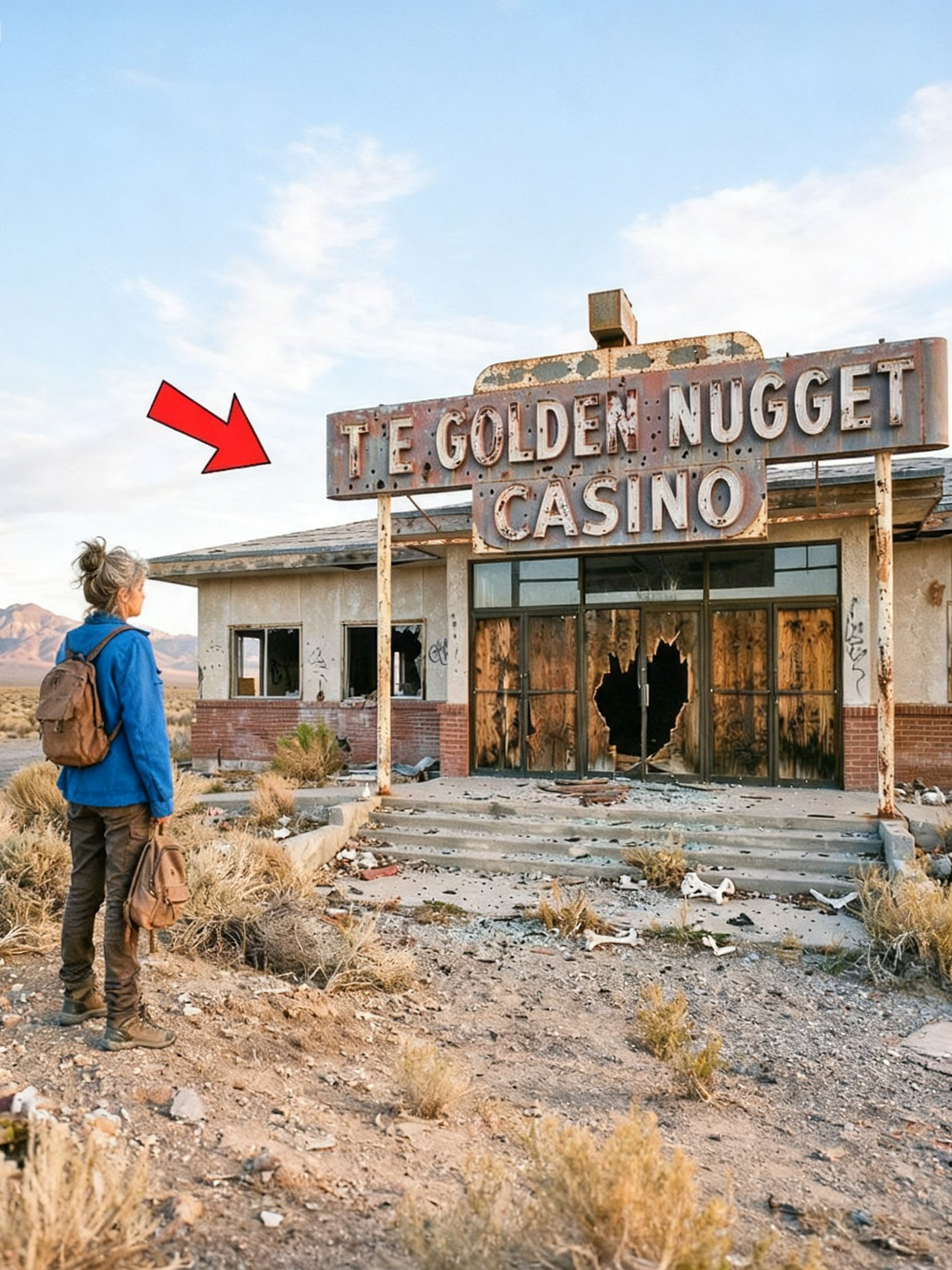
Her Family Threw the Widow Out, So She Bought a Dead Casino for $170—Then the Vault Opened
“You’ve had four days, Evelyn. That’s more than enough.”
Her son said it while setting her suitcase on the wet concrete outside his garage.
Not carrying it.
Setting it down.
Like luggage abandoned at an airport.
Like garbage that technically belonged to someone else.
Evelyn Carter stood beneath the porch light of the suburban Henderson home she had helped her son buy, looking at Derek through the drizzle.
He was forty-one now.
Tall like his father.
Same square jaw.
Same crease between his eyebrows when he was nervous.
But there was nothing of his father in the way he refused to meet her eyes.
Behind Derek stood his wife, Brooke, wearing a cream cashmere sweater and holding a mug with both hands.
The house behind them glowed warm and expensive.
Quartz countertops.
A curved staircase.
A sectional sofa Evelyn had paid for when Derek’s contracting business nearly collapsed.
The refrigerator was full.
The mortgage was current.
The grandchildren were asleep upstairs.
And Evelyn, sixty-four years old and widowed for eleven months, was standing outside with two suitcases.
“You told me I could stay until I figured things out,” she said.
Her voice was quiet.
That seemed to bother Brooke more than tears would have.
Brooke shifted her weight.
“We underestimated how disruptive it would be.”
Evelyn looked toward the upstairs bedroom where eight-year-old Mason slept.
Three nights earlier he had crawled into her lap and asked whether Grandpa could still see them from heaven.
Evelyn had said she hoped so.
Now she wondered whether Thomas could see this.
Derek rubbed his forehead.
“Mom, please don’t make this dramatic.”
Evelyn almost smiled.
She had buried her husband after forty-two years of marriage.
She had sold her wedding ring two months later to pay an attorney who was trying to untangle a tax debt Derek had secretly put in her name.
She had spent six years caring for Thomas after his heart surgery.
She had loaned Derek $84,000.
She had paid Brooke’s hospital deductible when Mason was born.
She had mortgaged her little house outside Boulder City because Derek said his business needed “one bridge loan.”
Then, after Thomas died, Derek convinced her to sell the house because, according to him, she should not be alone.
The money from the sale had gone into what Derek called a temporary family investment account.
Temporary had lasted five months.
The account now contained eleven hundred dollars.
And Derek wanted her to avoid drama.
Evelyn picked up the handle of the smaller suitcase.
“All right.”
Derek blinked.
That was all she said.
No accusation.
No begging.
No reminder of birthdays, loans, medical bills, Thanksgiving dinners, school pickups, or the winter when Derek was nineteen and Evelyn worked three cleaning jobs because he had totaled a car they could not afford.
Brooke frowned.
“Where are you going?”
Evelyn lifted the second suitcase.
“I’ll find somewhere.”
She turned.
For half a second Derek looked frightened.
Not guilty.
Frightened.
That interested her.
“Your boxes are in storage,” he said quickly. “Brooke put the first month on the card. After that, you’ll need to handle it.”
“Which card?”
“Your card.”
Evelyn nodded.
Then she walked down the driveway.
That was the moment Brooke began to underestimate her.
Because Brooke believed silence meant surrender.
Derek believed silence meant exhaustion.
And three other people who had been waiting for Evelyn Carter to become tired, frightened and homeless believed the same thing.
They were all wrong.
Evelyn had learned something during Thomas’s final year.
A quiet person was not always a weak person.
Sometimes a quiet person was simply done warning everybody.
She spent that night at a twenty-four-hour motel near the interstate.
One flickering lamp.
A television bolted to a dresser.
A blanket that smelled faintly of bleach and cigarette smoke.
At in the morning, unable to sleep, Evelyn opened the old leather briefcase Thomas had insisted she keep.
Derek had wanted to throw it away after the funeral.
“Dad kept junk,” he had said.
Evelyn had kept it anyway.
Inside were insurance receipts, photographs, maintenance manuals, a silver mechanical pencil, Thomas’s Navy discharge papers, and an envelope she had found behind the lining two months earlier.
Thomas had written her name across the front.
EVELYN—ONLY IF THEY FORCE YOUR HAND.
She had not opened it.
Not because she was afraid.
Because Thomas had been precise about almost everything.
If the message was meant for a moment when someone forced her hand, she wanted to be certain that moment had arrived.
At a.m., Evelyn broke the seal.
Inside were three things.
A brass key.
A Polaroid photograph of a boarded-up casino.
And a single sheet of yellow paper covered in Thomas’s handwriting.
If you are reading this, I am gone, and somebody has made you believe you have nowhere left to stand.
Go to the Silver Meridian.
Do not tell Derek.
Do not tell anyone connected to Vale Development, Western Horizon Bank, or the Harrow County Redevelopment Board.
If the property is still held by the county, buy it if you can.
Do not worry about the building.
The building is not the asset.
Find the green tile behind the north bar.
Use the key only after you have called Miriam Cole.
Her number is on the back.
Most important:
If anyone offers you money before you tell them what you found, say nothing.
If anyone claims the casino belonged to them, ask them to prove when they acquired Parcel 14-C.
If they show you a deed dated after March 17, 1989, keep it.
That deed will hang them.
I should have told you years ago.
I was afraid they would hurt you.
Forgive me.
Evelyn read it twice.
Then a third time.
The Silver Meridian.
She remembered the place.
Everybody in southern Nevada over fifty remembered it.
It had once stood along an old desert highway seventy miles northwest of Las Vegas, a gaudy roadside casino with a turquoise sign, a coffee shop, sixty motel rooms and a showroom that advertised singers nobody under forty had heard of.
It closed after a suspicious electrical fire in the late 1990s.
A developer bought pieces of the surrounding land.
The county seized the casino itself for unpaid taxes.
For years there were stories about demolishing it.
Nothing happened.
Evelyn turned the photograph over.
Thomas had written one sentence on the back.
THEY THINK THE VAULT IS UNDER THE COUNTING ROOM.
At that morning, Evelyn called Miriam Cole.
A woman answered on the fourth ring.
“My name is Evelyn Carter.”
Then a sharp inhale.
“Thomas’s Evelyn?”
Evelyn sat straighter.
“Where are you?”
“A motel in Henderson.”
“Are you alone?”
“Has Derek seen the letter?”
Another silence.
Then Miriam said, “Good.”
Not I’m sorry for your loss.
Evelyn looked through the motel curtains at the gray morning.
“Who are you?”
“Your husband’s attorney for twenty-seven years.”
“My husband didn’t have an attorney.”
“He made sure you believed that.”
Evelyn’s fingers tightened around the phone.
Miriam continued.
“I can explain some of it. Not all of it. Not over the phone. First I need to know whether the Silver Meridian is still available.”
“How would I know?”
“Check the Harrow County surplus auction.”
Evelyn opened her laptop.
The county website looked as though it had been designed in 2006 and forgotten.
She clicked through tax-default properties.
Vacant desert parcels.
A condemned gas station.
And there it was.
Former Silver Meridian Hotel & Casino.
Structures unsafe.
Environmental assessment incomplete.
Buyer accepts demolition liability.
No warranty of access, utilities, habitability or redevelopment approval.
Opening bid: $100.
Auction ended in forty-three minutes.
Current bid: $160.
Evelyn stared.
“Someone has bid on it.”
“How much?”
“A hundred sixty dollars.”
“Bid one-seventy.”
“That’s absurd.”
“The property must be worth more than that.”
“The building may be worth negative money. That is why nobody wants it.”
“And you do?”
Miriam corrected her.
“Thomas did.”
Evelyn placed the bid.
For thirteen minutes, she was the highest bidder.
Then twenty.
Then thirty.
At a.m., the auction closed.
A message appeared.
CONGRATULATIONS.
Evelyn Carter had purchased an abandoned Nevada casino for one hundred seventy dollars.
The county processing fee was more expensive than the property.
She laughed once.
Not because it was funny.
Because after forty years of budgeting groceries, postponing dental work, sewing curtains, driving used cars and lending money to a son who now put her suitcase in the rain, she owned a casino for less than Brooke had paid for the sweater she wore while throwing her out.
By noon, Evelyn was standing outside the Silver Meridian.
The desert had begun reclaiming it.
Weeds pushed through cracked asphalt.
The old roadside sign leaned eastward, its turquoise paint bleached almost white.
Half the letters were missing.
Wind shoved paper cups and dry brush across the parking lot.
The casino’s windows had been covered in plywood.
A chain-link fence sagged along one side.
The two-story motel wing looked like a row of dark eye sockets.
But the main structure was larger than Evelyn remembered.
Much larger.
Stucco walls stretched around a central casino floor, ballroom, restaurant, kitchen and administrative wing.
The front doors were chained.
She used the county key.
Inside, the air smelled of dust, old carpet and desert heat.
Her flashlight moved across overturned chairs.
Broken slot machines.
A collapsed section of ceiling.
A mural of showgirls faded into ghosts.
There were still casino chips scattered near a cashier cage.
Worthless souvenirs from another century.
Evelyn walked slowly.
Thomas had worked at the Silver Meridian.
She remembered that now.
Only for eighteen months, he had told her.
Night maintenance.
This was before Derek was born.
He had quit suddenly.
When Evelyn asked why, Thomas said the drive was too far.
For forty years she had accepted that answer.
Now every dusty hallway felt like a question.
She found the north bar shortly after three.
Most of the bottles had been removed decades earlier.
The mirrors were cracked.
Several stools had been ripped from the floor.
Behind the counter were ceramic tiles.
Then green.
One small dark-green square near the baseboard.
Evelyn knelt.
The tile moved when she pressed it.
Behind it was a steel plate with a keyhole.
Her heart began pounding.
She called Miriam.
“I found it.”
“Do not open anything until I get there.”
“You told me to call you before using the key.”
“That was Thomas’s instruction.”
“I called.”
“I’m two hours away.”
Evelyn looked at the brass key in her palm.
Then at the steel plate.
“All right.”
She sat in the dead casino for two hours.
That patience would later matter.
Because at p.m., when Miriam arrived in a dusty black Lexus with a retired state investigator named Calvin Shaw, three hidden cameras recorded all of them entering together.
Thomas had planned that too.
Miriam was seventy-two, with white hair cut to her chin and the posture of someone who had spent her career allowing arrogant men to underestimate her for approximately thirty seconds.
Calvin was broad, soft-spoken and missing the tip of his left index finger.
Neither of them wasted time.
They photographed the wall.
Photographed the key.
Photographed Evelyn inserting it.
The steel plate clicked.
A narrow section of the wall released.
Not a vault.
When Calvin pulled it down, something mechanical groaned beneath the floor.
Ten feet away, behind a decaying refrigerator unit, a section of concrete shifted half an inch.
They moved the refrigerator.
Under it was a square steel hatch.
Calvin whistled.
“This wasn’t on the building plans.”
“That was the point,” Miriam said.
The hatch opened onto stairs.
Twenty-one steps.
Evelyn counted.
At the bottom stood a second steel door.
The brass key opened that one too.
Beyond it was a room roughly twenty feet by thirty.
Protected from the fire that had destroyed much of the casino’s administrative wing.
Metal shelves lined the walls.
Boxes sat in rows.
Thousands of them.
Ledger books.
Bank statements.
Employee files.
Property maps.
Photographs.
Cassette tapes.
Miriam closed her eyes.
“Oh, Thomas.”
Evelyn felt something heavy sink inside her.
“You knew this existed.”
“I knew he believed it existed.”
At the rear of the room stood an old bank vault door.
Thomas’s handwritten note was taped to it.
THIS ONE IS FOR EVELYN.
The combination had been written beneath the flap.
Evelyn opened the vault.
Inside were six metal cases, one locked cash box, an envelope, and a stack of documents tied with blue ribbon.
She opened the envelope first.
If you found this room, then the worst happened in one sense and the best happened in another.
You finally know I lied.
I am sorry.
I did not work maintenance at the Silver Meridian.
I worked security and internal accounting for its owner, Raymond Vale.
Raymond built his fortune by stealing small amounts from people he thought were too poor, too old, too ashamed or too powerless to fight him.
Waitresses.
Kitchen staff.
Widows of dead employees.
Families who sold ranchland without being told that the casino already held mineral and water leases under it.
He called them crumbs.
He said nobody sued over crumbs.
Then he began taking bigger pieces.
Pension contributions.
Insurance settlements.
Land deeds.
Profit-sharing accounts.
When people complained, documents disappeared.
Some were threatened.
Two were arrested on charges I later learned were fabricated.
One man died believing he had lost his family ranch because he was stupid.
He was robbed.
I helped copy the proof.
I told myself that made me brave.
I waited too long.
Then Raymond learned records were missing.
That is why I left.
Miriam helped me secure what we could.
We planned to expose him.
Before we could, Raymond died.
His son, Charles, took over.
Charles was worse.
He bought bankers.
County officials.
He converted stolen property into legitimate-looking developments.
The Silver Meridian fire was not an accident.
They were destroying records.
They believed they destroyed everything.
They never knew about this room.
Now listen carefully.
The biggest secret is not the cash box.
It is Parcel 14-C.
The casino sits on six acres.
Parcel 14-C controls 2,480 acres around it through an old holding trust.
More importantly, the parcel includes the groundwater extraction rights, geothermal development rights and transportation easement serving every Vale project east of Highway 95.
In 1989, Charles Vale recorded a transfer giving his company ownership.
That transfer was forged.
The original parcel remains in the Silver Meridian Employee Restitution Trust.
You are not inheriting it from me.
I could never give away what belonged to those families.
But I named you successor trustee because you were the most honest person I ever knew.
There are forty-three original beneficiary families.
Many will be difficult to find.
Find them anyway.
Make this right.
One more thing.
If Derek is involved with Vale Development, protect yourself before you try to protect him.
Love does not require you to volunteer as someone else’s victim.
I learned that too late.
Evelyn read the last paragraph again.
She looked at Miriam.
“What does my son have to do with Vale Development?”
Miriam did not answer immediately.
Calvin did.
“His construction company received three contracts from them in eighteen months.”
Evelyn’s mouth went dry.
Miriam removed a folder from one of the metal cases.
“Thomas discovered it before he died.”
Inside were copies of invoices.
Carter Residential Construction.
Derek’s company.
Payments from Vale Meridian Holdings.
Consulting fees.
Site preparation.
Administrative services.
Some invoices corresponded to work Derek’s company was not licensed to perform.
Evelyn remembered Derek’s sudden business recovery.
The new truck.
Brooke’s kitchen renovation.
The private school application.
She remembered asking Derek what had changed.
He had smiled.
Finally caught a break, Mom.
Evelyn sat on a metal case.
Miriam crouched in front of her.
“You do not have to make any decisions tonight.”
“Yes, I do.”
Evelyn looked around the hidden archive.
Forty-three families.
Men and women who had been told they were careless.
Bad with money.
Evelyn understood the language.
Her son had spoken its modern version.
Don’t make this dramatic.
She folded Thomas’s letter.
“What is in the cash box?”
Calvin opened it.
Inside was $38,400 in old hundred-dollar bills.
Evelyn stared.
“That’s all?”
Miriam smiled faintly.
“Were you expecting eighty million dollars?”
“I bought a casino for a hundred seventy dollars. My expectations are confused.”
Calvin laughed.
Then he lifted the false bottom.
Beneath it was a certificate.
Miriam stopped smiling.
It documented an account created in 1991.
A block of privately held preferred stock in Western Horizon Bancorp, placed in escrow to secure unpaid employee claims.
The original value was $2.1 million.
Western Horizon had since merged twice.
Those shares, if still legally valid, were worth approximately $61 million.
And that was before the land rights.
The geothermal leases alone might be worth another forty to seventy million.
Potentially more.
But Evelyn barely heard the numbers.
She was staring at the beneficiary list.
One name caught her eye.
Maria Gutierrez.
She remembered Maria.
A waitress from the casino.
Thomas had once brought her and her little daughter to Evelyn’s house after their apartment flooded.
Maria cried at Evelyn’s kitchen table because her husband had died in a workplace accident and the insurance company claimed his policy had lapsed.
Evelyn had given her two hundred dollars.
At the time, two hundred dollars was nearly all they had.
Maria had moved to Arizona.
They lost touch.
According to the records in the hidden room, Maria’s husband’s insurance policy had not lapsed.
The casino had received the $118,000 settlement.
Someone forged Maria’s signature.
She had been robbed while grieving.
Evelyn closed the folder.
“We find them.”
Miriam nodded.
“All forty-three?”
“All of them.”
“You understand some may be dead.”
“Then we find their children.”
“Some may sue.”
“Then we show them the records.”
“Vale will come after you.”
Evelyn looked at Thomas’s letter again.
“They already did.”
The next morning changed everything.
Not because Evelyn became rich.
Not because she opened a vault full of gold.
There was no gold.
No diamonds.
No cartoon mountain of cash.
What she discovered was more dangerous.
And proof had a strange quality.
Money could be negotiated.
Proof could destroy people.
At a.m., Evelyn’s phone began ringing.
She watched it vibrate.
Rang again.
Then a number she did not recognize.
She answered.
“Mrs. Carter?”
“My name is Leonard Voss. I represent Vale Meridian Holdings.”
There it was.
Less than twenty-four hours.
Miriam, sitting across from Evelyn in a diner outside Indian Springs, lifted her eyes.
Evelyn put the call on speaker.
“We understand you acquired the former Silver Meridian property at yesterday’s surplus auction.”
“Congratulations.”
“Thank you.”
“We’d like to purchase it from you.”
“For what purpose?”
“A cleanup and redevelopment project.”
Evelyn stirred her coffee.
“How much?”
“Twenty-five thousand dollars.”
She glanced at Miriam.
Miriam’s face showed nothing.
Evelyn said, “That seems generous for a property I bought for one hundred seventy.”
“We’re trying to save you from significant liability.”
“How kind.”
Voss continued smoothly.
“The building contains asbestos. There may be underground fuel contamination. Demolition could exceed a million dollars. Frankly, Mrs. Carter, at your age, I don’t imagine you want this headache.”
At your age.
There it was.
The gentle knife.
Evelyn took a sip of coffee.
“You’re probably right.”
Miriam’s eyes sharpened.
Voss relaxed audibly.
“We can send paperwork today.”
“I’m glad we can make this easy.”
She gave him the motel address.
After she hung up, Calvin stared at her.
“You just told them you might sell.”
“No. I told them to send paperwork.”
Evelyn folded her napkin.
“Thomas said if anyone claims the property, keep what they show me.”
Miriam smiled.
For the first time, Evelyn understood why Thomas had trusted her.
By afternoon, the system revealed itself.
Not one villain.
Vale Meridian Holdings.
Western Horizon Bank.
Leonard Voss’s law firm.
Two members of the Harrow County Redevelopment Board.
A title company.
A former state land-records supervisor.
And, sitting uncomfortably near the bottom of the chain, Derek Carter.
The $25,000 offer arrived by courier.
Evelyn read every page.
Page nine contained exactly what Thomas had predicted.
The company asserted “historic equitable interest” in Parcel 14-C through a 1989 conveyance.
Attached was the deed.
March 22, 1989.
Five days after Thomas’s warning date.
Evelyn placed the document into a plastic evidence sleeve.
“Is this the one?”
Miriam examined the signature.
“How do you know?”
“Because the man who supposedly signed it was dead.”
Evelyn looked at her.
“The trust administrator was Harold Baines. According to this deed, Baines signed the transfer March twenty-second.”
“He died March eleventh.”
Eleven days earlier.
For thirty-seven years, a dead man’s signature had been used to control land worth tens of millions.
That evening Derek appeared at Evelyn’s motel.
He knocked hard enough to shake the door.
She opened it but left the chain attached.
His face was red.
“Mom, what are you doing?”
“Going to bed soon.”
“I’m serious.”
“Why did you buy that casino?”
Evelyn studied him.
That frightened look was back.
“How did you know I bought it?”
“From whom?”
“It’s public record.”
“It became public record this morning.”
Derek looked away.
Evelyn waited.
Silence had always made other people rush to fill it.
Her husband knew that.
She was beginning to appreciate the technique.
Derek lowered his voice.
“Listen. I know you’re upset about the house.”
“I’m not upset.”
“You should be.”
That surprised him.
Evelyn continued.
“You and Brooke told me to leave. I left.”
“We can fix that.”
“You can come back.”
“At ten at night?”
“Tomorrow.”
“With my suitcases?”
She said nothing.
Derek gripped the doorframe.
“That property is dangerous.”
“So people keep telling me.”
“Vale’s trying to develop that whole corridor.”
“They’ve got millions invested.”
His eyes narrowed.
“How much do you know?”
There it was.
Evelyn could have confronted him.
She could have slapped the invoices against the door.
She could have demanded to know why his company took money from the people Thomas feared.
She could have asked whether throwing her out had been his idea or part of somebody else’s plan.
Instead she said, “Apparently not enough.”
Derek exhaled.
“For twenty-five thousand?”
His head jerked up.
“How did you know the amount?”
He had made the mistake himself.
Evelyn watched him realize it.
For one brief second, the frightened boy she raised appeared behind the ambitious middle-aged man standing outside her motel room.
Then it vanished.
“Mom, this is bigger than you.”
“You don’t understand these people.”
“They can destroy you.”
Evelyn’s voice remained soft.
“They can put my suitcase outside?”
Derek flinched.
She closed the door.
For the next six weeks, Evelyn disappeared.
That was how Brooke described it to friends.
Derek said his mother was having “an episode.”
Leonard Voss told Vale executives the widow had likely discovered a few meaningless old records and was trying to increase the purchase price.
Charles Vale’s son, Robert, now head of Vale Meridian Holdings, authorized an improved offer.
Evelyn declined.
They increased it to $600,000.
She declined.
They offered $1.4 million.
She declined.
Then something curious happened.
Derek called and apologized.
A beautiful apology.
He told her grief had made everybody behave badly.
Brooke cried in the background.
Mason missed her.
There would always be a room for her.
Derek said family mattered more than money.
Evelyn listened.
When he finished, she asked one question.
“Did Vale tell you to call?”
Then Derek hung up.
Evelyn kept working.
She rented a small furnished apartment in Las Vegas using part of the $38,400 from the vault after Miriam confirmed it belonged to Thomas’s documented whistleblower expense account.
She bought no new clothes.
No jewelry.
Every morning at seven she sat at the kitchen table with beneficiary files.
Every afternoon she made calls.
Maria Gutierrez was alive.
Seventy-six.
Living outside Tucson.
When Evelyn drove to see her, Maria answered the door with an oxygen tube beneath her nose.
For several seconds they only stared at each other.
Then Maria whispered, “Tommy’s wife?”
Evelyn nodded.
Maria cried before Evelyn explained anything.
Not because of the money.
Because she remembered.
That became the pattern.
People remembered Thomas.
The quiet security man who once warned a blackjack dealer not to sign a settlement.
The maintenance supervisor who copied a payroll sheet.
The young father who drove an injured dishwasher forty miles to a hospital after management refused an ambulance because the accident might raise insurance premiums.
Thomas had spent years telling Evelyn he was ordinary.
Apparently he had been lying about that too.
The beneficiaries’ stories accumulated.
A woman named Denise Walker had lost her father’s pension.
A Paiute ranching family had been pressured into selling eighty acres while mineral rights were secretly retained by a shell company.
A cook named Samuel Reed had been accused of stealing $14,000 from the casino and fired.
The hidden records proved a manager stole it.
Samuel died without clearing his name.
His daughter, Patricia, was sixty-two.
When Evelyn showed her the internal audit, Patricia sat at her dining table and covered her face.
“My father died ashamed,” she whispered.
Evelyn reached across the table.
Patricia looked up.
“He died thinking everyone believed he was a thief.”
Evelyn placed a certified copy of the report in front of her.
“Not everyone.”
That was when the fight stopped being about Thomas.
It became about restoring sentences that had been written incorrectly over entire lives.
Bad mother.
Bad businessman.
Careless widow.
Unreliable employee.
Crazy old woman.
Freeloader.
Some lies were expensive because they stole money.
Others were expensive because people carried them into graves.
Miriam assembled a team.
A forensic accountant.
A land-title historian.
Two litigators.
A retired FBI financial-crimes analyst.
A geothermal rights specialist.
The forty-three beneficiary lines became thirty-one living claims and twelve estates.
Twenty-eight families agreed to participate.
Then thirty-four.
Then forty.
The final three took longer.
Meanwhile, Vale’s confidence grew in public.
Robert Vale announced a $240 million desert entertainment and residential development.
A solar-powered event center.
Luxury homes.
The centerpiece would sit directly east of the old Silver Meridian.
Newspaper articles praised him for “revitalizing forgotten land.”
Renderings appeared.
Investors celebrated.
Western Horizon Bank approved a $96 million credit facility.
County officials appeared beside Robert at a groundbreaking event.
Derek’s company was named a subcontractor.
Brooke posted photographs online.
In one, she wore sunglasses and stood beside Derek under a white event tent.
Her caption read:
PROUD OF THIS MAN. BIG THINGS AHEAD.
Evelyn printed the photograph.
Not because she wanted revenge.
Because behind Brooke, in the photograph, was a giant site map.
And on the site map was Parcel 14-C.
Vale believed they owned it.
The bank believed Vale owned it.
The county believed Vale owned it.
Derek believed Vale owned it.
Millions moved based on that belief.
Evelyn let them keep believing.
That was the temporary retreat Thomas had prepared.
Do not warn people while they are proving your case for you.
Vale filed preliminary infrastructure plans.
More evidence.
They pledged Parcel 14-C as collateral.
More evidence.
They secured development insurance by representing clear title.
More evidence.
They submitted water-use rights belonging to the restitution trust.
More evidence.
They signed a geothermal option with a California energy company for $38 million.
More evidence.
Every time they behaved as though the property unquestionably belonged to them, Miriam’s file grew thicker.
Then came the legal warning from the dead.
It was hidden on a cassette tape recorded by Thomas in 1998.
Calvin digitized it.
Thomas’s younger voice filled Evelyn’s apartment.
“If you are hearing this in connection with Parcel 14-C, then Charles Vale or someone acting for him is still relying on the March 22, 1989 deed. That instrument is fraudulent. Harold Baines could not have executed it. I was present at Sunrise Memorial Hospital when Baines died on March 11. Miriam Cole has the hospital witness logs.
“They may attempt to cure the chain of title with affidavits.
“They may produce a notarized acknowledgment.
“The notary, Frank Delaney, was in federal custody in Arizona from March 3 through April 7 of that year.
“They may then claim the trust dissolved.
“It did not.
“The trust renews automatically until all beneficiary claims are satisfied.
“If they have borrowed money against the parcel, do not interrupt them too early.
“Let the representations become specific.
“Fraud is easiest to prove when arrogant people put it in writing.”
Evelyn stopped the recording.
Miriam looked at her.
“Your husband could be dramatic when he wanted.”
Evelyn wiped dust from the cassette case.
“He hid it well.”
By August, Robert Vale finally understood that something was wrong.
Western Horizon’s title insurer asked for supplemental documentation.
A state water engineer requested clarification regarding a trust notation in a 1976 survey.
Someone inside the county clerk’s office discovered that an archival map had been removed from the public index but not destroyed.
Vale’s lawyers began calling Evelyn daily.
She stopped answering.
Then they sued her.
The complaint accused Evelyn Carter of interfering with economic development, asserting frivolous ownership claims, trespassing, improperly retaining company records, and attempting to extort Vale Meridian Holdings.
They asked for $12 million in damages.
Derek came to see her again.
This time he did not knock angrily.
He stood outside the apartment with hollow eyes.
“You need to settle.”
Evelyn let him inside.
He looked around.
The apartment was modest.
Secondhand dining table.
Cheap blinds.
Stacks of banker boxes.
He seemed confused.
“Where’s the money?”
“What money?”
“Don’t do that.”
“I own a condemned casino with a broken roof.”
“Vale offered you millions.”
“One point four.”
“You’re going to lose everything.”
Evelyn looked around the apartment.
“What exactly is everything?”
Derek’s jaw tightened.
“My company is tied to that project.”
“If it stops, I’m finished.”
His face changed.
Evelyn opened a drawer.
She removed one of his invoices.
She placed it on the table.
Derek went still.
“Where did you get that?”
“Your father.”
The color left his face.
“Dad knew?”
“For how long?”
“Long enough.”
Derek sat down heavily.
“You don’t understand.”
“Then explain.”
He rubbed both hands over his face.
“Vale saved my company.”
“They did.”
“They paid you.”
“For what?”
Derek did not answer.
“For what, Derek?”
“Introductions.”
“County people.”
Evelyn waited.
Derek’s eyes filled.
For the first time since Thomas died, Evelyn saw genuine shame in him.
Not enough to erase what he had done.
But genuine.
“Voss knew Dad had records,” Derek whispered.
A chill moved through Evelyn.
“I mentioned some old boxes.”
“After the funeral.”
Evelyn felt the room tilt.
Derek continued quickly.
“I didn’t know what they were. Dad had told me once that he kept evidence from the Silver Meridian. I thought it was old casino stuff.”
“What did you tell Voss?”
“That Dad died. That you were selling the house. That you were confused about finances.”
Evelyn stared at her son.
“So they knew I was vulnerable.”
Derek began crying.
She did not.
“Did they tell you to get me out of your house?”
Evelyn said nothing.
Derek broke.
“Brooke said it would be temporary.”
“Did they tell you to get me out?”
Derek looked at the floor.
“Voss said if you stayed with us, investigators might later argue I influenced you. He said it would be cleaner if you had your own place.”
Four nights.
Two suitcases.
Rain on concrete.
Evelyn stood and walked to the window.
Below them, traffic moved along Charleston Boulevard.
For decades she had believed motherhood meant absorbing impact.
A child falls, you catch him.
A teenager fails, you help him stand.
A young man chooses badly, you remind him who he is.
A husband gets sick, you rearrange your life.
A son needs money, you find it.
A family needs peace, you become quieter.
Again and again.
You take the late shift.
You take the smaller piece.
You take the blame.
You take the call.
You take the debt.
You take the room nobody wants.
And one day, if you are not careful, the people you spent your life protecting begin to believe taking from you is simply how love works.
Evelyn turned.
“Did you access my investment account?”
Derek’s face collapsed.
“How much?”
“How much?”
“About a hundred and six thousand.”
“There was more.”
“Some covered the mortgage.”
“Whose mortgage?”
Evelyn nodded.
“Your house.”
“I was going to put it back.”
“You always were.”
Derek cried harder.
Evelyn watched him.
She loved him.
That was the worst part.
Love had not vanished.
It had simply lost its authority.
“I need something from you,” she said.
“Anything.”
“No. Don’t say anything.”
Derek looked up.
“I need the truth.”
She slid a legal pad across the table.
“Every meeting. Every payment. Every document Voss asked you to move, copy, destroy or sign.”
Derek recoiled.
“They’ll ruin me.”
Evelyn nodded.
“You’re my mother.”
“You’re asking me to destroy my life.”
Her voice remained gentle.
“I’m asking whether you want to stop destroying everyone else’s.”
He stared at the legal pad for a long time.
Then he picked up the pen.
Derek wrote for three hours.
That statement cracked the system open.
Vale’s lawyers had used Derek to obtain information about Thomas’s estate.
A county redevelopment officer had backdated environmental notices.
Western Horizon executives had received warnings about the title defect and approved financing anyway.
A document-storage contractor had been paid to search for Silver Meridian archive boxes.
Voss had even instructed Derek to persuade Evelyn to sign a broad estate-release form after Thomas died.
She remembered it.
Derek had placed it beside her breakfast one morning.
Just paperwork, Mom.
She had signed everywhere except page twelve because Thomas’s Social Security number was wrong.
Derek took it back.
He never brought it again.
That small mistake had saved her.
By September, Vale Meridian’s $240 million project looked unstoppable.
Construction trailers filled the desert.
Road crews moved dirt.
Survey stakes marched across Parcel 14-C.
Investors flew in.
Robert Vale scheduled a press conference to announce a second phase.
He believed Evelyn’s lawsuit defense was weak.
He believed the old widow would settle before depositions.
He believed Derek remained loyal.
He believed the county would protect him.
He believed the bank needed him too badly to ask uncomfortable questions.
He believed thirty-seven years of fraud had hardened into truth.
On September 18, Evelyn walked into federal court wearing the same navy dress she had worn to Thomas’s memorial service.
No designer suit.
No diamonds.
No theatrical entourage.
Miriam walked beside her.
Calvin followed carrying two evidence boxes.
Behind them came twenty-seven members of beneficiary families.
Maria Gutierrez attended by video from Arizona.
Patricia Reed sat in the front row holding her father’s cleared audit report.
Derek entered separately.
Brooke did not come.
Robert Vale arrived surrounded by lawyers.
Leonard Voss wore a charcoal suit and the faint expression of a man annoyed by parking.
When he saw Evelyn, he smiled.
“Mrs. Carter.”
“Mr. Voss.”
“I hope we can resolve this today.”
The hearing began as a title dispute.
It did not remain one.
Miriam introduced the original Silver Meridian Employee Restitution Trust.
Then the Baines death certificate.
Then the 1989 deed.
Then the federal custody record for the notary who supposedly witnessed it.
Then Thomas’s recordings.
Then original beneficiary ledgers.
Then Western Horizon correspondence showing that bank executives had been warned of the trust problem fourteen months before issuing Vale the $96 million credit facility.
Voss’s smile disappeared.
Robert Vale stopped taking notes.
The county’s attorney requested a recess.
The judge denied it.
Miriam introduced Derek’s invoices.
Derek testified.
For nearly four hours.
He admitted what he had done.
Not everything was criminal.
Enough of it was.
He admitted taking money.
Admitted sharing estate information.
Admitted being told the title was questionable.
Admitted that Voss wanted Evelyn isolated from advisors.
Then Miriam asked the question Evelyn had dreaded.
“Mr. Carter, why did your mother leave your home four days after moving in?”
Derek looked at Evelyn.
She did not look away.
“Because I told her to.”
His voice broke.
“Because Mr. Voss said Vale needed distance between me and her before they approached her about the casino.”
The courtroom became silent.
Voss stood.
“Objection—”
“Overruled.”
Miriam continued.
“Did Mr. Voss know Mrs. Carter was recently widowed?”
“Did he know she had sold her residence?”
“Did he know much of her savings had been transferred?”
Derek closed his eyes.
“Transferred to whom?”
Somebody behind Evelyn inhaled sharply.
Miriam waited.
“And did Vale Meridian Holdings have business dealings with you at that time?”
“How much had Vale-related entities paid your company?”
“About nine hundred thousand dollars.”
The press outside the courthouse multiplied before lunch.
By afternoon, Western Horizon’s stock had fallen eleven percent.
By evening, the bank placed three executives on leave.
The next morning, Harrow County announced an independent review of redevelopment approvals.
Two days later, federal investigators executed warrants at Vale Meridian Holdings.
Voss resigned from his firm.
Robert Vale issued a statement denying wrongdoing.
The $240 million project stopped.
Bulldozers sat motionless in the desert.
But Evelyn was not finished.
That was what Robert misunderstood.
He thought she wanted him ruined.
She did not.
Ruin was simple.
Justice was complicated.
The court confirmed that the 1989 deed was void.
Parcel 14-C had never legally left the Silver Meridian Employee Restitution Trust.
That gave Evelyn, as successor trustee, enormous leverage.
The trust controlled the groundwater allocation needed for Vale’s development.
It controlled the primary access easement.
It controlled geothermal rights.
And because Vale had pledged portions of the property as collateral, several financing agreements were suddenly compromised.
The trust’s assets were conservatively valued at $137 million.
Potentially much more if geothermal development proceeded.
Reporters began calling Evelyn “the casino widow.”
One network offered her a television interview.
She refused.
A publisher offered a book deal.
She refused.
A luxury real-estate agent sent listings.
She threw them away.
The first money distributed went to beneficiary families.
Maria Gutierrez received compensation for the insurance payment stolen from her after her husband’s death, adjusted according to the court-approved restitution formula.
Patricia Reed received a formal judicial declaration clearing Samuel Reed of theft, plus his family’s restored pension claim.
Twenty-three other families received payments before Evelyn accepted one dollar in trustee compensation.
The ranching family regained title to 640 acres that could still be legally traced through fraudulent transfers.
Several families chose cash instead of land.
Two created scholarships.
One paid medical debt.
Another bought back the childhood home his mother had lost after the casino withheld her pension.
Evelyn attended no ceremonies.
She simply watched documents get signed.
That gave her more satisfaction than revenge ever could.
Derek pleaded guilty to two financial offenses under a cooperation agreement.
He avoided prison but received three years of supervised release, restitution obligations and a permanent restriction from bidding on certain public contracts.
His company collapsed.
The Henderson house was sold.
Brooke filed for divorce.
For several months Derek blamed Evelyn.
Then he stopped.
One February morning, nearly a year after she bought the Silver Meridian, Evelyn received a letter from him.
I spent most of my life thinking your forgiveness was unlimited.
I confused unlimited love with unlimited permission.
I don’t expect you to trust me again.
I just wanted to say I understand now that losing everything was not something you did to me.
It was the first bill I ever had to pay myself.
Evelyn placed the letter in Thomas’s briefcase.
She did not answer immediately.
Some things needed time.
The abandoned casino, meanwhile, created one final argument.
Developers wanted it demolished.
Preservationists wanted it restored.
Beneficiary families disagreed.
Miriam suggested selling the entire property and dividing the proceeds.
Evelyn considered all of it.
Then she found one more document in Thomas’s archive.
Not valuable.
Just pencil on yellow paper.
Thomas had drawn the Silver Meridian casino without the gambling floor.
In its place he had written:
Training center.
Legal clinic.
Temporary housing.
Underneath:
Someplace people can go when powerful people tell them they have nowhere else to stand.
Evelyn stared at that sentence for a long time.
Then she knew.
The damaged hotel wing was demolished.
The original casino facade was restored.
The hidden underground archive remained exactly where Thomas left it, sealed behind museum-grade doors.
The former gambling floor became a community legal center specializing in wage theft, elder financial abuse, property fraud and pension claims.
Twenty motel rooms became transitional apartments for widows and older adults facing financial displacement.
A vocational wing trained adults over fifty for bookkeeping, hospitality administration and building-maintenance certification.
The geothermal rights financed much of the trust’s long-term operation.
They named the legal archive after Thomas Carter.
Evelyn refused to name anything after herself.
Miriam ignored her.
The central courtyard became the Evelyn Carter Garden.
Evelyn complained for three weeks.
Nobody cared.
Two years after the rainy night when her suitcase had been placed on concrete, Evelyn stood beneath the restored Silver Meridian sign.
The turquoise lights worked again.
Not as a casino .
As a landmark.
Hundreds of people gathered for the opening.
Beneficiary families.
Former employees.
County officials who had survived the investigations.
New county officials who were very careful with their paperwork.
Maria Gutierrez attended in a wheelchair.
Patricia Reed brought her grandchildren.
Calvin stood near the entrance pretending not to cry.
Miriam made no effort to pretend.
And near the back stood Derek.
He had asked permission to attend.
Evelyn had said yes.
Nothing more.
After the speeches, a young reporter approached her.
“Mrs. Carter, may I ask one question?”
“You already did.”
The reporter laughed nervously.
“One more?”
Evelyn nodded.
“When your family forced you out, did you ever imagine you would end up controlling assets worth more than a hundred million dollars?”
Evelyn looked toward the restored building.
Through the glass doors she could see Maria’s grandchildren examining old photographs.
She could see a legal-aid volunteer helping an elderly man fill out an intake form.
She could see the wall where every known Silver Meridian employee had been listed alphabetically.
Including Samuel Reed.
No word thief beside his name.
Samuel Reed — Kitchen Supervisor, 1978–1987.
She thought about money.
Money mattered.
Anyone who said otherwise had probably never been old and afraid of rent.
Money bought lawyers.
Distance from dangerous people.
But the most valuable thing buried beneath the Silver Meridian had never been the $61 million stock claim.
It was not the geothermal field.
It was not the land.
It was not even the casino.
It was the evidence that ordinary people had been telling the truth.
Evelyn looked at the reporter.
“You never imagined it?”
“I never imagined my family would put me out either.”
The reporter lowered her microphone slightly.
“Do you regret trusting your son?”
Evelyn considered the question.
That answer surprised everyone nearby.
She continued.
“I regret teaching him that I would always absorb the consequences.”
Across the courtyard, Derek heard her.
His eyes dropped.
Evelyn did not enjoy hurting him.
But truth did not become cruelty simply because the person hearing it wished it were softer.
The ceremony ended near sunset.
Guests drifted toward the parking lot.
Maria left with her family.
Miriam kissed Evelyn’s cheek.
Calvin complained about his knees and drove home.
Derek remained near the courtyard fountain.
Evelyn finally walked toward him.
He looked thinner than he had two years earlier.
“Nice place,” he said.
“Your father would have liked it.”
They stood in silence.
Then Derek said, “Mason asks about you.”
“I send him letters.”
“He keeps every one.”
Evelyn nodded.
Derek swallowed.
“Would you ever have dinner with us?”
Not come home.
Not forgive me.
Not forget.
It was the first modest thing he had asked of her in years.
“Maybe,” she said.
Derek nodded.
“I’ll take maybe.”
He started walking away.
Evelyn held out Thomas’s old brass key.
Derek stared at it.
“What’s that?”
“The key that opened the archive.”
“Why are you giving it to me?”
His expression changed.
Evelyn closed her fingers around the key.
“I wanted you to see it.”
“Because your father kept it for thirty-seven years and never used what he knew to make himself rich.”
Derek looked toward the building.
“I’m not Dad.”
Evelyn’s answer came immediately.
It hurt him.
She could see that.
Then she added, “You’re not finished either.”
His eyes filled.
This time she allowed the silence to be kind.
Derek left.
The courtyard emptied.
Night settled over the desert.
Evelyn walked alone through the old casino.
Past the legal clinic.
Past the archive.
Past a wall displaying enlarged copies of forged deeds beside the genuine documents that defeated them.
Eventually she reached the north bar.
They had preserved one section exactly as she found it.
Cracked mirror.
Old counter.
White tiles.
One green square.
Visitors were not told what the tile did.
That story belonged to the guided tour.
Evelyn touched it.
For decades, people had walked within yards of the hidden room.
Waitresses.
Investigators.
Developers.
County inspectors.
Men who thought they owned everything.
None had known what sat beneath their feet.
That amused her.
Miriam’s voice came from behind her.
“I thought you went home.”
Evelyn turned.
“I forgot my glasses.”
“They’re on your head.”
Miriam touched them and sighed.
“I’m seventy-four. Let me have my excuses.”
They walked toward the lobby together.
Outside, two black SUVs waited.
Not security.
A final settlement meeting had been scheduled after the opening ceremony.
Western Horizon Bank and what remained of Vale Meridian Holdings were negotiating the last unresolved claims.
The surviving development company wanted one thing desperately.
Without the trust easement, nearly eight hundred acres of their remaining project were landlocked from the highway.
They offered $18 million.
The trust said no.
They offered $24 million.
$31 million.
Finally they offered $42 million plus a percentage of future geothermal revenue.
The beneficiary board approved the framework.
Tonight’s meeting was supposed to finalize it.
Inside the conference room sat Robert Vale.
He looked dramatically different.
His company had survived, but barely.
His father’s empire had fractured.
Several former executives were under indictment.
Robert himself had avoided criminal charges by claiming ignorance of the original fraud, though civil findings had been brutal.
Leonard Voss was not there.
His law license had been suspended.
A new attorney represented Vale.
A younger woman named Serena Blake.
Professional.
Respectful.
Western Horizon sent two executives and outside counsel.
Derek was nowhere near the meeting.
That mattered to Evelyn.
Some cycles needed to end.
The documents were stacked neatly.
Forty-two million dollars.
Revenue rights.
Restitution protections.
Public access commitments.
No waiver of historic claims.
No confidentiality clause preventing beneficiary families from telling their stories.
Evelyn insisted on that one.
Serena slid the signature pages across the table.
“We’ve incorporated every revision.”
Miriam reviewed them.
“So have we.”
Robert Vale stared at Evelyn.
“You could have taken the money.”
Evelyn looked at him.
“Which money?”
“Any of it. My attorney told me we offered you one-point-four million before this started.”
“You were living in a motel.”
“You had almost nothing.”
“And you refused.”
Robert gave a humorless laugh.
Evelyn thought about the answer.
Because Thomas asked her.
Because Maria had cried in her kitchen forty years ago.
Because Patricia’s father deserved his name back.
Because Derek needed to discover that his mother was a person, not an emergency fund.
Because Brooke needed to learn that expensive houses did not make people secure.
Because Voss had looked at a sixty-four-year-old widow and calculated how cheaply desperation could be purchased.
Because forty-three families had once been called crumbs.
Evelyn leaned back.
“My husband said your grandfather used to call stolen money crumbs.”
Robert’s face tightened.
“I’m not my grandfather.”
“Or my father.”
“Then why treat me like I am?”
She pushed the agreement toward him.
“That is why you still have a company.”
Robert looked down.
The terms allowed redevelopment.
Just not theft.
They allowed profit.
Just not ownership of someone else’s rights.
They allowed the future without erasing the past.
Robert picked up his pen.
Western Horizon’s executives signed first.
Miriam signed for the beneficiary litigation committee.
Evelyn signed as successor trustee.
Robert signed last.
The room exhaled.
Thirty-seven years of fighting, hiding, stealing, denying, investigating and waiting ended with several scratches of ink.
People began gathering papers.
Attorneys shook hands.
Miriam whispered, “Thomas would be proud.”
Evelyn looked at the signature pages.
Something bothered her.
Not legally.
She pulled one page closer.
Robert noticed.
Evelyn said nothing.
His signature.
R. Charles Vale.
She had seen it before.
Not Robert’s modern signature.
Something about the shape.
The long hook of the V.
The tight loop in the R.
Evelyn opened the slim folder she had brought from the archive.
Inside was a photocopy of the fraudulent 1989 deed.
Harold Baines’s forged signature appeared on the bottom.
Below it was the signature of the man who had supposedly witnessed the transaction.
Charles R. Vale.
Robert’s father.
Different name.
Similar hand.
Not enough for Evelyn to understand immediately.
But enough for her to remember another document Calvin had found weeks earlier.
A 1997 internal memo.
Written by someone who knew where the hidden archive was supposed to be.
Someone who wrote:
FATHER SAYS T. CARTER COPIED THE ORIGINALS. IF THE OLD MAN KEPT THEM, THE BOY MAY KNOW.
Robert had been nineteen in 1997.
Evelyn looked at him.
Robert stopped gathering his documents.
Miriam saw Evelyn’s expression.
“What is it?”
Evelyn did not answer her.
She asked Robert, “When did you first visit the Silver Meridian?”
“You said during your deposition you had never entered the casino before the fire.”
“That’s correct.”
Evelyn nodded gently.
Almost apologetically.
The kind of nod an old woman might give because she had become confused.
She opened Thomas’s archive inventory.
“One of the boxes downstairs was missing when we found the room.”
Robert’s attorney straightened.
“Mrs. Carter, if this relates to the settlement—”
“It doesn’t.”
Robert’s hand stopped moving.
Evelyn watched him.
For nearly two years she had learned the power of waiting one second longer than the other person could tolerate.
She waited now.
Robert’s eyes flicked toward the door.
Small movement.
Evelyn finally smiled.
Not triumphantly.
Almost sadly.
Then she asked the weakest-sounding question anyone in that conference room had heard all night.
“Robert… if you’d never been inside that casino before the fire, how did you know the missing box was kept under the north bar?”
✓ Lynn R. Adams
Her Family Threw the Widow Out, So She Bought a Dead Casino for $170—Then the Vault Opened “You’ve had four days, Evelyn. That’s more than enough.” Her son said it while setting her suitcase on the …