Her Family Threw Her Out With Nothing, So She Bought an Abandoned House—But the Secret Hidden in Its Attic Was Worth Killing For
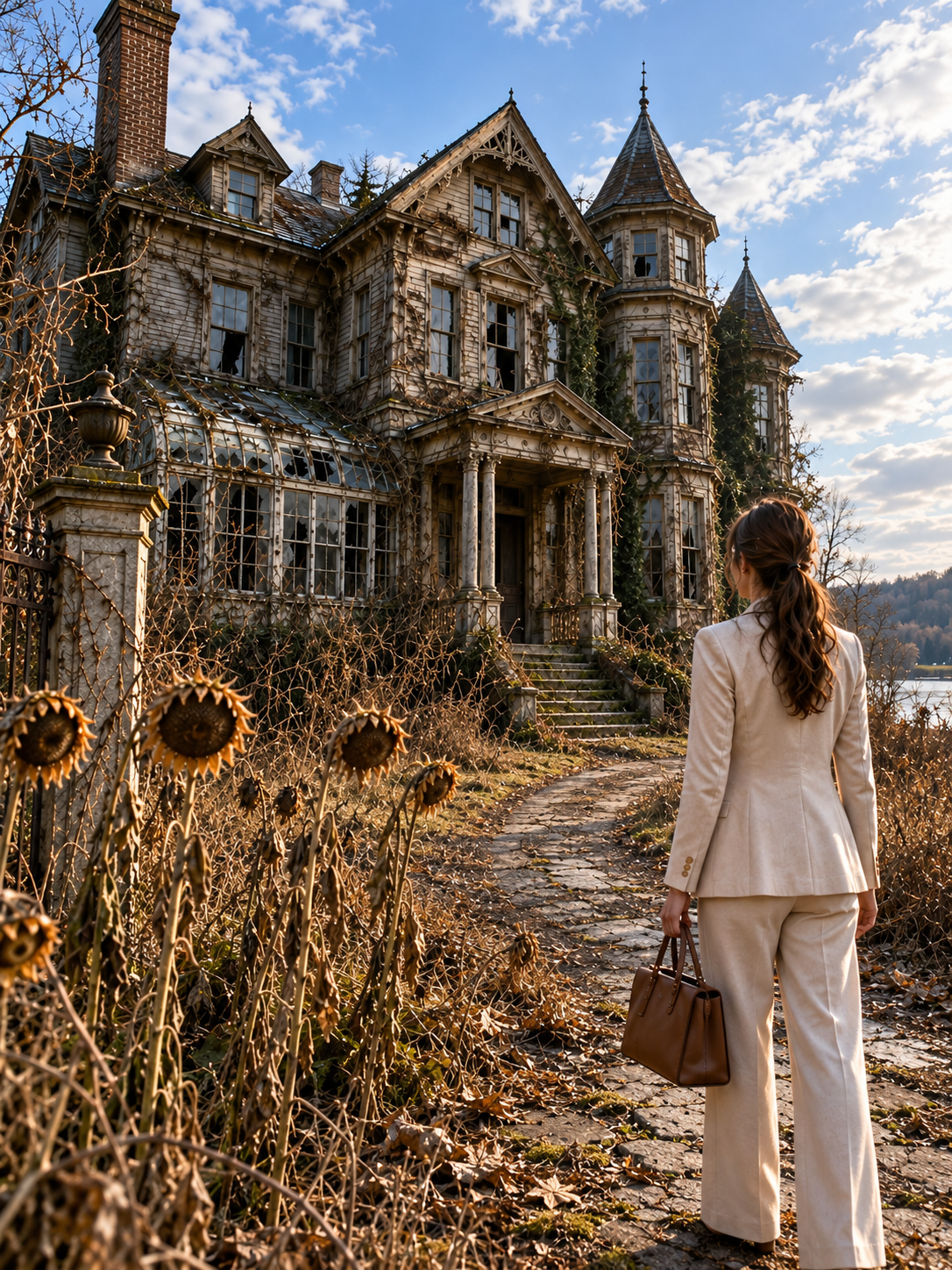
Her Family Threw Her Out With Nothing, So She Bought an Abandoned House—But the Secret Hidden in Its Attic Was Worth Killing For “Your mother would be ashamed of you,” my father said as he dropped my suitcase onto the frozen driveway. “You have ten minutes to leave. After that, I’m calling the police.” My younger sister stood behind him, wearing our dead mother’s diamond necklace. And the man who had promised to marry me was holding my sister’s hand. I didn’t scream. I didn’t beg. I looked at the three people standing beneath the warm porch lights of the house where I’d grown up, took my car keys from my pocket, and asked one question. “Does anyone want to tell me why Mom’s signature is on a document dated six months after she died?” My father’s face changed. Only for a second. But it changed. That was the moment I understood something was terribly wrong. My name is Hannah Mitchell. I was twenty-nine years old, had $4,812 in my checking account, and was standing outside my childhood home in Millbrook, Pennsylvania, with everything I owned stuffed into one suitcase. Three weeks later, I would purchase a decaying Victorian house for $3,900. The neighbors would tell me the property was cursed. The real estate agent would warn me never to enter the attic. And on my fourth night inside that house, I would discover a locked trunk containing photographs of my mother standing beside a little girl nobody in my family had ever mentioned. But the photographs weren’t the worst part. The worst part was what someone had written on the back of the last one. If Hannah ever finds this house, tell her the truth before her father does. What should Hannah do next when the only people who know the truth are the same people who destroyed her life? I didn’t know the answer that night. All I knew was that my father wanted me gone. And for the first time in my life, I was going to give him exactly what he wanted. My sister, Lauren, was twenty-five, beautiful in the effortless way that came from never worrying about the price of anything, and wearing the same smug expression she’d worn when she stole my prom date in high school. My former fiancé, Jason Walker, stood beside her in a charcoal wool coat I’d bought him for Christmas. He wouldn’t look directly at me. That almost made me laugh. For six years, I’d believed Jason was the kind of man who would stand beside me when life became difficult. Apparently, he’d just needed a different Mitchell daughter. “You’re making this harder than it needs to be,” Lauren said. Her left hand moved toward Jason’s. I noticed the engagement ring immediately. My engagement ring. The one Jason had slipped onto my finger at a restaurant in Philadelphia eighteen months earlier. The one I’d returned after discovering messages between them. Now it was sitting on my sister’s hand like a trophy. “That’s a lovely ring,” I said. Lauren blinked. Then she smiled. “Jason wanted me to have it.” “Clearly.” Dad stepped forward. “Enough.” His name was Robert Mitchell, and he’d spent most of his adult life convincing people he was a respectable man. He owned a small commercial property management company, attended church on Sundays, donated to the high school football program, and shook hands with nearly every local official who passed through town. People called him reliable. People called him generous. People called him a pillar of the community. I had called him Dad. Until that night. “You’ve been causing problems ever since your mother died,” he said. “Questioning everything. Accusing your sister. Digging through private paperwork.” “Mom left instructions about her estate.” “She left me in charge.” “She left a trust.” His jaw tightened. “You don’t understand business.” “Then explain the signature.” Lauren gave an exaggerated sigh. “Hannah, seriously. You’re obsessed.” I reached into my coat pocket and unfolded the photocopy I’d made that afternoon. The document was titled Amendment to Family Property Trust. It transferred certain real estate interests into an entity controlled by my father. The signature at the bottom was supposedly my mother’s. The date was September 18, 2021. My mother had died on March 3. I held it toward him. “Six months, Dad.” He didn’t take it. “Where did you get that?” “From the county records.” “Those papers are none of your concern.” “They have my mother’s name on them.” “Get off my property.” I folded the document carefully. Then I picked up my suitcase. I didn’t know where I would sleep. I didn’t know how I would afford another apartment after losing my job at the family company. I didn’t know whether Jason and Lauren had started their affair before or after he proposed to me. But I knew five things. I knew my mother had loved me. I knew she had trusted me. I knew she had left something unfinished. I knew my father was frightened of a piece of paper. And I knew frightened people sometimes made dangerous decisions. So I walked away. I put my suitcase in the trunk of my twelve-year-old Honda Civic, backed out of the driveway, and headed toward Route 202. Behind me, the porch light went dark. My phone vibrated before I reached the intersection. It was a message from Lauren. Don’t come back. Dad’s changing the locks tomorrow. I stopped at a red light. Then another message appeared. And stop telling people Jason cheated. You’re embarrassing yourself. I stared at the screen for a moment. Then I took screenshots. Both messages. I saved them in a folder I’d named FAMILY RECORDS. That folder already held nineteen documents. By the end of the month, it would hold more than two hundred. I spent my first night at a roadside motel outside Doylestown. The room smelled like bleach and old cigarette smoke. The television remote was missing its battery cover. The heater made a rattling sound every eleven seconds. I counted. Not because I was nervous. Because counting gave my mind something to do while I considered the problem. My father believed that taking away my home, my job, and my engagement would make me surrender. He’d misunderstood me. When I was seven, my mother taught me how to solve a difficult puzzle. She’d spread the pieces across our kitchen table and said, “Don’t waste your time forcing pieces where they don’t belong, sweetheart. Find the corners first.” My mother, Evelyn Mitchell, was a quiet woman with sharp blue eyes, a love of old houses, and the strange habit of writing important things in small spiral notebooks. She worked as a historical preservation consultant before she married my father. She loved architectural details. She knew the difference between a Victorian mansard roof and a Second Empire one. She could walk into a neglected building and see what it might become. But my favorite memory wasn’t of her renovating anything. It was of her sitting on the back porch one October evening, wrapping a blanket around my shoulders. I was fourteen. I’d failed a math test and was convinced my life was over. “People will always try to tell you who you are,” she said. “Especially when they need you to be smaller than you really are.” I asked what I should do. She smiled. “Make them adjust.” That night in the motel, I opened my laptop and began making a list. The first item was housing. The second was income. The third was my mother’s trust. The fourth was a name. Margaret Bell. I’d found it scribbled in the margin of one of Mom’s old notebooks. Beside it were three words. Ask about Briarwood. I’d never heard of Briarwood. I typed the name into a property search. Nothing obvious appeared. I tried adding Pennsylvania. Then Bucks County. Then abandoned property. At a.m., I found a county tax repository listing for an old house in a rural township north of Quakertown. The address was 114 Briarwood Lane. The photograph looked like something from a horror movie. Three stories. Gray wooden siding. A steep roof. A wraparound porch sagging on one side. Tall windows boarded with weathered plywood. The front yard was swallowed by weeds. A crooked iron gate leaned toward the driveway. And the entire building seemed to be watching the road. The asking price was $3,900. I stared at the screen. Then I clicked the listing. The property had failed to attract a buyer during earlier attempts to sell it. The listing disclosed delinquent taxes, extensive repairs, and possible structural hazards. It was being offered through a repository sale, subject to required approvals and title conditions. There were no guarantees. No warranties. No promises that the house was even safe to enter. A normal person might have closed the laptop. I opened a second tab and searched the property’s history. The last recorded owner had been a woman named Margaret Bell. My fingers went still. Margaret Bell. The name from my mother’s notebook. I leaned closer to the screen. She’d died eight years earlier. There were no recent photographs of the interior. The tax assessment valued the land at more than the building. But a note at the bottom of the listing caught my attention. Previous inquiries withdrawn after discovery of unresolved historical ownership materials. I read it twice. Then I printed the page. At eight the following morning, I called the county office. By noon, I was driving toward Briarwood Lane. The road narrowed as I left the highway. Houses became farther apart. Farm fields spread beyond old stone walls. Bare oak branches reached over the asphalt. The GPS told me to turn onto a gravel lane that looked like it hadn’t been properly maintained in twenty years. At the end stood the house. It was larger than I’d expected. Much larger. The photograph hadn’t shown the full western wing or the old carriage house behind a row of trees. A weathered iron fence surrounded nearly two acres. Most of it was buried beneath vines. The front porch had six columns. Two were crooked. One was missing part of its base. A stained-glass window occupied the wall above the entrance. Even beneath decades of dirt, its colors were visible. Deep green. Amber. Dark red. I parked beside the gate and stepped out. A cold wind moved through the trees. Somewhere behind the house, a loose sheet of metal tapped against another surface. Clang. Pause. Clang. I looked up at the third floor. One attic window was uncovered. The glass was cloudy. I had the uncomfortable impression that something moved behind it. I told myself it was a reflection. Then a voice spoke from behind me. “You thinking of buying that place?” I turned. An elderly man stood near the neighboring property line, holding a shovel. He wore a red flannel jacket and a faded Philadelphia Phillies cap. “Maybe,” I said. He studied me. “Don’t.” I smiled politely. “That’s a strong sales pitch.” “I’m not selling.” “Then what’s wrong with it?” He looked toward the house. “Everything.” His name was Walter Briggs. He was seventy-eight years old and had lived on Briarwood Lane since 1969. He remembered when the house still had a functioning garden, a caretaker, and warm lights glowing behind the upper windows. He remembered the woman who owned it. And he remembered the night she’d disappeared from the neighborhood. “Margaret Bell?” I asked. Walter’s expression shifted. “You know her?” “Only her name.” “That’s more than most people.” He moved closer. “Folks say that house is haunted. I don’t believe in ghosts.” “What do you believe in?” He looked straight at me. “People who want certain things buried.” A car turned onto the gravel lane behind us. A black SUV. Walter stopped talking. The SUV slowed beside my Honda. Its windows were tinted. The driver didn’t stop long enough for me to see a face. Then it continued toward the main road. Walter watched until it disappeared. “You got family around here?” he asked. “Not anymore.” For some reason, that answer seemed to trouble him. He adjusted his cap. “Then be careful, young lady.” He walked back toward his property before I could ask another question. I spent twenty minutes circling the exterior. The foundation appeared to be fieldstone. The eastern wall had a pronounced crack near one corner. A section of the roof had lost several shingles. The rear steps had collapsed. The property needed substantial work, and I knew an inspection would be essential. But the house also possessed details that rarely survived in abandoned buildings. Hand-carved window trim. Original brick chimneys. Decorative ironwork. Tall, narrow doors with brass hardware. My mother would have loved it. Standing beneath the huge oak tree beside the porch, I looked toward the attic window again. Then I remembered something strange. When I was little, Mom used to tell me stories about a house with a red window. Not a red house. A house with a red window. She claimed it belonged to a woman who kept secrets in wooden boxes. I always thought she’d invented it. Now I wasn’t so sure. I contacted the county, reviewed the sale process, and arranged for a licensed inspector to examine the accessible parts of the property. The inspection was ugly. The furnace was unusable. The electrical system required replacement. The plumbing had suffered freeze damage. There was suspected mold in the basement. A roof specialist estimated thousands in urgent work. The inspector refused to certify the third floor as safe. He also found evidence that someone had entered the building recently. Fresh boot marks. A newer padlock on a basement storage room. A cigarette butt that hadn’t absorbed years of dust. “Could be kids,” he said. “Could be.” I photographed everything. Then I called the county again. I wanted the complete disclosure package. I wanted to know exactly what ownership interests were being conveyed. I wanted to understand the unpaid charges and any outstanding legal claims. And I wanted the historical deed chain. The woman at the office sounded surprised. “Most buyers don’t ask this many questions about repository properties.” “Most buyers probably aren’t spending their emergency savings.” She laughed once. Then her tone became more serious. “Miss Mitchell, I should tell you that someone else recently requested the same records.” “Who?” “I can’t provide private applicant information over the phone.” “When?” “Earlier this week.” I looked toward the black SUV parked across the street from the motel. It had been there when I arrived. I couldn’t prove it was the same vehicle. But I was becoming very interested in black SUVs. “Thank you,” I said. I hung up. Then I watched the vehicle through the curtains. The engine started. It drove away. At that point, I could have walked away from Briarwood. I probably should have. Instead, I checked the balance in my bank account. Then I opened my mother’s notebook. Ask about Briarwood. The handwriting was unmistakable. I could hear her voice saying it. Find the corners first. I decided to proceed, but I wasn’t going to confuse curiosity with recklessness. I hired a local real estate attorney named Daniel Price to review the available title materials and the county’s sale terms. He was in his early forties, wore slightly crooked glasses, and had the practical expression of a man who’d spent too much time explaining unpleasant facts to optimistic clients. “You understand that the purchase price is the cheapest part of this house?” he asked. “Yes.” “And you understand that a tax repository conveyance is not a guarantee against every possible title problem?” “Yes.” “And you understand that you may spend years dealing with repairs?” “Yes.” Daniel removed his glasses. “Then why this house?” I showed him the page from my mother’s notebook. He read it quietly. “Your mother knew the former owner?” “I think so.” “And your family has a trust dispute?” “Possibly fraud.” He looked up. “That’s a serious allegation.” “Which is why I’m collecting evidence instead of making accusations.” For the first time, he smiled. “Good answer.” With his help, I confirmed that the county was prepared to sell the interest described in the documentation, that the advertised sale would be subject to approval, and that the outstanding problems were significant but identifiable. I also learned that the property had been connected to an older landholding known as Bellwood Estate. That name appeared repeatedly in records from the 1970s and 1980s. More interestingly, Bellwood Estate had once held shares in a private development company. The company’s name had changed several times. Its last recorded manager? Robert Mitchell. My father. I sat in Daniel’s office staring at that line. “Coincidence?” he asked. “I don’t know.” “You have to consider that possibility.” “I am.” But my instincts were screaming. My father’s company had been involved with this abandoned house. My mother had written its name in a notebook. The former owner had died. And someone else had recently been looking through the records. That was too much to dismiss without investigating. The sale received the necessary approval. A few days later, I signed the documents. The purchase price was $3,900, with additional closing and recording expenses that reduced my remaining cash to an uncomfortable amount. I left Daniel’s office with a thick folder, a set of old keys, and the strange feeling that I’d just purchased more trouble than one person could carry. Then I went straight to the house. Walter Briggs watched from his porch as I unlocked the front door. The hinges protested. The air inside smelled of plaster dust, wet wood, and years of neglect. Sunlight filtered through gaps around the boarded windows. A grand staircase rose from the entrance hall. Its banister was covered in dust. A broken chandelier hung above the foyer. To my left was a parlor with an enormous marble fireplace. To my right, a dining room. The wallpaper was peeling in long strips. The floors creaked. The silence felt heavy. I set my suitcase beside the staircase. For the first time in almost a month, I was standing inside a place nobody in my family could order me to leave. It wasn’t comfortable. It wasn’t beautiful. It wasn’t even fully habitable. But it was mine, subject to the title issues my attorney had explained. I smiled. “Hello, Briarwood.” Something thumped upstairs. My smile disappeared. I listened. Another sound came from above. Not footsteps. Something dragging. Slowly. Across wood. I reached for my phone. Then the noise stopped. The inspector had warned me away from the third floor, so I didn’t investigate. Instead, I stepped outside, called Walter, and asked whether he’d noticed anyone entering the property. There was a long silence. Then he said, “Come over.” I walked across the yard. He invited me into his kitchen. It smelled like coffee and cinnamon. Photographs of children and grandchildren covered the refrigerator. He poured two cups of coffee, sat down, and asked, “What is your last name?” “Mitchell.” He didn’t move. “What’s your mother’s name?” “Evelyn.” Walter’s hand tightened around his coffee mug. “Evelyn Harper?” That was her maiden name. “Yes.” For several seconds, he stared at me. Then he stood and walked to a cabinet. From the top shelf, he removed a small metal box. Inside were photographs. Most showed the neighborhood decades earlier. The lane when it was unpaved. The old Bellwood gardens. Margaret Bell standing beside a rose arbor. Then he pulled out a photograph that made my breath catch. My mother. She was young. Maybe nineteen. Her hair was long and dark. She was standing on the steps of Briarwood with Margaret Bell. Between them was a small girl wearing a yellow dress. The little girl had blonde curls and a serious expression. I leaned forward. “Who is that?” Walter didn’t answer immediately. “Hannah, how old were you when your mother died?” “Twenty-four.” “Did she ever tell you about the years before she married your father?” “Not much.” He placed the photograph on the table. “Your mother spent a lot of time in that house.” “Why?” “Margaret helped raise her.” I stared at him. “My mother was raised in Ohio.” “That’s what people were told.” I looked at the girl again. “Is this me?” “No.” “Then who?” Walter took a slow breath. “I think your mother wanted you to discover that for yourself.” It was the most frustrating answer I’d ever heard. “Mr. Briggs, if you know something—” “Walter.” “Walter. If you know something about my mother, please tell me.” His eyes filled with a sadness that seemed much older than our conversation. “Margaret made me promise I wouldn’t speak until the right person came asking the right questions.” “That’s ridiculous.” “Maybe.” “What questions?” He looked toward the window. “The ones you’re already asking.” I left his house with a copy of the photograph. He wouldn’t give me the original. He did offer to lend me an old space heater, but I declined because the house’s electrical wiring wasn’t safe. Instead, I arranged to sleep in the detached carriage house after a contractor confirmed the small finished office at the back could be made secure and safely supplied with temporary power. I bought bottled water. A battery lantern. A folding cot. A heavy-duty flashlight. A portable carbon monoxide alarm for any future work requiring fuel-burning equipment. And three new exterior locks. I wasn’t going to be careless simply because I was curious. For the next two days, I worked. I hired a roofer to tarp the damaged section. A locksmith replaced the main entry locks. A local electrician disconnected dangerous circuits and established a safe temporary power supply in the carriage house. I applied for part-time accounting jobs. I updated my résumé. And every evening, I sat at a folding table in my temporary living space, sorting through the history of Briarwood. The records stretched back more than a century. The original house had been built in 1891. It belonged to a family that owned several regional textile mills. By the 1930s, the property had passed into the hands of a trust. Margaret Bell became its owner in the 1970s. But something about the transfer bothered me. The deed referenced a separate schedule of personal property and historical materials. That schedule wasn’t attached to the scanned county record. I called Daniel. He promised to investigate. Then, on my third evening, Jason called. I hadn’t spoken to him since the night my father threw me out. I almost ignored it. Then I pressed Answer. “Hannah.” His voice was familiar. That was the worst part. Six years of Sunday mornings, road trips, shared groceries, and whispered plans were packed into two syllables. “What do you need, Jason?” He hesitated. “I heard you bought a house.” “That travels fast.” “Lauren told me.” “Congratulations to Lauren.” “I’m serious.” “So am I.” He exhaled. “Look, your dad’s worried.” “About my housing situation?” “About what you’re getting involved in.” I sat up straighter. “What am I getting involved in?” “Just… be careful.” “Of what?” “Old property disputes. Family business. Things you don’t understand.” I looked at the folder beside me. “Who told you to call?” Silence. “Jason?” “I’m trying to help.” “Then answer the question.” He said nothing. I waited. Finally, he spoke. “You really need to sell that place.” A cold feeling settled in my stomach. “Why?” “Because it’s not worth the trouble.” “Have you been inside?” “No.” “Do you know Margaret Bell?” Another pause. “Who?” I heard a woman in the background. Lauren. Then a muffled exchange. Jason returned. “Hannah, just do yourself a favor and walk away.” The line went dead. I recorded the date and time of the call in my notebook. Then I sent Daniel a short email summarizing what had happened. An hour later, the first anonymous text arrived. THE HOUSE DOESN’T BELONG TO YOU. I stared at it. No name. No explanation. Just seven words. I took a screenshot. The second message came thirty seconds later. LEAVE THE ATTIC ALONE. I stood. The attic. Not the basement. Not the records. The attic. I called Daniel. He told me not to enter any unsafe area, to preserve the messages, and to report any direct threats. I contacted the local police department and made a report. An officer took the information, explained the limits of what could be done with an anonymous text, and advised me to call immediately if anyone approached the property. Then I called Walter. “Did Margaret keep anything in the attic?” I asked. He was silent. “Walter?” “You need to come over.” Again. This time, when I entered his kitchen, there were two cups of coffee waiting. Walter sat with both hands resting on the table. “She kept trunks,” he said. “What kind of trunks?” “Old steamer trunks. Papers. Photographs. Things from the family.” “Why didn’t you tell me?” “Because I wasn’t sure what was still there.” “Who else knows?” He looked at me. “Your father.” I didn’t speak. Walter continued. “Robert came here years ago. Before Margaret died. He wanted her to sign something.” “What?” “She wouldn’t tell me.” “What happened?” “They argued. He left. A week later, two men came with a moving truck.” “Did they take anything?” “Some furniture. A few boxes.” “Did Margaret allow it?” Walter looked down. “I don’t know.” I took out my phone. “Did you report it?” “She told me not to.” “Why?” His voice softened. “Because she was afraid for someone.” “Who?” He looked at the photograph on the refrigerator. An old black-and-white picture of the lane. “I believe it was your mother.” That night, I didn’t sleep much. The next morning, I arranged for a structural contractor to assess the attic access and floor framing. I wasn’t about to fall through a rotten ceiling chasing a mystery. The contractor, a blunt woman named Carla Jennings, arrived with a ladder, protective equipment, and twenty years of experience restoring old buildings. She examined the stairs, tested the accessible structure, and inspected sections of the framing. “The main attic walkway can support careful access,” she said. “But stay off the areas I’ve marked. The western edge is compromised.” She placed bright caution tape across the unsafe sections. Then she pointed toward a narrow door at the end of the hallway. “That room’s locked.” I studied it. The door was shorter than the others. Its brass knob was black with age. Above the frame, someone had painted a tiny red star. “What do you think is inside?” I asked. “Probably fifty years of dust.” Carla laughed. I didn’t. Something about the red star made my skin prickle. I’d seen it before. Not here. Not in a photograph. In one of my mother’s notebooks. I remembered a small symbol drawn beside a line that made no sense at the time. The red star is where the truth sleeps. I thanked Carla, paid her, and waited until she’d left. Then I photographed the door. The lock was old. The frame had been repaired at some point. The wood around the keyhole was scratched. Someone had tried to open it. Recently. There were fresh gouges beneath the dust. I didn’t force the door. Instead, I called the locksmith who’d replaced the exterior locks. He arrived that afternoon and opened it without damaging the original hardware. When the door swung inward, stale air brushed against my face. The room was barely twelve feet wide. The roof sloped sharply on both sides. There was one small window. A broken chair. Two wooden crates. And a massive black steamer trunk against the far wall. Its brass fittings were green with oxidation. A heavy chain wrapped around it. The padlock was newer than the trunk. I approached carefully, staying on the inspected walkway. The trunk had a faded shipping label attached to one corner. Most of the writing was illegible. But one word remained. HARPER. My mother’s maiden name. I photographed the label. Then I stepped back. Someone had placed the trunk there deliberately. The chain wasn’t old. The padlock wasn’t old. Whatever was inside, someone had wanted to keep it closed. I called Daniel. He advised me to document the condition and have a witness present before opening anything that might relate to the disputed trust. Walter came over. He climbed the stairs slowly, gripping the banister. When he saw the trunk, he stopped. For the first time since I’d met him, the old man looked truly frightened. “Oh, Margaret,” he whispered. “You recognize it?” He nodded. “What is it?” “Her last insurance policy.” I turned toward him. “Against what?” He looked at the chain. “Against people like your father.” We brought the locksmith back to remove the padlock while Daniel joined us by video call. I positioned my phone so he could see everything. The locksmith cut the newer chain. Walter watched without speaking. Then I lifted the trunk’s lid. The hinges gave a low, metallic groan. Inside was a layer of yellowed fabric. Beneath it sat five carefully wrapped bundles. A leather photograph album. A stack of envelopes tied with blue ribbon. A small wooden jewelry box. A thick folder sealed in plastic. And a portable cassette recorder. The recorder looked like something from the 1980s. A cassette tape was already inside. I reached for the album. My hands were steady. My pulse wasn’t. On the first page was a photograph of Margaret Bell standing outside Briarwood with my mother. Evelyn was young. She wore a white blouse and jeans. Both women were smiling. On the next page, my mother sat on the porch beside the little girl in the yellow dress. There were dozens of photographs. Birthdays. Christmas mornings. Summer picnics. A school play. A child blowing out candles on a pink cake. In every photograph, my mother looked happy. And in almost every photograph, the little girl stood beside her. I turned another page. A birth certificate was tucked into a transparent sleeve. I carefully removed it. The child’s name was Emily Harper. Date of birth: November 12, 1987. Mother: Evelyn Grace Harper. Father: Not listed. I stopped breathing for a moment. My mother had given birth to a daughter. Before she married my father. Before I was born. I had a sister. An older sister. Nobody had ever told me. Walter lowered himself onto the old chair. He didn’t seem surprised. “Who was Emily?” I asked. My voice sounded strange. He closed his eyes. “Your mother’s first child.” I looked down at the certificate. “She never told me.” “No.” “Where is she?” Walter opened his eyes. “I don’t know.” I held up the photograph. “Did she die?” His expression changed. “I was told she did.” “By whom?” He looked toward the doorway. “Your father.” The room seemed to grow colder. I looked at the little girl’s face again. She had my mother’s eyes. My mother’s smile. And something else. A small crescent-shaped birthmark just below her left ear. I had that same birthmark. Not identical. But close enough that my throat tightened. I set the photograph down carefully. “Tell me everything.” Walter folded his hands. He explained that Evelyn had lived at Briarwood with Margaret when she was a teenager. Margaret had been her guardian during a difficult period of family instability. Evelyn became pregnant at nineteen. The father wasn’t involved. Margaret helped her raise Emily. For several years, they lived quietly. Then Evelyn met Robert Mitchell. My father. He was older. Successful. Ambitious. He offered stability. He offered a future. And eventually, he offered marriage. “But he didn’t want the child,” Walter said. I looked up. “What?” “He said raising another man’s daughter would complicate things.” My jaw tightened. “What did Mom say?” “She refused to abandon Emily.” “Then what happened?” Walter looked away. “That’s when things became complicated.” He explained that Evelyn had become seriously ill after a car accident. For months, she struggled with rehabilitation. During that time, Robert had taken over many of her financial affairs. And one spring morning, Emily disappeared. The official explanation was that the girl had been placed with relatives while Evelyn recovered. Later, Evelyn was told Emily had died in an accident. “Was there a death certificate?” I asked. Walter shook his head. “I never saw one.” “Did Mom?” “I don’t know.” “Did she believe it?” “At first.” “And later?” His eyes filled with tears. “She spent years looking.” I sat very still. My mother had spent years searching for a daughter. And I had never known. Suddenly, so many small memories began to rearrange themselves. Mom crying after receiving certain letters. Mom going quiet whenever someone mentioned adoption. Mom refusing to throw away a box of children’s clothes stored in our basement. Mom insisting I learn how to find public records. Mom teaching me that paperwork mattered. I thought she’d been cautious. Maybe she’d been preparing me. I opened the bundle of letters. Most were addressed to Margaret. Some were written by my mother. Others came from attorneys. Private investigators. Hospitals. Government agencies. The earliest letters were desperate. The later ones were precise. My mother’s handwriting became smaller and more controlled over time. On one page, she wrote: Robert says I am destroying our marriage by refusing to accept what happened. But I saw Emily’s hairbrush in the garage after he told me she’d already been buried. Why would he keep it? My stomach turned. I read the next letter. I asked for the police report again. Robert says the records were lost. I contacted the county myself. They found no accident matching his description. Another letter. Margaret believes Emily was taken out of state. Then another. Robert knows more than he’s telling me. I looked toward Walter. “Why didn’t you call the police?” His face tightened. “Margaret did. More than once. But without proof of where Emily had gone, the investigation went nowhere.” “Did anyone suspect Robert?” “Yes.” “What happened?” “He had an explanation for everything.” I looked at the pile of letters. “There are records here.” “Records aren’t always enough.” “Sometimes they are.” I reached for the sealed plastic folder. Inside were copies of property documents. Bank transfers. Corporate registrations. Trust amendments. I recognized my father’s company name. Mitchell Property Group. But there was another name beside it. Bellwood Holdings. And attached to several documents was a handwritten note from Margaret. The house is the key. Evelyn must never let Robert control the original trust. I showed Daniel through the camera. He leaned closer. “Can you hold that steady?” I did. He studied the page. “Interesting.” “What does it mean?” “I need to examine the originals and verify these documents. But if the trust is what I think it is, your father’s authority may be much narrower than he’s claimed.” I looked down. The folder contained a 1989 trust agreement naming Emily Harper as the primary beneficiary of certain property interests. Evelyn was named as successor trustee under specified circumstances. A later handwritten note suggested that the assets had been moved improperly. The number beside the portfolio valuation caught my attention. $2.8 million. In 1989. I stared. Even without appreciation, that was an enormous amount of money. With decades of growth, it could represent something much larger. But the money wasn’t what made my hands cold. It was Emily’s name. My sister’s name. Written again and again. A child who had vanished. A child my father claimed was dead. And property that someone had apparently spent years trying to control. Walter leaned forward. “There’s something else.” I looked at him. He pointed toward the jewelry box. “Margaret always said that was the most important thing.” I lifted its lid. Inside lay a silver locket. A tiny brass key. And a folded piece of paper. The paper bore my name. Not Hannah Mitchell. Hannah Harper. My mother’s maiden name. I unfolded it. The handwriting was hers. My darling Hannah, If you are reading this, then I failed to tell you something I should have told you while I was alive. I wanted to protect you from a truth that nearly destroyed me. But silence can become another kind of cruelty. You have a sister. Her name is Emily. I do not know where she is. I have never stopped looking. And I am no longer certain Robert told me the truth about the day she disappeared. I stopped reading. My vision blurred. I pressed my thumb against the paper. Then I forced myself to continue. Margaret promised to preserve what she could. If I am gone, please do not let Robert convince you that the search is over. I know he will tell you I was confused. I know he will tell you grief made me imagine things. Do not believe that simply because he says it. Find out what happened to Emily. And remember that I loved both my daughters. Always. Mom. For several minutes, I couldn’t speak. The attic was silent. Walter looked away. Daniel remained on the video call without interrupting. I read the letter again. Then I folded it exactly along its original creases. “I’m going to find her,” I said. Walter closed his eyes. “I hope you do.” What none of us knew was that my father had already learned the trunk had been opened. The first indication came twenty minutes later. My phone rang. Dad. I let it ring. He called again. Then again. Finally, a message arrived. Hannah, we need to talk about the house. I looked at the screen. Then I typed: Which house? His response came immediately. Don’t play games with me. I smiled without humor. There it was. The mistake. He hadn’t asked what house. He already knew. I took a screenshot. Then I sent him one sentence. I’m busy, Dad. I’ll call when I’m finished. His reply appeared thirty seconds later. You have no idea what you’re dealing with. I read it twice. Then I turned my phone face down. For the first time, I believed him. But that didn’t mean I was going to stop. The next morning, I rented a small storage unit with controlled access. Daniel arranged for the documents to be inventoried and reviewed. I scanned everything. I photographed every envelope before opening it. I recorded where each item had been found. I preserved the original order. The letters, photographs, and trust records were too important to handle casually. I also listened to the cassette tape. It took some searching to find a reliable player. Walter had an old stereo in his basement, but the cassette deck was broken. A local electronics repair shop tested the tape and digitized it without altering the original. That evening, I sat in the carriage house with headphones on. I pressed Play. At first, there was only static. Then a woman’s voice. Margaret Bell. I recognized her from an old home video Walter had shown me. “This is Margaret Bell. October 14, 2004.” A pause. “I am recording this statement because I no longer believe the people responsible for Emily Harper’s disappearance intend to tell the truth.” My shoulders stiffened. Margaret continued. “I have made copies of the available documents. I have placed one set where Robert Mitchell cannot legally gain access without exposing what he has done.” A faint rustling sound followed. Then her voice became quieter. “Evelyn does not know everything.” I leaned forward. “She believes her daughter was taken away from her. She is right about that. But there is more.” The recording crackled. “I have reason to believe Emily was transferred through a private placement arrangement involving a corporation connected to Bellwood Holdings.” My stomach turned. Transferred. Like an asset. Like something people could move from one place to another. Margaret’s voice trembled. “I cannot yet prove who authorized it. The signatures are inconsistent. The dates have been altered. And the people who handled the transaction are refusing to speak.” A long pause. Then: “If anything happens to me, Hannah must be told.” I froze. The tape was dated 2004. I had been seven years old. Margaret had known my name. She had been preparing for the possibility that one day I would find her house. The recording continued. “There is a second set of documents. I have hidden the location in a place only Evelyn would think to search.” The next words were nearly swallowed by static. I replayed them. Again. And again. Then I heard them clearly. “Where the red window catches the morning sun.” I stopped the recording. The red window. The stained-glass window above the front door. The one I’d noticed on my first visit. I looked at the photograph of the house. The red glass occupied the eastern side of the design. Morning sunlight would pass through it. And land somewhere inside. I went to bed with a plan. The following morning, I arrived at the entrance hall before sunrise. The house was cold. My flashlight beam cut through the dust. I stood beneath the stained-glass window and waited. At a.m., a narrow shaft of sunlight pierced the red glass. It struck the wall beside the staircase. For several minutes, the beam moved slowly across peeling wallpaper. Then it illuminated a decorative wooden panel beneath the banister. I approached. The panel was carved with flowers. Nothing unusual. Except one blossom had six petals. The others had five. I touched it. The wood shifted. A hidden catch released with a soft click. The panel opened. Behind it was a narrow compartment. Inside sat a small metal cash box. My heart hammered. I used the brass key from the jewelry box. It fit. The lid opened. Inside was a sealed envelope. And a photograph. The photograph showed Emily as a teenager. She was maybe sixteen. Her blonde hair fell past her shoulders. She stood outside a modest brick house. On the back, in Margaret’s handwriting, were three lines. Emily Harper. Taken in 1994. Found alive in 2003. I gripped the edge of the staircase. Alive. Margaret had found her alive. For years, my mother had searched for her daughter. And at some point, someone had found Emily. I turned over the envelope. It was addressed to Evelyn. The postmark was from Columbus, Ohio. The date was February 2004. I opened it carefully. Inside was a letter written in a young woman’s handwriting. Dear Mrs. Bell, Thank you for finding me. I still don’t know whether I can meet my mother. The people who raised me said she didn’t want me. They told me she signed everything herself. But the papers you showed me don’t match what I remember. I remember a woman crying. I remember a man telling me not to look back. And I remember a little white house with blue shutters. If Evelyn really wants to see me, please ask her to write. I don’t think I can survive being abandoned twice. Emily. I sat down on the staircase. Not because I was overwhelmed. Because my knees had suddenly become unreliable. Emily had been alive in 2004. Margaret knew. My mother might have known. But the photographs in the attic suggested Margaret had continued collecting evidence afterward. I looked at the envelope again. There was no forwarding address. Only a post office box. I photographed everything. Then I called Daniel. “I found another letter.” “What’s in it?” “Proof that Emily was alive in 2004.” There was a pause. Then he asked, “Hannah, are you alone?” “Yes.” “Lock the doors and don’t let anyone in. I’m coming over.” I looked toward the front window. A vehicle was turning into the driveway. Black SUV. My stomach tightened. “Daniel?” “Yes?” “I think we have a problem.” The SUV stopped. Two men stepped out. One wore a navy jacket. The other carried a leather portfolio. They approached the porch. The man with the portfolio knocked. “Hannah Mitchell?” I didn’t answer. “We represent an interested party regarding the property.” I kept the door locked. “Please identify yourselves.” The man held up a business card toward the glass. “Michael Crane. Attorney.” I photographed it through the window. “What firm?” He gave a name. I wrote it down. “What do you want?” “We need to discuss documents that may have been improperly removed from an estate.” I glanced at the open compartment. “Which documents?” “Historical materials belonging to Bellwood Holdings.” My pulse quickened. “How do you know what’s here?” He hesitated. “We understand you may have discovered certain items.” “Who told you that?” “Miss Mitchell, we’re trying to resolve this professionally.” “Then send correspondence to my attorney.” He shifted. “We have authority to request the return of the property.” “Please provide that authority in writing.” The second man moved toward the side of the porch. I raised my voice. “Don’t go around the house.” He stopped. The attorney looked toward him. Then back at the door. “Hannah, your father is concerned about you.” There it was. The connection. I spoke slowly. “Mr. Crane, I’ve documented your visit. My attorney is aware you’re here. I’m not discussing anything without counsel.” He stared through the glass. Then he smiled. It wasn’t friendly. “Very well.” They returned to the SUV. I watched until it disappeared down the lane. Then I called the police and reported the visit in light of the earlier anonymous messages. No crime had necessarily occurred. But I wanted the pattern recorded. Daniel arrived forty minutes later. He inspected the newly discovered letter. Then he looked at me. “This changes the direction of the investigation.” “Because Emily was alive?” “Because someone was communicating with her years after your family said she died.” “Can we find the post office box?” “We can begin there.” I handed him the copied envelope. “And Daniel?” “Yes?” “Those men knew about the attic.” He looked toward the staircase. “Then we need to assume someone is watching the property.” Over the next week, everything moved faster. Daniel verified that Michael Crane was an attorney whose firm had represented companies associated with my father. The trust documents appeared to involve historical beneficial interests that required specialized review. He contacted a forensic document examiner about the questionable signatures. He also arranged a consultation with an investigator experienced in missing-person cases and historical adoption records. Her name was Rebecca Sloan. Rebecca was fifty-two, with short dark hair and a voice that made every sentence sound like a decision. She listened without interrupting as I explained what we’d found. Then she examined the photographs. “How old was Emily when she disappeared?” “Six.” “And she would be how old now?” “Thirty-eight.” Rebecca wrote it down. “Do you know whether she ever changed her name?” “No.” “Any known addresses after 2004?” “No.” “Any confirmed contact with Evelyn?” “Not yet.” Rebecca studied the letter. “There’s a lot we don’t know.” “I understand.” “But there’s one thing I can tell you.” I waited. “People leave trails. Even when other people work hard to erase them.” For the first time in days, I felt something loosen inside my chest. Hope. Not certainty. Hope. Rebecca began reconstructing Emily’s known movements. She traced the post office box to a mail service that had closed years earlier. She identified a woman who’d once worked at a private placement agency connected to the suspected adoption arrangement. The woman was deceased. But her daughter still lived in Ohio. Rebecca also discovered that the corporation mentioned in Margaret’s recording had dissolved in 2011. Before dissolution, it had used a registered agent connected to Bellwood Holdings. The web of companies grew complicated. But the center remained familiar. My father. Meanwhile, I was trying to live. That part rarely appears in dramatic stories. People imagine that once a mystery begins, the rest of life simply waits. It doesn’t. Bills arrive. Cars need gas. Food costs money. Roof leaks don’t care about family secrets. I found remote bookkeeping work through a small accounting firm. It paid less than my old job, but it was mine. I sold several pieces of jewelry. Not my mother’s things. Just gifts I’d received from Jason. I repaired the carriage house office enough to use it as a temporary workspace. The main house remained largely off-limits until additional repairs could be completed. I met with contractors. Compared estimates. Filed permit applications. And kept working through the records. One afternoon, Walter appeared carrying a covered casserole dish. “Chicken and rice,” he announced. “I didn’t ask for dinner.” “I didn’t ask if you wanted it.” He placed it on the folding table. Then he looked around my temporary office. “You’ve made the place respectable.” “It’s still a shed with a desk.” “Better than a shed without one.” I laughed. He smiled. Then he noticed the photograph beside my laptop. Emily. Taken in 2003. He stared at it. “Margaret never showed me that one.” “She’d found Emily by then.” “So it seems.” “Why didn’t she tell Mom?” Walter sat down slowly. “Maybe she did.” I looked at him. “What makes you say that?” He rubbed his hands. “Your mother came here in 2005.” I froze. “After Emily wrote the letter?” “Yes.” “Why?” “I don’t know. But they argued.” “Mom and Margaret?” He nodded. “What about?” “I couldn’t hear everything.” “What did you hear?” Walter looked toward the window. “Evelyn said she couldn’t risk losing another daughter.” I felt a chill. Another daughter. Me. “Did she mean I was in danger?” “I don’t know.” “What did Margaret say?” He thought for a moment. “She said the truth wouldn’t stay buried forever.” I looked back at the photograph. My mother had known more than she’d told me. Maybe she’d even known Emily was alive. So why had she kept searching quietly? Why hadn’t she brought Emily home? What had frightened her enough to remain silent? I asked Walter if he remembered anything else. He shook his head. Then he reached across the table and touched the edge of the photograph. “She loved you, Hannah. Whatever else happened, don’t forget that.” I nodded. But love wasn’t the same as truth. And I was beginning to understand that even good people could make terrible choices when they were afraid. Two days later, I received a certified letter. It came from my father’s attorney. The letter claimed I had improperly retained personal property belonging to Bellwood Holdings and demanded that I preserve and surrender certain categories of records. Daniel read it twice. Then he laughed softly. “What’s funny?” I asked. “This.” He pointed at a paragraph. “They’re asserting ownership of materials they haven’t identified with enough precision.” “Meaning?” “They’re trying to get you to confirm what you found.” I smiled. “So we don’t tell them.” “We respond through counsel, preserve everything, and require them to establish their claim.” Daniel drafted a reply. Professional. Brief. Careful. No accusations. No revelations. Just a request for specific legal authority supporting the demand. My father’s side didn’t respond immediately. But Lauren did. She sent me a message the next morning. You’re seriously trying to ruin Dad over some disgusting old house? I read it while drinking coffee. Then another arrived. You always hated seeing anyone else happy. And another. Jason says you’re stalking the family through public records. I set down my mug. Then I typed one sentence. Please communicate through my attorney regarding any legal matter. I blocked her afterward. Not because her words hurt. They did. But because I finally understood something. Lauren wasn’t interested in the truth. She was interested in making me react. If I screamed, she could call me unstable. If I threatened, she could call me dangerous. If I insulted her, she could show everyone. So I gave her nothing. Three days later, the first big break came. Rebecca called while I was reviewing contractor estimates. “I found someone who remembers Emily.” I stood. “Where?” “Columbus.” “Is she alive?” “The witness is. We’re still verifying Emily’s later identity.” “What does the witness remember?” Rebecca paused. “She remembers a girl who called herself Emily Harper, but whose legal name was different.” I gripped the phone. “What name?” “Emily Dawson.” The name meant nothing to me. Rebecca continued. “She worked at a small veterinary clinic in 2006. The former owner remembers her very clearly.” “Why?” “Because Emily disappeared from that job overnight.” My heart sank. “Disappeared?” “She didn’t show up for a shift. Her apartment was empty. The owner received a letter saying she’d moved.” “Could she have just moved?” “Absolutely. We have to keep that possibility open.” “But?” “But the owner says Emily was frightened during the weeks before she left.” I walked toward the window. “Of whom?” “We don’t know yet.” Rebecca lowered her voice. “There’s another detail.” “What?” “Emily had been asking questions about a man named Robert Mitchell.” The room went silent. For a moment, I couldn’t hear anything except the hum of my laptop. Rebecca continued. “Hannah, I need you to understand that none of this proves your father committed a crime. But the pattern justifies further investigation.” “I understand.” “Good.” I looked at the photograph of my sister. Thirty-eight years old now. If she was alive. “Find her,” I said. Rebecca’s voice softened. “That’s what I’m trying to do.” That evening, my father came to Briarwood. Not by attorney. Not by phone. In person. His silver Mercedes pulled into the driveway just before sunset. I saw it through the carriage house window. I didn’t go outside immediately. I called Daniel. Then I started recording audio on my phone, subject to his advice about Pennsylvania’s consent laws, and stopped before capturing any conversation without the required consent. I chose instead to preserve the encounter with exterior security footage that had been installed and positioned lawfully. Then I stepped onto the porch. Dad emerged from the car wearing a dark coat. His hair had grown grayer since I’d last seen him. For a second, I remembered him teaching me to ride a bicycle. His hand on the back of the seat. His voice telling me not to be afraid. Then I remembered my suitcase hitting the driveway. “Hello, Dad.” He stopped several feet away. “You look tired.” “I’ve been working.” “You’ve lost weight.” “I’m fine.” He glanced toward the house. “This place is dangerous.” “Some areas are. I’m having it evaluated.” “You should never have bought it.” “Why?” “Because it’s worthless.” “Then why do you want it?” He looked at me sharply. “I never said that.” “You came here.” “I’m worried about you.” I folded my arms. “You weren’t worried when you threw me out.” His mouth tightened. “That was a difficult situation.” “For whom?” “Hannah.” “Dad.” He looked away. For a moment, I thought he might apologize. Instead, he said, “Your mother wasn’t well in the years before she died.” I felt something harden inside me. “Don’t.” “She became fixated on old family stories.” “Don’t use her illness to dismiss her.” “I’m trying to explain.” “Then explain Emily.” His face went pale. It was subtle. But unmistakable. The evening wind moved through the trees. For several seconds, he said nothing. Then: “Who told you that name?” I didn’t answer. He took a step toward me. “Hannah, where did you hear that name?” “Did you know my mother had another daughter?” He looked toward the house. “You need to stop digging.” “Why?” “Because you don’t understand what happened.” “Then tell me.” He pressed his lips together. “I made difficult decisions to protect this family.” I stared at him. “Was Emily one of those decisions?” His eyes flashed. “You don’t know anything about raising a family.” “No. But I know a six-year-old girl shouldn’t disappear without an explanation.” “Be careful.” The words came quietly. Not shouted. That made them worse. I looked at him. “Are you threatening me?” He seemed to realize what he’d said. His expression softened. “Hannah, you’re my daughter.” “And Emily was Mom’s daughter.” He looked toward the ground. Then he said something I would remember for the rest of my life. “Some children are better off not knowing where they came from.” I felt the air leave my chest. Not because he’d admitted everything. He hadn’t. But because of the way he said it. Not as a grieving stepfather. Not as someone troubled by an old tragedy. As a man describing a decision he’d already justified to himself. I stepped toward the door. “You need to leave.” “Hannah—” “My attorney will contact yours.” He looked at the house one last time. Then he said, “You think that building is going to give you answers?” I didn’t respond. He gave a bitter smile. “Margaret Bell destroyed enough lives with her secrets.” He returned to his car. As the Mercedes reversed down the driveway, I noticed his eyes move toward the attic window. He wasn’t looking at the house. He was looking at one specific room. I waited until his taillights vanished. Then I went inside and wrote down every word I could remember. I emailed the account to Daniel. And then, for the first time in years, I cried. Not loudly. Not dramatically. Just a few silent tears falling onto the pages of my notebook. Because my father hadn’t asked whether Emily was alive. He hadn’t asked what I’d found. He hadn’t seemed surprised that she’d existed. He’d only wanted to know how much I knew. And that frightened me more than anger ever could. The following week, Rebecca traveled to Ohio. She met with the former veterinary clinic owner. She reviewed public records and searched for any documented name changes. She contacted individuals who might have known Emily. Most remembered very little. But one person remembered something important. Emily had owned a silver locket. Inside were two photographs. One showed a woman holding a baby. The other showed a little girl standing beside a younger child. The description matched the locket from the attic. Except mine contained only one photograph. I opened it under bright light. Inside was my mother holding a baby. On the opposite side, where the second photograph should have been, there was an empty oval frame. I examined the hinge. The metal was slightly bent. Someone had removed the picture. I sent photographs to Rebecca. She called ten minutes later. “Hannah, there’s something I haven’t told you.” My chest tightened. “What?” “The woman from the clinic said Emily used to talk about a younger sister.” I sat down. “She knew about me?” “Apparently.” “How?” “We don’t know.” Rebecca paused. “But the witness remembers the name.” I gripped the phone. “What name?” “Hannah.” I closed my eyes. Emily knew about me. Somewhere, at some point, my sister had known I existed. And I had spent my entire life believing I was my mother’s oldest child. I looked around the tiny carriage house. The folding cot. The cardboard boxes. The old desk. The stack of bills. Everything felt different. I wasn’t just looking for a stranger. I was looking for someone who might have been looking for me. Rebecca continued. “There’s more. The clinic owner believes Emily had received a letter from your mother.” I opened my eyes. “When?” “Shortly before she left Columbus.” My heart hammered. “Do we know what it said?” “No.” “Can we find it?” “Not yet.” I stared at the locket. “What if Mom warned her about Dad?” “That’s possible.” “What if that’s why she ran?” “Also possible.” “Or what if someone made her disappear again?” Rebecca was silent. Then she said, “Hannah, we can’t jump ahead of the evidence.” I knew she was right. But I was starting to understand the size of the mystery. My sister had disappeared as a child. She’d been found alive. She’d contacted Margaret. She’d apparently known about me. And then she’d vanished from the records again. Someone had been determined to keep our family separated. I didn’t yet know whether that person was my father. But I knew he was hiding something. Meanwhile, my life at Briarwood slowly began to change. A local carpenter repaired the damaged front steps. The roofers completed temporary weatherproofing. The electrician began planning a full replacement of the outdated wiring. Walter helped me clear a safe section of the garden. We found an old stone path buried beneath weeds. It led from the porch toward a small fountain. The fountain was dry. Its marble basin had cracked. But beneath the dirt, a carved inscription remained. Truth grows where courage takes root. I brushed away the last of the soil. Walter smiled. “Margaret loved that saying.” “Did she put it here?” “Her father did.” I looked toward the house. “Do you think she knew I’d come?” Walter took off his cap. “I think she hoped somebody would.” One Saturday morning, I found a cardboard box on the carriage house doorstep. No shipping label. No note. Just a plain brown box. I stepped back and called the police before touching it further. Given the earlier threats, I wasn’t taking chances. An officer arrived, documented the package, and opened it after assessing the situation. Inside was an old stuffed rabbit. Gray. Missing one eye. A faded pink ribbon around its neck. And beneath it, a photograph. The rabbit lay on my folding table while the officer examined the picture. It showed a little girl sitting on the porch of Briarwood. Emily. She was holding the same rabbit. On the back was a message printed in block letters. SOME THINGS SHOULD HAVE STAYED LOST. The officer took the package as possible evidence. He couldn’t tell me who’d left it. But the security camera had captured a vehicle arriving before dawn. Not a black SUV. A white pickup truck. Its license plate was obscured. The driver wore a hooded jacket. He placed the package on the doorstep and left. The footage wasn’t enough to identify him. But it gave investigators something tangible. That afternoon, I called Daniel. “We need to talk about security.” He agreed. I upgraded the cameras and arranged to stay with a trusted coworker for several nights while the police reviewed the situation. I also stopped telling anyone outside my legal and investigative team what we’d found. Not Walter. Not contractors. Not acquaintances. Walter understood. He’d already spent decades watching the house. I didn’t want anyone else placed in danger because of my curiosity. Two weeks passed. Then Rebecca called. Her voice sounded different. Focused. Urgent. “Hannah, are you somewhere private?” I closed my laptop. “Yes.” “I found a possible recent record connected to Emily Dawson.” I stood. “Where?” “Cleveland.” “Is it her?” “We’re still confirming identity.” “What kind of record?” “A business registration.” I frowned. “Business?” “A nonprofit organization.” “What does it do?” Rebecca paused. “It provides legal assistance and temporary housing to adults who were separated from their families under questionable circumstances.” I stared at the wall. Of course. If Emily had survived what happened to her, maybe she’d spent her life helping other people survive something similar. “What is the organization called?” “Second Chance House.” Something inside me softened. “Can we contact them?” “Yes, carefully.” “Will you?” “I’ve already sent a professional inquiry.” I looked at the photograph beside my desk. Emily at sixteen. Smiling faintly. Her eyes guarded. For the first time, I could imagine her as an adult. Maybe she drank coffee too strong. Maybe she liked old movies. Maybe she had children. Maybe she hated the name Harper. Maybe she thought our mother had abandoned her. Maybe she had no idea that I existed. No. She knew my name. At least once, she had known. I pressed my palm against the desk. “Rebecca, if it’s her—” “I know.” “Tell her I’m not trying to take anything.” “I will.” “Tell her I just want to know she’s safe.” Rebecca’s voice softened. “I’ll tell her.” Three days later, I received an email from an unfamiliar address. The subject line contained only two words. Hannah Mitchell. I opened it. The message was short. My name is Emily Dawson. I understand you have been asking questions about my childhood. I do not know whether we are related. Please do not contact my workplace. If you want to speak, have your investigator arrange a conversation through my attorney. I stared at the screen. Then I read it again. And again. I wasn’t certain it was her. Not yet. But the name. The timing. The direct response. It felt like a door opening after thirty years. I forwarded it to Rebecca. She called immediately. “This is promising.” “Is it her?” “We have reason to believe so.” I pressed my hand over my mouth. Not to silence a scream. To keep from saying something reckless. “What do I do?” “Exactly what she asked. We proceed through counsel.” I nodded. “Okay.” “And Hannah?” “Yes?” “Don’t send an emotional letter tonight.” I almost laughed. “You know me already.” “I know you’re human.” I looked at the email. Then I closed my laptop. For once, I didn’t need to chase the next answer. I needed to make sure Emily felt safe enough to give it. That evening, I walked through the garden at Briarwood. The air smelled of wet leaves. The roofline was dark against the sunset. A few windows had been cleared of dust. The house no longer looked entirely abandoned. It looked tired. Damaged. Stubborn. A little like me. Walter was standing beside the fence. “Good news?” he asked. I looked at him. “Maybe.” He smiled. “Sometimes maybe is enough.” I didn’t tell him about the email. Not because I distrusted him. Because Emily had asked for privacy. And I intended to respect the first thing she’d ever asked of me. Four days later, Rebecca arranged a video call through Emily’s attorney. I sat at my desk wearing a simple blue sweater. I had considered dressing up. Then I remembered this wasn’t a job interview. It was a conversation with someone who might be my sister. I checked the camera. The lighting. The connection. Then I waited. At exactly two o’clock, a notification appeared. Emily Dawson had joined. Her image filled the screen. My chest tightened. She had blonde hair cut just below her shoulders. Light blue eyes. A serious mouth. There were fine lines around her eyes. She looked older than the girl in the photograph, obviously. But I recognized her. Not because she looked like me. Because she looked like my mother. For several seconds, neither of us spoke. Then she said, “Hello, Hannah.” Her voice was calm. Slightly husky. I swallowed. “Hello, Emily.” She studied me. “You look like Evelyn.” I nodded. “So do you.” Her mouth tightened. “I don’t know what I believe about her.” “I understand.” “Do you?” I thought about the letters. The lost years. The silence. “No,” I admitted. “Probably not.” Something changed in her expression. Perhaps she hadn’t expected that answer. She glanced toward someone offscreen. Her attorney, presumably. Then she looked back. “I was told my mother gave me away.” I kept my hands folded on the table. “That’s not what the records I’ve found suggest.” “I’ve seen records before.” “I know.” “People have lied to me before.” “I know that too.” Her eyes narrowed. “Then why are you here?” I took a breath. “Because I found a photograph of you in an attic.” She didn’t move. “Where?” “Briarwood House.” Her face went white. I watched her carefully. “Do you remember it?” She looked away. For a moment, I thought she might disconnect. Then she whispered, “The red window.” My throat tightened. “Yes.” Emily closed her eyes. When she opened them, they were wet. “I thought that house was gone.” “It nearly was.” “Margaret?” “She died several years ago.” Emily looked down. “I know.” Silence. Then I said, “I found a letter you wrote to her.” She raised her eyes. “When?” “2004.” Her expression changed. “What did it say?” I told her about the letter. The fear of being abandoned twice. The memories of a crying woman. The white house with blue shutters. She listened without interrupting. When I finished, she pressed her fingertips against her lips. “I wrote that.” My heart pounded. “So it’s you?” She nodded once. “Yes.” I looked at her. Really looked. Thirty-eight years old. Alive. Somewhere in Ohio. A woman I’d never known existed until a few weeks earlier. My sister. I wanted to tell her everything. I wanted to explain our mother’s love. I wanted to tell her about the notebooks. The photographs. The locket. The years of searching. But I knew the truth couldn’t be forced into a stranger’s heart in one afternoon. So I asked one simple question. “Are you safe?” Emily stared at me. Her face changed. Not surprise. Not relief. Something much more complicated. Then she said, “That’s the first thing Evelyn asked me.” I froze. “What?” Emily swallowed. “When she found me.” I leaned forward. “Mom found you?” Emily nodded. “In 2005.” The room seemed to shift around me. My mother had found her. My mother had actually found Emily. “Did you meet?” “Yes.” “Where?” “In Columbus.” My hands went cold. “What happened?” Emily looked down. “She told me she loved me.” A tear slid down her cheek. She wiped it away quickly. “She said she’d spent years trying to find me.” I couldn’t speak. Emily continued. “She brought photographs. Letters. A little silver locket.” I looked toward the jewelry box on my shelf. “She told me I had a younger sister.” My heart thudded. “Me.” “Yes.” Emily gave a sad smile. “She said you were stubborn.” I laughed once. It came out broken. “She was right.” Emily smiled faintly. Then the smile vanished. “She wanted us to meet.” I leaned forward. “Why didn’t we?” Emily looked directly into the camera. “Because someone followed her.” I felt a chill. “Who?” “She wouldn’t tell me.” “What happened?” Emily’s voice dropped. “She called me two days after we met. She said the situation had become dangerous. She told me not to contact her again until she found a way to protect us.” I stared at her. “She never contacted you?” “Not directly.” “What do you mean?” Emily hesitated. Then she said, “I received money.” “From Mom?” “I think so. Every year. Through a trust account.” My mind started moving. “Did the payments continue after she died?” Emily looked surprised. “Yes.” “How long?” “Until last year.” I sat up. Last year. Five years after my mother’s death. Someone had continued sending money to Emily. Someone who knew she was alive. Someone connected to a trust my father claimed to control. “Emily,” I said carefully, “do you have those records?” Her expression became guarded. “Why?” “Because I think they may connect to something I’ve found.” She watched me. “Are you trying to involve me in a lawsuit?” “No. I’m trying to understand what happened to our family.” She leaned back. For several seconds, she said nothing. Then she nodded. “I’ll speak with my attorney.” I exhaled. “Thank you.” Emily looked toward the window behind her. Then she asked, “Does Robert know you found me?” I hesitated. “He knows I’m investigating.” Her face tightened. “Has he contacted you?” “Yes.” “How?” “He came to the house.” Her eyes widened. “What did he say?” “He told me to stop digging.” Emily went very still. Then she said, “Hannah, you need to be careful.” “I am.” “No.” Her voice sharpened. “You don’t understand.” I watched her. “What don’t I understand?” She looked toward the edge of her screen again. Then she leaned closer. “Your father doesn’t just care about the money.” My pulse quickened. “What does he care about?” Emily opened her mouth. Then stopped. Her eyes moved past the camera. Her face changed. Fear. Pure, immediate fear. “Emily?” She didn’t answer. “What’s wrong?” She whispered, “Someone’s here.” A sound came through her microphone. A doorbell. Then another. Emily looked toward the room behind her. “That’s not possible,” she whispered. “Who is it?” She didn’t answer. Instead, she stood. Her chair scraped against the floor. “Hannah, I have to go.” “Emily, call the police if you feel threatened.” She looked back toward the camera. For one terrible second, her face reminded me exactly of my mother’s. Then she said, “Check the blue book.” “What blue book?” “The one Evelyn kept.” I froze. My mother’s notebooks. Most were black. Some were green. But there had been one blue notebook. One I hadn’t found after her death. “Emily, where is it?” She glanced toward the door. Then she whispered: “Ask Lauren.” The call disconnected. I stared at the blank screen. Lauren. My younger sister. What did Lauren have to do with Mom’s blue notebook? Before I could call Rebecca, my phone vibrated. A message from an unknown number. She shouldn’t have spoken to you. I felt every muscle in my body go rigid. A second message arrived. The house was supposed to burn years ago. Then a photograph appeared. It showed Briarwood from across the road. Taken that morning. In the foreground was my Honda Civic. And behind the wheel of the vehicle from which the photograph had been taken, reflected faintly in the side mirror, was a man’s hand wearing a large silver ring. I knew that ring. My father had worn it for twenty years. A graduation gift from his own father. I looked at the image. Then I called Rebecca. “Emily may be in danger.” Rebecca immediately began contacting Emily’s attorney and local authorities. I forwarded the messages. I sent the photograph. I called Daniel. He told me to stay somewhere secure and not return to the house alone. I was already reaching for my keys. But before I could leave, another message arrived. This one came from Lauren. Dad said you found out about Emily. I stared at it. Then: There’s something you need to know about Mom. My fingers tightened around the phone. I typed: What? The reply appeared almost immediately. I didn’t know where else to put it. Another message. The blue notebook. My heart slammed against my ribs. Where is it, Lauren? Three dots appeared. Disappeared. Appeared again. Then she sent a photograph. A small blue spiral notebook. The cover was worn. There was a coffee stain near one corner. And across the front, in my mother’s handwriting, were two words. For Hannah. I stopped moving. Mom had written a notebook for me. A notebook my sister had apparently kept hidden. Another message arrived. I found it in Dad’s safe. He doesn’t know I took it. Then: Hannah, I’m scared. I stared at the screen. For the first time in my life, Lauren sounded like a person who’d realized the consequences of her own choices. I typed: Where are you? Her response came quickly. At home. Then another. Jason isn’t here. Then: Dad’s on his way. I called her. She answered on the first ring. “Hannah?” Her voice was trembling. “Lauren, listen carefully. Are you alone?” “Yes.” “Are the doors locked?” “Yes.” “Is Dad threatening you?” She started crying. “I don’t know what to do.” “Tell me what happened.” “I opened the notebook.” My chest tightened. “What did it say?” She made a strange sound. Half sob. Half laugh. “Hannah, I thought Dad was just trying to protect the company.” “Lauren.” “I didn’t know about the girl.” “Lauren, focus. What does the notebook say?” She was silent. Then she whispered, “Mom knew.” “Knew what?” A car door slammed in the background. Lauren gasped. “He’s here.” “Call 911 if you’re in danger.” “Hannah, please—” The line crackled. “Lauren?” Then, very softly, she said: “Mom didn’t die the way Dad told us.” The call ended. I stood frozen. My mother had died five years earlier. A stroke. That’s what the doctors had said. That’s what Dad had told everyone. I remembered the hospital room. The machines. The pale blue blanket. The way her hand felt when I held it. I remembered the physician explaining that Mom had suffered a catastrophic neurological event. I remembered the death certificate. I remembered being twenty-four and too devastated to question anything. Now my sister was saying there had been more. I didn’t know whether to believe her. I didn’t know whether she was frightened, confused, or trying to manipulate me again. But I knew the notebook existed. And I knew I needed to get it before it disappeared. I called the police, explained the abrupt disconnection and what Lauren had said, and requested a welfare check. Then I contacted Daniel and Rebecca. I didn’t drive to my father’s house. I waited for confirmation from the officers. Twenty minutes later, Daniel called. “Hannah, where are you?” “At the carriage house.” “Don’t leave.” “Why?” “Because there’s something you need to see.” He sounded shaken. Daniel Price was not an easily shaken man. “What is it?” “I received a document from a former associate of your father’s.” I gripped the phone. “What document?” “A copy of an internal memorandum.” “About what?” “Bellwood Holdings.” I closed my eyes. Of course. Everything led back to Bellwood. Daniel continued. “The memo was written shortly before your mother’s death.” I waited. “It refers to a proposed termination of several trust obligations.” “Which obligations?” He hesitated. “Hannah, your mother appears to have been preparing to expose financial misconduct.” I sat down. “By Dad?” “Her notes allege it. We still need independent proof.” “What did she find?” “Evidence that someone had been using trust assets to finance unrelated business ventures.” I stared at the floor. That explained the money. The forged amendment. The secrecy. But it didn’t explain Emily. And it didn’t explain my mother’s death. “What does that have to do with the notebook?” I asked. “I’m not sure yet.” My phone beeped. Another incoming call. Unknown number. I told Daniel to stay on the line while I let it go to voicemail. A minute later, a notification appeared. One new voicemail. I played it through the speaker. At first, there was only breathing. Then a woman’s voice. Older. Strained. “I know you’re looking for the girl.” My skin prickled. The woman continued. “I was there when they took her.” I stopped breathing. A long pause. Then: “Your father wasn’t the only one involved.” The voice trembled. “And if you want to know why your mother died, you need to find the original medical file.” I looked at Daniel’s name glowing on the phone. The caller said one last sentence. “The records you saw after the funeral were not the records Evelyn wanted you to see.” The message ended. I replayed it. Twice. Then I forwarded it to Daniel and Rebecca. My thoughts were moving too fast. Emily. The trust. The notebook. My mother. The medical file. Someone was trying to tell me something. But who? And why now? I was still studying the voicemail when my phone rang again. This time it was Walter. “Hannah?” He sounded breathless. “Walter, what’s wrong?” “There’s a car at the house.” I looked toward the window. “I’m at the carriage house. I don’t see anything.” “Not that house.” “What?” “Your father’s house.” My stomach tightened. “How would you know?” Walter hesitated. Then he said, “Because Lauren called me.” I froze. “Lauren knows you?” “She contacted me yesterday.” “Why?” “She wanted to know whether Margaret left anything about Evelyn.” I closed my eyes. The blue notebook. Lauren had been investigating too. “Walter, what did she say?” “She said she was frightened.” “Of Dad?” “Yes.” “Did she explain why?” A long silence. Then Walter said something that made the entire mystery feel suddenly larger. “She asked me whether I remembered a woman named Caroline Vale.” I repeated the name. “Caroline Vale?” “Yes.” “Who is she?” Walter’s voice lowered. “Someone your mother trusted once.” “Where is she now?” “I thought she was dead.” A chill ran through me. “What do you mean, you thought?” “Margaret received a letter from her the year Evelyn died.” My pulse hammered. “What did it say?” “I don’t know.” “Where is the letter?” “I may still have it.” I stood. “Walter, don’t throw anything away.” “I wouldn’t.” “Don’t tell anyone else about this.” “I understand.” I ended the call. Then I looked at my mother’s photograph. She was standing in the garden at Briarwood. Smiling. Holding a little girl by the hand. For most of my life, I’d believed my family was simple. A father. A mother. Two daughters. A comfortable house. A normal childhood. Now I was learning that our family history had been edited. Pages removed. Names changed. Documents rewritten. People made to disappear. And at the center of it all was a man who had spent decades insisting he was protecting us. My father. The person who’d taught me to drive. The person who’d attended my graduation. The person who’d thrown me out for asking questions. I looked toward the old Victorian house. Its windows reflected the fading sky. Inside that building, Margaret Bell had preserved evidence for years. She’d hidden photographs. Letters. Trust records. And a recording. But apparently, there was still something she hadn’t wanted anyone to find too soon. Something about my mother’s death. Something about Emily’s disappearance. And something about a woman named Caroline Vale. I opened my laptop. Created a new folder. Named it EVELYN MITCHELL. Then I began organizing everything I had. Because I wasn’t chasing rumors anymore. I was building a timeline. A record. A case. And I knew the difference. At p.m., Rebecca called. Her first words made my blood run cold. “Hannah, Emily’s attorney has confirmed that she’s safe.” I exhaled. “Thank God.” “But there’s a problem.” “What?” “The person who came to her office wasn’t your father.” I went still. “Who was it?” “We don’t know yet.” “Was Emily hurt?” “No. She left through a secure exit and is with people she trusts.” I sat back. “Then what’s the problem?” Rebecca was silent for a moment. Then she said, “Emily told her attorney something she wouldn’t say on the video call.” I looked at the ceiling. “What?” “She said Evelyn contacted her shortly before dying.” My heartbeat quickened. “Mom called Emily?” “Yes.” “What did she say?” Rebecca inhaled. “She warned Emily that someone was about to remove the last witness.” I stared at the phone. “Witness to what?” “We don’t know.” “Who was the witness?” Rebecca’s voice grew quiet. “Caroline Vale.” The name seemed to echo through the little room. I turned toward the window. Outside, the dark shape of Briarwood stood beyond the garden. All its windows were black. Except one. The attic window. There was a light behind it. My heart stopped. I had personally checked that section before leaving. There was no active electrical circuit in the attic. No lamp. No safe temporary power. Yet something was glowing behind the cloudy glass. I stood slowly. “Rebecca,” I whispered. “What’s wrong?” “Someone’s inside the house.” “Don’t approach it.” I backed away from the window. The light moved. Not steady. A narrow beam sweeping across the glass. A flashlight. Someone was searching the attic. I called 911. Reported a possible intruder. Gave the address. Then I watched from a concealed position as the light moved from one attic window to another. For several seconds, it disappeared. Then it returned. And stopped. Directly behind the window. A human silhouette stood in the darkness. Tall. Motionless. Facing the carriage house. Facing me. I stepped back. My phone vibrated. A new message. Unknown number. I know what your mother hid. Then another. And I know what happened to Emily. Then: You should never have opened the trunk. I looked at the attic window. The silhouette raised one arm. And pressed something against the glass. A pale rectangle. A sheet of paper. I couldn’t read it from where I stood. But I recognized the image printed at the top. It was a photograph of my mother. Not the photographs from the attic. A different one. A hospital photograph. She was lying in a bed. Her eyes were open. She appeared to be holding a small notebook. Blue. My mother’s blue notebook. The figure pulled the photograph away. Then the light went out. Sirens sounded in the distance. I held my position. A few minutes later, officers arrived and searched the accessible areas with appropriate safety precautions. They found no intruder. No broken door. No open window. But they found something on the attic floor. A single envelope. White. Unsealed. Addressed to me. Inside was a photocopy of a page from my mother’s blue notebook. Across the top, in her familiar handwriting, was a date. February 27, 2021. Four days before she died. Beneath it were six lines. Robert knows Emily is alive. He knows where she lives. He knows what happened to the Bellwood money. But Caroline has the original medical records. If anything happens to me, find Caroline. And Hannah must never be told who her real father is until she’s safe. I read the last sentence. Again. And again. My real father. I had spent twenty-nine years believing Robert Mitchell was my father. Now my dead mother’s handwriting was telling me otherwise. I looked toward the attic window. Then my phone vibrated one final time. A message from an unfamiliar number. It contained a photograph of a man standing beside my mother outside Briarwood. Young. Dark-haired. Smiling. His arm was around her shoulders. And the resemblance was unmistakable. My eyes. My jaw. The same small scar above his left eyebrow that I’d always believed I’d inherited from some distant relative. Below the photograph was one sentence. Hannah, my name is Michael Harper. I’m your father, and I’ve been waiting thirty years for you to find that house. I couldn’t move. Then a second message appeared. Robert Mitchell knows I’m alive. And a third. He’s on his way to make sure you never meet me. I raised my eyes toward the dark driveway. At the far end of Briarwood Lane, beyond the flashing lights of the police cars, a pair of headlights appeared between the trees. They stopped. Turned off. And vanished into darkness. THE END
✓ Lynn R. Adams
Her Family Threw Her Out With Nothing, So She Bought an Abandoned House—But the Secret Hidden in Its Attic Was Worth Killing For “Your mother would be ashamed of you,” my father said as he dropped my …