Her Family Threw Her Out, the HOA Defied a Federal Judge, and Then U.S. Marshals Surrounded the Bulldozers at Dawn
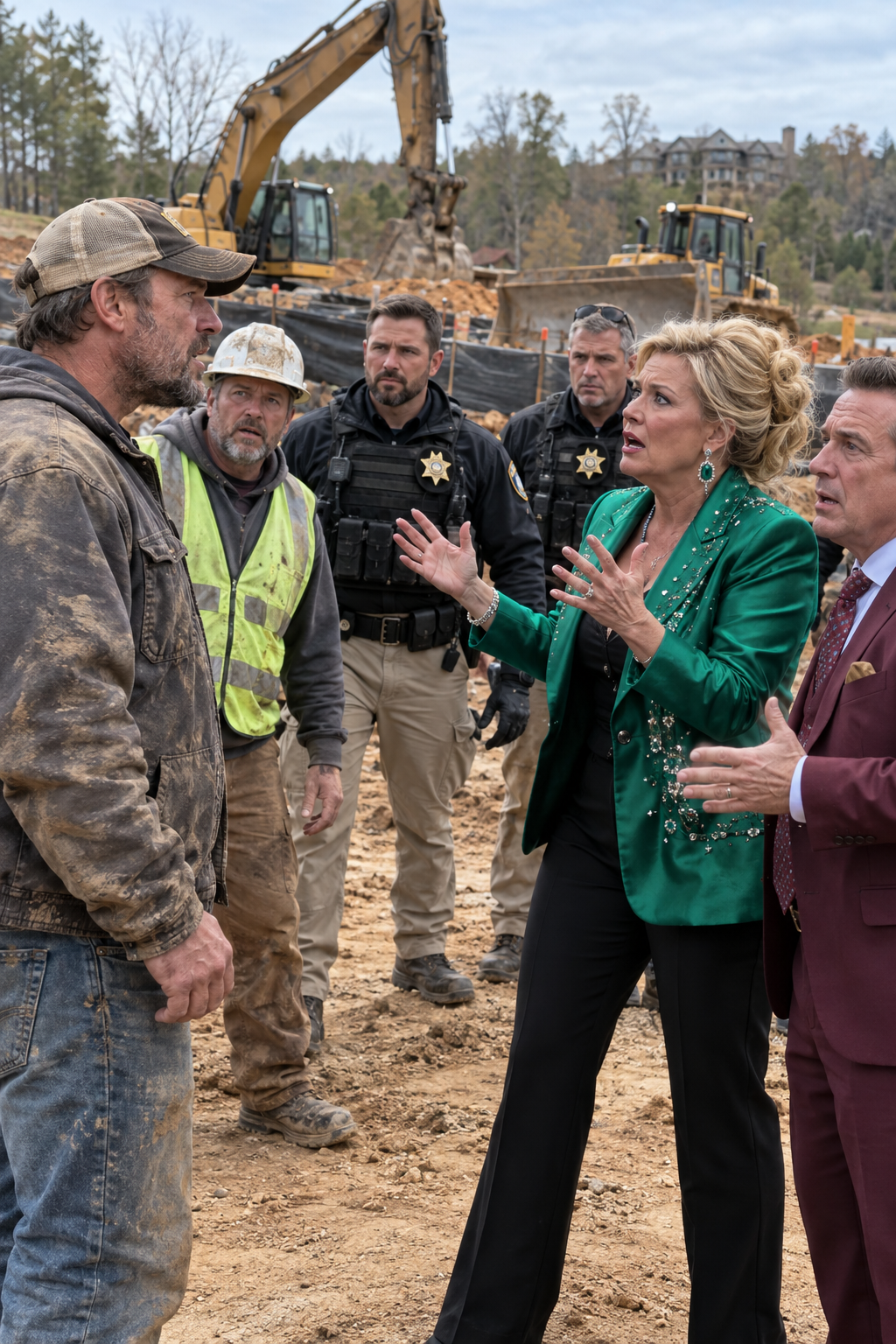
Her Family Threw Her Out, the HOA Defied a Federal Judge, and Then U.S. Marshals Surrounded the Bulldozers at Dawn
“You’ve had four days, Rebecca. That’s more than enough charity.”
My brother said it while my mother’s funeral flowers were still dying on the dining-room table.
Then his wife carried my suitcase to the porch.
And my nephew set a cardboard box beside it with a black marker label that said:
REBECCA’S JUNK.
I looked at the box.
Then at the three of them.
Then past them, through the open front door, to the hallway where my mother’s walker still leaned against the wall exactly where she had left it the night before the ambulance came.
Thomas folded his arms.
“You’re fifty-nine years old,” he said. “You can’t expect the family to keep housing you forever.”
I almost laughed.
Instead, I reached down and picked up my suitcase.
Because some sentences are so cruel that answering them only makes the person who said them feel important.
My sister-in-law, Denise, mistook my silence for defeat.
She usually did.
“The house is part of the estate,” she said. “Thomas is executor. We have to make practical decisions.”
That was the word she used.
Not greedy.
Not impatient.
Not four days after our mother’s burial.
Behind her, my nephew Carter was leaning against the doorway, scrolling through his phone.
He was thirty-two years old, wore two thousand dollars’ worth of clothes to family dinners, and had once borrowed $18,000 from my mother for a “business opportunity” that turned out to be a lifted pickup truck and a failed bourbon subscription company.
Now he was treasurer of Laurel Ridge Estates, the homeowners association that bordered our family’s land.
That detail mattered.
It just didn’t matter to them yet.
Thomas stepped onto the porch and lowered his voice.
“We already have an offer.”
I finally looked at him.
“For the house?”
“For everything.”
He said it too quickly.
The old white farmhouse.
The lower pasture.
The wooded ridge behind the house.
The apple orchard where our father had been buried twelve years earlier.
Three hundred and fourteen acres that had been in some version of our family for almost seventy years.
I put my suitcase down again.
“How much?”
Denise smiled.
Not warmly.
Triumphantly.
“Two point eight million.”
That told me more than she intended.
The house alone wasn’t worth anything close to that.
Not anymore.
The roof needed replacing.
The septic system was ancient.
The upstairs windows rattled whenever a winter storm crossed the Blue Ridge.
The value was in the land.
Especially the southern meadow.
Especially the strip connecting Laurel Ridge Estates to County Road 19.
Especially the wooded hill where the HOA had spent six years trying to obtain permission for a second entrance.
I turned to Carter.
He stopped pretending to read his phone.
“Who made the offer?”
Nobody answered.
That was answer enough.
I bent down, opened the cardboard box labeled REBECCA’S JUNK, and removed exactly one thing.
My mother’s cedar sewing case.
It was small.
Dark brown.
Scratched at the corners.
The brass latch had been repaired with a bent piece of copper wire sometime during the Clinton administration.
Denise frowned.
“You don’t sew.”
“What’s in it?”
That part was technically true.
There were buttons inside.
Mother had saved them for forty years.
Pearl buttons.
Metal buttons.
Cheap plastic buttons cut from worn-out shirts before the shirts became cleaning rags.
Denise glanced at Thomas.
He shrugged.
Neither of them stopped me.
Neither of them knew that beneath the removable tray of thread and buttons was a false wooden bottom.
Neither of them knew what our mother had placed underneath it.
Neither of them knew what she had told me three weeks before she died.
And neither of them knew that I had already read the first page.
Thomas pointed at the driveway.
“Carter booked you a room in Asheville for three nights. After that, you’re on your own.”
I picked up the sewing case.
Then my suitcase.
Then the cardboard box.
I left the house where I had spent the previous eleven years cooking meals, changing dressings, balancing medication, cleaning floors, managing bills, trimming trees, paying property taxes, driving our mother to oncology appointments, and sleeping lightly enough to hear her if she fell.
No shouting.
No slammed doors.
That bothered Thomas more than anger would have.
He followed me halfway down the porch steps.
“You understand there’s nothing personal about this.”
I looked back at him.
Our mother’s funeral lilies were visible through the window behind his shoulder.
“Of course.”
His expression changed.
Just slightly.
Because I sounded sincere.
Then I asked him the first question that made him uncomfortable.
“Did you read Dad’s land file before you accepted the offer?”
Thomas stared at me.
“What land file?”
I nodded once.
“That’s what I thought.”
Then I walked to my car.
I had spent eleven years being useful enough to need and invisible enough to disregard.
I had spent eleven years being the daughter who could always rearrange her schedule.
I had spent eleven years being the sister who would understand.
I had spent eleven years being the woman who didn’t make trouble.
I had spent eleven years learning exactly what careless people say when they believe the quiet person in the room has no power.
Thomas thought my silence meant I had surrendered.
It meant I had finally stopped warning him.
I drove twelve miles toward Asheville before pulling into the parking lot of a grocery store.
There were shopping carts knocking together in the wind.
A man loaded dog food into an SUV.
Two teenagers argued over whose turn it was to return a cart.
Ordinary life continued everywhere around me.
I sat behind the wheel and opened the cedar sewing case.
Buttons filled the top tray.
I removed it.
Underneath was a thin wooden panel.
I slid a fingernail beneath the edge and lifted it.
There were four things inside.
A brass key.
A folded letter in my mother’s handwriting.
A sealed envelope marked REBECCA ONLY.
And a blue ledger no larger than a paperback novel.
I already knew about the letter.
I had found it three weeks earlier when Mother insisted I bring her the sewing case.
She had been weak that afternoon.
Not confused.
There was a difference, and I had spent enough time around hospitals to know it.
She made me lock the bedroom door.
Then she made me promise I would not confront Thomas.
“Your brother thinks the farmhouse is the inheritance,” she whispered.
I remember smoothing her blanket.
“It isn’t?”
“The farmhouse is a distraction.”
I thought medication had made her groggy.
Then she squeezed my wrist with surprising strength.
“Your father knew Thomas would someday try to sell the ridge.”
I said nothing.
Mother closed her eyes.
“He knew before he died.”
That surprised me.
Thomas and Dad had always fought about land.
Thomas saw empty ground as unused value.
Dad saw it as something you borrowed from the next generation.
But I had never known Dad had taken formal steps against him.
Mother opened her eyes again.
“Your father put the lower farm and ridge into a separate trust in 2002.”
I stared at her.
“What trust?”
“The Mercer Family Land Preservation Trust.”
I had never heard the name.
“Who controls it?”
Mother held my gaze.
Even then, I didn’t understand.
Maybe I didn’t want to.
Thomas was the eldest.
Thomas was executor of her will.
Thomas had handled Dad’s business affairs after his stroke.
Thomas had spent years speaking as if the farm would eventually be his.
Mother must have seen the confusion on my face.
“He got the machine shop,” she whispered. “He got your father’s retirement account advance. He got help buying his first house. Then his second. You got nothing because you never asked.”
“I didn’t stay here for the money.”
That was when she started crying.
It was one of only three times I ever saw my mother cry.
“I know,” she repeated.
I looked away because watching a dying parent apologize can make you feel like a child again.
She touched my hand.
“The trust wasn’t payment for caring for me.”
“Then what was it?”
“It was your father admitting which child would protect the land when protecting it stopped being convenient.”
I sat beside her bed for a long time.
Then she said something I did not understand until later.
“If Thomas ever says he sold all of it, don’t argue with him. Let him believe it.”
“Because your father left a warning in the federal filing.”
“What warning?”
Her breathing became shallow.
She closed her eyes.
“When people believe they own something, they stop hiding what they intend to do with it.”
Three weeks later, Mother died.
Four days after the funeral, my brother threw me out.
And now I sat in a grocery-store parking lot holding the little cedar box they had been too arrogant to search.
I unfolded Mother’s letter.
If you are reading this after I am gone, Thomas has probably moved faster than decency would allow.
Do not hate him. But do not rescue him from his own choices either.
Your father created the land trust after the county proposed the first Laurel Ridge expansion. He later placed a conservation easement across the creek corridor, ridge, and lower meadow through a federal farmland preservation program.
The federal easement is permanent.
Permanent means Thomas cannot sell it.
The HOA cannot build on it.
I cannot revoke it.
You cannot revoke it.
That was intentional.
Your father believed land should have at least one owner who could not be pressured by money.
The trust names you successor trustee.
The original documents are in Box 117 at Blue Ridge Community Bank.
The brass key is enclosed.
Take the blue ledger too.
Do not show it to Thomas.
There is something in it I never had the courage to investigate.
Your father did.
If anyone pressures you to sign an easement, road agreement, temporary license, survey consent, or deed correction, do not sign anything.
Call a lawyer.
Then call the federal office listed inside the bank box.
And Rebecca—
If machinery ever crosses the creek after a court tells them to stop, do not stand in front of it.
Stand somewhere safe.
Take pictures.
Let them choose what happens next.
I read the last paragraph twice.
It was too specific.
Mother had written the letter almost eight months earlier.
Which meant she had expected something.
I turned to the blue ledger.
Most of it looked boring.
Parcel numbers.
Page after page.
I recognized several names from Laurel Ridge.
Some were people who had died.
Some had moved away.
Some I vaguely remembered from church.
Beside several entries, Dad had drawn small red circles.
I closed the book.
That evening, I checked into the motel Carter had paid for.
It smelled like industrial carpet cleaner and old air-conditioning.
There was a Bible in the nightstand.
One towel had a brown stain in the corner.
My nephew had chosen carefully.
I placed the cedar box on the desk, made coffee in a plastic machine, and opened my laptop.
For thirty-one years, before coming home to care for my mother, I had worked in civil engineering and municipal planning.
Not glamorous engineering.
The kind involving drainage reports, rights-of-way, erosion maps, easement language, floodplain boundaries, and contractors who believed environmental rules applied only when inspectors were present.
It teaches you patience.
Paper does not care who is loud.
Coordinates do not care who is rich.
Recorded instruments do not care who has more friends at the country club.
At p.m., I found the first thing Thomas had failed to mention.
Laurel Ridge Estates had submitted a preliminary expansion plan eight months earlier.
The proposal included forty-six new luxury homes.
A clubhouse.
Two pickleball courts.
A second gated entrance.
And a private road running directly across my father’s lower meadow.
The development company behind it was called RidgeLine Residential Partners.
Carter’s name appeared nowhere.
Thomas’s name appeared nowhere.
Patricia Voss, president of Laurel Ridge HOA, appeared everywhere.
I knew Patricia.
Everyone in that corner of Buncombe County knew Patricia.
Sixty-three.
Silver hair cut perfectly at the jaw.
Pearls at breakfast.
A voice that sounded polite even while threatening you.
She had once sent my mother a violation notice because Dad’s old barn roof could be seen from the subdivision’s walking trail.
The barn existed before the subdivision.
The trail existed because Laurel Ridge had built it against our property line.
Mother had framed the violation notice and hung it in the mudroom.
I kept searching.
The expansion had a problem.
The county planning department required two points of emergency vehicle access after the development exceeded a certain number of residences.
Laurel Ridge had only one.
Without a second road, the forty-six-home expansion could not move forward.
Without our meadow, there was no practical second road.
Suddenly, $2.8 million made perfect sense.
Except Thomas didn’t own the meadow.
I did not call him.
I called a lawyer.
Her name was Allison Grant.
We had worked together years earlier on a municipal drainage dispute.
She was sixty-one now and practiced land-use law from a renovated brick building in downtown Asheville.
When I told her my name, she remembered me immediately.
When I told her why I was calling, she stopped being friendly.
“Do you have the trust instrument?”
“I have a key.”
“A bank box.”
“Go there when they open.”
Box 117 contained enough paper to ruin several people’s month.
The Mercer Family Land Preservation Trust.
The original survey.
Federal conservation easement documents.
Correspondence from the Natural Resources Conservation Service.
Affidavits.
A 2002 trustee designation.
A 2014 amendment naming me sole successor trustee after both parents died.
And a handwritten note from my father.
If Tom ever tells you he owns the southern tract, ask him to show you the legal description.
He never reads legal descriptions.
I smiled for the first time that week.
Then I cried for exactly forty seconds in the bank vault.
After that, I went to Allison’s office.
She spread the documents across a conference table and read silently.
Twenty minutes passed.
Then thirty.
Finally, she leaned back.
“Your brother is in trouble.”
“How much?”
“That depends on what he signed.”
She turned the expansion map toward me.
“Did he know about the trust?”
“I don’t know.”
“He should have.”
“Because he signed as witness on the 2002 instrument.”
I looked down.
There it was.
Thomas Mercer.
My brother’s signature.
He had been twenty-nine then.
Old enough to remember.
Allison tapped another page.
“And this is worse for the HOA.”
The conservation easement.
A permanent federal interest protecting approximately 187 acres of creek corridor, farmland, and forest.
No residential development.
No subdivision roads except narrow agricultural access.
No grading beyond permitted agricultural or conservation purposes.
No filling wetlands.
No commercial utility corridor.
No removal of protected riparian vegetation without approval.
I read the paragraphs twice.
“Can they still buy the farmhouse parcel?”
“Can Thomas sell whatever interest he actually inherited?”
“Probably, subject to probate.”
“But not the meadow.”
“The ridge?”
“The creek?”
“The road corridor?”
“Absolutely not.”
“What happens if they already signed a deal?”
Allison looked at me over her glasses.
“That’s their problem.”
At that afternoon, Thomas called.
I let it ring twice.
His voice was different.
He had not called me Becca since we were teenagers.
That was useful information.
“What do you need?”
“I think we got off on the wrong foot.”
“You put my clothes on the porch.”
“Denise was upset.”
“Of course.”
“Look, there’s some paperwork related to the property. Routine stuff. Carter can bring it by.”
“What kind of paperwork?”
“A boundary acknowledgment.”
I looked at Allison.
She was sitting across the table, listening.
“What boundary?”
“The southern boundary.”
“Which part?”
Thomas exhaled.
“Rebecca, don’t make this complicated.”
“I’m asking what I’m acknowledging.”
“It’s just to clean up an old survey issue so the sale can close.”
There it was.
Mother’s warning.
Survey consent.
Deed correction.
Road agreement.
Do not sign anything.
“What happens if I don’t?”
Another pause.
Then the real Thomas returned.
“The estate will proceed without you.”
“Then why do you need my signature?”
I could almost hear him realizing he had walked into the question.
He changed direction.
“Mom wanted us to take care of each other.”
“She didn’t want this property torn apart by lawyers.”
“You lived there rent-free for eleven years.”
Allison’s eyebrows rose.
I felt something cold settle inside my chest.
“Do you remember where you were on May eighteenth, 2002?”
He went quiet.
The silence lasted five seconds.
Then eight.
Then twelve.
“What kind of question is that?”
“Just curious.”
“I don’t remember what I ate last Tuesday.”
“All right.”
“What did Mom give you?”
Not because it was funny.
Because fear had finally entered his voice.
Then I hung up.
The next morning, three excavators crossed into the southern meadow.
Thomas had not waited for the sale to close.
Neither had Patricia Voss.
A neighbor named Howard Pike called me at a.m.
Howard was seventy-four and had farmed cattle on the east side of our property since before Laurel Ridge existed.
“You know they’re cutting trees down there?”
I was already getting dressed.
“Your lower gate.”
“Whose equipment?”
“RidgeLine.”
“Are they across the fence?”
“About three hundred yards.”
I did what Mother had told me.
I did not stand in front of machinery.
I parked on Howard’s side of the creek.
I took photographs.
Excavators had torn through a line of sycamores.
Orange construction stakes marched across the meadow.
A bulldozer was grading a roadbed nearly forty feet wide.
Mud ran toward the creek.
A man in a white hard hat approached me.
“Ma’am, you can’t be here.”
I looked down at the ground.
“I’m on Howard Pike’s land.”
He looked toward Howard’s fence.
Then back at me.
“Still an active work zone.”
“Who authorized the work?”
“You’ll need to talk to RidgeLine.”
“Who authorized RidgeLine?”
He pointed toward a black SUV parked near the old barn.
Patricia Voss stepped out.
Cream trousers.
Navy jacket.
Sunglasses.
Not a hair out of place.
She crossed the grass toward me.
“Patricia.”
“I heard about Eleanor. I’m sorry.”
“Thank you.”
She removed her sunglasses.
“I also heard you and Thomas are having some disagreement about the estate.”
“No disagreement.”
She smiled.
“I’m glad.”
“Thomas tried to sell you land he doesn’t own. That’s not really something two people can disagree about.”
Her smile stayed in place.
Only her eyes changed.
“You’re grieving.”
That sentence told me exactly what strategy they had chosen.
Not dangerous.
An older unmarried woman who had spent years caring for her mother.
Easy to dismiss.
Patricia glanced toward the machinery.
“The HOA has executed agreements with the estate.”
“What agreements?”
“I’m not at liberty to discuss confidential business.”
“You’re standing on trust property.”
“We have legal access.”
“Through whom?”
She put her sunglasses back on.
“Rebecca, I’m going to give you advice you may not appreciate. Your brother has spent years handling family financial matters. He understands the value of this transaction. Don’t let emotion persuade you to sabotage something that benefits everyone.”
“Everyone?”
“The community.”
“The developer.”
“Economic growth.”
“Your HOA.”
Her jaw tightened.
I continued.
“And Carter.”
That got her.
Then nothing.
She stepped closer.
“The road will increase property values throughout this area.”
“My mother’s?”
“Your mother is gone.”
The sentence landed harder than she intended.
Howard Pike heard it.
The hard-hat supervisor heard it.
A worker standing fifteen feet away heard it.
Patricia realized too late that she had said the quiet part out loud.
I nodded once.
Then I took another photograph.
Patricia’s face.
The excavator behind her.
Freshly cut trees in the background.
Time stamp.
GPS coordinates.
Everything paper would later need.
“Rebecca,” she said.
“You are not going to stop this.”
I put my phone in my pocket.
She looked surprised.
I let her enjoy that for half a second.
Then I said, “I’m not.”
At a.m., Allison filed emergency papers in federal court.
By noon, attorneys representing the conservation program had been notified.
By , an NRCS regional official had reviewed the recorded easement.
By the next morning, a federal judge named Elena Whitmore issued a temporary stop-work order preserving the property until a hearing could be held.
The order was simple.
No grading.
No excavation.
No tree removal.
No road construction.
No equipment movement within the protected acreage except removal authorized by the court.
Everyone received copies.
Laurel Ridge HOA.
The estate attorney.
The contractor.
All of them.
Work stopped at 11:26 a.m.
I watched the bulldozers go silent.
That was the first small victory.
Not dramatic.
No handcuffs.
Just engines shutting down one by one across a muddy field.
Sometimes justice sounds like diesel motors going quiet.
Two days later, Patricia appeared at the hearing with three attorneys.
Thomas sat behind them.
He did not look at me.
Carter did.
That smile bothered Allison.
I whispered.
“He thinks they found a workaround.”
Judge Whitmore entered.
Everyone stood.
For ninety minutes, attorneys argued about deeds, trust authority, probate jurisdiction, conservation restrictions, road rights, and whether Thomas had possessed apparent authority to negotiate on behalf of the family.
Then RidgeLine’s lead attorney introduced their favorite document.
A 1998 easement.
Signed by my father.
It granted a twenty-foot agricultural access lane near the southern boundary.
The attorney argued that the proposed road followed substantially the same corridor.
Allison slid a copy toward me.
I read it once.
Then again.
She leaned close.
“Page four.”
She turned.
The easement terminated if the adjoining parcel ceased agricultural use.
Laurel Ridge subdivision had been approved in 2006.
Which meant the 1998 agricultural access easement had terminated twenty years earlier.
Allison stood.
“Your Honor, may I direct the court to paragraph fourteen?”
RidgeLine’s attorney stopped smiling.
Mini-payoff number two.
Judge Whitmore extended the stop order for thirty days.
Then she did something Patricia clearly had not expected.
She looked directly at the HOA’s table.
“I want to be especially clear.”
Nobody moved.
“This court has not authorized temporary work.”
Patricia’s attorney nodded.
“This court has not authorized site preservation work beyond protective measures.”
Another nod.
“This court has not authorized utility preparation, surveying, preliminary grading, drainage work, vegetation removal, soil testing involving excavation, or any activity intended to advance the proposed roadway.”
The judge paused.
“If machinery enters the protected corridor for construction activity, counsel should assume I will treat that as a deliberate violation.”
Patricia stared at the bench.
Judge Whitmore continued.
“I am stating this plainly because I do not want anyone standing before me later claiming ambiguity.”
The hearing ended.
Outside the courthouse, Thomas finally approached me.
I adjusted the strap of my handbag.
“You embarrassed me.”
“I didn’t sign the 1998 easement.”
“You’re destroying the sale.”
“I didn’t negotiate the sale.”
“Carter could lose everything.”
There it was.
Not Thomas.
Not the family.
“What did he invest?”
Thomas looked away.
“How much?”
He lowered his voice.
“The expansion.”
I studied him.
“You let your son invest money in a development that required land you knew was in Dad’s trust?”
“I didn’t know.”
“You witnessed the trust.”
“Twenty-four years ago.”
“You signed it.”
“Dad shoved papers in front of everybody.”
“So you didn’t read them?”
His face hardened.
“Not everyone spent their career worshipping paperwork.”
I glanced toward Patricia’s attorneys.
“Some people just sign it.”
I walked away.
That evening, Carter came to the motel.
He knocked at .
I opened the door but left the security chain attached.
He looked exhausted.
For the first time since the funeral, he wasn’t dressed like someone trying to look richer than he was.
Gray sweatshirt.
“Aunt Rebecca.”
“Can I come in?”
He looked down the hallway.
“I need five minutes.”
“You have the hallway.”
His mouth tightened.
Then softened again.
“I’m sorry about the box.”
“What box?”
“Your stuff.”
“You labeled it junk.”
“I was angry.”
He didn’t answer.
Finally, he said, “We need you to sign a temporary access license.”
“You didn’t even read it.”
“It lasts six months.”
“The HOA will pay you.”
“Two hundred thousand.”
“Three hundred.”
His mask slipped.
“You know what? This is exactly what Dad said.”
“What did he say?”
“That you’d rather watch the whole family lose money than let someone else win.”
I studied my nephew.
“When you were twelve, you broke Grandma’s kitchen window.”
His face changed.
“You were throwing rocks at hornets.”
“Why are you talking about that?”
“Your father blamed a neighborhood kid.”
Carter frowned.
“Grandma knew you did it.”
“She made you work six Saturdays helping Grandpa repair fences.”
“What does that have to do with this?”
“You thought the punishment was for breaking the window.”
I leaned slightly toward the opening.
“It was for watching someone innocent get blamed and staying quiet.”
Carter stared at me.
I continued.
“You’re thirty-two now. Apparently the lesson didn’t take.”
His face reddened.
“You think you’re better than us?”
“You think because Grandma gave you some trust—”
I said nothing.
Carter realized his mistake.
I watched the realization move across his face.
“How long have you known?” I asked.
“Known what?”
“Don’t insult both of us.”
He rubbed his jaw.
“Dad found a copy after court.”
“Old files.”
“Did Patricia know before the sale agreement?”
That silence mattered more than an answer.
“Good night, Carter.”
He put one hand against the door.
I looked at his hand.
He removed it.
“There’s more money involved than you understand.”
“How much?”
He swallowed.
“Thirty-one million.”
Now I understood the fear.
The forty-six homes weren’t the entire project.
RidgeLine had presold development interests.
Maybe borrowed against approvals.
Maybe promised investors a completed expansion.
Maybe Carter had guaranteed something.
Maybe Thomas had.
“Who owes thirty-one million?”
Carter stared past me into the motel room.
“Please sign the license.”
I closed the door.
The next morning, I told Allison everything.
She wrote down the number.
“Thirty-one million explains urgency.”
“Does it explain stupidity?”
“No. People bring that for free.”
Three days passed.
Nothing moved on the property.
Patricia sent a community email claiming the expansion was delayed by a “minor title dispute.”
Thomas called twice.
I did not answer.
Denise sent me a message saying Mother would be ashamed of what I was doing to the family.
I did not answer that either.
Then Howard Pike called me at on a Wednesday morning.
This time his voice was different.
“What happened?”
“They’re back.”
I was dressed in under three minutes.
“Everybody.”
“What do you mean everybody?”
“Six trucks. Two dozers. Excavator. Gravel haulers. They came through the maintenance gate off Laurel Ridge.”
“Are they working?”
“Lights on.”
My heart started beating faster.
Recognition.
Mother’s letter.
If machinery ever crosses the creek after a court tells them to stop, do not stand in front of it.
Stand somewhere safe.
Take pictures.
Let them choose what happens next.
I called Allison while driving.
She answered on the fourth ring.
“They’re back.”
Then, “You’re sure?”
“Howard sees heavy equipment.”
“Do not enter the property.”
“Do not confront them.”
“Take photos from somewhere lawful.”
“And Rebecca?”
“I’m calling the court.”
The sky was still black when I reached Howard’s farm.
From his upper pasture we could see work lights moving through the meadow below.
The construction crews had chosen darkness.
That was their third mistake.
People behave differently when they think darkness hides intent.
But darkness makes work lights visible from miles away.
I used a telephoto lens.
A bulldozer pushed soil inside the protected corridor.
An excavator pulled a drainage pipe from a trailer.
Three workers cut temporary fencing.
A dump truck released gravel.
A black SUV arrived.
Patricia stepped out.
Howard handed me binoculars.
“Is that her?”
At , Carter arrived in a white pickup.
At , my brother arrived.
That hurt more than I expected.
Not because Thomas had chosen money.
I already knew that.
It hurt because he knew the court order existed.
He had stood twenty feet from the judge while she explained it.
He knew Dad’s trust existed.
He knew Mother had protected the land.
He knew I had legal authority.
And he still came before sunrise to watch bulldozers cut through the meadow where our father taught us to drive.
Howard looked at me.
“You okay?”
It was not completely true.
But it was true enough.
A pickup climbed the hill toward us.
RidgeLine security.
Two men got out.
One carried a radio.
“You folks need to leave.”
Howard rested both hands on the top rail of his fence.
“This is my pasture.”
The man looked at me.
“Are you Rebecca Mercer?”
“You’re interfering with an active construction project.”
“I’m standing on Howard’s property.”
“You’re photographing employees.”
“You need to stop.”
His radio crackled.
A voice said something I couldn’t hear.
Then the man stepped closer to the fence.
“Ms. Mercer, the work below is being performed under emergency stabilization authority.”
I almost admired the phrase.
“What emergency?”
“Erosion control.”
“By building a road?”
“Site stabilization.”
“By hauling gravel?”
His jaw tightened.
“You can discuss that with counsel.”
“I intend to.”
He walked away.
At , Allison texted me.
JUDGE NOTIFIED.
US ATTORNEY CONTACTED.
DO NOT APPROACH SITE.
Then nothing.
For forty-three minutes.
The crews kept working.
And Patricia believed she had won.
I could see it in the way she moved.
She walked from foreman to foreman.
Checked her phone.
A concrete drainage structure arrived on a flatbed.
The bulldozer widened the cut.
A tree fell.
Then another.
Thomas stood beside Carter near the gate.
At , three more dump trucks entered.
Howard lowered the binoculars.
“They’re moving fast.”
“They have to.”
“Because they know they’re not allowed to be there.”
At , Patricia’s SUV drove toward the hill.
She stopped twenty yards from Howard’s fence.
Walked toward me.
This time she wore boots.
No sunglasses.
“Patricia.”
“Your attorney called ours.”
“I assumed she would.”
“You’ve created unnecessary drama.”
I glanced behind her.
A bulldozer pushed another load of soil.
“You’re under a stop order.”
“We’re performing stabilization.”
“The judge specifically included that.”
“Our counsel disagrees with your interpretation.”
“It isn’t my interpretation.”
“You’re not a lawyer.”
“Then perhaps stop pretending you understand what’s happening.”
Howard shifted beside me.
I kept my voice level.
“Did your attorney tell you to come here this morning?”
That stopped her.
Only for a moment.
But enough.
She looked toward the work site.
“The board authorized necessary measures to protect association interests.”
“Did your attorney tell you to come here?”
Her face hardened.
“You should think carefully about what happens after this.”
I said nothing.
She stepped closer.
“You may technically control some acreage. Congratulations. But you don’t have the resources to fight an HOA, a developer, and your own family indefinitely.”
Still nothing.
“Legal bills destroy people,” she said.
“Taxes destroy people.”
“Maintenance destroys people.”
“Three hundred acres sounds romantic until you’re responsible for it alone.”
Finally, she said what she had really come to say.
“Sell now while someone is still offering.”
I looked at her boots.
Mud covered the soles.
Mud from my father’s protected meadow.
Then I looked at her face.
“My father told me something once.”
Patricia gave a small, humorless smile.
“I’m sure he did.”
“He said the most dangerous time in a land dispute is when the other side becomes convinced you need their money.”
She folded her arms.
“I don’t think you need our money.”
“I think you need a way to feel that the last eleven years of your life mattered.”
That one was deliberate.
A knife carefully placed.
My unmarried status.
The years spent caring for my parents.
All the invisible sacrifices people praise only until those sacrifices become evidence that you have less money, less status, less career, less apparent power.
Patricia continued softly.
“Your brother built a business.”
I looked at her.
“Carter built a career.”
I said nothing.
“What did you build?”
Howard turned toward me.
Patricia waited.
I could have told her.
I could have listed thirty-one years of engineering work.
I could have listed flood-control systems I designed.
Roads I helped reroute.
Bridges I inspected.
Public hearings where I stopped developers from putting homes in floodplains.
I could have told her that caring for dying parents was work.
I could have told her that keeping a farm solvent through medical debt was work.
I could have defended every year of my life.
Instead, I asked, “Are you finished?”
Her face changed.
People who insult you want the insult to purchase emotion.
When you give them nothing, they realize they paid for a product that was never delivered.
She looked past me toward Howard’s house.
“You’ll regret this.”
Then I glanced at the road.
Three dark SUVs had turned onto Howard Pike Lane.
Patricia heard them before she saw them.
She looked over her shoulder.
The first SUV passed our hill.
Then the second.
Then the third.
Behind them came two more vehicles.
Government plates.
Patricia’s face went still.
The SUVs did not stop with us.
They continued toward the southern gate.
A minute later, another convoy appeared on County Road 19.
Two marked vehicles.
Then another.
Howard lifted his binoculars.
Patricia reached for her phone.
I watched color drain from her face.
Because she knew exactly who had arrived.
U.S. Marshals.
They entered from both sides.
At a.m., the first marshal vehicle blocked the southern construction exit.
At , another unit closed the maintenance entrance through Laurel Ridge.
At , two deputy marshals walked onto the graded road.
At , every engine on the site began shutting down.
One after another.
Dump trucks.
The meadow became quiet.
The silence was enormous.
Patricia stared downhill.
Her phone rang.
She answered.
I couldn’t hear the voice.
I watched her expression.
“No, we were acting under—”
“Our counsel—”
Another pause.
Longer pause.
“I understand.”
She did not understand.
Two marshals drove up the hill.
The first was a tall woman in a dark jacket.
The second was a broad-shouldered man carrying a folder.
They parked near Patricia’s SUV.
The woman stepped out.
“Patricia Voss?”
Patricia straightened.
“Deputy United States Marshal Erin Hayes.”
She displayed identification.
“This site is being secured pursuant to an enforcement directive from the United States District Court.”
Patricia glanced toward me.
“May I call my attorney?”
“I’ve been advised this work qualifies as emergency stabilization.”
The marshal opened her folder.
“I’m not here to debate the order.”
“Our attorneys believe—”
“You can discuss that with the court.”
Patricia’s voice tightened.
“Am I being arrested?”
“Not at this moment.”
Those four words changed the air.
Not at this moment.
Patricia looked downhill.
“Why are marshals surrounding the site?”
Deputy Hayes looked directly at her.
“Because the court issued an order.”
“I know that.”
“And evidence was presented this morning indicating that multiple named parties knowingly resumed prohibited work after receiving direct notice of that order.”
Patricia swallowed.
“We dispute that characterization.”
“The judge is aware.”
The second marshal stepped forward.
“Where is Carter Mercer?”
Patricia looked toward the work site.
“And Thomas Mercer?”
Her eyes moved again.
The marshal followed them.
“Thank you.”
They drove downhill.
Howard let out a breath.
I hadn’t realized he had been holding it.
Patricia looked at me.
“You called federal marshals.”
“Don’t play games.”
“I called my attorney.”
“You knew this would happen.”
That was true.
I had expected another hearing.
Maybe fines.
Maybe contempt proceedings.
I had not expected a marshal operation.
Patricia stepped toward me.
“You set us up.”
That was when I finally understood what my mother meant.
Let them believe they own it.
Let them reveal what they intend to do.
I looked at the work lights still shining uselessly in the morning sun.
“No, Patricia.”
My voice was quiet.
“The judge told you not to come back.”
I nodded toward the machinery.
“You came back.”
For the first time since I had known her, Patricia Voss had nothing to say.
By noon, the whole county knew.
By three, local television crews were parked outside Laurel Ridge.
By five, somebody had posted aerial footage showing marshal vehicles positioned around the construction equipment.
The HOA sent residents an emergency email blaming “an escalated private inheritance conflict.”
Then residents started asking why federal marshals were involved in a private inheritance conflict.
That email lasted twenty-three minutes before it disappeared from the HOA portal.
Screenshots lasted longer.
The next morning, Judge Whitmore held an emergency contempt hearing.
The courtroom was full.
Laurel Ridge residents occupied two rows.
Reporters occupied another.
Thomas sat behind his new attorney.
Carter sat beside him.
Patricia sat at the defense table with four lawyers now.
That’s what serious money looks like when it becomes afraid.
Judge Whitmore entered.
Everyone stood.
She began with photographs.
Time-stamped drone footage collected by a federal conservation officer.
Security camera footage from the Laurel Ridge maintenance gate.
Electronic records showing Carter’s access code opening the gate at a.m.
Text messages obtained voluntarily from the contractor.
That was the surprise.
The contractor had saved everything.
At that morning, he had texted Patricia:
COUNSEL STILL SAYS NO WORK UNTIL COURT CLARIFIES.
At , Patricia replied:
BOARD HAS APPROVED STABILIZATION. MOBILIZE.
At , the contractor answered:
WE NEED WRITTEN LEGAL AUTHORIZATION.
At , Carter replied in the same thread:
YOU HAVE IT FROM THE BOARD. GET THE CREWS MOVING.
Judge Whitmore read the messages aloud.
No theatrics.
No raised voice.
Then she looked at Patricia.
“Did your attorney authorize construction?”
Patricia’s attorney stood.
“Your Honor, I’m instructing my client—”
“I asked whether counsel authorized construction.”
The attorney hesitated.
“Did counsel advise against entering the protected area?”
Another pause.
A sound moved through the courtroom.
Not a gasp.
More like a collective exhale.
Judge Whitmore looked at Carter.
“Mr. Mercer, did you receive my written order?”
“Did you attend the hearing in which I clarified the order verbally?”
“Did you provide an access code permitting contractors to enter the site?”
Carter looked at his attorney.
Then back at the judge.
Thomas shut his eyes.
I felt no pleasure.
That surprised me.
For days, I had imagined some grand moment where the truth landed and everything inside me felt balanced.
My nephew looked twelve years old again.
The boy who broke a kitchen window.
Except this time, the damage could not be repaired by six Saturdays of fence work.
The judge imposed immediate sanctions.
RidgeLine was ordered to cease all activity.
Equipment remained impounded pending inspection and documentation.
The HOA faced daily monetary penalties.
Patricia and Carter were referred for further contempt proceedings.
Restoration plans would be developed with federal conservation officials.
Then Judge Whitmore turned to the ownership dispute.
“I have reviewed the Mercer trust documents.”
Thomas stared down.
“The record presently demonstrates that Thomas Mercer did not possess authority to convey the protected trust acreage.”
No one moved.
“Any contract representing otherwise may create separate civil issues beyond the scope of today’s contempt proceeding.”
There it was.
Mini-payoff number three.
Thomas had sold something he didn’t own.
And now the entire transaction was beginning to unravel.
Outside court, reporters crowded the sidewalk.
I tried to leave through a side door.
Thomas caught me near the parking garage.
I kept walking.
“Rebecca, please.”
That word stopped me.
My brother had finally discovered it.
He looked twenty years older than he had at Mother’s funeral.
“You knew,” I said.
His eyes filled.
Something close.
“I remembered the trust after you mentioned 2002.”
“You signed it.”
“I forgot.”
“Did you forget before or after you accepted RidgeLine’s deposit?”
His face tightened.
“I thought Dad dissolved it.”
“He talked about restructuring.”
“Did you see dissolution papers?”
“Did you ask?”
“Did you order a title search?”
“Did the HOA?”
More silence.
Then Thomas said, “Patricia said their attorneys handled everything.”
Of course she did.
“How much did they pay you?”
He looked away.
“How much?”
“Four hundred thousand up front.”
“For land you didn’t own.”
“It was refundable.”
“Is it still refundable?”
His face answered.
I felt tired.
Not victorious.
Just tired.
“What did Carter invest?”
Thomas rubbed his forehead.
“His company took a development position.”
“That means what?”
“Seven hundred thousand.”
I stared at him.
“Where did he get seven hundred thousand dollars?”
Thomas said nothing.
The answer arrived anyway.
“You loaned it to him.”
“I guaranteed it.”
“With what?”
He looked at me.
That was when I knew.
“The house.”
His face collapsed.
Mother’s house.
Four days after burying her, they had thrown me out because Thomas needed the farmhouse free for the deal.
Not because probate required it.
Not because the estate needed efficiency.
Not because I was a burden.
Because he had pledged the family home to save Carter’s investment in the expansion.
The humiliation finally made sense.
My suitcase on the porch.
The cheap motel.
The signature pressure.
They had needed me gone before I found paperwork.
“Denise knew?”
“What happens now?”
“I don’t know.”
That was the first honest answer he had given me.
I started walking again.
He called after me.
I stopped without turning.
“Mom really gave you everything?”
I looked back.
He seemed confused.
“She gave you the house.”
His mouth opened.
I continued.
“Dad gave you the machine shop. They helped with your homes. They paid off your first business debt. They paid for Carter’s college.”
Thomas looked down.
“They gave me responsibility for land you never wanted unless you could sell it.”
He said nothing.
“That isn’t everything.”
I turned away.
“It’s just the thing you finally decided was valuable.”
Two weeks later, the probate attorney confirmed Mother’s will.
The farmhouse went to Thomas.
Just as I had said.
A modest investment account was divided equally.
Personal belongings were split by written memorandum.
There was no secret fortune.
No hidden millions.
No last-minute will giving me everything.
The great inheritance was dirt.
Restrictions.
Responsibility.
And a legal obligation to preserve what my father had protected.
Some people would have considered that less valuable than cash.
The first restoration crew entered the meadow in November.
Not RidgeLine’s crew.
A conservation team.
They removed illegal gravel.
Regraded drainage.
Stabilized the creek bank.
Planted native trees.
The HOA paid for it.
Not immediately.
Not willingly.
But they paid.
Laurel Ridge’s expansion collapsed.
Without the second road, county planners refused approval for the additional forty-six homes.
RidgeLine sued the HOA.
The HOA sued Thomas.
Carter’s development company failed.
Patricia was removed as president in a recall vote.
Eighty-eight homeowners signed the petition.
Only eleven voted to keep her.
A retired accountant named George Fenwick became interim president and called me the next morning.
“We’d like to start over.”
“With the road?”
“With being neighbors.”
That was a different conversation.
I agreed to meet.
We established a narrow emergency-access agreement for fire evacuation only.
Locked gate.
No development traffic.
No residential expansion rights.
No transfer.
No implied easement.
No money changed hands.
That confused Thomas when he heard about it.
“You gave them emergency access for free?”
“For emergencies.”
“You could have charged them.”
“Then why didn’t you?”
“Because people live there.”
He stared at me.
I realized then that my brother still believed winning meant extracting the highest possible price.
Maybe that was why he had never understood Dad.
Maybe that was why he had never understood me.
In January, Thomas sold the farmhouse.
Not to RidgeLine.
To a young couple with two children who planned to restore it.
His loan guarantee had to be paid.
Denise moved with him into a rental near Hendersonville.
We were not reconciled.
Maybe never.
But one cold afternoon, Thomas came to the meadow while I was helping plant sycamores.
He stood by the fence.
I walked over.
He pushed his hands into his coat pockets.
“You look like Dad.”
I glanced down at my muddy boots.
“That’s insulting.”
He laughed once.
It surprised both of us.
Then his face changed.
“I was cruel to you.”
“You took care of them.”
“I visited.”
“Not enough.”
He looked toward the creek.
“Mom asked me three years ago what I planned to do when she got worse.”
“What did you say?”
“That you had it handled.”
The wind moved through bare branches.
Thomas swallowed.
“I actually said that.”
I believed him.
He looked at me.
“You gave up your job.”
“I retired early.”
“You gave up your house in Charlotte.”
“I sold it.”
“You gave up—”
“I made choices,” I said. “Don’t turn them into a weapon against yourself now.”
He nodded slowly.
Then he asked, “Can you forgive me?”
I looked toward the field.
“Probably.”
He breathed out.
“But forgiveness isn’t the same as pretending it didn’t happen.”
His face tightened.
“I’m trying.”
That was enough for that day.
I went back to planting trees.
By early spring, the meadow looked wounded but alive.
Grass returned first.
Then wildflowers.
The creek cleared.
The new sycamores were thin and awkward, supported by stakes.
Howard said they looked like teenagers at a school dance.
For the first time since Mother died, I began sleeping through the night.
Then the blue ledger returned.
I had almost forgotten it.
One Saturday morning, I found it beneath a stack of trust documents.
Mother’s letter flashed through my memory.
Take the blue ledger too.
Do not show it to Thomas.
There is something in it I never had the courage to investigate.
Your father did.
I made coffee.
Sat at my kitchen table.
And started reading from the beginning.
The ledger was not Dad’s.
I realized that after three pages.
The handwriting changed.
Most entries were written by someone else.
Dad had added notes in red.
Parcel numbers.
Transfer dates.
Notary names.
HOA assessments.
Lien amounts.
Sale prices.
Laurel Ridge properties.
Twenty-three of them.
I opened the county property database.
The first red-circled parcel belonged to an elderly widow named Marianne Holt.
Foreclosure.
Property transferred.
Nothing obviously illegal.
The second belonged to Gerald and Susan Webb.
Same pattern.
The fourth.
Then I noticed the dates.
Several deeds had been notarized by the same person.
Patricia Voss.
That was unusual.
Not necessarily illegal.
But unusual.
I pulled another deed.
Patricia again.
Then one from six years earlier.
The recorded signature belonged to Raymond Ellis.
I remembered Raymond.
He had died before my father.
I checked the obituary.
January 14.
I checked the deed.
Seven weeks later.
I stopped breathing for a moment.
Maybe it had been signed earlier and recorded later.
I downloaded the scanned document.
Notarization date:
Raymond Ellis had supposedly appeared before Patricia Voss seven weeks after his funeral.
My coffee went cold.
I checked another red circle.
Helen Warren.
Deed notarized:
September 18.
Another dead homeowner.
I checked a third.
Then a fourth.
The pattern was not perfect.
Patterns used by criminals rarely are.
But it was enough.
Elderly owner.
Assessment dispute.
Several parcels eventually moved through companies tied to RidgeLine Residential Partners.
I called Allison.
She came over that afternoon.
Thomas came too.
For the first time, I showed him the ledger.
He read the first five pages without speaking.
Then he looked at me.
“Where did Mom get this?”
“I don’t know.”
Allison turned to the back cover.
“There’s something here.”
A folded sheet had been tucked into the binding.
My father’s handwriting.
If I am right, Laurel Ridge has been acquiring vulnerable owners’ property through fraudulent instruments.
Eleanor wants me to let it go.
I will not accuse anyone without proof.
Check notary dates against death records.
Check lien releases.
Check parcels transferred through Hawthorne Management LLC.
If something happens to me before I finish, give this to Rebecca.
She will read the details.
I sat completely still.
Thomas lowered himself into a chair.
“Dad knew?”
“He suspected.”
Allison was already searching business records.
“Hawthorne Management,” she murmured.
Then she stopped.
She turned the laptop toward us.
The registered agent was an attorney.
I recognized the name.
So did Thomas.
The man had represented Laurel Ridge for almost fifteen years.
The same law office had advised the HOA during our land dispute.
Thomas whispered, “Jesus.”
Allison clicked again.
Hawthorne had acquired nine properties.
Three were later sold to entities connected to RidgeLine.
Four were incorporated into common-area expansions.
One became the HOA management office.
One had been sold to a private buyer.
Then Thomas pointed at the ledger.
“What are these initials?”
Beside several transactions, Dad had written:
I didn’t know.
Allison did not know.
We searched names.
Former board members.
County officials.
Nothing fit.
Then my phone rang.
Unknown number.
I answered.
“Rebecca Mercer?”
“This is Deputy Marshal Hayes.”
I sat straighter.
The same marshal from the meadow.
“Do you have a few minutes?”
“There’s been a development related to the contempt matter.”
I glanced at Allison.
“What kind of development?”
“A financial document recovered during a related inquiry includes references to Mercer property.”
My grip tightened around the phone.
“What references?”
“I’d rather discuss that in person.”
I looked out the window.
A dark SUV had just turned into my driveway.
Behind it was another vehicle.
Not marshals.
County investigators.
Allison stood.
Thomas walked to the window.
Three people got out.
Deputy Hayes.
A woman carrying a document case.
And a man I recognized immediately.
County Commissioner Charles Vale.
Thomas whispered the initials before I did.
The commissioner walked toward the house with his face gray and his hands visible.
He was not wearing handcuffs.
Deputy Hayes reached the porch.
I opened the door.
She held up a clear evidence sleeve.
Inside was a photocopy of a deed.
Not Thomas’s.
Not any property I recognized.
But the signature block at the bottom was familiar.
Patricia Voss.
Charles Vale.
Approving county official.
Hayes looked at me.
“Ms. Mercer, your father appears to have been documenting something much larger than the road project.”
Behind her, Vale stared at the ground.
Thomas stepped beside me.
“How much larger?”
Hayes did not answer immediately.
She looked at the blue ledger on my kitchen table.
Then at Allison.
Then back at me.
“We believe at least twenty-three transfers may require review.”
The exact number in Dad’s ledger.
My skin went cold.
Before I could respond, another vehicle entered the driveway.
A silver Lexus.
She stopped hard near the gate.
For three seconds, nobody moved.
Then she got out.
Her attorney got out from the passenger side.
Deputy Hayes turned toward them.
Patricia looked thinner than she had months earlier.
No navy jacket.
No controlled smile.
She saw Commissioner Vale.
Then she saw the blue ledger through my open doorway.
Whatever blood remained in her face disappeared.
That reaction told me more than any confession could have.
Her attorney touched her arm.
“Patricia, don’t say anything.”
She didn’t.
I stepped onto the porch.
Thomas stayed behind me.
Allison stood to my right.
Deputy Hayes moved between us and the driveway.
Patricia stared at the ledger.
For once, she did not look powerful.
She looked like someone who had just watched a dead man open a door from twenty years ago.
I could have accused her.
I could have shouted.
I could have listed the dead homeowners.
I could have told her my father had been keeping notes.
Instead, I thought about Mother.
About the sewing box.
About the buttons.
About her warning.
Let them believe they own it.
I thought about Patricia asking me what I had built with my life.
I thought about my brother putting my suitcase on the porch.
I thought about bulldozers working before sunrise because wealthy people had convinced themselves a quiet woman would eventually become tired, frightened, or broke.
Then I looked at Patricia and asked the smallest question I could think of.
My voice was almost gentle.
“Patricia, could you help me understand one little thing?”
Her lawyer immediately said, “Do not answer.”
Patricia’s eyes stayed on mine.
I opened the blue ledger.
Turned to the first red circle.
Then the second.
Then the third.
I held up three recorded deeds.
“Which one of these dead homeowners,” I asked, “came back to life long enough to sign their property over to you?”
✓ Lynn R. Adams
Her Family Threw Her Out, the HOA Defied a Federal Judge, and Then U.S. Marshals Surrounded the Bulldozers at Dawn “You’ve had four days, Rebecca. That’s more than enough charity.” My brother said i…