Her Family Threw Her Out Days After Grandma Died—Then the Forest House Revealed the Inheritance They Never Truly Owned
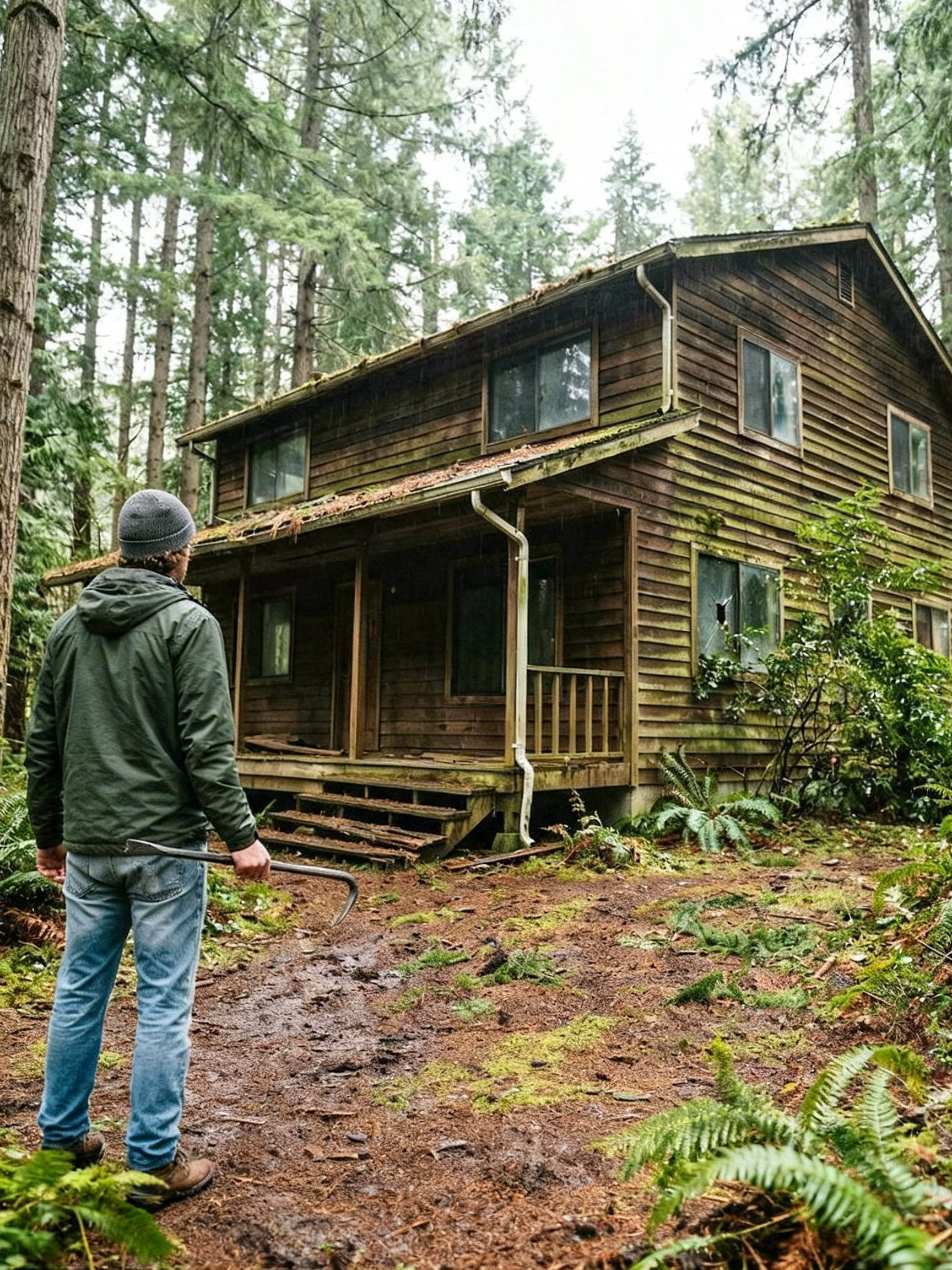
Her Family Threw Her Out Days After Grandma Died—Then the Forest House Revealed the Inheritance They Never Truly Owned
“You were her nurse, Claire. Don’t confuse that with being her favorite.”
Aunt Denise said it three days after Ruth Whitmore’s funeral, while Claire’s suitcase sat open on the hardwood floor and two of her cousins carried boxes toward the front door.
Then Denise reached past Claire, lifted the framed photograph of Ruth from the nightstand, and added, “This house belongs to the family now.”
Claire looked at the photograph.
Her grandmother was eighty-two in it, silver hair pinned loosely behind her ears, one hand wrapped around a coffee mug and the other raised because she had been caught halfway through telling Claire to stop taking pictures.
The photo had been taken six months before Ruth died.
Before the hospital bed.
Before the oxygen machine.
Before the morphine schedule taped to the refrigerator.
Before half the Whitmore family suddenly remembered Ruth existed.
Claire took the photograph from Denise’s hand.
She did not argue.
That was what unsettled them.
No shouting.
No accusations.
No dramatic reminder that Claire had spent four years caring for the woman they were now calling “our beloved matriarch” in carefully edited Facebook posts.
Claire simply wrapped the photograph in one of her sweaters and placed it inside her suitcase.
Her cousin Trevor leaned against the doorway, expensive loafers crossed at the ankles.
“You understand, right?” he asked.
Claire zipped the suitcase.
“I understand.”
Trevor exchanged a glance with Denise.
That answer seemed to disappoint him.
They had prepared for resistance.
They had expected Claire to plead.
They had expected her to say she had nowhere else to go.
They had expected gratitude when Denise mentioned that they had generously allowed her seventy-two hours after the funeral.
Instead, Claire reached under the bed and pulled out a small cedar box.
Trevor straightened.
“What’s that?”
“How do we know?”
Claire finally looked at him.
“Because Grandma handed it to me.”
“Two weeks before she died.”
Denise’s mouth tightened.
“Everything in this house is estate property until probate.”
“The box isn’t from this house.”
The room became very still.
Denise had spent thirty years being obeyed.
She was Ruth’s eldest daughter, former president of the Whitmore Family Foundation, chairman of three charity boards, and the sort of woman who could make a waiter apologize for the weather.
People mistook polish for authority around Denise.
Denise encouraged the mistake.
“Claire,” she said softly, “don’t make this ugly.”
Claire picked up the cedar box.
“You already did.”
Trevor pushed himself away from the doorway.
For one second Claire thought he might try to take it.
Then another voice came from the hall.
“Leave her alone.”
Claire’s mother, Sharon, stood beside the staircase.
For half a heartbeat, hope moved through Claire.
It embarrassed her immediately.
Sharon had been doing that to her for thirty-four years—creating the possibility of courage, then stepping around it.
Sure enough, Sharon continued.
“She’s leaving. That’s what matters.”
Claire looked at her mother.
Sharon could not meet her eyes.
That hurt more than Denise.
Denise had always been cruel in a clean, professional way.
Trevor had always treated kindness like a weakness waiting to be exploited.
But Sharon was Claire’s mother.
Sharon knew.
She knew Claire had quit a hospital job in Charlotte when Ruth fell the second time.
She knew Claire had moved into Ruth’s guest bedroom.
She knew Claire had spent Christmas Eve changing blood-soaked bandages after Ruth’s first surgery while the rest of the family attended a ski weekend in Aspen.
She knew Claire had driven four hours through freezing rain for the specialist Ruth trusted.
She knew Claire had slept on a chair beside Ruth after the stroke.
She knew Claire had bathed her.
Lifted her.
Read mystery novels aloud when Ruth could no longer hold the books.
She knew all of it.
And still Sharon said, “She’s leaving. That’s what matters.”
Claire carried the suitcase downstairs.
Nobody helped.
On the front porch, beside three cardboard boxes and a garbage bag containing her winter coats, Trevor held out an envelope.
“Attorney’s office called,” he said. “Grandma left you something.”
Denise gave a short laugh.
“Apparently.”
Claire took the envelope.
Inside was a single sheet of paper.
The formal probate meeting would take place Friday at eleven.
Below it, written by hand, was one sentence from Ruth.
Claire recognized the narrow, stubborn handwriting immediately.
Take the forest house.
Nothing else.
Claire read it twice.
Trevor grinned.
“That place?”
Denise actually laughed.
Even Sharon looked startled.
Everyone in the Whitmore family knew the house.
They called it Ashwood.
It stood nearly forty miles from town, beyond a neglected county road that curled into the Blue Ridge foothills of western North Carolina.
Ruth’s father had built the original cabin there in 1948.
Over the years rooms had been added without much architectural logic—a stone kitchen, two bedrooms, a library, a narrow second floor, an enclosed porch, a root cellar.
The roof leaked.
The generator worked when it wanted to.
Cell reception appeared and disappeared depending on the weather.
The nearest grocery store was twenty-three miles away.
After Ruth’s husband, Charles, became wealthy, the family moved into town and eventually into a mansion overlooking a golf course.
Ashwood remained.
Nobody wanted it.
Nobody except Ruth.
She disappeared there for weeks sometimes.
After Charles died, she spent even more time in the forest.
The family assumed it was sentimental.
Denise once called it “Mother’s moldy little shrine.”
Trevor had suggested bulldozing it.
Now it belonged to Claire.
Apparently.
Trevor whistled.
“Well, congratulations.”
Denise smiled.
“Your years of devoted service finally paid off.”
Claire folded the paper.
“Apparently.”
That answer irritated Denise more than anger would have.
She stepped closer.
“The road needs work. Taxes haven’t been cheap. There are probably foundation problems. If you’re smart, you’ll sell it to whoever will take it.”
Claire lifted her suitcase.
“Thanks for the advice.”
She walked to her twelve-year-old Subaru.
Trevor called after her.
She turned.
“You’re not taking the Mercedes.”
Ruth’s Mercedes sat beneath the carport.
Claire looked from the car to Trevor.
Then she smiled.
Not because it was funny.
Because, suddenly, she understood something Ruth had once told her.
People tell you exactly who they are when they think there’s nothing left for you to give them.
Claire put her suitcase in the Subaru.
She drove away without looking back.
For the first fifteen miles, she felt nothing.
That frightened her.
Grief had been arriving strangely since Ruth died.
Not as sobbing.
Not as collapse.
It came as missing instructions.
At a.m., Claire would think, Grandma needs her blood-pressure medication.
Then remember.
At noon she would reach automatically for the soup Ruth liked.
Then remember.
At night she would wake because the house seemed too quiet.
Then remember why.
At a red light outside Hendersonville, Claire rested both hands on the steering wheel.
She could still hear Ruth’s voice from the last lucid evening they had together.
Ruth had been lying beneath a yellow quilt, body reduced almost to bones, but her blue eyes remained fierce.
“Do you know why your family dislikes silence?” Ruth had asked.
Claire had smiled.
“Because they like hearing themselves talk?”
“That too.”
Ruth had squeezed her hand.
“But mostly because silence makes greedy people fill the room.”
Claire had not understood.
Inside the cedar box Ruth had given her were four things.
A brass key.
A small iron survey pin blackened with age.
A photograph of Ashwood taken sometime in the 1950s.
And a sealed envelope.
Across the front, Ruth had written:
FOR WHEN THEY CALL YOU GREEDY.
Claire did not open it.
Instead she drove north.
Past orchards.
Past old barns collapsing into fields.
Past gas stations with hand-painted signs.
Past the tourist roads and new vacation cabins.
The sky turned gray as she climbed.
By four o’clock, rain tapped against the windshield.
Ashwood appeared almost without warning.
A narrow gravel lane curved between oak and hemlock trees, then opened toward the house.
Claire stopped the car.
The place looked smaller than she remembered.
Or maybe loneliness made buildings shrink.
Dark stone formed the lower walls.
Weathered cedar covered the upper floor.
The porch leaned slightly toward the east.
Moss climbed the steps.
One shutter hung crooked.
Behind the house the forest rose toward the ridge, dense and wet beneath November clouds.
Claire sat in the car for another minute.
Then she laughed.
It was one exhausted sound.
Four years.
Four years of putting her career on hold.
Four years of managing medications and bills and home-health visits.
Four years of watching relatives arrive for ninety-minute Sunday visits, take photographs with Ruth, and disappear before the dishes needed washing.
Four years.
And this was what Ruth had left her.
A broken house in the woods.
For the first time, Claire wondered whether Denise was right.
Then she hated herself for wondering.
Ruth had loved her.
Whatever Ashwood was worth did not change that.
Claire stepped into the rain.
The front door opened with the old key Ruth had kept on her ring.
Inside, the house smelled like cedar, stone, dust, and the faint ghost of woodsmoke.
Claire found matches beside the fireplace.
The electricity worked.
Two lamps flickered alive.
The refrigerator hummed.
She carried her boxes inside, made coffee in a stained metal pot, and sat at the kitchen table listening to rain hit the roof.
Only then did she open Ruth’s envelope.
There were three pages.
If you are reading this, then they behaved exactly as I feared.
Do not hate them yet. Hatred makes us careless.
They will tell you the forest house is nearly worthless.
Do not correct them.
They will tell you I was confused.
Do not argue.
They may call you manipulative, ungrateful, or greedy because you were with me when they were not.
Do not defend yourself to people who already know they are lying.
There is one thing I need you to remember.
A house is not always four walls.
On the second page, Ruth’s handwriting became shakier.
Charles spent his life teaching our children that ownership was the same thing as worth.
I helped him do it.
That is the great shame of my life.
After he died, I began correcting what I could.
Not everything can be corrected.
Some debts survive the people who created them.
Some land remembers.
Some families remember longer.
You helped me when helping me cost you something.
That matters.
You never asked what you would inherit.
That matters more.
Do not sell Ashwood.
Do not sign anything presented by Denise, Trevor, Sharon, Paul, Whitmore Heritage Holdings, or Andrew Pike.
If they attempt to sell what they believe belongs to them, let the title company do its work.
Do not warn them twice.
Greedy people confess most clearly when they believe paperwork is a formality.
The final paragraph was underlined.
In the pantry, remove the third shelf.
Use the brass key.
Then read Book 317, Page 88.
If anyone tells you I lost my mind, there are six doctors who were paid to disagree.
I love you.
I am sorry it took me so long to become brave.
Claire stared at the letter.
Rain hammered the windows.
Somewhere above her, the old house creaked.
Then she stood.
The pantry was beside the kitchen.
Claire removed canned beans, dusty jars, flour, and three unopened boxes of tea.
The third shelf appeared ordinary.
Two screws beneath the wood had brass heads unlike the others.
Claire twisted them free with a screwdriver from the junk drawer.
The shelf slid forward.
Behind it was a steel panel.
No larger than a laptop.
A keyhole sat in the center.
Claire’s pulse quickened.
The brass key fit.
When she turned it, something released inside the wall.
Not a safe.
A narrow section of pantry wall moved inward three inches.
Claire stared.
Then pulled.
Behind the pantry was a staircase descending into darkness.
She almost laughed again.
“Of course,” she whispered.
Ruth had always loved mystery novels.
Claire found a switch.
Lights came on one by one.
The staircase ended beneath the house in a room she had never known existed.
Concrete walls.
Climate-control equipment.
Metal shelving.
File cabinets.
A long oak table.
Dozens of them.
Claire walked slowly between the shelves.
WHITMORE TIMBER, 1968–1977.
LAND PURCHASES.
EMPLOYEE CLAIMS.
RUTH A. WHITMORE TRUST.
MINERAL RIGHTS.
Then she saw the red ledger.
It lay alone on the oak table.
Beside it sat another envelope.
Claire opened that one first.
Call Samuel Reeves.
Do not call the family lawyer.
Samuel’s number was underneath.
Claire looked at the clock.
She called anyway.
A man answered on the second ring.
“My name is Claire Whitmore.”
Then the man exhaled.
“Mrs. Whitmore’s granddaughter?”
“Where are you?”
“At Ashwood.”
Another pause.
“Did you find the room?”
Claire sat down.
“Who are you?”
“My name is Samuel Reeves. I was your grandmother’s private trust attorney for eleven years.”
Claire frowned.
“Our family attorney is Andrew Pike.”
“Andrew Pike represented Whitmore Heritage Holdings. On occasion he represented members of your family.”
“And you represented Grandma?”
“Your grandmother.”
Claire looked around the room.
“Why secretly?”
“Because eventually she stopped trusting her children.”
That sentence should have shocked Claire.
“What is this room?”
“Evidence.”
“Several things.”
“Can you be more specific?”
“I can. But not over the phone.”
“When can you come?”
“I’m already driving.”
Claire turned toward the stairs.
“Driving where?”
Samuel Reeves arrived two hours later in a muddy Ford pickup.
He was sixty-something, narrow-shouldered, with steel-gray hair, wire-frame glasses, and the exhausted expression of a man who had spent most of his career telling wealthy people truths they paid other lawyers to avoid.
Claire let him inside.
He refused coffee.
Asked whether anyone had followed her.
Asked whether she had spoken to Denise.
Asked whether she had signed anything.
Then he placed a leather briefcase on Ruth’s kitchen table.
“What do you believe you inherited?” he asked.
“The house.”
Samuel looked at her for several seconds.
“Your grandmother chose the wording carefully.”
“So that’s not what I inherited?”
“Oh, you inherited the house.”
“That sounded like there was a second sentence.”
“There are several.”
Samuel opened the briefcase.
He removed a certified copy of a deed.
Then another.
Then a trust document thick enough to stop a door.
Finally, a map.
He unfolded it across the table.
Claire looked at Ashwood near the center.
Then the boundary lines.
She frowned.
“That can’t be right.”
“The property line is…”
“How large?”
“Six thousand two hundred and fourteen acres.”
Claire looked up.
Samuel did not smile.
“Grandma did not own six thousand acres.”
“Your grandmother personally did not.”
“Then who does?”
“The Ash Ridge Stewardship Trust.”
Claire stared at the map.
“Which is what?”
Samuel pushed the thick document toward her.
“A trust established by your grandmother fourteen years ago. Expanded repeatedly afterward.”
“What does that have to do with me?”
“You are its successor trustee.”
Claire stopped breathing for a second.
Samuel continued.
“Upon Ruth’s death, Ashwood—the house itself—transferred to you personally. But under the recorded declaration referenced in Book 317, Page 88, possession of the residential parcel determines the successor stewardship appointment unless Ruth designated otherwise.”
Claire pushed back from the table.
Samuel watched her.
“No. I’m a nurse.”
“You were.”
“I don’t know anything about managing six thousand acres.”
“That is why the trust employs forestry managers, accountants, environmental counsel, investment professionals, and a board.”
“Then why me?”
Samuel was silent.
Claire understood before he answered.
“Because she didn’t trust them.”
“Because she trusted you.”
Those were not the same thing.
That difference broke something open inside Claire.
She stood and walked to the window.
Rain moved through the beam of the porch light.
“Does Denise know?”
“My mother?”
“What do they think they inherited?”
Samuel’s expression changed.
“That is the dangerous part.”
He removed another folder.
Whitmore Heritage Holdings.
The family company.
Founded by Charles Whitmore and his brother.
Timber first.
Then trucking.
Then commercial development.
Then equipment leasing.
By the time Claire was born, Whitmore was one of those regional family names printed on hospital wings, scholarship funds, golf tournaments, office parks, and political fundraiser programs.
Claire had grown up hearing one sentence repeated at holiday dinners.
Your grandfather built everything from nothing.
As a child, she had believed it.
Samuel opened the folder.
“After Charles died, your grandmother held thirty-eight percent of Whitmore Heritage Holdings.”
“I thought that went to Denise and Uncle Paul.”
“That is what they thought.”
“What happened to it?”
“Ruth transferred the shares gradually into Ash Ridge.”
Claire sat down again.
“All of them?”
“All thirty-eight percent.”
“How much is that worth?”
Samuel hesitated.
“Based on the most recent internal valuation?”
“Approximately seventy-four million dollars.”
Claire actually laughed.
Not because anything was funny.
Samuel waited.
“The land?”
“Depends how you value it.”
“With timber, watershed rights, three telecommunications easements, two hydroelectric lease interests, long-term conservation credit contracts, and adjoining development rights…”
He took off his glasses.
“Current conservative estimate is between one hundred and eighty and two hundred and ten million.”
Claire said nothing.
“The trust also holds securities, royalties, and liquid reserves.”
“How much?”
“Roughly twenty-six million.”
Claire stared toward the hidden staircase.
“That room contains almost three hundred million dollars?”
Samuel put his glasses back on.
“That room contains something more dangerous.”
He opened the red ledger.
Names filled the pages.
Parcel numbers.
Notes written by different hands.
The earliest entries began in 1951.
“What is this?”
“Your grandfather’s private acquisition book.”
Claire turned a page.
Some purchases were ordinary.
Some weren’t.
Beside several family names were notes.
TAX PRESSURE.
ACCESS BLOCKED.
TIMBER NOTE CALLED.
PURCHASE AFTER DEFAULT.
One line had been circled by Ruth.
WILKES PROPERTY—WAIT UNTIL MEDICAL DEBT FORCES SALE.
Claire felt sick.
“What am I reading?”
“The beginning of Whitmore Timber.”
Samuel’s voice had lost its legal calm.
“Charles did build a successful company. He worked hard. He took risks. That part of the story is true.”
“And the rest?”
“The rest was made cleaner for the grandchildren.”
During the 1950s, 60s, and 70s, Charles Whitmore had acquired thousands of acres across three mountain counties.
Some transactions were legitimate.
Others were not.
He bought debt from local lenders.
Used private road access as leverage.
Purchased tax liens.
Threatened to cancel logging contracts unless landowners sold.
In three documented cases, survey descriptions had been altered.
In two others, timber was harvested beyond property lines, leaving owners too financially damaged to fight.
Several elderly landowners signed agreements they apparently did not understand.
Charles called it business.
Ruth eventually called it theft.
“How long did Grandma know?”
“Longer than she wanted to admit.”
Samuel turned another page.
“Her father questioned some of the acquisitions. She ignored him. Later, employees complained. She ignored them. Charles told her everything was legal.”
“Some was technically legal.”
“That isn’t what I asked.”
Claire looked at the names again.
“Why keep this?”
“Charles believed records were power.”
“And Grandma?”
“She eventually believed they were evidence.”
Samuel explained what Ruth had done.
For nearly fifteen years.
She repurchased parcels once sold by Whitmore companies.
She bought neighboring acreage.
She acquired water rights.
She redirected dividends.
She sold two vacation properties.
She transferred her Whitmore shares.
All of it went into Ash Ridge.
But Ash Ridge was not designed to make Claire rich.
That was the part nobody in the Whitmore family had understood because none of them knew it existed.
The trust had four purposes.
Preserve the forest.
Provide restitution to families harmed by documented Whitmore acquisitions.
Fund pensions and medical assistance for former Whitmore Timber workers whose retirement accounts had been gutted during a 1987 restructuring.
And protect Ashwood as a permanent archive.
Claire closed her eyes.
She remembered Ruth at seventy-nine, sitting at the kitchen table with stacks of envelopes.
Claire had asked whether she was sending Christmas cards.
“Old debts,” Ruth had replied.
Claire thought she meant bills.
“How many families?”
“Twenty-seven claims have been fully verified.”
“Have they been paid?”
“Twelve accepted settlements during Ruth’s lifetime. Eight chose land restoration instead. Seven cases remained incomplete when her health declined.”
“Why didn’t she tell anyone?”
“She tried telling Denise six years ago.”
Claire looked at him.
“What happened?”
“Denise said reopening old grievances would destroy the family reputation.”
Of course she did.
“Wanted the trust dissolved.”
“Didn’t know the details. Only that Ruth was moving assets.”
“My mother?”
Samuel’s expression softened.
“Sharon asked not to be involved.”
That hurt exactly as much as Claire expected.
Perhaps worse.
“So Grandma hid everything.”
“She recorded everything.”
“What about the will reading Friday?”
Samuel leaned back.
“Friday should be interesting.”
Andrew Pike’s law office occupied the top floor of a glass building in downtown Asheville.
Denise arrived in cream wool.
Paul wore navy.
Trevor wore a suit that probably cost more than Claire’s car.
Sharon wore gray.
Claire arrived in black pants, a dark green sweater, and Ruth’s old silver watch.
Nobody asked where she had slept.
Andrew Pike entered carrying several folders.
Samuel Reeves was not present.
That had been his recommendation.
Let them speak.
Let them commit.
The conference room windows overlooked mountains fading into winter haze.
Pike began with condolences.
Then assets.
Personal accounts.
Town property.
The golf-course residence.
Several investment accounts.
Ruth’s will divided most personal property among her three children.
The residence would be sold, proceeds distributed equally.
Jewelry followed a detailed schedule.
Denise received the diamond set.
Sharon received Ruth’s pearls.
Paul received Charles’s watches and firearm collection.
Trevor looked bored.
Claire listened.
Then Pike cleared his throat.
“There is one specific devise to Ms. Claire Whitmore.”
Denise’s lips curved.
Trevor glanced at Claire.
“To my granddaughter, Claire Elise Whitmore, I leave my residence known as Ashwood, including all fixtures, furnishings, records, keys, rights attached thereto, and any interest passing by operation of previously recorded instrument.”
Pike stopped.
Claire noticed the smallest hesitation.
Denise did not.
Trevor whispered, “Congratulations on the fixtures.”
Paul chuckled.
Sharon looked at the table.
Claire said nothing.
Pike continued.
“There are also several charitable bequests.”
Numbers followed.
Hospice foundation.
Rural health clinic.
Library system.
Scholarship fund.
Then Pike reached a conditional legacy.
Each of Ruth’s three children would receive $750,000 from a separate reserve account twelve months after probate, provided they did not knowingly interfere with trust property designated outside the estate.
Denise frowned.
“What trust?”
Pike glanced at his papers.
“The will does not specify.”
Paul leaned forward.
“Mother had no active trust we weren’t aware of.”
Claire looked at Pike.
For one brief second, he looked back.
Maybe not everything.
But enough.
Denise waved a hand.
“Fine. Continue.”
At the end, Trevor asked the question everyone had avoided.
“What about Granddad’s company shares?”
Pike became careful.
“Those shares do not appear among probate assets.”
Paul sat forward.
“What does that mean?”
“It means Mrs. Whitmore did not personally hold the shares at death.”
“Where are they?”
“I’m reviewing that.”
“You’re reviewing that?”
Denise’s voice sharpened.
“Andrew, Whitmore Heritage’s shareholder report last year showed Mother holding thirty-eight percent through various entities.”
“Then where is it?”
“It appears some holdings were transferred.”
Pike looked down.
“That remains under review.”
Claire almost admired him.
He managed to lie without saying anything technically false.
The meeting ended badly.
In the hallway Denise grabbed Claire’s arm.
“Did she tell you?”
Claire looked at Denise’s fingers until Denise released her.
“Tell me what?”
“About the shares.”
That was true.
Not while Ruth was alive.
Trevor stepped closer.
“Where were you last night?”
Claire buttoned her coat.
His eyes narrowed.
“You’re calling that place home already?”
“You might not want to get comfortable.”
Claire stopped.
Trevor smiled.
That was the first warning.
He thought it was a threat.
It was actually a confession.
Two weeks later Claire learned what he meant.
Whitmore Heritage Holdings had been negotiating secretly with Meridian Crest Resorts, an Atlanta development group seeking land for a luxury mountain resort.
The proposed project included two hotels.
Private residences.
A golf course.
An artificial lake.
A retail village.
And a six-mile access road.
The Whitmores expected a deal worth more than forty million dollars in immediate land sales, followed by development partnerships.
There was only one problem.
Much of the land they intended to sell did not belong to Whitmore Heritage Holdings.
It belonged to Ash Ridge.
Apparently nobody had told Meridian Crest.
Trevor called Claire on a Thursday evening.
His tone was suddenly friendly.
Claire was sitting beside the fireplace reviewing trust documents.
“Hello, Trevor.”
“How’s mountain life?”
He laughed.
“Listen, I wanted to clear the air.”
“How things went after Grandma died.”
Claire waited.
“We were all stressed.”
“And Denise can be Denise.”
“And Mom—well, you know.”
Trevor was Paul’s son.
He had apparently forgotten Claire’s mother was Sharon.
He talked when nervous.
Ruth had been right about silence.
Claire let him fill it.
“We’re working on something that could benefit everybody,” Trevor continued. “A development project.”
“Your place sits near part of the proposed access corridor.”
There it was.
“What do you need?”
“Probably nothing major. Maybe an easement.”
“How wide?”
“Claire, don’t worry about details.”
“Then why are you calling me?”
“Because we want to be fair.”
She almost smiled.
“Send me the documents.”
“We could just meet.”
“Send the documents.”
Another pause.
“You have a lawyer?”
“That’s not important.”
“It kind of is.”
His friendliness disappeared.
“Claire, I’m trying to help you.”
The documents arrived the next morning.
Samuel read them first.
Then he called Claire.
“They think you own three point seven acres.”
“Old tax map.”
“Is that why they only want my signature for the driveway?”
“What are they selling Meridian?”
“About nineteen hundred acres in phase one.”
Claire looked out the window toward a ridge hidden beneath fog.
“All trust land?”
“Almost every acre.”
“Do they know?”
“They should.”
Samuel was quiet.
“Claire, I need to ask you something uncomfortable.”
“Go ahead.”
“Did your grandmother ever show you the boundary documents before she died?”
“Did you ever discuss the company shares?”
“The trust?”
“Why good?”
“Because your family is going to accuse you of undue influence.”
Claire had expected pain.
Instead she felt tired.
“Of course they are.”
“They will say Ruth was elderly, medicated, dependent on you, and that you isolated her.”
“I was the one asking them to visit.”
“They didn’t come.”
“I have texts.”
“We have more.”
“What does that mean?”
Samuel opened Ruth’s preparations to her one piece at a time.
Six independent physicians had evaluated Ruth over four years.
Two geriatric psychiatrists.
One neurologist.
Her primary-care physician.
Two specialists.
All documented capacity.
Every major trust amendment had been witnessed.
Most had been video recorded.
Ruth had used three separate law firms to review the structure.
The deeds had been recorded years before Claire quit her job.
The company shares had been transferred in stages beginning nine years before Ruth needed daily care.
There was no rushed deathbed inheritance.
There was no secret signature obtained beneath morphine.
Ruth had expected the accusation.
So she had buried it beneath evidence.
Claire closed her eyes.
“She knew exactly what they would say.”
“She spent years preparing for her own children to call her incompetent.”
Samuel’s voice softened.
“I think that broke her heart.”
That was the moment Claire finally cried.
Not at the funeral.
Not while packing.
Not when Sharon watched her leave.
Not when she first learned the value of the trust.
She cried because an eighty-six-year-old woman had spent the last years of her life collecting proof that she had a functioning mind because she knew her own children would rather declare her senile than accept a decision they disliked.
Claire cried for five minutes.
Then she washed her face.
“What do we do?”
Samuel answered simply.
For six weeks, that was exactly what they did.
The Whitmores negotiated.
Trevor visited Meridian’s Atlanta headquarters.
Denise hosted dinners.
Paul told acquaintances the resort would “transform the family portfolio.”
Whitmore Heritage’s board approved preliminary terms.
Claire received two more calls asking about the easement.
She refused to sign.
Trevor became impatient.
Then insulting.
“You’re holding up a nine-figure project over a driveway.”
Claire said, “Then move the driveway.”
“You know we can’t.”
“That sounds expensive.”
“You think that shack makes you powerful?”
Claire looked around Ruth’s kitchen.
“What, then?”
She remembered the ledger downstairs.
“Paperwork.”
Trevor hung up.
Meanwhile, Samuel’s title team quietly confirmed every boundary.
Six thousand two hundred and fourteen acres.
Not contiguous, but connected through a patchwork of parcels, timber rights, water rights, conservation corridors, and easements accumulated over decades.
Ashwood sat at the legal center.
Book 317, Page 88 was an obscure declaration Ruth had recorded fourteen years earlier.
It linked the residence to the stewardship trust administration.
The phrase “the house” had never meant only the structure.
Ruth knew her children would hear walls.
She meant responsibility.
Then Meridian Crest ordered its final title examination.
Everything exploded in forty-eight hours.
Claire knew it had begun when Denise called twelve times before breakfast.
She ignored the first eleven.
On the twelfth, she answered.
“What did you do?”
Claire poured coffee.
“Good morning.”
“Do not play games with me.”
“I’m making coffee.”
“Meridian says Mother transferred land into some ridiculous trust.”
Claire said nothing.
“How long have you known?”
“Known what?”
“That Ashwood controls the trust.”
“I don’t think that’s the correct legal description.”
“You know what I mean.”
“No, Denise. I don’t.”
Claire could hear Denise breathing.
“You manipulated her.”
There it was.
Exactly on schedule.
“You isolated an old woman.”
Claire looked at Ruth’s handwritten letter lying beside the coffee pot.
“You took advantage of medication, grief, loneliness—”
“Which one?”
“Which medication?”
Denise stopped.
“You said I took advantage of her medication. Which medication?”
“That isn’t the point.”
“It might be in court.”
“You think this is funny?”
“You lived with her. You controlled access.”
“I have four years of messages asking you to visit.”
Claire continued.
“I also have Grandma’s call logs.”
“Are you threatening me?”
“That’s exactly what you’re doing.”
“No, Denise.”
Claire’s voice remained calm.
“I’m correcting you.”
Denise hung up.
By noon, Paul called.
By two, Sharon called.
Claire almost didn’t answer her mother.
Sharon sounded frightened.
Frightened.
“What happened?”
“You tell me.”
“Denise says your grandmother put everything into some trust.”
“Not everything.”
“The company stock.”
“The mountain land.”
Claire sat at Ruth’s desk.
“You never asked her?”
“I didn’t know.”
“You knew she was moving assets.”
Samuel had told Claire that.
Sharon exhaled.
“She was angry after your grandfather died.”
“For fifteen years?”
“She blamed him for things.”
“He did things.”
“You don’t understand their marriage.”
“I understand the ledger.”
That produced a different silence.
“What ledger?”
Claire closed her eyes.
Her mother truly did not know.
“Ask Denise.”
“Does Denise know?”
“She will soon.”
“Claire, please.”
There was the word.
Claire had wanted it from her mother for years.
Not like this.
“Please what?”
“Don’t destroy the family.”
Claire looked at Ruth’s photograph.
“I’m not the one who wrote the records.”
“But you control what happens now.”
That was true.
And beneath Sharon’s fear Claire heard the same assumption that had governed the Whitmores for generations.
If truth was dangerous, the person revealing it was responsible for the damage.
Not the person who created it.
“When Denise told me to leave Grandma’s house, why didn’t you stop her?”
Sharon said nothing.
“Three days after the funeral.”
“I was overwhelmed.”
“You watched Trevor put my clothes in garbage bags.”
“You knew I had nowhere arranged to live.”
“You had Ashwood.”
“You didn’t know that when they started packing.”
Another silence.
Then Sharon began to cry.
Claire felt something inside herself become terribly calm.
“I love you,” Sharon whispered.
Claire believed her.
That was the tragedy.
Some people loved you sincerely.
They simply did not love you courageously.
“Then help us.”
Claire looked out toward the trees.
“Grandma asked me to help the people your family forgot.”
She ended the call.
Meridian Crest withdrew from the preliminary sale agreement the next morning.
But the Whitmores were not finished.
They hired lawyers.
Then public-relations consultants.
Then a private investigator.
The narrative appeared quickly.
Elderly widow manipulated by caregiver granddaughter.
Family legacy diverted through suspicious trust.
Questions surrounding competency.
Claire’s name appeared online.
Former coworkers received calls.
Neighbors were interviewed.
One local blog published a photograph of Claire entering a pharmacy beside the headline QUESTIONS GROW AROUND WHITMORE MEDICATION CONTROL.
The picture had been taken when Claire was filling Ruth’s antibiotics.
For one afternoon, Claire wanted to burn everything.
The ledgers.
The letters.
She understood why Ruth had waited so long.
Truth sounded noble until powerful people hired professionals to make truth look vindictive.
Then Samuel arrived with another box.
“What’s that?”
“Your grandmother’s insurance policy.”
Claire stared at him.
“Against what?”
Inside were video recordings.
Ruth sat in Samuel’s office, lucid and furious, two years before her death.
The first video began with Ruth looking directly into the camera.
“My name is Ruth Anne Whitmore. I am eighty-four years old. I know the date. I know where I am. I know the nature and approximate value of my property. And because my daughter Denise will eventually tell someone otherwise, I would like the record to show that Denise has been predicting my mental collapse since the first time I refused to give her money.”
Claire covered her mouth.
Samuel almost smiled.
Ruth continued.
“I love my children. Love does not require blindness.”
She described Charles.
The land deals.
The workers.
The settlements.
Then Claire.
“My granddaughter Claire does not know the contents of this trust.”
Ruth leaned toward the camera.
“She has never asked me for money. She has never asked about my will. She has, however, asked me approximately eight hundred times whether I took my blood thinner.”
Someone off camera laughed.
Ruth did not.
“If anyone claims she manipulated me, I ask them to explain why I began transferring assets to Ash Ridge five years before she moved into my home.”
Another recording.
Another year.
Same questions.
Same clarity.
Then the final video, taken six months before Ruth died.
She appeared thin.
Still unmistakably herself.
“I have been advised that my plan may embarrass my family.”
Ruth looked straight into the lens.
Claire laughed through tears.
“I spent too much of my life protecting the Whitmore name from the Whitmore behavior. Those are not the same thing.”
Then Ruth said the sentence Claire would remember for the rest of her life.
“If your legacy requires somebody else’s silence, it is not a legacy. It is evidence.”
The family lawsuit lasted seven months.
During that time, winter came to Ashwood.
Snow covered the ridge.
Claire learned the generator.
The chimney.
The frozen pipe beneath the laundry room.
She learned which floorboard in the upstairs hall complained before dawn.
She learned where Ruth kept spare candles.
She learned that deer gathered behind the kitchen near sunset.
She learned the names inside the ledger.
Not just the surnames.
The people.
Walter Hayes, who lost forty-eight acres after an access dispute.
Martha Bell, widowed at fifty-two, who sold 116 acres for less than half its appraised value after Whitmore Timber purchased her mortgage note.
The Dalton brothers, whose creek was diverted after logging.
Henry Cole, injured in a mill accident and pressured into signing a settlement before surgery.
Twenty-seven verified families.
Dozens more being researched.
Claire met some of their descendants.
Not as savior.
Ruth had warned against that too.
Do not turn restitution into charity.
Charity asks people to be grateful.
Restitution admits someone should never have needed your generosity.
One February morning, seventy-one-year-old Robert Hayes arrived at Ashwood.
Walter Hayes had been his grandfather.
Robert carried an old photograph.
In it, a boy stood beside a barn beneath a massive sycamore tree.
“That tree still there?” Robert asked.
Claire knew the parcel.
She had visited it with the trust’s land manager.
The barn was gone.
The sycamore remained.
Robert nodded.
“My mother talked about that place until she died.”
The trust was prepared to restore 31 acres.
Not the original forty-eight.
Part had become a state road decades earlier.
Another section contained homes owned by innocent third parties.
Claire explained.
Robert listened.
Then he asked, “Why are you doing this?”
Claire almost gave him the legal answer.
Trust obligations.
Recorded purpose.
Fiduciary duty.
Instead she told the truth.
“Because my grandmother spent fifty years wishing she had done it sooner.”
Robert looked toward the forest.
“That woman came to my mother’s funeral.”
Claire stared at him.
Claire had never known.
“She stood in the back. Didn’t introduce herself. I recognized her from the newspaper.”
“What did your family do?”
“My father said some apologies take longer than a lifetime to believe.”
Robert looked at Claire.
“Maybe she knew that.”
That afternoon Claire sat alone in Ruth’s hidden archive until dark.
For the first time she understood the inheritance completely.
It was not $280 million.
It was not 6,214 acres.
It was not company stock.
It was a debt with enough money attached to pay itself.
Ruth had not made Claire rich.
She had made Claire responsible.
Meanwhile, the Whitmores were making mistakes.
Desperate people often did.
Denise authorized Whitmore Heritage attorneys to claim that several Ash Ridge transfers had been made improperly.
Paul attempted to vote the trust’s shares during a board action.
Trevor sent Meridian Crest an email stating that “family control of disputed parcels will be restored after litigation.”
That email mattered.
Because the conditional legacies in Ruth’s will required beneficiaries to avoid knowingly asserting control over Ash Ridge property.
After the title report, they could no longer claim ignorance.
Samuel warned them in writing.
So did the trust’s counsel.
They continued anyway.
Then investigators found something worse.
A signature.
Ruth’s signature.
On a proposed corrective deed.
Dated eleven days after Ruth died.
The document had never been recorded.
But it had been circulated during negotiations with Meridian.
Claire saw the scan and felt cold.
“Who signed this?”
Samuel’s face was grim.
“That is now a criminal question.”
Denise blamed Trevor.
Trevor blamed a paralegal.
The paralegal hired her own lawyer.
Andrew Pike resigned from representing the family.
Whitmore Heritage’s independent directors opened an investigation.
The local district attorney referred the matter to state investigators because of the size of the transaction.
Suddenly nobody wanted to discuss Ruth’s mental capacity.
They were too busy explaining how a dead woman had signed a deed.
The probate hearing that followed filled two courtrooms.
Reporters waited outside.
Denise arrived through a side entrance.
Paul looked twenty years older.
Trevor avoided cameras.
Sharon came alone.
Claire entered with Samuel.
She wore Ruth’s silver watch.
The judge spent nearly three hours reviewing motions.
Then came the videos.
Ruth filled the courtroom screen.
Alive again.
Sharp-eyed.
Unimpressed.
When she said Denise had been predicting her mental collapse whenever denied money, someone in the gallery laughed.
The judge immediately silenced the room.
Denise stared straight ahead.
The medical evaluations followed.
Then deed records.
Trust amendments.
Corporate transfer documents.
Title history.
The red ledger was not necessary to establish Ruth’s competence, but it became relevant to the trust’s purpose.
The family had argued Ash Ridge served no legitimate estate-planning function.
Samuel showed exactly why it did.
For the first time publicly, the Whitmore story was told without the polished version.
Charles Whitmore had built wealth.
He had also hurt people.
Ruth had benefited.
Then spent years trying to repair part of the damage.
At the end, the judge ruled from the bench on several key issues.
The trust was valid.
The transfers were valid.
Claire’s appointment was valid.
The Ashwood devise stood.
The Whitmore Heritage shares belonged to the trust.
The family’s competency challenge failed.
Questions surrounding the posthumous deed would proceed separately.
Then came Ruth’s conditional legacies.
Seven hundred fifty thousand dollars each.
Denise and Paul lost theirs.
Their documented interference with trust assets after formal notice triggered the condition.
Sharon had done something different.
For once, doing nothing saved her.
She had not joined the corporate resolutions.
She had not signed the litigation affidavits attacking the trust.
She had not asserted ownership.
Her legacy remained.
Outside the courthouse, reporters surrounded Claire.
She refused interviews.
Trevor caught her near the parking garage.
“You happy?”
Claire stopped.
His face was red.
“You destroyed us.”
“You know what’s happening to the company?”
“We’re losing contracts.”
“People are calling Granddad a thief.”
Claire looked at him.
Trevor’s mouth opened.
Nothing came out.
Claire walked away.
Whitmore Heritage did not collapse.
Claire would later be grateful for that.
Thousands of people depended on it who had nothing to do with Charles Whitmore’s decisions.
The trust’s thirty-eight-percent stake gave Ash Ridge enormous influence, but not total control.
Claire used it differently than Trevor feared.
She did not burn the company down.
She demanded reforms.
Independent directors.
Worker representation on the pension committee.
Transparent land-acquisition policies.
Funding for unresolved worker medical claims.
No corporate money spent rehabilitating Charles Whitmore’s reputation.
The company survived.
The mythology did not.
Over the next eighteen months, Ash Ridge restored land or equivalent compensation in nineteen additional cases.
A former logging parcel became a protected watershed.
Another became a community forestry cooperative.
The trust funded a rural medical clinic near a town where Whitmore mills had once operated.
Pension supplements went to 143 former workers and surviving spouses.
Not everybody accepted money.
Some families refused.
Claire respected that.
Forgiveness was not a debt victims owed the guilty.
Ashwood changed too.
The roof was repaired.
The wiring replaced.
The porch straightened but not completely.
Claire insisted on keeping a slight lean because Ruth had once joked that perfect houses could not be trusted.
The secret archive became a professionally maintained historical collection.
Researchers could access approved records.
Original family documents remained protected.
The red ledger stayed in a locked case.
Claire returned to nursing part-time.
That surprised almost everyone.
Especially Denise.
“You control hundreds of millions of dollars,” she said during their first conversation after the trial. “And you’re working hospital shifts?”
They were sitting in Ashwood’s kitchen.
Denise had requested the meeting.
Claire had accepted.
Snow fell outside.
“Trust money isn’t my money.”
“You could pay yourself more.”
“I pay myself what the board approved.”
“You always did enjoy making the rest of us look selfish.”
Claire almost smiled.
“You came here to apologize?”
Denise looked away.
“Then why are you here?”
For the first time in Claire’s memory, Denise seemed old.
Not elegant-old.
Not distinguished-old.
Just tired.
“Your grandmother hated me at the end.”
Denise’s eyes lifted.
“She didn’t.”
“How would you know?”
“Because she talked about you.”
“What did she say?”
Claire remembered.
Ruth struggling to breathe.
Ruth watching the driveway on Sundays.
Ruth asking whether Denise had called.
Ruth pretending not to care when the answer was no.
“She said you were the child who taught her how dangerous pride could be.”
Denise flinched.
“That sounds like her.”
“She also kept every birthday card you gave her.”
Denise stared at Claire.
“In the cedar cabinet upstairs.”
Silence filled the kitchen.
Not the sharp silence Claire had learned to weaponize.
A different kind.
Human silence.
Denise looked toward the window.
“Did she leave me a letter?”
That startled her.
“You have it?”
“Why didn’t you send it?”
“She instructed me not to.”
“Of course.”
“Not until you asked.”
Denise looked at Claire for a long time.
Then whispered, “I’m asking.”
Claire retrieved the letter.
She did not stay while Denise read it.
Some grief did not need witnesses.
Paul never came.
Trevor did.
Two years later.
Not for forgiveness.
He had left Whitmore Heritage after the board investigation.
His marriage ended.
Two investments failed.
He arrived at Ashwood driving a leased BMW and wearing a coat too thin for mountain weather.
Claire made coffee.
He looked around the repaired kitchen.
“You kept it.”
“The house?”
“Grandma asked me to.”
Trevor laughed bitterly.
“There it is.”
He looked exhausted.
“Everything is Grandma wanted. Grandma said. Grandma planned. You ever make a decision yourself?”
Claire placed his coffee on the table.
“I decided to let you inside.”
Trevor looked at her.
“That was almost funny.”
“What do you need?”
“Five hundred thousand.”
Claire sat opposite him.
“A business.”
His jaw tightened.
“You didn’t even ask what business.”
“You owe three hundred twelve thousand to creditors.”
His expression changed.
“How do you know?”
“You asked the trust for an investment. We reviewed your disclosure.”
“That was confidential.”
“I’m trustee.”
He leaned back.
“You have two hundred million dollars.”
“The trust does.”
“Same thing.”
“No, Trevor. That misunderstanding is how we got here.”
“So this is revenge.”
“You’ll give land to strangers.”
“Descendants of people our family harmed.”
“Strangers.”
“You’ll pay old mill workers.”
“Contractual and moral claims.”
“But not family.”
Claire looked at him.
“You received more advantages before you were thirty than most people receive in a lifetime.”
“That’s not cash now.”
He laughed without humor.
“You really think you earned all this because you changed Grandma’s diapers?”
Claire went still.
Trevor realized immediately that he had gone too far.
But apologies had never been his first instinct.
Pride got there faster.
He picked up his coat.
“Forget it.”
Claire remained seated.
“She left you something too.”
He frowned.
“No, she didn’t.”
“The court said—”
“Not money.”
Claire walked downstairs into the archive.
When she returned, she carried an envelope.
Trevor stared at his name written in Ruth’s handwriting.
“Why didn’t I get this?”
“Same instruction as Denise.”
“I had to ask?”
“You had to come without a lawyer.”
Trevor took the envelope.
He opened it standing beside the kitchen table.
Claire watched his face.
Anger first.
Then confusion.
Then something smaller.
Ruth had written only one page.
When Trevor finished, he folded it.
“What did she mean?”
“Which part?”
He handed Claire the letter.
One paragraph had been underlined.
Trevor, you were born into rooms where people stood when your grandfather entered. That was not respect you earned. Be careful not to spend your whole life demanding payment for another man’s shadow.
Trevor sat down.
“She thought I was useless.”
“Sounds like it.”
“She thought you were becoming cruel.”
“And you’re different?”
Claire considered the question.
“Sometimes.”
That answer surprised him.
She continued.
“I’m probably more like you than you think.”
“I like winning arguments.”
“That’s not exactly a crime.”
“I remember insults for years.”
Trevor almost smiled.
“I noticed.”
“I can be proud.”
“Also noticed.”
“I enjoyed watching you lose the lawsuit.”
The smile disappeared.
Claire met his eyes.
“I’m not proud of that.”
Trevor looked toward the fire.
For several minutes neither spoke.
Finally he stood.
“I still need money.”
“You’re still saying no.”
He put on his coat.
At the door, Claire said, “The company needs a procurement manager in Tennessee.”
Trevor turned.
He looked offended.
Then suspicious.
“Are you offering me a job?”
“I don’t need charity.”
“It isn’t.”
“Then what is it?”
“A job opening.”
His face hardened.
“You expect me to work for somebody?”
Trevor stared at her.
Then, incredibly, laughed.
“You really are Grandma’s favorite.”
Claire shook her head.
He opened the door.
“She didn’t have a favorite.”
That was not completely true.
Ruth had loved differently.
But love had never been the point of the inheritance.
Responsibility was.
Claire’s mother took longer.
Sharon visited Ashwood nearly three years after Ruth’s death.
She arrived in spring.
The forest floor was covered in white trillium.
Claire found her standing near the porch with a cardboard box.
“What’s that?”
“Your things.”
Claire frowned.
“What things?”
“From my attic.”
Inside were childhood drawings.
School awards.
A stuffed rabbit.
Photographs.
Claire lifted one.
She was ten, standing beside Ruth at a county fair.
Sharon sat on the porch.
“I should have stopped Denise.”
Claire closed the box.
“I was afraid.”
“I spent my whole life letting her make decisions because fighting Denise was exhausting.”
Claire leaned against the porch post.
“That’s how people like Denise become powerful.”
Sharon nodded.
“I know that now.”
“You knew it then.”
Her mother looked wounded.
Claire did not rescue her.
That was another habit she had learned to break.
After a minute Sharon said, “I’m sorry.”
Claire believed her.
Forgiveness came later.
Without ceremony.
It did not erase the front porch where her suitcase had waited.
It did not erase garbage bags filled with coats.
It did not erase Sharon saying, She’s leaving. That’s what matters.
Forgiveness was not pretending the knife had never entered.
It was deciding whether to keep carrying the blade after the wound closed.
Claire eventually put it down.
Five years after Ruth died, Ash Ridge held its first public gathering at Ashwood.
Not a gala.
Ruth would have hated that.
No black ties.
No donor wall.
No champagne beneath rented chandeliers.
Former mill workers came.
Families involved in land restorations came.
Foresters came.
Nurses from the rural clinic came.
Lawyers came.
Robert Hayes came with his grandchildren.
Denise came quietly and sat near the back.
Sharon helped in the kitchen.
Even Trevor came.
He had taken the Tennessee job after all.
He lasted eight months before nearly quitting.
Then stayed.
Three years later, he managed an entire regional procurement division.
He never became humble in the storybook sense.
Claire was glad.
People rarely became different people.
They became more honest versions of themselves.
Trevor was still ambitious.
Still competitive.
Still irritating.
He had simply learned that a last name could open a door but could not do the work once you entered.
Near sunset, Claire walked beyond the house.
Children were playing near the trees.
Conversation drifted across the lawn.
The building behind her glowed warm through the windows.
Samuel Reeves stood beside the old stone wall holding two cups of coffee.
“You survived,” he said.
“You did more than survive.”
Claire took one cup.
“Grandma did most of it.”
“Ruth started it.”
He looked toward the crowd.
“You made it continue.”
Claire thought about the first night.
A leaking roof.
The hidden staircase.
The red ledger.
Nearly three hundred million dollars in assets surrounding a house her family had laughed at.
At the time she believed the size of the fortune was the revelation.
The real revelation was what Ruth had done to the meaning of inheritance.
Charles Whitmore had believed inheritance meant giving descendants what he accumulated.
Ruth eventually believed inheritance meant making descendants answer for how it was accumulated.
That was harder.
And perhaps worth more.
Samuel reached into his jacket.
“One final item.”
Claire groaned.
“Please don’t tell me Grandma hid another corporation.”
“More land?”
“A gold mine?”
“Unfortunately not.”
He handed her a small envelope.
The paper had yellowed.
Claire recognized Ruth’s handwriting.
WHEN YOU FINALLY UNDERSTAND.
Claire looked at Samuel.
“You’ve had this for five years?”
“Five years and nine months.”
“And you’re giving it to me now?”
Claire opened the envelope.
The note was short.
If Samuel has given you this, then you stayed.
That was the only test.
Not whether you defeated Denise.
Not whether you protected the money.
Not whether the newspapers called you brave.
I needed to know whether you would stay after discovering that the inheritance was work.
Your grandfather believed money revealed character because people changed after they got it.
I learned too late that responsibility reveals character better.
Money gives choices.
Responsibility removes excuses.
If Ashwood is still standing, if the forest is still here, and if at least one person harmed by our family has been treated with dignity instead of charity, then you have already done more with this inheritance than I did for most of my life.
There is one thing left.
In the archive, bottom drawer of my writing desk.
You will know what to do.
Claire laughed.
“Another secret.”
Samuel lifted his coffee.
“I told you she liked mystery novels.”
Inside the bottom drawer was a legal folder.
Not another trust.
Not another fortune.
One parcel.
Thirty-one acres.
The restored Hayes property.
Attached was Robert Hayes’s signed agreement returning most of the land to his family.
But behind it was a document Ruth had prepared and never completed.
A proposal to rename the remaining conservation tract.
Not Whitmore Preserve.
Not Ruth Whitmore Forest.
Nothing carrying the family name.
The proposed name was simply Cedar Creek Commons.
At the bottom Ruth had written:
A good apology does not require a monument to the person apologizing.
Claire approved the change the next morning.
Years later, tourists hiking those trails would have no idea who Ruth Whitmore was.
That was exactly the point.
Ashwood itself remained in Claire’s name.
The personal house.
The small parcel beneath it.
Ruth had made one thing clear in the trust.
Claire could live there.
Leave it to someone.
Give it away.
Or sell it after ten years, provided the archive remained protected and the stewardship trust retained access.
By the tenth anniversary of Ruth’s death, Ashwood had become valuable.
Very valuable.
Mountain views.
Protected forest on every side.
Developers occasionally sent ridiculous offers for the residence alone.
One reached $6.8 million.
Claire declined them all.
Not because she worshiped the house.
She had learned better than that.
Buildings were buildings.
Money was money.
Land was land.
Meaning came from what people did with them.
One November afternoon, exactly ten years after Ruth’s funeral, Claire stood in the pantry.
The hidden door remained.
So did the brass key.
She kept it on a hook beside the shelves now.
Nothing secret about it anymore.
A young archivist named Emily was cataloging new records downstairs.
Outside, workers repaired part of the porch railing.
Claire heard a car arrive.
She looked through the window.
Denise stepped out.
White-haired.
Carrying no lawyer.
No accusation.
Only a pie.
“Did you bake that?” Claire asked when Denise entered.
“Absolutely not.”
“I know my limitations.”
They carried the pie into the kitchen.
A few minutes later Sharon arrived.
Then Trevor.
His teenage daughter ran ahead of him.
Soon the kitchen was crowded.
Not healed perfectly.
Not rewritten.
Not magically transformed into the family Ruth might have wanted.
Denise still interrupted.
Trevor still argued.
Sharon still avoided conflict until Claire called her on it.
They carried history with them.
Some scars should remain visible.
They remind people where not to cut again.
After dinner, Trevor wandered toward Ruth’s old desk.
“You know,” he said, “I still think Grandma enjoyed this too much.”
“The setup.”
Claire smiled.
“She absolutely did.”
“She knew we’d throw you out.”
“I think she feared it.”
“She knew we’d underestimate the house.”
“She knew Denise would challenge the trust.”
“She knew Dad would try to vote those shares.”
“Probably.”
Trevor shook his head.
“She let us walk straight into it.”
Claire looked toward the cedar box on the bookshelf.
Trevor raised an eyebrow.
“She gave you every opportunity to stop.”
He considered that.
Then nodded reluctantly.
Denise overheard.
“Your grandmother could have told us.”
Claire turned.
“She tried.”
Denise looked down.
That truth no longer needed sharpening.
It had done enough cutting.
Outside, snow began falling.
The first snow of the season.
Claire stepped onto the porch.
The forest was almost silent.
Ten years earlier she had arrived there believing she had been discarded.
The poor granddaughter.
The caregiver.
The woman with the old Subaru and garbage bags full of winter coats.
Her family had thought they kept the fortune while she inherited the burden.
In one sense, they had been correct.
She had inherited the burden.
They simply had not understood its value.
Claire remembered Trevor standing on the old porch after Ruth’s funeral, grinning as he warned her not to take the Mercedes.
She remembered Denise saying she had confused nursing with being loved.
She remembered her mother watching the boxes leave.
Most of all, she remembered Ruth’s first letter.
A house is not always four walls.
The Whitmores had spent generations believing ownership meant possessing the most.
Ruth’s final act had reversed the equation.
The person who inherited the most was the person willing to answer for it.
Trevor joined Claire on the porch.
Behind them, the family laughed about something in the kitchen.
He shoved his hands into his pockets.
“Can I ask you something?”
“If you had known everything that first day—the lawsuits, reporters, the trust, all those families, the company mess—would you have taken the house?”
Claire watched snow settle on the old stone wall.
Ten years ago, she might have thought about the money.
Five years ago, she might have thought about Ruth.
Now she thought about Robert Hayes’s grandchildren walking their family’s land.
She thought about the former mill worker whose wife no longer chose between prescriptions and groceries.
She thought about the clinic.
The forest.
The red ledger preserved behind glass instead of hidden behind pride.
She thought about Denise finally reading her mother’s letter.
About Sharon bringing the childhood box.
About Trevor taking a job he once would have considered beneath him.
About Ruth spending her final years turning shame into structure.
“Yes,” Claire said.
Trevor looked surprised.
“That fast?”
“Even knowing what it cost?”
Claire smiled.
“Especially knowing.”
He went back inside.
Claire stayed.
Snow gathered along the porch rail.
For years people had asked what Ruth Whitmore left her granddaughter.
Reporters wanted a number.
Lawyers wanted an asset schedule.
Strangers wanted to know whether Claire had become one of the richest women in the county.
Claire never found a satisfying answer.
Ruth had left her a house.
Ruth had left her millions.
Ruth had left her land.
Ruth had left her evidence.
But above all, Ruth had left her a chance to end one family habit before it became another generation’s inheritance.
That was the fortune.
Not the forest.
Not the company shares.
Not the rights beneath the mountains.
The chance.
Claire touched Ruth’s silver watch.
Then she went inside.
Denise was cutting the pie badly.
Sharon was correcting her.
Trevor’s daughter was laughing.
For a moment Claire stood in the doorway and simply watched.
Nobody ordered her out.
Nobody told her she was merely the help.
Nobody asked what she had done to deserve the room.
The house knew.
And Claire finally understood why Ruth had hidden the truth inside the one place everybody else considered worthless.
People protect what they believe is valuable.
But sometimes the safest place to hide justice is inside something greedy people are too arrogant to want.
Claire walked to the table.
Denise looked up.
“There you are. We saved you a piece.”
Claire sat.
Her aunt pushed the plate toward her.
No apology could undo the past.
No inheritance could buy a better childhood.
No court victory could turn cowardice into courage retroactively.
But justice did not always mean making people suffer exactly as they had made you suffer.
Sometimes justice meant refusing to become them once you finally had the power.
Claire picked up her fork.
Then Trevor noticed the brass key hanging beside the pantry.
He pointed.
“Is there anything else hidden in this place that we should know about?”
Everyone looked at Claire.
Ten years earlier, the question would have frightened them.
Now Claire only smiled.
She thought about Ruth.
About the warning.
About the ledger.
About all the things the Whitmores had believed they owned simply because nobody had forced them to look closely at the paperwork.
Then Claire asked, very softly:
“Are you sure you want to know what else Grandma left us?”
✓ Lynn R. Adams
Her Family Threw Her Out Days After Grandma Died—Then the Forest House Revealed the Inheritance They Never Truly Owned “You were her nurse, Claire. Don’t confuse that with being her favorite.” Aunt …