Her Family Mocked the Abandoned Cabin She Inherited—Until One Hidden Deed Turned Their Fortune Into Her Justice
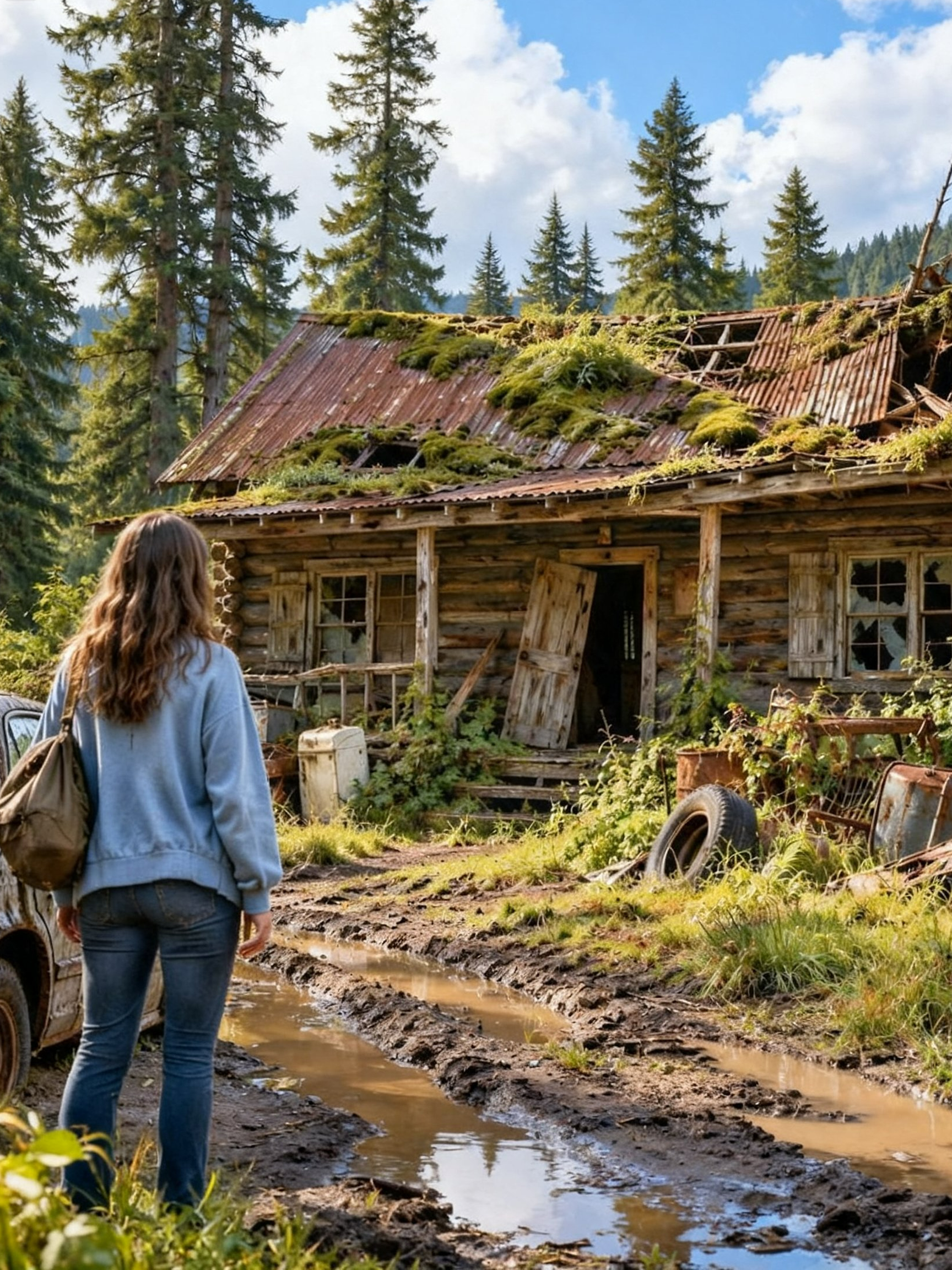
Her Family Mocked the Abandoned Cabin She Inherited—Until One Hidden Deed Turned Their Fortune Into Her Justice
Four days after their mother’s funeral, Evelyn Carter’s brother carried her suitcases onto the front lawn and told her she had twenty minutes to disappear.
Her sister stood in the doorway wearing their mother’s pearl earrings.
Their family attorney watched from the driveway.
And when Evelyn asked whether she could at least take the quilt she had slept under while caring for their dying mother, her sister laughed.
“No,” Melissa said. “That belongs to the house.”
Evelyn looked at her.
Not angrily.
Not tearfully.
Just long enough to make Melissa’s smile flicker.
Then Evelyn bent down, picked up the handles of her two old suitcases, and walked away from the house where she had spent twelve years taking care of everyone except herself.
Behind her, Derek Carter called after her.
“Don’t forget your inheritance.”
Laughter followed.
Even Kent Barlow, the attorney who had handled Carter family business for almost thirty years, gave a quiet little cough that sounded suspiciously like amusement.
Evelyn stopped beside her twelve-year-old Honda.
Derek held up a brass key between two fingers.
“Black Pine Cabin.”
He tossed it.
The key landed in the grass near Evelyn’s shoe.
“There,” Derek said. “Mom didn’t forget you after all.”
Melissa folded her arms.
“She got the perfect place.”
Derek grinned.
“No plumbing. No heat. Half the roof missing.”
“Don’t be cruel,” Melissa said sweetly.
Then she looked directly at Evelyn.
“She’ll finally have something that matches her life.”
That was the line Evelyn remembered.
Not the suitcases.
Not the locked front door.
Not even the pearl earrings hanging from Melissa’s ears less than a week after their mother had been buried.
She remembered that sentence.
Something that matches her life.
Evelyn leaned down and picked up the brass key.
She wiped a blade of grass from it with her thumb.
Then she slipped it into her coat pocket.
“Thank you,” she said.
Derek’s grin disappeared a little.
Melissa blinked.
That was all Evelyn gave them.
No screaming.
No begging.
No reminder that she had left a bookkeeping job in Columbus when their father suffered his first stroke.
No reminder that she had driven their mother to chemotherapy appointments through three Ohio winters while Derek was building houses in Florida and Melissa was posting pictures from charity galas in Cincinnati.
No reminder that Evelyn had spent nearly all her savings replacing the furnace in that house after Derek claimed he was “cash tight.”
No reminder that she had cleaned their mother’s wounds.
Changed her sheets.
Measured her medication.
Cooked meals she could barely swallow.
Held her hand when the morphine made her frightened.
Slept in a chair beside her bed because Ruth Carter had once whispered that she was scared she might die alone.
Evelyn reminded them of none of it.
She got into her Honda.
Closed the door.
And drove toward Black Pine Mountain.
That frightened Derek more than tears would have.
He just didn’t understand why yet.
Black Pine Cabin had been abandoned for twenty-seven years.
At least, that was what everyone in Cedar Hollow believed.
The cabin stood forty-two miles north of the Carter family home on a ridge where the paved road ended and the forest seemed to swallow everything human.
Samuel Carter, Evelyn’s father, had owned the property before anyone could remember.
Long before Carter Timber became a regional company.
Long before the family bought its six-bedroom brick home outside Columbus.
Long before Derek started wearing custom suits and calling himself a “developer.”
Long before Melissa married a dentist, divorced him, and reinvented herself as a nonprofit consultant.
Black Pine had been the beginning.
Samuel and Ruth lived there when they were newlyweds.
Derek had been conceived there, according to one family story Melissa loved repeating after two glasses of wine.
But by the time Evelyn was ten, the family rarely visited.
When Samuel’s timber company grew, the cabin became something he referred to as “the old place.”
The roof deteriorated.
The well pump failed.
Trees crowded the driveway.
After Samuel died, nobody seemed interested in it.
Nobody except Ruth.
Once every year, usually in October, she asked Evelyn to drive her there.
They never stayed more than an hour.
Ruth would sit on the porch.
Evelyn would sweep pine needles from the boards.
Her mother would stare toward the valley.
Sometimes she cried.
She never explained why.
The final time they visited, nine months before Ruth died, Evelyn noticed her mother touch the stones around the fireplace.
Not casually.
Deliberately.
Her fingers stopped on a dark rectangular stone near the floor.
Then Ruth looked at Evelyn.
“If this house ever becomes yours,” she said, “don’t judge it by the roof.”
Evelyn smiled at the time.
“Then what should I judge it by?”
Her mother’s answer had seemed strange.
“By what survived underneath.”
Evelyn had forgotten those words.
The road to Black Pine narrowed after Cedar Hollow.
By late afternoon, rain had begun tapping softly against the windshield.
Evelyn drove past abandoned barns, bare soybean fields and the rusted remains of an old Sinclair gas station.
Cell service disappeared seven miles from the cabin.
The final mile was gravel.
Then almost nothing.
Branches scraped both sides of the Honda.
When Evelyn finally saw the cabin through the trees, she understood why Derek had laughed.
The place looked half dead.
The porch sagged on one corner.
Moss climbed the northern wall.
One shutter hung crooked beside a broken upstairs window.
A section of tin roofing had peeled upward and twisted like a sheet of paper.
The old stone chimney still stood.
That was about the only dignified thing left.
Evelyn parked.
Rain whispered through the pines.
For a moment, she sat behind the wheel with both hands resting on the steering wheel.
She was sixty-one years old.
She had $8,412 in her checking account.
No husband.
No children.
No retirement worth mentioning.
Her brother and sister had inherited Ruth’s investment accounts, the Columbus house, two commercial lots, jewelry, furniture and what Derek estimated was nearly $1.9 million in combined assets.
Evelyn had received forty-eight acres of mountain forest and a collapsing cabin.
She should have felt destroyed.
Instead she felt something she had not felt in years.
Real silence.
Nobody calling her name from another room.
Nobody asking where the medication was.
Nobody telling her she had forgotten groceries.
Nobody saying they would reimburse her next month.
Nobody asking why she had not found someone to marry.
Nobody suggesting her life was small because she had chosen to carry burdens they were unwilling to touch.
For the first time in twelve years, nobody needed anything from Evelyn Carter.
She stepped out into the rain.
The brass key turned with difficulty.
The front door opened inward.
Dust moved through a beam of gray light.
The smell was cedar, mildew and old stone.
Someone had covered the furniture with canvas decades ago.
Mouse droppings dotted the floor.
A family of spiders had apparently claimed the kitchen.
Evelyn set down one suitcase.
Then the other.
She did not cry.
She found a broom.
For the next three hours, she worked.
That was what Evelyn did when life hurt.
She worked.
Opened windows.
Cleared leaves from the porch.
Found an old Coleman lantern.
Discovered two dry blankets sealed in a cedar chest.
Dragged a mattress downstairs because the staircase looked unsafe.
At seven thirty, she ate peanut butter crackers from her purse.
At eight fifteen, the rain became heavier.
At nine, while trying to stop water leaking beside the fireplace, Evelyn remembered her mother’s hand.
She looked down.
The stones surrounding the fireplace were blackened with age.
One was darker than the others.
Rectangular.
Near the floor.
Evelyn crouched.
She touched it.
Nothing happened.
She pushed.
Still nothing.
Then she noticed a small crescent-shaped groove hidden along one edge.
Evelyn went to her purse.
She found the brass cabin key.
The tip fit the groove almost perfectly.
Her heart began to beat harder.
She turned the key sideways.
Something clicked.
Evelyn froze.
Then she pulled.
The stone moved.
Half an inch.
She slid her fingers behind it and pulled harder.
The rectangular stone came forward like a drawer.
Behind it was a narrow cavity.
Inside lay an iron box.
It was only eighteen inches wide.
Maybe twelve inches deep.
And secured with another lock.
Evelyn stared at it for nearly a minute.
Then she saw something taped beneath the lid.
A small envelope.
Her name had been written across the front.
Not in Ruth’s handwriting.
In Samuel Carter’s.
Her father had been dead fourteen years.
Evelyn sat slowly on the hearth.
The rain drummed against the damaged roof.
Her fingers trembled for the first time that day.
She opened the envelope.
Inside was one yellowed index card.
Eight words had been written on it.
THE LITTLE KEY IS WHERE YOUR MOTHER PRAYS.
Evelyn read it twice.
Then three times.
Where your mother prays.
Ruth had been Catholic as a child, but she had stopped attending church regularly after Samuel died.
At the Columbus house she kept a small wooden cross beside her bed.
Under it sat a ceramic statue of the Virgin Mary.
Evelyn closed her eyes.
The statue.
She had packed it after the funeral.
She had placed it in a box labeled PERSONAL — EVELYN.
Melissa had stopped her.
“That was Mom’s,” Melissa said.
“So were her clothes,” Evelyn replied.
“Estate property.”
Kent Barlow had agreed.
The box had remained in the house.
Evelyn felt something cold pass through her.
The key was still there.
In the house Derek and Melissa had just sold.
She took out her phone.
She almost laughed.
Instead she put Samuel’s card back into the envelope.
She looked at the iron box.
Then she whispered into the empty cabin.
“All right, Mom.”
The next morning, Evelyn drove into Cedar Hollow and called Derek from the parking lot of a grocery store.
He answered on the fourth ring.
“I left something at the house.”
“You left a lot of things.”
“The small statue from Mom’s nightstand.”
Then Derek laughed.
“You’re calling me over a ten-dollar statue?”
“I’d like it.”
Evelyn looked through the windshield.
“What are you planning to do with it?”
“None of your business.”
“I thought the buyers took possession Friday.”
“They did.”
“So the statue is still there?”
Another pause.
Evelyn heard Melissa in the background.
“What does she want?”
Derek covered the phone badly.
“The Mary thing.”
Melissa said something Evelyn could not hear.
Then Derek returned.
“Listen, Ev. The house is not yours anymore. You need to understand boundaries.”
Evelyn almost admired the sentence.
For twelve years, nobody in her family had understood boundaries when they needed rides, money, signatures, caregiving, funeral arrangements, tax documents, hospital advocacy, Christmas dinners or someone to sit beside their mother at a.m.
Now Derek had discovered boundaries.
“I understand,” Evelyn said.
“Who bought the house?”
“The buyer.”
“I might ask permission to retrieve it.”
Derek sighed dramatically.
“Hawthorne Ridge.”
Evelyn’s fingers tightened around the phone.
Hawthorne Ridge Properties.
She knew the name.
Everyone in Franklin County knew it.
Luxury subdivisions.
Golf communities.
Retirement developments.
The company had spent years buying land around Cedar Hollow.
Its president, Graham Wexler, had attended Ruth’s funeral.
He had shaken Evelyn’s hand.
He had also spent nearly twenty minutes talking privately with Derek and Kent Barlow beside the church parking lot.
Evelyn had noticed.
She noticed most things.
People often mistook silence for inattention.
“When did Hawthorne Ridge offer to buy Mom’s house?” Evelyn asked.
Derek became very quiet.
“Before she died?”
“Don’t start.”
“I asked a question.”
“And I’m ending this conversation.”
“Did Mom know?”
Derek hung up.
Evelyn remained seated in the grocery-store parking lot.
She did not call again.
Instead she drove to Cedar Hollow Public Library.
For three hours, she used a public computer.
Hawthorne Ridge Properties had announced something six weeks earlier.
BLACK PINE RESERVE.
A 640-home luxury community.
Private lake.
Golf course.
Equestrian center.
Commercial village.
Projected development value: $312 million.
The map made Evelyn stop breathing.
The proposed project surrounded Black Pine Mountain.
And almost at its center sat one irregular forty-eight-acre parcel.
Her parcel.
Evelyn zoomed in.
A proposed access road crossed the southern edge of her property.
More importantly, Black Pine Creek originated less than two hundred yards behind the cabin.
The creek flowed downhill through the entire proposed development.
The website advertised it as a centerpiece.
“Restored natural waterways.”
“Three miles of walking trails.”
“Private fishing ponds.”
“Waterfront living.”
Evelyn leaned closer to the screen.
Hawthorne Ridge had already purchased more than 4,000 acres.
Derek’s construction company was listed as a preferred contractor.
Melissa’s nonprofit consulting group had been retained for “community relations.”
Kent Barlow’s law firm represented the development’s land-acquisition subsidiary.
Suddenly Evelyn understood why everyone had laughed so comfortably.
The cabin had not been forgotten.
It had been isolated.
And the people mocking her inheritance were already planning something around it.
She searched county land records.
The library computer could only access recent indexes.
Black Pine Cabin was indeed deeded to Evelyn under Ruth’s estate.
Forty-eight point six acres.
But beneath the parcel identification, an unusual notation appeared.
SEE ORIGINAL RESERVATIONS AND APPURTENANT RIGHTS, BOOK 118, PAGE 44.
Evelyn wrote it down.
Then she searched the development filings.
Hawthorne Ridge had submitted a preliminary road design.
The central access road crossed Evelyn’s land.
There was no mention of permission.
No easement agreement.
No purchase contract.
Yet construction was scheduled to begin in three weeks.
Evelyn leaned back.
Her brother had called the cabin worthless.
Her sister had said it matched her life.
Their lawyer had smiled.
And all three of them apparently knew a $312 million development expected to use her property.
Evelyn printed everything.
Then she drove to the Franklin County Recorder’s Office.
Book 118 was not digitized.
A clerk named Janice disappeared into an archive room.
Twenty minutes later she returned wearing white gloves and carrying a scanned copy of a deed recorded in 1948.
The document concerned 6,218 acres of mountain land once owned by a man named Walter Black.
Most had later been divided and sold.
But one central parcel had been retained.
The cabin parcel.
And the deed included language Evelyn had never seen before.
Water rights.
Access rights.
Timber reservations.
A covenant concerning Black Pine Creek.
And something called a “dominant estate easement” over several adjoining tracts.
Evelyn did not fully understand it.
Janice did.
At least enough to whistle softly.
“You should get a lawyer.”
“I have a family lawyer.”
Janice looked at her over the top of her glasses.
“Get a different lawyer.”
Evelyn almost smiled.
She asked whether the deed had ever been amended.
Janice searched.
Then her expression changed.
“Three years ago.”
She pulled another record.
It had been filed by an attorney in Cleveland.
Not Kent Barlow.
The document transferred several historic property rights into something called the Black Pine Preservation Trust.
Trustee: Ruth Carter.
Successor Trustee: Evelyn Carter.
Evelyn stopped moving.
“What exactly does that mean?”
Janice shook her head.
“I can’t give legal advice.”
“Of course.”
“But I’m going to repeat myself.”
Evelyn waited.
“Get a different lawyer.”
Her name was Dana Holloway.
She was fifty-four, wore inexpensive glasses and worked above a hardware store in Cedar Hollow.
Dana had spent nineteen years litigating property disputes, probate fraud and elder financial exploitation.
She also charged less per hour than Kent Barlow charged for writing a letter.
Evelyn placed every document on Dana’s desk.
The brass key.
Samuel’s card.
The development map.
The trust filing.
Dana read silently for almost forty minutes.
Then she looked up.
“Where is the key mentioned on this card?”
“In my mother’s statue.”
“And the statue?”
“In the house my siblings sold four days after the funeral.”
Dana removed her glasses.
“Who was executor?”
“Kent Barlow.”
Dana’s expression hardened.
“He allowed estate property to be sold four days after the funeral?”
“The house was held in a transfer-on-death arrangement with Derek and Melissa.”
“Did your mother have independent counsel near the end?”
“I don’t know.”
Dana tapped the trust document.
“She did three years ago.”
“Because Kent Barlow didn’t draft this.”
Dana turned the page toward Evelyn.
“Marian Choate did.”
“Should I know that name?”
“If you steal land in Ohio, you should.”
Evelyn raised an eyebrow.
Dana gave the smallest smile.
“She’s very good.”
Then Dana became serious again.
“This trust matters. A lot. But the thing I’m interested in is not what’s written here.”
“What isn’t.”
Dana pointed to a paragraph.
“This references schedules that were not recorded publicly.”
“Schedules?”
“Lists of assets. Rights. Agreements. Possibly ownership interests.”
“The iron box.”
Evelyn looked toward the rain-streaked window.
“What do you think is inside?”
Dana folded her hands.
“I think your mother went to a highly specialized property attorney without telling her longtime family lawyer. I think she created a trust around a parcel everyone assumed was worthless. I think Hawthorne Ridge designed a three-hundred-million-dollar project around that same parcel. And I think the attorney representing the development somehow never told you any of that while administering your mother’s estate.”
Dana paused.
“So I’m less interested in what’s inside your box than I am in how many people are terrified you’ll open it.”
That afternoon, Dana called Marian Choate’s Cleveland office.
Marian had died seven months earlier.
But her firm still existed.
An associate searched archived client files.
Ruth Carter’s file had restricted access.
The firm could release it only to the successor trustee.
The packet arrived electronically the next morning.
Dana read it first.
Halfway through, she whispered, “Oh, my God.”
Evelyn stood by the office window.
Dana did not answer immediately.
She read another page.
Then another.
Finally she turned the laptop around.
“Your mother knew.”
“Knew what?”
“Everything.”
The trust had not been created because Ruth believed Black Pine Cabin might someday become valuable.
It had been created because it was already valuable.
Samuel Carter had known too.
Beginning in the 1970s, Samuel quietly repurchased small parcels and historic rights around Black Pine Mountain whenever timber companies, farmers or banks wanted to sell.
Not the land itself in most cases.
The rights attached to it.
Water access.
Utility corridors.
Road easements.
Timber royalties.
Development approvals.
Over forty years, those interests had accumulated.
Then, after Samuel’s death, Ruth continued buying.
Small purchases.
Uninteresting purchases.
Things no one noticed.
A twenty-foot access strip.
An abandoned mineral lease.
Creek frontage.
Rights-of-way.
Shares in a private land company.
And then came the part that made Dana stop twice.
Ruth Carter owned fifty-eight percent of Black Pine Land Holdings LLC.
The company controlled development rights over 2,860 acres surrounding the proposed resort.
Hawthorne Ridge believed it had purchased those development rights eighteen months earlier.
It had paid $21.4 million.
But Ruth had never approved the sale.
Someone had approved it for her.
Kent Barlow.
Using a power of attorney Ruth had revoked seventeen months before the transaction.
Dana sat perfectly still.
“This isn’t just probate.”
Evelyn looked at the document.
“This could be fraud.”
Evelyn said nothing.
“And possibly conspiracy.”
Still nothing.
“Your brother received money from Hawthorne Ridge.”
“How much?”
Dana scrolled.
“According to the correspondence Marian collected, Derek Carter Construction received a four-million-dollar advance tied to infrastructure work.”
Evelyn’s face did not change.
“Seven hundred fifty thousand dollars through a consulting arrangement.”
“His firm received closing fees and is scheduled to receive development counsel fees.”
Evelyn turned toward the window.
Cars moved slowly through Cedar Hollow below.
People carried groceries.
A school bus stopped at a light.
The world looked strangely ordinary.
Dana spoke quietly.
“You can react.”
Evelyn’s reflection stared back from the glass.
Dana waited.
Evelyn turned.
“If I react now, I’ll spend something I might need later.”
Dana looked at her for several seconds.
Then she nodded.
“All right.”
There was more.
Ruth had discovered suspicious transactions three years earlier.
She believed Derek had been pressuring Samuel’s old business partners to sell Black Pine interests.
She believed Kent Barlow was helping him.
She suspected Melissa knew.
But Ruth had been seventy-eight and already ill.
She did not confront them.
Instead she hired Marian Choate.
Together they reconstructed Samuel’s property records.
Created the trust.
Transferred Ruth’s legitimate holdings.
Recorded protective documents.
And prepared something called a trustee instruction letter.
Marian’s firm had retained a duplicate.
Dana opened it.
The first sentence made Evelyn sit down.
If Evelyn is reading this, then my children did exactly what I was afraid they would do.
Evelyn pressed her lips together.
Dana offered to stop.
Evelyn shook her head.
Ruth had written the letter two years earlier.
She said she had spent too many years excusing Derek’s entitlement because he reminded her of Samuel.
Too many years forgiving Melissa’s cruelty because Melissa always apologized prettily.
Too many years depending on Evelyn because Evelyn never complained.
That sentence hurt more than anything Derek had said on the lawn.
Because it was true.
Ruth wrote:
I made your goodness convenient for everyone, including me.
Evelyn stared at the words.
Her mother continued.
She admitted knowing that Evelyn had emptied part of her retirement fund for medical bills.
She knew Derek had never repaid the furnace money.
She knew Melissa had repeatedly told relatives that Evelyn stayed home because she “had nowhere else to go.”
And guilt had come too late.
But not entirely too late.
She had built something.
Not a gift.
A correction.
Then came the warning.
If Derek, Melissa, Kent Barlow, Hawthorne Ridge Properties, or anyone acting for them attempts to pressure Evelyn into selling Black Pine Cabin, surrendering trust rights, granting road access, signing a release, or accepting a private settlement before receiving independent counsel, deliver the sealed enforcement package to the Ohio Attorney General’s office and the county prosecutor.
Evelyn slowly looked at Dana.
“Sealed enforcement package?”
Dana pointed to the screen.
“Schedule F.”
“Where is it?”
“Apparently…”
“…inside the Black Pine archive box.”
The iron box.
The key was still inside the statue.
Inside the sold house.
Dana called Hawthorne Ridge that afternoon.
Not Melissa.
The company.
She identified herself as counsel for Evelyn Carter and requested access to retrieve personal property belonging to the Black Pine Preservation Trust.
The response came in twelve minutes.
Then something even more interesting happened.
Kent Barlow called Evelyn personally.
She answered while sitting on the cabin porch.
“I understand you’ve been talking to an attorney.”
“You really don’t need to turn this into something ugly.”
Evelyn looked across the forest.
“What is this?”
“A misunderstanding.”
“What part?”
“The property structure.”
“Which property?”
Kent paused.
That was when Evelyn knew.
He had called too fast.
Nobody calls within minutes about a worthless cabin.
He changed his tone.
“Look, your mother’s records were messy near the end.”
“My mother was meticulous.”
“She was also very sick.”
Evelyn’s voice dropped.
“Be careful.”
Kent went silent.
It was the first warning she had given anyone.
Not dramatic.
Be careful.
When he spoke again, he sounded less comfortable.
“Hawthorne Ridge may be willing to make you an offer.”
“For what?”
“Black Pine.”
“You told me it was worthless.”
“I never said that.”
“You laughed when Derek said it.”
Another silence.
Then Kent said, “Two hundred thousand.”
Evelyn looked at the sagging porch.
“For the cabin?”
“For the parcel.”
“Three hundred.”
“Evelyn, this is emotional for you.”
“You’re not thinking rationally.”
“Half a million dollars.”
Kent exhaled.
“That property requires hundreds of thousands in repairs. Taxes. Liability. Environmental review. Road maintenance. You don’t have the resources to hold it.”
Evelyn almost smiled.
There it was.
The family assumption.
Not that she did not own something important.
That she was too weak to keep it.
Kent softened his voice.
“This could solve your problems.”
Evelyn watched a hawk circling above the valley.
“You misunderstand something.”
“I don’t have the problem.”
Then she hung up.
The next morning, Derek arrived at the cabin.
He came in a black Range Rover.
Melissa came with him.
So did Graham Wexler, president of Hawthorne Ridge Properties.
Three vehicles followed.
One belonged to Kent Barlow.
Another carried a survey crew.
The third carried a deputy sheriff.
Evelyn was splitting kindling beside the porch when they drove up.
Derek stepped out wearing loafers completely inappropriate for mud.
“What are you doing?”
“Making a fire.”
“You didn’t answer your phone.”
Melissa emerged wearing sunglasses despite the cloudy sky.
“You cannot behave like this.”
Evelyn placed another piece of wood on the chopping block.
“Like what?”
The axe came down.
The wood split cleanly.
Melissa flinched.
Evelyn set another piece upright.
Graham Wexler approached.
He was in his late fifties, silver-haired, expensive coat, smooth expression.
“Ms. Carter.”
“Mr. Wexler.”
“I’m hoping we can resolve this professionally.”
“What are we resolving?”
“The road.”
“What road?”
He smiled politely.
“The planned access corridor.”
Evelyn swung the axe.
Another log split.
Derek stepped forward.
“Stop doing that.”
She looked at him.
“It’s ridiculous.”
“This whole performance.”
Evelyn rested both hands on the axe handle.
“I live here.”
Melissa laughed.
She gestured at the cabin.
“You’ve been here five days.”
Six, actually.
Evelyn said nothing.
Kent removed a folder from his briefcase.
“We have a proposed easement agreement.”
“You haven’t read it.”
Graham’s polite smile vanished.
“We’re prepared to offer you seven hundred fifty thousand dollars for the required strip.”
Derek looked startled.
Evelyn noticed.
Apparently he had not expected that number.
“How wide?”
Evelyn asked.
Graham relaxed slightly.
“One hundred twenty feet.”
“How long?”
“Approximately thirty-two hundred.”
“So roughly nine acres.”
“Approximately.”
“For a road serving six hundred forty houses?”
“And construction traffic?”
“Initially.”
“And utilities?”
“That can be negotiated.”
“And drainage?”
“We’ll engineer appropriate systems.”
“And you need my signature.”
Graham hesitated.
Evelyn nodded.
Derek lost control.
“For God’s sake, Evelyn!”
She turned toward him.
His face had reddened.
“You don’t understand what you’re holding up.”
She looked at him calmly.
“That sentence interests me.”
“What am I holding up?”
Nobody answered.
Melissa removed her sunglasses.
“You’re embarrassing yourself.”
Evelyn’s voice remained soft.
“In front of whom?”
That silenced her.
Evelyn looked toward the deputy.
“Am I being arrested?”
The deputy shook his head.
“No, ma’am.”
“Am I required to let the survey crew enter my property?”
“No, ma’am.”
“Then I’d like everyone to leave.”
Kent stepped forward.
“Before you make a mistake—”
“I’ve already made one.”
They waited.
Evelyn looked at Derek.
“About sixty-one years’ worth.”
Derek’s face hardened.
“You think this is about Mom?”
“It’s becoming about her.”
“You got what she left you.”
“A rotting shack.”
“And you want to destroy a project worth hundreds of millions because you’re jealous.”
Evelyn studied him.
Then something almost gentle entered her expression.
“Is that what you need me to be?”
Derek frowned.
“Don’t play games.”
“Because if I’m jealous, you don’t have to wonder why Mom hid things from you.”
Kent visibly stiffened.
Graham Wexler turned toward him.
Derek laughed, but too quickly.
“Mom didn’t hide anything.”
Evelyn looked past him toward the cars.
“Then you have nothing to worry about.”
They left twenty minutes later.
The survey crew never unloaded its equipment.
But before Graham got into his vehicle, he looked back toward Evelyn.
Not dismissively anymore.
That evening, Dana called.
“You scared them.”
“You didn’t sell.”
Evelyn sat in front of the fireplace.
Dana continued.
“People like this can handle anger. They can handle grief. They can handle someone desperate for money.”
“What can’t they handle?”
“Someone who doesn’t need to be believed immediately.”
The next obstacle was the key.
Dana filed an emergency petition for access to trust property believed to be inside Ruth’s former house.
Hawthorne Ridge opposed it.
That confirmed almost everything.
Why would a $312 million developer spend attorney hours preventing a sixty-one-year-old woman from retrieving a ceramic religious statue?
The judge asked the same question.
Two days later, Evelyn entered the house where she had cared for her mother.
A court officer accompanied her.
So did Dana.
So did an attorney representing Hawthorne Ridge.
The house felt wrong.
Furniture was gone.
Pictures removed.
Walls marked with survey tape.
The kitchen where Ruth had eaten soup during chemotherapy had been stripped to the studs.
Melissa’s perfume still faintly lingered near the upstairs hallway.
Evelyn entered her mother’s bedroom.
The statue remained on the bedside table.
Exactly where Ruth had kept it.
Evelyn picked it up.
It was heavier than she remembered.
She turned it over.
The base was covered in green felt.
One corner had been cut and resealed.
Evelyn peeled it back.
A tiny brass key dropped into her palm.
Nobody spoke.
The Hawthorne Ridge attorney immediately made a phone call.
Dana smiled.
“Now we’re having fun.”
They drove directly to Black Pine.
Dana recorded everything.
The iron box was brought out from behind the fireplace.
Evelyn inserted the key.
For one second, it would not turn.
Then it did.
The lock released.
Inside were eight leather folders.
Two flash drives.
A handwritten ledger.
Photographs.
Original deeds.
Original membership certificates.
Certified copies of revoked powers of attorney.
Bank statements.
And one sealed envelope with a red line across the front.
ENFORCEMENT PACKAGE.
DO NOT OPEN UNLESS EVELYN HAS BEEN THREATENED, PRESSURED, REMOVED, OR DECEIVED.
Dana stared at the words.
“Were you removed?”
“From the house?”
“Four days after Mom died.”
“Pressured?”
“Half a million. Then seven-fifty.”
“Deceived?”
Evelyn looked at the iron box.
“For most of my adult life.”
Dana took out her phone.
“I’m calling the prosecutor.”
The machinery moved quickly after that.
Faster than Derek expected.
Faster than Kent could stop.
Documents from the box showed that Ruth had revoked Kent’s power of attorney before the $21.4 million sale of Black Pine Land Holdings’ development interests.
The revocation had been delivered by certified mail.
Kent’s assistant had signed for it.
Copies were in the box.
Copies were also in Marian Choate’s files.
Three weeks later, Kent had executed transaction documents anyway.
The signature authorizing the sale was not Ruth’s.
It appeared to be Derek’s imitation.
A forensic examiner later said there was strong evidence of simulation.
Emails showed Kent had warned Derek about the revoked authority.
Derek replied:
We’ve already gone too far. Mom won’t understand any of this by next year.
Another email came from Melissa.
Ev will keep her busy.
That sentence nearly destroyed Evelyn.
Not because it was cruel.
Because it was accurate.
While she was changing their mother’s sheets, her siblings were moving property.
While she was driving Ruth to oncology appointments, her siblings were arranging meetings.
While she was washing her mother’s hair over the kitchen sink, her siblings were discussing whether Ruth would “understand” contracts.
While she was sleeping in a chair beside the hospital bed, they were gambling on her loyalty.
They had counted on Evelyn.
Counted on her exhaustion.
Counted on her silence.
Counted on her goodness.
They did not merely ignore her sacrifice.
They used it as part of the plan.
For the first time, Evelyn cried.
Not in front of Dana.
Not in front of investigators.
She went behind the cabin just before sunset, walked to Black Pine Creek and sat on a fallen tree.
She cried for perhaps four minutes.
Then she washed her face in the cold water.
When she returned, Dana was standing on the porch.
She did not ask whether Evelyn was all right.
She only handed her coffee.
Evelyn accepted it.
“Thank you.”
That was all.
The investigations expanded.
Hawthorne Ridge claimed it had been deceived.
That was only partly true.
Internal emails showed company executives knew the authority documents had “unresolved irregularities.”
Graham Wexler had asked Kent Barlow whether Ruth might challenge the transaction.
Kent replied:
She’s sick. The practical risk is negligible.
Another executive asked about Evelyn.
Derek responded:
My sister doesn’t know anything about the holdings. She’ll take whatever Mom gives her and disappear.
The email was dated eleven months before Ruth died.
Evelyn read it twice.
Then closed the file.
The development halted.
Banks froze construction financing.
Title insurers refused coverage.
Contractors walked away.
Within six weeks, Black Pine Reserve existed only on promotional signs and angry investor calls.
Derek blamed Evelyn publicly.
At a Cedar Hollow zoning meeting, he stood before eighty residents and said his sister had weaponized obscure documents to destroy jobs.
Evelyn sat in the back row.
Melissa testified next.
That interested Evelyn.
Melissa described “a family dispute tragically escalated.”
She called Evelyn emotionally unstable.
She said Ruth had intended for all three children to benefit equally.
She described Derek as a hardworking local businessman.
She described herself as a community advocate.
She described Evelyn as isolated.
When Evelyn’s turn came, she walked to the microphone carrying no notes.
The room quieted.
She looked toward the zoning board.
“I’m not asking you to believe that I’m a good person.”
Derek shifted in his chair.
“I’m not asking you to believe my brother is a bad person.”
Melissa looked up.
“I’m asking you to read the dates.”
Evelyn placed three documents on the table.
“My mother revoked a power of attorney on March third.”
Another page.
“My brother signed her name to a transaction on March twenty-sixth.”
“The attorney involved had received the revocation before the transaction.”
She stepped back.
“That’s all I have to say.”
A board member asked, “Mrs. Carter, don’t you want to respond to what your sister said about your motives?”
Evelyn looked at Melissa.
Then back at the board.
“Because motives are convenient when dates are uncomfortable.”
The quote appeared in the newspaper the next morning.
Derek stopped giving interviews after that.
The legal fight lasted eleven months.
During that time Evelyn lived at Black Pine Cabin.
She repaired the roof herself with help from a retired carpenter named Joe Mercer who lived six miles away.
She replaced the well pump.
Installed a woodstove.
Rebuilt the porch.
Painted the window frames.
She refused three offers from Hawthorne Ridge.
The largest was $8.6 million.
Dana nearly fell out of her chair when she saw it.
Evelyn declined.
Dana asked.
“Because they’re buying silence.”
“They’re buying valuable land too.”
“That’s fine.”
Evelyn folded the offer letter.
“But they don’t know which part costs more.”
Ruth’s trust contained one more surprise.
The Black Pine parcel was only the anchor.
Because the trust owned fifty-eight percent of Black Pine Land Holdings, Evelyn controlled thousands of acres of development rights, water agreements, timber royalties and access easements.
Experts valued the combined interests at somewhere between $47 million and $73 million depending on future use.
But Ruth’s instructions restricted what Evelyn could do.
She could sell.
She could develop.
She could dissolve.
But there was one condition.
Before taking any distribution for herself, Evelyn had to read a second letter from Ruth.
Evelyn waited until the anniversary of her mother’s death.
She sat on the repaired porch.
Snow covered the pines.
The valley below was white and silent.
She opened the letter.
Ruth began without excuses.
I loved you unfairly.
Evelyn stopped.
She read the line again.
I loved you unfairly because I trusted you most and therefore asked you for the most.
I praised Derek because he demanded praise.
I reassured Melissa because she demanded reassurance.
You demanded almost nothing, so I gave you almost nothing except responsibility.
That is one of the great shames of my life.
Evelyn looked across the snow.
She continued.
Ruth said the Black Pine assets had originally been Samuel’s retirement dream.
He wanted to preserve the upper watershed and build a small working forest.
After his death, Ruth had let Derek convince her the properties should eventually be monetized.
Then she saw what money did to him.
Not all at once.
He stopped describing land by what grew on it.
He described it by units.
Melissa stopped seeing family relationships.
She saw alliances.
Kent stopped being counsel.
He became facilitator.
And Ruth realized Evelyn was the only person who still visited Black Pine without asking what it was worth.
That was why the trust named her.
Not because she had suffered.
Not as compensation.
Because Ruth believed she would understand that ownership was a form of responsibility.
The final paragraph read:
If you sell everything and walk away, I will not judge you. You have carried enough.
If you keep it, make it mean something.
Please do not use this fortune to prove to Derek and Melissa that they were wrong about you.
You never needed their permission to matter.
Evelyn lowered the letter.
Snow drifted through the pines.
For a long time she sat without moving.
Then she laughed quietly.
“Too late for one part, Mom.”
But she did not sell.
Instead Evelyn created the Ruth and Samuel Carter Foundation.
Half of the annual timber and land-lease revenue funded legal assistance for elderly people facing financial exploitation by relatives.
Another portion created grants for unpaid family caregivers over fifty-five who had depleted savings while caring for parents or spouses.
She protected 1,900 acres under permanent conservation agreements.
She reopened limited sustainable timber operations on another tract.
She sold a smaller commercial parcel near the highway.
The sale alone brought $11.2 million.
Evelyn bought herself a reliable pickup truck.
That was her first personal purchase.
Dana tried to convince her to buy something extravagant.
“A lake house.”
“You own a creek.”
“Where would I put it?”
“A ridiculous car.”
“I’ve seen the road to my cabin.”
“I split wood.”
Dana surrendered.
“Fine. Buy good boots.”
Evelyn did.
Meanwhile Derek’s world collapsed.
Carter Construction lost its Black Pine contracts.
Then its lenders discovered company assets pledged against anticipated development revenue.
Two banks sued.
Subcontractors filed claims.
The $4 million advance became part of the fraud litigation.
Derek sold his vacation house.
Then his Range Rover.
Then the home where his children had grown up.
Melissa fared better financially, but her consulting reputation disappeared.
Documents showed she had coordinated community outreach while knowing ownership problems existed.
Her nonprofit clients abandoned her.
She blamed Derek.
Derek blamed Kent.
Kent blamed Hawthorne Ridge.
Hawthorne Ridge blamed everybody.
The system that had once moved smoothly because everyone protected everyone suddenly became a room full of people pointing at each other.
That was when Evelyn understood something important.
Corruption looked powerful from the outside because everyone stood together.
Under pressure, loyalty evaporated.
Kent accepted a plea agreement first.
Fraud-related charges.
Falsification.
Professional misconduct.
His law license was suspended pending final proceedings.
In exchange for reduced exposure, he provided correspondence.
Lots of correspondence.
Enough to prove Derek had not simply benefited from the fraudulent sale.
He had helped design it.
Melissa avoided criminal conviction but settled civil claims and surrendered nearly everything she had received from the transaction.
Hawthorne Ridge paid heavily.
Its insurers paid more.
The company eventually reorganized the Black Pine development into a much smaller project on land it actually controlled.
No private golf course.
No dammed creek.
No access road through Evelyn’s property.
Derek fought until the end.
The final civil hearing took place fourteen months after Ruth’s funeral.
Evelyn wore a navy dress she had owned for eleven years.
Melissa arrived with an attorney.
Derek arrived with two.
He looked older.
Smaller somehow.
Not physically.
Something else had gone out of him.
The certainty.
That old certainty that Evelyn would absorb discomfort so the rest of the family could remain comfortable.
They sat across from each other in the courthouse hallway.
For ten minutes neither spoke.
Then Derek said, “Was it worth it?”
Evelyn looked over.
He gave a bitter laugh.
“You destroyed the family.”
“I didn’t.”
“You could have taken the money.”
“You could have settled.”
“You could have let the development happen.”
“But you needed revenge.”
Evelyn studied her brother.
Once, when they were children, Derek had fallen through ice on a farm pond.
Evelyn had been nine.
He had been twelve.
She remembered crawling across the ice because he was too frightened to move.
She remembered grabbing his sleeve.
She remembered their father pulling them both out.
For years, Derek told the story at Christmas parties as though their father had saved him alone.
Evelyn had never corrected him.
There were hundreds of moments like that.
Small erasures.
Tiny thefts of truth.
She wondered whether a person could disappear from her own family one omission at a time.
“You still think this was about revenge,” she said.
“What else could it be?”
“Stopping you.”
“Same thing.”
He looked at her.
Evelyn’s voice was calm.
“Revenge would have been wanting you to lose because I hated you.”
“You do hate me.”
That answer hurt him.
She could see it.
“I stopped you because what you were doing was wrong.”
Derek leaned forward.
“You think you’re better than me now?”
“You sit on fifty million dollars and act humble.”
“I don’t sit on it.”
“Oh, please.”
“It employs people.”
He scoffed.
“It preserves land.”
“It pays lawyers for widows whose sons are emptying their bank accounts.”
His jaw tightened.
“It helps people who quit jobs to care for parents.”
He looked away.
Evelyn continued.
“It pays property taxes. Forestry crews. Caregiver grants. Scholarships.”
Derek stood.
“Congratulations.”
He buttoned his jacket.
“You finally got to be important.”
Evelyn looked up at him.
“That’s the saddest thing you’ve ever said to me.”
“Because you still think importance is something money handed me.”
The courtroom doors opened.
Derek walked away.
The civil judgment required him to return misappropriated funds and surrender several interests obtained through the fraudulent transactions.
The prosecutor later offered a criminal agreement that avoided prison but included restitution, probation and a permanent record.
Some people in Cedar Hollow thought Evelyn had been too harsh.
Others thought she had been too kind.
She stopped caring what either group thought.
Two years passed.
Black Pine Cabin no longer looked abandoned.
Evelyn restored it without changing its character.
Stone chimney.
Cedar siding.
Deep porch.
Simple kitchen.
Samuel’s old workbench remained in the shed.
Ruth’s chair sat beside the fireplace.
The iron box remained too.
Not hidden anymore.
Evelyn placed it on a shelf in her study.
The damaged lock stayed unrepaired.
Sometimes visitors asked what had been inside.
Evelyn told them.
They usually looked disappointed.
They expected gold.
Something cinematic.
Evelyn found that funny.
Paper had changed everything.
A revocation.
A signature.
People underestimated paper for the same reason they underestimated quiet women.
Neither looked dangerous until someone read carefully.
The foundation grew.
Its first caregiver grant went to a sixty-seven-year-old man in Dayton who had spent eight years caring for his wife with Parkinson’s disease.
Its second went to a woman who had lost her job caring for both parents.
Its legal fund helped an eighty-three-year-old widow recover a house transferred by a nephew who had told her the papers were “insurance forms.”
Evelyn attended that hearing.
Afterward the widow hugged her and cried.
“You saved my house.”
Evelyn shook her head.
“Your attorney did.”
“But you paid her.”
Evelyn smiled.
“My mother did.”
The woman did not understand.
That was all right.
Ruth Carter had spent most of her life accumulating land.
In death, she had accidentally begun returning homes.
Melissa visited Black Pine first.
It happened nearly three years after the funeral.
She drove up in a modest sedan.
No sunglasses.
No pearl earrings.
She stood on the porch for almost a minute before knocking.
Evelyn opened the door.
Neither woman spoke.
Then Melissa said, “Can I come in?”
Evelyn stepped aside.
Melissa looked around.
“You fixed it.”
“It’s beautiful.”
“Thank you.”
They drank coffee.
Melissa cried.
Evelyn did not.
Her sister apologized.
Not perfectly.
People rarely did.
She blamed Derek too much.
Blamed Kent.
Blamed fear.
Blamed greed.
Blamed Ruth for favoritism.
Then finally, after nearly an hour, she said the sentence Evelyn had been waiting for without knowing she was waiting.
“I knew you were paying for Mom’s care.”
Evelyn looked at her.
Melissa’s eyes dropped.
“How much?”
“Most of it.”
“And you never offered.”
Melissa wiped her face.
“Because you kept doing it.”
The room became very quiet.
There it was.
The entire family history in five words.
Because you kept doing it.
Evelyn had been dependable.
Therefore everyone depended.
Evelyn had been generous.
Therefore everyone took.
Evelyn had been quiet.
Therefore everyone assumed silence meant permission.
She looked at her sister.
“Thank you.”
Melissa blinked.
“For what?”
“For finally telling the truth without decorating it.”
Melissa started crying again.
Evelyn reached across the table.
Not to embrace her.
She placed a box of tissues between them.
Forgiveness, she had learned, did not require pretending something had not happened.
Melissa visited again months later.
Then again.
They never became the sisters they might have been.
But they became something real.
Derek stayed away.
For four years.
Then one October afternoon, Evelyn saw an old pickup coming up the mountain.
Derek stepped out.
Gray at the temples.
Work boots.
He stood beside the truck.
Evelyn remained on the porch.
He looked toward the valley.
“So this is all yours.”
Evelyn shook her head.
He frowned.
“The trust owns most of it.”
“You control the trust.”
“I manage it.”
“Same thing.”
He looked at her.
That difference still irritated him.
Maybe it always would.
He walked toward the porch.
“I heard about the caregiver center.”
Construction had begun six miles away.
A twelve-room respite facility.
Legal clinic downstairs.
Temporary lodging for exhausted family caregivers upstairs.
Evelyn nodded.
“We open in spring.”
“You named it after Mom.”
“You should’ve named it after yourself.”
Derek almost smiled.
“Still doing that.”
“Doing what?”
“Pretending you don’t want credit.”
Evelyn considered correcting him.
Then she decided not to.
Some doors could not be opened from the outside.
Derek looked toward the cabin.
“Do you remember Dad bringing us here?”
“I hated it.”
“Mosquitoes.”
“No television.”
“You loved it.”
They stood quietly.
Finally he asked, “Did Mom really plan all this?”
“The trust?”
“Everything.”
That surprised him.
“What do you mean?”
“She protected the assets. She didn’t decide what I’d do with them.”
Derek nodded.
Then he looked at the porch floor.
“I thought she was senile.”
“She wasn’t.”
“You said she wouldn’t understand the transaction.”
His face tightened.
“I know what I said.”
“You said I’d disappear.”
“You threw my suitcases outside.”
He closed his eyes briefly.
“And you laughed.”
Evelyn waited.
Derek looked older than sixty-four.
“I’m sorry.”
She believed he meant it.
That did not erase anything.
It did not restore money.
It did not restore Ruth’s final years.
It did not undo forged documents.
It did not transform Derek into the brother Evelyn had needed.
But truth did not need to repair everything to matter.
Sometimes truth simply needed to stop the lying.
Evelyn nodded once.
Derek looked confused.
“That’s it?”
“That’s what?”
“You apologized.”
“Do you forgive me?”
Evelyn looked toward Black Pine Creek.
Water moved between the rocks.
Her mother had once told her forgiveness was Christian.
Her father had told her forgiveness was practical.
Dana believed forgiveness was irrelevant to litigation.
Evelyn had developed her own definition.
“I’m no longer carrying you,” she said.
Derek frowned.
“I don’t know what that means.”
She went inside.
A moment later she returned carrying the old iron box.
She placed it on the porch table.
Derek recognized it from court exhibits.
His expression changed.
“That’s it?”
“That’s what was in the fireplace?”
He touched the edge of the box.
“All that money…”
“There wasn’t money in it.”
“You know what I mean.”
He stared at the broken lock.
“If we’d found this first…”
Evelyn looked at him.
Derek did not answer.
Perhaps he had imagined destroying the documents.
Perhaps hiding them.
Perhaps negotiating differently.
Perhaps nothing.
Evelyn opened the box.
Most original documents were now stored securely elsewhere.
Only copies remained.
Except for one envelope.
Samuel’s handwriting.
Derek reached toward it.
Evelyn stopped him.
“That one is mine.”
He withdrew his hand.
“I always wondered why Dad trusted you.”
Evelyn smiled faintly.
“He didn’t.”
“He worried about me.”
“That’s not what I remember.”
“He thought I gave too much.”
Derek laughed softly.
“Guess he was right.”
Derek looked around the cabin.
“You won, Ev.”
She shook her head.
“Stop saying that.”
“Because Mom died.”
He went silent.
“Dad died.”
“We lost years.”
Derek looked away.
“The family tore itself apart.”
His face tightened.
“Winning would have looked different.”
Wind moved through the pine branches.
Far below, late-afternoon light touched the valley where Black Pine Reserve had once been planned.
Some of the land was now forest preserve.
Some remained working timber.
A small neighborhood had been approved farther south under strict watershed rules.
The creek still ran clear.
Children from Cedar Hollow Elementary came twice a year to study aquatic insects there.
Evelyn liked that more than she expected.
Derek stepped off the porch.
At his truck, he turned back.
“Why didn’t Mom just tell us?”
Evelyn knew the answer.
Because Ruth had tried.
Not about the trust.
About everything else.
Responsibility.
But Derek had spent decades hearing only what sounded like opportunity.
Evelyn looked toward the fireplace.
“She probably knew we’d show her who we were.”
Derek absorbed that.
Then he drove away.
That evening Evelyn lit a fire.
The cabin settled around her with familiar creaks.
On the mantle stood two photographs.
Samuel in work clothes, young and sunburned, standing beside the unfinished cabin in 1969.
Ruth at seventy-eight, wrapped in a blue coat, sitting on the Black Pine porch during their final visit.
Behind the photograph Evelyn kept her mother’s letter.
Not the legal one.
The apology.
I loved you unfairly.
For years Evelyn had thought love was proved by how much pain a person was willing to carry.
She knew better now.
Love without respect became entitlement.
Generosity without boundaries became permission.
Silence without self-respect became a room where other people told your story for you.
But silence chosen deliberately?
That was different.
That could be power.
The following spring, the Ruth Carter Caregiver Center opened.
More than three hundred people attended.
Dana stood near the entrance.
Joe Mercer brought his grandchildren.
County officials came.
Reporters came.
Melissa volunteered at the registration table.
Derek did not attend, though a box containing twenty young pine trees arrived without a card.
Evelyn knew.
She had them planted beside the walking path.
During the ceremony, a reporter asked Evelyn what she considered the greatest part of her inheritance.
The reporter clearly expected a number.
The $47 million valuation.
The timber revenue.
The legal settlement.
Maybe the cabin.
Evelyn looked through the glass doors of the center.
Inside, an exhausted woman in her sixties was speaking with a lawyer about her father’s house.
A man pushing his disabled wife in a wheelchair was filling out an application for respite care.
A volunteer was showing an elderly couple where the coffee was.
Evelyn thought about Derek’s laugh.
Melissa’s pearls.
Kent’s smile.
Her suitcases in wet grass.
The brass key at her feet.
Her mother’s finger touching the fourth stone beside the fireplace.
Don’t judge it by the roof.
Judge it by what survived underneath.
Evelyn smiled.
“The greatest inheritance?”
“Yes,” the reporter said.
Evelyn looked toward Black Pine Mountain in the distance.
“Evidence.”
The reporter laughed uncertainly.
Evelyn didn’t.
Because that was what Ruth had really left her.
Evidence that Evelyn had not imagined the sacrifice.
Evidence that greed could wear a family face.
Evidence that quiet people were still allowed to say no.
Evidence that years spent caring for someone were not wasted simply because nobody applauded.
Evidence that something dismissed as worthless could hold the structure supporting everything else.
And evidence that justice sometimes waited quietly inside an abandoned place until the person everyone underestimated finally found the key.
Months later, on the fifth anniversary of Ruth Carter’s death, Evelyn drove alone to the cemetery.
She brought no flowers.
Ruth had disliked cut flowers.
Instead Evelyn placed a smooth Black Pine river stone beside the headstone.
She sat on the grass.
For a while she told her mother ordinary things.
The creek was high.
Melissa was doing better.
The foundation approved seventeen new caregiver grants.
Joe’s granddaughter had been accepted to Ohio State.
Derek had found work managing a small construction company in Dayton.
He and Evelyn exchanged Christmas cards now.
Nothing more.
Nothing less.
The cabin roof needed staining.
A bear had destroyed one of the foundation’s trail cameras.
Ordinary life.
Then Evelyn became quiet.
“I was angry with you,” she said.
Wind moved through the cemetery trees.
“For knowing.”
She touched the grass.
“For letting me give so much.”
Her voice remained steady.
“For waiting until you were dying to correct something you helped create.”
She took a breath.
“I’m still angry sometimes.”
No answer came.
Of course not.
But Evelyn no longer needed the dead to defend themselves.
“I understand you better now.”
Brushed grass from her skirt.
Then looked at Ruth Carter’s name carved in stone.
“I just wish you had understood sooner that I would’ve loved you even if you had asked Derek and Melissa to carry something too.”
Evelyn turned to leave.
At the cemetery gate, she stopped.
Not because she had forgotten anything.
Because a memory had returned.
Derek on the lawn.
The brass key flying through the air.
Melissa wearing their mother’s pearls.
Kent smiling.
A worthless inheritance.
A worthless cabin.
A worthless sister.
That was the story they had told themselves.
Maybe they needed it.
Because if Evelyn was foolish, they were clever.
If Evelyn was weak, they were strong.
If the cabin was worthless, taking everything else was fair.
If caregiving was not real work, they owed her nothing.
If Ruth was confused, her objections did not matter.
Every lie depended on another lie.
And the most dangerous thing Evelyn had done was not exposing them.
It was refusing to help them keep believing.
She drove back to Black Pine before sunset.
The restored cabin appeared through the trees.
Warm light glowed in the windows.
The old chimney sent smoke into the evening sky.
Evelyn parked beside the porch.
On the passenger seat rested the original brass key.
She still used it.
The lock had been cleaned but never replaced.
Some things deserved to remember exactly what had opened them.
Evelyn climbed the porch steps.
Before going inside, she looked across the valley that her family had once believed they already owned.
Then she thought of the afternoon Derek threw that little brass key into the grass, certain he was giving his sister the least valuable thing their mother possessed.
And for the first time in years, Evelyn wished she had asked him one question before driving away.
She smiled into the gathering dark.
“Derek… did you really think Mom left me only the cabin?”
✓ Lynn R. Adams
Her Family Mocked the Abandoned Cabin She Inherited—Until One Hidden Deed Turned Their Fortune Into Her Justice Four days after their mother’s funeral, Evelyn Carter’s brother carried her suitcases o…