Her Children Sold Her Home at 71—Then the Cabin Her Father Built in 1948 Exposed What They Never Owned
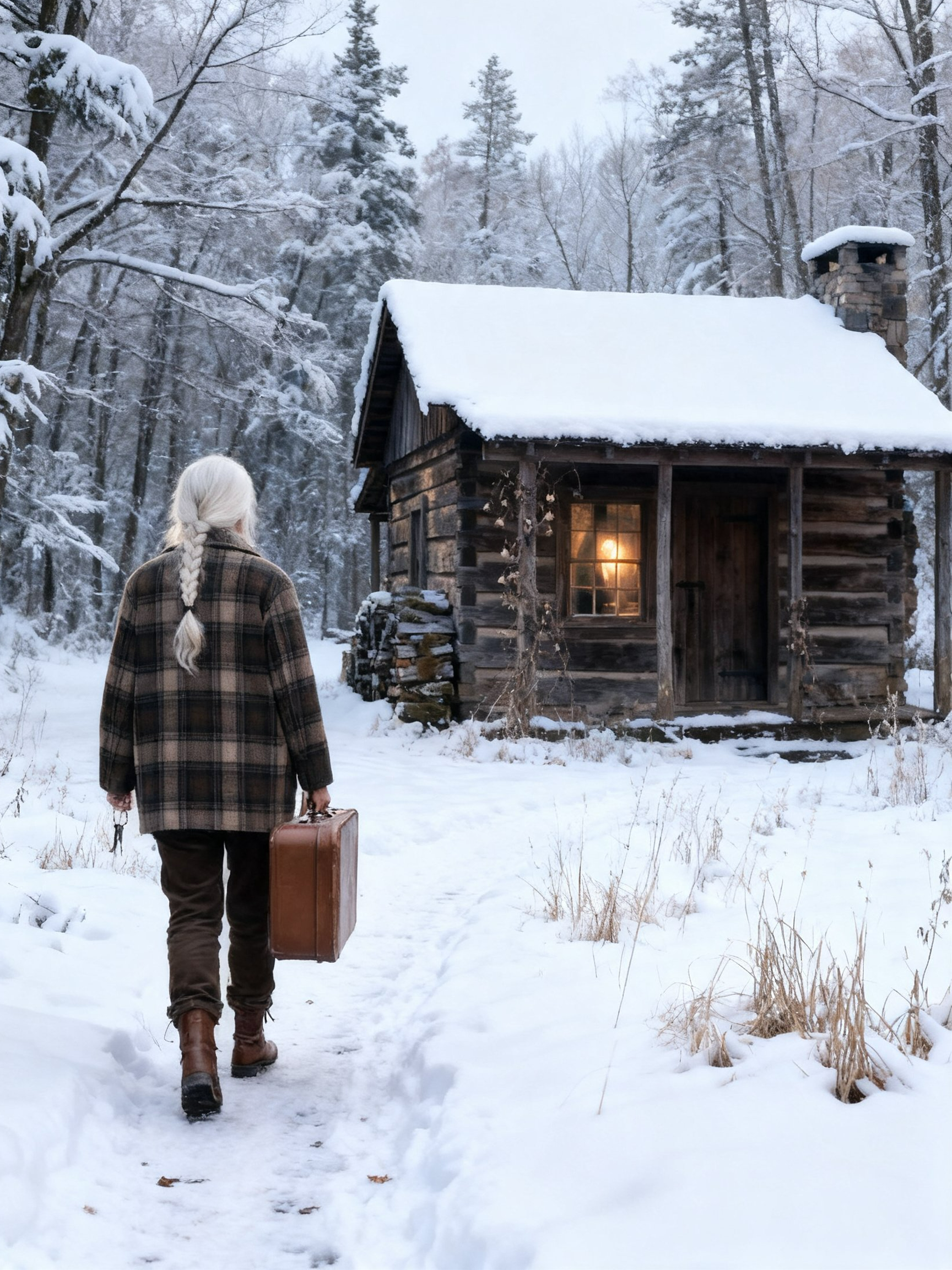
Her Children Sold Her Home at 71—Then the Cabin Her Father Built in 1948 Exposed What They Never Owned
The first thing my daughter said after selling my house was, “Mom, don’t make this embarrassing.”
Not I’m sorry.
Not we had no choice.
Not even where are you going to sleep tonight?
She stood in the kitchen I had paid for, renovated, scrubbed, cooked in, and filled with thirty-eight years of birthdays and Christmas mornings, while strangers measured my dining room for furniture they had already ordered.
My son Mark leaned against the refrigerator with his arms folded.
The refrigerator still held the lemon pie I had made for his birthday two nights earlier.
“You signed the power of attorney,” he said.
“For my surgery.”
“It didn’t say we could only use it for surgery.”
That was when I understood something very important.
My children had rehearsed this conversation.
They had already practiced my outrage.
They had already prepared answers to my questions.
They had already decided which parts of my life belonged to me and which parts could be converted into cash.
So I did the one thing neither of them expected.
I didn’t argue.
I reached for the old brown leather purse hanging over the back of my chair, put my reading glasses inside, and asked one question.
“When do the new owners take possession?”
My daughter Denise blinked.
It was Thursday.
Three days.
“All right.”
Mark looked almost disappointed.
He had come ready for war.
My son had always hated battles that didn’t happen on his schedule.
“You’re taking this better than I expected,” Denise said carefully.
I looked at her.
She was forty-six years old.
The pearl earrings in her ears had belonged to my mother.
I had given them to Denise when she turned thirty because she cried and said she wanted “something from the women in our family.”
She was wearing those pearls while throwing one of those women out of her own home.
“I’ve had worse Thursdays,” I said.
Then I walked upstairs and closed my bedroom door.
I did not cry.
Not because I wasn’t hurt.
I was seventy-one, not made of granite.
I did not cry because tears would have given them the version of me they had counted on.
Easy to manage.
Instead, I sat on the edge of my bed and opened the bottom drawer of my dresser.
Beneath two winter sweaters was a green metal box no bigger than a hardcover Bible.
Its paint was chipped along the corners.
A thin line of rust ran beside the lock.
I had not opened it in nineteen years.
Inside were three things.
A brass key.
A photograph of my father standing beside a newly built cabin in 1948.
And an envelope in his handwriting.
ELEANOR—IF THEY EVER TRY TO TAKE THE HOUSE, GO HOME FIRST.
I ran my thumb over the words.
My father had been dead for twenty-seven years.
He had written that message when I was still married, still raising teenagers, still believing that love automatically made people honorable.
I had never known exactly what he meant.
But I knew where “home” was.
Forty-three miles north, beyond the edge of Mill Creek, Tennessee, past two abandoned tobacco barns and a narrow road that disappeared under maple trees, stood a cabin my father, Walter Hayes, had built when he came home from the war.
One room at first.
Then a porch.
Then a stone chimney he built with his own hands because he said bricks cost too much and river rock was free if your back was strong enough.
I had not slept there since 1989.
Mark thought it was condemned.
Denise called it “Grandpa’s shack.”
Neither had asked about it in years.
That was their first mistake.
Their second was assuming I had forgotten where the key was.
I packed one suitcase.
Three dresses.
Two pairs of jeans.
A photograph of my late husband, Samuel.
My father’s green box.
My medication.
My sewing kit.
A cast-iron skillet I had owned since 1974.
When Denise saw the suitcase by the stairs, she frowned.
“Where are you going?”
“The cabin.”
Mark laughed.
Actually laughed.
“Mom, that place probably has raccoons living in the kitchen.”
“Then I’ll introduce myself.”
“You can’t live out there.”
“I lived there before you were born.”
“That was fifty years ago.”
“Fifty-two.”
Denise sighed like I was a difficult customer.
“We already put a deposit down at Willow Crest.”
Willow Crest was not a home.
Willow Crest was a private senior residence beside the interstate where the windows opened four inches and the brochures showed smiling women watering plastic flowers.
I had visited a friend there once.
Her daughter called it “independent living.”
My friend called it “the place they parked me so they could stop worrying.”
“I’m not moving to Willow Crest.”
Mark’s expression tightened.
“We discussed this.”
“You discussed it.”
“It’s safer.”
“For whom?”
A beautiful, clean silence.
I watched the answer travel across my son’s face before he caught it.
The house had sold for $486,000.
My mortgage had been paid off for twelve years.
After closing costs, taxes, and what Mark casually called “financial restructuring,” there should have been more than enough money for me to decide where I lived.
But neither child had shown me the closing statement.
Neither had deposited anything into my checking account.
Neither had explained why the buyer was an LLC I had never heard of.
And neither knew I had spent twenty-six years doing bookkeeping for a construction company.
I knew how numbers disappeared.
I knew how signatures could be made to look ordinary.
I knew the difference between a bad decision and a planned one.
Most of all, I knew when not to let the other side know what I knew.
So I smiled.
“I’ll go to the cabin for a few days.”
Denise relaxed instantly.
“Good. Great. Clear your head.”
Mark picked up my suitcase.
“I’ll drive you.”
“I still have a license.”
“You shouldn’t be driving all the way out there alone.”
I held out my hand for the suitcase.
“Then you shouldn’t have sold the house where I was already safely living.”
His jaw moved.
I drove away the next morning at .
I left behind the blue hydrangeas Samuel planted on our twentieth anniversary.
I left behind the pencil marks inside the pantry where I had measured Mark and Denise as children.
I left behind the sewing room where I made Denise’s prom dress because we couldn’t afford one from the department store.
I left behind the garage where Samuel taught Mark to change a tire and where, twenty years later, I sold Samuel’s truck to help pay Mark’s business debt after his first company failed.
I left behind the dining table where I had signed a home-equity loan so Denise could finish nursing school after her divorce.
I left behind the hallway where both my children had carried me inside after my hip replacement and promised I would “never have to worry about anything.”
I left behind everything they thought proved they had won.
But I took the green box.
I took the brass key.
I took my father’s warning.
I took the part of myself they had mistaken for weakness.
I took the silence they should have feared.
The cabin appeared at the end of an overgrown gravel lane just before noon.
I stopped the car and stared.
The porch sagged on one side.
Moss covered half the roof.
One shutter hung crooked.
The windows were clouded with dust.
A sycamore tree had grown enormous beside the stone chimney.
It should have looked abandoned.
Instead, it looked patient.
That was the word that came to me.
As if the place had been waiting longer than I had.
I climbed out slowly.
My hip complained.
My pride did not.
The old brass key fit the front door.
The lock resisted twice, then turned with a deep metallic click.
Dust floated through the sunlight when I pushed the door open.
The smell hit me first.
Old fabric.
My father’s handmade table still stood by the window.
His rocker was beside the fireplace.
A chipped coffee mug sat upside down on a shelf exactly where I remembered it.
For a few seconds I was eight years old again, watching him shave curls of cedar from a plank while my mother fried potatoes on the stove.
Then I saw the envelope nailed beneath the mantel.
It was wrapped in yellowing waxed cloth.
My name was written on the front.
ELEANOR ONLY.
I took it down carefully.
Inside was a single sheet of paper.
My father’s handwriting had become shaky by then.
If you are reading this because someone has tried to separate you from what is yours, do not sign anything else.
Do not sell this cabin.
Do not sell any road, field, timber, water right, mineral right, or easement attached to it.
Do not trust anyone who tells you the cabin is the property.
The cabin is only the lock.
Your mother knew.
Samuel knew enough to leave it alone.
If I am gone, find the red ledger.
After you find it, call Frank Bell.
If Frank is gone, call whoever occupies his office.
One more thing.
If the person trying to take from you shares your blood, do not confuse blood with loyalty.
I read it twice.
Then a third time.
Frank Bell.
I knew that name.
Bell & Mercer.
The law office on the courthouse square in Mill Creek.
My father had used Frank Bell for land contracts in the 1970s.
Frank himself was long dead.
The office, however, still existed.
I had passed it on the drive in.
The sign now read BELL, MERCER & SHAW.
I folded the letter and placed it back inside the envelope.
Then I looked around the cabin.
Red ledger.
My father had kept records of everything.
Fence repairs.
Seed costs.
Who borrowed his chainsaw.
Who returned it dull.
If there was a ledger, he would have hidden it somewhere dull enough that a thief would overlook it.
I searched the desk first.
Then the shelf beside the stove.
The bedroom trunk contained quilts, mothballs, and my mother’s old church hats.
By four o’clock, my back hurt and dust coated my hands.
I had nearly decided to stop when I noticed something under my father’s rocker.
One floorboard was darker than the others.
I moved the rocker.
There was a small round hole near the end of the board, barely visible beneath years of grime.
The brass key from the green box fit the hole.
Not a lock.
When I turned it, the entire board lifted half an inch.
My hands began to shake then.
Underneath was a narrow steel compartment.
Inside sat a red leather ledger, a sealed manila envelope, and a photograph I had never seen.
The photograph showed my father standing with three men beside a survey marker on a ridge.
Behind them stretched hundreds of acres of forest.
On the back he had written:
NORTH TRACT. 1962. 1,840 ACRES TOTAL. NEVER LET THEM BREAK THE CHAIN.
I stared at the number.
One thousand eight hundred forty acres.
My father had owned eighty-six acres when he died.
At least, that was what everyone had always said.
The first page of the ledger changed everything.
Not because it listed money.
Because it listed names.
Farm families.
Coal workers.
A schoolteacher named Mrs. Avery.
A man called Thomas Clay who had lost a leg in Korea.
Beside each name was an acreage amount.
And beside each acreage amount were three letters.
The final page explained them.
Hayes Protective Trust.
My father had created something I had never heard of.
And according to the ledger, the cabin sat on the controlling parcel.
I did not sleep much that night.
The electricity had been shut off years ago, but the fireplace worked.
I wrapped myself in an old quilt and listened to wind move through the trees.
At the next morning, my phone rang.
I answered.
“You okay?”
“How bad is the cabin?”
“That’s what I was afraid of. Mark and I were talking. Maybe after the weekend you’ll feel differently about Willow Crest.”
She paused.
My daughter knew me well enough to distrust easy agreement but not well enough anymore to understand why.
“Oh, and Mom?”
“You might get some calls about paperwork from the house closing. Don’t worry about it. Mark’s handling everything.”
“What paperwork?”
“Nothing important.”
“Then why would anyone call?”
Another pause.
“Just routine.”
“All right.”
She exhaled.
Relief again.
“Love you.”
“Drive safely today,” I said.
She went quiet.
Then the call ended.
I had not said I loved her back.
At nine, I drove to Bell, Mercer & Shaw.
The office occupied a narrow brick building between a pharmacy and a bakery.
A brass plaque beside the door looked older than I was.
The receptionist was young enough to be my granddaughter.
I placed my father’s letter on the counter.
“I need to speak to whoever replaced Frank Bell.”
She looked at the letter, then at me.
“Do you have an appointment?”
“Mr. Shaw is in court, and Ms. Mercer has—”
A voice came from the hallway.
“Let me see that.”
The woman approaching was around sixty, tall, silver-haired, wearing a navy suit and red reading glasses.
She took the letter without touching it at first.
Then she saw the signature.
Her expression changed.
“Are you Eleanor Hayes?”
“My name is Claire Mercer.”
She looked toward the receptionist.
“Cancel my ten-thirty.”
Then she opened a door and said, “Mrs. Hayes, you need to come inside.”
Her office smelled like paper and coffee.
I put the ledger on her desk.
Claire Mercer did not sit down.
She stared at it.
“Where did you get this?”
“Under my father’s floor.”
She removed her glasses.
“My grandfather used to talk about a red ledger.”
“Your grandfather?”
“Frank Bell.”
That was the moment the cabin stopped feeling like an old family property.
It became evidence.
Claire locked her office door.
Then she opened the sealed envelope.
Inside were copies of deeds, trust documents, mineral reservations, easement agreements, and a map so large we had to spread it across a conference table.
My father’s eighty-six acres were highlighted in red.
But thin blue lines extended outward from it across the surrounding county.
Then another.
Then another.
Some had been sold decades earlier, but each sale contained restrictions.
Rights retained.
Water access retained.
Timber clauses.
Road easements.
Development limitations.
And beneath all of it sat a trust structure nobody in my immediate family had ever mentioned.
Claire leaned over the documents for nearly twenty minutes without speaking.
Finally, she looked up.
“Mrs. Hayes, has anyone recently asked you to sign documents involving the cabin?”
“Land near the cabin?”
“Road rights?”
“Mineral rights?”
Her face became very still.
“Has anyone sold property on your behalf?”
“My children sold my house three days ago.”
She sat back.
“Using what authority?”
“A power of attorney I gave them after hip surgery.”
“Do you have a copy?”
Then I corrected myself.
“At the house that isn’t mine anymore.”
Claire looked at me for a long moment.
“Who prepared the power of attorney?”
“An attorney named Gregory Pell.”
She did not react dramatically.
That frightened me more than if she had.
“Do you know him?” I asked.
“I know his name.”
“That isn’t what I asked.”
She folded her hands.
“Gregory Pell represents several development companies in this county.”
“One of them is Falcon Ridge Holdings.”
The buyer listed on the sale documents had been Falcon Ridge Residential LLC.
I remembered because the name sounded too expensive for our neighborhood.
Claire asked, “Was Falcon Ridge involved in the purchase of your home?”
Her chair creaked when she leaned back.
“And your son?”
“Mark runs a small real-estate investment company.”
“What’s it called?”
“Hayes Renewal Partners.”
Now she closed her eyes for half a second.
When she opened them, she said, “We’re not going to accuse anyone of anything yet.”
“I wasn’t planning to.”
“What are we planning?”
She looked at my father’s letter.
“We are going to find out why Walter Hayes expected this exact problem almost thirty years ago.”
That afternoon Claire sent an investigator to pull county records.
I returned to the cabin and cleaned.
Not because the cabin mattered more than the documents.
Because cleaning kept my hands busy while my mind worked.
I swept mouse droppings from the pantry.
I washed soot from the fireplace stones.
I opened windows.
I found an old hand pump behind the cabin and, after fifteen minutes of work, brought up water clear enough to sparkle in the sun.
At seventy-one, I had expected my life to become smaller.
That was what everyone said.
Let the kids handle it.
Don’t worry yourself.
But as I hauled two buckets of water across the yard, I realized my children had not become powerful because I had become old.
They had become powerful because I had spent years giving them pieces of my authority and calling it love.
I had cosigned Mark’s first business loan.
Then his second.
I had given Denise the down payment for her townhouse after her husband left.
I had watched their children after school for twelve years without accepting a dollar.
When Mark’s wife developed complications during pregnancy, I slept on their couch for six weeks and cooked every meal.
When Denise wanted to switch careers at thirty-seven, I paid her certification fees.
When Samuel was dying from pancreatic cancer, both children told me they wished they could help more.
I told them not to worry.
I told them I could handle it.
I told them to focus on their families.
That sentence had become the architecture of my life.
I can handle it.
So they let me.
Then they forgot that handling things requires strength.
By Sunday morning, the cabin looked alive again.
That was when Mark arrived.
I heard tires on gravel.
Then two car doors.
Mark stepped out of his SUV wearing khakis and a quarter-zip sweater.
The man with him wore polished brown shoes that were already collecting mud.
Gregory Pell.
I recognized him from the day I had signed the power of attorney.
He smiled when he saw me on the porch.
“Mrs. Hayes. Good to see you again.”
I kept sweeping.
Mark looked around.
“You’ve actually been cleaning.”
“That happens when things are dirty.”
He forced a laugh.
Pell did not.
His eyes moved over the cabin.
The chimney.
The ground.
Then he looked toward the tree line.
Not like a lawyer visiting an elderly client.
Like a buyer measuring setbacks.
That was useful.
“Mom,” Mark said, “we need to talk.”
“You drove forty-three miles. I assumed so.”
He climbed onto the porch.
“There are some papers related to your long-term care.”
Pell opened a leather folder.
“We can do this inside,” he said.
They both looked at me.
I leaned the broom against the railing.
“You can tell me here.”
Pell smiled again.
“Of course.”
He removed several sheets.
“The idea is simply to consolidate certain properties and assets into a family management structure so Mark and Denise can deal with expenses efficiently.”
“Which properties?”
“Minor legacy assets.”
“Which ones?”
His smile faded by one degree.
“This cabin, primarily.”
I looked at Mark.
“You said it was worthless.”
He rubbed the back of his neck.
“It is, basically. That’s the point. We’d rather handle the taxes and liability.”
“What liability?”
“Mom, the porch is falling apart. Someone could get hurt.”
“No one has visited me in fifteen years.”
“That doesn’t mean—”
He looked at Pell.
Pell stepped in.
“This is really a protective measure.”
“For whom?”
That question.
They hated that question.
I took the papers and read the first page.
Quitclaim deed.
It transferred the cabin parcel to Hayes Family Legacy LLC.
Manager: Mark Hayes.
Secondary manager: Denise Parker.
I flipped to the property description.
Then I felt something cold move through my chest.
The description was not limited to the cabin.
It referenced “all associated appurtenant rights, easements, reservations, access interests and hereditaments.”
Claire had taught me that word two days earlier.
Hereditaments.
Anything inheritable tied to the land.
Not just the cabin.
They were asking me to hand them the lock.
I looked up.
“How long have you known?”
Mark’s face changed.
Only slightly.
But enough.
“Known what?”
“That this property has associated rights.”
Pell answered too quickly.
“All properties have associated rights.”
“Eighteen hundred acres’ worth?”
Mark went pale.
Pell’s eyes narrowed.
There it was.
The moment a liar discovers the person he planned to deceive has read ahead.
I folded the deed.
“Who told you about the trust?”
Mark said, “Mom, I don’t know what you think you found—”
Pell’s tone hardened.
“Mrs. Hayes, you should be careful about misunderstanding old documents.”
“My father wrote them.”
“Your father was not an attorney.”
“No. He hired one.”
Pell looked toward his vehicle.
I wondered whether he was considering leaving.
Instead, he said, “There are title issues here that have been unresolved for decades. Mark and Denise are trying to help prevent you from becoming tangled in litigation.”
“That sounds expensive.”
“It can be.”
“Then why are you charging my children almost nothing?”
That landed.
Pell stopped moving.
Mark’s eyes flicked toward him.
I had guessed.
Only guessed.
But their faces confirmed enough.
I handed the papers back.
“I’m not signing.”
Mark lowered his voice.
“Mom, don’t do this.”
“Turn this into some paranoid old-person thing.”
There it was.
The knife finally came out.
Not sharp enough to kill.
Sharp enough to reveal the hand holding it.
I studied my son.
“You sold my home without asking me.”
“You authorized us to manage your assets.”
“I authorized you to pay bills while I was recovering.”
“The document is broader than that.”
“So is theft.”
Pell stepped forward.
“Mrs. Hayes—”
I raised one finger.
He stopped.
I never raised my voice.
“You are standing on private property.”
Mark laughed bitterly.
“Oh, come on.”
“You really want to destroy this family over an abandoned cabin?”
I looked at the man I had carried into an emergency room at age nine after he split his chin open on a bicycle.
The man whose first apartment I furnished.
The man whose debts I had quietly paid so his wife would never know how close they came to bankruptcy.
And I understood that parents make a dangerous mistake when they believe remembering a child’s innocence can restore an adult’s character.
“No,” I said.
“You destroyed it over a signature.”
Mark stared at me.
Then Pell put a hand on his arm.
“We should go.”
They walked back toward the SUV.
Before Mark opened the door, I called after him.
“One question.”
I held up the unsigned quitclaim deed.
“If this cabin is worthless, why did you bring a lawyer on Sunday?”
Neither man answered.
That night somebody tried the front door at a.m.
Then twice.
The latch held.
I sat upright in bed, already awake enough to know I had not imagined it.
The porch creaked.
A flashlight beam crossed the bedroom wall.
I did not move toward the window.
I reached for my phone and dialed 911.
Then I picked up my father’s old twelve-gauge shotgun from beneath the bed.
It had not been fired in decades.
I did not know if it still worked.
That did not matter.
The person outside did not know either.
The sheriff’s deputy arrived eleven minutes later.
By then the vehicle was gone.
We found footprints beneath the porch and fresh scrape marks near the window.
The deputy was young and embarrassed by how serious I was taking it.
“Could’ve been teenagers.”
“At one seventeen on a Sunday night?”
“They get bored.”
“Do bored teenagers wear size-eleven dress shoes?”
He looked down.
Then crouched beside one print.
The tread was narrow.
Not sneakers.
I remembered Gregory Pell’s polished brown shoes sinking into the mud that afternoon.
I said nothing.
By Monday, Claire had enough records to tell me why Mark wanted the cabin.
Falcon Ridge Holdings was planning a 312-home luxury development called North Mill Preserve.
The project included artificial lakes, a clubhouse, retail frontage, and homes advertised between $700,000 and $1.4 million.
The glossy preliminary renderings showed families kayaking beneath maple trees.
What the renderings did not show was that the development had a problem.
No legal access road wide enough for county approval.
No independent water easement.
And no clear authority to alter drainage across three connected tracts.
All three problems crossed rights controlled by the parcel under my cabin.
“How much is that worth?” I asked.
Claire looked at me.
“Potentially millions.”
“How many?”
“If the project survives? Eight to twelve in leverage alone. More depending on the mineral reservations and conservation restrictions.”
I sat quietly.
Claire waited for the reaction people usually have when they hear millions.
I thought about Denise telling me not to make things embarrassing.
I thought about Mark saying Willow Crest was safer.
I thought about the new owners measuring my dining room while the lemon pie was still in the refrigerator.
Then I asked, “How much did my children get?”
Claire’s investigator had found that too.
Falcon Ridge Residential—the company that purchased my home—shared officers with Falcon Ridge Holdings.
Four days before the sale, Hayes Renewal Partners, Mark’s company, received a “consulting advance” of $210,000.
Denise received $65,000 through an entity registered to her boyfriend.
Gregory Pell had billed Falcon Ridge for “legacy-title acquisition support.”
I looked at the papers.
“So they weren’t just selling my house.”
“They were being paid to get this.”
“And they believed once I was in Willow Crest, they could have me sign the cabin away.”
Claire’s silence was answer enough.
I rubbed my thumb along the edge of my father’s letter.
“Can we prove it?”
“Some of it.”
“Not enough?”
“What do you need?”
“The original trust instrument.”
I pointed to the documents from the floor compartment.
“That isn’t it?”
“Those are summaries and recorded fragments. Your father created the Hayes Protective Trust with Frank Bell, but the county file references an attachment that isn’t in the public archive.”
“Or deliberately kept private.”
“Where would my father keep it?”
Claire looked at the ledger.
“I was hoping you knew.”
For two days we searched the cabin.
Chimney alcoves.
Desk drawers.
Under the bed.
Inside an old flour tin.
Then Denise came.
Unlike Mark, she came alone.
She stepped out of her car carrying groceries.
The kind of things a daughter brings when she wants to look like a daughter.
“I thought you might need these.”
I let her inside.
She looked around the cleaned cabin.
“You’ve been busy.”
Her eyes moved toward the floor near my father’s rocker.
The board had been replaced carefully.
Too carefully, perhaps.
She looked away.
That glance hurt more than Mark’s insults.
Because it told me Denise knew where I had found something.
Maybe not what.
But enough.
She unpacked groceries.
For ten minutes we discussed ordinary things.
Her daughter’s college classes.
The weather.
A church friend’s knee surgery.
Then she sat across from me.
“Mark said you embarrassed Greg.”
“Greg embarrassed himself.”
“He’s trying to help.”
“You’re paying him?”
“Mark handles that.”
“Does your boyfriend’s company handle the sixty-five thousand dollars?”
Just for a breath.
Then she looked down.
“Where did you hear that?”
“So there is sixty-five thousand.”
“This is exactly why we were worried.”
“About what?”
She began pacing.
“You’ve been isolated since Dad died. You don’t trust anyone. You think every financial decision is some conspiracy.”
“Did Falcon Ridge pay you?”
“It was consulting work.”
“What did you consult on?”
“That’s private.”
“With my property?”
“It isn’t your property!”
The words cracked through the cabin.
There it was.
Denise stopped pacing.
I stayed seated.
She had not meant to say it.
But anger loosens lids.
I asked quietly, “Whose is it?”
She pressed her lips together.
“Whose property is it?”
“You don’t understand how complicated this is.”
“I understand a deed.”
“No, you understand old papers Dad and Grandpa filled your head with.”
“Samuel knew?”
Her face shifted.
But I saw it.
My husband had known more than my father’s letter suggested.
“What did your father tell you?”
Denise looked toward the door.
“You just included him.”
“I misspoke.”
“You don’t misspeak when money is involved.”
Her eyes filled, but she did not cry.
Neither did I.
For one second I saw the little girl who used to crawl into my bed during thunderstorms.
Then she said, “You always did this.”
“Did what?”
“Made sacrifice into a weapon.”
I stared at her.
She continued.
“You helped us, yes. You paid for things. You watched the kids. You were there. But you made us feel like we owed you forever.”
“I never asked for repayment.”
“You didn’t have to. It was always there.”
“In the way you looked at us when we needed something.”
I almost laughed.
Not because it was funny.
Because I finally understood the story she had told herself.
My help embarrassed her.
My sacrifices created debt.
So instead of becoming grateful, she had turned the debt into an accusation.
That was easier.
I walked to the door and opened it.
“You should go.”
Her face hardened.
“Mark says Falcon Ridge can sue.”
“Then Falcon Ridge should hire a lawyer.”
“They have lawyers.”
That frightened her.
I smiled for the first time.
“You should ask Gregory Pell.”
She left the groceries.
I kept them.
Being betrayed did not make me wasteful.
Two days later Falcon Ridge filed a petition challenging my capacity to manage the cabin property.
There it was.
The system.
Not one greedy son.
Not one frightened daughter.
A developer.
A consulting company.
A medical evaluator who had never treated me.
A financial adviser Mark recommended three years earlier.
Even Willow Crest appeared in the filing through a letter stating they had “reserved appropriate supervised housing” for me.
They had prepared my cage before asking whether I wanted to enter it.
The petition argued that my refusal to transfer the cabin showed “recent irrational fixation on outdated family records.”
Claire read that line aloud in her office.
I said, “I like it.”
She looked over her glasses.
“You like it?”
“They put the reason in writing.”
“What reason?”
“The records.”
Claire smiled slowly.
“That’s why your father liked my grandfather.”
The hearing was scheduled for the following Tuesday.
Mark and Denise came dressed like grieving children.
That was the strangest part.
Mark wore a dark suit.
Denise wore navy.
They sat behind Gregory Pell and looked worried.
I wore a gray dress Samuel always liked and my mother’s small gold brooch.
Claire sat beside me.
The judge was a woman named Rebecca Sloan, perhaps fifty-five, with the exhausted expression of someone who had spent years watching families discover how ugly they could become.
Pell began softly.
That was smart.
He did not call me incompetent.
He called me vulnerable.
He did not call me confused.
He called me “subject to possible exploitation by third parties.”
He described an elderly widow living alone without electricity in a deteriorated cabin.
He mentioned the nighttime trespass call as evidence of “heightened fear.”
He said I had abandoned comfortable housing options because of an “unexpected obsession with historical property documents.”
When he finished, Judge Sloan looked at Claire.
“Ms. Mercer?”
Claire stood.
“My client would like to answer one question before I respond.”
The judge looked at me.
“What question?”
I leaned toward the microphone.
“Mr. Pell keeps saying I became obsessed with the cabin after leaving my house.”
“I’d like him to explain why he prepared a deed transferring that cabin eleven days before my house was sold.”
The courtroom changed.
Not loudly.
No dramatic shouting.
Just a change in posture.
Judge Sloan turned toward Pell.
“Is that accurate?”
Pell stood.
“The document was part of routine estate planning.”
Claire placed a copy on the evidence table.
“The metadata shows it was prepared at a.m. on September eighth. Mrs. Hayes’s house purchase contract was executed September nineteenth.”
Judge Sloan looked at Mark.
Then Denise.
Then back at Pell.
Claire continued.
“Falcon Ridge paid Mr. Hayes’s company $210,000 three days later.”
Pell objected.
The judge overruled him.
“And,” Claire said, “Falcon Ridge’s planned development cannot obtain final access approval without rights attached to Mrs. Hayes’s cabin parcel.”
That was the first mini-collapse.
The capacity petition was not dismissed.
But the judge ordered a neutral medical evaluation, froze all property transfers under my power of attorney, and required Mark and Denise to account for every dollar received from the sale of my house.
Mark stopped looking worried for me.
Now he looked worried for himself.
Outside the courtroom, he caught my arm.
Hard enough.
“You have no idea what you’re doing.”
I looked at his hand.
He released me.
“Actually,” I said, “I’m finally reading the paperwork.”
“You’re going to cost everyone millions.”
“Who is everyone?”
He stepped closer.
“Three hundred families are counting on that development.”
“Three hundred families haven’t bought homes that don’t exist yet.”
“Jobs, Mom. Contractors. Roads. Tax revenue.”
I almost admired the speed of it.
Greed had become civic duty.
“That’s what Pell told you to say?”
His face reddened.
“You think Grandpa was some saint? He locked up half the valley because he didn’t trust anybody.”
I held up the red ledger.
“He trusted people individually.”
Mark stared at it.
I watched recognition hit him.
“You found that.”
His face told me something else.
He had been looking for it too.
That night I called Claire.
“Mark knew about the ledger.”
“How sure are you?”
“Completely.”
“Then someone told him.”
“Who knew?”
“My grandfather. Your father. Apparently Samuel.”
Then I remembered something.
My father’s photograph.
The four men at the survey marker.
I had assumed Frank Bell was one of them.
Claire enlarged the image on her computer the next morning.
One man was my father.
One was Frank Bell.
One, according to an old newspaper photograph Claire found, was County Surveyor Nathan Brooks.
The fourth man remained unidentified.
Until the receptionist walked in carrying coffee and stopped dead.
“That’s Mr. Halpern.”
Claire looked up.
“Arthur Halpern. He comes in every year to update his farm trust.”
Arthur Halpern was ninety-three.
He lived six miles away.
When we visited, he was sitting beneath an electric blanket watching a baseball rerun from 1998.
His mind was sharp.
His hearing was not.
Claire shouted questions.
He shouted answers.
When I showed him the photograph, he laughed.
Then he pointed at me.
“You’re Ellie.”
I had not seen him since I was a teenager.
He remembered my red bicycle.
I did not remember his face.
When Claire asked about the Hayes Protective Trust, his humor vanished.
“Walter told you?”
“He left records.”
Arthur muted the television.
“He told me never to speak unless someone tried to break the chain.”
My skin prickled.
“What chain?”
“The families.”
He explained it slowly.
In the 1950s and 1960s, timber companies and land speculators had been buying distressed farms throughout Mill Creek County.
Families behind on taxes sold for almost nothing.
Widows were pressured.
Veterans signed contracts they barely understood.
My father had watched two neighboring families lose land their grandparents had cleared.
So he and Frank Bell created a legal structure.
Farmers could place development rights, water rights, road interests, mineral interests, or repurchase options into a private protective trust while still owning and farming their individual land.
The trust could not stop every sale.
But it could make large-scale exploitation difficult.
Very difficult.
The controlling vote belonged to the owner of my father’s cabin parcel.
“Why?” I asked.
Arthur shrugged.
“Walter said the person who controls something ought to live where the roof leaks.”
I laughed before I could stop myself.
That sounded exactly like him.
Then Arthur became serious.
“The trust was never about making Walter rich.”
“I figured that out.”
“It was to keep powerful people from buying desperate people one at a time.”
There it was.
The reason my father’s secret mattered.
Protection.
Justice built quietly enough to survive the men who thought nobody had noticed what they were doing.
Arthur pointed toward the photograph.
“We signed four originals.”
Claire leaned forward.
“One for Walter. One for Frank. One for the county recorder. One for me.”
Claire nearly stood.
“You still have yours?”
Arthur looked offended.
“I’m old. I’m not careless.”
He sent his grandson upstairs.
Ten minutes later, the man returned carrying a steel document tube.
Inside was the original Hayes Protective Trust.
Forty-seven pages.
And attached to page forty-seven was the warning my father had wanted someone to find.
Any transfer of the controlling parcel made under coercion, incapacity, undisclosed compensation, conflicted fiduciary authority, or self-dealing by a family agent would trigger automatic suspension of all transferable development permissions held by the trust.
In simple English:
If Mark and Denise used their authority over me to take the cabin for themselves, they would not inherit its power.
They would destroy that power temporarily.
And Falcon Ridge would lose the very thing it was paying them to obtain.
Claire read the clause twice.
Then she looked at me.
“Your father built a dead-man switch.”
I touched the page.
“He built a character test.”
Mark failed it.
So did Denise.
The next hearing was not quiet.
Falcon Ridge sent three attorneys.
The bank sent one.
Gregory Pell had his own lawyer by then.
Mark sat separately from him.
Denise sat beside Mark but kept twisting a tissue between her hands.
Claire submitted Arthur’s original trust.
The developer’s lead attorney called it obsolete.
Claire showed that Falcon Ridge’s own title analysis had referenced it six months earlier.
He called the restrictions ambiguous.
Claire produced internal emails obtained through discovery.
One subject line read:
HAYES ELDERLY OWNER—FAMILY TRANSFER STRATEGY.
NEED CABIN PARCEL BEFORE COUNTY REVIEW.
And then the one that silenced the room:
WILLOW CREST PLACEMENT MAY SOLVE SIGNATURE TIMING.
Denise began crying then.
Not loudly.
She covered her mouth.
Mark stared straight ahead.
I felt no pleasure.
That surprised me.
I had imagined justice would feel warm.
It did not.
It felt clean.
Like winter air.
Cold enough to hurt.
Clear enough to breathe.
Judge Sloan froze the Falcon Ridge project pending a title and fraud investigation.
She revoked Mark and Denise’s authority under my power of attorney.
She ordered the proceeds from my home sale placed in escrow.
She referred portions of the record to the district attorney.
Gregory Pell was referred to the state bar.
Falcon Ridge’s attorneys stopped calling me confused.
Now they called me Mrs. Hayes.
Respect often arrives after leverage.
I noticed that.
Three weeks later, I bought my old house back.
Not because I wanted to live there.
The buyers were Falcon Ridge affiliates and had never moved in.
The court unwound the transaction after evidence showed the sale had been executed through conflicted fiduciaries.
I walked through the rooms once.
The lemon pie was gone.
The hydrangeas were still blooming.
The pencil marks inside the pantry were still there.
I touched the line marked DENISE—AGE 9.
Then I locked the door.
I sold the house six months later to a young couple with two children.
At full market value.
No shell company.
No secret consulting fees.
No family discount.
I kept one condition in the sale contract.
They could never paint over the height marks in the pantry.
The young mother laughed when I told her.
Then she realized I was serious.
She agreed.
Mark’s company collapsed before Christmas.
Without the Falcon Ridge development, his investors pulled out.
Then the accounting ordered by Judge Sloan uncovered three other questionable transfers involving elderly clients who had been referred to him by Gregory Pell.
That investigation became much bigger than my family.
Denise returned every dollar she had received.
She sold her SUV to do it.
She lost her administrative job after the company learned she had used its address for the consulting entity that received Falcon Ridge money.
For four months, I heard nothing from her.
Mark sent two letters.
The first blamed Pell.
The second blamed Falcon Ridge.
Neither blamed Mark.
I did not answer.
Then, on a wet March afternoon, Denise came to the cabin.
No groceries.
No paperwork.
She stood on the porch wearing an old sweatshirt and jeans.
“I’m not asking you to forgive me.”
She nodded.
Rain tapped against the metal roof.
“I was angry at you for years.”
“No, you don’t.”
She looked toward the yard.
“When Dad died, I thought you’d fall apart.”
“I almost did.”
“But you didn’t.”
“That bothered you?”
“It scared me.”
I said nothing.
She continued.
“You were always the one who fixed everything. Bills. Birthdays. School. Grandma. Dad’s cancer. Mark’s messes. Mine. And after Dad died, you still kept going. I think part of me… hated that you didn’t need me.”
I looked at my daughter.
“That doesn’t explain taking my house.”
“Or the cabin.”
“Or Willow Crest.”
Her face folded.
She finally said the sentence neither child had been willing to say.
“I wanted the money.”
It was ugly.
It was also true.
I respected it more than every excuse that came before.
“And Mark told me it was basically inheritance anyway,” she whispered. “He said we were only getting early what would eventually be ours.”
I looked at the cabin walls my father had cut and nailed nearly eighty years earlier.
“That is the most dangerous thing children can believe about living parents.”
She wiped her cheek.
“No. Now you know.”
She nodded.
I let her inside.
I did not forgive her that afternoon.
Forgiveness is not a coupon handed out because someone finally tells the truth.
But I gave her coffee.
That was enough.
Over the next year, the Hayes Protective Trust came back to life.
Not as some nostalgic monument to my father.
As a working land cooperative.
Forty-three families still held property connected to old trust rights.
Some had known.
Most had not.
Several were stunned to discover their grandparents had placed protections on farms they assumed were ordinary acreage.
We hired independent attorneys.
Accountants.
We updated everything.
We created hardship funds so elderly owners would not have to sell land to predators just because a roof failed or a spouse got sick.
We leased certain timber rights responsibly.
We negotiated one commercial access corridor at a fair price.
We blocked another development entirely because its drainage plan would have flooded three family farms.
The trust began making money.
Real money.
But that was never the part I loved.
I loved watching eighty-four-year-old Martha Clay learn that the company offering her $190,000 for her late husband’s land had failed to mention that a protected spring beneath the parcel supplied water rights worth several times more.
I loved watching the Jenkins brothers keep their father’s orchard after a hospital debt nearly forced a sale.
I loved seeing Arthur Halpern attend our first annual meeting wearing a tie from 1976 and fall asleep during my speech.
I loved that my father, who left school at sixteen and spent most of his life with dirt beneath his fingernails, had outthought men with glass offices and law degrees.
The cabin became the trust office.
I repaired the porch.
Replaced the roof.
Added electricity without changing the old pine walls.
I kept my father’s rocker beside the fireplace.
Above it, framed behind glass, hung his warning:
DO NOT TRUST ANYONE WHO TELLS YOU THE CABIN IS THE PROPERTY.
THE CABIN IS ONLY THE LOCK.
Mark eventually pleaded guilty to financial exploitation and falsifying fiduciary disclosures.
He avoided prison because he cooperated in the larger Falcon Ridge investigation.
He received probation, restitution, and a prohibition against managing client funds.
Some people in town said he got off easy.
But I knew my son.
Losing the image he had built of himself hurt him more deeply than six months behind bars would have.
For years he had been Mark Hayes, businessman.
Problem solver.
The son who “handled things.”
Now every bank officer in the county knew what he had handled.
He came to see me once after sentencing.
He stood beside the repaired porch.
“You really gave the trust money to those families?”
“It belongs to the trust.”
“You could’ve sold the rights for fifteen million.”
“Probably more.”
He shook his head.
“I don’t understand you.”
“Yes, you do.”
“No, I don’t.”
“You just don’t like the answer.”
He looked older than fifty.
“Was any of it going to be ours?”
There it was.
After everything.
I almost felt sorry for him.
I pointed toward the sycamore tree.
“When you were six, you fell out of that tree.”
He frowned.
“I don’t remember.”
“You fractured your wrist. Your father wanted to cut the tree down.”
“What does that have to do with anything?”
“I stopped him.”
“Because the tree didn’t betray you. You climbed higher than you could handle.”
He stared at me.
Then laughed once without humor.
“You always have some little lesson.”
I looked straight at him.
“Sometimes I just remember what happened.”
He left without saying goodbye.
I watched his truck disappear down the gravel road.
Then I went back inside.
For the first time in my adult life, I was living entirely for myself.
Not selfishly.
That is different.
I was still part of a community.
I still helped Denise occasionally with her grandchildren.
I still attended church potlucks.
I still sent birthday cards.
But I stopped volunteering to solve problems people created by refusing to grow up.
I stopped lending money.
I stopped apologizing for saying no.
I stopped believing peace meant everyone else was comfortable.
At seventy-two, I planted tomatoes.
At seventy-three, I learned to use a laptop well enough to irritate attorneys with spreadsheets.
At seventy-four, I drove to Charleston alone and spent three days by the ocean because Samuel and I had always planned to go back and never did.
At seventy-five, I woke one October morning to the sound of someone knocking on the cabin door.
Claire Mercer stood outside holding a document tube.
Her face worried me immediately.
Claire did not visit without calling.
Not anymore.
“What happened?”
“Can I come in?”
I made coffee.
She placed the tube on my father’s table.
“I was reviewing archived materials from my grandfather’s estate.”
“His office basement flooded. We had to move old boxes.”
“That sounds unpleasant.”
She did not smile.
Then she slid a photograph across the table.
Another survey picture.
Frank Bell.
Arthur Halpern.
And a woman I recognized instantly.
I had never seen her included in any trust documents.
Claire placed a folded map beside the photograph.
“This was inside an envelope marked for Walter Hayes.”
I opened the map.
The familiar 1,840 acres appeared in blue.
But north of them, beyond the ridge my father had marked in the photograph, another tract had been outlined in green.
It was enormous.
I found the acreage notation.
3,612 acres.
My throat tightened.
“What is this?”
“I don’t know yet.”
“Who owns it?”
“That’s the problem.”
She handed me a deed dated June 1948.
The year my father built the cabin.
The grantee line did not say Walter Hayes.
It said Margaret Hayes.
“She owned thirty-six hundred acres?”
“Apparently.”
“She worked in a school cafeteria.”
Claire nodded.
“And according to these records, she never sold it.”
I looked again at the map.
Most of the land now contained neighborhoods, warehouses, two churches, part of a state highway, and what appeared to be the western edge of Falcon Ridge’s surviving commercial tract.
“That’s impossible.”
“I thought so too.”
“Where has the deed been for seventy-seven years?”
“In my grandfather’s sealed archive.”
Claire reached into the tube and removed one final envelope.
My father’s handwriting.
FOR ELEANOR—ONLY AFTER THE FIRST FIGHT IS OVER.
Neither of us spoke.
My hands felt colder than they had the day Mark sold my house.
I opened it.
Inside was one page.
If you found this, then the cabin did its job.
But the cabin was never the beginning.
Your mother was.
Everything I protected after 1962 began because of what happened to her family in 1948.
There are people who built fortunes on land they believed no Hayes woman would ever be able to reclaim.
Do not go after them for revenge.
Do not go after them for money.
Find out who knew.
Start with the courthouse fire that never happened.
And before you trust the official maps, ask Claire one question.
I stopped reading.
Claire had gone pale.
“What?” I asked.
She leaned over the table.
“What does it say?”
I turned the page so she could see the final line.
My father had underlined it twice.
ASK HER WHY HER GRANDFATHER DREW TWO NORTH BOUNDARIES.
Claire stared at the words.
Then she sat down very slowly.
“My grandfather only ever showed me one.”
Outside, an engine moved along the gravel road.
Not one vehicle.
I walked to the window.
Three black SUVs had stopped beyond the gate.
Men in dark jackets stepped out.
One lifted a phone.
Another unfolded a survey map.
Claire came beside me.
“Were you expecting anyone?”
The first man walked toward the porch.
He carried a leather folder.
Behind him, one of the others drove a bright orange survey stake into the ground beside my father’s sycamore tree.
I looked down at the newly discovered deed in my hands.
Then at the date.
June 14, 1948.
Three days before the county records claimed my mother’s family land had been auctioned for unpaid taxes.
Claire whispered, “Eleanor, don’t open that door.”
I folded my father’s letter, slipped it into my pocket, and watched the man climb the porch steps.
Then I asked the quietest question I had asked in years.
“Claire… did your grandfather ever tell you who bought my mother’s land three days before it was supposedly sold?”
✓ Lynn R. Adams
Her Children Sold Her Home at 71—Then the Cabin Her Father Built in 1948 Exposed What They Never Owned The first thing my daughter said after selling my house was, “Mom, don’t make this embarrassing….