Her Brothers Took the Estate and Threw Her Out—But Grandpa’s Forgotten Cabin Held the One Inheritance They Couldn’t Touch
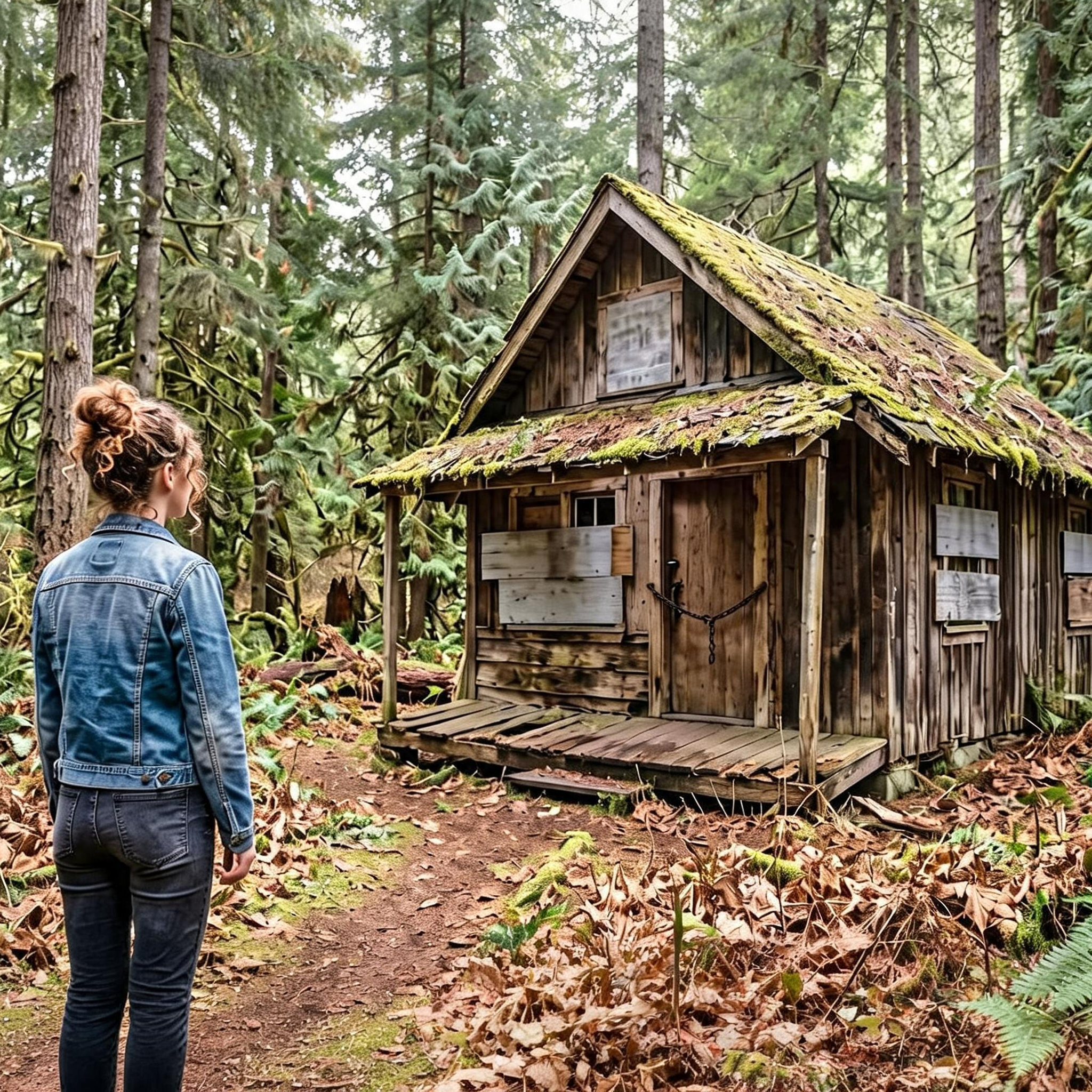
Her Brothers Took the Estate and Threw Her Out—But Grandpa’s Forgotten Cabin Held the One Inheritance They Couldn’t Touch
Three days after our grandfather’s funeral, my brothers handed me a cardboard box, changed the locks on the $4.8 million family property, and told me the will had left me nothing.
They smiled because they had the house, the investment accounts, the timber rights, and every visible acre Grandpa had spent fifty-six years building.
What they did not know was that, before he died, Grandpa had slipped an old brass key into the lining of my winter coat and whispered, “When they think they own everything, go north.”
I didn’t argue when Travis put my suitcase on the front porch.
I didn’t argue when Brent leaned against Grandpa’s carved oak doorway and told me I should be grateful they were giving me until sunset.
I didn’t argue when our aunt Lorraine folded her arms beneath her pearl necklace and said, “Your grandfather finally corrected his biggest mistake.”
I just picked up the cardboard box.
Inside were three sweaters, two pairs of jeans, my nursing shoes, a framed photograph of Grandpa and me beside his old Ford tractor, and a chipped blue coffee mug I had used every morning for twelve years.
The rest of my life remained inside the house.
My mother’s recipe box.
The quilt Grandma made before cancer took her.
The cedar chest Grandpa had promised me when I was fourteen.
Even the antique desk where I had filled out his insurance forms, balanced his medication schedule, and signed home-health receipts while my brothers were living three states away.
Travis watched me glance toward the upstairs windows.
“Don’t make this dramatic, Claire.”
His voice carried that smooth little edge people use when cruelty has already been approved by the family.
He was forty-one, broad-shouldered, tan from a life spent managing other people instead of doing physical work himself. His new black Range Rover sat in Grandpa’s circular driveway like it had already inherited the place too.
Brent stood beside him.
Thirty-eight. Expensive watch. Expensive boots that had never been inside a muddy field. A smile that never quite reached his eyes.
Behind them, Aunt Lorraine and her son Derek watched from the porch.
A family audience.
A family verdict.
A family execution conducted with matching coffee cups.
“I’m not being dramatic,” I said.
Travis laughed once.
“You’re standing there staring at windows.”
“I lived here.”
“You stayed here.”
There was a difference in his mind.
He wanted me to hear it.
I shifted the box against my hip.
For twelve years, I stayed.
For twelve years, I drove Grandpa to cardiology appointments before sunrise.
For twelve years, I changed dressings after his hip surgery, cooked low-sodium dinners, paid property taxes from the account he could no longer navigate, and learned the sound his breathing made on dangerous nights.
For twelve years, I turned down promotions because the nearest hospital offering them was ninety minutes away.
For twelve years, my brothers called on Christmas, mailed birthday cards when their wives reminded them, and spoke about the farm as if it were a future lottery ticket.
Travis looked down at my old nursing clogs.
“You could’ve left whenever you wanted.”
I looked back at him.
“So could Grandpa.”
That erased his smile for half a second.
Grandpa had refused assisted living.
Refused to sell.
Refused to move closer to either grandson.
His home sat outside Alder Creek, West Virginia, where the roads curved through hardwood forest and old mountain farms still wore names carved into stone gates.
The property had been in our family since 1949.
One hundred seventy-eight acres around the main house.
Another two hundred and sixty in managed timber.
A machine barn.
Two rental cottages.
Mineral interests.
A small commercial parcel near the highway.
Everyone in the family knew those assets.
Everyone knew their approximate value.
That was why Travis had flown in from Charlotte the morning Grandpa entered hospice.
That was why Brent arrived from Nashville less than twelve hours later.
That was why Aunt Lorraine suddenly began bringing casseroles after barely visiting her father for six years.
By the final week, the house was full of relatives who hadn’t been around for the difficult part.
They spoke softly in the hallway.
They measured rooms with their eyes.
They whispered about acreage while Grandpa was still alive.
I heard Brent once asking Travis whether the kitchen could be opened into the dining room.
Grandpa was sleeping twenty feet away.
At least, they thought he was.
That night, after everyone had gone to bed, he opened his eyes and looked at me.
“Vultures make a lot of noise when they think the animal is already dead.”
I smiled despite myself.
He squeezed my wrist.
His hand felt like dry paper over bone.
Then he said the strangest thing he had said in months.
“Your blue coat.”
“What about it?”
“Don’t let anybody wash it.”
I assumed his medications were making him confused.
He repeated himself.
“Don’t let anybody wash the blue coat.”
I bent closer.
“All right.”
“And when the house gets loud, you get quiet.”
“Quiet people hear hinges move.”
He closed his eyes.
The next afternoon, he died.
Now, three days after the funeral, I stood on the front steps of the home where I had spent nearly half my adult life, while the people who had arrived at the end informed me I had no legal claim to any of it.
Travis held up a manila envelope.
“Copy of the probate filing.”
“I already saw it.”
“You signed acknowledgment.”
“Then you understand.”
“I understand what was filed.”
He narrowed his eyes.
That was the first moment he looked uncertain.
Only for a second.
Then Lorraine stepped forward.
“Claire, don’t start.”
“I haven’t started anything.”
“You always do this.”
“That quiet little act.”
She hated my silence because silence did not give her anything to push against.
Lorraine had spent most of my childhood turning every family disagreement into a trial where she served as prosecutor, judge, and grieving victim.
She pointed toward my car.
“You received five thousand dollars under the will. That is more than many grandchildren receive.”
Brent smirked.
“Enough for first month’s rent somewhere.”
I looked at him.
He had borrowed $63,000 from Grandpa eight years earlier to start a restaurant concept in Nashville.
The restaurant lasted eleven months.
The debt had never been repaid.
Grandpa never mentioned it in front of him.
I knew because I managed the bookkeeping.
“Maybe,” I said.
Brent’s smile disappeared.
Travis stepped down one stair.
“This isn’t personal.”
There are sentences so dishonest they become insulting before the speaker finishes them.
“Of course not.”
“Grandpa made decisions.”
“And those decisions are final.”
“Some of them.”
Now all four of them looked at me.
The wind moved through the tall sycamore near the driveway.
Dry November leaves scraped across the stone.
Somewhere behind the barn, one of the old metal gates knocked twice against its latch.
Travis lowered the envelope.
“What does that mean?”
I adjusted the cardboard box.
“It means he made a lot of decisions.”
“That sounds like a threat.”
I looked past him at the doorway.
Grandpa had carved a small notch into that doorframe when I was nine because I had insisted I was taller than Brent.
Grandpa cheated the mark upward anyway.
“Threats are usually louder.”
Then I walked to my Subaru.
No one stopped me.
No one apologized.
No one asked where I would sleep.
At thirty-five years old, after twelve years caring for the man whose property they were dividing behind me, I drove away with one cardboard box and $214 in my checking account until payday.
What none of them knew was that the old blue winter coat was folded beneath the spare tire in my trunk.
I had put it there the morning Grandpa died.
Not because I understood his warning.
Because I trusted him.
That night, I stayed at a roadside motel twenty-three miles away.
The room smelled faintly of bleach and cigarette smoke despite the NO SMOKING sign.
A heat unit rattled beneath the window.
I placed the cardboard box on the second bed, locked the chain, drew the curtains, and finally took out the coat.
It was navy wool.
Old enough that the cuffs had gone shiny.
Grandpa bought it for me when I started nursing school.
He said every West Virginia nurse needed one coat that could survive both a snowstorm and a bad breakup.
I ran my fingers along the lining.
Then I remembered his exact words.
Don’t let anybody wash it.
I checked the inside seams.
The left pocket had been hand-stitched shut.
My pulse changed.
There is a difference.
Fear makes the body loud.
Recognition makes it very still.
I went to the bathroom, took a small pair of scissors from my toiletry bag, and cut three black stitches.
Something metallic slid into my palm.
A brass key.
Attached to it was a round aluminum tag stamped with the number 7.
Behind it was a folded strip of paper protected inside waxed cloth.
The handwriting belonged to Grandpa.
NORTH RIDGE ROAD.
OLD FIRE TOWER TURN.
14.6 MILES.
WHEN PAVEMENT ENDS, KEEP GOING.
CABIN IS NOT ON THE COUNTY TAX MAP UNDER MY NAME.
DO NOT CALL TRAVIS.
DO NOT CALL BRENT.
CALL ELLIOT VANCE AFTER YOU FIND THE RED LEDGER.
TRUST PAPER, NOT FAMILY.
I read it three times.
Elliot Vance.
Grandpa’s old attorney.
Retired, according to Travis.
He had not been at the funeral.
That had bothered me.
Elliot had known Grandpa since the 1970s.
He handled Grandma’s estate.
He handled my parents’ wrongful-death settlement after a drunk driver killed them when I was sixteen.
He had also been the first person Grandpa called when Brent defaulted on that business loan.
I looked at the key again.
Then at the motel clock.
Outside, rain ticked against the window.
I could have called Elliot immediately.
Grandpa’s note had an order.
Find the cabin.
Find the ledger.
So the next morning, before sunrise, I bought coffee, filled my tank, stopped at a hardware store for a flashlight, batteries, bottled water, gloves, a small pry bar, and two cans of pepper spray.
At a.m., I turned north.
The first nine miles were familiar.
Then the road narrowed.
Houses disappeared.
Cell service dropped to one bar.
By the time I found the old fire tower turn, the rain had become wet snow.
The pavement ended exactly where Grandpa said it would.
Ahead of me, two muddy tracks disappeared between white pines.
A rusted metal sign hung sideways from a chain.
PRIVATE TIMBER ROAD.
NO TRESPASSING.
No address.
No indication that anything existed beyond it.
I got out and examined the chain.
A small brass lock sat beneath years of oxidation.
The key from my coat opened it.
That was the first moment I understood the scale of Grandpa’s secrecy.
This was not a forgotten hunting shack.
Forgotten things do not have maintained locks.
I drove through and fastened the chain behind me.
The road climbed.
For nearly five miles, I saw nothing except trees, rock, and the occasional yellow blaze painted on a trunk.
Then the forest opened.
The cabin sat on a ridge above a narrow valley.
Calling it a cabin was misleading.
It had once been one.
You could see the original hand-hewn logs at the center.
But additions had been built around it over decades.
Stone foundation.
Metal roof.
Covered porch.
Detached garage.
Solar panels tucked behind the tree line.
A spring-fed pond below.
A second structure farther back that looked like a workshop.
No power lines.
No mailbox.
No neighbors.
Snow had begun collecting on the porch railing.
I parked and listened.
Just wind moving through pine needles.
The brass key opened the front door.
Inside, the air smelled like cedar, dust, and fireplace ash.
I clicked on my flashlight.
The beam crossed a stone hearth.
Leather furniture covered with sheets.
Bookshelves.
A kitchen with cast-iron cookware hanging above an island.
Old framed photographs lined one wall.
Most were of Grandpa.
Standing beside people I did not recognize.
Survey crews.
County officials.
A photograph dated 1978 showed him beside a much younger Elliot Vance.
Another showed Grandpa beside a woman I knew immediately despite never having met her.
My grandmother’s older sister, Ruth.
She had vanished from family conversations before I was born.
Whenever I asked why, Lorraine said, “Ruth made choices.”
That was all.
I moved deeper into the cabin.
On the dining table sat a red leather ledger.
Not hidden.
Not locked.
My hands were cold despite my gloves.
I opened it.
The first page was dated March 3, 1981.
PROPERTY: NORTH RIDGE HOLDINGS.
ACREAGE: 2,412.6.
My eyes stopped.
I read it again.
Two thousand four hundred twelve acres.
I turned the page.
Parcel numbers.
Timber appraisals.
Rights-of-way.
Water rights.
A natural-gas lease that had expired years earlier.
Handwritten notes.
Then a typed legal description.
North Ridge Holdings, LLC.
I flipped faster.
The ownership pages were near the middle.
Grandpa’s name was not listed.
Neither was mine.
RIDGEWAY CONSERVATION TRUST — 51%
EVELYN MARSHALL FAMILY FOUNDATION — 24%
NORTH RIDGE HOLDINGS EMPLOYEE BENEFIT TRUST — 25%
I stared at the names.
Evelyn Marshall was my grandmother.
She had died when I was twelve.
The Employee Benefit Trust made no sense at all.
Grandpa had not employed anyone at the main property for years except seasonal crews.
Then I found an envelope.
CLAIRE — OPEN BEFORE CALLING ELLIOT.
Inside were six pages.
The first began:
If you are reading this, your brothers did what I believed they would do.
The room became very quiet.
I kept reading.
Grandpa wrote that the estate everyone knew—the house, the 438 total acres surrounding it, the bank investments, rental property, and liquid assets—was deliberately separated from North Ridge decades ago.
The public estate was valuable.
But North Ridge was the real legacy.
The conservation land, timber contracts, private water system, mineral leases, and several businesses tied to it had been accumulated through entities whose names never appeared in casual family records.
Grandpa had not hidden wealth from tax authorities.
Everything was properly filed.
He had hidden it from us.
From Lorraine.
From my brothers.
From people he believed valued him according to what they expected to receive.
The letter continued.
I made one mistake with my children. I thought providing for them would teach them security. Instead, Lorraine learned entitlement, your father learned avoidance, and the whole family learned to count my acres while I was still standing on them.
Your father changed before he died. He understood this. Lorraine did not.
I turned the page.
My breath caught.
Before my parents died, my father had apparently been named successor trustee.
After his death, Grandpa changed the documents.
The successor was not Travis.
Not Lorraine.
But not automatically.
There were conditions.
The trust required independent confirmation that I had not participated in coercing, manipulating, concealing, or altering Grandpa’s final public estate plan.
It also required that I reach the cabin, locate the ledger, and contact Elliot Vance using instructions stored there.
Grandpa had built a test into an inheritance.
Not a test.
I reached the final page.
One paragraph was underlined twice.
DO NOT ASSUME YOUR BROTHERS’ VICTORY IS ACCIDENTAL.
I LET THEM HAVE THE PUBLIC WILL.
I LET THEM BELIEVE THEY HAD WON.
IF THEY HAD TREATED YOU DECENTLY AFTER MY DEATH, ELLIOT HAD INSTRUCTIONS TO OFFER THEM PARTICIPATION IN NORTH RIDGE.
IF THEY REMOVED YOU FROM THE HOUSE WITHIN THIRTY DAYS, THEIR RIGHTS UNDER THE PRIVATE FAMILY PARTICIPATION AGREEMENT TERMINATED.
I sat back slowly.
Grandpa had known.
Not exactly what they would say.
Not exactly when.
But he knew who they had become.
My brothers had not merely thrown me out.
They had disqualified themselves from something they did not know existed.
I read the next sentence.
That does not mean you own North Ridge.
Call Elliot.
I found a satellite phone in the desk drawer.
Of course Grandpa had left a satellite phone.
I powered it on.
One number was taped beside it.
It rang twice.
A man answered.
“This is Claire Marshall.”
Then a slow exhale.
“Where are you?”
“North Ridge.”
Another silence.
“Did you find the red ledger?”
“Did anyone follow you?”
“I don’t think so.”
“Don’t assume.”
I looked toward the windows.
“Why weren’t you at the funeral?”
“Because your grandfather told me not to be.”
“He believed your aunt would recognize my presence as evidence there was unfinished legal work.”
I stood and walked to the front window.
The road remained empty.
“What exactly is North Ridge?”
Elliot’s answer came carefully.
“Your grandfather’s life.”
“That isn’t a legal description.”
“No. It’s the accurate one.”
He continued.
“Your grandmother Evelyn inherited approximately six hundred acres from her father. Your grandfather acquired adjoining parcels during bankruptcies, timber reorganizations, and tax sales over forty years. Some land was placed into conservation easements. Some holds commercial timber. Some has water rights. There are three active leaseholds, two renewable-energy access agreements, and ownership interests in a regional hardwood mill and a private water utility.”
“How much?”
“Land alone?”
“Everything.”
“I haven’t seen this quarter’s valuations.”
He was quiet.
“Conservatively, seventy-eight million dollars.”
I didn’t move.
Outside, a crow lifted from a branch.
“Say that again.”
“Your grandfather’s controlled interests associated with North Ridge were valued at approximately seventy-eight million last year.”
I sat down.
Not because I was weak.
Because numbers that large deserve furniture.
“And Travis and Brent know nothing?”
“They know your grandfather had business interests. They do not know the structure.”
“Lorraine?”
“She has suspected for years.”
That mattered.
“How much does she know?”
“Enough to be dangerous. Not enough to be correct.”
I opened the ledger again.
“Grandpa said I’m successor trustee.”
“You are the nominated successor trustee.”
“What’s the difference?”
“You don’t control anything until we complete certification.”
“What certification?”
“Your grandfather anticipated a challenge. There are documents you need to review, signatures from independent fiduciaries, and a hearing scheduled under seal.”
“A hearing?”
“Tomorrow.”
I looked around the cabin.
“Tomorrow?”
“Your grandfather disliked wasted time.”
Despite everything, I almost smiled.
“What do I need to do?”
“First, photograph every page of that ledger.”
“I can scan it.”
His voice sharpened.
“Photograph it. Then put the original into the fire safe beneath the workshop floor.”
I looked through the back window toward the second building.
“How do you know it’s still there?”
That erased the smile.
“What aren’t you telling me?”
“A great deal.”
“Because your grandfather ordered information released in stages.”
“That sounds ridiculous.”
“It irritated me too.”
I heard papers moving on Elliot’s end.
“Claire, listen carefully. Do not return to the main house. Do not tell your brothers where you are. Do not contact your aunt. Do not sign anything delivered by a courier, sheriff’s deputy, family attorney, bank representative, or title agent until I have reviewed it.”
“Why would I sign anything?”
“Because by this afternoon, they may discover something is wrong.”
“With the public estate?”
“Your grandfather placed a restriction on the main property.”
I remembered Travis’s confidence.
The Range Rover in the driveway.
Brent talking about renovations.
“What restriction?”
“The house cannot be sold for twelve months after his death without unanimous consent from all named beneficiaries.”
“I got five thousand dollars. That makes me a beneficiary.”
I looked at the snow outside.
“So they can’t sell the house without me.”
“But they can live there?”
“Take possession?”
“Remove my belongings?”
“Possibly. That depends on occupancy rights and personal-property designations.”
“Why would Grandpa let them throw me out?”
Elliot did not answer immediately.
When he did, his voice had changed.
“Because he wanted them to choose.”
That landed harder than the seventy-eight million.
Grandpa could have protected me completely.
He could have written the public will differently.
He could have humiliated them from the grave.
Instead, he gave them room.
Room to behave decently.
Room to let me stay.
Room to recognize what I had done.
Room to act like brothers.
And they used that room to put my clothes in a box.
I closed my eyes for three seconds.
Then opened them.
“What happens now?”
“Now we document everything.”
That I understood.
Evidence was cleaner than anger.
By noon, I had photographed the ledger.
The workshop contained an old wood planer, tools, stacked oak, file cabinets, and a steel plate beneath a movable workbench.
Under it was a fire safe.
Inside were deeds, trust documents, photographs, three external hard drives, and a sealed metal case marked:
E.M. FAMILY ARCHIVE.
I didn’t open it.
Grandpa’s instructions were precise.
I followed them.
At p.m., my phone regained a weak cellular signal near the ridge.
Thirty-seven missed calls.
Most from Travis.
Nine from Brent.
Four from Lorraine.
Two from Derek.
One voicemail from an unknown number.
I listened to Travis first.
“Claire, call me. There’s paperwork regarding the house that you apparently need to sign. This is routine.”
The second:
“Claire, I don’t appreciate you ignoring me. The attorney says your beneficiary status technically requires consent for a refinancing package. Nobody is taking anything from you.”
Refinancing.
The third came forty minutes later.
“Where are you?”
The fourth:
“Did Grandpa give you anything before he died?”
There it was.
I saved all four.
Brent’s message was less controlled.
“If you’re trying to leverage this stupid consent clause for money, don’t. We’re not paying you off. Five grand was your inheritance. Accept it.”
Lorraine’s was almost sweet.
“Claire, honey, everyone is emotional. Come home and we’ll sit down.”
Twenty-four hours after they threw me out.
I forwarded every voicemail to Elliot.
He replied with one sentence.
Do not respond.
So I didn’t.
At p.m., I found the first camera.
It was mounted high inside the workshop, aimed at the door.
A small green light blinked beneath the housing.
I called Elliot.
“There are cameras.”
“Your grandfather installed them.”
“Who has access?”
“He’s dead.”
“So who has access now?”
Another pause.
“That is an excellent question.”
I turned slowly.
There were at least four cameras.
Cabin entrance.
Grandpa had been documenting something.
Or someone.
That night, I slept in the cabin with a chair beneath the bedroom doorknob and the satellite phone beside me.
At a.m., headlights moved through the trees.
I was awake before the engine stopped.
Two vehicles.
I stayed away from the windows.
The first car door shut.
Then another.
I slipped on my boots, took the metal case from the fire safe, and carried it through the rear mudroom.
Grandpa had marked a narrow trail behind the workshop with small reflective nails.
I followed them through the dark until I reached an elevated deer blind overlooking the clearing.
From there, I could see the cabin.
Three men stepped into view.
One was Derek.
Aunt Lorraine’s son.
He walked directly to the front door.
Not searching.
Not confused.
He knew the cabin existed.
The other two men wore dark jackets.
One carried bolt cutters.
The second carried a pry bar.
Derek tried the front door.
He walked toward the workshop.
I raised my phone and recorded.
One of the men said, “You told us nobody would be here.”
Derek answered, “She shouldn’t be.”
“Her car’s right there.”
“She doesn’t know what this place is.”
The second man laughed.
“She found it.”
Derek cursed.
Then he said something that turned the cold air inside my lungs to ice.
“Get the red book before she talks to Vance.”
He knew about the ledger.
I kept recording.
They entered the workshop after breaking a side latch.
Three minutes later, Derek came back out.
“What about the safe?”
It wasn’t empty.
I had replaced the documents after photographing them.
But the ledger was inside the cabin’s hidden hearth compartment, exactly where Elliot told me to move it.
The men searched for eleven minutes.
Then one vehicle left.
Derek remained.
He walked around the cabin once.
Then he looked directly toward the trees.
I stopped breathing.
He stood there for ten seconds.
Then smiled.
Not because he saw me.
Because he wanted whoever was watching to think he had.
He raised his phone.
His voice carried across the snow.
“I know you’re close.”
He walked toward my car.
“You don’t understand what Grandpa was doing.”
I recorded.
“He wasn’t protecting you.”
Another step.
“He was using you.”
“Call me before Vance gets you into something you can’t get out of.”
He returned to his vehicle.
The headlights vanished at .
At , I called the sheriff.
Not my brothers.
Not Lorraine.
Not Elliot first.
The sheriff.
Deputies arrived at .
I gave them the video.
Showed them the broken latch.
Provided Derek’s full name.
Then I called Elliot.
He listened.
When I finished, he said, “The hearing just became much more interesting.”
It was held at eleven that morning in a small private conference room at the county courthouse.
No dramatic courtroom gallery.
Just a judge, two trust attorneys, Elliot, a bank fiduciary, an accountant, and me.
The judge was Margaret Hale.
Sixty-something.
Silver hair.
Wire-rimmed glasses.
A voice that sounded unimpressed by human beings generally.
She reviewed Grandpa’s documents for forty minutes.
Asked me questions about my role in his care.
Asked whether I knew about North Ridge before his death.
Asked whether I had pressured him regarding inheritance.
Asked whether I understood the fiduciary obligations of serving as trustee.
“I understand enough to know I need professionals.”
That earned the first expression on her face that might have been approval.
The accountant presented financial records.
The bank confirmed asset structures.
Then Elliot handed over the footage from the cabin.
Judge Hale watched Derek enter the workshop.
Her mouth tightened.
“Mr. Vance, was this property disclosed to the Marshall heirs?”
“No, Your Honor.”
“Did Mr. Derek Marshall have authorized access?”
“Did he know about the red ledger?”
“That appears to be the question.”
She looked at me.
“Ms. Marshall, do you feel threatened?”
That surprised everyone except Elliot.
Judge Hale tilted her head.
“I feel informed.”
Her eyes stayed on mine for a moment.
Then she nodded.
By 12:26 p.m., I was formally certified as successor trustee of North Ridge.
That distinction mattered.
The money did not become mine to spend.
The land did not become mine to sell.
Grandpa had built something more complicated than wealth.
The trust was required to preserve forest acreage, maintain watershed access, fund scholarships for local trade students, provide pensions to retired mill employees, and keep at least sixty percent of timber operations under sustainable-harvest restrictions.
There was also one unusual clause.
A family participation provision.
Any qualifying descendant could receive annual distributions for education, healthcare, or business development—but only if that descendant signed an ethics agreement and had not committed fraud, theft, coercion, or intentional interference with trust administration.
Travis and Brent had lost provisional rights the moment they evicted me within thirty days.
Derek had just created a much larger problem for himself.
And Lorraine?
Her name did not appear anywhere.
At p.m., my brothers finally learned.
I knew because Travis called seventeen times in nine minutes.
Then Brent.
Then Lorraine.
Then a family attorney named Russell Dane.
I answered Russell.
“Ms. Marshall, I represent Travis Marshall and Brent Marshall concerning matters involving the estate of George Marshall.”
“You represent them concerning the public estate.”
“I understand there may be additional entities.”
“You understand correctly.”
“My clients believe there has been a misunderstanding.”
“They were unaware of the trust.”
“That is not a misunderstanding.”
“They are concerned Mr. Marshall may have lacked capacity.”
There it was.
The first attack.
On Grandpa.
A dead man they had praised at his funeral as wise, strong, brilliant, and independent.
Twenty-four hours after learning they had not received his largest assets, they wanted him declared incompetent.
I looked across Elliot’s office.
He heard Russell through the speakerphone.
His expression did not change.
I said, “Grandpa lacked capacity?”
“My clients have questions.”
“They accepted the will that gave them millions.”
“That is separate.”
“Was he competent when he gave them the house?”
Russell paused.
“These matters are nuanced.”
“Was he competent when he gave them the investment accounts?”
“Ms. Marshall—”
“But incompetent when he protected the seventy-eight million they didn’t know about?”
Long silence.
Elliot looked down so Russell would not hear him laugh.
I continued.
“If your clients intend to challenge capacity, please file it.”
“That is not necessarily our position.”
For the next two days, the family system activated.
Cousins who had ignored me for years suddenly texted.
Aunt Lorraine’s friends messaged me on Facebook.
One said family assets should remain “shared.”
Another said Grandpa’s grief after Grandma died had made him “vulnerable.”
Brent’s wife sent a paragraph about their children’s future.
Travis’s wife sent nothing.
She was smarter.
Then the story changed.
Now, according to the family, I had isolated Grandpa.
I had controlled his appointments.
I had access to his medications.
I had handled his mail.
All suddenly sinister.
They left out why.
Because nobody else volunteered.
The accusations spread quietly at first.
Then publicly.
Lorraine told a local acquaintance that I had “managed Grandpa’s medications right up until the end.”
That sentence reached one of my coworkers.
Then my nursing supervisor.
Then the hospital compliance office.
By Friday, I was asked to attend a meeting.
I walked in with records.
Medication logs.
Hospice documentation.
Pharmacy reconciliations.
Physician orders.
Electronic chart access reports.
I had kept everything because nursing teaches you one sacred rule:
If it isn’t documented, someone eventually gets to invent what happened.
The compliance officer reviewed the file.
Then looked up.
“This appears complete.”
“Did your family know you kept these?”
She closed the folder.
“They do now.”
The complaint died that afternoon.
But Lorraine had made a strategic mistake.
By alleging medical manipulation, she gave Elliot a reason to request Grandpa’s capacity records.
Those records included video.
Lots of video.
Grandpa had been evaluated by two neurologists and an independent geriatric psychiatrist during the eighteen months before his death.
Not because anyone thought he lacked capacity.
Because he expected his family to claim it later.
In one recording, taken eight months before he died, the psychiatrist asked:
“Mr. Marshall, why are you creating such a complex structure?”
Grandpa sat in his library wearing a green flannel shirt.
His voice was thinner than I remembered.
“Because money makes stupid people confident.”
The psychiatrist smiled.
Grandpa didn’t.
He continued.
“My granddaughter Claire gave me twelve years nobody can give back to her. I offered her money twice. She refused twice. My grandsons borrowed money and forgot repayment schedules. My daughter Lorraine mistakes inheritance for wages she earned by being born.”
The psychiatrist asked whether he was angry.
Grandpa looked toward the camera.
“Then what are you?”
“Accurate.”
I watched that clip twice.
Not because I needed validation.
Because I missed his voice.
A week later, Travis and Brent came to Elliot’s office.
They brought Russell Dane.
Lorraine came too.
She was not invited.
She entered anyway.
I sat at the far end of the conference table.
Elliot beside me.
Two trust lawyers across from us.
The brothers looked exhausted.
Not defeated.
Just deprived of certainty.
Travis spoke first.
“We need to resolve this.”
Russell slid a proposal across the table.
It was generous in the way demands sometimes dress themselves.
They wanted me to voluntarily restore family participation rights.
In exchange, they would release all claims against the trust and stop challenging Grandpa’s capacity.
Brent leaned forward.
“We’re not asking for control.”
“How much?”
His jaw moved.
“Twenty-five percent family distribution rights.”
“Combined.”
I looked at Travis.
“You threw me out of the house for five thousand dollars.”
He rubbed his forehead.
“That was a mistake.”
“Which part?”
“The cardboard box?”
He looked away.
“The locks?”
“Giving my mother’s recipe box to Lorraine?”
Lorraine snapped, “That belonged to my mother.”
“It belonged to mine.”
“She was my sister.”
“And she gave it to me.”
Lorraine leaned across the table.
“You always thought taking care of Dad made you special.”
I held her gaze.
“It made me tired.”
That quieted the room.
I continued.
“It made me miss birthdays. It made me work night shifts so I could take him to appointments during the day. It made me learn insurance codes I never wanted to learn. It made me sleep with my phone under my pillow because he fell twice in one year.”
Travis looked down.
“I never asked to be special.”
I tapped the proposal.
“And I’m not giving you twenty-five percent because you finally discovered arithmetic.”
Brent shoved his chair back.
“This is insane.”
“No. This is paperwork.”
“You think you earned seventy-eight million because you changed some bandages?”
Elliot shifted.
I touched his sleeve.
I looked at Brent.
“You want to know what I earned?”
He blinked.
“The trust doesn’t belong to me.”
I turned the document toward him.
“That’s the part all of you still don’t understand.”
I explained the conservation obligations.
The employee pensions.
The education fund.
The watershed restrictions.
The distribution limits.
The fiduciary duties.
Every sentence made Brent more frustrated.
Finally he said, “Then what’s the point?”
There it was.
The question Grandpa had predicted.
If the money could not simply become Brent’s money, what was the point?
I looked at him.
“The point is that Grandpa built something that survives us.”
Lorraine laughed bitterly.
“Oh, please.”
I turned toward her.
“You know about the cabin.”
She stopped.
That was the first crack.
Not Travis.
Her fingers tightened around her handbag.
I continued.
“Derek knew where it was.”
“He knew about the red ledger.”
Travis turned toward her.
Lorraine stared at me.
“Derek knows lots of things.”
Travis’s voice sharpened.
“What does she mean?”
Lorraine looked at her son’s empty chair as if wishing he had been foolish enough to attend.
I placed three still images from the security video on the table.
Derek entering the workshop.
Derek beside the broken latch.
Derek speaking to the two unidentified men.
Brent picked one up.
“When was this?”
“Two nights after you evicted me.”
Travis’s face changed.
He looked at Lorraine.
“You knew?”
“Knew what?”
“About North Ridge.”
“I knew your grandfather owned property.”
“So did everyone.”
“Not that property.”
Travis stood.
“Did you know?”
Lorraine’s face hardened.
“I suspected.”
She didn’t answer.
Elliot did.
“Because Mrs. Kessler attempted to access North Ridge corporate filings seven times over the past four years.”
Lorraine went white.
Her married name was Kessler.
Travis stared.
Elliot opened a folder.
“Two title-company inquiries. Three records requests. One inquiry through an attorney in Charleston. One through a private investigator.”
Lorraine’s voice dropped.
“You tracked me?”
“George tracked you.”
That sentence hit the table like a hammer.
She looked at Elliot.
“What else did he track?”
Elliot folded his hands.
The meeting ended twelve minutes later.
Not with reconciliation.
With fractures.
Travis left without Lorraine.
Brent left with him.
Russell left alone.
Lorraine stayed in her chair for almost a minute after everyone else moved toward the door.
She looked at me.
“You think this is justice?”
“What do you think it is?”
I considered that.
“A boundary.”
Her eyes filled with something that was not grief.
Inherited rage.
“You have no idea what your grandfather did to this family.”
“Then tell me.”
“That man ruined my mother.”
“My grandmother?”
“You think she died loving him?”
I said nothing.
Lorraine laughed softly.
“Of course you do.”
She picked up her bag.
“Ask Elliot why Evelyn created the foundation.”
Then she walked out.
I waited until the door closed.
I turned toward Elliot.
He was already looking at me.
“What did she mean?”
He took off his glasses.
“Your grandfather told me you might eventually ask.”
“That is not an answer.”
“What happened to Grandma?”
“Not what Lorraine thinks.”
“That also isn’t an answer.”
He stood and walked to the window.
For the first time since this began, Elliot Vance looked old.
“Remember the metal case in the cabin?”
The E.M. Family Archive.
That evening, I drove back to North Ridge.
Sheriff patrols had increased near the access road after Derek’s break-in.
Derek himself had not been arrested yet.
His attorney claimed he believed he had family authorization to enter the property.
The investigation remained open.
The cabin felt different now.
Less mysterious.
More watchful.
I lit a fire.
Placed the metal case on the dining table.
And opened it.
Inside were letters.
Some tied with ribbon.
Some sealed.
Some copied.
A photograph of Grandma Evelyn standing beside the cabin in 1987.
A cassette tape.
Three legal folders.
And a newspaper clipping from 1991.
LOCAL MILL WORKERS SAVED BY EMPLOYEE BUYOUT.
The article featured Grandpa.
But Grandma stood beside him.
The caption identified her as Evelyn Marshall, financial organizer of the employee trust.
I read it twice.
Grandpa had always been credited with saving the mill.
Every story in our family made him the hero.
But the trust that saved it had been Grandma’s design.
The Employee Benefit Trust controlling twenty-five percent of North Ridge had been hers.
I opened the first folder.
FOUNDING AGREEMENT — EVELYN MARSHALL.
The truth unfolded slowly.
Grandma had inherited the original mountain acreage.
Grandpa expanded it.
But Grandma structured the first conservation trust.
Grandma organized mill employees.
Grandma created the foundation.
Grandpa built wealth around her legal architecture.
And after she died, the family story simplified.
George built everything.
Evelyn supported him.
That version was wrong.
Not maliciously wrong at first.
Just conveniently incomplete.
The second folder contained letters between Grandma and Lorraine.
Lorraine had been in her twenties.
She believed Grandma was locking family wealth away in charitable structures that would prevent her children from inheriting freely.
In one letter, Lorraine wrote:
You care more about employees and trees than your own family.
Grandma replied:
If your definition of love requires me to destroy what feeds other families, then you have confused love with ownership.
I read that sentence again.
It sounded like Grandpa.
Or maybe Grandpa had spent forty years sounding like her.
The third folder was sealed.
On the front, Grandpa had written:
CLAIRE — AFTER CERTIFICATION ONLY.
I opened it.
Inside was a signed affidavit.
Dated six months earlier.
He admitted something I had never expected.
After Grandma’s death, Lorraine challenged the foundation privately.
She threatened litigation.
She alleged undue influence by mill employees.
She demanded liquidation.
Grandpa settled.
Not with trust assets.
With his own personal property.
He gave Lorraine nearly $3.2 million over fifteen years.
Debt payments.
Business rescue money.
All quietly.
In exchange, she repeatedly signed releases waiving claims.
Then she kept coming back.
Every few years.
Another crisis.
Another loan.
Another threat.
Grandpa paid because he believed family peace was worth the money.
Until it wasn’t.
The final paragraph said:
My greatest failure was not giving Lorraine too little. It was giving her money every time she mistook pressure for power. I taught her that threats worked. Evelyn warned me not to. She was right.
I leaned back.
That was the second twist.
North Ridge was not simply Grandpa’s secret inheritance.
It was Grandma’s unfinished argument with the family.
It was proof that the wealth everyone wanted had been designed from the beginning to serve people beyond our bloodline.
And I was not being rewarded for sacrifice.
I was being trusted to preserve someone else’s.
That changed everything.
Over the next month, I moved into a small rental near Alder Creek.
I did not move back to the main house.
Even when Travis offered.
Especially when Travis offered.
He and Brent began fighting over the public estate almost immediately.
Brent wanted to sell timber aggressively.
Travis wanted to refinance the house and buy out Brent’s share.
The consent restriction blocked both.
I refused to sign.
Not as revenge.
Because the public property held another unresolved issue.
Grandpa’s personal-property inventory showed items missing.
Farm equipment.
Three antique rifles.
Grandma’s jewelry.
And a 1968 Shelby GT500 that Grandpa had stored in a climate-controlled garage twenty miles away.
The car vanished four days after his death.
Brent claimed Grandpa gifted it to him verbally.
There was no documentation.
The executor froze distributions pending investigation.
Suddenly the brothers who had “won everything” could not freely touch half of it.
I returned to work.
Night shifts.
Medication rounds.
Trauma admissions.
Ordinary life has a strange way of continuing beside extraordinary conflict.
At 3 a.m., nobody in the ER cared that I controlled a trust worth tens of millions.
A man with a chainsaw injury needed stitches.
A teenager needed Narcan.
An elderly woman needed someone to sit beside her because her daughter lived in Arizona.
That grounded me.
Money becomes abstract quickly.
People do not.
North Ridge became work.
Meetings with foresters.
Pension audits.
Water-system inspections.
Legal reviews.
I learned the employees’ names.
Met retired mill workers whose healthcare supplements came from trust income.
Visited a technical college where Evelyn Marshall scholarships had funded welders, electricians, and diesel mechanics for thirty-one years.
Nobody there knew who I was.
One instructor pointed toward a plaque with Grandma’s name.
“Whoever she was, she changed a lot of lives.”
I stood there longer than I intended.
“Yeah,” I said quietly.
Travis changed first.
Not completely.
People rarely transform cleanly.
But he began asking questions instead of making demands.
One afternoon he came to my rental alone.
No Lorraine.
I let him stand on the porch for thirty seconds before opening the door.
He held a cardboard box.
The same one.
Except now it contained my mother’s recipe cards, Grandma’s quilt, my books, and the cedar chest key.
“I found these in Lorraine’s room.”
“Her room?”
“She moved into the house.”
“Of course she did.”
He looked tired.
“I told her to leave.”
“Then you didn’t tell her very convincingly.”
A flicker of his old irritation appeared.
Then disappeared.
He handed me the box.
“I was wrong.”
“About which part?”
He almost smiled.
“I probably deserve that.”
He looked past me into the small rental.
“You could live at North Ridge.”
“Why don’t you?”
“Because I don’t need another family property deciding who I am.”
He nodded slowly.
Then said, “Brent thinks you’re trying to destroy us.”
That surprised me more than an apology.
He rubbed his hands together against the cold.
“Lorraine’s been talking to someone.”
“I don’t know.”
“About what?”
“The trust.”
My attention sharpened.
“What did you hear?”
“She said, ‘If Claire finds the original deed, we’re finished.’”
The world became very still.
“What original deed?”
“I don’t know.”
“Last night.”
“Who was she talking to?”
“I only heard her side.”
“What else?”
“She said something about Ruth.”
Grandma’s sister.
The woman in the old cabin photograph.
“Ruth is dead.”
“I thought so too.”
“What exactly did Lorraine say?”
Travis looked at me.
“She said, ‘Ruth should have stayed dead.’”
Elliot arrived at North Ridge forty minutes later.
I showed him the photograph from 1978.
He sat at the dining table and stared at it.
“You knew her.”
“Is she dead?”
He looked at me.
“I don’t know.”
“That’s not a normal answer.”
“What happened?”
He leaned back.
“Ruth Evelyn Carter was your grandmother’s older sister. She inherited part of the original mountain tract.”
“How much?”
My stomach tightened.
“Then why does Grandma appear as sole inheritor in the trust history?”
“Because Ruth conveyed her interest.”
“Where is it?”
“It should be in the original title archive.”
Elliot’s jaw tightened.
“The archive burned in 1996.”
I looked toward the fire.
“And the county copy?”
“Microfilm damage.”
“That’s convenient.”
“Who witnessed the deed?”
I stared at him.
“You witnessed Ruth giving Grandma half of this land?”
“Because Ruth was leaving.”
“For where?”
“Canada, originally.”
He looked toward the window.
“Because she was afraid.”
“Of Grandpa?”
“Lorraine?”
Elliot said nothing.
That was answer enough.
“Lorraine was barely twenty.”
“Twenty-two.”
“What could Ruth have been afraid of?”
“She discovered financial documents involving Lorraine and a man she planned to marry.”
“Uncle Peter?”
“No. Before Peter.”
I had never heard about anyone before Peter.
“What documents?”
“I never saw them.”
“But Grandpa did?”
“And Grandma?”
“What happened?”
“Ruth disappeared.”
“You said she left.”
“I said she intended to.”
“We received postcards.”
“From her?”
“Signed by her.”
“That’s not what I asked.”
Elliot removed his glasses.
“No. I never personally confirmed she crossed the border.”
A chill moved through me.
“Did Grandpa?”
“He claimed he did.”
“Claire, this was forty-five years ago.”
“And now Lorraine is saying Ruth should have stayed dead.”
Elliot looked at the red ledger.
Then at the metal archive case.
“Your grandfather left more than we found.”
We searched until midnight.
Every drawer.
Every cabinet.
Under floorboards.
Behind framed photographs.
At 12:17 a.m., I sat in Grandpa’s chair and stared at the stone hearth.
The place where we had hidden the ledger.
Quiet people hear hinges move.
His old phrase returned.
I looked at the fireplace.
Not the stones.
The iron crane inside the hearth where cooking pots once hung.
It pivoted.
Pulled it outward.
Then I noticed scratches near the mounting plate.
Four screws.
Newer than the iron.
Elliot brought a screwdriver.
Behind the plate was a narrow cavity.
Inside sat a waterproof document tube.
I laughed once.
Not because it was funny.
Because Grandpa could still make me work for everything.
The tube contained an original deed.
Dated September 14, 1981.
Signed by Ruth Evelyn Carter.
Not transferring her half to Grandma.
Transferring it to a trust.
A separate trust.
THE RUTH CARTER PROTECTIVE LAND TRUST.
Beneficiary:
Ruth Carter during her lifetime.
Then, upon her death, Evelyn Marshall.
Then Evelyn’s descendants.
Except the deed included a reversion clause.
If Ruth’s transfer had been obtained through fraud, threat, coercion, or concealment of material facts, title could revert to Ruth or her lawful heirs.
Elliot read it twice.
“This isn’t the deed I witnessed.”
I looked at him.
“The one I witnessed transferred directly to Evelyn.”
“So this came earlier.”
“Two weeks earlier.”
“Did Grandpa know?”
“I don’t know.”
A note was folded behind the deed.
Different handwriting.
If George finds this, tell Evelyn I was right about Lorraine.
There is a second set of books.
Peter did not start it.
Do not trust the lake account.
Elliot’s face drained of color.
“What lake account?”
“I was going to ask you.”
He sat down hard.
The next morning, the trust accountant searched forty years of archived records.
At p.m., he found it.
An account created under a shell entity named Lake Morrow Services.
Closed in 1994.
But during its existence, nearly $1.9 million had moved through it.
In 1980s dollars.
Some came from timber contracts.
Some from equipment sales.
Some from land options.
And some appeared to have been diverted before reaching the employee trust.
The authorized signatories included Grandpa.
And, for an eighteen-month period, Lorraine.
At age twenty-two.
I felt no triumph.
This was older than my fight.
Older than Travis and Brent.
Older than the cardboard box.
Grandpa had not merely been protecting North Ridge from greedy descendants.
He had been protecting it from an unresolved wound he never fully explained.
We notified the trust’s outside counsel.
Forensic accountants were hired.
The court was informed.
Nobody accused anyone publicly.
Then Derek disappeared.
He missed an interview with investigators.
His truck was found at an airport parking lot.
No flight under his name appeared in domestic records.
Lorraine stopped answering calls.
Two days later, she left the main house before dawn.
Travis found her room empty.
Most clothes gone.
Documents burned in the fireplace.
He called me at a.m.
For the first time in my life, my older brother sounded afraid.
“She knew.”
“Knew what?”
“I don’t know.”
“What did she burn?”
“Don’t touch them.”
“I already called the sheriff.”
“There’s something on Grandpa’s desk.”
“A photograph.”
I drove there.
The house looked smaller than it had the day they threw me out.
Maybe betrayal enlarges buildings.
Maybe truth shrinks them back.
Travis stood inside the library.
Brent was there too.
Neither spoke when I entered.
On Grandpa’s desk sat a photograph.
Black and white.
Standing beside a lake.
On the back, in fresh blue ink, someone had written:
SHE NEVER WENT TO CANADA.
Underneath:
ASK CLAIRE WHO GRANDPA BURIED AT NORTH RIDGE.
Brent read it over my shoulder.
“What the hell does that mean?”
“I don’t know.”
He looked at me.
“You own the land.”
“I administer it.”
“Same difference.”
Travis pointed toward the note.
“Do you know about a grave?”
I thought of the cabin.
The workshop.
The thousands of acres I had barely begun to understand.
Brent’s expression twisted.
“Convenient.”
I turned toward him.
“If I knew, do you think I’d be standing here?”
The sheriff arrived with deputies.
They collected the photograph.
Documented the burned papers.
Interviewed us separately.
By afternoon, a search team was at North Ridge.
I gave them unrestricted access.
At p.m., a cadaver dog alerted near an abandoned stone foundation half a mile beyond the old workshop.
By sunset, investigators had exposed the edge of a rusted metal box.
Not remains.
Inside were more records.
Bank statements.
Photographs.
A passport.
Ruth Carter’s passport.
No Canadian entry stamp after 1981.
And a cassette tape labeled:
FOR EVELYN — IF I DON’T COME BACK.
We played it in the presence of investigators.
Ruth’s voice crackled through forty-five years of tape hiss.
She sounded young.
“Evelyn, if you’re hearing this, I either left without telling you or someone made sure I couldn’t.”
Nobody moved.
Ruth continued.
“Lorraine found the lake account. She didn’t create the scheme, but she learned how to use it. She thinks money moved off-book belongs to whoever is smart enough to hide it.”
“George knows something is wrong, but he doesn’t know she signed my name.”
Elliot closed his eyes.
The tape continued.
“If she tells you I sold my land, don’t believe her. If she shows you a deed, check the signature. I made another one with separate counsel.”
The recording ended three minutes later.
No murder confession.
No proof of violence.
But enough evidence of forgery and financial diversion to reopen events nearly half a century old.
Enough to explain why Grandpa had built layers of documentation.
Enough to explain why Lorraine feared the original deed.
Enough to transform a family inheritance dispute into a fraud investigation.
Still, one question remained.
Where was Ruth?
For the next six weeks, records moved faster than rumors.
Investigators traced Ruth’s Social Security number.
No death certificate.
No marriage record.
No tax filing after 1982.
But one medical record appeared in Michigan in 1997 under a matching birth date and maiden name.
Then nothing.
The case went interstate.
Lorraine was located in Ohio staying with an old friend.
She returned voluntarily with counsel.
Derek resurfaced in Florida.
The men who entered the workshop with him were identified as private security contractors he had paid in cash.
He claimed Lorraine told him documents at the cabin belonged to the public estate.
The prosecutor did not seem impressed.
Travis formally withdrew his challenge to Grandpa’s capacity.
Brent waited two more weeks.
Then he did too.
One February morning, they asked to meet me at North Ridge.
We sat in the cabin.
No attorneys.
Snow covered the valley.
Brent stared into his coffee.
“You hate us?”
He looked up.
“That’s worse.”
“Probably.”
Travis asked, “Will we ever be part of this?”
He meant the trust.
I looked at both of them.
“The participation clause allows reinstatement after five years if the independent board approves it.”
Brent blinked.
“You could’ve told us.”
“You could’ve read the documents.”
“What do we have to do?”
“Nothing dramatic.”
“What does that mean?”
“Live like North Ridge doesn’t owe you anything.”
He gave a bitter laugh.
“That sounds dramatic.”
“It shouldn’t.”
Travis looked toward Grandpa’s photograph on the wall.
“I really thought he loved you more.”
I followed his gaze.
“He trusted you more.”
I thought about the last twelve years.
The medications.
The missed promotions.
The nights listening to Grandpa breathe.
The blue coat.
The brass key.
The cardboard box.
Then I shook my head.
“That’s the wrong question.”
“What’s the right one?”
“Why did you think love had to be measured in property?”
Neither answered.
Outside, snow slid softly from the metal roof.
For once, silence did the work.
By spring, the trust board approved my first major proposal.
We expanded Grandma’s scholarship program.
Not in my name.
Not in Grandpa’s.
In Evelyn’s.
The new fund covered tuition, tools, and living stipends for students in nursing, welding, forestry, diesel mechanics, and water-system operations.
The jobs that keep towns alive while everyone else argues about prestige.
I also created a caregiver grant.
That one was personal.
Small monthly stipends for people who had reduced work hours to care for elderly relatives.
People like me.
People whose sacrifices rarely appear in wills.
At the dedication ceremony, an eighty-year-old retired mill worker named Harold Beck shook my hand.
“I knew your grandmother.”
“Tough woman.”
“I’m learning that.”
“She’d be happy.”
“With the scholarship?”
“With you finding the paperwork.”
“Apparently paperwork is our family love language.”
He squeezed my hand.
Then his smile faded.
“Did you find Ruth?”
My chest tightened.
“You knew her too?”
“Everybody knew Ruth.”
“What do you remember?”
He looked toward the mountains.
“She was scared near the end.”
“Of Lorraine?”
He frowned.
That stopped me.
Harold looked confused.
I stared at him.
“My grandfather?”
“Ruth thought he was hiding something.”
“I don’t know.”
He rubbed his jaw.
“She came to the mill one night. Asked to use the phone. Said Evelyn couldn’t know she was calling.”
“Calling who?”
“Some lawyer.”
“No. Woman.”
“Summer of ’81.”
Before the deeds.
Before the tape.
Before Ruth disappeared.
I called Elliot that evening.
He was silent for a long time.
Then he said, “There was another attorney.”
“You knew?”
“I knew Ruth consulted someone. I didn’t know who.”
“Grandpa knew?”
“I assumed not.”
“Harold says Ruth was afraid of Grandpa.”
“People are afraid for many reasons.”
“That sounds like a lawyer avoiding the question.”
I drove to North Ridge after dark.
Not because I had a plan.
Because every important secret in my family seemed to prefer trees.
The cabin waited under a warm April rain.
I sat at Grandpa’s table.
Spread out the letters.
Ruth’s photograph.
Grandpa’s affidavit.
Something bothered me.
Grandpa’s note said Lorraine was right about one thing: there was another set of books.
Ruth’s tape said George knew something was wrong but didn’t know she signed my name.
But Grandpa had spent forty-five years protecting North Ridge.
If Ruth feared him, why hide her original deed on his property?
Unless she didn’t.
Unless Grandpa found it later.
I went back to the hearth.
Searched the cavity again.
Then I noticed the iron plate had two layers.
The first compartment had held the deed.
Behind it was a second panel.
I removed four screws.
Inside sat a small envelope.
No wax cloth.
No careful archive.
Just an envelope.
On the front:
FOR CLAIRE ONLY.
My hands went still.
Grandpa’s handwriting.
Inside was one page.
If you found this, then Ruth’s papers have surfaced and someone has told you I may have been the reason she disappeared.
They are not entirely wrong.
I stopped reading.
Rain struck the roof.
Then harder.
I forced myself to continue.
I did not hurt Ruth.
But I helped her disappear.
I told Evelyn she left for Canada because Ruth begged me to.
She discovered Lorraine’s fraud, but she also discovered something worse involving a land syndicate, forged mineral deeds, and men who had already threatened one county clerk.
Ruth believed staying would endanger Evelyn.
So I drove her to Pennsylvania under another name.
I helped arrange new papers through an attorney.
She was alive when I last saw her.
I never saw her again.
My eyes moved faster.
There was one final paragraph.
If she lived long enough, she may have had a child.
If that child exists, he or she may possess a claim under the Ruth Carter Protective Land Trust.
Do not fight that person.
Find the truth first.
Attached was a name.
Attorney Miriam Cole.
Pittsburgh.
And beneath it, an old telephone number.
I sat motionless.
Everything had changed again.
If Ruth had a child, North Ridge’s title structure might not be finished.
A lawful heir could potentially have rights predating Grandma’s trust.
Not seventy-eight million in cash.
Something more important.
The moral foundation beneath everything I had spent months defending.
I called Elliot.
He answered immediately.
“I found another letter.”
He did not interrupt.
When I finished, I heard him exhale.
“Miriam Cole died in 2008.”
“Did she have records?”
“Possibly archived.”
“Can we get them?”
“With a court order, perhaps.”
“I want one.”
“I expected you would.”
“If Ruth had a child, and Grandpa knew it was possible, why didn’t he include that in the trust disclosure?”
“Because possibility is not identity.”
“What if the person exists?”
“Then we find them.”
“And if they have a legitimate claim?”
“We honor it.”
No hesitation.
That mattered.
I ended the call.
Rain turned the windows silver.
Then headlights appeared through the trees.
One vehicle.
A dark sedan stopped outside.
The driver remained inside for nearly a minute.
Then the door opened.
A woman stepped out.
Late fifties, maybe early sixties.
Gray-blond hair.
Long brown coat.
She carried no umbrella.
She walked through the rain toward the porch.
Something about her face made my skin tighten.
Not because I recognized her.
Because I recognized pieces.
Grandma’s eyes.
Grandpa’s stubborn mouth.
Maybe imagination.
Maybe blood.
I opened the door before she knocked.
She stopped beneath the porch light.
“Claire Marshall?”
She looked past me into the cabin.
Her expression changed.
Not surprise.
“My name is Rebecca Carter.”
I said nothing.
She reached into her coat slowly and removed a weathered envelope.
“My mother was Ruth Carter.”
The entire mountain seemed to go silent.
I stepped aside.
She didn’t enter.
Instead, she held out the envelope.
“There are things you need to know before your lawyers start calling.”
“What things?”
Her eyes moved to Grandpa’s photograph on the wall.
“He saved my mother.”
That matched the letter.
Then she said:
“And later, he betrayed her.”
I felt the envelope bend slightly beneath my fingers.
Rebecca looked at me.
“Your grandfather spent the rest of his life protecting North Ridge from Lorraine.”
She paused.
“But Lorraine was never the person he was most afraid of.”
Rebecca’s gaze dropped to the brass key still lying on the table behind me.
Then she asked, in a voice so calm it sounded harmless:
“Before George died, did he ever tell you what Key Number Seven actually opens?”
✓ Lynn R. Adams
Her Brothers Took the Estate and Threw Her Out—But Grandpa’s Forgotten Cabin Held the One Inheritance They Couldn’t Touch Three days after our grandfather’s funeral, my brothers handed me a cardboard…