Her Brother Gave Her Three Days to Leave—Then the Abandoned House Revealed the Fortune Their Mother Hid for Her
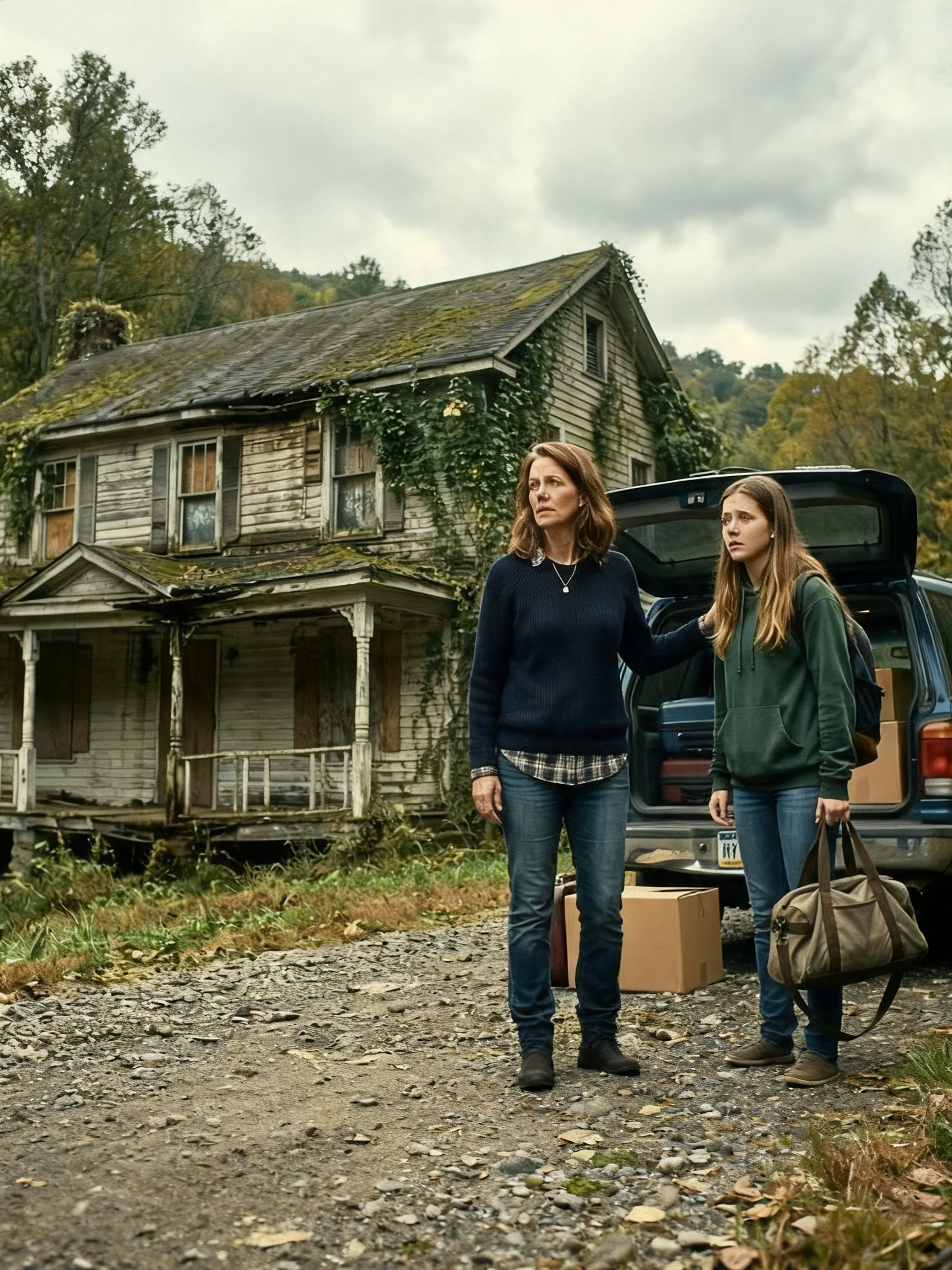
Her Brother Gave Her Three Days to Leave—Then the Abandoned House Revealed the Fortune Their Mother Hid for Her
“Three days, Claire. After that, Russell changes the locks.”
Diane Mercer said it from their mother’s kitchen table while eating the peach pie Claire had baked the night before the funeral.
She did not lower her voice.
She did not look ashamed.
She sliced another piece with the silver server their father had given their mother on their twenty-fifth anniversary and nodded toward the hallway as if Claire were a tenant who had stopped paying rent.
Russell leaned against the refrigerator with both arms crossed.
“You knew this wasn’t your house forever,” he said.
Claire looked at her brother.
Then at her sister.
Then at the yellow legal folder lying beside Diane’s handbag.
She did not cry.
She did not argue.
She did something that unsettled both of them far more.
She quietly asked, “Three days?”
Diane smiled.
“That’s generous.”
Claire Mercer was fifty-six years old.
For eleven years, she had slept in the smallest bedroom of the house she had grown up in, because the larger downstairs bedroom had been converted for her father when Parkinson’s disease made stairs impossible.
After he died, she stayed for their mother.
She cooked.
She cleaned.
She changed dressings.
She drove to cardiology appointments in freezing rain.
She learned the names of every medication in the plastic organizer on the counter.
She gave up a promotion at St. Anne’s Medical Center because the new position required travel.
She emptied nearly all of her retirement savings when the roof failed three winters earlier.
She paid property taxes twice when her mother’s account ran low.
She never asked Diane or Russell for reimbursement.
Diane lived forty minutes away in an upscale development outside Columbus and visited on birthdays, Thanksgiving, and whenever their mother mentioned changing the will.
Russell lived in Nashville but appeared whenever there was something in the garage worth selling.
And now, four days after Evelyn Mercer had been buried beneath an oak tree beside her husband, the two children who had done almost nothing during her final years sat in her kitchen and told the one child who had stayed that she had three days to disappear.
Claire rested both hands in her lap.
“What’s in the yellow folder?”
Russell’s jaw tightened.
Diane answered instead.
“Mom transferred the house.”
“To the Mercer Family Holding Company.”
Claire waited.
Diane seemed annoyed that she had not reacted dramatically enough.
“The company belongs to Russell and me.”
Claire looked at the folder again.
“Last year.”
“That’s interesting.”
Russell pushed himself away from the refrigerator.
“What’s that supposed to mean?”
Claire looked up at him.
For the first time, Diane stopped smiling.
Claire’s lack of resistance was not what they had prepared for.
They had expected tears.
Accusations.
Maybe shouting.
They had apparently rehearsed answers.
They had papers.
They had a lawyer.
They had even brought a real-estate broker to photograph the house the morning after the funeral.
What they had not prepared for was Claire simply accepting the information.
Diane tapped one manicured fingernail against the folder.
“You’ll also need to remove whatever personal belongings you want. Anything left after Friday becomes part of the property.”
Claire nodded.
Russell glanced at Diane.
Neither of them liked that either.
Claire stood.
“All right.”
Diane blinked.
“All right?”
“You said three days.”
“You’re not going to make this difficult?”
Claire picked up her coffee mug and carried it to the sink.
She rinsed it carefully.
Then she dried her hands.
Russell followed her with his eyes.
“You understand that you don’t have any ownership here.”
Claire turned.
“I heard you.”
“And Mom’s checking and investment accounts were distributed according to her instructions.”
Claire looked at him.
That was the first time he had mentioned the money.
Almost eighty-two thousand dollars had remained in Evelyn Mercer’s accounts after the funeral expenses.
Claire knew because she had balanced her mother’s finances every month.
Or at least she had until eight weeks before Evelyn died, when Diane suddenly insisted that a “professional fiduciary” should handle things.
Claire had been exhausted.
Her mother had been declining.
And because Claire still believed blood meant something, she had not fought.
“What instructions?” Claire asked.
Diane slid the yellow folder toward her.
Claire did not touch it.
Diane sighed theatrically.
“Mom wanted Russell and me to manage what remained. You already benefited by living here rent-free for eleven years.”
The sentence landed exactly where Diane meant it to.
Claire felt it.
There was no way not to.
Eleven years reduced to free rent.
Her father calling for her at two in the morning because he was frightened by hallucinations.
Her mother crying into Claire’s shoulder after chemotherapy took half her hair.
The Christmas Claire canceled because Evelyn’s blood pressure crashed.
The retirement account Claire emptied for the roof.
The vacation she never took.
The dates she stopped accepting.
The friends who eventually stopped inviting her.
The life that had slowly narrowed until love, duty, fatigue, and the smell of antiseptic became indistinguishable.
Claire nodded once.
“I understand.”
Diane smiled again.
That was her mistake.
She believed silence meant surrender.
Three hours later, Claire climbed into the attic looking for her father’s old suitcase.
She found something else.
It was sitting behind a stack of Christmas decorations, wrapped in a faded blue bath towel.
A small cedar box.
Claire recognized it immediately.
Her father had kept it in his workshop when she was a child.
He once told her never to touch it because it held “family things that matter more after people are gone.”
She had not seen it in nearly thirty years.
There was no lock.
Inside were three objects.
A tarnished brass key.
A Polaroid photograph of an abandoned farmhouse.
And an envelope with Claire’s name written across the front in her mother’s unmistakable handwriting.
CLAIRE ONLY.
IF RUSSELL OR DIANE HAS SENT YOU AWAY, GO TO THE OLD HOUSE BEFORE YOU SIGN ANYTHING.
Claire sat down on an overturned storage bin.
For several seconds, she heard nothing except the faint hum of the attic fan.
Then she opened the envelope.
There was one sheet of paper.
Her mother’s handwriting was shaky.
If you are reading this, I failed to fix something while I was alive.
Do not blame yourself.
Do not confront them yet.
Take the brass key.
Go to 418 Old Quarry Road outside Bellweather.
The house looks abandoned.
It is not abandoned.
Look beneath your father’s workbench.
There is a green steel box.
Call the attorney named inside before you tell anyone what you found.
Do not let Russell’s attorney advise you.
Do not sign a deed, release, waiver, settlement, family agreement, probate consent, or acknowledgment.
Your father made me promise that one child would eventually know the truth.
He chose you long before I understood why.
And Claire—
If they tell you that you were given less because you needed less, remember who stayed when everyone else left.
Claire read it twice.
Then a third time.
She did not cry.
She folded the letter along its old crease, placed everything back in the cedar box, and carried it downstairs.
Russell was in the living room measuring the fireplace.
Diane was photographing the dining room.
Neither asked what Claire was carrying.
That also mattered.
People reveal themselves most clearly when they believe nothing remains hidden.
By Thursday afternoon, Claire had packed twenty-two boxes.
Eleven years of her life fit into twenty-two boxes, two suitcases, one cedar chest, and her father’s framed Navy photograph.
Russell watched her carry the last box to a rented U-Haul trailer.
“Where are you going?”
Claire tightened the strap.
“I found somewhere.”
Diane appeared on the porch wearing oversized sunglasses.
“We really don’t want hard feelings.”
Claire almost laughed.
Instead she closed the trailer.
Diane came down two steps.
“For what it’s worth, Claire, this might be good for you. You’ve been stuck here forever.”
Claire looked at the house.
The porch where their father taught them to shell peas.
The upstairs window where Diane once climbed out to meet a boyfriend.
The maple tree Russell broke his wrist falling from.
The kitchen window their mother stood behind every morning.
Claire turned back to her sister.
“You may be right.”
Diane smiled, relieved.
Then she made her second mistake.
“We already have an offer.”
Claire looked at her.
“For the house?”
“Cash buyer. Eight hundred and ninety thousand.”
Russell frowned.
“What? She’s leaving.”
Claire said nothing.
Diane continued because triumph makes careless people generous with information.
“The developer wants the whole corner. They’ve been buying property for months.”
Claire looked down the road.
The Mercer home sat on six acres outside Bellweather, Ohio, near a corridor that had changed dramatically in recent years.
Distribution centers.
Warehouses.
New highway exits.
Commercial construction.
Their father had complained about it before his death.
Too many trucks.
Too much concrete.
Still, $890,000 seemed absurdly high for an old farmhouse and six acres.
“When do you close?” Claire asked.
“Three weeks.”
Russell stepped forward.
“That isn’t really your concern.”
Claire looked at him.
Then she got into her car and drove away.
She did not go to a motel.
She did not go to a friend’s house.
She drove forty-seven miles southeast to Old Quarry Road.
The road narrowed after Bellweather.
Then narrowed again after an abandoned feed store.
At p.m., her navigation system told her she had arrived.
Claire nearly kept driving.
The property looked dead.
A collapsed wire fence disappeared into waist-high grass.
Two enormous sycamores shadowed a gravel driveway almost completely swallowed by weeds.
At the end stood a farmhouse that seemed to have been abandoned sometime during the Carter administration.
Peeling white paint.
A sagging porch.
Three broken shutters.
A rusted windmill behind the barn.
One upstairs window boarded over.
Claire parked.
For the first time all day, she felt afraid.
Not frightened of Diane.
Not Russell.
Something deeper.
The feeling that she had reached the edge of a story she had unknowingly been inside her whole life.
The brass key opened the front door.
That was the first shock.
The second was the smell.
The house did not smell abandoned.
Dusty, yes.
Cold plaster.
But not mold.
Somebody had maintained it.
Claire stepped inside.
Furniture sat beneath white sheets.
The floors were swept.
A calendar from fourteen years earlier remained on a kitchen wall.
The month her father suffered his first major stroke.
Claire moved slowly through the rooms.
There were no family photographs.
No clothing.
The house felt less like a home than a sealed memory.
She found the workbench in the detached garage.
Beneath it was a loose section of floor.
Claire pried it up using an old screwdriver.
A green steel box sat in a shallow concrete cavity.
Her hands trembled when she lifted it.
The brass key fit.
Inside were four thick folders.
A flash drive.
Three recorded microcassettes.
A sealed letter.
A bank safe-deposit key.
And a business card.
MARCUS HALE HALE, BENNETT & ROWE ESTATE AND TRUST COUNSEL COLUMBUS, OHIO
Handwritten beneath the phone number were six words.
CALL ME BEFORE YOU CALL YOUR FAMILY.
Claire sat on the garage floor and dialed.
A receptionist answered.
When Claire gave her name, the woman went silent.
“One moment, Ms. Mercer.”
Another voice came on.
“My name is Marcus Hale.”
“I found your card.”
“I know where you found it.”
Claire looked around the darkening garage.
“Then I think you know more about my family than I do.”
There was a pause.
“I’ve been waiting almost nine years for this phone call.”
Claire gripped the phone harder.
“Because your father asked me to.”
The meeting took place the following morning.
Marcus Hale was seventy-two, silver-haired, narrow-faced, and so precise in his movements that even placing a pen on a desk seemed deliberate.
He did not begin with money.
That made Claire trust him.
He began with her father.
“Your father came to me in 2003,” Marcus said.
Claire sat across from him in a quiet office overlooking downtown Columbus.
“He came because of Russell?”
“What had Russell done?”
Marcus opened a folder.
“Borrowed against property he did not own.”
Claire frowned.
“What property?”
Marcus looked at her.
“The Old Quarry farm.”
Claire stared.
“That belonged to Dad?”
“Eventually.”
Marcus leaned back.
“Your grandfather, Walter Mercer, purchased approximately seven hundred and eighty acres around Bellweather between 1959 and 1974. Most of it was considered poor agricultural land. Rocky soil. Wooded ridges. Wetland sections. Several old limestone cuts.”
Claire had never known her grandfather owned more than his small hardware store.
Marcus continued.
“Walter divided ownership through several companies. It was common for small landowners then, especially when leasing mineral rights. Your father inherited controlling interests after Walter died.”
“How much land is left?”
Marcus opened another document.
“Six hundred and twelve acres.”
Claire almost smiled because the number meant nothing to her.
Then Marcus slid an aerial map across the desk.
The land wrapped around the expanding industrial corridor like a horseshoe.
Claire saw highway access.
Rail lines.
A new electrical substation.
And, near the center, the neighborhood where Evelyn Mercer’s house stood.
“Our house?” she whispered.
Marcus nodded.
“Your parents’ residence was originally carved from the same parcel.”
Claire looked at him.
“Why keep this secret?”
“Because your father made two mistakes when his children were young. First, he told Russell that the land might someday be valuable. Second, he underestimated how seriously Russell listened.”
Marcus removed a document stamped with dates from two decades earlier.
“Russell attempted to use a projected inheritance interest as collateral in 2001. Your father discovered it.”
Claire closed her eyes.
That sounded like Russell.
Always a shortcut.
Always a plan.
Always certain the rules existed for people less clever than him.
Marcus went on.
“Your father reorganized everything afterward. The land went into a private trust.”
“Who owns the trust?”
“Nobody in the conventional sense. That is why trusts exist. But there is a beneficial interest and a controlling trustee.”
Claire already knew.
She did not want to know.
Still, she asked.
Marcus turned the document toward her.
CLAIRE ELAINE MERCER — SUCCESSOR BENEFICIARY AND TRUSTEE.
Claire stared at her name.
“It is valid.”
“No, I mean… this doesn’t make sense.”
“I don’t want six hundred acres.”
Marcus gave her the first faint smile she had seen.
“Your father predicted you would say that.”
Claire looked down.
“He said the child who wanted it least was the only child he trusted with it.”
That hurt more than the inheritance thrilled her.
Claire thought of her father after his stroke, struggling to speak.
She thought of helping him shave.
Cutting his food.
Walking beside him while he relearned how to cross the hallway.
He had known.
All those years.
Marcus continued.
“Your mother became interim trustee after your father died. She had limited authority. You were designated successor trustee once certain conditions occurred.”
“What conditions?”
“Your mother’s death and evidence that another beneficiary had acted against the trust.”
Claire looked up.
“Another beneficiary?”
“Russell and Diane were not excluded entirely.”
Of course they weren’t.
Her father had been angry, perhaps, but he had never been cruel.
Marcus opened the trust schedule.
“Each sibling was entitled to a substantial distribution after Evelyn’s death.”
“How substantial?”
“At current valuation? Approximately four million dollars each.”
Claire stared.
Marcus did not answer immediately.
That frightened her.
“Claire, the trust land has become strategically important.”
“How important?”
“Three different development groups have attempted acquisitions.”
“For what amount?”
“The most recent confidential proposal valued the entire holding at approximately eighty-six million dollars.”
Claire stopped breathing for a moment.
Eighty-six million.
The number was absurd.
It belonged on television.
Not in the quiet office of an attorney who remembered her father.
Not attached to weeds, broken shutters, and a house at the end of Old Quarry Road.
Marcus watched her reaction carefully.
“That is only the land value,” he said.
Claire almost laughed.
“There are lease revenues, a water easement, two telecommunications agreements, and royalty rights associated with limestone extraction on the eastern tract.”
“How much?”
“Current trust assets, excluding disputed claims, are approximately ninety-three million dollars.”
Claire stood.
She walked to the window.
Below, traffic moved through Columbus as if nothing had happened.
A bus stopped.
A woman crossed a street holding a child’s hand.
Somebody honked.
Ninety-three million dollars existed behind her, and Claire could not make it feel real.
She turned.
“If this is true, why was Mom worried about bills?”
Marcus’s expression changed.
“She wasn’t supposed to be.”
Claire returned to the chair.
“What does that mean?”
“Trust distributions were authorized for her medical and living expenses.”
“I paid for the roof.”
“I paid property taxes.”
“I took money from my retirement account.”
“I know that too.”
Claire’s voice hardened.
“Then where did her distributions go?”
Marcus folded his hands.
“That is where Russell, Diane, and several other people become relevant.”
He opened a red file.
Between 2018 and Evelyn’s death, nearly 1.7 million dollars had been withdrawn from accounts connected to the trust’s support provisions.
Some went to Evelyn.
Much did not.
There were transfers to a holding company.
Consulting fees.
A luxury automobile lease.
A commercial condo investment.
Payments to a law firm Claire recognized immediately.
The same law firm named on the yellow folder Diane had shown her.
“There’s more,” Marcus said.
There always was.
Russell had learned about the trust three years earlier.
Not everything.
But enough.
A former accountant at the trust company had leaked information after Russell approached him through a business associate.
Russell then convinced Diane that their mother was “mentally slipping” and needed financial management.
The professional fiduciary Diane introduced had previously worked with Russell’s attorney.
The property transfer placing Evelyn’s home inside the Mercer Family Holding Company had been executed five months later.
Claire leaned forward.
“Was it legal?”
Marcus gave her a strange look.
“That depends on which property you mean.”
“The house.”
“The house sits on trust land.”
Claire froze.
Marcus tapped the aerial map.
“Your parents occupied the residence under a life estate. Evelyn could live there. She could not transfer the underlying property.”
“So Russell and Diane sold themselves something Mom didn’t own?”
“They transferred an interest they could not legally acquire.”
Claire felt a cold, almost clean anger rise through her.
“And the developer?”
“Has no valid title yet.”
“They think they’re closing in three weeks.”
Claire stared at him.
“Because Russell’s lawyer requested a title opinion yesterday.”
The room became very quiet.
Marcus opened the sealed letter from the steel box.
“Your father anticipated something like this.”
Inside was a handwritten note dated February 12, 2012.
Marcus allowed Claire to read it.
If any of my children attempt to pressure Evelyn, misappropriate trust funds, transfer trust property, conceal distributions, or remove Claire from the residence before ninety days have passed after Evelyn’s death, then Sections 14 and 19 shall apply automatically.
Claire looked up.
“What are Sections 14 and 19?”
Marcus turned several pages.
“Section 14 suspends the offending beneficiary’s distribution.”
Claire exhaled.
“And nineteen?”
Marcus’s voice became almost gentle.
“Requires full restitution of misappropriated assets, plus interest, before that beneficiary can petition for reinstatement.”
Claire looked again at the letter.
Her father’s handwriting grew shaky toward the bottom.
There was one final paragraph.
Claire has sacrificed enough for this family already.
Do not allow her loyalty to be treated as weakness.
Claire stared at those words until they blurred.
That was when she finally cried.
Not loudly.
There was no collapse.
No theatrical sobbing.
One tear moved down her cheek.
Then another.
She wiped them away.
“I spent eleven years thinking nobody noticed.”
Marcus said nothing for a moment.
Then he replied, “He noticed.”
The money mattered.
Of course it did.
Anyone pretending ninety-three million dollars did not matter was either lying or had never worried about the price of medication.
But sitting in Marcus Hale’s office, Claire understood something stranger.
The fortune was not what made her feel restored.
It was the record.
Trust provisions.
Her father had documented what Claire herself had never said aloud.
That she stayed.
That she paid.
That she carried.
That the others left.
The inheritance was not a reward for being the good daughter.
Claire did not want that.
It was evidence that somebody had seen the difference between love and exploitation.
“Can we stop the sale?” she asked.
Marcus nodded.
Claire shook her head.
Marcus studied her.
“What are you thinking?”
“I want to know how far they’re willing to go when they think I have nothing.”
Marcus sat very still.
Then he smiled.
Not happily.
Professionally.
“Your father would have understood you.”
For the next ten days, Claire did almost nothing visible.
That frightened Diane more than anger would have.
Claire rented a small apartment above a florist.
She moved her twenty-two boxes inside.
She bought a secondhand dining table.
She returned to work.
When Diane texted, Claire answered politely.
When Russell called to ask whether she had signed the “family acknowledgment” his attorney emailed, Claire said she had not had time.
When Russell became impatient, she apologized.
When Diane reminded Claire that they had “been more than fair,” Claire thanked her for the reminder.
They mistook every courtesy for defeat.
Meanwhile Marcus Hale’s firm rebuilt eleven years of financial history.
They found Claire’s roof payment.
Property taxes.
Medical expenses.
Home modifications.
Mortgage assistance from years earlier.
Prescription co-pays.
Emergency repairs.
The documented amount Claire had contributed to her parents’ household exceeded $312,000.
That did not include unpaid caregiving.
A geriatric-care economist calculated the conservative replacement value of those eleven years at more than $640,000.
Claire hated seeing love converted into numbers.
Marcus explained why it mattered.
“Because your siblings converted your sacrifice into an accusation. They said you lived free. Numbers can answer lies.”
The investigation grew.
The fiduciary who had taken over Evelyn’s finances had approved unusual distributions.
Russell’s attorney had drafted documents that treated trust property as family property.
A real-estate broker had advertised acreage not actually included in the Mercer residence.
A regional banker had issued preliminary financing based on title assumptions that should have raised questions.
None of it proved a conspiracy by itself.
Together, it looked worse.
Much worse.
And Russell continued walking deeper into it.
Two weeks after forcing Claire out, he hosted a dinner at the Mercer house.
The buyer attended.
So did the broker.
Diane posted photographs online.
Claire saw them accidentally when a former coworker sent one.
The dining room glowed with candles.
Her mother’s china was on the table.
Russell stood near the fireplace holding champagne.
Diane wore their mother’s pearl necklace.
The caption read:
NEW BEGINNINGS.
Claire looked at it for several seconds.
Then she placed the phone facedown.
The next morning Diane called.
“We’re clearing Mom’s remaining things Saturday. You should come if there’s anything sentimental you want.”
Claire kept her voice neutral.
“I thought anything I left belonged to the property.”
Diane hesitated.
“Well, we’re trying to be decent.”
“Thank you.”
“Russell says we might be willing to give you five thousand dollars from the sale.”
Claire almost admired it.
Five thousand dollars.
From property they did not own.
As compensation for a house they had forced her out of.
“Why?” Claire asked.
“So this doesn’t become ugly.”
Claire looked through the window of her apartment.
Below, the florist was arranging white roses in buckets on the sidewalk.
“Diane, do you think it’s ugly?”
“What happened.”
Then irritation.
“Claire, please don’t start.”
“I’m not starting anything.”
“You always do this.”
“Make everybody feel guilty without actually saying anything.”
Claire almost smiled.
That was perhaps the most accurate thing Diane had ever said about her.
“I’ll come Saturday,” Claire replied.
The estate clearing looked like a yard sale staged by people pretending grief was an inconvenience.
Diane had labeled boxes.
Russell was in the garage arguing with an appraiser about their father’s tools.
Claire walked through the house slowly.
She took her mother’s recipe box.
Her father’s Navy photograph.
A quilt made by her grandmother.
Nothing valuable.
At least not by Diane’s definition.
At noon, Russell’s attorney arrived.
Preston Shaw.
Forty-eight.
Expensive charcoal suit.
Silver watch.
The smooth confidence of a man accustomed to conversations ending where he wanted.
“Claire,” he said warmly.
She had never met him.
The warmth therefore felt rehearsed.
“Mr. Shaw.”
“I hoped we could take care of a small probate housekeeping matter.”
Of course he had.
He opened his briefcase at the kitchen table.
Diane stood by the counter.
Russell remained near the doorway.
Three against one.
Exactly as planned.
Preston placed a document in front of Claire.
FAMILY DISTRIBUTION ACKNOWLEDGMENT AND MUTUAL RELEASE.
“There’s nothing unusual here,” he said. “It simply confirms you have received your personal property and waive claims against your siblings regarding distribution decisions made by Evelyn.”
Claire read the first page.
Then the second.
On page four, the release extended to known and unknown claims involving real estate, accounts, trusts, transfers, fiduciary actions, and related entities.
Claire nearly laughed.
Marcus Hale had predicted the wording almost exactly.
“What happens if I don’t sign?” she asked.
Russell shifted.
Preston smiled.
“Nothing dramatic.”
Diane spoke.
“It could delay the five thousand dollars.”
Claire looked at her.
“The money you offered me?”
Claire returned to the document.
“What if I need time?”
Preston leaned forward.
“Claire, sometimes families heal by closing doors.”
She met his eyes.
“Is that what this does?”
“In a legal sense, yes.”
Claire closed the document.
“Then I should probably understand which doors.”
Preston’s smile tightened.
“There really isn’t anything complicated.”
Claire tilted her head.
“I’m not very good at legal documents.”
Russell exhaled sharply.
“For God’s sake, Claire.”
She looked at him.
“I’m asking a question.”
“You’re making this into something it isn’t.”
Claire folded her hands.
“What is it?”
“A release.”
“From what?”
“Everything!”
The word hit the kitchen walls.
Claire said nothing.
Russell realized he had raised his voice.
Diane stepped in.
“She means there’s nothing left to fight about.”
Claire looked around her mother’s kitchen.
Then she nodded.
“All right.”
Preston relaxed.
He slid a pen toward her.
Claire picked it up.
Russell smiled.
Diane actually looked relieved.
Claire held the pen above the signature line.
Then stopped.
“I should read the rest.”
Russell’s hand struck the table.
“Oh, come on.”
Claire put the pen down.
There it was.
The blade beneath the politeness.
The contempt they had spent years dressing as practicality.
“You had eleven years in this house,” Russell said. “Eleven. Mom paid everything. You lived here. You ate here. You used her car sometimes. And now we’re offering you money you aren’t even entitled to, and somehow you still need more.”
Claire looked at him.
“I paid for the roof.”
Diane rolled her eyes.
“We know about the roof.”
“You bring it up constantly.”
Claire had mentioned it exactly twice.
Once when the contractor needed approval.
Once when Evelyn tried to repay her.
But families like Claire’s had a special talent.
They could turn one quiet fact into years of nagging if the fact embarrassed them.
Claire stood.
“I’m not signing today.”
Preston’s voice changed.
“Claire, I strongly advise—”
“Are you my lawyer?”
He stopped.
“Then you probably shouldn’t advise me.”
Russell stared at her.
Something moved behind his anger.
Claire picked up her mother’s recipe box.
“I’ll take this.”
Diane followed her onto the porch.
“Why are you acting like this?”
Claire turned.
“Like what?”
Claire looked at her sister for a long moment.
Then she said, “I learned from the warm people.”
She drove away.
That afternoon, Marcus filed the first notice.
Not a lawsuit.
A formal notice of successor trusteeship.
Copies went to the trust company, county recorder, title insurer, purchaser, lender, and every attorney involved in the proposed sale.
At p.m., Russell called Claire.
She did not answer.
At , Diane called.
At , Preston Shaw called.
At , Russell called again.
At , a voicemail arrived.
“What the hell did you do?”
Claire listened to it twice.
Then she made tea.
The sale collapsed the following morning.
The buyer did not merely postpone closing.
They withdrew.
Their lawyers discovered the residence sat inside a landholding subject to trust restrictions and that the Mercer Family Holding Company possessed, at best, a contested derivative interest.
Then the title insurer found the anti-transfer clause.
Then the lender found the beneficiary suspension provision.
Then everyone began asking questions.
Russell drove to Claire’s apartment that evening.
He pounded on the door.
Claire opened it but left the security chain in place.
His face was red.
“What did Dad leave you?”
Claire said nothing.
“Answer me.”
“You knew about this.”
“For ten days.”
His expression shifted.
He calculated backward.
Every phone call.
Every insult.
Every attempt to secure her signature.
“You set us up.”
Claire’s face remained calm.
“Yes, you did.”
“I packed my things when you told me to.”
“You let us believe—”
“I let you believe what you already believed.”
Russell stepped closer.
“You think you’re better than us?”
Claire looked through the narrow opening.
“Then what is this?”
“For once, Russell, it’s paperwork you didn’t control.”
He shoved one hand against the door.
The chain tightened.
Claire did not flinch.
“Mom wanted us to have that house.”
“She didn’t own the land.”
“That’s technical garbage.”
“It seems important to the title company.”
“You’re going to destroy this family over dirt?”
Claire stared at him.
“You gave me three days.”
His face changed again.
There are moments when people finally hear their own words.
Sometimes shame follows.
Russell was not there yet.
Instead he said, “We can make a deal.”
Claire almost felt sorry for him.
Not because he had lost.
Because even now, he could only understand relationships as deals.
“I already have a lawyer.”
“You think that old man cares about you? He cares about fees.”
“He hasn’t billed me.”
That silenced Russell.
Claire continued.
“The trust pays him.”
Her brother stepped back.
“How much is there?”
Claire closed the door.
He shouted through it.
She turned the deadbolt.
Then she called the police non-emergency number and documented the visit.
Marcus insisted.
“People who lose financial control sometimes become unpredictable.”
The next week exposed just how much control Russell had believed was his.
Trust investigators traced payments.
Subpoenas followed.
The fiduciary resigned.
Preston Shaw hired his own attorney.
The broker claimed he had relied on information provided by Russell.
The banker produced emails.
Diane produced tears.
That was new.
She came to Claire’s apartment on a rainy Tuesday carrying no handbag and wearing no makeup.
Claire let her in.
Diane stood in the tiny living room surrounded by still-unpacked boxes.
For perhaps the first time, she saw what three days actually looked like.
Twenty-two boxes.
A rented apartment.
Their mother’s recipe tin.
Their father’s photograph.
One woman beginning over at fifty-six.
“I didn’t know about the trust,” Diane said.
Claire nodded.
“I believe you.”
Relief moved across Diane’s face.
Then Claire added, “At first.”
Diane looked down.
“Russell told me some things later.”
“How much later?”
“Before Mom died?”
“How long?”
“Seven months.”
Claire sat in the chair near the window.
Diane remained standing.
“And you didn’t tell me.”
“Russell said Dad set it up because he didn’t trust us.”
“Was he wrong?”
Diane flinched.
Claire hated that the question gave her satisfaction.
She did not want to become cruel.
Cruelty was too easy when justice finally gave you leverage.
“I’m sorry,” Diane whispered.
Claire looked at her sister.
“For which part?”
Diane began crying.
“The house. The money. The release. Everything.”
Claire waited.
“Did you know Russell was taking money from Mom’s support account?”
“I knew he borrowed.”
“Borrowed?”
“He said he would replace it.”
“Did you take anything?”
Diane wiped her cheeks.
“How much?”
“I don’t know.”
Claire’s voice remained soft.
“How much?”
“One hundred and eighty thousand.”
The number hung between them.
“For what?”
Diane sat down.
“My mortgage. Lauren’s college. Some credit cards.”
Claire thought of their mother apologizing because her prescription co-pay had increased.
She thought of delaying a dental procedure because she could not afford it.
She thought of standing beneath a leaking roof with buckets while Diane renovated a kitchen she showed off every Thanksgiving.
“You knew Mom had medical expenses.”
“You knew I was paying some of them.”
“You knew I used retirement money.”
Diane whispered, “Yes.”
Claire nodded.
That word ended something between them.
Not forever, perhaps.
But for that day.
Maybe for years.
Diane reached toward her.
Claire stood.
Her sister pulled her hand back.
“I said I’m sorry.”
“I heard you.”
“What do you want me to do?”
There it was.
The question people asked when apologies did not erase arithmetic.
Claire went to the kitchen counter and brought back an envelope Marcus had prepared.
Diane stared at it.
“What is that?”
“A restitution agreement.”
Her sister’s mouth opened.
Claire continued.
“You repay what you took. You cooperate with the trust investigation. You disclose every transfer Russell asked you to make. You testify truthfully if necessary.”
“And if I do?”
“I won’t oppose your petition for partial reinstatement as a beneficiary.”
Diane stared.
“You control that?”
Claire allowed the silence to settle.
“The trust does.”
That distinction mattered.
Claire did not want to become the new monarch of the Mercer family.
She wanted rules.
Rules had been missing for too long.
Diane looked through the agreement.
“I can’t repay one hundred and eighty thousand at once.”
“It provides twelve years.”
“My house—”
“Is not being taken.”
“My retirement?”
“Protected within legal limits.”
Diane looked up.
“You already worked all this out?”
“No. Dad did.”
Claire handed her a photocopy of Section 19.
Diane read.
Then she covered her mouth.
Their father had not simply hidden wealth.
He had designed consequences.
Not revenge.
Restitution.
That distinction changed everything.
Russell refused.
He hired litigators from Cincinnati.
He claimed undue influence.
He claimed Claire had manipulated their parents.
He claimed Marcus Hale had created documents after their deaths.
He claimed the trust was invalid.
He claimed his father had lacked capacity.
Each accusation produced more records.
Medical evaluations.
Notarized statements.
Video recordings.
Independent witnesses.
Tax filings.
Bank reports.
And then Marcus played the first microcassette.
Claire sat in his conference room when her father’s voice filled the speakers.
It was weak but recognizable.
March 18, 2012.
“If Russell challenges this, let him. I love my son. But love does not require blindness.”
Claire pressed both hands to her mouth.
Her father continued.
“Claire will probably be angry that I left this burden to her. She has spent her whole life carrying things nobody else wanted to carry.”
Marcus looked away to give Claire privacy.
The recording continued.
“She is not getting the largest responsibility because she is my favorite. She is getting it because she is the only one who repeatedly chose people over money when nobody was watching.”
Claire cried then.
Her father had known her.
Not the useful daughter.
Not the unmarried daughter.
Not the daughter who lived at home.
The second recording concerned the land.
The third was devastating.
Evelyn Mercer’s voice.
Recorded less than a year before she died.
“I made mistakes.”
Claire froze.
Her mother sounded tired.
“I let Russell convince me that Claire would be fine because Claire is always fine. That was crueler than I understood.”
Claire closed her eyes.
“People think the strong child needs less. So they give less. Then they praise her for surviving what they refused to give her.”
Marcus stopped the recording.
Claire shook her head.
“No. Keep going.”
Evelyn continued.
“If Diane or Russell removes Claire from my home quickly after I die, it will tell you everything you need to know.”
Claire stared at the recorder.
Her mother had known.
Maybe not exactly what would happen.
But enough.
Evelyn’s final instructions created another provision.
The original Mercer residence could never be sold for industrial development if Claire objected.
Instead, Claire could designate it for residential, charitable, conservation, or family use.
The Old Quarry property carried an even stranger condition.
The farmhouse itself was to become a permanent archive of the Mercer trust history.
Not because the Mercers were important.
Because Walter Mercer had acquired much of the land cheaply from struggling families during the 1960s.
Some transactions were fair.
Some, Evelyn believed, had not been.
The trust therefore required a percentage of future development proceeds to fund housing and elder-care programs in Bellweather County.
Claire sat back.
Now she understood.
The fortune was not merely hidden money.
It was unfinished moral accounting.
Her grandfather had accumulated land.
Her father had protected it.
Her mother had tried, imperfectly, to redirect its value.
And Claire had been chosen to decide whether wealth would repeat the family’s worst instincts or correct them.
Six months later, the trust litigation ended.
Not with a dramatic courtroom confession.
Real life rarely gives people that.
It ended in a mediation room with cold coffee, yellow legal pads, and exhausted attorneys.
Russell arrived wearing a navy suit.
He looked older.
Diane sat separately.
She had already begun restitution payments and had cooperated with investigators.
Preston Shaw was no longer representing anyone in the family.
His conduct had been referred to the state disciplinary authority after emails showed he knew about potential trust restrictions before drafting the release Claire had nearly been pressured to sign.
The former fiduciary faced a civil action.
Several disputed transfers had been recovered.
Russell’s lawyers finally admitted his position was collapsing.
Under the settlement, he surrendered his suspended beneficiary claim in exchange for resolution of certain civil matters and a structured repayment obligation.
He did not go to prison.
Claire had never wanted him to.
She wanted the money returned.
She wanted the record corrected.
She wanted the truth to stop being negotiable.
The Mercer residence returned fully to trust control.
Claire did not move back.
That surprised everyone.
She converted it into a small nonprofit respite home for adults caring for elderly parents.
Three bedrooms.
A quiet garden.
Temporary stays.
Counseling referrals.
Financial-planning workshops.
A place for people who were exhausted but still loved the person exhausting them.
She named it Evelyn House.
Diane cried when she saw the sign.
Russell did not attend the opening.
The Old Quarry farmhouse was restored.
Not extravagantly.
Claire insisted the cracked stone hearth remain.
The workbench remained too.
So did the loose floorboard, though the green steel box moved into a secure archive.
The trust sold only 214 acres for carefully controlled commercial development.
The transaction generated more than thirty million dollars.
Another 160 acres entered a conservation easement.
A housing fund received eight million.
The elder-care endowment received twelve.
Claire established scholarships for unpaid family caregivers returning to college.
She restored her retirement account.
She bought a modest brick home with a porch.
She replaced her twelve-year-old car.
She took a vacation to Maine.
For eleven days, nobody needed medication from her.
Nobody called at a.m.
Nobody asked where the tax receipts were.
On the fourth morning, sitting beside the Atlantic with coffee in both hands, Claire realized she had spent half her adult life believing rest had to be earned through exhaustion.
She began learning otherwise.
Diane changed slowly.
Real change usually is slow.
She sold the luxury SUV.
Refinanced her house.
Returned their mother’s pearl necklace to Claire.
Claire refused it.
Diane looked surprised.
“Because returning money is restitution. Returning every object is theater.”
Diane laughed through tears.
It was the first honest laugh between them in years.
Russell took longer.
Nearly two years.
He sent letters.
Claire did not answer the first three.
The fourth contained no excuses.
No legal language.
No accusation.
Just one paragraph.
I thought being the son meant Dad had cheated me whenever he trusted you. I understand now that he trusted you because you had already done the work. I wanted the reward without becoming the person he could trust with it.
Claire read that sentence many times.
Then she wrote back.
They were not close again.
Some things do not return simply because remorse arrives.
But they became civil.
Then, occasionally, kind.
That was enough.
Three years after the funeral, Claire stood in the restored Old Quarry farmhouse while Marcus Hale prepared to retire.
He handed her the original cedar box.
“You should have this.”
Claire ran her fingers across the scarred lid.
“Did Dad really plan all of this?”
Marcus smiled.
“Your father planned documents. Families create the rest.”
Claire looked around the room.
Sunlight came through restored windows.
On one wall hung photographs of Walter Mercer, Evelyn and Samuel, the original farmland, and eventually Claire standing at the opening of Evelyn House.
No photograph presented them as saints.
That had been Claire’s rule.
The exhibit included the mistakes.
Land bought cheaply.
Money mishandled.
Trust abused.
Caregiving ignored.
Restitution made.
“Wealth should tell the truth about where it came from,” Claire had said.
That sentence became the principle governing every trust investment afterward.
When Marcus left, Claire remained alone for a few minutes.
She opened the cedar box.
Inside lay the old brass key.
Her mother’s letter.
Her father’s first trust instructions.
And something Marcus had added.
The unsigned family release Preston Shaw had tried to make her sign.
Claire looked at the empty signature line.
One stroke of a pen.
That was how close they had come.
Not to stealing ninety-three million dollars.
That was never really what frightened her.
They had come close to making their version of her life permanent.
Claire the dependent sister.
Claire the unmarried failure.
Claire the woman who lived rent-free.
Claire the sibling who contributed nothing.
Claire the one who should be grateful for five thousand dollars and disappear quietly.
The trust had changed the money.
The evidence had changed the story.
That mattered more.
A month later, the final unresolved matter brought Claire, Diane, Russell, Marcus, and three attorneys back to the conference room where everything had begun.
A regional bank wanted closure on an old promissory note connected to a development loan Russell had attempted to secure years before.
The amount was no longer significant compared with the trust.
But the document mattered because Russell had repeatedly insisted their father had promised him ownership of a specific forty-acre tract.
His lawyers produced a photocopy bearing Samuel Mercer’s supposed consent.
Russell seemed strangely confident again.
Not arrogant like before.
But hopeful.
His attorney pushed the copy toward Claire.
“If the trust recognizes this historical agreement, Mr. Mercer is prepared to waive any remaining challenge regarding the eastern parcel.”
Everyone looked at Claire.
Three years earlier she might have become nervous.
She might have looked to a lawyer before speaking.
She might have assumed the room knew more than she did.
Now she simply studied the page.
The signature looked like her father’s.
The date was June 14, 2007.
Claire remembered that year.
Her father had been recovering from shoulder surgery.
His right arm had been immobilized for six weeks.
She looked at Marcus.
He had noticed too.
Russell shifted in his chair.
Claire did not accuse him.
She did not raise her voice.
She did not say forgery.
She did not need to.
Instead she slid the photocopy back across the polished table and spoke with the same calm voice she had used on the afternoon her siblings gave her three days to leave her own home.
“Before I agree to anything, could someone show me the original?”
✓ Lynn R. Adams
Her Brother Gave Her Three Days to Leave—Then the Abandoned House Revealed the Fortune Their Mother Hid for Her “Three days, Claire. After that, Russell changes the locks.” Diane Mercer said it from…