He Gave His Betrayed Wife a Ruined Mansion to Humiliate Her—Then One Hidden Deed Put His Entire Empire at Risk
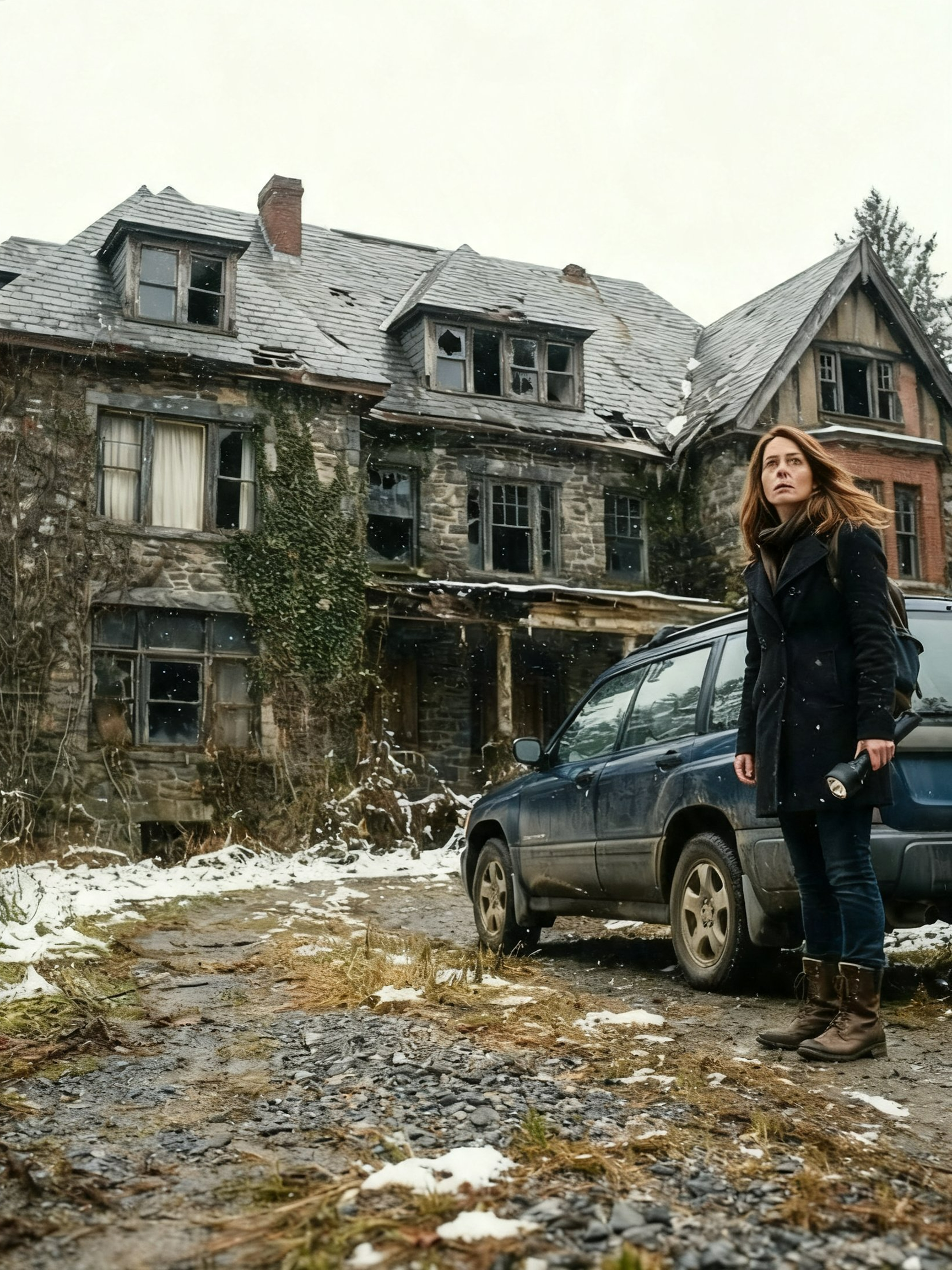
He Gave His Betrayed Wife a Ruined Mansion to Humiliate Her—Then One Hidden Deed Put His Entire Empire at Risk
“You have three days to get out of my house.”
Grant Whitaker said it without raising his voice.
That was what made it cruel.
Twenty-six years of marriage ended at the far end of an eleven-foot walnut dining table while the woman he had been sleeping with poured herself another glass of Eleanor Whitaker’s wine.
Celeste Monroe did not even have the decency to look embarrassed.
She sat in Eleanor’s chair.
Wearing Grant’s pale-blue dress shirt.
And when Eleanor looked at her husband, he slid a manila folder across the table as calmly as if he were giving instructions to a contractor.
“The divorce agreement is already drafted,” he said. “My attorney says this can stay civilized if you don’t make it difficult.”
Eleanor did not touch the folder.
Grant leaned back.
At fifty-two, he still possessed the practiced confidence that had carried him through charity dinners, television interviews, development hearings, and rooms full of men who always seemed slightly more eager to please him than they had been five minutes before he entered.
Whitaker Development Group had built luxury neighborhoods across three states. Grant’s photograph had appeared beside words like visionary, bold, legacy, and transformational.
Eleanor knew another word.
Grant had been hungry when they met.
Hungry when he had exactly one decent suit.
Hungry when she sold the little lake cabin her grandmother left her so he could make payroll on his first commercial renovation.
Hungry when she spent nights designing interiors without billing his company because, as he used to say, “We’re building this together.”
Hungry when she stayed home with his dying mother.
Hungry when she postponed returning to architecture school.
Hungry when she managed his charity dinners, rewrote his speeches, corrected his proposals, soothed investors after his temper, remembered birthdays he forgot, hosted men he disliked, and smiled beside him in photographs when she had been awake all night helping his father breathe.
Grant had always been hungry.
Eleanor had simply mistaken hunger for ambition.
Now he nodded toward the folder.
“You’ll get the Bellweather property.”
For the first time, Celeste smiled.
Eleanor noticed.
Bellweather House.
The ruined mansion.
Everyone in Whitaker County knew it.
A forty-room limestone relic fifteen miles outside Richmond, Virginia, abandoned behind a rusted gate and a wall of cedar, its slate roof collapsing in three places, its ballroom windows boarded over, its east wing blackened by an electrical fire nearly twenty years ago.
Grant’s grandfather, Everett Whitaker, had lived there until his death.
No one had occupied it since.
Taxes were high.
Repairs were astronomical.
Local teenagers told ghost stories about it.
Grant called it “the family mausoleum.”
Celeste lifted her glass.
“Honestly, Eleanor, it suits you.”
Grant gave her a warning glance, but not because the insult bothered him.
Because he preferred cruelty to look accidental.
Eleanor finally opened the folder.
The first page said the marital home in Henrico County would remain with Grant.
His company interests remained with Grant.
The Florida condominium was categorized as business lodging.
The mountain property had already been transferred into a corporate trust.
There was a cash payment of $240,000.
Then came Bellweather House.
One dollar assigned valuation due to extensive deferred maintenance and environmental uncertainty.
Grant watched her read.
“The property has sentimental value,” he said.
Eleanor looked up.
He almost smiled.
“You were close to Grandpa Everett.”
That much was true.
Closer than Grant had ever known.
During the last six years of Everett Whitaker’s life, Eleanor had driven to Bellweather twice every week.
She brought groceries.
Changed bandages.
Sorted medications.
Sat beside him when his hands shook too much to hold a coffee cup.
Listened to stories the rest of the Whitaker family dismissed because Everett had become inconveniently old.
Grant visited at Christmas.
His father, Charles, visited when there were financial documents to sign.
Grant’s younger brother Mason came when he wanted money.
But Eleanor came because a proud old man should not have had to eat canned soup alone in a forty-room house.
Three months before Everett died, Eleanor had found him sitting on the mansion’s back steps looking over acres of dead winter grass.
“You know what happens to people when they get old, Ellie?” he asked.
She sat beside him.
“They become wise?”
“They become evidence.”
She remembered laughing.
Everett hadn’t.
“You learn who people are when they don’t need anything from you anymore.”
At the time, Eleanor thought he meant Grant.
Now, sitting across from Grant while his mistress drank from a wedding gift, she understood Everett had meant the entire family.
Grant tapped the agreement.
“You have until Friday.”
It was Tuesday.
Eleanor looked at him.
Not at Celeste.
Not at the folder.
“You want me gone in three days?”
“My clothes?”
“Take whatever is personally yours.”
“The furniture my mother gave us?”
Grant sighed.
“The paintings I bought?”
“Don’t start.”
“The walnut desk from my father?”
“It’s listed under household contents.”
“My grandmother’s silver?”
His face changed slightly.
He hated details because details could turn ownership into evidence.
“Take the silver.”
Celeste laughed softly.
Grant shot her another look.
Eleanor closed the folder.
Then she did something neither of them expected.
She nodded.
“All right.”
Grant blinked.
Celeste stopped smiling.
They had prepared for tears.
They had prepared for rage.
They had prepared for accusations, shattered glasses, screaming, pleading, maybe some humiliating question about whether Celeste was prettier.
Eleanor gave them nothing.
Grant’s voice followed her.
“You should have your lawyer look at it.”
“There’s no reason for this to get ugly.”
Eleanor paused at the doorway.
“No,” she said. “There really isn’t.”
She walked upstairs.
That night she packed two suitcases.
She took clothing.
Her father’s desk lamp.
Her grandmother’s silver.
A photograph of her son, Daniel, who had died eleven years earlier at age seventeen when a drunk driver crossed the center line outside Charlottesville.
She took Daniel’s baseball glove.
She took the cookbook Everett Whitaker had given her after teaching her his late wife’s recipe for apple butter.
And she took the little brass key she found inside the cookbook.
She had not seen it before.
A folded piece of yellow paper was wrapped around it.
Her name was written on the outside.
The handwriting stopped her breathing.
For a long moment Eleanor stood beside the half-packed suitcase.
Then she unfolded the paper.
There were only four lines.
If Grant ever gives you Bellweather House, do not sell it.
Do not sign anything concerning the north fields.
Look inside the west staircase newel.
Then ask the county clerk for Book 417, Page 92.
Below that, Everett had written something in capital letters.
LET THE RECORD SPEAK BEFORE YOU DO.
Eleanor sat slowly on the bed.
Downstairs, she heard Celeste laughing.
Grant laughed after her.
Eleanor read the note again.
If Grant ever gives you Bellweather House.
Not if you inherit it.
Not if you buy it.
If Grant ever gives you Bellweather House.
Everett had anticipated this.
Years before.
The next morning Eleanor called her attorney.
Not Grant’s family attorney.
Not anyone who played golf with Whitaker Development executives.
She called Rachel Moreno, a sixty-year-old divorce and property attorney Eleanor had known since volunteering on a preservation board fifteen years earlier.
Rachel read the proposed settlement in silence.
Then she looked over her glasses.
“You understand they’re trying to bury you in that house.”
“Preliminary repair estimates?”
“Grant says four million.”
“Probably six.”
“Annual taxes?”
“Forty-two thousand.”
Rachel flipped another page.
“And environmental language here means they want you assuming any contamination liability.”
Rachel stared at her.
“Why are you so calm?”
Eleanor placed Everett’s note on the desk.
Rachel read it.
Then read it again.
“Where did this come from?”
“A cookbook.”
“Last night.”
Rachel’s expression changed.
Not excitement.
The disciplined kind lawyers developed when coincidence began looking like evidence.
“Have you shown anyone?”
“Your brother?”
That question hurt more than Eleanor expected.
Her older brother, Owen Carter, had already called that morning.
Not to ask if she was all right.
To tell her not to “blow up everybody’s life.”
Grant’s company had awarded Owen’s construction firm almost fourteen million dollars in subcontracting work over the previous six years.
Owen called it business.
Eleanor called it what it had become.
Their younger sister, Melissa, had called next.
“Grant said he’s trying to be generous.”
“He’s sleeping with Celeste.”
Eleanor had stopped folding clothes.
“You know?”
“How long?”
“How long did you know?”
“About five months.”
Five months.
Melissa had sat across from Eleanor at Easter brunch.
Five months.
Owen had hugged her at Daniel’s memorial dinner.
Five months.
Their mother had invited Grant and Eleanor to her seventy-sixth birthday lunch and insisted they sit together for photographs.
Eleanor later learned she had known too.
No one wanted to disrupt the family.
No one wanted to offend Grant.
No one wanted to risk contracts, donations, invitations, favors, access.
They simply expected Eleanor to absorb the humiliation quietly because she had absorbed everything quietly for twenty-six years.
And now, for once, their mistake was useful.
Rachel folded Everett’s note.
“Do exactly what you’ve always done,” she said.
Eleanor raised an eyebrow.
“Everyone thinks you’ll take whatever they give you and avoid making trouble.”
“That sounds less flattering when you say it.”
“It’s not flattery.”
Rachel pushed the settlement toward her.
“It’s camouflage.”
Eleanor signed nothing that day.
But she allowed Grant to believe she would.
By Thursday evening, the moving truck had arrived.
Celeste was already measuring the formal living room for new curtains.
Eleanor found her standing beside the fireplace holding fabric swatches.
“Grant hates these drapes,” Celeste said.
“He picked them.”
Celeste’s expression tightened.
Then she recovered.
“Well. People change.”
Eleanor looked around the room.
Twenty-two years earlier, she had chosen the limestone fireplace.
She had drawn the bookcase elevations.
Her father had built the oak mantel with his own hands.
Celeste would probably paint it white.
Strangely, Eleanor did not care.
Some rooms stopped belonging to you before you physically left them.
Grant arrived after seven.
He handed her a set of keys.
Bellweather.
“Electricity is on in the caretaker wing,” he said. “Main house isn’t safe everywhere.”
“Thank you.”
The words irritated him.
He wanted resentment.
Her gratitude felt like mockery.
“You’ll sign tomorrow?”
“Rachel is reviewing it.”
His jaw moved.
“You don’t need some lawyer turning this into a circus.”
“I thought you told me to have a lawyer review it.”
“That was before you hired Moreno.”
Eleanor almost smiled.
Rachel had once beaten Whitaker Development in a zoning case.
Grant remembered.
“Good night, Grant.”
He followed her to the door.
She turned.
He lowered his voice.
“I know this hurts.”
There it was.
The line he had probably practiced.
“I never wanted to hurt you.”
Eleanor looked at the man she had married at twenty-six.
For years, she thought the opposite of love was hate.
She knew better now.
The opposite of love was seeing someone clearly and realizing there was nothing left in them you needed to argue with.
She nodded once.
That disturbed him more than anger would have.
Bellweather House waited under a storm-dark sky.
The driveway was almost invisible beneath weeds.
The iron gate hung open on one hinge.
Branches scratched Eleanor’s windshield as she drove toward the mansion.
Then the headlights found it.
Forty rooms of wounded grandeur.
Three stories.
Gray limestone.
Eight massive chimneys.
A collapsed conservatory on the southern side.
Boarded windows like blind eyes.
A broken stone fountain filled with leaves.
Eleanor parked.
For several seconds she stayed inside the car.
She remembered Bellweather in summer.
Everett on the terrace.
Daniel running across the lawn when he was seven.
Her father standing on scaffolding twenty-five years ago, repairing cornice work before Grant’s family decided restoration cost too much.
Charlie Carter.
Her father.
A man who could run his hand over warped wood and tell you exactly where the moisture entered a wall.
Grant had always called him “old-school.”
Charlie called Grant “a boy who thinks a price tag is the same thing as value.”
Charlie died fourteen years ago.
Pancreatic cancer.
Near the end, when morphine had made conversation difficult, he took Eleanor’s hand and said, “Don’t let rich people convince you that paperwork means they remember the truth better than you do.”
She had never understood what he meant.
The caretaker wing smelled of plaster dust and mice.
Eleanor slept in a room under two blankets with a space heater humming beside the bed.
At a.m., rain began striking the windows.
At , water started dripping through the ceiling into a porcelain bowl she placed on the floor.
At , she woke from a dream about Daniel.
By dawn she had slept perhaps forty minutes.
She made coffee on a hot plate.
Then she walked to the west staircase.
The staircase rose from the main hall beneath a stained-glass window coated in dust.
Everett’s note said the west staircase newel.
There were two.
Eleanor examined the larger post at the bottom.
Solid walnut.
Carved acanthus leaves.
She pushed.
Then she remembered something Everett once told Daniel when the boy had tried opening a puzzle box.
“Old men never hide things where young men look. They hide them where women clean.”
Eleanor crouched.
Near the base was a brass collar darkened by age.
She ran her finger underneath it.
A catch moved.
The carved top of the newel released with a soft wooden click.
Inside the hollow post was a narrow metal tube.
Her hands began trembling.
For the first time since Grant announced the affair, Eleanor was afraid.
Not because she expected nothing.
Because suddenly she expected something.
The brass key from Everett’s cookbook opened the tube.
Inside lay a rolled survey.
A photograph.
A sealed envelope.
And a small black ledger.
Eleanor opened the envelope first.
If you are reading this, then Grant has finally done what I suspect he may someday do.
He has confused what is inconvenient with what is worthless.
That weakness did not begin with him.
My son Charles has it too.
Perhaps I gave it to both of them.
For that, I am sorry.
Bellweather contains records Charles tried to destroy and Grant was never told existed.
Your father knew part of the truth.
He never knew all of it.
I lacked courage when courage would have cost me something.
Age made confession cheaper.
That does not make confession noble.
Do not trust the tax maps.
Do not trust the company inventory.
Do not trust anyone who tells you your father was fully paid.
Most importantly, do not surrender the north fields or the old Mill Road.
The county records will explain why.
Book 417, Page 92.
Parcel references follow the 1968 survey, not the 2004 subdivision map.
If they pressure you to sign quickly, let them.
Speed is sometimes the enemy of thieves.
Eleanor read the letter twice.
Then she opened the ledger.
The first pages contained expenses.
Survey fees.
Then entries changed.
September 14, 1989.
Carter Construction advance: $185,000.
November 2.
Additional Carter advance: $72,000.
December 18.
Bridge loan from Charles Carter personally: $140,000.
Eleanor stopped.
Her father had never had that kind of money when she was a child.
Then she remembered.
Her grandmother had inherited farmland outside Fredericksburg.
Sold in 1988.
Charlie once told her he “put it into a job.”
Her mother had always complained about it.
The numbers continued.
Beside one entry Everett had written:
Charles W. refuses repayment schedule. Says Carter can wait.
Charlie Carter requested ownership interest in lieu of unpaid balance. Agreed 12.5% land venture plus Mill Road security. Papers drafted by H. Kline.
Charles W. furious. Claims father has no authority. False.
Then one final line was underlined three times.
Deed of trust recorded.
Book 417, Page 92.
Eleanor sat on the dusty staircase until the morning light turned the stained glass blue.
At nine, she and Rachel Moreno walked into the county clerk’s records office.
The clerk retrieved the old deed book from archival storage.
Page 92 was yellowed.
Not handwritten.
Rachel read it once.
Then stopped breathing normally.
“What?” Eleanor whispered.
Rachel lifted one finger.
Kept reading.
Finally she looked at Eleanor.
“This isn’t a mortgage on the house.”
“What is it?”
“It’s a deed of trust securing repayment to your father.”
“For the money?”
“For the money, interest, and contractual equity conversion.”
Eleanor stared.
Rachel turned the document around.
“If the debt remained unpaid after a defined period, your father had the option to convert the debt into ownership of several parcels.”
“How many?”
Rachel read the legal description.
Then looked at the attached map.
“How many?”
“According to this description, the mansion parcel, the north fields, Mill Road, approximately six hundred and twelve acres, and whatever appurtenant access, timber, mineral and water rights existed at execution.”
Eleanor felt as if the room tilted.
“That can’t still be valid.”
“It may not be.”
Rachel immediately became cautious.
“There could have been releases. Satisfaction documents. Refinancing. Transfers. We need a title search going forward from this date.”
They spent six hours pulling documents.
At four that afternoon, Rachel found the first problem.
No recorded release.
At four-thirty, another.
The debt had been acknowledged in writing in 1997, resetting certain limitations.
At five-ten, they found a 2003 affidavit from Everett acknowledging that Carter’s equity conversion rights remained unsatisfied.
Then came something worse.
Depending on which side of the table you occupied.
In 2004, Whitaker Development created three subdivisions from land surrounding Bellweather.
The company claimed ownership.
It sold hundreds of acres.
But the old Mill Road parcel and north fields were excluded from every recorded conveyance.
Somebody had known.
Someone had carefully built around the problem.
Rachel stared at the maps.
“Grant’s company owns the subdivisions.”
“But it does not appear to own the road connecting their newest development to State Route 17.”
Eleanor remembered Grant speaking about the project.
Whitaker Landing.
Four hundred luxury homes.
A private marina.
Boutique hotel.
Restaurants.
Projected value: nearly four hundred million dollars.
They had announced it eight months earlier.
Grant had called it his legacy project.
Rachel pointed at a thin strip on the map.
“This is Mill Road.”
“It’s barely a road.”
“Legally, it’s everything.”
The road crossed the north fields before meeting the development.
“What happens if he doesn’t own it?”
“He needs an easement.”
“Does he have one?”
“Not recorded.”
Rachel looked at Eleanor.
“And if this old deed converted the way Everett described, Grant’s biggest development may depend on land beneficially owned by your father’s estate.”
Eleanor thought of Charlie Carter.
His rough hands.
His faded work shirts.
The way Grant used to tell contractors that Charlie was “helping us out” during the early years.
As if he had contributed a few weekends.
As if his savings had not gone into the family business.
As if his crews had not rebuilt Bellweather’s west wing.
As if the first Whitaker commercial renovation had not survived because Charlie Carter quietly made payroll when Grant’s father could not.
Eleanor’s chest tightened.
For twenty-six years she had watched wealthy men rewrite sacrifice as support.
Her father helped.
She supported.
Everett got old.
Daniel became a tragedy everyone preferred not to mention.
Grant built an empire.
Everyone else became footnotes.
Rachel touched the ledger.
“This is why you don’t tell him yet.”
Eleanor looked at her.
“You think he knows?”
“I think someone in that family knows enough to be frightened.”
The answer came the next morning.
Grant called at .
“You haven’t signed.”
“Rachel needed another day.”
“You’ve had another day.”
Eleanor looked through Bellweather’s cracked kitchen window at the north fields.
“Then I suppose I’ve used it.”
“What’s that supposed to mean?”
“You sound strange.”
“I’m tired.”
His voice softened artificially.
“Ellie, don’t let Moreno poison this. I gave you a house worth—”
He stopped.
Eleanor waited.
“A house worth what?”
“A significant property.”
“The agreement values it at one dollar.”
“That’s for transfer-tax purposes.”
“Then maybe I should have it appraised.”
Too much silence.
The first crack.
Grant recovered.
“You can appraise whatever you want after the divorce.”
“Why after?”
“Because I want this finished.”
“You seem rushed.”
“Because Celeste and I want to move forward.”
Eleanor let three seconds pass.
Grant hated silence.
He always filled it.
“This doesn’t have to become vindictive.”
Eleanor looked at Everett’s letter lying beside her coffee.
If they pressure you to sign quickly, let them.
Speed is sometimes the enemy of thieves.
“I’ll see what Rachel says.”
Grant hung up first.
By noon, Eleanor’s brother Owen arrived at Bellweather.
His truck stopped beside the dead fountain.
He came through the front door without knocking.
“Jesus, Ellie.”
He looked at the damaged ceiling.
“Grant really stuck you with this place.”
Eleanor closed the ledger before he saw it.
“I thought he was being generous.”
Owen frowned.
“Don’t do that.”
“That calm thing.”
“What calm thing?”
“The thing where you pretend you’re fine and everybody else has to guess what you’re thinking.”
Eleanor studied him.
For most of her life, the family had praised her for being easy.
Now that she was easy in the wrong direction, they found it threatening.
Owen shoved his hands into his jacket.
“Grant called me.”
“Of course he did.”
“He’s worried Moreno is filling your head.”
“With property law?”
“With war.”
Eleanor nearly laughed.
“What exactly does Grant want you to tell me?”
Owen looked offended.
“I’m here as your brother.”
“No. My brother would have told me my husband had a girlfriend five months ago.”
Color rose in his face.
“Melissa told you.”
“You all knew.”
“Mom didn’t know everything.”
He looked away.
There it was.
Eleanor felt the betrayal again.
Sharper now because she had stopped hoping there was another explanation.
“He said he was going to tell you.”
“I don’t know.”
“Before or after Celeste moved into my bedroom?”
“What did fourteen million dollars buy, Owen?”
His face hardened.
“How much silence was included in the subcontract?”
“That’s disgusting.”
“Is it inaccurate?”
“My company employs eighty-three people.”
“So you protected eighty-three jobs.”
“Yes, damn it, maybe I did.”
“And sacrificed one sister.”
“I didn’t sacrifice you.”
“You decided I was the affordable loss.”
Owen stared at her.
That landed.
He sat on an old chair covered in dust.
For a moment, he looked like the brother who taught her to ride a bike.
Then he became Grant Whitaker’s subcontractor again.
“Just take the deal.”
“Because Grant can destroy you.”
“With what?”
“Lawyers. Money. Time.”
“Those are three different answers.”
“You know what I mean.”
Eleanor did.
People like Grant rarely needed to be right.
They needed the other person to become too exhausted to keep proving them wrong.
Owen lowered his voice.
“Sign the mansion over if you have to. Take more cash. Let the lawyers negotiate. But stop digging around.”
Eleanor went still.
Owen realized too late what he had said.
“Digging around?”
“I mean metaphorically.”
“No, you didn’t.”
“Who told you I was digging around?”
“I’m leaving.”
Owen headed toward the door.
“Was it Charles?”
Grant’s father was seventy-nine, still chairman emeritus, and still sharp enough to remember every threat to his family.
Owen stopped.
For one second.
One second was enough.
Eleanor whispered, “Charles knows.”
That evening Eleanor drove back to Richmond and visited her mother.
Barbara Carter lived in the same brick ranch house where Eleanor had grown up.
The carpet had changed.
The kitchen had changed.
The woman sitting at the table had changed too.
Or maybe Eleanor had.
Her mother made tea.
Neither drank it.
“Your brother says you’re making trouble.”
“Did Dad lend Everett Whitaker money?”
Barbara’s hand froze above the sugar bowl.
There was no denial.
Eleanor’s throat tightened.
“You knew?”
“He told me some things.”
“How much?”
“Did Grant’s father repay him?”
Barbara looked toward the window.
“Your father said he had an agreement.”
“What happened?”
“He got sick.”
“That doesn’t answer me.”
Barbara closed her eyes.
“Charles Whitaker came here.”
“About a month after your father’s diagnosis.”
Eleanor’s heart began pounding.
“What did he want?”
“He had documents.”
“What documents?”
“He said your father’s investment had failed. He said there was no money. He offered Charlie fifty thousand dollars to settle everything.”
“Did Dad take it?”
Eleanor exhaled.
“Then what?”
“He threatened him.”
The kitchen seemed to shrink.
“With what?”
Barbara’s voice dropped.
“With you.”
Eleanor stared at her.
“You were married to Grant. Daniel was little. Grant was working inside the family company. Charles told your father that if Charlie started a legal fight over Bellweather, Grant would divorce you and they would make sure you got nothing.”
Eleanor could barely hear.
“Dad stayed quiet because of me?”
“He thought he was protecting you.”
“And you let me spend twenty years with these people without telling me?”
Barbara’s eyes filled.
“Your father made me promise.”
“He died fourteen years ago.”
“You had fourteen years.”
“I was afraid.”
“The Whitakers.”
Eleanor laughed once.
It came out broken.
“You weren’t afraid of what they were doing to me?”
Barbara reached across the table.
Eleanor stood.
“Your father loved you.”
“He gave up that fight because he believed your marriage mattered more.”
Eleanor picked up her purse.
“That’s the problem, Mom.”
Barbara looked at her.
“For my entire life, everybody keeps deciding what I should be willing to lose.”
She walked out.
She did not cry until she reached the car.
Then she allowed herself exactly six minutes.
Not because tears were weak.
Because she had work to do.
During the next ten days, Rachel Moreno assembled a team.
A title attorney.
A forensic accountant.
A retired surveyor named Leonard Pierce who knew Whitaker County property records better than most judges.
A corporate litigator from Norfolk.
They discovered that Charlie Carter’s debt had never been discharged.
They discovered his estate had never been notified of three transactions that should have triggered repayment.
They discovered that Charles Whitaker had filed an internal company document claiming Charlie signed a release in 1991.
No such release existed in county records.
Then the forensic accountant found something more dangerous.
Whitaker Development’s own archived financial statements listed “Carter contingent land obligation” every year through 2008.
It disappeared in 2009.
No explanation.
No payment.
No release.
It simply vanished.
That was also the year Eleanor remembered Charles ordering old company records destroyed during an office renovation.
But Everett had kept copies.
In Bellweather.
Behind the paneling in his study.
Boxes of them.
Original invoices.
Correspondence.
Survey maps.
A carbon copy of the equity agreement.
And one letter from Charles Whitaker to Everett.
Carter will eventually take the settlement because men like him always do. He doesn’t have the resources to fight us.
Do not complicate this by encouraging him.
Eleanor read that sentence three times.
Men like him.
She imagined her father at fifty-eight.
Cancer growing silently inside him.
Hands cracked from decades of work.
Still showing up at jobsites before sunrise.
Still refusing to be bought for fifty thousand dollars.
Still worried a fight would damage his daughter’s marriage.
Grant’s empire had not been built only by brilliance.
Part of it had been built by assuming decent people could be pressured into silence.
Eleanor closed the file.
“Can we prove fraud?”
Rachel chose her words carefully.
“We can prove enough to make some very powerful people extremely uncomfortable.”
Meanwhile, Grant believed he had won.
He and Celeste announced their engagement two weeks before the divorce was final.
Too public.
Exactly like Grant.
A society photographer captured them at a charity gala.
Celeste wore emerald silk.
Grant wore the watch Eleanor had given him for their twentieth anniversary.
The local lifestyle magazine called them “Richmond’s newest power couple.”
Owen’s company received another Whitaker contract.
Melissa posted a photograph from the engagement dinner.
Eleanor’s mother did not attend.
That caused gossip.
Grant moved forward with Whitaker Landing.
Bulldozers arrived near the north fields.
Survey stakes appeared beside Mill Road.
Temporary fencing went up.
Then Eleanor found three men on Bellweather land.
She approached them wearing jeans, work boots, and her father’s old canvas jacket.
A supervisor waved.
“Ma’am, you shouldn’t be out here. Heavy equipment.”
“Who authorized you?”
“Whitaker Development.”
“This is Bellweather property.”
He checked his clipboard.
“Whitaker owns through the corridor.”
“Could I see the survey?”
He hesitated.
Eleanor smiled politely.
Not sweetly.
There was a difference.
“I’m sure everything is in order.”
The supervisor handed her a copy.
At the bottom was a signature.
Grant Whitaker.
Owner authorization.
Eleanor photographed every page.
“Thank you.”
That afternoon Rachel filed the first notice.
Not a lawsuit.
A notice of disputed title and preservation demand.
It went to Whitaker Development.
Its lender.
Its title insurer.
Its engineering firm.
Its primary investors.
And the county planning department.
Grant called eleven minutes after receiving it.
“What the hell are you doing?”
Eleanor stood in Bellweather’s ruined ballroom while workers she had hired removed damaged boards from the windows.
“Good afternoon.”
“You filed against Mill Road?”
“My attorney did.”
“You don’t own Mill Road.”
“Then this should be easy to resolve.”
“Stop playing games.”
“You have no idea what you’re messing with.”
Eleanor looked up at sunlight pouring through glass that had been hidden for years.
“Actually, Grant, that’s becoming less true every day.”
He went quiet.
“Where did you get those parcel numbers?”
The question mattered.
More than anything else he could have said.
Eleanor now knew Grant had been kept ignorant of the exact secret.
Charles knew.
Maybe Mason.
Grant only knew there was something dangerous buried in Bellweather’s history.
“You gave me the house,” Eleanor said.
“I gave you a residence and immediate grounds.”
“The proposed settlement uses the 1968 legal description.”
Another silence.
“That’s boilerplate.”
She waited.
His voice changed.
For the first time since she had known him, Grant Whitaker sounded afraid.
“Don’t sign anything with Moreno until I speak with Dad.”
Eleanor looked at Everett’s letter resting on the old piano.
Speed is sometimes the enemy of thieves.
“That’s funny.”
“You’ve spent three weeks demanding that I sign.”
“I’m telling you to wait.”
Eleanor’s smile was small.
“All right.”
Then she hung up.
Within twenty-four hours, Grant’s attorneys sent a revised settlement.
Bellweather House disappeared from Eleanor’s property allocation.
Instead, Grant offered her $1.8 million cash.
She declined.
The next offer was $4 million.
She declined.
Then $7.5 million.
No Bellweather.
No Mill Road.
No north fields.
Full confidentiality.
Comprehensive release of all historical claims involving Whitaker family entities.
Rachel pushed the document across her conference table.
“They just told us what they’re afraid of.”
Eleanor read the release.
Her father’s name never appeared.
It did not need to.
“How much is the land worth?”
“Raw land?”
“Maybe twelve million.”
“And the road?”
Rachel smiled without humor.
“To you or to Grant?”
Eleanor understood.
Land value was not always about acreage.
Sometimes it was about what could not happen without you.
Whitaker Landing already had $96 million in committed financing.
Construction contracts.
Infrastructure schedules.
Public announcements.
Investor obligations.
And only one practical entrance approved for phase one.
Leonard Pierce’s final survey arrived three days later.
He spread the map across Bellweather’s dining room table.
“Here’s the mansion parcel.”
His finger moved.
“Here are the north fields.”
Then south.
“Mill Road.”
Then farther east.
“And here is where it gets unpleasant for Mr. Whitaker.”
Eleanor leaned closer.
The road extended farther than she expected.
It crossed beneath a utility corridor.
Followed the creek.
Then touched the western boundary of Whitaker Landing.
Leonard pointed at a narrow rectangle.
“This strip controls the stormwater outlet.”
Rachel stared.
“No outlet, no final drainage approval.”
“Could they reroute?”
“How long?”
“Eighteen months if every agency cooperates. Two years if they don’t.”
Whitaker Development did not have two years.
Interest alone would bleed millions.
Grant’s legacy project had been built around an assumption.
That his family owned whatever it had been using long enough.
Eleanor thought of herself.
The irony was almost too precise.
The legal fight became public when Whitaker Development sued first.
Grant claimed Eleanor was exploiting an obsolete document to interfere maliciously with legitimate development.
His company asked for an injunction.
Local news picked it up.
“Bitter Divorce Threatens Major Housing Project.”
“Whitaker Ex-Wife Files Historic Land Claim.”
“Family Feud Could Delay $400 Million Development.”
Celeste told a reporter they were praying Eleanor would “find peace.”
That was the mistake.
Not legally.
Emotionally.
For twenty-six years Eleanor had protected Grant’s reputation.
She had stayed quiet through missed anniversaries.
Quiet when he took credit for design work she completed.
Quiet when he called her “not financially sophisticated” in front of investors.
Quiet when his father mocked Charlie Carter.
Quiet when Grant spent Daniel’s first birthday after the accident on a company retreat because, he said, staying home “wouldn’t bring him back.”
Quiet when she found hotel charges he explained away.
Quiet when Melissa stopped meeting her eyes.
Quiet when Owen changed the subject whenever Celeste’s name came up.
But silence had never meant emptiness.
Silence had been storage.
And Eleanor Whitaker had twenty-six years stored inside her.
Still, she did not give an interview.
She did not attack Celeste.
She did not post accusations online.
She let Grant talk.
That frightened Rachel at first.
Then Rachel understood.
Grant was creating evidence.
At a press conference, he said Bellweather had “always been Whitaker property.”
At a lender meeting, according to later testimony, he said Eleanor had “no historical ownership interest whatsoever.”
In a sworn affidavit, he stated that all Carter family claims had been “settled decades ago.”
Rachel read that sentence and smiled.
“Now we ask him how he knows.”
Discovery began.
The answer was devastating.
Grant did not know.
He relied on his father.
Charles Whitaker was deposed in a windowless conference room on a rainy Monday.
Eleanor did not attend.
She watched the recording later.
At first Charles was confident.
Yes, Charlie Carter had performed work.
Yes, he had made temporary advances.
Yes, those obligations were resolved.
Show us the release.
Charles adjusted his glasses.
It may have been lost.
Show us proof of payment.
Records from that period were incomplete.
Why did the company carry a Carter contingent obligation until 2008?
Accounting artifact.
Why did it disappear in 2009?
Administrative cleanup.
Did Everett Whitaker disagree with you?
My father was elderly.
Was he incompetent?
I didn’t say that.
Did he sign a 2003 affidavit acknowledging Carter’s interest?
I don’t recall.
Rachel’s partner placed the document in front of him.
Is that your father’s signature?
It appears to be.
A handwriting expert confirmed it.
Do you still not recall?
Charles stopped answering quickly.
Then came the letter.
Men like him always do.
Charles read his own words from thirty-five years earlier.
His face changed.
The arrogance remained.
But something underneath it cracked.
“Mr. Whitaker,” the attorney asked, “what did you mean by ‘men like him’?”
Charles looked into the camera.
For three full seconds, the room was silent.
“I don’t know.”
That clip never reached television.
It did not need to.
The case had moved past public relations.
Whitaker Development’s lender suspended additional draws on the project.
The title insurer reserved rights.
Two investors demanded independent review.
The county postponed infrastructure approval.
Grant called Eleanor again.
He did not yell this time.
The word surprised her.
Grant rarely said please unless microphones were nearby.
“Bellweather.”
He arrived alone.
The mansion looked different now.
Eleanor had spent part of her temporary support payment stabilizing the roof.
The ballroom windows had been restored.
Workers had cleared the western terrace.
The dead fountain had been dismantled for repair.
Nothing was luxurious.
Nothing was finished.
But the house no longer looked abandoned.
Grant stood in the entry hall, staring upward.
“You’re fixing it.”
“With what money?”
“You’re going to bankrupt yourself.”
“You always hated financial risk.”
Eleanor looked at him.
“No, Grant. You told me I hated financial risk.”
He rubbed his forehead.
For the first time, he looked his age.
Maybe older.
“Seven and a half million wasn’t enough?”
“This isn’t about seven and a half million.”
“It’s always about money eventually.”
“That may be true for you.”
His eyes hardened.
“There she is.”
“The righteous Eleanor.”
She said nothing.
He walked toward the window.
“My father made mistakes.”
“So did yours.”
Eleanor’s voice became very quiet.
“Be careful.”
Grant turned.
“Charlie knew business was risky.”
“My father wasn’t asking for charity.”
“He was a contractor who wanted to become an owner.”
“He became one.”
“That is disputed.”
“Then why are you offering me money to surrender his interest?”
Grant’s jaw tightened.
“Because litigation destroys value.”
Eleanor almost admired the reflex.
When he needed her silence, everything was ours.
When there were assets, they were his.
“When did you learn?” she asked.
“Learn what?”
“That your father cheated mine.”
Grant looked away.
That was answer enough.
“How long?”
“I didn’t know details.”
“How long?”
“A few years.”
The pain was strangely small.
Perhaps betrayal had a saturation point.
Once a person had lied enough, new lies no longer created new wounds.
They merely confirmed the diagnosis.
“And you let me visit Everett.”
“I didn’t know what Grandpa had.”
“You let me take care of him while your father was trying to erase what he owed mine.”
“I was trying to keep peace.”
Eleanor smiled sadly.
“That phrase has done a lot of work in this family.”
Grant stepped closer.
“What do you want?”
There it was.
Not what will make this right?
Not what did we steal?
Not what happened to your father?
What do you want?
A transaction.
The only language Grant trusted.
“I want the record corrected.”
“What does that mean?”
“Your company acknowledges Charlie Carter’s investment.”
“Publicly.”
His face tightened.
“Your father’s documents go into the court record.”
“That’s unnecessary.”
“It’s essential.”
“You want to humiliate him.”
“No. I want him unable to do to history what he did to my father.”
Grant paced away.
“What else?”
“The Carter claim is valued by independent accounting.”
“You’ll get money.”
That answer angered him.
Eleanor continued.
“Mill Road stays with me.”
“The north fields stay with me.”
“The mansion stays with me.”
“That’s already—”
“The 1968 description stays intact.”
Grant stared.
“You’re trying to own my project.”
“I don’t want your project.”
“You’re holding it hostage.”
“I’m holding my land.”
“Land you didn’t know existed six weeks ago.”
“My father knew.”
“That doesn’t make it yours.”
“The law may disagree.”
“You’re enjoying this.”
Eleanor considered the accusation.
Then shook her head.
Grant laughed bitterly.
“I enjoyed building things with you. I enjoyed believing you. I enjoyed raising Daniel with you. I enjoyed taking care of Everett. I enjoyed thinking my family would tell me when I was being betrayed.”
Her voice never rose.
She looked around Bellweather.
“This is what remains after enjoyment is gone.”
Grant’s anger faded.
For a second she saw something like shame.
Then he buried it.
“What happens to Whitaker Landing?”
“You negotiate an easement.”
“With you.”
“With the Carter Land Trust.”
“What Carter Land Trust?”
“The one my attorney is establishing.”
Eleanor continued.
“Mill Road revenue will fund trade-school scholarships, historic preservation apprenticeships, and emergency grants for independent contractors facing unpaid commercial invoices.”
Grant actually looked stunned.
“You’re turning this into some crusade?”
“What is it, then?”
“Repayment.”
“To dead people?”
“To living people who are easy to ignore.”
Grant said nothing.
Eleanor thought of her father standing in this house.
Of the crews whose names never appeared on plaques.
Of women who worked beside husbands and were called supportive.
Of caregivers whose labor vanished because no invoice existed.
Of older people whose families stopped listening.
Of decent people who remained quiet because fighting wealthy men cost more than they possessed.
Everett had been right.
Old people became evidence.
Sometimes houses did too.
The case settled four months later.
Not because Grant became generous.
Because his lenders became practical.
The independent accounting concluded that Charlie Carter’s original investment, contractual conversion rights, and unpaid distributions had a modern value exceeding $18 million before disputed damages.
The title analysis favored the Carter estate on Mill Road and significant portions of the north fields.
The parties could have spent five years fighting.
Grant had five weeks before his financing collapsed.
Whitaker Development agreed.
The company paid $22.4 million to resolve historic Carter claims and related distributions.
Charles Whitaker issued a formal statement acknowledging Charlie Carter’s foundational financing role in the company’s earliest projects.
The statement was humiliatingly specific.
Rachel insisted.
Owen Carter lost his Whitaker contracts.
For several months, he blamed Eleanor.
Then something unexpected happened.
His company survived.
He called her almost a year later.
“I thought I needed Grant.”
Eleanor was sanding an old window frame when the phone rang.
“You needed customers.”
“Same thing.”
A long silence.
Then Owen said, “You were right.”
Eleanor sat on the floor.
She did not rescue him from the discomfort.
“I knew about Celeste,” he said. “I told myself I was protecting the company. But mostly I was scared.”
“I’m sorry.”
“I know that too.”
“Does that mean you forgive me?”
Eleanor looked out over the north fields.
He inhaled sharply.
“But it means I believe you’re sorry.”
It was a beginning.
Not absolution.
Beginnings were more honest.
Melissa apologized too.
Their mother’s apology took longer.
Barbara Carter visited Bellweather carrying an old cardboard box that had belonged to Charlie.
Inside were photographs.
A carpenter’s pencil.
And a letter Eleanor’s father had written but never sent.
If you ever learn about Bellweather, I hope you do not think I stayed quiet because I was weak.
I stayed quiet because I thought I was buying your happiness.
If I was wrong, forgive an old man for believing happiness could be purchased by surrender.
Never make the same bargain for somebody else.
Eleanor read it on the terrace.
She cried longer than six minutes that time.
Bellweather reopened two years after Grant told her she had three days to leave his house.
Not as a private mansion.
Eleanor had no interest in living alone inside forty rooms.
The west wing became the Charlie Carter Center for Historic Trades.
Young men and women learned masonry, carpentry, plaster restoration, roofing, metalwork, and preservation.
The old carriage house became affordable studios for apprentices.
Part of the north fields entered conservation protection.
Another section supported a small housing development for teachers, firefighters, nurses, and local tradespeople.
Not luxury homes.
Homes people earning local salaries could actually buy.
Mill Road remained under the Carter Trust.
Whitaker Development received a thirty-year easement.
At market rate.
With annual payments funding the apprenticeship program.
Grant hated that part.
Eleanor liked it very much.
Not because she wanted his money.
Because every car entering his grandest development crossed land his family had spent decades pretending Charlie Carter did not own.
Every closing.
Every delivery truck.
Every contractor.
Every wealthy buyer driving toward the marina.
They all passed a modest stone marker near the road.
CARTER MILL ROAD
RESTORED IN HONOR OF CHARLES “CHARLIE” CARTER AND THE WORKERS WHO BUILT WHAT OTHERS OWNED.
Grant tried unsuccessfully to have the wording changed.
Celeste left him eleven months after the settlement.
The newspapers said the breakup was amicable.
Eleanor laughed when Rachel sent her the article.
Whitaker Development survived.
Grant remained wealthy.
That mattered to Eleanor.
Justice did not require him to become poor.
Only accountable.
Charles Whitaker resigned from every remaining board position.
He never apologized personally.
Eleanor had stopped requiring apologies from people whose behavior already constituted a full confession.
Everett’s portrait now hung in Bellweather’s library.
Not in the grand ballroom.
He did not deserve the grand ballroom.
Eleanor was honest about that.
He had waited too long.
He had known what his son did.
He had preserved evidence, but preservation was not courage.
Still, he had eventually created a path toward truth.
His portrait hung beside Charlie Carter’s photograph.
Under Everett’s was a small brass plaque containing one line from his letter.
AGE MADE CONFESSION CHEAPER. THAT DOES NOT MAKE CONFESSION NOBLE.
Visitors often stopped to read it twice.
Three years after the divorce, Grant returned to Bellweather for the opening of the final restored wing.
He had been invited because Whitaker Development remained a major easement tenant.
Nothing more.
Nothing less.
He arrived alone.
Eleanor saw him across the ballroom.
Silver had appeared at his temples.
He looked smaller.
Not physically.
Contextually.
For most of their marriage, Grant entered every room as though the room had been waiting for him.
Bellweather no longer waited.
Children of tradespeople ran through the hall.
Former apprentices spoke with employers.
County officials admired restoration work.
Two hundred guests ate beneath a ceiling Eleanor’s students had helped restore.
Her father’s name appeared on the program.
Not Grant’s.
Near the end of the evening, Grant found her beside the west staircase.
“The place looks good,” he said.
“Thank you.”
“Better than I expected.”
“I remember.”
He looked at the carved newel post.
Eleanor wondered whether he knew.
Probably not.
The compartment remained there.
Everett’s documents were secured elsewhere.
“You know,” Grant said, “if Grandpa had just told everyone the truth, none of this would have happened.”
Eleanor studied him.
“That’s what you learned?”
He frowned.
“What else am I supposed to learn?”
“That everyone knew some part of the truth.”
Grant looked away.
“Not everyone.”
“You knew about Celeste.”
“That’s different.”
“Owen knew.”
He said nothing.
“Melissa knew.”
“Your father knew about mine.”
“Everett knew what your father had done.”
She touched the polished rail.
“My mother knew why Dad stayed quiet.”
Grant sighed.
“So everybody failed you. Is that what you want to hear?”
“What, then?”
Eleanor looked around the ballroom.
At the stone repaired by apprentices.
At the old windows glowing beneath chandeliers.
At the building Grant once valued at one dollar because he saw collapse where other people had left labor.
“The dangerous thing wasn’t that everyone failed me,” she said.
“It was that every person failed me in a small enough way to tell themselves it didn’t count.”
Grant’s expression changed.
She continued.
“You had an affair, but told yourself the marriage was already unhappy.”
“Owen stayed silent, but told himself he was protecting his employees.”
“Melissa stayed silent, but told herself it wasn’t her business.”
“Mom stayed silent because Dad asked her to.”
“Your father stole from mine but told himself Dad was too unsophisticated to understand the deal.”
“Everett knew the truth and waited until he was dying to leave instructions.”
She met Grant’s eyes.
“Everyone surrendered one inch.”
“And by the time they were finished, I had disappeared.”
Grant looked at the floor.
For once, he had no defense prepared.
After a while, he said, “I did love you.”
Eleanor believed him.
That was perhaps the saddest thing.
He looked surprised.
“You don’t sound angry.”
“That’s hard to believe.”
Eleanor smiled.
“Anger was useful for a while.”
“Now I have better things to build.”
Someone called Eleanor’s name from across the room.
A young apprentice named Jasmine wanted to introduce her parents.
Eleanor started to leave.
Grant stopped her.
She turned.
“If I hadn’t given you Bellweather…”
He could not finish.
Eleanor knew the rest.
If he had given her cash.
If he had been less vindictive.
If he had let her stay in the house longer.
If he had not tried to dump what he thought was a ruin onto the wife he considered disposable.
If he had not rushed.
If he had checked the old survey.
If he had listened to his grandfather.
If he had respected Charlie Carter.
If he had valued Eleanor enough to wonder what she might know.
His own contempt had carried the evidence into her hands.
Eleanor looked at the west staircase.
Then at Grant.
“You didn’t give me Bellweather,” she said softly.
“You gave me the chance to find out who it had belonged to all along.”
Grant’s face tightened.
He left before dessert.
That winter Eleanor moved into a small restored cottage at the edge of the property.
Two bedrooms.
One fireplace.
A porch facing the north fields.
People often asked why she did not live in the mansion.
Her answer was simple.
Bellweather did not need another owner sleeping behind locked doors.
It needed witnesses.
On Sunday mornings Eleanor walked Mill Road.
Sometimes she passed families driving toward Whitaker Landing.
The development eventually succeeded.
Beautiful homes rose along the water.
The marina opened.
Grant’s hotel became profitable.
Life did not arrange itself into childish punishments.
Bad people did not always lose everything.
Good people did not always become fabulously richer than their enemies.
Reality was less tidy.
And, Eleanor had learned, more interesting.
Grant remained rich.
She became wealthy too.
But money was the least surprising thing Bellweather gave her.
The house returned her father’s name.
It returned evidence.
It returned the truth about sacrifice.
It returned thirty-five years of history that powerful men had filed under settled, irrelevant, and forgotten.
It taught Owen that dependence could disguise itself as loyalty.
It forced Barbara Carter to open a box she had been afraid to touch for fourteen years.
It gave young tradespeople skills that could not be erased from a ledger.
It turned a road into an income stream for workers who might otherwise spend their lives being told they were lucky just to have the job.
And it returned something to Eleanor that no settlement could calculate.
Her own scale.
She had spent decades measuring herself according to how little inconvenience she caused other people.
A good wife adjusted.
A good sister understood.
A good daughter forgave.
A good daughter-in-law helped.
A good mother held the family together after tragedy.
A good woman did not make scenes.
A good woman did not embarrass important men.
A good woman kept private things private.
Eleanor had been very good.
So good that everyone became comfortable placing their secrets inside her silence.
They never imagined she might one day open the door and let those secrets walk into court.
On the fourth anniversary of the day Grant told her she had three days to leave, Eleanor stood alone in Bellweather’s restored study.
Rain touched the windows.
Everett’s old desk had been repaired.
Charlie’s carpenter’s pencil rested inside a glass case beside the ledger.
Eleanor opened the compartment in the newel post one last time before preservation staff sealed it permanently to protect the wood.
Nothing remained inside.
She smiled.
Empty places did not frighten her anymore.
Her phone buzzed.
A message from Rachel.
Whitaker Development had exercised its option to renew one section of the Mill Road easement early.
Another payment to the trust.
Another year of scholarships funded.
Eleanor slipped the phone into her pocket and walked toward the ballroom.
On the wall outside hung two photographs.
Everett Whitaker.
Charlie Carter.
One man had possessed power and used it too late.
The other had possessed dignity and paid too much for it.
Eleanor had inherited something from both.
From Everett, evidence.
From Charlie, refusal.
At the ballroom entrance she stopped.
Young apprentices were setting up tables for graduation.
One of them waved.
“Mrs. Whitaker?”
Eleanor still used the name.
Not because it belonged to Grant.
Because she had carried it through enough fire that it belonged to her too.
The young woman pointed toward an old brass plate found during restoration.
“Do you want this polished or replaced?”
Eleanor walked over.
The plate was scratched.
Dark with age.
Still strong.
She ran her thumb across it.
“Polish it.”
“Even with the damage?”
“Especially with the damage.”
The apprentice smiled and carried it away.
Eleanor stepped outside.
Late-afternoon sunlight spread across the six hundred acres Charles Whitaker once assumed Charlie Carter could never afford to defend.
Beyond the fields, cars moved along Mill Road.
Beyond the road stood Grant’s development.
Behind Eleanor stood the ruined mansion he had given her as an insult.
Except it was no longer ruined.
And it had never been an insult.
Not really.
The insult had been believing she would look at decay and see only worthlessness.
Grant should have remembered who she was.
She was the daughter of a carpenter.
She knew damaged things could still carry weight.
She knew old wood could hide strength.
She knew foundations remembered what had been built on them.
And she knew one more thing now.
People who spend their lives dismissing quiet women eventually make the same mistake.
They assume silence means surrender.
Eleanor looked across the fields her father had once helped save with money nobody remembered he possessed.
She thought of the mansion Grant had tossed toward her like garbage.
She thought of the family members who had chosen comfort over truth.
She thought of Everett’s warning.
She thought of Charlie’s unsent letter.
Then she smiled at the question Grant had never thought to ask until it was far too late.
If she had really been the one with nothing, why had they all been so desperate to keep her from looking inside?
✓ Lynn R. Adams
He Gave His Betrayed Wife a Ruined Mansion to Humiliate Her—Then One Hidden Deed Put His Entire Empire at Risk “You have three days to get out of my house.” Grant Whitaker said it without raising hi…